Newsletter No 2 June 2004
Global International
N E W S L E T T E R N o 1 M a r c h 2 0 0 4
Waters Assessment
Discharges from Cruise Ships Cause
Problems for the Caribbean Islands
The GIWA regional report on the Carib-
coordinated by Antonio Villasol of CIMAB
bean Islands highlights not only a number
and gathered scientists from al countries of
of problems endemic to the majority of
the region.
SIDS, such as eutrophication, solid waste,
The team determined that in order to
freshwater shortages and destruction of
limit the impact of intensive maritime traffic
coral reefs, but also points at the specific
on fragile aquatic ecosystems in the region,
transboundary problem of spills and dis-
the first measure would be to reduce risk from
charges from ships as a major threat to
oil spil s. Achieving this would require more
coastal and marine ecosystems.
cooperation, coordination and additional
monitoring at the regional level. The second
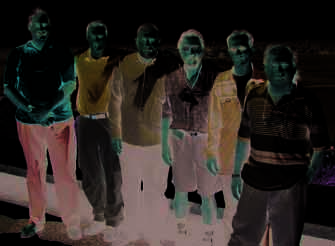
René García, Pierre Blime, Antonio Villasol, Félix Palacios,
Héctor Quintana, Jesús Beltrán are experts working for the
GIWA region 4 is located in the northern part of
measure would be to address the problem of
Caribbean Islands Report.
the Wider Caribbean Region (Greater Antil es
waste discharges from vessels at sea, and in
tities of wastewaters and garbage. Such situ-
and The Bahamas Archipelago), where ships
particular from cruise lines.
ation, coupled with low enforcement at sea,
transit from the Panama Canal to the Northern
Although the Wider Caribbean Area was
induce cruise ships to dump their waste at sea.
Atlantic Ocean and oil tankers transit from the
declared a "Special Area" under MARPOL 73/78
The result is that an impressive 64,000 tons of
oil rich areas of Mexico, Texas and Venezuela,
Annex V (pol ution by garbage), the region's
garbage dumped every year in the waters
to North Atlantic and Caribbean refineries.
most visited harbours stil lack the infrastruc-
of the Wider Caribbean Area by cruise ships
The GIWA Focal Point for this region is
ture and capacity to treat waste. In addition,
alone, not including similar quantities of oil re-
the Center of Engineering and Environmen-
cruise ships with up to 3,700 passengers lack
siduals, toxic and microbiological substances,
tal Management of Bays and Coasts (CIMAB) in
on-board marine sanitation devices (MSDs)
al clearly affecting the fragile equilibrium of
La Havana. The assessment workshops were
with sufficient capacity to absorb daily quan-
the region's marine and coastal ecosystems.
Where does cruise ship waste go?
Cruise ships must comply with international, domestic and state laws from the International Maritime
Where does cruise ship waste go?
Organization (IMO), U.S. Coast Guard, Environmental Protection Agency (EPA) and state and port agencies.
Onshore Waste Reception Facility
Member
Cruise
lines
ships
of
must the In
comply ternational
with
Council
international,
of Cruise
domestic and Lines
state la (IC
ws CL) are
from
committed
the In
t
ternational o
M p
arreser
itime ving the waters upon
Recycling
Special
Sludge
Special
Onshore Waste Reception Facility
which cruise
Organization ships
(IMO), U sail.
.S. C ICCL
oast G member
uard, En
lines hav
vironmental e
Pr adopted
otection A man
genc d
y ato
(EPAr) y en
and vironmental
state and port practices
agencies. that meet or go
Waste
Incinerated
beyond
Member the
lines requirements
of the In
of international
ternational Council of
and
Cruise domestic
Lines (ICCL) la
are w.
committed to preserving the waters upon
Recycling
Special
Sludge
Special
Ash
which cruise ships sail. ICCL member lines have adopted mandatory environmental practices that meet or go
Waste
Incinerated
beyond the requirements of international and domestic law.
Ash
Graywater
Blackwater
Blidge Water
Sludge
Garbage
Special Waste
Graywater
Blackwater
Blidge Water
Sludge
Garbage
Special Waste
Cabin sinks & showers
Toilets
Machine and engine
Used lube oil
Paper &
Food
Cans
Glass
Dry cleaning waste
Cabin sinks & showers
Toilets
Machine and engine
Used lube oil
Paper &
Food
Cans
Glass
Dry cleaning waste
Laundry
Medical facility water
oil collection
oil collection
Fuel sludge
packaging
waste
packaging
waste
Photo/print waste
Laundry
Medical facility water
Lubricated seals
Fuel sludge
materials
Photo/print waste
Galley
Lubricated seals
materials
Batteries
Galley
Water
Batteries
Salon
Water
Grinder
Compacter
Crusher
Used/dated
Salon
Grinder
Compacter
Crusher
Used/dated
pharmaceuticals
pharmaceuticals
Holding Holding
Tank
Tank
Documentation
Treated through
Documentation
Treated through
Other
Other
oily water
oily water
separator
separator
Cold storage
Cold storage
Leakproof containers
Holding Tank
Incinerator
Leakproof containers
Holding Tank
Blackwater Treatment System
Incinerator
Blackwater Treatment System
Documentation
Documentation
Documentation
Documentation
Documentation
Documentation
Approved
Discharged
Treated by
Approved
Discharged
Approved
Discharged
Approved
Incinerated Ash
Discharged
Landed
Incinerated Ash
Landed ashore
Approved
Shoreside OR
Discharged
at greater OR
Treated
advanced OR by
Approved
Shoreside OR at
Discharged
greater
Shoreside
Approved
if oil content
Discharged
Shoreside OR
Approved
for shoreside
Incinerated
beyond 3
Ash
ashore Discharged
for
for
Landed
shoreside
to
Incinerated
authorized
Ash
Landed ashore
Treatment
than 6 knots
waste water
Treatment
than 6 knots
Treatment
is less than
Treatment
disposal or dis-
miles from
recycling
disposal or dis-
waste handling
Shoreside
Facility
OR at greater
beyond 4
OR advanced
system and
OR Shoreside
Facility
OR
beyond 4 at greater
Facility
Shoreside
15 parts per
if oil content
Facility
Shoreside
charged at sea OR
for shoreside
shore
beyond 3
charged ashore
at sea
for
for shoreside
professionals
to authorized
Treatment
than
miles 6 knots
from
waste
discharged water
Treatment
miles
than
from
6 knots
Treatment
mil ion (ppm)
is less than
Treatment
in accordance
disposal or dis-
miles from
in
recycling
accordance
disposal or dis-
waste handling
Facility
beyond
shore
4
system and
Facility shore
beyond 4
Facility
15 parts per
Facility
with MARPOL
charged at sea
shore
with MARPOL
charged at sea
professionals
miles from
discharged
miles from
mil ion (ppm)
Annex V
in accordance
Annex V
in accordance
shore
shore
with MARPOL
with MARPOL
All blackwater is treated by U.S. Coast Guard
approved and certified equipment. Either a
Annex V
Annex V
Marine Sanitation Device (MSD) or an
All blackwater
advanced
is
wastewater treated
treatment by U.S.
system. Coast Guard
Source: Redrawn from ICCL
approved and certified equipment. Either a
Marine Sanitation Device (MSD) or an
advanced wastewater treatment system.

Dear GIWA friends,
Caribbean Sea and the Caribbean Islands reports
Other regional reports are in the pipeline for
Water is at focus at upcoming events such as
are in the peer review process.
completion and we are receiving a lot of attention
the International Meeting for the 10 year Review of
The four GIWA reports wil bring valuable in-
in the regions concerned. This proves the impor-
the Barbados Programme of Action, to be held in
formation to the quest for sustainable development
tance of a global assessment on the environmental
Mauritius in January 2005. The GIWA team is prepar-
in these vulnerable nations where water can be a
conditions of the worlds' waters.
ing an important input to this meeting and we wil
symbol for both health and wealth. The waters of
Summer means vacation and nice swims for
there present our four regional reports from Smal
the Caribbean are frequently visited by large cruise
many people in the world. Let us continue the strive
Island Developing States (SIDS). The Indian Ocean
ships and the tourists' wastes are often dumped in
to keep these waters clean and healthy.
Island regional report is already printed, the Pacific
the sea. Actions must be taken for not threatening
Dag Daler,
Islands report in the final production stage and the
the health of the residents on these islands.
Scientific Director
Results Ready in Four Regions Threats to the
in Northern Atlantic
Barents Sea
The major findings of the GIWA report on Bar-
ents Sea were presented at an international
Thanks to a grant from the Danish Ministry
ganic pol utants) is another important issue.
environment conference in Tromsö, Norway,
of Environment, the GIWA assessment for
These toxics are accumulated in the tissue of
on May 26. The focal point professor Gennady
the waters around Greenland and the Faroe
fish and marine animals, and they are threat-
Matishov from the Murmansk Marine Biologi-
Islands has recently been completed, and
ening the species feeding on these. There
cal Institute introduced the results, pointing
is now being prepared for publication. The
is also concern about health impacts in the
at severe threats from human activities to the
assessment was carried out by UNEP Col-
Inuit population with a strong preference for
Barents Sea ecosystem.
laborating Center for Water and Environ-
food from the sea. This is particularly critical
ment (UCC Water) and the Danish National
in East Greenland, where the remote com-
Environmental Research Institute (NERI), in
munities are dependent on hunting for their
close cooperation with a number of experts
food supply.
in the region.
In the arctic North Greenland climate
change and its impacts on the arctic habitats
In both West and East Greenland unsustain-
are priority concerns. Changes in tempera-
able exploitation of fisheries is a priority con-
ture and the associated reduction of ocean
cern. The cod has virtual y disappeared from
ice covers threaten the unique and sensitive
the Greenland waters, but the fish has been
arctic habitats, like the polar bears.
replaced by shrimp, and the economic impact
The priority issues in Faroe Plateau are
on the local economy has been mitigated by a
similar. Chemical contaminants in particu-
Are Sydnes, Gennady Matishov, Roman Mikhalyuk, Natalia
change to catching shrimp. The drastic habitat
lar mercury - are a concern here, where fish
Gulobeva, Tatiana Savinova, Salve Dahle and Dag Daler are
some of the experts behind the GIWA report on the Barents Sea.
changes are not only a result of overfishing.
and whale steaks are national dishes. Overex-
Changes in sea temperatures and associated
ploitation of fish resources are also a concern,
The impact of the over-exploitation of the
species migrations - are equal y important, as
due to the economic importance of the fish-
fish stocks and the modification of eco-
the arctic ecosystems are highly sensitive to
eries sector. Again, the productivity is highly
system caused by the invasion of red King
changes in temperature.
dependent on the ocean temperatures.
Crab and other alien species and the pol-
Pollution by chemical contaminants (in
Key causes have been identified, and the
lution from persistant oroganic pollutants
particular heavy metals and persistent or-
home rule administrations are actively ad-
and heavy metals is severe both for the en-
dressing the local causes. The main causes of
vironment and in terms of economic conse-
international concern are related to emission
quences, employment and incomes, states
of toxic chemicals to the ocean in Europe, Asia
the report. In addition there are significant
and North America; and to the global warm-
threats for further environmental degrada-
ing related to greenhouse gases. There is an
tion in the future due to the large amount
urgent need for international research efforts
of nuclear wastes in the areas of the former
to better understand these impact on the sen-
Soviet Union and increased exploration for
sitive arctic ecosystems; and to include these
petroleum resources and shipping of oil and
impacts in international policymaking.
gas through the Barents Sea.
GIWA Co-ordination Office
Web Site: www.giwa.net E-mail: info@giwa.net
Postal Address: Global International Waters Assessment, GIWA
Telephone Secretariat: +46 480 44 73 53
SE-391 82 Kalmar, Sweden
Fax: +46 480 44 73 55