N E W S L E T T E R N o 2 A p r i l 2 0 0 3
Focus on transboundary waters
A large number of water stakeholders
Ms. Bohn stat-
learned about the GIWA project when par-
ed that the diver-
ticipating in the 3rd World Water Forum in
gence of interests
Japan recently. GIWA held a session under
among users of
the theme "Water for peace" and presented
shared resources
its work with an exhibition.
inevitably creates
disagreements,
The session on transboundary water resourc-
but
disagree-
es was opened by Dr. Klaus Töpfer, UNEP Ex-
ments can lead
ecutive Director, and Viveca Bohn, Swedish
either to con-
Ambassador for the Environment.
structive coopera-
In his opening remarks Dr. Töpfer em-
tion or to destruc-
phasized the importance of early warning
tive disputes. She
mechanisms in order to prevent problems.
pointed out that
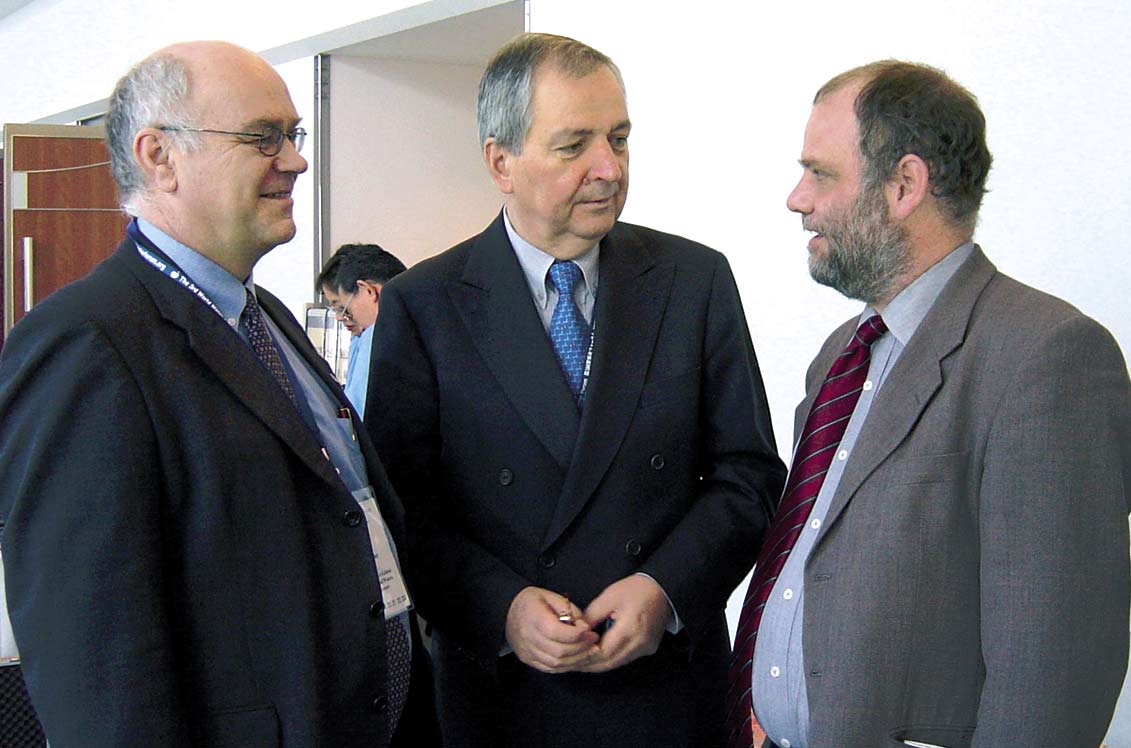
The GIWA session was opened by UNEP Executive Director Klaus Töpfer, here discussing
Prognosis based on systematic overviews
the challenge is
with GIWA:s Dag Daler (left) and UCC:s Niels Ipsen (right) who chaired the session.
should be used to stimulate political action
to strengthen in-
that averts high environmental and socio-
stitutions in order to facilitate cooperation.
Dag Daler, the Scientific Director of GIWA,
economic costs. He also stressed the value
Dr. Töpfer and Ms. Bohn recognized the need
presented different aspects of the GIWA proj-
of GIWA as a priority setting instrument to
for the periodical assessment of international
ect, and Juan Carlos Belausteguigoitia, coordi-
help allocate resources to the GEF interna-
waters and wil consider the transformation of
nator for the Southern Hemisphere, discussed
tional waters projects.
the GIWA into a continuous program.
the issues of water and conflict prevention.
The GIWA focal points for Brazil Current, East
African Rift Val ey Lakes and Patagonian Shelf,
Marcia Marques, Eric Odada and Ana Mugetti,
made presentations that stressed the innova-
tive methodology and the collaborating pro-
cess that GIWA is promoting.
GIWA presented an exhibition explaining
the mission, the tools and the extent of its net-
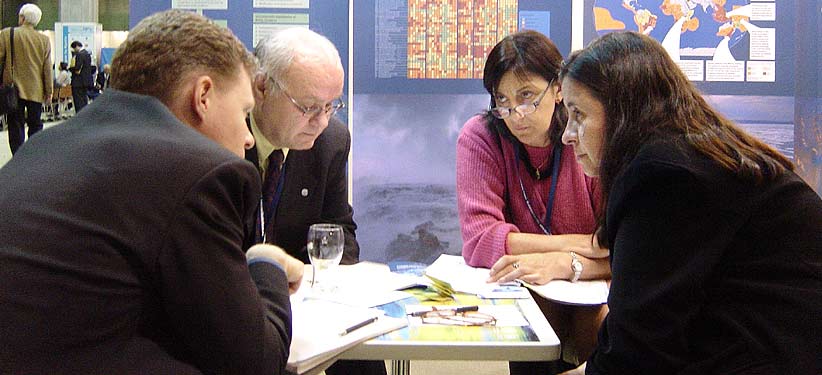
Preparing for the GIWA session: Jakob Ström from the
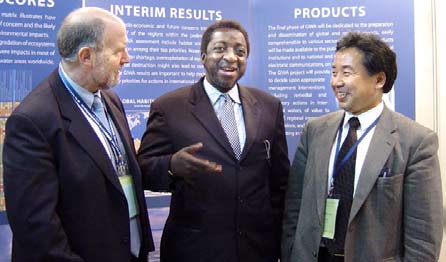
UNEP representatives Steve Halls, Halifa Drammeh and
Swedish Ministry of Environment, GIWA Director Dag Daler
Masa Nagai were pleased with the GIWA booth at the Stake-
work. Visitors included government officials,
and GIWA focal points Ana Mugetti, Argentine, and Marcia
holder center.
Marques, Brazil.
academics, students and NGOs members.
Dear GIWA friends,
tions. In this respect he also stated clearly the
I am just back from the 3rd World Water Fo-
importance of continuing the assessments of
rum in Kyoto. Dr. Klaus Töpfer, ED of UNEP,
GIWA after the completion of the project pe-
gave the opening speech to the GIWA ses-
riod. This is an important message and an
sion where he stressed the importance of
inspiration to everybody working with the
water and environment improvements as a
GIWA assessment, in the Core Team in Kal-
mean to achieve sustainable development.
mar and in all the GIWA task forces around
He also underlined GIWA´s importance for
the world.
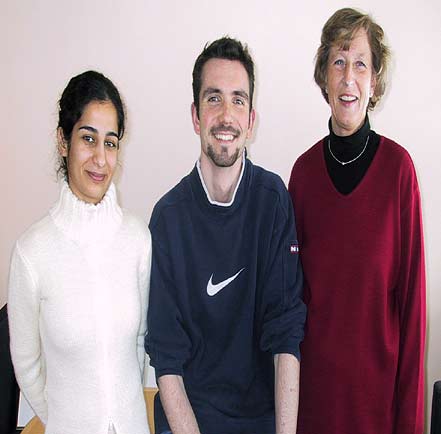
The GIWA Core Team in Kalmar has two new interns: Anna
UNEP´s work in the field of water. Knowledge
Thestrup from Lund University in Sweden and Fabian Franke
from the University of Konstanz in Germany. Elisabeth An-
and early warning is the basis for targeted ac-
Dag Daler, Scientific Director
dersson is the new administrative assistant.




Severe pollution impacts
GIWA experts lecture
Pollution is among the two top priorities in close to half the cur-
GIWA has joined forces with its host, the University of Kalmar, again
rently assessed GIWA sub-regions. Of the eight GIWA pollution is-
to raise awareness of water issues in the coastal zone. The University
sues, eutrophication and suspended solids have been assessed as
of Kalmar, in conjunction with Prof. Olof Lindén and David Souter of
severe in more sub-regions than any other pollution issues. Eutro-
the GIWA Core Team, has recently completed a course focusing on
phication is largely caused by the infl ow of excess nutrients from
the management of tropical coastal ecosystems through integrated
land-based activities while the increased load of suspended solids
coastal zone management. The course, which runs for 10 weeks, in-
is a result of changed land use practices.
corporates lectures and information from a wide variety of disciplines
ranging from marine ecology to maritime law and has used consid-
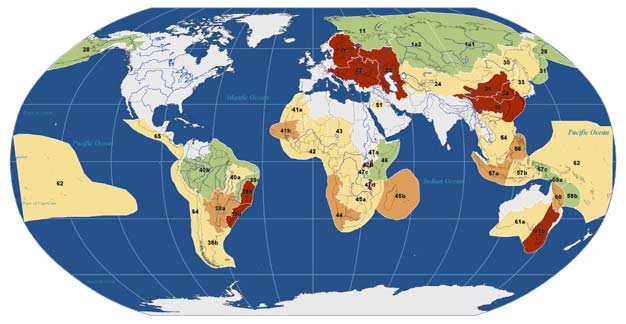
Eutrophication
erable expertise from within the GIWA network of experts. This year
Interim results of the GIWA project.
as part of the course, the students were fortunate enough to travel
Eutrophication is a severe environmental problem in the coastal
areas of Brazil, Australia and East Asia, the semi-enclosed basins
of Europe and the Rift Valley Lakes Victoria and Malawi. Eutrophi-
cation is caused by the introduction of excess nitrogen and phos-
phorus to the water body from land-based activities. Agriculture,
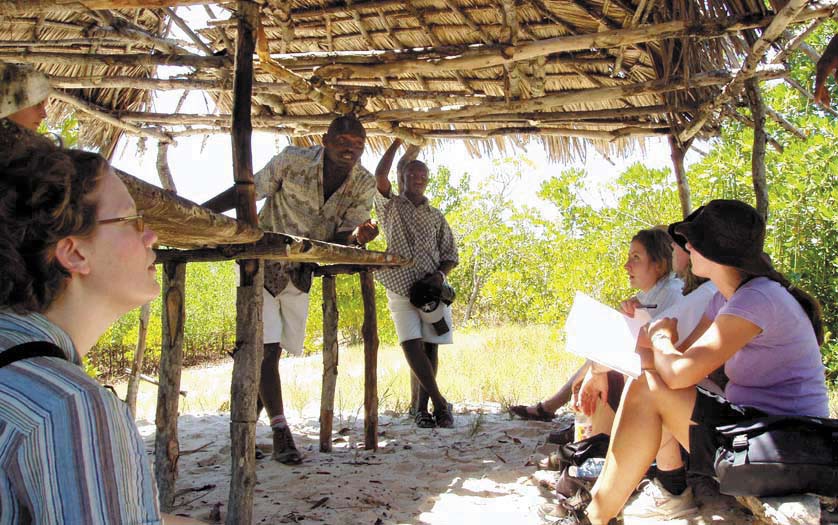
Kenya Marine and Fisheries Research Institute scientists explain to the students the impor-
tance of mangroves in tropical coastal ecosystems and show them a mangrove rehabilitation
deforestation and untreated municipal sewage are some of the
site at Gazi on the southern coast of Kenya.
main sources of these nutrients. The nutrient enrichment has al-
to both Kenya and Seychelles where they were hosted by Dr. David
tered the physical aquatic environment and led to loss of algal
Obura, a member of the Somali Coastal Current task team, and Rolph
beds, extended hypoxic conditions, increased algal blooms and
Payet, GIWA focal point for the Indian Ocean Islands sub-region. In both
disrupted food chains.
countries, the students were able to experience fi rst hand some of the
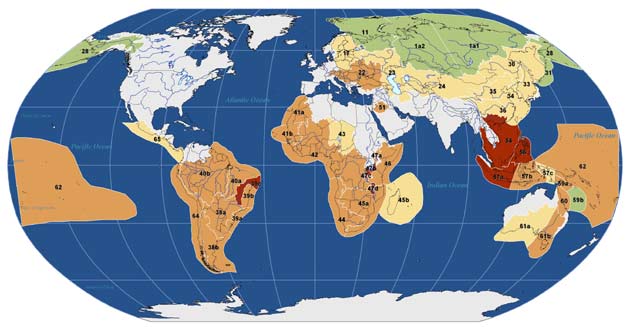
Suspended solids
issues and pressures, such as tourism, coastal development, pollution
Interim results of the GIWA project.
and fi shing, that affect these fragile tropical coastal ecosystems and
learn how these might be managed in a sustainable way.
Symposium...
15 August 2003; UNEP/GIWA Seminar in Stockholm (the 13th Stock-
holm Water Symposium)
1820 August 2003; The on-line registration is now open for the
symposium on Transboundary Waters, to be held in Kalmar. Sym-
posium conveners are GIWA, University of Kalmar and International
Ocean Institute. The program and registration form are available at
www.giwa.net/symposium
Suspended solids are a severe environmental problem in the Rift
Val ey Lakes, Northern Brazil, South China Sea and Indonesian Seas.
Upcoming events...
Erosion due to deforestation is the main cause of the increased
amount of suspended solids in the aquatic environment. The trans-
Internal GIWA Workshops:
portation of higher loads of suspended solids by rivers to the coast-
79 April 2003, Hermosillo, Mexico; SR 27 (Gulf California)
al waters has resulted in increased turbidity and sedimentation,
911 April 2003, Vladivostok, Russia; SR 33 (Sea of Japan)
causing changes in biodiversity as well as loss of habitats.
2830 April 2003, Santa Marta, Colombia; SR 3 (Caribbean Sea)
Environmental impact is rated on a regional scale.
Local deviations are not shown on the map.
No known
Slight
Moderate
Severe
Regional assessments
impact
impact
impact
impact
not fi nalized.
If you are interested, please contact the GIWA Core Team.
GIWA Co-ordination Offi ce
Web Site: www.giwa.net E-mail: info@giwa.net
Postal Address: Global International Waters Assessment, GIWA
Telephone Secretariat: +46 480 44 73 53
SE-391 82 Kalmar, Sweden
Fax: +46 480 44 73 55