Newsletter No 1 March 2004
Global International
N E W S L E T T E R N o 1 M a r c h 2 0 0 4
Waters Assessment
Dear GIWA friends,
Pollution Causes Problems
I am very honoured to hold in my
hand the new issue of Ambio, the
in the Caribbean Sea
highly reputed journal of the hu-
man environment, published by the
Royal Swedish Academy of Sciences.
GIWA region 3, Caribbean Sea, is one of the most
At this workshop, it was established that Habitat
The journal has a number of articles
diversified GIWA regions consisting of 28 differ-
and community modification is the main concern in
written by experts worldwide who
ent countries from Mexico (state of Quintana
al three systems. It was also recognized that a ma-
contribute to the GIWA assessment.
Roo) in the north to Venezuela/Colombia in the
jor part of this problem is connected to pol ution,
The articles present some of the as-
south. Apart from their varying natural charac-
i.e. suspended solids and chemical compounds.
sessment results on transboundary
teristics the countries in the region have differ-
The second workshop was held in April 2003 and
waters in their regions.
ent historical backgrounds with influence from
discussions concluded that weak institutional ca-
Here we can read about environ-
Spain, France, Holland and Great Britain.
pacity is the main root cause of Habitat and com-
mental change in the Caspian Sea re-
munity modification in the region.
gion and the impacts of fisheries on
For the purpose of the GIWA
the dynamics of commercial fish spe-
exercise this diverse region
cies in the Barents Sea and the Sea of
was divided into three discrete
Azov. We can learn about the issues
subsystems; The Smal Islands,
of livelihood, sustainable develop-
Central America (including
ment and governance in the Bay of
Quintana Roo) and Colombia/
Bengal and ocean pollution from
Venezuela, that were assessed
land-based sources in East China Sea.
separately.
We also get information on the work
The focal point in SR3 is
to mitigate environmental problems
INVEMAR (Institute of Marine
in Lake Victoria. The articles cover
and Coastal Research) located
many different river drainage basins
in Santa Marta, Colombia and is
and coastal waters of the world and
represented by INVEMARīs Gen-
contribute to global efforts to man-
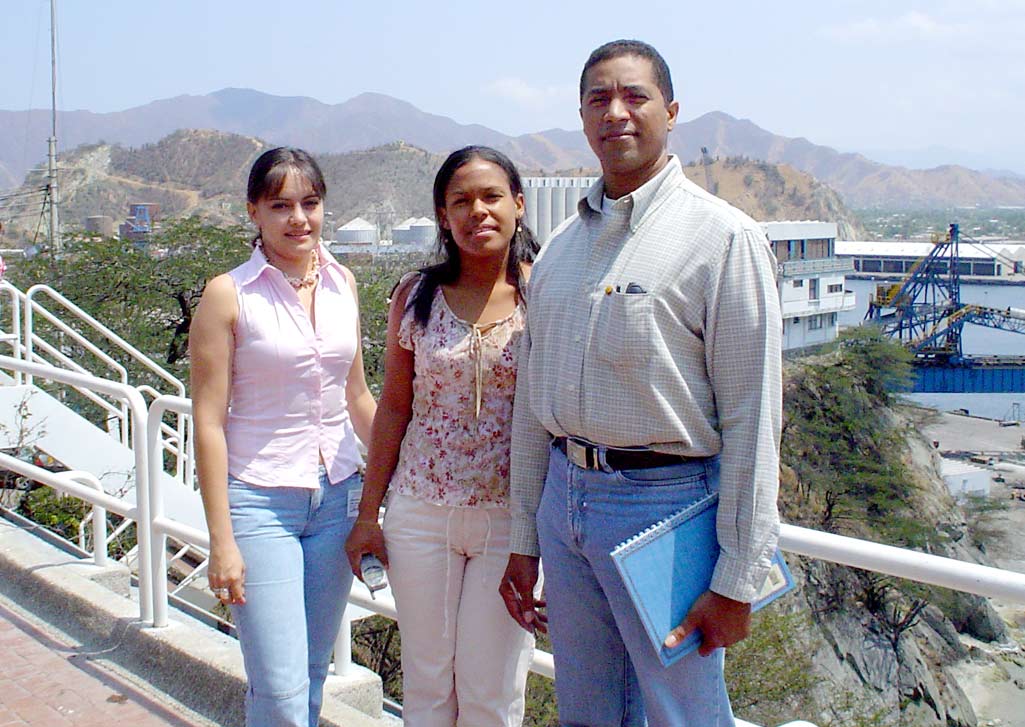
The GIWA region 3 Caribbean Sea team members Mariacatalina Bernal-Velasquez, Luz
age common water resources.
eral Director (Captain Francisco
Marelvis Londoņo Diaz and Walberto Troncoso.
The articles in Ambio show that
Arias-Isaza, Marine biologist,
the GIWA project now is producing
D.E.A. Gestion de Zones Littorales), the Head of
The Caribbean Sea regional report is soon to be
data and information that will help
the Coastal Zones Management Research Program
finished and the report writing team at INVEMAR
to improve the knowledge base in
(Paula Cristina Sierra-Correa, Marine biologist) and
sum up their experiences gained during the GIWA
regard to transboundary resourc-
the project analysis and report writing team (Ma-
work as fol ows:
es and environmental problems.
riacatalina Bernal-Velasquez, Marine biologist; Luz
- Valuable contacts have been established with
Thanks to local expert groups with
Marelvis Londoņo Diaz, Environmental economist;
other scientists in the region that can be used to
professionals from different sectors
and Walberto Troncoso, Marine biologist). This insti-
further involve INVEMAR in international research
GIWA is now providing guidance to
tute is one of five national environmental institutes
programs.
al working on how to manage com-
in Colombia and employs approximately 200 per-
- Environmental issues have been analyzed in a
mon waters. The great chal enge to
sons. INVEMAR has five main Research Programs:
regional context (not restricted to national prob-
work with a worldwide methodol-
environmental quality, biodiversity and ecosys-
lems) and the general knowledge of the Caribbe-
ogy is proven valuable in the efforts
tems, coastal zone management, valuation and
an region as a whole has considerably increased.
to mitigate environmental problems
use of natural resources, and geosciences.
- The GIWA work supports the implementation of
in many water regions.
The first GIWA workshop (scaling and scoping)
international agreements such as the Cartagena
Dag Daler,
was held in November 2002 and representatives
Conventions (considering the different related
Scientific Director
from 14 of the countries in the region participated.
protocols).

New team members
The GIWA Core Team has been strength-
ened for the work of the Global Report,
to be published later this year. George
Roman, Environmental Consultant, and
Pierre Blime, Development Policy Ana-
lyst, are now assisting coordinator Juan
Carlos Belausteguigoitia in this work.
Biodiversity in South America
The office also has a fellowship, Su-
sanna Paleari from Catolic University of
Milan, Italy and a new intern, Johannes
Affected by Overfishing
Wolpert from the University of Konstanz
in Germany.
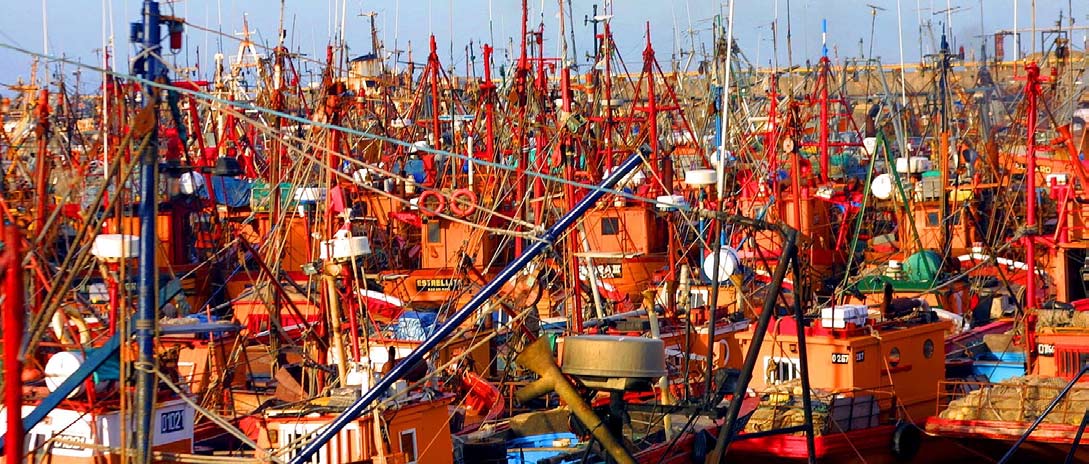
In the Patagonian Shelf region habitat and
The Patagonian Shelf region comprises
Oceans in focus on June 5
community alterations were identified as a
the entire La Plata River Basin and the South
The theme for The World Environment
priority for further analysis and proposed
Atlantic Drainage System including its mari-
Day on June 5 this year is "Wanted! Seas
actions. In the La Plata River basin, invasive
time platform. 130 mil ion inhabitants, about
and Oceans - Dead or Alive?" The theme
exotic species have displaced native ones.
half the population of five countries, live within
asks us to choose how we want to treat
Habitats in the ocean have been degraded,
the La Plata River basin.
the Earth's seas and oceans and cal s on
as their biodiversity becomes affected by
When studying the immediate causes to
each and every one of us to act. The
overfishing and pollution.
the problems a deeper analysis was made to the
main international celebrations wil be
most significant: overexploitation of target spe-
held in Barcelona, Spain.
These results are presented in the GIWA report
cies, by-catch, modification of sea bottoms by
for region 38, the Patagonian Shelf. The team
fishing gear and pol ution from land sources.
reports similarities between the Patagonian
Modification and loss of ecosystems and
Shelf and other GIWA regions assessed. Rivers
ecotones are among the issues identified as se-
and wetlands have been severely impacted by
vere impacts in most of the South American
dam developments. Habitats close to metro-
regions assessed by the GIWA project. Densely
politan areas and on seashores are at risk, as are
occupied drainage basins and coastal zones in
most areas of the Atlantic Coast of South Amer-
developing countries that are facing economic
ica. Heavy industrialization, tourism develop-
growth are likely to suffer from moderate to
ment, domestic sewage and overfishing are
severe environmental impacts, according to
major contributors to habitat deterioration.
the GIWA teams in this region.
Ambio issue on GIWA
Conference to Bridge Science and Society
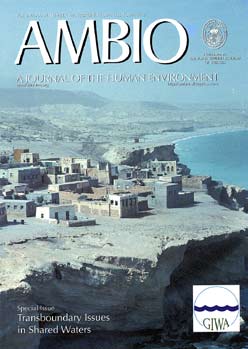
A special issue of Ambio, a journal of the
human environment, is devoted to a se-
Now is the registration open for the conference
Participants at the Stockholm Water
lection of the GIWA reports. It focuses on
"Troubled Waters; Bridging Science and Soci-
Week August 16-20 can add value to their visit
transboundary issues in shared waters
ety" in Kalmar 22-25 August, 2004.
to Sweden by also taking part in the Kalmar
and presents some of the data GIWA is
www.giwa.net/conference 2004
conference, fol owing directly after the Stock-
producing to contribute to global efforts
The conference is organized to increase
holm meetings. Kalmar on the southeast coast
to manage common water resources.
the understanding of how interactions can
of Sweden is an interesting meeting site; the
Ambio is a nonprofit English lan-
promote sustainable use of land and water in
Baltic Sea has environmental problems shared
guage journal of the Royal Swedish
river basins, coastal areas and the sea, with em-
by nine countries.
Academy of Science. It was founded in
phasis on transboundary basins. It is expected
Experiences gained from several current
1972, the year of the first UN Conference
to become a great opportunity for discussing
assessments such as the GIWA and VASTRA
on the Environment which was held in
toolboxes for environmental problems, includ-
projects and the HELP programme wil serve
Stockholm, Sweden. It is distributed in
ing assessment methodologies and methods
as basis for the discussions.
more than 100 countries worldwide and
for identification of root causes and policy
has also a Chinese language version.
www.giwa.net/conference 2004
options.
GIWA Co-ordination Office
Web Site: www.giwa.net E-mail: info@giwa.net
Postal Address: Global International Waters Assessment, GIWA
Telephone Secretariat: +46 480 44 73 53
SE-391 82 Kalmar, Sweden
Fax: +46 480 44 73 55