N E W S L E T T E R N o 1 J a n - F e b 2 0 0 3
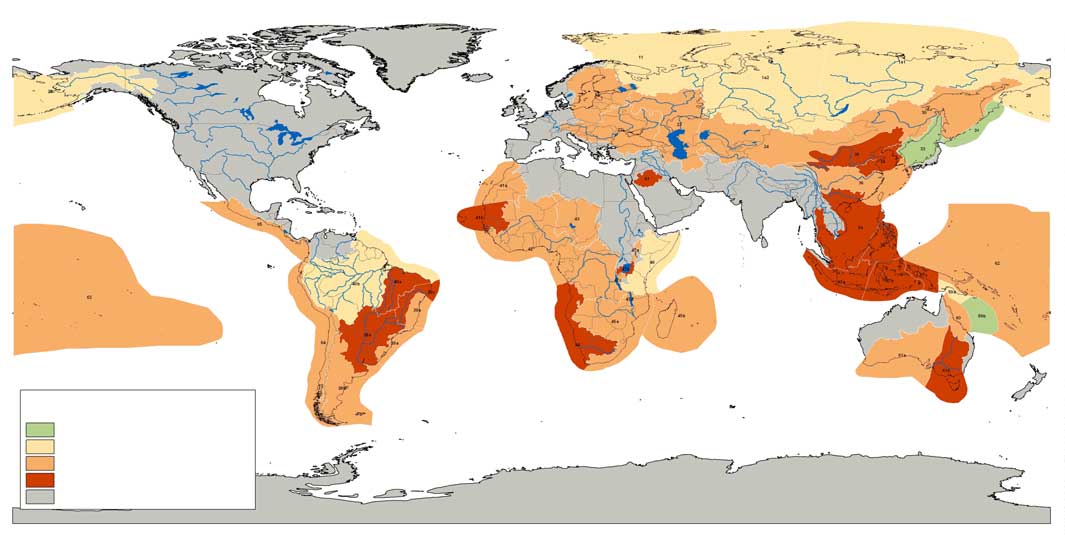
Habitat destruction severe
in many sub-regions
Modifi cation of aquatic habitats is present
of 47 within the GIWA assessment (see map).
in all parts of the world and is inextricably
When ranking the fi ve GIWA issues about half
linked to increased population pressure
of the regions have habitat and community
and exploitation of resources. In the GIWA
modifi cation among their two top priorities.
assessment environmental impact of habitat
In other regions the issue is perceived as
and community modifi cation is severe in 16
secondary in relation to other more stressing
of currently 47 assessed sub-regions or parts
regional issues, although habitat destruction
of sub-regions. In the subsequent ranking,
and modifi
cation may be prevalent. The
taking socio-economic and future concerns
socio-economic impacts of habitat modifi cation
into account, about half of the regions
and loss are generally not rated as severe
include habitat and community modifi cation
as the environmental impact, possibly as a
among their two top priorities.
consequence of the intricacy in estimating
and wellbeing. The transboundary nature of
the true value of the services provided. The
Water covers 71 per cent of the earth's surface
many aquatic resources often makes the use
future prospect regarding the status of aquatic
and constitutes a key component in all and abuse of these resources a concern on an
habitats is mixed but more than half of the
ecosystems. The economic value provided by
interstate or even global level.
regions anticipate a further deterioration in the
aquatic ecosystems is estimated at three-quarter
next 20 years. There is a however, a growing
of the total value of the biosphere making these
The current condition of aquatic habitats has
realization that ecosystems are not inexhaustible
habitats most important to human livelihood
been assessed as severe in 16 sub-regions out
and preventive measures are to be taken.
GLOBAL HABITAT MODIFICATION
In Europe and Central Asia,
Interim results of the GIWA Project.
eutrophication and overfi shing
in lakes, estuaries and semi-
enclosed seas have altered the
ecosystem balance with resulting
habitat destruction and changes
in biodiversity.
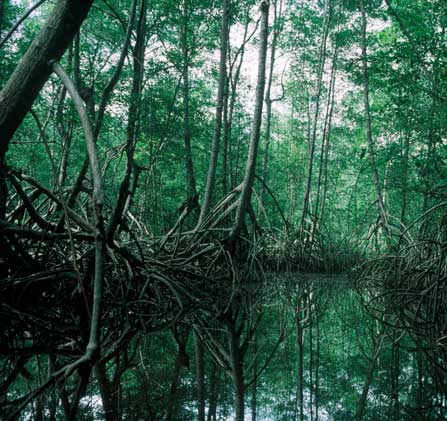
In Southeast Asia mangrove
forests are the most threatened
habitats mainly due to extensive
aquaculture practices.
Island states in the Pacifi c and
Indian Ocean suffer from
deteriorating coral reefs as a
result of destructive fi shing
Environmental impact is rated on a regional scale.
practices and large-scale coral
Local deviations are not shown on the map.
No known impact
bleaching events caused by
Slight impact
increased sea surface
Moderate impact
temperatures.
Severe impact
Regional assessment not fi nalized
Aquatic habitats in the Murray-
Darling river system in Australia
In South America the habitats most at risk
In Africa, habitat destruction hotspots are scattered over the
have been modifi ed along more
are the once situated along the Atlantic coast
continent. The Lake Victoria ecosystem is in a precarious
than 70 per cent of its river
in the vicinity of large metropolitan areas.
situation as a result of many contributing factors including
course. The main impacts are
Heavy industrialization, tourism developments
eutrophication, invasive species and overexploitation. In
irrigation, clearance of riparian
and domestic sewage are major contributors to
southern Africa and in the northwestern part of the continent,
vegetation and introduction of
the deteriorating condition of habitats.
rivers and wetlands have been severely impacted by dam
exotic species such as European
constructions and development.
carp.
Water for the Future
Focus on waters and peace
The World Water Day 2003 is
The 3rd World Water Forum in Kyoto, Japan, is held
and its environmental focus in regions such as Middle
celebrated on March 22. The goal
in mid-March, a large event attracting major water
East, Latin America, East African Rift Valley Lakes, the
for World Water Day this year is
stakeholders. GIWA is organizing a session at the
Baltic Sea and Coral Reefs.
to inspire worldwide political and
Forum under the theme "Water for Peace" on Friday
Conclusions and general recommendations for the
community action and encourage
March 21 at 8.45 to 11.30. The venue is the Ensemble
future.
greater global understanding of the
Hall in Biwako Hall at the Shiga Site.
The session will include speakers who participate in
need for more responsible water use
This is the outline of the GIWA program:
the GIWA assessment in different sub-regions. The
and conservation.
Introduction to Water for Peace and to Environment
Swedish Minister of Environment Lena Sommerstad
"Water for the Future" is the theme
and Peace. General scheme of confl ict prevention
will give concluding remarks. A GIWA exhibition is
for this year, calling on one and all
and resolution and the role of GIWA.
presented at the Stakeholder Center.
to observe sustainable approaches to
Case studies and results from the GIWA assessment
water use for the benefi t of future
generations. The organizer for World
Water Day 2003 is United Nations
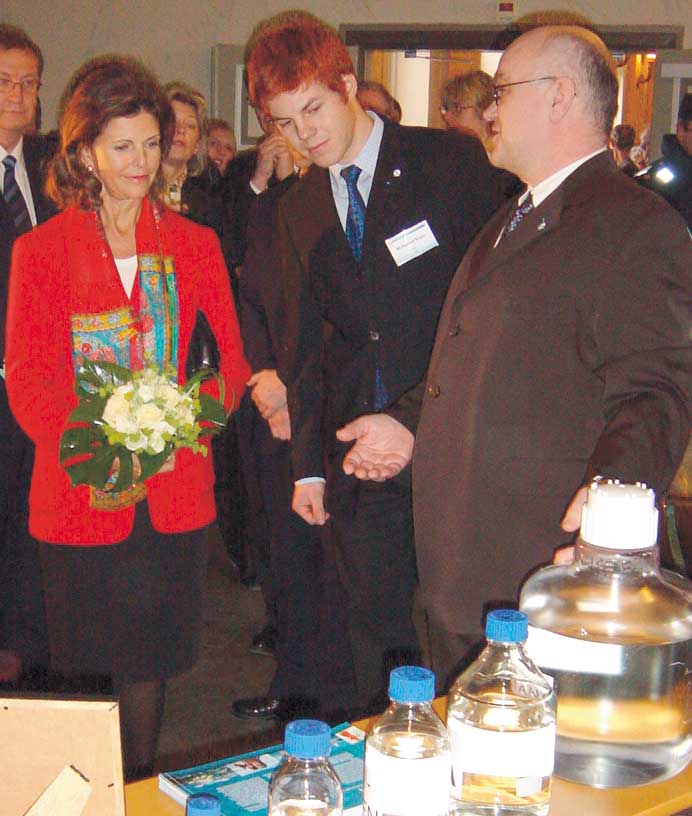
Swedish Queen
Environment Programme. This year
the World Water Day coincides with
learns about GIWA
the International Year of Fresh Water.
The Queen of Sweden, Her Royal Highness Queen
GIWA is planning school activities in
Silvia, has been introduced to the work of GIWA.
Sweden to mark both the World Water
The core team in Kalmar made a presentation of the
Day and the International Year of
GIWA assessment to her when she participated in a
Freshwater.
model UN activity at a local high school.
Queen Silvia spoke to the high school students on
Symposium on
children's rights, a concern she works for in many
Transboundary
parts of the world. She has initiated programs for
Waters in Kalmar
aiding children being abused, handicapped children
and orphan children in large cities. When informed
In August transboundary water issues
about GIWA she agreed to the fact that the right to
will be discussed at GIWA-Kalmar
good water is important for all children. Queen Silvia
University symposium in Kalmar,
The Swedish Queen Silvia took great interest in the information
will carry this message as she continues travelling
on water use in different parts of the world from GIWA's intern
immediately after the Stockholm
around the world to meet with decision makers.
Raphael Magin and Scientifi c Director Dag Daler.
Water Week. The program and call
The students at the model UN, around 200 teenagers
from Germany, spoke on the water use in different
for registration are now available on
from ten schools in Sweden, were also informed of
countries and was assisted by Renato Leite, intern
www.giwa.net/symposium
the GIWA assessment. GIWA's Raphael Magin, intern
from Brasil, at an information booth.
DEAR GIWA FRIENDS, 2003 seems to
The main purpose of GIWA is to provide decision-
Upcoming
be a year when water issues are at focus. World Water
makers with information that will help them to
identify actions where they should concentrate their
events...
Day will again be celebrated on March 22, a day when
attention is also given to the 2003 International Year of
efforts to mitigate environmental degradation in
16-23 March 2003,
Freshwater. Freshwater is one of UNEP's priority areas
international waters. This task is especially important
in regions where water pollution, overexploitation of
in Kyoto, Japan:
of concern and here GIWA plays an important role.
This year water stakeholders from all parts of the
aquatic resources and habitat destruction may also
3rd World Water Forum
world will meet in Kyoto, Japan, for the 3rd World
lead to confl ict.
Water Forum. GIWA is there and we have chosen to
We welcome you to the GIWA session in Kyoto
11-14 August 2003:
highlight the importance of water agreements to avoid
and also to our exhibition site at the Stakeholder
Stockholm Water Symposium
confl icts. A GIWA session is held under the theme
Center. We invite you to make the GIWA site the
"Water for Peace". Case studies from the assessment
meeting point for all colleagues working for "Water
for the Future", which is the theme for the World
18-20 August 2003, in
in different parts of the world will be presented, all
focusing on areas where cooperation (or confl ict)
Water Day this year.
Kalmar, Sweden:
may emerge among countries because of water
Joint GIWA-University of
related issues. These areas are freshwater shortage,
Dag Daler
Kalmar Symposium on
pollution, habitat and community modifi cation, and
Scientifi c Director
Transboundary Waters.
unsustainable exploitation of living resources.
GIWA Co-ordination Office
Web Site: www.giwa.net E-mail: info@giwa.net
Postal Address: Global International Waters Assessment, GIWA
Telephone Secretariat: +46 480 44 73 50
SE-391 82 Kalmar, Sweden
Fax +46 480 44 73 55