
Magazine of the Mediterranean Action Plan / 55
The sea deserves
our voice
Highlights of the 14th Meeting of the
Contracting Parties to the Barcelona Convention

INTRODUCTION
INTRODUCTION
A sense of ownership
The Mediterranean is one of the world's most culturally and ecologically
diverse regions. Its rich and favourable climate has made it a magnet for
settlement, and something like one-third of all international tourism gravi-
tates to its shores.
It is also a special sea with unique challenges. It joins the coastlines of
Europe, the Middle East and North Africa, making it politically, economically
and geographically complex.
Thirty years ago the Mediterranean Action Plan (MAP) was born, helping
to foster a UNEP Regional Seas Programme that now encompasses 18 re-
gions and more than 140 coastal states and territories.
UNEP
The initiatives of MAP have served as a beacon to many of the other
Regional Seas. It has guided their agendas, playing a key role in establishing
more than 120 protected areas and in creating four action plans to protect endangered species. It has forged
strong links with other regional bodies including the UN Economic Commission for Europe, the UN Economic and
Social Commission for West Asia, the European Bank for Reconstruction and Development and the General
Fisheries Commission for the Mediterranean. Its legal authority, the Barcelona Convention, has served as a model
for other such regional agreements.
Much of MAP's work would not have been possible without financial investment from the Global Environment
Facility (GEF). The GEF has helped MAP bolster efforts around the sea to promote national ownership of the
Action Plan and Barcelona Convention. Such ownership is vital for the long term success of Regional Seas
everywhere.
Klaus Toepfer, United Nations Under-Secretary-General
and Executive Director, UNEP
The sea deserves our voice
Highlights of the 14th Meeting of the
Contracting Parties to the Barcelona Convention
LOGO OF COP14
Introduction: A sense of ownership by Klaus Toepfer
2
MAGAZINE OF THE MEDITERRANEAN ACTION PLAN
Perspective: MAP at the crossroads by Paul Mifsud
3
MedWaves
A new chapter of cooperation by H. E. Janez Podobnik
5
No. 55, March 2006
Editor: Nikki Meith
Bringing Regional Seas into the 21st century
Design/layout: Maximedia Ltd.
by Dr Veerle Vanderweerd
6
Cover photo: Marko Prem
Printing: Progress Press Ltd., Malta
ISSN 1105-4034
Italy's commitment to MAP by Dr Corrado Clini
7
MedWaves is published by the Coordinating Unit of the
Mediterranean Action Plan in Arabic, English and French.
The Portoroz Declaration
8
It is an informal source of information and it does not
necessarily reflect the official point of view of MAP or
UNEP.
MAP and the EC strengthen their partnership
11
Content, except for pictures, may be reproduced without
permission and only for non-commercial use. Credit to the
source, however, is required. The publisher would appre-
ciate receiving a copy of any publication that uses
A strategy to preserve the quality and stability of
MedWaves' news, articles and interviews.
The designation of geographical entities and the presen-
Mediterranean life
12
tation of the material do not imply the expression of any
opinion whatsoever on the part of the publisher, con-
cerning the legal status of any country, territory or area,
NAPs: Green light to reduce pollution
14
of its authorities frontiers or boundaries.
Protecting Mediterranean biodiversity
15
Recommendations: Partnership, vision and accountability
16
Lucien Chabason receives MAP Medal
19
United Nations Environment Programme
Mediterranean Action Plan
48, Vassileos Konstantinou Avenue
Mediterranean Environmental Award
19
11635 Athens, Greece
Tel: 00 30 210 72 73 100
Fax: 00 30 210 72 53 196/7
A sustainable Mediterranean future
19
E-mail: unepmedu@unepmedu.gr
Printed on FSC chlorine-free paper
Scenes from COP14
20
2
PERSPECTIVE
PERSPECTIVE
INFO/RAC
MAP at the crossroads
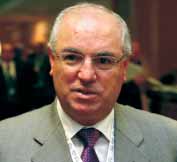
The Portoroz conference in November 2005 gave me the pleasure,
for the first time since becoming MAP Coordinator, of addressing the
Meeting of the Contracting Parties to the Barcelona Convention. I
am happy to report that Portoroz proved to be an important cross-
roads for MAP on its 30th anniversary.
Its importance is partly due to the significant results achieved in
the two years preceding the 14th CP meeting.
The amended Barcelona Convention and the New Prevention and
Emergency Protocol entered into force in 2004. A Mediterranean
INFO/RAC
Strategy for Sustainable Development was prepared. MAP and the
MAP COORDINATOR PAUL MIFSUD
European Commission agreed on a Joint Work Programme. The GEF
Project for the determination of priority actions for the further elabo-
ration and implementation of the Strategic Action Programme for
the Mediterranean was successfully completed and the new GEF
Strategic Partnership was approved.
Since the Contracting Parties meeting in Catania, National
Action Plans to address land-based sources of pollution have been
prepared by all Mediterranean countries. The Strategy for the imple-
mentation of the New Prevention and Emergency Protocol has been
finalized. The Report on Environment and Development has been
published.
Progress has continued to be made in the implementation of the
Strategic Action Programme for Biodiversity. A draft text of an ICAM
Protocol has been prepared. The valuations of MAP, ERS/RAC and
CP/RAC have been carried out and a Mediterranean Environment
Award has been organized.
Mechanisms for the implementation of other provisions of the
Barcelona Convention continued to be developed, including those
dealing with liability and compensation, compliance and reporting.
3
PERSPECTIVE
PERSPECTIVE
At the same time partnerships continued to be developed and
strengthened in particular with the European Commission as well as
with other regional and global programmes and organizations in-
cluding other UN agencies, intergovernmental organizations and
NGOs.
This brought us to Portoroz with many important issues settled.
The Contracting Parties were able to discuss the programme of work
for the next biennium as endorsed by the meeting of MAP Focal
Points. But the Ministerial segment also tackled four important topics:
The first is the future orientation of MAP. The views expressed
during the discussion formed the basis of the terms of reference for
the extraordinary meeting which will lead to the development of a
new Vision and Strategic Direction for the next decade. This will
enable MAP to be in a position to respond to the challenge of
sustainable development in the Mediterranean taking into account
recent developments at the international sub-regional and regional
levels especially those within the EU. I have in mind in particular the
Marine Strategy and the new EC initiative to de-pollute the Medi-
terranean by 2020.
Second, following the development of the Mediterranean Strat-
egy for Sustainable Development which was presented to the meet-
ing for endorsement, the major challenge in the coming years will be
its implementation in particular at the national level. Even though it
is a framework and non-binding strategy, the Portoroz meeting
nevertheless gave strong political support towards the implementa-
tion of the strategy's objectives, orientations and proposed actions.
Third, Portoroz endorsed the National Action Plans to address
pollution from land-based sources. This was very important in view of
the new Strategic Partnership for the Mediterranean Large Marine
Ecosystem which has been approved by the GEF Secretariat.
The last item on the agenda of the Ministerial segment dealt with
a biodiversity issue. Portoroz saw approval of proposals for coordi-
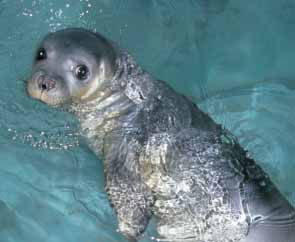
nated initiatives to safeguard the Mediterranean monk seal as a rare
species which is on the verge of extinction.
Finally, the meeting adopted the Portoroz Declaration, providing
strategic objectives for the adoption of the MSSD, implementation of
the NAPs, the future orientation of MAP and the conservation of the
monk seal.
Today, 30 years after the Barcelona Convention launched the
INFO/RAC
Mediterranan Action Plan, 21 countries of the basin and the European
Community are Contracting Parties. The fact that after three decades
this process is still going strong is an achievement in itself. MAP has
"...after three
shown that the countries in the Mediterranean region can work
together for the benefit of the region. It shows that the environment
decades the
can serve as a unifying factor to take concerted action on common
concerns. Every effort should be made to sustain this process, to
MAP process
enhance MAP's political clout, to make it more effective and relevant
for the countries in the region and to strengthen the sense of friendship
is still going
and cooperation that have always characterized the relationships
within MAP.
strong"
Paul Mifsud,
MAP Coordinator
4
AT THE PODIUM
AT THE PODIUM
A new chapter
of cooperation
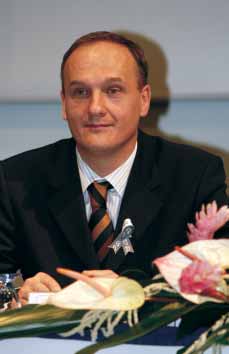
The visionary initiative to establish the Mediterranean Action Plan and its
thirty-year tradition no doubt represent a bright and important segment
of the history we share. All the coastal states of the Mediterranean have
united to preserve the healthy marine sources which are the foundation
of regional economy and bear significant cultural implications (in the
material, social and intellectual sense).
Regrettably, the maritime and coastal regions are more and more
exposed to extensive changes due to increasing pressures and influences
of sector-oriented development. The quality of life is decreasing to the
detriment of all who live there. The above trends lead to the conclusion
that the actual role which the Mediterranean Action Plan plays in the
implementation of the Mediterranean states development policy needs
to be strengthened. Without the Mediterranean Action Plan the state of
marine environment and the coastal regions would surely be in a poorer
and degraded state.
The fact is that the role of MAP is actually determined by the action
of its members, the Contracting Parties to the Barcelona Convention. It
is us, gathered here at the 14th Ordinary Meeting of the Contracting
Parties in Portoroz, who are responsible for improving the previous
approaches and practices.
Slovenia believes that consultation, co-operation and harmonization
of development plans are the only way to achieve sustainable devel-
INFO/RAC
H.E. MR JANEZ PODOBNIK
opment paying attention to the use of common marine resources.
Co-operation and comprehensive development plans at the sub-regional
level are of key importance for the general development and progress of
the region.
During its biennial presidency, Slovenia will therefore strive to
strengthen co-operation at all levels in order to achieve sustainable
development in the Mediterranean. We see great opportunities in look-
ing for the synergies in the field of comprehensive marine resource
management. The quality of work done so far and the materials drafted
in the framework of the UNEP/MAP process as well as the European
Union programmes enable us to achieve those goals. Therefore, I
believe that the 14th Ordinary Meeting of the Contracting Parties to the
Barcelona Convention taking place upon the 30th anniversary of UNEP/
MAP and the EU summit coinciding with the 10th anniversary of the
Euro-Mediterranean Partnership which is taking place at the end of
November in Barcelona could be more than a mere coincidence. It is us,
gathered here in Portoroz, who are responsible for the development break-
through which will improve the quality of life at the Mediterranean coasts
for us and for the future generations. I hope that the Portoroz Declara-
tion will reflect the spirit for the necessary action.
Excerpt from address by
H.E. Mr Janez Podobnik,
Minister of the Environment and
Spatial Planning, Republic of Slovenia
5
AA
T T THE PODIUM
THE PODIUM
Bringing Regional Seas into the
21st century
The Regional Seas can be proud of many achievements in the last 30 years, with the
Mediterranean Region being a shining example. But there are challenges indeed. For
quite some time the Regional Seas Programme was the pearl on the crown of UNEP
[...] Let us be honest. Regional Seas, though having spearheaded the early stages of
UNEP's development, have not always been at the cutting edge of UNEP's growth:
environment for development. That is the crossroad we are at now: how to bring the
Regional Seas into the 21st century, move it beyond the strictly environmental field
into the sustainable development arena, without aiming at being all encompassing,
and, by the very nature of being all encompassing, be so dispersed and diluted that
no real impacts are achieved.
MAP has started the process some years ago. And hopefully the ministerial discus-
sions at this meeting, based on the documentation available, will give a major push
forward to what we call "bringing the Regional Seas into the 21st century."[...]
Despite the achievement of MAP and the other actors in the region, despite the
INFO/RAC
great strides in environmental management made in all countries bordering the Sea,
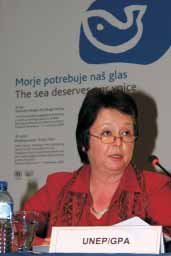
DR VEERLE VANDEWEERD
pollution levels are still high and coastal degradation continues. To address this, the
EU launched a laudable initiative with the goal to de-pollute the Mediterranean by
2020. A great and most needed initiative, costly without doubt. MAP and its Secre-
tariat could and should contribute to this initiative in a proactive and effective man-
ner. One of the ways forward seems to be obvious; building on the achievement of
MED POL. Discussions are ongoing in the GEF to start a new Strategic Partnership
with a major focus on investments for pollution abatement partnership with an
Investment fund of over US$75 million, with the potential to leverage over US$225
million in concrete investments. The new GEF project is about rehabilitating the Med
Ecosystem, harnessing the strength of all partners to do so.
The MAP Secretariat will need to play an active role in this project development
and implementation, including the brokering of regional partnerships. MAP, just as all
Regional Seas, has, in their cooperation with the GEF, to move beyond transboundary
diagnostic analysis and strategic action planning to being a real partner in investment
and action [...]
De-pollution has to stretch all the way from the hilltops to the oceans and starts on
land. End of pipe solutions will no longer bring the required effect. Applying ecosys-
tem approaches to management of human activities is one of the pillars of the EU
Marine Strategy, a strategy to which the MAP Secretariat contributed. Translating this
strategy into action is the challenge ahead [...]
The global Regional Seas Programme is looking to this region for leadership, for
moving the global Regional Seas Programme into the next phase. We realize that
there are many challenges but also many opportunities. If this region does not
succeed, which region can succeed?
We need a clear vision, shared by all actors in the region. We need to define our
limits and boundaries and focus on targeted interventions. We need to use and
develop the strength of the MAP, including as a policy forum, to come to joint action.
MAP 30 years ago was the flagship programme of UNEP. I invite you to become
the flagship programme again.
Excerpt of address by Dr Veerle Vandeweerd, Head of the
UNEP Regional Seas Programme and UNEP/GPA Coordinator,
on behalf of Dr Klaus Toepfer, Executive Director of UNEP
6
AT THE PODIUM
AT THE PODIUM
Italy's commitment to MAP
The biennium of Italian Presidency of the Barcelona Convention has been crucial in
raising awareness among the Contracting Parties on the need of strengthening
technological innovation and international environmental cooperation, by involving
the business community, local communities, multilateral financial institutions and
civil society, aiming at "sustainable" economic growth in Southern-Mediterranean
Countries. [...]
We need to be flexible and capable of adapting the MAP to a multilateral context
which is always in evolution: from the new initiative proposed by the EC on the de-
pollution of the Mediterranean by 2020, to the GEF initiative Strategic partnership
opportunities. There is consequently the necessity of MAP to join forces and establish
partnership with other key institutions in the region such as the GEF, World Bank
and EC.
The Italian Government has already begun working in this way trying to promote,
both in the multilateral fora and bilaterally, the concept of partnership between national
and international public institutions and private businesses. [...]
We have faced the challenge being conscious that Italy, as a G8 member Country,
has major and more burdensome duties than the Southern-Mediterranean Countries.
INFO/RAC
DR CORRADO CLINI
And we have chosen the principle of responsible solidarity as our guideline. This
requires concrete actions to be put in place for the transfer of knowledge and for the
strengthening of local governance capacity in the management of natural resources
and the environment. In other words, we have committed ourselves to jointly create
projects for long-term development. In conclusion I hope these days will allow further
and tangible progress in achieving sustainable development in the Region.
Excerpt from address by
Dr Corrado Clini, Director General, Ministry for the
Environment and Territory, Italy, in his capacity as outgoing
President of the Bureau of the Contracting Parties
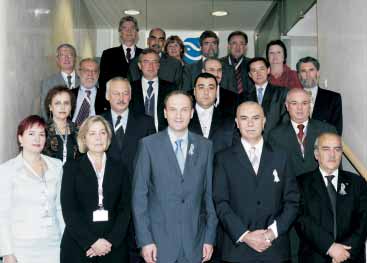
H.E. MR JANEZ PODOBNIK
WITH MINISTERS AND
OTHER HEADS OF
DELEGATIONS AND
ORGANIZATIONS ATTENDING
THE CONTRACTING PARTIES
MEETING IN PORTOROZ
INFO/RAC
7
DECLARA
DECLARATION
TION
The Portoroz Declaration
T he Contracting Parties to the Convention for the Protection of the Marine Environ-
ment and the Coastal Region of the Mediterranean (Barcelona Convention), meeting
in Portoroz, Slovenia, from 8 to 11 November 2005, in the framework of the United
Nations Environment Programme/Mediterranean Action Plan (UNEP/MAP), Recalling
that the Mediterranean Action Plan was approved in 1975 by the Governments of the
Mediterranean States and the European Community to assist Mediterranean Governments
to assess and control marine pollution, to formulate their national environment policies, to
improve the ability of governments to identify better options for alternative patterns of
development and to make better and rational use of resources;
Recognizing the valuable contribution that the Barcelona Convention and its related Protocols
have made to improving the quality of the marine environment and promoting sustainable
development in the Mediterranean;
Recognizing that over the last three decades MAP has been a significant instrument for
change and progress concerning environmental matters in the Mediterranean;
INFO/RAC
Recalling the entry into force in 2004 of the Convention for the Protection of the Marine
Environment and Coastal Region of the Mediterranean (the amended Barcelona Convention)
and the Protocol concerning Cooperation in Preventing Pollution from Ships and, in cases of
The MSSD constitutes
Emergency, Combating Pollution of the Mediterranean Sea (the Prevention and Emergency
Protocol);
an opportunity for
Recalling that there should be a synergy between the Mediterranean Strategy for Sustain-
Mediterranean
able Development (MSSD) and other MAP components, on the one hand, and the forthcom-
countries to achieve
ing European Strategy for the Conservation and Protection of the Marine Environment and
the European Union Maritime Policy, on the other hand;
progress in environ-
Moreover, recognizing the valuable work undertaken by the MAP Secretariat, the Mediter-
mental protection, as
ranean Commission on Sustainable Development (MCSD) and the MAP components, in par-
well as social, economic
ticular the Blue Plan Regional Activity Centre (BP/RAC), and recognizing the contributions from
NGOs and civil society throughout the preparatory process of the MSSD;
and cultural advance-
ment in a sustainable
Taking note of the outcomes and proposals of the Tenth Meeting of the MCSD (Athens, June
2005), in particular the finalized text of the MSSD and the Athens Charter; Reaffirming the
manner, thus
necessity for achieving sustainable development at regional, national and local levels in line
contributing to peace,
with the Millennium Development Goals (MDGs), the Mediterranean Declaration for the
World Summit on Sustainable Development, the Johannesburg Plan of Implementation, the
stability and shared
UN Decade for Education for Sustainable Development (2005-2014) and the Catania Declara-
prosperity in the region
tion;
Noting with satisfaction the recognition by the Euro-Mediterranean Partnership, through the
Second Conference of Ministers of the Environment (Athens, July 2002) and the Seventh
Conference of Ministers of Foreign Affairs (Luxembourg, May 2005) of the importance of the
MCSD and the MSSD for mainstreaming sustainable development throughout the Euro-
Mediterranean Partnership;
Convinced that promoting sustainable development is a vital necessity to meet development
challenges in the Mediterranean region;
Convinced also that the elaboration and implementation of sustainable development strate-
gies are necessary steps for promoting equity, shared prosperity and stability by enhancing the
The MSSD does not
value of Mediterranean assets, reducing disparities, changing unsustainable production and
concern only MAP and
consumption patterns, ensuring the sustainable management of natural resources and im-
proving governance at all levels;
the Contracting Parties,
but also all other actors
With regard to the Mediterranean Strategy for Sustainable Develop-
ment (MSSD), agree that,
and stakeholders from
the private sector, civil
1. The MSSD constitutes an opportunity for Mediterranean countries to achieve progress in
environmental protection, as well as social, economic and cultural advancement in a sustain-
society and other major
able manner, thus contributing to peace, stability and shared prosperity in the region, as well
groups, as well as
as to the fulfilment of the commitments made by the Contracting Parties at the World Summit
on Sustainable Development (WSSD) in 2002 and the MDGs,
relevant regional and
2. The MSSD is a framework strategy which defines key challenges, principles, steps and
international
actions to guide the promotion and implementation of sustainable development at the re-
institutions; it provides
gional, subregional and national levels, as well as to rationalize regional and international
an excellent
cooperation and promote dynamic partnerships for the sustainable development of the Medi-
terranean region,
opportunity to
3. The MSSD does not concern only MAP and the Contracting Parties, but also all other actors
undertake coordinated
and stakeholders from the private sector, civil society and other major groups, as well as
efforts and achieve joint
relevant regional and international institutions; it provides an excellent opportunity to under-
take coordinated efforts and achieve joint progress,
progress
8
DECLARATION
DECLARATION
4. The MSSD is a flexible framework allowing for adaptation to major developments and the
The MSSD constitutes
integration of determinant emerging issues,
an essential
5. The implementation of sustainable development strategies requires serious policy and
contribution to a
institutional reforms together with the promotion of a dynamic culture of change, in particular
proactive win-win
concerning unsustainable production and consumption patterns,
scenario based on
6. The MSSD constitutes an essential contribution to a proactive win-win-win scenario based
on synergies, efficient management and cultural diversity for a codeveloped ecoregion and a
synergies, efficient
shared destiny,
management and
7. The implementation of sustainable development strategies requires the application of
cultural diversity for a
various principles, including the satisfaction of the basic needs of all citizens, in line with the
commitments of the Contracting Parties for the implementation of the MDGs, the promotion
codeveloped ecoregion
of education for sustainable development, access to information, a multistakeholder partici-
and a shared destiny
patory approach, the precautionary and polluter/user-pays principles, as well as common,
shared but differentiated responsibility,
The Contracting Parties decide,
1. To adopt the MSSD and make the commitment to do their utmost to implement its
objectives, orientations and proposed actions as appropriate,
2. To prepare and/or update the respective National Strategies for Sustainable Development
(NSSDs), giving due consideration to the MSSD,
3. To integrate sustainable development principles in their development and other relevant
policies and legislation, in particular through the adequate revision of legal frameworks and
The implementation of
relevant policy reforms,
sustainable
4. To mobilize and provide relevant adequate human, technical and financial means for the
implementation of the MSSD and NSSDs,
development strategies
requires [...] the
5. To demonstrate their commitment to the implementation of the MSSD by promoting
education for sustainable development in their education programmes.
promotion of education
6. To demonstrate clearly their commitment to implementing the MSSD through the identifi-
for sustainable develop-
cation and implementation of specific and relevant projects at the regional, subregional,
ment, access to
national and local levels,
information, a
7. To renew their commitment to the implementation of the WSSD Mediterranean Type II
multistakeholder
Partnership Initiative and to propose or actively participate in the elaboration and implemen-
tation of partnership initiatives that correspond to the objectives, orientations and proposed
participatory approach,
actions of the MSSD and the respective NSSDs,
the precautionary and
8. To promote consultation mechanisms and awareness-raising campaigns to ensure broader
polluter/user-pays
ownership and stronger support from the concerned actors, in particular the private sector
and NGOs, in their implementation,
principles, as well as
common, shared but
9. To evaluate progress in the implementation of the MSSD at the regional and national levels,
using an adequate set of indicators, to revise the MSSD as appropriate, if necessary in two
differentiated
years, and to undertake an overall assessment and review of the MSSD after five years,
responsibility
10. To request the partners, concerned actors and funding agencies at the regional, subregional
and national levels to give due consideration to the MSSD's objectives, orientations and
proposed actions in their cooperation programmes and to contribute actively to the imple-
mentation of the MSSD and NSSDs, and the elaboration of the latter, where necessary.
With regard to the National Action Plans (NAPs)
Concerned with the significant impact of land based pollution on the Mediterranean marine
and coastal environment and its ecosystems;
Aware of the important contribution of the Strategic Action Programme (SAP) adopted in
1997, the related National Action Plans (NAPs) and the process of the reduction of industrial
pollution by Mediterranean countries to the implementation of the MSSD;
Reaffirming the compatibility and concurrence of the SAP's targets with those of the EU
Marine Strategy, the related EU directives and international Conventions;
Recognizing the necessity to involve all concerned stakeholders, including civil society and
NGOs, in the implementation of the SAP and the related NAPs;
Considering that the process of the implementation of the NAPs, which will require adequate
financial resources, will enhance economic, technological and social development at the local
level, and also that the proposed GEF Partnership for the Mediterranean large marine ecosys-
tem will contribute to their implementation;
Keeping in mind that, with the entry into force of the LBS Protocol, a legally-binding regional
plan containing measures and a timetable for the gradual reduction of pollution, based on the
SAP [Strategic Action Plan] and other relevant international developments, will have to be
formulated and adopted;
INFO/RAC
9
DECLARA
DECLARATION
TION
Considering that SAP and the NAPs provide useful tools already in place to contribute to the
achievement of the proposed strategic goal for the Euro-Mediterranean Partnership to depollute
the Mediterranean by 2020.
The Contracting Parties decide,
1. To endorse the NAPs and integrate them into their national development plans, national
strategies and pollution control plans, including prevention and reduction measures, as appro-
priate,
2. To encourage the involvement of all stakeholders in the implementation and monitoring of
the NAPs,
3. To mobilize all necessary resources for the full implementation of the NAPs through national
regular budgets and innovative financial instruments, as well as from international institutions,
4. To contribute to the implementation of the proposed Euro-Mediterranean Partnership
initiative, once it has been endorsed, to depollute the Mediterranean by 2020, based on
MAP's ongoing and future work, in particular on the SAP and the NAPs.
With regard to the conservation of the Monk Seal
Considering that the Protocol concerning Specially Protected Areas and Biological Diversity in
the Mediterranean (the SPA and Biodiversity Protocol) entered into force in 1999, and aware
INFO/RAC
of the urgent need to implement the Strategic Action Programme for the Conservation of
Marine and Coastal Biological Diversity in the Mediterranean region (SAP-BIO), adopted in
2003 as a response to safeguard Mediterranean biodiversity and achieve the WSSD's targets;
Concerned at the high risk of extinction of the Mediterranean Monk Seal, mostly due to
human activities, deliberate killings and habitat losses;
With the entry into
force of the Protocol for
Aware that the recovery of this species is a major challenge for the conservation of Mediter-
ranean biodiversity;
the LBS Protocol,
Noting with satisfaction the success stories of the integration of the conservation of this
a legally-binding
species into local development processes;
regional plan containing
Recognizing the necessity of having an appropriate legal framework and participatory mecha-
measures and a
nisms for the protection and conservation of this species and its habitats;
timetable for the
Acknowledging the need to have adequate operational tools, together with appropriate
gradual reduction of
human and financial resources for targeted conservation and efficient management;
pollution, based on the
The Contracting Parties decide,
SAP [Strategic Action
1. To take as quickly as possible all necessary measures for the implementation of the Action
Plan for the Mediterranean Monk Seal (Monachus monachus) and to strengthen their coop-
Plan] and other relevant
eration to reverse the decline of the species,
international
2. To seriously address the problem of deliberate Monk Seal killing, combined with habitat loss,
developments, will have
through action tailored to local communities and involving fishermen and other stakeholders,
to be formulated and
3. To promote information on relevant success stories regarding the protection of the Monk
adopted
Seal and exchange experience with all concerned parties and partners,
4. To further develop, implement and enforce legislative measures relevant to the conserva-
tion of the Monk seal, including incentive and regulatory measures, together with adequate
operational management plans for targeted human activities,
5. To contribute to the implementation of relevant activities by concerned countries, the
Specially Protected Areas Regional Activity Centre (SPA/RAC) and its partners through bilateral
cooperation and voluntary contributions.
With regard to the future orientation of MAP
Acknowledging the need to review, after 10 years, the role and mandate of MAP, taking into
account the developments that have taken place in social, economic and environmental fields
at the international and regional level;
The Contracting Parties
Convinced that a Strategic Vision for MAP can further contribute to sustainable development
in the Mediterranean region;
decide] to contribute to
the implementation of
Considering that the findings, conclusions and recommendations of the external evaluation of
MAP may constitute a good basis for launching the process to introduce any necessary
the proposed Euro-
reforms to strengthen MAP's future role in the Mediterranean;
Mediterranean
The Contracting Parties decide,
Partnership initiative,
1. To request the MAP Secretariat to draft a vision statement for MAP, taking note of the
once it has been
MAP evaluation report,
endorsed, to depollute
2. To convene an extraordinary meeting of the MAP Focal Points as soon as possible to discuss
the Mediterranean
the new vision for MAP and to submit recommendations for MAP's future orientation to the
meeting of the Contracting Parties in 2007.
by 2020
10
MAP-EC AGREEMENT
MAP-EC AGREEMENT
MAP and the EC strengthen their partnership
MAP and the European Commis-
sion have launched a joint work
programme to strengthen their
mutual co-operation on a wide
range of Mediterranean environ-
mental and sustainable develop-
ment issues.
European Commissioners
adopted the text on 9 November
2005. The document was formally
signed on the same day in
Portoroz, Slovenia, by Mr Paul
Mifsud, MAP Coordinator and in
Brussels by Ms Catherine Day, Di-
rector-General of the EC Directo-
rate-General for the Environment.
The document is entitled
"Work Programme of Coopera-
tion between The Mediterranean
INFO/RAC
Action Plan (MAP) Coordinating
Unit and the European Commis-
sion concerning the Strengthen-
ing of Cooperation between the
MAP Coordinating Unit and the
European Commission in the Field
of Environment".
Three priorities
Three central priorities and seven
cooperation areas are listed in the
Programme. The priorities are:
a) regular high-level meetings for
coordination on strategic mat-
ters of common interest;
b) increased interchange be-
tween the EC and MAP's
seven Regional Activity Cen-
tres to implement environ-
INFO/RAC
mental policies and actions
within the European Union,
the European Neighbourhood Policy, and actual or
Mediterranean Partnership, as well as the systematic
potential EU candidate countries in the Mediterra-
exploration of financing possibilities for MAP activities
nean basin;
under EU financial instruments.
c) strengthening of the environmental dimension of
The seven key action areas for co-operation identified
public policy and the promotion of sustainable
cover a wide range of activities relating to, for example,
development in countries bordering the Mediterra-
the prevention of marine pollution from both land-based
nean.
sources and maritime activities; protection of
The programme emphasises the close links to
biodiversity, promotion of sustainable development and
be developed between MAP activities and the Euro-
clean industrial production technologies.
11
STRA
STRATEGY TEGY
A strategy to preserve the quality
and stability of Mediterranean life
The Mediterranean is in grave danger of losing the main environmental assets that
have provided the basis for its development, especially agriculture and tourism.
Poor management of scarce natural resources particularly water, agricultural
land, energy and coastal zones is compromising economic development, the
quality of life and social stability.
These concerns prompted the Mediterranean states to launch a wide-ranging
cooperative effort to design a Mediterranean Strategy for Sustainable Develop-
ment (MSSD). The process involved governments, intergovernmental organiza-
tions, regional organizations, NGOs, and representatives of the private sector and
civil society, many of which were already active partners in the Mediterranean
Commisson on Sustainable Development (MDSD) and the Mediterranean
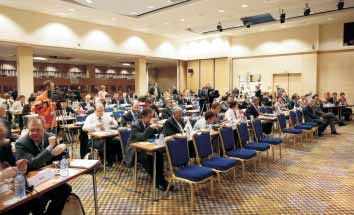
Action Plan. The resulting strategy was presented to the 14th Meeting of the
The continued spread
Contracting Parties to the Barcelona Convention for adoption.
of unsustainable
Alarming degradation
production and
The strategy sounds an alarm that environmental degradation has accelerated,
consumption
setting in motion irreversible trends. Valuable agriculture land is being lost to
patterns is likely to
urbanization and salinization -- over 80% of arid and dry areas are already affected
increase the costs of
by desertification, and the consequences will be exacerbated by the impact of
environmental
climatic change. Scarce, over-used water resources are threatened with depletion
degradation
or degradation. Urban standards of living and health are being degraded by traffic
dramatically
congestion, noise, poor air quality and rapid growth of waste generation. Coastal
areas and the sea are already affected by pollution and erosion; while fish re-
sources are being depleted. Landscapes and biodiversity have been disrupted by
over-exploitation.
The potential increase in environmental pressures on coastal regions over the
coming 20 years is considerable, particularly in the areas of tourism. Some 137
million more visitors are expected to visit this region. Transport is projected to more
than double in volume. Urban development is inevi-
table to house 33 million more people, bringing
urban sprawl and larger energy infrastructures.
The continued spread of unsustainable production
and consumption patterns is likely to increase the costs
of environmental degradation dramatically. Such
damage already accounts for between 3 and 5 per-
cent of GDP, according to the World Bank.
The northern area is not able to absorb the consid-
erable pressure from emigration from southern and
eastern Mediterranean countries, which are faced by
INFO/RAC
the need to create over 30 million new jobs by 2025.
Most Mediterranean economies, which have been insufficiently dynamic for
the past 20 or 30 years in relation to other regions of the world, are experiencing
difficult employment situations, with unemployment rates ranging generally
between 8 and 25 percent, the strategists point out. Poverty is closely related to
the employment situation, as well as changes that marginalize categories of
society, such as the very rapid transformation of the agricultural, crafts, and
rural sectors.
12
STRATEGY
STRATEGY
INFO/RAC
Four objectives
The environment should not be considered as an additional constraint, but as a
driving force, an asset and an incentive, the strategy argues. Four objectives are
set up to promote progress towards sustainability in the economic, social and envi-
ronmental fields and governance:
1) Contribute to economic development by enhancing Mediterranean assets.
2) Reduce social disparities by implementing the Millennium Development Goals
and strengthen cultural identities.
3) Change unsustainable production and consumption patterns and ensure
the sustainable management of natural resources.
4) Improve governance at the local, national and regional levels.
The MSSD focuses
The MSSD focuses particularly on the integration of environmental concerns
particularly on the
into key economic development sectors, while giving due consideration to social
integration of
and cultural dimensions. As a basis for building a dynamic regional process of
environmental
sustainable development, it outlines the main needs and challenges in the region,
concerns into key
before going on to identifying four major objectives and sets of actions to be
economic
carried out in seven basic priority fields of action.
development sectors,
while giving due
Seven priorities
consideration to
The seven interdependent priority fields considered essential to make real progress
social and cultural
are:
dimensions
1) better management of water resources and demand;
2) improved rational use of energy, increased renewable energy use and
mitigation of and adaptation to climate change;
3) sustainable mobility through appropriate transport management;
4) sustainable tourism as a leading economic sector;
5) sustainable agriculture and rural development;
6) sustainable urban development; and
7) sustainable management of the sea, coastal areas and marine resources.
These priority areas were chosen because they are the most threatened by
unsustainable trends; they are crucially important areas at the economic and social
levels, offering a strong potential for improvement, and they are ripe for action
and demonstrate all the shortcomings in governance and integration that need to
be corrected if the region is to reverse the current degradation.
13
N
NA ATIONAL ACTION PLANS
TIONAL ACTION PLANS
NAPs: Green light to reduce pollution
The Mediterranean marine environment has for long
After the adoption of the
been subjected to considerable stress as a result of pol-
SAP, the Global Environment
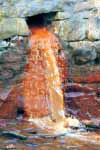
lution caused by human activities. The greatest part of
Facility (GEF) approved a
this pollution around 80% originates on land and is
Mediterranean Project for
linked primarily to population pressures, urban growth,
20012005, and contributed
industrial and agricultural activities.
US$6 million for the imple-
One of the major MAP achievements in its ongoing
mentation of a number of
struggle against land-based pollution has been the for-
activities on the ground. Other
mulation and adoption by the Contracting Parties of a
donors, such as the Fonds
Strategic Action Programme (SAP) to address pollution
français pour l'environnement
from land-based activities.
mondial (FFEM), brought the
FOUAD ABOUSAMRA
The SAP is the basis for the implementation of
total budget to US$12 million.
the Land-Based Sources (LBS) Protocol by the Mediter-
The major contribution of the project was the prepara-
ranean countries over the next two decades. It is an
tion of National Action Plans (NAPs) to address land-
action-oriented initiative identifying priority target
based pollution.
categories of substances and activities to be eliminated
NAPs are now complete for all Mediterranean coun-
or controlled by the Mediterranean countries within a
tries. They propose the policy and actions each country
set time frame. The reduction and phasing out targets
can take to reduce pollution in line with SAP targets.
are formulated in harmony with related regional and
After wide discussion, the 14th Meeting of the Con-
international Conventions and programmes, such as
tracting Parties in Portoroz recognized the great impor-
the EU Directives, policies and strategies and the
tance of the NAPs, and formally endorsed them with a
Stockholm and Basel Conventions.
view to their integration into national development plans.
The key land-based activities addressed in the SAP
are linked to the reduction of municipal and industrial
A strong foundation
pollution. Its contribution to the mitigation of munici-
The NAP process made good use of the background
pal pollution focuses on technical assistance, such as
work carried out in the framework of MED POL, from
guidelines for the construction of treatment plants,
guidelines and technical and policy documents to ca-
capacity building for their operation and maintenance.
pacity building programmes and information gathered
Since 2003 it has addressed industrial pollution by
on emissions and releases.
preparing the policy and technical basis for achieving
The NAP process has been particularly notable for
concrete reductions. A national baseline budget of
the level of involvement of all stakeholders. In each
emissions and releases was developed and tested as
country, national and local authorities, the industrial
the reference point from which a reduction in percent-
sector and NGOs sat around the same table discussing
age of pollutant inputs must be achieved.
priorities, possible actions and opportunities for invest-
ment. Its success has led to a new GEF Strategic Part-
nership, including the World Bank and a large number
of international organizations, to support the long-term
implementation of NAPs.
Additional positive prospects lie in the expected
synergy with the new EC "Horizon 2020" initiative, with
its very similar pollution reduction objectives and
targets for the Mediterranean region.
The NAP implementation process, with its embed-
ded mechanisms for information exchange, technology
transfer, promotion of cleaner technology, public
participation and sustainable financing, is expected to
CP/RAC
greatly enhance economic, technological and social
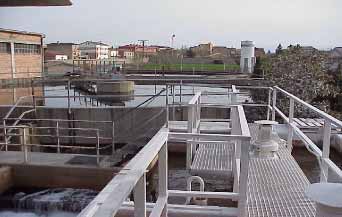
THE KEY LAND-BASED ACTIVITIES ADDRESSED IN THE SAP ARE
development at the local level, thus making a concrete
LINKED TO THE REDUCTION OF MUNICIPAL AND INDUSTRIAL
POLLUTION.
contribution towards sustainable development.
14
BIODIVERSITY
BIODIVERSITY
Protecting Mediterranean biodiversity
The Contracting Parties are committed to take all necessary
measures to reverse the decline of the species in the Medi-
terranean and to give new life to a related Action Plan.
As a response to mitigate the impact of the complex
threats to the Mediterranean marine and coastal biological
diversity, the Contracting Parties adopted in 2003 the Stra-
tegic Action Programme for the Conservation of Biological
Diversity in the Mediterranean Region (SAP BIO), elaborated
through a participatory approach involving the stakeholders
at national and regional levels.
The SAP BIO represents a further development of the
regional policy on biodiversity. It identifies priority targets,
objectives and actions to be taken at regional and national
levels with a view to implementing the Specially Protected
Areas (SPA) and Biodiversity Protocol, in order to protect
and conserve the values of marine and coastal biodiversity.
One of the most important issues addressed by the SPA
and Biodiversity Protocol and the SAP BIO is the protection
ANGELA LOPEZ GARCIA/UNEP / STILL PICTURES
and conservation of endangered or threatened species.
Urgent action to save the monk seal
As part of the Portoroz Declaration, Ministers and government officials from 21 Mediterranean countries and the
European Community agreed a series of actions to prevent the extinction and protect the habitat of the Mediter-
ranean monk seal.
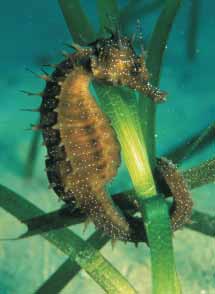
Monachus monachus is one of the most endangered mammal species in the world. Its distribution has dimin-
ished considerably in recent decades. The bulk of the world population (about 380-500 individuals) is currently
limited to only two places. Most are in the eastern Mediterranean (246/300 in Greece). The others are in the
north-east Atlantic, off the coast of north-west Africa.
Human activities are the main cause of the decline: deliberate killing, fishing activities and disturbance of
their habitats.
The monk seal is legally protected in virtually all coun-
tries within its range of distribution. However, important
gaps exist in law enforcement. An integrated approach
combining awareness campaigns for fishermen and
enforcement of appropriate legislation and regulations
is urgently needed.
Moreover, the number of protected sites encompass-
ing seal habitats is still extremely limited in the Mediter-
ranean, and existing ones are not always properly man-
aged. The adequate protection and management of
important monk seal habitats is recognized as a priority.
In spite of the highly threatened status of the
species, there is relatively little basic knowledge on popu-
lation size and parameters, habitat use and movement.
This lack of know-how constitutes a hindrance to the
identification of adequate conservation measures.
Nevertheless, sound management actions can already
be undertaken based on the present knowledge.
CBD-HÁBITAT/FDEZ. DE LARRINOA
15
RECOMMENDA
RECOMMENDATIONS
TIONS
Partnership, vision and accountability
The Portoroz meeting adopted a major programme of work for
MAP in the form of Recommendations. These ranged from a new
protocol on integrated management and an extraordinary
meeting of Focal Points on evaluation of the Action Plan to
adoption of the Mediterranean Strategy, protection of marine
turtles, and an intensified effort for public awareness.
The Portoroz meeting stressed the need for ratification
of MAP legal instruments and recommended the Con-
tracting parties to accept urgently the amendments to
the Convention and main protocols. It urged countries to
help each other, particularly the most vulnerable states,
to build their technical and logistical capacity, particularly
in combating pollution.
The Mediterranean States also recommended starting on
the road to a new Protocol dealing with Integrated
ADOPOULOS-UNEP / STILL PICTURES
P
Coastal Area Management "with a view to its consid-
P
A
THE NEW INFO/RAC WILL PROMOTE PUBLIC PARTICIPATION
eration and possible approval by the 15th Meeting of the
AND AWARENESS RAISING.
Contracting Parties in 2007".
The Contracting Parties also urged new efforts to draw
up rules on liability and compensation, particularly with
regard to pollution of the marine environment as set out
in the Barcelona Convention. They suggested establish-
ing an open-ended working group of legal and technical
experts to propose appropriate rules and procedures.
The MAP States would also like to develop a full com-
pliance mechanism under the Barcelona Convention for
adoption at the next meeting and recommended extend-
JORGE ED ROMAN / UNEP / STILL PICTURES
ing the mandate of the working group on the issue.
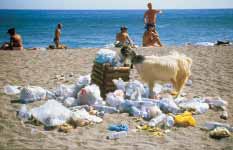
THE CONTRACTING PARTIES CALLED FOR RULES ON LIABILITY
AND COMPENSATION WITH REGARD TO MARINE POLLUTION.
In dealing with MAP's institutional framework, the Medi-
terranean States meeting in Portoroz agreed that ERS/
RAC should be transformed into INFO/RAC. Its work will
including developing a common information management
infrastructure (MAP Info) to support IC activities across
MAP, including the management and periodic upgrading
of the UNEP/MAP website, the MED POL Info System
and the MAP reporting system.
It will also seek partnerships to promote public partici-
pation and raising awareness, and organize the Mediter-
ranean Environmental Award as an annual event.
© MARKO PREM
The Contracting Parties asked the Secretariat to convene
A NEW MEDITERRANEAN PROTOCOL WILL BE DEVELOPED ON
INTEGRATED COASTAL AREA MANAGEMENT
an extraordinary meeting of MAP Focal Points to make
16
RECOMMENDATIONS
RECOMMENDATIONS
recommendations to the 2007 Meeting of the Parties
after reviewing the external evaluation of MAP. A major
issue on the Focal Points' agenda will be discussion of a
draft Vision and Strategic Statement, prepared by the
MAP Secretariat.
With regard to the Mediterranean Commission on Sus-
tainable Development (MCSD), the Portoroz meeting
S
E
R
U
recommended the Contracting Parties to adopt its pro-
T
I
C
P
gramme of work and provide technical and financial
L
I
L
T
support for the implementation of the MCSD's activities
/
S
P
E
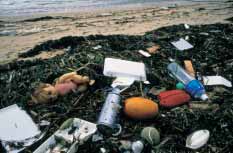
at the regional and national levels. The Recommendations
N
U
MAP WILL WORK WITH THE EUROPEAN UNION TO `DE-
also bring several local authorities, social and economic POLLUTE' THE MEDITERRANEAN BY 2020
bodies, non-governmental organizations and intergovern-
mental organizations into the MCSD as representatives
of civil society.
MAP will strengthen its cooperation with the Euro-
pean Union as a result of another Recommendation,
seeking "synergy on strategic matters of common inter-
est" through meetings at the highest level, supporting
EC activities on the environment in the Mediterranean
region. The Secretariat is to become a major actor in the
Euro-Med initiative to "depollute" the Mediterranean by
2020 and establish a joint work programme with the
ANGELA LOPEZ GARCIA / UNEP / STILL PICTURES
European Environment Agency (EEA) in addition to the COOPERATION WITH THE GLOBAL ENVIRONMENT FACILITY
ON POLLUTION REDUCTION AND BIODIVERSITY
existing programme with the EC.
CONSERVATION IS ENVISAGED.
Cooperation with the Global Environment Facility
(GEF), particularly the Mediterranean Strategy in Partner-
ship "which will substantially contribute to the long-term
process of pollution reduction and preservation of biodi-
versity" was welcomed and endorsed by the Contracting
Parties.
Turning to the Protocol on Land-based Sources of Pollu-
tion, the Portoroz Meeting urged States to "endorse,
support and mobilize the necessary resources" for the
implementation of National Action Plans (NAPs). They
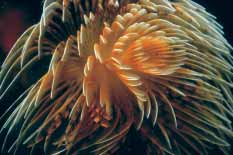
CERVAI MAURIZIO/UNEP / STILL PICTURES
THE MEETING URGED IMPLEMENTATION OF NATIONAL
were asked to approve the creation of a regional task ACTION PLANS TO REDUCE POLLUTION FROM LAND-BASED
force to facilitate cooperation for the transfer of anti- SOURCES.
pollution technology, and made a number of recommen-
dations on reducing municipal sewage pollution, air
pollution and industrial pollution, and on monitoring.
The Contracting Parties adopted a Regional Strategy
for Prevention of and Response to Marine Pollution
from Ships (REMPEC) with the possibility of increasing
staff for this purpose in 2008. The Secretariat is to prepare
guidelines on pollution from pleasure craft activities [...]
so that the next Meeting of REMPEC Focal Points can
submit them for adoption by the next Meeting of
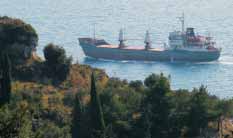
© MARKO PREM
THE STATES ADOPTED A STRATEGY TO PREVENT AND
Contracting Parties.
RESPOND TO POLLUTION FROM SHIPS.
17

RECOMMENDA
RECOMMENDATIONS
TIONS
The Mediterranean States and the EC approved a number
of action plans on biological diversity and specially
protected areas. In addition to steps to protect the monk
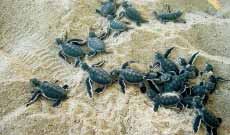
seal, the States recommended legal protection meas-
ures for known marine turtle nesting and adjacent sites
as well as other areas where the turtles congregate.
The Contracting Parties also suggested pilot studies
on tested methods to reduce turtle by-catch and mor-
HUIZEN/UNEP / STILL PICTURES
T
tality in fisheries.
JAN SCHIL
STATES RECOMMENDED LEGAL PROTECTION MEASURES FOR
In implementing the Action Plan for the Conservation of
MARINE TURTLE NESTING SITES.
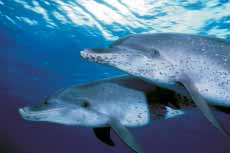
Cetaceans in the Mediterranean sea, the MAP Contract-
ing Parties urged creation and extension of protected
marine and coastal areas specifically for cetaceans, as
well as plans that would put into effect a ban on driftnets.
As part of the Action Plan for the Conservation of Marine
Vegetation, the Secretariat was asked to help countries
make inventories and maps of marine meadows and
marine vegetation formations, in particular barrier
reefs of Posidonia (seagrass) and organogenic surface
formations, terraces (platforms with vermitid gastropods
T
-UNEP / STILL PICTURES
T
covered by soft algae) and certain Cystoseira (algae) belts.
WA
The States also asked MAP members to take action to
MAP STATES URGED CREATION AND EXTENSION OF
PROTECTED MARINE AND COASTAL AREAS FOR CETACEANS
conserve cartilaginous fishes (Chondrichthyans) and
threatened bird species, as well as to monitor invasives.
Among the sites recommended for inclusion in the
protected list, the MAP States singled out:
· the Banc des Kabyles Marine Reserve
· the Habibas Islands
· the Portofino Marine Protected Area.
To further the Blue Plan/Regional Activity Centre (BP/RAC)
work on environment and development, the Contracting
Parties encourage national and local authorities to under-
take assessment of their area's carrying capacity for
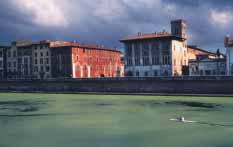
© MARKO PREM
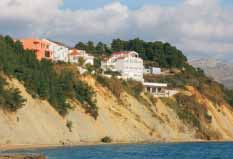
PARTIES CALLED FOR ASSESSMENTS OF CARRYING CAPACITY
tourism activities, and agreed to support activities to
OF TOURISM ACTIVITIES AROUND THE SEA.
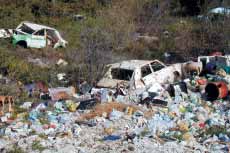
combat land degradation.
The Secretariat is to promote the use of carrying
capacity assessment as a tool for the sustainable devel-
opment of tourism, support local authorities in implement-
ing guidelines for the sustainable management of urban
water resources, and seek new partnerships with inter-
national and regional organizations and institutions on
land degradation.
The BP/RAC will focus its thematic activities on areas
where MAP can offer added value: sustainable develop-
ment indicators and trend analysis, inventory of best prac-
tices and of policy tools for demand management and
© MARKO PREM
integrated development, and sharing of Mediterranean
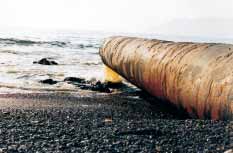
STATES AGREED TO SUPPORT ACTIVITIES TO COMBAT LAND
DEGRADATION AROUND THE MEDITERRANEAN.
experience.
18
ANNOUNCEMENTS
ANNOUNCEMENTS
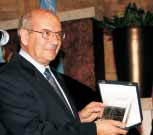
Lucien Chabason receives MAP Medal
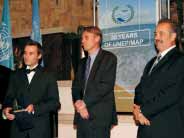
During the Contracting Parties meeting in Portoroz, Slovenia, Mr Lucien
Chabason was presented with the MAP Medal in recognition of his sterling
and dedicated service as Head of the Secretariat to the Barcelona Conven-
tion during his ten years (1994-2004) as MAP Coordinator.
The Medal is awarded by the Contracting Parties to personalities for
their contribution to the Mediterranean environment.
Mr Chabason is the new President of Blue Plan, one of MAP's Regional
Activity Centres.
INFO/RAC
Mediterranean Environmental Award
This award was created in 2005 to honour the best films and
photographs addressing environmental concerns in the Mediter-
ranean basin.
The first winners, selected from more than 400 works from 61
countries, were announced in Portoroz. They are, left to right: Nicolas
Salis (France) for the film R. Mertonensis; Christian Ostermann (Ger-
many) for the film Der durstige Planet Kampf ums Wasser; and
Leonardo Blanco (Spain) for the photograph My world.
INFO/RAC
A sustainable Mediterranean future
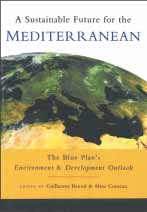
Blue Plan, one of MAP's Regional Activity Centres, has launched a defini-
tive and authoritative report on the progress made by the Mediterranean
countries in their pursuit of sustainable development, and the challenges
that remain. A Sustainable Future for the Mediterranean (2005) is the sec-
ond comprehensive report on environment and development in the Medi-
terranean Basin prepared by the Blue Plan at the request of the Contracting
Parties to the Barcelona Convention. It follows by 15 years the first such
assessment, Futures of the Mediterranean Basin the Blue Plan (1989).
The 2005 report describes the political, financial and cultural barriers to
sustainability, such as increasing disparity between the north and south
Mediterranean shores, continued population growth of coastal cities and
shores, water stress, loss of agricultural lands, waste generation, and ex-
panding maritime traffic. It commends the Mediterranean Strategy for
Sustainable Development (MSSD) as an important first step to address these
problems, but warns that credible action to attack the root causes of
environmental degradation is long overdue. It calls for more ecological
efficiency in sectors such as energy, agriculture, industry, transport and
tourism. It recommends increased protection of the coastal regions and strengthened financing for pollution
reduction.
The report represents a joint effort by the Blue Plan team, other MAP regional activity centres, and hundreds
of experts from around the Mediterranean, with support from the French government, the European Commission,
and the European Environment Agency.
The Blue Plan's report analyses the changes that have occurred in the world and in the Mediterranean region
over the past 20 years. It extends beyond assessment, diagnosis and warnings. It identifies win-win alternatives
and displays firm resolve by calling for action to build a responsible, united and dynamic Mediterranean.
The publications, which is available also in French, was launched in Paris in October, 2005. It was officially
presented to the Contracting Parties during their meeting in Portoroz. BP/RAC together with INFO/RAC will launch
a publicity exercise to promote the publication particularly in the countries of the Mediterranean.
19
SCENES FROM COP 14
SCENES FROM COP 14
INFO/RAC
20