
THE MEDITERRANEAN ACTION PLAN MAGAZINE
51
13th Meeting of the Contracting Parties in Catania
Catania Declaration
Co-operation and partnership
Countdown for reducing industrial pollution and hazardous wastes
Safeguarding biodiversity
Towards a Mediterranean Strategy for Sustainable Development
Mrs. Asma Al Assad, of Syria, visits the MAP


2
In this issue
Editorial
A challenging biennium
3
Key speech
The MAP under the Italian Presidency "Regional
co-operation and partnership", Matteoli
4
Key speech
"UNEP hopes that other regions will follow the MAP lead",
Kakakhel
6
Land-based activities
Countdown for reducing industrial pollution and
hazardous wastes
8
Document
Catania Declaration
9
Biological diversity
A key step for Mediterranean biodiversity
13
Sustainable Development
Towards a Mediterranean Strategy for Sustainable
Development
14
MAP Regional Activity Centres
Restructuring the Environment Remote Sensing
Regional Activity Centre
16
Side events
Special presentations by countries. NGOs and the press.
Environment, food, and cinema.
17
Mediterranean Media
Over 100 journalists cover MAP meeting for the
first time ever
18
The MAP and Syria
Mrs. Asma Al Assad, visits the MAP and encourages
Public Participation 19
MedWaves is published by the Coordinating Unit of the Mediterranean Action Plan in Arabic,
English, and French. It is an informal source of information and it does not necessarily reflect
the official point of view of MAP or UNEP.
THE MEDITERRANEAN ACTION PLAN MAGAZINE
issue:51
Contents, except for pictures, may be reproduced without permission and only for non-com-
Editor: Baher Kamal, baher@unepmap.gr
mercial use. Credit to the source, however, is required. The publisher would appreciate receiv-
ing a copy of any publication that uses MedWaves' news, articles and interviews.
Authors: Arab Hoballah, Francesco-Saverio Civili, Chedly Rais
The designation of geographical entities and the presentation of the material do not imply the
Creative: Marmatakis/Papanagiotou, apapana@panafonet.gr
expression of any opinion whatsoever on the part of the publisher, concerning the legal status
Photography: R. Musacchio & F. Ianniello/Amici per la Vita,
of any country, territory or area, of its authorities frontiers or boundaries.
A. Demetropoulos
Repro: Kandiloros & Kormaris, kandkorm@otenet.gr
Printing : Kontorousis Bros., info@kontorousis.gr
UNITED NATIONS ENVIRONMENT PROGRAMME
ISSN 1105-4034
MEDITERRANEAN ACTION PLAN

Editorial
3
A challenging biennium
The biennium 2004-2005 starts on solid ground for UNEP/MAP as the Contracting Parties have
clearly expressed their appreciation for its activities and renewed their confidence in future
prospects on the occasion of their 13th Ordinary Meeting that took place from 11 to 14
November 2003 in Catania, Italy.:
Under the Italian presidency, an ambitious and challeng-
nium, a Strategy that will take up Mediterranean challenges,
ing programme of work has been adopted. A programme that
identify relevant and realistic objectives, and pave the way
paves the way for major developments in the years to come;
for achieving them,
among other important issues, the following could be high-
ñ Media participation has been outstanding during the
lighted:
Contracting Parties' 13th meeting, with over 100 journalists
ñConsidering the number of ratifications and acceptance of
from Mediterranean countries following, for the first time
amendments, this biennium will celebrate the entry into
ever in the history of the MAP, such an important event for the
force of MAP legal instruments, the revised Barcelona
future of this regional Convention, an initiative, this, that
Convention and its Protocols
needs to be kept high on the agenda of MAP major meetings,
ñ The reduction of pollution from land-based sources through
ñ Last but not least, from this biennium on, UNEP/MAP will
the implementation of
the related Strategic
Action
work in Euros. This makes it the first UN Programme with a
Programme (SAP MED) will take major concrete steps in the
budget in Euros, most of its income and expenditures being
fields of industrial bio-chemical oxygen demand and genera-
in this currency.
tion of hazardous wastes,
ñ Concerning Mediterranean biodiversity, the biennium could
As things always come to an end, Mr. Lucien Chabason
be an important milestone, with the launching of the imple-
has retired from his function as UNEP/MAP Coordinator, after
mentation of the Strategic Action Programme for the
spending almost ten years as head of the Coordinating Unit,
Conservation of Biological Diversity in the region (SAP BIO),
a period during which the MAP activities have tremendously
for which a substantial financial support is expected from the
improved and expanded.
Global Environment Facility (GEF),
ñ In order to improve management and protection of the
Finally, this editorial cannot be concluded without refer-
Mediterranean coastal regions, a determinant asset for the
ring to a very special visit to the Coordinating Unit: on the
region's sustainable development, a regional protocol on
15th of December 2003, in conjunction with the State visit to
Integrated Coastal Management will be prepared,
Greece of the Syrian President Mr. Bashar Al Assad, Mrs
ñ Information on interrelations between environment and
Asma Al Assad visited MAP as a gesture of interest for envi-
development in the region and their prospects will be
ronment and sustainable development in the Mediterranean
improved through the publication of a major Mediterranean
region, for reducing pollution and for promoting Public
Environment and Development Report,
Participation.
ñ The role and programme of activities of the MAP compo-
nents, in particular the Cleaner Production Regional Activity
May the year 2004 be a peaceful and prosperous one for the
Centre (CP/RAC), the Remote Sensing Regional Activity
Mediterranean and all its people.
Centre (ERS/RAC) and the Programme of Cultural Heritage /
Historic Sites, will be reviewed and readapted so as to better
cope with the needs of sustainable development,
ñ Taking into consideration the Vision and the Framework
Arab HOBALLAH
Orientations, a Mediterranean Regional
Strategy
for
Deputy Co-ordinator
Sustainable Development will be prepared during this bien-
Mediterranean Action Plan

Key speech
4
The MAP under the Italian Presidency
"Regional co-operation
and partneship", Matteoli
The following are extracts of the speech by the Minister of the Environment and Territory
of Italy, Altero Matteoli, to the CoP13:
"Italy hosts this Conference of the Parties as a Mediter-
ment, financed by the Short and Medium - Term Priority
ranean country, and as the appointed EU Presidency. In this
Environmental Action Programme (SMAP) in the Mediter-
twofold official capacity we would like to highlight the great
ranean area achieved great importance.
international significance of this meeting and the importance
that Italy attaches to the Barcelona Convention.
In the context of the Barcelona Convention, the enhance-
ment of links and integration between the Mediterranean
I would like to remind that the UN Conference on Human
Action Plan and the Environmental Action Program, highlight-
Environment (Stockholm 1972) indicated the Mediterranean
ed in the Athens Ministerial Declaration, July 2002, is essential
as the region with high priority for the development of an inte-
to give concreteness to the Mediterranean Strategy for
grated program of environment protection which takes into
Sustainable Development, which was approved during the
account economic, social, cultural factors, present in the area.
Johannesburg Summit.
The Mediterranean Action Plan and the Barcelona
... and an opportunity
Convention (1976) provide the first real example of an agree-
The Conference of the Parties in Catania represents the
ment of regional co-operation for sustainable development,
opportunity to set up the priorities and the work plan, which
and represent a tangible implementation of the indications
we should complete within 2005, in order to allow the
highlighted during the Conference of Stockholm.
approval of the Mediterranean Strategy for Sustainable
Development at the next 14th Conference of the Contracting
A challenging process...
Parties.
The Action Plan and the Convention represented the begin-
ning of an interesting and challenging process of co-operation
Thus it will be important to consolidate the positive results
and regional integration, which has also favoured the creation
achieved up to now thanks to the work carried out by the
of the Euro-Mediterranean Partnership among the EU member
Secretariat, by the Regional Activity Centres and by the
countries and other countries on the South and East side of the
Governments for the drafting and implementation of the
Mediterranean, adopted by the Barcelona Intergovernmental
Strategic Action Programmes for the reduction of pollution
Conference in 1995.
from land-based sources, and for the protection of
Biodiversity, which represent the two guideline tools for
The Partnership aims at identifying and developing com-
reducing pollution in the Mediterranean and for the safeguard
mon projects, in the perspective of creating a free trade area in
of the endemic species, unique in their contribution to the
the Mediterranean, to be achieved by 2010, financed by the
ecosystems.
EU programme.
The need for effective synergy
In the framework of MEDA, local and regional plans for the
At the same time it will be necessary to ensure an effective
protection of the environment and for sustainable develop-
synergy between:

Key speech
5
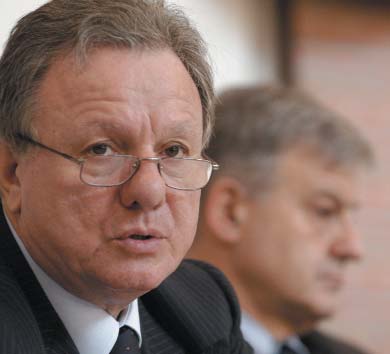
Minister Matteoli,
Corrado Clini
ñ The institutional levels, thus the Presidency and the
a development opportunity.
Secretariat of the Barcelona Convention together with the
Mediterranean Commission for Sustainable Development and
I would like to remind that apart from the development of a
the European Commission;
bilateral and multilateral co-operation programme, Italy is
ñ The work programme of the Mediterranean Action Plan and
focused on empowering and re-training the ERS/RAC Centre of
the Environmental Action Programme. Moreover, it will be
Palermo, in order to secure a qualified and continuous techni-
important to consolidate and to enlarge the bilateral and mul-
cal support to coast and sea monitoring and tele-detection
tilateral environmental co-operation in the Mediterranean
activities. The strengthening of the Centre also aims at the
area.
establishment of a Regional Centre for Mediterranean
Technological Information and Communication.
"I would also like to mention the environmental co-opera-
tion programme and the partnerships for renewable resources
Further effort to support sustainable development
recently started-up with Algeria, Morocco, Tunisia, Egypt,
In short, I would also like to inform you about the further
Israel, Croatia, Slovenia and Serbia and Montenegro.
effort by the Ministry of the Environment and Territory in sup-
porting the Mediterranean Strategy
for Sustainable
These programmes involve the development of integrated
Development. We will fund, in fact, activities of the MAP
coastal management projects, the combat against desertifica-
Secretariat for the preparation of the Mediterranean Strategy
tion, the promotion of renewable resources, the disposal and
for Sustainable Development over the biennium 2004-2005
recovery of waste, the promotion of sustainable development,
with 100.000 euro.
and the strengthening of national and local capabilities for the
environmental governance.
Furthermore we offered to host in Italy the next meeting of
the Mediterranean Commission for Sustainable Development
These projects also represent an opportunity to favour pri-
scheduled for April-May 2004. As for the Strategy for
vate investments for the transfer of clean technologies and for
Sustainable Development in the Mediterranean and other
the sustainable economic growth of the Southern Mediter-
important related initiatives, we will have the opportunity to
ranean countries.
discuss during the International Forum for the Partnership on
Sustainable Development that will take place in Rome from the
For this purpose, a 15 million euro Trust Fund has been
4th to the 6th of March 2004, at the FAO headquarters.
deposited to the World Bank, earmarked to co-finance several
projects, carried-out by Italian companies, for renewable
In conclusion, I hope these three days will allow further and
resources, water protection and preservation, and combating
tangible progress towards achieving new models of partner-
desertification. This represents our effort for the environmen-
ship and co-operation for sustainable development in the
tal protection of the Mediterranean area and the regional co-
Mediterranean".
operation in this field aiming at the use of the environment as

Key speech
6
"UNEP hopes that other regions
will follow the MAP lead",
Kakakhel
The UNEP Deputy Executive Director, Shafqat Kakakhel, delivered the following speech at the
CoP13 in Catania:
"This meeting comes as the current coordinator of the
(MED POL), the Mediterranean Commission for
Secretariat of the Mediterranean Action Plan, Mr. Lucien
Sustainable Development, and six Regional Activity
Chabason, is on the eve of retirement. On behalf of the
Centres being added over the years.
Executive Director and all of my colleagues at UNEP, I
would like to express our admiration and gratitude to Mr.
We hope that other regions will be able to follow this
Chabason for his leadership and dedication throughout
lead and develop similar mechanisms and initiatives.
his tenure in this important post.
Partnership
I am certain you will all agree that his great vision, pro-
The Mediterranean Action Plan also sets a good exam-
fessionalism and diplomacy have been instrumental in
ple in relation to partnerships. The MAP collaborates
ensuring the success of the MAP, and will join me in wish-
closely with other members of the UN family, the
ing him success in all of his future endeavours. Finding a
European Union, and other intergovernmental organiza-
suitable successor to Mr. Chabason has indeed been a
tions, in addition to a number of donor agencies such as
challenge, but we hope we will be able to announce the
the Global Environment Facility and the French FFEM
Secretary's General decision on the appointment in the
(Fonds Français pour l'Environnement Mondial).
very near future.
Finance is indeed one of the main elements required
The Mediterranean Action Plan is UNEP's flagship
for the sustainability of the programme, and prospects
Regional Seas Programme, and provides an excellent
for new support from the GEF will greatly enhance imple-
example to other regions of how countries can join
mentation of the Mediterranean Action Plan in the future.
together to address common environmental challenges.
When the MAP was first established, UNEP had to provide
It is also encouraging to note MAP's continued support
the programme with a great deal of support; now, howev-
to the Euro-Mediterranean Partnership, which adds value
er, it is an independent, strong and vibrant entity.
at both regional and national levels. We anticipate vital
contributions from MAP to the process of development of
It has grown in size quite considerably, with significant
the European Marine Strategy, which will represent an
initiatives such as the Programme for the Assessment
ambitious new approach to protecting and conserving
and Control of Pollution in the Mediterranean region
marine ecosystems and to the sustainable use of marine

Key speech
7
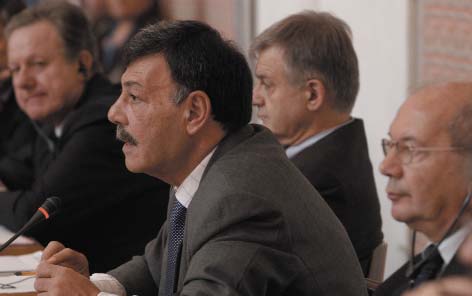
Left to right: Minister Matteoli,
Shafqat Kakakhel, Corrado Clini,
Lucien Chabason
resources, all within the framework of the ecosystem
porate new strategic elements into their programmes of
approach.
work. In response we are revisiting the global direction of
our entire Regional Seas Programme.
There will of course be strong ties to MED POL, which
will complete its third phase in the coming biennium and
Our proposed new strategy for an enhanced Regional
turn to the formulation of Phase IV. This next phase will
Seas Programme, which will be discussed at the 5th
focus on achieving sustainable development in imple-
Global Meeting of the Regional Seas in Nairobi from 26 to
menting activities for the prevention of marine pollution,
28 November, is intended to build upon existing achieve-
also through the ecosystem-based approach.
ments and to reflect the Millennium Development Goals
and the outcomes of the World Summit on Sustainable
Land-based sources of pollution
Development.
I note with pleasure that the Catania Declaration high-
lights that the Strategic Action Programme adopted
It incorporates a strengthened role for regional seas in
under the Land-Based Sources Protocol constitutes a
promoting the fundamental principles of sustainable
major contribution to sustainable development in the
development and includes greater outreach to partners
Mediterranean.
and stakeholders. We are pleased that Mr. Chabason will
be joining us for this important meeting, and look forward
This in turns adds value to the adoption of the Global
to using the MAP as a model for the further development
Programme of Action for the Protection of the Marine
of other regional seas agreements and initiatives."
Environment from Land-Based Activities, an instrument
being used to revitalise the Regional Seas. We are
pleased to see these synergies.
New Strategy for Regional Seas
During the 22nd session on the UNEP Governing
Council, held in February of this year, governments
requested the Executive Director to encourage and sup-
port regional seas conventions and action plans to incor-


Land-based activities
8
Countdown for reducing industrial
pollution and hazardous wastes
The application of the Strategic Action Programme (SAP) to address pollution from land-based
activities was high on the agenda of the CoP13 in Catania. The Conference discussed and
agreed on some concrete proposals aimed at achieving reductions of industrial Bio-chemical
Oxygen Demand (BOD) and of the generation of hazardous wastes.
Two proposals have been tabled after a long period of
possibility to verify the progress achieved by 2007, in
negotiations between MED POL and national authorities
order to be in a position to confirm commitment to the
and experts, aimed at finding viable but effective pollu-
final 2010 targets.
tion control measures.
A quite understandable and wise approach that con-
The proposals were to achieve by the year 2010 a 50
firms the serious intentions of the Governments to effec-
per cent reduction in industrial Bio-chemical Oxygen
tively implement the SAP.
Demand in each country and, by the same year, a 20 per
cent reduction in the generation of hazardous wastes.
With the above targets in mind, countries will now have
to enter into the process of preparing National Action
Two targets that are as ambitious as solidly based on
Plans. This is probably the most important transition -
existing international and regional trends and commit-
from intentions to action - that has to be carried-out by
ments, adapted to the Mediterranean conditions.
the countries within the process of implementation of the
SAP.
In Catania, the Mediterranean Ministers for the envi-
ronment agreed on both proposals that represent addi-
The National Action Plans will represent, for each coun-
tional elements for the preparation of National Action
try, the road map towards the reduction and elimination
Plans to address land-based pollution, due by each coun-
of pollution.
try in 2004/2005 as part of the implementation of the
SAP.
The discussion that led to the adoption of the targets
was characterized by a strong spirit of collaboration but
Francesco - Saverio CIVILI
also by marked prudence, that showed the will of the
Marine Biologist
countries to adopt not just good intentions, but only what
MED POL Coordinator
that can be effectively and concretely achieved.
MAP Coordinating Unit
Vas. Konstantinou 48, 116 35 Athens, Greece
That is why, parallel to the approval of the proposed
Tel: +30 210 7273131
Fax:+30 210 7253196/7
reduction principles, the countries insisted on having the
e-mail: medpol@unepmap.gr

Document
Catania Declaration
9
The Contracting Parties to the Convention for the Protection of the Mediterranean Sea against Pollution (Barcelona Convention),
meeting in Catania, Italy, from 11 to 14 November 2003 in the framework of the United Nations Environment
Programme/Mediterranean Action Plan (UNEP/MAP),
Reaffirming their commitment to achieving sustainable development at regional, national and local levels, as well as to the
issues agreed upon and the decisions taken in the Mediterranean Declaration for the 2002 Johannesburg Summit and its Plan
of Implementation;
Aware that the promotion of sustainable development and the protection of the environment require more effective coopera-
tion with international institutions and major groups, and active participation of NGOs and the private sector;
Recognizing the necessity for coherent sustainable development strategies, integrating economic, social and environmental
issues and through adequate governance;
Reaffirming that protecting and enhancing the environment is necessary as well as an opportunity for sustainable social and
economic development;
Emphasizing the need to further control and prevent all kinds of pollution affecting the quality of the natural resources and the
health of the Mediterranean people;
Underlining the importance of the sustainable management of coastal regions and the need for a strategic approach and a
coherent framework in this respect; and
Concerned at the asymmetrical development and technological gap among the Mediterranean coastal States;
Agree that:
1. The Mediterranean Partners and Actors in general and MAP in particular should play an active role in the implementation of
the Johannesburg Plan of Implementation (JPOI) at the regional level;
2. The Mediterranean Strategy for Sustainable Development (MSSD) to be prepared for 2005, the work programme of the
Mediterranean Action Plan (MAP) in general, and the Mediterranean Commission on Sustainable Development (MCSD) in
paticular, should give due consideration to the global issues that are of major concern to the Mediterranean, in particular the
JPOI and the UN-CSD programme of work;
3. Additional and more substantial support from the European Union would help the promotion of sustainable development in
the Mediterranean, and particularly the preparation of the MSSD, especially for improving convergence, reducing
technological gaps and promoting appropriate institutional and capacity building;
4. The Strategic Action Programme (SAP) adopted under the Land-Based Sources Protocol (LBS Protocol) and the Strategic
Action Plan for the Conservation of Biological Diversity in the Mediterranean Region (SAP/BIO), which constitute a major
contribution to sustainable development in the Mediterranean, should be implemented, as appropriate, and followed up
effetively with adequate support and resources; in this context the LBS Protocol should enter into force as soon as possible
and the procedures for acceptance of the amendments be urgently finalized by the countries that have not yet done so.
5. Regional strategies for Integrated Coastal Area Management (ICAM) together with an appropriate regional legal framework
should be prepared, including guidelines for national strategies; in this context each coastal state should participate
actively in implementing sustainable development activities and should encourage multilateral actions and avoid any
unilateral action with a negative impact on neighbouring coastal states;
6. All concerned partners should be actively involved in the devel opment and implementation of sustainable development
policies and activities, in particular the business sector and NGOs, through a participatory approach and operational
partnerships for joint programmes/projects;
7. Cooperation should also be strengthened with the European Commission, League of Arab States, United Nations agencies
and programmes and other concerned organizations, such as the RA.MO.GE. Agreement and the Adriatic-Ionian Initiative, for
the development and implementation of the MSSD and marine strategies with concerned countries.
Moreover,
Considering that the European Community has launched a preparatory process for a European Marine Strategy, taking into
account Mediterranean concerns
Emphasizing the strategic importance of the cooperation between MAP and the European Commission, for the MSSD as well as

Editorial
10

Document
11
for the marine strategy, in particular through strengthening ties between MAP and the Euro-Mediterranean Partnership, as con-
firmed in the Athens Ministerial Declaration of 10 July 2002; and
Recognizing the necessity for a contribution from the Mediterranean, as one of the Regional Seas lapping the shores of Europe,
to the preparation of this marine strategy;
The Contracting Parties agree that:
8. The initiative of the European Community to develop a European Marine Strategy should be encouraged as it will contribute
to prevent, abate and combat pollution of the Mediterranean Sea area and to enhance the protection and conservation of the
marine environment in that area;
9. The EU should take full account of the specific features of the Mediterranean marine environment and the concerns of the
Mediterranean countries, particularly the most vulnerable and threatened ones, in the development and implementation of
the European marine strategy, to the preparation of which, UNEP/MAP will be associated;
10.Cooperation with the European Community in its efforts to develop and implement the European Marine Strategy should be
strengthened, both as individual sovereign states bordering a regional sea, and as parties to the Barcelona Convention;
11.Co-operation between actors involved in the protection of the marine environment at regional level should be promoted and
implemented, with the aim of drawing synergies and of avoiding duplication of efforts;
12.There are concerns of common interest, such as contamination by hazardous substances and nutrients namely those
coming fromland-based sources, the losses of biological diversity, the unsustainable management of the coastal areas and
fisheries resources, illegal discharges, the introduction of non-indigenous species and the risk of maritime accidents;
13. Joint answers should be fully explored, such as, inter alia, improved national enforcement of existing rules and regulations,
the of the ecosystem approach, taking into consideration the legislation and capabilities of concerned countries, or the
elaboration of a common approach on monitoring and assessment;
14.The outcomes of activities and programmes carried out by the Convention and its Parties should be duly recognized and
taken into account in the preparation and the implementation of the Strategy;
15.The MAP Co-ordination Unit and the European Commission will jointly facilitate the participation of the Contracting Parties
and civil society in this cooperation process.
Finally,
Concerned at the accidents at sea such as the Erika and Prestige cases and the possible pollution risks and impact of similar
accidents on the Mediterranean marine environment, as well as at reducing voluntary acts of pollution, and convinced of the
importance of protecting all Contracting Parties from the risk of maritime pollution;
Bearing in mind the legal framework at the global and regional levels for the protection of the marine environment; and
Convinced that the new Prevention and Emergency Protocol represents an efficient tool for strengthening cooperation and pro-
tecting the marine environment in the Mediterranean;
Aware that close cooperation between Mediterranean countries is essential for preventing and combating maritime pollution;
The Contracting Parties agree that:
16.Every effort should be done to ratify the protocol concerning cooperation in preventing pollution from ships and, in cases of
emergency, combating pollution of the Mediterranean Sea and to act jointly in the implementation of its provisions;
17. MAP will prepare a regional strategy for the prevention of and response to marine pollution from ships in view of its
adoption at their 14th meeting in 2005, including precise commitments and deadlines, as appropriate, by addressing the
following priorities:
a) To ensure that each Contracting Party meets its obligations as a Flag State, Port or Coastal State within the framework of
international law and in particular, when it applies and as appropriate, the UNCLOS, to which many Mediterranean countries
are Parties, as well as in conformity with relevant rules adopted by IMO;
b) To ensure the enforcement of national legislation related to prosecution of offenders illicitly discharging polluting sub
stances. In doing so, due attention should be paid to the need for achieving even-handed treatment of such offenders
throughout the Mediterranean region;

Document
12
c) To establish and implement at the national level the procedures for monitoring and surveillance of sea areas under their
jurisdiction;
d) To establish a comprehensive regional network for monitoring, detection and reporting of illicit discharges from ships;
e) To strengthen the level of enforcement and the prosecution of illicit discharge offenders;
f) To provide all major ports in the Mediterranean with adequate reception facilities for wastes generated on board ships,
including ballast waters, according to the provisions of Annex I and Annex V to the International Convention for the
Prevention of Pollution from Ships, 1973, as amended by the 1978 Protocol relating thereto (MARPOL 73/78);
g) To ensure the coherent implementation of the provisions of Annex I to MARPOL 73/78 related to the carriage of heavy
grades of oil in single hull tankers and work within IMO to accelerate the phasing out of single hull tankers;
h) To identify appropriate procedures in order to facilitate the decision when designating a place of refuge for a ship in
distress;
i) To study and identify the areas of the Mediterranean Sea where maritime safety and control of maritime traffic are in need of
improvement;
j) To propose to IMO the establishment of additional Vessel Traffic Separation Schemes deemed necessary for improving the
safety of navigation;
k) To set up additional Vessel Traffic Management and Information Systems (VTMIS) considered necessary as a complementary
tool for improved control of maritime traffic, where agreed by all parties with a common interest, according to IMO
guidelines;
l) To promote, develop and implement sub-regional and local contingency plans for preparedness and response to marine
pollution by oil and other hazardous and noxious substances as well as arrangements for their enforcement, covering the entire
Mediterranean region;
m) To adopt Mediterranean guidelines on emergency towing including, if appropriate, agreement on sharing towing
capacity between neighboring states;
n) To evaluate, in line with the work of relevant protocols of the Barcelona convention, the need for developing Particularly
Sensitive Sea Areas (PSSAs) in the Mediterranean and to submit subsequent proposals to IMO, as necessary;
o) To work for further improvement of the relevant conventions related to liability and compensation for environmental
damage caused by accidental pollution from ships, such as the new 2003 Fund Protocol;
18.The EU and other concerned partners, in particular the Euro-Mediterranean Partnership, should join in the preparation and
implementation of the regional strategy related to the Prevention and Emergency Protocol;
19.In this context, it would be important to provide support to the Contracting Parties that are in need, and where maritime
security and the control of maritime traffic requires action, to give them the means to protect themselves against accidents
and pollution of the marine environment.
To this end, the Contracting Parties:
20.Commit themselves to taking the necessary measures and actions, and providing adequate support for the implementation
of the above, either directly or through the Mediterranean Action Plan.

Diversité biologique
13
A key step for Mediterranean
biodiversity
As far as biodiversity conservation is concerned, the next biennium (2004-2005) is expected to
be key, since the Mediterranean countries and the relevant Intergovernmental and non-gov-
ernmental organisations will start implementing the Strategic Action Programme for the
Conservation of Biological Diversity in the region (SAP BIO).
This Strategic Action Programme is the culmination of a
nents of SAP BIO.
complex process of assessment and consultation, con-
This preparatory phase will consist of:
ducted over the last three years, with financial support
ñ Immediate contacts and preliminary agreements with
from the Global Environment Facility (GEF), to identify, at
partners and donors,
national and regional level, the harms affecting the biolog-
ñ Further reaffirming of the national investment portfolios
ical diversity of the Mediterranean marine and costal zones
included in the SAP BIO,
as well as the hindrances to its wise and sustainable use.
ñ Definition of funding and implementation of operational
strategies,
Overall, the SAP BIO advocates 30 priority actions
ñ Assistance to countries to meet the needed prerequi-
aimed at ensuring biodiversity conservation and helping
sites,
rise to the challenge of reconciling the socio-economic
ñ Establishment of institutional arrangements at the
development of the Mediterranean coastal area and the
national and regional levels.
vital need to protect the area's biological diversity.
After the end of the preliminary phase, a "Launching
It includes 58 national action plans on specific biodi-
Conference" is scheduled to be held in October 2004.
versity issues and 30 regional priority actions related to
the management of living resources, the protection and
conservation of marine and coastal biodiversity, the
impacts of pollution on biodiversity, and several trans-
boundary biodiversity issues.
Chedly RAIS
During their last meeting in Catania, Italy, the
Scientific Director
Contracting Parties to the Barcelona Convention adopted
SPA/RAC
the SAP BIO and recommended the undertaking of imme-
Specially Protected Areas / Regional Activity Centre
diate actions towards its actual implementation.
Boulevard de l'Environnement
BP 337 CEDEX, 1080 Tunis
Tunisia
To this end, a preliminary phase will begin in the com-
tel: +216 1 795 760
ing weeks with the view of preparing the ground for the
fax: +216 1 797 349
smooth launching of the regional and national compo-
e-mail: car-asp@rac-spa.org.tn
website:www.rac-spa.org.tn


Sustainable Development
14
Towards a Mediterranean
Strategy for Sustainable
Development
Since the Earth Summit in 1992, the Mediterranean Action Plan has been increasingly integrating the sustain-
able developmentconceptand approach in itsstrategyand programme ofwork. The legalframeworkand major
pillars of the programme were revised accordingly, in particular with the establishment of the Mediterranean
Commission on Sustainable Development (MCSD) that is expected to pave the way for a regional Sustainable
Development Strategy.
Following the outcomes of the Strategic Review for
ñ MAP and its MCSD should be considered as the region-
Sustainable Development in the Mediterranean, a
al implementation forum for the UN Commission on
"Common Vision" was prepared together with the
Sustainable Development (UNCSD) and the Johannesburg
"Framework Orientations" for a Mediterranean Strategy
Plan of Implementation;
for Sustainable Development (MSSD).
ñ Italy, the new President of the Bureau of the Contracting
Parties, will devote great attention to the MCSD and
Issues related to these important items that will
MSSD key
issues, providing additional
financial
undoubtedly have a great impact on MAP activities, were
resources both to the organization of the next MCSD
discussed during the "Ministerial Segment" of the 13th
meeting and to the preparation of the Strategy;
Ordinary meeting of the Contracting Parties to the
ñ MAP and its MCSD should give priority to the prepara-
Barcelona Convention, in Catania, Italy.
tion of the MSSD during the 2004-2005 biennium in view
of its adoption in 2005 by the 14th meeting of the
All Parties and observers insisted on the necessity of
Contracting Parties in Slovenia and the 30th anniversary
having an efficient MCSD and an objective and opera-
of MAP;
tional MSSD. In this context, it was highlighted that:
ñ Throughout the preparatory process, relevant available
ñ The MAP is the most adequate framework for the prepa-
information from partners and international organiza-
ration of the MSSD, and that all national and regional
tions, as well information from within the MAP, in partic-
partners, as well as actors from the Civil Society should
ular the SAP/LBS, the SAP/BIO, the TDA and the
actively contribute to it. The European Commission
Environment and Development report, will be used;
attached great importance to this Regional Strategy to the
ñ Also throughout the preparatory process for the MSSD,
preparation of which support will be provided;
and through a large participatory approach, great atten-
ñ The MCSD is more relevant than ever following the World
tion should be devoted to the active participation of
Summit on Sustainable Development, and its composi-
regional organizations, NGOs, Local Authorities and the
tion, pluralism and participatory approach need to be
Private Sector, as well as of representatives from min-
maintained and strengthened; this would be a major asset
istries concerned with MSSD key issues and priorities.
in preparing a coherent and realistic Regional Strategy;


Sustainable Development
15
The "Framework Orientations" were prepared In accor-
dynamism and innovation, globalization, poverty and
dance with the general increasing awareness of the need
illiteracy, reforming the education sector, competitive-
to change the traditional view on the determinants of eco-
ness in the private sector, reducing sources of pollution.
nomic growth, that affect greatly the environment.
These challenges could be faced through a series of
These Orientations give due consideration to global
priority actions such as: management of water, energy,
emerging issues, such as poverty, education, culture,
tourism, transport, marine and coastal zones, urban
consumption and production patters, and their applica-
development, rural and agricultural development.
tion at the Mediterranean level, while paying special
attention to governance and the necessity for establish-
The challenges and priority actions will be reviewed
ing significant levels of coordinated and collective action.
during the first semester of 2004, before in-depth strate-
gic analysis is undertaken in view of achieving a certain
While recognizing that many positive measures and
number of clear and as far as possible measurable objec-
actions have been taken and implemented in the
tives that still need to be defined.
Mediterranean towards the protection of the environment
and the promotion of sustainable development, the diag-
Of course, coping with these challenges and promot-
nostic highlights the problems related to the impact of
ing sustainable development in the Mediterranean would
human activities on the environment, with a special focus
require peace and security; in fact these are mutually
on the financial distress in various parts of the region, the
supportive.
high level of remittances from migrant workers, the rent
economy type and the dependence on exogenous factors.
In this context, sustainable development in the
Mediterranean should have to cope with a series of
important challenges such as: the wide asymmetry
Arab HOBALLAH
MAP Deputy Coordinator
between its sub-regions, the general lack of economic

MAP Regional Activity Centres
16
Restructuring the
Environment Remote Sensing
Regional Activity Centre
Italy introduced in Catania recommendations and a programme budget for 2004-2005 for a
restructured Environment Remote Sensing Regional Activity Centre (ERS/RAC) that will optimise its
information and communication technology and train operators. Other information activities with-
in the MAP would also benefit from the new tasks of the Centre.
The management of the ERS/RAC will now be entirely
Several Contracting Parties underlined that care
in public hands, under the responsibility of the Sicilian
should be taken to avoid duplication in MAP's informa-
Region and the Italian Ministry for the Environment and
tion and communication activities.
Territory, with the private company that had previously
managed the Centre only providing services.
It was also emphasized that the Centre should not only
carry out monitoring by remote sensing, but should make
The total estimated cost for the 2004-2005 biennium
the resulting database available for use by all Contracting
will be about 1 800 000 euros.
Parties.
The Contracting Parties adopted the Italian proposal,
The Catania meeting announced its support to the
considering how the programme was to be sustained in
ERS/RAC activities and the new objectives of the Centre
the future. A plan to implement the proposal will be
towards
an ERS/Information and Communications
developed with the MAP Secretariat so that the restruc-
Technologies Regional Activity Centre, to be formally
turing is completed by 2005.
approved by the 14th meeting of Contracting Parties in
2005.
During the discussions in Catania, it was highlighted
that the restructuring should fulfill the three main aims of:
As for the Cleaner Production Regional Activity Centre
ñ increasing knowledge and information, on the basis of
(CP/RAC), the Contracting Parties decided in Catania to
satellite imaging of the Mediterranean,
readapt its role as a tool for the achievement of sustain-
ñ fostering effective communication between countries,
able development by Mediterranean industry, within the
ñ ensuring that exchanges were based on interoperability.
framework of the implementation of the Strategic Action
Programme for reducing pollution from land-based
If the name of the Centre was to be changed to reflect
sources (SAP).
its new activities, it was important that the term `remote
sensing' be retained.

Side events
17
Special presentations by countries.
NGOs and the press.
Environment, food, and cinema
Some MAP countries organized special presentations; NGOs expressed their concerns in press
conferences; a photo exhibition and a festival on the environment and healthy nutrition took
place. These formed the nucleus of a series of side events organized during the CoP13.
On the occasion of the Catania meeting, the MAP held a
Rome, MAP, UNESCO-Italy, the European Parliament and with
series of side events and facilitated the organization of oth-
the cooperation of the Italian Ministry of the Environment and
ers. These ranged from presentations made by some MAP
the Safeguard of the Territory / Global Environment
countries, like France, Italy and Spain; to press conferences
International and Regional Conventions Department, the
by NGOs, mainly Greenpeace and WWF.
Sicilian Region, the Municipality of Catania, and the
University of Catania.
The series of side-events also included the "Have a look"
photo exhibition presenting works by professional photogra-
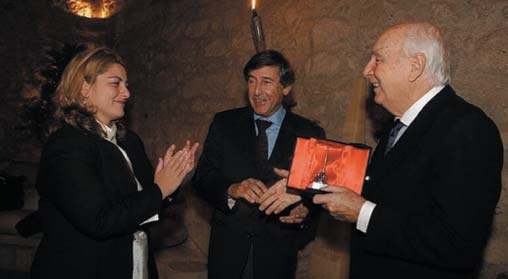
During the Sasà closing ceremony, a special prize was
phers, photo amateurs and schools of photography, with
awarded to Folco Quilici, President of the Central Institute for
focus on food, water and the environment.
Applied Marine Research (ICRAM) for his commitment in
favour of the Environment during his activity as a journalist,
The CoP13 also witnessed the launching of the first edi-
photographer and documentary producer.
tion of the International Cinematographic Sasà competition
"Environment Safeguard And Healthy Nutrition", aimed at
The second edition of the Sasà festival is scheduled for 1-
promoting the protection of the Mediterranean ecosystems,
6 June this year in the cities of Catania and Rome, and will be
its biodiversity and the need for safe and quality food prod-
followed by events in Barcelona, Beirut, Berlin, and New York,
ucts that are linked to its lands, culture and traditions.
in November (www.amiciperlavita.org).
Left to right: Marina Noè - Councilor of the Region of Sicily,
The Sasà festival included 6600 minutes of screening, 310
Umberto Scapagnini - Mayor of Catania, Folco Quilici - President of ICRAM
experimental short films from 46 countries, divided into nine
categories, four of which competitive, seven prizes awarded
by an international jury, 115 audiovisual debut works, and
185 "premières" in Italy.
Most of these side events were organized jointly with the
Italian non-profit organisation Amici per la Vita Onlus, within
the activities of the Observatory on the Communication on
Environment Safeguard and Healthy Nutrition (OCSASA).
Other organizations supported and patronized this side-
event, such are the United Nations Information Centre in

Mediterranean Media
18
Over 100 journalists
cover MAP meeting
for the first time ever
Over 100 journalists from Mediterranean countries members of the Mediterranean Action Plan
(MAP) covered, for the first time ever so widely, a meeting of the Contracting Parties (CPs) to the
Barcelona Convention. This has been the case on the occasion of the CPs 13th meeting in
Catania, Italy.
Television and radio stations, news agencies, daily
more sound and sustainable use of the region's natural
newspapers, and weekly and monthly magazines, fol-
resources.
lowed the Catania meeting, in particular its two-day
Ministerial segment. Journalists accredited interviewed
The coverage of the CoP13 included previous and par-
Ministers and delegates participating in the meeting, as
allel informational campaigns in the main Italian newspa-
well as MAP officers and experts.
pers ans some radio and television stations.
Media representatives were also involved in the side
Thematic workshops
events organized on the occasion of what was called
The MAP organizes
thematic
workshops
for
"Mediterranean environment summit", that brought
Mediterranean media and communication professionals.
together top officials from the 21 countries and the
Two are scheduled for the year 2004: one on biodiversity
European Union.
and one on land based sources of pollution.
Nearly 250 articles were printed and television and
A similar exercise took place in 2003, with focus on the
radio programmes were broadcasted, in Albania, Bosnia
efforts being made for a sound management of
and Herzegovina, Croatia, Egypt, France, Greece, Israel,
Mediterranean coasts.
Italy, Lebanon, Malta, Serbia and Montenegro, Slovenia,
Spain, Tunisia, and Turkey.
Focus was also put on ways to achieve cleaner produc-
tion in the industrial sector in the region, in order to
The key role of the media
reduce pollution while cutting down on operational costs.
Lastly, the MAP has doubled its efforts to link with
media professionals in the region, given their key role in
disseminating information and raising awareness on the
situation in the Mediterranean as regards pollution from
different sources and the present priorities for its reduc-
tion and prevention, while focusing on the need for a
The MAP and Syria
19
Mrs. Asma Al Assad
visits the MAP and encourages
Public Participation
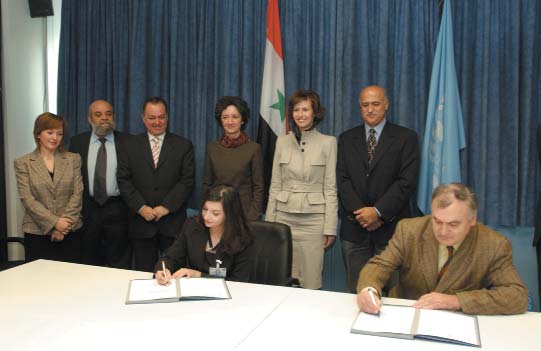
During the State visit to Greece of the Syrian President Bashar Al Assad, Mrs. Asma Al Assad vis-
ited the Mediterranean Action Plan (MAP), as a gesture of interest for activities targeted at
reducing pollution while promoting sustainable development in the region. Mrs. Asma Al Assad
also witnessed the signature of an agreement between the MAP and the Fund of Integrated
Rural Development of Syria (FIRDOS) that she chairs.
During her visit to the MAP premises, Mrs Asma Al Assad
met with top MAP officials who briefed her on the ongoing
and future efforts to protect the Mediterranean environment
and boost the sound and sustainable use of its resources.
Arab Hoballah, Deputy Coordinator, briefed Mrs. Al Assad
on the key MAP fields of activity and its readiness to assist
countries in moving forward in their development policies
and activities. He also highlighted the active role played by
Syria within this singular frame for regional cooperation.
Mrs. Asma Al Assad welcomed the efforts of the MAP, as
a Syrian citizen and as President of FIRDOS, and showed
readiness for further cooperation and also to host MAP
related activities. Mrs. Al Assad also met with all MAP staff.
low up of the NAPs within the Strategic Action Programme to
The purpose of the MAP/FIRDOS agreement is to set forth
address pollution from land-based activities (SAP MED).
the modalities of assistance and participation of the MAP in
covering costs of involving stakeholders, including NGOs
The ultimate goal is to facilitate the participation of the
and general public, in the process of preparation, adoption
concerned stakeholders in all stages of the process, and not
and implementation of National Action Plans (NAPs),
limit their role to a mere collaboration in the phases of
through the Mediterranean Project
of
the Global
implementation of such activity or project. By doing so,
Environment Facility (GEF)
stakeholders will be increasingly aware and thus more
actively involved in the key issues affecting their daily lives.
The agreement focuses on the key component of Public
They will have the sense of ownership of decisions related
Participation, including a set of proposed general guide-
to them and, their contribution will be more efficient.
lines, prepared by the MAP. The guidelines are targeted at
ensuring the integration of the public participation compo-
Information, Awareness and Public Participation are an
nent in the preparation, adoption, implementation and fol-
integral part of the MAP policies and activities.

United Nations Environment Programme / Mediterranean Action Plan (UNEP/MAP)
48, Vassileos Konstantinou Avenue - 11635 Athens - Greece
Tel: 00 30 210 72 73 100 - Fax: 00 30 210 72 53 196/7
E-mail: unepmedu@unepmap.gr