
C O N T E N T S
> IN THIS ISSUE
THE MEDITERRANEAN ACTION PLAN MAGAZINE
# 4 8 / 4 9 | 2 0 0 3
EDITOR
EDITORIAL
Baher Kamal
baher@unepmap.gr
> LET US NOT FORGET THE "PRESTIGE" ...........................................................................1
AUTHORS
BUREAU MEETING
Francesco Saverio Civili
Andreas Demetropoulos
> SERBIA AND MONTENEGRO, IN MAP INSTITUTIONAL MEETINGS ................... 2
Mohamed Adel Hentati
Lobna Ben Nakhla
LAND-BASED SOURCES
Ivica Trumbic
Daria Pavh
> FRENCH GEF SUPPORTS THE MAP EFFORTS
Monique Viel
TO REDUCE POLLUTION FROM LAND ............................................................................... 3
Giovanni Cannizzaro
Fouad Abousamra
MED POL
Filiz Demirayak
Paolo Guglielmi
> NATIONAL COORDINATORS BOOST MED POL .............................................................. 4
Chantal Ménard
WORKSHOP
CREATIVE
/fad.hatz
> MEDITERRANEAN MEDIA DISCUSS ON ENVIRONMENT ......................................... 5
fadhatz@hotmail.com
WORLD ENVIRONMENT DAY: "WATER: TWO BILLION PEOPLE ARE DYING FOR IT!"
REPRO
Kandiloros & Kormaris
> MEDITERRANEAN: RENEWABLE WATER,
kandkorm@otenet.gr
"LIMITED, FRAGILE AND THREATENED"......................................................................... 6
OFFSET PRINTING
Kontoroussis Bros.
BIOLOGICAL DIVERSITY IN THE MEDITERRANEAN
info@kontorousis.gr
> MARINE BIODIVERSITY SHOULD NOT "NEED" TO BE SAVED .......................... 10
I S S N 1 1 0 5 - 4 0 3 4
BIOLOGICAL DIVERSITY IN THE MEDITERRANEAN
> A SEA WITH PERMANENTLY ENDANGERED SPECIES ........................................... 14
PAP/RAC
MedWaves is published by
> RIVER BASINS AND COASTAL AREAS ........................................................................... 16
the Coordinating Unit of
the Mediterranean Action Plan
PAP/RAC
in Arabic, English and French.
It is an informal source of information
> A CLEARING HOUSE FOR COASTAL MANAGEMENT ............................................... 18
and it does not necessarily reflect
the official point of view of MAP or UNEP.
ERS/RAC
Contents, except for pictures,
> REMOTE SENSING HELPS CALCULATE
may be reproduced without permission
SUSTAINABLE DEVELOPMENT INDICATORS .............................................................. 19
and only for non-commercial use.
Credit to the source, however, is required.
MED POL
The publisher would appreciate
receiving a copy of any publication
> THE MAP ADDRESSES EUROCHLOR ON INDUSTRIAL SUSTAINABILITY ..... 20
that uses MedWaves'
news, articles and interviews.
NGOs PLANET
The designation of geographical entities
> DHKD THE BIG TURKISH TRANSFORMATION .............................................................. 21
and the presentation of the material
> WWF MED PO
do not imply the expression of any opinion
SAVING THE LAST MEDITERRANEAN PARADISES ........................ 23
whatsoever on the part of the publisher
concerning the legal status of any country,
THE LAST PAGE
territory or area, of its authorities,
> THREE MEDITERRANEAN,
frontiers or boundaries.
AMONG THIS YEARS' UNEP GLOBAL 500 LAUREATES ............... inside backcover
C O V E R P H O T O
UNITED NATIONS ENVIRONMENT PROGRAMME
DROP OF WATER
MEDITERRANEAN ACTION PLAN
from the MEDWAVES ARCHIVE
E D I T O R I A L
> LET US NOT FORGET THE "PRESTIGE"
I N THIS YEAR 2003, already at the half-way point, the "Prestige" accident,
which has affected the Atlantic coast of two countries parties to the Barcelona
Convention, namely France and Spain, is still a matter for indignation, reflection
and action. Indignation because, as public opinion has shown, there is a feeling that
not everything is being done at the various levels (industrial, national and internatio-
nal) to prevent any future such occurrences, which have a major ecological and eco-
nomic impact. A great deal therefore remains to be done to ensure that flag States
assume their responsibilities, to modernize fleets, strengthen controls over ports and
L U C I E N C H A B A S O N
C O - O R D I N A T O R ,
apply international rules.
M E D I T E R R A N E A N A C T I O N P L A N
The claims made in various quarters that maritime transport will always involve
risks and that, in the final analysis, the pollution caused is less significant in volume
terms than deballasting or land-based pollution, can only give rise to incomprehension.
None of these pretexts can attenuate the gravity of the repeated maritime accidents of
recent years.
There are some human activities which are so hazardous that they justify fixing
a zero risk objective: these include the heavy chemical and nuclear power industries
and the maritime transport of oil and chemicals.
All this is a major theme of reflection and action in the Mediterranean, which is
so close to the site of the accidents and so exposed because of the current level of traf-
fic, which will increase in the future with the construction of new oil terminals in the
Eastern Mediterranean and the Adriatic.
In this connection, we are seeing a resurgence of the debate between the advo-
cates of the universal applicability of rules (the International Maritime Organization
and many maritime States) and those who, without denying the competence of the
IMO, consider that it is also necessary to take action at the regional level to prevent
maritime risks, where necessary through more stringent regional and even national
rules. In the Mediterranean, a semi-enclosed sea, we believe that the initiatives taken
to reinforce prevention measures should be coordinated at the level of the Mediterra-
nean region: this viewpoint is supported by the Mediterranean's geography, ecology
and spirit of solidarity. In all respects, its Southern shores warrant as much attention
as its European coasts.
Within the Barcelona Convention framework, we have chosen the option of
effective implementation of universal rules such as those set out by the IMO and the
Convention on the Law of the Sea, without disregarding their weaknesses, particular-
ly concerning the effective exercise of the responsibilities of flag States, the limited
resources of the IOPCF and the gaps in the systems of liability and compensation (or
rather exemption) established by international law.
We must move ahead in this context. The year 2003 will be marked by impor-
tant initiatives intended to make progress in the field of maritime transport safety and
the prevention of accident risks. In this respect, we can count on Greece, followed by
Italy, as they take on the Presidency of the European Union, to ensure that the reali-
ty of the Mediterranean situation is taken into account in the European context.
At the recent meeting of REMPEC Focal Points, it was planned that a Strategy
for the implementation of the new Malta Protocol would be formulated and adopted in
Catania at the Meeting of the Contracting Parties, and the Coordinating Unit and
REMPEC are actively preparing for this.
1
B U R E A U M E E T I N G
> SERBIA AND MONTENEGRO,
IN MAP INSTITUTIONAL MEETINGS
During their meeting in Sarajevo, on 1920 May,
during the next biennium and promote bilateral agree-
Ministers and Senior Officials from Algeria, Bosnia
ments at the national level and to invite the Espo
and Herzegovina, Greece, Monaco, Slovenia and Syria,
Convention to the CPs meeting;
members of the current the Bureau of the Contracting Parties,
d) to strengthen cooperation with conventions addressing
adopted, among others, the following decisions:
horizontal and cross-cutting issues and the relevant im-
Legal framework: The Bureau requested the Secretariat
plementation programmes, taking into account the results
to initiate the necessary procedure to invite the State Union
of the Kiev conference and the process "Environment for
of Serbia and Montenegro to participate in the upcoming
Europe".
meetings of the MAP National Focal Points (NFPs) in Athens
Financial Issues: The Secretariat is invited to present to
and Contracting Parties (CPs) in Catania, Italy.
the CPs the 20042005 budget in euro using as a reference
Reporting System: The Bureau suggested to the Secre-
the budget in euros approved in Monaco in 2001.
tariat to follow up the reporting exercise and organize a
Strategy for the implementation of the new Pre-
consultation meeting with participating countries before the
vention and Emergency Protocol: The Bureau considered
NFPs' meeting.
that, at this point in time, it was early to envisage a meeting
Liability and compensation: The Bureau requested the
about the preparation of a strategy for implementation of the
Secretariat to further proceed with investigations made by
Malta Protocol. However, the Bureau decided that the issue
the group of experts and submit a progress report on this sub-
may be submitted to the NFPs meeting for consideration. In
ject to the meetings of NFPs and CPs.
any case the Secretariat should prepare a draft of political,
Evaluation of MAP: The Bureau examined the provisional
ministerial declaration on this crucial issue for the CPs meet-
draft report "Evaluation of MAP" with its conclusions and
ing. A proposal of the text shall be submitted to the NFPs
proposals, and approved its direction and method.
meeting.
Cooperation with European Commission: The Bureau
MED POL: The Bureau requested the Secretariat to start
decided to express satisfaction to the Environment DG for the
the review of the MED POL programme given that Phase III
results of preliminary contacts between it and the MAP, recalling
will come to an end during 2005. The aim is to establish a new
the commitments undertaken at the Euro-Mediterranean mee-
programme (20062013), which will be submitted for adoption
ting in Athens of July 2002, and proposing an official meeting
at the meeting of the CPs in 2005.
with the Environment DG to examine ways and means to put
Process of preparation of National Action Plans (NAPs):
them into practice.
The Bureau is invited to urge the CPs to make any effort to com-
Synergy and cooperation with other programmes and
plete the preparatory phase of the elaboration of NAPs to
initiatives: The Bureau proposed to the Secretariat:
Address Pollution from Land-based Activities, and in particular
a) to envisage modalities which would enable improvement of
to finalise the National Diagnostic Analysis and the Baseline
cooperation and synergies with the REReP Programme
Budget of pollution releases.
the REC Center, the Euro-Arab Management School, the
Monitoring activities: The Bureau is invited to urge CPs to
Baltic 21 Programme , as well as the Espo Convention;
formulate and implement national monitoring programmes in
b) to invite the Baltic 21 Programme to attend the CPs
order to complete the geographical coverage of the region and
meeting in Catania, proposing the organization of a
create an efficient system of marine pollution assessment and
joint side event at the next meeting of the MCSD;
control to be able to track the pollution reductions expected to
c) to continue contacts with the Espo Convention and Secre-
be achieved through the implementation of the Strategic Action
tariat to prepare a joint working plan to be implemented
Programme (SAP).
2
L A N D - B A S E D S O U R C E S
> FRENCH GEF SUPPORTS THE MAP EFFORTS
TO REDUCE POLLUTION FROM LAND
The Mediterranean
Action Plan (MAP)
and the French
Global Environment
Facility (FFEM)
signed two agreements,
totaling over
1.8 million euro,
to support
the implementation
of activities related to
the MAP Strategic Action
Programme (SAP)
to address pollution
from land-based sources.
MEDWAVES ARCHIVE
The two agreements, signed on tion hot spots in four countries (Algeria, national institutions in three countries
2nd May in Paris by J.M.
Lebanon, Morocco and Tunisia) with
(Morocco, Tunisia and Turkey).
Severino, Director General of
one million euro.
Activities related to capacity buil-
the French Agency for Development, and
This will help complete the activi-
ding under the FFEM contribution refer
L. Chabason, MAP Coordinator, in pre-
ties undertaken by the MAP in this field
to not only the national level in three
sence of T. Saifi, State Secretary for En-
as well as the pre-investment studies
countries (Morocco, Tunisia and Turkey),
vironment and Development (France),
for the 103 Mediterranean hot spots
but also to the regional level, through a
imply that the FFEM now becomes a
that have trans-boundary impact.
series of training workshops.
major contributor for the implementa-
The studies, once prepared, will be
In addition, FFEM will support the
tion of the SAP MED.
used by national / local authorities and /
organization of three regional training
The Contracting Parties to the Barce-
or potential donors for direct invest-
courses, on river monitoring and waste-
lona Convention adopted the SAP MED in
ment in order to remedy the pollution
water reuse.
1997 in order to curb pollution from land-
hot spots.
The activities funded under these
based sources, particularly by substances
Capacity building is one of the main
agreements aim at supporting the process
that are persistent, toxic and liable to
components of the SAP MED. In this
of formulation and adoption of priorities,
accumulate in marine organisms.
regard, FFEM will provide 600,000
measures and actions needed in order to
According to the signed agreements,
euro for the purchase of necessary
address each one of the key land-based
FFEM will fund the preparation of pre-
equipment for pollution monitoring
sources of pollution and help the coun-
investment studies for selected pollu-
and training of personnel in selected
tries in implementing them.
3
M E D P O L
> NATIONAL COORDINATORS
BOOST MED POL
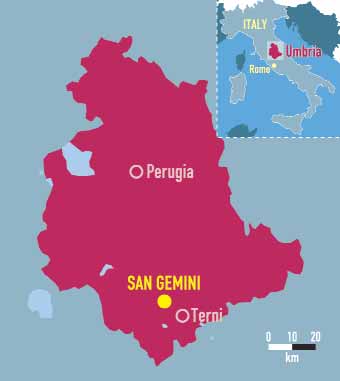
Surely unusual
posed by the Secretariat and suggested
that all countries could achieve a reduc-
was the environment
tion of 50 % by the year 2010.
chosen for this year's
The monitoring activities were also
meeting of the MED POL
discussed: while the objectives and the
National Coordinators:
contents were generally appreciated,
the surroundings
including the new eutrophication moni-
of the city of San Gemini
toring programme and the structure of
in the beautiful region
the new database, the Coordinator ex-
pressed concern about the fact that the
of Umbria in Italy,
activities were still not covering the
at least 100 km away
entire region and that all efforts had to
from the sea.
be made to expand their coverage.
Unusual, perhaps,
MEDWAVES ARCHIVE
but not out of theme.
The splendid valley
of San Gemini is rich
T
Concerning the 1995 amended Dum-
he natural scenery of the meet-
ping Protocol, the meeting approved the
ing venue was needed in view
content --after ensuring harmonization
of the heavy agenda: In four
with the London Convention-- of the last
days (2730 May), the National Coordina-
two Guidelines proposed (on the dum-
with fresh water;
tors had to review the work achieved in
ping of platforms and on inert materials)
it spreads out within
20022003 and prepare the MED POL
which should pave the way to the imple-
the Mediterranean
Programme for the coming biennium.
mentation of the Protocol by the Parties.
hydrologic basin
All this, in addition to the review of
Finally, the future of MED POL was
and represents
the activities carried out in the frame-
the object of thorough discussions. The
a model of management
work of the GEF Project, indeed nume-
Coordinators highlighted the key role of
of local water resources,
rous and relevant considering their
the MED POL Programme within the
impact on the implementation of the
MAP and in the context of sustainable
all issues relating
Strategic Action Programme (SAP).
development.
to the present
The National Coordinators having
They insisted that the future MED
and the future
expressed appreciation for the work car-
POL Programme, scheduled to begin in
of MED POL.
ried out so far, which confirmed the new
2006, should clearly incorporate the
role of MED POL towards the concrete
relevant decisions of the Johannesburg
control of pollution as a contribution to
Summit and be in harmony with the
achieving sustainable development, dis-
European Union's related strategies.
cussions were focused on a number of
A very important meeting therefore,
issues to be presented to the Contracting
that supported the work and the strategy
Parties for formal adoption.
of MED POL and stressed the present and
Among these, a special focus was
future central role of the Programme in
put on the approval of the regional plan
the region.
for the reduction of Biological Oxygen
Demand (BOD) from industrial sources:
F R A N C E S C O S A V E R I O C I V I L I
M A R I N E B I O L O G I S T
the meeting endorsed the approach pro-
M E D P O L C O O R D I N A T O R
CO-ORDINATING UNIT FOR THE MEDITERRANEAN ACTION PLAN
MED POL 48, Vassileos Konstantinou Avenue | GR-11635 Athens tel 0030 210 72 73 131 fax 0030 210 72 53 196/7 e-mail medpol@unepmap.gr
4
W O R K S H O P
> MEDITERRANEAN MEDIA
DISCUSS ON ENVIRONMENT
MEDWAVES ARCHIVE
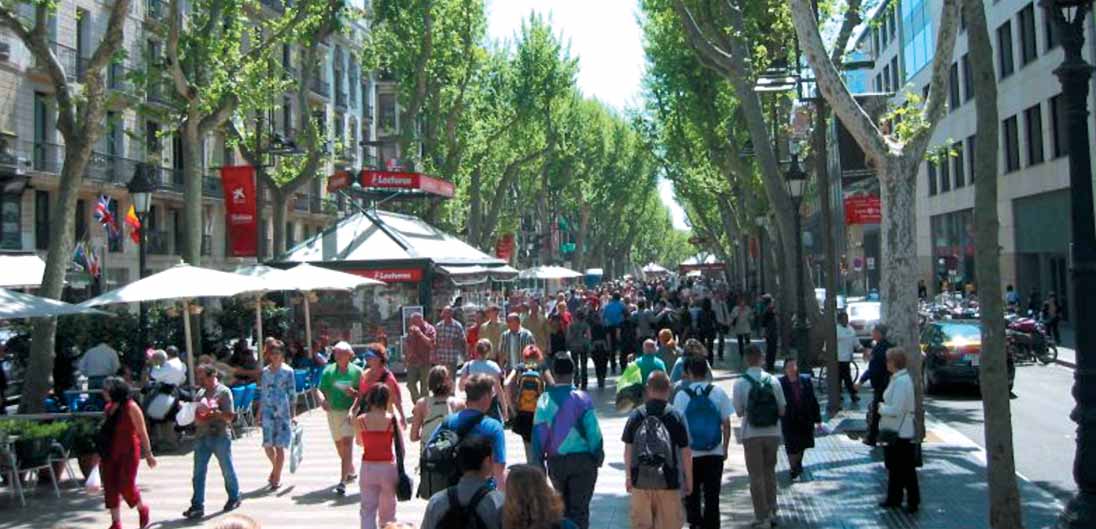
Journalists from eleven Mediterranean countries, all members of the MAP,
discussed the current environmental situation, ways to boost follow-up
and coverage of environmental and development related issues, and
the need for exchange of information among media professionals in the region.
For the first time ever since its with a particular focus on the present The MAP organized for this purpose
adoption in 1976, the Mediterra-
situation of this regional sea, the main
two field visits in Barcelona: one to an
nean Action Plan (MAP) orga-
sources of pollution from both mari-
industry producing mechanical compo-
nized a "Workshop for Mediterranean
time and land-based activities, the prob-
nents for heavy vehicle (COMESA), and
Communication Professionals on En-
lems and need to promote a sound
one to the leading Spanish daily news-
vironment and Development: the Role
coastal zone management, and the stra-
papers, La Vanguardia.
of the MAP".
tegy of cleaner production in the indus-
The Mediterranean journalists were
Twenty professional journalists par-
trial sector in the Mediterranean.
also informed in detail about the PAP/RAC
ticipated in this workshop, held in
In this regard, participants were in-
activities in the field of targeting appro-
Barcelona on 710 May 2003, jointly
formed in detail about the need to fur-
priate costal zone management as an effec-
organised by the MAP Co-ordinating
ther promote the knowledge and appli-
tive means to reduce pollution from hu-
Unit (MEDU, and two of the MAP's
cation by the industries, of strategies
man activities on the Mediterranean
Regional Activity Centres: The Centre
aimed at achieving a two-fold objective:
shores, which account for up to 80 % of the
for Cleaner Production (CP/RAC) and the
a) to prevent pollution from the origin
sources of pollution.
Priority Actions Programme (PAP/RAC).
of the process of production and,
Other topics on the workshop's agenda
Participating journalists represented
for those using traditional pro-
were the current MAP Strategic Action Plan
media in: Albania, Bosnia and Herze-
duction systems, to minimise the
(SAP) to reduce pollution from land-based
govina, Croatia, Egypt, Israel, Lebanon,
impact of pollution,
sources and also the ongoing preparation of
Malta, Slovenia, Syria, Tunisia and Turkey.
and,
a strategy on sustainable development in
The event included presentations by
b) to reduce, through this approach,
the region by the Mediterranean Commis-
professionals from the co-organizers,
the costs of production.
sion for Sustainable Development.
5
W O R L D E N V I R O N M E N T D A Y : " W A T E R : T W O B I L L I O N P E O P L E A R E D Y I N G F O R I T ! "
> MEDITERRANEAN: RENEWABLE WATER, "LIMITED, FRAGILE
For the first time in 30 years, an Arab country, Lebanon, hosted, on the 5th of June,
the main celebrations of the 2003 World Environment Day under the theme
"Water: Two Billion People Are Dying for It!".
Lebanon, one of 21 member-coun- In general, most of the Mediterra- situation and caused water reserves in
tries of the United Nations En-
nean countries face, in one way or
soils and sub-soils to dry up.
vironment Programme / Mediter-
another, the impact of either water
During the last few decades, most
ranean Action Plan (UNEP/MAP), has
shortage, droughts and / or overexploi-
Mediterranean countries have experi-
been included by the UN, together with
tation of resources.
enced long-term droughts: Morocco
another MAP member, Syria, in the group
According to reports by the MAP
(198085); Greece, Spain, Southern Italy
of nations that will be much affected by
Regional Activity Centre Blue Plan, the
and Tunisia (198283); Tunisia (198589);
"severe water stress" in less than 30
Mediterranean water renewable re-
Greece again (198890); Mediterranean
years, unless urgent action is taken.
sources are "limited, fragile and threa-
France (198892), Cyprus (198991) again
Other MAP member countries are on
tened".
Spain and Morocco (199095); Tunisia
the list of those where even less water is
Natural input (renewable water
(199395), Cyprus (199598), etc.
available per person per year and that
resources) is shared "very unequally"
The MAP, mainly through its Medi-
will have to face much more "severe
between countries and populations: 72 %
terranean Commission for Sustainable
water stress": Libya with only 113 m3 and
in the North, 23 % in the East, and only 5 %
Development (MCSD), and the Blue Plan,
Malta with only 129 m3, according to a
in the South.
has been actively involved in elaborating
UN report on the 2003 International
In addition, the region has been
strategies aimed at improving water
Year of Freshwater.
subject to droughts that aggravated the
demand management in the region.
6
W O R L D E N V I R O N M E N T D A Y : " W A T E R : T W O B I L L I O N P E O P L E A R E D Y I N G F O R I T ! "
AND THREATENED"
>
Water in the Mediterranean
draw volumes of water that far
strategic objective of sustainable
According to the MAP's Mediterra-
exceed their needs.
water management.
nean Commission on Sustainable De-
> For all countries, a preliminary esti-
> This approach consisted of a "prima
velopment (MCSD), the management
mate of the amount of water that
facie" analysis of the situations of
of water demand is a field in which the
could be saved by more rational ma-
21 riparian countries and entities in
most significant progress can be expec-
nagement of use and consecutive
four groups all having a relatively
ted as regards water policies in the Me-
lower demand shows a significant
similar situation in regard to the
diterranean. For the MCSD, controlling
volume (75.5 km3/year) compared to
risk of shortages:
the demand for water has become a
the additional water to be supplied to
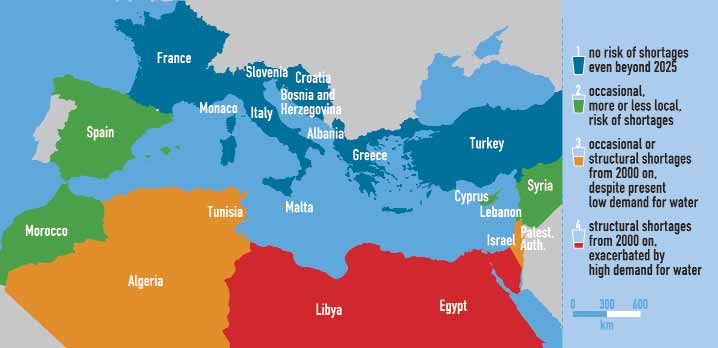
Group 1: countries where there is
priority political objective. Here is the
cover growth in demand forecast for
no risk of shortages even
rationale:
the next twenty to thirty years (+85
beyond the year 2025
> In most countries, water consump-
km3/year for the year 2010 on a high
(Albania, Bosnia and Her-
tion is fast approaching the limits
hypothesis, and +148 km3 in 2025).
zegovina, Croatia, France,
of available resources.
> The most beneficial savings in terms
Greece, Italy, Monaco, Slo-
> The water shortages now emerging,
of volume would be in the irrigation
venia, and Turkey);
whether circumstantial or structu-
sector: reduced losses during trans-
Group 2: countries where there is an
ral, will undoubtedly spread and
port together with greater efficiency
occasional, more or less
worsen over the coming decades.
(71 % of the total, more than half of
local, risk of shortages
These shortages are due to the heavy
which due to improved efficiency),
(Cyprus, Lebanon, Morocco,
increase in water demand (60 % over
> Next in order of importance comes
Spain, Syria);
the last quarter of a century).
better recycling by industry (18 %).
Group 3: countries where there will
> This situation has been met by sim-
> Then reduction of loss, leakage and
be occasional or structural
ply increasing the supply. Today
wastage of drinking water in local
shortages from the year
this solution is nearing its limits.
communities (10 %), although these
2000 on despite present
Mobilising extra resources is en-
would be of greater value in view of
low demand for water
countering obstacles of a social, eco-
the higher cost of producing and
(Algeria, Israel, Malta, Pale-
nomic or ecological order.
distributing drinking water.
stinian Authority, Tunisia);
> A large part of the extracted water
> The MCSD formulated a set of recom-
Group 4: countries where there will
appears to be badly or little used in
mendations, dictated by the need
be structural shortages from
most countries.
to manage water demand in the
the year 2000 on, exacer-
> At least one third of the volume of
region. The overall objective is to
bated by high demand for
water produced and distributed as
control demand within the broader
water (Egypt, Libya).
drinking water in towns and villages
leaks out through the network or is
wasted by misuse.
> Almost one half of the volume of
water supplied for irrigation is lost
through leakage during transport,
badly adjusted modes of supply to
the fields, low efficiency of the irri-
gation systems, and choice of crops
overly consuming water.
> Many industries, with defects in re-
cycling, leakage and loss, and inef-
ficient production processes, with-
MEDWAVES ARCHIVE
7
W O R L D E N V I R O N M E N T D A Y : " W A T E R : T W O B I L L I O N P E O P L E A R E D Y I N G F O R I T ! "
>> MEDITERRANEAN: RENEWABLE WATER RESOURCES ARE "LIMITED, FRAGILE AND
> Water in the World > Currently, over 80 countries, represen- > Those without access to adequate sa-
Scarcity
ting 40 % of the world's people, are
nitation are the poorest and most
> Water makes up 60% to 70% (by
subject to serious water shortages.
vulnerable. The problem is particu-
weight) of all living organisms and
Conditions may get worse in the
larly severe in remote rural and ra-
is essential for photosynthesis.
next 50 years as populations grow
pidly growing urban areas.
> The total amount of water on Earth
and as global warming disrupts rain-
> In Africa, 300 million people --40 % of
barely changes from year to year.
fall patterns.
the population-- live without basic
The hydrological cycle of evapora-
> A third of the world lives in water
sanitation and hygiene, an increase
tion and precipitation circulates the
stressed areas where consumption
of 70 million since 1990.
Earth's water between oceans, land
outstrips supply. West Asia faces
> As much as 90 % of waste water in
and the atmosphere.
the greatest threat. Over 90 % of the
developing countries is discharged
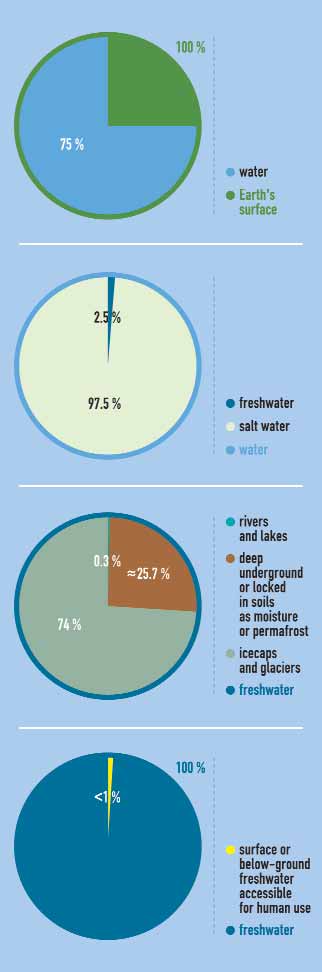
> Water covers 75 %
region's population
without treatment into rivers and
of the Earth's
is experiencing se-
streams.
surface (97.5 %
vere water stress,
> Unsanitary water, which provides a
of that is salt
with water con-
breeding ground for parasites, amoe-
water, only 2.5 %
sumption excee-
bas and bacteria, damages the health
is freshwater).
ding 10 % of renew-
of 1.2 billion people a year.
> Icecaps and gla-
able freshwater re-
> Water-borne diseases are responsible
ciers hold 74 % of
sources.
for 80 % of illnesses and deaths in
the world's fresh-
the developing world, killing a child
water. Almost all
Health
every eight seconds.
the rest is deep
> Improved water
> Half the world's hospital beds are occu-
underground, or
management has
pied by people suffering from water-
locked in soils as
brought enormous
borne diseases.
moisture or per-
benefits to people
> Almost 40 % of the world's population
mafrost. Only 0.3
in developing
lives within 60 kilometres of the
% of the world's
countries. In the
coast. Disease and death related to
freshwater is
past 20 years, over
polluted coastal waters alone costs
found in rivers or
2.4 billion people
the global economy 16 billion US
lakes.
have gained access
dollars a year.
> Less than 1 % of
to safe water sup-
> In southern Asia, between 1990 and
the world's sur-
plies and 600 mil-
2000, 220 million people benefited
face or below-
lion to improved
from improved access to freshwater
ground freshwa-
sanitation.
and sanitation. In the same period, the
ter is accessible
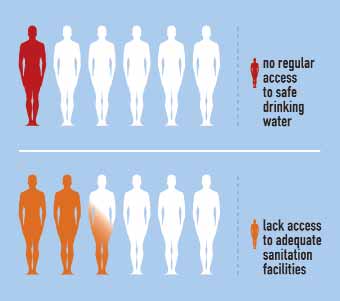
> Nevertheless, one
for human use.
in six people still
> Within 25 years,
have no regular
half the world's
access to safe drin-
p o p u l a t i o n
king water.
could have
> More than twice
trouble finding
that number (2.4
enough fresh-
billion people) lack
water for drin-
access to adequate
king and irriga-
sanitation facili-
tion.
MEDWAVES ARCHIVE
ties.
8
W O R L D E N V I R O N M E N T D A Y : " W A T E R : T W O B I L L I O N P E O P L E A R E D Y I N G F O R I T ! "
HREATENED"
population grew by 222 million, wi-
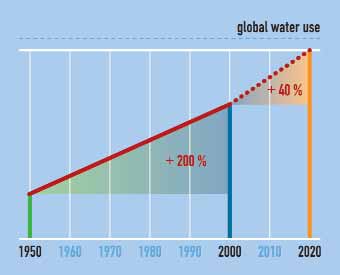
> Since 1950, global water use has more
ping out the gains that had been made.
than tripled.
> During the same period, in East Africa,
> On current trends, over the next 20
the number of people without sani-
years humans will use 40 % more
tation doubled to 19 million.
water than they do now.
> The cost of providing safe drinking
> The number of people living in water-
water and proper sanitation to
stressed countries is projected to
everyone in the world by 2025 will
climb from the current 470 million to
be 180 billion US dollars a year, two
three billion by 2025. Most of those
to three times greater than present
MEDWAVES ARCHIVE
people live in the developing world.
investments.
Food security
> To achieve the 2015 targets for fresh-
> Most of our freshwater is used to
water provision, water supplies will
A shared resource
grow food.
have to reach an additional 1.5 billion
> Rivers form a hydrological mosaic on
> While the daily drinking water needs
people in Africa, Asia, Latin America
the political map of the world.
of every person is approximately four
and the Caribbean.
> There are an estimated 263 interna-
litres, between 2,000 and 5,000
> Nearly 200 million people in Africa
tional river basins, which cover
litres of water are needed to produce
are facing serious water shortages.
45.3 % of the Earth's land surface
an individual's daily food require-
By 2025, nearly 230 million Africans
area (excluding Antarctica) and are
ments.
will face water scarcity, and 460 mil-
home to more than half the planet's
> Agriculture accounts for over 80 % of
lion will be living in water-stressed
human population.
world water consumption.
countries.
> One third of these 263 transboundary
> It is estimated that between 14 % and
> Water problems are more related to
basins are shared by more than two
17 % more water will be needed for
mismanagement than scarcity.
countries.
irrigation by 2030 to feed the world's
> Up to 50 % of urban water and 60 % of
> Rarely do watershed boundaries coin-
growing population.
water used in agriculture is wasted
cide with administrative boundaries.
> 60 % of water used for irrigation is
through leaks and evaporation.
> Many countries also share ground-
wasted.
> Logging and land conversion to accom-
water aquifers.
> A 10 % improvement in irrigation effi-
modate human demand has shrunk
> Groundwater aquifers store as much as
ciency could double the drinking
the world's forests by half, contribu-
98 % of accessible freshwater supplies.
water supply for the poor.
ting to increased soil erosion and
They provide 50 % of global drinking
> In Africa, more than 20 % of the popu-
water scarcity.
water, 40 % of industrial demands and
lation's protein comes from fresh-
> Between 300 and 400 million people
20 % of water for agriculture.
water fisheries.
worldwide live close to and depend
> On average, individual daily domestic
on wetlands.
use of freshwater in developed coun-
Water in the future
> Wetlands act as highly efficient
tries is 10 times more than in deve-
> Two hundred scientists in 50 coun-
sewage treatment works, absorbing
loping countries. In the UK the ave-
tries have identified water shortage
chemicals and filtering pollutants
rage person uses 135 litres of water
as one of the two most worrying
and sediments. Urban and industrial
every day. In the developing world
problems for the new millennium
development has claimed half the
the average person uses 10 litres.
(the other was climate change).
world's wetlands.
> Sustainable development and pover-
ty alleviation will only be achieved
through better management of and
investment in rivers and wetlands
MEDWAVES ARCHIVE
and the lands that drain into them.
9
B I O L O G I C A L D I V E R S I T Y I N T H E M E D I T E R R A N E A N
> MARINE BIODIVERSITY SHOULD NOT "NEED" TO BE SAVED
The precursors of today's Mediterranean marine fauna and flora came from the Atlantic.
The Mediterranean, more or less as we know it today, was formed about 5.3 million
years ago. The collision of the African plate with Eurasia, around a million years earlier,
led to the closing of the Gibraltar strait and the drying up of the Mediterranean.
Evidently this was not so simple and a flooding-drying process was repeated
several times, leading to the formation of huge salt and gypsum deposits
on the Mediterranean seabed, more than 1.5 kilometres thick in some parts.
About 5.3 million years ago, where, several thousand feet deep in the Evidence of some of the events and
movements in the earth's
underlying bedrock --channels that
processes that formed today's Mediter-
crust opened up the Gibraltar
could not have been cut underwater.
ranean are the many sapropels found in
strait. Atlantic waters then permanent-
The demise of the marine fauna and
this sea --especially in the Eastern
ly filled the enormous salt depression
flora of the older Tethyan Sea was inevi-
Basin. These are sediment layers, rich
that was the virtually dry Mediterra-
table. The Atlantic water that filled the
in organic carbon, which are indicators
nean basin, in parts a few kilometres
Mediterranean brought with it living orga-
of very high productivity, stratification
below the level of the Atlantic Ocean.
nisms that colonised this sea and evolved
and the ensuing anoxic conditions.
It was not until the early 1970's,
into today's Mediterranean marine life.
The causes of such high carbon-rich
with the deep-sea drillings, in the Medi-
The Mediterranean has since then
matter and the conditions and mecha-
terranean, of the US Geological Survey
gone through several, sometimes revo-
nisms under which it was formed, are
Vessel Glomar Challenger, that this pic-
lutionary, changes, some a few million
still being debated. The existence of sa-
ture was pieced together. It answered
years old, some as recent as a few thou-
propels, already known in the middle of
many older unexplained findings, such
sand years. Seismic activity, volcanic
the 20th century, gave rise to several hy-
as the existence of many deep river-cut
eruptions, sea level and climate chan-
potheses, some even linking them to
channels off the Nile delta and else-
ges all had their impact.
the biblical floods and Noah.
1 0
B I O L O G I C A L D I V E R S I T Y I N T H E M E D I T E R R A N E A N
>
An inflowing surface current through
It is this poverty that has been the
...rich in diversity
the Gibraltar strait not only enriches the
key to the development of the Mediterra-
The Mediterranean is a rich sea in
Mediterranean and compensates for
nean as a major tourist destination. The
terms of diversity and more than
evaporation losses --which cannot be
incoming surface current does not allow,
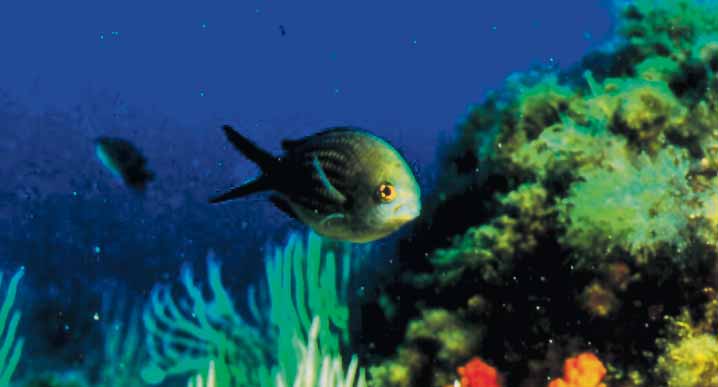
10,000 marine species have been
met with by river inflow-- but also brings
the passive at least, outflow of organ-
recorded here. The Western basin, as in
in living organisms from the Central
isms back into the Atlantic, enhancing
the past, is colder and more similar to
Atlantic, both warm and cold water ani-
the relative isolation of the Mediterra-
the Central Atlantic; the Eastern basin
mals and plants.
nean and the evolution of a large number
is warmer and more tropical and has
This inflow of organisms, over the
of endemic species --species found only
favoured its colonisation by species of
millennia, fed the new sea with species
in the Mediterranean. Endemic species
the more tropical Atlantic.
and, as its environment changed through
now account for almost one third of its
The same conditions now favour
geological times, has led to the evolution
fauna and flora.
its colonisation by species that come
of today's Mediterranean biota and deli-
The evolution of the marine life of
into the Mediterranean through the
cate ecosystem.
this sea is of course ongoing and many
Suez Canal. These now form about 12 %
The Gibraltar strait, until the ope-
forces are now shaping it, natural pro-
of the biota of the Levantine basin and
ning of the Suez Canal, formed the Medi-
cesses shape it gradually, man made ef-
5 % of the total biota of the Mediterra-
terranean's only link to the other oceans.
fects can revolutionise it.
nean --and are increasing.
With the advent of the last Wurm ice
age, about 18,000 years ago, the Mediter-
ranean slowly started warming up. At
that time, this sea was about 120 metres
below today's sea level.
Sperm and Fin Whale populations in
the west Mediterranean are relicts of a
much colder and richer Mediterranean.
Loggerhead turtles, at one stage in their
life, still make the journey across the
Atlantic to the Mediterranean and then
return to the Atlantic and to Florida.
Some of them stayed behind and
colonised this sea, about 10,000 years
ago, when this sea warmed up enough to
sustain nesting on its shores.
They, and Green turtles, have since
diverged genetically from the Atlantic
mother stocks and now form genetical-
ly distinct Mediterranean populations.
Poor in nutrients...
The Mediterranean and especially the
Eastern basin is one of the most oligo-
trophic seas in the world --this means
that it is a sea poor in nutrients-- and it is
this poverty that gives the Mediterranean
its azure colour and enviable clarity.
SPA/RAC
1 1
B I O L O G I C A L D I V E R S I T Y I N T H E M E D I T E R R A N E A N
>> MARINE BIODIVERSITY SHOULD NOT "NEED" TO BE SAVED
>
inevitably also impacts marine species
dependent on this narrow interface
between land and sea.
Man versus species
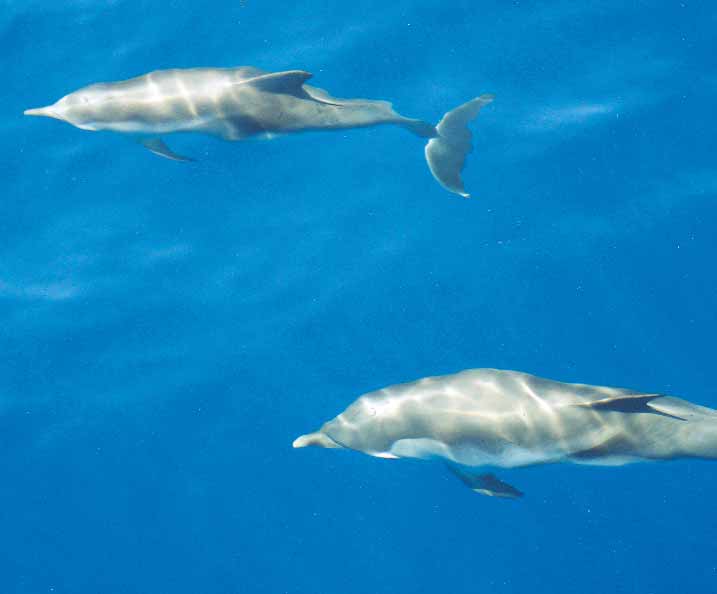
Monk seals, turtles, dolphins and
the precious Posidonia meadows and
many other species and habitats, as
well as the Mediterranean's delicate
ecological balance, are now threatened
by human activities. Concern over the
impact of man's activities on the Mediter-
ranean has led international and supra-
national organisations focus their atten-
tion on the protection of this sea, its
resources and its biodiversity.
The warning signs are clear and the
threats imminent. The UN Food and
Agriculture Organisation (FAO) and,
more recently, the European Union
A. DEMETROPOULOS
have been endeavouring to catalyse
The relatively cool winter tempera-
from land-based sources, is impacting
the implementation of science-based
tures in the Mediterranean, well below
species, habitats and ecosystems.
fisheries management measures in
the 18 ¤C threshold, do not allow the estab-
The relative sparsity of life in this
this sea --measures that would lead the
lishment of coral reefs in this sea. Global
sea makes it even more susceptible to
way to the so far elusive sustainable
warming will inevitably have its effects.
some kinds of pollution and to ecologi-
use of fishery resources.
The marine fauna and flora of the
cal change. The introduction of alien
The Mediterranean Action Plan (MAP),
Mediterranean has come under pressure
species, deliberate or accidental, im-
through the Barcelona Convention and
in recent years, from increased human
pacts Mediterranean equilibrium and
Protocols and its network of Regional
activity.
the heavy use of the coastline for ur-
Activity Centres and through a series of
ban, industrial and tourism purposes
action plans and a multitude of other
The fishing factor
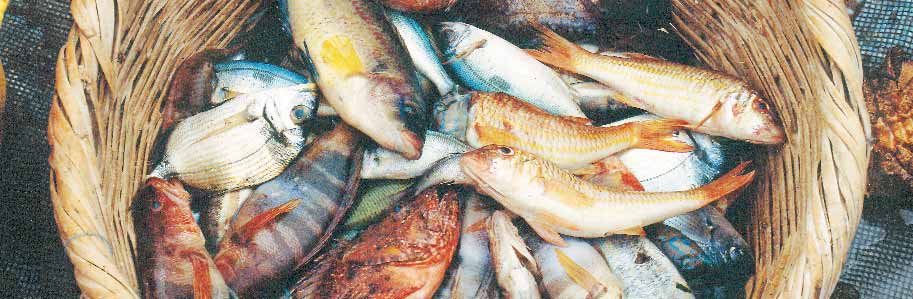
Fishing has changed during the 20th
century, from artisan levels, with row-
boats and limited gear to a fleet made
up not only of mechanised, well equip-
ped small boats with winches and fish-
finders but also of a multitude of large
trawlers, purse-seiners, drift-netters
and long-liners.
Fish catches now exceed by far any
scientific estimates of sustainable fish
yields. Red corals and sponges face si-
milar problems. Sport fishing has deci-
mated target species. Pollution, mainly
1 2
B I O L O G I C A L D I V E R S I T Y I N T H E M E D I T E R R A N E A N
A. DEMETROPOULOS
activities has been endeavouring to help
ternational Maritime Organization
To a large degree, such targets are
countries look into the options for the
(IMO) and many others are also in-
dependent on the understanding of the
future and monitor, control and combat
volved.
nature of this sea and mechanisms that
pollution, adopt appropriate technologies
Finally and perhaps more significan-
shape it. At the forefront of conserva-
and use resources wisely.
tly countries themselves, at the national
tion thinking a fact needs to remain,
MAP has also led the efforts for the pro-
level, are increasingly initiating actions
that even if a species is brought back
tection precious Mediterranean marine
to protect their marine biodiversity,
from the brink of extinction, there is an
habitats and species, through its Specially
through networks of protected areas and
inevitable loss of genetic diversity
Protected Areas and Marine Biodiversity
conservation programmes and projects.
within that species, an irreversible loss
Protocol and the activities of its Regional
Whatever the current conservation
to nature --and to man-- that man can
Activity Centre in Tunis (SPA/RAC).
efforts and trends are, however, there
do little about. This sombre realisation
Since the Rio summit, MAP has been
can be little room for complacency, as
should perhaps guide efforts to ascer-
promoting the sustainable develop-
much more is needed if current ecolo-
tain that species do not reach endan-
ment of the region for the common be-
gical equilibrium are to be maintained
gered levels and do not need to "saved".
nefit of the countries bordering on this
in this sensitive sea, let alone be re-
A N D R E A S D E M E T R O P O U L O S
sea --a sustainable development that
versed.
M A R I N E B I O L O G I S T
would minimise impacts on the sea.
Other bodies and agreements have
also come to the rescue of the integrity
of Mediterranean's biodiversity; Con-
vention on Migratory Species (CMS) and
its Agreement on the Conservation of
Cetaceans of the Black Sea, Mediterra-
nean Sea and Contiguous Atlantic Area
(ACCOBAMS), focused on cetaceans in
the Mediterranean; the Bern Conven-
tion now lists many Mediterranean ma-
rine species as protected, while opening
files on cases of non-compliance by
member states; International Commis-
sion for the Scientific Exploration of
the Mediterranean Sea (CIESM) and In-
SPA/RAC
1 3
B I O L O G I C A L D I V E R S I T Y I N T H E M E D I T E R R A N E A N
> A SEA WITH PERMANENTLY ENDANGERED SPECIES
The Mediterranean Sea
is a distinctive basin
which in the present state
of our knowledge
is host to almost
1,300 marine taxa,
representing 12 %
of the world's
ocean biodiversity
for those species.
Moreover, this is
an underestimation,
since the total number
of species is between
10 and 12,000,
8,000 of which are animal,
excluding the protozoa.
Could the Mediterranean Sea, have been observed in these mead- that could once be found throughout
with its rich marine biological
ows, and it is a spawning ground and
the Mediterranean and now lives only
diversity, be considered as one
nursery for many species, such as the
in Greece and Turkey. Over the last 25
of the climax cases in this field in the
mullets Mullus spp.,
years, its population has dropped from
world? The reason for this richness is
and
1,000 to 300 individuals, 150200 of
certainly the co-existence in the Medi-
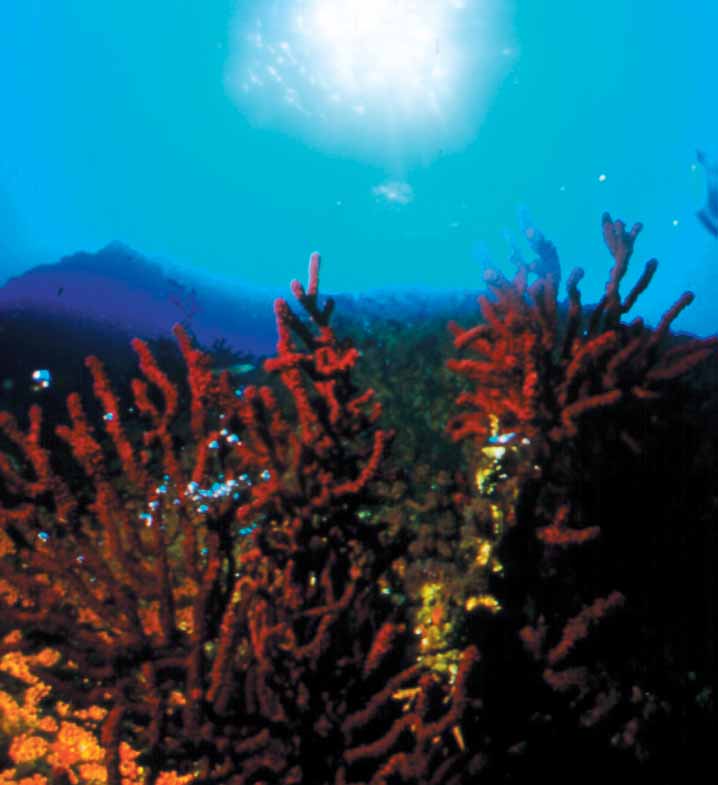
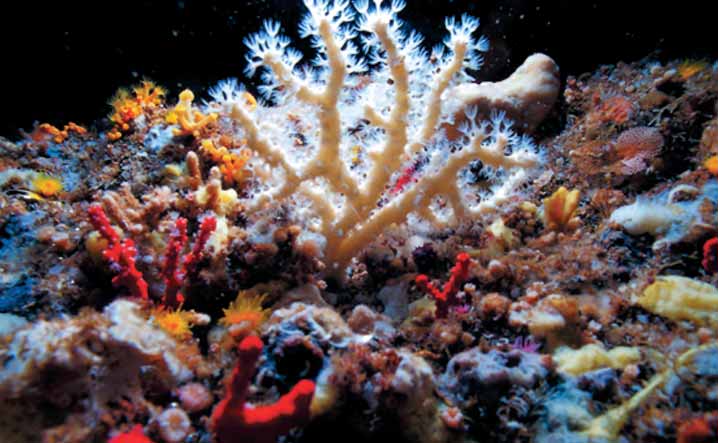
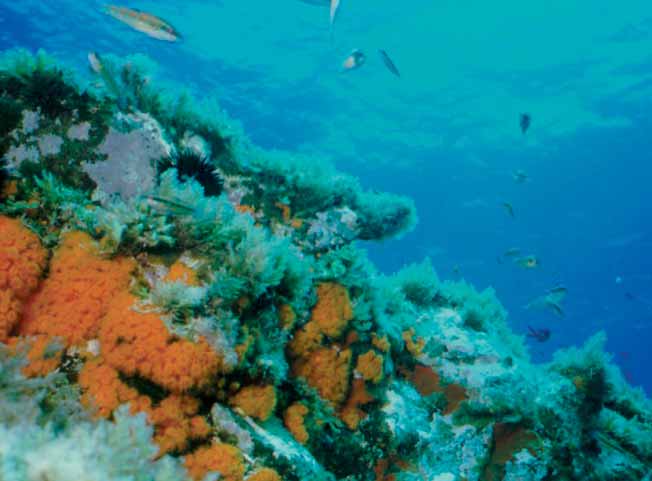
> the coralligenous communities, whose
which are in the Mediterranean.
terranean of species that come from
big sponges, gorgonians and bryo-
The loggerhead turtle Caretta ca-
the temperate northern Atlantic, from
zoans hosted by these communities
retta, the green turtle Chelonia mydas,
the tropical Atlantic and from the
present some of the most spectacular
and the leatherback turtle Dermo-
Indo-Pacific.
and most characteristic underwater
chelys coriacea, which are the commo-
The exceptionally high rate of ende-
landscapes in the Mediterranean.
nest species in the Mediterranean, are
mism, higher in the Western Mediter-
To a great extent, the exceptional
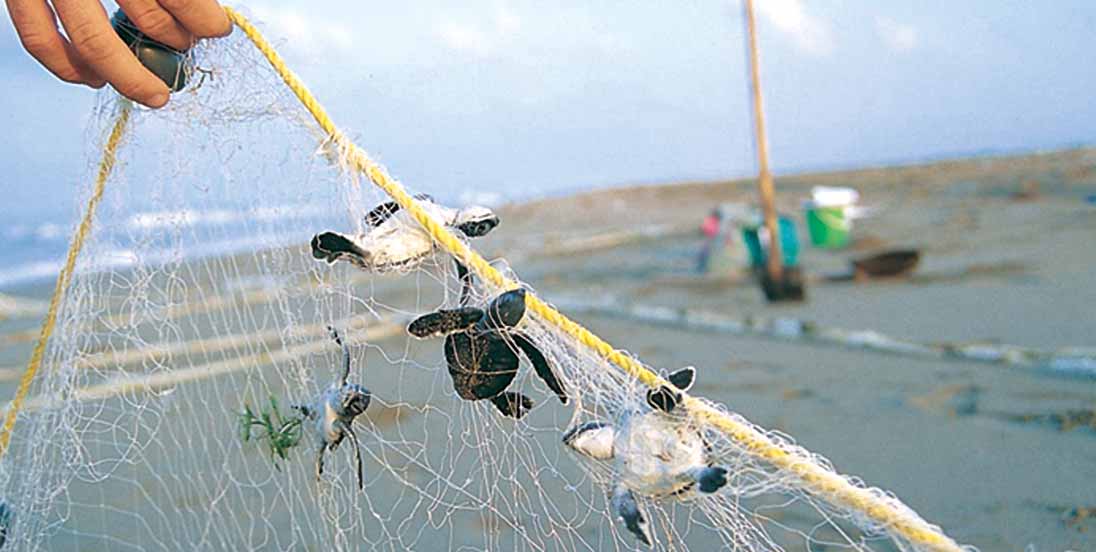
being caught at a yearly rate of 60,000
ranean (78 % of Mediterranean ende-
ecological heritage of the Mediterra-
turtles during fishing activities, and
mics) than in the Eastern part (only 23 %
nean region has been suffering from
the death rate of captured individuals
of Mediterranean endemics), could con-
intense exploitation of its natural re-
is from 10 to 50 %.
firm this character.
sources.
Among the 17 species of cetacean
Among the endemic species that are
There is everywhere a marked disba-
mentioned in Mediterranean waters,
considered as indicators of Mediterra-
lance of ecosystems, noticed through
three are seen as having priority: Delphi-
nean eco-diversity performance are:
the decline of certain species and of
nus delphinus, Tursiops truncatus, and
> the angiosperm species Posidonia
their critical habitats. The Mediterra-
Physeter macrocephalus, because of the
oceanica, which extends over depths
nean plant and animal communities in-
direct mortality caused by fishing gear.
of 40 metres in optimum conditions
clude species that are among the world's
Chondrichthyans (sharks, rays and
and covers a total surface area of
most threatened.
chimeras), species with a slow growth
about 20,000 square sea miles: 20 %
This is the case for the Mediterra-
rate and late maturity, have also proved
of all known Mediterranean species
nean monk seal Monachus monachus
to be vulnerable to human exploitation
1 4
B I O L O G I C A L D I V E R S I T Y I N T H E M E D I T E R R A N E A N
and the resulting fishing-related deaths
versity in the Mediterranean is devo-
Other plans under preparations are:
by directly-targeted catch and catch
ted to this. Within this framework, se-
> an action plan for the conservation of
linked to the use of fishing gear that is
veral initiatives to conserve and pro-
threatened bird species in the Medi-
not very selective.
tect threatened species and their habi-
terranean,
The dwindling of the elasmobranch
tats have been introduced, like hel-
> an action plan for the conservation
populations (especially Squalus bain-
ping countries to inventory the consti-
of Mediterranean species of carti-
villei, Mustelus mustelus, Mustelus aste-
tuent elements of biological diversity,
laginous fish,
rias and most of the rays) is mentioned
and elaborating and implementing the
and
in certain parts of the Mediterranean.
four Action Plans which have been
> an action plan concerning the intro-
Corbelled constructions of Litho-
adopted by the Mediterranean coun-
duction of species and invasive
phyllum lichenoides are sensitive to
tries in the context of the Barcelona
species in the Mediterranean Sea.
pollution and being trampled on.
Convention:
Although these Action Plans are
There are also threats to ecosystems
> the Action Plan for the management
not legally binding, they constitute a
such as the Posidonia oceanica mea-
of Mediterranean monk seal,
regional strategy, laying down priori-
dow and the coralligenous communi-
> the Action Plan for the conservation
ties and activities to be undertaken
ties because the water is becoming less
of Mediterranean marine turtles,
with the aim of helping the Mediterra-
transparent, and because of trawling
> the Action Plan for the conservation of
nean countries to implement the new
and the mooring of boats.
cetaceans in the Mediterranean Sea,
Protocol on Specially Protected Areas
Several other threats which are like-
and
and Biological Diversity.
ly to reduce Mediterranean species
> the Action Plan for the conservation
M O H A M E D A D E L H E N T A T I
S P A / R A C D I R E C T O R
diversity are coastal improvements
of marine vegetation in the Medi-
L O B N A B E N N A K H L A
(artificial beaches, ports), the discharge
terranean Sea.
S P A / R A C
of products and substances that cause
pollution (solid waste, liquid waste,
hydrocarbons), and the introducing of
nearly 400 species (discharge of ballast
water, aquaculture, migration), among
which 90 are macrophyte algae, of
these, Caulerpa taxifolia is the most
discussed invasive alga.
Aware of the dangers that are
threatening the ecosystems, the coun-
tries bordering on the Mediterranean
Sea have, under the aegis of the
Mediterranean Action Plan, coordinat-
ed their efforts via the SPA/RAC with a
view to protecting the Mediterranean
Sea as a heritage that is common to the
peoples of the region.
Section two of the new Protocol for
Specially Protected Areas and Biodi-
SPA/RAC
SPECIALLY PROTECTED AREAS / REGIONAL ACTIVITY CENTRE (SPA/RAC)
Boulevard de l'Environnement | PB 337 | TN-1080 Tunis cedex tel 0021 6 1 76 57 60 fax 0021 6 1 79 73 49 e-mail car-asp@rac-spa.org.tn website www.rac-spa.org.tn
1 5
P A P / R A C
> RIVER BASINS AND COASTAL AREAS
Since 1997,
MAP and UNEP
have performed
a number of joint actions
related to
Integrated Coastal Area
and River Basin
Management (ICARM)
in the Mediterranean
region.
The ICARM approach
has a dual focus:
river basins
and coastal areas.
Rivers are both
important sources
of freshwater
for its population
and a base for many
of their economic activities.
Thus, for example, the modifi- > allow for multiple use of resources
cation of river basins by
integrating complementary activi-
human activity has led to dra-
ties and regulating / separating con-
matic changes in the flow of water and
flicting ones;
Coastal areas
nutrients they carry to the sea. Marine
> ensure multi-sectoral and multi-
are home to the majority
ecosystems have been harmed by care-
level integration in decision ma-
less land practices hundreds of kilo-
king linking broad scale manage-
of the Mediterranean
metres upstream. On the positive side,
ment to local level interventions;
people and a location of
while economic activities in down-
> allow for participation of all stake-
important ecosystems.
stream areas benefit from upland re-
holders.
Keeping track
sources, the coastal areas often provide
Guidelines were based on the expe-
of the linkages
space for settlement and industrial
riences of the large-scale interventions
between these two natural
developments that have a positive be-
in the Mediterranean (France, Italy,
and socio-economic
nefit for the basin area.
and Spain). Regional and world experi-
These reasons prompted emer-
ences were presented at the workshop
systems is crucial.
gence of the scaled-up approach to
in Toulon (2000), when the ICARM
river basin and coastal area manage-
guidelines were accepted.
ment, resulting in the ICARM Guide-
lines that focus on the following prin-
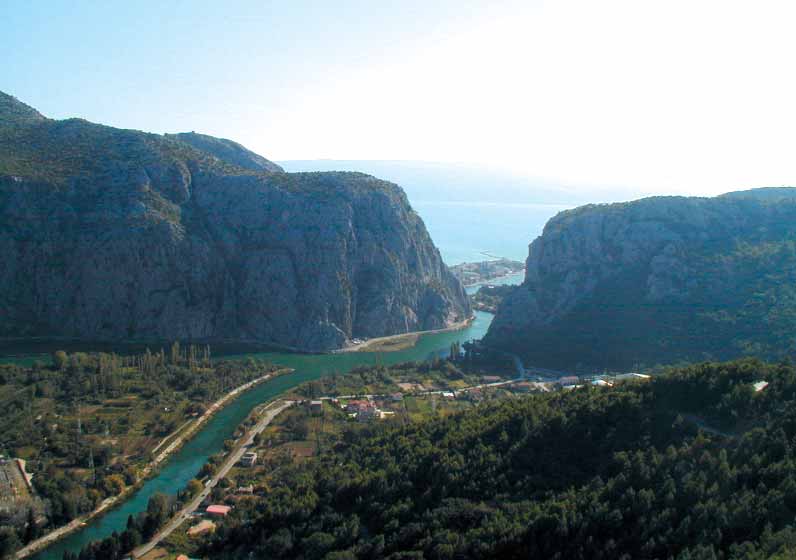
The case of Cetina River
ciples:
Following ICARM guidelines,
> respect the integrity of river basin
MAP's Priority Actions Programme /
and coastal ecosystems accepting
Regional Activity Centre (PAP/RAC)
the limits on use of their resources;
and UNEP prepared the demonstration
> ensure strategic importance of renew-
project "Environmental and socio-eco-
able resources for socio-economic
nomic profile of the Cetina River" in
development;
2000.
1 6
P A P / R A C
This project highlighted the need for
Major environmental concerns
> there's no agreement for common ma-
all stakeholders to consider the environ-
include: pollution; occasional water
nagement between the two countries,
mental and socio-economic relationship
shortages; water quality degradation;
but
between the watershed and its coastal
threats to river and marine living re-
> the dialogue among stakeholders in
area, and to identify possible consequen-
sources; changes of the river's flow re-
the two countries has started.
ces of their unregulated development.
gime; river banks' degradation; river
The future of this area will be planned
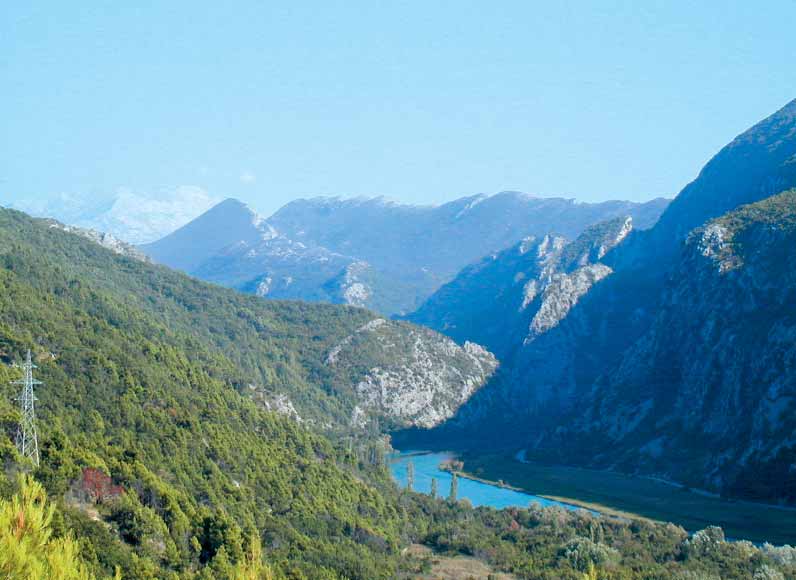
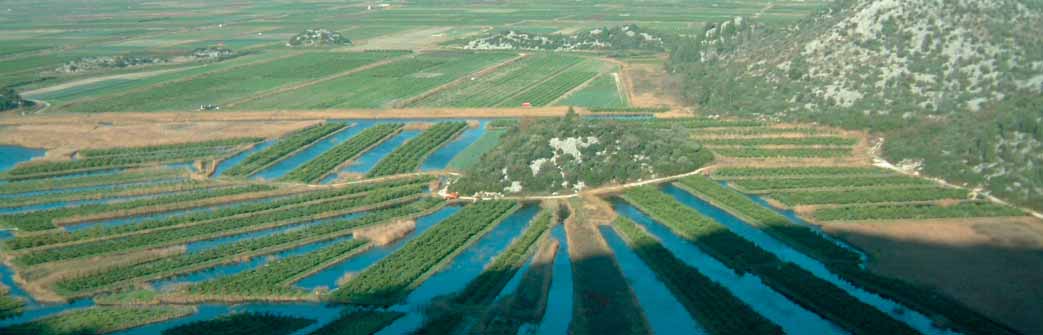
Cetina is a relatively small river but
pollution; landscape degradation; sedi-
following a well-developed format:
with all-important characteristics of a
mentation; coastal erosion, pollution,
> a socio-economic profile (already pre-
complex transboundary socio-econom-
and loss of open space; and modifica-
pared) with an established network
ic and environmental situation. Located
tion of natural habitats.
of co-operation and information ex-
in the karstic area, its watershed is
Major project's findings were:
change in the watershed area of the
spread over Croatia (1,200 km2) and
> main river user (Croatian Electricity
two countries;
Bosnia and Herzegovina (2,440 km2).
Company) is exploiting ecosystem to
> a study of development options where
The river is 105 km long, but abun-
its limits not bothering about con-
the impacts of several options will be
dant with water, that has been used for
sequences;
studied, including the effects of imple-
agriculture, energy production and
> there's no enabling environment for
mentation of economic instruments,
water supply. The river's major integra-
implementation of economic instru-
and
tive element is seen through the fact
ments and incentives;
> a Strategic Action Programme (eventu-
that most of the Central Dalmatian
> legislation, enforcement and institu-
ally with GEF financing) including
islands, with important tourism indus-
tional setting in the two countries
the creation of a sustainable mecha-
try, largely depend on freshwater sup-
are not equally developed;
nism for a regional approach to water
ply from the Cetina River (30,000 resi-
> there's lack of vertical integration
resources management; a Joint Wor-
dent and 50,000 tourist population).
among administrative levels;
king Group between the two coun-
tries; and better involvement of stake-
holders at all levels.
UNEP, the World Bank and other in-
ternational organisations have embraced
the ICARM approach. It has already been
used as guidance for a GEF / World Bank
project on the Senegal River.
Guidelines are prominently dis-
played on the World Bank's coastal and
marine management web site. The
guidelines and the Cetina case study
were presented at the World Bank Water
Week (March 2003). In its last session,
the Governing Council of UNEP adopted
a recommendation that ICARM case
studies should be increased.
I V I C A T R U M B I C
PAP/RAC
P A P / R A C D I R E C T O R
PRIORITY ACTIONS PROGRAMME / REGIONAL ACTIVITY CENTRE (PAP/RAC)
Kraj Sv. Ivana 11 | HR-21000 Split tel 00385 21 340 470 fax 00385 21 340 490 e-mail pap@gradst.hr website www.pap-thecoastcentre.org
1 7
P A P / R A C
> A CLEARING HOUSE
FOR COASTAL MANAGEMENT
In order to improve information on Integrated Coastal Area Management (ICAM)
in the region, the Mediterranean Action Plan's Priority Actions Programme
Regional Activity Centre (PAP/RAC), with the financial support of the European Commission,
has set up a Mediterranean Coastal Management Clearing House.
This Clearing House represents coastal management projects in the last present their papers and thesis to the
a place where information on
10 years and the wide spectra of infor-
coastal management community, by pla-
coastal management in the
mation related to and needed for a suc-
cing them on this web site.
Mediterranean is exchanged. The
cessful Integrated Coastal Area Mana-
All other topics provide a theoreti-
structure of the relative web site is
gement (ICAM). On this web page, there
cal introduction, accompanied by plen-
based on the results of a virtual opi-
is an option to submit projects.
ty of practical experiences, presented
nion poll, performed among the
In Experts Register, there is a list of
through numerous links.
coastal management community in
those with whom PAP/RAC has co-
Apart from information on these to-
Spring 2002.
operated in the past. In order to build a
pics, the Clearing House will provide
The Med Coastal Management
wide network of those involved in
special web features, such as a discus-
Clearing House encompasses the fol-
coastal management, PAP/RAC offers
sion platform, e-mail lists, a notice
lowing topics:
the possibility for Experts to be includ-
board, an on-line calendar of events and
> Coastal Projects Inventory,
ed in this Register by filling in a form
a help-desk.
> Funding Guide,
which is available on the web site.
The discussion platform will be used
> Experts Register,
The Economic Instruments topic is
for different thematic discussions, mode-
> Legislation & Institutions,
a link to the GEF PAP/RAC project re-
rated by well-known experts or researchers
> Economic Instruments,
lated to economic instruments. A data
and PhD students. The first moderated dis-
> Policies, Strategies & Plans,
base on economic instruments applied
cussion is expected in spring 2003.
> Tool Box,
in 12 Mediterranean countries is being
D A R I A P A V H
> Books, research reports & articles,
prepared.
E N V I R O N M E N T A L E C O N O M I S T , P A P / R A C
> Links.
In the Books, reports and articles sec-
The Coastal Projects Inventory pro-
tion, PAP/RAC enables researchers, PhD
for full details on the Clearing House:
vides information on Mediterranean
students and others who would like to
www.pap-medclearinghouse.org
PRIORITY ACTIONS PROGRAMME / REGIONAL ACTIVITY CENTRE (PAP/RAC)
Kraj Sv. Ivana 11 | HR-21000 Split tel 00385 21 340 470 fax 00385 21 340 490 e-mail pap@gradst.hr website www.pap-thecoastcentre.org
1 8
E R S / R A C
> REMOTE SENSING HELPS CALCULATE
SUSTAINABLE DEVELOPMENT INDICATORS
NASA
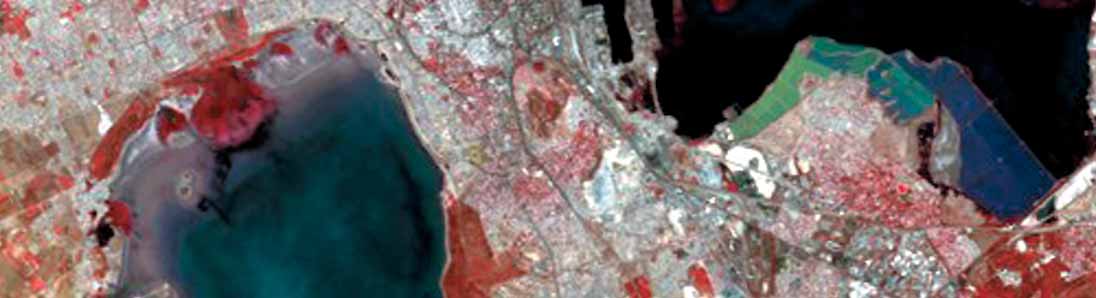
Satellite Remote Sensing
and Support for
Calculating Sustainable
The objective of this initiative jects already undertaken and hence on
is to provide support for cal-
existing satellite data, is to evaluate
culating and monitoring indi-
whether data collected from satellite
cators of Sustainable Development in
images are appropriate for following
Development Indicators
the Mediterranean, by providing exam-
up certain indicators and defining re-
is an initiative launched
ples of such calculations, based on the
commendations with a view to develo-
by the Environment
use of satellite data.
ping a monitoring methodology based
Remote Sensing /
There are eight indicators, classified
on space-borne remote sensing which
in the categories: Space and Territory,
could be recognised and applied by all
Regional Activity Centre
Economic Activities and Sustainability,
Mediterranean countries.
(ERS/RAC) in 2000,
and Environment:
The inventories conducted in Mo-
within the framework
> loss of agricultural land as a
rocco (2000) and Tunisia (2001) have
of the Mediterranean
result of urbanisation,
highlighted the potential of remote
Action Plan (MAP),
> forestry areas,
sensing in this respect, but also the
in collaboration
> artificial coastlines / total coast-
need for further work on this subject.
with Blue Plan / RAC.
lines,
A workshop on "Satellite remote
> coastal erosion,
sensing and support for calculating sus-
> density of road networks,
tainable development indicators" was
> trends in soil use,
scheduled to take place in Tunis in
> relative trends in arable land,
March 2003, bringing together repre-
> area destroyed by fire each year.
sentatives of Tunisian, Algerian and Mo-
Satellite remote sensing has a syn-
roccan national organisations working
optic, ongoing and homogenous im-
in the field of the environment and sus-
pact on data collection and is consi-
tainable development, as well as repre-
dered to be an extremely effective tool
sentatives of the MAP and the Regional
for monitoring and analysing the situa-
Centres, national and international ex-
tion and changes in the terrestrial and
perts in space-borne remote sensing.
marine environment.
M O N I Q U E V I E L
E R S / R A C
The final goal of this work, which is
G I O V A N N I C A N N I Z Z A R O
based on national inventories of pro-
E R S / R A C
ENVIRONMENT REMOTE SENSING / REGIONAL ACTIVITY CENTRE (ERS/RAC)
2, Via G. Giusti | IT-90144 Palermo tel 0039 091 342 368 fax 0039 091 308 512 e-mail ctmrac@tin.it website www.ctmnet.it
1 9
M E D P O L
> THE MAP ADDRESSES EUROCHLOR
ON INDUSTRIAL SUSTAINABILITY
MED POL,
In its presentation, MED POL, out-
comply with environmental regula-
lined the SAP commitments and tar-
tions taking into consideration the
the Mediterranean
gets for the industrial sector, stressing
human health impacts of mercury
Action Plan (MAP)
two major issues related to its imple-
and Persistent Organic Pollutants
Programme for the
mentation:
released into the environment;
Assessment and Control
1) the role that industrial stakeholders,
> Eurochlor informed the meeting that it
of Marine Pollution,
and especially Eurochlor, could play in
has reduced releases of mercury,
addressed the Eurochlor
the implementation of the SAP at na-
through voluntary initiatives, by 95 %
Conference on the subject
tional and regional levels, making use
in the last 20 years, and of other
of existing and innovative coopera-
reduction achievements and it has
"Industrial sustainability
tion instruments to ensure the trans-
voluntary initiatives to reduce more
in the Mediterranean:
fer of know-how and technology;
by 2007.
the Strategic Action
and
According to Eurochlor, 19 chlorine
Programme (SAP)
2) that the analysis of the provisions of
production plants are currently located
to Address Pollution
the SAP in comparison with the rela-
in the EU Mediterranean coastal areas
from Land-based
ted EU directives (Water Framework
in France, Greece, Italy and Spain with
Activities".
Directive, Integrated Pollution Pre-
a total capacity of 2,384,000 tons/year
vention and Control Directive) indi-
(27 % of the production of Eurochlor).
cates that the implementation of the
Among them, 16 plants are using
SAP would not be hindered by pos-
the mercury-based process producing
sible contradicting commitments
1,708,000 tons/year (72 % of the total)
made by the Euro-Mediterranean
and three non-mercury process plants
countries that would jeopardise
producing 676,000 tons/year (28 % of
their participation.
the total).
The conference highlighted three
According to the SAP targets, the
U
important controversial issues be-
releases of mercury into the environ-
p to 160 representatives from
tween different stakeholders:
ment from mercury based process plants
the European Union (EU) che-
> the position of EU Directorate Gene-
should be 2 gram/ton of chlorine pro-
mical industry, EU Ministries
ral Environment blamed the chlor-
duced which would be equivalent to 3.4
of Environment and journalists partici-
alkali as environmentally respon-
tons/year of mercury released into the
pated in the Eurochlor conference, held
sible;
Mediterranean Sea from the 16 plants
in Brussels on 2425 February.
> the difficulties expressed by Euro-
located on the Mediterranean coastal
The main objectives of the confe-
pean chlor-alkali industry in the
areas.
rence were to listen to concerns and
implementation of the EU Water
On the other hand, and according
views of external stakeholders; conti-
Framework Directive with regard to
to Eurochlor voluntary initiatives, this
nue efforts to achieve mutual under-
the list of priority substances and
quantity should be reduced to 2.56
standing by openly sharing informa-
the approach of the proposed EU
ton/year by 2007 since it has set a mer-
tion, and discuss industry plans to
chemical policy;
cury releases target of 1.5 gram/ton of
enhance long-term prospects for chlo-
> the pressure by EU Non Govern-
chlorine produced.
rine chemistry by focusing on measur-
mental Organisations and scien-
F O U A D A B O U S A M R A
E N V I R O N M E N T A L C H E M I S T
able sustainability goals.
tists, on the chlor-alkali industry to
M E D P O L P R O G R A M M E O F F I C E R
CO-ORDINATING UNIT FOR THE MEDITERRANEAN ACTION PLAN
MED POL 48, Vassileos Konstantinou Avenue | GR-11635 Athens tel 0030 210 72 73 131 fax 0030 210 72 53 196/7 e-mail medpol@unepmap.gr
2 0
N G O s P L A N E T
> THE BIG TURKISH
>
TRANSFORMATION
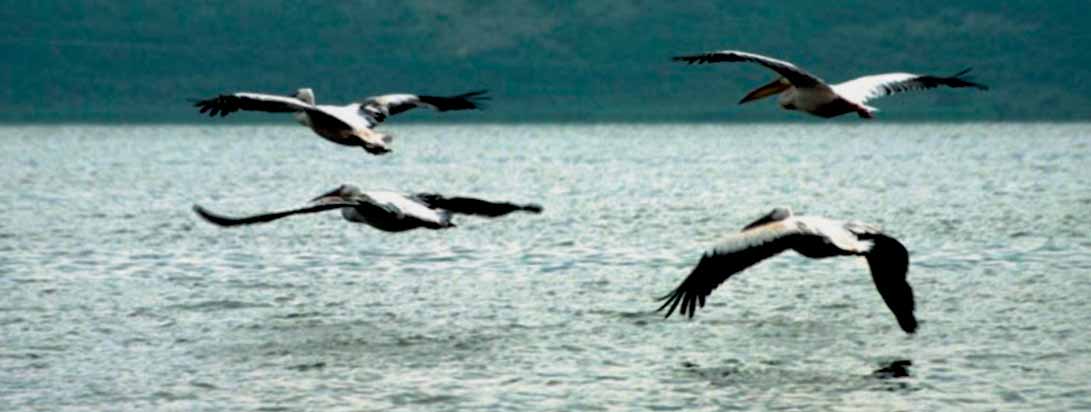
IN TERMS OF BIODIVERSITY, TURKEY IS ONE OF THE RICH COUNTRIES OF
EUROPE AND THE MIDDLE EAST. THERE ARE AT 9 DIFFERENT ECOLOGICAL
REGIONS EACH WITH ITS OWN ENDEMIC SPECIES AND NATURAL ECOSYS-
TEMS: THE MOST IMPORTANT OF WHICH ARE NORTHEASTERN ANATOLIA
FLORA WITH ITS OLD TEMPERATE MOUNTAIN RAIN-FORESTS, THE STEPPE-
TYPE MEADOWS AND WETLANDS OF CENTRAL ANATOLIA, AND THE
MEDITERRANEAN REGION PROVIDING HABITATS FOR ENDANGERED
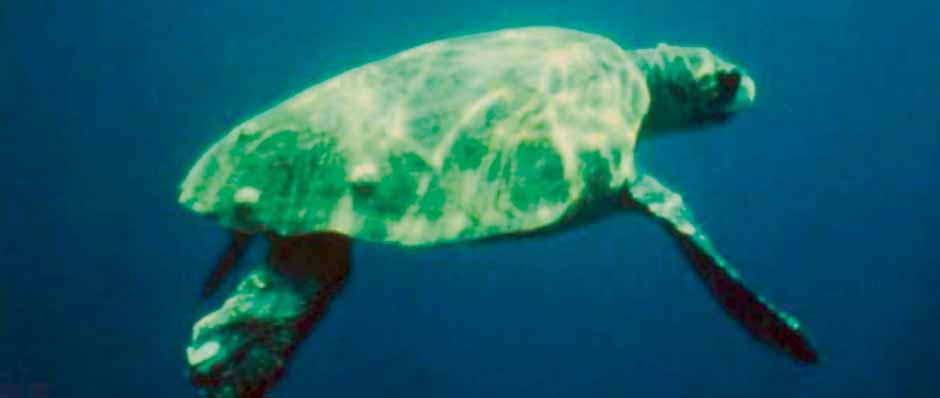
SPECIES SUCH AS MONACHUS MONACHUS, CARETTA CARETTA, AND CHELONIA MYDAS. TURKEY IS HOME TO
120 MAMMALS, MORE THAN 400 BIRD SPECIES, 130 REPTILES, AND CLOSE TO 400 FISH SPECIES.
Turkey has undergone a remarkable transformation in the management and planning of conservation of biodiversity over
the past decade and took upon itself the responsibility of achieving the objectives of the Convention on Biological
Diversity (CBD). Since the Rio Summit in 1992, important steps have been taken in enacting legislation and making
policy commitments to conserve biodiversity.
In Turkey, the conservation of threatened species and endemic species is more emphasized and publicised than the con-
servation of biodiversity itself. Each year, the annual loss of 20,000 ha of forests results in soil erosion. About 80 %
of coastal dunes have vanished due to physical developments.
During the last 30 years, 60 % of wetlands and a great portion of meadows have been destroyed by agricultural activities
spurred by ignorance. Few examples indicate that the critical importance of the conservation and sustainable use of
biological-genetic resources for the food and health sectors should be soon understood.
Like many other Mediterranean countries, Turkey is rapidly losing its agricultural lands, meadows because of incorrect
land-use practices, and, these areas are becoming degraded due to the increase in soil erosion and the use of chemical
agents and fertilizers.
DHKD
2 1
N G O s P L A N E T
>> THE BIG TURKISH TRANSFORMATION
>
Laws are not enough
The experiences of the last five years have led us to clearly understand that the designation of protected areas based on legis-
lation alone is not good enough for the sustainability of biodiversity. These areas need to be managed with different
approaches, and success is hard to achieve without the participation of communities living in these areas or their vicinity.
Sustainable use of natural resources and biodiversity is a relevantly new concept, and its content should be incorporated
in existing legislation. Moreover, international conventions should be used to bring Turkey in line with international,
and regional legal requirements such as the CBD and the Barcelona Convention and its Protocols.
The National Report of Turkey for the Johannesburg Summit was prepared with the participation of the relevant governmen-
tal organizations, NGOs and private sector.
In this period, a better and deeper appreciation of the following issues were realised: sustainable use and conservation of
biodiversity should be integrated in governmental plans; institutional capacity should be strengthened, and inter-organi-
zational cooperation and partnerships should be developed.
Experience shows that approaches based on the cooperation of governments and NGOs are more effective. The conserva-
tion activities that secure public participation have a better chance of producing effective results.
The NGOs in Turkey that work on the conservation of biodiversity have made important achievements in public participa-
tion, capacity building and policy enforcement, as well as in case studies with noticeable outcomes.
The partnerships formed with the NGOs are increasing, however stronger cooperation is required. The private sector also
needs to be encouraged for partnerships and to be aware of the growing market benefits of taking an "enlightened self-
interest" approach to the conservation of biodiversity.
Achieving our goal of conserving and providing sustainable use of biodiversity encounters challenges, difficulties and
opportunities. If we are to meet these challenges and difficulties, all stakeholders must pull together their support to
work in partnership for a living planet.
F I L I Z D E M I R A Y A K
P R E S I D E N T , D H K D ( T H E S O C I E T Y F O R T H E P R O T E C T I O N O F N A T U R E )
DHKD
The Society for
the Protection of Nature
Büyük Postane Cad. 4345
Kat: 5 Bahçekapi
TR-Istanbul
tel 0090 212 528 2030
fax 0090 212 528 2040
e-mail kelaynak@dhkd.org
website www.dhkd.org
2 2
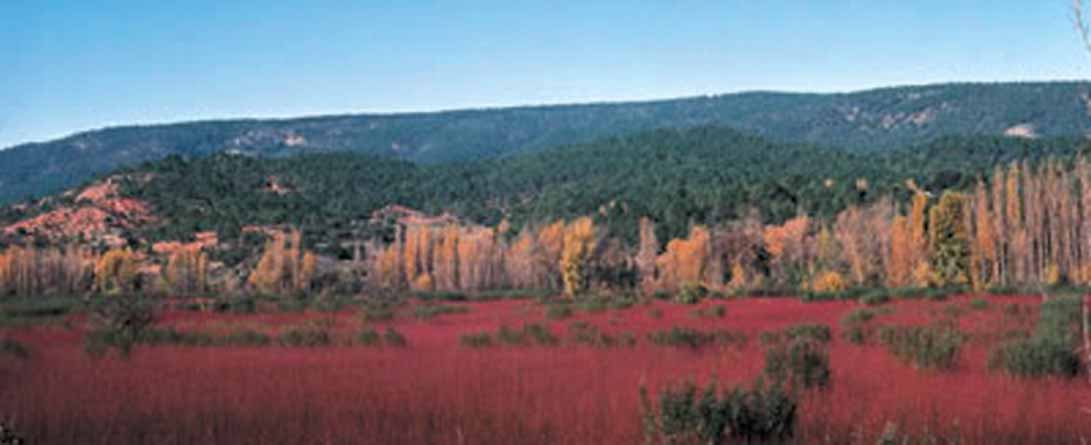
N G O s P L A N E T
> SAVING THE LAST
>
MEDITERRANEAN PARADISES
THE MEDITERRANEAN IS ONE OF THE WORLD'S MAJOR CROSSROADS FOR
BIOLOGICAL DIVERSITY. DESPITE MILLENNIA OF HUMAN FOOTPRINT, ITS
WATERS HOST A VERY HIGH NUMBER OF ENDEMIC SPECIES, SECOND ONLY
TO TROPICAL REGIONS. TODAY THE ECOSYSTEMS OF THE MEDITERRANEAN
BASIN ARE UNDER SERIOUS THREAT FROM POLLUTION, URBANISATION,
OVER-FISHING AND OIL SPILLS.
To help provide an overview of marine and coastal features throughout the Mediterranean basin, WWF carried out an in-
depth scientific study the Mediterranean Marine Gap Analysis. The aim was to identify the coastal and marine areas
with the highest natural value in the region. For the first time, a statistical analysis of the seabed was applied to marine
environment conservation. This allowed to have a clear picture of the Mediterranean basin as a whole.
The results show a high and widespread presence of biodiversity. However, virtually no important biological area is com-
pletely free from degradation, major threat to biodiversity coming from mounting urbanisation and tourism. The study
finally allowed the identification of 10 coastal and marine eco-regions.
Following the principle that the best tool to face the existing and potential threats is anticipated protection, WWF has
already started direct field and policy action in three of them, which are considered as priority.
In the Lyçian coast of Turkey, thanks to a joint work of WWF/DHKD and WWF Mediterranean Programme Office, the
village of Çirali has developed its tourist economy based on small pensions and Çirali-branded organic products. The
coast of Çirali, hosting one of the key nesting sites for sea turtles and a monk seal habitat, is up to date a unique case
in the Mediterranean for responsible tourism management.
The underlying idea of WWF projects is to work on initiatives that can be repeated in other locations. Çirali's case will be
promoted in developed areas such as Kemer as well as in small-scale tourism destinations in the Mediterranean.
WWF / CANON / P. REGATO
2 3
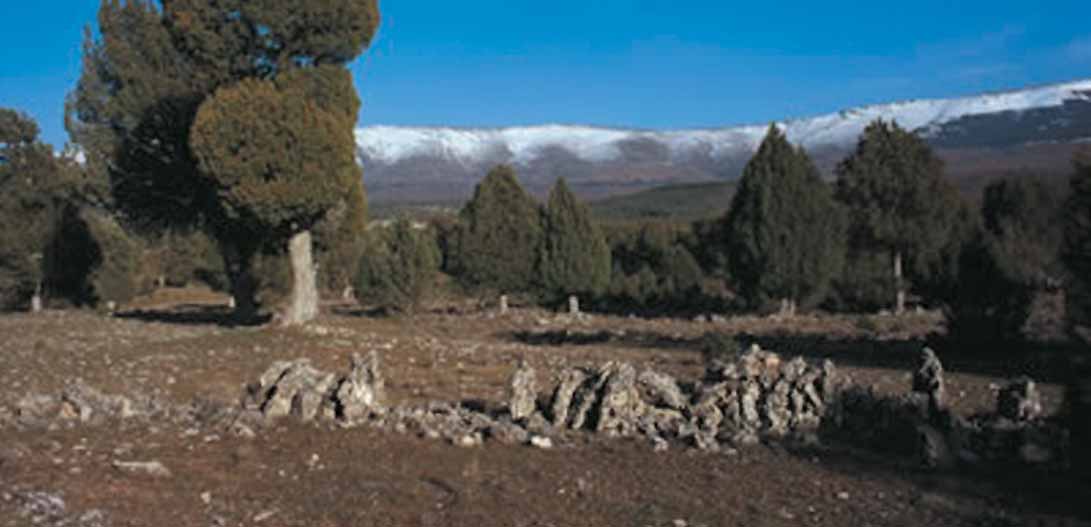
N G O s P L A N E T
>> SAVING THE LAST
>
MEDITERRANEAN PARADISES
In this respect, the Tunisian Kroumerie-Mogod region has been selected as another key area to protect. It offers a barely
visible complete combination of ecosystems that include landscapes from sea to forest in the same area. But large-scale
tourism development has begun to destroy some of the most important sand dunes coastal habitat (Tabarka) and threa-
tens fish stocks and sea bottoms.
Together with the Government and the Mediterranean Action Plan's Specially Protected Areas Regional Activity Center
in Tunis, WWF is working to establish a network of coastal and marine protected areas and a responsible tourism
framework in the Northwest coast of Tunisia between Bizerte and Tabarka (Coral Coast).
A key approach for WWF is to work with local partners and stakeholders. On the Dalmatian coast, WWF and their
Croatian partners Sunce and Green Action have launched a new initiative on the islands of Vis, Lastovo and Mljet. Two
of the richest fishing areas in the Adriatic are in this area, which also includes breath-taking coastal and marine land-
scapes. Besides, Croatia is predicted to become one of the leading tourist destinations in the Mediterranean.
To avoid negative impacts of over-fishing and mass tourism in the future, there is a need to put in place environmentally
sustainable, socially beneficial and economically viable activities related to tourism and fisheries.
Still, a lot remains to be done to ensure the oldest cradle of European civilization's protection. Currently, less than 1% of
the Mediterranean Sea is protected. WWF's overall goal is to ensure the protection of at least 10% of the total sur-
face of these 10 eco-regions and achieve sustainable resource use in all of them by 2010.
P A O L O G U G L I E L M I
H E A D O F M A R I N E U N I T , W W F M E D I T E R R A N E A N P R O G R A M M E O F F I C E
C H A N T A L M É N A R D
C O M M U N I C A T I O N S C O N S U L T A N T , W W F M E D I T E R R A N E A N P R O G R A M M E O F F I C E
WWF
MEDITERRANEAN
PROGRAMME OFFICE
c/o WWF Italy
Via Po 25/c
IT-00198 Rome
tel 0039 06 844 97227
fax 0039 06 841 3866
e-mail pguglielmi@wwf.medpo.org
cmenard@wwf.medpo.org
website www.panda.org/mediterranean
2 4

T H E L A S T P A G E
> THREE MEDITERRANEAN, AMONG THIS
YEARS' UNEP GLOBAL 500 LAUREATES
A French who devoted his life to the cause of environment; a Lebanese journalist
who triggered an unprecedented environmental public awareness campaign in the Middle East,
and an Algerian children's group, which helped cut water wastage among communities
in the Sahara, all of them from the Mediterranean region, are among this year's winners
of the UN Environment Programme "Global 500 Award".
A Briton who championed the cause of the
The Global 500 Award, launched in 1987 to honour individuals and organiza-
great apes and the rhino before tragically
tions for their outstanding achievements in the field of environmental protection, has
dying in an air crash, and an Indian whose eco-
two categories, one for adults and one for youth.
friendly toilet is transforming the health and
As for winners from the Mediterranean region, Serge M. Antoine (France) is
lives of the urban poor join the three Mediter-
among the first category winners. As early as the 1950s, he saw the need for a better
ranean winners.
protection of natural areas in France. His actions led to two major decisions: the adop-
Two other winners are a Nigerian whose
tion of a new form of regional planning and the setting up of the "Parcs Naturels
company delivers "sustainable development
Régionaux" similar to biosphere reserves.
in action" by using gum arabic to boost far-
Antoine played a major role in the creation of the Ministry of Environment and
mers' incomes while rehabilitating West
was Secretary-General of the High Committee for Environment. He took an active
African dry lands, and a litter-busting brigade
part in the preparations for the Stockholm Conference and in the establishment of
UN Environment Programme.
of Nepalese women who have transformed
He was instrumental in negotiating the 1976 Barcelona Convention, which lead to
waste management in this Himalayan moun-
the setting-up of the Mediterranean Action Plan (MAP) and launched the initiative for
tain kingdom.
a study of the region, which became the Blue Plan. In 1996, he advocated for a
A team of Bangladeshi lawyers who are
Mediterranean Commission for Sustainable Development.
bringing environmental and social justice to
Najib Saab (Lebanon) is another Adult category winner. Through Al-Bia Wal-
their country completes the octet of this year's
Tanmia (Environment and Development) magazine, which he launched as a private
winners. The Bangladesh Environmental
initiative, Najib Saab has triggered an unprecedented environmental public awareness
Lawyers Association (BELA) was set up by a
campaign in the Middle East, bringing environmental concerns to the Arab public-at-
group of young lawyers in 1991 and has since
large and creating a regional environmental advocacy forum.
become a true pressure group against environ-
The influential magazine has a circulation of 38,500 in 22 countries. It is used
mental violations.
in schools, and its articles are a reference for environmental curricula. Saab's edito-
Klaus Töpfer, the Executive Director of
rials on sustainable development issues in the Middle East are syndicated to 10 daily
the UNEP presented the 2003 Global 500 lau-
newspapers.
reates with their award for outstanding
Al-Bia Wal-Tanmia sponsors more than 360 environmental clubs in schools, and
achievements during the World Environment
supports them with educational material and training. Saab has produced a weekly envi-
Day (WED) celebrations, which were held on
ronmental educational television programme entitled Environment Club a pioneering
5 June in Lebanon for the first time in 30
effort in the region.
years, in an Arabic country. The theme
As for the Youth Category, "Salle Pédagogique des Zones Arides" (Algeria) was
"Water: Two Billion People Are Dying for It!"
the only winner. In 1998 the children of Beni Abbes in the southwest of the Algerian
supports the celebration of 2003 as the Inter-
Sahara decided to carry out a survey on the problems of water and its management
national Year of Freshwater.
within households.
The target group consisted of 500 families in El Wata and 500 families in Beni
Töpfer said that "every year it is our privi-
Abbes. The results of the survey showed that there was significant wastage: waste-
lege to recognise those individuals and groups
water, untreated, increasing wastewater volumes and possible pollution of the
who have gone beyond the rhetoric and the
groundwater.
grand-standing, who have seized the issues
With their teachers' backing, they decided to set up a small experimental lagoon
and transformed a dream into reality, turned
system. In December 1999, this was carried out with assistance from the Popular
ideas into action on the ground".
Communal Assembly.
He added that "Governments alone are un-
The neighbouring "fellahin", who saw production in their plots increase, became
likely to achieve much without the support of all
partners in the project. A film, "Nest of Nurseries", telling the story of how the
sectors of civil society, without the inspiration
lagoon system was born, was produced with the help of ENTV (Algerian Television),
of individuals and small, dedicated grassroots
for the international exhibition in Hanover, Germany.
groups, like those we are applauding on WED".
Since the inception of the Global 500 Award in 1987, 735 individuals and orga-
website www.global500.org
nizations have been honoured with it.