THE MAP IN JOHANNESBURG
THE MAP AND THE EUROMED PARTNERSHIP
"MAMA" WILL OBSERVE THE SEA
DESALINATION?
I N S E R T
T H E N E W P R E V E N T I O N A N D E M E R G E N C Y P R O T O C O L

C O N T E N T S
> IN THIS ISSUE
THE MEDITERRANEAN ACTION PLAN MAGAZINE
# 4 6 | 2 0 0 2
EDITORIAL
EDITOR
> DRAWING LESSONS FROM
Baher Kamal
THE WORLD SUMMIT ON SUSTAINABLE DEVELOPMENT .......................................1
baher@unepmap.gr
THE MAP AND THE WORLD SUMMIT ON SUSTAINABLE DEVELOPMENT
AUTHORS
> THE MEDITERRANEAN PRESENCE IN JOHANNESBURG ......................................... 2
Michael Scoullos
> THE MEDITERRANEAN, COMMITTED TO SUSTAINABLE DEVELOPMENT ...... 4
Maria Caparis
CO-OPERATION
Francesco Saverio Civili
Vassilis Kostopoulos
> MAP AND THE EURO-MEDITERRANEAN
Dionisios Mentzeniotis
PARTNERSHIP IN ATHENS DECLARATION ..................................................................... 5
Georgios Sakellarides
THE BARCELONA SYSTEM
CREATIVE
> THE NEW PREVENTION AND EMERGENCY PROTOCOL ............................................ 7
/fad.hatz
MED POL
chatzigeorgakidis@freenet.de
> "MAMA" WILL OBSERVE THE SEA AND PREDICT CLIMATE CHANGE ............. 8
PRINTER
MED POL
Damianos Tsarouchas
> DESALINATION?.. YES, BUT... .......................................................................................... 10
I S S N 1 1 0 5 - 4 0 3 4
CINEMA AND THE ENVIRONMENT
> ECOCINEMA FESTIVAL AWARDS ENVIRONMENTAL FILMS ............................... 13
THE KIOSK
MedWaves is published by
the Coordinating Unit of
> MAP: STATE OF THE ART INFORMATION ................................................................... 14
the Mediterranean Action Plan
in Arabic, English and French.
NGOs PLANET: SURVEY ON THE ENVIRONMENT
It is an informal source of information
and it does not necessarily reflect
> ENVIRONMENTAL PERCEPTION / NEW YORK COLLEGE
the official point of view of MAP or UNEP.
YOUNG PEOPLE ARE CONCERNED, BUT NOT PROPERLY INFORMED ........... 16
Contents, except for pictures,
may be reproduced without permission
THE LAST PAGE
and only for non-commercial use.
Credit to the source, however, is required.
> MAP ONLINE ...................................................................................................... inside backcover
The publisher would appreciate
receiving a copy of any publication
that uses MedWaves'
news, articles and interviews.
The designation of geographical entities
and the presentation of the material
THE BARCELONA SYSTEM
do not imply the expression of any opinion
> PROTOCOL CONCERNING COOPERATION IN PREVENTING POLLUTION
whatsoever on the part of the publisher
concerning the legal status of any country,
FROM SHIPS AND, IN CASES OF EMERGENCY,
territory or area, of its authorities,
frontiers or boundaries.
COMBATING POLLUTION OF THE MEDITERRANEAN SEA .............................. insert
C O V E R P H O T O
UNITED NATIONS ENVIRONMENT PROGRAMME
BOAT AT SEA
MEDITERRANEAN ACTION PLAN
by ANDREAS DEMETROPOULOS
E D I T O R I A L
> DRAWING LESSONS FROM THE WORLD
SUMMIT ON SUSTAINABLE DEVELOPMENT
egardless of what one may think of the development and outcome of the
R Earth Summit, and if one might regret the lack of quantified objectives
in the Action Plan in particular, the texts adopted at the Johannesburg
Conference are extremely important as far as sustainable development policy is
concerned. They represent the consensus reached by the members of the United
Nations and, as such, they deserve to be read, examined and translated into
L U C I E N C H A B A S O N
implementation strategies at the regional level. There is nothing that prevents
C O - O R D I N A T O R ,
one being more ambitious, more specific or more committed, quite the contrary.
M E D I T E R R A N E A N A C T I O N P L A N
At the Mediterranean level, the Mediterranean Action Plan (MAP) foresaw
the events by launching the preparation of the Regional Strategy for Sustainable
Development, which will be the focus of MAP bodies over the coming three years.
One major issue arises in the preparation of this Strategy in view of the path
followed at Johannesburg. It is a fact that in the United Nations Millennium
Declaration, a substantial part of the Agenda was devoted to social issues such as
access to drinking water, energy, education, and health ---in short, the criteria for
viable human development. In this context, the concept of sustainable develop-
ment in Mediterranean countries can no longer be confined to a perception of
development that is conveyed mainly by experts in protection of the environment
and management of natural resources, a kind of re-formulation of the idea of eco-
development. Henceforward, there will have to be a more global and integrated
approach to development in all its components. This is a major challenge for the
MAP and should be reflected in the Mediterranean Strategy for Sustainable
Development, proposed and endorsed as a Type II initiative.
The MAP will find in the Johannesburg Action Plan many elements to
strengthen its action.
For example, the growing importance accorded to sustainable management of
oceans, seas and coastal zones, and the need for effective governance open to
civil society.
In Johannesburg, at a parallel event that brought together the actors
involved, including NGOs, economic circles and local authority networks, along-
side country representatives, the Mediterranean Region was able to explain its
way of working and its vision of sustainable development. This event afforded an
ideal opportunity to assess the results achieved in past years and to prepare for
the future.
We believe that the spirit of regional cooperation that prevails in the
Mediterranean, in all circumstances, is the prerequisite for a positive response to
the objectives set in the Johannesburg Action Plan.
1
T H E M A P A N D T H E W O R L D S U M M I T O N S U S T A I N A B L E D E V E L O P M E N T
> THE MEDITERRANEAN PRESENCE IN JOHANNESBURG
The Mediterranean
was represented
at the Johannesburg
A number of events focusing ventions were made by the Secretary of
on the Mediterranean were
State for Sustainable Development of
organised during the World
France, Tokia Saifi; the Minister of
Summit on Sustainable Development.
Agriculture, Natural Resources and
Summit by all
The major one was entitled "The
Environment of Cyprus; Costas Themi-
Mediterranean countries
Mediterranean Eco-Region: the first firm
stokleous and the Minister of Environ-
steps towards Sustainability". This
mental Protection and Physical Plan-
at high political level,
event, held on 2nd September in the
ning of Croatia, Bozo Kovacevic.
by a large number
Water Dome, was co-organised and sup-
Interventions were also made by
of Non-Governmental
ported by Monaco, Greece and the Medi-
the Local Initiatives and Enterprises
Organisations (NGOs)
terranean Information Office for En-
represented respectively by Folch from
and Inter-Governmental
vironment, Culture and Sustainable De-
the City of Barcelona and MedCities and
Organisations (IGOs),
velopment (MIO-ECSDE) and further
by F. Kaisin of Suez (World Business
as well as by
sponsored by MAP and the Commission
Council for Sustainable Development).
of the European Union DG Environment.
Ministers from Malta, Serbia and
the Mediterranean
The event was opened by Prince
Montenegro; Ambassadors, Parliamen-
Action Plan (MAP).
Albert of Monaco and the Deputy Mi-
tarians, NGOs and other major groups
nister for the Environment of Greece,
participated. M. Scoullos, Chairman of
Rodoula Zisi, who also presented the
MIO-ECSDE, coordinated the meeting.
Declaration of Athens adopted at the July
2002 Ministerial Meeting of the Euro-
Documentation
Mediterranean Environment Ministers.
and publications
Minister Bernard Fautrier, of Monaco,
on the Mediterranean
current President of the Bureau of the
A high number of documentation
Contracting Parties to the Barcelona Con-
on the Mediterranean was available
vention, presented the Declaration of the
and distributed, including a booklet
Mediterranean Ministers adopted by the
describing the main steps taken in the
MAP Contracting Parties in Monaco in
region from Rio to Johannesburg,
November 2001.
which was produced by MIO-ECSDE
The NGO declarations were high-
with the support of MAP and the EU.
lighted on behalf of the Mediterranean
The MAP presented its series of the-
NGOs by Emad Adly, Chairman of
matic publications, each one focussing
RAED (Arab Network for Environment
on a key field of MAP activity.
and Development).
In addition, a EU-Mediterranean
The Minister for the Environment
Consultation took place in the
and Land Planning of Tunisia,
Sandton Center. It was called by the
Mohamed Ennabli of Tunisia, and the
EU Troika (Danish Presidency, Greek
MAP Coordinator, Lucien Chabason,
up-coming Presidency and the Euro-
elaborated respectively, on the "Agenda
pean Commission) in order to inform
MED 21" and the Mediterranean Com-
the non-EU members on the key
mission for Sustainable Development
points of the EU positions and receive
(MCSD).
input on any priorities or concerns.
The meeting was addressed by the
Four countries (Cyprus, Croatia, Egypt
representatives of the European En-
and Yugoslavia) were represented
UNEP/MAP
vironment Council, UNEP, and inter-
there by their Ministers.
2
T H E M A P A N D T H E W O R L D S U M M I T O N S U S T A I N A B L E D E V E L O P M E N T
The Mediterranean countries asked
for a higher attention to their problems
by the EU while confirming their confi-
dence and support to EU initiatives.
After the conference, the presenta-
tion of the Educational Package on
Water in the Mediterranean and the
launch of the Type II Initiative under
the title MEDIES (Mediterranean Educa-
tion Initiative for Environment and Sus-
tainability) took place, led by MIO-
ECSDE, Greece and MAP with the parti-
cipation of many Mediterranean coun-
tries, UNESCO, and several NGOs.
This Initiative aims to produce in
MIO-ECSDE
all Mediterranean languages educa-
tional material on water and waste
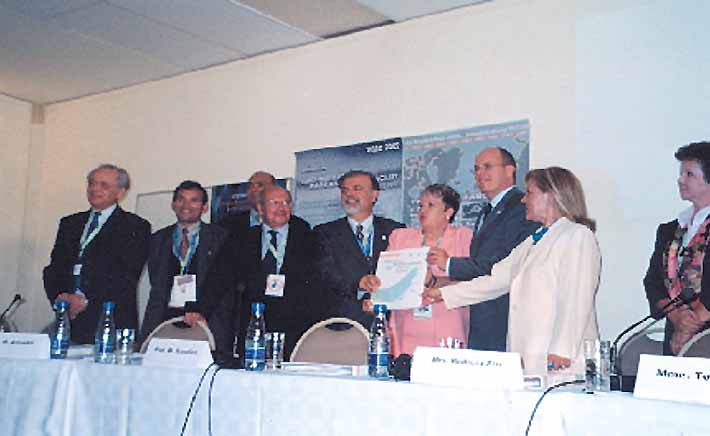
PRESENTATION OF THE EDUCATIONAL PACKAGE "WATER IN THE MEDITERRANEAN"
AND LAUNCHING OF THE MEDIES TYPE II INITIATIVE:
management and create a network of
From left to right: Minister Ennabli, Tunisia; Ftouhi, Morocco; Adly, RAED; Chabason, UNEP/MAP;
environmental educators throughout
Scoullos, MIO-ECSDE; Catley-Carlson, GWP; Prince Albert of Monaco; Deputy Minister Zisi, Greece;
the Mediterranean.
Vandeweerd, UNEP, on behalf of Dr. Klaus Töpfer, Executive Director of UNEP.
The series of events also included
the launch of the Euro-Mediterranean
Among the high-ranking represen-
agreed for the Mediterranean to be the
Water and Poverty Facility (WPF). The
tatives participating in this panel
third in sequence area after sub-
launching of this Type II Initiative led
chaired by Margaret Catley-Carson,
Saharan Africa and the NIS to receive
by Egypt, Greece and Global Water
Chairperson of Global Water Partner-
particular attention within the frame-
Partnership Mediterranean (GWP-Med)
ship (GWP), were Mohamed Ennabli,
work of the EU Water Initiative.
took place in the WaterDome on
Minister for the Environment and Land
President of the European Com-
September 2nd. The Chairman of GWP-
Planning of Tunisia; Stephen Lintner,
mission, Romano Prodi, Commissioner
Med, M. Scoullos, explained the objec-
Senior Advisor at the Environment
Wallström and Greek Foreign Affairs
tives and operational goals of this
Department of the World Bank; Helen
Minister Papandreou confirmed this
Initiative, which has already been
Mountford, Counsellor at the Environ-
during the official launching of the EU
placed under the EU Water Initiative.
ment Directorate of OECD; Lucien
Water Initiative on September 3rd in
The Minister of Water Resources and
Chabason, Coordinator of UNEP / MAP;
the WaterDome.
Irrigation of Egypt, Mahmoud Abu Zeid,
Youssef Nouri, co-Chairman, MIO-
Finally, the Greek Minister Papan-
Chairman of the World Water Council,
ECSDE; Raymond Van Ermen, Execu-
dreou presented to the UN Secretary
the Minister of Foreign Affairs of Greece,
tive Secretary of EPE; Khaled Abu Zeid,
General Kofi Annan the Ministerial
George Papandreou, and Carsten Stauer,
Senior Water Expert, CEDARE, and
Declarations of Monaco and Athens as
Under Secretary of State, Ministry of
Bowdin King, International Campaigns
well as those of the of the region's NGOs
Foreign Affairs of Denmark, represen-
Coordinator at ICLEI.
as an input to the Political Declaration.
ting the EU's Presidency, emphasised
One of the positive outcomes of
M I C H A E L S C O U L L O S
the importance of the undertaking.
Johannesburg was the fact that the EU
C H A I R M A N O F M I O - E C S D E
MEDITERRANEAN INFORMATION OFFICE FOR ENVIRONMENT, CULTURE AND SUSTAINABLE DEVELOPMENT (MIO-ECSDE)
28, Tripodon Street | GR-10558 Athens tel 0030 210 32 47 267/490 fax 0030 210 32 25 240 e-mail mio-ee-env@ath.forthnet.gr website www.mio-ecsde.org
3
T H E M A P A N D T H E W O R L D S U M M I T O N S U S T A I N A B L E D E V E L O P M E N T
> THE MEDITERRANEAN, COMMITTED
TO SUSTAINABLE DEVELOPMENT
Minister Bernard Fautrier, of Monaco, President of the Bureau
of the Contracting Parties to the Barcelona Convention,
presented at the WaterDome the Mediterranean Declaration
for the World Summit on Sustainable Development.
"The Mediterranean countries and the European Com-
Thirdly, the above two aspects cannot be successfully
mission met in my country, Monaco, from 14 to 17 Novem-
implemented without the existence of an appropriate insti-
ber last year on the occasion of the Meeting of the Contrac-
tutional framework for good governance based on effective
ting Parties to the Barcelona Convention.
and decentralized participative processes. This evidently
The Meeting, which was of a high level in political terms,
involves the acceptance of international legal instruments
since of the 21 Contracting Parties, 17 were represented by
and the appropriate use of Mediterranean structures. In this
their Ministers responsible for the environment or coopera-
respect, the decision to formulate a Mediterranean Sustain-
tion, adopted a Mediterranean Declaration for the
able Development Strategy, which has been entrusted to the
Johannesburg Summit.
Mediterranean Commission on Sustainable Development,
As Monaco has the honour of presiding over the Bureau
should be a fundamental element of such governance. But
of the Contracting Parties to the Barcelona Convention in
all this will also have to permeate through to the local level,
2002 and 2003, it is with great pleasure that I will now
particularly through local Agenda 21s.
briefly review the Declaration."
Finally, the need for greater cooperation, partnership
and financing mechanisms. This involves promoting the
Key aspects for
transfer of environmentally friendly technologies, the poo-
Sustainable Development
ling of scientific knowledge, a liberalization of trade and
"We wished to emphasize aspects in the Declaration
capital flows that is compatible with environmental conser-
which appear to us to be fundamental for sustainable deve-
vation and social harmony and, of course, the development
lopment in the Mediterranean eco-region and which may be
of public assistance, alongside direct foreign investment and
grouped under four points:
clean development mechanisms, as envisaged in the
Firstly, social development and, in this context, the need
Framework Convention on Climate Change.
to narrow the income gap between countries of the North
All of the above should lead to innovative solidarity
and South, as well as between the rich and the poor within
mechanisms, resulting in an authentic and effective
each country. To combat poverty effectively, it is also neces-
Mediterranean partnership."
sary to promote gender equality, particularly in the South,
and to gain a better understanding of the migration of popu-
Strategy for
lations. Social development, especially in the South, clearly
Sustainable Development
involves appropriate education, information and communi-
"For the implementation of these principles, Medi-
cation strategies.
terranean countries have undertaken to formulate or revise
Secondly, managing natural resources and combating
their sustainable development strategies and carry out the
pollution, with particular reference to the marine and
necessary budgetary and institutional reforms to promote
coastal environment. This includes the need for the integra-
the activities of the MCSD (the decision to entrust the MCSD
ted management of water resources and the establishment of
with the formulation of the Mediterranean strategy is a
sustainable tourism. It should be recalled that one-third of
clear indication of this political will) and, finally, to deve-
global tourism is concentrated in the Mediterranean. It is
lop information, monitoring and evaluation systems for the
also necessary to take into account natural and technologi-
state of the environment and sustainable development in
cal risks, adopt energy policies that promote the use of solar
the region.
and wind power in particular (for which there are plentiful
These are the major points of the Declaration which is, I
resources in the Mediterranean) and finally to develop clean
believe, fully illustrative of our will to develop our own Medi-
industrial production.
terranean identity."
4
C O - O P E R A T I O N
> MAP AND THE EURO-MEDITERRANEAN
PARTNERSHIP IN ATHENS DECLARATION
A. DEMETROPOULOS
The 2nd Euro-Mediterranean Ministerial Conference on the Environment,
held in Athens on 10 July 2002, referred to the relevance of close synergy
between the Euro-Mediterranean Partnership and the Mediterranean Action Plan.
The following are extracts of the the Ministers of Environment to pro- the European Environment Agency
main references made to this
mote in Athens a joint approach to the
(EEA) and Mediterranean Action Pro-
synergy in the Athens Decla-
Johannesburg World Summit on
gramme, are, despite improvements in
ration adopted by the Euro-Mediterra-
Sustainable Development;
some sectors, not yet compatible with
nean Ministerial Conference:
> Welcoming the commitment
sustainable development.
> Noting that the Valencia Action
made by the Contracting Parties to the
The Athens Declaration, in its sec-
Plan adopted by the Foreign Ministers
Barcelona Convention at the 12th
tion entitled "A Sustainable Develop-
foresees sustainable development with
Conference of the Parties in Monaco
ment Objective for the Euro-Mediterra-
a high degree of environmental protec-
(14-- 17/11/2001) to work towards
nean Partnership", adopted, among
tion; refers to the launching of a sus-
strengthening the links between the
others:
tainability impact assessment to
Euro-Mediterranean Partnership and
> Strengthen coherence and
ensure that the establishment of the
the Mediterranean Action Plan (MAP)
secure synergies between SMAP policy
Free Trade Area and Environmental
and the invitation made to those
(Short and Medium-term Priority En-
protection are mutually supportive;
Contracting Parties concerned to take
vironmental Action Programme), the
welcomes the intention of the Athens
full account of the decisions and rec-
Euro-Mediterranean Environment Pro-
Environmental Ministerial Conference
ommendations of the Contracting
gramme, legal instruments and multi-
to adopt a strategic framework for the
Parties when elaborating and making
lateral programmes in the region, such
environmental integration process in
requests for support from European
as MAP and the Mediterranean En-
the perspective of sustainable develop-
Community programmes;
vironment Technical Assistance Pro-
ment; asks for capacity building in
> Noting with concern that the
gramme (METAP);
"synergy with other programmes such
environmental trends set out in the
as the Mediterranean Action Plan and
Report on the State and Pressures of
The section on Environmental Inte-
the Mediterranean Commission for
the Marine and Coastal Mediterra-
gration within the Euro-Mediterranean
Sustainable Development" and urges
nean Environment, jointly prepared by
Partnership states that:
5
C O - O P E R A T I O N
>> MAP AND THE EURO-MEDITERRANEAN PARTNERSHIP
IN ATHENS DECLARATION
The Conference stresses the need
cooperation and synergies". As a con-
Mediterranean as an ecoregion and it
for mutual supportiveness between
sequence of these reports, the Commis-
has the mandate to promote sustain-
trade and environmental protection. It
sion and the MAP Coordinating Unit
able development after the amend-
welcomes the endorsement of the Sus-
are invited to pursue further work on
ment of the Convention and the esta-
tainability Impact Assessment of the
synergies.
blishment of the MCSD in 1995.
Euro-Mediterranean Free Trade Area
> Calls on the Euro-Mediterranean
Related work within the EMP must be
in the Action Plan adopted by the
Committee to invite the MAP Co-ordi-
seen as an input to the sustainable
Valencia Ministerial Conference, and
nating Unit to make occasional pre-
development objective of the region.
the agreement to launch the SIA by the
sentations to the Committee, in partic-
The Conference welcomes the work
end of 2002. Broad consultation of all
ular following Conferences of the
recently launched within the Mediter-
stakeholders during the study and on
Parties, on the implications of MAP's
ranean Commission for Sustainable
the results will be essential. The Con-
work and of the decisions and recom-
Development, which brings together
ference considers that the continuing
mendations of the Contracting Parties
governments, regional and local au-
work of the Mediterranean Commis-
to the Barcelona Convention for the
thorities and civil society representa-
sion on Sustainable Development on
progress of the Partnership,
tives. This work aims at completing a
trade and environment can provide
> Invites the Commission to up-
Mediterranean Strategy for Sustain-
valuable inputs for those consulta-
date the Contracting Parties of the Bar-
able Development by 2004 for adop-
tions.
celona Convention regularly on pro-
tion by the 14th Conference of the
gress in the EMP,
Parties of the Barcelona Convention.
Under the section on Synergies
> Urges the further involvement of
The Conference welcomes the Blue
with Other Organisations, Programmes
the MAP Regional Activity Centres in
Plan / MAP's intention to prepare a
and Donors, the Athens Declaration
relevant capacity building efforts un-
Report on Environment and Develop-
states that:
der the Partnership,
ment in the Mediterranean as an input
The Conference attaches particular
> Invites MAP to contribute fully to
to this Strategy with the technical sup-
importance to strengthening ties
the Euro-Mediterranean Strategy for
port of the EEA.
between the Partnership and the Medi-
Environmental Integration,
The Conference considers that
terranean Action Plan including the
> Invites the Commission and the
environmental integration within the
Mediterranean Commission for Sus-
MAP Co-ordinating Unit to explore
Euro-Mediterranean Partnership and
tainable Development. To this end it:
ways and means of using the Euro-
mutual supportiveness between envi-
> Welcomes the intention of the
Mediterranean Partnership to encou-
ronment and trade policies in imple-
Commission and the MAP Co-ordina-
rage those of the 12 Partners who so
menting the Euro-Mediterranean Free
ting Unit to hold regular dialogues on
wish, to implement the instruments
Trade Area will be major contributions
policy development, on the progress
and recommendations of the Barce-
to the implementation of the Mediter-
and results of programmes and
lona Convention.
ranean Strategy for Sustainable Deve-
projects and on possible areas of co-
lopment.
operation in order to promote co-
In its section on Sustainable
ordination, coherence and comple-
Development Strategy in the Mediter-
In the section "Towards the World
mentarity in their assistance to the
ranean, the Athens Declaration states
Summit on Sustainable Development",
region,
that:
the Athens Declaration states that:
> Takes note of the MAP "Report
1. The Conference considers that
[...] the Conference welcomes and
on its experience in promoting integra-
the appropriate context to deal with a
fully supports the Mediterranean
tion of environmental concerns into
regional sustainable development
Declaration for the Johannesburg
sustainable development" as well as
strategy in the Mediterranean is the
Summit adopted by the 12th Con-
its "Orientation paper identifying
Barcelona Convention / MAP context;
ference of the Parties of the Barcelona
goals and capacities and improving
this is the context that addresses the
Convention.
6
T H E B A R C E L O N A S Y S T E M
> THE NEW PREVENTION
AND EMERGENCY PROTOCOL
The original Protocol concerning Cooperation in Combating Pollution of the Mediterranean Sea by Oil and Other
Harmful Substances in Cases of Emergency (Emergency Protocol), adopted in 1976, focused primarily on preparedness
for, response to and international co-operation in dealing with accidental marine pollution.
A Regional Centre, known as the Regional Marine Pollution Emergency Response Centre for the Mediterranean Sea
(REMPEC) was established in Malta in 1976 to facilitate its implementation.
By the beginning of the 1990s the process of building national and regional capacities for dealing with accidental
marine pollution has gained a steady momentum and the focus gradually started shifting towards prevention of pollution
from ships.
This aspect of the problem was recognised as becoming more and more important since all statistics indicated that
operational pollution from ships has been responsible for the major part of the input of oils and other harmful substances
into world oceans.
As part of the process of revising the original "Barcelona system" (the Barcelona Convention and its Protocols) the
Mediterranean Action Plan Phase II was adopted in June 1995. Two of its components deal specifically with the preven-
tion of pollution of the marine environment from ships and with accidental marine pollution respectively.
In order to reflect these new strategic orientations, the revision of the Emergency Protocol aimed at addressing the
prevention of marine pollution, as well as at updating the text of the Protocol, was carried out between 1998 and 2002.
In November 2001 the Contracting Parties (twenty Mediterranean countries and the European Community) decided
to replace the original Emergency Protocol with a new Protocol concerning Cooperation in Preventing Pollution from
Ships and, in Cases of Emergency, Combating Pollution of the Mediterranean Sea, which was adopted in Malta on 25
January 2002 by a Conference of Plenipotentiaries.
The new Protocol, known as the "Prevention and Emergency Protocol" covers prevention, preparedness and response
to marine pollution from sea-based sources.
The text was modernized and harmonized with the texts of relevant International Maritime Organisation (IMO) legal
instruments, also taking into account the developments within the European Union regarding the implementation of inter-
national standards on maritime safety and prevention of pollution from ships.
Minimizing and eventually eliminating chronic pollution of the Mediterranean Sea by illegal operational discharges
from ships is a new challenge in the forthcoming period. The adoption of the new Prevention and Emergency Protocol
gave REMPEC the necessary legal basis to concentrate its efforts on tackling this issue. Its translation into practical
actions is expected to significantly reduce pollution from maritime transport related activities in the Mediterranean basin.
>> See insert with the text of the Protocol Concerning Cooperation in Preventing
Pollution from Ships and, in Cases of Emergency, Combating Pollution of the
Mediterranean Sea.
REGIONAL MARINE POLLUTION EMERGENCY CENTRE FOR THE MEDITERRANEAN SEA (REMPEC)
Manoel Island | MT-Gzira GZR 03 tel 0035 6 33 72 96/7/8 fax 0035 6 33 99 51 e-mail rempec@rempec.org website www.rempec.org
9
7
M E D P O L
> "MAMA" WILL OBSERVE THE SEA AND PREDICT CLIMATE CH
The "Mediterranean
network to Assess
and upgrade Monitoring
I n 1991 UNESCO's Intergovern-
mental Oceanographic Commis-
sion (IOC) created the Global
Ocean Observing System (GOOS). This
and forecasting Activity"
is a permanent, global system for the
(MAMA)
observation, modelling and analysis of
marine and ocean data.
is the first MedGOOS
Agenda 21, adopted by the Rio Sum-
(Global Oceanic
mit, pointed out the need for such a
Observing System) project,
system to strengthen the sustain-
running since 2001
able management of seas and
under European
oceans, through an accurate de-
Union funds.
scription of their present
Twenty-eight institutes
state as well as forecasts of
the future conditions of
from Mediterranean
the sea.
countries, the MAP,
This is an important
the Intergovernmental
contribution to pre-
Oceanographic
dict climate change.
Commission
Global Ocean Ob-
and EuroGOOS
serving Systems are
are participants.
planned and carried
out regionally. Euro-
GOOS was set up in
1994 by 14 European
agencies, increasing
to 30 in 2001. The Me-
diterranean was inclu-
ded in its regional task
groups.
All countries
are involved
and all coastal people
will benefit
The IOC launched the Mediter-
ranean GOOS in 1997. MedGOOS aims
to guide and assist the Mediterranean
countries in developing an ocean ob-
serving and forecasting system for the
Mediterranean. All the Mediterranean
countries are involved in MedGOOS
and this is expected to bring equal
benefits and opportunities to all the
coastal peoples of the region.
1 0
8
M E D P O L
ANGE
Following closely the ojective of
A strong contribution
MedGOOS, MAMA aims to build a
to assessing and understanding
basin-wide network for observation of
coastal interactions
the ocean and forecast of changes, lin-
Once under way, this basin-wide
king all the Mediterranean countries.
system is expected to contribute greatly
It intends to broaden and streng-
to all the related environmental assess-
then the existing network of national
ment programmes operating in the re-
institutions through identifying gaps
gion, providing a better and complete
and building up expertise.
understanding of coastal interactions
Since the focus is on the sus-
in the Mediterranean through impor-
tainable use of the coastal zone,
tant additional information and data,
to start off with, MAMA will
hopefully leading to improved coastal
design a scientifically sound
management in the region.
and cost-effective observa-
M A R I A C A P A R I S
tion and forecasting sys-
M A R I N E B I O L O G I S T
tem for the coast.
This will then be in-
cluded in a basin-wide
system and, thus, the
foundations will be
set for its operation.
The MAP
ERS/RAC
will provide
valuable
information
The Mediterranean
Action Plan (MAP) is an
active partner of MAMA,
and will provide the pro-
ject with a wealth of infor-
mation on pollution loads,
the levels and trends of con-
taminants, and potential threats
to the Mediterranean Sea, parti-
cularly from land-based sources.
In addition to the large amount of
data available in the reports and data-
bases of MED POL, MAP's environmen-
tal assessment component, MAMA
will be able to profit from the existing
regional network of institutes, scien-
tists and national authorities and
other stakeholders collaborating with-
in the Mediterranean Action Plan.
www.webshots.com
1 1
9
M E D P O L
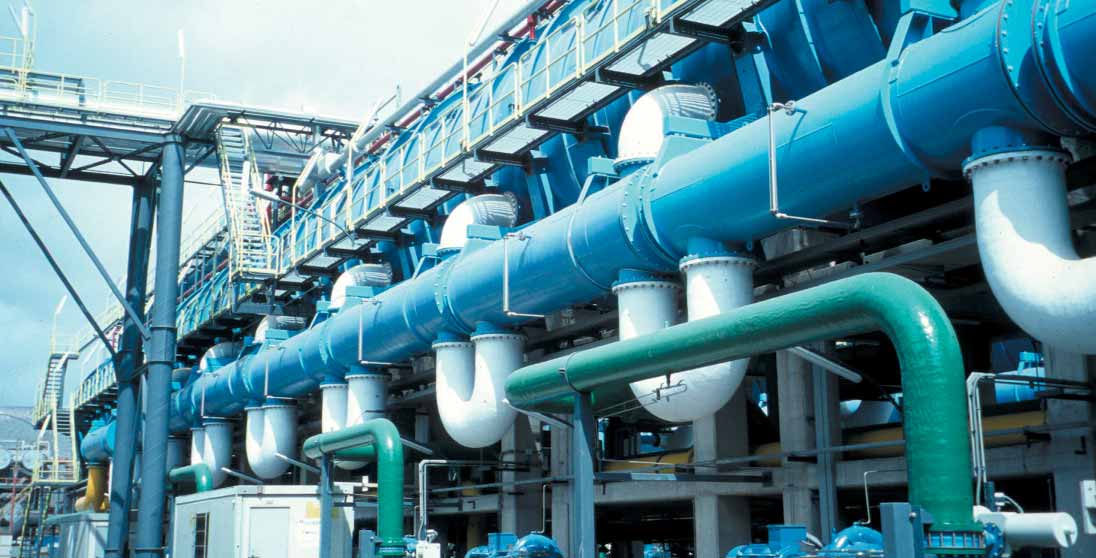
> DESALINATION?.. YES, BUT...
Over the period
1950---1990,
the worldwide
Temporary droughts have con- 89.38 % of the total. About 7.5 % is used
sequences that may be parti-
for other purposes, such as irrigation
cularly severe for the water
and in military installations, while only
resources of the Mediterranean region.
about 3 % is used by electrical power
consumption
During the last few decades, most
stations and industry.
of water tripled.
Mediterranean countries have experi-
Libya is the second country in
enced long-term droughts, e.g. 1980---85
terms of production capacity of seawa-
Every second
in Morocco; 1982---83 in Greece, Spain,
ter desalination plants in the Mediter-
of every day
Southerly Italy and Tunisia; 1985---89 in
ranean covering 30 % of the total. The
Earth's population
Tunisia; 1988---90 in Greece; 1988---92 in
first seawater desalination plant was
increases by 2.3 people.
Mediterranean France; 1989-- 91 in
established in Port Brega in 1965 with a
This means
Cyprus; 1990---95 in Spain and Morocco;
capacity of about 750 m3/day. In the
that the number
1993-- 95 in Tunisia; 1995---2000 in
early `70s, the capacity of desalination
of water consumers
Cyprus and Israel; the list being far
plants in Libya was of more than
from exhaustive.
10,000 m3/day, and by the end of 1999
is increasing
Meanwhile, present and future
the total capacity of desalination
by 150 per minute,
water needs in the Mediterranean are
plants was in the range of more than
9,000 per hour,
steadily increasing. It is estimated that
half a million cubic meters per day.
216,000 per day
by the year 2010 water demands will
Italy is the country where most of
or 28,800,000 per year.
have increased by 32 % at least for the
the produced desalination water (about
Where will
Southern and Eastern countries. These
60 %) is used by the industry. Although
the additional
needs can be covered only if non-con-
desalination technology began being
ventional resources, such as water
applied on an extensive basis, in the
water required
recycling and desalination are utilized.
`70s, only in the early `90s did this tech-
to meet the needs
As a result, the need for desalting
nology, mainly Vapour Compression
of the ever-increasing
seawater is becoming more and more
(VC) distillation, begin to be applied by
number of consumers
pressing in many parts of the Medi-
the municipalities, mostly in the south
be found?
terranean. The first desalination plant
and particularly in Sicily. Originally,
established in Marsa Alam, Egypt, with
MSF was the main technology used for
a production capacity of 500 m3/day.
industrial and power purposes. The pro-
duction capacity of seawater desalina-
The situation, by country
tion plants in Italy is 18.1 % of the total
In Spain, and in particular the
for the Mediterranean region.
Grand Canary, the first seawater plants
Malta was the first Mediterranean
used Multi-Stage Flash (MSF) distilla-
country where in 1983 the largest RO
tion techniques which were followed
plant was set up to produce potable
by several Reverse Osmosis (RO)
water with a capacity of 20,000 m3/day.
plants. Today, the seawater desalina-
The water production from desalination
tion plants in Spain have the largest
in Malta is 123,868 m3/day, that repre-
production capacity in the Mediterra-
sents 6.3 % of the total for the Medi-
nean region (648,980 m3/day), covering
terranean region. The basic technology
33.18 % of the region's total by the end
applied is RO, accounting for 94.1 % of its
of 1999. The main users of the desalted
total desalted water production. This
water are the municipalities and tourist
water is solely intended for human con-
complexes using 580,060 m3/day i.e.
sumption. The capacity of the MSF
1 2
0
M E D P O L
T. HÖPNER
plants is only 4,200 m3/day and the
In Lebanon, 100 % of the desalted
There are only a very small number of
water produced is used by power plants.
water produced is used in electrical power
seawater desalination plants in the Medi-
Until 1997 the only desalination
units. There are no RO plants in Lebanon
terranean coast of Egypt with a total pro-
units in Cyprus were those used in
and the basic technology used is VC.
duction capacity of 20,860 m3/day i.e.
electrical power stations and they
The only desalination plant on the
about 1 % of the total Mediterranean capa-
applied the MSF technology. It was in
Mediterranean coast of Israel is in
city. The main technology used is MSF
1997 when the first large desalination
Ashdod. It is of the Multi-Effect (ME)
(about 59 %) and is applied in electrical
plant of the RO type with a production
type and has a production capacity of
power stations.
capacity of 20,000 m3/day began to
17,032 m3/day.
Seawater desalination is a continu-
operate. The capacity of this plant dou-
In Tunisia, desalination is a recent
ous and steadily growing activity in the
bled in 1998, while another RO plant
practice and is restricted to two small
Mediterranean. The total production
with a capacity of 40,000 m3/day was
plants, one RO and one VC with a very
capacity of all types of plants, which
scheduled to be operational in the
small capacity of 500 m3/day.
was 25,160 m3/day in 1970, increased to
beginning of 2001. The total produc-
On the Mediterranean coast of Mo-
455,000 m3/day by 1979, doubled by
tion capacity of seawater desalination
rocco there are only two MSF plants
1989, and more than doubled by 1999,
plants in Cyprus today is 46,561 i.e. 2.38
with a total production capacity of
reaching a total capacity of 1,955,686
% of the total of the region.
6,000 m3/day used by industry. In 1995,
m3/day.
Algeria is the country where seawa-
one RO plant was established, with a
ter desalination is used basically by
capacity of 7,800 m3/day intended for
The impact
industry (94.58 % of the total desalina-
human consumption.
Among the impacts of a desalination
tion capacity of 100,739 m3/day). The
Seawater desalination in Greece is
plant on the environment are those
process applied in Algeria is mainly MSF
restricted to a number of industries
limited to the construction phase and
(about 72 %) or VC (about 27 %). There are
and power stations, while very small
those related to its operational phase.
no RO desalination plants in Algeria to
units, mainly of VC technology, exist
These impacts cover a wide range of
produce water for human consumption.
in the Aegean Islands.
aspects, including the change of land-
1 3
1
M E D P O L
>> DESALINATION?..
YES, BUT...
use, visual and acoustic disturbance,
centrate, the disinfectants and de-foul-
the brine discharges result in an evi-
emissions into water and atmosphere,
ing agents, but also warm water and
dent increase in salinity in an area of
and the damages caused to the recipient
aqueous effluents such as rejected distil-
200-meter-radius from the point of
environment.
late and ejector condensates.
discharge. Noticeable changes on the
Construction and operation activi-
Seawater desalination is a unique
macrobenthos were observed in the
ties could have a variety of coastal zone
process, as there is a mutual interaction
vicinity of the concentrate discharge.
impacts related to air quality, water
between desalination plant and the
Effect on the algal growth has also
quality, marine life, disturbance of re-
adjacent marine environment. A clean
been observed in the vicinity of the
levant ecosystems (sand-dunes, sea-
marine environment is a prerequisite
Tigne RO desalination plant in Malta.
grass beds and other important habi-
for clean water production. On the
During the very recent years there
tats by the pipeline routes), dredging
other hand, the effluent and emissions
has been a trend for constructing very
and disposal of dredged material,
produced by the plant are affecting the
large desalination plants of the RO
noise, interference with public access
marine environment.
type. Having in mind the continuous
and recreational activities.
The basic seawater desalination
improvement in desalination with a
processes, the MSF and RO, differ in the
conversion ratio of about 70 %, the con-
Different technologies,
type of their impacts. In the case of MSF
centrates of about three times higher
but one common element
the main impact is heat, thermal efflu-
salinity than the feed water, should be
Despite the fact that different tech-
ents and metals like Cu and Zn, while in
properly disposed.
nologies have been developed for de-
the case of RO it is the high salinity of
Dredged material from the construc-
salination, the common element in all
the concentrate (1.2 to 3 times higher
tion and installation of lengthy subma-
of these desalination processes is the re-
than the feed water).
rine intake and outake pipes, must be
moval of dissolved minerals (including
During pre-treatment, treatment
dumped, according to the specific provi-
but not limited to salt) from seawater.
and post-treatment in the desalination
sions of the Dumping Protocol. Accor-
The result is then a stream of water
process a number of chemicals i.e. anti-
ding to the provisions of the Land Based
(concentrate), which has a chemical
scalants, disinfectants, anticorrosion
Sources (LBS) Protocol, the concentrate
composition similar to the source
and antifoaming additives, are added. A
from desalination plants should be
water, but with concentrations 1.2---3.0
part of these chemicals or their by-
regulated prior to its discharge into the
times higher, combined with chemi-
products may be discharged along with
marine environment and metal dis-
cals used during post and pre-treat-
the concentrate. Their addition should
charge, i.e. copper from desalination
ment processes. A variety of chemicals
be controlled, so as to avoid having an
plants, should be eliminated.
and additives are used in desalination,
impact on the marine environment.
In other words, desalination activi-
to control the formation of mineral
Although seawater desalination is
ties should continue to be developed
scale and biological growth that would
a steadily growing industry in many
there where no other options are avail-
otherwise interfere with the process.
Mediterranean countries, there are still
able, but at the same time such activi-
The constituents of the by-product
very few studies on the impacts of this
ties should be categorized as industrial
water, discharged from desalination
activity on the marine environment.
activities and therefore properly tack-
plants, depend largely on the quality of
The impact of a desalination plant
led from a technical and legal point of
the intake water, the quality of water
on marine macrobethos in the coastal
view by all Mediterranean countries.
produced and the desalination technolo-
waters of the Dhekelia area, Cyprus, is
gy used. However, the desalination
one of the few studies being conducted
F R A N C E S C O S A V E R I O C I V I L I
M A R I N E B I O L O G I S T
plants' discharges are not only the con-
in the Mediterranean. It appears that
M E D P O L C O O R D I N A T O R
CO-ORDINATING UNIT FOR THE MEDITERRANEAN ACTION PLAN
MED POL 48, Vassileos Konstantinou Avenue | GR-11635 Athens tel 0030 210 72 73 131 fax 0030 210 72 53 196/7 e-mail medpol@unepmap.gr
1 4
2
C I N E M A A N D T H E E N V I R O N M E N T
> ECOCINEMA FESTIVAL
AWARDS ENVIRONMENTAL FILMS
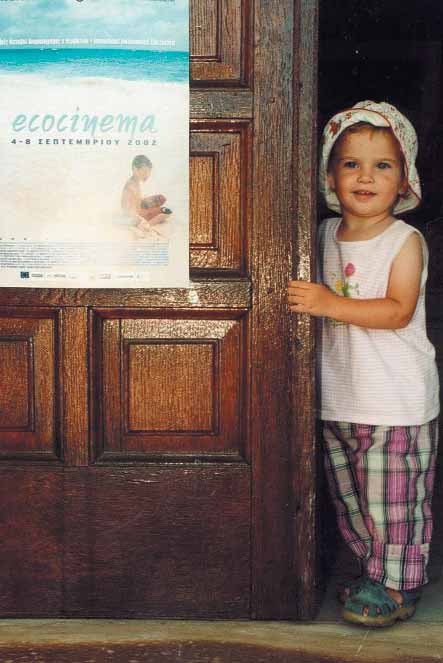
Over 50 films from 17 countries were screened
in the second EcoCinema Festival,
held on the Greek island of Zakynthos.
Three prizes and four special mentions
were awarded.
This is the first-ever international
cinema festival that awards films by theme:
all about the environment.
MAP supported the event.
For the second consecutive year, Raptor Forest, by Panos
the International Environmen-
Papadopoulos and Akis Ker-
tal Film Festival EcoCinema
sanides, Greece. This 34-
2002 (4---8 September) took place in
minute film aims to fami-
Zakynthos, seat of the first National
liarise viewers, by means of
Marine Park in Greece.
images, with the various
forms of life in the forest of
The international jury
Dadia, Greece, a country that,
awarded three prizes
together with Spain, still
Down to Earth, by Shoshana Perry,
host the black vulture. The
USA, won the first prize. This 52-mi-
3,000 Euro prize was spon-
nute documentary follows a number of
sored by Media Desk Hellas.
ECOCINEMA
US individuals from different commu-
Aftershocks: The Rough Guide to
Two more special mentions were
nities that share a commitment to
Democracy, by Rakesh Sharma, India,
awarded to films that, though not direct-
Nature conservation and against cut-
won the special mention for raising the
ly dealing with environmental issues, do
ting-off human beings from their natu-
public's environmental awareness. This
contribute to raising environmental
ral environment. The Greek Ministry of
66-minute film shows the story of a
awareness. These are: On the Edge of
Culture sponsored the 7,000 Euro prize.
government-controlled mining company
Time -- Male domains in the Caucasus, by
Life in Ebb and Flow, by Marc van
that used quake damage in two villages as
Stefan Tolz, from Germany, and Odyssey
Fucht, Netherlands. The 52-minute
an excuse to start mining and displace
-- A journey of Passion, by Nikos Alevras,
film reflects the need to overcome the
their inhabitants. The film engages in the
from Greece.
effects of activities such as fishing,
debate environment vs. development.
The festival included daily press
drilling, export / import fleet of ships
Dust Games, by Martin Marecek,
conferences.
and tourism in the context of the
Czech Republic, won the special men-
The EcoCinema Festival is financed
dilemma of how to protect the en-
tion for the best TV report. This 86-
by its own non-profit organisation, the
vironment while preserving economic
minute film is a live report of the pro-
Interdisciplinary Institute for Environ-
development. The Mediterranean
tests of peoples against international
mental Research, the Zakynthos Natio-
Action Plan (MAP) sponsored the
institutions considered as key promo-
nal Marine Park as well as State and
5,000 Euro prize.
ters of globalisation.
European Union funding.
ECOCINEMA (INTERNATIONAL ENVIRONMENTAL FILM FESTIVAL)
44, Vassileos Konstantinou Avenue | GR-11635 Athens tel 0030 210 72 54 056/7 e-mail info@ecocinema.gr website www.ecocinema.gr
1 5
3
T H E K I O S K
> MAP: STATE OF THE ART INFORMATION
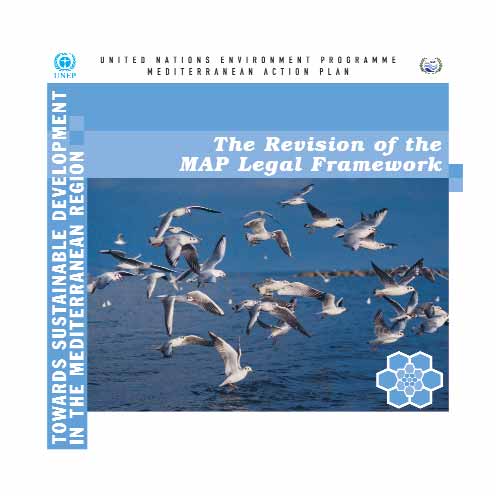
> The new MAP Series of Publications
For the Mediterranean Action Plan, the World Summit on
> The MAP Legal Framework
Sustainable Development in Johannesburg was a good oppor-
tunity for providing updated information on its key fields of
activity.
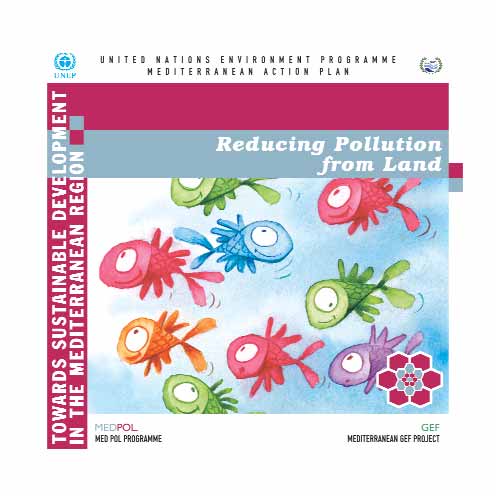
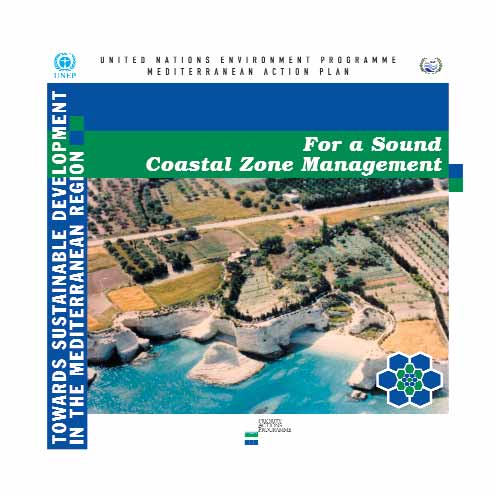
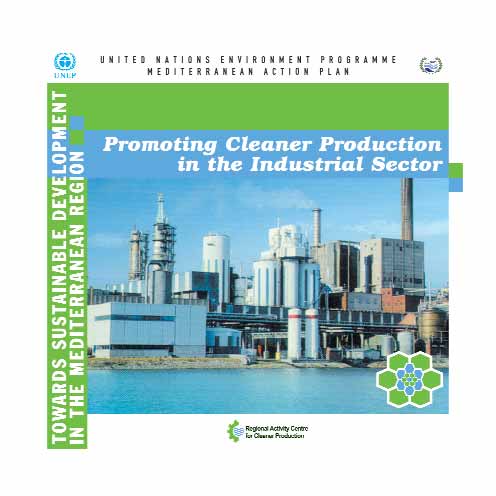
The MAP produced a series of thematic publications
(brochures and leaflets). These publications intend to provide
mainly the wide public with the state of the art information
about the MAP committment towards sustainable develop-
ment in each of its main sectors.
The series covers a wide range of themes, varying from the
revision of MAP's legal framework to safegurading biodiver-
> The MAP and sustainable development
sity. It includes information on ways to reduce pollution from
land-based sources, to protect the Mediterranean against mari-
time accidents and illegal discharges from ships, to proceed
with cleaner production in the industrial sector, and to achieve
a sound coastal management.
It also presents a balance of MAP's achievements over the
decade from Rio to Johannesburg, with a view on sustainable
development in the region.
e-mail info@unepmap.gr
1 6
4
T H E K I O S K
> The MAP and maritime accidents
> The MAP and cleaner production
and illegal discharges from ships
> The MAP and the Strategic Action Programme
> The MAP and coastal zone management
for land-based pollution reduction
1 7
5
N G O s P L A N E T : S U R V E Y O N T H E E N V I R O N M E N T
> YOUNG PEOPLE ARE CONCERNED,
BUT NOT PROPERLY INFORMED
IN A SURVEY AMONG YOUNG PEOPLE IN GREECE, ABOUT 79 % EXPRESSED CONCERN
ABOUT THE ENVIRONMENT BUT A 54 % CLAIMED THAT THEY WERE NOT PROPERLY
INFORMED. SCHOOL, THE RADIO, TELEVISION, HIGHER EDUCATION AND THE INTER-
NET ARE THE SUGGESTED MEANS OF ENVIRONMENTAL EDUCATION.
This result, among others, derives from a survey on the environment and sustainable
development which was conducted by New York College, Athens, in collabora-
tion with the Greek Non-Governmental Organization Environmental Perception,
among 440 New York College students (231 males and 209 females) mostly
aged between 18 to 23 years old.
According to the survey, a large percentage requires additional environmental edu-
cation and they consider as the most important environmental problems: forest
depletion, air pollution and the depletion of the ozone layer. However, the majo-
rity is not aware of the protective function of the ozone layer.
The results of the survey show that young people are sensitised by present environ-
mental problems; they consider, in their majority, that the environment is being
constantly degraded. However, they do not appear to have a clear knowledge of
processes such as the greenhouse effect as well as many of those caused by
human intervention on the environment.
Their willingness to introduce environmental practices in their lives is limited, with
a simultaneous indication of lack of information by organisations as well as of
necessary facilities (i.e. recycling) in addition to the absence of systematic edu-
cation on environmental matters.
According to the survey, environment is ranked third in the list of global problems
after violence / criminality and poverty.
For Greece it is ranked seventh after unemployment, economy, education, violence
/ criminality, drugs and poverty.
The most important global problems that young people face today have been ranked
appropriately by the majority of the students by order of importance as: crimi-
nality, poverty, environment, AIDS, economy, unemployment, education and
violence, according to the survey.
Consumers are ranked third on the list of factors responsible for the present
environmental conditions, right after government and industry. At the same
time, about 73 % believe that the environment is being continuously depleted
and they consider responsible industry and automobiles, in this order.
Environmental Perception
When asked if they would pay more for certain commodities in order for environ-
36, Konstantinoupoleos Street
mental measures to be taken, 70 % replied positively.
GR-16232 Athens
The use of alternative means of transportation excluding automobiles is circumstan-
tel 0030 210 76 00 685
0030 932 700 583
tial and their participation in volunteer programs of environmental nature is small
fax 0030 210 76 49 780
and membership of young people in environmental groups is almost non-existent.
e-mail info@perivalon.gr
A large percentage (70 %) has knowledge of the sources of air pollution. However
website www.perivalon.gr
they were not able to rank the electricity production sources in their country by
New York College
volume of production and a high percentage (22 %) could not identify these. Half
38, Amalias Avenue
of the students consulted do not know which sources of energy are considered
GR-10558 Athens
renewable.
tel 0030 210 32 25 180/961
fax 0030 210 32 33 337
Vassilis Kostopoulos, Environmental Perception
e-mail nycath@hol.gr
Dionisios Mentzeniotis, New York College
website www.nyc.gr
Georgios Sakellarides, Environmental Perception
1 8
6
T H E L A S T P A G E
{ MAP ONLINE }
@
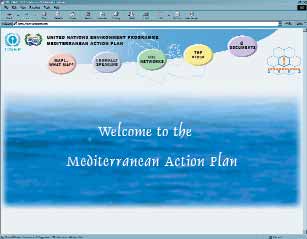
THE NEW MAP WEBSITE...
The MAP website has been re-designed and re-structured in order to pro-
vide quick, easy access to information on the key MAP components
and fields of activities.
This information has been grouped in five main sections, each one pre-
senting background and details on one specific aspect, through dif-
ferent sub-sections, to facilitate your research.
The new MAP website is currently accessible at www.unepmap.gr and
will soon be available also at www.unepmap.org.
This is a summary of what each section offers:
M A P ! . . W H A T M A P ? . .
M A P is the Mediterranean Action Plan. MAP is an effort
the sea, coastal areas and inland and to link sustainable
involving 20 countries bordering the Mediterranean sea, as
resource management with development, in order to protect
well as the European Union. Through MAP, they are deter-
the Mediterranean region and contribute to an improved
mined to meet the challenges of environmental degradation in
Mediterranean quality of life. Nothing more, nothing less!
F O R M A L L Y S P E A K I N G
M A P is supported by a legal framework taking in a Barce-
legal agreements such as the Convention on Biological
lona Convention and six Protocols addressing specific en-
Diversity.
They also take account of recent developments in
vironmental themes. This legal structure, known as the Barce-
international environmental law such as the Polluter Pays
lona system, consolidates the commitment of Mediterranean
Principle and the Precautionary Principle and that of Public
states and the EU to the MAP endeavour.
This system has
Participation and Access to Information . Additionally, they
proved itself flexible to being updated when necessary, in line
intersect with other sub-regional agreements such as the one
with world trends and advances in scientific knowledge and
between Greece and Italy on the Protection of the Marine
understanding. MAP s legal instruments interact with global
Environment of the Ionian Sea and its Coastal Zones.
T H E N E T W O R K S
MAP s regional influence is very much a product of its
Mediterranean region and its people and help MAP reach out
close interaction with a bevy of organisations, both inter-
to its wide target audience.
governmental (IGOs) and non-governmental (NGOs). These
The Global Environment Facility (GEF) is currently among
partners share the MAP commitment to the welfare of the
the MAP main supporters.
T H E K I O S K
This section provides you with news on ongoing MAP
the MAP Magazine MedWaves, to MAP publications, and to a
activities, calendars of key MAP meetings and of non-MAP
detailed list of direct links to further information on the envi-
events related to the Mediterranean, access to the contents of
ronment and sustainable development by topic and source.
e -DOCUMENTS
This is the MAP Library and Documentation Centre, which
as well as to the media and wider public. Here on our web page
manages a specialised collection of books, journals, newslet-
you will find a listing of our MAP Meeting documents, many of
ters, technical reports, and meeting documents on marine pol-
which are in PDF format for easy downloading. They date back
lution, environmental management, sustainable development,
to 1975 and key meetings can be found in English, French,
coastal management and environmental policy and law as they
Spanish and Arabic. You will find our MTS Reports, increasing-
relate to the Mediterranean Sea. The Library and Documenta-
ly available in PDF format, or from us on request. You may
tion Centre offers assistance and reference services to the
search by subject or keywords for key library holdings, related
Mediterranean scientific, professional and student community
Internet sites worth a visit and the e-mails of relevant bodies.
1 9
T H E B A R C E L O N A S Y S T E M
> PROTOCOL CONCERNING COOPERATION
IN PREVENTING POLLUTION FROM SHIPS
AND, IN CASES OF EMERGENCY,
COMBATING POLLUTION
OF THE MEDITERRANEAN SEA
The Contracting Parties to the present Protocol,
BEING PARTIES to the Convention for the Protection of the Mediterranean Sea against Pollution, adopted at
Barcelona on 16 February 1976 and amended on 10 June 1995,
DESIROUS of implementing Articles 6 and 9 of the said Convention,
RECOGNIZING that grave pollution of the sea by oil and hazardous and noxious substances or a threat thereof
in the Mediterranean Sea Area involves a danger for the coastal States and the marine environment,
CONSIDERING that the cooperation of all the coastal States of the Mediterranean Sea is called for to prevent
pollution from ships and to respond to pollution incidents, irrespective of their origin,
ACKNOWLEDGING the role of the International Maritime Organization and the importance of cooperating with-
in the framework of this Organization, in particular in promoting the adoption and the development of inter-
national rules and standards to prevent, reduce and control pollution of the marine environment from ships,
EMPHASIZING the efforts made by the Mediterranean coastal States for the implementation of these interna-
tional rules and standards,
ACKNOWLEDGING also the contribution of the European Community to the implementation of international
standards as regards maritime safety and the prevention of pollution from ships,
RECOGNIZING also the importance of cooperation in the Mediterranean Sea Area in promoting the effective
implementation of international regulations to prevent, reduce and control pollution of the marine environment
from ships,
RECOGNIZING further the importance of prompt and effective action at the national, subregional and regional
levels in taking emergency measures to deal with pollution of the marine environment or a threat thereof,
APPLYING the precautionary principle, the polluter pays principle and the method of environmental impact
assessment, and utilizing the best available techniques and the best environmental practices, as provided for in
Article 4 of the Convention,
BEARING IN MIND the relevant provisions of the United Nations Convention on the Law of the Sea, done at
Montego Bay on 10 December 1982, which is in force and to which many Mediterranean coastal States and
the European Community are Parties,
TAKING INTO ACCOUNT the international conventions dealing in particular with maritime safety, the preven-
tion of pollution from ships, preparedness for and response to pollution incidents, and liability and compensa-
tion for pollution damage,
WISHING to further develop mutual assistance and cooperation in preventing and combating pollution,
HAVE AGREED as follows:
i
T H E B A R C E L O N A S Y S T E M
>> PROTOCOL CONCERNING COOPERATION IN PREVENTING POLLUTION FROM S
AND, IN CASES OF EMERGENCY, COMBATING POLLUTION OF THE MEDITERRA
A r t i c l e 1 : D E F I N I T I O N S
For the purpose of this Protocol:
(a) "Convention" means the Convention for the Protection of the Mediterranean Sea against Pollution, adopted
at Barcelona on 16 February 1976 and amended on 10 June 1995;
(b) "Pollution incident" means an occurrence or series of occurrences having the same origin, which results or
may result in a discharge of oil and/or hazardous and noxious substances and which poses or may pose a
threat to the marine environment, or to the coastline or related interests of one or more States, and which
requires emergency action or other immediate response;
(c) "Hazardous and noxious substances" means any substance other than oil which, if introduced into the
marine environment, is likely to create hazards to human health, to harm living resources and marine life,
to damage amenities or to interfere with other legitimate uses of the sea;
(d) "Related interests" means the interests of a coastal State directly affected or threatened and concerning,
among others:
(i) maritime activities in coastal areas, in ports or estuaries, including fishing activities;
(ii) the historical and tourist appeal of the area in question, including water sports and recreation;
(iii) the health of the coastal population;
(iv) the cultural, aesthetic, scientific and educational value of the area;
(v) the conservation of biological diversity and the sustainable use of marine and coastal biological resources;
(e) "International regulations" means regulations aimed at preventing, reducing and controlling pollution of
the marine environment from ships as adopted, at the global level and in conformity with international law,
under the aegis of United Nations specialized agencies, and in particular of the International Maritime
Organization;
(f) "Regional Centre" means the "Regional Marine Pollution Emergency Response Centre for the Mediterra-
nean Sea" (REMPEC), established by Resolution 7 adopted by the Conference of Plenipotentiaries of the
Coastal States of the Mediterranean Region on the Protection of the Mediterranean Sea at Barcelona on 9
February 1976, which is administered by the International Maritime Organization and the United Nations
Environment Programme, and the objectives and functions of which are defined by the Contracting Parties
to the Convention.
A r t i c l e 2 : P R O T O C O L A R E A
The area to which the Protocol applies shall be the Mediterranean Sea Area as defined in Article 1 of the
Convention.
A r t i c l e 3 : G E N E R A L P R O V I S I O N S
1. The Parties shall cooperate:
(a) to implement international regulations to prevent, reduce and control pollution of the marine environ-
ment from ships; and
(b) to take all necessary measures in cases of pollution incidents.
2. In cooperating, the Parties should take into account as appropriate the participation of local authorities,
non-governmental organizations and socio-economic actors.
3. Each Party shall apply this Protocol without prejudice to the sovereignty or the jurisdiction of other Parties or
other States. Any measures taken by a Party to apply this Protocol shall be in accordance with international law.
i i
T H E B A R C E L O N A S Y S T E M
IPS
EAN SEA
A r t i c l e 4 : C O N T I N G E N C Y P L A N S A N D O T H E R M E A N S
O F P R E V E N T I N G A N D C O M B A T I N G P O L L U T I O N I N C I D E N T S
1. The Parties shall endeavour to maintain and promote, either individually or through bilateral or multilateral
cooperation, contingency plans and other means of preventing and combating pollution incidents. These means
shall include, in particular, equipment, ships, aircraft and personnel prepared for operations in cases of emer-
gency, the enactment, as appropriate, of relevant legislation, the development or strengthening of the capabi-
lity to respond to a pollution incident and the designation of a national authority or authorities responsible for
the implementation of this Protocol.
2. The Parties shall also take measures in conformity with international law to prevent the pollution of the Medi-
terranean Sea Area from ships in order to ensure the effective implementation in that Area of the relevant inter-
national conventions in their capacity as flag State, port State and coastal State, and their applicable legis-
lation. They shall develop their national capacity as regards the implementation of those international conven-
tions and may cooperate for their effective implementation through bilateral or multilateral agreements.
3. The Parties shall inform the Regional Centre every two years of the measures taken for the implementation of
this Article. The Regional Centre shall present a report to the Parties on the basis of the information received.
A r t i c l e 5 : M O N I T O R I N G
The Parties shall develop and apply, either individually or through bilateral or multilateral cooperation, moni-
toring activities covering the Mediterranean Sea Area in order to prevent, detect and combat pollution, and to
ensure compliance with the applicable international regulations.
A r t i c l e 6 : C O O P E R A T I O N I N R E C O V E R Y O P E R A T I O N S
In case of release or loss overboard of hazardous and noxious substances in packaged form, including those in
freight containers, portable tanks, road and rail vehicles and shipborne barges, the Parties shall cooperate as
far as practicable in the salvage of these packages and the recovery of such substances so as to prevent or
reduce the danger to the marine and coastal environment.
A r t i c l e 7 : D I S S E M I N A T I O N A N D E X C H A N G E O F I N F O R M A T I O N
1. Each Party undertakes to disseminate to the other Parties information concerning:
(a) the competent national organization or authorities responsible for combating pollution of the sea by oil
and hazardous and noxious substances;
(b) the competent national authorities responsible for receiving reports of pollution of the sea by oil and hazardous
and noxious substances and for dealing with matters concerning measures of assistance between Parties;
(c) the national authorities entitled to act on behalf of the State in regard to measures of mutual assistance
and cooperation between Parties;
(d) the national organization or authorities responsible for the implementation of paragraph 2 of Article 4,
in particular those responsible for the implementation of the international conventions concerned and
other relevant applicable regulations, those responsible for port reception facilities and those responsible
for the monitoring of discharges which are illegal under MARPOL 73/78;
(e) its regulations and other matters which have a direct bearing on preparedness for and response to pollu-
tion of the sea by oil and hazardous and noxious substances;
(f) new ways in which pollution of the sea by oil and hazardous and noxious substances may be avoided, new
measures for combating pollution, new developments in the technology of conducting monitoring and the
development of research programmes.
i i i
T H E B A R C E L O N A S Y S T E M
>> PROTOCOL CONCERNING COOPERATION IN PREVENTING POLLUTION FROM S
AND, IN CASES OF EMERGENCY, COMBATING POLLUTION OF THE MEDITERRA
2. The Parties which have agreed to exchange information directly shall communicate such information to the
Regional Centre. The latter shall communicate this information to the other Parties and, on a basis of reci-
procity, to coastal States of the Mediterranean Sea Area which are not Parties to this Protocol.
3. Parties concluding bilateral or multilateral agreements within the framework of this Protocol shall inform
the Regional Centre of such agreements, which shall communicate them to the other Parties.
A r t i c l e 8 : C O M M U N I C A T I O N O F I N F O R M A T I O N A N D R E P O R T S
C O N C E R N I N G P O L L U T I O N I N C I D E N T S
The Parties undertake to coordinate the utilization of the means of communication at their disposal in order to
ensure, with the necessary speed and reliability, the reception, transmission and dissemination of all reports
and urgent information concerning pollution incidents. The Regional Centre shall have the necessary means of
communication to enable it to participate in this coordinated effort and, in particular, to fulfil the functions
assigned to it by paragraph 2 of Article 12.
A r t i c l e 9 : R E P O R T I N G P R O C E D U R E
1. Each Party shall issue instructions to masters or other persons having charge of ships flying its flag and to
the pilots of aircraft registered in its territory to report by the most rapid and adequate channels in the cir-
cumstances, following reporting procedures to the extent required by, and in accordance with, the applicable
provisions of the relevant international agreements, to the nearest coastal State and to this Party:
(a) all incidents which result or may result in a discharge of oil or hazardous and noxious substances;
(b) the presence, characteristics and extent of spillages of oil or hazardous and noxious substances, inclu-
ding hazardous and noxious substances in packaged form, observed at sea which pose or are likely to
pose a threat to the marine environment or to the coast or related interests of one or more of the Parties.
2. Without prejudice to the provisions of Article 20 of the Protocol, each Party shall take appropriate mea-
sures with a view to ensuring that the master of every ship sailing in its territorial waters complies with the
obligations under (a) and (b) of paragraph 1 and may request assistance from the Regional Centre in this
respect. It shall inform the International Maritime Organization of the measures taken.
3. Each Party shall also issue instructions to persons having charge of sea ports or handling facilities under its
jurisdiction to report to it, in accordance with applicable laws, all incidents which result or may result in a
discharge of oil or hazardous and noxious substances.
4. In accordance with the relevant provisions of the Protocol for the Protection of the Mediterranean Sea against
Pollution Resulting from Exploration and Exploitation of the Continental Shelf and the Seabed and its Subsoil,
each Party shall issue instructions to persons having charge of offshore units under its jurisdiction to report to
it by the most rapid and adequate channels in the circumstances, following reporting procedures it has pre-
scribed, all incidents which result or may result in a discharge of oil or hazardous and noxious substances.
5. In paragraphs 1, 3 and 4 of this Article, the term "incident" means an incident meeting the conditions
described therein, whether or not it is a pollution incident.
6. The information collected in accordance with paragraphs 1, 3 and 4 shall be communicated to the Regional
Centre in the case of a pollution incident.
7. The information collected in accordance with paragraphs 1, 3 and 4 shall be immediately communicated to
the other Parties likely to be affected by a pollution incident:
(a) by the Party which has received the information, preferably directly or through the Regional Centre; or
(b) by the Regional Centre.
i v
T H E B A R C E L O N A S Y S T E M
IPS
EAN SEA
In case of direct communication between Parties, these shall inform the Regional Centre of the measures
taken, and the Centre shall communicate them to the other Parties.
8. The Parties shall use a mutually agreed standard form proposed by the Regional Centre for the reporting of
pollution incidents as required under paragraphs 6 and 7 of this Article.
9. In consequence of the application of the provisions of paragraph 7, the Parties are not bound by the obliga-
tion laid down in Article 9, paragraph 2, of the Convention.
A r t i c l e 1 0 : O P E R A T I O N A L M E A S U R E S
1. Any Party faced with a pollution incident shall:
(a) make the necessary assessments of the nature, extent and possible consequences of the pollution incident
or, as the case may be, the type and approximate quantity of oil or hazardous and noxious substances
and the direction and speed of drift of the spillage;
(b) take every practicable measure to prevent, reduce and, to the fullest possible extent, eliminate the effects
of the pollution incident;
(c) immediately inform all Parties likely to be affected by the pollution incident of these assessments and of
any action which it has taken or intends to take, and simultaneously provide the same information to the
Regional Centre, which shall communicate it to all other Parties;
(d) continue to observe the situation for as long as possible and report thereon in accordance with Article 9.
2. Where action is taken to combat pollution originating from a ship, all possible measures shall be taken to safeguard:
(a) human lives;
(b) the ship itself; in doing so, damage to the environment in general shall be prevented or minimized.
Any Party which takes such action shall inform the International Maritime Organization either directly or
through the Regional Centre.
A r t i c l e 1 1 : E M E R G E N C Y M E A S U R E S O N B O A R D S H I P S ,
O N O F F S H O R E I N S T A L L A T I O N S A N D I N P O R T S
1. Each Party shall take the necessary steps to ensure that ships flying its flag have on board a pollution emer-
gency plan as required by, and in accordance with, the relevant international regulations.
2. Each Party shall require masters of ships flying its flag, in case of a pollution incident, to follow the procedures
described in the shipboard emergency plan and in particular to provide the proper authorities, at their request,
with such detailed information about the ship and its cargo as is relevant to actions taken in pursuance of
Article 9, and to cooperate with these authorities.
3. Without prejudice to the provisions of Article 20 of the Protocol, each Party shall take appropriate mea-
sures with a view to ensuring that the master of every ship sailing in its territorial waters complies with the
obligation under paragraph 2 and may request assistance from the Regional Centre in this respect. It shall
inform the International Maritime Organization of the measures taken.
4. Each Party shall require that authorities or operators in charge of sea ports and handling facilities under its juris-
diction as it deems appropriate have pollution emergency plans or similar arrangements that are coordinated
with the national system established in accordance with Article 4 and approved in accordance with procedures
established by the competent national authority.
5. Each Party shall require operators in charge of offshore installations under its jurisdiction to have a contin-
gency plan to combat any pollution incident, which is coordinated with the national system established in accor-
dance with Article 4 and in accordance with the procedures established by the competent national authority.
v
T H E B A R C E L O N A S Y S T E M
>> PROTOCOL CONCERNING COOPERATION IN PREVENTING POLLUTION FROM S
AND, IN CASES OF EMERGENCY, COMBATING POLLUTION OF THE MEDITERRA
A r t i c l e 1 2 : A S S I S T A N C E
1. Any Party requiring assistance to deal with a pollution incident may call for assistance from other Parties,
either directly or through the Regional Centre, starting with the Parties which appear likely to be affected
by the pollution. This assistance may comprise, in particular, expert advice and the supply to or placing at
the disposal of the Party concerned of the required specialized personnel, products, equipment and nautical
facilities. Parties so requested shall use their best endeavours to render this assistance.
2. Where the Parties engaged in an operation to combat pollution cannot agree on the organization of the ope-
ration, the Regional Centre may, with the approval of all the Parties involved, coordinate the activity of the
facilities put into operation by these Parties.
3. In accordance with applicable international agreements, each Party shall take the necessary legal and
administrative measures to facilitate:
(a) the arrival and utilization in and departure from its territory of ships, aircraft and other modes of trans-
port engaged in responding to a pollution incident or transporting personnel, cargoes, materials and
equipment required to deal with such an incident; and
(b) the expeditious movement into, through and out of its territory of the personnel, cargoes, materials and
equipment referred to in subparagraph (a).
A r t i c l e 1 3 : R E I M B U R S E M E N T O F C O S T S O F A S S I S T A N C E
1. Unless an agreement concerning the financial arrangements governing actions of Parties to deal with pollu-
tion incidents has been concluded on a bilateral or multilateral basis prior to the pollution incident, Parties
shall bear the costs of their respective action in dealing with pollution in accordance with paragraph 2.
2. (a) If the action was taken by one Party at the express request of another Party, the requesting Party shall
reimburse to the assisting Party the costs of its action. If the request is cancelled, the requesting Party
shall bear the costs already incurred or committed by the assisting Party;
(b) if the action was taken by a Party on its own initiative, that Party shall bear the cost of its action;
(c) the principles laid down in subparagraphs (a) and (b) above shall apply unless the Parties concerned
otherwise agree in any individual case.
3. Unless otherwise agreed, the costs of the action taken by a Party at the request of another Party shall be
fairly calculated according to the law and current practice of the assisting Party concerning the reimburse-
ment of such costs.
4. The Party requesting assistance and the assisting Party shall, where appropriate, cooperate in concluding
any action in response to a compensation claim. To that end, they shall give due consideration to existing
legal regimes. Where the action thus concluded does not permit full compensation for expenses incurred in
the assistance operation, the Party requesting assistance may ask the assisting Party to waive reimburse-
ment of the expenses exceeding the sums compensated or to reduce the costs which have been calculated in
accordance with paragraph 3. It may also request a postponement of the reimbursement of such costs. In
considering such a request, assisting Parties shall give due consideration to the needs of developing coun-
tries.
5. The provisions of this Article shall not be interpreted as in any way prejudicing the rights of Parties to re-
cover from third parties the costs of actions taken to deal with pollution incidents under other applicable
provisions and rules of national and international law applicable to one or to the other Party involved in the
assistance.
v i
T H E B A R C E L O N A S Y S T E M
IPS
EAN SEA
A r t i c l e 1 4 : P O R T R E C E P T I O N F A C I L I T I E S
1. The Parties shall individually, bilaterally or multilaterally take all necessary steps to ensure that reception
facilities meeting the needs of ships are available in their ports and terminals. They shall ensure that these
facilities are used efficiently without causing undue delay to ships.
The Parties are invited to explore ways and means to charge reasonable costs for the use of these facilities.
2. The Parties shall also ensure the provision of adequate reception facilities for pleasure craft.
3. The Parties shall take all the necessary steps to ensure that reception facilities operate efficiently to limit
any impact of their discharges to the marine environment.
4. The Parties shall take the necessary steps to provide ships using their ports with updated information rele-
vant to the obligations arising from MARPOL 73/78 and from their legislation applicable in this field.
A r t i c l e 1 5 : E N V I R O N M E N T A L R I S K S O F M A R I T I M E T R A F F I C
In conformity with generally accepted international rules and standards and the global mandate of the
International Maritime Organization, the Parties shall individually, bilaterally or multilaterally take the ne-
cessary steps to assess the environmental risks of the recognized routes used in maritime traffic and shall take
the appropriate measures aimed at reducing the risks of accidents or the environmental consequences thereof.
A r t i c l e 1 6 : R E C E P T I O N O F S H I P S I N D I S T R E S S I N P O R T S A N D P L A C E S O F R E F U G E
The Parties shall define national, subregional or regional strategies concerning reception in places of refuge,
including ports, of ships in distress presenting a threat to the marine environment. They shall cooperate to this
end and inform the Regional Centre of the measures they have adopted.
A r t i c l e 1 7 : S U B R E G I O N A L A G R E E M E N T S
The Parties may negotiate, develop and maintain appropriate bilateral or multilateral subregional agreements
in order to facilitate the implementation of this Protocol, or part of it. Upon request of the interested Parties,
the Regional Centre shall assist them, within the framework of its functions, in the process of developing and
implementing these subregional agreements.
A r t i c l e 1 8 : M E E T I N G S
1. Ordinary meetings of the Parties to this Protocol shall be held in conjunction with ordinary meetings of the
Contracting Parties to the Convention, held pursuant to Article 18 of the Convention. The Parties to this
Protocol may also hold extraordinary meetings as provided in Article 18 of the Convention.
2. It shall be the function of the meetings of the Parties to this Protocol, in particular:
(a) to examine and discuss reports from the Regional Centre on the implementation of this Protocol, and parti-
cularly of its Articles 4, 7 and 16;
(b) to formulate and adopt strategies, action plans and programmes for the implementation of this Protocol;
(c) to keep under review and consider the efficacy of these strategies, action plans and programmes, and the
need to adopt any new strategies, action plans and programmes and to develop measures to that effect;
(d) to discharge such other functions as may be appropriate for the implementation of this Protocol.
A r t i c l e 1 9 : R E L A T I O N S H I P W I T H T H E C O N V E N T I O N
1. The provisions of the Convention relating to any protocol shall apply with respect to the present Protocol.
2. The rules of procedure and the financial rules adopted pursuant to Article 24 of the Convention shall apply
with respect to this Protocol, unless the Parties agree otherwise.
v i i
T H E B A R C E L O N A S Y S T E M
>> PROTOCOL CONCERNING COOPERATION IN PREVENTING
POLLUTION FROM SHIPS AND, IN CASES OF EMERGENCY,
COMBATING POLLUTION OF THE MEDITERRANEAN SEA
F I N A L P R O V I S I O N S
A r t i c l e 2 0 : E F F E C T O F T H E P R O T O C O L O N D O M E S T I C L E G I S L A T I O N
In implementing the provisions of this Protocol, the right of Parties to adopt relevant stricter domestic mea-
sures or other measures in conformity with international law, in the matters covered by this Protocol, shall not
be affected.
A r t i c l e 2 1 : R E L A T I O N S W I T H T H I R D P A R T I E S
The Parties shall, where appropriate, invite States that are not Parties to the Protocol and international organi-
zations to cooperate in the implementation of the Protocol.
A r t i c l e 2 2 : S I G N A T U R E
This Protocol shall be open for signature at Valletta, Malta, on 25 January 2002 and in Madrid from 26
January 2002 to 25 January 2003 by any Contracting Party to the Convention.
A r t i c l e 2 3 : R A T I F I C A T I O N , A C C E P T A N C E O R A P P R O V A L
This Protocol shall be subject to ratification, acceptance or approval. The instruments of ratification, accep-
tance or approval shall be deposited with the Government of Spain, which will assume the functions of
Depositary.
A r t i c l e 2 4 : A C C E S S I O N
As from 26 January 2003, this Protocol shall be open for accession by any Party to the Convention.
A r t i c l e 2 5 : E N T R Y I N T O F O R C E
1. This Protocol shall enter into force on the thirtieth day following the deposit of the sixth instrument of rati-
fication, acceptance, approval or accession.
2. From the date of its entry into force, this Protocol shall replace the Protocol concerning Cooperation in
Combating Pollution of the Mediterranean Sea by Oil and other Harmful Substances in Cases of Emergency
of 1976 in the relations between the Parties to both instruments.
IN WITNESS WHEREOF, the undersigned, being duly authorized thereto, have signed this Protocol.
DONE at Valletta, Malta, on 25 January 2002, in a single copy in the Arabic, English, French and Spanish
languages, the four texts being equally authentic.
UNITED NATIONS ENVIRONMENT PROGRAMME / MEDITERRANEAN ACTION PLAN
Coordinating Unit 48, Vassileos Konstantinou Avenue | GR-11635 Athens
tel 0030 210 72 73 100 fax 0030 210 72 53 196/7
e-mail unepmedu@unepmap.gr website www.unepmap.org
v i i i