
C O N T E N T S
> IN THIS ISSUE
THE MEDITERRANEAN ACTION PLAN MAGAZINE
# 4 5 | 2 0 0 2
EDITORIAL
EDITOR
> DRAWING LESSONS FROM MONACO .................................................................................1
Baher Kamal
baher@unepmap.gr
KEY SPEECH
> SUBSTANTIAL PROGRESS,.. BUT VICTORY STILL FAR .......................................... 2
AUTHORS
INTERVIEW
Chedly Rais
Fouad Abousamra
> FOR A STRONG BARCELONA CONVENTION ................................................................... 4
Andreas Demetropoulos
SPEECH
Rafael Madueño
> A REGION-LABORATORY CALLED THE MEDITERRANEAN .................................... 5
Katia Kanas
Photene Kalpakioti
DOCUMENT
Daphne Kasriel
> MEDITERRANEAN DECLARATION FOR THE JOHANNESBURG SUMMIT .......... 7
CREATIVE
SPAMI
/fad.hatz
> SPECIAL PROTECTION FOR THE MOST ENDANGERED ..........................................10
chatzigeorgakidis@hotmail.com
LAND-BASED ACTIVITIES
PRINTER
> COUNTDOWN FOR POLLUTION REDUCTION ................................................................13
via:kado
MCSD
I S S N 1 1 0 5 - 4 0 3 4
> FOCUS ON URBANISATION, INDUSTRY, AND FREE TRADE ................................14
CO-OPERATION
> CO-OPERATION BETWEEN THE MAP
AND THE EURO-MEDITERRANEAN PARTNERSHIP ..................................................15
MedWaves is published by
the Coordinating Unit of
BIOLOGICAL DIVERSITY
the Mediterranean Action Plan
in Arabic, English and French.
> THE DECLINE OF THE TURTLES ........................................................................................16
It is an informal source of information
and it does not necessarily reflect
NGOs PLANET
the official point of view of MAP or UNEP.
> MED FORUM THE MAP IS A GOOD TOOL, BUT... .......................................................... 18
Contents, except for pictures,
> GREENPEACE
may be reproduced without permission
IT IS ABOUT TIME TO RATIFY! ............................................................... 19
and only for non-commercial use.
> CLEAN-UP GREECE YOUTH TO TACKLE ENVIRONMENTAL PROBLEMS ............. 20
Credit to the source, however, is required.
The publisher would appreciate
THE ARAB ENVIRONMENT DAY IN SYRIA
receiving a copy of any publication
that uses MedWaves'
> THE EARTH... WE DO NOT INHERIT IT,.. WE BORROW IT .................................. 21
news, articles and interviews.
The designation of geographical entities
THE KIOSK
and the presentation of the material
> EIGHT NATIONAL MIRRORS ................................................................................................ 22
do not imply the expression of any opinion
whatsoever on the part of the publisher
> A SELECTION OF PUBLICATIONS ..................................................................................... 24
concerning the legal status of any country,
territory or area, of its authorities,
THE LAST PAGE
frontiers or boundaries.
> PHOTO OF THE ISSUE ................................................................................... inside backcover
C O V E R P H O T O
UNITED NATIONS ENVIRONMENT PROGRAMME
SEAGULLS IN THE MEDITERRANEAN
MEDITERRANEAN ACTION PLAN
by ANDREAS DEMETROPOULOS

E D I T O R I A L
> DRAWING LESSONS FROM MONACO
As for the form, the way in which the work was organised ---the Ministerial
segment in particular--- allowed for a high level dialogue on the major envi-
ronmental and sustainable development issues in the Mediterranean
region, on the preparation of the next Earth Summit, and on enhancing co-
operation with the other co-operation mechanisms such as the Euro-
Mediterranean partnership.
L U C I E N C H A B A S O N
C O - O R D I N A T O R ,
As for the substance, the Parties took decisions in highly important domains:
M E D I T E R R A N E A N A C T I O N P L A N
> the adoption of a Reporting System for the Parties on the implementation of
the Convention and its Protocols;
> the green light for the Conference of Plenipotentiaries in 2002, leading to the
adoption of a new Emergency Protocol on the prevention of pollution from
maritime activities;
> the adoption of an initial list of Specially Protected Areas of Mediterranean
Importance (SPAMIs);
> a set of guidelines for implementing the MCSD recommendations;
and
> the Mediterranean Declaration for the Johannesburg Summit.
Ministers and delegates did, however, express their concerns about the delays
in the ratification of the revised or new instruments adopted since 1995.
The Secretariat has continued its assessment of activities and structures, and
submitted a slightly increased budget in which the administrative costs have
been restricted. The financial documents are more exhaustive and explicit.
Major decision: the Parties adopted the principle that, as of the next bien-
nium, they would work in euros.
It is generally felt
The Mediterranean Action Plan will go to Johannesburg having substantial
that the XIIth meeting
achievements, among others, in combating marine pollution. But for as much,
of the Contracting
has it really enabled the countries to advance towards more sustainable develop-
Parties
ment? The Strategic Review adopted by the MCSD and submitted to the Parties
is quite explicit on this point.
to the Barcelona
In spite of what has been achieved since Rio, particularly in terms of capaci-
Convention,
ty building, public awareness-raising and institutional progress, there is still a lot
which was held
to be done to achieve sustainable development ---pollution reduction is but one
in Monaco
aspect of this major issue; urban development control, the sustainable manage-
ment of natural resources, energy and transport control, promoting tourism with
from 14 to 17
better respect to environmental and social balances, and economic and trade libe-
November 2001,
ralisation conducted in such a way as to limit its negative environmental impact,
represent today the major stakes for which indicators and tools for intervention
marked an important
still need to be produced.
milestone in the life
But the Mediterranean countries are working on these questions collectively,
of the Mediterranean
clearly aware of their responsibilities towards future generations, in partnership;
Action Plan.
that is an important fact, and a source of satisfaction for the MAP.
1

K E Y S P E E C H
> SUBSTANTIAL PROGRESS,.. BUT VICTORY STILL FAR
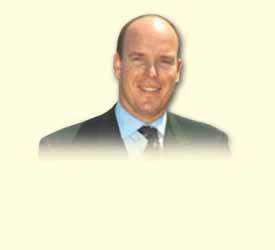
I n his key address, H.H. Prince Albert of Monaco "However, it is indispensable to continue to go forward in
recalled that for the first time since its entry into force
this field, particularly with regard to prevention, and for this
over a quarter of a century ago, the Contracting Parties
reason it is to be welcomed that the Emergency Protocol was
to the Barcelona Convention are meeting in Monaco.
completely revised in Monaco at a meeting held here at the
"This is also the first meeting of the Parties to the new
beginning of the year. It is now necessary to ensure that it is
Protocol concerning Specially Protected Areas and Bio-
signed and enters into force rapidly".
logical Diversity in the Mediterranean, to which we all
attach particular importance and for
Land-based pollution
which you are well aware of the full com-
On the subject of land-based pollution,
mitment of my country. This all shows
Prince Albert said that the progress
how happy and proud I am to gather
achieved on the two shores of our com-
together on our territory all those who are
mon sea, particularly in terms of the con-
committed to safeguarding and enhan-
struction of waste water treatment plants,
cing the environment of the Mediterra-
constitute real advances, although it is
nean and who have for many years been
important not to let our guard down since,
combating pollution and its harmful
"The problems
as well illustrated by the documents pro-
effects on the populations, environments
of climate change,
duced by the MAP, the number of hotspots
and economy of the regions affected" the
is still considerable and their rehabilita-
biological diversity,
Prince said.
tion will still take several decades.
desertification
Prince Albert then stressed that "even
"For this reason, it is necessary to take
and the pollution of seas
though all the action taken for more than
rigorous action to ensure that the Stra-
are all matters which
25 years is far from being considered vic-
tegic Action Programme, finalized and
torious, there can be no doubt that sub-
transcend frontiers
approved by your Meeting, can be imple-
stantial progress has been achieved over
and can only be
mented rapidly and that the political will
this period".
addressed and resolved
of countries and international donors is
mobilized in this connection with a view
in a context
Awareness
to achieving tangible and concrete
of real international
"I would like to mention first and fore-
progress".
co-operation".
most the progress made towards such an
environmental awareness, unknown in
Prince Albert
Environment is global
the 1970s, and which led the Sovereign
"On a planet which is going through
Prince, my father, and other eminent scientists to send out a
difficult times, a Meeting of those who are concerned with the
cry of alarm from Monaco. This increased awareness can be
environment has to be seen as a manifestation of co-operation
seen today on all the shores of the Mediterranean and there
between nations and cultures. No-one can contest the fact the
can be no doubt that the Mediterranean Action Plan has in
environment is global, that it does not belong to anyone in
this respect acted as a particularly effective sounding
particular and that it depends on all of us, but that it cannot
board".
be cut up along political frontiers".
In addition to the issue of awareness, Prince Albert high-
Prince Albert added that Monaco has shown that it is con-
lighted that it is evident that very substantial progress has
vinced of the need, and for that reason committed, especial-
been achieved in combating pollution resulting from mari-
ly since the Rio Conference, to taking an active and deter-
time accidents.
mined stance in promoting international cooperation, parti-
"In this respect, REMPEC plays a crucial role at the
cularly in the context of the Mediterranean basin, the birth-
regional level, with the support of sub-regional agreements,
place of so many cultures.
such as the RAMOGEPOL Plan established at the initiative
"I referred earlier to the Rio Conference, which I had the
of Monaco".
honour to attend in the company of the Prince, my father,
2

K E Y S P E E C H
nearly ten years ago. For the first time, governments linked
environmental problems to development issues, as a result
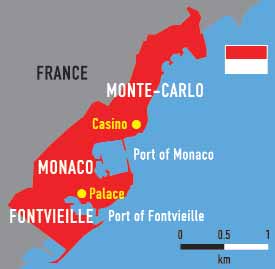
> SEVEN FACTS ABOUT MONACO...
of the height and awareness that they cannot be separated".
TERRITORY: Situated at the
Sustainable development: The MCSD
foot of the Southern
"The decade which has just finished has further empha-
Alps, bordering the
sized this feeling and everyone is now convinced that the
shores of the Mediter-
major environmental problems at the global level will only
ranean, Monaco's sur-
be resolved if real sustainable economic and social develop-
face area is 195 hec-
ment is achieved. For this reason it is necessary to take effec-
tares; 20 % of which
tive action to combat poverty, which is both the cause and
consists of land re-
effect of environmental degradation".
claimed from the sea.
N. CHATZIGEORGAKIDIS
"Heightened awareness has also been evident in this
POPULATION: There are some 30,000 residents. With the imme-
respect for a decade. The Mediterranean region offers an
diate surrounding areas, Monaco is part of a region of appro-
example in this regard, since a mere three years after Rio, the
ximately 100,000 inhabitants.
Mediterranean Commission on Sustainable Development was
LANGUAGE: The official language is French, but most residents
created as a body for reflection, study and advice to Medi-
also speak either Italian and / or English.
terranean countries".
THE GRIMALDI: For seven centuries the Grimaldi family has
"Since its creation, the MCSD has worked effectively and I
presided over the Principality, one of the longest ruling fami-
am pleased to recall that Monaco, which hosted its fifth meet-
lies in Europe.
ing in 1988, has the privilege to preside over it this year".
"But the MCSD also illustrates the difficulties which can
INSTITUTIONS: The political and institutional regime is governed
arise in including in development action, in addition to civil
by the 1962 Constitution. Monaco is a hereditary and consti-
society, those responsible for the economy, who clearly have
tutional monarchy. Executive power is retained by the Prince.
a fundamental role to play in safeguarding the environment,
Administrative responsibilities are the duties of the Minister
as well as in implementing sustainable economic and social
of State, aided by the Government Council responsible to the
Prince. Legislative and budgetary powers are exercised joint-
development".
ly by the Prince and by the National Council. The judiciary
power, independent of Government, is exercised by the courts
The voice of the Mediterranean,
and tribunals.
to be heard in Johannesburg
In his conclusion, Prince Albert said "in the days to come,
ECONOMY: At the beginning of the twentieth century, Monaco's
you will review the progress achieved and the action to be taken
economy was based on luxury tourism trade and an embryo-
to improve still further our Mediterranean environment".
nic industrial sector. Today the Principality is a dynamic eco-
"I have every confidence in the work that is carried out
nomic centre and a great source of jobs. Unemployment is
here and which, I am certain, will offer all those who live on
almost non-existent. There are more than 100 industrial
the shores of the Mediterranean a better quality of life. I also
enterprises, which employ 38,000 people. The Principality's
cherish the hope that your work, in addition to its technical
budget comes from taxes on industry, trade, services, hotels
benefits, will deliver a message of peace and co-operation in
and real-estate.
these troubled times. The work that you are about to accom-
CIESM: International Commission for the Scientific Exploration of
plish will be to the benefit of all those of different languages,
the Mediterranean Sea. Launched in 1910, it is one of the old-
cultures and religions who live around this sea".
est and most enduring scientific organisations in the world.
"Let this be an example to the rest of the world and, in
CIESM is currently funded by 22 Member states, which sup-
particular, let the voice of the Mediterranean be heard next
port the work of a large scientific network, some 500 insti-
year in Johannesburg at the World Summit for Sustainable
tutes and over 2,500 researchers.
Development".
www.monaco.gouv.mc
3

I N T E R V I E W
> FOR A STRONG
BARCELONA CONVENTION
Let me just add that there are two main areas of work
which I would like to see materialising: on the one
hand, satisfactory progress being made on the land-
based sources SAP, leading to the funding of useful
projects, and on the other, the implementation of a
genuinely operational "Emergency" protocol.
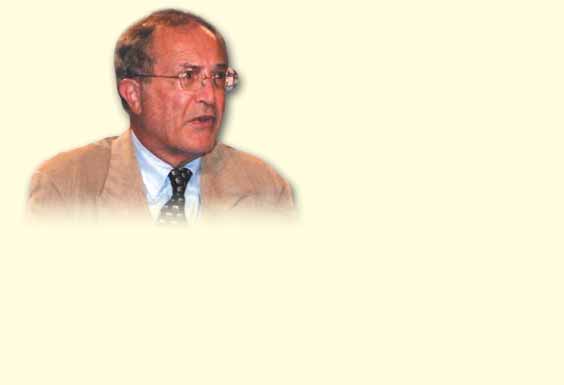
Interview with Bernard Fautrier,
MEDWAVES: What about the MCSD?
Minister of International Co-operation
for Environment and Development of Monaco
BERNARD FAUTRIER: It has its own Steering Committee, in
and President of the Bureau
which the President of the Bureau of the Contracting
of the Contracting Parties
Parties takes part. I am very well acquainted with this
Commission, which I was honoured to chair from
MEDWAVES: The Principality has been committed to the Mediterra-
2000-2001.
nean Action Plan since the very outset of MAP, but over
My main concern is to ensure the effective participa-
recent years this commitment has grown still further, and
tion of actors from economic life within it. For the
you now hold the presidency of the Bureau of the
time being, they are the "weak link" in sustainable
Contracting Parties. How do you envisage the coming two
development; in this respect, the Commission's
years?
composition as decided in Monaco is rather en-
couraging.
BERNARD FAUTRIER: Thank you for recalling that fact. It is true
to say that the more the Principality is involved in
MEDWAVES: All of this is just a vision of MAP's direction, but what of
MAP's work, the more we become aware of how rele-
its role in the processes of environmental governance and
vant it is to the stakes in our region.
relations between multilateral environmental agreements?
The meeting of the Contracting Parties has clearly set
out along many paths, which we will have to follow.
BERNARD FAUTRIER: 2002 will be a year of intense international
First and foremost, the implementation of the
activity in which I will be involved not only as repre-
renewed Convention ---the announcements made
sentative of the Principality, but also as President of
during the session provide us with the hope that we
the Bureau, and I would urge the delegations from
can expect it to come into force relatively quickly--
the Mediterranean countries to get together during
we will then have to build upon these new bases.
these major events to enable us to identify those sub-
jects of common interest.
MEDWAVES: Have you any more specific ideas about these new bases?
Obviously, as we decided in Monaco in the adopted
Mediterranean Declaration for the Johannesburg
BERNARD FAUTRIER: The renewed Convention foresees certain
Summit, I hope that we will be very much on the
instruments to facilitate its follow-up. We have to
scene in Johannesburg, bringing the Mediterranean
aspire towards a Barcelona Convention that is strong
identity to the fore.
and well-respected, and an Action Plan that can act as
I would add that we should also closely monitor the
a reference for the multilateral and bilateral funding
reform of UNEP, which is root and branch and on the
Organisations, particularly the Euro-Mediterranean
right track.
partnership.
We should, however, ensure that the legitimate con-
In this respect it is my wish ---and Monaco as a "neu-
cerns of efficiency and good governance do not
tral" may well be in a position to facilitate this-- to
undermine those systems such as Barcelona, which
see better mutual understanding between the two
are running smoothly. They should, on the contrary,
banks of the Mediterranean.
provide them with even greater impetus.
4

S P E E C H
> A REGION-LABORATORY
CALLED THE MEDITERRANEAN
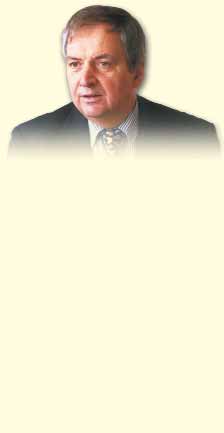
I n his speech to the Monaco meeting, the UNEP sing importance. "We have to do the right thing. But this would
Executive Director, referring to the Mediterranean as a
not be enough! We must also let the people know what is being
region-laboratory, said "here we find rich and less rich
done,.. after all we live in a media oriented society".
countries, ancient traditions and modern technologies, dif-
ferent cultures and diverse perceptions, political tensions
... and Malta
and an uneven course of economic growth and social deve-
"Monaco succeeds Malta, under the presidency of which
lopment, not to mention the environment challenges".
the MAP received a strong impetus. Malta led the MAP a
"In this semi-enclosed sea, we also
long way ahead in its new approach,
have demographic pressures, dispro-
initiated in 1995, geared at not limiting
portionate population growth, a dan-
its endeavour to the monitoring and
gerous, heavy maritime traffic, and an
control of marine pollution".
inappropriate or insufficient manage-
"Malta encouraged all MAP part-
ment of its vast coastal area, which has
ners in their efforts for the gradual inte-
often witnessed rapid and chaotic
gration of all environmental concerns
development. It is a region that faces
in their policies and planning, in order
"The Mediterranean
water scarcity, soil erosion, deteriora-
to achieve the ultimate goal of sustain-
is a region rich with history,
ting ecosystems, desertification..."
able development".
rich with cultural heritage,
"It has been the gravity of these and
The UNEP Executive Director ex-
other challenges that has got the Medi-
rich with marvellous
pressed hope that the ratification process
terranean countries and the European
landscapes and biodiversity.
of all the legal instruments will be as
Union working together, under the wing
It attracts up to 200 million
dynamic as it should, so that they will be
and the auspices of UNEP".
in-place very soon. I believe this would be
visitors a year,
Töpfer underlined that the MAP has
very helpful for this specific region.
nearly one third
always been more than a technical
of the world's tourism.
instrument to combat pollution. "It is an
MAP, ten years after
But the Mediterranean
exceptional forum where all parties in
"The MAP has always been dyna-
spite of all differences join their efforts
is not only this.
mic. For instance, after the 1992 Earth
for the safety of their shared basin, and
It is a region-laboratory".
Summit, the MAP took the lead in
common present and future".
adapting its mandate, at the regional
Klaus Töpfer
level, to the Agenda 21 resolutions. An
Congratulating Monaco...
Agenda MED 21 was adopted and the
The UNEP Executive Director referred to the election of
Barcelona Convention was revised in 1995 to give legal sub-
Monaco to lead the MAP for the coming two years. "I con-
stance to the commitments made in Rio".
gratulate wholeheartedly Monaco for its election, which is in
"In the same year, the MAP started giving priority to the
line with its long tradition in favour of the environment".
implementation of the specific goals of the Global Programme
"A tradition that started almost one century ago with the
of Action (GPA) in the region. Consequently, the LBS Protocol
famous International Commission for the Scientific Exploration
was revised the year after, leading to the setting up of the
of the Mediterranean Sea, one of the oldest and most enduring
Strategic Action Programme (SAP) to control sea pollution
scientific intergovernmental organisations in the world".
from land-based activities".
"I am confident that the election of Monaco will provide a
"This Programme has received a strong incentive from the
new drive to MAP's commitment to the objective of protecting
Global Environment Facility, the GEF. I sincerely hope that it
the region from all sorts of pollution while steadily promoting
will be also possible to come to a very good replenishment of
its course towards sustainable development".
this instrument, the GEF, for the future. This is now under dis-
Klaus Töpfer underlined, in this regard, that awareness rai-
cussion and I believe we can prove through this project here,
sing and the dissemination of information will have an increa-
in the Mediterranean, how important it is to have this instru-
5

S P E E C H
>> A REGION-LABORATORY CALLED THE MEDITERRANEAN
ment and its financial support". "This year, the SAP has moved
their views on an equal basis with those of the Governments".
from theory to practise through its operational strategy", the
"I learned with great pleasure that the preparation of the NGOs
UNEP Executive Director underlined.
for this conference was very successful and I encourage the pri-
"At the same time, the MAP has upgraded one of its key legal
vate sector to also go in this direction".
instruments: the new draft of the Emergency Protocol. It covers
The MCSD has had the courage of raising concerns, he said.
the urgent need for prevention from accidents and spills. UNEP
"Its Strategic Review explains, for instance, that however impor-
notes with great satisfaction that it will be signed soon".
tant the effort made, environmental policies still have too little
an impact on development policies, remaining too compart-
The most successful, by far...
mentalised to address themes constituting integrated policy".
The UNEP Executive Director said that in all these fields, the
"It concludes that sustainable development policies
Mediterranean has been the pioneering region, thanks to the com-
depend too much on the public sector, when they need to fos-
mitment of the Contracting Parties. "Among the various regional
ter partnerships between the public and private sectors. It also
seas programmes, the MAP is, by far, the most successful, maybe
draws attention to the need for dynamic NGOs participation
together with those of the Baltic Sea and the Caribbean. The
as a routine practice".
MAP is THE pilot project". "That is why it is so important to ra-
The MCSD expresses hopes that this balance will inject
tify its Protocols, so that it can be, once more, a good example for
renewed political impetus into regional sustainable develop-
other regions, for other regional seas programmes..."
ment endeavours and that it will represent a realistic guide to
In the light of the MAP's proven capacity to adapt to new en-
real challenges for other global regions seeking to translate
vironmental challenges and laws, its updated legal system should
sustainable development principles into concrete actions.
be completed, implemented and made known, Töpfer said. "Here,
"Overall, it lays the ground for the forthcoming sustain-
UNEP calls upon all parties to accelerate the ratification process
able development strategy in the Mediterranean".
so as to finalise as mentioned before the Johannesburg Summit".
A summit on development, not on environment
MAP and the Euro-Mediterranean Partnership
All this reflects the deep awareness of the MAP that in
Töpfer added that UNEP encourages the MAP to make
Johannesburg we will not have an environment summit, we
progress in its co-operation with all concerned international
will have a summit on sustainable development, the UNEP
and regional bodies, with an intensifying focus on Europe,
Executive Director stressed.
namely through the Euro-Mediterranean Partnership.
"I believe we have to underline this again and again, this
"The Euro-Mediterranean Conference of Ministers for
is the main topic. We should not disappoint the global pub-
Foreign Affairs, held in Brussels on 5-6 November, will lead
lic. We should address especially the inter-relation between
to the Second Euro-Med Ministerial Conference on the
environment and poverty, between environment and health,
Environment, next July in Athens".
between environment and food security".
"This will be an opportunity, among other things, to orga-
"Johannesburg must be seen as a momentum and as a step
nise more efficient co-ordination and consistency between the
towards development with a human face. A new deal for respon-
various international fora. So, the road is paved and clear sig-
sible prosperity for all. I believe we should underline that we
nals are set for both sides".
need this responsible prosperity for all people around the world".
"This has been the benchmark of all your activities.
The courage of the MCSD
Through the MCSD, you conclude, among other facts, that
"My congratulations on the Strategic Review prepared by
the Mediterranean will become more important than ever a
the Mediterranean Commission on Sustainable Development
channel for the movement of vital resources..."
(MCSD). It is an excellent document that reflects the experience
"...But you also ascertain that all economic forecasts
and the commitment of this UNEP's spearhead Regional Seas
require a sense of ecological stability, a sense for diversity, a
Programme".
sense of respect against the development in the past of cul-
"Above all, the MCSD review pays due tribute to the contri-
tural and spiritual diversity and within a framework of sus-
butions of major groups from within the civil society, reflecting
tainable development. This is what it is about".
6

D O C U M E N T
> MEDITERRANEAN DECLARATION
FOR THE JOHANNESBURG SUMMIT
T H E C O N T R A C T I N G P A R T I E S T O T H E B A R C E L O N A C O N V E N T I O N ,
M E E T I N G I N M O N A C O F R O M 1 4 T O 1 7 N O V E M B E R 2 0 0 1
I N T H E F R A M E W O R K O F T H E M E D I T E R R A N E A N A C T I O N P L A N ,
Considering the Draft Declaration prepared by the Members of the Mediterranean Commission on Sustainable Development,
meeting in Tunis from 14 to17 November 2000,
Having examined the progress towards sustainable development at the regional level, in the light of the three pillars
of sustainable development ---economic, social and environmental-- and the need for an integrated approach,
Recognizing that good governance, based on democratic processes, respect for human rights, especially of women and
children, the promotion of justice and international law, the eradication of poverty and empowerment of concerned
people, and the establishment of peace and security, based on international legitimacy, is a prerequisite for sustain-
able development,
Stressing the importance and unique nature of the Mediterranean as an eco-region and an arena for solidarity, as well
as its vocation for bringing different cultures closer to each other,
Also stressing the need to promote sustainable development strategies for eco-regions such as the Mediterranean, as well
as associated regional commissions,
Recognizing the contribution of the Mediterranean Commission on Sustainable Development's activities and recommen-
dations to the promotion of sustainable development,
Welcoming the increasing role and the active networking of the Mediterranean non-governmental organisations, the
socio-economic groups, the local authorities, the scientific educational community and the media as actors and
partners in sustainable development,
Stressing the impact of globalization and the intensification of economic, cultural and tourist exchanges, and the risks
to which the natural and cultural heritage and the unique character of the Mediterranean are exposed,
Concerned by the pressures on the environment and biodiversity, the deterioration of forests and wetlands, desertification
and land degradation the persistence of practices that are not sustainable in the long term, such as littoralization, the
excessive exploitation of vulnerable natural resources, and particularly of water, the concentration of tourist activi-
ties, the increased production of solid domestic and industrial waste, the growing consumption of fossil fuels, con-
tributing to the greenhouse effect, and related natural and technological risks, as well as the spread of non-sustain-
able production and consumption patterns,
Concerned by the growing disparity between the human and financial resources available and the challenges to be faced,
A G R E E T H E F O L L O W I N G :
SOCIAL DEVELOPMENT
The widening income gap between countries of the North and South of the region and between rich and poor sectors of
society within each country should be addressed. They affirm their commitment to achieve and surpass the 2015 tar-
gets for poverty reduction of the Millennium Summit, by designing and implementing appropriate regional and
national gender equitable policies, strategies and programmes to address poverty effectively. This will include issues
emerging from migration trends and economic transitions, which have created new forms of poverty.
Health protection and development and the wise use of healthcare resources are essential components for the sus-
tainable development of the region.
The region needs to invest in capacity building and empowering its young population. Mediterranean countries are
committed to review, reform and / or develop sound educational and appropriate information, communication and
training strategies to develop the human capital needed to fuel sustainable development. Access by all people to
general education should be secured, including education for environment and sustainability.
7

D O C U M E N T
>> MEDITERRANEAN DECLARATION FOR THE JOHANNESBURG SUMMIT
MANAGEMENT OF NATURAL RESOURCES AND POLLUTION COMBATING
Actions at international, regional, national and local levels with collaboration between all the actors are needed in
order to protect effectively the quality of this unique marine environment, to facilitate integrated management of
coastal areas, to promote integrated management of water resources at watershed level, to sustain the precious
biodiversity of the region and to combat desertification and land degradation efficiently.
Considering that the Mediterranean region attracts one third of international tourism, sustainable tourism respecting the
environment and natural landscapes should be promoted.
Natural and technological risks should be systematically addressed, adopting prevention measures at all governance levels,
ensuring safety for people and their property, as well as the natural environment and cultural heritage.
Clean and safe water, land productivity and food security should be addressed at regional and national levels by promoting
sustainable agricultural practices and environmentally friendly consumption patterns.
The share of environmentally-sound renewable energy, particularly solar, wind and geothermal energy, in total primary
energy production and use should be significantly increased, and energy efficiency technologies should be promoted
Policies for safe management and, where possible, elimination of industrial pollution and hazardous chemicals in the
region should be promoted and implemented.
Monitoring networks, observatories and data collection systems should be efficiently linked for the purpose of analysing
long-term trends and elaborating appropriate management policies.
INSTITUTIONAL AND LEGAL FRAMEWORK
Sustainable development requires that economic, social and environmental considerations be integrated into decision-making
processes, planning procedures and law-making at all levels.
Institutional and legal frameworks must provide for public access to environmental information, participation in decision-
making and access to justice. The implementation of the precautionary and the polluter pays principles and the principle
of common and differentiated responsibility is essential in all relevant policies.
The Contracting Parties support efforts to strengthen global environmental governance and will contribute towards it in the
Mediterranean region.
Increasing the effectiveness of the international legal framework foreseen at the Rio Conference requires countries to imple-
ment their commitments under the UNCCD, CBD and UNFCCC, as well as to ratify and implement the Rotterdam
Convention, the Stockholm Convention, the Cartagena Protocol and the Kyoto Protocol. The progress made on the lat-
ter at COP 7 of the UNFCCC, hosted in Marrakech by a southern Mediterranean country, is a valuable contribution to
sustainable development, to whose implementation the Mediterranean Action Plan should contribute.
The regional level is extremely important in promoting sustainable development. To this end, the Contracting Parties have
renewed the Mediterranean Action Plan, revised the 1976 Barcelona Convention and its Protocols, adopted new
Protocols and agreed on a reporting mechanism to monitor progress in implementing their commitments. The Medi-
terranean Commission on Sustainable Development is proving to be a valuable instrument for promoting partnership
with major groups, notably through its working groups on water, tourism, and industry. The Parties are also seeking
to strengthen ties between the Euro-Mediterranean Partnership and the Mediterranean Action Plan.
GOVERNANCE, DECENTRALIZATION AND PARTICIPATION
The role of Mediterranean regional, national and local levels of governance and participatory decision-making struc-
tures should be strengthened.
Countries should facilitate the implementation of recommendations and action plans deriving from local Agendas 21, esta-
blishing appropriate institutional frameworks by providing or facilitating access to adequate means by local authorities.
All countries and major groups of the region should develop and implement practicable and targeted Sustainability
Strategies at various levels of governance, including Integrated Water Resources Management and Integrated
Coastal Zone Management, in particular aiming at decreasing pressures on coastal areas.
8

D O C U M E N T
CO-OPERATION, PARTNERSHIP AND FINANCING
As globalization is a rapid, irreversible, powerful process, Mediterranean countries are determined to reap its benefits
and address effectively any adverse side-effects on social cohesion, environmental quality and cultural identities in
order to promote sustainable development, in particular in the framework of the Euro-Mediterranean Partnership,
the forthcoming Free-Trade Area and the proposed enlargement of the European Union.
Scientific knowledge on achieving sustainable development and promoting eco-efficiency should be shared and the
transfer of environmentally-sound technologies should be encouraged; Mediterranean regional centres have an
important role to play in this regard.
Domestic resources, trade liberalization compatible with environmental protection and private financial flows, notably
foreign direct investment, are fundamental in generating resources for sustainable development. National financing
should be considerably increased while incentives for environmentally and socially responsible investments should be
promoted and environmentally damaging subsidies should be gradually removed.
Multilateral and bilateral international or regional funding available under public development aid should be considerably
increased and better adapted to the programmes for the protection of the environment and sustainable development in
the Mediterranean.
The international community should strive to reach the accepted UN aid target of 0.7 per cent of GNP as soon as possible.
The commitment of the European Union Heads of States and Governments, in June 2001, to make concrete progress
towards reaching this target before the Johannesburg Summit is welcomed.
New and additional resources of funding and innovative financial mechanisms respecting sustainable development principles,
such as debt for nature and sustainable development swaps, as well as the Clean Development Mechanisms in the Kyoto
Protocol, should be promoted.
These initiatives constitute innovative mechanisms of solidarity for real and effective Mediterranean partnership.
T O T H I S E N D , T H E C O N T R A C T I N G P A R T I E S D E C I D E T O :
draw up or revise their own sustainable development strategies in the light of the results of the Johannesburg
Summit and the agreements reached above;
elaborate policies for regional development, including an efficient management of natural capital;
implement appropriate institutional, fiscal and legal reforms to promote the objectives of the Mediterranean Action
Plan as renewed in 1995, with due attention to socio-economic considerations particularly in eastern and southern
Mediterranean countries;
promote the work of the Mediterranean Commission on Sustainable Development and its contribution to the pro-
motion of sustainable development in the Mediterranean region in the framework of the Barcelona Convention, and
take the necessary measures to implement its recommendations and proposals for action;
promote the establishment of information, monitoring and evaluation systems on the State of the Environment and
sustainable development at regional, national and local levels;
A N D I N V I T E :
The Mediterranean Governments to increase the resources devoted to meet these commitments;
The international organizations and the European Community to improve allocated resources, increase synergies and
mutual support between their programmes of intervention in the Mediterranean, so as to meet more effectively the
needs of the region;
The United Nations to consider the needs and resources of eco-regions, such as the Mediterranean, when addressing
sustainable development issues.
9

S P A M I
> SPECIAL PROTECTION FOR THE MOST ENDANGERED
A network of natural sites of particular importance
for the Mediterranean people is now being set up.
They will be under special protection by all Mediterranean countries.
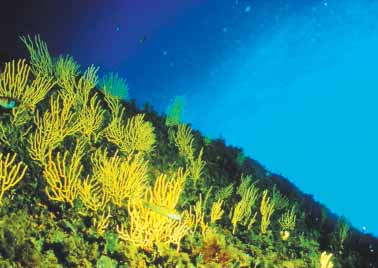
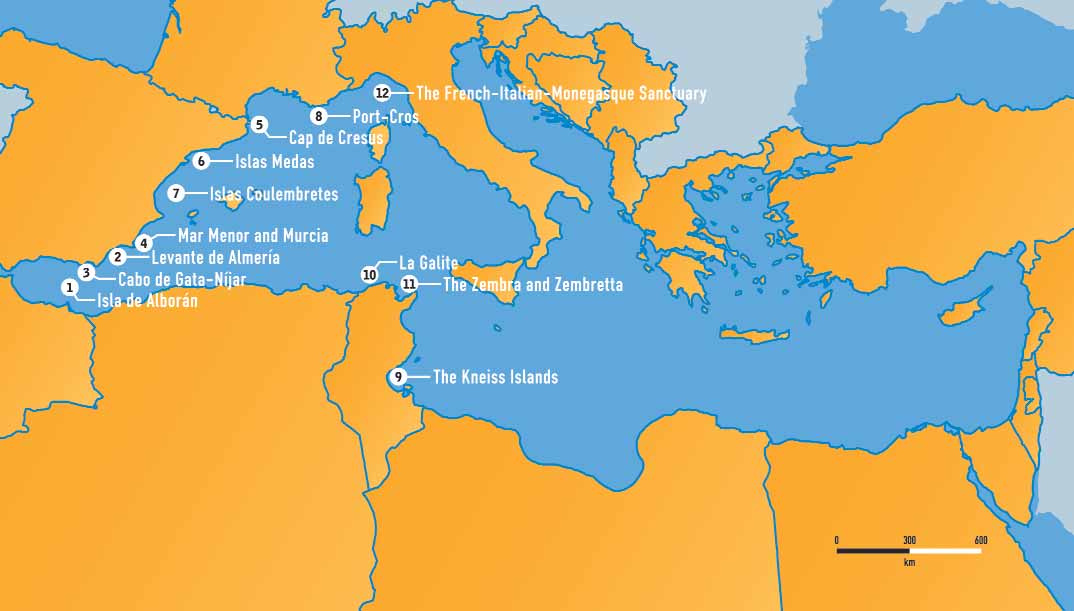
A first batch of twelve marine and coastal areas forms the nucleon.
In their Monaco meeting, the of the region's natural heritage, the Once a protected area is included in
Contracting Parties took a step
SPAMI list can only include sites that
the SPAMI list, its importance be-
further towards the regional go-
meet specific criteria.
comes recognised by all the Con-
vernance for the conservation of the
tracting Parties to the Barcelona Con-
Mediterranean natural heritage, by in-
vention. In other words, they should
cluding 12 marine and coastal natural
comply with the related measures and
sites in the list of the known as Specially
not authorize or undertake any activi-
Protected Areas of Mediterranean Im-
ties that might harm its natural fea-
portance (SPAMIs).
tures.
The SPAMIs are intended to be a
Non-party States and the relevant
network of protected natural sites of
international organisations are invited
particular interest for the Mediter-
to join the conservation measures
A. BOUAJINA / ASSOCIATION GEXS
ranean people and, thus, their conser-
applicable to the SPAMIs.
vation should be "supervised" by all
They must be unique
But the role that the SPAMIs are
Mediterranean countries.
and representative
called-upon to play is particularly
In fact, they could be established
To this end, the Mediterranean
important as far as high sea zones are
not only in the marine and coastal
Action Plan's Protocol regarding
concerned.
zones subject to the sovereignty or
Specially Protected Areas (SPA) pro-
The SPAMIs are expected to con-
jurisdiction of a country, but also in
vides a set of criteria for the selection
tribute to the protection of species and
zones that are partly or wholly on the
of sites. Uniqueness, natural represen-
habitats in high sea zones. The
high seas.
tativeness, adequate legal status, pro-
enforcement of measures to protect
Also intended to have a value of
tection measures, and management
high sea will be the challenge of the
example and model for the protection
methods, are among the key features.
near future.
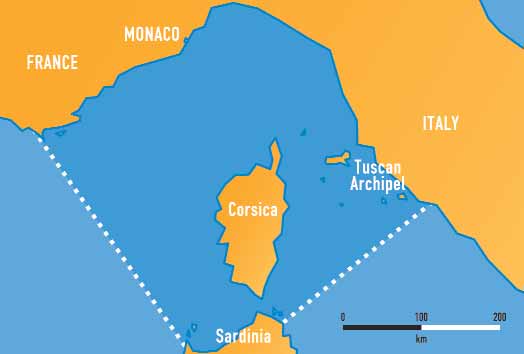
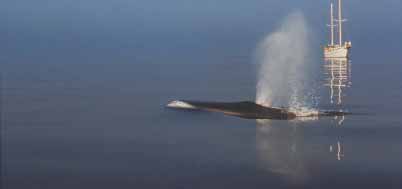
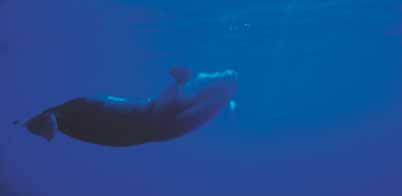
> THIS IS THE SANCTUARY OF THE DOLPHINS AND THE WHALES
In the 87,000 km2 of waters shared by France, Italy and Monaco,
there are 12 different species whose populations range between seve-
ral tens of thousands of individuals (for certain dolphins) to only one
thousand (for the fin whale, a flag species of the area).
The Sanctuary is now declared a Specially Protected Area of
Mediterranean Importance.
The French-Italian-Monegasque Sanctuary has been set up by an
agreement between the governments of the Mediterranean Action Plan
partner countries, signed in Rome on 25 November 1999.
Located in the Tyrrhenian-Corsican-Provencal part of the
Mediterranean, including the littoral waters and pelagic domain of the
N. CHATZIGEORGAKIDIS
area. It is within the area defined by the following limits:
1 0

S P A M I
N. CHATZIGEORGAKIDIS
The following twelve protected areas
that are not found in the other parts of
tant Posidonia meadows of the
have been included in the SPAMI List:
the Mediterranean.
Spanish coast.
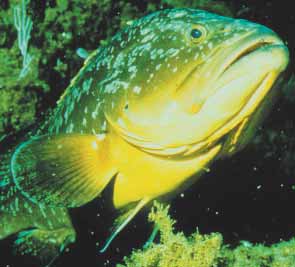
1) Isla de Alborán (Spain). This area
2) The Sea Bottom of the Levante de
3) Cabo de Gata-Níjar (Spain). This
is known for its very high richness in
Almería (Spain). This area represents a
zone extends from the sea floor to
flora and fauna, with the presence of
strip of marine territory parallel to the
coastal mountains of volcanic origin,
Mediterranean and Atlantic species
coast, which includes the most impor-
passing through wetlands and coastal
To the West, a line running from La Pointe Escampobariou (west
NGOs through international meetings, media operations or studies
headland of the Giens Pininsula to Capo Falcone) located on the
made at sea.
western coast of Sardinia;
The physical and climatic features
To the East, a line running from
of the area create particular hydro-
Capo Ferro, located on north-eastern
dynamic conditions that develop verti-
coast of Sardinia to Fosso Chiarone,
cal current systems (upwellings),
located on the western coast of
which mobilise waters from the deep
Italy.
and give rise to areas.
The establishment of the Sanctuary
Upwellings are very favourable for
is a culmination of several years of
S. PANIGADA
the development of primary production.
efforts and initiatives by the concerned governmental authorities with
Around this primary production complex food chains are formed, and
significant support from university laboratories, scientists and many
the cetaceans constitute the most remarkable final links in the chain.
1 1

S P A M I
>> SPECIAL PROTECTION FOR THE MOST ENDANGERED
areas. Its climatic context is almost
7) Islas Coulembretes (Spain).
12) The French-Italian-Monegasque
unique in Western Europe, with rather
These islands, characterised by a small
Sanctuary, set up by a tripartite agree-
mild temperatures, absence of frosts
surface and isolation, hosts both
ment between the governments of
and, overall, extreme aridity.
endemic species and breeding colonies
France, Italy and the Principality of
4) Mar Menor and the oriental coast
of rare marine birds.
Monaco (Rome, 25 November 1999), co-
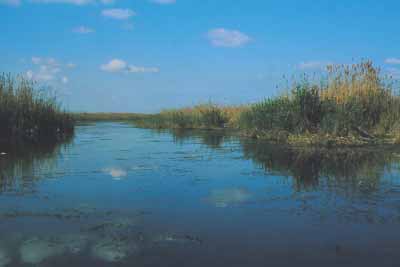
of Murcia (Spain). The Mar Menor is the
8) Port-Cros (France). The Port-Cros
vers 87,000 km2 in the Tyrrhenian-
biggest interior lagoon in Spain. There
territory has, since 1963, been listed as a
Corsican-Provencal part of the Medi-
are coastal salt marshes, salt flats (salt
National Park extending over terrestrial
terranean, including the littoral waters
steppes) and some volcanic mountains.
and marine environments. The under-
and pelagic domain of the area.
water area extends over 1,300 hectares
and it is known for its fascinating vari-
ety of species and habitats.
9) The Kneiss Islands (Tunisia). This
archipelago, that lies about two miles
off the continent, is characterised by
the tide area ecosystem believed to be
almost unique in the Mediterranean.
R. TINARELLI
10) La Galite (Tunisia). The La Galite
5) Cap de Cresus (Spain). The Cap de
archipelago, made up of six islands and
Cresus peninsula is the last spur of the
islets, has a varied geology and topo-
Pyrexes chain. The coastline is abrupt
graphy (steep slopes, underwater slo-
and jagged with cliffs and deep inlets.
ping cliffs) with many caves that can
The Regional Activity Center for
6) Islas Medas (Spain). The karst-
serve as shelter to the monk seals.
Specially Protected Areas will inform
type geo-formation of the land of these
11) The Zembra and Zembretta.
the competent international organisa-
seven islands with its many tunnels
These islands lie to the north-east of
tions of the List and of the measures
and caves along with the richness of
Tunisia and comprise several marine
taken in the SPAMIs, and will promote
organic substance are at the base of the
habitats such as the Posidonia mea-
harmonisation between SPAMIs and
abundant marine fauna in this area.
dow, rocky bottoms and caves.
other relevant networks.
>> THIS IS THE SANCTUARY OF THE DOLPHINS AND THE WHALES
It is in this vast pelagic realm
sand individuals (for the fin whale,
that the cetaceans, this area's
a flag species of the area).
main subject of protection, develop
Although the cetaceans are
in all their diversity. There are 12
especially targeted by the esta-
different species whose popula-
blishment of the Sanctuary, it is
tions range between several tens
expected that other species will
of thousands of individuals (for
benefit from the protection and
certain dolphins) to only one thou-
management measures.
G. TORCHIA
SPECIALLY PROTECTED AREAS / REGIONAL ACTIVITY CENTRE (SPA/RAC)
Boulevard de l'Environnement | PB 337 | TN-1080 Tunis cedex tel 0021 6 1 76 57 60 fax 0021 6 1 79 73 49 e-mail car-asp@rac-spa.org.tn website www.rac-spa.org.tn
1 2

L A N D - B A S E D A C T I V I T I E S
> COUNTDOWN FOR POLLUTION REDUCTION
The adoption of the operational strategy for the implementation of the SAP launches
a phased 25-year process to reduce pollution from land-based sources and activities.
The Contracting Parties
well as its relative share in the
adopted the Operational
degradation of the marine envi-
Strategy for the imple-
ronment.
mentation of the Strategic Action
However, as a result of a com-
Programme (SAP) for the control
plex calculation of the various
of the land-based sources (LBS) of
criteria of differentiation it was
pollution.
concluded that this approach is
This Operational Strategy
unconceivable in the current
sets up a timetable, which will
Mediterranean context. Simply,
commence by the Mediterranean
it is not quantifiable nor is it
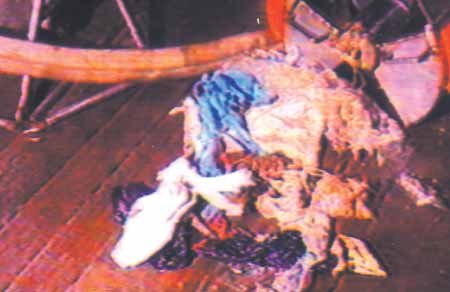
F. ABOUSAMRA
countries estimating the amount
Grab sample, Eastern Mediterranean,
traceable. Neither at national nor
showing 30 cm of plastic waste deposited on sea-bed at 200 m depth.
of every SAP-targeted pollutant
at regional levels.
being released from the coastal areas,
terranean countries should follow a "dif-
Then it came to the "flat rate"
namely from the industrial sites. This
ferentiated approach" or a "flat rate
approach. It consists in adopting the
milestone, technically known as "base-
approach", when it came to formulating
same rate of reduction that was agreed
line budget", should be set-up by the year
an operational strategy aimed at comply-
upon under the SAP provisions, for all
2003.
ing with their commitments to the SAP.
the Mediterranean countries, regardless
With this inventory in hand and
At first glance, the differentiation
of their national circumstances. In this
once each country has elaborated its
concept, in its various forms of applica-
context, the estimation exercise shows
own National Action Plan (NAP), the
tion based on volumes of releases, vo-
that the adoption of the "flat rate"
process of actual reduction of pollu-
lumes of reduction and on the cost of
approach would enable the countries to
tants should start by the year 2005.
reduction, seems to be the "golden
fulfil their SAP commitments in a much
This has been the culmination of a
rule". It would allow to partially take
more traceable and equitable effort.
long process. In fact, in order to elabo-
into account the situation of each sin-
rate the NAPs, it was agreed that the
gle country regarding its releases of
F O U A D A B O U S A M R A
E N V I R O N M E N T A L C H E M I S T
Mediterranean countries, with the sup-
pollutants into the Mediterranean as
M E D P O L P R O G R A M M E O F F I C E R
port of the MAP, would implement, du-
ring the years 2001-2003, a comprehen-
> EGYPT PROCEEDS TO AN INVENTORY
sive capacity building programme
OF POTENTIALLY HARMFUL SUBSTANCES
financed by the Global Environment
Facility (GEF), the French GEF and the
Egypt launched the first Mediterranean pilot project, in Alexandria, for the implementation of
Contracting Parties. The NAPs should be
the Pollutant Release and Transfer Register (PRTR), an environmental database of potentially
elaborated on the basis of the National
harmful substances released or transferred into air, water and soil by industries, the agricultu-
Diagnostic Analysis (NDA) that would be
ral and transport sector, as well as wastes transported off-site for treatment and / or disposal.
implemented during 2002-2003.
In a workshop in Alexandria on 10-20 December, 34 participants from the Egyptian
The adoption of the "base-line bud-
Environmental Affairs Authority, media, NGOs, industrial partners and observers, from Tunisia
get" concept has not been an easy task.
and Syria, reached a consensus on a list of 51 chemicals plus some laboratory substances
The question was whether the Medi-
released into air, water and soil or transferred off site, and on a reporting format.
CO-ORDINATING UNIT FOR THE MEDITERRANEAN ACTION PLAN
MED POL 48, Vassileos Konstantinou Avenue | GR-11635 Athens tel 0030 10 72 73 131 fax 0030 10 72 53 196/7 e-mail medpol@unepmap.gr
1 3

M C S D
> FOCUS ON URBANISATION,
INDUSTRY, AND FREE TRADE
The Mediterranean Commission on Sustainable Development presented in its
extraordinary meeting in Monaco the fruits of the research of three Working Groups.
> URBAN MANAGEMENT
> INDUSTRY
> FREE TRADE
After half a century of intensive
The pressure from Mediterranean
Free trade has already made its mark
urbanisation, and the associated trans-
industrial activities, particularly around
on the region. Four Mediterranean coun-
formation of lifestyles and consump-
pollution hotspots, calls for an integra-
tries are EU members, with a further four
tion patterns, Mediterranean societies
ted approach to help Mediterranean
negotiating membership. The Euro-Medi-
have become predominantly urban.
industry stay competitive, and reduce
terranean Partnership, currently com-
By 2025, over 70% of Mediterra-
adverse impacts arising from pollution.
bining the 15 countries of the EU and 12
neans are likely to be urban dwellers,
Overall, the Working Group on
countries or authorities of the South and
with the greatest growth rates predic-
Industry and Sustainable Develop-
East Mediterranean, is focused on crea-
ted for the countries on the southern
ment calls for a greater integration of
ting a common free trade zone by 2010,
and eastern shores.
industry and the environment so as to
in addition to the existing bilateral and
The pitfalls of urbanisation in the
attain ecologically sustainable indus-
multilateral free trade agreements.
region are well documented. These
trial development, notably via cleaner
The region is characterised by coun-
include the concentration of polluting
production. Small and Medium-sized
tries at different stages of development.
economic activities such as industry,
Enterprises need support to comply
While eliminating customs revenues,
an increase in waste production,
with their legal obligations, to make
free trade has historically been shown to
degraded neighbourhoods, greater con-
voluntary agreements, to abide by the
amplify developmental inequalities be-
sumption of renewable and non-
Precautionary and Polluter Pays Prin-
tween countries. It is likely to expose
renewable resources, and competition
ciples, and to adhere to MAP's Strategic
Southern Mediterranean markets, parti-
for space.
Action Programme (SAP).
cularly small local producers, to the full
The Working Group on Urban
States need to play a stronger role in
force of competitive foreign imports.
Management and Sustainable Develop-
facilitating sustainable industry, main-
Traditional food crop farming has proven
ment offers four sets of proposals,
ly through financial incentives, enhan-
most vulnerable to free trade, which also
which were adopted by the Contracting
ced information-sharing, the recogni-
brings rising consumption patterns and
Parties.
tion of model companies, strict licen-
associated rises in waste production.
The Group's proposals aim towards
sing criteria, and effective inspectorates
Positively, free trade is likely to lead
the proactive integration of sustainable
by entities independent of the finan-
to easier, cheaper access to environmen-
development and urban management.
cing and executing agencies of sustain-
tally-friendly technologies, the introduc-
These involve countries in mobili-
ability-related projects.
tion of environmental standards for
sing actors and means of action towards
They can also be pivotal in encoura-
exports, and easier access to new mar-
achieving sustainable urban develop-
ging companies to internalise the en-
kets for products derived from less pol-
ment, and aiming for better manage-
vironmental costs of production (e.g. by
luting processes. This Group will
ment to steer urban dynamics. The pro-
progressively reducing subsidies for
strengthen the methodology for moni-
posals also involve them in improving
water and energy costs, so as to better
toring impacts, focus on the effects of
the management of public urban servi-
reflect the environmental costs of produc-
the liberalisation on sectors such as agri-
ces, and strengthening Mediterranean
tion). Consumer pressure also has a strong
culture and transportation, and identify
and Euro-Mediterranean co-operation
role to play. The Contracting Parties
tools for upgrading SMEs, the handicraft
for sustainable urban development.
adopted this Working Group's proposals.
sector and public urban services.
CO-ORDINATING UNIT FOR THE MEDITERRANEAN ACTION PLAN
MCSD 48, Vassileos Konstantinou Avenue | GR-11635 Athens tel 0030 10 72 73 117 fax 0030 10 72 53 196/7 e-mail mcsd@unepmap.gr
1 4
C O - O P E R A T I O N
> CO-OPERATION BETWEEN THE MAP AND
THE EURO-MEDITERRANEAN PARTNERSHIP
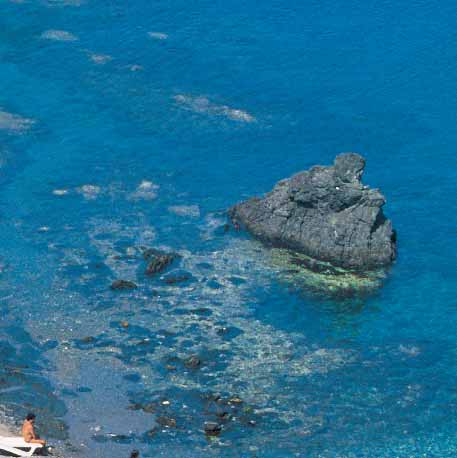
Port facilities to reduce sea pollution and the development of marine and coastal
protected areas are now among the co-operation projects launched by the EU,
through the Euro-Mediterranean Partnership, and the Mediterranean Action Plan.
> DEVELOPING
> REDUCING POLLUTION
MARINE AND COASTAL
BY SOLID WASTES AND OILY WATERS
PROTECTED AREAS
FROM SHIPS
The promotion of the management of protected areas, as a tool
The project on "Port reception facilities for collecting ship-
of the integrated coastal zone management, as well as of the
generated garbage, bilge waters and oily wastes" aims at
conservation of Mediterranean cultural marine heritage through
reducing the pollution of the Mediterranean Sea by ship-gene-
the development of protected areas, are the main objectives of
rated solid wastes and oily waters and residues.
the Regional Project for the Development of Marine and Coastal
More specifically, it aims at promoting the installation of
Protected Areas in the Mediterranean Region.
port reception facilities for the collection of
The project was signed between the MEDA
garbage, bilge waters and oily residues gene-
Programme, financial tool of the Euro-
rated by ships.
Mediterranean Partnership, and the MAP
It aims, as well, at identifying the
Regional Activity Centre for Specially
present situation and needs regard-
Protected Areas (SPA/RAC).
ing the reception facilities for oily
Partners in this project are:
ballast waters in the Mediterra-
> Instituto Centrale per la Ricerca
nean countries.
scientifica e technologica Appli-
A. DEMETROPOULOS
The project will also focus on
cata al Mare (ICRAM), Italy,
identifying proper methods for
> Unidad de Biología Marina, Univer-
treatment of collected solid and li-
sidad de Alicante: Instituto Universi-
quid wastes and for their final dispo-
tario del Agua y de las Ciencias Ambien-
sal. The results and outputs are meant to
tales (Universidad de Alicante), Spain,
be applicable throughout the Mediterranean
and
region.
> Atelier Technique des Espaces Naturels (ATEN), France.
The activities will be largely based on works already
SPA/RAC has invited all Mediterranean countries eligible to
carried out within the framework of the International Maritime
financing by the EU Short and Medium-term Action Programme
Organisation (IMO), the Mediterranean Action Plan (MAP) and
(SMAP) to participate in this project. Algeria, Cyprus, Israel,
the Regional Marine Pollution Emergency Response for the
Malta, Morocco, Syria and Tunisia, have applied for participation.
Mediterranean Sea (REMPEC).
SPECIALLY PROTECTED AREAS / REGIONAL ACTIVITY CENTRE
REGIONAL MARINE POLLUTION EMERGENCY RESPONSE CENTRE
(SPA/RAC)
FOR THE MEDITERRANEAN SEA (REMPEC)
Boulevard de l'Environnement | PB 337 | TN-1080 Tunis cedex
Manoel Island | MT-Gzira GZR 03
tel 0021 6 1 76 57 60 fax 0021 6 1 79 73 49
tel 0035 6 33 72 96/7/8 fax 0035 6 33 99 51
e-mail car-asp@rac-spa.org.tn website www.rac-spa.org.tn
e-mail rempec@waldonet.net.mt website www.rempec.org
1 5
B I O L O G I C A L D I V E R S I T Y
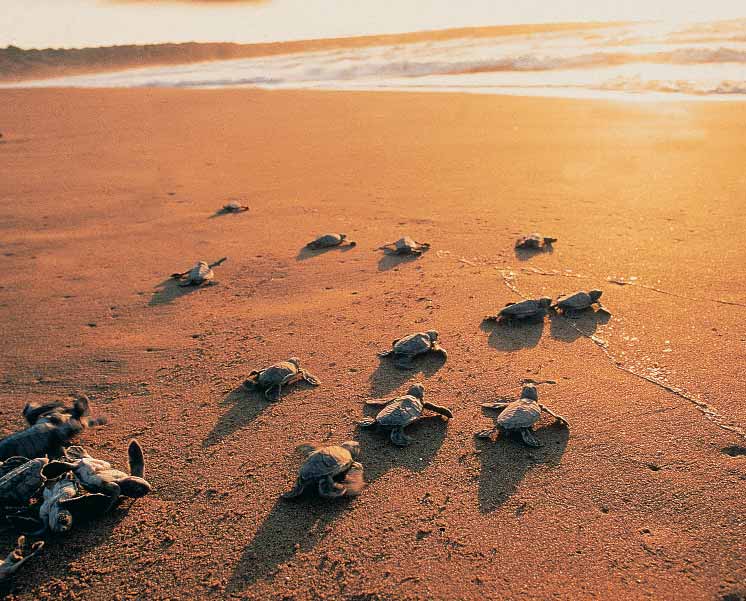
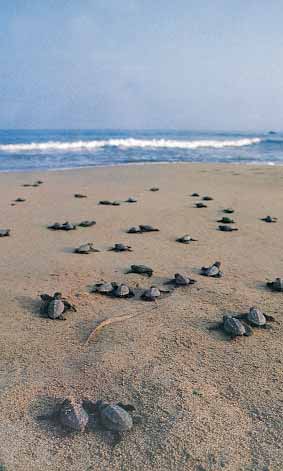
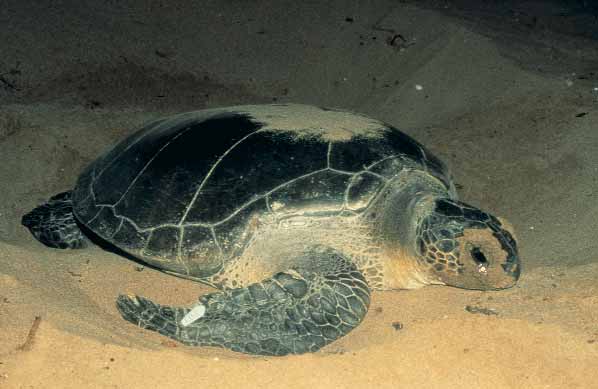
> THE DECLINE OF THE TURTLES
Green and Loggerhead
turtles in the Mediterranean
were abundant in the past.
As a result
of intense exploitation,
populations have declined
dramatically
and both species
are now endangered,
even though
they are protected
by Conventions.
A bout 100,000 turtles were with some nesting reported in other and disorientate hatchlings, which
killed from 1920 to 1965 in
parts of the region. Nesting in Libya
often die of desiccation or overheating.
the eastern Mediterranean,
could apparently be significant but
Trampling of the sand by bathers
mainly for turtle soup. The turtles
nesting levels there are still uncertain.
and the driving of vehicles on beaches
demise has since been aggravated by
Green turtles currently nest mainly
can compact sand or cause nests to col-
incidental catches in fishing gear.
in Cyprus and Turkey.
lapse, while sun-beds and umbrellas
The International Union for Con-
Nesting of both species has
can obstruct nesting or reduce sand
servation of Nature and Natural
reduced drastically or even ceased, in
temperature, influencing the determi-
Resources (IUCN) has declared the
several areas, reflecting the demise of
nation of hatchlings' sex. These are
Mediterranean Green turtles as criti-
turtle stocks.
just examples of the threats.
cally endangered.
About 4,000-5,000 Loggerheads
The list is much longer. Strategies
Turtles are protected by a number
and 500-1,000 Green turtles nest now
and actions to conserve turtles need to
of conventions, CITES, Bern, Bonn
in the Mediterranean.
take into account not only the complex
(CMS) and Barcelona, and a revised
biology of turtle reproduction but
Action Plan for the conservation of
Lights and sounds of tourism
often also local socio-economic factors
marine turtles, was approved by the
In the last two or so decades,
and political interests. The problems
Contracting Parties to the Barcelona
tourism development in the Medi-
faced so far bear witness to the fact
Convention in 1999.
terranean has added serious new
that this is no easy or simple task.
threats to the survival of turtles.
Where the turtles nest!
This is having its main impact in
The first ever Mediterranean
Loggerhead turtles now nest main-
Greece, Turkey and Cyprus where
Conference on Marine Turtles
ly in Greece, Turkey and Cyprus. There
many nesting beaches are now tourist
Guided by the concern about mis-
is dispersed nesting in Israel and
resorts.
used and over-exploited turtle popula-
sparse or dispersed nesting in Egypt,
Lights and movement near the
tions, on the verge of extinction, and
Tunisia, Lebanon and southern Italy,
beaches prevent females from nesting
now threatened by economic forces,
1 6
B I O L O G I C A L D I V E R S I T Y
Conclusions
Research and monitoring priorities,
The main points that came out of
to fill-in gaps, included the identifica-
the conference were that much infor-
tion of key marine habitats, long-term
mation is already available, certainly
monitoring programmes, as well as
enough to base, urgently needed, turtle
migration, genetic, and population
conservation measures on.
studies. More research was also needed
It was underlined that turtles in the
on the impact of fisheries.
Mediterranean are genetically isolated,
and that their fidelity to their natal
A follow up is needed
beaches results in the evolution of
This first Mediterranean Confe-
independent rookeries.
rence on Marine Turtles was a bold
These need to be protected indivi-
new initiative that needs to be fol-
dually, as conservation efforts in one
lowed up with practical measures at
area, say in Zakynthos, will not help the
the national level, not only by the sci-
turtles elsewhere in Greece or in Turkey
entific and conservation community,
or Cyprus. Key points emerging inclu-
but mainly by administrations which
ded the setting up of protected areas,
determine, to a large degree, the fate of
including Specially Protected Areas of
the coastline and that of turtles.
Mediterranean Interest (SPAMI), prefer-
Tourism development and spatial
A. DEMETROPOULOS
ably before development starts, enfor-
planning policies have the potential
such as tourism and recreation, the
cing legislation in existing protected
for flexibility, as to which areas, and to
Barcelona, Bern and Bonn Conventions,
areas and implementing appropriate
what degree, to develop.
agreed to further co-operate and get
management plans.
Turtle biology gives turtles no such
their act together.
The involvement of stakeholders at
options for if they cannot nest on their
They jointly organised the first
an early stage was stressed, as was the
natal beaches they will have no off-
Mediterranean Conference on Marine
need for commitment by governments
spring.
Turtles from 24 to 28 October 2001 in
through appropriate funding, spatial
A N D R E A S D E M E T R O P O U L O S
the Italian capital and pledged to
planning and tourism policies.
M A R I N E B I O L O G I S T
organise follow-up conferences. The
Barcelona Convention, through the
MAP Regional Activity Centre for
Specially Protected Areas (SPA/RAC),
took the lead.
The conference was hosted by
ICRAM (Istituto Centrale per la Ricerca
Scientifica e Technologica Applicata al
Mare) and supported by IUCN's Marine
Turtle Specialist Group, Mediterranean
Sea.
It proved to be a very successful
five-day conference, with some 200
participants from all over the Medi-
terranean and some from outside it,
with 80 presentations, with nine invi-
ted speakers and three workshops.
A. DEMETROPOULOS
1 7

N G O s P L A N E T
> THE MAP IS A GOOD TOOL,
BUT...
THE MAP IS A GOOD TOOL FOR CO-ORDINATING ACTION TOWARDS THE PROTECTION
OF THE MEDITERRANEAN ENVIRONMENT. IT VIRTUALLY EMBRACES ALL THE
COUNTRIES IN THE BASIN, AND IT INVOLVES BROAD SECTORS OF CIVIL SOCIETY.
NEVERTHELESS, MED FORUM, WHICH BRINGS TOGETHER 115 NGOS FROM
23 COUNTRIES, FEELS THAT THE FULL POTENTIAL OF THE ENORMOUS
POSSIBILITIES PROVIDED BY THIS TOOL IS NOT BEING TAPPED.
For decades, the Non Governmental Organisations (NGOs) and ecological associations
have spoken out against the environmental problems affecting the Mediterranean.
The Barcelona Convention and the Mediterranean Action Plan (MAP) are the result
of social pressure and of the Mediterranean States awakening to the fact that
something needs to be done.
Ties between NGOs and MAP go back a long way. The meetings of the Contracting
Parties, in which NGOs take part, and the unique composition of the Mediterranean
Commission on Sustainable Development (MCSD), which involves the NGOs as well
as other sectors on equal, are clear examples of the joint effort undertaken.
The Barcelona Convention has interesting legal instruments for the protection of the
Mediterranean.
The criticism which we, the NGOs, or at least MED Forum would make, however, is
that there is a lack of political will on the part of some of the signatories to actu-
ally apply their content, or at least to ratify what was signed back in 1994, 1995
and even later.
MED Forum is the Network of Mediterranean NGOs for Ecology and Sustainable
Development.
TELEMAC project for environmental education
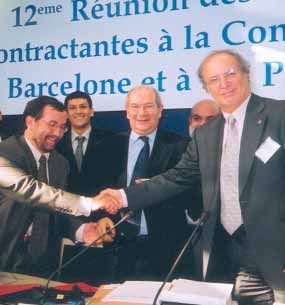
During the meeting of the Contracting Parties in Monaco, in November 2001, the MAP
and MED Forum signed a co-operation agreement to develop a project on environ-
mental education for young people aged between 14 and 18.
The TELEMAC project consists of three main activities:
1. A virtual centre to disseminate eco-cultural material to be identified by an assess-
Mediterranean NGO Network
ment committee made up of individuals from various walks of life,
for Ecology
and Sustainable Development
2. A Network of Schools at secondary education level connected via Internet. This will
MED Forum Secretariat:
help provide pilot schools in countries to the South and East of the Mediterranean
with telematic means,
EcoMediterrania
Gran Vía
3. A School-ship to bring young people taking part in the project into contact.
de les Corts Catalanes, 643,3o
ES-08010 Barcelona
The project is an old idea of Eco-Mediterrania, MED Forum's founder organisation,
tel 0034 93 412 43 09
which has now made it available to the MED Forum Network, and which targets
fax 0034 93 412 46 22
the participation of most Mediterranean NGOs, as well as students, teachers,
local and national administrations, and international bodies.
e-mail MEDForum@pangea.org
website www.MEDForum.org
Rafael Madueño, Secretary General of MED Forum
1 8

N G O s P L A N E T
> IT IS ABOUT TIME
TO RATIFY!
SOMETHING SPECIFIC AT LAST? WHATEVER THE CASE, THE INSTRUMENT WITH
WHICH THE 21 CONTRACTING PARTIES TO THE BARCELONA CONVENTION EQUIPPED
THEMSELVES IN MONACO, STRIPS THEM OF ANY FURTHER EXCUSE FOR DRAGGING
THEIR FEET ON THE POISONED MEDITERRANEAN ISSUE. WHAT THEY ACTUALLY DID
WAS ADOPT THE OPERATIONAL PLAN FOR THE IMPLEMENTATION OF THE STRATEGIC
ACTIONS PROGRAMME (SAP) TO COMBAT POLLUTION FROM LAND-BASED ACTIVITIES.
The SAP operational plan, concocted by MED POL sets out a clear strategy for
reducing emissions from land-based sources, starting with a baseline assessment
being drawn up in each Mediterranean country (see MedWaves #44).
This is simply an inventory of emissions and waste for each of the pollutants covered
by the SAP, from now until the end of 2003, which will then enable each coun-
try to programme and measure the gradual reduction of waste, the aim being to
eliminate by 2025.
Whilst welcoming this decision, the WWF and Greenpeace stressed how important
it was not to wait until 2004 to start reducing toxic waste.
Indeed, certain deadlines in the SAP, which was adopted in 1997, have already gone
by, without the objectives having been met.
Others, such as the elimination by 2010 of the "dirty dozen" POPs (persistent orga-
nic pollutants), is not something which can be achieved in a blink of an eye*.
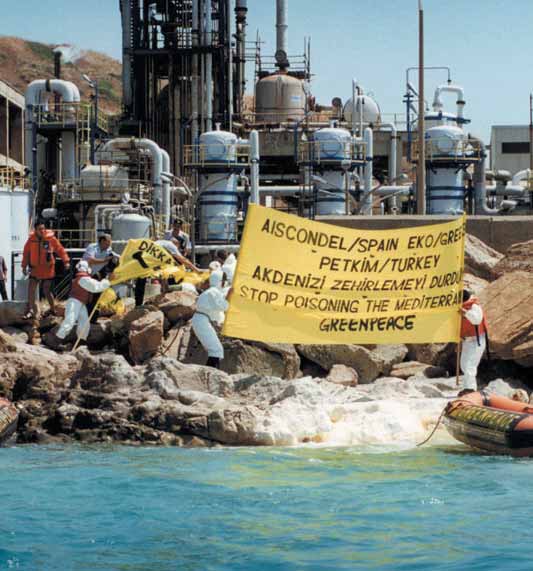
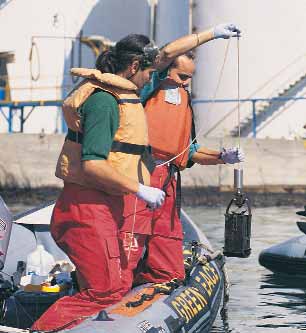
A Lebanese lung specialist, a worker in the Turkish petrochemical industry, and an
Israeli fisherman, all members of the Greenpeace delegation, came along to
Monaco to bear witness to the already disastrous effects of industrial pollution
on human health.
The delegates from Algeria, Greece, Spain, Syria and Slovenia promised to ratify
the Barcelona Convention and its Protocols with no further ado.
The Israeli delegate promised straight out that the amendments to the Convention
and the dumping and land-based sources protocols (which gave rise to the
famous SAP) would be ratified within the next three months.
And about time too! Six years after their adoption, these documents have still not
come into force for lack of ratification, with the very credibility of the Barcelona
Greenpeace International
Convention already having been seriously undermined.
Keizersgracht 176
Katia Kanas, Greenpeace
NL-1016 DW Amsterdam
tel 0031 20 523 62 04
* The Barcelona Convention's approach largely inspired the adoption in Stockholm last May
of the Global Convention for the elimination of POPs (persistent organic pollutants). This
fax 0031 20 523 62 00
convention, which has already been signed by 91 countries, provides for a ban on the crea-
e-mail katia.kanas@diala.greenpeace.org
tion and production of the same 12 priority POPs (DDT, aldrin, chlordane, dieldrin, endrin,
website www.greenpeace.org
heptachlor, mirex, toxaphene, PCBs, hexachlorobenzene, dioxins and furans), as well as the
production and use of any new substances having the characteristics of persistent organic
pollutants. Thus the Mediterranean riparian states are required to take account of these two
international commitments when drafting their own national legislation.
GREENPEACE
1 9
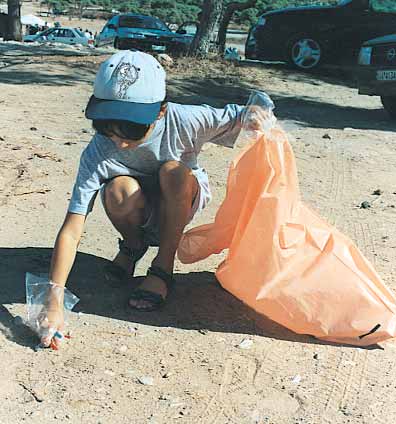
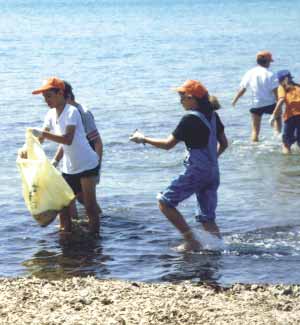
N G O s P L A N E T
> YOUTH TO TACKLE
ENVIRONMENTAL PROBLEMS
CLEAN-UP GREECE PLANS A MULTINATIONAL YOUTH SYMPOSIUM ON THE
ENVIRONMENT
NEXT MAY IN ATHENS, WITH SPECIAL FOCUS ON THE
MEDITERRANEAN REGION. THE EVENT IS INTENDED TO BRING TOGETHER YOUNG
DELEGATES FROM ENVIRONMENTAL YOUTH ORGANIZATIONS MAINLY FROM THE
MEDITERRANEAN ACTION PLAN (MAP) PARTNER COUNTRIES.
The objective of this youth symposium on the environment is to create a platform
for exchange between all the Mediterranean youth groups so as to strengthen
communication, build support and motivate future collaboration on environ-
mental concerns in the MAP partner countries.
Discussions on problems of particular concern to the Mediterranean as well as crea-
tive workshops for the sharing of ideas, information, strategies and solutions to
environmental issues faced by the different countries in the region, will be on the
agenda of the symposium.
The main focus of the group discussions will be how each organization is tackling and
overcoming particular environmental problems in its respective area of action.
In conjunction with Agenda 21 of the United Nations, topics relating to decision-making
and the implementation of long-term sustainable programs will be highlighted.
The agenda will also include a beach clean-up and, in order to circumvent the language
barrier of this multinational event, the participants will have the opportunity to
express their views, thoughts and feelings in several non-verbal activities.
A mime theatre production, a photographic competition as well as an exhibition of
charcoal sketches and watercolour artwork, produced by the participants, will
be proposed to the delegates.
The youth symposium is to be part of the "Clean-Up the Mediterranean" Day, and
will be incorporated in Clean-Up Greece's Eco Festival.
Clean-Up Greece is a Greece-based environmental association whose main purpose
is to raise public awareness towards the country's environmental issues.
Clean-Up Greece
Every year, in May, Clean-Up Greece organises an "Eco Festival", an environmen-
Environmental Organisation
tal and cultural event, bringing together schools, businesses, organizations and
30, Trias Street
the general public, to involve them in a wide range of activities geared to pro-
GR-11257 Athens
moting environmental consciousness and responsibility.
tel 0030 10 88 12 440
fax 0030 10 82 13 525
Beginning on May 5th, which is European Cultural Day, the "Eco Festival" has an
e-mail desk@cleanupgreece.org.gr
extensive programme of events during the entire month of May. It closes on June
website www.cleanupgreece.org.gr
5th with the celebration of World Environmental Day.
Photene Kalpakioti, Clean-Up Greece
2 0
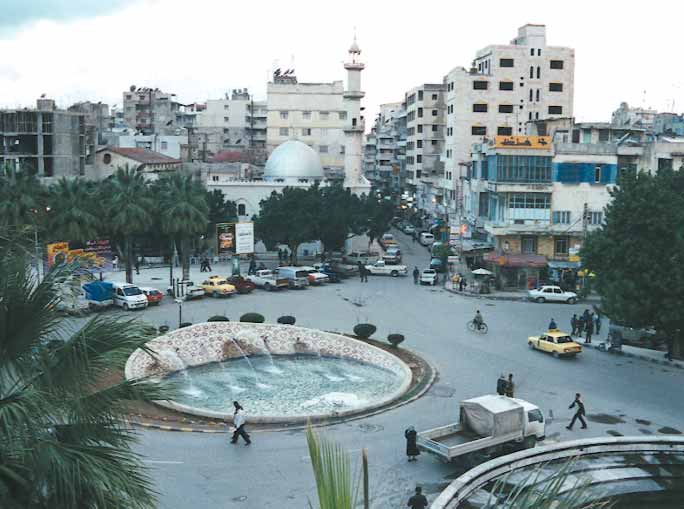
T H E A R A B E N V I R O N M E N T D A Y I N S Y R I A
> THE EARTH...
WE DO NOT INHERIT IT,.. WE BORROW IT
Environmental
festivals and carnivals;
beach and river
cleaning-up activities;
art, audiovisuals
and book exhibitions;
children paintings;
lectures and awards,
with a wide involvement
of youth.
http://www.shunya.net
Lattakia, the main Syrian sea- He also stressed that the Medi- of the importance that the Arab coun-
port on the Mediterranean, wit-
terranean, which witnessed great cul-
tries give to the safety of the environ-
nessed the main events that
tures and civilisations, such as the
ment as an irreversible undertaken.
marked in Syria the celebrations of the
Egyptian, the Greek, the Roman, the
The third good reason is that the
2001 Arab Environment Day, on 14th
Byzantine, and the Arab, "is facing
MAP is sharing these celebrations in
October, organised in a joint venture
heavy pressures from human activities
Syria, a great partner in the collective
between the public and the private sec-
related to the uncontrolled and un-
Mediterranean environmental venture.
tors and NGOs, with a strong participa-
planned development".
A partner that has succeeded, in quite
tion of youth organisations.
On his turn, Lucien Chabason, Co-
a short period of time, to gradually but
National and regional personalities
ordinator of the Mediterranean Action
surely put the various environmental
participated in the celebrations, held
Plan (MAP), addressed the celebrations
concerns among the high priorities of
under the auspices of the President of
underlining that today is a special
its dynamic development process".
Syria, Bashar Al-Assad.
occasion for the MAP, for three good
Chabason also stressed that regio-
In his address, the Syrian Minister
reasons: "One, because the MAP is
nal co-operation is therefore a key fac-
of State for Environment, Farouk Adli,
actively sharing with you the celebra-
tor in all efforts aimed at alleviating
recalled that the slogan of the Arab
tions of the Arab Environment Day, an
the environment of the heavy pres-
Environment Day is: "Let's Work
event that involves as many as one sig-
sures. He also underlined the success-
Together for the Protection of the En-
nificant third of the Contracting
ful action undertaken by Syria in the
vironment".
Parties to the Barcelona Convention,
field of protecting the environment
The Minister called upon all Arab
Two, because the MAP can witness
while promoting sustainable develop-
countries, at the institutional and po-
today that, through these celebrations,
ment and expressed full hope and con-
pular levels, to work hand in hand to
this important part of the Mediterra-
fidence that Syria will further con-
protect the earth with belief in the say-
nean region has been keen about cele-
tribute to the cleaning up and protec-
ing: "We don't inherit the Earth from
brating its Environment Day in spite of
tion of our Mediterranean region for
our grandfathers. But we borrow it
the latest developments in the interna-
the sake of present and future genera-
from our children".
tional scenario. A strong testimony, this,
tions.
2 1
T H E K I O S K
> EIGHT NATIONAL MIRRORS
> State of the environment and sustainable development in MAP countries
> Albania
> Bosnia & Herzegovina
Albania, Bosnia & Herzegovina, Egypt, Greece, Lebanon,
however interesting mosaic of relations between environment
Malta, Slovenia and Syria have been the first MAP countries
and sustainable development in the concerned country and
to present their latest state of the environment and sustain-
each of its components.
able development, in the form of national publications follow-
The national publications are addressed to all actors in all
ing an initiative by the Mediterranean Action Plan.
areas and at all levels: being all of us part of the problem, we
Other MAP countries, such as Algeria, Croatia, Morocco,
should all be part of the solution as well.
Libya, Tunisia and Turkey, are expected to come out soon with
They are also a further step towards the implementation of
their respective publications.
the various activities geared at promoting wide public aware-
These national publications have a same preface stating
ness on environment and development issues at the national
their intention to be a mirror reflecting the rather complex
and local levels. More specifically, they represent one of the
> Lebanon
> Malta
2 4
T H E K I O S K
> Egypt
> Greece
key activities in this regard, approved by the 20
cations has been prepared and published by the concerned
Mediterranean countries that, together with the EU, consti-
national authorities in the Contracting Parties.
tute the Contracting Parties to the Barcelona Convention.
No wonder then that they come out as a joint initiative,
A Convention launched over one fourth of a century ago,
incited by the MAP and supported by it, aimed at backing the
through the Mediterranean Action Plan, as a concrete, effi-
continuous efforts undertaken by the respective national
cient means to protect the Mediterranean from all sorts of pol-
authority towards the full integration of the environment and
lution and degradation.
the sustainable development issues.
Being as well among the major activities boosted by the
All the publications were printed in the respective national lan-
Mediterranean Commission on Sustainable Development in the
guage, in addition to English and, in some cases, also French.
field of information and public awareness, this series of publi-
e-mail info@unepmap.gr
> Slovenia
> Syria
2 5
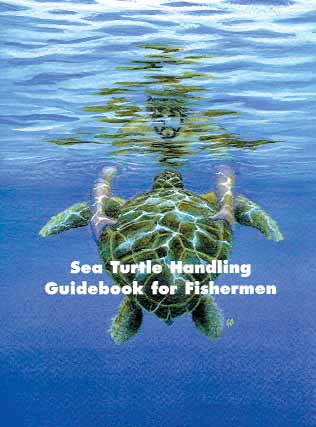
T H E K I O S K
> A SELECTION OF PUBLICATIONS
for other publications, please check MAP's and RACs' websites
> MCSD Synthesis of the Strategic Review
> Urbanisation in the Mediterranean
The Mediterranean
The quantitative and
Commission on Sus-
qualitative population
tainable Development
distribution in the Medi-
(MCSD) has published
terranean countries and
the Synthesis of its
their coastal areas are of
Strategic Review, in
considerable importance
English and French
to sustainable develop-
(the Arabic edition is
ment. Being at the same
under printing).
time cause and effect of
The Synthesis pre-
ongoing mutations in to-
sents a brief, but de-
day's societies, urbani-
tailed analysis of the teething problems and assesses how the
sation needs to be better
measures agreed upon by the Mediterranean community
known, better analysed
have effectively been implemented. While underlining the
and better understood.
fact the environmental policies still have too little an impact
In this publication, Blue Plan offers an in depth analysis of
on development policies, the Strategic Review lays the
the status of Urbanisation in the Mediterranean from 1950 to
ground for the forthcoming sustainable development stra-
1995, based on the works carried out by François Moriconi-
tegy in the region.
Ebrard, designer and creator of the "Géopolis" data bank.
e-mail mcsd@unepmap.gr
e-mail planbleu@planbleu.org
> Sea Turtles Guidebook for Fishermen
> The MAP Technical Reports Series
This "Sea Turtle
Handling Guidebook for
Fishermen" offers indi-
cations, mainly to fisher-
men, aimed at prevent-
ing unnecessary turtle
deaths.
The publication in-
tends to be an easy
manual, proving simple
procedures on how to
handle marine turtles
caught in a fishing net
or hooked.
It also includes general information about the biology of
Two new MTS have been published:
marine turtles.
> MTS #134: MAP CAMP Project "Israel" in English.
The guidebook is now available in English. The Arabic,
> MTS #135: Programme d'aménagement côtier (PAC)
French and Spanish versions are under preparation.
de la "Zone côtière de Sfax" in French.
e-mail car-asp@rac-spa.org.tn
e-mail library@unepmap.gr
2 6
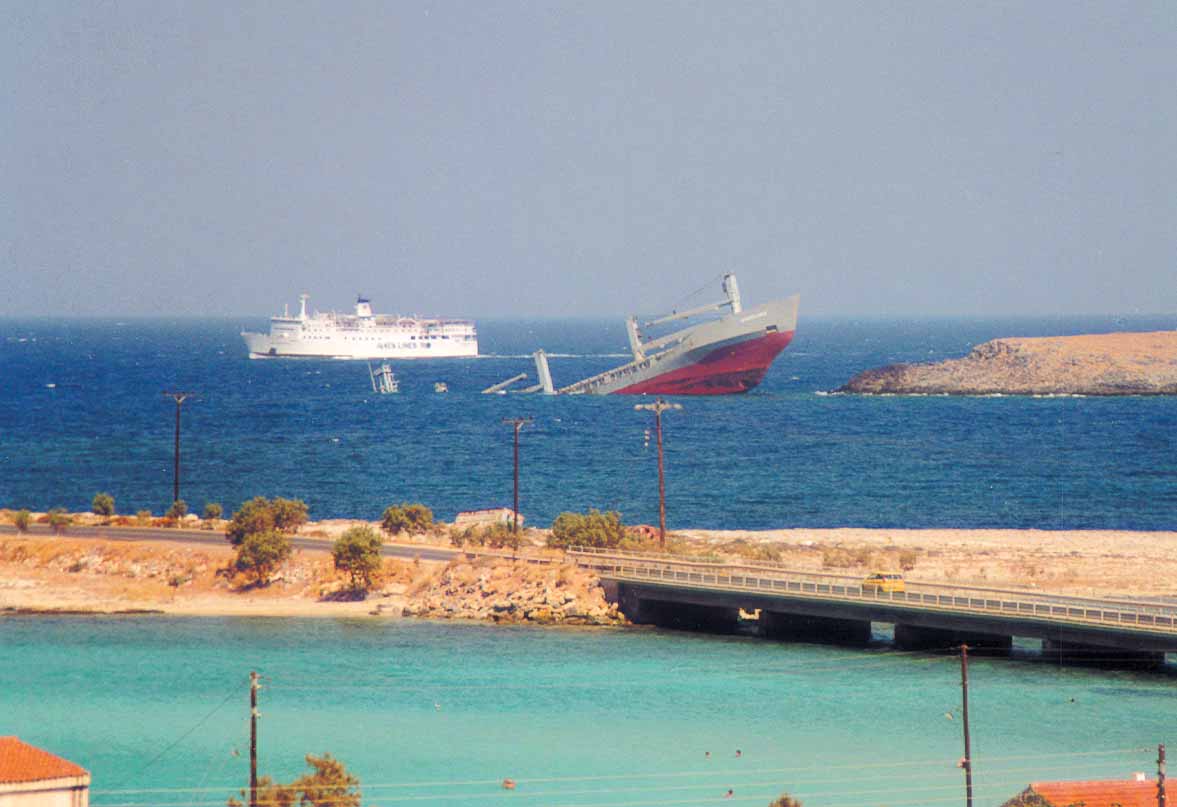
T H E L A S T P A G E
{ PHOTO OF THE ISSUE }
SOMEWHERE IN THE MEDITERRANEAN...
For over one year now, this half-sunken ship could be photographed by anybody, from any angle:
from the deck of your cruise, from the window of your hotel, from your car, from the beach...
MAP
{ COMING UP... }
MEDITERRANEAN INITIATIVE TO PREVENT SHIP ACCIDENTS AND OIL POLLUTION!
The MAP takes the lead, again. In one day, the 25th of January 2002, Ministers and Senior Officials from 15 coun-
tries and the European Community signed, in Malta, the most advanced legal instrument aimed at preventing
ship accidents and oil pollution.
This is the "Protocol concerning Co-operation in Preventing Pollution from Ships and, in cases of Emergency,
Combating Pollution of the Mediterranean Sea".
A Protocol made ready a mere two years after the "Erika" oil tanker accident that led to the dumping, in the sea,
of up to 20,000 tonnes of oil, two thirds of the total cargo.
Dear Robert Easton Pickering, for the first time in seven years, the MAP family missed your efficiency and
THANK
your friendship, in our big events. You were one of our most solid pillars, we could rely upon your impeccable
YOU,
drafting, translations, revisions, your commitment, your advice, your patience and, above all, your amiability.
BOB!..
Our most sincere sympathy to your family. And our deepest gratitude, dear Bob. May your soul rest in peace!