> BUREAU URGES RATIFICATION BEFORE WORLD SUMMIT
> WHAT IS ALL THIS AKAMAS ABOUT!
> THE CONTROVERSY
> LAND-BASED ACTIVITIES:
MEDITERRANEAN COUNTRIES, PREPARED TO REDUCE POLLUTION
> CLEANING UP THE MEDITERRANEAN... QUICKLY!..
> DRAWING LESSONS FROM "ERIKA":
NEW EMERGENCY PROTOCOL, READY FOR SIGNATURE
> FREE TRADE: A DOUBLE-EDGED SWORD
> URBAN MANAGEMENT, UNDER DEBATE... ONCE MORE
> INDUSTRY AND SUSTAINABLE DEVELOPMENT, "HAND IN HAND"
> HARMONISED IMPLEMENTATION OF CBD AND SPA PROTOCOL
> MOTHER EARTH HAS A NEW CENTRE FOR ENVIRONMENTAL RESEARCH AND EDUCATION
> A SELECTION OF PUBLICATIONS


C O N T E N T S
> IN THIS ISSUE
T H E M A P M A G A Z I N E
#44 | 2001
CYPRUS MEETING
EDITOR
> BUREAU URGES RATIFICATION BEFORE WORLD SUMMIT
Baher Kamal
....................................1
baher@unepmap.gr
INSIGHT
AUTHORS
> WHAT IS ALL THIS AKAMAS ABOUT! ............................................................................... 2
Andreas Demetropoulos
> THE CONTROVERSY ................................................................................................................... 4
Fouad Abousamra
Esther Monfá
Chedly Rais
THE SAP
Vito Cistulli
> LAND-BASED ACTIVITIES:
Neven Stipica
MEDITERRANEAN COUNTRIES, PREPARED TO REDUCE POLLUTION ............. 6
Gerard Pierrat
Maria Caparis
THE SAP / GEF PROJECT
Sergio Illuminato
> CLEANING UP THE MEDITERRANEAN... QUICKLY!.. ................................................ 8
CREATIVE
/fad.hatz
MARITIME ACTIVITIES
fadhatz@nerve.com
> DRAWING LESSONS FROM "ERIKA":
NEW EMERGENCY PROTOCOL, READY FOR SIGNATURE
PRINTER
......................................10
Damiano T.
MCSD
ISSN 1105-4034
> FREE TRADE: A DOUBLE-EDGED SWORD ...................................................................12
MCSD
MedWaves is published by
> URBAN MANAGEMENT, UNDER DEBATE... ONCE MORE
the Coordinating Unit of
......................................13
the Mediterranean Action Plan
in Arabic, English and French.
It is an informal source of information
MCSD
and it does not necessarily reflect
> INDUSTRY AND SUSTAINABLE DEVELOPMENT, "HAND IN HAND"
the official point of view of MAP or UNEP.
................14
Contents, except for pictures,
may be reproduced without permission
BIOLOGICAL DIVERSITY
and only for non-commercial use.
Credit to the source, however, is required.
> HARMONISED IMPLEMENTATION OF CBD AND SPA PROTOCOL .......................15
The publisher would appreciate
receiving a copy of any publication
that uses MedWaves'
GAIA
news, articles and interviews.
> MOTHER EARTH HAS A NEW CENTRE
The designation of geographical entities
and the presentation of the material
FOR ENVIRONMENTAL RESEARCH AND EDUCATION .............................................16
do not imply the expression of any opinion
whatsoever on the part of the publisher
concerning the legal status of any country,
THE KIOSK
territory or area, of its authorities,
frontiers or boundaries.
> A SELECTION OF PUBLICATIONS ......................................................................................19
> COMING UP ................................................................................................ inside backcover
C O V E R P H O T O
UNITED NATIONS ENVIRONMENT PROGRAMME
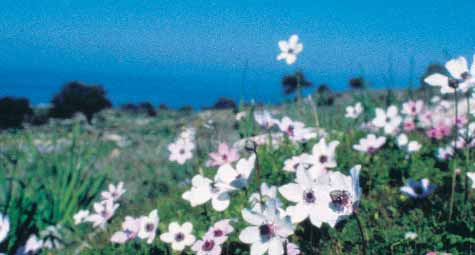
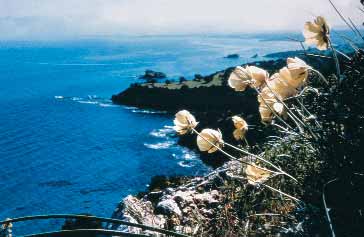
OLEANDER FLOWERS IN AKAMAS, CYPRUS, IN JUNE
MEDITERRANEAN ACTION PLAN
by ANDREAS DEMETROPOULOS
C Y P R U S M E E T I N G
> BUREAU URGES RATIFICATION
BEFORE WORLD SUMMIT
In Nicosia, ministers and senior officials from six Contracting Parties exhort MAP
to participate in Johannesburg with its updated Legal System in force.
M inisters and senior offi- Barcelona Convention (20 Mediterra- New classification of partners
cials from Cyprus, France,
nean nations and the European Union).
As for the inclusion of new MAP
Libya, Malta and Syria,
partners and the retention of old ones,
members of the Bureau of the
The Emergency Protocol:
the Bureau approved the proposal of the
Contracting Parties to the Barcelona
new rather than amended
Secretariat to adopt a new classification
Convention, stressed that it is "extre-
As for the Emergency Protocol, one
of partners, i.e. inter-governmental
mely important" for the Mediterranean
of a total of six MAP Protocols, the
organisations, local authorities, socio-
Action Plan to participate in the 2002
Bureau noted with satisfaction the
economic actors, NGOs, study centres
World Summit with its updated legal
results of the recent meeting of legal
and universities.
system (Convention and Protocols) in
experts in Monaco, which led to a con-
The Bureau endorsed the intention
force.
sensus on a text that represents con-
expressed by the Secretariat to submit
In its last meeting in Nicosia, from 3
siderable progress.
to the Monaco Meeting a strategy docu-
to 5 May, the Bureau, which is a rotating
In view of the very extensive revi-
ment on the future of MAP taking into
body composed by representatives of
sion of the text, the Bureau reaffirmed
consideration both its track record and
six Contracting Parties, urged several
its preference for a "new Protocol"
the regional and international context.
Mediterranean countries that have not
rather than an "amended Protocol";
yet done so to aim at finalising the rati-
this is expected to ease further the
Preparing for Johannesburg
fication process.
process of entry into force. This recom-
Last but not least, the Bureau noted
mendation shall be submitted to the
the progress made in the preparation of
France accepts the amendments
Contracting Parties Meeting in Monaco
the World Summit, as well as the prelimi-
In this regard, the Bureau noted with
in November.
nary work envisaged by the Secretariat as
satisfaction the announcement by the
The Plenipotentiaries meeting
a contribution to the preparation.
representative of France that his coun-
mandated to adopt the Emergency
It endorsed the work-plan and called
try has accepted / ratified the amend-
Protocol will take place in Malta in
on all Contracting Parties and MAP part-
ments to the Barcelona Convention and
January 2002.
ners to involve themselves fully in this
two of its Protocols, as well as the new
The Bureau also discussed the use
process.
SPA Protocol.
of the Arabic language in key MAP
The next Bureau meeting will take
The Bureau also reviewed the
meetings, as well as a proposal by
place on 14 November, opening day of
progress made in the ratification process
Turkey for the setting up of a new
the 12th meeting of the Contracting
in several Contracting Parties to the
Regional Activity Centre.
Parties in Monaco.
On the occasion of the Nicosia meeting, members of the Bureau visited the Akamas Peninsula,
an area of exceptional biodiversity value, but also focus of much controversy.
> see pages 2 to 5 <
1
> WHAT IS ALL THIS AKAMAS ABOUT!
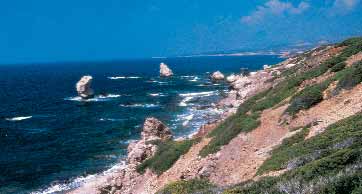
The Akamas peninsula is the last extensive coastal area in Cyprus,
which has remained more or less untouched by man, a reminder
of the island's original identity.
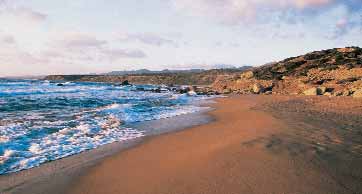
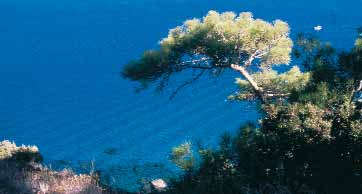
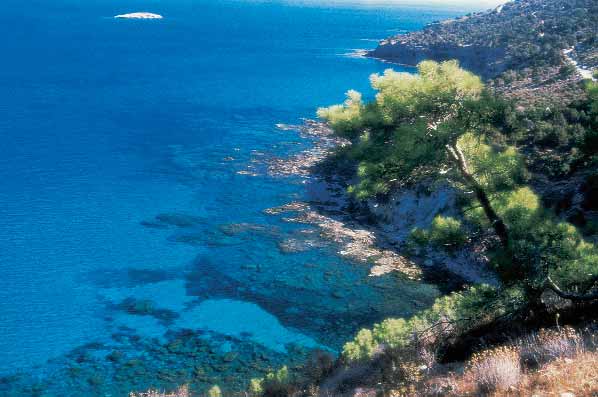
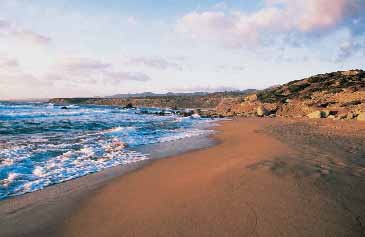
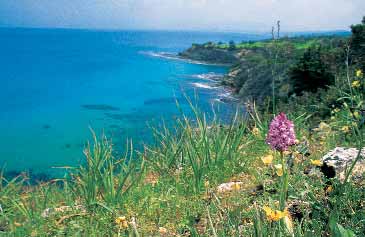
A kamas' coastline is pristine
and diverse varying from
surf-swept beaches and
cliffs, on the west coast, to calm azure
crystal-clear waters fringing a similarly
diverse coastline on the north coast.
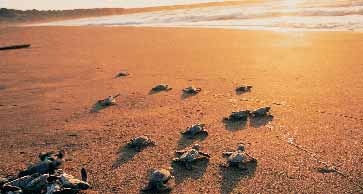
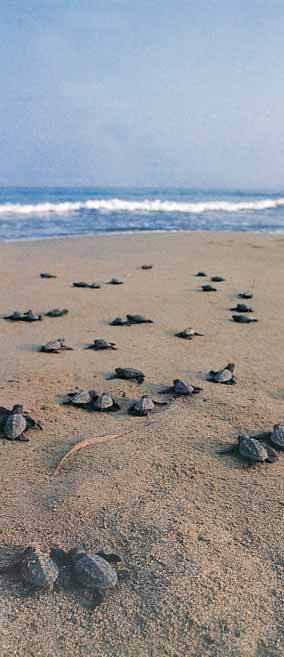
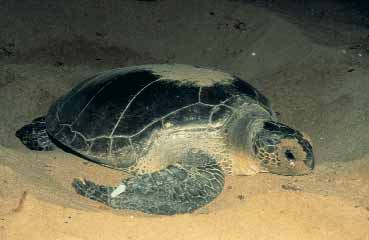
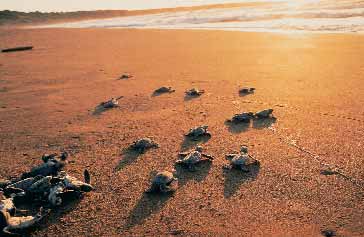
Green and Loggerhead turtles nest on
its beaches and the occasional Monk
Seal is still sighted there. The diversity
of wildlife in this area ranks it as of
outstanding ecological importance for
the whole of the Mediterranean.
The Akamas hills reach about 670
meters in height. The geology of the
area and its morphology form a com-
plex mosaic with a multitude of habi-
A. DEMETROPOULOS
tats. Impressive sea cliffs and spectac-
ular gorges are characteristic of the
found. Much of the area is state owned
Species such as the endemic Cyprus
area.
forest land. Lack of water and the inac-
white-toothed shrew, hedgehogs,
Lichen-covered gigantic rocks dom-
cessibility of the area spared it of the
lizards and snakes can be found here.
inate stark and spectacular landscapes.
fate of most of the coastline of the
Caves shelter several species of bats
Its vegetation is of the Mediterranean
island, where agriculture and urban
including the fruit bat, which has
drought (and goat) resistant Maquis
and tourism development have left lit-
Cyprus as its northern limit of distribu-
shrub forests, of junipers, lentiscs and
tle of the original fauna and flora.
tion. The floral diversity of the area
wild olive, with rock-roses and, in
guarantees the survival of many
places, with a thin cover of pine trees.
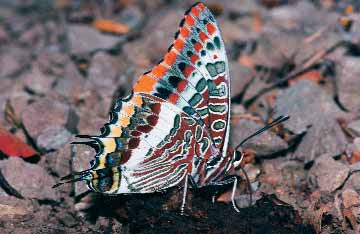
Most of the fauna is here
species of butterfly such as the endem-
In the more humid areas strawberry
The fauna of Akamas is rich and
ic Paphos Blue, the Cyprus Meadow
trees, oleanders and myrtle can be
includes most of the Cypriot fauna.
Brown and the Cyprus Grayling.
A. DEMETROPOULOS
A. DEMETROPOULOS
A. DEMETROPOULOS
2
I N S I G H T
Freshwater crabs and many other
making. Detailed studies have been
species depend on the precious springs
made, culminating in the World Bank's
of the area. On sand-dunes, on the west
report "Conservation Management Plan
coast, the spectacular Sand Daffodil
for the Akamas Peninsula", which was
and the sand-dwelling Spiny-Footed
funded by the European Union. This
Lizard abound.
aims at the conservation of the area
On the much coveted, surf-swept
--safeguarding its biodiversity and eco-
beaches of Lara and Toxeftra, Green
logical integrity-- whilst securing a sus-
and Loggerhead turtles nest. The Green
tainable future for the area's population.
turtle is now in imminent danger of
Conflicts between environmental-
extinction in the Mediterranean and
ists and a melange of developers and
now nests only on a handful of beach-
local communities with aspirations to
es in Cyprus and in Turkey. They come
coastal tourism stretch to well over a
here in summer from many parts of the
decade. Among many deliberations
Mediterranean to lay their eggs.
and much controversy on the national
A turtle conservation project, the
level, the Akamas issue has become the
oldest in the Mediterranean, has been
focal point of supranational organisa-
operating since 1978 in the Lara /
tions, including the European Com-
Toxeftra Reserve, but covering all nest-
mission, which is intend on aligning
ing beaches outside the reserve also.
Cyprus with the environmental Acquis
Through it eggs are protected ---from
Communautaire, during the progress
foxes and humans-- nesting is moni-
of Cyprus towards accession to the
tored, and turtles are tagged; in 1989
European Union.
the reserve was legally set up with
Also, the Council of Europe's
management measures foreseeing that
Standing Committee on the Convention
the beaches remain turtle domain. In
on the Conservation of European
the past Green turtles nested on other
A. DEMETROPOULOS
Wildlife and Natural Habitats -- which
beaches also, which are now well-
was ratified by Cyprus-- opened a file
known tourist beaches.
sponsored by MAP (SPA/RAC). Many
against Cyprus for non-compliance,
Since 1989, courses at the Lara tur-
have since started turtle conservation
with very detailed recommendations
tle station, in turtle conservation tech-
activities in their countries.
for the conservation of Akamas.
niques and beach management are
The future of Akamas and its biodi-
A N D R E A S D E M E T R O P O U L O S
attended by Mediterranean scientists,
versity now pivots on political decision-
M A R I N E B I O L O G I S T
A. DEMETROPOULOS
A. DEMETROPOULOS
A. DEMETROPOULOS
3
> WHAT IS ALL THIS AKAMAS ABOUT!
THE CONTROVERSY
> THIS IS WHAT THE GOVERNMENT THINKS...
The Government's major goal for the area is its sustainable
nesting beaches of "Lara" and "Toxeftra", the seagrass communities,
management, that is to secure, both the protection of the environ-
the gorges, etc.), are already protected by legislation in place (e.g.
ment as well as the socio-economic development of the rural
Fisheries, Forestry, Town and Country Planning, Foreshore
communities in the area.
Protection, etc.).
With this goal in mind, after a new round of meetings involving all
As for all other areas in Cyprus, the Government will fully respect
major stakeholders (including the Federation of Environmental and
in its decision-making process the goals of the Habitats and the
Ecological Organisations of Cyprus), a Committee of Ministers is
Environmental Impact Assessment directives of the European Union.
currently in the process of finalising its proposals for a decision by
The commitment to the Habitats Directive, is evidenced, both by the
the Council of Ministers, during 2001. The policy to be adopted will not
fact that a relevant "LIFE"-financed project is currently being imple-
compromise, neither the integrity of the most important and fragile
mented, as well as by the number of habitats and species already pro-
parts of the environment, nor the legitimate aspirations of its inhab-
posed for inclusion in the directive's annexes. It is noted, however,
itants for a better future.
that, as the experience from similar exercises in all EU member states
It should be noted that, the ecological and landscape assessment
has illustrated, the indispensable ingredient for the successful
of the area, has clearly established the mosaic of conditions pre-
enforcement of any decision concerning "Nature 2000" sites, is to
vailing in it, which range from highly important environmental sites
secure the support of the local communities affected. As far as the
to developed and development areas, to ordinary agricultural land-
requirements under the Environmental Impact Assessment directive
scapes. It is also noted that, the most sensitive sites of the Akamas
are concerned, a new Law on Environmental Impact Assessment was
Peninsula (the forest and the coastal strip, which includes the turtle
passed by the House of Representatives on April 12, 2001.
ENVIRONMENT SERVICE, MINISTRY OF AGRICULTURE, NATURAL RESOURCES AND ENVIRONMENT, CYPRUS
CY-1411 Nicosia tel 0035 7 2 30 38 83 fax 0035 7 2 77 49 45 e-mail rocperiv@cytanet.com.cy
4
I N S I G H T
> ...AND THIS IS WHAT THE NON-GOVERNMENTAL ORGANISATIONS SAY...
The Akamas peninsula is an area of exceptional ecological and
2. "Mild tourist development" at an unspecified distance from Lara
aesthetic value for the Mediterranean. The "World Bank Management
and eliminating existing buffer zones.
Plan" for its conservation was commissioned by the Government and
3. Retaining the tourist zones in the area and creating a new, 100-
financed by the European Commission. Government inaction to imple-
acre, tourist zone between the villages and Lara.
A. DEMETROPOULOS
ment this plan is a result of pressures from developers often hiding
4. Tourism development at Fontana Amoroza in Akamas, belonging to
behind the more legitimate aspirations of local communities, which
one big landowner and aspiring developer.
are indeed in need of incentives to develop in a way that conserves the
These, if implemented, will lead to a mockery of any conser-
environment and gives them a respectable standard of living.
vation moves the Government may make, in attempting to pacify the
Misinformation and in some cases encouragement by developers, has
European Commission's voiced fears of the loss of a such a precious
led the communities to oppose the plan. It in fact foresees their sus-
natural heritage, and are contrary to European Union's Habitat
tainable development and the conservation of Akamas, something the
Directive, and the Bern Convention's Recommendation No.63 of
environmentalists of Cyprus as well as the House of Parliament sup-
1997.
port, contrary to coastal development, which is the aim of developers.
The more recent developments include new licenses to build
Government decisions in 2000 by-pass the recommendations of
hotels on the northern coast of Akamas, and for villas on the west
the "World Bank Management Plan", aiming at:
coast, next to Toxeftra, a main Green turtle nesting beach, while an
1. Turning one of the main Green turtle beaches at Lara into a public
application for a big hotel in the same area is also being examined.
beach, with a tarmac road to the villages, thus opening the way for
In the meantime, Government leaves everybody in the dark as to
the developers.
its next move.
FEDERATION OF ENVIRONMENTAL AND ECOLOGICAL ORGANISATIONS OF CYPRUS
4, Liperti Street | Aglanjia | CY-2121 Nicosia tel 0035 7 2 51 13 97 fax 0035 7 2 42 39 63 e-mail theodosioua@hotmail.com
5
> LAND-BASED ACTIVITIES:
MEDITERRANEAN COUNTRIES, PREPARED TO REDUCE
The Mediterranean countries show readiness to enter a new era in their quest
for a healthier marine environment by moving a step further, from the adoption
of recommendations to the actual introduction of an operational methodology,
to reduce pollution from land-based sources.
T his has been the key outcome The document details all the rec- The SAP and the land-based
of the MED POL Coordi-
ommended institutional arrange-
pollutants
nators' meeting in Venice,
ments, technical information and
In 1997, the Contracting Parties to
Italy. The Venice meeting, which took
instructions for elimination and con-
the Barcelona Convention adopted the
place from 28 to 31 May, decided to
trol concerning major issues and
SAP, a programme that embodies region-
recommend to the Contracting Parties
sources of pollution. Most importantly,
al and national activities to address land-
to the Barcelona Convention the adop-
it details how the countries are to carry
based pollution. The key land-based
tion of the proposed operational strate-
out and track specific pollution reduc-
activities addressed are linked to the
gy for the implementation of the
tions, based upon a Baseline Budget for
urban environment, focusing on munic-
Strategic Action Programme (SAP).
the year 2003. The document covers
ipal wastewater treatment and disposal,
The Conference of the Contracting
the varying degrees of institutional
urban solid waste disposal and activities
Parties (20 Mediterranean countries
and organizational implications for the
contributing to air pollution from
and the European Commission) will
countries implementing it.
mobile sources.
take place in Monaco in November.
It is expected that the countries
They are also linked to industrial
Before its approval in Venice, this
will apply a flexible and creative
development, targeting those activities
proposed strategy ---formulated by
approach to the strategy introduced in
responsible for the release of toxic per-
MED POL in a guiding operational doc-
the operational document, depending
sistent and bio-accumulative sub-
ument-- was discussed in Catania,
on their particular national conditions,
stances into the marine environment,
Italy, from 28 to 30 March 2001 during
at the same time respecting the region-
giving special attention to persistent
a MED POL Consultation meeting to
al perspective of the SAP. The techni-
organic pollutants.
review the operational features of the
cal features of the document require a
Also addressed are the release of
SAP.
more rigid approach.
harmful concentrations of nutrients into
> EGYPT, FIRST TO LAUNCH A PILOT PROJECT FOR THE IMPLEMENTATION OF THE PRTR
A Pollutant Release and Transfer Register (PRTR) is an envi-
when setting up national and local environmental management
ronmental database or inventory of potentially harmful sub-
systems.
stances released or transferred to air, water and soil by indus-
In the Mediterranean, a first pilot PRTR project is being
tries, the agricultural and transport sector, as well as wastes
launched in Egypt, by the Alexandria Branch of the Egyptian
transported off-site for treatment and / or disposal.
Environmental Affairs Authority (EEAA) in co-operation with the
It allows governments and local authorities to track the gen-
ICS / United Nations Industrial Development Organisation (UNIDO),
eration, release and fate of various pollutants, including industri-
based in Italy. Six industrial sites in the Alexandria district, local
al chemical pollutants, and provides them with an important tool
NGOs and the media are contributing to the project.
6
T H E S A P
POLLUTION
A. DEMETROPOULOS
the marine environment, the storage,
activities, the provision of support
ic National Action Plans to address pol-
transportation and disposal of radioac-
from the financial community and
lution from land-based activities, as
tive and hazardous wastes and activities
international donors as well as proce-
the follow-on from the adoption in
that contribute to the destruction of the
dures for monitoring, evaluation,
each country of all the targets and
coastline and coastal habitats.
reporting, public participation, feed-
activities of the nationally relevant
In addition to the time-scheduled
back and readjustment.
components of this Programme.
activities directly addressing pollu-
The SAP ultimately aims at incit-
tion, the SAP envisages the implemen-
ing, assisting and providing support for
F O U A D A B O U S A M R A
E N V I R O N M E N T A L C H E M I S T
tation of relevant capacity-building
the implementation of country specif-
M E D P O L P R O G R A M M E O F F I C E R
> THERE ARE NATIONAL POLICIES TO MANAGE SOLID WASTE ON THE COAST, BUT...
Most Mediterranean countries have a national policy for the
national and local authorities responsible. In addition, the authori-
management of solid waste in coastal areas. This is confirmed by a
ties often lack the relevant technical information on locating pro-
recent MED POL assessment of the State of the Art of Coastal Solid
perly landfill and dumping sites.
Waste Management in the Mediterranean. According to the same
To improve this situation, MED POL is preparing a set of guide-
report, the reason for the presence of solid waste --litter on the
lines with measures and suggestions for a better coordination of the
beach, floating objects including plastic material on the surface of
activities of the administrations involved as well as a technical
the sea and garbage sitting on the seabed-- is linked to a lack of
description of the impact on the marine environment of the different
proper management and coordination between the different
technologies used for the treatment and disposal of solid waste.
7
> CLEANING UP THE MEDITERRANEAN... QUICKLY!..
The Strategic Action
Programme (SAP)
covers regional
and national activities
to address
land-based pollution
focussing on
the urban environment,
identifying sources
of pollution,
defining the strategies
and measures needed,
and outlining targets,
deadlines and costs
for action.
The Global Environment
Facility (GEF) is now
helping speed up
the implementation
of this programme.
A. DEMETROPOULOS
M ajor shifts in facing pollu- Preparatory work for the regional Also to protect biodiversity
tion issues sprung from
SAP was undertaken with a Global
and marine and coastal
the need to do something,
Environment Facility (GEF) grant for
fauna and flora
quickly and effectively, about pollution
diagnosing the extent of transbound-
The project includes a number of
in the Mediterranean. In 1995 and 1996
ary pollution and listing the major pol-
activities both on the regional and the
the Mediterranean Action Plan and the
lution hot spots in the Mediterranean.
national level. In addition to activities
Barcelona legal system were rather rad-
In order to speed up the implemen-
aimed at the control of pollution, the
ically revised for this purpose.
tation of number of key activities fore-
project also aims at protecting bio-
The changes were also intended to
seen in the SAP, a new GEF project
diversity, focussing on the preparation
align them with the principles of the
"Determination of Priority Actions for
of a Strategic Action Plan for the pro-
Rio Summit.
the further Elaboration and Imple-
tection of marine and coastal fauna
The LBS Protocol, with its far-
mentation of the SAP for the Medi-
and flora.
reaching provisions, was amended in
terranean Sea" was prepared and
GEF is financing the project with
1996 but has still to enter into force.
approved.
about six million US dollars, and there
8
T H E S A P / G E F P R O J E C T
> THE KEY COMPONENTS OF THE GEF PROJECT FOCUS ON:
> Pollution hot spots. Pre-investment studies will be carried out
> National Action Plans. The preparation of these is considered to
for a selected number of hot spots.
be the final outcome of the project. Work and outputs of the proj-
> Regional co-operation will include the preparation and adoption
ect on hot spots, economic instruments, guidelines and other
of regional guidelines for a variety of activities such as; sewage
activities of the project and of course the regional SAP provi-
treatment and disposal; industrial wastewater treatment and
sions, are expected to guide the formulation of the National
disposal; application of Best Available Technologies and Best
action Plans.
Environmental Practices (BAT and BEP) in industries, etc. This
> Institutional aspects and assistance. It is foreseen that assis-
includes the preparation of regional plans for such activities as;
tance will be given to help national committees carry out their
collection and disposal of PCB waste; reduction of BOD by 50%;
task of preparing the National Action Plans. These are expected
reduction and management of hazardous waste, etc. These are of
course intended for implementation at the national level.
to bring all relevant actors together, including the public, in an
effort to effectively and smoothly prepare the NAPs, and pave the
> The holding of regional and national courses to improve compe-
way to their implementation.
tence at the national level in specific fields enabling the imple-
mentation of the SAP and the LBS protocol.
> Biodiversity. It is foreseen that a Strategic Action Plan for the
> The identification and testing, on a pilot scale, of economic and other
conservation of coastal and marine species and habitats will be
fiscal instruments and capacity building in the countries in their use.
prepared, to rank regional priorities and guide actions at the
> Encouraging public information and participation in national
national level. A number of priority actions are also foreseen at
consultations and activities, in an effort to reach consensus over
the national level. All work is foreseen to be undertaken in har-
the preparation and implementation of the National Action Plans
mony and complementarity with what some countries at least
to reduce pollution.
are doing under the Biodiversity Convention.
are contributions of about 900,000 US
be co-operating and benefiting from the
investment studies and advising
dollars from the Mediterranean trust
project in different ways and degrees.
accordingly, so as to ensure appropriate
fund and smaller contributions from
quality control in these activities.
other sources.
Responsibility, management,
The project implementation start-
The French GEF is also considering
execution and co-operation
ed in January 2001 and the first meet-
a contribution of about 1.6 million US
MAP has overall responsibility for
ings of the Inter-Agency Steering
dollars.
the management of the GEF Project.
Committee and the Co-ordinating
Counterpart contributions in kind are
In the execution of the project
Committee of the project have already
also expected from countries. Twelve of
MAP's Regional Activity Centres and
been held.
the twenty countries, which are contract-
MED POL will be involved as well as
A number of other activities and
ing parties to the Barcelona Convention,
WHO/EURO.
meetings have also already started in
are eligible for GEF financing.
The World Bank and METAP will
the RACs and MED POL.
It is, nonetheless, foreseen that all
also be co-operating in work on econom-
A N D R E A S D E M E T R O P O U L O S
countries, parties to the convention, will
ic instruments and in following the pre-
M A R I N E B I O L O G I S T
9
> DRAWING LESSONS FROM "ERIKA":
NEW EMERGENCY PROTOCOL, READY FOR SIGNATURE
The new draft of the Emergency Protocol, which upgrades the current
Mediterranean regional co-operation strategy on preparedness and response
in the cases of maritime accidents to include the prevention of pollution
from ships, is expected to be adopted and signed in January 2002 in Malta
by the Conference of Plenipotentiaries of the Contracting Parties.
T he new text was finalised The Monaco meeting was organised able role in the economy and trade, both
and approved by legal and
by the UNEP / Mediterranean Action
among the coastal States and between
technical experts from Medi-
Plan (MAP) with the participation of the
them and the rest of the world.
terranean countries and the European
International Maritime Organisation
The nature of maritime transport
Commission, representing the Con-
(IMO) and the Regional Marine Pollution
today is varied and involves the carriage
tracting Parties to the 1975 Barcelona
Emergency response Centre for the
of cargo such as dry and liquid bulk, box
Convention, during their meeting in
Mediterranean Sea (REMPEC).
cargo and passenger traffic.
Monaco from 2 to 6 April. Experts from
non-governmental organisations also
participated.
The proposed text aims at formulat-
ing a new Emergency Protocol to the
Barcelona Convention to replace the one
adopted in 1976, which has been focus-
ing mainly on Mediterranean regional
co-operation actions in the areas of pre-
paredness and response in the cases of
maritime accidents.
With this draft, and drawing lessons
REMPEC
from the "Erika" and other recent acci-
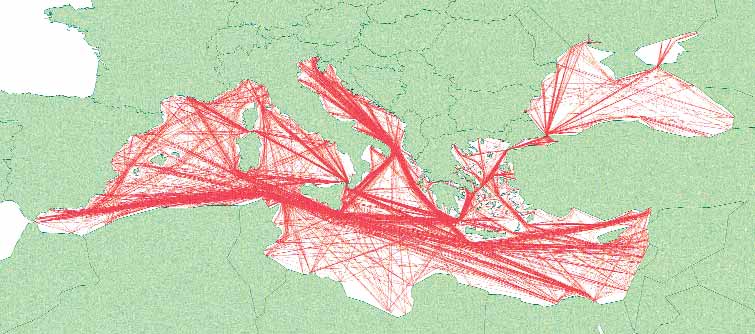
Shipping routes in the Mediterranean (Lavender, 2001)
dents, Mediterranean countries will be
in a position to deal with aspects of pre-
A tide-less seawater pool,
As a consequence, among the
vention such as, per example, port recep-
vulnerable to pollution
world's oceans, the density of merchant
tion facilities and environmental safety
The Mediterranean is a semi-
vessel traffic in the Mediterranean is
of maritime traffic.
enclosed basin, sometimes described as
particularly high.
They shall also develop their
a "tide-less seawater pool", with distinct
Although accidental marine pollu-
national capacity as regards the imple-
hydrological and ecological characteris-
tion is considered a global problem, the
mentation of those international con-
tics, which make it vulnerable to the
risk of a major accident needs also to be
ventions dealing with this matter and
effects of pollution. It has an extensive
viewed and addressed from a regional
to co-operate for their effective imple-
coastline (approx. 46,000 kms long) in
perspective since the risk can be greater
mentation.
relation to its water mass, when the var-
in some regions than in others. One such
The current Emergency Protocol has
ious archipelagic islands are included.
region is the Mediterranean Sea area.
been revised also in order to bring the
Pollution hazards from ships are
Traffic transiting straight through
text dealing with preparedness and
extremely critical to the environment
the Mediterranean Sea from the Atlantic
response to accidental marine pollution
and to related economic interests.
through the Straits of Gibraltar, from the
in line with some of the existing global
Maritime transport in the Medi-
Black Sea through the Bosphore, from
legal instruments.
terranean basin has played an irreplace-
the Red Sea through the Suez Canal,
1 0
M A R I T I M E A C T I V I T I E S
might have no direct economic value to
directed to the 305 ports scattered along
most likely that sea trade, and subse-
the Mediterranean ports, but from the
the basin's coastline, is also a contribu-
quently the pattern of maritime transport
point of view of accident potential, this
ting factor to the overall risk of acciden-
in the Mediterranean, will be influenced
traffic cannot be ignored.
tal marine pollution in the region.
by such factors as the relocation of
In terms of estimates of numbers of
industries, adjustments to production
vessels plying the Mediterranean Sea,
techniques and distribution processes,
the following have been reported:
efforts to ensure value-adding at source,
Approximately 30%
>> 2,000 merchant vessels of over 100
an integration of regional markets and an
GRT are at sea at any moment (250-
of the international
increase in environmental concern.
300 are oil tankers);
sea-borne trade volume
>> 200,000 merchant vessels of over
Activities of the oil
100 GRT cross the Mediterranean
originates or is directed
and gas sectors
annually.
to the Mediterranean Ports
In the oil sector for example, there is
Other maritime traffic which has a
no doubt that if future plans for up-
or passes through
bearing on the potential for accidents
grading and the development of new
are those vessels plying the "bottle-
the Mediterranean Sea
pipelines in the Middle and Near East
necks" of the Mediterranean:
come to fruition, these will alter crude oil
while it is estimated
>> Straits of Gibraltar estimated at
transport strategies in the Mediterra-
80,000 transits annually;
that around 50%
nean, in particular the pipelines linking
>> Suez Canal estimated at 15,051 tran-
the Red Sea and the Mediterranean and
of all goods carried at sea
sits (for 1995);
those linking the Caspian Sea to the Black
>> Dardanelle / Seas of Marmara,
are dangerous
and Mediterranean Seas.
Bosphorus complex estimated at 15
to some degree.
In the latter case, it is estimated that
ships per day in 1938 rising to 137
in the early part of the next century,
In addition,
ships per day in 1997, with at least
approximately 80 to 100 million mt of
one liquid-petroleum-gas carrier
it is also estimated
crude oil will be produced in the Caspian
passing through each week. To this
region.
that some 28%
must be added the urban com-
For the gas sector, in the future it is
muter traffic estimated at 1,300
of the world's sea-borne
anticipated that maritime shipments of
craft per day, carrying more than 1.5
liquid natural gas (LNG) from Algeria to
oil traffic transits
million people between Istanbul's
Spain will decrease as consideration is
European and Asian shores.
the Mediterranean.
given to supplying the gas via pipeline.
Another bottleneck of concern is the
However, it is anticipated that LNG
Strait of Boniface, where the traffic of
shipments from Algeria to Turkey will
laden oil tankers and of ships carrying
Furthermore, when assessing the
increase following the commission of
hazardous substances has increased by
local risk in port areas, there is a need to
an LNG reception terminal on Turkey's
40% since 1985.
keep in mind that most Mediterranean
Sea of Marmara in 1994 and the agree-
Merchant vessel traffic in the Medi-
port areas are characterized by the ab-
ment signed between Turkey and
terranean, either passing through the
sence of long approach channels and a
Algeria for the supply of 1.5 million mt
Mediterranean or originating from or
high urbanisation. In the future, it is
LNG per year, for 20 years.
REGIONAL MARINE POLLUTION EMERGENCY RESPONSE CENTRE FOR THE MEDITERRANEAN (REMPEC)
Île Manoel | MT-GZR 03 tel 0035 6 33 72 968 fax 0035 6 33 99 51 e-mail rempec@waldonet.net.mt website www.rempec.org
1 1
M C S D
> FREE TRADE:
A DOUBLE-EDGED SWORD
A number of policy
options aiming
at preventing
or aleviating the possible
harmful effects
on the environment
of the creation
of a Mediterranean
Free Trade Zone
between the EU
N. CHATZIGEORGAKIDIS
and 12 Southern and
Trade Tariffs as percentage of Budget Revenues (Source: WDI, 2000)
Eastern Mediterranean
The findings of the investigations
a. the extension of free trade to agri-
countries (SEMCs)
were discussed at a closing regional
cultural products and their possible
workshop, held in Montpellier and
adverse social and environmental
by the year 2010,
Mèze in October 2000, by the represen-
effects, particularly in remote areas
were discussed
tatives of the countries, international
and on traditional farming;
in an experts' meeting
organizations, and NGOs.
b. the capacity of the small and
in Sophia Antipolis,
On the whole, it was stressed that
medium enterprises (SMEs) to
France.
free trade can be viewed as a "double
internalise environmental costs
T
edged sword". On the one hand, free
and face up to increased competi-
he meeting, held from 12 to
trade may have a positive effect on
tion from abroad; and
13 July, was preparatory to
environmental conservation in SEMCs,
c. the "westernisation" of consump-
the next session of the Medi-
through the set up of environmental
tion patterns, which is based on
terranean Commission on Sustainable
institutions and regulations, the
energy-intensive goods and is
Development (MCSD), which was set
spread of cleaner technologies, and
likely to intensify the problems
up in 1996 to bridge the gap between
through conforming with the environ-
of waste treatment and recycling,
the need for sustainable development
mental standards of the EU. On the
car traffic, and air pollution.
and its realization in the region, ranked
other hand, free trade may spark-off a
3. institutional level, where the institu-
free trade and the environment in the
number of negative socio-economic
tional and financial arrangements of
Euro-Mediterranean context among its
and environmental trends at the:
the Euro-Mediterranean Partnership
top priorities.
1. macro-economic level, where the
and of the association agreements in
An ad hoc working group chaired by
major risks include an increase in
particular, were considered inade-
France and Lebanon, with the scientific
budget deficits as a result of the
quate with respect to the expected
backing of the "Blue Plan", MAP's Regional
dismantling of trade duties by
socio-economic and environmental
Activity Centre, was entrusted with the
SEMCs, weak foreign direct invest-
implications of trade liberalization.
preparation of an activity programme that
ments, trade balance deficits, and a
was adopted by the MCSD and imple-
widening of the gap in revenues;
V I T O C I S T U L L I
E N V I R O N M E N T A L E C O N O M I S T
mented in the biennium 1999/2000.
2. sector level, the major concerns being:
B L U E P L A N P R O G R A M M E O F F I C E R
BLUE PLAN FOR THE MEDITERRANEAN / REGIONAL ACTIVITY CENTRE (BP/RAC)
15, rue Beethoven | Sophia-Antipolis | FR-06560 Valbonne tel 0033 4 92 38 71 30 fax 0033 4 92 38 71 31 e-mail planbleu@planbleu.org website www.planbleu.org
1 2
M C S D
> URBAN MANAGEMENT,
UNDER DEBATE... ONCE MORE
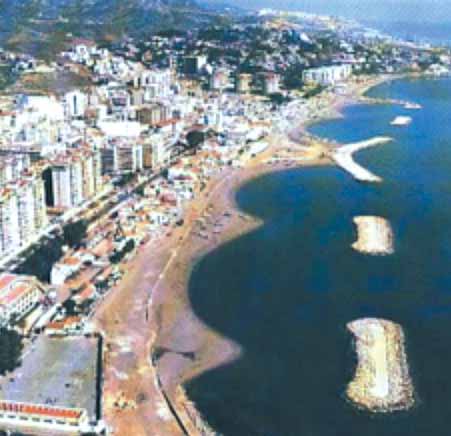
A high-level Mediterranean meeting on Urban Management
and Sustainable Development will take place in Barcelona, Spain,
from 3 to 5 September, to review the current situation and recommend action.
T he Barcelona meeting, orga- Mediterranean States and the European Programme, in Split, Croatia, and the
nised with the support of the
Union, of local authorities, of socio-
Blue Plan, in Sophia Antipolis, France),
Government of Spain and the
economic actors, and of non-govern-
the following activities have been car-
City of Barcelona, will bring together
mental organisations. It formulates re-
ried out, among others:
representatives from 20 Mediterranean
commendations on future actions
>> drawing up an initial regional view
riparian States, the European Union,
related to key Mediterranean areas for
on urban development issues and
other regional and international orga-
the promotion of sustainable develop-
town management challenges in
nisations, local authorities, non-govern-
ment, such as water demand, coastal
the Mediterranean region;
mental organisations, and experts.
areas, tourism, free trade, industry and
>> carrying out an information cam-
The meeting is envisaged as a debate
urban management.
paign, through questionnaires sent
platform where the present situation in
to urban authorities in 90 Medi-
the Mediterranean will be discussed,
terranean cities as well as to natio-
and where strategic and managerial re-
nal authorities in the 20 riparian
commendations and proposals will be
countries;
generated, based on the position papers
>> mobilising sub-regional experts for
of two MAP Regional Activity Centres
a better identification of priority
(Blue Plan and Priority Actions
urban issues and of obstacles for
Programme), as well as five sub-regional
moving towards more sustainable
studies and the feed-back of munici-
development, according to specific
palities and national authorities.
contexts;
The recommendations will be pro-
>> taking stock of international and
PAP/RAC
posed for adoption by the Mediterranean
regional initiatives for sustainable
Commission on Sustainable Development
Cities and urban agglomerations are
urban development in the Medi-
(MCSD) in its forthcoming meeting as well
considered as strategic sites for a sus-
terranean region;
as by the Contracting Parties in their next
tainable development in the Medi-
>> identifying levels of action for mo-
meeting in November.
terranean region. The majority of popu-
ving towards more sustainable
The Contracting Parties to the
lation and of countries' economic
urban development in the region.
Barcelona Convention -- 20 riparian
growth is concentrated there, as well as
Members of the Working Group are:
States and the EU-- set up the MCSD in
along with the environmental and social
Spain, Morocco, France, Malta, Bosnia
1996 as a consultative body, devised as a
impacts of development patterns.
and Herzegovina, Algeria, Slovenia,
forum for dialogue, communication and
A MCSD Working Group on "Urban
Cyprus, the European Union, the City
proposals for action aimed at a sustain-
Management and Sustainable Develop-
of Rome, the Municipality of Naples,
able development in the area.
ment" was set up in 1999, chaired by the
CEDARE, MEDCOAST, MED Forum,
The MCSD is composed of 35 mem-
MedCities network, Egypt and Turkey.
ENDA Maghreb, and AIFM.
bers, and brings together, on an equal
With the support of two MAP Regional
N E V E N S T I P I C A
footing, representatives of the 20
Activities Centres (the Priority Actions
P A P / R A C A S S I S T A N T O F P R O J E C T S
PRIORITY ACTIONS PROGRAMME / REGIONAL ACTIVITY CENTRE (PAP/RAC)
Kraj Sv. Ivana 11 | HR-21000 Split tel 0038 5 21 34 34 99, 0038 5 21 59 11 71 fax 0038 5 21 36 16 77 e-mail pap@gradst.hr website www.pap-thecoastcentre.org
1 3
M C S D
> INDUSTRY AND SUSTAINABLE
DEVELOPMENT, "HAND IN HAND"
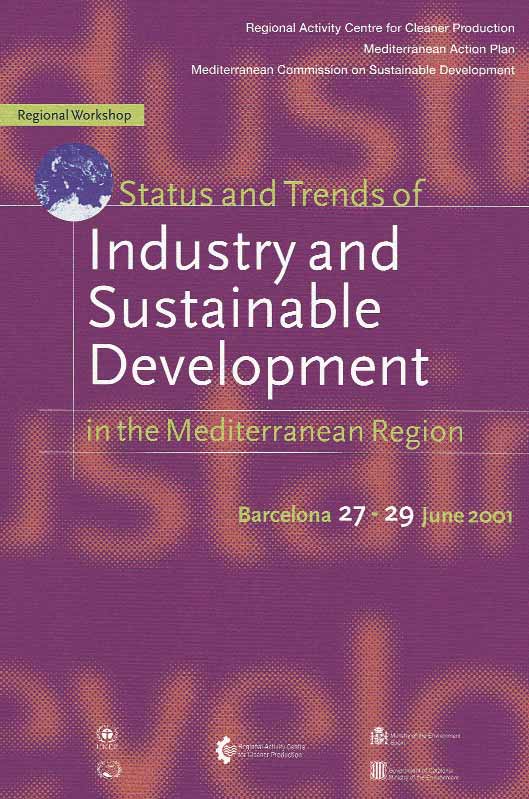
A seminar on the "Status and Strategies of Industry and Sustainable Development
in the Mediterranean Region" organised by the MAP Regional Activity Centre
for Cleaner Production focused on identifying actors, tools and legal framework.
The seminar, held in
and the next Contracting Parties
Barcelona, Spain, from
meeting in November.
27 to 29 June, examined
The Barcelona-based Cleaner
the complex issue of how to
Production Centre (CP) joined
improve the relationship between
MAP as one of its Regional
industry and the environment in
Activity Centres (RAC) in 1996.
the region.
Its aim is to disseminate and
It equally discussed ways to
promote the concept of cleaner
best achieve the co-ordination
production, a strategy to prevent
of the several related pro-
pollution from the products,
grammes and activities going on
processes and services of indus-
in the Mediterranean, to prevent
tries and enterprises.
duplicity and to increase effec-
In so doing, reduce the risks to
tiveness, through MAP.
humans and the environment. Its
The meeting was attended by
aim is also to advise Mediterra-
65 representatives of the Medi-
nean businesses on the opportu-
terranean Commission on Sus-
nities offered to increase their
tainable Development (MCSD)
competitiveness and guarantee
responsible for industry issues
their economic viability.
and / or national experts; UN
The CP/RAC coordinates a
agencies and international orga-
network of representatives -- focal
nisations dealing with the Medi-
points-- of each member State for
terranean; Cleaner production
cleaner production, promotes the
centres, NGO's, consumer associ-
exchange of technicians and
ations, chambers of commerce
experts in the field, publishes
and industry and industrial asso-
news and success stories of the
ciations.
three main issues of the seminar (key
adoption of cleaner production by Medi-
A background paper on the Status
actors, tools and legal framework).
terranean enterprises. It also prepares
and Trends of Industry and Sustainable
The event is an important move for-
studies, manuals and guides on issues
Development in the Mediterranean pro-
ward by the Working Group on Industry
linked to pollution prevention in indus-
vided a first assessment. The agenda of
and Sustainable Development, which
trial sectors and activities specific to the
the seminar included a presentation of
was set up by the MCSD, while the pro-
region.
12 successful initiatives, while ad hoc
posals and recommendations coming
working groups formulated suggestions
out of the seminar will be presented at
E S T H E R M O N F Á
C H E M I S T
on a national and regional level, on the
the 7th meeting of the MCSD in October
C P / R A C I N T E R N A T I O N A L C O - O R D I N A T O R
REGIONAL ACTIVITY CENTRE FOR CLEANER PRODUCTION (CP/RAC)
Paris, 184 | ES-08036 Barcelona tel 0034 93 415 11 12 fax 0034 93 237 02 86 e-mail cleanpro@cema-sa.org website www.cipn.es
1 4
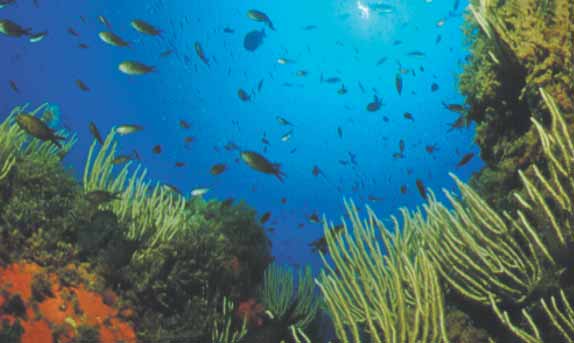
B I O L O G I C A L D I V E R S I T Y
> HARMONISED IMPLEMENTATION
OF CBD AND SPA PROTOCOL
> FROM JAKARTA
TO VALENCIA
Marine and coastal ecosystems
were the first for which the Confe-
rence of the Parties of the CBD agreed
on a work programme. This was adop-
ted in Jakarta, Indonesia, and endor-
sed by the Ministerial Statement as
the Jakarta Mandate on Marine and
Coastal Biodiversity.
SPA/RAC
Conscious of the importance of
this issue, the Contracting Parties to
The Secretariats of CBD and SPA provide a good
the Barcelona Convention focused the
example of co-ordination for the implementation
New (1995) Protocol on Specially
of global and regional conventions.
Protected Areas and Biological Diver-
T
sity in the Mediterranean on the con-
he Secretariats of two conven-
1. co-ordination, consultation and sha-
servation and sustainable use of the
tions, one regional -- the Barce-
ring of information, at national level,
lona Convention, with its Proto-
between the focal points of CBD and
marine and coastal biodiversity in this
col on Specially Protected Areas and Bio-
those of the SPA Protocol, when they
sea.
logical Diversity (SPA Protocol), and one
are different;
The global CBD and the Medi-
global-- the Convention on Biodiversity
2. guidance for the co-operation between
terranean SPA Protocol are comple-
(CBD), agreed that the detailed obligations
the secretariats;
mentary instruments.
contained in these two instruments can
3. development of the clearing-house
The co-ordination between the
serve provide concrete implementation, in
mechanism of the CBD in the Medi-
secretariats of the two conventions
the Mediterranean, of the Jakarta Mandate
terranean at the regional level;
on Marine and Coastal Biodiversity.
and
will help to ensure harmonised and
This would provide a good example for
4. co-ordination for the national process
synergic implementation of the two
similar regional collaborative efforts.
for reporting within the framework
instruments in the Mediterranean
Thanks to the support provided by the
of the two instruments.
region. Similarly, co-ordination, at
Spanish authorities, the two Secretariats
The meeting's recommendations
national level, between the focal
convened a joint consultation meeting in
will be submitted to the Contracting
points of CBD and those of the Protocol
Valencia, Spain, on 20 and 21 April.
Parties to both instruments.
on SPA would facilitate conservation
During this meeting, the Mediterranean
Focal Points of both instruments consi-
C H E D L Y R A I S
efforts in a practical way.
M A R I N E B I O L O G I S T
dered the following main topics:
S P A / R A C S C I E N T I F I C D I R E C T O R
SPECIALLY PROTECTED AREAS / REGIONAL ACTIVITY CENTRE (SPA/RAC)
Boulevard de l'Environnement | PB 337 | TN-1080 Tunis cedex tel 0021 6 1 76 57 60 fax 0021 6 1 79 73 49 e-mail car-asp@rac-spa.org.tn website www.rac-spa.org.tn
1 5
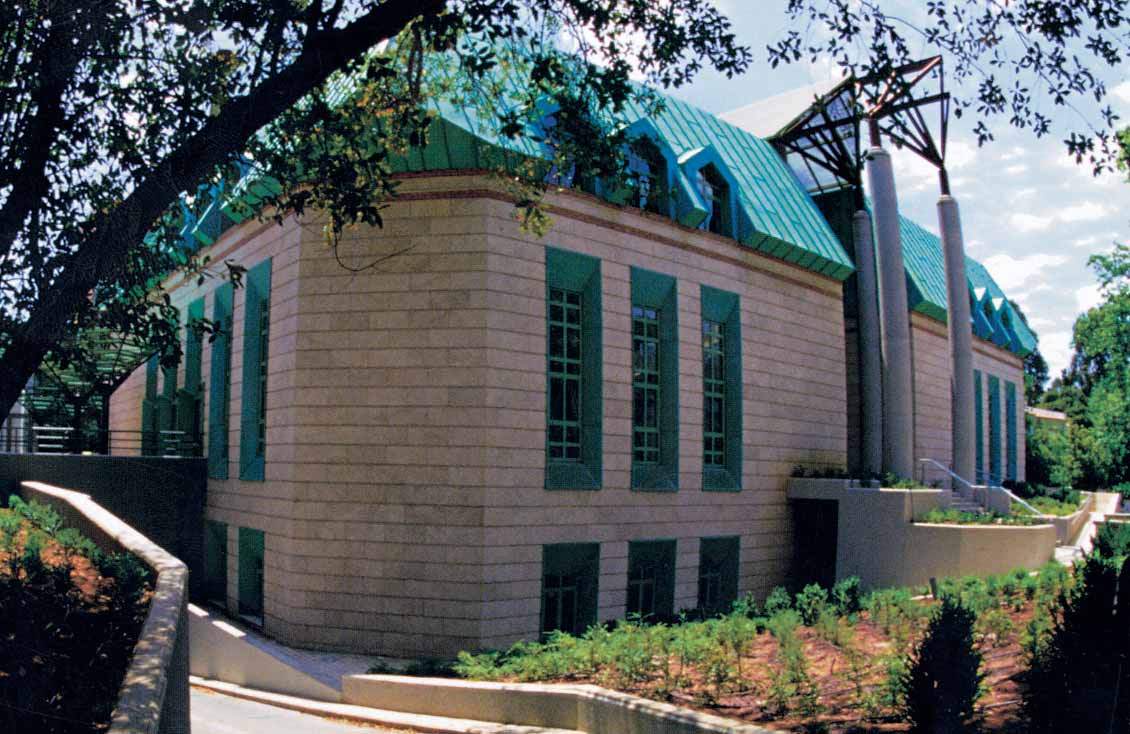
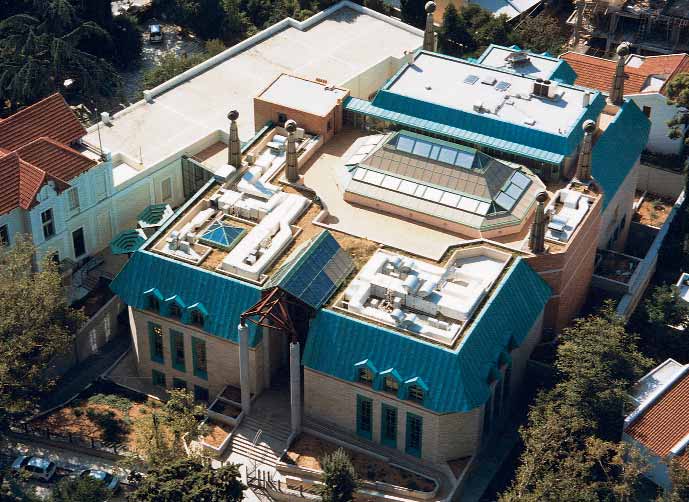
> MOTHER EARTH HAS A NEW CENTRE
FOR ENVIRONMENTAL RESEARCH AND EDUCATION
D. KALAPODAS
The new GAIA Centre defines its tasks through the double meaning of the word
GAIA as a planet and GAIA as earth as it first appears in the Homeric epics.
The earth, as research into the soil for the protection and health of plants,
animals and man. The planet as a novel education in self-awareness
and an appraisal of the link between Man and Nature.
The GAIA Centre for Environ- event through a message which was Combining Nature with Culture
mental Research and Edu-
read in the inauguration ceremony by
The activities of the GAIA Centre
cation of the Goulandris
Mrs. Niki Goulandris.
for Environmental Research and Edu-
Natural History Museum was inaugura-
The Goulandris Natural History
cation focus on discovering and put-
ted on the 12th of June. President
Museum, a private, non-profit founda-
ting into practice new means of com-
Constantine Stephanopoulos, and Prime
tion, was set up in 1964 by Angelos and
bining Nature with Culture.
Minister Costas Simitis, chaired the
Niki Goulandris. In 1986, it was classi-
Culture as, according to the founders,
event, which was attended by numerous
fied as a "Museum of Influence", along
a position and attitude of responsibility
Greek and foreign personalities.
with 37 of the world's 35,000 muse-
towards life and the natural resources
Klaus Töpfer, Executive Director of
ums. Over the last 25 years, more than
which nurture it and to the ethics which
the United Nations Environment
three million people, mainly youth,
are often neglected by those who ma-
Programme (UNEP), addressed the
have visited the museum.
nage the technological and scientific
1 6
G A I A
achievements of our times, either in
Among other new architectural
ignorance, or distracted by the commer-
concepts, the Angelos Goulandris Con-
cial motivation of the marketplace,
ference Hall, with 270 seats, has been
threatening to lead to a devaluation of
designed and constructed in such a
life.
way as to offer perfect acoustics and
"At the GAIA Centre, the visitor is
uninterrupted vision.
invited to comprehend the processes
Six laboratories (Zoology, Soil
and the time limits of life, the sources of
Science, Ecology and Biotechnology,
its maintenance that are being exhaust-
Analytical Chemistry, Hydrobiology
ed, and to become aware of his / her
and the Herbarium) have moved to the
responsibilities".
new building, offering greater space
and the latest in high-technology re-
This is how the architects
search equipment.
conceived it...
For the construction of the GAIA
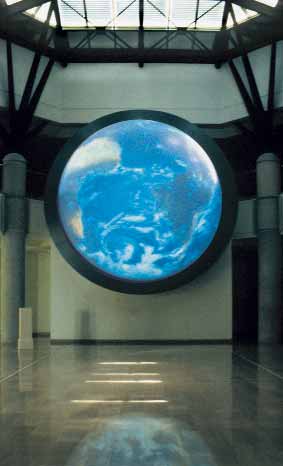
The GAIA sphere
Centre, the choice of materials was made
The GAIA sphere is a hemispherical
on the basis that maximum use should
screen of 5 metres in diameter, with a
be made of those that are natural, re-
surface area of approximately 40 square
cyclable, and renewable. In the entire
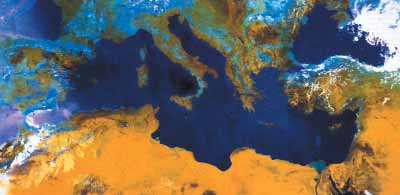
metres, on which satellite images of the
GAIA CENTRE
building, the principles of a bio-climate,
rotating Earth are projected.
achieved through energy-saving electric
The rear-projection screen is anima-
out cloud as well as daily and nightly
engineering devices and state of the art
ted by six video (digital image) projectors
views.
systems for monitoring the various
portraying Earth's rotation from three
The museum also features a full
functions and security, have been
different geo-morphological aspects: full
presentation, "The Dance of the Con-
applied.
geo-morphological view with and with-
tinents", which briefly depicts the geo-
logical evolution of the planet, from its
birth, 4.6 billion years ago, up to the
present.
This is accompanied by an explana-
tion of Earths geological activity and of
the drift of the tectonic plates, the sun's
influence on the Earth and the appea-
rance of the Aurora Borealis. The short
presentation concludes with facts about
the effects of human activities on the
environment, including the ozone layer,
and the need for its protection.
Educational works
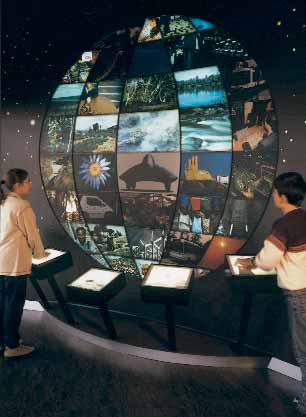
The Museum presents its collec-
tions and the results of its research
programmes through exhibitions, edu-
cational support (tours, screenings,
N. DANIELIDES
printed material) as well as through
1 7
G A I A
> MOTHER EARTH HAS A NEW CENTRE
FOR ENVIRONMENTAL RESEARCH AND EDUCATION
M E S S A G E O F U N E P E X E C U T I V E D I R E C T O R
Your Excellency President Stefanopoulos,
Your Excellency Prime Minister Simitis,
Mrs. Goulandris,
Ladies and gentlemen,
It would have been my sincere wish and pleasure to be with you, here and
now, not only to witness such an important event, but also to greet you, once
GAIA CENTRE
more, in this unique land of history, civilization, beauty and hospitality.
Mrs. Goulandris and Dr. Töpfer during his visit to Athens in March
Some three months ago, I came to Athens as a guest of the Greek Government
in a highly constructive visit that gave me the opportunity to share with you our
scientific publications and high-level
common concerns about the environment.
scientific gatherings.
Thanks to your hospitality, I also had the chance to discuss with my colleagues
Setting up the GAIA Centre has
in the Co-ordinating Unit of the Mediterranean Action Plan, generously hosted by
extended the educational work of the
your country, the achievements and aspirations of this plan - which is the spear-
Museum, through increasing the space
head of UNEP's Regional Seas Programme.
available for its exhibitions, the use of
But that visit also allowed me to assist in the final preparations, which lead to
new methods and the application of
the inauguration, today, of this impressive development of the Goulandris
new approaches to museology, with a
Natural History Museum. Thanks to you, dear Mrs. Goulandris, I enjoyed a won-
special focus on the key environmental
derful tour of the fantastic past, present and future of our "Mitera Ghi", surroun-
issues of our times.
ded by this impressive, innovative architecture.
I can assure all of you that the memory of that visit is still very vivid in my
mind and in my heart.
What you are inaugurating today is more than a museum. It is a new way of
accessing and learning about nature and its history. But not only: you are also
inaugurating a new chapter in private initiatives, in public awareness, in ecologi-
cal research, in educating our children; an example of how private non-profit
foundations, like yours, can so positively contribute to a better future.
I have been informed by my colleagues in MAP that the World Environment Day
was the subject of intensive activities, at all levels and of extensive and valuable
coverage by the media in this great country.
Let me compliment all of you involved in this venture for this great occasion,
which enriches each and all of us and which will benefit generations to come.
With my very sincere wishes for every success.
Klaus Töpfer
D. O'BRIEN
THE GOULANDRIS NATURAL HISTORY MUSEUM: GAIA CENTRE FOR ENVIRONMENTAL RESEARCH AND EDUCATION
100, Othonos Street | GR-14562 Kifissia tel 0030 1 80 15 870, 0030 1 80 86 405 fax 0030 1 80 80 674 e-mail goul@gnhm.gr
1 8

T H E K I O S K
> A SELECTION OF PUBLICATIONS
for other publications, please check MAP's and RACs' websites
> The MAP Brochure and Leaflet
The MAP Brochure, in English
curbing pollution; safeguarding the
and French and soon also in
natural and cultural heritage; manag-
Arabic, provides a detailed back-
ing coastal areas in a sustainable way,
ground on the Mediterranean
and integrating the environment and
Action Plan and each of its com-
development. The publication also
ponents.
provides key MAP contact details.
The brochure includes seven
The MAP leaflet, in English and
chapters, three of them dealing
French and soon also in Arabic, sum-
with MAP's structure and history
marizes the contents of the MAP
and the future Mediterranean
brochure, with a particular focus on
environment. The other four
MAP's priorities and its key environ-
chapters focus on the issues of:
mental challenges.
> The Mediterranean Commission on Sustainable Development (MCSD)
A brochure, in English and French, on the Medi-
terranean Commission on Sustainable Development
(MCSD) providing background information about its
role, structure and activities. The brochure has been
divided into four chapters: defining a Mediterranean
strategy for sustainable development; the MCSD unique
set-up; the MCSD output, and a rational future for
Mediterranean sustainable development.
The "MCSD Strategic Review for Sustainable Development in the Mediterranean Region",
also published, includes seven main chapters, dealing with: objectives; the Mediterranean con-
text and vital issues; instruments and regional actors; system and activities; activities of the
Contracting Parties; performance and weakness, and recommendations for action.
> MED POL Programme for the Assessment and Control of Marine Pollution
The MED POL Programme (Mediterranean Marine Pollution Monitoring and Research Programme) assists
Mediterranean countries in the formulation and implementation of pollution monitoring programmes, inclu-
ding pollution control measures and the drafting of action plans to reduce and ultimately eliminate pollution
from land-based sources. This leaflet describes how MED POL was born in 1975 (MED POL I) to answer the
specific needs to better assess, qualify and quantify the marine environmental problems of the Mediterranean
and, as important, how it developed leading to MED POL II (1981-1995), which concentrated on establishing
national monitoring programmes, including the provision of assistance for their implementation. The new
MED POL III, adopted in 1995, presents a stronger emphasis on the managerial aspects of pollution control
and a more direct link with the implementation of the Dumping, LBS and Hazardous Wastes.
1 9
> A SELECTION OF PUBLICATIONS
> Protecting the Mediterranean from land-based pollution
The heaviest pollution load to the Mediterranean marine environment, around 80%, originates
from human activities on land, confirms a report issued by MAP. These activities produce urban,
industrial and agricultural wastes that are transported by airborne particles and river run-off car-
rying nutrients, pathogens, heavy metals, toxic persistent organic pollutants, oil and radioactive
substances, and end up in this regional sea. The report, entitled "Protecting the Mediterranean
from land-based pollution", reviews the most important land-based pressures and their effects on
the Mediterranean marine and coastal environment. It also traces the most important steps taken
by these countries since the 1970's to control land-based pollution, culminating in the recent revi-
sion of the Protocol for the Protection of the Mediterranean Sea Against Pollution from LBS.
These steps also lead to the adoption of the Strategic Action Programme (SAP), a timetabled
schedule of activities for the implementation of this Protocol in the next 25 years. The report
describes a number of important groundwork activities of the SAP envisaged for 2001-2003.
> White paper: Coastal Zone Management in the Mediterranean
This White Paper, which has been prepared by the Priority Actions Programme Regional Activity
Centre (PAP/RAC), is the product of a thorough screening and analysis of a number of published
studies, statements, workshop reports and manuals, most of them elaborated in the framework of
the Mediterranean Action Plan.
The White Paper is intended to stimulate a lively debate around issues and policy options aim-
ing at the promotion of Integrated Coastal Area Management (ICAM) in the Mediterranean.
After presenting a detailed background reference to the pressures on the Mediterranean coastal
zones, the White Paper divides its contents into three main chapters, focussing on issues at stake;
management and action, and the future, including policy options, guidelines, and what is next. It
also includes one section that outlines some of the key questions, which should guide the reader's
feedback.
> The Mediterranean Technical Reports Series (MAP MTS)
The Mediterranean Technical Reports Series (MAP MTS) now has
a new lay-out and thematic structure:
> CURBING POLLUTION
> SAFEGUARDING NATURAL AND CULTURAL RESOURCES
> MANAGING COASTAL AREAS
> INTEGRATING THE ENVIRONMENT AND DEVELOPMENT
Three MTS have been published in this new format:
> MTS #131: MAP CAMP Project "Fuka-Matrouh", Egypt.
> MTS #132: Remedial Actions for Pollution Mitigation
and Rehabilitation in Cases of Non-Compliance.
> MTS #133: Atmospheric Transport and Deposition of Pollutants
into the Mediterranean Sea.
2 0

T H E K I O S K
for other publications, please check MAP's and RACs' websites
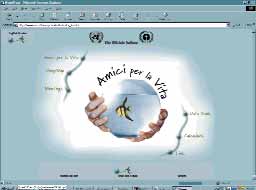
> The MAP Information speaks Italian... in Italy!
Information con-
the Environment is also intended to facilitate the exchange of
tained in the MAP web-
information, through a wide range of services, including an
site is now accessible also
Interactive Channel and a Data Bank.
in Italian, thanks to an
"Amici per la Vita" have over the past ten years supported
initiative of the Italian
a large number of MAP meetings, the latest ones being the
NGO "Amici per la Vita"
meeting in Catania, 28 to 30 March, to review of the imple-
(Friends for Life), aimed
mentation of the SAP, and the meeting of the National Co-ordi-
at disseminating news on
nators of MED POL Programme, in Venice, 28 to 31 May.
the activities of the UNEP/MAP to the Italian speaking public.
The NGO is involved in the production of audiovisual festivals,
The initiative is part of a project launched by the National
reviews and multi-media expositions with environmental themes.
Association of Italian Municipalities (ANCI) and the Municipali-
It will prepare a catalogue of European and Mediterranean envi-
ties of Catania and Venice, under the auspices of the Italian
ronmental audiovisual material, available for viewing at the ANCI
Ministry of Foreign Affairs and Ministry of Environment and
video-library, to contribute to the Med Film Festival-Laboratorio.
supported by UNEP/MAP.
Its Environment and Education Project develops environmental
It aims at raising public awareness on environmental pro-
educational programmes in co-operation with national and local
tection while encouraging cultural exchange in the region,
authorities, to make available films, documentaries and pro-
through the collaboration of institutions, municipalities and
grammes of social and environmental interest in their original
NGOs. "Amici per la Vita" intend to set up a virtual
language, to schools, to immigrants at their reception facilities
Information Centre for the Environment that will act as a
and to detainees at Italian penal institutions.
focal point for Mediterranean and European local authorities,
S E R G I O I L L U M I N A T O
to promote co-operation. The Internet Information Centre for
w w w . a n c i . i t / a m i c i p e r l a v i t a
> COMING UP... >>>>>>>>>>>>>>>>>>>>>>
THE CONTRACTING PARTIES
THE ENVIRONMENT:
THE MORE THEY KNOW,
WILL GO TO MONACO...
TOURISM IS ALRIGHT, BUT...
THE BETTER THEY WILL ACT...
Ministers and senior officials from 20
The Mediterranean is a prime tourist
Public awareness and participation
Mediterranean countries and the Euro-
destination with near 200 million tourists
in planning the future ultimately depends
pean Union, representing the Contracting
a year, 30% of the world's tourism. Most
on knowledge by the public of the issues
Parties to the Barcelona Convention, will
come after a carefree, sun and sea, holi-
at stake. By itself public awareness can-
hold their 12th ordinary meeting in
day. Their presence, which is welcomed,
not guarantee a sustainable environ-
Monaco on 14 to 17 November.
means more and more hotels, taverns,
ment, but it goes a long way in setting up
The Ministerial segment of the meet-
discos, shops, beach facilities, boats,
the scene for political decisions to be
ing is scheduled to take place on 16
...all on the coast. And it all happens in
taken, or at least, for preventing making
November.
the summer. Inevitably all this leads to
inappropriate ones. Much of this work in
The meeting will be prepared by the
some key challenges: urbanisation of
the Mediterranean countries is currently
National Focal Points on 11 to 14
coastal areas, losses of natural habitats,
undertaken by NGOs with meagre
September in Athens.
increased pollution, etc. What to do?
resources.