Amazon Cooperation Treaty
Organization - Permanent Secretariat
Secretary-General
Rosalía Arteaga Serrano
Executive Director
Francisco José Ruiz M.
Administrative Director
Marcos Afonso
Communication Advisor
Sandra Lefcovich
Intern
Leandro Ramos
Review
Cláudia David
Graphic Project
www.artecontexto.com.br
Índe
Índe x
x
Page
Presentation . . . . . . . . . . . . . . . . . . . . . . . . . . . . . . . . . . . . . . . . . . . . . . . . . . . . . . .9
Preamble . . . . . . . . . . . . . . . . . . . . . . . . . . . . . . . . . . . . . . . . . . . . . . . . . . . . . . . . .13
Introduction . . . . . . . . . . . . . . . . . . . . . . . . . . . . . . . . . . . . . . . . . . . . . . . . . . . . . . .15
Vision . . . . . . . . . . . . . . . . . . . . . . . . . . . . . . . . . . . . . . . . . . . . . . . . . . . . . . . . . . .19
Mission . . . . . . . . . . . . . . . . . . . . . . . . . . . . . . . . . . . . . . . . . . . . . . . . . . . . . . . . . .19
The Challenges to ACTO . . . . . . . . . . . . . . . . . . . . . . . . . . . . . . . . . . . . . . . . . . . .20
Strategic Axes
Logic Matrix . . . . . . . . . . . . . . . . . . . . . . . . . . . . . . . . . . . . . . . . . . . . . . . . . . . .24
Conservation and Sustainable Use of the Renewable Natural Resources . . .25
Knowledge Management and Technology Transfer . . . . . . . . . . . . . . . . . . . . . .29
Regional Integration and Competitiveness . . . . . . . . . . . . . . . . . . . . . . . . . . . .31
Institutional Strengthening . . . . . . . . . . . . . . . . . . . . . . . . . . . . . . . . . . . . . . . . .35
Programmatic Structure of the Plan
Water . . . . . . . . . . . . . . . . . . . . . . . . . . . . . . . . . . . . . . . . . . . . . . . . . . . . . . . . .38
Forests, Soils and Protected Natural Areas . . . . . . . . . . . . . . . . . . . . . . . . . . . .42
Biological Diversity, Biotechnology and Biotrade . . . . . . . . . . . . . . . . . . . . . . .50
Territorial Organization, Human Settlements and Indigenous Affairs . . . . . . . . . . . . . .54
Social Infrastructure: Health and Education . . . . . . . . . . . . . . . . . . . . . . . . . . .58
Transportation, Energy and Communications Infrastructure . . . . . . . . . . . . . .62
Operational Tools
Structure of the Permanent Secretariat . . . . . . . . . . . . . . . . . . . . . . . . . . . . . .66
Bi-Annual Action Plan 2004-2005 . . . . . . . . . . . . . . . . . . . . . . . . . . . . . . . . . . .67
Use of the Geo-referenced Information Systems . . . . . . . . . . . . . . . . . . . . . . .68
Information, Documentation and Website . . . . . . . . . . . . . . . . . . . . . . . . . . . .69
Administrative/ Financial Management System
and Quality Management . . . . . . . . . . . . . . . . . . . . . . . . . . . . . . . . . . . . . . . . .70
PS/ACTO Headquarters . . . . . . . . . . . . . . . . . . . . . . . . . . . . . . . . . . . . . . . . . . .71
Financial Resources and Institutional Sustainability . . . . . . . . . . . . . . . . . . . . .71
Institutional Network . . . . . . . . . . . . . . . . . . . . . . . . . . . . . . . . . . . . . . . . . . . . .72
International Cooperation . . . . . . . . . . . . . . . . . . . . . . . . . . . . . . . . . . . . . . . . . .76
Strengthening of the National Permanent Commissions
and Special Commissions of the Amazon Region . . . . . . . . . . . . . . . . . . . . . .77
Annex . . . . . . . . . . . . . . . . . . . . . . . . . . . . . . . . . . . . . . . . . . . . . . . . . . . . . . . .80
P
P resentation
resentation
Concluded the process of transition from the Pro-Tempore Secreta-
riats of the Amazon Cooperation Treaty (ACT) to the establishment
of the Permanent Secretariat of the Amazon Cooperation Treaty,
9
which I am very pleased to have taken on, as the first woman, the position
of Secretary-General to the Amazon Cooperation Treaty Organization
(ACTO), since early May 2004. This role has produced one of the most noti-
ceable inflections in the institutional history of this document, fostering
regional cooperation and integration of the Amazon countries, in compliance
with the mandates by the Governments of the Country Members.
I feel that the time has arrived for a transformation in the statements and
in the vision about a common future, fueled by concrete achievements, in
order to improve the quality of life of the people of our nations. This achie-
vement is attained through the sustainable use of a culturally rich and natu-
rally diverse heritage, harboring one of the most important biomes in the
world, the geographic heart of the sub-continent: the Amazon region.
The Permanent Secretariat in Brasilia was established in early 2003,
with the support of the Brazilian Ministry of Foreign Affairs, which gene-
rously housed ACTO headquarters temporarily within the Ministry's premi-
ses for over a year. ACTO, in congruence with active participation of the
diplomatic representations of the Country Members and with the support
of the Brazilian Ministry of Foreign Affairs, has been able to establish an ins-
titutional space that was soon recognized by its counterparts as an interna-
tional organization. The strategic role established between ACTO and the
Country Members concerns the mutual interest of the eight nations that
share the Amazon region, with the objective of being integrated into the
dynamic processes of the Latin-American regional integration, which is now
taking place.
Furthermore, the increasing global concern for viable ways of sustaina-
ble development and the importance of the Amazon region to humanity,
cause ACTO to be a contemporary tool to induce global sustainability, as

well as to serve as a concrete arena for cooperation among the Amazon
countries. Moreover, in a more ample context, ACTO leads to strengthe-
ning international relations of a South-South nature, with the common
thread being the Amazon.
During the few months of its institutional life, the achievements of ACTO
Permanent Secretariat in the political, strategic, technical and operational,
spheres have intertwined, disclosing the political will of our governments in
taking action to reinvigorate the Amazon Cooperation Treaty. This process
has been witnessed by the Cooperation Agreements signed, and those
under negotiation, with the United Nations organizations and specialized
agencies in order to execute important initiatives and tasks
towards promoting sustainable development in the Ama-
zon region.
As ACTO has undertaken such a commitment, a
fundamental emphasis has been placed on formu-
lating the Strategic Plan for the period 2004 -
2012. The Strategic Plan entails a detailed
description comprising observations, sug-
gestions and contributions by the
Country Members, Internatio-
nal Organizations,
The increasing global concern for
viable ways of sustainable
development and the importance of the
Amazon region to humanity cause ACTO
to be a contemporary tool to
induce global sustainability
Rosalía Arteaga Serrano
Secretary-General
technical experts, Civil Society Organizations and local communities,
gathered at the 1st International Meeting of the National Permanent Com-
missions, held on the 1st and 2nd of July 2004, in the city of Brasilia (Brazil).
An upgraded version of the Strategic Plan (2004-2012) has been elabo-
rated in order to facilitate the comprehension and appropriation of this plan-
ning tool, made available to all Governmental, Non-Governmental and social
11
role players. In it lies a presentation, which expresses the common views
about the topics shared by the Amazon countries, as well as the direction
to be adopted by ACTO Permanent Secretariat.
The new version of the Strategic Plan (2004-2012), presented by the
PS/ACTO at the 12th Meeting of the Amazon Cooperation Council (CCA,)
and thereby agreed upon at the 8th Meeting of the Ministries of Foreign
Affairs, proposes the strategic view to guide and build synergies for actions
undertaken by both government and ACTO.
The PS/ACTO wishes to express its gratefulness to the international
consultants for their contributions to the effort of reflection, which allowed
for the preparation of this navigation chart, as well as to valuable coopera-
tion by the Andean Fomentation Corporation (CAF), the World Health Orga-
nization/Pan-American Health Organization (WHO/PAHO), World Union for
Nature Conservation (UICN) and the German Cooperation Agency (GTZ)
through the Regional Project on the Conservation of Rain Forestry in the
Amazon region, during this initial stage.
Brasilia, October 2004
Rosalía Arteaga Serrano
Secretary-General
Amazon Cooperation Treaty Organization
P
P reamble
reamble
The Strategic Plan described herein is intended to provide insight and
guidance to the Permanent Secretariat/Amazon Cooperation Treaty
13
Organization (PS/ACTO) in the medium-term of the period 2004-2012, in
compliance with the mandate of the government of the Country Members,
established at the several levels of decision-making.
In compliance to such a mandate, the PS/ACTO will observe the com-
mitments arising from the relevant multilateral Conventions, such as the
Convention on Biological Diversity, Convention on International Trade in
Endangered Species of Wild Fauna and Flora (CITES), Convention on the
Protection to World's Cultural and Natural Heritage, Climatic Change, Fight
against Desertification, Ramsar Convention on Wetlands, among others.
The PS/ACTO emerges among other regional organizations that,
although holding different missions, are important role players and repre-
sent complementary dimensions to achieve the development purposes of
the Country Members. Such organizations are CAN, MERCOSUR and
CARICOM.
At the operational level, the PS/ACTO works through technical units in
order to execute projects and to establish a permanent forum for consulta-
tion and coordination between the Country Members. In this way, the
PS/ACTO promotes and can facilitate sustainable development projects for
the Amazon region, without creating permanent bureaucratic structures, as
represented in the flowchart below.
Flux
Flux ograma
ograma
External Level
Financial and/or Cooperation
Organizations and Agencies
(1)
Permanent
Secretariat/
ACTO
National Entities
responsible for
ACTO Level
International
Technical
Regional
Cooperation
Project
Technical Unit
(2)
(3)
Technical National Units of
National Level
Coordination and Execution
Note: (1) Organization, Coordination and Approval (2) Consultation and Follow-Up (3) Operational Actions
Within the context of the sustainable development paradigm, the
PS/ACTO has a social commitment towards improving the livelihoods of
local Amazon populations. This commitment should be attained through
the benefits derived from the PS/ACTO´s initiatives, in the form of job cre-
ation and income generation, as a means to tackle regional poverty to insti-
gate regional integration, in resonance of the United Nations Goals and
Objectives of the Millennium.
Introduction
Introduction
Looking back upon the past 25 years of the existence of the Amazon
Cooperation Treaty, there is increasing evidence to the relevance of the
15
treaty as a vital tool for the establishment of sustainable development in the
Amazon region, in order to meet the demands of local communities by
improving their livelihoods. Furthermore, the treaty fosters regional integra-
tion and cooperation, which are the key elements to endure the shared chal-
lenges of the Amazonian regional development, setting the stage for Latin
American integration.
The decision of the Governments of the Country Members to establish the
Permanent Secretariat and the Amazon Cooperation Treaty Organization in
Brasilia, definitely installed in March 2003, was oriented to strengthen institutional
coordination and provide joint-action to integrate the Amazon region. This repre-
sents a unanimous decision on behalf of the eight ACTO Country Members,
namely Bolivia, Brazil, Colombia, Ecuador, Guyana, Peru, Suriname and Vene-
zuela, towards prioritizing a regional cooperation mechanism, as well as fostering
a common vision to instigate sustainable development in the Amazon.
The increasing relevance of the region within the geopolitical arena;
the developed debate on the promotion of the "sustainable development"
paradigm; the significant role played by the regional integration process
and its economic importance to the international economy of the eight
Amazon Countries; the advantageous Governmental and Diplomatic
cooperation and effort among the eight Country Members, addressed to
achieve equity, satisfactory standards of living and acceptable health stan-
dards and social welfare, as an inherent right to the local Amazon popula-
tions; the global aspect of environmental protection challenges in the
Amazon; as well as the sovereign responsibility of the eight Amazon
Country Members, are reasons for which the Country Members wish to
reiterate the political will and unrestricted support to carry out the needed
efforts to ensure that the Amazon Cooperation Treaty becomes more
effective and achieves recognized results.
The value of the PS/ACTO lies in that it is a strategic tool, at the service
of the eight Country Members, with the best interest of all members under
consideration to foster horizontal cooperation among them, thus favoring
institutional exchanges, and greater interaction among the Amazonian coun-
tries. The Organization is also used as a forum for decision-making, on issues
that may affect Amazon integration, during international agreement negotia-
tions and in the presence of international organizations.
The need for an Organization such as ACTO arose when activists and
political players from developed countries became involved in recognizing
the global importance of the Amazon, and expressed concern for preserving
its biodiversity and ecological wellbeing. However, the Amazon had been
and continues to be site for increasing levels of urbanization processes, co-
lonization for farming and expansion of commercial agriculture, among other
anthropogenic pressures, all leading to the vast proportion of destruction to
the Amazon, witnessed at present. Therefore, the document "ACTO, some
key factors in its historic evolution " developed an analysis on the political
institutional development of the Treaty, characterizing it in three phases.
The first phase, which the author calls defensive-protectionist (1978-
1989), is portrayed by the concern of the eight Country Members in
expressing their nation's sovereignty in face of the common patrimony of
the Amazon shared by them, as the result of increasing international pres-
sure and intervention. Therefore, within the first phase, the ACT decided to
pursue a shift in the political-diplomatic efforts introducing the principle of
shared responsibility, making it very clear that the shared responsibility
between developed and developing countries is different, in the sense that
they are common yet different.
After the Treaty came into effect in 1980, there was a period of inactivity
due to the countries' different realities, institutional weakness and scarce
social recognition. In addition, the Treaty was inactive due to the failure of the
ACT in recognizing the Amazon region as a priority to the sovereign states.
In order to terminate the period of inactivity, a series of steps were
undertaken towards developing the operational mechanisms of the Treaty,
1 Aranibar Quiroga, Antonio, La OTCA, algunas claves de su evolución histórica, Consultancy Report,
Brasilia, july 2003.
by creating the First Commissions and inducing the establishment of the
Association of Amazon Universities (UNAMAZ), as a network to facilitate the
exchange of scientific and technological information, which served as a
means to train and form post-graduate professionals with proficient back-
ground in Amazon knowledge.
The second phase of political strengthening (1989-1994), began with the
Meeting of the Presidents of the Amazon Country Members, held in Ma-
17
naus (Brazil). During the meeting, the Country Members signed an agree-
ment based on principles and objectives established by the Treaty to renew
the political will of each Country Member.
The Declaration of the Presidents was the tool of the Treaty that induced
a complete political commitment, on behalf of the Country Members. The
declaration came hand in hand with the increasing democratization of the
Country Members, with the economic integration and political harmoniza-
tion processes of the Latin America, such as the Andean Community (CAN)
and MERCOSUR. In addition, efforts were complemented with discussions
and agreements geared towards sustainable development and the respect
for Indigenous Amazon rights. These complementing efforts marked the
period of full political will to harmonize the Treaty among the governments
of Country Members.
The Declaration of the Presidents was the ultimate effort that facilitated
a joint participation on behalf of the Country Members, which positioned
them as a unified body before the United Nations Conference on
Environment and Development, held in Rio de Janeiro in 1992. This turning
point set the stage to establish a more equitable environment of dialogue
among developed countries and the Country Members.
Phase two was prosperous due to the establishment of the Special
Commissions and because the Treaty opened negotiations to international
cooperation to develop bilateral and multilateral projects.
The third phase, of institutional development (1994-2002), coincided with
the development of the initiative of creating a Permanent Secretariat and its
transition to the Amazon Cooperation Treaty Organization.
The observation of increasing complexity for Amazon Cooperation, and
with increasing visibility in the international arena, as witnessed by improved
coordination and increasing numbers of activities and projects under execu-
tion, leads to building a consensus amongst the Country Members to esta-
blish a Permanent Secretariat (PS) based in Brasilia (Brazil).
The resolutions were agreed upon by the Ministers of Foreign Affairs and
disclosed the will by the Country Members to strengthen the Treaty and
improve its mechanisms to establish the Permanent Secretariat. This gave
way to a long-lasting and complex process of intergovernmental communi-
cation to conclude the signing of the Treaty Amendment, in 1998. The
process culminated in August 2002, when the signatory countries complied
with the Deposit of the Amendment Ratification Tool before the Brazilian
Government.
At the 7th Meeting of Foreign Ministers, held in Santa Cruz de la Sierra
(Bolivia) in November 2002, the governments reiterated the strategic hori-
zon of the Organization as a privileged tool for political cooperation and har-
monization among the members. In addition, they renewed the basic com-
mitments of improving the living standards of the Amazon region inhabi-
tants, under the uncontestable responsibility of each Nation to use its nat-
ural resources in a sustainable manner, and also to justly and equitably dis-
tribute the benefits derived from such use, being one of the Treaty's pillar
objectives.
Furthermore, it provided great importance to the active participation of
regional and local players in identifying and developing Amazon cooperation
initiatives, which highlights the importance of the role played by the local and
Indigenous peoples of the Amazon in sustainable development.
Another strategic definition is the role assigned to each Country Member
in the regional integration processes, such as the involvement with the
Initiative towards Integrating the South-American Regional Infrastructure
(IIRSA), which is encouraged by the ACT.
In sum, the Amazon Cooperation Treaty Organization (ACTO) is a vital and
dynamic tool with a broad vision in light of the Latin-American integration
process, which strengthens governmental executive power by building syn-
ergies among the Country Members, with multilateral organizations, inter-
national monetary agencies, social movements, the scientific community,
productive sectors and civil society, within sovereign right of the Amazon
region to pursue sustainable development.
V
V ision
ision
ACTO is a strengthened organization that is internationally recognized as
a regional political forum to contribute towards the integration and sus-
19
tainable development of the respective Amazon territories of the Country
Members. Furthermore, it complements the national managerial efforts,
territorial ordering, conservation and sustainable use of its natural resources
respecting the national sovereignty of the Country Members, to generate
equal benefits to the Country Members and to build better living conditions
to the various populations of the nation, particularly local Amazon popula-
tions, based on the respect to the inherent rights and wills of civil society
as a whole.
Mission
Mission
In the framework of the principles established in the Treaty, and in com-
pliance with the mandates to strengthen or build technical and financial
mechanisms and tools, as well as shared or complementary policies to
establish effective processes of regional integration and sustainable
development, fostered by the active participation of the Country Members
and regional and local players in outlining and executing various programs
and projects, the mission stands in achieving a balanced distribution of
benefits generated, thus providing to create synergies that will increase
the capacity of negotiation by the Country Members at a global level, in
light of topics that relate to the Amazon.
The Challenges of
The Challenges of A
AC
C T
TO
O
The creation of the Amazon Cooperation Treaty Organization (ACTO), with
a Permanent Secretariat, is known to have caused a positive effect on
facilitating institutional procedures within the scope of the Treaty and in
accelerating the decision-making process within the institutional stage of
identification, consultation and approval procedures of programs or projects.
In so doing, it is capable of entering into its actual execution, evaluation and
monitoring. Furthermore, the stage of obtaining financial support and tech-
nical cooperation, with a non-existent PS, was known to take from 1 to 3
years, hence the projects would seldom leave the status of Pilot Programs.
Another challenge was to maintain the focus on strategic and program-
matic issues as expressed in a "thematic" concept of actions, rather than on
a vision of the multifaceted reality of the Amazon region. This, combined
with complex decision-making processes, resulted in periods of inactivity
that undermined the credibility related to the effectiveness of the Treaty
undertakings.
Therefore, the new current challenges of the Amazon region require
outlining a Strategic Plan that describes and establishes the major strategic
axes, corresponding to the different spheres of decision-making and mana-
gement in ACTO. This outline serves the purpose of "organizing" and provi-
ding "coherence" to the programs and projects that ACTO whether develops
or is to develop in the forthcoming years, enabling the establishment of the
transverse impacts of the actions performed.
The different dimensions of ACTO mission encompass the array of poli-
tical-diplomatic, strategic and technical tasks, which in turn correspond to
the several spheres of the Treaty, which are to complement one another, in
such a way as to grant the achievement of the highest purposes of the
Treaty and the Organization.
2 Carrera de la Torre, Luis, Contribuciones para la definición de una propuesta de trabajo para la OTCA,
periodo 2003 2005, Brasília, august 2003.
Under the Permanent Secretariat's responsibilities, the matrix below
establishes four strategic axes, six programmatic areas of a transverse
nature, the operational tools and intervention spaces that synthesize the
consensus's achieved, to be the basis for guiding the PS/ACTO.
At the programmatic level, all ACTO actions should have an impact on
one or all of the strategic axes, expressing the transverse nature and multi-
21
sectoral treatment that should inspire all the programs and projects. The
Plan describes those programs and projects that have already reached a level
of identification or development, in compliance with the guidance by several
decision-making levels of the Treaty. This results in that, along its implemen-
tation, new activities will be incorporated through the Bi-Annual Action Plan.
In that sense, the Plan is a guiding tool, a navigation chart, subject to impro-
vements and adjustments, as programs and projects are achieved, resulting
from the changes in the political, strategic scope or technical advancement,
in such a way as to reflect the interests by the Country Members.
Picture on the next page:
Bau-Kaiapo indigenous children
ará
gência P
amara Saré/A
T
Strategic
Strategic
Axes
In retrospect of the historic process of the Treaty, the review of the
mandates of the countries, assigned by its different spheres, the con-
tributions suggested by the consultants, the proposals and guidance
provided by the governments during the work visits of ACTO
Directive Board to Country Members, as well as the contributions
presented during the 1st International Meeting
of the Permanent National Commissions,
held in Brasilia on 1st and
2nd July 2004, have
allowed the
Permanent Secretariat
to structure the Plan around the
strategic axes below, which are to
guide the Organization towards
achieving its goals. In addition, the
value of the Strategic Plan lies in that it is
subject to further revisions and alterations,
incorporating new strategic axes or program-
matic areas, according to evaluations on feasi-
bility and the efficacy in the short, medium and long run, reflecting
the overall interest and consensus of all Country Members.
The Logic Matrix of the Strategic Plan is shown below:
Logic Matrix of the Strategic Plan
Logic Matrix of the Strategic Plan
Inputs
Sustainable Development of
Vision
(Planning Process)
the Amazon Region
Conservation
Knowledge
and Sustainable
Management
Regional
Use of
Institutional
and
Integration and
Renewable
Strenghtening
Technological Competitive-ness
Natural
Mission
Programmatic
Exchange
Resources
Areas
Strategic Axes
(coordination sectors)
Intervention Spaces
In the framework
of the principles
established in the
Integrated Management of Hydro-biological Resources
Treaty, and the
Standard Agreement on measures towards preventing
Water
compliance to the
contamination
mandates of its
several instances,
Sustainability of Amazon as a Standing Forest
Forests / Soils and
strengthen and/or
Forestry Management Criteria (Tarapoto Process)
Protected Natural
build the technical
Integral Management of Natural Protected Areas
Areas
and financial
Ecotourism
mechanisms and
tools, as well as
Biological
shared or matched
Diversity,
Regional Amazon Strategy on Biodiversity
policies for putting in
Bio-technology
Regional Amazon Program on Biotrade
place effective
and Biotrade
processes of regional
integration and
sustainable
Ecological and Economic Macro-zoning
Territory Ordering,
development,
Cultural Diversity and Respect to the Rights of Indigenous
erse Elements
Human
fomented by the
Peoples
Settlements and
active participation of
Training to Indigenous Leaders
Indigenous Affairs
the countries and
regional and local
T
ransv
players in outlining
Social
and executing the
Network on Epidemiological Surveillance and Fight Against Malaria
Infrastructure:
several plans,
Support to local capacity-building
Health and
programs and
Virtual Education
Education
projects, as well as
the balanced
Transportation,
Initiative on Integration of the he South-American Regional
distribution of the
Electric Power and
Infrastructure -IIRSA
benefits generated,
Communication
Free Navigation in the Amazon rivers
thus providing for
Infrastructure
System of Early Warning aiming at preventing disasters
building up synergies
that may come to
Bi-annual Plans of Action (operational)
increase the capacity
Use of the Geo-referenced Information Systems - SIG Analysis on Change
of negotiation by the
(Monitoring, Evaluation and Reports)
set of countries in
the several global
Cooperation / Coordination with the other regional players and initiatives
T
ools
negotiation scenarios,
Information, Documentation (Website)
in face of the
Operational
regionally interesting
Administrative and Financial Management System and Quality Management
topics
Conser
Conser v
v ation and Sustainable Use
ation and Sustainable Use
of the Rene
of the Rene w
w able Natural Resources
able Natural Resources
25
Undoubtedly, the major challenge faced by the governments of the
eight Country Members, and consequently ACTO, is to contribute
towards creating economic opportunities for the Amazon populations and
the nations as a whole. Hence, it is important to explore and develop sus-
tainable uses of biodiversity and of natural resources of the Amazon
region, as a viable mean to stimulate mechanisms that create networks
that promote Amazon products within a sustainable framework. These
mechanisms are to be compatible with national or sub-regional strategies
and policies on biodiversity, to promote economic integration of the
region in a sustainable manner.
Therefore the first challenge lies in how to use the ecosystem's natu-
ral wealth in a rational way, based on the application of scientific and tech-
nological advancements. To develop an alternative technical framework
that enables to use the services and products of the Amazon forest in a
sustainable way, would allow for changing the current unsustainable use
patterns that characterize the Amazon today.
Moreover, it is not only to shift away from the use of traditional mod-
els that exploit the natural resources of the Amazon. There must be a
focus on management of natural resources and the ecosystem, which
could also generate job creation. Furthermore, better technical knowled-
ge would establish viable activities with economic benefits, which allow
for replacing current traditional models. These include genetic knowled-
ge, ecotourism, timber and non-timber derivative products with the Inter-
national Tropical Timber Organization (ITTO) certificate, phytotherapeutics,
cosmetic and food products, all of which could generate income and per-
mit economic integration of the Amazon region. The latter examples
represent market segments with excellent prospects in the short-term
(essences, aromas, oils, medicinal herbs, fruit, natural fibers, resins, natu-
ral insecticides, and others). These, as indicated throughout the docu-
ment, require additional efforts to establish Amazon networks of applied
research and bio-prospecting, using the scientific knowledge that exists
within the biotechnology centers of the Amazon countries. However, to
enable the development of export markets of products with certificate of
Amazon origin, it would be necessary to reduce the commercial barriers
that impair their access to trade among the Country Members, and with
the developed countries, as well as the adoption of measures towards
protecting the Amazon genetic resources and the traditional knowledge
associated to them.
Similarly, there is also an important underused potential for projects rela-
ted to the Clean Development Mechanisms agreed on by the United
Nations Framework Convention on Climate Change and the Kyoto Protocol.
In response, ACTO formulated and decided to adopt a Regional Ama-
zon Strategy on Biodiversity, to build common mechanisms and tools,
aiming at establishing sustainable development of the region as well as
creating articulated positions before various international forums of nego-
tiation. The strategy is complementary to other sub-regional strategies
adopted by the Andean Countries through the Decision 523 of the
Andean Council of Ministers of Foreign Affairs, which is focused on the
interests of the eight Country Members of ACTO. The Permanent Secre-
tariat expects to undergo progress by consulting the Country Members,
through the formulation and construction of consensus reached by the
CAN General Secretariat, with which a Memorandum of Understanding is
to be signed. Furthermore, the UICN has offered ACTO support for the
design and implementation of the Amazon Regional Biodiversity Strategy,
basing its efforts on having numerous experience with many countries of
the region during the formulation of the National Biodiversity Strategies,
and in the UICN´s current involvement in development of a South Ameri-
can initiative on biodiversity, coordinated by the Government of Brazil.
Furthermore, it is necessary to work in support of regional and natio-
nal initiatives focused on modifying the current prevailing standards of
use and consumption, based on agro-extractor models of for example the
Luciano Candisani/CNPT/Ibama
27
cattle raising sector, or the implementation of capital-intensive monocul-
tures that seek to rapidly obtain economic benefits, which in turn jeopar-
dize the sustainability of the ecosystems in the long run.
It is necessary to attach special importance to preparing and improving
alternatives to illegal crops, which in some countries of the Amazon
region have become the main obstacle to attain better standards of living
of its populations, and which poses great environmental threat.
Kno
Kno wledge Management
wledge Management
and T
and Te
e c
chnology T
hnology Transfer
ransfer
29
The second strategic axis is closely linked to the previous one and refers
to the generation and management of knowledge on the region, to ena-
ble to meet the social, political, economic and technological demands of the
Amazon Countries.
In the Amazon region, more than 85% of the scientific capacity is con-
centrated on public universities and national research and innovation cen-
ters. Furthermore, the resources allotted by the public sector to innova-
tion and technological development have remained insufficient in face of
various national challenges. Moreover, the private sector generally does
not invest in the generation of knowledge and innovation.
Due to these reasons, it is essential to stimulate the creation of a com-
munication network to foster an exchange of local knowledge and know-
how expertise in the region, to establish common lines of research, to sup-
port public policies and, in so doing, witness an improvement to regional
competitiveness. The establishment of a network and channel of informa-
tion and regional knowledge may benefit the Country Members interchan-
geably, because information exchange will be facilitated, permitting them to
complement their lines of expertise.
In this respect it would be necessary to intensify cooperation among the
Amazon Countries to exchange human resources and take advantage of the
existing skills and knowledge, aiming at generating a portfolio of scientific
and technological services supportive to productivity and competitiveness
of regional production, and conducive to the creation of new business
opportunities.
A prime example of this kind of initiative is the one developed with the
Association of Amazon Universities (UNAMAZ) and the Cooperative Pro-
gram of Research and Technology Transfer for the South-American Tropics
(PROCITROPICOS), in the fields of their respective institutional expertise.
onas
Amaz
gecom
eira/A
Mário Oliv
Amazon Biotechnology Center, in Manaus (Brazil)
There is no doubt that an outstanding role is assigned to the use of infor-
mation and communications technologies (TICs), so that the "vicious circle"
derived from the existing relative regional isolation can be changed into a
"virtuous circle" of communication and cooperation in real-time to generate
knowledge and technology transfer to the regional development.
On the other hand, it would be essential to recognize the contributions
and existing skills originating from traditional knowledge of the local and
Indigenous Amazon populations that, for hundreds of years, have develo-
ped relevant regional knowledge encompassing many aspects of the local
ecosystems and species of the Amazon. This knowledge, as considered by
ACTO, is indispensable and is to be taken advantage of within the scope of
respecting cross-cultural dialogue and allowing for a commonly agreed
intervention in biodiversity and culture, in light of the rights and interest of
the people of the Amazon region.
Regional Integration and
Regional Integration and
Competitiv
Competitiv eness
eness
31
The third strategic line refers to the fact that all processes of knowl-
edge generation; technology transfer and exchange; biodiversity use;
and general cooperation among the eight Country Members, are pro-
duced within a vast, diverse and complex geographic area, posing great
challenges to communication and physical integration.
One of the priorities of the eight Country Members is to construct the
basis for sustainable development that shall, in the long-term, enable
improving social welfare, increasing the integration of region to the
national and, hence, to the world economy. Due to this, the Initiative for
the Integration of Regional South-American Infrastructure (IIRSA), a
noticeable partner to ACTO that is assisting it in achieving the physical
integration, launching communication networks and establishing energy
sources, hence is permitting the Amazon markets to become integrated
to the markets of their own nations.
In this context it would be worthwhile to make reference to the docu-
ment of the Technical Coordination Committee IIRSA: SOUTH AMERICA
2020 - A strategic view of physical regional integration - wherein is stated:
".... one of the most complex challenges to South America in 2020 will
be to construct a new paradigm of Amazon development, which in its
essence consists of guaranteeing the quality of life to the Amazon popu-
lations, while conserving the natural heritage, biological diversity and
ancestral cultures. Therefore, the development of the integration infra-
structure takes on a wider and more strategic nature. Hence, it demands
integrated and simultaneous infrastructure, environmental management
and social development actions based on evaluation processes within a
strategic scope."
Furthermore, it would be necessary to join forces to progress towards
the normative and regulatory convergence of ACTO Country Members,
ará
gência P
Eliseu Dias/A
Natural fiber seat, produced in the Poverty and Environment in the Amazon Program (Poema)
especially in those areas where the consensus towards achieving the prime
objectives of the Treaty becomes essential, as a function of the common
interest and strategic reach of a wide-ranging regional vision. Therefore, the
approval of the General Regulations for Commercial Navigation on the
Amazon Rivers becomes of utmost importance to stimulate transport,
trade, tourism and integration among ACTO Country Members.
Not only does ACTO find it important to induce physical and economic
integration. ACTO works closely towards meeting the following purposes
as part of the Strategic Plan.
The challenge of water as an element to sustainable develop-
ment. Without water, the room for development is impossible, for
33
which it is urgent to define a regional vision and an integrated
action for hydrological resources, in which sustainable manage-
ment of the Amazon basin and cooperation between countries play
a leading role.
In fact, one of the main priorities discussed during the preparation
meeting to the establishment of the Permanent Secretariat in
2002, was the issue of water resources, which included a proposal
to create a Special Commission on Hydrology, Climatology and
Water Resource Management ACTO. Currently, ACTO is working
on the formulation of a Regional Program of Sustainable Water
Resource Management that meets this regional demand.
The challenge of intelligent integration into international mar-
kets. The Amazon region should complement the national efforts
towards macroeconomic reactivation, through coordinated and
regionally convergent economic policies that develop particular
actions in the necessary spheres that contribute to the sustainable
development of the region. Since the different forms of integration
into international markets do hold the same significance in light of
sustainable development, it is no wonder that the Amazon region
has solely specialized in exporting raw materials, instead of expor-
ting finished goods, such as products based on the advances in bio-
technology.
The challenge of constructing cooperation tools among nation-
al inequalities and asymmetries among Amazon countries. The
Amazon region remains the scenario of noticeable social inequali-
ties that impair development of Amazon nations. That is why the
efforts addressed at the meeting of the Objectives of the Millennium
and the Goals for 2015 is applicable to the Amazon region, allowing
ACTO to structure efforts in relation with an international agenda
of sustainable development.
In addition, it is necessary to recognize the need for strengthening
existing tools within and among each Country Member, and to create
new communication means enabling national efforts to progress and help
overcome asymmetries among ACTO's Country Members.
Institutional
Strengthening
35
The last strategic axis concerns the strengthening of the PS/ACTO and
the National Permanent Commissions (NPCs). The establishment of the
Permanent Secretariat, in replacement to the Pro Tempore Secretariats pro-
vides the Organization with an important legal role for both the internal and
external coordination actions by ACTO, which demand a new political
impulse oriented towards strengthening the Organization structure and the
spheres established within the Treaty framework.
The Permanent Secretariat and the Governments of Country Mem-
bers are striving to become more effective in order to enable the decision-
making process to obtain practical results and greater visibility. According
to the leadership expected by ACTO, in terms of a strategic vision for sus-
tainable development and Latin American integration, it should be referen-
ce to the different players that intervene in the region, by means of programs
and/or projects, to the identify synergies for overcoming the restrictions on
its implementation, and to achieve higher levels of effectiveness.
The National Permanent Commissions are the inter-institutional arena
that executes, at national level, the decisions adopted in the meetings of
the Foreign Ministers and the Amazon Cooperation Council. Therefore, the
NPCs, jointly with the Special Commissions to the Amazon region, are
urged to play a proactive role in formulating the Organization's policies and
strategies referring to national and regional priorities on the Amazon sus-
tainable development. For this purpose, priority will be placed on work, with
emphasis on the use of new information and communications technologies
(please access ACTO website available at www.otca.info
and
www.otca.org.br), e-mail and videoconferences.
a
ura Caquet
y Marlo Galvis Quintero/Inst. Cult
Henr
Programmatic
Structure
of the Plan
The following programmatic areas
were identified in order to build consensus,
make strategic decisions with a regional
vision, as well as to act in a coordinated manner
concerning the mutual objective of sustainable
development to the Amazon region. Established
pursuant to the Institutional structure of ACTO, which
includes the Permanent National Commissions and the
Special Amazon Commissions, the following programmatic
areas have a transversal nature to the strategic axes, and
their execution at the level of Amazon territories is to respect
the frameworks and normative policies applicable to each
Country Member.
W
W ater
ater
Despite appearances, freshwater is scarce. It represents only 2.5% of
the liquid mass of the planet, having barely 0.01% as potable water. In
addition, most of the freshwater is concentrated in the polar icecaps and
underground deposits (more than 99.5%), so that only a small fraction runs
in the form of rivers, the principal source of utilization by people . Out of the
water resources available, 54% is used, given the accelerated demograph-
ic growth, its unequal distribution at world level and the unsustainable pat-
terns of use.
In this scenario of global water supply, the Amazon River is the longest,
widest and deepest freshwater course, with an approximate discharge of
210,000m3 a second. That is larger than the total discharges of the nine
largest rivers on the planet, and accounts for 20% of the total freshwater
available. Its hydrological characteristics are unique in the world. The dense
vegetation and water volumes that circulate throughout its extensive water-
shed, comprising more than 1,000 tributaries, produce clouds over the
basin, generating high rainfall (the average rainfall fluctuates between 2,500
mm/year in the Eastern area of the upper basin and 3,500-4,000 mm/year
in the lower basin) and the release of heat, affecting regional and global cli-
mate by means of the tropical circulation
The major environmental problems that affect the environmental sus-
tainability of this resource can be synthesized as follows :
Anthropogenic pressure, which contributes to the destruction of
fragile ecosystems and the Andean foothills, due to the uncontrolled
advance of agricultural and cattle raising frontier.
2 See the latest article by Bertha Becker K. (Geography Department of UFRJ) "Inserção da Amazônia
na Geopolítica da Água". Basic Documents of the International Seminar on Problems of the local and
global use of the Amazon water, UFPa, NAEA, Belém, March 2003.
3 Program for the Integrated Management and Sustainable Use of Hydrological Resources of the
Amazon Basin, Concept Paper, ACTO - OEA, 2003
4
Ibidem
Deforestation and clearance of the vegetation cover, mainly in the
upper basin, causing problems involving the loss and erosion of soils,
reduction in biodiversity and silting up of rivers. In the middle and
lower basins, the deforestation problems are related to the excessive
exploitation of the forest species with higher value, indiscriminate
fires and the development of models on soil use that privilege mono-
39
culture crops of species with short-term cycles.
Contamination of water bodies, mainly due to the indiscriminate use
of biocides in agriculture; the discharge of solid residues and residual
waters from the principal urban centers; the use of chemical precur-
sors in the plantations of illicit crops; the discharge of mercury in gold
extraction; or by natural and anthropogenic alterations to the soils; and
in certain areas, oil spills due to oil exploration in the Amazon region.
Additionally, there is the high value of the basin as a privileged source
for the exploration of fishing resources, representing one of the main
sources of food and commercial goods derived from the regional biodiver-
sity. Furthermore, the basin is one of the worlds' navigation arteries used
for trade and regional South-American integration.
For these reasons, the formulation and development of a Regional
Program for the Integrated Management of Water Resources is of utmost
importance to ACTO. The Global Environmental Facility (GEF) ha approved a
contribution of US$700, thousand to this program.
A model of the integral and sustainable management of water
resources, such as the one proposed herein, should consider the strong
integration between the hydrological resource and the Amazon biome along
with anthropogenic activity located at the lower section of the basins, or at
the upper Andean-Amazon region. Furthermore, it should consider the
strong interaction between the Amazon basin and the Amazon biome, as
well as the huge dependence of the lower courses with the anthropogenic
activities in the Amazon high Andean basins.
Moreover, it should be based on the knowledge of the practices on
water use by the Indigenous populations in the region, and recognize the
significance of the role played by women in awareness-building, training
-Brasil
ratginestos/WWF
uan P
J
Creek in the Brazilian Amazon
and management for the efficient and sustainable use of the water resour-
ce, as suggested in the conclusions approved at the Ordinary General
Assembly of the first Brazilian Symposium on Amazon Water Resources,
held in Manaus (Brazil), on August 29, 2003.
During the same Assembly the following concrete actions were sug-
gested in the fields of Education, Capacity-Building, Technological Research
and Development; Hydro-energetic Aspects; Health and Basic Sanitation;
Fishing, Navigation, Productive Activities and Water Uses; and the
Indigenous and Traditional Populations of the Amazon region, which are to
be properly considered in the Program formulation, after ACTO obtains the
funds already requested to The Global Environment Facility (GEF).
Furthermore, the project must highly consider the necessity to meet
unsatisfied demands of potable water and basic sanitation provided to local
Amazon populations, as an important priority based on the Millennium
Goals.
In this respect, the project is seen as a long-term action plan to be gra-
dually developed and implemented in three stages: the first shall address
the aspects of strategic planning and institutional strengthening, including
the preparation of a cross-border diagnosis at the basin level, and a frame-
work program of strategic actions to be executed at the sub-basin level,
which would allow for a response to the major water resources-related
41
environmental problems that affect the region.
During the first stage, pilot projects will be executed in critical areas, and
issues such as economic, social and environmental feasibility will be taken
into account and registered as a way to obtain information for future refe-
rence. A second stage will seek to implement the strategic actions identi-
fied and consolidate the institutional strengthening actions already initiated
in first stage. The third and last stage will be oriented towards strengthe-
ning the sustainability of actions taken, consolidating the integrated and
joint management by the Amazon countries.
The total cost of the project will be defined during the preparation sta-
ge. However, the cost of the first stage was estimated at US$23 million, of
which US$10 million correspond to GEF financing, US$10 million to the
counterpart funding by the countries involved, and US$3 million from other
sources, including the Andean Commission of Economic Foment (CAF) as
well as other participating agencies.
F
F orests, S
orests, S oils and P
oils and P rrotected
otected
Natural Areas
Natural Areas
Although the region harbors one of the largest rainforests, it undergoes
a wide range of threats: forest fires, selective extraction, clear-cutting,
construction of large infrastructure works, expansion of extensive commer-
cial agriculture, cattle farming activities, capital-intensive monoculture
crops, mining and oil prospecting, among others.
In relation to traditional agricultural and cattle farming methods the soil
cannot sustain its nutrient levels, because in the natural ecosystem the bulk
sum of nutrients available for the soil are comprised within the leaf litter and
the above ground biomass. In the natural cycle, when trees die, the remain-
ing vegetation rapidly decomposes and becomes mineralized and is reab-
sorbed through the roots. There is a highly efficient system that inhibits
nutrient loss through leaching, which is comprised by the leaf litter which
protects the soil and regenerates nutrient levels.
Unfortunately, traditional models of agriculture and cattle farming have
historically characterized the Amazon, and still prevail. This type of land use
has proved to be unsustainable since there has been a remarkable transfor-
mation from complex diversity of Amazon species converted into monocul-
ture and for grassland for cattle farming .
The consequences of the unsustainable land use in the Amazon region
have been translated into serious problems of depletion nutrients, and vast
problems of land erosion. Not only does it affect land for cattle farming, the
5 The establishment of monoculture crops and of homogeneous ecosystems, not only causes environ-
mental damage but is incompatible with the forest ecosystem, even though it initially appears to be an
economic success. Therefore, the interest lies in that compatible levels of economic growth (based on
maximizing the production capacity) and sustainable use of the ecosystem are believed to cause com-
plete development of the Amazon region. Hence it is critical to respect the biomes ecological charac-
teristics of the tropical rainforest ecosystems: the complex multi-canopy structure which is the vital to
the survival of the vast biodiversity.
problem affects the land used for forestation and reserves. Furthermore,
numerous amounts of flora and fauna have gone extinct because of the
unmanaged destruction of the ecosystem.
Under these circumstances, the challenge lies in identifying and develo-
ping alternative technologies and methods that are feasible, economically
competitive and environmentally sustainable, and that would allow for
43
replacing the regional agricultural economy based on traditional crops and
subsistence farming, which have low competitiveness in regional and local
markets.
The efforts by ACTO Country Members in preparing the inventory and
matching research methodologies, as well exchanging information on natu-
ral resource research and socio-economic results, besides establishing and
coordinating a system for monitoring land use and occupation processes as
well as forestry management, would provide a basis to undertake decisions
on sustainable development of the region, and for adopting environmental
management criteria and policies for the Amazon region and for coordina-
ting and supporting a horizontal cooperation mechanism.
The national and regional efforts of the major agricultural research insti-
tutions of the Amazon Countries (INIAs) and the Cooperative Program of
Research and Technology Transfer for the South-American Tropics (PROCI-
TROPICOS) are oriented in that direction.
Therefore, upon the interaction of PROCITROPICOS, the Amazon
Initiative and the National Agricultural Research Institutions (INIAs) with
ACTO, the Permanent Secretary expects to agree on a single Regional
Agenda for the development of the sector, which is essential for genera-
ting jobs and income, and is jointly responsible for the sustainability of
regional development.
6 (Cooperation Program for Research and the Transfer of Technology to the South-American Tropics). The
INIA's of the seven countries in the Amazon basin: EMBRAPA - Brazil, MACIA - Bolivia , CORPOICA -
Colombia, INIAP y ECORAE - Ecuador, INIA - Peru, MAAHF - Suriname and INIA - Venezuela, members of
ACTO, are institutions faced with the challenge of sustainability in the themes of agriculture, silviculture
and pastoral production in relation to the principal ecosystem of the region. This network fostered the
need for closer and more effective cooperation, hence created PROCITROPICOS by signing a Cooperation
Agreement with the IICA. The first phase of the Program was from 1991 to 1997 and the second phase
was from 1998 to this date.
Furthermore, the Amazon region plays an outstanding role in the world
water cycle, since one fifth of the planet's freshwater runs through the intri-
cate river system that permeates this ecosystem, and the dynamic water
cycle interchange generated by the more than 600 million hectares covered
by this complex equatorial tree mass.
The Amazon is therefore crucial to the stability of the regional rainfall
dynamics. The destruction of the forest through the method of slash and
burn for agricultural exploitation causes fragmentation of the forest masses
and makes the ecosystem more vulnerable to fires.
These reasons led the International Tropical Timber Organization (ITTO),
as of 2000, to initiate a process that enabled the exclusive trade of tropical
timber from planned forest resources organized in a sustainable manner,
which culminated in the signing of the International Tropical Timber Conven-
tion, in effect since 1994.
Hence, a need arose to establish criteria to define the sustainability
(environmental, social and economic), and also to obtain indicators to eva-
luate and monitor the state of the forests.
Within that framework, in 1995 the First Regional Meeting on Sustaina-
bility Criteria and Indicators for the Amazon Forest was held in Tarapoto
(Peru), in which the "Tarapoto Proposal" was formulated and adopted, con-
sidering 12 sustainability criteria and 77 associated indicators, grouped into
three categories: national level, management unit level and services at a
global level. The proposal for the 1996-2000 period received valuable contri-
butions in the process of National Consultations, with an active participation
of the public and private sectors of ACTO Country Members , allowing to
build a consensus at the Second Regional Meeting (Tarapoto, 2001), which
7 The Amazon initiative is a "consortium" initially proposed by four National Institutions and various
International Agricultural Research Centers (EMBRAPA, CORPOICA, INIA, INIAP, CIAT, ICRAF and
CIFOR), with the purpose of formulating policies, developing technologies and institutional innovations
capable of mitigating or reverting the negative impacts derived from unsustainable systems of land use.
initiated the Tarapoto Process, upon the approval of 15 indicators correspon-
ding to 8 criteria, with priority 1 for all the Amazon countries, as one of the
planning and sustainable development tools for their forests.
For the purpose of validating these 15 indicators in the field, the
PS/ACTO signed a Technical Cooperation Program with the United Nations
Food and Agriculture Organization (FAO) on May 25, 2004, through which it
45
received the technical cooperation and financial support amounting to US$
400 thousand for executing that stage of the process. The PS/ACTO esta-
blished the corresponding Regional Technical Unit, and held on July 26 and
27, 2004, the first work meeting with the national coordinators appointed by
the governments of the Country Members, which are responsible for the
forestry management of the eight Amazon countries.
Mário Oliveira/Agecom Amazonas
This important step is the continuity of a process through which the
Country Members pursue adopting mutual regional methodologies to attain
sustainable development of the Amazon region.
Therefore, the Tarapoto Process provides additional input and articulates
its work with the efforts carried out through the National Forestry Plans
(NFPs), which allow for considering environmental goods and services pro-
vided by the Amazon forests, as well as allowing the compliance with the
commitments arising from international agreements and forums.
Furthermore, it is pertinent for ACTO to consider initiatives in Amazon
countries benefiting from the experiences acquired, such as from the Pilot
Project of Protection to Brazilian Rainforests, known as Brazil-PPG7, in such
a way that efforts carried out could be expanded to the Amazonian biome
as a whole, pursuant to the objective of contributing towards the conserva-
tion of its natural resources and the promotion of regional sustainable deve-
lopment.
Communication and coordination should be directed to regional or sub-
regional forestry networks, which would set the stage for building syner-
gies among the several institutional and social players as well as local com-
munities, in face of the different scenarios of global interest to the Amazo-
nian countries.
The main mechanism for the in-situ protection of biodiversity has been,
without doubt, the declaration of areas protected by the State, in its most
diverse forms (national natural parks, fauna and flora sanctuaries, forestry
reserves, biosphere reserves, etc). As stated by the Executive Director of
the United Nations Environment Program (UNEP), "the natural and genetic
resources that comprise the services that provide the ecosystems with the
advantages to generate activities such as sustainable tourism, if properly
utilized, could be vital tools to fight poverty."
"The United Nations Report on Protected Areas, 2003", disclosed during
recently held Fifth World Parks Congress, in Durban (South Africa) from
September 8 to 17, 2003, enlists 14 terrestrial biomes, the territory of which
should be protected to an extent of at least 10%. In the Amazon region,
over 23% of such areas have been declared protected.
However, the Durban Declaration recognizes that the simple declaration
of protected areas is not sufficient to enable them to be really protected,
nor to make them a tool of sustainable development involving local commu-
nities in the management and benefits, as a form of fighting poverty.
For this purpose it is necessary to count on new paradigms, which will
enable the application of an innovating focus, involving the protected areas
47
in broader programs on conservation and development.
In this respect, the Durban Declaration invites government and multila-
teral organizations to renew their efforts towards expanding and strengthe-
ning the systems of protected areas. For that, they are expected to have
implemented, as of 2012, integral networks in all eco-regions, with special
emphasis on ecosystems that are threatened or insufficiently protected or
spatially fragmented. These networks are intended to establishing biologi-
cal and cultural corridors that facilitate the flow of species, as well as the
exchange and revaluation of the traditional knowledge of local populations.
Among the several environmental services and components of a com-
prehensive management plan of the protected areas, one of the most rele-
vant benefits is the opportunity of developing ecotourism activities, for
which the Amazon region has countless attractions that should be able to
increase tourist flows much higher than the current levels. The lack of spe-
cific policies for the development of the tourism sector and the lack of infra-
structure and public services are limiting factors on what could be one of
the most dynamic activities in the region.
In ecotourism, cultural tourism, the adventure tourism, all tourism types
that lie within the sustainable development principles, the visitors seek for
leisure, relaxation and education, by observing, studying and admiring the
natural values and cultural spaces related to them. Therefore, these are con-
trolled and guided activities that produce a minimum impact on the natural
8 A biome is defined as: "a community of a larger size, classified according to the prevailing vegetation
and characterized by the adaptations of the organisms to that particular environment".
ecosystems; it fosters respect for cultural heritage, educates and con-
tributes to environmental awareness among the players involved about the
importance and benefits of conserving protected areas, where ecotourism
activities take place.
ACTO intends to stimulate tourism plans and projects that promote
the values of the Amazon ecosystem, respecting the interests of local
populations, the value of traditional communities' cultural heritage, grant-
ing their participation in the resulting benefits.
Since a good share of ecotourism activities are carried out in fauna and
flora sanctuaries, natural parks, reserves or other legal forms of protected
areas of special value, the projects should cooperate with preservation
and expansion of the national protected areas systems. Furthermore,
they should strengthen their planning and regional management proces-
ses, since the establishment of the Protected Nature Areas is the major
tool recognized within the sphere of the Biological Biodiversity Conven-
tion (CDB) for preserving biodiversity.
Acknowledging the importance of establishing Protected Areas, the
PS/ACTO wants to reinitiate a proposal for formulating a Regional
Program to the Sustainable Management of the Amazon Protected Areas,
which should take off from previous efforts developed by the Amazon
Cooperation Treaty from 1993 to 1997, with the technical and financial sup-
port of the European Union, supported by the Centre de Coopération
Internationale en Recherche Agronomique pour le Developpement
(CIRAD). Simultaneously, the PS/ACTO expects to build synergies
towards formulating and executing such initiative with other relevant play-
ers, such as the World Union for Nature (UICN) that has committed to sup-
port this initiative, and FAO Latin-American Network of Protected Areas.
Additionally, the PS/ACTO has taken the first steps towards develop-
ing cooperation links with the Program for Man and Biosphere (MAB) of
United Nations Educational, Scientific, and Cultural Organization
(UNESCO), which is intended to use the intergovernmental arena to fos-
ter conservation, preservation and expansion of the biosphere reserves,
many of which harbor strategic Amazon sub-regions in some of the
Country Members, as well as for outlining and executing the Regional
Program to the Sustainable Management of the Amazon Protected Areas.
49
Biological Div
Biological Div er
er sity
sity,
,
Biotec
Biotec hnology and Biotrade
hnology and Biotrade
The Amazon region houses one of the most diverse ecosystems on pla-
net Earth. This culprit of biodiversity leads itself to opportunities in sus-
tainable development, such as Biotechnology and Biotrade, which ACTO
deems as important. Hence, it is highly relevant to establish channels of
production in order to add value to the natural resources of the Amazon
region. This can be achieved by innovating and generating knowledge
within the public and private sectors, which contain high levels of global
economic competitiveness, and by capitalizing the regional comparative
advantage, through the existing knowledge and know-how expertise bran-
ching out into the development of Biotechnology and Biotrade. Furthermore,
this effort can be strengthened and complemented by the know-how and
expertise of Indigenous populations and local communities, which in turn
would contribute to reaping higher sources of income for the region.
The Amazon biota lends itself to multiple industrial uses and is of great
economic interest, being a great economic asset to the eight Country
Members. The importance lies in taking advantage of the Amazon's natu-
ral resources, within the framework of sustainable use. Therefore, the
Country Members should base their efforts on undergoing technological
innovation, and applying economic policies and tools that enable achieving
high levels of competitiveness in the markets, within the principles of sus-
tainable use.
The biodiversity of the eight Amazon Countries sets them in a privileged
economic position, enabling them to reach an adequate level of use of Ama-
zon products and environmental services. For example, landscape attrac-
tions for ecotourism, and products derived from bio-prospecting, biochemi-
cals or of a genetic origin, construction materials, basketry materials, essen-
tial oils, resins and medicinal extracts are all natural resources located in the
Amazon region. These resources could be further explored and considered
Juan Pratginestos/WWF-Brasil
51
for economic development and economic integration of the region. Moreover,
there is an increasing demand for products and services derived from bio-
diversity on the International market, which gives more reason to explore
this type of economic alternative.
For example, the market for natural non-timber derived materials is esti-
mated to be US$60 billion a year (UNCTAD/BIOTRADE, Lyon, 1998). The
market for medicinal vegetable extracts was calculated to be US$16.5 billion
for 1997, and the market for pharmaceutical products derived from plants
was estimated at US$30 million (UNCTAD/BIOTRADE, Lyon, 1998). In addi-
tion, tourism based on natural environment generates more than US$260 bi-
llion per year (SBSTTA, 1999). The capture and reduction of Greenhouse
Effect Gases (GEG) is estimated to have a US$ 33 billion market (MIT, 1998).
Therefore, ACTO should support mechanisms that encourage investment
and trading the biodiversity-based or friendly products and services, towards
complying with the Convention on Biological Diversity (CDB) and advance in
the Amazonian sustainable development.
In order to execute ACTO's objectives on Biotechnology and Biotrade,
the PS/ACTO signed a Memorandum of Understanding with the United
Nations Conference for Trade and Development (UNCTAD)/Biotrade Initia-
tive, during the 11th Meeting of the Conference held in São Paulo (Brazil) on
June 15, 2004, which launched a technical cooperation program addressed
to encourage sustainable use of biodiversity of the Amazon region among
the eight Country Members. Hence, the promotion of trade and invest-
ments on biodiversity-based products and services will complement regio-
nal activities at the national level.
The first activity carried out by the UNCTAD/Biotrade Initiative held a work-
shop with the officers responsible for the National Programs on Biotrade of
each Country Member, allowing for the establishment of a common base
between the UNCTAD/Biotrade Program and the National efforts under way.
In doing so, efforts can be complemented and the integration of the UNC-
TAD/Biotrade Program with initiatives from civil society organizations, such as
Bolsa Amazônia, working in several Amazon countries, can be set in place.
Currently, ACTO is avidly working on a Concept Paper in order to obtain
the support from important agencies, such as the United Nations
Foundation (UNF) and the government of the Netherlands, which are key
players in contributing to national initiatives.
The first phase of the UNCTAD/Biotrade is comprised of the following items:
Preview and systematize successful experiences in the sustainable
use of biodiversity by Amazon Countries;
Identify the local, national, regional and international markets that
make industrial use of the Amazon products;
Deepen the economic information available on Amazon products and
services;
Propose and create cooperation tools among the economic players
involved, to raise the levels of regional competitiveness;
Facilitate and stimulate processes involving the local appropriation of
cultural knowledge and the biotechnological survey on the Amazon
biodiversity.
Support the implementation of the Local Productive Arrangements
(LPAs) that take advantage of technical knowledge and information
exchange related to sustainable use of biodiversity.
Other aspects related to the Biotrade of Amazon products calls for atten-
tion. This can be expressed in the concern for unbalanced development in
biotechnology, when comparing some Amazon countries versus others.
53
Furthermore, the issue of BioSafety and the institutional responsibility on
patents are all aspects of Biotrade and Biotechnology that may have nega-
tive economic impacts for the eight Country Members, as well as in terms
of the ecosystems health. Therefore, ACTO encourages harmonizing bila-
teral and multilateral actions among the eight Country Members.
Additionally, the PS/ACTO considers highly relevant to create alliances
and strengthen technical and legal support towards facing the common
threats of bio-piracy, the illegal trade of wild fauna and flora, as well as the
protection of rights to intellectual property and patents on names, products
and goods of Amazon origin, and the associated traditional knowledge.
T
Territorial Organization,
erritorial Organization,
Human S
Human S e
e tttlements
tlements
and Indigenous Issues
and Indigenous Issues
The territorial configuration of the Amazon region, as we know it today,
is the result of a spatial expression of the political, economic and social
processes of our nations that have affected the region, in terms of the
increasing urbanization and higher density, due to a wide array of economic
activities. This has led to the regional population's resettlement and trans-
formation of their consumption patterns of natural resources, besides the
use of the natural resources as a source of waste disposal.
Simultaneously, there has been a shift in the political-administrative pro-
cesses, where decentralized processes have increasingly transferred grea-
ter responsibilities to regional and local governments. In doing so, there
has been greater need for the execution of public policies, requiring the
incorporation of efficient planning and territorial organization tools that con-
tribute to the balanced development of the regions, physical organization of
space and the prevention of and relief of natural disasters, giving priority to
the territories with higher social, economic and environmental vulnerability.
In brief, the Territorial Organization is a tool of political, technical and
administrative nature, mainly targeted to organizing, harmonizing and mana-
ging the occupation and use of space, to contribute towards environmen-
tally sustainable, spatially harmonious and socially equitable human deve-
lopment. In this context it is of great importance to value the development
planning dimensions, which used to be unconsidered. The traditionally eco-
nomicist and sectorial emphasis should be added with the socio-cultural,
environmental and spatial dimensions.
Great importance is laid out to the initiatives that address integrated
management or urban and industrial wastes management, encouraging the
reduction, reutilization and recycling of such wastes, aiming at diminishing
the impacts on the surrounding environment and above all the surrounding
watershed, which are their main recipients. Furthermore, the efforts
towards increasing the expansion and accessibility of potable water and
increasing the access to basic sanitation become a crucial component
towards improving the quality of life of the Amazon populations. Hence, the
same initiative would support the fight against poverty meeting ACTO´s and
the Country Members' commitment to satisfy the Goals of the Millennium
55
of the UN.
Therefore, the PS/ACTO is responsible for the development, application
and interchange of experiences among the Country Members in the use of
tools to achieve the aforementioned activities, jointly with the Country
Members' own managerial tools. Such tools are Ecological and Economic
Macro-Zoning of the Amazon region, with special concern on the areas of
important interest to the governments, for their boundary feature or becau-
se they allow for the development of functional axes of ACTO that may lead
to regional productivity, integration and equity. Also due to their strategic
value for the environmental sustainability of the ecosystems, for which the
Higher Education Institutes and the regional research centers play a leading
role, as well as the national programs on information and monitoring of the
Amazon region, which strongly rely on efficient technologies of geo-referen-
cing and analysis.
One component associated to the territorial organization, concerns the
recognition of cultural diversity, which is a product of intricate social rela-
tionship patterns undergone in the Amazon region, comprised by a wide
array of social groups of different backgrounds, such as peasant population,
migrants from other parts of the region or country, Afro-American groups
and Indigenous peoples, among others, all of whom are becoming increa-
singly urbanized.
In relation to the latter social group, besides the respect for Indigenous
rights, the Declaration by the Foreign Ministers of the Amazon Countries,
made at the 7th Meeting in Santa Cruz de la Sierra (Bolivia) in November
2002, reiterates the mandate of the Presidents since the Manaus (Brazil)
Meeting in 1982. The Declaration stressed the central role of the Indige-
nous peoples in the journey towards sustainable development of the Ama-
zon region. At the same time, it emphasizes the importance of including, in
the framework program of ACTO Permanent Secretariat, actions aimed at
protecting the traditional knowledge of these peoples on genetic resources,
besides promoting sustainable use and trade and consumption of Amazon
products and services.
Important experiences in Zoning and Soil Use Planning that have been
developed in some Amazon sub-regions, especially in the high basin region
of the Negro River, have relied on the broad participation and the traditional
knowledge of Indigenous communities. This generation of knowledge has
been complemented with the technical support of civil society organiza-
tions, and ACTO wishes to expand such experiences to other areas of spe-
cial interest to thee Amazonian Countries.
Furthermore, the PS/ACTO contacted the Coordination of Indigenous
Organizations of the Amazon Basin (COICA), about the convenience of
identifying coordination mechanisms to promote plans and programs for
environmental conservation, recovery and development of Indigenous tech-
nology, health, education, community development and others, meeting
the aspirations and needs of the Indigenous populations to participate in the
political, economic and social sphere of the respective ACTO Country Mem-
bers, for which an Agreement of Cooperation is being analyzed.
One of the priorities of the Strategic Plan is to achieve the effective par-
ticipation of Indigenous populations of each country in the Amazon region
in programs that affect and include them. In this respect, it is important to
remember that COICA has already closely collaborated with ACT Pro Tem-
pore Secretariat in Ecuador (1990-1994).
Currently, COICA has a cooperation program with Latin American
Faculty of Social Science (FLACSO) to train some of its members. Further-
more, ACTO and FLACSO are considering signing a cooperation agreement
that will permit to make this initiative more viable, among others, in order
to facilitate the qualification of professionals at the graduate studies level.
ACTO intends to expand the scope of educational cooperation to include
the universities part of UNAMAZ, aiming at meeting the demand of the Indi-
genous people by providing them with regional education. In this field of
action, the PS/ACTO will stimulate the formulation of a Regional Program of
Training to Indigenous Leaders.
Another vocation of ACTO is that of generating consensus and promoting
dialogue between Country Members and Indigenous populations about tra-
ditional knowledge. To execute the mandate granted by the governments of
the Amazon Countries as an international organization, in order to promote
57
the respect for traditional knowledge and the rights related to the use of the
Amazon biodiversity, is another task assigned to ACTO .
ACTO understands that the programs and projects developed and exe-
cuted under the different programmatic areas of the Strategic Plan have an
effect on the Indigenous Amazon communities. For this reason ACTO
expresses, in its best way, the concept of transversality that has inspired
ACTO´s position on this section.
9
In that sense, the debate on intellectual property rights and on the protection of biological patents. The
rights of the Indigenous peoples and South-American peasants are important based on the foundation
that the more important food crops were created in this hemisphere and are currently threatened by "bio-
piracy", resulting from the opportunism of certain economic players taking advantage of phytogenetics
and biotechnology and the patent of genetic resources. This is not merely an ethical problem about the
right to patent life (an issue which many countries, populations and cultures have expressed enormous
concern), but in recognition to the contributions made by Indigenous peoples and rural societies. These
social actors have provided global knowledge and hence demand a need to protect small producers, such
as themselves, from having to pay the cost of recognizing the "royalties" or the property use rights of
species that were always part of their environmental and productive surroundings.In brief, the debate
should lead to two fundamental issues: the population of countries with a rich heritage of biodiversity
such as the Amazon Countries should be the first to benefit and intellectual property rights should stimu-
late innovation (not only by means of biotechnology) in such a way that the rural innovators benefit and at
the same time conservation of the genetic biodiversity is promoted.
S
S ocial Infrastructure:
ocial Infrastructure:
Health and Education
Health and Education
Since the signing of the Amazon Cooperation Treaty, one of the major
concerns of the Amazon countries' governments has been to improve
the health conditions of their populations, totaling approximately 23 million
people. Consequently, all the efforts contained in the Strategic Plan from
the diverse areas of institutional execution have no other purpose but to
provide social inclusion, which is a basic condition needed in order to
advance in sustainable development.
Over the recent decades, the region has actually undergone profound
transformations in its epidemiological, demographic, educational and occu-
pational profiles, due to the convergence of several factors resulting from
economic growth and industrialization, migratory processes, increasing
urbanization, the emergence of new economic activities and transformation
of the agricultural and cattle raising models.
Simultaneously, it can be noted that the social services in these regions
are more precarious when compared with other areas of the countries' agri-
cultural frontiers, facing greater incidence of transmittable diseases, nutri-
tional problems and accidents (including regional violence), together with
some characteristics of environmental and ethnic-cultural diversity.
Consequently, health demands in the Amazon region require different
responses, other than the conventional strategies applied in other contexts.
In the case of malaria for example, 85.55% of the reported cases in the
Americas correspond to the Amazon countries.
For these reasons, and in compliance with the mandate granted by the
governments, ACTO, along with technical support from the WHO/PAHO, is
working to improve regional projects: Joint Actions of Cooperation among
the Amazonian Countries for Fighting Malaria and Joint Actions of
Cooperation among the Amazonian Countries for the Epidemiological
Surveillance Network. These contribute to reducing morbi-mortality as a
consequence of improving and expanding coverage and the quality of stra-
tegic epidemiological prevention programs, and health services offered to
the population in general, as well as the implementation of an early warning
system and appropriate treatment.
In addition to these specific initiatives, the PS/ACTO intends to sign a
technical and financial standard agreement with WHO General Mana-
59
gement, aimed at developing regional initiatives of control, placing attention
to other diseases, such as tuberculosis, HIV/AIDS, leishmaniosis and schis-
tosomiasis, among other endemic parasite-related diseases. Other possi-
bilities of specific cooperation agreements are being discussed by the
PS/ACTO with the Hipólito Unanue Agreement, which would contribute to
improving the quality and expansion of basic health services of the region.
Furthermore, in face of the unsustainability of regional development
models in the Amazon region, it is necessary to support a mechanism for
the transmission of new behavioral guidelines required for a sustainable
economic progress model to expand the quality and coverage of educational
systems. This implies in contributing towards changing the usual behaviors
of local populations, and helping them to internalize more sustainable use
patterns, as well as the respect for each other, for differences and, above
all, for the right of future generations to enjoy environmental conditions and
natural supply at least similar to what is accessible now.
In the Amazon region, knowledge, innovation and technological inter-
change and generation processes are associated to factors such as market
restrictions, the incipient nature of a "business culture" that is not inclined
to technological innovation, and is poorly integrated into the globalization
process. Henceforth, other limiting factors include the existence of pover-
ty, lack of territorial integration, environmental problems resulting from the
prevailing model of natural resource exploitation and budgetary constraints
of the public institutions for fomenting a productive economy, resulting in
the principal obstacles to becoming a greater regional economic dynamic.
Consequently, it is indispensable to promote scientific research, know-
ledge generation, technological development and human resources qualifi-
cation oriented toward seeking for solutions for economic, social, ecologi-

ura Caquetá
y Marlo Galvis Quintero/Inst. Cult
Henr
Students from Curillo, Caqueta, Colombia
cal, technological, educational and cultural problems of the Amazon region.
This is a sine qua non condition to face the challenge posed by promoting
sustainable development. As part of such effort towards achieving social
inclusion, ACTO´s priority should be assigned to inducing bilingual educa-
tion, and in so doing respecting and using the diversity of knowledge that
make up the cultural mosaic in the Amazon region.
ACTO emphasizes, at all formal and informal levels of the regional edu-
cational systems, the need to include a component of environmental edu-
cation, suitable to local populations, and that educates them on the sustai-
nable use of natural resources and biodiversity within the scope of the
declaration of the "United Nations Decade of Education towards Sustaina-
ble Development", going into effect as of January 01, 2005, headed by
UNESCO. This implies in promoting education focused on new social
ethics, which value preservation and responsible use of the Amazon natu-
ral resources, and stating cross-generation obligations that ground the
Treaty´s essence, and supports the paradigm of sustainable development.
In facing the need for contribution towards building social capital at the
technological, professional and post-graduation levels, and due to the need
for achieving greater integration of programs and activities in the area of
61
Science and Technology, the PS/ACTO has intensified contacts with the
Higher Education Centers in the region and the Association of Amazon
Universities (UNAMAZ), which allow for building a consensual agenda for
strengthening higher education.
In this sense, one of the first proposals discussed, initiated by the
Center of High Amazon Studies, at the Federal University of Pará, Brazil,
concerns the design of a "Virtual Specialization Course in Science and
Technology Policy for the Amazon Region". The purpose of this initiative is
to promote the qualification and direct or indirect training of educators and
other professionals, intending to create a critical mass that can contribute
to the formulation of adequate policies for the scientific and technological
development of the region, to benefit the Amazon populations.
With the objective of advancing in the preparation process of a concep-
tual project document for the aforementioned activity, an international
workshop was held in the city of Belém, with the participation and support
of the United Nations University; the Open University of Catalunia; the
Brazilian Ministry of Science and Technology; the Federal Universities of
Pará, Amazonas and Rondônia; the Central University of Venezuela; the
National University of Colombia; and the University Gabriel René Moreno of
Bolivia. This process should be concluded by the end of the year 2004, to
be submitted for consideration to potential sources of cooperation, such as
UNESCO or the United Nations University.
T
Transpor
ranspor tation, Energy and
tation, Energy and
Communications Infrastructure
Communications Infrastructure
The initiative towards the modernization and development of the South-
American regional infrastructure comes from the Summit of South-
American Presidents, held in the city of Brasilia (Brazil) from August 30 to
September 1, 2000.
The purpose of the Presidential Meeting was to encourage the organi-
zation of South-American arena based on geographic contiguity, cultural
identity and values shared by South-American countries.
The modernization and development of infrastructure was identified by
the Presidents as one of the five major areas to be addressed. In that same
meeting, an "Action Plan for the Integration of South-American Infrastructu-
re" prepared by the Inter-American Development Bank (IADB) and the
Andean Development Corporation (CAF), was adopted. It contained propo-
sals and suggestions for the expansion and modernization of infrastructure
in a 10-year time horizon, identifying twelve integration and development
axes and six sectorial processes necessary for optimizing regional compe-
titiveness. The integration and development axes seek to increase econo-
mic activity, regional development and physical and economic integration of
the neighboring South-American countries.
IIRSA is a multilateral initiative involving twelve South American coun-
tries, including the eight ACTO Country Members.
In this respect, the Foreign Ministers of the Amazon Cooperation Treaty
Organization, in their VII Meeting, praised the progress achieved within the
sphere of the "Initiative for the Integration of Regional Infrastructure in
South America-IIRSA," according to the provisions in Article X of the Treaty,
and reaffirmed the Country Members´ commitment toward sustainable
development in the implementation of this initiative. They instructed
PS/ACTO to promote and implement, in coordination with the IISRA Execu-
tive Committee, IADB and CAF, a work program oriented towards establis-
hing a Transportation Network in the region, with special emphasis on mul-
timodal systems and facilitating the navigation in the Amazon Basin.
Several of the 12 regional integration axes identified, in combination
with integrated projects prioritized by each country, deal with the Amazon
region in different spaces of bi-national, tri-national or regional interest. The
IIRSA initiative constitutes the main tool for planning the physical integra-
63
tion process, where ACTO is to be responsible for cooperating in its deve-
lopment as a regional organization, inducing the compliance to selected
protocols of assessment and mitigation of environmental impacts, that pur-
sue respective national norms and international commitments undertaken
by Country Members oriented to prevent jeopardizing the environmental
sustainability of the regional surroundings.
At the same time, the PS/ACTO is responsible for inducing the initiatives
addressed to developing innovative technologies toward generating electric
power, by efficiently using alternative resources such as solar, wind energy
systems and small-size hydroelectric plants, employing secondary riverbeds.
Operational
Tools
T
aulo Lacerda
osé P
J
The establishment of the Permanent
Secretariat in Brasilia in March 2003 resulted
from the decision of the Country Members to
concentrate their efforts and experiences to
execute the Treaty. This represents an
important step forward in the institutional
maturity of ACTO.
One of the major institutional missions of
the Permanent Secretariat is to increase the
potential of Amazon Cooperation, based on
the strengthening of each player through
Programs and Projects and decisions made at
Meetings of Chancellors and the Amazon
Cooperation Council.
For this purpose the Permanent
Secretariat has planned its activities based
on the following institutional structure
approved by the Ministers of Foreign Affairs.
Structure of the P
Structure of the P ermanent S
ermanent S ecretariat
ecretariat
Meeting of Ministers
of Foreign Affairs
Amazon Cooperation
Council
Special Commissions of
(ACC)
the Amazon Region
Coordination Commission of the ACC
(CCOOR)
Permanent Secretariat
Secretary-General
Executive Director
Administrative Director
Legal Advisor
Coordinator on
Coordinator on Healh
Transportation,
Coordinator on Education
(CESAM) and
Coordinator on
Infrastructure and
(CEEDA) and Science
Indigenous Affairs
Environmental Affairs
Communications
and Technology Affairs
(CEAIA)
(CEMAA)
(CETICAM) and Tourism
(CECTA)
Affairs (CETURA)
Bi-Annual
Bi-Annual
A
A ction Plans
ction Plans
67
The Bi-Annual Action Plan will permit the Organization to rely on an inter-
nal planning tool that will guide and inform the Country Members on the
actions of the PS/ACTO during the aforementioned period, besides allowing
them to evaluate the PS/ACTO´s successes. In so doing, the programs, pro-
jects and activities under execution will be detailed and henceforth articu-
lated alongside the Strategic Plan. Such activities include the duration,
corresponding estimated costs of the programs, project and activities that
will be detailed, indicating the potential source of funding and any relevant
issues of its execution.
Simultaneously, the projects must inform on the goals that should to be
attained, under the Logical Methodology Framework, as well as inform on the
indicators and the mechanisms that would be applied to assess the achieve-
ment of the goals, as well as indicate external factors that may imply in risk.
As of 2005 the PS/ACTO will present its Bi-Annual Action Plan, where it
shall disclose the major advances and successes in enforcing the guidance
issued by Amazon Cooperation Commission, such as the Meeting of
Chancellors, which are the main issues of interest of the governments taking
part at this stage. The Strategic Plan 2004-2012 underwent final approval at the
7th Meeting of the Amazon Cooperation Council and the 8th Meeting of Ministers
of Foreign Affairs in Manaus (Brazil), held on September 13 and 14, 2004.
The PS/ACTO shall publish an Annual Report that provides critical insight on
the results of the execution of the Bi-Annual Action Plan, so that it serves the
governments of the Country Members to evaluate the success of the Organi-
zation, and allows these governments to propose the required changes.
The PS/ACTO will also publish an Annual Report, providing a critical view
of the outputs generated by the execution of the Biannual Action Plan, thus
allowing Country Members' governments to evaluate the performance of the
Organization, and propose any adjustments they consider necessary.
Use of Geo-referenced
Use of Geo-referenced
Inf
Inf ormation S
ormation S ystems
ystems
In order to obtain the best planning tools to strengthen the ability of ACTO
to analyze change-processes undergoing in the Amazon, which highly con-
tributes to the decision-making process of Amazon countries' govern-
ments, ACTO will coordinate the use of the Geo-referenced Information,
Monitoring and Appraisal Systems that have already been developed. This
will be coordinated with the support of national and regional agencies such
as SIVAM, IIRSA among others.
Moreover, executing the programs and projects presumes the creation
of a set of databases available to specialists, experts and institutions linked
to sustainable development in the Amazon region, to be made available at
ACTO's webpage and other means of communication.
Inf
Information, Documentation
ormation, Documentation
and W
and Website
ebsite
69
The construction of ACTO's webpage has been a priority to the PS/ACTO.
It may be accessed at www.otca.info or www.otca.org.br and is a
valuable communication, information and interactive tool.
Such a webpage includes detailed information about the Organization's
activities at its different spheres such as the Amazon Cooperation Council
(CCA), Coordination Commission to the Amazon Cooperation Council
(CCOOR), the National Permanent Commissions (NPCs) the Special Ama-
zon Commissions and on the various players in the Amazon cooperation.
ACTO expects, with support from the Country Members´ governments, as
well as their staff, researchers and experts who provide services to ACTO,
to recover the rich documentary collection that was produced along the
Treaty's institutional life, of which the Permanent Secretariat has no hardco-
pies yet. Therefore, ACTO will be able to rely on the best documentary col-
lection of the Amazon region, which will later on be made available to diffe-
rent public and private users.
As of 2004, the PS has prioritized to provide the media and internatio-
nal press with vital pieces of information on ACTO´s activities, whenever
needed to be accessed, as a part of its social and political responsibility
towards the governments of the Country Members and the Amazon society.
A
A d
d ministrativ
ministrativ e/Financial Management
e/Financial Management
S
S ystem and Quality Management
ystem and Quality Management
Since 2003, the PS/ACTO has prepared human resources, administration
and financial management manuals which were submitted for analysis
by the CCOOR, to receive its contributions and observations, so as to come
into effect in 2004.
In addition, all the processes and information of administrative and finan-
cial nature will be automated in a Work Flow Management system, which
is under the final stage of adjustment, assessment and implementation.
This is consistent with the principles of transparency that guide the tasks
of the PS/ACTO.
The administrative and financial tool would enable the governments to
accompany the budgetary operations of ACTO, and the routine reports pro-
duced by ACTO Administrative Management, in real-time through remote
access to the system, either directly or through their diplomatic represen-
tations in Brasilia.
Finally, the PS/ACTO will work on the development of a quality manage-
ment system, compliant to the international ISO quality control standards.
PS/A
PS/A CT
CT O Headq
O Headq uar
uar ter
ter s
s
The PS/ACTO is moving ahead with the corresponding arrangements with
the authorities of the Brazilian government as ACTO host country, to take
71
the necessary steps towards fulfilling parliamentary procedures for the
Standard Agreement, and to provide ACTO with its own headquarters.
Financial Resources and Institutional
Financial Resources and Institutional
Sustainability
Sustainability
In addition to contributions from the Country Members, ACTO shall pursue
other funding sources that ensure the sustainability of its activities and the
execution of its programs and projects.
ACTO considers it appropriate to study the several alternatives that may
grant its continuation and contribute towards financing programs and pro-
jects, within the scope of its strategic purposes. One alternative could be
the creation of an Asset Fund to the Organization, or a Financial Fund to the
Amazon Sustainable Development, that runs based on a feasibility study
which establishes the different political, legal and economic possibilities for
its constitution with national contributions, or contributions by other sour-
ces, that may grant the development of the requested activities to ACTO
and the establishment of accessible and competitive funds available to the
Country Members.
Inter
Inter -institutional
-institutional
Netw
Netw orks
orks
These networks were not explicitly contemplated in the ACT, but were
set up to carry out a few programs and projects and, in other cases, to
the permanent coordination of activities at several levels of the Treaty
spheres.
UNAMAZ is one of the oldest and soundly institutionalized networks in
the region. ACTO will work closely with the association to formulate a regio-
nal agenda that comprises projects in the above-mentioned areas.
The PROCITROPICOS actions are focused on the major agro-ecological
areas: tropical rainforests, savannas and foothills. In addition, they define
the subprograms corresponding to the major demands of each ecosystem
where technological development takes place, through a set of closely rela-
ted actions, aimed at achieving the objectives related to genetic resources,
management and preservation of natural resources, dissemination of agri-
cultural information, the rural agroindustry and institutional sustainability.
In addition, in 2002 the Amazon Initiative Organization was set up and
was composed of a consortium of several national institutes such as the
National Institutions of Agricultural Research (INIAs); the Brazilian
Agriculture Research Institute (EMBRAPA); Colombian Agriculture Research
Institute (CORPOICA); the National Agriculture Institute of Peru (INIA); the
Peruvian Institute of Amazon Research (IIAP); the National Autonomous
Research Institute of Agriculture of Ecuador (INIAP); and the international
centers of agricultural research, such as the International Center for Tropical
Agriculture (CIAT), the Center for International Forestry Research (CIFOR),
and the International Center for Research in Agroforestry (ICRAF), which are
institutions that together, make part of the Consulting Group on
International Agricultural Research (CGIAR). The objective of this initiative is
to contribute to the formulation of policies and the development of tech-
nologies and institutional innovations, capable of mitigating the negative
impacts from unsustainable systems of land use in the Amazon region
It is fundamental to the PS/ACTO that the objectives of this initiative
reflect the national priorities of the participating countries, and involve all
ACTO Country Members, in order to ensure that the Consortium has the
desired regional nature required for the purposes of the governments of the
Treaty Country Members.
73
In this sense, the governments of the Amazon countries, through their
Foreign Ministers, granted ACTO the mandate to facilitate the construc-
tion of synergies with the different institutional initiatives, which contribu-
tes to the sustainable development of the Amazon region. For this pur-
pose, ACTO hopes that the interaction with PROCITROPICOS, the Ama-
zon Initiative Organization and the National Agricultural Research Institu-
tions leads to the preparation of a consensual Regional Agenda that
meets our common goals.
Under the same perspective, ACTO, jointly with the UICN, plans to for-
mulate an initiative that is oriented to promote cooperation among the diffe-
rent national players (governmental and non-governmental) and in internatio-
nal cooperation organizations, therefore establishing synergies among the
different agendas and interest groups of the Amazon region. The objective
of the initiative will be to organize a wider process of regional dialogue and
participatory strategic planning, to generate a common agenda for sustaina-
ble development. In so doing, what is expected is to strengthen ACTO ´s
leadership role and the National Permanent Commissions before the univer-
sal players, both public and private, that intervene in the Amazon and promo-
te joint actions with those actors in the framework of the Strategic Plan.
Finally, the importance of FAO Forestry Commission for Latin America
(COFLAC) to the Amazon region should be highlighted, especially in streng-
thening the National Forestry Programs (NFPs) in terms of their institutio-
nal, public and private capabilities; their inter-sectorial and integral nature;
the financing based on national funds and the international processes under
way. Among the conclusions of the First Amazon Sub-regional Consultation
on the Strategies for Strengthening the NFPs, held in Lima (Peru), in July
2003, the need to relate this effort with the regional structure represented
by ACTO was recognized, as well as the need for implementing the Regio-
nal Project for "Validation of 15 Priority Sustainability Indicators for the Ama-
zon Forest," due to its strategic importance to the NFPs.
In addition, among the recommendations from the Sub-regional
Consultation, it is worth highlighting that related to the need for incorporat-
ing Guyana and Suriname into the Amazon Sub-regional Group, with no
damage to their participation in the Central American and Caribbean group,
given their particular geographic situation.
Henceforth, ACTO Internet site will have links to all Amazon institutional
networks in order to facilitate the exchange of information with and among
such networks, and disclose its activities and results achieved. Furthermore,
ACTO will promote the interchange of information and cooperation with
other international organizations on matters related to the needs of the Stra-
tegic Plan.
René López/Sinchi
75
International
International
Cooperation
Cooperation
ACTO encourages the institutional cooperation, not only among Country
Members, but also with other countries and with international organi-
zations. After the creation of the Permanent Secretariat, ACTO's strategy
has been to promote international cooperation in the widest sense possi-
ble, based on an agenda of programs and projects that ensure the coope-
ration in the commitments undertaken. The adoption of the Strategic Plan
should allow for a comprehensive dialogue on cooperation towards sustai-
nable development of the Amazon region, thus allowing facing the
demands that are not always met, in terms of efficacy.
ACTO has limited funds, especially in the area of counterpart funds in
regional projects. Non-reimbursable international cooperation funds could
assist in complementing the existing funds.
Lasting ties with multinational organizations are being sought, such as
WHO/PAHO, UNCTAD, PNUMA, UNESCO, FAO, WMO, ASO, CAN, the
World Bank, IADB, CAF, the European Union, the national cooperation agen-
cies of Holland, Japan, Germany, Canada, France, Finland and the United
States, among others; with multinational initiatives such as the Global
Environment Facilities (GEF) and IIRSA; and with national and international
non-governmental organizations, such as WWF and UICN.
Since each Country Member maintains its own national policy on inter-
national cooperation in the Amazon region, ACTO should attempt to coordi-
nate policies with strategies that avoid conflicts or duplication of efforts.
Therefore, an attempt to establish a permanent dialogue between national
agencies and international cooperation will be made, in addition to the
National Permanent Commissions.
Strengthening of the National
Strengthening of the National
P
P ermanent Commissions and Special
ermanent Commissions and Special
Commissions of the
Commissions of the Amaz
Amaz on Region
on Region
77
Strengthening of the National Permanent Commissions will contribute to
the effort of ACTO in enforcing the provisions of the Treaty in the cor-
responding territories, as well as to the execution of the decisions adopted
at the meetings of Chancellors and the Amazon Cooperation Council (CCA),
or at meetings of the Coordination Commission to the Amazon Cooperation
Council (CCOOR). These meetings are established towards facilitating a dia-
logue arena between the PS/ACTO and Country Members, hence streng-
thening communication between both. The National Permanent Commis-
sions (NPCs) should promote the active participation of civil society to face
the complexity of the challenges of the Amazon region.
The multi-sectorial nature of the NPCs, where the Special Commissions
for the Amazon region play an important role in their fields of competence
(science and technology, health, environment, indigenous affairs, tourism,
education and transport, communications and infrastructure), will enable to
undertake the right set of actions in the different strategic axes and trans-
verse elements contemplated in the Strategic Plan, and in the intervention
spaces of the PS/ACTO programs to be addressed in a full and complemen-
tary manner.
For this purpose, the Permanent Secretariat shall rely on four coordina-
tors appointed by the Governments of ACTO Country Members. Their major
duty would be to assist in establishing the transverse impacts of actions
taken, and to promote a global and complementary approach of the pro-
grams and projects executed by the PS/ACTO.
The table of the composition of the National Permanent Commission of
the Country Members of the Amazon Cooperation Treaty Organization is
the following:
Composition of
Composition
the
of
National
the
P
National ermanent
P
Commissions
ermanent
to
Commissions
A
to C
A T
C O
T
O
National Permanent
Bolivia
Brazil
Colombia
Ecuador
Meeting Board
MFA
MFA
MFA
MFA
Institute to the
Technical Secretariat
VM of International
Division of Meridional
Territorial Sovereignty
Eco-development of
Economic Relations
America II MFA
Department MFA
Ecuadorian Amazon Region
Science and Technology
Colombian Institute to S&T
VM Higher Education, S&T
S&T Ministry
National S&T Secretariat
Development
O
T
C
A
s to
Health
VM on Health
Ministry of Health
M. of Social Protection
M. of Health
VM. of Sustainable
Ministry of Environment,
Environment
Development; VM. of Natural
Ministry of Environment
Housing and Territorial
Ministry of Environment
Resources and Environment
Development
Indigenous Affairs
Ministry of Interior and
One representative of the
VM of Indigenous Affairs
Justice
Indigenous organizations
Tourism
Ministry of Sports and
Ministry of Trade, Industry
VM of Tourism
Ministry of Tourism
Tourism
and Tourism
Transportation,
M. of Transportation;
Communication and
M. of Communications;
VM of Transportation
Ministry of Transportation
M. of Public Civil Works
M. of Development
Infrastructure
and Foreign Trade
Education
VM of Education
M. of Education
M. of National Education
Ministry of Education
ermanent National Commissions of the Countries Member
Represented by an a repre-
Representative of Mayors,
P
Social Society
sentative of the Amazon
Governors and agricultural
region, appointed by the MFA
centers
Ministry of Planning,
VM. of Governmental
Colombian Institute of
Ministry of National Defense;
Organization and
Other Members of the Coordination; VM of Planning;
Amazonian Researches;
Ministry of Agriculture and
Management; Ministry of
VM. of Agriculture and Cattle
National Department of
Petro -Ecuador; Commission
NPCs
Justice; Ministry of Defense
Farming and Fishery; VM of
Planning; Ministry of
on Amazonian Affairs of the
and Chief Staff of the
Defense
National Defense
National Congress
Presidency of the Republic
and of the Special Commissions of the Amaz
and of the Special Commissions of the
on Region
Amazon Region
Commissions (NPCs)
Guyana
Peru
Suriname
Venezuela
MFA
MFA
MFA
MFA
79
Research Institute of the Peruvian
General Direction of the
MFA
MFA
Amazon region
International Policy MFA
Institute of Science and
National Council on Scientific and
National Council of S&T
Applied Technologies
Technological Researches
M. of Health
M. of Health
M. of Health
M. of Sanity and Social Assistance
National Council of Environemnt and
Ministry of Environment and
National Geological Commission
National Institute of Natural
Ministry of Natural Resources
Renewable Natural Resources
Resources
Ministry of American-Indigenous
Ministry of Education and Culture.
CONAPA
Ministry of Regional Development
Affairs
Indigenous Affairs Department
Ministry of Tourism, Industry and
Ministry of Transportation,
Ministry of Production and
Ministry of Foreign Trade and Tourism
Foreign Trade
Communications and Tourism
Trade; VM of Tourism
Ministry of Transportation
M. of Development;
M. of Public Civil Works
Ministry of Transportation and
and Communications
M. of Transportation and
and Communications
Communications
and Tourism
Communications
M. of Education
M. of Education and
M. of Education;
and Community Development;
M. of Education
Univ. of Guyana
Agrarian University La Molina
Univ. of Suriname
Univ. of Guyana
Agrarian Univ. La Molina
Univ. of Suriname
MFA; M. of Economy; M. of Defense; M. of
M. of Defense; M. of Integration and
Agriculture and Farming; M. of Justice; M. of
Ministry of Agriculture;
International Commercial
M. of Agriculture, Animal and Fishery
Energy and Mines, Central Bureau of
Armed Forces; National
Negotiations; M. of Women and
Production; M. of Public Civil Works
Coordination and Planning of the Presidency
Office of Statistics
Human Development
of the Republic; Venezuelan Corporation of
Guayana
Where: M: Ministry; VM: Vice-Ministry; S & T: Science and Technology; MFA: Ministry of Foreign Affairs.
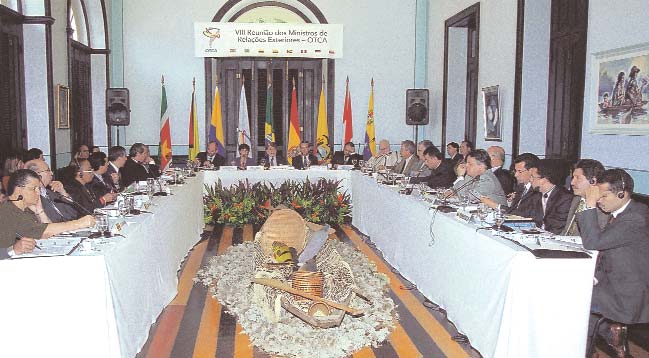
Anne
Anne x
x
Resolution n.
RES/VIII MRE-ACTO/02
CONSIDERING the initiative by the Permanent Secretariat of endowing
the Organization with a Strategic Plan, conceived as a document mutually
agreed upon concerning the national policies of the Country Members
towards the Sustainable and Integral Development of the Amazon region,
and a navigation chart to the forthcoming years, ensuring its political, techni-
cal and financial feasibility;
RECOGNIZING the Organization's Strategic Plan as a tool with long-
term scope, to provide guidance to the tasks of its Permanent Secretariat
in the formulation, execution and follow-up of feasible projects, programs
and initiatives in the regional scope, maintaining the practice of dialogue
and consultation to the Country Members, as the major way for advancing
the purposes of the Organization;
NOTING with satisfaction the successful results of the First International
81
Meeting of the Permanent National Commissions of the Amazon
Cooperation Treaty Organization, held in Brasilia on 1 and 2 July 2004,
wherein the representatives of the Country Members and the major actors
of international organizations, civil society and researchers involved in the
Amazon issues have discussed and enriched, with their contributions, the
provisional wording of ACTO Strategic Plan;
HAVING the XII Meeting of the Amazon Cooperation Council reviewed
the consensual version of the Organization Strategic Plan (2004-2012), pre-
pared and submitted by ACTO Permanent Secretariat, which comprises the
said contributions;
DECIDE:
APPROVE the Strategic Plan of the Amazon Cooperation Treaty
Organization for the period 2004-2012, as an open document to permanent
up-dating and contributions of the State Members;
Signed in the city of Manaus, Brazil, on the fourteenth day of the month
of September 2004.

Amazon Cooperation Treaty Organization (ACTO)
Permanent Secretariat
SHIS QI 5 Conjunto 16 Casa 21
Lago Sul - Brasilia-DF, Brazil
CEP 71.615-160
Telephone: (5561) 248 4119/4132 Fax: (5561) 248 4238
www.otca.info
Bolivian Vice-Ministry of Tourism
Document Outline
- Montagem Ingles.pdf
- otca_plano_ingles.pdf
- Montagem Ingles.pdf
- otca_plano_ingles.pdf
- Capa versao ingles.pdf
- Montagem Ingles.pdf