GEF Project Document Cover Page
________________________________________________________________________
1. Identifiers
Project Number: RER/01/G33/A/1G/31
PIMS: 2183
Project Name: Control of eutrophication, hazardous substances and related measures for rehabilitating the Black Sea ecosystem: Phase 1
Project Duration: 2 Years (followed by 3 year Phase 2)
Implementing Agency: UNDP, in association with UNEP and the World Bank
Executing Agency: UNOPS
Requesting Countries: Bulgaria, Romania, Georgia, Russian Federation, Turkey and Ukraine
Eligibility: Eligible under para. 9(b) of GEF Instrument
GEF Focal Area: International Waters
GEF Programming OP#8: Waterbody-Based Operational Program
Framework
Summary
The long-term objective of the project is to assist the beneficiary countries to take measures to reduce nutrient levels and other hazardous substances to such levels necessary to permit Black Sea ecosystems to recover to similar conditions as those observed in the 1960s. This will be achieved through a process of adaptive management in which agreed common targets are pursued throughout the 17 country Black Sea Basin. The present project will assist the coastal countries to meet the agreed first target (maintenance of nutrient loads at their 1997 levels) and to set the subsequent target using the best available scientific information coupled with benefit/cost studies and political pragmatism. The current project will also help to reduce fisheries pressure on sensitive habitats and contribute towards rational fisheries management.
Major outputs will include a sustainable coordinating and consultative mechanism (with all 17 Basin countries); revision of the legal protocols governing management of pollution and resource use in the Black Sea; new sectoral policies and laws to be implemented nationally in each coastal State; objective State of the Black Sea reports including new information gathered from remote sensing and conventional measurements; a comprehensive system of indicators of process, stress reduction and environmental status; enhanced public participation, partly through a region-wide programme of small projects for nutrient control and support to environmental NGOs; enhanced economic instruments tailored to the realities of each coastal country; a new portfolio of investment projects; and a rational agreement on fisheries management that takes full account of the conditions necessary for habitat recovery.
This component of GEF Black Sea Programmatic Approach covers the Black Sea and its coastal zone and those river basins not included within the Danube or Dnipro GEF projects. The three projects, together with the World Bank/GEF Strategic Partnership will coordinate their activities closely through regular joint planning sessions and consultations. The Programmatic Approach represents an innovation in project design that should be replicable in other regions and enhances the global benefits of the constituent projects.
3. Costs and Financing (Millions US $):
GEF Financing
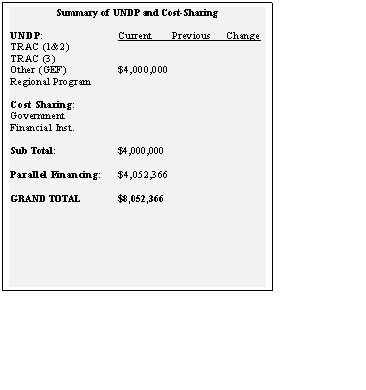
PDF-B US$ 349,920
(Phase 1):
Project US$ 3,703,700
Project Support Costs US$ 296,300
Sub-total GEF US$ 4,349,920
Co-financing:
National Governments US$ 1,150,000
EU-Tacis US$ [2,440,000]
UNDP US$ 240,000
Others US$ 115,000
Sub-total, Co-financing: US$ 3,945,000
Total Project Cost (Phase 1): US$ 8,294,920
________________________________________________________________________
4. Baseline (Million US $): [1] US$ 10,149,920
5. GEF Operational Focal Point Endorsements:
See Annex 3
6. IA Contact:
Mr. Andrew Hudson
UNDP
DC 1 Building
304 E. 45th Street
New York, NY 10017
Tel. (212) 906-6379
Fax. (212) 906-5102
e-mail: andrew.hudson@undp.org
UNITED NATIONS DEVELOPMENT PROGRAMME
Regional Project with participation from the governments of:
Bulgaria, Georgia, Romania, Russian Federation, Turkey, Ukraine
Project Budget Number:
RER/01/G33/A/1G/31
Project Title:
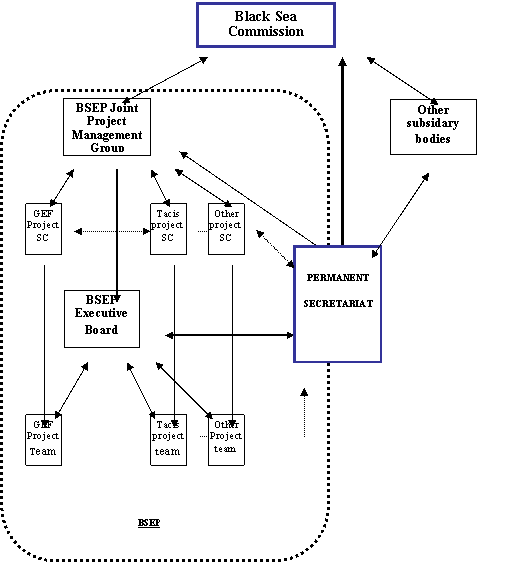
Control of eutrophication, hazardous substances and related measures for rehabilitating the Black Sea ecosystem: Phase1
Project Short Title:
Black Sea Ecosystem Recovery Project
Executing Agent:
UNOPS
Implementing Agent:
UNOPS
GEF Implementing Agency:
UNDP
Project site:
Istanbul, Turkey
Beneficiary Countries:
Bulgaria, Georgia, Romania, Russian Federation, Turkey, Ukraine
Estimated Start Date: December 2001
Estimated End Date (Phase1): December 2003
Classification Information
ACC sector & sub-sector Primary type of intervention
0400 – Natural resources
0410 – Water resources planning and development
DCAS sector &sub-sector Secondary type of intervention
Primary area of focus/ sub-focus Primary target beneficiaries
Secondary area of focus/ sub-focus Secondary target beneficiaries |
Programme Officer: Nick Remple, Regional Coordinator, UNDP-GEF RBEC
Brief Description
The project will support Black Sea regional aspects of the Black Sea Partnership for Nutrient Control. It will assist and strengthen the role of the Black Sea Commission (of the Bucharest Convention for the Protection of the Black Sea against Pollution) and ensure the provision of a suite of harmonised legal and policy instruments for tackling the problem of eutrophication, and release of certain hazardous substances, and to facilitate ecosystem recovery. An important feature of the project is its encouragement of broad stakeholder participation. This will be achieved by inter-sectoral co-ordination, the provision of small grants to local initiatives and support for public information and environmental education. The project will also enable a new suite of indicators for monitoring the effectiveness of the measures taken by the Partnership. These indicators, together with targeted scientific studies, will help to set new regional nutrient control targets within the concept of adaptive management. The PDF-B study has revealed that making a remarkable progress in the attainment of these objectives would require at least a five years of concerted action at the wider basin level. Unfortunately, owing to funding constraints, a two-phased approach had to be taken for the implementation of the overall strategy. Phasing was based on a reconsideration of the relative priorities of achieving certain targets and evaluation of the need for earlier delivery of certain project outputs which will be essential inputs for the implementation of other activities envisaged for the 5 years integrated project. . The current project will be part of the broader multi-donor Black Sea Environmental Programme and clear mechanisms will be established for donor co-ordination and for co-ordination and the sharing of objectives with the Danube and Dnipro GEF Projects.
|
On behalf of the Governments of: |
Name |
Date |
Signature |
|
Bulgaria |
------------------------ |
--------------
|
------------------------ |
|
Georgia |
------------------------ |
--------------
|
------------------------ |
|
Romania |
------------------------ |
--------------
|
------------------------ |
|
Russian Federation |
------------------------ |
--------------
|
------------------------ |
|
Republic of Turkey |
------------------------ |
--------------
|
------------------------ |
|
Ukraine |
------------------------ |
--------------
|
------------------------ |
On Behalf of:
|
UNDP |
------------------------ |
--------------
|
------------------------ |
|
UN OPS |
------------------------ |
--------------
|
------------------------ |
TABLE OF CONTENTS
|
A CONTEXT
a. Background information
b. Development problem
c. Previous experiences and lessons learned by international partners
d. The development goal
· Introduction
· Long and medium term objectives
e. Strategy for attaining project objectives
f. Beneficiaries
g. The regulatory framework
· International legal instruments: The Bucharest Convention
· Policy tools: The Odesa Declaration and the BSSAP
· Programmatic framework: The Black Sea Environmental Programme
· National legal and policy tools
h. National resources and commitment
B STRATEGY FOR USE OF UNDP/GEF RESOURCES
a. Relationship to UNDP’s mandate
b. Identification of alternative strategies
c. Relationship to the GEF International Waters Focal Area
C IMMEDIATE OBJECTIVES, OUTPUTS, INDICATORS, AND ACTIVITIES
Component I Co-ordination, Institutional Capacity Building and Legal Reform
Objective 1 Support the integration of a sustainable Secretariat for the Bucharest Convention
Objective 2 Regional actions for improving land-based activities (LBA) and legislation to control eutrophication and for tackling emergent problems
Component II. Sectoral legal and policy reforms, monitoring and evaluation of nutrient control measures and reviewing targets for adaptive management
Objective 3. Assist countries to improve their knowledge of the process of eutrophication in the Black Sea
Objective 4. Introduce new sectoral laws and policies and a system of process, stress reduction and environmental status indicators for monitoring the effectiveness of measures to control eutrophication (and hazardous substances where appropriate) Committees
Objective 5. Support the Commissions in their periodic review of Adaptive Management objectives
Component III. Supporting public involvement in nutrient control
Objective 6. Assist the public in implementing activities to reduce eutrophication through a programme of grants for small projects and support to regional NGOs
Component IV. Innovative economic instruments for the control of eutrophication
Objective 7. Formulate proposals for market-based or alternative economic instruments for limiting nutrient emissions to the Black Sea and establish private-public sector partnerships for environmental protection
Component V Sustainable exploitation of fish stocks as part of an ecosystem approach
Objective 8. A fisheries exploited within its maximum sustainable yield and incorporating measures to protect ecologically sensitive areas.
D INPUTS
a. Government Inputs
b. GEF Inputs
c. UNDP Inputs
d. UNEP Inputs
e. EC-Tacis Inputs
E RISKS AND PRIOR OBLIGATIONS
a. Risks and steps taken to minimise them
b. Prior obligations and prerequisites
F INSTITUTIONAL FRAMEWORK AND IMPLEMENTATION ARRANGEMENTS
a. Institutional Framework
b. Implementation Arrangements
c. Arrangements for preparing and updating workplans
d. Accounting a reporting mechanisms
e. Reporting requirements
f. Description of host institution arrangements
g. Coordination mechanisms
· Internal Coordination mechanisms
· Regional Institutions
· National Institutions
· External Coordination mechanisms
G MONITORING AND EVALUATION
H LEGAL CONTEXT
I WORKPLAN
J BUDGET
a. Budget lines
b. Budget description and abbreviated terms of reference ANNEXES
ANNEX I. Job descriptions for the PIU staff
ANNEX II. Terms of Reference for the International Study Group (ISG)
ANNEX III. Details of project components to be executed by UNEP
ANNEX IV. Details of relevant decisions of the Commission for the Protection of the Black Sea against Pollution (BSC)
A. Terms of Reference for the BSEP Joint Project Management Group (JPMG) and the BSEP Executive Board
B. Headquarters Agreement between the Government of the Republic of Turkey and the Commission on the Protection of Black Sea Against Pollution
C. Work-programme and budget of the Black Sea Commission within the duration of the project
D. Draft Memorandum of Understanding between the BSC and the ICPDR
ANNEX V. Cooperative arrangements with the European Commission (copy of relevant documentation)
ANNEX VI. Copy of host country agreement
FIGURES
FIGURE 1. Programmatic and institutional framework
FIGURE 2. Implementation arrangements for the Black Sea regional project (responsibilities matrix)
TABLES
TABLE 1. Summary of immediate objectives, outputs, indicators, and activities
TABLE 2. Risks and steps taken to minimise them
TABLE 3. Workplan
TABLE 4- Budget description |
8
8
10
12
13
13
13
14
14
15
16
16
17
19
19
20
20
20
21
22
23
23
23
25
27
27
29
32
33
33
35
35
36
36
52
52
52
53
54
54
56
56
65
65
65
71
79
79
80
80
81
81
81
82
84
85
85
86
92
92
93
98
98
108
110
114
114
120
126
143
145
171
67
76
39
58
86
92
|
ACRONYMS/ABBREVIATIONS
AC Activity Centre
APR Annual Project Review
BSC (Istanbul ) Commission for the Protection of the Black Sea Against Pollution (the body responsible for the implementation of the Bucharest Convention)
BSEC Black Sea Economic Cooperation
BSEEP Black Sea Environmental Education Project
BSEP Black Sea Environmental Programme
Black Sea NGOs Project's networking arrangement for Black Sea NGOs
CEC Commission of European Communities (European Union)
CTA Chief Technical Adviser
FAO Food and Agriculture Organisation of the United Nations
GEF Global Environment Facility
GEF LEARN Learning Exchange and Resource Network
GEF TRAIN-SEA-COAST TRAIN-SEA-COAST Programme funded by the GEF
ICPDR International Commission for the Protection of the Danube River
IOC (of UNESCO) Intergovernmental Oceanographic Commission
IMO International Maritime Organisation
ISG Ad-hoc International Study Group for eutrophication in the Black Sea (established by the PIU)
IW International Waters
JPMG Joint Project Management Group (for the project between the BSC and the IAs/donors)
JWG Joint Working Group of the ICPDR and BSC (may be extended to the Dnipro Comm. etc.)
M&E Monitoring and Evaluation
MOE Ministry of the Environment (exact title and status varies between countries)
MPA Marine Protected Area
NGO Non-Governmental Organisation
NPC National Project Coordinator appointed by the respective Governments
OP GEF Operational Program
PDF-B Project Development Facility of the GEF
PIU Project Implementation Unit of the current project
PIR Project Implementation Review
PPS Public Participation Specialist
SAP GEF Strategic Action Program
SC Steering Committee established for the execution of the current project
STAP GEF Scientific and Technical Advisory Panel
Sectoral Focal Point Person or persons specifically responsible for this programme within a given national sector
Technical Focal Point Person or institution responsible for providing national specialist input to a given Advisory Group
TDA Transboundary Diagnostic Analysis
TOR Terms of Reference
UNDP-COs Country Offices of the United Nations Development Programme
UNDP-GEF UNDP – GEF Unit
UNEP United Nations Environment Programme
UNOPS United Nations Office for Project Services
WB World Bank
WHO World Health Organisation
WMO World Meteorological Organisation.
WWF World Wide Fund for Nature
WWTP Waste Water Treatment Plant
A. CONTEXT
(a) Background Information
1. Following the signing of the Convention for the (Bucharest) Convention on the Protection of the Black Sea Against Pollution in 1992, international support was provided to the Black Sea coastal states for facilitating the implementation of the Convention. The UNDP/GEF, through the Black Sea Environmental Programme which consists of two consecutive regional project implemented between 1993 -1998, has been instrumental in helping to convert the political commitment made by the Convention to regional action. The European Community (through its Phare and Tacis Programmes) and a number of other bilateral donors provided additional support to this regional initiative, which broadened the coverage of the Bucharest Convention to sustainable development of the marine and coastal areas of the Black Sea, and enhanced the regional management capacity. During this period, the regional coordinating organ envisaged by the Convention (Black Sea Commission and its Secretariat) also became operational and is currently exercising its legal and political authority and responsibilities.
2. GEF intervention enabled identification of environmental problems threatening the Black Sea marine and coastal ecosystems; elaboration of a Transboundary Diagnostic Analysis - which not only indicated the problems beyond national jurisdictions, but also their root causes as well as actions proposed to eliminate them-, adoption of the Strategic Action Plan for the protection and Rehabilitation of the Black Sea; development of National Action Plans compatible with the regional SAP; establishment of a regional network of institutions responsible for further developing and implementing different components of the Plan; enhancing the capacity of these institutions for better environmental management through training and policy analysis / development; and elaboration of a list of projects consisting of largest domestic &industrial waste water sources and of all sources emitting toxics in coastal countries (hot spots analysis), out of which a portfolio of 49 investment projects[2] of regional significance[3] was also prepared. It was calculated that implementation of these investments which comprise of construction of new facilities, extension, rehabilitation/upgrading of existing infrastructure, in-plant precautions, would reduce the pollution emerging from the coastal states to a very high extent[4]. On the other hand, the TDA has indicated that 30 % percent of the nutrients (mainly nitrogen and phosphorus compounds) which causes the most severe problem of the Black Sea in terms of its coverage and impacts on ecosystems, eutrophication, was emerging from countries other than the coastal ones which are located in the wide water catchment basin of the Black Sea.
3. In accordance with the outcomes of the previous interventions in the region, the Black Sea Commission and the International Commission for the Protection of the Danube River Basin have initiated the first contacts on a wider Black Sea basin scale, and have received GEF PDF-B funding with a view to further develop legal, policy and technical measures to reduce the discharges of nutrients and other toxic substances in the Danube and in the Sea itself. The projects that have been thus prepared are comprehensive of reduction of pollution from point and non-point sources, conservation of wetlands, floodplains, and critical marine habitats (in particular fisheries spawning and nursery areas), setting of water quality standards, prevention of accidental pollution, floods and river basin management. The two integrated project proposals requiring GEF assistance for a total of five years, and accompanying investment support shall complement the activities of the BSC and the ICPDR.
4. The new GEF assistance, i.e. Black Sea -Danube River Basin Strategic Partnership is designed as three complementary components:
i. two Regional Projects for the Black Sea and the Danube River Basin which will be implemented in two Phases between (2002- 2003) and (2004- 2006);
ii. a series of country-related investment projects executed through the World Bank-GEF Nutrient Investment Facility ;
iii. other GEF and donor interventions in the basin targeting reduction of nutrients/toxic pollutants and restoration of critical habitats.
The GEF Black Sea/Danube Basin Strategic Partnership shall provide assistance to the BSC and ICPDR to reinforce their activities in terms of policy/legislative reforms and enforcement of environmental regulations (with particular attention to the reduction of nutrients and toxic substances). The regional projects, individually and jointly, will facilitate a coherent approach for policy and legislative measures to be introduced by the participating countries at the national, regional and wider basin levels. The two regional projects, and the Nutrient Investment Facility shall cross-fertilise each other through inter alia, demonstrating the efficiency and environmental effectiveness of laws and policies to be introduced by the regional projects in investment projects implemented under the Nutrient Investment Facility, thus enhancing their replicability; elaborating and implementing the most suitable and feasible mix of management instruments, including the economic instruments; highlighting the significance of certain interventions -investments- in terms of environmental-economic costs and benefits etc.
5. Through the PDF-B funding a comprehensive project proposal of 5 years duration aiming to address the three highest priority transboundary problems of the Black Sea (namely eutrophication, discharge of toxic substances including oil, loss of critical benthic habitats and wetlands) and to highlight emerging ones was prepared. However, due to funding constraints experienced by the GEF, the Black Sea Ecosystem Recovery Project proposal, alike the Danube River Basin Project had to be split into two implementation Phases. The third component of the Strategic Partnership, the Nutrient Investment Facility was also phased -into three- owing to the same funding constraints. The new implementation schedule adopted for the Strategic Partnership was as follows:
· May 2001 tranche- Black Sea regional project: Control of eutrophication, hazardous substances and related measures for rehabilitating the Black Sea ecosystem: Phase 1. 2 year technical assistance, with a budget of 4,000,000$ (excluding the PDB-B funding of 349,920$); First envelope of Nutrient Investment Facility (Black Sea and Danube basin countries): 20 million $.
· December 2001 tranche- $); Second envelope of Nutrient Investment Facility : 25 million $.
· May 2002 tranche- Black Sea regional project: Control of eutrophication, hazardous substances and related measures for rehabilitating the Black Sea ecosystem: Phase 2, consisting of 3 years technical assistance, with a budget of 5,555,000 $.
· November 2002 tranche- Third envelope of Nutrient Investment Facility: 25 million $.
6. In phasing the comprehensive Black Sea regional project prepared under the PDF-B and submitted for the November 2000 Council Meeting, the total duration ( 2 years followed by 3 years, in total five years), and the total budget of the regional project (with 349,000$ for PDF-B, 4,000,000$ for Phase 1, and 5,555,000 for Phase 2) have been left as same. The immediate objectives, planned activities and expected outputs that are included in the original proposal have also been preserved, but were distributed among the two phases taking the following concerns into consideration:
· Logical sequencing of tasks (such as postponing the tasks that require the availability of the products of earlier activities as input, and vice versa);
· Compatibility with the Commission's own work-programme and the need for responding to its immediate needs;
· Not distorting the budgetary allocations made in the original proposal for various project components;
· Achieving concrete results in the first phase which the Commission's network itself would be able to sustain onwards, and which would be further enriched and replicated during the second phase.
7. Effective implementation of the first phase of the project which was approved by the GEF Council at its 9-11 May 2001 meeting, timely delivery of its outputs, enhanced commitment of the beneficiary countries at the national as well as at the regional level are the most important factors which will contribute to the achievement of the long term objective of reducing the levels of nutrients and other hazardous substances to such levels necessary to permit Black Sea ecosystems to recover to similar conditions as those observed in the 1960s. These are at the same time basic indicators which will warrant GEF and other donor support following the completion of the first phase.
(b) Development problem
Introduction
8. The Black Sea is one of the most remarkable regional seas in the world. It is almost cut off from the rest of the world’s oceans but is up to 2212 metres deep and receives the drainage from a 2 million square kilometre basin, covering about one third of the area of continental Europe. Its only connection is through the winding Istanbul (Bosphorus) Straits, a 35 Km natural channel, as little as 40 metres deep in places. Every year, about 350 cubic kilometres of river water pour into the Black Sea from an area covering almost a third of continental Europe and including significant areas of seventeen countries: Austria, Belarus, Bosnia and Herzegovina, Bulgaria, Croatia, Czech Republic, Georgia, Germany, Hungary, Moldova, Slovakia, Slovenia, Romania, Russia, Turkey, Ukraine, Yugoslavia. Europe’s second, third and fourth rivers (the Danube, Dnipro (Dnipro) and Don) all flow to the Black Sea. The Istanbul Straits has a two layer flow, carrying about 300 cubic kilometres of seawater to the Black Sea from the Mediterranean along the bottom layer and returning a mixture of seawater and freshwater with twice this volume in the upper layer.
9. Isolation from the flushing effects of the open ocean, coupled with its huge catchment, have made the Black Sea particularly susceptible to eutrophication (the phenomenon that results from an over-enrichment of the sea by plant nutrients). Eutrophication has led to radical changes in the Black Sea ecosystem in the past three decades with a major transboundary impact on biological diversity and human use of the sea, including fisheries and recreation. The North Western shelf of the Black Sea for example, was converted from a unique system based upon rich and extensive beds of red algae and bivalves, to an anoxic “dead zone”, the seasonal occurrence of which persists until present time. The nitrogen and phosphorus compounds triggering eutrophication come from all over the Black Sea Basin. The Black Sea Transboundary Diagnostic Analysis (1996) indicates that, in 1992, 70% of the nutrients were coming from the six Black Sea countries (three of which - Romania, Bulgaria and Ukraine - discharge much of their nutrient load through the Danube) and the remaining 30% comes from the non-coastal countries, mostly of the upper Danube. Studies by the Danube Basin Environmental Programme suggest that about half the nutrients discharged to the river are from agriculture, one quarter from industry and a similar proportion from domestic sources. The current loads of nutrients entering the Black Sea from the Danube has fallen in recent years due to the collapse of the economies of most lower Danube and former Soviet countries, the measures taken to reduce nutrient discharge in the upper Danube countries, and the implementation of a ban in polyphosphate detergents in some countries. Current phosphate levels appear to be roughly the same as in the 1960s but total nitrogen levels are still at least four times as high as those observed during that period. There is evidence of some recovery in Black Sea ecosystems but these observations lack scientific rigour owing to the collapse of infrastructure to monitor and evaluate changes in the system. It is widely considered however, that nutrient discharges are likely to rise again with consequent damage to the Black Sea, unless action is taken to implement nutrient discharge control measures as part of the economic development strategies.
10. Failure to tackle the problem of eutrophication in a holistic manner would severely constrain future development in the region. Activities such as tourism development, fisheries, public health, are intimately related to the quality of shared marine waters. Resolving the problem is not merely a matter of reducing the discharge of nutrients but involves protective measures to help vital ecosystems to become re-established, fisheries and other living resources to be exploited in a sustainable manner and chemical contamination to be strictly controlled. The present project adopts the necessary integrated strategy and is a vital component in a wider GEF Black Sea Basin Strategic Partnership that includes separate GEF interventions in the Danube and the Dnipro, a number of biodiversity projects and the World Bank GEF Nutrient Investment Facility (to provide the necessary support for key investment actions).
(c) Previous experiences and lessons learned by international partners
11. Prior to the 1990s, little or no action had been taken to protect the Black Sea. Political differences during the Soviet era, coupled with a lack of general knowledge of the environmental situation resulted in an absence of effective response. Perestroika changed this By 1992 the Black Sea countries were ready and willing to co-operate. They had just signed the Bucharest Convention. However they still lacked the policies which would enable necessary measures to protect the sea. Agenda 21 provided a good model for a first Black Sea Ministerial Declaration, the Odessa Declaration. Indeed, the Black Sea was the first region to take up the challenge of Rio. This inspired the GEF and other donors, particularly the European Union, to provide more than US$17 million support to the region to help implement the Odessa Declaration and to formulate the longer-term Black Sea Strategic Action Plan.
12. The Black Sea Environmental Programme (BSEP, see section (f, iii)) was launched in June 1993. The Programme included a number of interventions by the GEF (and other donors), the first of which was entitled ‘Project for the Environmental Management of the Black Sea, approved under the GEF Pilot Phase). Its first task was to help create a strong international network of institutions, specialists and other stakeholders. The BSEP established its headquarters in Istanbul with the support of the Government of Turkey. The Programme was governed by a Steering Committee that included senior government officials from all Black Sea countries, the sponsoring organisations (the GEF and other donors), and representatives of the Black Sea NGO forum (as observers). In order to spread the technical responsibilities of the programme throughout the region and to make best use of the excellent specialists in the region, a system of Regional Activity Centres and Working Parties was devised. Each country agreed to sponsor one of its existing institutions as a regional centre for a particular field of expertise. The regional centres in turn organised Working Parties, specialist networks involving institutions from all six Black Sea countries. Using this structure, it was possible to bring together specialists who had sometimes not been able to co-operate previously. All of the institutions were provided with equipment (computers, analytical instruments, etc.) and specialist training and a new and productive dialogue began.
13. The BSEP Working Parties completed a series of background studies that enabled a Transboundary Diagnostic Analysis to be finalised in June 1996. On the basis of this comprehensive report senior government officials negotiated the Black Sea Strategic Action Plan (BS-SAP), signed on October 31st at a Ministerial Conference in Istanbul. The consensus on the BS-SAP was very broad. It provides a very modern approach to environmental policy making and agrees on the following key matters:
· That the principle cause for the decline of the Black Sea ecosystem is eutrophication;
· That without full co-operation with riparian countries of the main tributary rivers (Danube and Dnipro) this problem cannot be addressed;
· That the institutional structure of the BSEP should be incorporated into that of the Istanbul Commission for the Bucharest Convention;
· That an adaptive management approach should be adopted for the control of pollution in the Black Sea;
· That biological diversity and fisheries concerns should be part of the future agenda of the Commission;
· That greater stakeholder participation and transparency should be ensured (in line with the provisions of the Aarhus Convention.
14. Following the signature of the BS-SAP, GEF funding was sustained, albeit at a lower level, in order to enable countries to complete National Black Sea Strategic Action Plans and for the negotiations on the institutionalisation of the Istanbul Commission’s Secretariat to be completed. This was a very protracted three-year process as countries struggled to overcome technical and legal issues of establishing the Secretariat. In the meantime however, progress was made in implementing part of the BS-SAP thanks to GEF seed money and considerable support from the European Commission by Tacis or and DG XI (currently DG Environment). The main achievements were:
· Establishment of the ad-hoc technical working group with the ICPDR and joint analysis of the problem of eutrophication in the Black Sea, including recommendations for target for nutrient control;
· Continued support to the BSEP Activity Centres and real progress through demonstration projects in the areas of data quality control, oil spill response, coastal zone management, aquaculture and biological diversity;
· Strengthening of the programme for public participation, particularly through the Tacis small grants initiative, largely focussed on actions around Black Sea (as a reminder of commitments to the BS-SAP);
· Publication of the State of Pollution in the Black Sea report and the Black Sea Red Data Book;
· Agreement on a new set of water quality objectives to propose to the BSC as required by the BS-SAP.
15. In April 2000, a breakthrough was finally made in the negotiations for establishing the Commission’s Secretariat (see section (f)). The Secretariat became operational in October 2000, following the selection of its senior officials at an extraordinary session of the BSC on September 10-11, 2000. Four countries (Bulgaria, Romania, Turkey and Ukraine) made their financial contributions to the Commission. In addition, the Republic of Turkey is providing the facilities for the Secretariat, to be shared with the PIU.
(d) The development goal
(i) Introduction
16. The objectives, expected outputs and activities of this project have been driven by the results of the TDA and the SAP that were developed by the countries as part of their work under the previous GEF projects. They are also driven by the recently published Pollution Assessment of the Black Sea (Black Sea Technical Series No. 10, UN Publications New York) the work of the ad hoc working group between the ICPDR and the BSC, and the results of the studies published during execution of the PDF-B. These studies clearly demonstrate the overriding significance of eutrophication as the transboundary issue having greatest long-term impact on the Black Sea. It is also the issue involving more stakeholders distributed over a wider geographical area than any of the other issues impacting the Black Sea. There are a number of other transboundary issues requiring attention however, some of which may be the subject of action by other donors:
· A major decline in Black Sea commercial fish stocks and non-optimal harvesting of living resources;
· Introduction of exotic species by ships and releases from aquaculture;
· High accident risk of tankers, especially in the Istanbul Straits;
· Deterioration in beach and near-shore habitat quality due to marine-based sources of oil and garbage as a result of tanker operations and disposal of garbage at sea;
· Physical destruction and alteration of coastal habitats and landscapes;
· Lack of full understanding of the distribution of toxic organic compounds.
(ii) Long and medium term objectives
17. The long-term and intermediate objectives of the project are those established by the Joint ad-hoc Working Group between the BSC and the ICPDR (1999), namely:
The long-term objective is for all Black Sea basin countries to take measures to reduce nutrient levels and other hazardous substances to such levels necessary to permit Black Sea ecosystems to recover to similar conditions as those observed in the 1960s.
As an intermediate objective, urgent control measures should be taken by all countries in the Black Sea basin, in order to avoid that discharges of nitrogen and phosphorus to the Black Sea exceed those levels observed in 1997. This will require countries to adopt and declare strategies that permit economic development whilst ensuring appropriate practices and measures to limit nutrient discharge, and to rehabilitate ecosystems which assimilate nitrogen and phosphorus. This target, monitored and reported annually, shall be reviewed in 2007 with a view to considering further measures which may be required for meeting the long-term objective.
This project has been developed and coordinated in parallel with the World Bank/GEF Partnership Investment Facility for Nutrient Reduction to help stimulate investments towards these goals.
(e) Strategy for reaching the objectives
18. The main focus of the current proposal is the issue of eutrophication. This requires coordinated actions to achieve three sub-objectives:
· Reduction of the nitrogen and phosphorus loads to the Black Sea;
· Enhancement of the service function of wetlands and benthic (seabed)
plant communities for the assimilation of nutrients;
· Improved management of critical habitats to permit economic recovery of
fisheries in parallel with improvements to the ecosystem.
In addition to the above, and where appropriate, attention will also be given to transboundary contamination by hazardous substances, particularly where these have similar sources to nutrients. Phase 2 of the project will give attention to oil pollution (a significant problem in the Black Sea), by further developing and implementing measures that may reduce the risk of spillage by ships.
19. The actions identified in the current project are far-reaching and involve activities by the national and local governments, regional organisations, the GEF, other donors, the private sector, NGOs and the public in general. Eutrophication on the Black Sea results from the failure of a wide range of sectors to understand the relationship between their activities and the decline of remote marine and coastal ecosystems. Reversal of this situation requires: (a) better understanding of the situation at all levels; (b) common environmental objectives; (c) a reappraisal of values, both economic and ethical; (d) the availability of cost-effective practical alternatives to current practices; (e) their institutionalisation in education, policy and law, (f) effective structures for implementation; and (g) statutory procedures for monitoring compliance, trends and emerging issues. The current project seeks to address each of these requirements in order to control eutrophication in a sustainable manner.
20. Effective reduction of eutrophication in the Black Sea requires the full co-operation between all 17 countries within the Basin. The present project builds on the co-operation already established between the BSC and the ICPDR, extending this further to include the proposed Dnipro Commission. The cooperation builds on a process of joint goal setting based upon the adaptive management approach. It will enable the Basin countries to complete the first iteration in this process and to set new targets for the future, based upon objective technical information and pragmatic economic considerations.
(f) Beneficiaries
21. The current project is expected to result in a wide spectrum of beneficiaries, especially when taking into account the long-term implications for sustainable development in the Black Sea region. In the shorter term, the beneficiaries are described as follows:
· The Commission for the Bucharest Convention (BSC) – through a greatly enhanced capacity to fulfil its mandate with respect to the implementation of the Bucharest Convention and the BS-SAP;
· National Governments – through support with the development and co-ordination of effective policies to tackle the problem of eutrophication (as well as other forms of transboundary pollution) and the rehabilitation of the Black Sea ecosystem;
· Local Governments – by improved participation in tackling environmental issues that are beyond their immediate jurisdiction and by sharing experiences with others on ways of doing this;
· Non-Governmental Organisations – through support with their work, focussed on local-level efforts designed to contribute significantly to the overall objectives of the project;
· Teachers, educational establishments, and major stakeholder groups, such as farmers and fishermen– by providing information, materials and networking to support their essential role in empowering society to resolve and prevent key environmental issues affecting the integrity of the Black Sea and the sustainable use of its resources:
· Public at large, through improved water quality and public health conditions, and rehabilitation of recreational values.
22. Successful implementation of the project will result in global benefits. These result from the contribution that a healthy Black Sea ecosystem will make to reducing environmental stress on the global marine environment, the global importance of conserving habitats and biological diversity, and the replicability value of a project that addresses one of the major threats to regional seas world-wide.
(g) The regulatory framework
(i) International legal instruments: The Bucharest Convention
Approval
23. The Convention and its three Protocols[5] were adopted by the Diplomatic Conference on the Protection of the Black Sea against Pollution held in Bucharest on 21 April 1992, and deposited with the Government of Romania. The Convention, as well as the Land-Based Sources Protocol and the Emergency Response Protocol, entered into force on 15 January 1994, in accordance with Art. XXVIII of the Convention, i.e. sixty days after their fourth ratification.
Structure and contents
24. The name “Bucharest Convention” actually refers not only to the framework convention itself, the Convention for the Protection of the Black Sea, but also to its five Resolutions, and three Protocols: the Land-Based Sources Protocol, the Emergency Response Protocol, and the Dumping Protocol. The Land-Based Source Protocol and Dumping Protocol are accompanied by annexes containing so-called black and grey lists. In accordance with general practice, pollution by the substances and matter on the black lists (annex I), categorised as hazardous, needs to be prevented and eliminated by the Contracting Parties. Pollution by substances on the grey lists (annex II), categorised as noxious, need to be reduced and where possible eliminated. In the case of land-based sources, there is an additional Annex III, which prescribes restrictions to which discharges of substances and matters listed in annex II should be subject to. Furthermore, dumping of wastes and materials containing the noxious substances contained in annex II requires a prior special permit from “the competent national authorities”, while, according to annex III, dumping of all other wastes and materials requires a prior general permit.
25. The Convention addresses five of the six generally recognised sources of marine pollution land-based (in Art. VII and Protocol), vessel-source (Art. VIII), ocean dumping (Art. X and Protocol), exploitation of the seabed of the continental shelf or margin (Art. XI), from or through the atmosphere (Art. XII). The only source not covered is exploitation of the seabed of the international area, simply because the Black Sea does not contain territory which falls under this definition. It also deals extensively with emergency response (Art. IX and Protocol), a term which refers to the use of techniques to prevent pollution arising from accidents, since the Black Sea.
Implementation
26. The provisions of the Bucharest Convention require implementation by the six Contracting Parties: the Black Sea coastal states. They are, bound to implement the provisions since the Convention is part of the legislation of all six countries. In practice however, some countries were not immediately capable to implement it, mostly because of economic constraints. The Convention does not provide for special enforcement techniques, such as a dispute settlement mechanism (the traditional enforcement technique, which is however not necessarily useful in case of environmental matters, where prevention rather than resolving or restoration is required) or a compliance reporting procedure, but, “in order to achieve the purposes of the Convention”, it does provide for the establishment of a Commission for the Protection of the Black Sea, which shall consist of at least one representative of each Contracting Party. (Art. XVII). The Commission shall, inter alia, promote the implementation of the Convention, inform the Contracting Parties of its work, and assist them by making recommendations on measures necessary for achieving the aims of the convention, and on recommendations of possible amendments to the convention and protocols (Art. XVIII). The Convention further determines that the “Commission shall be assisted in its activities by a permanent Secretariat” (Art. XVII).
As a result of economic difficulties and the need to resume host country agreements, there was a considerable delay before the Secretariat became operational. This finally occurred in September 2000 and it is now fully functional, albeit with reduced number of staff.
(ii) Policy tools: The Odesa Declaration and the BSSAP
The Odessa Ministerial Declaration
27. The Bucharest Convention itself is a legal and diplomatic tool for joint action and does not set out to establish environmental policy goals (e.g. targets for reducing the loads of specific pollutants etc.). It also does not establish any regulatory mechanism for exploitation or development of the natural environment (e.g. straddled marine resources or specially protected areas). In order to develop a common policy framework, a clear "Declaration of Environmental Quality Objectives" was considered necessary. Following the initiative of the Government of Ukraine and employing the stewardship of UNEP, a Ministerial Declaration was formulated during nine months of negotiations and signed by all six countries in Odessa in April 1993 (the “Odessa Declaration”). This Declaration was a pragmatic and innovative policy statement that sets environmental goals and a time frame to guide management regimes and associated investments. It was the first policy agreement on regional seas to reflect the philosophy of UNCED, Agenda 21, and features a heavy emphasis on accountability, periodic review and public awareness. These features represented a major conceptual shift in a public statement from countries of the region, particularly those emerging from totalitarianism.
28. The Odessa Declaration consists of a preamble, a general policy statement and nineteen specific actions. These actions were designed to facilitate the rapid development of practical measures for controlling pollution from land-based and marine sources (including the harmonisation of environmental standards); to restore, conserve and manage natural resources; to respond to environmental emergencies; to improve the assessment of contaminants and their sources; to introduce integrated coastal zone management policies and compulsory environmental impact assessments; and to create a transparent and balanced mechanism for reviewing and updating the Declaration on a triennial basis. The Declaration was designed to provide a basis for a flexible but continuous process for taking decisions on coordinated national action towards common goals at present and in the future. Its clear objectives and specific time-frames were to guide and stimulate implementation of the Bucharest Convention. On the 7th of April 1996 the first triennium came to its end. A report commissioned by UNEP evaluated to what extent the Odessa Declaration has succeeded to serve as ‘agenda’ for implementation of regional measures, in accordance with the Bucharest Convention. The results of this analysis were encouraging even despite the lack of formal implementation of the Bucharest Convention. The Odessa Declaration had given a strong signal to donors, particularly the newly created Global Environment Facility, that the Black Sea countries were willing and able to cooperate on restoring and protecting this severely damaged and unique shared environment. This paved the way for financial assistance to be granted for implementation of the Odessa Declaration.
29. The Odessa Declaration was seen from the outset as an interim policy arrangement. It signatories called upon the GEF partners to assist them with the development of a medium/long-term action plan for the protection of the Black Sea. It thus set the wheels in motion for a much more comprehensive strategy of which the Declaration itself was to be one of the building blocks.
The Black Sea Strategic Action Plan
30. The Development of the Black Sea Action Plan followed a carefully implemented technical process spanning over two years. The first step was the integration of an effective institutional network, a matter described in the previous section. The network was then asked to conduct an analysis of Black Sea problems within the field of specialisation of each “Working Party” (Biodiversity, Emergency Response, Fisheries, Pollution levels and effects, Pollution Sources, Legislation, Integrated Coastal Zone Management, etc.) The thematic analysis were conducted at a national level and then integrated regionally. In the case of sources and levels of pollution, new reliable information had to be gathered, a remarkable accomplishment in such a short time and one which required the cooperation of many national and international actors. A similar situation occurred in the case of fisheries. The thematic analyses were then gathered together and studied intensively by a group of regional and international specialists in order to construct a “Transboundary Diagnostic Analysis” (TDA) of the Black Sea.
31. The Black Sea TDA is a technical document which, in a highly analytical manner, examines the root causes of Black Sea degradation and options for actions which may be taken to address them. It examines each major environmental problem, the “stakeholders” involved in the problem (who is responsible? who has to act?) and the uncertainties in the information describing the problem (do we need more information and if so what kind?). It then proposes solutions, often giving various options and attempts to set a time frame and cost for the solutions. Some of the solutions require policy changes, some require capital investments. They are all part of a holistic management approach that does not limit itself to end-of-pipe solutions but encourages the development of more environmentally sustainable economic activities.
32. The BS-SAP[6] was developed from June to October 1996 as a direct consequence of the TDA. It is a negotiated document, prepared during a series of meetings between senior environmental officials of all six Black Sea coastal countries and adopted (following in-country cabinet consultations) at a Ministerial Conference, celebrated in Istanbul on 31 October, 1996. The Plan, only 29 pages in length, contains 59 specific commitments on policy regarding measures to reduce pollution, improve living resources management, encourage human development in a manner which does not prejudice the environment, and to take steps towards improving financing for environmental projects. In adopting this plan, the Black Sea governments have committed themselves to a process of profound reform in the manner in which environmental issues are addressed in the Black Sea and its basin.
33. Notable features of the BS-SAP include its emphasis on integration of pollution control efforts with those of the Danube River, the adoption of a system of economic instruments to regulate existing sources of pollution (and to avoid new ones), enhanced protection status for sensitive coastal and marine habitats, inter-sectoral planning and management of coastal regions and greatly improved transparency and public participation. Implementation of the BS-SAP is currently somewhat behind schedule. This does not imply that there is no implementation at all but recent reports clearly indicate that the governments are not meeting the deadlines they set for themselves. There are many reasons for this, including the delays in completing the institutional arrangements described earlier and the continuing economic difficulties confronted by many of the countries. In its April 2000 meeting, the Black Sea Commission, reiterated its commitment to oversee implementation of the BS-SAP. They also agreed to approach the GEF and the European Commission for renewed support to help them achieve this objective.
(iii) Programmatic framework: The Black Sea Environmental Programme (BSEP)
34. The support provided to the governments for implementing the Odesa Declaration and for developing and implementing the Black Sea Strategic Action Plan, took the form of a series of GEF, Tacis and Phare projects, and smaller donor initiatives, coordinated within a loosely defined programmatic framework described as the Black Sea Environmental Programme (BSEP). The BSEP ‘label’ served an important function of making the various interventions coherent and comprehensible to the public and to the governments. It is also attracted donor interest to the increasingly popular cause of ‘Saving the Black Sea’, to which the BSEP label became closely associated. The GEF project PCU became de-facto, the Secretariat for BSEP (though this arrangement was never formalised). This enabled staff from other projects (e.g. the Tacis Black Sea Project) to be seconded to the PCU and for the Directorate General for Environment of the EC to grant emergency funding to the unit during a period (1999-2000) of absence of GEF support.
35. Following the signature of the BS-SAP, the BSEP label continued to be applied to all interventions supporting the implementation of the Plan. The scope and form of the BSEP was defined by the BS-SAP though it ownership has passed to the Commission for the Bucharest Convention for the Protection of the Black Sea against Pollution (a rather more difficult title for the general public to grasp). Recently, the Black Sea Commission has agreed to formalise the BSEP as ‘a coordinated programme of interventions designed to support the implementation of the 1996 Black Sea Strategic Action Plan for the Protection and Rehabilitation of the Black Sea’ under its own aegis. Coordination of the projects within the BSEP will be ensured through the Joint Project Management Group in which all interventions in the Black Sea region at a programme or project level are represented. Relevant decision of the Commission is given as ANNEX IV.A and a schematic illustration of the programme approach is provided in Figure 1 .
(iv) National legal and policy tools
36. National legal systems for environmental protection are characterised by their diversity and rate of change. The legal systems of the former COMECON countries, heavily dependent upon strict water quality standards, are gradually being replaced by a more flexible and integrated ‘system-based’ approach. This is particularly true of the countries seeking accession to the EU (Bulgaria, Romania and Turkey) where the new EC Framework Water Directive has become the guiding principle for protecting water bodies and adjacent areas. A similar approach is being pursued in Ukraine. Most countries have a queue of new legislation awaiting parliamentary approval and environmental management depends on a mixture of laws and institutional structures from the past together with the new laws. The BS-SAP takes a pragmatic approach and recognises the need to harmonise the objectives of laws and regulations, rather than the laws themselves.
37. The BS-SAP also envisaged the development of National Black Sea Strategic Action Plans that should provide a clear policy statement, at the national level, on how the provisions of the regional SAP are to be implemented. These National Plans were developed with the help of funding from the regional GEF intervention, implemented in the period 1997-1999. GEF-PDF-B support also enabled completion of reviews of the current legal, policy and institutional provisions for limiting nutrient discharges to the aquatic environment at the national level in the year 2000.
(h) National resources and commitment
38. Each of the Black Sea Countries has a legal and institutional framework sufficient to enable its full participation in the project and has expressed its written commitment to make its own infrastructure and resources available for project implementation. As a result of previous interventions by the GEF and its partners within the framework of the BSEP, as well as country-based capacity building programmes, all six countries have received substantial support with equipment and training. The present project therefore focuses on consolidating and integrating these building blocks for the purposes of addressing the specific project objectives.
39. The level of commitment of the participating countries can be judged by the following criteria:
· All six countries have been consistent in their participation in the BSEP process in general and the UNDP/GEF projects in particular, since its establishment in 1991.
· All six countries have contributed expertise and information in the development of previous interventions, the BS-SAP and the preparation of the present project.
· All six countries are providing in-kind resources for the development of the project (the project ‘baseline’, valued at US$ 9,916,920).
· The countries have agreed to support the Secretariat of the Commission for the Bucharest Convention with a total cash contribution estimated at US$ 800,000 for the 2 –year period (yet two of the countries, Russia and Georgia, have to fulfil their commitment).
· Senior government officials are currently discussing a Ministerial meeting to reiterate their commitment to this process.
B. STRATEGY FOR USE OF UNDP/GEF RESOURCES
(a) Relationship to UNDP’s mandate
40. The principal reason for UNDP involvement in this project is that this project falls under two of the key UNDP mandates i.e. governance and environmental protection. The project, involving Bulgaria, Georgia, Romania, Russia, Turkey and Ukraine brings the countries closer together in achieving common goals. The current project was developed as part of the International Waters Portfolio of the UNDP-GEF. UNDP has been the lead agency in this process from the outset.
41. UNDP has country offices in all six beneficiary countries. The UNDP Resident Coordinator in Turkey will act as the Principal Project Resident Representative for the duration of the project.
(b) Identification of alternative strategies
Baseline
42. Governments are fully aware of the problems afflicting the Black Sea but do not feel fully empowered to resolve them. Since the early 1990s, economies have collapsed in all countries except Turkey and much of the infrastructure has deteriorated due to the need to spend limited revenues on other immediate priorities. Even routine monitoring of the Black Sea ceased from the late 1980s in all countries except Romania. However, the previous GEF interventions helped to keep protection of the Black Sea firmly on the international and national agenda and led to a number of positive actions. These included the establishment of a new policy and institutional framework, a very large capacity-building effort and pilot studies and investments (very significant ones in the case of Romania and to a lesser degree Bulgaria and Georgia). Work to support public involvement and the diffusion of information also continued. These interventions helped to raise the baseline from the 1993 inception level to the present one. They have also led to “buy in” by the governments to the Bucharest Convention Secretariat and other measures to afford better protection to the Sea itself.
43. Despite the previous projects however, the thorny central issue of eutrophication control remains. The “business as usual” development scenario would, inter alia, include projects to invest in more cost-effective agriculture and to develop waste treatment to a level that would satisfy the immediate imperative of improving public health, encourage economic recovery and protect adjacent natural areas. Such projects would be unlikely to mitigate eutrophication; indeed that would probably exacerbate it.
44. At the same time, it should be noted that economic decline has brought temporary relief to the Black Sea since the discharge of nutrients and certain hazardous substances has also decreased. There is an unprecedented opportunity to adopt a new development approach working from the current very low baseline. This window of opportunity will most likely be a very small one.
GEF Alternative
45. The GEF alternative consists of practical steps towards:
(a) better understanding of the situation at all levels;
(b) common environmental objectives;
(c) a reappraisal of values, both economic and ethical;
(d) the availability of cost-effective practical alternatives to current practices;
(e) their institutionalisation in education, policy and law,
(f) effective structures for implementation; and
(g) statutory procedures for monitoring compliance, trends and emerging issues.
46. This will be accomplished through GEF support to key measures that would be unachievable without the active co-operation of the six countries in the region, the seventeen countries in the wider basin and of the wider international community. The GEF alternative will achieve its global and regional objectives through the following immediate objectives:
1. Support the integration of a sustainable Secretariat for the Bucharest Convention
2. Regional actions for improving LBA legislation to control eutrophication and for tackling emergent problems
3. Assist countries to improve their knowledge of the process of eutrophication in the Black Sea
4. Introduce new sectoral policies and legislation, as well as a system of process, stress reduction and environmental status indicators for monitoring the effectiveness of measures to control eutrophication (and hazardous substances where appropriate)and conservation of key habitats, including wetlands and fisheries spawning and nursery areas.
5. Support the Commission in their periodic review of Adaptive Management objectives.
6. Assist the public in implementing activities to reduce eutrophication through a programme of grants for small projects and support to regional NGOs.
7. Formulate proposals for market-based or alternative economic instruments for limiting nutrient emissions and establish private-public sector partnerships for environmental protection in the Black Sea.
8. A fishery exploited within its maximum sustainable yield and incorporating measures to protect ecologically sensitive areas.
47. The Black Sea project is highly replicable. Eutrophication is a problem common to many enclosed and semi-enclosed seas and is one that is likely to increase in the future if measures are not taken to adopt practices that result in decreased nutrient discharges to rivers, the coastal zone and the atmosphere.
(c) Relationship to the GEF International Waters Focal Area
48. The project is an integral part of the GEF Danube/Black Sea Basin Programmatic Approach. This enables a process of goal setting and adaptive management for the entire 17 country 2 million square kilometres Black Sea Catchment area. The approach is fully consistent with the guidance for GEF Operational Programme Number 8, “Waterbody-based Operational Programme.” The goal of this Operational Programme is to assist countries in making changes in the ways that human activities are conducted in different sectors so that the particular waterbody and its multi-country drainage basin can sustainably support the human activities. Projects in this OP focus mainly on seriously threatened waterbodies and the most imminent transboundary threats to their ecosystems as described in the Operational Strategy. Consequently, priority is placed on changing sectoral policies and activities responsible for the most serious root causes needed to solve the top priority transboundary environmental concerns.
C. IMMEDIATE OBJECTIVES, OUTPUTS, INDICATORS, AND ACTIVITIES
49. This section of the Project Document includes detailed descriptions of the project components to be implemented, immediate objectives, outputs, activities and evaluation criteria. This material is drawn from the approved Project Brief incorporating updates and amendments requested by the GEF Council and/or resulting from new information/partnerships described in other parts of the Project Document. For ease of reference, a substantial summary table (TABLE 1) has also been incorporated to facilitate review and project co-ordination and planning.
Component I Co-ordination, Institutional Capacity Building and Legal Reform
50. This component focuses on promoting cost-effective sustainable mechanisms to support international instruments to protect the Black Sea Environment. It has two major sub-objectives that (a) seek to support the implementation of the existing Bucharest Convention and its Protocols and, (b) help the Commission for the Convention to formulate recommendation for improving the existing Land-based Sources Protocol, following the internationally agreed Global Plan of Action for the Control of Land-based Activities (GPA).
Objective 1 Support the integration of a sustainable Secretariat for the Bucharest Convention
Rationale:
51. The meeting of the Istanbul Commission held on 25-26 April, 2000 agreed on a mechanism for institutionalising its Secretariat and for co-operating with the GEF Implementing Agencies in order to sustain the work of the Black Sea Environmental Programme. An institutional structure has now been devised to formalise this agreement (see Section F.f and ANNEX IV.A). At a programmatic (BSEP) level, a Joint Project Management Group (JPMG) will be the subsidiary body of the Commission responsible for BSEP policy planning. For day to day co-ordination between the projects within the BSEP, an Executive Board has been devised. At a project level, the GEF project will have its own Steering Committee (see section F for details). The current Project Implementation Unit will continue to operate at the project level to ensure the management of its activities and the delivery of outputs. The CTA of the project will be a member of the Executive Board, and an observer on the JPMG and the Commission itself. The UNDP will nominate an official representative to the JPMG. The structure has been devised in order to give maximum support to the Commission and its Permanent Secretariat but to clear distinguish project (i.e. limited term) elements from those that should be sustained by the countries themselves. The project, together with interventions of collateral donors, will also continue to support relevant Regional Activity Centres. These will operate in the manner described in the BS-SAP, in most cases supported by a blend of national, regional (BSC) and collateral donor funding. The project will support technical cooperation with the Danube river (and other major river) basin countries through a Joint Working Group to be established between the BSC and ICPDR (and other emergent river basin Commissions). In summary, GEF support will focus on enhancing the work of the Black Sea Commission to address the key issues that are the subject of the present proposal and to help it achieve long-term sustainability.
Outputs
1.1 A management regime capable of coordinating regional actions to overcome the key transboundary issues facing the Black Sea, primarily the control and abatement of eutrophication and hazardous substances but also the improved management of critical marine and coastal areas, in particular those which have significance in regard of sustainable fisheries (see component V).
1.2 A permanent mechanism for co-operation with the ICPDR (Danube) and other emergent river basin commissions in the Black Sea Basin.
1.3 Publicly accessible programme materials in all Black Sea languages
Success criteria
· Programme Implementation Unit (PIU) fully staffed and operational
· Joint Project Management Committee established and operational
· Advisory Groups and Activity Centres operational and engaged in addressing transboundary issues
· Istanbul Commission able to raise funding for transboundary projects
· Inter-Commission Working Group operating and setting common management objectives
· Information in the public domain throughout the Black Sea coastal region regarding the transboundary problems and solutions offered.
Description of approach (see also paragraph 145 for details of basin-wide co-ordination)
52. Good co-ordination is a prerequisite for solving transboundary environmental problems. The nascent core Secretariat of the Istanbul Commission has insufficient capacity to manage a large international project in addition to its legal and administrative responsibilities. For this reason, the concept of a Black Sea Environmental Programme has been formalised, as introduced in paragraphs 34-35 and further specified in section F. For the present project, the key management bodies will be the Project Steering Committee (SC) at an executive level and the Project Implementation Unit for project implementation itself. The Project Co-ordinator (CTA) will have executive responsibility for the PIU itself. The PIU will act in a semi-autonomous manner. It will share the facilities of the Secretariat. Staff of the PIU and the Secretariat will liase closely on a day-to-day basis and be mutually supportive but with clearly defined individual responsibilities. The PIU will provide technical support to the Secretariat of the Permanent Secretariat for establishing basin-wide consultative groups (see table 1, Activity 1.2), National Inter-sectoral Bodies (Activity 1.3) and for assisting with the administration of the Activity Centres and Advisory Groups (Activity 1.4). The working procedure for this support will be agreed at the BSEP Executive board. Details of the above arrangements and individual responsibilities (including job descriptions) are provided in Section F of this document, in ANNEX I and ANNEX IV.A. A coordination mechanism among the GEF projects implemented in the Black Sea catchment basin (the Danube, Dnipro and Black Sea projects) will be devised through six monthly meetings of the project CTAs, and the coordinator for the WB implemented Partnership Investment Facility. These meetings will be held in conjunction with the working group to be established between the BSC and the ICPDR (see paragraph 145).
53. A particularly important facet of the coordinating role of the PIU will be diffusion of project outputs. The target audience should include the general public and local administrations. Translation of the public information material into local languages is essential. Another key product for diffusion should be one or more TV clips on the issues behind eutrophication, to be made freely available to local TV stations.
54. This activity is exemplified by the following indicative products:
· At least two BSEP newsletters.
· At least one new poster highlighting the issue of eutrophication but with a positive message.
· Technical reports from major outputs listed in Table 1.
· Accessible public diffusion bulletins outlining the main conclusions of relevant project activities.
· The Black Sea Environmental Education Study Pack (independently funded draft currently being developed).
· At least one TV clip in local languages.
· Regular updating of the BSEP web site.
Objective 2 Regional actions for improving land-based activities (LBA) and legislation to control eutrophication and for tackling emergent problems
Rationale
55. Work conducted during the PDF-B phase of the project by UNEP has shown that there is a significant gap between the existing Protocol for the Control of Land Based Sources of Pollution of the Bucharest Convention and the requirements for (a), meeting the goals of limiting nutrient loads to the Black Sea to their 1997 levels and (b), implementing the Global Programme of Action for Land-Based Activities (GPA-LBA), embodied in the 1995 Washington Declaration. . It should be noted that the EU water policy which is a prerogative for three countries in the region (Bulgaria, Romania, Turkey) needs to be taken into account while reviewing the Protocol. This objective will assist the Commission and Contracting Parties to close this legislative gap.
56. The need for action concerning emergent problems responds to the prerogative for a more pro-active and precautionary approach. Long-term planning strategies for emergent transboundary issues will be identified, modelled and prioritised using the methodology created for the GEF Global International Waters Assessment. In this respect it is important to examine the problems from the perspective of their root social and economic causes, to identify the barriers for overcoming these causes and to recommend medium/long-term strategies for overcoming them.
Outputs:
2.1 Policy papers and technical recommendations to be presented to a technical meeting of the BSC. These will ultimately lead to a new and more comprehensive protocol for the control of land-based activities in the Black Sea (2.1a) which pays particular attention to the integral control of eutrophication, and an action plan on the implementation of the GPA in the Black Sea region (2.1b).
2.2 A detailed study of emergent problems in the Black Sea and their social and economic root causes based on application of the GIWA methodology.
Success criteria:
· New LBA Protocol approved and endorsed
· Black Sea Futures report approved by the Istanbul Commission and published.
Description of approach
57. Activities regarding the LBA Protocol (2.1) and the study of emergent transboundary problems (2.2) will be carried out in cooperation with UNEP. The PIU will provide local support to these activities in all instances.
52. Activities 2.1a and 2.1b are envisaged as a single study having dual complementary objectives. The activity will consist of a mission by a small team of UNEP technical experts, together with a representative of the Secretariat to the Istanbul Commission and/or the relevant GEF-PIU officer, to all six countries. UNEP should also approach the European Commission with a view to solicit its support for the overall process and providing for the participation of an expert representative of DG Environment throughout the mission in order to ensure compatibility with the EU water framework policy.
58. All experts selected should be fully familiar with the above issues, in particular with the preliminary work undertaken during the PDF-B phase regarding:
- background report and draft revised protocol on LBA for the Black Sea
- process/outcomes of the preparatory process for the GPA Inter-governmental Review in the Black Sea region (national and regional process) carried.
The group of experts will review the written material available elaborate a strategy and a work-plan for the mission together with the Secretariat and the GEF-PIU. It may be appropriate to hire local experts in the case that information on national legislation is not fully available.
59. The agenda of the mission in each country will include the following:
a. Consultations regarding the revised LBA protocol, such as
· Review of the implementation of the current Protocol and obstacles to be overcome;
· Gaps in the current protocol with respect to (i) national legislation (ii) GPA implementation (iii) the EC Framework Water Policy (including implementation of all the relevant Directives, particularly for countries in accession);
· Current advances toward the establishment of monitoring, compliance and enforcement arrangements under the protocol in its revised form;
· Reporting and data exchange mechanisms in the revised protocol .
b. Consultations on the work-programme developed in PDF-B phase for the 2002-2006 with a view to :
· Further discuss the programme and its feasibility with a wide range of stakeholders, and make recommendations for its updating as appropriate;
· Explore the possibility of identifying new partnerships and pilot projects;
· Identify additional training needs regarding the thematic GPA priorities (such as the recommendations on sewage)
· Explore synergies in activities to be undertaken at the regional level.
60. Following the mission(s), the team will prepare a policy paper containing an appraisal of the above issues. It will suggest elements for a new LBS Protocol, if this is considered pertinent; evaluate the regional work-programme for the implementation of the GPA between 2002-2006 and suggest necessary amendments as appropriate. The team will closely coordinate with the UNEP-GIWA team with a view to suggest inclusion of emerging transboundary problems which are of relevance to the GPA in the next 5 years implementation work-programme for the GPA (2006 onwards) The policy paper will be distributed to all parties 2 months prior to joint consultations (see below).
61. The policy papers and technical recommendations shall be presented to a technical meeting of the BSC (or more than one if needed). This will involve representatives and technical advisers selected by the Commissioners. The meeting(s) will be organised by the PIU and financed by funding provided under Objective 1 of the Project. For its part, UNEP will use part of the funding made available under Activity 2.1 to provide the technical experts required for the meetings(experts that participated in the mission(s)).
62. At the end of the technical meetings a draft revised protocol and revised work-plan for the implementation of GPA during the 2002-2006 period will be completed for submission to the Commission. It will enter a formal process of governmental review, approval and ratification to be determined according to the rules and procedures of the Commission itself.
63. Activity 2.2 should complement the GIWA study already under way in the region. It is particularly important to integrate the results of the current GIWA study with the work of the BSC. It is suggested that the studies conducted under the Sub-Saharan Africa GEF MSP by ACOPS may prove to be the most effective model for conducting this work. The experience and expertise of ACOPS should be integrated into this project activity.
64. A full proposal for the completion of this study should be made by UNEP. This should provide information that enables the impact of current and future patterns of economic growth to be modelled as a series of viable scenarios. The barriers to sustainable development of the Black Sea environment should be identified and proposals should be made for the most cost-effective approach to overcome them. It is important that this study should include national and international experts fully familiar with the work of the BSEP in order to channel the results towards future reviews of the Action Plan and associated documents. A list of such experts shall be submitted to the CTA for comments and suggestions.
Component II. Sectoral legal and policy reforms, monitoring and evaluation of nutrient control measures and reviewing targets for adaptive management
65. This is one of the core elements of the project. The PDF-B studies have clearly demonstrated that: (a) existing information on the nutrient and toxics load to the Black Sea and the response of the system is insufficient to enable more concrete goals to be set, and (b) the countries do not have a mechanism for monitoring and evaluating indicators that will enable the measurement of achievement of eutrophication control targets (including nutrient reduction measures). This component of the project will make an important contribution to closing the existing gap in compliance and for setting new pragmatic targets for the future.
Objective 3. Assist countries to improve their knowledge of the process of eutrophication in the Black Sea
Rationale:
66. Despite compelling evidence of eutrophication and the degradation of marine habitats and communities, there have been no system-wide studies of this problem in the Black Sea. Evidence has been pieced together from fragmentary studies but there are huge gaps and uncertainties. This makes it difficult to convince non-coastal states of the need for response. Joint studies at the beginning of the two year period will correct this situation and better define subsequent monitoring needs (Objective 4). Work will focus on the most impacted areas (e.g. the NW Shelf) and will make extensive use of remote sensing.
67. The approach to be followed will use the best available research expertise from the region, supplemented where necessary by outside expertise, particularly where this is from previous cooperative projects with Black Sea institutions. This component has been designed to allow a research team (the International Study Group) to be established in support of BSEP. The team will have clear goals according to the needs identified in the 1999 report of the Joint Danube-Black Sea ad-hoc study group that, inter-alia, identified knowledge gaps on eutrophication in the Black Sea. The ISG will be ad-hoc in nature (for the duration of the project). Its work should not be confused with that of the Black Sea Commission’s Advisory Group on Pollution Monitoring and Assessment. The Advisory Group has a specific narrower function in relation with the development of a monitoring network in support of the Bucharest Convention and it will continue to receive Tacis assistance for fulfilling its important duties. The ISG will have a specific cross-disciplinary mandate to provide clear evidence for the causes and effects of eutrophication in the Black Sea and to assess the likely effectiveness of measures proposed to control eutrophication within the framework of the current project.
Outputs
3.1 State of the Black Sea report (as required by the SAP), focusing on eutrophication and hazardous substances, in December 2002. This activity will enable the report to be made despite the absence of a functional monitoring network (see Objective 4).
3.2 Satellite maps of indicators of eutrophication issued weekly.
Success criteria
· Integration of international study group on Black Sea Eutrophication.
· Peer reviewed study plan.
· Completion of 2 surveys in 2002 and studies of nutrient sources, sinks and fluxes.
· Publication of State of the Black Sea Report, 2003
· Copies of the satellite colour scan maps and explanatory reports distributed widely in all six Black Sea countries.
Description of approach
68. The approach taken for this objective will be to integrate a team of experts for the ISG who will conduct a carefully coordinated targeted research project to reduce current uncertainties regarding the measures to be taken to control eutrophication in the Black Sea. The terms of reference of the ISG are given in ANNEX II.
69. The Project Coordinator, in consultation with the Executive Director of the Permanent Secretariat, will issue a call for proposals for interdisciplinary membership of the ISG. This will be a competitive process in which institutions will nominate research team leaders and present brief proposals of the contribution they intend to make to the overall research programme. The Programme Executive Board, on the basis of these proposals and the recommendations of Steering Committee, will select the membership of the ISG (a maximum of 12-14 scientists). The ISG will elect its chairman who will be a well-recognised active research scientist with expert knowledge on the Black Sea. He/she should have a proven clear understanding of the management implications of the research exercise. This process must be extremely efficient and has to be completed within 2months of project start-up.
70. The first task of the ISG (Activity 3.1) will be to formulate a detailed research study plan. This will be submitted for peer review (by selected scientists involved in the field in other comparable regions). On the basis of the reviews and additional comments from the National Coordinators and the Permanent Secretariat, the Project Coordinator will give the go-ahead for fieldwork to begin (Activity 3.2). The work will involve two research cruises in the Black Sea. The study area may be extended to the Sea of Azov if this is clearly justified. For the fieldwork, it will be necessary to make use of a local research vessel, selected by the ISG on the basis of competitive specifications and cost. All fieldwork should be completed by January 2003. Data interpretation (Activity 3.4) should be completed by May 2003.
71. In addition to the fieldwork, the project will support the interpretation and diffusion of satellite-based data on sea colour (to identify phytoplankton distribution in ‘real time’). Satellite colour data is readily accessible through the internet (e.g. from the Sea Wifs satellite) and there are a number of Black Sea institutions with sufficient capacity to carry out this work. The ISG will recommend the appointment of one or more of these institutions to the Project Coordinator. The institution(s) will have responsibility for providing the interpreted satellite data to the network on a weekly basis (Activity 3.3).
72. The ISG will liase closely with the Black Sea Commission's Monitoring Network and with other region wide programmes or activities such as the Black Sea Global Ocean Observing System (Black Sea GOOS) of the IOC-UNESCO, UNEP-GIWA and UNEP Global Marine Assessment. The Network, inter-alia, will be collecting information on the levels and effects of a wide range of contaminants in accordance with its mandate. The ISG will assist with the consolidation of its own research information and that of the Monitoring Network and other regional programmes/projects, for the purpose of producing a new State of the Black Sea report (Activity 3.4).
Objective 4. Introduce new sectoral laws and policies and a system of process, stress reduction and environmental status indicators for monitoring the effectiveness of measures to control eutrophication (and harmful substances where appropriate)
Rationale:
73. Currently there are almost no regularly monitored indicators of success or failure of the measures taken to protect the Black Sea. This is particularly evident for indicators related to eutrophication. A system of process and stress reduction indicators would help to facilitate inter-sectoral negotiations, ensure greater transparency and raise the level of priority for nutrient control. Environmental status indicators would enable the achievement of objectives to be properly tracked and eventually replace the need for ad-hoc studies (Objective 3) with a more permanent and sustainable mechanism. Work conducted in the PDF-B phase has led to a detailed proposal for indicators and is the basis of the activities indicated under this objective.
Outputs
1. Sectoral nutrient control master plans and associated indicators (agriculture, industry, municipalities) for each country.
2. National nutrient reduction strategies (in accordance with regional criteria).
3. Amended national laws and policies, as appropriate.
4. An Istanbul Commission information base, initially managed by the PIU.
5. Report of pilot status monitoring exercise (formal execution).
Success criteria
· Written agreement of the agricultural, industrial and municipal government sectors in each country to co-operate on specific indicators and to help to develop and implement measures within their area of responsibility.
· Fully tested new system of process, stress reduction and environment status indicators, similar to that prepared in the PDF-B phase of the Project.
· Indicator data used to enforce existing/new laws, policies and regulations for regional status and trends reports
· Use of the information base by all six countries.
· Publishing of the pilot status monitoring report.
Description of approach
74. This objective is one of the most difficult to attain, as it requires action across several sectors of government. It is however, the heart of the entire nutrient reduction strategy. The approach that will be used consists of a number of logical steps described as follows:
75. The strategy starts with three regional workshops (Activity 4.1a), each for representatives of one of the three key sectors (agriculture, industry, municipalities), together with Black Sea Commission officials, experts, etc., to explore actions to reduce nutrient emissions. This first step will require careful prior preparation. The purpose of the meetings is to develop a regional synergy between senior representatives of particular sectors, making them aware of the problem of eutrophication and providing a positive atmosphere for discussing solutions within their own sectors. It is intended that the workshops will demonstrate win-win solutions to the problems, and encourage the representatives to formulate such solutions within their own sectors that give due consideration to the specific conditions of their individual countries and of the region.
76. Having explored pragmatic solutions within sectors, Activity 4.1b. calls for the development and government approval of national nutrient reduction strategies and presentation to the Commission. The strategies, which will be reviewed every 2 years, will provide an overall policy blueprint based on the common objectives set by the ICPDR and the Black Sea Commission. In order to be effective, these national strategies will require clear sectoral master plans (Activity 4.1c). The sectoral master plans are to be developed for nutrient control in each coastal country. These will incorporate (a) proposed revisions and amendments in laws and policies and (b) common indicators of process and stress reduction. Where necessary, the Project will enable testing of proposed plans or specific measures contained in the plans at a local or micro scale with a view to demonstrate the environmental and other benefits to be derived through the implementation of those measures (Activity 1d). The master plans will contribute to the overall national strategies and can be renewed at two-year intervals. It will be necessary to develop the master plans in parallel with the development of the national strategies.
77. The role of the project in the above tasks will be one of diffusion of information and of facilitation. Effective policies for nutrient reduction require confidence building at a national level and must be tailor made to the circumstances of the individual country. The first challenge will be to ensure that regional objectives are clearly understood at the national level. This should be achieved by combination of sectoral workshops and individual visits by technical specialists from the PIU, with additional consultant support where strictly necessary. The participation of the National Coordinators in this work is essential; the objective is to strengthen the environmental ‘sector’ and not to undermine it. It corresponds with the policy of mainstream environmental protection into the work of every sector. On the other hand, stakeholder participation in the design and implementation of these strategies is considered to be pivotal for the success. The activities under this objective will also be carefully coordinated with the demonstration investment projects managed by the World Bank.
78. An important facet of the master plans will be an emphasis on environmental status indicators. These should have a broader basis than the traditional status and trends indicators that are often limited to chemical analyses of water. The idea is to introduce a comprehensive and cost effective set of indicators that will monitor the manifestation of the environmental impact, the causes of the problem and the specific actions taken to alleviate it. Such a set of indicators has already been proposed in draft form during the PDF-B phase of the project. Activity 4.2 seeks to support countries with the completion of this new scheme and its region-wide introduction. It will make full use of the existing Black Sea Pollution Monitoring Network, especially where chemical and biological monitoring are envisaged. Sectors will also be encouraged to be self-regulatory with respect to monitoring and transparent in their diffusion of information obtained in this manner
79. Specific steps for implementing this activity are:
(a) Designation of monitoring institutions by the participating governments, provision of basic equipment and training by staff/consultants of the PIU in the new scheme (2x2 week practical courses/ country)
(b) Design of new monitoring programme incorporating environmental status indicators and its approval by the Black Sea Commission.
(c) Establishment of QA/QC procedures including inter-comparison exercises.
This work will be closely coordinated with the Advisory Group on Pollution Monitoring and Assessment and the support offered to them by other donors. The scheme proposed here goes well beyond the work of existing projects however.
80. Having agreed upon a comprehensive set of indicators, the new environmental status programme will be tested on a pilot scale (Activity 4.3). The countries will participate in the pilot programme within the framework of a formal agreement to be concluded with the Implementing Agency. This agreement will clearly specify all monitoring and reporting requirements for the pilot status programme as well as the mutual liabilities of the parties. The Project Coordinator will consult with the Advisory Group on Pollution Monitoring and Assessment, National Coordinators and the Executive Director of the Commission regarding the most appropriate sites for the pilot application. These should be large enough to permit a representative evaluation of the indicators at the cause level as well as through studies of environmental impacts. The Black Sea Commission will evaluate the results of the exercise. The Commission will recommend whether or not to proceed to system-wide application in the next phase of BSEP.
81. The final activity (4.4) within this objective is the establishment of the information base for the Black Sea Commission. This task will be completed with support of UNEP-GRID, EC (Tacis and the Inter-regional Forum (IRF) initiative) and close liaison between all specialist staff of the Commission and the Project. The information base will take a modular approach and the Commission (taking into account the provisions of the Aarhus Convention and the BS-SAP) must establish clear rules of access. This information base will be comprehensive and, in addition to the status indicators, should include texts of regulations, projects, impact assessments, etc. that are essential inputs to future management of the Black Sea.
Objective 5. Support the Commissions in their periodic review of Adaptive Management objectives.
Rationale:
82. By the end of the second phase of the project, the 1997 nutrient ‘cap’ should be replaced by goals based on results of the present project and its Danube counterpart. Information from the two Black Sea system response studies and the Danube and Black Sea M & E indicators will provide the basis for discussions on setting new adaptive management targets. The initial forum for these discussions will be the Black Sea Commission and ICPDR Joint Working Group (JWG) set up on the basis of the draft MOU of 2000. This may be extended to incorporate emergent Commissions for the Dnipro, Dniester and other major tributary basins (see Obj. 1). The present objective is to support the necessary technical discussions. Obj. 6 will help assess the most cost effective ways of implementing the new targets.
Output
A benefit/cost study of the application of the recommendations
Success criteria
Publication and positive reception of the benefit-cost study
Description of approach
83. A benefit-cost analysis is an important way of assessing the economic viability of proposed measures to reduce nutrient inputs to the environment. The recent study of the economics of nutrient control in the Baltic (Gren, Turner, et al. 2000) has demonstrated that such studies do not have to be highly expensive (as was the case in the past) and can provide convincing arguments to decision makers.
84. For the purpose of the present project, the Baltic study will be used as a working model in order to test the actions proposed in the regional and national nutrient reduction strategies. The procedure for setting up the study will be similar to that employed in Objective 3. A working group will be established under the chairmanship of an internationally recognised specialist. It will include at least one resource economist from each Black Sea Country. The Project Coordinator in consultation with the members of JPMG will select the chairman. The Working Group will design the study, gather and process the relevant information and transmit it conclusions to the PIU.
85. Given the limitations in finance available for this activity, the study should be clearly focused on consideration of the overall benefit/cost of the major elements of the strategy. For example, it is initially important to estimate the cost of a programme of agricultural reforms in each country compared to its benefit in terms of nutrient reduction (as well as the parallel benefits to the economy). Similar estimates can be made for modifying industrial processes with high nutrient loading, for wetland restoration and for municipal utilities etc. In this manner regional priorities for action can be justified from an economic perspective (e.g. agricultural form in country ‘A’ may have a greater benefit/cost than in country B where improving municipal utilities may be more effective). It will be important to cooperate with the ICPDR in this work in order to study the benefits and costs with a basin-wide context.
Component III. Supporting public involvement in nutrient control.
Objective 6. Assist the public in implementing activities to reduce eutrophication through a programme of grants for small projects and support to regional NGOs.
Rationale:
86. Environmental protection of the Black Sea depends not only on international agreements, but also on the daily actions of the population in the basin. The PDF-B provided support to develop a portfolio of small public initiatives contributing to nutrient reduction in the Black Sea. These were submitted, evaluated and prioritised through a competitive process including peer review. Selected NGO proposals are directed at minimising eutrophication in the Black Sea through: (1) restoration of wetlands (Ukraine, Russia, Moldova), (2) promotion of cost-effective water treatment facilities (Ukraine), (3) constructed wetlands (Bulgaria), (4) development of organic farming (Georgia, Bulgaria), (5) production of educational materials for schools and general public (Bulgaria, Romania, Russia, Turkey, Ukraine), (6) public awareness and involvement campaigns (Turkey, Romania). Based on the outcome of these initiatives, a second tranche of small projects is proposed after a two-year period. Project implementation will be monitored from the PIU. Additionally, activities to support the regional network of NGOs and of environmental educators are included. The strengthening of public participation in wetland management in the region is also foreseen. Finally, support will also be provided for a cooperative stakeholder training programme through cooperation with Train Sea Coast.
Outputs
1. Reports describing 29 completed actions in the first tranche (e.g. wetlands restored, videos produced, farms converted to organic production, etc.)
2. Reports showing proposed projects for the second tranche.
3. Regional NGO newsletter ‘Black Sea Shared’ produced and distributed quarterly (mainly electronically)
4. Regional report on wetland protection and restoration and recommendation for local actions
5. First stakeholder training programme (training course developed by the Train Sea Coast Black Sea Course Development Unit) delivered.
Success criteria
· Full implementation of first tranche of 29 projects (independent review).
· Successful second call for proposals.
· Effective contribution of NGO evidenced by the establishment of a regional NGO WG on nutrient reduction, media reports and presence at significant regional open meetings.
· Increased number of wetlands protected and/or restored
· Lists of people trained (from each Black Sea country) in cooperation with the Train Sea Coast-Black Sea Course Development Unit.
Description of approach
87. This component will ensure the participatory approach that underpins the BSSAP. The projects it supports have already been subjected to careful analysis during the PDF phase of the project. The implementation strategy will be as follows: Immediately following the approval of the project, a regional public participation specialist (PPS) shall be appointed to support the PIU with the implementation of this components. He/she will be a person fully familiar with the situation of public participation and NGOs in the region and should be fluent in both English and Russian (the two UN languages of the region). The TOR for this position is given in ANNEX I. .
88. With the assistance of the PPS, the Project Coordinator shall prepare draft contracts for the projects selected in the PDF-B phase and cited in the Project Brief. It will be important to verify the validity of the specifications of each project by bilateral consultations between the PPS and the proposers. The PPS will subsequently have the responsibility of monitoring implementation and preparing 6 monthly progress reports to the Steering Committee. He/she will also coordinate production of the final report.
89. The PPS will formulate a detailed proposal for a transparent mechanism to review and prioritise a second tranche of proposals (for implementation in the second phase of the project). Following discussion and eventual approval of this mechanism by the Steering Committee, a second call shall be issued and evaluated (Activity 6.2).
90. The PPS, in close consultation with the Project Coordinator, will prepare terms of reference for support to the Black Sea Environmental Education Project (BSEEP, Activity 6.3). This will act as a forum for environmental educators in the Black Sea region and assist them with the preparation of teaching materials and projects for national/international funding.
91. It is important to clarify that the project will not act as a direct funding mechanism to the existing/future structures of NGO Coordination in the region. The project will be able to support their projects, submitted on a competitive basis, and their participation in specific events. The objective is to act as a resource centre that will allow the regional NGO movement to develop and flourish without outside influence. This follows the successful model of Regional Environmental Centres. Collaborative arrangements will be established with the existing RECs in Budapest, Tbilisi, Kiev and Moscow.
92. Objective 6 will cover two additional activities. Activity 6.4 will be an independent report on stakeholder participation in wetland protection. The report will be commissioned to a regional NGO on a competitive basis. It will examine the establishment of a network of wetlands and the need to establish transboundary ‘green corridors’ for the protection of migratory species or those whose distribution may be affected by global change. The report will build upon the current work of projects such as Black SeaWet and the work of Wetlands International.
93. Activity 6.5 will support the on-going work of Train Sea Coast (TSC) programme in order to provide stakeholder training for nutrient reduction. This project provides tailor-made demonstration-level training with a high degree of replicability. The TSC is a GEF funded programme for conducting training needs analysis and developing a joint menu of training courses tailored to the specific needs of the GEF IW Projects. The United Nations Division for Ocean Affairs and the Law of the Sea, Office of Legal Affairs (UNDOALOS) coordinates and acts as the Central Support Unit of the TRAIN-SEA-COAST Programme. The TSC has established a Black Sea Course Development Unit in Romania and have trained experts on the standard methodology employed by the TSC. The Black Sea TSC Course Development Unit, in close cooperation with the PIU is currently developing a training course on the impacts of the agriculture sector on water and soil pollution, in particular on eutrophication. Following completion of this work, and subsequent course validation by the Central Support Unit, the project will support the delivery of the course to a core group of agricultural specialists and or managers of farming establishments from the region who will further train farmers.
Component IV. Innovative economic instruments for the control of eutrophication
Objective 7. Formulate proposals for market-based or alternative economic instruments for limiting nutrient emissions and establish private-public sector partnerships for environmental protection in the Black Sea.
Rationale:
94. For the current project to be successful, it must assist the Black Sea Commission to take measures that are financially sustainable. The lack of funding for environmental protection has been a perennial problem in the Black Sea region. Innovative approaches cannot simply be imported from the West as the circumstances of countries in transition are unique and complex; they must be created with full understanding of the priorities and economic realities of the region. Currently, environmental protection is not high on the political agenda though it is becoming increasingly important for the three countries seeking accession to the EU (Bulgaria, Romania, Turkey). It is important to have closer dialogue with the economy sector (treasuries, ministries of finance and economy), the private sector and with financial institutions such as the Black Sea Regional Development Bank. For the first phase of the project, a series of activities are envisaged that will enable the Commission to initiate pragmatic options for improving financing, especially in the regional context that parallels national action for the implementation of the Strategic Partnership.
Outputs
95. ‘Gap analysis’ published, showing difference between the current use of economic instruments and those that would be required for the effective implementation of national nutrient reduction strategies.
Success criteria
· Reports of actions taken within countries to correct identified gaps in the application of instruments.
· Loans for nutrient-related investments channelled through regional or national development banks
Description of approach
96. The main activity within this objective (Activity 7.1) is a strategic analysis of the application of economic instruments for protecting the Black Sea from pollution (with a special emphasis on nutrient control). The analysis will be conducted on a country by country basis using a carefully coordinated approach to ensure regional comparability. In this manner improvements may be suggested in order to attain regionally agreed objectives. The results can eventually be employed to examine the feasibility of a nutrient trading system (Phase 2 of the project).
97. In order to coordinate and conduct this analysis, a full time economist will be appointed at the PIU. A number of short-term national consultants (3-6 months, according to the complexity of the task) will also be employed for information gathering in each of the countries.
98. The staff economist will also have additional functions for the implementation of this objective. She/he will examine opportunities for public-private sector partnership in measures to limit nutrients such as the introduction of phosphate-free detergents, new technology, organic farming, etc. (Activity 7.2). He/she will also evaluate the potential of the local and/or regional financial intermediaries (e.g. Black Sea Regional Development Bank) as a means of channelling funding to small/medium sized bankable projects related to nutrient limitation and habitat restoration (Activity 7.3). This work will be closely coordinated with the demonstration projects of the World Bank component of the strategic partnership and with the work envisaged by the European Commission.
Component V. Sustainable exploitation of fish stocks as part of an ecosystem approach
Objective 8. A fishery exploited within its biologically safe limits and incorporating measures to protect ecologically sensitive areas.
Rationale:
99. The current irrational exploitation of fish stocks in the Black Sea has been recognised in the Black Sea Strategic Action Plan (Articles 58 and 59) through a call for the implementation of a number of specific measures to regulate fishing effort and to assess stocks. Additionally a new Fisheries Convention is being negotiated between all six Black Sea countries. In current circumstances, the heavy disturbance of the Black Sea floor by inappropriate fishing practices is unlikely to permit recovery of many of the habitats (such as Phyllophora beds). Unless an environmental dimension is introduced to fisheries management in the Black Sea, many of the potential benefits accrued by GEF funding of nutrient reduction will be lost. The present objective therefore seeks to provide technical support to the overall process of rational exploitation of marine living resources without undue interference with the delicate negotiations going on between the Black Sea countries on the new Convention. The promotion of modern approaches to management such as fisheries no take zones (sometimes known as stock replenishment zones) or Marine Protected Areas represents a powerful win-win solution however as it accrues benefits to the fisheries (especially where these have proven difficult to regulate because of illegal practices), to the natural environment (for biological diversity conservation) and to the local stakeholders (through diversification of employment).
100. Article 58 states that: “In order to rehabilitate ecosystems, which are of particular importance to Black Sea fisheries as a whole, Phyllophora fields and other critical nursery areas will receive special protection, spawning areas of anadromous species will be restored, and coastal lagoons will be rehabilitated. By 2000, each Black Sea state will develop at least one pilot project which will contribute to the restoration of areas vital to the recovery of Black Sea fish stocks.” Article 58 has particular synergy with the measures proposed to enhance the service function of coastal and wetland systems for nutrient removal. Unfortunately it has yet to be implemented. The present projects seeks to provide the necessary technical support for its full implementation.
Outputs
1. Draft Declaration of fisheries free zones to allow for restoration of macrophyte habitats and recovery of nursery grounds.
2. Suggested measures for enforcing the above.
3. Recommendation for ensuring that the new Fisheries Convention is developed in close harmony with the Bucharest Convention and its current and proposed Protocols
Success criteria
· Reports proposing effective protection of sensitive habitats as fisheries free zones and the subsequent adoption of a significant number of these areas.
· Evidence of a successful dialogue between the Bucharest Convention and Fisheries Convention Secretariat/ negotiating bodies.
· Documentary evidence of the progress towards the conclusion of the new Biological and Landscape Diversity Protocol to the Bucharest Convention prepared with BSEP (GEF and Tacis) funding.
Description of approach
101. During the first phase of the project, the work under this objective will focus on the relationship between habitat conservation and the maintenance of viable fish stocks. This will involve three closely-related activities:
102. Activity 8.1 will provide support for liaison between the Istanbul Commission Secretariat (and JPMG) and the group negotiating the new Fisheries Convention. It will ensure sponsorship of appropriate regional experts to contribute information, as required, for the new Fisheries Convention and hopefully for its technical secretariat.
Activity 8.2 will consist of an assessment of transboundary populations of fish species and their relationship with sensitive habitats and current fishing practices. Until now there has been little emphasis on habitat loss when examining transboundary fish populations. The study will compile existing information on population behaviour and examine its relationship with habitats (such as benthic macrophyte beds, wetlands, etc.). It will then examine current and projected pressure on these areas as a result of the use of gear that compromises habitat integrity. The study will also examine the ecosystem impact of removal of predatory fish through overfishing. The study will be conducted by a small ad-hoc group of regional specialists, supplemented where necessary by international consultants. The ad-hoc group will work closely with the Advisory Group on Fisheries and Other Living Marine Resources.
Activity 8.3. follows suite from the previous study and will consist of a preliminary evaluation of potential fisheries-free zones and specially protected areas, their promotion with Black Sea governments and stakeholders; their incorporation into the Landscape and Biological Diversity Protocol to the Bucharest Convention and training of coastguards etc. for their enforcement. This multi-criteria study will use GIS techniques such as those employed in similar work on the OSPAR region by WWF. The results of the study will be reported to the Black Sea Commission.
TABLE 1
COMPONENT I. CO-ORDINATION, INSTITUTIONAL CAPACITY BUILDING AND LEGAL REFORM
Objective 1. Support the integration of a sustainable Secretariat for the Bucharest Convention
The meeting of the Istanbul Commission held on 25-26 April, 2000 agreed on a mechanism for institutionalising its Secretariat and for co-operating with the GEF Implementing Agencies in order to sustain the work of the Black Sea Environmental Programme. An institutional structure has now been devised to formalise this agreement (see Section F and Annex IV.A). At a programmatic (BSEP) level, a Joint Project Management Group (JPMG) will be the subsidiary body of the Commission responsible for BSEP policy planning. For day to day co-ordination between the projects within the BSEP, an Executive Board has been devised. At a project level, the GEF project will have its own Steering Committee (see section F for details). The current Project Implementation Unit will continue to operate at the project level to ensure the management of its activities and the delivery of outputs. The CTA of the project will be a member of the Executive Board, and an observer on the JPMG and the Commission itself. The UNDP will nominate an official representative to the JPMG. The structure has been devised in order to give maximum support to the Commission and its Permanent Secretariat but to clear distinguish project (i.e. limited term) elements from those that should be sustained by the countries themselves. The project, together with interventions of collateral donors, will also continue to support relevant Regional Activity Centres. These will operate in the manner described in the BS-SAP, in most cases supported by a blend of National and collateral donor funding. In summary, GEF support will focus on enhancing the work of Commission to address the key issues that are the subject of the present proposal and to help it achieve long-term sustainability.
|
Outputs:
1. A management regime capable of coordinating regional actions to overcome the key transboundary issues facing the Black Sea, primarily the control and abatement of eutrophication and hazardous substances but also the improved management of fisheries and critical habitats (see component V).
2. A permanent mechanism for co-operation with the ICPDR (Danube) and other emergent river basin commissions in the Black Sea Basin.
3. Publicly accessible programme materials in all Black Sea languages |
Success criteria:
· Programme Implementation Unit (PIU) fully staffed and operational
· Joint Management Committee established and operational
· Advisory Groups and Activity Centres operational and engaged in addressing transboundary issues
· Istanbul Commission able to raise funding for transboundary projects
· Inter-Commission Working Group operating and setting common management objectives
· Information in the public domain throughout the Black Sea coastal region regarding the transboundary problems and solutions offered. |
|
Activities: |
Lead Agencies |
National counterparts (Black Sea countries) |
Target date for completion |
|
Associated Internat’l Partners |
Indicative GEF fund allocation |
|
Activity 1.1a Establish and operate the BSEP Joint Programme Management Group, the BSEP Executive Board and the Project Steering Group
Activity 1.1b Two year operation of the Black Sea Project Implementation Unit of the Istanbul Commission (BS-PIU) to facilitate, co-ordinate, and communicate on the implementation of priority activities identified in this document. |
BSC/PIU
*UNDP-GEF |
CBCs/DRs (MoE) |
All bodies established by December 2001 |
|
UNEP
World Bank
CEC |
$580,000** |
|
Activity 1.2a. Establish joint mechanisms between the Istanbul Commission and the ICPDR for implementing and strengthening the MOU agreed at their spring 2000 meetings.
Activity 1.2b. To extend this process to cover formal river basin commissions in other areas of the Black Sea Basin. A Black Sea Basin Inter-Commission Consultative Group should be established by 2002 and should meet on an annual basis to discuss issues of common concern. |
BSC
PIU
ICPDR |
CBCs |
Annual meetings from 2002 - 2003 |
|
UNDP
UNEP
WB
CEC |
$40,000 |
|
Activity 1.3. Assist with the establishment or strengthening of National intersectoral bodies and with providing them with technical information on the transboundary issues included in this project. |
UNDP
BSC/PIU |
CBCs/DRs (MoE)
Sectoral focal points |
All bodies to be operating by March 2002 |
|
WB, UNEP,
CEC |
$48,000 |
|
Activity 1.4 Provide administrative support to Commission’s Advisory Groups (co-ordinated by Regional Activity Centres) to conduct specific projects related to the priorities defined in this document (see later sections). |
UNDP
BSC/PIU |
CBCs/DRs (MoE)
ACs
Technical Focal Points
UNDP COs |
Workplan for ACs by
Dec 2001 |
|
UNEP, WB
CEC |
$140,000 |
|
Activity 1.5. Diffusion of information .through the following:
a. At least two BSEP newsletters.
b. At least one new poster highlighting the issue of eutrophication but with a positive message.
c. Technical reports from major outputs listed in Table 1.
d. Accessible public diffusion bulletins outlining the main conclusions of relevant project activities.
e. The Black Sea Environmental Education Study Pack (independently funded draft currently being developed) and TSC stakeholder training programme
f. At least one TV clip in local languages.
g. Regular updating of the BSEP web site. |
BSC/PIU
UNDP |
CBCs/DPs
ACs
All Focal Points
NGOs
UNDP-COs |
First materials by
March 2002 |
|
Black Sea NGOs
Tacis |
$128,700 |
|
*operational responsibilities for UNDP-GEF will be managed by UNOPS
**budget covers project co-ordinator, local staff, travel, O &M, JPMC costs, capital equipment |
TOTAL
$936,700 |
Objective 2. Regional actions for improving LBA legislation to control eutrophication and for tackling emergent problems.
1. Work conducted during the PDF-B phase of the project by UNEP has shown that there is a significant gap between the existing Protocol for the Control of Land Based Sources of Pollution of the Bucharest Convention and the requirements for (a), meeting the goals of limiting nutrient loads to the Black Sea to their 1997 levels and (b), implementing the Global Programme of Action for Land-Based Activities, embodied in the 1995 Washington Declaration. This objective will assist the Commission and Contracting Parties to close this legislative gap.
2. Emergent problems: The need for action concerning emergent problems responds to the prerogative for a more proactive and precautionary approach. Long-term planning strategies for emergent transboundary issues will be identified, modelled and prioritised using the methodology created for the GEF Global International Waters Assessment. In this respect it is important to examine the problems from the perspective of their root social and economic causes, to identify the barriers for overcoming these causes and to recommend medium/long-term strategies for overcoming them.
|
Outputs:
1. Policy papers and technical recommendations to be presented to a technical meeting of the BSC. These will ultimately lead to a new and more comprehensive protocol for the control of land-based activities in the Black Sea. This will also pay particular attention to the integral control of eutrophication.
2. A detailed study of emergent issues in the Black Sea and their social and economic root causes based on application of the GIWA methodology. |
Success criteria:
· New LBA Protocol approved and endorsed
· Black Sea Futures report approved by the Istanbul Commission and published. |
|
Activities: |
Lead Agencies |
National counterparts |
Target date for completion |
|
Associated Internat’l Partners |
Indicative GEF
fund allocation |
|
Activity 2.1a Preparation of recommendations for the draft LBA Protocol and joint facilitation (with the BSC) of negotiations on the new Protocol. This work is a continuation of the PDF-B study.
Activity 2.1b Joint study (GPA Secretariat/ Istanbul Commission) of improving the implementation of the GPA in the Black Sea. |
UNEP
BSC/PIU |
.CBCs/DRs (MoE)
Technical Focal Points
ACs |
1a May 2002
1b March 2002 |
|
UNDP
ACs
ICPDR |
$90,000
(meeting costs included in Objective 1.) |
|
Activity 2.2. Evaluation of future threats to the Black Sea, the social and economic root causes of environmental degradation and the cost effectiveness of interventions to correct current and emergent transboundary problems (using the GIWA methodology, including full impact assessment, as adapted by ACOPS) |
UNEP
BSC/PIU |
CBCs/DPs
Technical Focal Points
ACs |
May 2003 |
|
ACOPS |
Total $70,000 |
|
TOTAL
$160,000 |
COMPONENT II. SECTORAL LEGAL AND POLICY REFORMS, MONITORING AND EVALUATION OF NUTRIENT CONTROL MEASURES AND REVIEWING TARGETS FOR ADAPTIVE MANAGEMENT
This is one of the core elements of the project. The PDF-B studies have clearly demonstrated that: (a) existing information on the nutrient and toxics load to the Black Sea and the response of the system is insufficient to enable more concrete goals to be set, and (b) the countries do not have a mechanism for monitoring and evaluating indicators that will enable the measurement of achievement of eutrophication control targets (including nutrient reduction measures).
Objective 3. Assist countries to improve their knowledge of the process of eutrophication in the Black Sea
Despite compelling evidence of eutrophication and the degradation of marine habitats and communities, there have been no system-wide studies of this problem in the Black Sea. Evidence has been pieced together from fragmentary studies but there are huge gaps and uncertainties. This makes it difficult to convince non-coastal states of the need for response. Joint studies at the beginning of the two year period will correct this situation and better define subsequent monitoring needs (Objective 4). Work will focus on the most impacted areas (e.g. the NW Shelf) and will make extensive use of remote sensing.
|
Outputs:
1. State of the Black Sea report (as required by the SAP), focusing on eutrophication and hazardous substances. This activity will enable the report to be made despite the absence of a functional monitoring network (see Objective 4).
2. Satellite maps of indicators of eutrophication issued weekly. |
Success criteria:
· Integration of international study group on Black Sea Eutrophication.
· Peer reviewed study plan.
· Completion of 2 surveys in -2002 and studies of nutrient sources, sinks and fluxes.
· Publication of State of the Black Sea Report, 2003
· Copies of the satellite colour scan maps and explanatory reports distributed widely in all six Black Sea countries. |
|
Activities: |
Lead Agencies |
National counterparts |
Target date for completion |
|
Associated Internat’l Partners |
Indicative GEF fund allocation |
|
Activity 3.1. Integration of an international study group (ISG) to plan and conduct the practical studies. Formulation of the detailed study plan (eutrophication and hazardous substances) and its submission to peer review. Appointment of (existing) remote sensing centre. |
UNDP
BSC-PIU |
DRs, ACs and Technical Focal Points, Specialists from Academies of Science selected on scientific merits and experience. |
February 2002 |
|
2-3 specialist institutions experienced in other impacted areas |
$20,000 |
|
Activity 3.2. Two survey cruises in the entire Black Sea but with special emphasis on the impacted NW Shelf (and possibly Sea of Azov) covering period January – December 2002. |
UNDP |
Institutions identified by ISG |
December 2002 |
|
ISG |
$510,000 |
|
Activity 3.3. Download, interpretation and distribution of weekly SeaWifs colour scan satellite data, July 2001- May 2003 |
UNDP |
Institution identified by ISG |
May 2003 |
|
ISG |
$90,000 |
|
Activity 3.4. Interpretation of results, drafting of new State of the Black Sea Environment Report (to be known as the Odesa Declaration + 10 Report), formulation of recommendations. |
UNDP |
All institutions engaged in the study + CBCs/DRs for review |
May 2003 |
|
ISG |
$40,000 |
|
|
TOTAL
$660,000 |
Objective 4. Introduce new sectoral policies and laws, and a system of process, stress reduction and environmental status indicators for monitoring the effectiveness of measures to control eutrophication (and harmful substances where appropriate)
Currently there are almost no regularly monitored indicators of success or failure of the measures taken to protect the Black Sea. This is particularly evident for indicators related to eutrophication. A system of process and stress reduction indicators would help to facilitate intersectoral negotiations, ensure greater transparency and raise the level of priority for nutrient control. Environmental status indicators would enable the achievement of objectives to be properly tracked and eventually replace the need for ad-hoc studies (Objective 3) with a more permanent and sustainable mechanism. Work conducted in the PDF-B phase has led to a detailed proposal for indicators and is the basis of the activities indicated under this objective.
|
Outputs:
1. Sectoral nutrient control master plans and associated indicators (agriculture, industry, municipalities) for each country.
2. National nutrient reduction strategies (in accordance with regional criteria).
3. Amended national policies, as appropriate.
4. An Istanbul Commission information base, initially managed by the PIU.
5. Report of pilot status monitoring exercise (formal execution). |
Success criteria:
· Written agreement of the agricultural, industrial and municipal government sectors in each country to cooperate on specific indicators and to help to develop and implement measures within their area of responsibility.
· Adopted new system of process, stress reduction and environment status indicators employed, in parallel with the work undertaken during the PDF-B phase.
· Indicator data used to enforce existing/new laws, policies and regulations regulations and for regional status and trends reports
· Use of the information base by all six countries.
· Publishing of the pilot status monitoring report. |
|
Activities: |
Lead Agencies |
National counterparts |
Target date for completion |
|
Associated Internat’l Partners |
Indicative GEF fund allocation |
|
Activity 4.1a Three regional workshops, each for representatives of one of the three key sectors (agriculture, industry, municipalities), together with BSC officials, experts, etc., to explore actions to reduce nutrient emissions.
Activity 4.1b Development and govt. approval of national nutrient reduction strategies and presentation to the BSC , and will be reviewed every 2 years.
Activity 4.1c Sectoral master plans to be developed for nutrient control in each coastal country. These will incorporate revisions and amendments in laws and policies and common indicators of process and stress reduction , and will be reviewed every 2 years.
Activity 4.1d Small demonstration projects for the implementation of sectoral plans/plan components |
UNDP-CO
BSC/PIU |
CBCs/DRs (MoE)
Sectors |
1a. Sept. 2002
1b. Feb. 2003
1c. May 2003 |
|
CEC, WB
AC for ICZM (Krasnodar) for municipal sector.
AC for Pollution Control (Istanbul) for Ind. Sector.
ICPDR (liaison) |
$410,000*** |
|
Activity 4.2a. Designation of monitoring institutions, provision of basic equipment and training in the new scheme (2x2 week practical courses/ country)
Activity 4.2b. Design of new monitoring programme incorporating environmental status indicators and its approval by the BSC
Activity 4.2c Establishment of QA/QC procedures including intercomparison exercises. |
UNDP
BSC/PIU |
CBCs (to designate monitoring institutions)
Technical focal points |
2a. Jan. 2002
2b. Jun. 2002
2c. Jun 2002 |
|
AC for Pollution Assessment (Odesa)
CEC, ICPDR (liaison) |
$275,000
Additional activities may be co-funded by CEC |
|
Activity 4.3 Pilot implementation of new environmental status programme. |
UNDP
BSC/PIU |
Monitoring institutions
CBCs/DRs (MoE) |
Sept. 2003 |
|
AC for Pollution Assessment (Odesa)
CEC |
$120,000 (pilot phase only. Operation of the full-scale programme govt. responsibility). |
|
Activity 4.4 Develop and implement BSC information base. Operation at the PIU. |
UNDP
BSC/PIU |
CBCs/DRs (MoE)
All technical focal points |
from January 2002-May 2003 |
|
UNEP-GRID, ICPDR |
$100,000**** |
|
***Includes senior F/T staff member
****Includes F/T information officer |
TOTAL
$905,000 |
Objective 5. Support the Commissions in their periodic review of Adaptive Management objectives.
By the end of the second phase of the project, the 1997 nutrient ‘cap’ should be replaced by goals based on results of the present project and its Danube counterpart. Information from the two Black Sea system response studies and the Danube and Black Sea M & E indicators will provide the basis for discussions on setting new adaptive management targets. The initial forum for these discussions will be the BSC and ICPDR Joint Working Group (JWG) set up on the basis of the draft MOU of 2000. This may be extended to incorporate emergent Commissions for the Dnipro, Dniester and other major tributary basins (see Obj. 1). The present objective is to support the necessary technical discussions. Obj. 6 will help assess the most cost effective ways of implementing the new targets.
|
Outputs:
1. A benefit/cost study of the application of the recommendations. |
Success criteria:
· Publication and positive reception of the Benefit-cost study |
|
Activities: |
Lead Agencies |
National counterparts |
Target date for completion |
|
Associated Internat’l Partners |
Indicative GEF fund allocation |
|
1. Economic benefit/cost studies of the actions proposed in the Sectoral Master Plans and the National strategies (Obj. 4, Activity 1). The recent study of the economics of nutrient control in the Baltic (Gren, Turner, et al. 2000) will serve as a working model. A specialist team will be appointed for this work. They will also pay attention to wetland restoration economics. |
UNDP
BSC/PIU
ICPDR
Dnipro Comm. |
DRs (MoE)
Technical focal points |
October 2003 (completion) |
|
WB, UNEP
CEC |
$120,000
(BS component) |
|
|
TOTAL
$120,000 |
COMPONENT III. SUPPORTING PUBLIC INVOLVEMENT IN NUTRIENT CONTROL.
Objective 6. Assist the public in implementing activities to reduce eutrophication through a programme of grants for small projects and support to regional NGOs.
Environmental protection of the Black Sea depends not only on international agreements, but also on the daily actions of the coastal population. The PDF-B provided support to develop a portfolio of small public initiatives contributing to nutrient reduction in the Black Sea. These were submitted, evaluated and prioritised through a competitive process including peer review. Selected NGO proposals are directed at minimising eutrophication in the Black Sea through: (1) restoration of wetlands (Ukraine, Russia, Moldova), (2) promotion of cost-effective water treatment facilities (Ukraine), (3) constructed wetlands (Bulgaria), (4) development of organic farming (Georgia, Bulgaria), (5) production of educational materials for schools and general public (Bulgaria, Romania, Russia, Turkey, Ukraine), (6) public awareness and involvement campaigns (Turkey, Romania). Based on the outcome of these initiatives, a second tranche of small projects is proposed after a two-year period. Project implementation will be monitored from the PIU. Additionally, activities to support the regional network of NGOs and of environmental educators are included. The strengthening of public participation in wetland management in the region is also foreseen. Finally, support will also be provided for a cooperative stakeholder training programme through cooperation with Train Sea Coast.
|
Outputs:
1. Reports describing 29 completed actions in the first tranche (e.g. wetlands restored, videos produced, farms converted to organic production, etc.)
2. Reports showing proposed projects for the second tranche.
3. Regional NGO newsletter ‘Black Sea Shared’ produced and distributed quarterly (mainly electronically)
4. Regional report on wetland protection and restoration and recommendation for local actions
5. First complete stakeholder training programme under Train Sea Coast. |
Success criteria:
· Full implementation of first tranche of 29 projects (independent review).
· Successful second call for proposals.
· Effective contribution of NGO evidenced by the establishment of a regional NGO WG on nutrient reduction, media reports and presence at significant regional open meetings.
· Increased number of wetlands protected and/or restored
· Lists of people trained (from each Black Sea country) through Train Sea Coast. |
|
Activities: |
Lead Agencies |
National counterparts |
Target date for completion |
|
Associated Internat’l Partners |
Indicative GEF fund allocation |
|
Activity 6.1a. Appointment of regional public participation specialist (PPS) at the PIU, inter-alia to coordinate the small projects initiative.
Activity 6.1b. Implementation and evaluation of the first tranche of small projects identified and reviewed through the PDF-B process.. |
UNDP,
BSC/PIU |
NGOs,
Local governments
Private sector |
1a. Dec. 2001- Sept 2003
1b. June 2003 |
|
CEC |
1a. $60,000
1b. $320,000 |
|
Activity 6.2 Second call for proposals and design of a fully transparent project appraisal mechanism. |
UNDP,
BSC/PIU |
NGOs,
Local governments
Private sector |
February 2003 |
|
CEC |
(salary inc. in 6.1) |
|
Activity 6.3. Support to the BSEEP for increased involvement in regional aspects of reduction of eutrophication and for work on environmental education in schools. |
UNDP,
BSC/PIU |
NGOs |
Review by Sept. 2003 |
|
CEC |
$35,000 |
|
Activity 6.4. Independent report on wetland conservation and restoration in the Black Sea region |
BSC/PIU |
NGOs
Technical and scientific institutes
Governments |
December 2002 |
|
Ramsar Bureau, WWF, WB |
$30,000 |
|
Activity 6.5. Stakeholder training as part of the Train Sea Coast programme |
BSC/PIU
UNDP, (Train Sea Coast) |
National Institutes in the TSC network |
July 2003 |
|
$25,000 |
|
TOTAL
$470,000 |
COMPONENT IV. INNOVATIVE ECONOMIC INSTRUMENTS FOR THE CONTROL OF EUTROPHICATION
Objective 7. Formulate proposals for market-based or alternative economic instruments for limiting nutrient emissions and establish private-public sector partnerships for environmental protection in the Black Sea.
For the current project to be successful, it must assist the Black Sea Commission to take measures that are financially sustainable. The lack of funding for environmental protection has been a perennial problem in the Black Sea region. Innovative approaches cannot simply be imported from the West as the circumstances of countries in transition are unique and complex; they must be created with full understanding of the priorities and economic realities of the region. Currently, environmental protection is not high on the political agenda though it is becoming increasingly important for the three countries seeking accession to the EU (Bulgaria, Romania, Turkey). It is important to have closer dialogue with the economy sector (treasuries, ministries of finance and economy), the private sector and with financial institutions such as the Black Sea Regional Development Bank. For the first phase of the project, a series of activities are envisaged that will enable the Commission to initiate pragmatic options for improving financing, especially in the regional context that parallels national action for the implementation of the Strategic Partnership.
|
Outputs:
1. ‘Gap analysis’ published, showing difference between the current use of economic instruments and those that would be required for the effective implementation of national nutrient reduction strategies. |
Success criteria:
· Reports of actions taken within countries to correct identified gaps in the application of instruments.
· Loans for nutrient-related investments channelled through regional or national development banks. |
|
Activities: |
Lead Agencies |
National counterparts |
Target date for completion |
|
Associated Internat’l Partners |
Indicative GEF fund allocation |
|
Activity 7.1. Review the implementation of economic instruments for protecting the Black Sea from pollution (including nutrients) on a country-by country basis and suggest improvements where relevant. F/T economist to be appointed (3 year appointment) at the PIU, inter alia to conduct and co-ordinate this work. |
UNDP,
BSC/PIU |
CBCs/DRs (MoE)
Finance sector
Intersectoral committee |
December 2002 |
|
WB,
ICPDR, CEC |
$250,000 |
|
Activity 7.2. Examine opportunities for public-private sector partnership in measures to limit nutrients (e.g. introduction of phosphate-free detergents, new technology, organic farming, etc.). To be coordinated by the PIU economist. |
UNDP
BSC/PIU |
CBCs, DRs (MoE)
Private sector organisations (Chambers of Commerce, etc.)
UNDP-COs |
May 2002 |
|
WB, EBRD
BSEC Business Forum |
$28,000
(salary in Act. 7.11) |
|
Activity 7.3 Evaluate the potential of the local and/or regional financial intermediaries (eg.Black Sea Regional Development Bank) as a means of channelling funding to small/medium sized bankable projects related to nutrient limitation and habitat restoration. |
UNDP
BSC/PIU |
Finance sector
CBCs/DRs (MoE) |
May 2002 |
|
WB, BSRDB
EBRD |
$14,000
(salary in Act. 7.1) |
|
TOTAL
$292,000 |
COMPONENT V. SUSTAINABLE EXPOITATION OF FISH STOCKS AS PART OF AN ECOSYSTEM APPROACH
Objective 8. A fisheries exploited within its maximum sustainable yield and incorporating measures to protect ecologically sensitive areas.
There is evidence to indicate that the fish stocks and fisheries in the Black Sea has been heavily impacted by the loss of habitat caused by eutrophication and overexploitation. Article 58 of the Black Sea Strategic Action Plan states that: “In order to rehabilitate ecosystems, which are of particular importance to Black Sea fisheries as a whole, Phyllophora fields and other critical nursery areas will receive special protection, spawning areas of anadromous species will be restored, and coastal lagoons will be rehabilitated. By 2000, each Black Sea state will develop at least one pilot project which will contribute to the restoration of areas vital to the recovery of Black Sea fish stocks.” Article 58 has particular synergy with the measures proposed to enhance the service function of coastal and wetland systems for nutrient removal. Unfortunately it has yet to be implemented. The present projects seeks to provide the necessary technical support for its full implementation.
|
Outputs:
1. Draft Declaration of fisheries free zones to allow for restoration of macrophyte habitats and recovery of nursery grounds.
2. Suggested measures for enforcing the above.
3. Recommendation for ensuring that the new Fisheries Convention is developed in close harmony with the Bucharest Convention and its current and proposed Protocols |
Success criteria:
· Reports proposing effective protection of sensitive habitats as fisheries free zones and the subsequent adoption of a significant number of these areas.
· Evidence of a successful dialogue between the Bucharest Convention and Fisheries Convention Secretariat/ negotiating bodies.
· Documentary evidence of the progress towards the conclusion of the new Biological and Landscape Diversity Protocol to the Bucharest Convention (prepared with BSEP (GEF and Tacis) funding. |
|
Activities: |
Lead Agencies |
National counterparts |
Target date for completion |
|
Associated Internat’l Partners |
Indicative GEF fund allocation |
|
Activity 8.1 Support to the process of concluding the regional Fisheries Convention negotiations, particularly in relationship with the need to protect key habitats. |
UNDP
BSC/PIU |
Fisheries Committees/Ministries
CBCs |
March 2002 |
|
BSEC |
$20,000 |
|
Activity 8.2 Assessment of transboundary populations of fish species and their relationship with sensitive habitats and current fishing practices. |
UNDP
BSC/PIU |
Fisheries Committees/Ministries
CBCs |
July 2002 |
|
Fisheries and Biodi. ACs.,
FAO, CEC |
$70,000 |
|
Activity 8.3. Preliminary study on the evaluation of potential fisheries-free zones and Marine Protected Areas, their promotion with Black Sea governments and stakeholders; their incorporation into the Landscape and Biological Diversity Protocol to the Bucharest Convention and training of coastguards etc. for their enforcement. |
UNDP |
CBCs/DRs (MoE)
Intersectoral Committees
Technical focal points |
March 2003 |
|
UNEP,
FAO, WWF,
Fisheries Convention Sec.
Fisheries Activity Centre (Constanta),
Biodiversity AC (Batumi) |
$70,000 |
|
TOTAL
160,000 |
|
GRAND TOTAL FOR PROJECT |
Net of support costs |
$3,703,700 |
|
Gross, including support costs at 8% (UNOPS) |
$4,000,000 |
D. INPUTS
(a) Government Inputs
103. All six Governments are strongly committed to the enhancement and implementation of the BSSAP, and to the attainment of the project objectives, in particular reduction of nutrients and other toxic substances discharging into the Black Sea. In all coastal states, substantial reforms in the legislative framework for environmental protection are on their way, and investment programmes which are financed through state and local budgets and other sources cover Black Sea hot-spots.
104. Each Government will provide necessary staff time and facilities with a view to ensure that the national coordinating mechanisms are functioning in a proper and timely manner, and governmental institutions and other stakeholders actively participating in the activities and mechanisms for the current project. At the national level, this involves improved performance of environmental institutions, including inspectorates; enhanced policy integration with other sectoral ministries; and facilitation of public awareness and stakeholder participation. At the regional level, it involves fulfilment of the programmatic and budgetary commitments made vis a vis the Bucharest Convention and the BSSAP. The Black Sea Commission has approved the Black Sea Ecosystem Recovery Project and included actions to support the project objectives into its own work-programme and budget. Work-programme and budget of the Black Sea Commission for the period 1 September 2001-31 August 2002, and the indicative budget and work-programme for the 1 September 2002-31 August 2003 are given as ANNEX IV.C. The Government of the Republic of Turkey is also providing the facilities for the PIU in accordance with the ''Memorandum of Understanding between the Government of the Republic of Turkey and the United Nations Development Programme on the establishment of the Project Implementation Unit of the project entitled 'Control of eutrophication, hazardous substances and related measures for rehabilitating the Black Sea ecosystem: Phase1' and subsequent projects" given as ANNEX VI.
105. The Governments have also agreed to expand their cooperative action to safeguard the Black Sea beyond the immediate political borders of the Black Sea, and through the Black Sea Commission, have negotiated a Memorandum of Understanding on common strategic goals with the International Commission for the Protection of the Danube River (ICPDR). The European Commission has also decided to support this cooperation process. The Draft MOU which is given as ANNEX IV.D is expected to be formally adopted at the end of November 2001 at a Ministerial Meeting sponsored by the EC.
(b) GEF Inputs
106. The GEF has allocated a total of US$ 4,000,000 for the implementation of this project phase (not including the PDF-B of $349,920). The indicative timeframe is December 2001-December 2003. The project consists of the 1st Phase of a comprehensive Black Sea Ecosystem Recovery Project of two consecutive phases. An indicative list of objectives, activities, completion dates and funding requirements for a 2nd phase of three years duration has also been submitted to the attention of the Council in May 2001.
(c) UNDP Inputs
107. As the Implementing Agency, UNDP will support the Strategic Partnership and the Black Sea Ecosystem Recovery Project through interventions in UNDP's Environment and Governance focus areas under Country Cooperation Frameworks and Regional Cooperation Frameworks . It will backstop the project with its own staff members and financing both from the headquarters and locally from the Country Offices in all six coastal states. The UN Resident Coordinator and the Representative of the UNDP in Turkey will be the Principal Resident Representative for the Project. He will be kept informed of all substantive developments of the Project for his onwards coordination with the Government of the host country as well as with UN Resident Coordinators/UNDP Representatives in other beneficiary Governments and other international organisations with a view to better integrate other activities at the country/region level with GEF programming.
108. UNDP provided over $2 million in support to Danube/Black Sea basin issues through projects in the environmental focus area such as:
- Ukraine: Improving Environmental Monitoring Capacity ($1.099 million; 1995-1999)
- Ukraine: Environmental Impact Assessment Demonstration ($138,000; 1997-2000)
- Russia: Water Quality Evaluation and Prediction in Areas Affected by the Chernobyl Accident ($278,000; 1997-2000).
- Georgia: Capacity Building for the Ministry of Environment ($620,000; 1998-2000)
109. The Strategic Partnership for the Black Sea and Danube River Basin has a strong focus on facilitating legal, policy and institutional reform in support of transboundary pollution reduction. These new laws, policies and institutions can only be effective if they have the appropriate level of trust, legitimacy and credibility in civil society. In addition, as has been the case in the West, environmental protection is being propelled more and more by public demand. UNDP is supporting the empowerment of individuals and NGOs with skills and information to increase their involvement in the environmental policymaking and enforcement processes. During the Danube and Black Sea pilot phase programs, UNDP provided assistance totaling nearly $6 million to the Black Sea basin countries in support of governance, democracy and public participation. Sample projects included:
- Regional Umbrella Program to Support Democracy, Governance and Participation in Europe and the CIS ($2.153 million, 1997-1999)
- Georgia: Capacity Building for the Ministry of the Environment ($0.620 million, 1998-2000).
- Regional Programme on the Environment and Development ($1.8 million, 1997-1999). National Agenda 21’s, policy reforms, institutional strengthening, public participation and networking, strengthening of inter-sectoral cooperation.
In addition, through the GEF Small Grants Programme in Turkey, UNDP supported a survey of monk seals and their habitats along the Black Sea coast, a coastal management programme in the Black Sea province of Trabzon, and a small scale Waste Water and Sanitation Project in the town of Hacimahmutlu.
110. Through its ongoing support to Environment and Governance in the Central European and CIS countries, UNDP will continue to provide the framework for successful implementation of the key reforms envisioned under the Programmatic Approach. Within the next two years UNDP will support, inter alia, the following projects which support the goals of the current project:
- Implementing Local Agenda 21’s in Turkey: Phase II (includes 3 Black Sea provinces of Trabzon, Samsun and Zonguldak); ~$50,000.
- Turkey: National Programme for Environmental Management and Sustainable Development (includes efforts to combat desertification); $50,000.
- Ukraine: Promoting and Strengthening Horizontal Cooperation (supports Ukraine’s process of triple transition to statehood, democracy and a market-oriented economy by acquainting Ukrainian government officials and policymakers with relevant reform experiences in other countries of the region, Asia and Latin America); $30,000.
- Support to Economic, Social and Administrative Reforms in Ukraine (aimed at facilitating the implementation of the government’s economic, social and administrative reform programme by providing timely and effective expertise to develop and implement policy reform initiatives); $110,000.
(d) UNEP Inputs
111. UNEP will provide experienced specialist personnel for implementing the following elements of this project assigned to it through an Inter-Agency Agreement:
- to lead the process of reviewing and revising the legislative background and support further implementation of the GPA process in the region under the guidance of UNEP through an inter-agency agreement.
- Identification and analysis of emerging transboundary problems and evaluation of the cost effectiveness of interventions to correct current and emerging transboundary problems.
Details of the anticipated UNEP inputs to the project are given as ANNEX 3.
(e) EC-TACIS Inputs
112. The European Union is a major political and financial actor in project area mainly through its enlargement and NIS relations’ policies. The enlargement of the EU to the thirteen candidate countries, three of which are the beneficiary countries for the current project (Bulgaria, Romania, and Turkey) will involve:
· The adoption and implementation by these countries of the EU environmental legislation and standards as a prerequisite for their entry into the Union
· The financial assistance by the EU to these countries toward the development of the infrastructures necessary for the implementation of the EU legislation
113. The financial assistance will involve primarily the pre-accession financial instruments PHARE , ISPA, SAPARD, and others as appropriate. In March 1998 the Commission, the World Bank and the EBRD signed a Memorandum of Understanding on pre-accession financing. This was updated in March 2000 to take account of the new pre-accession financial instruments (ISPA and SAPARD) and to extend co-operation to cover the NIS countries. The Memorandum includes commitments to:
· Co-ordinate project implementation;
· Implement co-financing projects jointly which foster the adoption of the EU legislation;
· Identify future co-financing opportunities which could foster accession;
· Be as flexible as possible with the delivery of the grants.
The PHARE-funded Large Scale Infrastructure Facility (€ 250 million for 1998-99) was developed to co-finance accession-related projects in transport and environment with the international financing institutions (IFIs). Realising that environmental projects would take much longer to put together than transport ones, DG Environment of the European Commission co-operated with the World Bank to develop a pipeline of viable projects to enable environment to take a reasonable share of the new Facility, screening all projects for accession relevance. The result was a substantial list of environmental co-financing projects for 1998 and 1999 (50% of the total Facility). The ISPA instrument has some €500 million a year to spend on environmental infrastructure investment over the period 2000-06. The minimum size of projects is normally € 5 million, and there is money for project preparation. Although the ISPA Regulation does not formally require co-financing with the IFIs, this is greatly encouraged. ISPA needs a project pipeline, while the grants could make it easier for the IFIs to lend to the accession countries. DG ENV is developing a Priority Environmental Investment Programme for Accession (PEPA), which aims to develop investment strategies, priorities and a project pipeline for all Community sources of finance and potentially non-Community such as the World Bank. World Bank officials have participated actively at a number of meetings to promote this project.
114. The EU has concluded Partnership and Cooperation Agreements with each one of the Newly Independent States. In this context it is providing financial assistance through the use of the TACIS programme. To date Phare and Tacis have contributed about € 18 million to the Black Sea Environment Programme and about € 8 million to the Danube Environment Programme. The latest € 4.6 million Tacis programme to the BSEP has ended in 2000. It gave support to the Black Sea Implementation Unit and to BSEP Activity Centres in Georgia, Russia and Ukraine.
115. The new TACIS Regulation foresees greater assistance on environmental pre-investment activities. Under the new Tacis Regional Programme 2000 which is expected to be officially launched by the end of 2001, the European Commission has allocated a € 4 million Black Sea Support Programme for 2001-2003; € 3 million of which is planned for capacity building for the continuation of the work of the Black Sea Commission and its three Activity Centres [7] to tackle the problems of the Black Sea. The final draft of the Terms of Reference for the Tacis Regional Action Programme 2000 (Technical assistance in support of the Black Sea Environment Programme) is given as ANNEX V.
116. EU is also anticipating a project on Nutrient Management in the Danube River Basin and its impact on the Black Sea (total cost 3,5 million € ) as part of its th Framework Programme. It will be important to seek the close cooperation of the EU programmes in the Danube and Black Sea areas with those of the GEF so that synergies can be found in the execution of these programmes. In this context, the Secretariats of the BSC and the ICPDR, and the PIU are currently elaborating a project proposal for submission to the DG-Environment to further support the implementation of the Memorandum of Understanding between the two Commissions (following its formal launching in November 2001), and the Black Sea Ecosystem Recovery Project, in particular through technical workshops, harmonisation of methodologies, data exchange etc.
117. Furthermore, the European Commission has been drafting a Communication which reviews the present environmental situation of the Danube-Black Sea region and the ongoing environmental cooperation, highlights the priority actions that would be required for improving the environmental quality and the strategy for achieving the environmental protection objectives for the region. The draft Communication calls for an increased involvement of the EU and its Member States in environmental cooperation within the region, a key element for the development of broad cooperation among the countries and the peace and stability of the Danube-Black Sea region. The draft Communication is expected to be approved by the European Commission by the end of November 2001.
E. RISKS AND PRIOR OBLIGATIONS
(a) Risks and steps taken to minimise them
118. Risks identified for the implementation of the project are mainly linked to the political and economic restructuring in all of the beneficiary countries. In addition a number of operational risks associated with delays in coordinating arrangements may emerge.
119. The last 10 years have witnessed frequent changes in the Governments throughout the region, resulting with relatively varied policy priorities, and a considerable turnover of senior government officials. Although there have been important advances in development and implementation of environmental policies, such changes have had negative impacts on the regional initiatives for environmental protection from time to time. These effects have ranged from weakening of the willingness of one or more countries to cooperate, which unfortunately caused a loss of momentum in some regional initiatives; to intervals in the decision-making process/a slow pace in endorsement/enforcement of policy decisions, and to delays in the delivery of some of the project outputs. In addition, the slow pace in reforming other sectoral policies - municipalities, democratisation, investments, etc.- has negative effects on effective and timely implementation of environmental projects. Although not widespread, geo-political conflicts in some parts of the region have also hampered enforcement of environmental protection measures. However it is believed that factors such as: the recent establishment of the Permanent Secretariat, enactment of the Commission budget, the EU accession prospects which will be supported by a Communication on the Black Sea and the Danube River Basin, and a number of additional regional/sub-regional projects/initiatives are all supportive of an increased level of cooperation and mutual accountability in the region which will reduce the political risks associated with the implementation of the Black Sea Ecosystem Recovery Project.
120. In all of the countries the state of the economy continues to be a concern. The state of the economy and rate of transition in the market conditions varies considerably between countries. Financing constraints exist in every country in the region. Investment priorities are frequently shifted towards areas with marginal or even negative environmental benefits in weak economies, while macro-economic balances do not allow for additional borrowing in some others where a considerable number of pollution control investments are already going on . Under these conditions, the risks in meeting the baseline costs of nutrient reduction in the Black Sea region will continue to prevail. However, it has been noted that some of the risks associated with the economical conditions are reduced/eliminated to a great extent by a careful design of loan agreements, deployment of additional efforts to increase the capacity of municipalities to manage and repay such loans, a speedy privatisation process taking due consideration of environmental cost/benefits, and establishing public-private partnerships.
121. The 10 years history of regional environmental cooperation contains a number of failures in sustaining the technical institutions and coordination mechanisms, which resulted in a lower level of attainment of common objectives. For example, the 6 years delay in establishing the regional coordinating mechanism envisaged in the Bucharest Convention has hindered the proper follow-up of the commitments made in the BSSAP. Inability to sustain the regional activity centres (for example, reduced budgets for activities, inability to pay salaries for the staff) provided by the hosting Governments as an in-kind contribution has delayed the delivery of project outputs. Although such risks still remain, regional cooperation has recently gained a new momentum with the establishment of the Permanent Secretariat of the BSC, and its budget becoming operational- with provision to support the Regional Activity Centres. The EU accession process which involves Bulgaria, Georgia, and Romania; and programmes such as TACIS to support the environmental policies and pre-investment studies are other factors which ultimately are instrumental in reducing the operational risks associated with implementation of the current project.
122. Risks which might have a specific impact on the implementation of activities and/or delivery of outputs, their likelihood and measures proposed to minimise
them are listed in Table 2 below:
TABLE 2
ASSUMPTIONS,RISKS AND MEASURES
|
ASSUMPTIONS |
RISKS |
DEGREE |
PLANNED MEASURE |
|
· Continued country commitments for environmental protection, in particular, nutrient reduction at the national level |
· Relative priority decrease |
· Medium |
· promoting cooperation and accountability through the SG; BSC, JPMG and other mechanisms |
|
· Continued commitment at the regional level; Governments willing to continue to provide support to the regional network including the Activity Centres |
· Some countries do not actively participate in BSC and/or Project implementation. |
· Medium |
· Close inter-linkages between the Commission and the Project mechanisms;
· continuous dialogue with other political actors and the donor community with a view to ensure that regional responsibilities are also properly addressed in donor assistance programmes; |
|
· BSC continues to integrate project objectives into its own work-programme and facilitates project implementation |
Priority given to nutrient reduction decreases |
· Low
|
· Consideration at Tripartite Review Meeting; |
|
· BSC Secretariat functioning; long-term security in commitments to the BSC is ensured |
Some countries do not fulfil financial commitments to BSC, or commitments of resources to the BSC do not correspond to the magnitude of the tasks |
· Medium |
· Consideration at the Tripartite Review and coordination with the BSC, BSEP-JPMG with a view to resolving the problem which can negatively affect the project implementation, but which is beyond the capacity of the SG;
· Design of the 2nd phase accordingly. |
|
· Governments are willing to involve their own environmental and sectoral management framework in project implementation |
· Inadequate technical capacity;
· Direct and effective working linkages with national sectoral bodies can not be established; |
· High |
· Written confirmation of the willingness of the respective sectors to develop and implement measures within their own areas of responsibility;
· Thematic networks established and workshops (national / international) held;
· inter-sectoral committees established;
· technical publications made; training programmes held;
· web-based dialogue promoted and materials disseminated;
· coordination with other regional/global sectoral cooperation initiatives;
· close collaboration with projects funded under Partnership Investment Facility;
· opportunities for public-private partnerships and donor assistance in implementing demonstration projects are sought |
|
· Willingness to adopt new/revised legislation (BD and LBA protocols) |
· Financial and technological constraints in enforcement may reduce willingness to adopt new legislation;
· Slow decision making and ratification process |
· Medium |
· A careful assessment of national/regional legislation and enforcement mechanisms, and design of a feasible and phased approach for the region (eg. environmental quality objectives);
· harmonisation with EU policies that are imperative for the 3 accession countries;
· cooperation with the relevant bodies of legislators' platforms such as PABSEC. |
|
· Willingness to conclude the fisheries convention for the Black Sea |
· Absence of technical data and information needed for policy planning;
· Proposed policies are not compatible with ecosystem based fisheries |
· High |
· Gathering of technical information and data to facilitate the negotiation process;
· Facilitating interim measures such as fisheries free zones to allow for restoration of macrophyte habitats and recovery of nursery grounds, measures to limit fishing, establishment of Marine Protected Areas;
· enhanced coordination with other regional seas programmes and global platforms (eg. UNEP-FAO);
· targeted training-education programmes and awareness raising campaigns |
|
· The harmonious integration of the project and its PIU into the overall strategy and implementation framework of the BSC. |
· Overlapping of responsibilities between the PIU, other project units and the Secretariat |
· low
|
· Strategic review at JPMG and day to day coordination/task sharing at the BSEP Executive Board. |
|
· Willingness to share data/information freely, through the PIU information base. |
· Social, legal and institutional bottlenecks hinder provision of information to the public |
· High
|
· widely acknowledging local communities on BS-SAP and the Aarhus Convention in project activities;
· promoting exchange of information within and between thematic working groups;
· publicly accessible programme materials in all Black Sea languages, including through the web |
|
· bureaucratic obstacles in information exchange at the regional level |
· Medium
|
· Raising issues concerning the right to free circulation of information on project outputs and issues in formal platforms such as the BSC;
· collaborate with the Secretariat to establish the legal and technical basis of information/data exchange |
|
· social, legislative and institutional bottlenecks hindering full stakeholder participation |
· High |
· specific mechanisms for the participation of all stakeholders;
· support to networking of stakeholders;
· enhanced collaboration with other regional sectoral initiatives/ programmes and with RECs;
· dissemination of project outputs to specific target groups;
· targeted education/training (eg. farmers). |
|
· Continued/enhanced willingness of NGOs to participate in project implementation |
· NGOs priorities do not match with project priorities |
· Low
|
· Facilitation of dialogue among the NGOs;
· Facilitation of a continuous communication between the PIU/Secretariat and the NGO community in the region;
· Ensuring involvement of grassroots organisations and local communities through facilitation of networking between them;
· Continuous flow of information /supporting materials from the PIU;
· Facilitation of collaborative arrangements with international NGOs;
· Facilitation of donors' support to project related NGO activities |
|
· Existence of independently funded regional network(s) of NGOs acting autonomously |
· NGOs/NGO networks become dependent on donors' funding and can not sustain themselves |
· High |
· Liase with donors, international NGOs and the RECS for assisting the NGO community in the region in capacity building and fund raising |
|
· competition for funding through the current project prevents cooperation between NGOs, and hinders their participation in the project in general |
· Medium |
· Project support mechanism to NGOs for executing small projects is clearly separated from the mechanism for participating in policy discussions, providing feedback and monitoring project performance;
· Transparency in achievements and failures
· Assist in establishing a mechanism which will ensure efficient cooperation and between environmental NGOs in the region irrespective of the donor |
|
· conflicts arise among the NGOs/NGO groupings competing for projects funded by donors |
· High |
· Coordinate with donors with a view to ensure that such programmes are supportive of ongoing efforts, transparent and accessible to the NGO community in general |
|
· Local authorities are willing to cooperate in project implementation where this is required; governments facilitate participation of local administrations in project activities |
· Efficient working linkages /networking can not be established |
· Medium |
· Facilitation of networking through the BSC, BSEC,and other platforms;
· Contacts with local administrations involved in implementation of projects under Partnership Investment Facility; supported by other donors participating in the BSEP-JPMG and Local Agenda 21 initiatives |
|
· Scientific and technical capacity available at the region will be used to the maximum extent, outside expertise will be channelled in the project where needed |
· Required level of scientific expertise can not be guaranteed |
· Medium |
· Scientific expertise and prior involvement with similar surveys and assessments will be the major criteria for ISG;
· The two surveys will be planned and conducted on a scientifically competitive basis;
· Close coordination with other ongoing scientific institutions/ programmes |
|
· 2 marine surveys can not be undertaken in a cost-effective manner |
· Medium |
· Surveys will be undertaken with national/international institutions/ programmes on a cost sharing basis |
|
· A regional monitoring and assessment network and a data exchange system is available and functioning; countries are willing to participate in relevant project activities |
· BSC Advisory Group not properly functioning/sustainability is under risk |
· Low
|
· Evaluation and recommendation made at Tripartite Review Meeting for the 2nd year or the 2nd phase |
|
· failure by one or more countries in contributing to data gathering on environmental status |
· Medium
|
· Project assistance for the pilot environmental status monitoring programme will be made on a formal basis so as to ensure delivery of output/data by each beneficiary country;
· release of information of annual fluxes of N and P provided by all countries within pre-determined time intervals |
|
· Willingness to cooperate by one or more of the regional institutions equipped for receiving, interpreting and disseminating satellite images. |
· An appropriate institution to undertake the task can not be identified/task is not undertaken properly |
· Low
|
· Satellite maps of indicators of eutrophication issued weekly;
· Close collaboration with other programmes performing similar activities (IOC-GOOS) |
|
· The countries in the basin are willing to establish a permanent mechanism for co-operation |
· The BSC-ICPDR (Danube) MOU is not concluded at an early stage |
· Low
|
· Facilitation of high level consultations with the participation of major policy actors (respective constituencies in GEF Council, EC) |
|
· emergence of other river basin commissions (eg. Dnipro) in the Black Sea Basin is delayed |
· Low
|
· Facilitation of basin-wide high level policy consultations, including within GEF Council |
|
· willing for integration of nutrient reduction policies into relevant sectors (agriculture, industry, municipalities) |
· Causes of impacts are not properly highlighted;
· Data/information for the completion of national/ region wide benefit/cost study is not available;
· No or limited experience with team-working (of sectoral and environmental experts);
· High level participation from key sectors can not be ensured
· Decision makers are not convinced of correcting policy failures |
· Medium |
· Local and international experts will work in teams;
· Causes and impacts will be studied at the country and region level, with special emphasis on common elements for transition economies and on the EU accession process;
· Inter-sectoral committees will ensure stakeholder participation;
· Close collaboration with organisations (eg. OECD, UN-ECE and others) which have expertise in policy and economic analysis and which gather/analyse sectoral data;
· A comparative analysis of the environmental/sectoral costs/benefits of the application of the recommendations will be elaborated;
· Suggested measures with their respective costs/benefits will be brought to the attention of a high level inter-ministerial meeting; |
|
· Slow decision making process
· Major policy reform is not possible in short term |
· High |
· Policy dialogue with other donors to co-ordinate their work in this process and avoid conflicting advice;
· Performance indicators are identified;
· Phased introduction policy measures |
|
· Governments and donors maintain willingness to cover baseline costs |
· Priorities for financing change |
· Medium |
· Consideration at BSC and BSEP-JPMG and other platforms as appropriate;
· UNDP requests the advice of GEF |
|
· Willingness of other donors for cost-sharing in addressing transboundary problems; implementation of investment portfolio including the Partnership Investment Facility for Nutrient Reduction. |
· Problems in meeting the baseline costs
· Inadequate support for incremental costs |
· Low
|
· Consideration at BSC and BSEP-JPMG and other platforms as appropriate |
|
|
|
|
(b) Prior obligations and prerequisites
123. Each of the beneficiary Governments are eligible for GEF funding, have participated in the consultations for project preparation, and are committed to actively participate in the implementation of the project. They have designated a senior official as the GEF Focal Point as well as a National Focal Point exclusively responsible for ensuring the Government's participation in the current project.
124. The Black Sea Commission has also endorsed the Project and agreed to render its policy guidance throughout its duration. The BSC agreed to support the project implementation by integrating the project objectives and activities an its own work-programme, budget and regional coordination mechanisms. The Commission has adopted its budget and work-programme for the first year of the implementation of the current project which became operational by September 2001, and an indicative budget and work-programme for the second year as provided in ANNEX IV.C . The BSC has also agreed to provide for the joint use of its premises with the PIU (ANNEX VI).
125. There are no further prior obligations or prerequisites to be fulfilled prior to UNDP approval of the project.
F. INSTITUTIONAL FRAMEWORK AND IMPLEMENTATION ARRANGEMENTS
(a) Institutional Framework
126. The GEF project will be a component of the wider Black Sea Environmental Programme, coordinated through the Joint Project Management Group (JPMG), a subsidiary body of the Black Sea Commission. The JPMG functions as the “body to provide support -to the Black Sea Commission-for specific projects and processes related to the implementation of the Black Sea Strategic Action Plan” as defined in the Strategic Action Plan for the Protection and Rehabilitation of the Black Sea' itself. The Black Sea Ecosystem Recovery Project will provide assistance to the BSC, its Permanent Secretariat and Advisory Groups specifically for reduction of nutrients and other toxic substances and for rehabilitation of specific ecosystems. As with all projects/processes implemented under the JPMG of the Black Sea Commission, the current project will include the necessary arrangements for ensuring adequate policy guidance of the Commission and for building synergies with the various other projects executed in the Black Sea region, including those implemented by the Nutrient Investment Facility, and with the regional institutions in the Danube and Dnipro river basins, such as the ICPDR - GEF Danube PIU, the GEF Dnipro PCU and the emergent Dnipro Commission. The project will also closely liase with the European Commission (DG Environment, TACIS) and with other programmes. A schematic diagram of the institutional set-up of the Programme is given in Figure 1.
Figure 1. Programme Approach and Institutional Framework
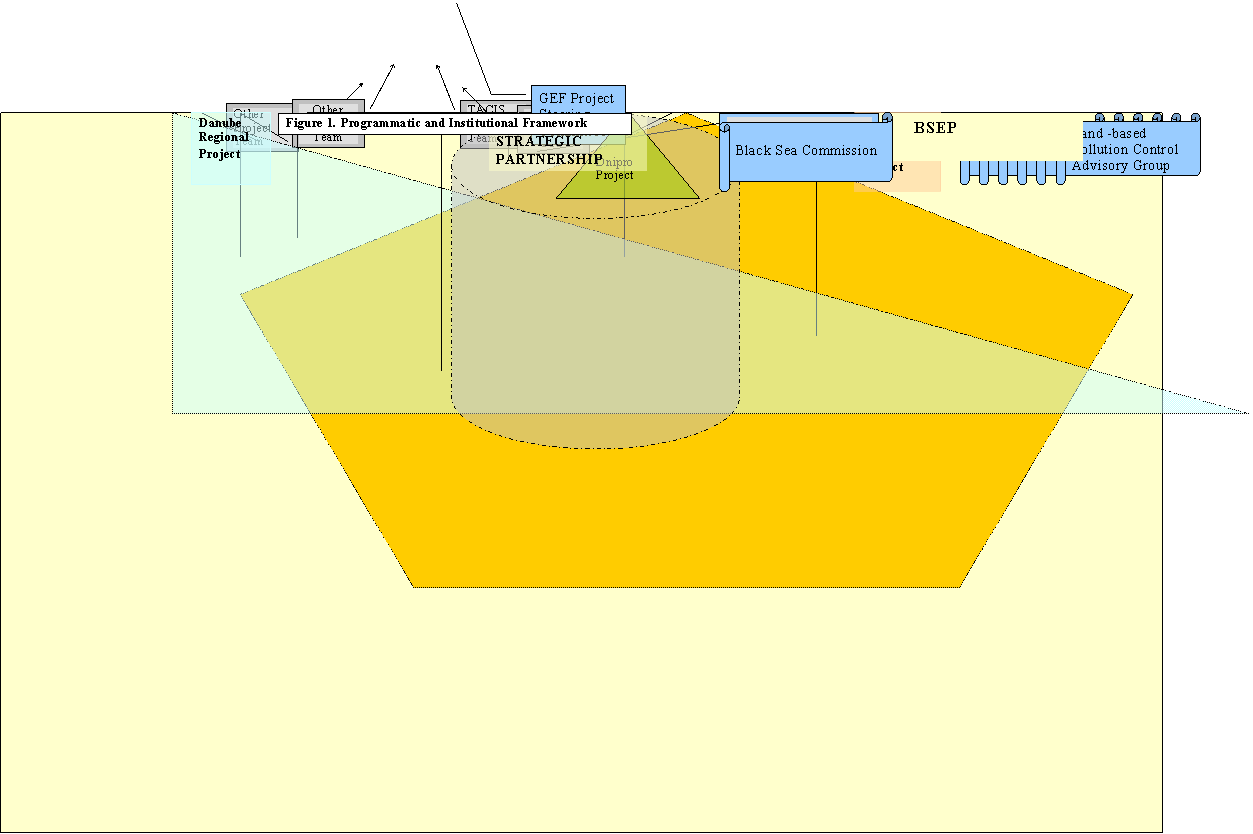
(b) Implementation Arrangements
127. In close collaboration with the BSC, the project implementation will be coordinated through the PIU and UNOPS as the Executing Agency on behalf of the recipient countries and UNDP. The Project Co-ordinator and his team under the guidance of BSC, and through support to the Permanent Secretariat will have the mandate to organise and coordinate the planning process and implementation activities in line with the project document, and to ensure under UNOPS direction, proper management of GEF project funds.
128. UNOPS, as the Executing Agency for the project will coordinate the recruitment of the PIU Coordinator and a core staff of specialists in accordance with the funding available in the project budget, in close consultation with the beneficiary countries and the Black Sea Commission. Donor and governmental contributions to staffing of the PIU shall be considered if accompanied by sufficient funding for salaries and operational expenses and following consultations with the beneficiary countries through the Commission.
129. The GEF-PIU will operate as a semi-autonomous unit within the BSEP. It will be hosted by the Black Sea Commission and share the facilities of the Permanent Secretariat of the Commission provided by the Government of Turkey. The Commission and the Government will reaffirm their consent for the use of the premises of the Commission by the GEF-PIU through exchange of letters
130. The GEF-PIU will be linked to the Black Sea Commission and donor community through the (JPMG). The working relations between the GEF-PIU and the Secretariat agreed upon by the Executive Board of the JPMG and will be formalised through a Letter of Agreement. Both bodies will conduct their work in close cooperation, sharing the same facilities and infrastructure. Similar working arrangements regarding task sharing may be concluded with other major project implementation units to be established. A schematic presentation of the implementation arrangements and responsibilities is given in Figure 2.
131. The financial and administrative mechanisms that apply to GEF projects developed for the Black Sea Environmental Programme PCU (RER/93/G31), and to the PIU (RER/96/006; RER/99/G42) shall be applied mutadis mutandis to the GEF-PIU. A Memorandum of Understanding has been signed between UNDP and the Government of the Republic of Turkey within the existing Standard Basic Agreement between the Government and the United Nations Development Programme to indicate such mechanisms and the terms of allocation of the premises to the use of GEF-PIU (ANNEX VI).
132. The PIU will provide technical support to the Permanent Secretariat for the attainment of the objectives defined in the current project document, in particular for:
· establishing basin-wide consultative groups;
· establishment and functioning of national inter-sectoral bodies;
· Reinforcing the legal background on LBA, promoting implementation;
· Facilitating technical support to the Advisory Groups and Activity Centres for the tasks specified in this project document;
· Supporting information transfer and regularly updating existing information on the Black Sea;
· Diffusion of project outputs through newsletters, posters, technical reports, public information bulletins;
· Management of the small grants programme;
· Developing/updating/maintaining the existing BSEP website jointly with the Permanent Secretariat.
· 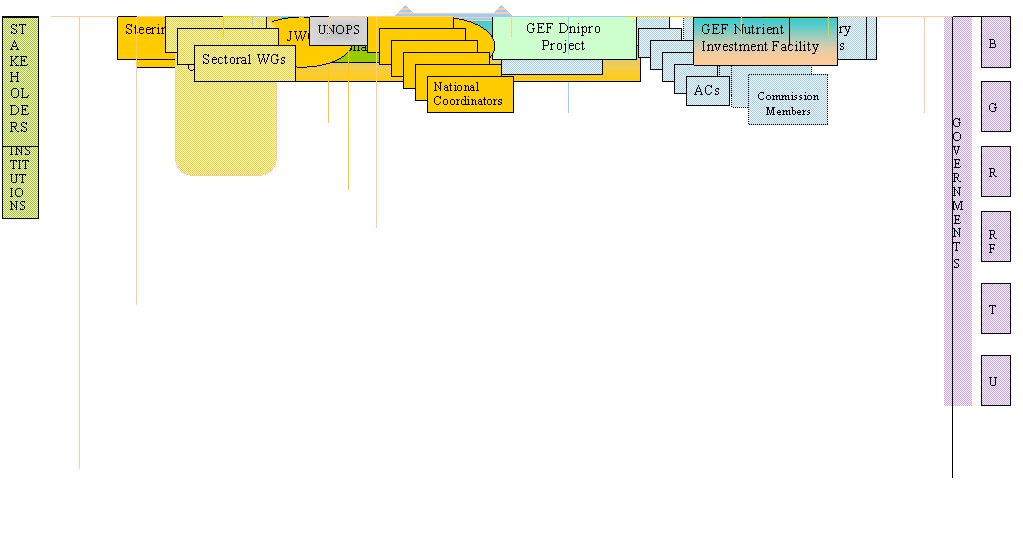
Figure 2. Implementation Arrangements for the Black Sea Regional Project (Responsibilities Matrix)
133. The status of international/local staff hired for project implementation through the UNOPS or the UN Country Office shall correspond to that of UN Project Personnel, following the grading applied throughout the UN System (ICSC grading) and the local staff or temporary staff gradings where applicable. They shall follow the rules and regulations applicable to UN Project Staff and enjoy the privileges and immunities granted to such staff by the Government of the Republic of Turkey and by the Governments of the region.
134. The proposed initial core staff (full terms of reference given as ANNEX I) for the fulfilment of the tasks specified above shall consist of the following:
· Project Coordinator (CTA) (Objective 1)
· Sectoral reform and M & E specialist (Objective 4)
· Data base and information manager (Activities in objectives 1,3 and 4)
· Economist (Objective 5 and 7)
· Public participation specialist (Objective 6)
135. Overall responsibility for project management and reporting to the UNOPS will lie with the CTA. In addition to the core staff to be appointed by the UNOPS, the CTA will appoint the support staff needed in consultation with the Executive Director of the Permanent Secretariat. Exact composition of the GEF-PIU may vary according to its financial possibilities and to the outcome of periodical review by the Steering Committee. As necessary, consultants will also be retained. Priority will be given to the recruitment of national project personnel from the region as available.
(c) Arrangements for preparing and updating work-plans
136. The project Steering Committee is the organ which will review and adopt the work-plans for the project; including the initial workplan given in Section I, Table 3. The CTA will coordinate with the National Coordinators, relevant organs of the Black Sea Commission and other donors, and prepare a draft updated work-plan which shall be submitted to the Steering Committee for its adoption at least one month before its meeting. The CTA will be responsible for the conduct of project activities in line with the revised work-plan and the budget. The Annual Project Report (APR) to be prepared by the CTA will include detailed information on the implementation of the Workplan, inter alia, achievement of project objectives and delivery of project outputs in accordance with the Workplan.
(d) Accounting and reporting mechanisms
137. The rules, regulations and procedures governing the provision and administration of UNDP project funds will apply to this project. UNOPS will be responsible for overall financial management. The PIU will be accountable to the Steering Committee for spendings made out of the project budget. The CTA will appoint an Accountant who will assist him/her to ensure such accountability. The CTA will be responsible for ensuring that budget releases are made in accordance with the requirements of UNDP and the GEF, that all financial dealings are fully transparent; and for reporting to the UNOPS. The Annual Project Report (APR) that the CTA will prepare will include detailed information on financial management of the project.
138. The CTA will prepare a draft revised budget for consideration and approval of the Steering Committee each year, which will subsequently be processed by the UNOPS in accordance with the rules of UNDP and the GEF. The CTA will be responsible for preparing the proposals for minor revisions in the projec budget that are imposed by the revision of the work-plan ; however proposals for a major budgetary revision caused by significant changes in the work-plan will be submitted by the CTA to the UNOPS for further processing following their approval by the Steering Committee.
(e) Reporting requirements
139. The PIU will be responsible for preparing the following reports:
1. updated work-plans and periodic status reports which will be submitted to the Steering Committee;
2. an Annual Project Report (APR) which gives an account of the level of achievement of project objectives, delivery of outputs, financial management, and recommendations for readjustment of strategies and activities;
3. the reports required for the participation of the project into the GEF Project Implementation Review (PIR) process;
4. a project terminal report for consideration by the Steering Committee at a final review meeting. The report shall be prepared in draft sufficiently in advance to allow review and technical clearance by the PIU.
In addition to the technical, financial and information reports described in this project document, the PIU will prepare any other reports and publications that the Steering Committee or the GEF Implementing Agencies may require of it.
(f) Description of Host Institution arrangements
140. The Government of the Republic of Turkey which hosted the PCU/PIU of the Black Sea Environmental Programme incorporating the regional projects RER/93/G31, RER/93/G32, RER/96/G006, RER/99/G42 funded by the GEF and UNDP between 1993-2001 has agreed to host the Project Implementation Unit (GEF-PIU) of the current regional project in Istanbul. The Government is also hosting the headquarters of the Black Sea Commission and its Permanent Secretariat in accordance with the “Headquarters Agreement between the Government of the Republic of Turkey and the Commission on the Protection of Black Sea Against Pollution” signed on 20 April 2000 in Istanbul by the respective Parties (ANNEX IV.B) In accordance with Article 5 (Item 4) of the above referred Agreement which stipulates that ''the Government and the Commission may jointly agree to allow for the temporary or permanent use of the headquarters by third parties involved in studies or programmes pertaining to the Black Sea'', the PIU will be co-located with the Permanent Secretariat of the Commission in the premises of the Commission. The ''Memorandum of Understanding between the Government of the Republic of Turkey and the United Nations Development Programme on the establishment of the Project Implementation Unit of the project entitled 'Control of eutrophication, hazardous substances and related measures for rehabilitating the Black Sea ecosystem: Phase1' and subsequent projects'' is given as ANNEX VI.
(g) Coordination mechanisms
141. The Project will be linked to the national and transboundary governance structures via:
· Project Steering Committee
· observership at the Black Sea Commission (pending the decision of the Commission)(representation by the GEF Implementing Agencies (UNDPand UNEP);
· representation in the BSEP Joint Project Management Group (JPMG)[8] of the Black Sea Commission )(representation by the GEF Implementing Agencies (UNDPand UNEP);
· membership (of the Project Coordinator) of the BSEP Executive Board , the day-to-day management coordination mechanism with the Permanent Secretariat of the Black Sea Commission and other projects;
· close collaboration with the seven Advisory Groups of the Black Sea Commission;
· joint development and use of the information base.
(i)Internal coordination mechanisms
Regional institutions
The Project Steering Committee (GEF- SC)
142. The Steering Committee will be the body to provide policy guidance and to review the project implementation at the regional level. It will:
· review progress and annually approve the work-plan/timetable for the project
· review project implementation and expenditures, and adopt Annual Project Report (APR) as an output.
· decide/make recommendations to the Black Sea Commission on issues it may deem necessary
143. The Steering Committee will consist of the representatives of participating Governments, NGOs and other stakeholders, international environmental organisations and donors as appropriate.
Members: Officially nominated National Project Coordinators from each country and their advisors as appropriate, representatives of the GEF implementing agencies (UNDP,UNEP, and the World Bank ) and other major donors (contributing 5% or more of the annual project budget)(cost-sharing or co-financing).
Observers: will be have the right to participate in the discussions or make recommendations, but not the right to vote. There will be two different categories of observers:
i. The first category will consist of bodies or staff responsible for project execution, including
· a representative of UNOPS (the Executing Agency),
· the Project Coordinator and
· the Executive Director of the Secretariat
This group will take part in all sessions of the SC. The Project Coordinator and the Executive Director of the Secretariat will ensure that their staff participating in project relevant activities are present at SC meetings.
ii. The second category of ‘observers’ will consist of
· representatives of other/potential donors,
· representatives from relevant regional/international/inter-governmental organisations
· three NGO representatives selected by the NGO community in the region,
· up to three representatives from different stakeholders groups (local administrations, farmers associations, private sector associations) from the region to be identified through consultations with the Commission, the BSEC as appropriate.
This group will participate in the SC Meetings upon invitation.
144. The project Steering Committee shall reach its decisions by consensus. The Committee will elect its chairman among the representatives of the project beneficiaries who will serve until the next meeting of the Steering Committee. The Committee will have its first (inception) meeting during the first month of the project start-up and will meet twice annually. One of these regular meetings will be devoted to Annual Project Evaluation. Chairman of the Steering Committee, the GEF-PIU Coordinator or the Commission may call ad-hoc meetings, provided that no objections are raised by the members of the Committee, including the GEF IAs and that budgetary resources are available..
The BSC-ICPDR Joint Working Group
145. A Joint Black Sea-Danube Basin Joint Working Group which will further elaborate the technical requirements for the implementation of the recommendations made by the Ad hoc Technical Working Group described in Paragraph 145 shall assure proper coordination of activities between the current project and the GEF project for the Danube River Basin. In this context, the JWG will also be an important mechanism to facilitate the implementation of the Draft Memorandum of Understanding between the International Commission for the Protection of the Black Sea (ICPBS) and the International Commission for the Protection of the Danube River (ICPDR) on common strategic goals. In line with the basin-wide approach, the Group will invite the PMU and other bodies of the GEF-Dnipro project to participate in its work, with a view to facilitate adherence of the emergent Dnipro Commission into inter-regional cooperation framework that is been developing between the BSC and the ICPDR.
National institutions
National Project Coordinators (NPCs):
146. National Project Coordinators will be nominated by the beneficiary Governments for the purposes of the current project. The NPCs will be responsible for coordinating the activities carried at the local/national levels under the overall guidance and supervision of the Member of the Black Sea Commission for the respective country. NPCs will represent their governments at the Steering Committee Meetings and may be accompanied by other experts as may be needed. National Project Coordinators are expected to have the technical/managerial capacity and knowledge of the common project language (English) which will enable them to interact with their counterparts in other countries and with the PIU staff on a day-to-day basis.
Inter-sectoral Committees
147. Particular importance will be given to the effective functioning of inter-ministerial cooperation bodies in developing and implementing national nutrient reduction programmes. These coordination and consultation mechanisms within beneficiary countries will facilitate policy integration at the national level and will complement the approach proposed for the current regional project.
Participation Mechanisms for NGOs and Other Stakeholders
148. The success of the project is critically dependant on active participation of public and private sector, NGO groups and other stakeholders such as farmers unions, local administrations, industry and local communities living on wetland resources.
149. Environmental NGOs: The project will establish a close dialogue with the environmental NGOs and grassroots organisations. NGOs willing to contribute to policy making process and project implementation will be identified through a questionnaire disseminated to the wider NGO community by the PIU. Those that satisfy previously agreed criteria will be accredited to the project. The set of criteria applied will be similar to those used for GEF Small Grants Programme. Local, national, regional or global NGOs will be able to apply for accreditation. Accredited NGOs will receive information on project activities on a continuous basis. An interactive dialogue among the NGOs will be encouraged inter alia through a web-based system. The accredited NGOs will be asked to select two representatives amongst themselves to represent the NGO community at the project Steering Committee. The PIU will facilitate the selection process through its web-site. The NGOs that have received an observer status from the Black Sea Commission will also be asked to select one NGO representative among themselves to participate in the Steering Committee Meetings. The three selected NGO representatives will be requested to task-share the operation of the NGO communication system with the GEF-PIU. Participation of up to three NGO representatives from the region may be covered from the project budget where appropriate.
150. It is important to stress that the mechanism described above is for the purposes of project implementation only. It is not intended to substitute or compete with existing or future networking arrangements that exist between Black Sea NGOs. Such networking arrangements will be encouraged by the project and may be able to request technical and financial assistance from the small grants programme. The role of the public participation specialist in the PIU will be critical in ensuring an impartial and transparent support mechanism throughout the region. The NGO technical assistance function of the project will be similar to that of the Regional Environmental Centres (e.g. REC-Budapest and REC Caucasus) and it is hoped to establish cooperative arrangements with these entities during project implementation.
151. The small grants projects under Component III that have been identified during the PDF-B phase will be implemented by the proponents of the projects under the management of the PIU and achievements will be disseminated to the wider NGO community for possible replication. A transparent and participatory project appraisal mechanism for the second tranche of the project will be developed in close consultation with the wider NGO community described above.
152. Other Stakeholders: The project will establish close working linkages with these groups through the inter-sectoral committees established within each country and will coordinate with institutions, processes or projects that currently involve such groups for sectoral development. Where possible, the policy options for reduction of nutrients and other toxic substances will be conveyed to the BSEC Agriculture, Urban Management and other Working Groups. Opportunities will be sought for performing the activities described within the project document jointly with these groups as well as the diffusion of project outputs through their sectoral networks. The project will facilitate the establishment/strengthening of a continuous dialogue between the governmental and non-governmental groups mainly concerned about protection of the marine environment. It will focus on those groups involved in sectors that are of direct relevance to the reduction of nutrients and toxic substances (such as agriculture, industry and municipalities) in each country and throughout the region. It will also cooperate with groups working towards the network of nature reserves agreed by all governments in the BS-SAP. The Project Coordinator, in consultation with the National Focal Points, The Permanent Secretariat and other relevant regional institutions, will identify representatives of sectors mentioned above who are expected to contribute to the discussions at the Steering Committee Meetings and invite them to the SC Meetings. Participation of up to three representatives from such groups may be covered from the project budget where appropriate.
(ii) External coordination mechanisms
153. The project will be coordinated with the activities other global/regional bodies and programmes/projects through various mechanisms. Project implementation modalities warrant an overseeing role for the Black Sea Commission, the coordinating body for national and regional actions to protect and rehabilitate the Black Sea environment established by the beneficiary countries. This role has been reaffirmed by the endorsement of the current project by the Commission and integration of the project related activities into the work-programme of the Commission for the 2001-2002 / 2002-2003 biennium at its May 2001 meeting. The project will seek observership on behalf of the BSC. In addition, the project will be linked to the donor community and other projects/programmes implemented in the region through the BSEP-JPMG framework. The Black Sea Commission has agreed to formally establish a Joint Project Management Group (JPMG) which will operate under its auspices and constitute the overall management framework for coordinating and implementing the Black Sea Environmental Programme (BSEP), an umbrella for national and donor sponsored multi-country projects aiming improvement of the Black Sea environment. The project will be represented at the BSEP-JPMG at a strategic level, and at the BSEP Executive Board at the project management level. Further details of the BSEP framework as an external coordination  mechanism are given in ANNEX IV.A .
154. The project will participate in the UNDP-GEF International Waters (IW) LEARN Project with a view to exchange information and share experiences with other regional seas programmes.
G. MONITORING AND EVALUATION
155. The project will be subject to monitoring and evaluation through the following mechanisms:
· Steering Committee: A joint review by the representatives of Governments, GEF Implementing Agencies and observers such as, donors, NGOs, and other stakeholders. The Steering Committee will meet regularly twice a year. Ad hoc Meetings can also be organised upon the request of the members of the Committee, the CTA or the IAs provided that budgetary resources are available. Details on the composition, and tasks of SC are described in paragraphs 142-144 above.
· Tripartite Review: In line with UNDP procedures the project will be subject to Tripartite Review (TPR) once every twelve months. The CTA will prepare a draft Annual Project Report (APR) and formulate recommendations for adjustment of strategies and activities where necessary. The APR shall be prepared at least two months in advance of the TPR to allow review by UNDP and UNDP-GEF prior to the meeting. The TPR will review and adopt the APR as appropriate.
· GEF Project Implementation Review: In line with GEF procedures the project will be subject to annual Project Implementation Review (PIR). The CTA will prepare a draft PIR report and formulate recommendations for adjustment of strategies and activities where necessary.
· External Evaluation: During the last quarter of its implementation period, an external team of specialists selected by UNDP-GEF will evaluate the Project with a view to assess the processes employed, outputs produced and their impacts, and lessons learned.
H. LEGAL CONTEXT
156. This Project Document shall be the instrument referred to in Article 1 of the Standard Basic Assistance Agreement (SBAA) signed between each of the participating Governments and the United Nations Development Programme. For non signatories of the SBAA at the time of the signature of this project, this project document shall be the instrument envisaged in the supplemental provisions to the project document, attached hereto (ANNEX VII).
157. The following types of revisions can be made to this project document with the signature of UNDP only, provided that the organisation is assured that other signatories have no objections to the proposed changes[9]:
· Revision in, or addition of, any of the annexes to the project document;
· Revisions which do not involve significant changes in the immediate objectives, outputs, or activities of the project, but are caused by the rearrangement of the inputs already agreed to or by cost increases due to inflation;
· Mandatory annual revisions which rephrase the delivery of agreed project inputs or increased expert or other costs due to inflation or take into account agency expenditures flexibility.
I-WORKPLAN
An initial workplan for project implementation which may further be amended by the Steering Committee is given as TABLE 3.
TABLE 3
WORKPLAN FOR PROJECT IMPLEMENTATION*
Objective 1. Support the integration of a sustainable Secretariat for the Bucharest Convention
|
Activities: |
|
2002 |
2003 |
|
D |
J |
F |
M |
A |
M |
J |
J |
A |
S |
O |
N |
D |
J |
F |
M |
A |
M |
J |
J |
A |
S |
O |
N |
|
Activity 1.1a Establish and operate the BSEP Joint Programme Management Group, the BSEP Executive Board and the Project Steering Group
Activity 1.1b Two year operation of the Black Sea Project Implementation Unit of the Istanbul Commission (BS-PIU) to facilitate, co-ordinate, and communicate on the implementation of priority activities identified in this document. |
► |
► |
|
|
|
|
|
|
|
|
► |
|
|
|
|
|
|
► |
|
|
|
|
► |
|
|
► |
|
|
|
|
|
|
|
|
|
|
|
|
|
|
|
|
|
|
|
|
|
|
|
|
Activity 1.2a. Establish joint mechanisms between the Istanbul Commission and the ICPDR for implementing and strengthening the MOU agreed at their spring 2000 meetings.
Activity 1.2b. To extend this process to cover formal river basin commissions in other areas of the Black Sea Basin. A Black Sea Basin Inter-Commission Consultative Group should be established by 2002 and should meet on an annual basis to discuss issues of common concern. |
|
► |
|
|
|
|
|
► |
|
|
|
|
|
► |
|
|
|
|
|
► |
|
|
|
|
|
|
► |
|
|
|
|
► |
|
|
|
|
|
► |
|
|
|
|
|
► |
|
|
|
|
|
Activity 1.3. Assist with the establishment or strengthening of National intersectoral bodies and with providing them with technical information on the transboundary issues included in this project. |
|
|
|
► |
|
|
► |
|
|
|
|
|
|
|
|
|
|
|
|
|
|
|
|
|
|
Activity 1.4 Provide administrative support to Commission’s Advisory Groups (co-ordinated by Regional Activity Centres) to conduct specific projects related to the priorities defined in this document (see later sections). |
► |
|
|
|
|
|
|
|
|
|
|
|
|
|
|
|
|
|
|
|
|
|
|
|
|
Activity 1.5. Diffusion of information .through the following: |
|
|
► |
|
|
|
|
|
|
|
► |
|
|
|
|
|
|
|
|
► |
|
|
|
|
Objective 2. Regional actions for improving LBA legislation to control eutrophication and for tackling emergent problems.
|
Activity 2.1a Preparation of recommendations for the draft LBA Protocol and joint facilitation (with the BSC) of negotiations on the new Protocol. This work is a continuation of the PDF-B study.
Activity 2.1b Joint study (GPA Secretariat/ Istanbul Commission) of improving the implementation of the GPA in the Black Sea. |
|
|
|
► |
|
|
|
|
|
► |
|
|
|
|
|
|
|
|
∆ |
|
|
|
|
|
|
► |
|
|
|
|
► |
|
|
|
|
|
|
|
|
|
|
|
∆ |
|
|
|
|
|
|
Activity 2.2. Evaluation of future threats to the Black Sea, the social and economic root causes of environmental degradation and the cost effectiveness of interventions to correct current and emergent transboundary problems (using the GIWA methodology, including full impact assessment, as adapted by ACOPS) |
|
|
|
|
|
► |
|
|
|
|
|
|
|
|
|
|
|
|
|
|
∆ |
|
|
|
Objective 3. Assist countries to improve their knowledge of the process of eutrophication in the Black Sea
|
|
2002 |
2003 |
|
D |
J |
F |
M |
A |
M |
J |
J |
A |
S |
O |
N |
D |
J |
F |
M |
A |
M |
J |
J |
A |
S |
O |
N |
|
Activity 3.1. Integration of an international study group (ISG) to plan and conduct the practical studies. Formulation of the detailed study plan (eutrophication and hazardous substances) and its submission to peer review. Appointment of (existing) remote sensing centre. |
|
► |
|
|
|
|
|
|
|
∆ |
|
|
|
|
|
|
|
|
|
|
|
|
|
|
|
Activity 3.2. Two survey cruises in the entire Black Sea but with special emphasis on the impacted NW Shelf (and possibly Sea of Azov) covering period January – December 2002. |
|
|
|
|
► |
|
|
|
|
► |
|
|
|
|
|
|
|
∆ |
|
|
|
|
|
|
|
Activity 3.3. Download, interpretation and distribution of weekly SeaWifs colour scan satellite data, July 2001- May 2003 |
|
|
|
► |
|
|
|
|
|
|
|
|
|
|
|
|
|
|
|
|
|
|
|
∆ |
|
Activity 3.4. Interpretation of results, drafting of new State of the Black Sea Environment Report (to be known as the Odesa Declaration + 10 Report), formulation of recommendations. |
|
|
|
|
|
|
|
|
|
|
|
|
|
|
|
|
|
|
|
► |
|
|
∆ |
|
Objective 4. Introduce new sectoral policies and a system of process, stress reduction and environmental status indicators for monitoring the effectiveness of measures to control eutrophication (and harmful substances where appropriate)
|
Activity 4.1a Thee regional workshops, each for representatives of one of the three key sectors (agriculture, industry, municipalities), together with BSC officials, experts, etc., to explore actions to reduce nutrient emissions.
Activity 4.1b Development and govt. approval of national nutrient reduction strategies and presentation to the BSC , and will be reviewed every 2 years.
Activity 4.1c Sectoral master plans to be developed for nutrient control in each coastal country. These will incorporate revisions and amendments in laws and policies and common indicators of process and stress reduction , and will be reviewed every 2 years. |
|
|
|
► |
► |
∆ |
|
|
|
|
► |
|
|
|
|
|
|
|
|
|
∆ |
|
|
|
|
|
|
|
|
|
|
► |
|
|
|
|
|
|
|
|
|
|
∆ |
|
|
|
|
|
|
|
|
|
|
|
|
► |
|
|
|
|
|
|
|
|
► |
|
|
|
∆ |
|
|
|
|
Activity 4.2a. Designation of monitoring institutions, provision of basic equipment and training in the new scheme (2x2 week practical courses/ country)
Activity 4.2b. Design of new monitoring programme incorporating environmental status indicators and its approval by the BSC
Activity 4.2c Establishment of QA/QC procedures including intercomparison exercises. |
|
|
► |
► |
|
► |
|
|
|
∆ |
|
|
|
|
|
|
|
|
|
|
|
|
|
|
|
|
|
|
|
|
|
|
|
∆ |
|
|
|
|
|
|
|
|
|
|
|
|
|
|
|
|
|
|
► |
|
|
|
|
∆ |
|
|
|
|
|
|
|
|
|
|
|
|
|
|
|
Activity 4.3 Pilot implementation of new environmental status programme. |
|
|
|
|
|
|
|
|
|
|
|
► |
|
|
|
|
|
|
|
|
|
|
|
∆ |
|
Activity 4.4 Develop and implement BSC information base. Operation at the PIU. |
|
|
► |
|
|
|
|
|
|
|
|
|
|
|
|
|
|
|
|
|
|
|
|
∆ |
Objective 5. Support the Commissions in their periodic review of Adaptive Management objectives.
|
|
2002 |
2003 |
|
D |
J |
F |
M |
A |
M |
J |
J |
A |
S |
O |
N |
D |
J |
F |
M |
A |
M |
J |
J |
A |
S |
O |
N |
|
2. Economic benefit/cost studies of the actions proposed in the Sectoral Master Plans and the National strategies (Obj. 4, Activity 1). The recent study of the economics of nutrient control in the Baltic (Gren, Turner, et al. 2000) will serve as a working model. A specialist team will be appointed for this work. They will also pay attention to wetland restoration economics. |
|
|
|
|
|
|
|
|
|
|
|
► |
|
|
|
|
|
► |
|
|
|
∆ |
|
|
|
|
|
|
|
|
|
|
|
|
|
|
|
|
|
|
|
|
|
|
|
|
|
|
|
|
Objective 6. Assist the public in implementing activities to reduce eutrophication through a programme of grants for small projects and support to regional NGOs.
|
Activity 6.1a. Appointment of regional public participation specialist (PPS) at the PIU, inter-alia to coordinate the small projects initiative.
Activity 6.1b. Implementation and evaluation of the first tranche of small projects identified and reviewed through the PDF-B process.. |
|
► |
|
|
|
|
|
|
|
|
|
|
|
|
|
|
|
|
|
|
|
|
|
|
|
|
► |
|
|
|
|
|
|
|
|
|
|
|
∆ |
|
|
|
|
|
|
|
|
|
|
Activity 6.2 Second call for proposals and design of a fully transparent project appraisal mechanism. |
|
|
|
|
|
|
|
|
► |
|
|
|
|
|
|
|
|
|
|
∆ |
|
|
|
|
|
Activity 6.3. Support to the BSEEP for increased involvement in regional aspects of reduction of eutrophication and for work on environmental education in schools. |
|
|
|
|
► |
|
|
|
|
|
|
|
|
|
|
|
|
|
|
|
|
|
∆ |
|
|
Activity 6.4. Independent report on wetland conservation and restoration in the Black Sea region |
|
|
|
|
|
|
|
|
|
|
|
|
► |
|
|
|
|
|
|
|
∆ |
|
|
|
|
Activity 6.5. Stakeholder training as part of the Train Sea Coast programme |
|
|
|
|
► |
|
|
|
|
|
|
|
|
|
|
|
|
|
|
|
|
|
∆ |
|
Objective 7. Formulate proposals for market-based or alternative economic instruments for limiting nutrient emissions and establish private-public sector partnerships for environmental protection in the Black Sea.
|
Activities: |
|
2002 |
2003 |
|
D |
J |
F |
M |
A |
M |
J |
J |
A |
S |
O |
N |
D |
J |
F |
M |
A |
M |
J |
J |
A |
S |
O |
N |
|
Activity 7.1. Review the implementation of economic instruments for protecting the Black Sea from pollution (including nutrients) on a country-by country basis and suggest improvements where relevant. F/T economist to be appointed (2 year appointment) at the PIU, inter alia to conduct and co-ordinate this work. |
|
|
► |
|
|
|
|
► |
|
|
|
► |
|
|
|
|
|
► |
|
|
|
∆ |
|
|
|
Activity 7.2. Examine opportunities for public-private sector partnership in measures to limit nutrients (e.g. introduction of phosphate-free detergents, new technology, organic farming, etc.). To be coordinated by the PIU economist. |
|
|
|
|
|
|
|
► |
|
|
|
|
|
|
|
|
|
|
|
∆ |
|
|
|
|
|
Activity 7.3 Evaluate the potential of the local and/or regional financial intermediaries (eg.Black Sea Regional Development Bank) as a means of channelling funding to small/medium sized bankable projects related to nutrient limitation and habitat restoration. |
|
|
|
► |
|
|
|
|
|
|
|
|
|
|
|
|
|
|
|
|
|
|
|
∆ |
Objective 8. A fisheries exploited within its maximum sustainable yield and incorporating measures to protect ecologically sensitive areas.
|
Activities |
|
2202 |
2003 |
|
D |
J |
F |
M |
A |
M |
J |
J |
A |
S |
O |
N |
D |
J |
F |
M |
A |
M |
J |
J |
A |
S |
O |
N |
|
Activity 8.1 Support to the process of concluding the regional Fisheries Convention negotiations, particularly in relationship with the need to protect key habitats. |
|
|
|
► |
|
|
|
|
|
► |
|
|
|
|
|
|
|
|
|
|
|
|
∆ |
|
|
Activity 8.2 Assessment of transboundary populations of fish species and their relationship with sensitive habitats and current fishing practices. |
|
|
|
|
|
|
|
|
|
► |
|
|
|
|
|
|
|
|
|
|
∆ |
|
|
|
|
Activity 8.3. Preliminary study on the evaluation of potential fisheries-free zones and Marine Protected Areas, their promotion with Black Sea governments and stakeholders; their incorporation into the Landscape and Biological Diversity Protocol to the Bucharest Convention and training of coastguards etc. for their enforcement. |
|
|
|
► |
|
|
|
|
|
|
|
|
|
|
|
|
|
|
|
|
∆ |
|
|
|
|
|
|
|
|
|
|
|
|
|
|
|
|
|
|
|
|
|
|
|
|
|
|
|
|
|
|
J. BUDGET
Project Number: RER/01/G33/A/1G/31
Project Title: Control of eutrophication, hazardous substances and related measures for rehabilitating the Black Sea ecosystem: Phase1
a. Budget lines
The budget, presenting a breakdown of the budget implementation per year, has been made by UNOPS.
TABLE 4
|
Budget
Line |
Description |
Objective
/Activity |
Lead
Agency |
Total MM |
Total
Budget
$ |
2002
$ |
2003
$ |
|
10 |
PERSONNEL |
|
|
|
|
|
|
|
1100 |
International Project Staff |
|
|
|
|
|
|
|
Core International Staff |
|
|
|
|
|
|
1101
|
Project Coordinator P5 |
1.1b
|
UNOPS |
1x24 |
170,000 |
85,000 |
85,000 |
1102
|
Monitoring and Evaluation Specialist P4 |
4.1
|
UNOPS |
1x24 |
130,000 |
65,000 |
65,000 |
1103
|
Economist P4
|
7
|
UNOPS |
1x24 |
130,000 |
65,000 |
65,000 |
1104
|
Information Specialist P3 |
4.4
|
UNOPS |
1x12 |
60,000 |
|
60,000 |
1105
|
Public Participation Specialist P2 |
6
|
UNOPS |
1x24 |
80,000 |
40,000 |
40,000 |
1151
|
Consultants development of sectoral integration framework |
4.1a
|
UNOPS |
2x10 |
20,000 |
10,000 |
10,000 |
1152
|
Consultants economic cost-benefit studies |
5
|
UNOPS |
2x3 |
15,000 |
5,000 |
10,000 |
1153
|
Consultants- economic instruments |
7.1
|
UNOPS |
2x4 |
15,000 |
9,000 |
6,000 |
1154
|
Consultant-Public private partnerships |
7.2
|
UNOPS |
1x4 |
10,000 |
5,000 |
5,000 |
1155
|
Consultant BSC/ICPDR JWG study |
1.2a,b
|
UNOPS |
1x ≤2 |
10,000 |
6,000 |
4,000 |
1156
|
Consultants for Advisory Group(s) |
1.4
|
UNOPS |
6x1 |
12,000 |
6,000 |
6,000 |
1157
|
Consultants design/interpretation of scientific surveys |
3.4
|
UNOPS |
3x≤2 |
15,000 |
5,000 |
10,000 |
1158
|
Consultants-fisheries assessment |
8.1,2
|
UNOPS |
2x≤2 |
10,000 |
5,000 |
5,000 |
|
1199 |
Component Subtotal |
|
|
|
677,000 |
306,000 |
371,000 |
|
|
|
|
|
|
|
|
|
1300 |
National Support Staff |
|
|
|
|
|
|
1301
|
Admin Assistant/Accountant |
1.1b
|
UNOPS |
1x24 |
60,000 |
30,000 |
30,000 |
1302
|
Secretary
|
1.1b
|
UNOPS |
1x24 |
36,000 |
18,000 |
18,000 |
1303
|
Driver
|
1.1b
|
UNOPS |
1x24 |
36,000 |
18,000 |
18,000 |
1350
|
Additional Support (workshops) |
1.1b
|
UNOPS |
0.5 |
1,000 |
500 |
500 |
|
1399 |
Component Subtotal |
|
|
|
133,000 |
66,500 |
66,500 |
|
|
|
|
|
|
|
|
|
1500 |
Duty Travel |
|
|
|
|
|
|
1501
|
PIU Travel
|
1.b
|
UNOPS |
|
90,000 |
45,000 |
45,000 |
1502
|
Local Travel
|
Gpc
|
UNOPS |
|
110,000 |
60,000 |
50,000 |
1503
|
Government Travel |
Gpc
|
UNOPS |
|
47,000 |
25,000 |
22,000 |
|
1599 |
Component Subtotal |
|
|
|
247,000 |
130,000 |
117,000 |
|
|
|
|
|
|
|
|
|
1600 |
Mission Costs |
|
|
|
|
|
|
1601
|
UNDP/UNOPS
|
1/b
|
UNOPS |
|
30,000 |
15,000 |
15,000 |
1602
|
Project Evaluation |
1/b
|
UNOPS |
|
18,000 |
|
18,000 |
|
1699 |
Component Subtotal |
|
|
|
48,000 |
15,000 |
33,000 |
|
|
|
|
|
|
|
|
|
1700 |
National Professional Project Personnel |
|
|
|
|
|
|
1701
|
NPPP-National sectoral reviews &draft action plans |
4.1
|
UNOPS |
6x6 |
54,000 |
30,000 |
24,000 |
1701
|
NPPP-economic instruments |
7.1
|
UNOPS |
6x6 |
60,000 |
30,000 |
30,000 |
1702
|
NPPP -fisheries assessment |
8
|
UNOPS |
6x4 |
48,000 |
20,000 |
28,000 |
1703
|
NPPP-BSC/ICPDR JWG technical assessment |
1.2a,b
|
UNOPS |
6x ≤2 |
15,000 |
7,500 |
7,500 |
1704
|
NPPP -Technical reports for Advisory Groups |
1.4
|
UNOPS |
6x≤2 |
18,000 |
12,000 |
6,000 |
1705
|
NPPP - Design/Interpretation of scientific survey results |
3.4
|
UNOPS |
6x≤2 |
12,000 |
6,000 |
6,000 |
1706
|
NPPP- cost benefit studies |
5
|
UNOPS |
6x≤2 |
24,000 |
12,000 |
12,000 |
|
1799 |
Component Subtotal |
|
|
|
231,000 |
117,500 |
113,500 |
|
|
|
|
|
|
|
|
|
20 |
SUBCONTRACTS |
|
|
|
|
|
|
2101
|
IAA UNEP Revised Land Based Protocol |
2.1a
|
UNEP |
|
70,000 |
50,000 |
20,000 |
2102
|
IAA UNEP GPA Implementation Program |
2.1b
|
UNEP |
|
20,000 |
15,000 |
5,000 |
2103
|
IAA-UNEP Evaluation of future threats using GIWA and ACOPS methodology |
2.2
|
UNEP |
|
70,000 |
20,000 |
50,000 |
2104
|
IAA-IAEA-QA/QC-intercomparison of data |
4.2
|
IAEA |
|
35,000 |
20,000 |
15,000 |
2105
|
Subcontract-institute(s) for downloading, interpreting and distributing satellite data |
3.3
|
UNOPS |
|
90,000 |
50,000 |
40,000 |
2106
|
Subcontract-implementation of 2 scientific surveys |
3.2
|
UNOPS |
|
335,000 |
330,000 |
5,000 |
2107
|
Subcontracts for sectoral demonstration projects |
4.1
|
UNOPS |
|
80,000 |
40,000 |
40,000 |
2108
|
Subcontract-institutes for pilot status monitoring programme |
4.3
|
UNOPS |
|
100,000 |
100,000 |
|
2109
|
Subcontract-small projects initiative |
6.1b
|
UNOPS |
|
320,000 |
160,000 |
160,000 |
2110
|
Subcontract-wetland conservation report |
6.4
|
UNOPS |
|
30,000 |
30,000 |
- |
2111
|
Production of TV clip |
1.5f
|
|
|
20,000 |
- |
20,000 |
|
2999 |
Component Subtotal |
|
|
|
1,170,000 |
815,000 |
355,000 |
|
|
|
|
|
|
|
|
|
30 |
FELLOWSHIPS/MEETINGS |
|
|
|
|
|
|
3201
|
Meetings of the Project Steering Committee |
1/1a
|
UNOPS |
|
35,000 |
15,000 |
20,000 |
3202
|
Meetings of the JPMG |
1/1a
|
UNOPS |
|
5,000 |
2,500 |
2,500 |
3203
|
Meetings of the Basin Wide JWG |
1.2 a
|
UNOPS |
|
20,000 |
10,000 |
10,000 |
3204
|
Meetings of the GPA/LBA Group |
1.1b(2.1a.b)
|
UNOPS |
|
12,000 |
6,000 |
6,000 |
3205
|
Meetings of the inter-sectoral WG |
1.3
|
UNOPS |
|
48,000 |
24,000 |
24,000 |
3206
|
Meetings of the Advisory Groups |
1.4
|
UNOPS |
|
60,000 |
30,000 |
30,000 |
3207
|
Meetings of ISG |
3.1
|
UNOPS |
|
20,000 |
12,000 |
8,000 |
3208
|
Regional sectoral/intersectoral meetings meetings |
4.1
|
UNOPS |
|
70,000 |
40,000 |
30,000 |
3209
|
Meetings on economic instruments |
7.1
|
UNOPS |
|
25,000 |
13,000 |
12,000 |
3210
|
Training status monitoring |
4.2
|
UNOPS |
|
90,000 |
70,000 |
20,000 |
3211
|
Training BSC data base |
4.4
|
UNOPS |
|
20,000 |
10,000 |
10,000 |
3212
|
Training BSEEP
|
6.3
|
UNOPS |
|
35,000 |
17,500 |
17,500 |
3213
|
Training TSC
|
6.5
|
UNOPS |
|
25,000 |
15,000 |
10,000 |
3214
|
Training coastguards-fishermen |
8.3
|
UNOPS |
|
24,000 |
|
24,000 |
|
3999 |
Component subtotal |
|
|
|
489,000 |
265,000 |
224,000 |
|
|
|
|
|
|
|
|
|
40 |
EQUIPMENT |
|
|
|
|
|
|
4501
|
Office equipment (computers, printers, fax, etc.) for PIU |
1/1b
|
UNOPS |
|
25,000 |
20,000 |
5,000 |
4502
|
Equipment for MIS, web-site development etc.. |
1/5g
|
UNOPS |
|
5,000 |
4,000 |
1,000 |
4503
|
Expendable equipment (PIU) |
1/1b
|
UNOPS |
|
5,000 |
3,000 |
2,000 |
4504
|
Office Operation and Maintenance |
1/1b
|
UNOPS |
|
60,000 |
30,000 |
30,000 |
4505
|
Office equipment for Advisory Group(s) and NFPs |
1.4
|
UNOPS |
|
36,000 |
24,000 |
12,000 |
4506
|
Monitoring equipment |
4.2
|
UNOPS |
|
150,000 |
150,000 |
|
4506
|
Expendable equipment (cruises) |
3.2
|
UNOPS |
|
175,000 |
175,000 |
|
4507
|
Expendable equipment (pilot monitoring prog. for NFPs) |
4.3
|
|
|
20,000 |
10,000 |
10,000 |
4508
|
Communications
|
1/1b
|
UNOPS |
|
78,000 |
40,000 |
38,000 |
4509
|
BSEP MIS and web-site upkeeping |
1.5g
|
UNOPS |
|
20,000 |
10,000 |
10,000 |
|
4999 |
Component subtotal |
|
|
|
574,000 |
466,000 |
108,000 |
|
|
|
|
|
|
|
|
|
50 |
MISCELLANEOUS |
|
|
|
|
|
|
5201
|
Publication of major assessment reports/outputs |
1
|
UNOPS |
|
48,700 |
20,000 |
28,700 |
5202
|
Printing and Publication Newsletters |
1.5a
|
UNOPS |
|
17,000 |
10,000 |
7,000 |
5203
|
Printing and publication posters, bulletins, public awareness kits |
1.5b,d
|
UNOPS |
|
20,000 |
10,000 |
10,000 |
5204
|
Publication of education study pack (EESP) |
1.5e
|
UNOPS |
|
25,000 |
15,000 |
10,000 |
5205
|
Publication of farmer training pack (TSC) |
1.5e
|
UNOPS |
|
20,000 |
5,000 |
15,000 |
|
|
|
|
|
|
|
|
|
|
|
|
|
|
|
|
5301
|
Sundries
|
1.1b
|
UNOPS |
|
4,000 |
2,000 |
2,000 |
|
5999 |
Component subtotal |
|
|
|
134,700 |
62,000 |
72,700 |
|
|
|
|
|
|
|
|
|
90 |
PROJECT TOTAL (OPERATIONAL) |
|
|
|
3,703,700 |
2,243,000 |
1,460,700 |
|
|
|
|
|
|
|
|
AOS
|
UNOPS AOS Project Support Cost (8%) |
|
|
|
296,300 |
|
|
|
|
|
|
|
|
|
|
|
100 |
GRAND TOTAL |
|
|
|
4,000,000 |
|
|
b. Budget description and abbreviated Terms of Reference
158. The GEF budget will be executed by UNOPS with some activities sub-contracted to other specialised organisations, notably UNEP. Brief descriptions of aspects of the budget are included below:
International Project Staff:
a. Core International Staff
159. These experts will be recruited internationally, using processes and procedures well established by UNOPS and accepted by United Nations member states. Their salaries and expenses will be paid according to scales regularly reviewed by UNOPS for UNDP operations world-wide. Five international experts are anticipated in support of the project. Their detailed Job Descriptions are given in ANNEX I.
Project Coordinator, also referred to as the Chief Technical Adviser, will be responsible for the implementation of the project at the Project Implementation Unit in Istanbul. He/she will implement the workplan within the reporting and management regulations of UNDP/UNOPS.
Sectoral Reform and Monitoring and Evaluation Specialist will be responsible for coordinating the programme activities for developing and implementing sectoral master plans in the Black Sea coastal countries which aim to reduce the nutrient and toxic substances, and for developing an integrated set indicators. Her/his expertise will be complementary to that of the Project Co-ordinator in order to provide a wide base of expertise for project implementation and coordination.
Public Participation Specialist will be responsible for the project elements designed for enhancing public awareness and participation in the implementation of the Black Sea Strategic Action Plan.
Data base and information management specialist will be responsible for updating, further developing and maintaining information system established under the earlier stages of BSEP in accordance with the needs of the Black Sea Commission and its subsidiary bodies, and of the current project.
The Economist will coordinate the project activities concerning the review of management objectives for the Commission in terms of their economic costs and benefits, and those concerning the use of economic instruments and establishment of public-private partnerships for the control of eutrophication.
b. Short-term international consultants:
160. Short-term consultants will provide technical inputs to the project activities carried out at the national and/or regional level, and give guidance on scientific or methodological aspects. International expertise will be required in the following themes (detailed Terms of Reference will be prepared by the CTA during project implementation – note that additional consultants will be supplied through sub-contracts and inter-agency agreements):
· Consultants BSC/ICPDR JWG study
· Consultants for Advisory Group(s)
· Consultants design/interpretation of scientific surveys
· Consultants development of sectoral integration framework
· Consultants economic cost-benefit studies
· Consultants- economic instruments
· Consultant-Public private partnerships
· Consultants-fisheries habitats assessment
National Support Staff
161. The GEF/UNDP has made a commitment to hire local staff to carry out important functions of the PIU. The staff will include an Administrative Assistant/ Accountant, a Secretary and a Driver. Detailed Terms of Reference will be prepared by the CTA during project implementation.
Duty Travel
162. These funds are for travel of the PIU staff throughout the region and elsewhere in support of the Project. Local travel funds are primarily for regional personnel to attend workshops, meetings, training, and other functions throughout the region. Government travel funds are to assist officials to attend key technical meetings during the implementation of the project.
Mission Costs
163. These include travel for developing and implementing programmes and projects, particularly review meetings during the course of the project.
National Professional Project Personnel
164. National Professionals and Consultants will be recruited from qualified candidates from the participating countries to work at the national level. National Consultants will play an important role in detailed assessment of legislation and enforcement measures, elaboration of national sectoral master plans and monitoring performance in relevant sectors. They will reinforce the capacity and responsibility of the countries to participate in the activities undertaken at the regional level. The following National Professionals will be recruited according to the rules and procedures of UNDP/UNOPS. The detailed Terms of Reference will be prepared by the CTA during project implementation:
· NPPP-BSC/ICPDR JWG technical assessment
· NPPP -Technical reports for Advisory Groups
· NPPP - Design/Interpretation of scientific survey results
· NPPP-National sectoral reviews &draft action plans
· NPPP- cost benefit studies
· NPPP-economic instruments
· NPPP - fisheries /habitats assessment
Subcontracts
165. Much of the work performed by associate organisations and international agencies will be administered using the mechanism of subcontracts. Subcontracts may be executed with the individual institutions, agencies, NGOs or other recognised legal entity to perform specific activities associated with the GEF/UNDP project. The subcontracts will be based upon specific terms of reference agreed prior to contract execution. It is important to stress that the subcontracts are assigned on the basis of comparative advantage for the countries in the region. The budgets proposed by subcontractors will be carefully assessed to ensure that the maximum possible use of national consultants and the transfer of benefits to the region. List of the contracts is given below:
· IAA UNEP (Revised Land Based Protocol/ GPA Implementation Program/ Evaluation of future threats using GIWA and ACOPS methodology)
· IAA-IAEA-QA/QC-intercomparison of data
· Subcontract one or two institute for downloading, interpreting and distributing satellite data to the regional network participating in the pilot monitoring programme.
· Subcontract-implementation of 2 scientific surveys
· Subcontracts for sectoral demonstration projects
· Subcontract-institutes for pilot status monitoring programme
· Subcontract-small projects initiative
· Subcontract-wetland conservation report
· Production of TV clip
166. UNDP will administer all sub-contracts other than the inter Agency Agreements through UNOPS and select appropriate national and international contractors in close consultation with the Steering Committee.
Fellowship/Meetings
167. This budget area covers all operational meetings for the project as specified in the tables of objectives and activities. Funds are also reserved for training activities for specialists from the region through individual and group training.
Equipment
168. The project will purchase US$ 36,000 office equipment for the national Focal Points; US$170,000 of equipment (expendable and non-expendable) for institutions in the region to implement the pilot status monitoring programme. In addition, expendable equipment of US$ 125,000 will be purchased for the purposes of the two scientific surveys, while sampling and laboratory equipment will be maintained through a cost sharing mechanism. The specifications of this equipment will be developed at the PIU in close consultation with the recipients, Permanent Secretariat, the ISG and IAEA. Purchases will follow the procurement rules of UNOPS taking advantage of the special status of UNDP with regard to exemption from import duties where applicable.
Miscellaneous
169.Costs are included for project reporting (publications, technical documents) for the PIU and Activity Centres. Sundries are the PIU items (for example postage and removals) not falling within the other categories. The cost of activities undertaken by the UNDP country office is included in this general category.
Support costs
170. Eight percent of the costs of the GEF/UNDP Project are made available for Project Execution.
ANNEX I- Job Descriptions for the PIU Staff
1. Job Description- Programme Coordinator
General
The Programme Coordinator shall be responsible for the overall management of all aspects of the current project. She/he shall liaise closely with the National Coordinators to be appointed by the beneficiary Government and the representatives of the GEF partners and other donors, in order to establish the annual work plan for the programme. The work plan will provide guidance on the day-to-day implementation of the current project document and on the integration of the various donor funded parallel initiatives. He/she shall be responsible for all substantive, managerial and financial reports from the Project. She/he will provide overall supervision for all staff of the Project Implementation Unit (GEF-PIU) as well as guiding and supervising all external policy relations. He/she shall consult with, and coordinate closely with the Principal Project Resident Representative as well as the respective UNDP officers in all Black Sea Countries.
The responsibilities of the PIU of relevance to this post include:
· establishing basin-wide consultative groups;
· establishment and functioning of national inter-sectoral bodies;
· Reinforcing the legal background and promoting the implementation of GPA;
· Assisting with the project institutional network , including the Advisory Groups of the Black Sea Commission and regional Activity Centres for the tasks specified in the current project document as well as the participation of NGOs and other stakeholders in project implementation;
· Management of the small grants programme ;
· Diffusing project outputs through newsletters, posters, technical reports, public information bulletins;
· Developing/updating/maintaining the existing BSEP web site jointly with the Permanent Secretariat.
· Coordination, where appropriate, of the relevant activities of donors, participants in the funding and implementation of the overall Black Sea Environmental Programme;
· Preparation of progress reports concerning programme activities.
Duties
The Programme Coordinator will have the following specific duties:
· to manage the PCU, its staff, budget and imprest fund;
· to prepare the annual work plan of the programme on the basis of the Project Document, in close consultation with the National Coordinators, GEF Partners, relevant donors and the Permanent Secretariat;
· to coordinate and monitor the activities described in the work plan;
· to prepare and oversee the development of Terms of Reference for consultants and contractors;
· to prepare and oversee substantive and operational reports from the Programme;
· to assist the Black Sea Commission in the integration of its Secretariat and institutional network and to plan activities jointly, in accordance with the Letter of Agreement between the GEF-PIU and the Permanent Secretariat;
· to ensure consistency between the various programme elements and related activities provided or funded by other donor organizations;
· to foster and establish links with other related Black Sea basin programmes in particular those for the Danube River Basin and Dnipro, and where appropriate, with other regional International Waters programmes.
Requirements
· Post-graduate degree in Environmental Management or a directly related field (e.g. applied marine science, natural resources economics, etc.)
· At least fifteen years experience in fields related to the assignment. At least ten years experience at a senior project management level. Demonstrated diplomatic and negotiating skills.
· Familiarity with the goals and procedures of international organisations, in particular those of the GEF partners (UNDP, UNEP, World Bank).
· Excellent knowledge of English.
· Familiarity with the coastal countries, knowledge of one of their languages would be an asset.
Duty station: Istanbul, Turkey
Duration: One year on a fixed term contract
Suggested post level P5
2. Job Description – Sectoral Reform and Monitoring and Evaluation Specialist
General
Sectoral Reform and Monitoring and Evaluation Specialist will, under the supervision of the Project Coordinator, be responsible for coordinating the programme activities for developing and implementing sectoral master plans in the Black Sea coastal countries which aim to reduce the nutrient and toxic substances, and for developing an integrated set of environmental status, process and stress reduction indicators which will enable the measurement of achievement of eutrophication control targets (Component II. Objective 4). She/he shall be based in the Project Implementation Unit (PIU), already established for this purpose. She/he will closely coordinate with the International Study Group which will plan and evaluate the results of the special surveys aiming to produce the environmental status indicators (Component II. Objective 3); and with the project team which will study the costs and benefits of the actions proposed in the sectoral master plans and strategies (Component II. Objective 5). His/her duties will include daily administrative tasks associated with the overall management of the programme.
The responsibilities of the PIU of relevance to this post include:
· organisation of a regional workshop for representatives of each of the three key sectors (agriculture, industry, urban management) to explore actions to reduce nutrient emissions;
· Elaboration of sectoral nutrient control master-plans which will incorporate revisions and amendments in laws and policies, and relevant indicators (environmental status in the 1st Phase and process and stress reduction indicators in the 2nd Phase) for government approval;
· Drafting of addenda to the BSSAP in line with the outputs of the above activity.
· Pilot implementation of the environmental status programme;
· Development of the BSC information base;
· Assessing the economic cost and benefits of the actions proposed in the sectoral nutrient reduction master-plans.
Duties
The Sectoral Reform and Monitoring and Evaluation Specialist will have the following specific duties:
· To coordinate the preparation of background documents on policies and good practices in the three sectors concerned aiming to reduce the emission of nutrients and other toxic substances in other parts of the world;
· Organise a regional training programme and workshop for representatives of the three sectors with a view to better acknowledge them with possible options for the Black Sea countries;
· Design a common strategy and format for the six countries for the elaboration of national sectoral nutrient reduction reviews , and for the efficient functioning of the national inter-sectoral committees;
· Coordinate the work of the inter-sectoral committees for the elaboration of national sectoral nutrient reduction master-plans and for the identification of relevant process and stress reduction indicators;
· Facilitate the formal approval process for the sectoral plans;
· Coordinate the synthesis of national sectoral nutrient reduction master-plans into a regional plan as a supplement to the Black Sea-SAP for submission to the Black Sea Commission;
· To coordinate with the National Project Coordinators, national inter-sectoral committees and teams performing other activities under the current regional project (such as that of the International Study Group or the cost-benefit analysis) , as well as the World Bank which is implementing sectoral restructuring and investment programmes under the Partnership Investment Facility;
· To establish linkages with relevant UN agencies or other global or regional organisations such as the OECD, EC with a view to obtain their support on thematic issues and for possible mainstreaming of project objectives in their work throughout the region;
· Ensure that the information gathered during the activities under his responsibility are disseminated through publications and/or web-site as appropriate.
Requirements
Skills and experience required:
· a degree and post-graduate experience in public administration or in one of the related sectors;
· at least 15 years management experience with the public sector in the field of agriculture, industry or urban management;
· familiarity with economies of transition and associated needs for restructuring;
· familiarity with the environmental problems of the region, and with nutrient reduction policies and practices elsewhere;
· good diplomatic and proven administrative and management skills; and
· full fluency (spoken and written) in English. Working knowledge of another Black Sea (preferably Russian) language is essential.
Duty station: Istanbul, Turkey
Duration: One year on a fixed term contract
Suggested post level: P4
3. Job Description – Public Participation Specialist
General
The Public Participation Specialist will, under the supervision of the Project Coordinator, be responsible for the project elements designed for enhancing public awareness and participation in the implementation of the Black Sea Strategic Action Plan. Public participation is a complex issue involving the interaction of public and private sectors and other stakeholders, with a particularly important role afforded to the NGOs. She/he shall be based in the Project Implementation Unit (PIU), already established for this purpose. She/he will establish direct working linkages with the NGO community and with RECs in the Black Sea region as well as with partners in the Danube and Dnipro basins, and coordinate the implementation of the small NGO grants programme. The Public Participation Specialist will also take part in project activities concerning involvement of other stakeholder groups such as the farmers, fishermen etc. , and with related information dissemination and training activities. She/he will liaise with corresponding activities of other donors in this field. His/her duties will include daily administrative tasks associated with the overall management of the programme.
The responsibilities of the PIU of relevance to this post include:
· Coordinating the implementation of the small projects identified in the PDF-B Phase;
· Assist with the design of a fully transparent project appraisal mechanism for the second tranche;
· Provide support to training and education initiatives (such as BSEEP and Train Sea-Coast for their increased involvement in regional aspects of eutrophication and for delivery of the products derived through these initiatives to a wider community;
· Prepare an independent evaluation of wetlands conservation and restoration in the Black Sea region;
· Develop sectoral nutrient reduction master-plans through a participatory process;
· Diffusion of information, including through developing and implementing the BSC information base.
Duties
The Public Participation Specialist will have the following specific duties:
· to coordinate technical support to the Black Sea NGO community for their easy access to and participation in project activities and outputs;
· to liase with other teams participating in the implementation of the Strategic Partnership in the Black Sea, Danube and Dnipro River basins, with the RECs, and with the global NGO networks;
· to liaise with other donors on the implementation of projects which support public participation/ public awareness in the Black Sea region;
· to coordinate and assist in the implementation of the small grants projects identified at the PDF-B Phase; produce a final report on implementation and disseminate information on the products and lessons learned to the wider NGO community;
· coordinate the preparation of an independent evaluation on Black Sea wetlands conservation and restoration;
· Assist in expanding the context environmental training and education programmes to transboundary aspects of reduction of eutrophication, and in the delivery of such programmes to a larger group of targeted beneficiaries (with special emphasis on schools , local communities and farmers);
· Assist in organising consultations (including meetings) with other stakeholder groups, for introducing and implementing programme activities;
· Collaborate with the project team working on data and information management and contribute to the web-site;
· to assist with the administration of the PCU where required by the Coordinator.
Requirements
· Post-graduate degree in environmental studies or a directly related field.
· At least two years direct experience with the establishment and management of NGOs and facilitation of stakeholder involvement.
· Familiarity with the problems of the Black Sea region.
· Full fluency (spoken and written) in English and another Black Sea language (preferably Russian).
Duty station: Istanbul, Turkey
Duration: One year ALD contract
Suggested post level: P2
4. Job Description - Data base and information management specialist
General
The data base and information management specialist will be responsible for updating, further developing and maintaining information system established under the earlier stages of BSEP in accordance with the needs of the Black Sea Commission and its subsidiary bodies, and of the current project. He/she will work closely with other projects carried out under the overall BSEP framework (EC and Tacis projects), with those under the Strategic Partnership, with other information networks established under regional or international organisations (such as the GEF, UNEP, EEA, OECD, NATO, etc.) or programmes, and with the NGO community. She/he shall work under the supervision of the Project Coordinator within the Project Coordination Unit (PCU), already established for this purpose. His/her duties will include daily administrative tasks associated with the overall management of the programme.
The responsibilities of the PIU of relevance to this post include:
· Collection and dissemination of information on policy, economic, scientific and technical issues related to the programme;
· Coordination, where appropriate, of the relevant activities of donors, participants in the funding and implementation of the overall Black Sea Environmental Programme;
· Assistance to the Black Sea Environmental Programme institutional network including networking of the NGOs and other stakeholders for facilitating their activities in support of the project.
· Production of technical reports, newsletters and non-technical leaflets and progress reports concerning programme activities.
Duties
The Information systems and scientific liaison officer will have the following specific duties:
· to supervise data exchange and the maintenance of the data communications network between BSEP cooperating institutions;
· to assist the Commission in the establishment of its Advisory Group on Information and Data Exchange;
· to supervise upgrading of information products (including Black Sea web site, GIS) developed during the earlier stages of BSEP;
· the upkeep and running of all computer hardware and software in the Unit, including the establishment of an equipment register. As the IT specialist he/she will also be responsible for updating and maintaining the BSEP web-site , the PIU library and the virtual archiving system.
· to liaise with other programmes/projects, donors, and other organisations involved in establishing and managing scientific and substantial data and information on the marine and coastal environment, in particular pertaining to the Black Sea with a view to identify ways in which the Black Sea data and information can be integrated with on-going programmes.
· Liaise with the Black Sea and other regional NGO groupings to design and implement a joint umbrella of the Secretariat and the current project for a communication system with the NGO community (including interactive web-based means of communication). In undertaking this duty the Database and Information Specialist shall be guided by the Coordinator and the Public Participation Specialist.
· to supervise the production of the Black Sea Technical Series , newsletters and other publications;
· Preparation of progress reports concerning programme activities;
· Arrange for responding to all outside inquiries regarding the current project, the Black Sea-SAP, the Commission and any on-going programmes under BSEP .
Requirements
· Post-graduate degree in environmental science or a field directly related with the post..
· At least five years experience in similar international posts dealing with information exchange and international scientific/environmental management projects.
· Familiarity with the problems of the Black Sea region.
· Proven experience with computer databases and information systems.
· Full fluency (spoken and written) in English and another Black Sea language.
· Experience in training other specialists.
Duty station: Istanbul, Turkey
Duration: One year on a fixed term contract
Suggested post level P3
5. Job Description –Economist
General
The Economist will work on the environmental economics aspects of the project. He/she will work under the supervision of the Project Coordinator within the Project Implementation Unit (PIU), already established for this purpose. She/he will coordinate the project activities concerning the review of management objectives for the Commission in terms of their economic costs and benefits (Objective 5), and those concerning the use of economic instruments and public-private partnerships for the control of eutrophication (Objective 7). He/she will closely collaborate with the project team which will work on sectoral reforms, and on monitoring and evaluation (environmental status, process and stress reduction indicators). The Economist will liase with the World Bank team and the individual project teams implementing the Partnership Investment Facility, the PIU of the Danube River Basin project and the ICPDR Secretariat, and other organisations (such as the EC) which support processes (such as accession to the EU) or implement projects in the Black Sea region with a view to promote synergies in suggesting proper policy actions or specific economic instruments to the countries in the region, or appraisal of new public-private partnerships. His/her duties will include daily administrative tasks associated with the overall management of the programme.
The responsibilities of the PIU of relevance to this post include:
· Coordinating the review of economic instruments used in the beneficiary countries for environmental protection and elaboration of recommendations for improvement of such or introduction of new instruments for the control of eutrophication and pollution by other high priority toxic substances at the national (Phase 1) and regional (Phase 2) levels;
· Examining the opportunities for public-private partnerships in limiting nutrients;
· Evaluating the potential of local and/or regional intermediaries as a means of channelling funding to small/medium sized projects intended for limiting nutrients and other toxics;
· Introducing new sectoral policies and a system of environmental status, process, and stress reduction indicators or monitoring the effectiveness of measures to control eutrophication;
· Support the Commission in its periodic review of adaptive management objectives (through studying the costs and benefits associated with these);
· Coordinating, where appropriate, with the relevant activities of donors, participants in the funding and implementation of the overall Black Sea Environmental Programme.
Duties
The Economist will have the following specific duties:
· Elaborate a joint format for the review of economic instruments used in the beneficiary countries for environmental protection ; and arrange for the conduct of the study;
· Liase with the National Project Coordinators, and other project teams working on issues such as sectoral reforms, indicators, investment projects with a view to ensure their participation in the activities under his own responsibility (lead the establishment and functioning of a contact group);
· Facilitate the process in the countries of the region for the review and for the elaboration of recommendations on improvement/introduction of new instruments for the control of eutrophication and pollution by other high priority toxic substances;
· Organising a regional workshop to exchange information on the findings of the above review and exploring the prospectives for a harmonised approach throughout the region;
· to collect and disseminate information on policy, economic, technical and business issues pertaining to his responsibilities; to participate in the preparation of the economic and technical reports to be produced by the project;
· provide assistance to the countries of the region in the assessment of the costs and benefits of existing and/or planned measures for the control of euthrophication in the Black Sea; coordinate the study on the costs and benefits of measures intended for use on a regional scale;
· to liaise with the World Bank team and the individual project teams implementing the Partnership Investment Facility, the PIU of the Danube River Basin project and the ICPDR Secretariat, and other organisations (such as the EC) which support processes (such as accession to the EU) or implement projects in the Black Sea region with a view to promote synergies in suggesting proper legal and policy actions or specific economic instruments to the countries in the region, or appraisal of new public-private partnerships.
· to liase with the international financial institutions and local/regional intermediaries with a view to channel funding for small and medium sized bankable projects intended for nutrient control;
· to assist with the administration of the PCU where required by the Coordinator.
Requirements
Skills and experience required:
· post-graduate degree in economics, business administration and, preferably additional qualifications in environmental management;
· at least two years experience in similar posts in international organizations dealing with environmental management projects;
· familiarity with problems of the Black Sea region; and
· full fluency in English (knowledge of another Black Sea language will be an asset).
Duty Station: Istanbul, Turkey
Duration: One year on a fixed term contract
Suggested post level P4
ANNEX II. Terms of Reference for the International Study Group (ISG)
Purpose
The International Study Group (ISG) is an ad-hoc body created exclusively for the purpose of co-ordinating the scientific studies on eutrophication and the degradation of marine habitats and communities defined in Component II, Objective 3 of the present document. It is not designed as a statutory body within the Structure of the Black Sea Commission or its subsidiary bodies. The ISG is designed to facilitate the best possible scientific advice for the implementation of the study. It will be cross-disciplinary in nature.
Structure and membership
The ISG will consist of a team of leading specialists selected according to their expertise as active scientists with a research capability. It will include a broad geographical representation.
The chairperson of the ISG will be a well-recognised active research scientist with expert knowledge in multiple aspects of the problems of eutrophication in the Black Sea. He/she should also have a proven knowledge of the management aspects of the research exercise and good communications skills in the English language. She/he will be selected by the Project Coordinator, in close consulation with members of the JPMG. The selection should be completed within one month of the commencement of the project.
The members of the ISG shall consist of 12-14 scientists leading research teams covering the following specialities:
· Oceanography;
· Marine biology (benthic ecology, planktology, algology, icthiology, systems ecology, primary productivity, etc);
· Sediment geochemistry (recent diagenesis),
· River chemistry and hydrology,
· Marine chemistry,
· Remote sensing (colour scan imagery),
· Modelling
Members of the group will be selected through a competitive process in which institutions will nominate research team leaders and present brief proposals of the contribution they intend to make to the overall research programme. In order to initiate this process, the Project Coordinator, in consultation with the ISG chairperson, will issue a call for proposals that will be distributed widely in the Black Sea region. All Black Sea scientific institutions are eligible to apply. The Programme Executive Board, on the basis of these proposals and the recommendations of the ISG Chairperson, will select the membership of the ISG. They will also recommend the inclusion of a small number of key international scientists that are conducting key research work in the Black Sea of direct relevance to the proposal and that complement regional know-how. This process must be extremely efficient and has to be completed within 2-3 months of project start-up. The entire group (including outside specialists and the chairperson) should not exceed 14 members. The Project Coordinator and a representative of the Black Sea Commission Secretariat will also be invited to participate in all ISG meetings in order to ensure close coordination with all relevant aspects of BSEP and the Black Sea Commission.
Duties and responsibilities of the ISG
The workplan of the ISG is defined in the Black Sea Project Document (Component II, Objective 3 and Table 1). The group will report its progress through the timely presentation of reports and minutes of its meetings to the Project Coordinator. It will also inform the Project Coordinator of any administrative actions that should be taken or proposed changes in implementation strategy.
The ISG shall have responsibility for the preparation of the research study plan and for its scientific implementation following peer review and approval (see Component II, Objective 3). The group will also be responsible, individually and collectively for the interpretation of the results of the study and the production of its final report.
Convening of meetings
Meetings of the ISG will be convened by the Project Coordinator in close consulation with the ISG Chairperson.
Financing and management
Financing and management of the group will be the responsibility of the Project co-ordinator and the relevant staff of the PIU following the procedures of UNOPS.
Cooperation with other bodies
The Project Coordinator and the ISG Chairperson shall ensure that the ISG coordinates its work closely with other relevant research projects, with the work of the Advisory Group for Pollution Assessment, the Advisory Group on Biological Diversity and with international programmes such as GOOS of the Inter-governmental Oceanographic Commission of UNESCO.
ANNEX III-
ANTICIPATED UNEP INPUTS TO THE NEW BLACK SEA GEF PROJECT – ELEMENTS FOR AN INTER-AGENCY AGREEMENT
Objectives and Rationale
1. The present project is expected to lead the process of reviewing and revising the legislative background and support further implementation of the GPA process in the region under the guidance of UNEP through an inter-agency agreement.
The PDF-B study has established the need for reviewing and revising as appropriate the existing Protocol on the Protection of the Black Sea Marine Environment Against Pollution from Land-based Sources. This need is justified by a number of factors such as:
· The outdated approach (command and control) of the existing Protocol;
· Problems encountered throughout the region in implementing the Protocol;
· Scientific studies, which have revealed that priorities accorded to certain pollutant categories, do not coincide with actual problems of the Black Sea (eg. Nutrients)
· Emergence of more comprehensive global and/or regional binding and non-binding instruments since the adoption of the Protocol in 1992 (eg. GPA);
· The EU accession process which has made compliance with the EU Framework Water Directive a compulsory requirement for at least three out of the six coastal countries, hence implying that this policy has to be incorporated into the regional one;
· The need for developing new binding/non-binding instruments or revising existing ones other than the LBS protocol, such as the biodiversity or dumping, in order to be able to fully address the impacts of land-based activities;
· The need to better incorporate and address the negative impacts caused by activities beyond the coastal countries.
On the other hand, addressing the negative impacts of land based activities will require improved planning and phased implementation of a comprehensive set of activities - such as voluntary agreements and involvement of the private sector, capacity-building, innovative financing and use of economic instruments and sharing experiences through reporting- in relation to priority pollutant source categories identified by the regions to support legislation. The current project aims to further the development and implementation of these programmes and pilot activities, in particular for nutrients and other high priority toxic substances.
As an initial step, a Letter of Agreement was concluded between the BSEP and UNEP in April 2001 (PDF-B Phase) with a view to facilitate the preparatory process and inputs from the Black Sea coastal countries into the 2001 GPA Intergovernmental Review of the Global Programme of Action for the Protection of the Marine Environment from Land-based Activities (GPA). In its May 2001 Meeting, the Black Sea Commission formally decided to take part in the review and follow-up the implementation process of the GPA at the regional level at a later date. The Agreement envisages completion of following tasks by November 2001:
· Assessment and analysis of regional GEF projects with relevance to GPA implementation in the Black Sea region. This is to be undertaken jointly with the specialists from the individual GEF projects and other stakeholders with the purpose of distilling “lessons learned” and for formulating recommendations for action at a regional and national level.
· National and regional reporting on progress in implementing the GPA
· The Black Sea GPA workprogramme 2002-2006, a multi-stakeholder workplan identifying, inter alia, opportunities for partnerships with the private sector and NGOs, opportunities for voluntary agreements with stakeholders, demonstration projects, within the framework of Strategic Action Plan for the Rehabilitation and Protection of the Black Sea.
Currently the regional process is continuing. However is suffers a series of constraints:
· inadequacy of the information base;
· relatively low level of stakeholder participation throughout the region;
· prevailing economic and social conditions.
Given this situation, it is reasonable to suppose that the outputs of this process will be of a preliminary nature and that the countries of the region will need additional support to launch and implement the various processes described in the GPA in the coming years.
2. It is envisaged that the project component on identification and analysis of emerging transboundary problems and evaluation of the cost effectiveness of interventions to correct current and emerging transboundary problems will also be implemented under the guidance of UNEP within this Inter-Agency agreement.
The work will be designed along the lines of the root cause analysis planned by the Global International Waters Assessment (or similar root cause analyses developed for the ACOPS/UNEP/GEF Sub-Saharan Africa MSP). It will enable a comprehensive analysis of environmental and socio-economic impacts and their root causes for all relevant issues.
Finance for the following elements has been anticipated in the approved Project Brief :
|
Activity 2.1a Preparation of recommendations for the draft LBA Protocol and joint facilitation (with the BSC) of negotiations on the new Protocol. This work is a continuation of the PDF-B study.
Activity 2.1b Joint study (GPA Secretariat/ Istanbul Commission) of improving the implementation of the GPA in the Black Sea. |
|
|
|
Activity 2.2. Evaluation of future threats to the Black Sea, the social and economic root causes of environmental degradation and the cost effectiveness of interventions to correct current and emergent transboundary problems (using the GIWA methodology, including full impact assessment) |
|
|
Proposed implementation modality
1. Activity 2.1a and 2.1b
This is now envisaged as a single study having dual complementary objectives. It will consist of a mission by a small team of UNEP technical experts, together with a representative of the Secretariat to the Istanbul Commission and/or the relevant GEF-PIU officer, to all six countries. UNEP should also approach the European Commission with a view to solicit its support for the overall process and providing for the participation of an expert representative of DG Environment throughout the mission in order to ensure compatibility with the WFD.
All experts selected should be fully familiar with the above issues, in particular with the preliminary work undertaken during the PDF-B phase regarding:
- background report and draft revised protocol on LBA for the Black Sea
- process/outcomes of the preparatory process for the GPA Inter-governmental Review in the Black Sea region (national and regional process) carried.
The group of experts will review the written material available elaborate a strategy and a workplan for the mission together with the Secretariat and the GEF-PIU. If needed, it may be appropriate to hire local experts in the case that information on national legislation is not fully available.
The agenda of the mission in each country will include the following:
a. Consultations regarding the revised LBA protocol, such as
· Review of the implementation of the current Protocol and obstacles to be overcome;
· Gaps in the current protocol with respect to (i) national legislation (ii) GPA implementation (iii) the EC Framework Water Policy (including implementation of all the relevant Directives, particularly for countries in accession);
· Current advances toward the establishment of monitoring, compliance and enforcement arrangements under the protocol in its revised form;
· Reporting and data exchange mechanisms in the revised protocol .
a. Consultations on the work-programme developed in PDF-B phase for the 2002-2006 with a view to:
· Further discuss the programme and its feasibility with a wide range of stakeholders, and make recommendations for its updating as appropriate;
· Explore the possibility of identifying new partnerships and pilot projects;
· Identify additional training needs regarding the thematic GPA priorities (such as the recommendations on sewage)
· Explore synergies in activities to be undertaken at the regional level.
Following the mission(s), the team will prepare a policy paper containing an appraisal of the above issues. It will suggest elements for a new LBS Protocol, if this is considered pertinent; evaluate the regional work-programme for the implementation of the GPA between 2002-2006 and suggest necessary amendments as appropriate. The team will closely coordinate with the UNEP and/or ACOPS teams with a view to suggest inclusion of emerging transboundary problems which are of relevance to the GPA in the next 5 years implementation work-programme for the GPA (2006 onwards) The policy paper will be distributed to all parties 2 months prior to joint consultations (see below).
The policy papers and technical recommendations shall be presented to a technical meeting of the BSC (or more than one if needed). This will involve representatives and technical advisers selected by the Commissioners. The meeting(s) will be organised by the PIU and financed by funding provided under Objective 1 of the Project. For its part, UNEP will use part of the funding made available under Activity 2.1 to provide the technical experts required for the meetings (experts that participated in the mission(s)).
At the end of the technical meetings a draft revised protocol and revised workplan for 2002-2006 period will be completed for submission to the Commission. It will enter a formal process of governmental review, approval and ratification to be determined according to the rules and procedures of the Commission itself.
2. Activity 2.2
This activity should complement the GIWA study already underway in the region. It is particularly important to harmonise the outputs of the current GIWA study with the work of the BSC. It is suggested that the studies conducted under the Sub-Saharan Africa GEF MSP by ACOPS may prove to be the most effective model for conducting this work and that the study should take full account of the BSEP process and of the BSC.
A full proposal for the completion of this study should be made by UNEP. This should provide information that enables the impact of current and future patterns of economic growth to be modelled as a series of viable scenarios. The barriers to sustainable development of the Black Sea environment should be identified and proposals should be made for the most cost-effective approach to overcome them.
It is important that this study should include national and international experts fully familiar with the work of the BSEP in order to channel the results towards future reviews of the Action Plan and associated documents. A list of such experts shall be submitted to the BSEP coordinator for comments and suggestions.
ANNEX IV. DETAILS OF RELEVANT DECISIONS OF THE COMMISSION FOR THE PROTECTION OF THE BLACK SEA AGAINST POLLUTION (BSC)
ANNEX IV.A -Terms of Reference for the BSEP Joint Project Management Group (JPMG) and the BSEP Executive Board
COMMISSION ON THE PROTECTION OF THE BLACK SEA AGAINST POLLUTION
Terms of Reference for the
BSEP Joint Project Management Group (JPMG)
and the BSEP Executive Board
1. Objective
The Joint Project Management Group shall operate under the auspices of the Commission for the Protection of the Black Sea Against Pollution (Istanbul Commission) and shall constitute the overall management framework for coordinating and implementing the Black Sea Environmental Programme (BSEP). The BSEP is an umbrella for national and donor sponsored multi-country projects aiming improvement of the Black Sea environment. Its activities are focussed on supporting the implementation of the 'Strategic Action Plan for the Protection and Rehabilitation of the Black Sea' (BSSAP) which was adopted by the Ministerial Conference held on 31 October 1996 in Istanbul.
2. Background
The Contracting Parties to the 'Convention on the Protection of the Black Sea Against Pollution’ have established a Commission with a Permanent Secretariat in order to assist Black Sea Countries to co-ordinate their actions to implement the Convention. The Secretariat hosted by the Government of Turkey is functioning in its premises provided by the Republic of Turkey in Istanbul since 15 October 2000.
Prior to the establishment of the Secretariat, joint efforts to develop a regional action plan and to develop the regional capacity for better environmental management were supported by GEF through a Programme Co-ordination Unit (PCU). This support was further strengthened through a series of TACIS, PHARE, UNDP, and smaller donor initiatives as well as contributions from a number of coastal states and became widely known as the Black Sea Environmental Programme.
Effective coordination of activities carried out at the local, national, regional level, and efficient use of donor assistance in support of these efforts is a prerequisite for solving transboundary environmental problems in the Black Sea . Within this context, Article 20 of the BSSAP adopted by the 1996 Ministerial Meeting suggested the following:
''The Istanbul Commission having agreed to implement this Strategic Action Plan at its second session, held in Istanbul on September 16-17, 1996, is invited to establish, by November 1997, a body to provide support for specific projects and processes related to the implementation of this Strategic Action Plan''.
In line with this recommendation, the PCU of the first regional project was transformed to a Project Implementation Unit (PIU) as an interim arrangement, and coordinated/implemented a number of additional donor assistance programmes. Since its establishment, the PIU has functioned as a donor assistance coordination mechanism, assisting the Commission and its recently formed core Secretariat by delivering needed expertise (in the form of national and international consultants, GEF project staff, as well as staff from other projects seconded to the PIU), training programmes, workshops, equipment etc. Unofficially functioning as an interim secretariat until the Permanent Secretariat is established, the PCU/PIU facilitated the Black Sea environmental co-operation process and paved the way to the establishment of a donor assistance coordination mechanism in support of this process.
3. The Black Sea Environmental Programme
Figure one shows how the Black Sea Environmental Programme will function as an umbrella for activities in support of the implementation of the Black Sea Strategic Action Plan (BS-SAP). It is anticipated that each contributing project will have its own Steering Group and its own personnel, some of whom will work at the Permanent Secretariat. The structure of the BSEP is designed to coordinate the various projects within a common overall work-plan, establish a good working relationship between these projects and specialists, to make best use of the available facilities, to enable clear management decisions, to avoid conflicts and, where appropriate, to assist the Permanent Secretariat to perform the tasks that are required of it by the Commission. In order to ensure adequate policy guidance and management between various projects executed in support of the Black Sea Environmental Programme, coordinating arrangements among the projects and their linkages with the Black Sea Commission and its organs need to be agreed upon. The key working groups within the BSEP are defined in the following paragraphs:
3.1 The BSEP Joint Project Management Group (JPMG)
The Joint Project Management Group is an integral body established by the Commission that acts in an advisory capacity in accordance with the requirements of the Commission and the Contracting Parties. The Joint Project Management Group (JPMG) consists of
i. A representative of each Contracting Party (the respective Commission member), the Commission, and the Executive Director of the Permanent Secretariat;
ii. representatives of each of the major donors executing projects that contribute to the BSEP.
It is important that these representatives should be formally authorised to speak on behalf of their organisations. The chairpersons of Project Steering Committees, the Project Coordinators[10] , and the Heads of the Advisory Groups/Activity Centres may also be invited to attend as observers at the discretion of the Chairman. The working procedure within the JPMG will be agreed at by the Group and communicated to the Commission.
The chairman of the JPMG will be elected from amongst its officially nominated members for one year. The BSEP Executive Board described in section 3.2 will take necessary measures for the provision of secretarial services for the JPMG. The Executive Director of the Permanent Secretariat will be responsible for liasing between the JPMG and the Commission, its Advisory Groups and other organs of the Commission may deem to establish..
The JPMG will be convened by the Executive Director, will meet at least annually and will have the following functions:
1. To provide a permanent mechanism for joint planning between donors and the Commission.
2. To set and implement practical coordinating arrangements for the day-to day management of the BSEP with a view to make most efficient use of the resources (human, equipment, information, premises) available.
3. To recommend to the Commission pertinent amendments in the overall objectives (both short and long-term), structure and management of the JPMG.
4. To establish an annual work-plan and budget for the BSEP, integrating the support of all donors contributing to the projects implemented through the Group.
5. Following each year of implementation, to review the previous year of work and the associated expenditures, suggesting to the Commission and individual donors the reprogramming of activities where justified, and making any recommendations as appropriate.
3.2. The BSEP Executive Board
The function of this Board will be to ensure implementation of the work-plan agreed by the JPMG and the smooth day-to-day coordination between the various projects within BSEP and the Permanent Secretariat. It consists of the project coordinators and the Executive Director, and has the power to co-opt additional members for specific issues that may arise from time-to-time.
The Executive Board will meet at least monthly, with the provision that extraordinary meetings can be held at the request of any of its members upon two working days of notice. The functions of the Board will be the following:
1. To establish its own procedures, in consultation with the JPMG.
2. To coordinate the day-to-day implementation of the work-plan defined by the JPMG.
3. To share information on project progress or key outside developments.
4. To programme the use of shared facilities, such as office space and equipment, vehicles, communications.
5. To resolve any personnel disputes that may be brought to its attention.
3.3. The Project Teams
Project staff will be recruited according to the procedures of the individual donors. It would be normal practice to consult with the Executive Director when making specific appointments, particularly of staff destined to work in the facilities of the Permanent Secretariat itself. Each of the teams shall have a team leader (or Project Co-ordinator) who will participate in the Executive Board.
4. Financing
In accordance with the ''Interim Financial Rules Governing the Program of Actions Undertaken Within the Framework of the Convention on the Protection of the Black Sea Against Pollution'', which authorises the Commission to accept contributions from third countries or from organisations to carry out specific tasks which are in accordance with the objectives of the Convention[11], the Commission may decide to use any contributions through projects/processes directly executed under the BSEP by its Permanent Secretariat, or by specific sub-units within the auspices of the JPMG, established for executing projects aiming to support all or a group of Contracting Parties. It is important that the donors contributing to BSEP should assign funds for the purposes of supporting the functioning of joint bodies (the JPMG and the Executive Board).
The BSEP shall be financed through project funding, cash and/or in-kind contributions aiming the protection/rehabilitation of the Black Sea environment that are provided by bilateral or multilateral donors to all or a group of Contracting Parties to the Bucharest Convention, or to the Commission itself. Other possible sources of funding may include:
¨ Contributions by the Governments of the region earmarked for BSEP-JPMG projects/processes,
¨ Direct transfers from the Commission budget, and
¨ Revenue from sales publications or other items produced through BSEP.
Budgetary arrangements for each project/process will be determined on an individual basis. However, a budget indicating the overall expenditures shall be drawn up on an annual basis by the Joint Management Group and presented to the Commission. Biennial budgets shall be prepared following the first year of operations. It shall include all contributions, direct or parallel, cash, in-kind or cost-sharing..
5. Premises
The BSEP will continue its operation in the physical infrastructure of the current PIU provided by the Government of Turkey as an in-kind contribution to the Black Sea Commission and to the Black Sea Environmental Programme . In line with the Article 5 (Item 4) of the 'Headquarters Agreement Between the Government of the Republic of Turkey and the Commission on the Protection of Black Sea Against Pollution' which stipulates that ''the Government and the Commission may jointly agree to allow for the temporary or permanent use of the headquarters by third parties involved in studies or programmes pertaining to the Black Sea'', the policy regarding co-location of project within BSEP in the premises of the Commission will be explicitly declared by the Government and the Commission. Should the project implementation modalities require so, a separate Memorandum of Understanding will be concluded between the donor organisation and the Government. In the absence of specific arrangements for the functioning of any sub-unit, the Commission and the Executive Director of the Permanent Secretariat will be responsible for ensuring that the premises are used in conformity with the above referred Headquarters Agreement.
6. Staffing
The status of BSEP personnel will be defined on a project/process basis in accordance with the relevant project document and/or the decision of the Commission pertaining to this activity. The staff recruited by the JPMG under separate projects/processes and that of the Permanent Secretariat will liaise closely on a day-to-day basis and be mutually supportive but with clearly defined individual responsibilities. Information on BSEP staff will be communicated to the Government of the host country and to the Commission by the Executive Director.
7. Validation of this Terms of Reference
This agreement shall be validated through letters of consent from the six officially designated Members of the Black Sea Commission.
Figure 1: Organigram of the BSEP illustrating its relationship to the Commission and Donor organisations
ANNEX IV.B- HEADQUARTERS AGREEMENT BETWEEN THE GOVERNMENT OF THE REPUBLIC OF TURKEY AND THE COMMISSION ON THE PROTECTION OF BLACK SEA AGAINST POLLUTION
The Government of the Republic of Turkey and the Commission on the Protection of the Black Sea Against Pollution;
Having regard to paragraph 11 of the Article XVII of the Convention on the Protection of the Black Sea Against Pollution;
taking into account paragraph 6 of the Article XVII of the Convention as per which the headquarters of the Commission and the Secretariat shall be established in Istanbul;
taking into account paragraph 8 of the Article XVII of the Convention according to which Representatives, Alternate Representatives, Advisers and Experts of the Contracting Parties shall enjoy in the territory of the respective Contracting Parties diplomatic privileges and immunities in accordance with international law;
taking into account the Agreement on Privileges and Immunities of the Commission on the Protection of the Black Sea Against Pollution;
considering that the Government of Turkey is also hosting the Programme Co-ordination Unit of the regional project entitled "Black Sea Environmental Programme", the objective of which is to assist the coastal States of the Black Sea for implementing the Convention, have agreed as follows:
Article I
Definitions
For the purposes of this Agreement:
a) "Convention" means the Convention on the Protection of the Black Sea Against Pollution signed in Bucharest, 21 April 1992;
b) "Contracting Party" means the State Party to the Convention;
c) "the Commission" means the Commission on the Protection of the Black Sea Against Pollution established in accordance with paragraph 1 of the Article XVII of the Convention and includes its Secretariat and other subsidiary bodies;
d) "the Secretariat" means the permanent body of the Commission to be established in accordance with paragraph 6 of the Article XVII of the Convention;
e) "Government" means the Government of the Republic of Turkey;
f) "the Host Contracting Party" means, as the case may be, the Contracting Party on the territory of which the Headquarters or premises of the Commission are located, a meeting of the Commission or of its organ is held and where any staff member of the Secretariat is while exercising mission for the Commission;
g) "Representatives of Contracting Parties" means Representatives, Alternative Representatives and other members of delegations sent by Contracting Parties to participate in the meetings held by the Commission or its organ, including Advisers and Experts of delegations.
h) "the Executive Director" means the principal administrator of the Secretariat;
i) "the Officials of the Secretariat" means the Executive Director and other officials appointed by the Commission and are subject to the staff regulations adopted by the Commission;
j) "the support staff" means the auxiliary, administrative and technical staff appointed by the Executive Director, including those who are locally recruited and assigned to hourly rates of payment and are subject to the staff regulations adopted by the Commission.
k) "premises of the Commission" means the buildings or parts of buildings and the land ancillary thereto, irrespective of ownership, used by the Commission, on a permanent or temporary basis, to carry out its functions.
Article 2
Interpretation
This Agreement shall be interpreted in light of its primary objective of enabling the Commission at its Headquarters in the Republic of Turkey (city of Istanbul) to discharge its responsibilities and fulfil its purposes and functions effectively.
Article 3
Juridical Personality
The Commission shall possess juridical personality. The Commission shall have the capacity:
a) to contract;
b) to acquire and dispose of immovable and movable property;
c) to institute legal proceedings.
Article 4
Immunity from Legal Proceedings
1. Within the scope of its activities, the Commission shall enjoy immunity from any form of legal proceedings, except in the case of:
a) civil action by a third party for damages arising out of an accident caused by a vehicle belonging to or operated on behalf of the Commission, where these damages are not recoverable from insurance;
b) civil action relating to death or personal injury caused by an act or omission of the Commission or its staff member.
2. Without prejudice to the provision of paragraph 1 of this article, the property and assets of the Commission wherever located and by whomsoever held, shall be immune from search, requisition, confiscation, expropriation and any other form of interference, whether by executive, administrative, judicial or legislative action.
Article 5
Premises
1. The Government shall provide a convenient building to the Commission free of rent for an unlimited time. The location of the permanent headquarters of the Commission will be selected in consultation with the Commission. The premises of the Commission may be changed upon mutual agreement.
2. The Government shall undertake to facilitate the acquisition or hire of additional premises by the Commission at such time as they may be needed.
3. Any location other than the Commission premises which may be used in concurrence with the Government for meetings convened by the Parties or the Commission shall be temporarily considered as a part of the headquarters.
4. The Government and the Commission may jointly agree to allow for the temporary or permanent use of the headquarters by third parties involved in studies or programmes pertaining to the Black Sea.
5. The premises of the Commission shall be supplied with necessary public services, including electricity, water, sewerage, gas, post, telephone, facsimile, telex, modem, electronic mail, drainage, collection of refuse and fire protection; and that such public services are rendered on terms not less favourable than that accorded by the Government to other inter-governmental specialised agencies.
6. The premises of the Commission shall be inviolable.
7. The Government of the Host Contracting Party shall provide appropriate security consistent with the status of the Commission as an Inter-Governmental Organisation against any intrusion or damage and to prevent any disturbance of the peace nearby or in the premises of the Commission.
Article 6
Funds and Currencies
Within the scope of its functions, without being restricted by financial controls, regulations or moratoria of any kind, other than exercised by the Contracting Parties jointly, the Commission:
a) may hold funds, gold or currency, of any kind and operate accounts in any currency;
b) may freely transfer their funds, gold or currency, from one country to another or within the Host Contracting Party and convert any currency held by it into any other currency.
Article 7
Inviolability of Archives
The archives of the Commission shall be inviolable wherever located or by whomsoever held. The term "archives" means all records, correspondence, documents, manuscripts, photographs, films and recordings belonging to or held by the Commission or by any physical or juridical persons nominated by the Commission to this effect.
Article 8
Expenditures
1. The Government shall meet 40 % of the total amount of initial expenditures regarding the establishment of the Headquarters of the Commission. The remaining 60 % of the total amount shall be met by the other Contracting Parties.
For a period of three years, the Government shall meet 40 % of the operational expenses of the Commission. The remaining 60 % of such expenses shall be met by the other Contracting Parties.
2. a) Equipment such as computers, printers, CD-ROM units, facsimile and photocopying machines, modem and other equipment required by the Commission and the Secretariat will be purchased from the budget of the Commission.
b) Furniture and other office elements/systems will be purchased from the budget of the Commission.
c) All maintenance and operational expenses regarding (a) and (b) above will be covered from the budget of the Commission.
d) The running costs, such as electricity and water supply (including air conditioning/cooling), telephone, facsimile, E-mail and other communication charges, cleaning, routine keep-up and sanitary services of the Secretariat will be covered from the budget of the Commission.
Article 9
Exemption from Customs and Excise Duties
1. The Commission, its assets, income and other property shall be exempt:
a) from all direct taxes, including income and corporate taxes: it is understood, however, that the Commission will not claim exemption from taxes which are in fact no more than charges for public utility services;
b) from customs duties and restrictions on imports and exports in respect of articles imported or exported by the Commission for its official use and its publications with the exception of charges levied for specific services which may be imposed on the Commission by reason of such imports and exports; it is understood, however, that articles imported under such exemption will not be sold in the country to which they were imported except under conditions agreed to with the Government concerned;
c) for the purposes of this article, the term duties means custom duties, taxes and related charges which are established, or can be established, in accordance with regulations of the respective Contracting Parties.
2. The Commission shall not, as a general rule, claim exemption from excise duties and from taxes such as VAT on the sale of services or movable and immovable property which form part of the price to be paid. Nevertheless, when the Commission is making important purchases for official use of services or property on which such duties and taxes have been charged or are chargeable, the Government of the concerned Contracting Party shall, whenever possible, make appropriate administrative arrangements for the remission or return of the amount of duty or tax.
Article 10
Communications and Publications
1. The Commission shall enjoy, in the territory of Turkey, for its official communications, treatment not less favourable than that accorded by the Government to other UN specialised agencies in the matter of priorities, rates and taxes on mails, cables, telegrams, radiograms, telephotos, telephone and other communications, and press rates for information to the press, television and radio.
2. No censorship shall be applied to the official correspondence and other official communications of the Commission.
Article 11
Contacts with the Government
The Executive Director is authorised to contact the Government directly for issues pertaining to the activities and to the day to day management of the Secretariat. However the counterpart of the Government on substantial issues shall be the Commission through its Chairman.
Article 12
Representatives of the Contracting Parties
and the Chairman of the Commission
1. Representatives of Contracting Parties and the Chairman of the Commission, while exercising their functions and during their journeys to and from the place of meetings, enjoy the diplomatic privileges and immunities as stated in paragraph 8 of the Article XVII of the Convention. This provision is not applicable between a representative and the authorities of the Contracting Parties of which he or she is a national or a permanent resident.
2. Privileges and immunities accorded to persons, mentioned in paragraph 1 of the present article, are intended to safeguard the independent exercise of their functions in connection with the Commission and are not for the personal benefit of the individuals themselves. Consequently, it is incumbent on a Contracting Party to waive the immunity of its representatives or national acting as the Chairman of the Commission, if in the opinion of the Contracting Party, the immunity would impede the course of justice, and where it can be waived without prejudice to the purpose for which the immunity is accorded.
Article 13
Officials of the Secretariat
1. Officials of the Secretariat shall be immune from legal processes in respect of words spoken or written and all acts performed by them in the exercise of their official functions or to produce official correspondence and documents relating thereto;
2. Officials of the Secretariat except those who are the nationals of the Republic of Turkey and permanent foreign residents shall enjoy within and with respect to the Republic of Turkey the following privileges and immunities:
a) Exemption from taxation in respect of salaries and emoluments paid to them by the Commission and on the same conditions as are enjoyed by the officials of the United Nations of comparable rank in the territory of the Republic of Turkey in accordance with the "Convention on the Privileges and Immunities of the United Nations" (1946);
b) Exemption in respect of themselves, their spouses and their dependents of under age 18 from immigration restrictions, aliens registration, from all personal services, from all public services of any kind whatsoever, and from military obligations such as those connected with requisitioning, military contributions and billeting in the territories of the Republic of Turkey;
c) Privileges in respect of exchange facilities as are accorded to officials of comparable rank of United Nations of comparable rank in the Republic of Turkey, in accordance with the "Convention on the Privileges and Immunities of the United Nations" (1946);
d) With their spouses and relatives dependent on them, the same repatriation facilities in time of international crises as accorded to officials of comparable rank of the United Nations in the territory of the Republic of Turkey, in accordance with the "Convention on the Privileges and Immunities of the United Nations" (1946);
e) The right to import free of duty their furniture and effects at the time of first taking up their post in the Republic of Turkey, as provided for by the "Convention on the Privileges and Immunities of the United Nations" (1946) with respect to officials of the United Nations.
If the officials of the Secretariat on the termination of their functions export furniture and effects to which this paragraphs applies, they shall be exempt from any customs duties, except payments for services, which may be imposed by reason of such export.
3. Privileges and immunities are granted to officials in the interests of the Commission only and not for the personal benefit of the individuals themselves. The Commission shall have the right and the duty to waive the immunity of the officials of the Secretariat, including the Executive Director in any case where, in its opinion the immunity would impede the course of the justice and can be waived.
4. With the purpose of facilitating the performance of their functions, identification cards with the same effect of the residence permits shall be issued to them, their spouses and their dependents of under age of 18, by the Government.
Article 14
Support Staff of the Secretariat
1. The support staff of the Secretariat are under no obligation to give evidence concerning matters connected with the exercise of their functions, or to produce official correspondence and documents relating thereto;
2. The support staff of the Secretariat except those who are the nationals of the Republic of Turkey and permanent foreign residents in its territory:
a) shall with respect to services rendered for the Secretariat be exempt from any obligations in regard to work permits imposed by the laws and regulations of the Republic of Turkey concerning the employment of foreign labour;
b) shall be exempt from dues and taxes on wages which they receive for their services;
c) shall be exempt of all personal services, from all public of any kind whatsoever and from military obligations such as those connected with requisitioning, military contributions and billeting in the territory of the Republic of Turkey.
3. With regard to the support staff of the Secretariat except those who are the nationals of the Republic of Turkey and permanent foreign residents in its territory, the Government shall issue identification cards in conformity with their status. These identification cards will be used in 1ieu of residence permits.
4. The Executive Director shall have the right and the duty to waive the immunity of a member of the support staff provided for in paragraph 1 of this article in any case where, in his or her opinion the immunity would impede the course of justice and can be waived.
Article 15
Social Security
The provisions of the Vienna Convention on Diplomatic Relations, dated 18 April 1961 shall be applicable to the officials of the Secretariat in matters concerning social security.
Article 16
Cooperation
The Commission shall cooperate at all times with the competent authorities of the Government to facilitate proper administration of justice, to secure the observance of police regulations and to prevent the occurrence of abuses in connection with the privileges, immunities and facilities mentioned in Articles 13 and 14 above.
Article 17
Notification of appointments
The Executive Director shall annually send to the Government, a list of all the officials and support staff of the Secretariat. The Executive Director on behalf of the Commission shall inform the Government when an official of the Secretariat takes up or relinquishes his duties. The Executive Director shall in each case indicate whether or not the individual concerned is a national of or resident in the Republic of Turkey.
Article 18
Amendments
The Commission and the Government may at any time propose an amendment to this Agreement and it can be amended through negotiation between the Commission and the Government.
Article 19
Settlement of Disputes
Any dispute that may arise from the interpretation and implementation of this Agreement shall be resolved through negotiation between the Government and the Commission.
Article 20
Entry into force and termination
The present agreement shall enter into force on the date following the day the Depositary receives written information from the Government of Turkey on the ratification of this agreement in accordance with the national procedures, and shall be valid as long as the location of the headquarters is in Istanbul.
In the event of the headquarters of the Commission being moved from the territory of the Republic of Turkey, this Agreement shall cease to be in force after a reasonable period required for such transfer and the disposal of the property of the Commission in the Republic of Turkey upon the decision taken by the Contracting Parties.
Done in Istanbul, on the 28th day of the month April two thousand in the English and Turkish languages, in three copies, both texts being equally authentic which are going to be maintained by the Depositary, by the Government of the Republic of Turkey and by the Black Sea Commission.
On behalf of the Commission On behalf of the Government of the
Republic of Turkey
ANNEX IV.C
Revised Work-plan of the Secretariat of the Istanbul Commission for the first year of its activity (2000-2001)
I. Establishing the Commission and Secretariat network
|
Area of Work |
Activity |
Partners |
Status |
Timing |
|
1 |
Establishment of the office and accounting system as well as the general administrative practices of the secretariat |
Commission-Secretariat |
|
Done
|
November 15, 2000 |
|
2 |
Establishment of the necessary Advisory Groups |
Commission-Secretariat |
|
Done
|
March 2001
|
|
3 |
Exchange of letters of agreement and cooperation with similar bodies such the Barcelona Commission, OSPARCOM, HELCOM, etc, Black Sea Economic Cooperation, European Commission, specialised UN Agencies (UNEP, IOC, IMO etc) and international non-governmental organisations |
Secretariat |
|
Done
|
December 2000
|
II. Policy Actions
|
Area of Work |
Activity |
Partners |
Status |
Timing |
|
4 |
Establishment of harmonized Water Quality Objectives and Water Quality Standards in order to reduce the inputs of pollutants |
Meeting of Advisory Group on Pollution Monitoring and Assessment – Consultants |
Tacis and Phare |
|
June 12-13, 2001 |
|
5 |
Establishment of a Regional Pollution Monitoring System in compliance with the Bucharest Convention. The programme will integrate the national pollution monitoring programme. An independent quality assurance system will be developed. |
Meeting of Advisory Group on Pollution Monitoring and Assessment-Consultants-National Monitoring Authorities |
Tacis and Phare |
Done
|
March 1-2 , 2001 |
|
6 |
Define concentration levels for trace contaminants in dredged spoils, in accordance with article 3 of the Protocol on Dumping to the Bucharest Convention |
Meeting of Advisory Group on Pollution Monitoring and Assessment-Consultants |
|
|
June 14-15, 2001 |
|
7 |
To agree upon and implement a uniform measurement technique and reporting procedure for bathing water quality with a common quality assurance support mechanism |
Meeting of Advisory Group on Land Based Sources-Consultants |
WHO, EC (Tacis-Phare) |
|
June 28-29, 2001 |
|
8 |
Procedures for monitoring the actual discharge of effluent at point sources |
Advisory Group on Control of Pollution from Land Based Sources-2 meetings |
|
|
April 19 –20
2001
|
|
9 |
To develop a draft text of a protocol on Biological Diversity and Landscape Protection to the Bucharest Convention |
Advisory Group on the Conservation of Biological Diversity-Consultants |
TACIS
|
Done
|
|
|
10 |
To develop a harmonised system of port state control through the adoption of a Memorandum of Understanding on Port State control |
Advisory Group on Environmental and Safety Aspects of Shipping- Consultants |
Danish EPA, IMO |
Done
|
|
|
11 |
To finalize the National and Regional Contingency Plans |
Advisory Group on Environmental and Safety Aspects of Shipping- Consultants |
IMO
|
Regional Plan finalized |
May 14-15
|
|
12 |
Establishment of a harmonized system of fish stock assessment |
Meeting of Advisory Group on Fisheries and other Marine Living Resources-Phare consultants |
Phare, FAO
|
|
June 21-22
|
|
13 |
The elaboration and adoption of a Black Sea Coastal Code of Conduct based upon the Black Sea National and Regional Policies and Strategies and, as a guideline document, The Council of Europe’s European Code of Conduct for Coastal Waters”. |
Each Black Sea country will establish the legislative bases for the adoption of said document in accordance with the Strategic Action Plan |
|
Temporarily cancelled |
July 5-6
|
|
14 |
The co-ordination of increasing the public awareness on the Bucharest Convention and Action Plan |
-The Black Sea Newsletter will be published jointly with the PIU;
-Each Black Sea state will publish a popularized version of its Strategic Action Plan;
-Developing and updating the Commission Home Page on Internet;
-An information package for use in schools will be produced and translated into all Black Sea languages
-Implementation of regionally coordinated public awareness campaigns, including programs for schools, local communities and natural resources users. |
Black Sea NGO Forum, International NGOs |
|
|
|
15 |
Annual regular Commission Meeting |
|
|
|
|
|
16 |
Co-ordination and participation in meetings of other bodies of relevance to the Commission tasks |
|
Members of the Commission, Secretariat Staff, AC Directors |
|
|
Budget of activities to be undertaken under the Convention on the Protection of the Black Sea Against Pollution for the year 2001/2002
A. Revenues (Assessed contribution)
Country Share of Percentage(%) USD
Bulgaria 12 43 560
Georgia 12 43 560
Romania 12 43 560
Russian Federation 12 43 560
Republic of Turkey 40 145 200
Ukraine 12 43 560
TOTAL 100 363 000*
B. Costs
1. Operational costs
1.1 Purchase and maintenance of equipment 3 000
1.1.1 Office furniture, upholstery, carpeting
1.1.2 All other office equipment
1.2Communication charges 22 000
1.2.1 Telephone, fax, postage
1.3 Purchase or subscriptions of books, newspapers, magazines 2 000
1.4 All kind of stationary 4 000
1.5 Temporary assistance (Miscellaneous) 3 000
1.6.1 Interpretation or translation
1.6.2 Secretarial work
1.6.3 Consultancy
1.6.4 Expertise
1.6.5 Vehicle renting
1.6 Representation 1 000
1.7 Unforeseen costs 5 000
Sub-Group Percentage: 10.47% Sub-Group Total 38 000
2. Personnel costs
2.1 Salaries, wages, medical/social 130 000
2.1.1 Director (1) - 4 500
2.1.2 Officer (2) - 7 000
2.1.3 Accountant (1) - 700 (half-time)
2.1.4 Secretary (1) - 1 300
2.1.5 Medical/social insurance
Sub-Group Percentage: 35.81% Sub-Group Total 130 000
3. 3. Activities included in the Work Programme
3.1 Meetings 185 000
2.2.1 Transportation
2.2.2 Per-diems
2.2.3 Representation
1.3 Publications 10 000
1.3.1 Secretarial documents, meeting reports
1.3.2 Information and promotional material
1.3.3 Annual report (yearbook), maps, card, etc
Sub-Group Percentage: 53.72% Sub-Group Total 195 000
GRAND TOTAL 363 000
Workplan of the Secretariat of the Istanbul Commission for the second year of its activity (2002-2003)
I. Improvement of the Commission and Secretariat network capacity
|
Area of Work |
Activity |
Leading Agencies |
Partners |
|
1 |
Improvement of the institutional capacity of the Commission |
Maintenance of the office and accounting system as well as the improvement of the general administrative practices of the secretariat |
BSC-Secretariat |
|
|
2 |
Methodological guidance of the Advisory Groups |
Approval of the ToRs of the Ags, establishment of a reporting mechanizm |
BSC-Secretariat |
|
|
3 |
Enlargement of the cooperation with other organizations of relevance |
Preparation of draft MoUs between the Commission and BSEC and PABSEC |
Secretariat
|
BSEC
PABSEC
|
|
4. |
Direct involvment in project coordination activities |
Establishment and participation in the Joint Management Committee for the new GEF project |
BSC-Secretariat |
UNDP-GEF
Black Sea Environmental Programme PIU |
|
5. |
Establish joint mechanisms between the Istanbul Commission and the ICPDR for implementing and strengthening the MOU agreed at their spring 2000 meetings. |
Establishment of a joint working group and convening a joint meeting of the BSC and ICPDR |
BSC, Secretariat ICPDR
|
EC DGE,
UNDP-GEF
|
|
6. |
Establish joint mechanisms for cooperation between the Istanbul Commission and the other existing formal river basin commissions in the Black Sea Basin |
Establishment of working contacts and preliminary talks |
BSC, Secretariat |
UNDP-GEF
|
|
7. |
Enhancement of the commission capacity in the practical studies field |
Integration of an international study group (ISG) to plan and conduct the practical studies. Formulation of the detailed study plan (eutrophication and hazardous substances) and its submission to peer review. Appointment of (existing) remote sensing centre. |
PIU
BSC, Secretariat UNDP-GEF
|
DRs, ACs and Technical Focal Points, Specialists from Academies of Science selected on scientific merits and experience. |
|
8. |
Improvement of the information support of the decision making process |
Develop and implement ICBS information base |
BSC, BSEP PIU, UNDP-GEF |
ICPDR, EC DGE
|
|
9. |
|
Annual commission Meeting |
BSC/secretariat |
|
II. Policy Actions
|
Area of Work |
Activity |
Leading Agencies |
Partners |
|
10. |
Finalization of the definition of harmonized Water Quality Objectives and Water Quality Standards in order to reduce the inputs of pollutants and setting up an appropriate timeframe for their introduction in the environmental management practice of the states |
Meeting of Advisory Group on Pollution Monitoring and Assessment – Consultants |
BSC Secretariat, Tacis |
BSEP PIU
UNDP-GEF
|
|
11. |
Initiating of the implementation of the Regional Pollution Monitoring System in compliance with the Bucharest Convention. The programme will integrate the national pollution monitoring programme. An independent quality assurance system will be developed. |
Meeting of Advisory Group on Pollution Monitoring and Assessment-Consultants-National Monitoring Authorities |
BSC Secretariat, Tacis |
Tacis
|
|
12. |
Incorporating environmental status indicators in the new monitoring programme and its approval by the BSC
Establishment of QA/QC procedures including intercomparison exercises |
Meetings of the PMA AG, training of the personnel of the designated national monitoring institutions |
UNDP
BSC/PIU |
BSC members, National MoEs, Designated institutions Tacis
|
|
13. |
Define concentration levels for trace contaminants in dredged spoils, in accordance with article 3 of the Protocol on Dumping to the Bucharest Convention |
Joint meeting of Advisory Group on Pollution Monitoring and Assessment/Emergency and safety Aspects of Shipping-Consultants |
BSC Secretariat |
BSEP PIU
IMO
UNEP
|
|
14. |
To agree upon and implement a uniform measurement technique and reporting procedure for bathing water quality with a common quality assurance support mechanism |
Meeting of Advisory Group on Control of Pollution from Land Based Sources-WHO,
Adoption of Draft bathing water monitoring programme |
BSC Secretariat |
WHO
|
|
15. |
Procedures for monitoring the actual discharge of effluent at point sources |
Advisory Group on Control of Pollution from Land Based Sources |
BSC Secretariat |
|
|
16. |
Finalization of the draft LBS Protocol to the Convention |
Preparation of recommendations for the draft LBS Protocol and joint facilitation (with the ICBS) of negotiations on the new Protocol. This work is a continuation of the PDF-B study. |
UNEP
BSEP PIU
BSC/Secretariat |
|
|
17. |
Evaluation of future threats to the Black Sea, the social and economic root causes of environmental degradation and the cost effectiveness of interventions to correct current and emergent transboundary) problems |
Full impact assessment, using the GIWA methodology |
UNEP
BSEP PIU
BSC Secretariat |
|
|
18. |
To finalize the draft text of the Strategy on Biological Diversity and Landscape Protection and prepare a Regional Biodiversity Protection Action Plan |
Meetings of the Advisory Group on the Conservation of Biological Diversity-Consultants |
BSC Secretariat Tacis
|
BSEP PIU
|
|
19. |
Improvement of wetlands conservation and restoration in the region |
Independent report on wetland conservation and restoration in the Black Sea region |
BSEP, BSC Secretariat WB
WWF
|
|
|
20. |
Support to the process of concluding the regional Fisheries Convention negotiations, particularly in relationship with the need to protect key habitats. |
Meetings of the Advisory Group on Fisheries, joint meeting with the AG on the Conservation of Biological Diversity-Consultants |
UNDP
BSEP/GEF
BSC
|
FAO
|
|
21. |
Increasing the knowledge on the transboundary aspects of the fisheries in the Black Sea |
Assessment of transboundary populations of fish species and their relationship with current fishing practices |
UNDP
BSEP/GEF
BSC
|
FAO
|
|
22. |
To finalise the National and Regional Contingency Plans |
Meeting of the Advisory Group on Environmental and Safety Aspects of Shipping- Consultants |
BSC Secretariat |
IMO
|
|
23. |
Elaboration and adoption of a Black Sea Coastal Code of Conduct based upon the Black Sea National and Regional Policies and Strategies and, as a guideline document, The Council of Europe’s European Code of Conduct for Costal Waters”. |
Each Black Sea country will establish and present the legislative bases for the adoption of said document in accordance with the Strategic Action Plan; Meeting of the ICZM Ag |
BSC Secretariat Tacis
|
BSEP
|
|
24. |
Promoting the intersectoral cooperation for the reduction of the nutrient input to the Black Sea |
Thee regional workshops, each for representatives of one of the three key sectors (agriculture, industry, municipalities), together with ICBS officials, experts, etc., to explore actions to reduce nutrient emissions |
UNDP
BSEP PIU
BSC
|
MoEs
Relevant national authorities |
|
25. |
Promoting public-private sector partnership |
Examine opportunities for public-private sector partnership in measures to limit nutrients (e.g. introduction of phosphate-free detergents, new technology, organic farming, etc.). To be co-ordinated by the PIU economist. |
UNDP
BSC/Secretariat BSEP PIU
|
BSC members
MoEs
Designated representatives
Private sector organizations
(Chambers of commerce, etc.) |
|
26. |
Evaluate the potential of the local and/or regional financial intermediaries (eg.Black Sea Regional Development Bank) as a means of channeling funding to small/medium sized bankable projects related to nutrient limitation and habitat restoration. |
Identification and subsequent consultations with the possible local and regional financial intermediaries, report |
UNDP
BSEP PIU
BSC Secretariat |
Finance sector
|
|
27. |
Preparation of the Ministerial Meeting in the fall of 2001 |
Preparation of ToR for a EC-funded project to support the meeting
Working out the basic meeting documents
Technical support |
BSC/Secretariat |
EC DGE
BSEP PIU
MoEs
|
|
28. |
Cooperation with other international programmes and organizations, especially in the case observer status is granted to the BSC |
Representing the Commission at meetings, conferences, workshops and other for a, presentations, delivering lectures, reports, etc. |
BSC/Secretariat |
|
|
29. |
Introduction of the principles of the EU Water Framework Directive in the Activities of the Commission |
Review of the implications of the enacting of the Directive. Establishment of an ad hoc working group |
BSC Secretariat EC DGE
|
ICPDR
|
|
30. |
Preparatory process and input of the black sea Region to the “Inter-governmental Review” of the Global Programme of Action for the Protection of the Marine Environment from Land-based Activities (GPA) |
Cooperation with UNEP/GPA for the regional and national contribution of the Black Sea countries to review the implementation of the GPA and preparation of a five years implementation program |
BSEP PIU
UNEP
BSC
|
|
|
31. |
Co-ordination of increasing the public awareness on the Bucharest Convention and Action Plan Increasing the public participation in the Black Sea process |
Support to the Black Sea NGOs and BSEEP for increased involvement in regional aspects of reduction of eutrophication and for work on environmental education in schools. |
BSEP PIU
BSC Secretariat Tacis
|
Black Sea NGO Forum/Network, International NGOs |
Draft provisional budget for the activities to be undertaken under the Convention on the Protection of the Black Sea Against Pollution for the year 2002/2003
A. Revenues (Assessed contribution)
Country Share of Percentage(%) USD
Bulgaria 12 43 560
Georgia 12 43 560
Romania 12 43 560
Russian Federation 12 43 560
Republic of Turkey 40 145 200
Ukraine 12 43 560
TOTAL 100 363 000
B. Costs
1. Operational costs
Purchase of equipment and Maintenance 3 000
1.2 Communication charges 22 000
1.3 Purchase or subscriptions of books, newspapers, magazines 2 000
1.4 All kind of stationary 4 000
1.5 Temporary assistance (Miscellaneous) 3 000
1.6 Representation 1 000
1.7 Unforeseen costs 5 000
Sub-Group Percentage: 10.47% Sub-Group Total 38 000
2. Personnel costs
2.1 Salaries, wages, medical/social insurance 130 000
Sub-Group Percentage: 48.80% Sub-Group Total 170 000
2. Activities included in the Work Programme
3.1 Meetings 185 000
1.3 Publications 10 000
Sub-Group Percentage: 42.70% Sub-Group Total 155 000
GRANDTOTAL 363 000
ANNEX IV.D
Draft Memorandum of Understanding
between
the International Commission for the Protection of the Black Sea (ICPBS)
and
the International Commission for the Protection of the Danube River (ICPDR)
on common strategic goals
The ‘International Commission for the Protection of the Black Sea (ICPBS)’ was established to implement the ‘Convention on the Protection of the Black Sea against Pollution’. This Convention is a ‘shoreline convention’, i.e. it itself holds no power over the inland activities of the States within the hydrographic drainage area discharging to the overall Black Sea (Black Sea proper, Sea of Azov).
The ‘International Commission for the Protection of the Danube River (ICPDR)’ was established to implement the ‘Convention on Cooperation for the Protection and Sustainable Use of the Danube River’. This Convention is a ‘hydrographic basin convention’ , i.e. it itself holds power over the transboundary impact via the drainage network of the River Danube Basin (valid only for Contracting Parties to this Convention).
This Memorandum of Understanding becomes effective as soon as it has been agreed upon in the respective Meetings of both Commissions mentioned and an exchange of letters has taken place. It looses its effectiveness as soon as one of both the International Commissions mentioned notifies the other.
This Memorandum of Understanding constitutes a framework for implementing common strategic goals.
Representatives of the ICPBS and the ICPDR with the assistance of UNDP/GEF and UNEP set up on December 8 and 9, 1997, a Joint Ad-hoc Technical Working Group (‘the Group’) in a Meeting at Constanta, Romania. The following elements of this Memorandum of Understanding correspond with the results of ‘the Group’:
· For the purpose of this Memorandum, the term ‘overall Black Sea’ encompasses the Black Sea proper and the Sea of Azov as water bodies receiving inputs via inland waters. Both the Black Sea proper and the Sea of Azov are in regard to their ecology and their response to discharged pollution completely different water bodies and their ecosystems are to be considered separately.
· The term ‘Black Sea Basin’ refers to the basin determined by the hydrographic boundary of all inland waters discharging to the overall Black Sea and the surface area of the overall Black Sea.
· The results of the studies on the ‘Ecological Indicators of Pollution in the Black Sea’ carried out in the frame of the activities of the Joint Ad-hoc Working Group, have given evidence of recovery in Black Sea ecosystems. However, the ecological status of the 1960s – which is deemed to be the goal to aim for – is not yet reached.
· There is in general agreement that the status of Black Sea ecosystems is largely affected by nutrients discharged within the wider Black Sea Basin, and to a large extent by the riverine input into the overall Black Sea. Information of a possible role of other sources of pollution and their impacts on Black Sea ecosystems was not yet available.
· The size of the pollution loads reaching the overall Black Sea (dispersion both in time and in space for the Black Sea proper and the Sea of Azov) are either not known, or information is missing on the comparability of the data available.
· ‘The Group’ was aware of the decline of the economic activities in the countries in transition, the possible impact of them on the discharge of pollution, and the reversal of such a trend in case of future economic development (concerning in particular agricultural and industrial activities).
· The data available to ‘the Group’ to undertake its assessment ended at best with values for the year 1997.
In order to safeguard the Black Sea from a further deterioration of the status of its ecosystems the ‘Commission for the Protection of the Black Sea against Pollution’ and the ‘Commission for the Protection and Sustainable Use of the Danube River’ to achieve the following common strategic goals:
· The long-term goal in the wider Black Sea Basin is to take measures to reduce the loads of nutrients and hazardous substances discharged to such levels necessary to permit Black Sea ecosystems to recover to conditions similar to those observed in the 1960s.
· As an intermediate goal, urgent measures should be taken in the wider Black Sea Basin in order to avoid that the loads of nutrients and hazardous substances discharged into the Seas exceed those that existed in the mid 1990s. (These discharges are only incompletely known.)
· The inputs of nutrients and hazardous substances into both receiving Seas (Black Sea proper and Sea of Azov) have to be assessed in a comparable way. To this very end a common Analytical Quality Assurance (AQA) system and a thorough discussion about the necessary monitoring approach, including the sampling procedures, has to be set up and agreed upon between the ICPBS and the ICPDR..
· The ecological status of the Black Sea and the Sea of Azov has to be further assessed, and the comparability of the data basis has to be further increased.
· Both the reported input loads as well as the assessed ecological status will have to be reported annually to both the ICPBS and the ICPDR.
· Strategies for economic development have to be adopted to ensure appropriate practices and measures to limit the discharge of nutrients and hazardous substances, and to rehabilitate ecosystems which assimilate nutrients.
· Based on the annual reports and on the adopted strategies for the limitation of the discharge of nutrients and hazardous substances, a review shall be undertaken in 2007. It will have to focus on the further measures that may be required for meeting the long-term objective.
The ICPDR and the ICPBS invite all other international organisations and States in the wider Black Sea Basin to support the common goals of this Memorandum of Understanding.
ANNEX V.
Tacis Regional Action Programme 2000
Terms of Reference (21 May 2001)
Technical assistance in support of the Black Sea Environment Programme
Table of contents:
1. Background___________________________________________________________ 134
1.1 Problem__________________________________________________________ 134
1.2 Intervention logic__________________________________________________ 136
1.3 Institutional setting_________________________________________________ 136
1.4 Tacis support______________________________________________________ 137
1.5 Other donors support_______________________________________________ 141
2. Objectives____________________________________________________________ 141
2.1 General__________________________________________________________ 141
2.2 Long-term objective of the BSEP______________________________________ 141
2.3 Objectives of present Tacis assistance_________________________________ 142
3. Scope of work_________________________________________________________ 142
3.1 General__________________________________________________________ 142
3.2 Assistance for developing Secretariat activities__________________________ 144
3.3 Reinforcement of the capabilities of the RACs___________________________ 147
4. Required outputs_______________________________________________________ 153
5. Required inputs________________________________________________________ 153
5.1 Budget___________________________________________________________ 153
5.2 Staff_____________________________________________________________ 154
6. Coordination__________________________________________________________ 156
7. Monitoring and evaluation________________________________________________ 157
8. Logistics and Timing____________________________________________________ 157
Additional information (on floppy disc:
1. Evaluation of the Tacis Interstate Programme in Environment”, Final report, 30 September, 2000.
2. Completion Reports of Phase 1 on the Tacis 1996 and 1997 Funds for the Black Sea Environmental Programme
3. Completion Reports of Phase 2 on the Tacis 1996 and 1997 Funds for the Black Sea Environmental Programme
4. Control of eutrophication, hazardous substances and related measures for rehabilitating the Black Sea ecosystem, GEF/UNEP/WB, 14 documents
5. Minutes of donor meeting of 5 February 2001
Background
Problem
The Black Sea is a virtually landlocked sea with few exchange of water with the Mediterranean. It is surrounded by six countries: Bulgaria and Romania along its western rim, Ukraine and the Russian Federation along its northern rim, Georgia along its eastern rim and Turkey along its southern rim.
The Black Sea ecosystem has been damaged in the last decades. It continues to be threatened due to:
· Inflow of high loads of nutrients nitrogen and phosphorous causing massive eutrophication problems;
· Inputs of harmful substances like oil, metals and pesticides originating from transport, industry and not sustainable agriculture;
· Discharge of untreated or insufficiently treated sewage which results into the presence of microbiological contaminants which constitute a threat to public health and pose a barrier to the development of tourism and aquaculture;
· Uncontrolled solid waste dumps in wetlands and along the shores finally ending up into the Black Sea;
· Introduction of exotic species seriously damaged the Black Sea ecosystem and constitutes a threat to the adjacent Mediterranean and Caspian Seas;
· Inadequate resources management, in particular inadequate policies with respect to fisheries and coastal zone management.
The economic losses related to lost opportunities for tourism and the fishery sector have not been assessed in detail. However, indicative calculations show that, in case of beach tourism alone, actions leading to a 20% improvement in Black Sea water quality could generate $550 million in annual economic benefits to coastal economies. This estimate does not include expected benefits to human health and fisheries.
This shows that restoration of the quality of the Black Sea is not only important from an environmental point of view. Also from an economic point of view a recovery of the Black Sea is of vital importance for the Black Sea countries in revitalising their economies.
Institutional change is hesitant. Despite participation in the Black Sea Environmental Programme (BSEP) activities, countries in the region have been slow to prioritise their environmental problems and are reluctant to treat transboundary problems as urgent. The scarce resources available for economic and social improvement are going to sectors, which are expected to provide more immediate and visible results[12].
Ministries of Environment encounter difficulties in ensuring that environmental management systems are being put in place.
The challenge, which the region now faces is to reverse environmental degradation of the Black Sea environment at a time when economic recovery and further development are being pursued as a first priority.
Intervention logic
There is a general agreement among the Black Sea countries that the above factors constitute a serious risk of losing valuable habitats and landscape and ultimately, the biodiversity and productivity of the Black Sea ecosystem.
In the beginning of the nineties this growing concern among the six Black Sea countries on the condition of the Black Sea resulted into a concerted multi-country action to save its resources.
In 1992 the six countries signed the Convention for the Protection of the Black Sea against Pollution (“Bucharest Convention”), which was subsequently ratified and entered into force in 1994.
The Black Sea Environmental Programme was initiated in June 1993 at the request of the governments of the Black Sea countries. It is funded by the Global Environment Facility (GEF) and a number of donors and managed by the United Nations Development Programme (UNDP) in close co-operation with the World Bank and other donors.
The long-term objective of the Black Sea Environmental Programme is the rehabilitation and protection of the Black Sea as well as sustainable development of the region. The programme enables the Black Sea countries to implement the environmental policies and targets laid down in the Bucharest Convention and Odesa Declaration, and detailed in the regional and national Black Sea Strategic Action Plans.
The regional Black Sea Strategic Action Plan (BSSAP) was signed by all six Ministers of Environment of the six Black Sea countries in October 1996. This Action Plan sets out a strategy for rehabilitation and protecting the Black Sea in the next decades.
Institutional setting
The Commission of the Convention of the Black Sea against Pollution (Black Sea Commission) and its subsidiary bodies have received the task of co-ordination of implementation of the Black Sea Strategic Action Plan.
To this aim the Black Sea Commission is assisted by the “Permanent Secretariat of the Black Sea Commission” or simply the “Secretariat”. The Director of the Secretariat is Mr Plamen Dzhadzhev. Furthermore, the staff of the Secretariat includes Mrs Oxana Tarasova, Pollution Monitoring and Assessment Officer.
According to the regulations for the staff of the Secretariat there should be four additional officers, responsible for the control of land-based sources of pollution, biodiversity, environmental information and environmental law. However, it is not affordable for the coastal states to operate a full-scale Secretariat for the time being.
The Secretariat is being assisted by the Black Sea Programme Implementation Unit (PIU), which has its office in the same premises as the Secretariat in Istanbul.
This PIU was set up because after the first phase of the Black Sea Environmental Programme came to an end in January 1998 and, in the absence of the Secretariat, there was nobody to oversee the continuation of activities initiated by the Black Sea Environmental Programme. However, article 20 of the Black Sea Strategic Action plan states: “The Istanbul Commission having agreed to implement this Strategic Action Plan at its second session, held in Istanbul on September 16-17, 1996, is invited to provide support for specific projects and processes related to the implementation of this Strategic Action Plan”.
Consequently a meeting of the Commission held on 10-12 December 1997 in Constanta, proposed establishing a Programme Implementation Unit (PIU) as a subsidiary body of the Istanbul Commission and as a successor to the Black Sea Environmental Programme Coordination Unit (PCU).
The PIU would bridge the gap between the end of the activities of the PCU and the establishment of the Secretariat. Since 1998 the PIU has been co-financed by Black Sea countries, UNDP, DG Environment and other donors.
The PIU will continue to operate within the framework of the Commission as long as the Black Sea countries will need technical assistance from international donors.
The tasks of the PIU are operational and include:
· Help the Secretariat to perform its duties in the sectors not covered by the technical officers of the Secretariat and to establish a working Secretariat;
· Co-ordination between the countries through the national co-ordinators ensuring timely implementation of the activities within the Black Sea Environmental Programme;
· Providing assistance to the Secretariat in operation and maintenance of an electronic communication system between the Advisory Network members and establishing a reliable clearing house for the exchange of information on bibliography, data sources and research programmes;
· Support to the Secretariat in communication with International Funding Agencies, seeking their support for implementation of the Black Sea Strategic Action Plan;
Management of the Advisory Network comprising 6 Regional Activity Centres and 30 Focal Points was a task of the PIU as well. This is being done now predominantly by the Secretariat
The basic function of the PIU is to provide substantial input for the preparation and implementation of the GEF (Global Environment Facility) funded nutrient reduction programme (see paragraph 1.5).
As indicated above the PIU is envisaged to disappear when the Secretariat will be fully staffed and well functioning.
For more information reference is made to the home page of the PIU at http://www.blacksea-environment.org/PCU_PIU.html.
Tacis support
Tacis started to support the activities of the Black Sea Environmental Programme as from the budget year 1995:
|
Budget year |
Amount in M€ |
Project |
End date |
|
95 |
0.149 |
Black Sea Pollution Monitoring |
9 Jan 97 |
|
95 |
0.150 |
Feasibility Study Reception Facilities Black Sea Ports |
23 Apr 97 |
|
95 |
1.5 |
Tacis/Phare 1995 Funds for the Black Sea Environmental Programme |
18 Dec 99 |
|
96 |
0.018 |
Black Sea Environmental Programme |
8 Sep 97 |
|
96 |
0.052 |
Batumi Dolphinarium |
6 March 98 |
|
96 |
1.6/2.0 |
Tacis 1996 and 1997 Funds for the Black Sea Environmental Programme - Phase 1 |
8 Nov 99 |
|
97 |
3.0 |
Tacis 1996 and 1997 Funds for the Black Sea Environmental Programme – Phase 2 |
1 Jan 2001 |
The above projects were financed from the “Tacis Interstate Programme in Environment”. The whole programme was evaluated last year.
The general conclusions of this evaluation for the Black Sea related projects were that these projects were highly relevant. However, the Black Sea Environmental Programme focused too much on actions and solutions at inter-state level. The need for supporting the Black Sea Environmental Programme with national level measures was insufficiently recognised in the Black Sea Environmental Programme as well as in the Tacis project design.
A firm conclusion from the Black Sea projects was that the effectiveness and efficiency of the Tacis Interstate Programme was limited by amongst others lack of national follow-up.
The report also highlights that the Regional Activity Centres focused too much on national issues rather than on co-ordination of activities in and amongst the six riparian countries as is the intention according to the relevant paragraphs of the Bucharest Convention.
Recommendations for activities on the international level included:
· Continuation of support of Tacis to the work of the Secretariat through the PIU is of crucial importance for concerted action of the riparian countries to tackle the problems of the Black Sea. A working Secretariat supported by PIU is a pre-condition for the start up of a nutrient reduction programme financed from GEF, which is considered vital to reach the objectives of the Black Sea Strategic Action Plan.
· Preparation or finalisation of the following key documents:
- Integrated water quality and biodiversity monitoring programme/strategy for the Black Sea including financing of the start up of implementation of water quality monitoring.
- Update of the inventory of past and present pollution of the Black Sea including a proper priority setting for pollution parameters (so far there are only indicative data on different sources of pollution exist).
- Pollution reduction strategy, specifying how to start up reduction of pollution of priority pollutants in a cost-effective manner by each of the riparian countries.
- Biodiversity recovery strategy for the Black Sea.
· Re-focus on the regional support and coordination function of the Secretariat and its subsidiary bodies like the Regional Activity Centres.
Recommendation was made that on the national level national well-targeted programmes should be identified to the support the activities for Russia, Georgia and Ukraine. These programmes should include a number of concrete projects, which may serve as pilots for replication.
Assistance to the financing of concrete projects by Tacis should not only be considered in the form of Technical Assistance. Also assistance to financing of the projects themselves should be considered.
For more detailed information on the above projects and the their assessment reference is made to the “Evaluation of the Tacis Interstate Programme in Environment”, Final report, 30 September, 2000. This report is attached as annex 1. The Completion Reports of Phase 1 and Phase 2 on the Tacis 1996 and 1997 Funds for the Black Sea Environmental Programme have been attached as annex 2 and 3.
The above recommendations have been taken into account in defining the “Tacis Regional Action Programme 2000” as demonstrated in chapter 3.
The present project is a logical continuation of the earlier activities. It is financed from the “Tacis Regional Action Programme 2000”.
This programme contains two components for the Black Sea:
· Continued technical assistance in support of the Black Sea Environment Programme (BSEP) in order to implement the provisions of the Bucharest Convention. Particular emphasis is being laid on enabling three Regional Activity Centres (RACs) in Batumi, Krasnodar and Odesa to become sustainable entities with a regional function recognised by all coastal countries. It also proposes to support the centres in collaborating with the Secretariat to prepare and ensure the adoption of regional environmental management strategies and procedures, which will help to reverse the decline of conditions. Public awareness activities will form a key part of the work. This project will support relevant components of the Black Sea Strategic Action Plan.
· Investment preparation component aiming to identify and prepare projects in the Black Sea region for investment in future programmes. E.g. World Bank, EBRD and GEF are expected to co-finance substantial investment projects.
Co-financing of programmes and projects require considerable work to be done up-stream. Therefore this component will be dedicated to ensuring adequate project preparation and quick and satisfactory disbursement of funds on projects, which have been identified as priority pollution hot spots.
The first mentioned continued technical assistance support is subject of this Terms of Reference. The investment preparation component will be implemented parallel to the present project.
Other donors support
No detailed overview of the total funding by donors since the start up of the programme in 1992 is available. However GEF/UNDP provided around 10 M€ so far. DG Environment provides currently 0.15 M€ /year to support the Secretariat.
UNDP, in association with UNEP and the World Bank, will implement a major GEF financed programme on “Control of eutrophication, hazardous substances and related measures for rehabilitating the Black Sea ecosystem”. This programme will run parallel to the present project.
The long-term objective of this programme is “to assist the beneficiary countries to take measures to reduce nutrient levels and other hazardous substances to such levels necessary to permit Black Sea ecosystems to recover to similar conditions as those observed in the 1960s”. For more information on this vital programme reference is made to annex 4.
The present project has been designed to supplement the above GEF project.
A donor coordination meeting for the Black Sea and Danube River took place on 5 February 2001 in Brussels hosted by the European Commission. Minutes of this meeting are attached as annex 5.
Objectives
General
The Black Sea is a region of strategic interest for the European Union because it forms the interface between three countries applying to join the Union and four NIS[13]. It is also a region where international and national rivalries have been intense and whose stability is important.
Environmental degradation in the last four decades has lead to loss of biodiversity, loss of fisheries and tourism revenues as well as to deterioration of public health, which jeopardises economic recovery.
Long-term objective of the BSEP
The long-term objective of the Black Sea Environmental Programme (BSEP) is the rehabilitation and protection of the Black Sea as well as sustainable development of the region.
This implies for all 17 Black Sea basin countries to take measures to reduce emissions of pollutants[14] to such levels necessary to permit Black Sea ecosystems to recover to conditions as observed in the 1960s. It was also emphasised that the intermediate target for the countries in transition is to take measures to preserve the nutrients input at the level of 1997 taking into account their economic growth.
In addition to reduction of pollution, the Black Sea Environmental Programme identifies living resources management and sustainable human development as key areas.
The programme enables the Black Sea countries to implement the environmental policies and targets laid out in the Bucharest Convention and Odesa Declaration, and detailed in the Regional and National Black Sea Strategic Action Plans.
Objectives of present Tacis assistance
The Black Sea region forms an area of significant concentration of Tacis funds, whose overall objective is to support national and international efforts to reverse environmental degradation as a prerequisite for a return to economic growth.
The overall Tacis objective will be pursued through:
1. Assisting in securing investments in projects of strategic importance;
2. Technical assistance to capitalise on earlier Tacis and other international and national efforts to ensure that the expertise gained in the BSEP implementation remains available to support institutional and legislative changes and to underpin investments as well as to continue establishing the framework for broader environmental improvement.
Support for investments is included in the “Investment preparation component” as described at the end of paragraph 1.4
The specific objectives of the present project include:
1. Work with the individual Regional Activity Centres to assist them to establish their regional credibility and financial sustainability.
2. Maintain and develop the impetus of each of the Regional Activity Centres technical work programme under the aegis of the Secretariat.
3. Assist the Regional Activity Centres to play their part in completing key regional strategy documents including monitoring, priority setting for pollution reduction, biodiversity recovery, improvement of the management of the coastal zone, information and data exchange.
4. Continue the successful information preparation, dissemination and public awareness activities of earlier Tacis support. The evaluation of the “Tacis Interstate Programme in Environment” (annex 1) indicates that public awareness raising was one of the most successful components of previous Tacis sponsored projects.
5. Support specific activities of the Secretariat to become a fully operational Secretariat.
Scope of work
General
The activities of the Regional Activity Centres have been divided as follows:
1. Environmental and safety aspects of shipping in Varna, Bulgaria;
2. Pollution monitoring and assessment in Odesa, Ukraine;
3. Pollution from land based sources in Istanbul, Turkey;
4. Integrated coastal zone management in Krasnodar, Russia;
5. Biological diversity in Batumi, Georgia;
6. Fisheries and other marine living resources in Constanta, Romania.
The Secretariat, temporarily assisted by the PIU, is responsible for information and data exchange in which also the above-mentioned Regional Activity Centres and Focal Points play an important role.
As indicated earlier the present activities will build on previous activities. The status of the activities is described in detail in the annexes. The present status may be summarised as follows:
1. A draft integrated Water Quality Monitoring Programme for the entire Black Sea has been produced and was discussed on expert level (Advisory Group). Preparation of an integrated assessment and monitoring strategy and programme are still needed.
So far no adequate concerted monitoring of the water quality of the Black Sea has taken place on the regional level. Therefore, no proper trend evaluation is possible based on the existing data, which is caused by absence of reliable data during a sufficiently long period.
The Regional Activity Centre in Odesa is responsible for co-ordination of this activity and to guide the national focal points in the other 5 countries.
2. The Black Sea Pollution Assessment was prepared under the GEF programme. It was published in 1998 and is based on data of 1997 and earlier. However, this assessment was fragmentary in scope and not sufficiently Black Sea countries driven which would be required to ensure the sustainability of the pollution monitoring and assessment system.
3. The GEF sponsored Black Sea Strategic Action Plan (BSSAP) dates back to 1996 and may need upgrading and adjustment to the latest information and conditions. This is critical because of its importance related to well targeted funding of investment projects.
4. A first draft Biodiversity Monitoring Programme for the Black Sea was also produced under the GEF programme. It needs further development to be integrated into the Joint Monitoring and Assessment Program. Although some scattered information is available no adequate concerted monitoring of biodiversity of the Black Sea has taken place so far, which would allow for a reliable trend assessment. This is caused by lack of reliable monitoring data during a sufficiently long period. This program should be an integral part of the joint assessment and monitoring program.
5. A draft Biodiversity Protocol was prepared recently as one of the outputs of the earlier Tacis programmes. The draft Protocol with the amendments has been sent to the members of the Advisory Group for comments. It is expected that the draft will be presented to the Commission meeting in May 2001 and possibly submitted to the Ministerial meeting in October for approval.
6. A draft Biodiversity (Recovery) Strategy for the Black Sea was also produced recently as an output of the previous Tacis project. It should be developed further along with the Action Plan and submitted to the Advisory Group and thereafter to the Commission for approval.
7. A strategy and action plan for landscape conservation and protection, similar to the above Strategy document. should be produced.
8. Negotiations on a new Fisheries Convention for the Black Sea are assisted by the FAO[15]. They are currently stalled but countries seem to be ready to take up the discussion again.
The scope of activities for this project are defined below:
1. Providing of assistance for developing Secretariat activities including public awareness raising and dissemination of knowledge and information, see paragraph 3.2.
2. Capacity building of the Regional Activity Centres to work regionally as well as capacity building of the focal points paragraph 3.3.
Tenderers may suggest minor variations to tasks listed below if they feel that this would improve the project.
Assistance for developing Secretariat activities
The scope of this component includes:
1. Finalisation and adoption of the Water Quality Monitoring Programme and development of the Environmental Assessment and Monitoring Strategy and Integrated Monitoring and Assessment Program for the Black Sea (joint activities of all advisory groups).
2. QA/QC system and regional database on the state of the environment both for chemical and biological monitoring.
3. Finalisation and adoption of the Biodiversity Monitoring Programme as a component of the integrated assessment and monitoring program.
4. Finalisation and adoption of the Biodiversity (Recovery) Strategy and Action Plan.
5. Finalisation and adoption of the Biodiversity and Landscape Conservation Protocol.
6. Provide assistance to the Secretariat in finalisation and adoption the Fisheries Convention.
7. Upgrading the existing Black Sea Pollution Assessment. Development of the comprehensive strategy for the assessment and the necessary guidelines.
8. Preparation of a cost-effective Pollution Reduction Strategy based on selected priorities.
9. Finalisation of a strategy on effective land use and related coastal zone management procedures to help control pollution.
10. Dissemination of information and public awareness raising and promotion of scientific co-operation.
11. Upgrading the information exchange, regional databases and networking between the Secretariat, Activity Centres and Focal Points.
12. Other tasks.
In terms of logistics a number of the above strategic documents should have been finalised before the activities in the Regional Activity Centres may start effectively. In the proposal the tenderer is expected to propose an adequate timing of the activities specified below.
Ad 1 and 2/Water quality
Adequate water quality monitoring is of vital importance for allowing trend assessment, which on its turn allows for verification of the results of measures taken by the Black Sea countries as well as for adequate priority setting. Therefore, the start-up of systematic water quality monitoring of the whole Black Sea according to the Water Quality Monitoring Programme is of vital importance for success of the Black Sea Environmental Programme. This will also form one of the components for the creation of a regional database on the state of the environment.
The existing draft Water Quality Monitoring Programme and the Water Quality Objectives will be reviewed by the Contractor in co-operation with the Advisory Group on Pollution Monitoring and Assessment and the Secretariat, and amendments discussed and proposed, if required, along with necessary involvement of the focal points of the all Black Sea countries.
Development and adoption of the indicators for the assessment of the state of the environment of the Black Sea and for efficiency and effectiveness of the measures undertaken by the Black Sea countries is considered important. This would be an important tool for the Commission and decision makers.
The recently (December 2000) adopted EU Water Framework Directive should be taken into account when implementing the review.
Close cooperation should be sought with the GEF nutrient reduction programme and the Odesa Regional Activity Centre. As indicated above the Regional Activity Centre Odesa has the task to co-ordinate water quality monitoring by all Black Sea countries. It will be the task of the Contractor to assist the Regional Activity Centres in implementing this task.
The GEF programme provides some funding for monitoring of nutrients and both programmes should be implemented in a concerted way thereby avoiding duplication.
The Secretariat is responsible for adoption of the Water Quality Monitoring Programme and the Water Quality Objectives by the Commission.
Ad 3,4 and 5/Biodiversity
Between the 1960s and 1990s the Black Sea was transformed from a balanced and divers ecosystem, supporting a rich variety of life, to a system, which is dominated by eutrophication and truncated planktonic food chains. Illustrative is for instance that the number of commercial fish species declined from 26 in the 1960s to only 5.
The Biodiversity Monitoring Programme, the Biodiversity (Recovery) Strategy and the Biodiversity Protocol exist in draft form.
Although e.g. the present “Strategy document” (Rev2, November 2000) contains a substantial amount of valuable information the document is certainly not a strategy document listing priorities and actions for short, medium and long term. E.g. the listing of threats to biodiversity in the Black Sea in chapter 3 of the document is not complete. The ctenophore Mnemiopsis leidyi (jelly fish), which is flourishing without controls from top predators, is even not mentioned in this chapter.
Proposals have been made to introduce predator species to control the growth of Mnemiopsis leidyi. However, the impression exists that not all consequences for the bio system as a whole are clear and some experts think that it might be better if the ecosystem would find its own new equilibrium.
From the available reports appears that some species have disappeared but also new species have been “discovered” recently. It is not really known if they have been introduced recently or just not been discovered earlier. This underlines the importance of the start-up of systematic monitoring of biodiversity in the Black Sea as a whole in accordance with the Biodiversity Monitoring Programme.
At this stage it is not clear if further processing of the Biodiversity Protocol is effective, not having a clear Strategy available.
The Biodiversity Monitoring Programme, the Biodiversity (Recovery) Strategy and the Biodiversity Protocol should be carefully reviewed taking into account the EU habitat Directive and the EU Birds Directive.
Close cooperation should be sought with the Batumi Regional Activity Centre in the finalisation of the above-mentioned strategic documents. As indicated earlier the Regional Activity Centre of Batumi has the task to co-ordinate biodiversity issues among the Black Sea countries. It will be the task of the Contractor to assist the Centre in implementing this task in close consultation with the Secretariat.
Ad 6/ Fisheries
The adoption of a Convention on fisheries is conditional for a recovery of biodiversity in the Black Sea. Therefore activities related to this subject are closely linked to the activities listed above. The Contractor is expected to review the existing draft Convention taking into account also the recently published green paper of the EU Commission on fisheries.
In the inception phase an assessment will be made by the Contractor in how far assistance is required complementing the activities of the FAO.
Ad 7 and 8/Pollution
Because of the fact that the existing Black Sea Pollution Assessment is getting outdated an update is required as a basis for the preparation of a cost-effective Pollution Reduction Strategy based on selected priorities. One of the Secretariat’s tasks is a periodical update of this Assessment. This activity is closely linked to the activities under “Water quality” above. Close co-ordination should be sought with the GEF project with a broad involvement of the local expertise from all Black Sea countries with emphasis on the sustainability and comparability for future assessments.
Ad 9/ Land use and coastal zone management
Finalisation of a strategy on effective land use and related coastal zone management procedures is of strategic importance to help control pollution. Although a substantial amount of work has been done, still an adopted strategy does not exist yet. It is also not clear if the recently adopted EU Water Framework Directive has been taken into account in the work done so far.
The Commission will need the strategy and action plan for landscape protection and conservation as it reflected in the Protocol.
The Contractor shall assist in finalising the strategy to such an extent that the Secretariat is able to propose it for adoption. Close cooperation should be sought with the Krasnodar Regional Activity Centre in the finalisation of the strategy. As indicated earlier the Centre in Krasnodar has the task to co-ordinate this issue among all Black Sea countries. The task of the Contractor includes to assist the Centre in implementing its coordination task.
Ad 10 and11/ Dissemination of information and public awareness raising and promotion of scientific co-operation
Under the previous programme activities have been undertaken like exhibitions, production of posters, teaching materials, organisation of the Black Sea Action day, small grants programme, support to the Ocean Day, Wetland Protection Action Day and information campaigns were held.
Implementation of activities related to public awareness raising and dissemination of knowledge and information is also a core activity of this project. This may include all effective actions to reach decision makers and the general public.
Expanding the present home page of the Secretariat in order to make available all relevant information to decision makers, scientists and the public in electronic form is a crucial element of this component.
Most of this information is coming from the Activity Centres and Focal Points. Information exchange and networking between the Secretariat, Activity Centres, Focal Points and other regional databases should be upgraded.
The Contractor is expected to provide input to accomplish both tasks.
Ad 12/Other tasks
Other tasks may include the provision of assistance to preparation of strategic documents and activities as well as to assistance to regional and local authorities in upgrading of small proposals related to implementation of the Black Sea Strategic Action Plan and to be submitted for international financing. Also assistance may be provided to the Secretariat for the organisation of the next donor meeting.
Reinforcement of the capabilities of the RACs
This programme will primarily focus on 3 Regional Activity Centres:
1. Pollution monitoring and assessment in Odesa, Ukraine;
2. Integrated coastal zone management in Krasnodar, Russia;
3. Biological diversity in Batumi, Georgia.
Regional Activity Centre Odesa
The Regional Activity Centre in Odesa adopted the regional task to oversee and coordinate water quality monitoring in the Black Sea. Under previous Tacis programmes it received considerable support in terms of technical advice, analytical equipment and chemicals.
The planned output of the phase 2 project was “Laboratory staff trained to a standard, which allows them to successfully meet any national requirements and international obligations under the Black Sea Environmental Programme”.
The Ukrainian Ministry of Environment is presently finalising the statutes of the Odesa Centre including the necessary provisions for regional activities and future support. The Terms of Reference for the Advisory Group on Pollution Monitoring and Assessment has been adopted by the Advisory Group and will be submitted for the Commission’s approval.
As soon the clear work plan will be submitted to the Ministry on the regional activities by the Odesa Centre the Ministry is expected to allocate the necessary financial support to the Centre in a sustainable way.
However, the present financial situation of the Centre is reportedly rather weak. In order to meet the objectives of this project of establishing its regional credibility and financial sustainability it is of utmost importance to increase the income of the Centre.
For details on the results of previous support reference is made to the phase 2 report attached as annex.
The scope of activities for this sub-component include:
1. Preparation and providing assistance to the start-up of the implementation of the business plan, mission statement, strategy and work plan.
2. Establishment of a sustainable quality assurance and quality control system which is one of the basic responsibilities of the Activity Centre and the Advisory Group. The set of technical guidelines should be discussed, developed and adopted by the Advisory Group through the Odesa Centre. Information databases and a regional information network shall be developed in a sustainable way through the compatible interfaces between the focal points of all Black Sea countries.
3. Implementation of a water quality monitoring programme in the Ukrainian part of the Black Sea and co-ordination of similar monitoring activities by the focal points in the other 5 countries in accordance with the Water Quality Monitoring Programme.
4. Set-up of an information database and a regional information network.
Ad 1: Business plan, mission statement, strategy and a work plan (if required)
Presently the Centre is too dependent on scarce resources from the national budget. More activities will have to be developed, which should contribute to a more stable financial basis. In addition to its basic mission the Centre may have to acquire other skills as well.
In the inception phase the Contractor will assess the financial situation of the Centre and evaluate the present and planned financing mechanism by the Ukrainian Ministry of Environment.
This will determine if this activity is considered required. If the answer is yes, then the output of this component will be a realistic business plan, a mission statement, and a strategy and a work plan for the Odesa Regional Activity Centre. Providing assistance to implementation of the plans is within the scope of this project. Whenever required adjustments will have to be made during its implementation.
Ad 2: Quality assurance and quality control system
The output will be a quality assurance and quality control (QA/QC) system, the necessary technical guidelines, and a system of indicators in place. This system will be introduced first of all in the Odesa Activity Centre and shall include accreditation as well. This will be followed up by accreditation of laboratories of other Black Sea countries.
Ad 3: Implementation of a water quality monitoring programme
It is important that the Centre will start to use its knowledge and skills acquired in the last years. The best way to do this is to get involved in real monitoring of water quality.
To this aim the Odesa Centre will implement or ensure monitoring of the part of the Black Sea for which Ukraine is responsible.
In Ukraine the State Committee on Hydrometeorology is formally responsible for monitoring of rivers and some marine points close to river mouths and some ports. Reportedly the UkrSCES (Ukrainian Scientific Centre of the Ecology of the Sea)/RAC is responsible for ecological monitoring of the economic zones of the Black and Azov Seas. Both organisations belong to the Ministry of Ecology and Natural Resources of Ukraine.
In order to realise its regional task the Odesa Centre will, assisted by the Contractor, guide the focal points in the other countries and assist these focal points technically and financially with the implementation of monitoring of their part of the Black Sea whenever required.
Emphasis will have to be laid on key parameters as identified in the monitoring programme. Because of budgetary limitations priorities may have to be set in terms of terms of the scope of parameters and intensity of monitoring. This prioritisation exercise will also include the assessment of the necessity of sampling sediments and biota in addition to water sampling.
This activity will also include a number of seminars including participants from the Centre and the Focal Points.
Special attention will be given to coordination with the (limited) nutrient monitoring assessment programme under the GEF programme. This nutrient monitoring program should be an integral part of the integrated assessment and monitoring program.
Ad 4: Set-up of an information database and a regional information network
Efficient exchange of data between the Secretariat, the Focal Points, decision makers and the general public is of utmost importance to ensure adequate use of the data, which are being produced under the above described activities. See also the above-defined tasks of the Secretariat, especially: Ad 10 and 11.
Regional Activity Centre Krasnodar
The Regional Activity Centre in Krasnodar deals with integrated coastal zone management and covers issues related to sustainable development of land-use and spatial planning, including issues such as coastal erosion, sustainable tourism, solid waste management and organisational strengthening. (inventory of the erosion as
The Centre adopted the regional task to oversee and coordinate coastal zone management issues among the Black Sea countries. The Centre is sometimes also referred to as the International Activity Centre (IAC).
Under previous Tacis programmes the Centre received considerable support. The planned output of the phase 2 project was “To stimulate sustainable development of land-use including prevention coastal erosion, promoting sustainable tourism, solid waste management and organisational strengthening”. Activities included seminars, conferences, media activities, preparation of solid waste management plans and implementation of sustainable tourism pilot projects. At the same time a wide (international) network was built.
However, most of the materials produced under the Tacis programme are in Russian and not developed to be regional documents.
The Centre survived the reorganisations from the “Committee of Environmental protection” to the “Ministry for Natural Resources” very well. On request of the Russian Federation Minister of Natural Resources and with strong support from the region the Centre was re-established by the Krasnodar Committee for Natural Resources. The leading persons are contracted as state official of the Ministry to guarantee the existence of the centre in periods when project finances are lacking. More and more the Centre co-operates with other organisations in the region to support the Integrated Coastal Zone Management (ICZM) development or involving these partner organisations, in this way strengthening and widening the process. For details reference is made to the phase 2 report.
The Terms of Reference for the Centre was drafted and will be discussed by the Advisory Group as soon as Russia will pay its contribution to the Convention. This Terms of Reference also provides the work plan for the Activity Centre.
The Krasnodar Centre seems to be in a better institutional and financial position than the Centres in Batumi and Odesa. However, this should be assessed into more detail in the inception phase of the project.
In order to further strengthen the regional credibility and financial sustainability of the Centre the scope of activities for this sub-component will include:
1. Finalisation and implementation of a business plan, mission statement, strategy and a work plan (if required).
2. Implementation of a programme as detailed below.
Ad 1: Business plan, mission statement, strategy and a work plan
Presently the Centre is dependent on resources from the national and/or regional budget. More activities may have to be developed, which will contribute to a more stable financial basis. Participation in international, national and regional projects will be part of this. As indicated above the necessity of this activity, and the support that Centre may need for this activity, should be assessed in the inception phase of the project.
Ad 2: Other activities
It is important that the Centre will start to further expand and disseminate its knowledge and skills acquired in the last years. Based on the activities implemented under the previous Tacis programme the following activities are considered as a priority:
1. Demonstration projects
To demonstrate on a regional basis the advantages of integrated coastal zone management by taking up additional pilot projects especially in Ukraine and Russia. Co-operation with the Georgian Integrated Coastal Zone Management (ICZM) project is required[16]. Special attention should be given to institutional strengthening as follow up for the activities in last phase.
2. Integrated Coastal Zone Management Information System for the Black Sea
In the framework of the earlier Tacis projects a functional zoning system has been developed as a basis towards Integrated Coastal Zone Management development in the region. The pilot projects, in which the methodology was implemented, were confronted with lack of information with the result that only a basic system, aiming for functional zoning, was set up. The Information System aims at extending this towards an information system, which is needed by decision makers in the fields of policy, planning and management for Integrated Coastal Zone Management. The system will be developed for the Russian and Ukrainian Black and Azov Sea coast with possible extension towards the other Black Sea countries.
3. Education of Integrated Coastal Zone Management and spatial planning for professionals and universities
Education on spatial planning is missing in the NIS. This was strongly experienced in the Tacis Black Sea Environmental Programme Integrated Coastal Zone Management pilot projects. Together with the European Union for Coastal Conservation a project proposal has been developed for a distance learning Integrated Coastal Zone Management program aiming at education on professional and university level. Examples from the demonstration projects will be used to strengthen the link with practice. This component will include (1) The set-up of Master courses including curriculum development in integrated coastal zone management and spatial planning in cooperation with Russian, Ukrainian and Georgian universities. To be linked with the distance learning programme ICZM of the European Union for Coastal Conservation in the framework of the ICM CEENIS Demonstration and Support programme and (2) Preparation of an Integrated Coastal Zone Management plan in Russian language for the target group local governments.
4. Landscape Diversity Strategy and Action Plan
The preparation and adoption of a “Landscape Diversity Strategy and Action Plan” is considered a priority and the Contractor is expected to provide input in its drafting.
This includes a list of landscapes of the Black Sea importance and a Regional Coastal Code of Conduct, which would be a substantial contribution to strengthening of the regional activities of the Centre.
5. Coastal legislation in relation to integrated coastal zone management
Legislation and its enforcement is the basis for policy implementation. Improvement of legislation is one aspect, another aspect is development knowledge and skills for implementation of this legislation. This knowledge on local level is lacking, but also legislation has to be improved. This component covers both the Ukrainian and Russian Black and Azov Sea coast and includes (1) analyses of available legislation (2) submission of recommendations for improvement and (3) to increase the knowledge on local implementing level of legislation. The recently adopted EU Water Framework Directive should be taken into account.
6. Red list on marine and coastal habitats
A red list on marine and coastal habitats will be prepared where cooperation with Helcom will be sought taking into account their experience in this area. Also close cooperation is expected with the Batumi RAC.
7. International conferences on Integrated Coastal Zone Management
This activity will be implemented yearly among at least the countries involved in the Black Sea Environmental Programme, Caspian Environment Programme and the Mediterranean Action Plan. This will be implemented in the framework of the ICM CEENIS Demonstration and Support Programme, supported by the four regional seas programmes, United Nations Environment Programme and European Union for Coastal Conservation.
8. Upgrading of information management and dissemination of information between the Activity Centre, the Secretariat and the Focal Points.
9. Continue the programme of public awareness raising which is a prerequisite for acceptance by the public and decisions makers of the constraints on the use of coastal zones as defined in a coastal zone management plan.
10. Assist local governments and NGOs in preparing proposals for bilateral and multilateral projects in the field of Integrated Coastal Zone Management.
Implementation of integrated coastal zone management is the main umbrella for the project. All mentioned items are supporting its implementation from different angles and at the same time stimulating the network and international cooperation between the various regional sea programmes.
In order to realise its regional task the Krasnodar Centre will, assisted by the Contractor, guide the focal points in the other countries and assist these focal points technically and financially with the implementation of the above tasks for their part of the Black Sea whenever required.
Regional Activity Centre Batumi
The Regional Activity Centre in Batumi adopted the regional task to coordinate biodiversity assessment, monitoring and referencing of marine and coastal environments of the Black Sea. Furthermore, it is being developed as a research centre for management and conservation of wetlands.
Under previous Tacis programmes the Centre received considerable technical support, scientific information, Geographical Information System and data management equipment, and laboratory and field equipment. Also refurbishment of the premises was co-financed by Tacis.
The planned output of the phase 2 project was “Increased capability which will enable the Centre to provide the required contribution to the implementation of the Black Sea Strategic Action Plan by putting together expertise in marine and wetland conservation policies and practices and providing coordination and guidance in the Black Sea regional activities related to the monitoring and protection of biodiversity”.
Additional assistance was provided to produce a draft business plan, mission statement, strategy and work plan as well as a research plan.
For details on the results of previous support reference is made to the attached phase 2 report.
A draft Terms of Reference for the Advisory Group on Biological Diversity Conservation has been prepared for adoption by the Group. This will identify the main tasks of the Centre and is expected to justify and effectuate national financial support.
The regional tasks for the Activity Centre includes:
· Inventory of the biological and habitat diversity;
· Preparation of Regional Conservation Strategy and Conservation Plan;
· Update of regional Black Sea Red Data Book on endangered species;
· Regional database on biological diversity and information exchange between national focal points and the Activity Centre.
Tacis support is needed to for fulfilling the regional responsibilities by the Centre.
The financial situation of the Centre is reportedly rather weak. In order to meet the objectives of this project of establishing its regional credibility and financial sustainability the income of the Centre should increase.
The scope of activities for this sub-component include:
1. Finalisation and implementation of a business plan, mission statement, strategy and a work plan.
2. Finalisation of the Biodiversity Monitoring Programme.
3. Implementation of a biodiversity monitoring programme in the marine, coastal and wetland environments of the Georgian Black Sea.
4. Assist the Centre in coordination of similar monitoring activities by the focal points in the other 5 Black Sea states in accordance with the Biodiversity Monitoring Programme.
5. Providing of training in biodiversity data management including preparation of list of Black Sea biodiversity species.
6. Support public education/public awareness raising activities on biodiversity related issues.
Ad 1: Business plan, mission statement, strategy and a work plan
Presently the Centre is too dependent on scarce resources from the national budget. More activities will have to be developed, which should contribute to a more stable financial basis. In addition to its basic mission the Centre may have to acquire other skills as well.
The outputs of the previous activities notably the business plan, mission statement, strategy, work plan and research programme should be assessed and adjusted if required. Providing assistance for implementation of the plans is within the scope of this project. Whenever required adjustments will have to be made.
Ad 2: Biodiversity Monitoring Programme
A biodiversity monitoring program should be adopted regionally before the Centre may start with providing a necessary quality assurance and quality control system and related technical guidelines. A comprehensive list of indicators for managerial purposes should be the main outcome of this component. Preparation of this program for approval by the Advisory Group is a major task of the Activity Centre assisted by the Contractor.
Ad 3: Implementation of a biodiversity monitoring programme
It is important that the Centre will start to use its knowledge and skills acquired in the last years. The best way to do this is to get involved in monitoring of biodiversity in accordance with the Biodiversity Monitoring Programme. To this aim the Batumi Centre will implement the monitoring of the part of the Black Sea in Georgian territory.
Close cooperation will be sought with the international research and conservation community including Wetlands International, European Centre for Nature Conservation, MEDWET and other relevant institutes and programmes.
Ad 4: Coordination by the Batumi Centre of monitoring activities in the Black Sea
In order to realise its regional task the Centre will guide the focal points in the other countries and assist these focal points technically and financially with the implementation of monitoring of their parts of the Black Sea whenever required.
Emphasis will have to be laid on key species as identified in the monitoring programmes. Because of budgetary limitations priorities may have to be set in terms of terms of the scope of species and intensity of monitoring.
Ad 5: Providing of training in biodiversity data management
Once adequate monitoring has started the data delivered by systematic monitoring have to be managed and published in such a way that they will be easily accessible for scientists, decision makers, NGOs and the general public. This activity will also include the preparation of a list of Black Sea biodiversity species.
Ad 6: Support public education/public awareness raising activities on biodiversity related issues
Under the previous Tacis programme the Eco-Educational Centre was established and equipped with modern equipment and staffed. This component will build on the results from this assistance and the results of the biodiversity monitoring activities described above.
Required outputs
In addition to the outputs from the activities identified above the following reporting will be required:
· The Inception report is due to be submitted after maximum 3 months and shall cover the whole contract period. Quarterly interim reports describing progress of project implementation and plans for the next reporting period will be submitted. These reports will summarise progress, problems, and proposed solutions. They will be prepared in accordance with the Tacis format and set out the previous period’s use of resources and describe the programme for the following period for the activities implemented at the Secretariat as well as the Regional Activity Centres.
The final draft report will be presented 4 weeks before the end of the project and cover the background to the project, its targeted and realised objectives, targeted versus implemented activities, realised outputs versus planned outputs, constraints and problems encountered and recommendations.
· Technical documents like strategy documents, technical guidelines, management plans, etc. are to be submitted for approval to the Director of the Secretariat. Copies of these documents and samples of public information materials will be sent to Tacis headquarters as well.
The contract reports will use follow Tacis formats and use the logframe methodology.
The tenderer is invited to identify in the proposal what documents are expected to be produced in order to meet the objectives of this project and to cover the above-identified activities.
Required inputs
Budget
An indicative breakdown of the budget is presented below:
· Development of PIU/Secretariat activities: 1,2 M€
· Reinforcement of capabilities of RAC: 1,8 M€ +
· Total maximum 3,0 M€
As contribution to the running costs of the Secretariat 72,000 Euro will be included in the proposal. This includes costs for translation.
Tacis cannot fund Turkish participation in the regional activities. Turkish participation must nevertheless always be planned for and finance sought from the Government of Turkey, the GEF project or other sources.
Also the participation of Bulgaria and Romania is of crucial importance and participation of these countries must always be planned for and finance sought from the Governments of these countries, the GEF project, Phare or other sources.
It is obvious that participation of participation of Turkey, Romania, and Bulgaria should be granted for most important regional components like final discussions on regional strategies or regional quality assurance training. If co-ordination with the donors is hampered by any factor (like project delay, etc.) the whole regional activity would not make sense without financial support for all participants.
Taking into account the economic problems in the region, including Turkey, the Contractor will do his utmost to secure funding and Tacis may be approached to support from time to time the participants from the other three countries. They can be invited in their capacity of regional experts or any other mechanism but their timely funding is crucial for the regional sustainability of Tacis support.
The preliminary budget for public awareness raising campaigns is set at 100.000 Euro to be defined in the inception phase. An amount of 100.000 Euro will be reserved for equipment also to be defined in the inception phase.
Staff
Required staffing
The tenderer is expected to submit CVs for the expatriate staff listed below. The local experts will be identified in the inception phase of the project, except for the local information experts. His/her CV is expected to be included the offer.
The financial offer will be based on the breakdown below.
Table 5.2.1: Staff required
Expert
|
EU person months |
Regional person months |
|
Project director |
1 |
|
|
Project manager |
20 |
|
|
Teamleader RAC components |
16 |
48 |
|
Expert monitoring and pollution (1) |
5 |
30 |
|
Expert bio resources and fisheries (2) |
5 |
30 |
|
Expert coastal zone management (3) |
5 |
30 |
|
Expert legislation (4) |
2 |
20 |
|
Information expert (5) |
1 |
30 |
|
To be identified later |
6 |
30 |
Total
|
61 |
218 |
The management of the Tacis support should be supported by adequate structures in the Activity Centres. Therefore the teamleader for each component will be shadowed by the local team leader in every activity.
One of the problems with sustainability in the region is the lack of personal responsibilities of the local counterparts. Therefore, Tacis staff is expected to transfer leadership skills to local teamleaders and teach local leaders project management skills.
The project manager is expected to work in the premises of the Secretariat in Istanbul whereas the teamleader for the activities of the Regional Activity Centres will spend 90% of his/her time at the Centres. The project manager will work under guidance of the Director and Officers of the Secretariat and liase closely with the Coordinator of the GEF programme.
The EU experts (1)-(4) are expected to work partly on the tasks to be performed in the premises of the Secretariat and partly in the Centres to assist the Centres and the teamleader with preparation, implementation and monitoring of the tasks of the Centres as previously described in paragraph 3.3. The information expert will work in the premises of the Secretariat.
Except for the information expert the regional experts will work from their home offices in Georgia, Russia or Ukraine and/or in one of the Centres depending on their field of expertise. About 5% of their time expenditure is expected to be spent in the premises of the Secretariat in Istanbul.
The local information expert will work most of the time in the premises of the Secretariat.
The remaining budget will be equally divided between the 3 Centres to assist to the implementation of the tasks of each of the Centres as described in paragraph 3.3. Also the focal points in the other Black Sea countries will benefit from the present project as indicated earlier.
The tenderer is expected to present a proposal for the division of tasks among the various fields of expertise and their specific inputs in terms of time and budget.
Project director
The project director is called on to work on a short-term basis. The principal tasks of the project director will be to:
· Supervise the project and take final responsibility for the Consultant for a timely and professional implementation of the project.
· Participate to meetings of strategic importance.
The project director should have more than 15 years of professional experience in a relevant environmental management field and proven experience of international project management and coordination, including successful negotiations with international organisations and groups of countries. Knowledge of the following would be an advantage:
· Phare/Tacis projects;
· GEF/World Bank/EBRD projects;
· Countries in the region;
· EU legislation especially as regards water;
· Eutrophication problems;
· Economic instruments.
Project manager
The project manager will work on a long-term basis within the PIU and he/she will be responsible for coordination of all Tacis-funded activities. He/she will liase closely with the GEF Programme Coordinator under the guidance of the Director of the permanent Secretariat of the Commission.
The main tasks of the project manager will be to:
1. Manage the Tacis-supported components of the Black Sea Environmental Programme outlined in these Terms of Reference.
2. Foster regional cooperation by promoting a high level of exchange of information and, where relevant, of staff between Black Sea Environmental Programme implementing organisations.
3. Promote the sustainability of the Regional Activity Centres and focal points and help ensure their long-term viability.
4. Assist in the technical work of the Secretariat including the preparation of cross-theme analyses and recommendations arising.
5. Encourage and support the identification and implementation of actions implementing the recommendations.
The project manager should have minimum 10 years of professional experience in a relevant environmental management field and proven experience of international project management and coordination. While specific experience in environmental marine projects, natural resources management and coastal zone management is desirable important skills include management of complex programmes, negotiation, understanding of the economic transition process in the NIS, experience in setting up functioning monitoring and enforcement systems, and a creative approach are required.
Knowledge of the following would be an advantage:
· Phare/Tacis projects.
· GEF/World Bank/EBRD projects.
· Russian language;
· Countries in the region.
Teamleader for the Regional Activity Centres component
The teamleader for the RAC component of this project will work on a long-term basis and he/she will be responsible for coordination of all Regional Centres related activities within this project. He/she will liase closely with the project manager and the GEF Programme Co-ordinator. He/she will spend considerable amount of time at each of the Regional Centres.
The main tasks of the teamleader will be to:
1. Manage and supervise the activities for the Regional Activity Centres as identified in these Terms of Reference.
2. Foster regional cooperation by promoting a high level of exchange of information and, where relevant, of staff among the Regional Activity Centres, Focal Points and the Secretariat.
3. Promote the sustainability of the Regional Activity Centres and focal points and help ensure their long-term viability.
4. Act as deputy project manager.
The teamleader should have minimum 10 years of professional experience in a relevant environmental management field and proven experience of international project coordination.
Specific experience in marine sciences, natural resources management and coastal zone management is required. Knowledge of the Russian language is an advantage.
Specialist staff
The 5 expert staff listed above shall have adequate proven experience in their specific expert area to be demonstrated in their CVs.
Coordination
Since this project will run parallel to the investment related Tacis project (paragraph 1.4) and the GEF project (paragraph 1.5) close cooperation and consultation with these projects is required. Overlaps with this programme are to be avoided and there should be a general strife for complementary .
The present overview in chapter 1 is probably not complete. Reference is made to annex 5 which provides a good overview of the situation in the beginning of 2001. The contractor must endeavour to identify relevant initiatives and determine how best to ensure complementarity with them.
Furthermore, communication and consultation will be sought with the programmes for especially the Mediterranean and the Caspian Sea (CEP) as well as with IFIs and bilateral donors. As for all other activities this communication will take place in close consultation with the Director of the Secretariat and the Co-ordinator of the GEF programme.
Monitoring and evaluation
It not clear at this moment how this project with components in many countries will be monitored from the side of Tacis. However, this issue will have been clarified before the start-up of the project.
Logistics and Timing
The project is expected to start on 1 January 2002. The expected duration is 24 months. The inception phase will take preferably no more than 2 months, maximum 3 months.
The Secretariat in Istanbul will make available adequate office space. The same holds for the 3 Regional Activity Centres. No rents are expected to be paid for the use of these premises.
All international and local travel of the project staff will be financed from the project budget.
ANNEX VI-
MEMORANDUM OF UNDERSTANDING
Between
The Government of the Republic of Turkey and
The United Nations Development Programme
On
the establishment of the Project Implementation Unit
of the project entitled
“Control of eutrophication, hazardous substances and related
measures for rehabilitating the Black Sea ecosystem: Phase1”
and subsequent projects
Reference is made to the consultations among officials of the Government of Turkey (hereinafter referred to as the "Government"), represented by the Ministry of Environment (hereinafter referred to as the “Ministry”) and of the United Nations Development Program (hereinafter referred to as “UNDP”) and of the United Nations Office for Project Services (hereinafter referred to as “UNOPS”) with respect to the project entitled “Control of eutrophication, hazardous substances and related measures for rehabilitating the Black Sea ecosystem: Phase1” and subsequent projects.
TAKING INTO CONSIDERATION THAT
The Government of Turkey has decided to participate in the regional project entitled “Control of eutrophication, hazardous substances and related measures for rehabilitating the Black Sea ecosystem: Phase1” (hereinafter referred to as the 'Project' to be funded by the Global Environmental Facility (hereinafter referred to as GEF) expected to be launched in December 2001;
The UNDP will act as the Implementing Agency, and the UNOPS will act as the Executing Agency for the above-referred regional project;
The Government has agreed to host the Project Implementation Unit (hereinafter referred to as “GEF-PIU”) of this regional project in Istanbul;
Between 1993-2001, the Government has hosted the PCU/PIU of the Black Sea Environmental Program incorporating the regional projects RER/93/G31, RER/93/G32, RER/96/G006, RER/99/G42 funded by the GEF and UNDP, with the common objective of restoring the Black Sea environment and protection of its natural resources;
The Government is also hosting the headquarters of the Commission on the Protection of the Black Sea Against Pollution (hereinafter referred to as the “Commission”) and its Permanent Secretariat in accordance with the “Headquarters Agreement between the Government of the Republic of Turkey and the Commission on the Protection of Black Sea Against Pollution” signed on 20 April 2000 in Istanbul by the respective Parties;
In accordance with Article 5 (Item 4) of the above referred Agreement, stipulating that ''the Government and the Commission may jointly agree to allow for the temporary or permanent use of the headquarters by third parties involved in studies or programs pertaining to the Black Sea'', the co-location of the PIU of the GEF project in the premises of the Commission has been agreed upon by both the Government and the Commission (Attachment 1).
The major role of the GEF-PIU will be to provide technical support to the project beneficiary countries (Bulgaria, Georgia, Romania, Russian Federation, Turkey and Ukraine), and the Black Sea Commission and its Permanent Secretariat for the attainment of the objectives defined in the respective project document.
THE PARTIES HAVE AGREED AS FOLLOWS
Article 1
The GEF-PIU is a project office based in Istanbul, Turkey, functioning under the auspices of UNDP.
Article 2
The Government will provide office space for the GEF-PIU free of rent for the duration of the Phase 1 (2001-2003) of the project and of its possible extension to Phase 2 (2003-2006). The office shall be sufficient for the work of the project personnel of up to five professional, three support and two seconded staff. The physical requirements for such work are listed in Attachment 2.
Article 3
The GEF-PIU will be located within the premises of the Commission at:
Dolmabahce Sarayi, II. Hareket Kosku
80680 Besiktas, Istanbul- Turkey
The Government provides these premises unless agreed otherwise by the Government and the Commission.
Article 4
Equipment and other items to be acquired during Phase 1 and possibly Phase 2 of the current Project will be the property of UNDP. The ownership of these equipment and items will be transferred to the Black Sea Commission at the end of the Project. Similarly, equipment and other items acquired by the PIU/PCU of former GEF/UNDP sponsored projects in support of the Black Sea Commission which shall be jointly used with the Permanent Secretariat of the Commission, shall continue to be property of UNDP until the formal closure of each project concerned. There onwards the ownership of this property shall be transferred to the Commission.
Article 5
The working relationship and cost sharing arrangements between the GEF-PIU and the Permanent Secretariat will be carried out within the framework of a Letter of Agreement to be signed between both of them.
Article 6
The GEF-PIU will arrange for its running costs by providing cleaning services for the office and sanitary facilities and electricity supply including air conditioning and heating.
The operational and maintenance costs of equipment installed at the GEF-PIU will be covered from the project budget.
Article 7
The Government will provide appropriate security consistent with the United Nations norms and practice for the GEF-PIU personnel, office and goods, and will make arrangements for insurance coverage for the premises.
Article 8
The Government will assist in the handling of all immigration requirements for the GEF-PIU personnel, experts and consultants participating in seminars, conferences and other activities sponsored by the project.
Article 9
The Government shall accord to all United Nations staff and experts on mission, including those working for the GEF-PIU all privileges and immunities provided for in the “Convention on the Privileges and Immunities of the United Nations” (1946) and consistent with the practice regarding the United Nations. It will ensure equity of diplomatic status with the Permanent Secretariat of the Commission, the Permanent Secretariat of the Black Sea Economic Cooperation etc.
Article 10
The Government grants local tax (VAT) exemption to local purchases of formal character under the project in keeping with standard UN system local procurement procedures.
Section 7 of the Convention on the Privileges and Immunities of the United Nations provides, inter alia, that the United Nations, including its subsidiary organs, is exempt from all direct taxes, except charges for utilities services, and is exempt from customs duties and charges of a similar nature in respect of articles imported or exported for its official use. This exemption is also valid for the Value Added Tax, which is subject to review by the Ministry of Foreign Affairs from time to time in accordance with the standing legislation governing the application of the Value Added Tax.
Article 11
The Project Coordinator will consult the UN Resident Coordinator and the UNDP Resident Representative in Turkey who is the Principal Resident Representative for the Project on issues that require formal communication with the Government. The Project Coordinator will maintain direct communication with the hosting Government and other beneficiary Governments through the National Project Coordinators on issues concerning the day-to-day management of the project. The Principal Resident Representative will be kept informed of all substantive developments of the Project for his onward coordination of the implementation with the Government of the host country as well as with UN Resident Coordinators/UNDP Representatives in other beneficiary Governments and other international organizations with a view to better integrate other activities at the country/region level with GEF programming.
Article 12
The present agreement will be valid for the duration of the Phase 1 of the Project (approximately two years) and may be extended and /or modified through an exchange of letters between the Parties in consultation with the Commission. The extension and/or modification will take effect from the date of receipt of the last of these.
|
On behalf of the Government of the
Republic of Turkey |
On behalf of UNDP |
|
|
|
Alfredo Witschi-Cestari
UN Resident Coordinator and
UNDP Representative in Turkey |
Attachment 1: Letters of Agreement (2 pages)
Attachment 2: Physical Requirements (1 page)
ATTACHMENT 1
(Letters of Agreement
(will follow)
ATTACHMENT 2
PHYSICAL REQUIREMENTS FOR THE PIU
1. appropriate office space for the Project Co-ordinator (separate), 4 senior and 3 junior/seconded staff (shared);
2. space for office data management equipment and existence of physical infrastructure for telephone, facsimile and internet access (for use jointly with the Permanent Secretariat) ;
3. office space for documentation, archives and library (for use jointly with the Permanent Secretariat) ;
4. meeting room (for use jointly with the Permanent Secretariat);
5. secure parking space for daytime parking of up to 2 cars, and 24 hour parking of one office vehicle.
Baseline calculations are analyzed in the Incremental Cost Annex 1.
[2] Bulgaria 9, Georgia 6, Romania 6,Russian Federation 8, Turkey 10, Ukraine 10
[3] Transboundary effects of these hot spots include diminishing of the water quality, decline in productive capacity and fisheries, destruction of wetlands, of habitats of fauna, of migratory fauna, landscape destruction, accidents causing transboundary pollution, tourism losses, health hazards etc.
[4]
|
EXPECTED ABATEMENT |
% of discharges from point sources in coastal countries |
% of discharges from coastal countries to transboundary rivers |
|
Pathogenic bacteria |
74 |
|
BOD
|
72 |
16 |
Total N
|
61.5 |
23 |
Total P
|
79 |
13 |
[5] Protocol on Protection of the Black Sea Marine Environment Against Pollution From Land-Based Sources, Protocol on Cooperation in Combating Pollution of the Black Sea Marine Environment by Oil and Other Harmful Substances in Emergency Situations and Protocol on the Protection of the Black Sea Marine Environment Against Pollution by Dumping.
[6] BSEP (1996) Strategic Action Plan for the Rehabilitation and Protection of the Black Sea, Istanbul, Turkey, 31 October 1996, 29pp.
[7]
-Batumi, Georgia: biodiversity monitoring and development of strategy;
-Odesa, Ukraine: water quality monitoring and development of strategy;
-Krasnodar, Russia: coastal zone management.
[8] The functions and composition of the JPMG are described in the Attachment to the present Annex entitled ''Terms of Reference for the BSEP Joint Project Management Group (JPMG) and the BSEP Executive Board'' adopted by the Black Sea Commission.
* Start-up of activities and interim outputs are marked with the symbol ►; delivery of major outputs are marked with symbol ∆.
[10] The term ‘Project Co-ordinator’ is used to indicate the technical officer who will have direct responsibility for day-to-day management of the project. In the case of GEF projects implemented by UNDP, this person is also given the title of ‘CTA’ (Chief Technical Advisor).
[11] In such cases the Executive Director of the Permanent Secretariat is authorised to establish special accounts to cover such contributions and report thereon to the Commission. These contributions should be used and administered in accordance with the rules specified in the above-referred document and for the activities agreed upon by the Commission.
* The contributions of Georgia and the Russian Federation for the financial year 2000/2001 are not included in the income part of the budget
[12] None of the three countries: Ukraine, Russia and Georgia has selected “Environment” as a priority area for their national programmes to be supported by Tacis. This implies that practically no synergy may be expected between the Black Sea Environmental Programme and the national programmes co-funded by Tacis. This is different for Bulgaria and Romania where substantial amount of funding is available from ISPA funds.
[13] Moldova is not a littoral country but the country also contributes to pollution of the Black Sea through the Danube and Dniestr. In total 17 countries are situated in the Black Sea basin and discharge their rainwater surplus (partly) into surface water ending up into the Black Sea.
[14] Including nutrients and other hazardous substances. The GEF financed project focuses specifically on nutrients.
[15] Food an Agriculture Organisation of the United Nations
[16] This is a project targeted at the Georgian coast co-financed by the World Bank with a PIU in Tbilisi.