UNEP - GEF
Regionally
3
Based
Assessment
of
Persistent
Toxic Substances
Global R
UNEP Chemicals
11-13 Chemin des Anémones
eport 200
CH-1219 Châtelaine
Geneva, Switzerland
Phone: +41 22 917 1234
Fax: +41 22 797 3460
E-mail: chemicals@unep.ch
eport 200
3
R
http://www.chem.unep.ch/pts
UNITED NA
TIONS
Designed and printed by the Publishing Service, United Nations, Geneva -- GE.03.01710 -- July 2003 -- 2,000
Global
This report was financed by the Global Environment Facility (GEF) through a global project with co-
financing from the Governments of Australia, France, Sweden, Switzerland and the United States of
America.
This publication is produced within the framework of the Inter-Organization Programme for the Sound
Management of Chemicals (IOMC).
This publication is intended to serve as a guide. While the information provided is believed to be
accurate, UNEP disclaim any responsibility for the possible inaccuracies or omissions and
consequences, which may flow from them. Neither UNEP nor any individual involved in the
preparation of this report shall be liable for any injury, loss, damage or prejudice of any kind that may
be caused by any persons who have acted based on their understanding of the information contained
in this publication.
The designations employed and the presentation of the material in this report do not imply the
expression of any opinion whatsoever on the part of the Secretariat of the United Nations of UNEP
concerning the legal status of any country, territory, city or area, or of its authorities, or concerning the
delimitation of its frontiers or boundaries.
The Inter-Organization Programme for the Sound Management of Chemicals (IOMC), was
established in 1995 by UNEP, ILO, FAO, WHO, UNIDO and OECD (Participating Organizations),
following recommendations made by the 1992 UN Conference on Environment and
Development to strengthen cooperation and increase coordination in the field of chemical
safety. In January 1998, UNITAR formally joined the IOMC as a Participating Organization. The
purpose of the IOMC is to promote coordination of the policies and activities pursued by the
Participating Organizations, jointly or separately, to achieve the sound management of
chemicals in relation to human health and the environment.
Material in this publication may be freely quoted or reprinted but acknowledgement is requested
together with a reference to the document. A copy of the publication containing the quotation or reprint
should be sent to UNEP Chemicals.
UNEP
CHEMICALS
UNEP Chemicals11-13, chemin des Anémones
CH-1219 Châtelaine, GE
Switzerland
Phone: +41 22 917 8170
Fax:
+41 22 797 3460
E-mail: chemicals@unep.ch
http://www.chem.unep.ch
UNEP Chemicals is a part of UNEP's Technology, Industry and Economics Division
Regionally
Based
Assessment
of
Persistent
Toxic Substances
CONTENTS
Preface . . . . . . . . . . . . . . . . . . . . . . . . . . . . . . . . . . . . .
3
Abbreviations and acronyms . . . . . . . . . . . . . . . . . . . .
4
eport 2003
Executive Summary . . . . . . . . . . . . . . . . . . . . . . . . . . .
7
Introduction . . . . . . . . . . . . . . . . . . . . . . . . . . . . . . . . . 15
Source Characterization . . . . . . . . . . . . . . . . . . . . . . . . 26
Environmental Levels, Trends and Effects . . . . . . . . . . . 54
Assessment of Major Transport Pathways . . . . . . . . . . . 137
Root Causes, Needs, Barriers and Alternatives to PTS . 160
Conclusions . . . . . . . . . . . . . . . . . . . . . . . . . . . . . . . . . 185
Basic Chemical Definitions . . . . . . . . . . . . . . . . . . . . . . 192
Index . . . . . . . . . . . . . . . . . . . . . . . . . . . . . . . . . . . . . . 204
Global R
RBA PTS GLOBAL REPORT 2003
Funding:
Funding for this assessment was provided by The Global Environmental Facility, the governments of Australia, Canada,
France, Germany, Sweden, Switzerland and the United States of America.
Management:
Project Directors James Willis, Ahmed Djoghlaf
Project Manager Paul Whylie
Steering Group - The World Health Organisation, The World Bank, International PPOs Elimination Network,
UNEP/GEF Coordination Unit, International Council of Chemical Associations, The Scientific and Technical Advisory
Panel of the GEF, The United Nations Environment Programme Global Resource Information Database, The Global
International Waters Assessment, United Nations Economic Commission for Europe, United Nations Environment
Programme - Chemicals Division
Scientific Technical Support Bo Wahlstrom, Heidi Fiedler, Laurent Granier
Administrative Support Cairine Cameron, Immaculate Njeru, Esther Santana
ACKNOWLEDGEMENTS
Authors of the Global Report:
Paul Whylie UNEP, Chemicals Division
Patrick Dyke United Kingdom
Joan Albaiges Spain
Frank Wania Canada
Ricardo Barra Chile
Ming Wong Hong Kong, People's Republic of China
Henk Bouwman South Africa
Authors of the Regional Reports:
Arctic Region: Institution The Arctic Monitoring and Assessment Programme, Oslo Norway.
Author: Hans Martin.
North America Region: Institution North America Commission for Environmental Cooperation, Montreal Canada.
Regional Coordination: Victor Shantora and Joanne O'Reilly.
Authors: Hans Martin, Jorge Sanchez, Roy Hickman, Tony Clarke, Stephanie Martin, Padro Colucci.
Europe Region: Institution Masaryk University, Brno, Czech Republic.
Authors: Ivan Holoubek, Ruth Alcock, Eva Brorström-Lunden, Anton Kocan, Valeryj Petrosjan, Ott Roots, Victor
Shatalov
Mediterranean Region: Institution Associació per el Desenvolupament de la Ciència i la Technologia, Barcelona,
Spain.
Authors: Joan Albaiges, Fouad Abousamra, Elena De Felip, Mladen Picer, Assem Barakat, Jean-François Narbonne.
Sub-Saharan Africa Region: Institution University of Ibadan, Ibadan, Nigeria.
Authors: Oladele Osibanjo, Nabil Bashir, Hosseah Onyoyo, Henk Bouwman, Robert Choong Kvet Yive, Jose
Okond'Ahoka.
Indian Ocean Region: Institution Industrial Toxicology Research Centre, Lucknow, India.
Authors: P.K. Seth, M.U. Beg, M. Yousaf Hayat Khan, G.K. Manuweera, M. Sengupta.
Central & N.E. Asia Region: Institution Hong Kong Baptist University, Kowloon Tong, Hong Kong SAR.
Authors: Ming Wong, Kyunghee Choi, Elena Grosheva, Shin-ichi Sakai, Yasuyuki Shibata, Noriyuki Suzuki, Wang Ji.
S.E. Asia & S. Pacific Region: Institution The Marine Environment and Resources Foundation Inc.
Authors: Gil S. Jacinto, Des W. Connell, Sani Ibrahim, Lim Kew Leong.
Pacific Islands Region: Institution: South Pacific Regional Environment Programme, Apia, Samoa.
Authors: Bruce Graham, Bill Aalbersberg, Michelle Rogow, Pita Taufatofua.
Central America & the Caribbean Region: Institution Secretaria Permanente del Consejo Superior Universitario
Centroamericano.
Authors: Luisa Castillo, Roosebelt Gonzalez, Joth Singh, Oscar Nieto, Gonzalo Dierksmeier, Jaime Espinoza.
E & W South America Region: Institution EULA-Chile Center, University of Concepción, Concepción, Chile.
Authors: Ricardo Barra, Juan Carlos Colombo, Wilson Jardim, Nadia Gamboa, Gabriela Eguren.
Antarctica Region: Institution Scientific Committee on Antarctic Research, Cambridge, UK.
Author: Julian Priddle.
Special Contributions:
The software to capture the data was developed by Kisters AG, Duisburg, Germany.
The cover page design was developed by Sylvie Sahuc, UNOG Printing Services, Geneva, Switzerland.
The participants of the Global Priority Setting Meeting gave meaningful review to the draft global report.
2
PREFACE
The Global Environment Facility through its Contaminated Based Operational Programme (OP10) supports
projects that can lead to implementation of more comprehensive approaches for restoring and protecting the
International Waters environment. The Programme assists initiatives that help characterise the nature, extent
and significance of these contaminants. In furthering this process, UNEP, with the generous financial
support of the Global Environment Facility Australia, Canada, France, Germany, Sweden, Switzerland and
the United States of America undertook this regionally based assessment of persistent toxic substances
(PTS). A major objective was to identify priorities for future interventions by the GEF under OP10.
Additionally, the assessment will greatly assist the GEF in shaping the strategic priorities of its third phase.
The project achieves this by:
Delivering a measure of the nature and comparative severity of damage and threats posed at national,
regional and ultimately at global levels by PTS.
Providing the GEF, UNEP and others with a science-based rationale for assigning priorities for action
among and between chemical-related environmental issues and for determining the extent to which
differences in priority exist among regions.
Evaluating the sources of PTS, their levels in the environment and consequent impacts on biota and
humans, their modes of transport over a range of distances, the existing alternatives to their use and
remediation options, the global capacity for their good management and the barriers that prevent such
management.
Stimulating research through the identification of data gaps.
This report is based upon the information presented in the twelve regional reports developed during the
regional phase of the project. The project was managed by UNEP Chemicals in Geneva, Switzerland.
UNEP would like to thank the Steering Group members that met periodically and provided thoughtful and
meaningful direction during the implementation of the project.
Many scientists, representatives of governments, industry and non-government organisations and other
interested parties participated in providing data, and in the technical and priority setting meetings that were
held across all relevant regions. Unfortunately, we cannot list all the persons but offer our thanks and
appreciation to their contribution and effort in the development of the regional and global reports. The lead
authors for this report deserve special mention for overcoming the challenge of drafting and finalising the
document. Their task was a difficult one given the mountains of data that required sorting and analysis. We
thank them for their patience, wisdom and steadfast commitment toward the successful completion of this
report.
This global assessment of PTS is the first of its kind. The many major data gaps that were encountered and
the short time period allowed provided many challenges. However, we are pleased to present the initial
Regionally Based Assessment of PTS and hope it will be useful to governments, non-governmental
organizations, intergovernmental organizations and others in their efforts to protect people and the
environment from the risks of toxic chemicals.
Since this project was initiated, governments negotiated and adopted the Stockholm Convention on Persistent
Organic Pollutants. We hope that this assessment will be a useful contribution to the work of the Parties of
that treaty in protecting our health and environment, and will also support efforts under other international
agreements such as the Rotterdam Convention, the Basel Convention, the UNECE LRTAP Convention, the
Global Programme of Action for Protection of the Marine Environment and the Regional Seas Agreements.
Klaus Töpfer
Executive Director
United Nations Environment Programme
3
ABBREVIATIONS AND ACRONYMS
ACP
Arctic Contamination Potential
ADI
Acceptable
Daily
Intake
ALRT
Atmospheric Long Range Transport
AMAP
Arctic Monitoring and Assessment Programme
APEs
Alkylphenol
Ethoxylates
BCF
Bioconcentration
Factor
BHC
Benzenehexachloride
BPH
Benzo(a)pyrene oxidation
CEEC
Central and Eastern Europe
CEP
Caspian Environment Programme
CIS
Commonwealth of Independent States
CSIRO
Commonwealth Scientific & Industrial Research Organisation
CTD
Characteristic Travel Distance
DDD /DDE
Metabolites of DDT
DDT
Dichlorodiphenyltrichloroethane
DLPCBs
Dioxin-like PCBs
EDCs
Endocrine Disrupting Chemicals
EMAN
Ecological Monitoring and Assessment Network
EMEP
Co-operative Programme for Monitoring and Evaluation of the Long-Range
Transmission of Air Pollutants in Europe
EPER
European Pollutant Emission Register
ERL
Effects Range Low
ERM
Effects Range Median
EROD
7-ethoxyresorufin-O-deethylase
EUSES
European Union System for the Evaluation of Substances
FAO
Food and Agriculture Organisation of the United Nations
FERTIMEX Fertilizantes
Mexicianos,
S.A.
GEF
Global Environment Facility
GEMS
Global Environment Monitoring System
GLBTS
Great Lakes Bi-national Toxics Strategy
HCB
Hexachlorobenzene
HELCOM
Helsinki Commission/The Baltic Marine Environment Protection Commission
HCHs
Hexachlorocyclohexanes
HIPS
High Impact Polystyrene
HYSPLIT
Hybrid Single-Particle Lagrangian Integrated Trajectory
HxBB
Hexabromobiphenyl
4
ABBREVIATIONS AND ACRONYMS
IARC
International Agency for Research on Cancer
IFCS
Intergovernmental Forum on Chemical Safety
IMO
International
Maritime
Organisation
INFOCAP Information
Exchange
Network on Capacity Building for the Sound Management of
Chemicals
IPPC
Integrated Pollution Prevention and Control
I-TEQ
International Toxicity Equivalence
KAW
Air/Water Partition Coefficient
KOA
Octanol/Air Partition Coefficient
Kow
Octanol/Water Partition Coefficient
LC50 Median Lethal Concentration
LD50 Median Lethal Dose
LOAEL
Lowest Observable Adverse Effect Level
LRT
Long
Range
Transport
LRTAP
Long Range Transport Air Pollutants
LRTP
Long Range Transport Potential
MDL
Minimum
Detectable
Level
MEDPOL
Mediterranean Pollution Monitoring and Research Programme
MEA
Multi Lateral Environmental Agreements
MEMAC
Marine Emergency Mutual Aid Centre
MRL
Maximum Residue Limit
MSCE-East
Meteorological Synthesizing Centre-East
MSWI
Municipal Solid Waste Incinerator
NAFTA
North American Free Trade Agreement
NARAPs
North American Regional Action Plans
ND
Not
detected
NEPC
National Environment Protection Council
NGOs
Non-Governmental Organisations
NHATS
National Human Adipose Tissue Survey
NIS
Newly Independent States
NOAA
National Oceanic and Atmospheric Administration
NOAEL
No Observable Adverse Effect Level
NOEL
No Observable Effect Level
NPRI
National Pollutant Release Inventory
NWT
Northwest
Territories
OCs
Organochlorines
OCPs
Organochlorine
Pesticides
OECD
Organisation for Economic Co-operation and Development
5
RBA PTS GLOBAL REPORT 2003
OPs
Organophosphates
OSPAR
Commission for the Protection of the Marine Environment of the North-East Atlantic
PAHs
Polycyclic aromatic hydrocarbons
PBDEs
Polybrominated diphenyl ethers
PCBs
Polychlorinated
biphenyls
PCDDs
Polychlorinated dibenzo- p-dioxins
PCDFs
Polychlorinated dibenzofurans
PCP
Pentachlorophenol
PFOS
Perfluorooctane
sulfonate
PIC
Prior Informed Consent
POPs
Persistent Organic Pollutants (group of twelve as defined in the Stockholm Convention
2001)
PRTRs
Pollutant Release and Transfer Registers
PVC
Polyvinylchloride
REACH
Registration, Evaluation and Authorisation of Chemicals
RENPAP
Regional Network on Pesticide Production in Asia and Pacific
ROPME
Regional Organisation for the Protection of the Marine Environment
ROWA
Regional Organisation of West Asia
SAICM
Strategic Approach to International Chemicals Management
SCCPs
Short-chain chlorinated paraffins
SMOC
Sound Management of Chemicals
SPM
Suspended
particulate
matter
SPREP
South Pacific Regional Environment Programme
SR
Special
Range
t Tonnes
TBBPA
Tetrabromobisphenol A
TCDD
Tetrachlorodibenzo-p-dioxin
TEL
Tetraethyllead
TEQ
Toxicity
Equivalents
TML
Tetramethyllead
TOMPS
Toxic Organic Micropollutants Survey
TPT
Triphenyltin
TRI
Toxics Release Inventory
UNECE
United Nations Economic Commission for Europe
UNEP
United Nations Environment Programme
UNIDO
United Nations Industrial Development Organisation
WFD
Water Framework Directive
WHO
World Heath Organisation
WMO
World Meteorological Organization
6
EXECUTIVE SUMMARY
In 1997 the United Nations Environment Programme (UNEP) Governing Council decided that immediate
international action should be initiated to protect human health and the environment through measures which
will reduce and/or eliminate the emissions and discharges of an initial set of twelve "persistent organic
pollutants" (POPs). The present project was initiated in mid-1998 at a time when the negotiations for an
international legally binding instrument for implementing international action on certain persistent organic
pollutants had just started and while the outcome of the negotiations was still purely conjectural. It was
initiated by GEF after discussions with UNEP to address a broader set of issues and substances than those
which finally were agreed under the Stockholm Convention on POPs. This project therefore deals with
"persistent toxic substances" or PTS and is deliberately looking at a wider group of chemicals than the
twelve "POPs" under the Stockholm Convention.
The Regionally Based Assessment of Persistent Toxic Substances (RBA PTS) Project was designed to gather
data and assess the sources, environmental concentrations, the transboundary movement and effects of a
selected number of PTS. The objective of the project is to provide a measure of the threats and damage to
the environment and human health posed by these substances. It is intended that the results of the project
will guide the Global Environment Facility (GEF) and other funding agencies toward priorities for future
action to mitigate the effects of these PTS.
The project was designed to be based in the regions and draw on the resources and expertise at the country
level. Regional teams were set up to be responsible for delivering the data gathering and assessment and
UNEP provided central project management and coordination functions. A steering group made up of
representatives of interested international organisations, environmental and industrial non-governmental
organisations and scientists provided assistance to the project manager in guiding and delivering the project.
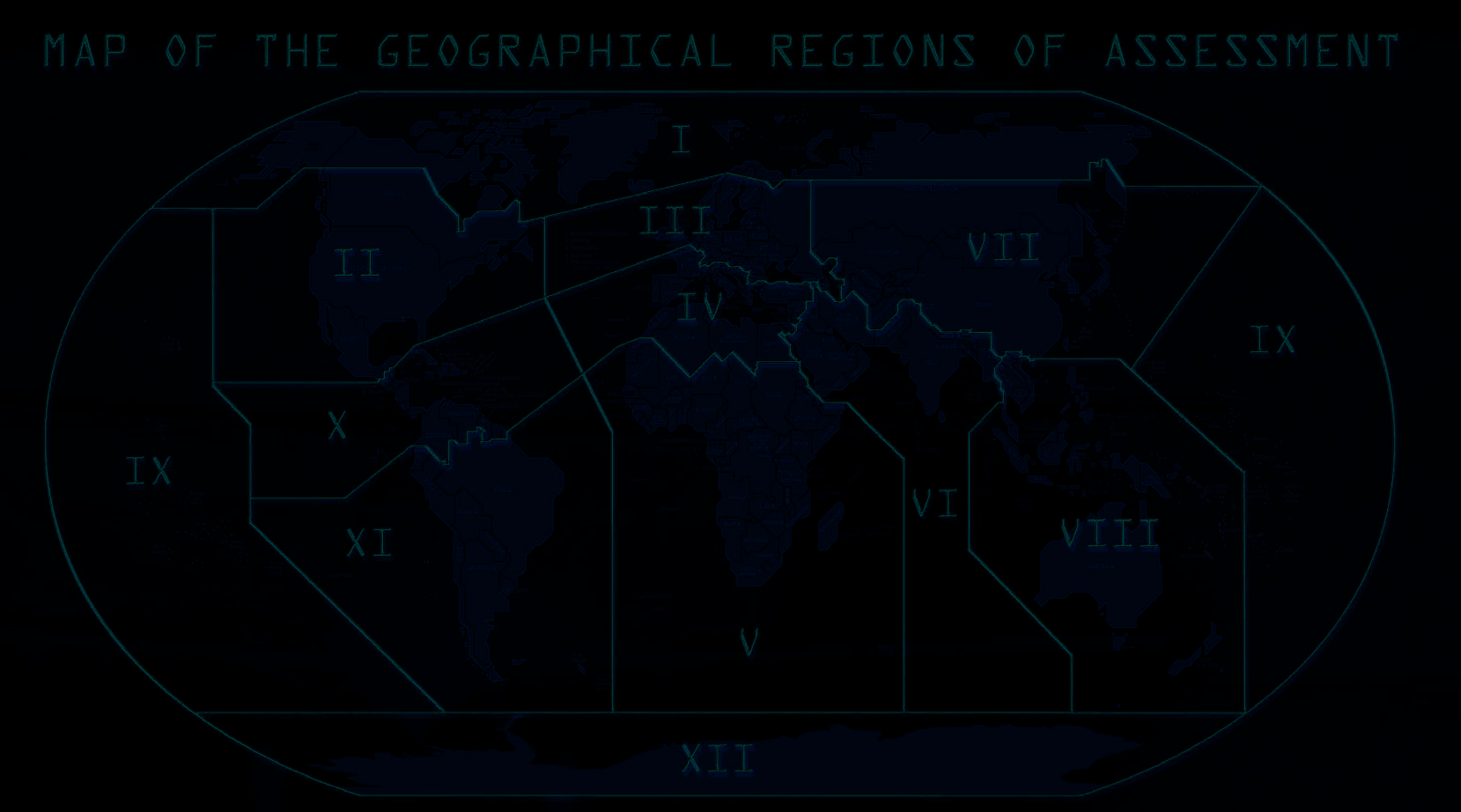
For this project the globe was partitioned into twelve regions. The regions were linked to important
international waters in keeping with the focus of the project. The twelve regions were:
I Arctic
VII - Central and North East Asia
II - North America
VIII - South East Asia and South Pacific
III Europe
IX - Pacific Islands
IV Mediterranean
X - Central America and the Caribbean
V - Sub-Saharan Africa
XI - Eastern and Western South America
VI - Indian Ocean
XII - Antarctica
7


RBA PTS GLOBAL REPORT 2003
Methodology
As this was a regionally based assessment, most of the work occurred in the various regions and effectively
at the country level. A key feature of the data gathering part of the project was that an invitation was
extended very widely for data. Information was sought from governments, research institutions, academics,
non-governmental groups and industry. A Regional Coordinator and an accompanying team of four to five
persons were selected. The process for the assessment is explained in the box below.
Steering
UNEP
Group
Chemicals
Project
Manager
Regional Teams
Data Collection
Regional Technical Workshops
Regional Priority Setting Meetings
12 Regional Reports
Global Priority Setting Meeting
A Global Report
The regional teams were responsible for data gathering and assembly. One tool that was developed to assist
in this data gathering was a standard data input form or questionnaire. It was clear that when dealing with
complex and disparate data from a wide variety of sources, there is no simple and effective system which will
easily and adequately handle the information.
Technical workshops were held with wide participation of experts within each region. Regional Priority
Setting Meetings were organised in which participants agreed on the key priorities related to PTS amongst
the stakeholders. A Global Team of six experts, along with the Project Manager, was composed to develop
the global report mainly from the findings of the regional reports. A Global Priority Setting Meeting allowed
feedback and further input via comments and submissions into the draft report.
Chemicals assessed
The term `PTS' does not imply any particular level of risk but rather is a broad consideration for substances
that persist in the environment, are found in areas far removed from sources and display some level of
toxicity. Persistent toxic substances may be manufactured intentionally for use in various sectors of industry,
one important sub-group being pesticides, while others may be formed as by-products during a variety of
processes (industrial, non-industrial and natural) including combustion.
All regions considered the 12 designated "Stockholm POP" chemicals. They were also able to select
additional chemicals that were of concern within the region. This project was primarily concerned with data
gathering and not with assessing which chemicals are or could be considered PTS and the inclusion of a
chemical for assessment does not imply that it meets any particular criteria of toxicity, persistence or effect.
Additionally, the assessment of any given chemical in this project does not imply in any way that the
chemical should be subject to inclusion in the list of Stockholm POPs.
The chemicals considered under the project are listed below. Not all the other chemicals were necessarily
assessed by every region during the regional assessment.
8
EXECUTIVE SUMMARY
List of chemicals assessed
STOCKHOLM POPS
OTHER CHEMICALS
ALDRIN HEXACHLOROHEXANE
ENDRIN POLYAROMATIC
HYDROCARBONS
DIELDRIN ENDOSULPHAN
CHLORDANE PENTACHLOROPHENOL
DDT
ORGANIC MERCURY COMPOUNDS
HEPTACHLOR ORGANIC
TIN
COMPOUNDS
TOXAPHENE ORGANIC
LEAD
COMPOUNDS
MIREX PHTHALATES
HEXACHLOROBENZENE PBDEs
POLYCHLORINATED BIPHENYLS
CHLORDECONE
DIOXINS (PCDDs)
OCTYLPHENOLS
FURANS (PCDFs)
NONYLPHENOLS
ATRAZINE
SHORT-CHAIN CHLORINATED PARAFFINS
PFOS
HEXABROMOBIPHENYL
Conclusions
Many PTS are a historical problem, i.e., their massive and worldwide use occurred during a time of
ignorance of the environmental problems potentially caused by them. In addition, the extensive
commercialisation and industrialisation that was undertaken some fifty years ago, increased the demand and
pace for the production of chemicals and the development of poor processes even in waste management.
The root causes discerned for the expression of PTS are outlined below:
Persistence
Cost of chemicals
Low water solubility
Perceived effectiveness
High toxicity
Ignorance
Unsustainable production/consumption
The capacity to monitor PTS differs widely across regions. While undertaking sophisticated monitoring
programmes and having adequate legislative action to enforce environmental protection, the developed
regions still require further financial resources and increased monitoring facilities. However, the gap is wide
with regards to the needs of the developing regions. In Sub-Saharan Africa, Central America and the
9
RBA PTS GLOBAL REPORT 2003
Caribbean, the Indian Ocean and parts of Asia, the monitoring of PTS is mainly ad hoc and relies on analyses
from research and on accidents. There is need for practical technology transfer and an increase in available
financial resources to provide sustainable development of control mechanisms. Regional partnerships
between developed and developing countries and among the latter should be encouraged.
Barriers do exist that mitigate against the implementation to solutions and alternatives to PTS. These
include the following:
· Lack of comprehensive scientific data
· Lack of monitoring and inventory capacity
· Lack of suitable legislative framework
· Ineffective enforcement of regulations
· Illegal trade and use
· Inappropriate use and abuse
· Lack of awareness and information
· Commercial pressures
· Lack of clear responsibilities and limited coordination
· Lack of financial resources
· Lack of availability and acceptance of alternatives
While many alternatives to PTS have been researched, it is not necessarily easy to find suitable, workable
systems to replace the desired qualities of these chemicals. The quality of persistence, low water solubility
toxicity and the cost efficiency of processes that may release or emit PTS are difficult to replace. However,
there are real examples that do exist where alternative measures have been instituted and have generated the
desired result that was provided by the replaced PTS. Examples include:
For pesticides Integrated Pest Management; Integrated Vector Management; Replacement of chlorinated
pesticides; Organic farming.
For industrial chemicals and unintended by-products Environmentally sustainable production; Best
available technology; Destructive technology without unwanted emissions.
Priority Environmental Source Issues
A lack of data was a serious constraint with the compilation of many of the regional reports, especially from
regions with developing countries and countries with economies in transition. Quantitative comparisons of
production and releases by source type and chemical across regions was very difficult, as the lack of data,
method of reporting, completeness, reported time trends in reductions and or increases, allowed mostly
qualitative horizontal comparisons.
The general and comparative sensitivity of specific regions was not considered (i.e. would a small source of
PAH in Region I be more important, than a relatively large source in a region just to the south?). Key
observations, considerations, conclusions and suggestions that follow are outlined below:
· Obsolete stocks and reservoirs of released PTS (such as contaminated sediments and soils, and stocks of
obsolete pesticides) are located in a number of regions and are major current sources. This aspect has
been identified as a serious concern in developing as well as developed regions, thereby sharing a
common environmental issue. This presents a potential of collaboration on remediation and other
technologies between developed and developing nations, including nations with economies in transition.
· Even though much has been done to reduce emissions, industrial activity, (both in developed and
developing regions as well as countries with economies in transition) must still be considered as a major
source of PCDD/PCDF, and probably other related PTS. The characterisation and location of these
activities on a global basis needs to be better understood, for a strategic application of interventions to be
cost and time effective.
10
EXECUTIVE SUMMARY
· Open burning and biomass burning are probable, but largely unknown sources of PAH and PCDD/PCDF
in developing regions, or regions with a mixed economy. Open burning and biomass burning in many
areas exposes biota and human populations, due to their close proximity (land fills, domestic heating,
close location to water etc), and needs to be much better understood. Large cities as such can also be
considered as a concentration of both various PTS sources and exposure routes, specifically involving the
human population. Large cities are normally also located close to fresh water, and often with coastal
areas, two areas of major concern due to pollution potential and sensitivity of the ecosystems.
· The developed regions can be considered as the major sources of intentionally produced industrial PTS
(chlorinated paraffins, PBDE, PFOS and others). This is then transported via the environment, as well as
through trade, to other regions. A better understanding is needed, as double counting (produced in one
country, and used in another) could give the false impression about specific chemicals. The issue of
secondary sources, such as e-waste, also needs to be better understood, as production, transport, primary
use, and waste treatment (secondary use), will all be potential sources (to a greater or lesser extent).
· Very little is still known about the sources of organometalics in all the regions, although mercury is being
addressed by the Global Mercury Assessment. Not enough information was available to make any
qualitative statements about this issue, but concern is still obvious from the various regional reports.
· PCB remains a large problem in almost all the regions, although it should be recognised that PCB is one
of the specific issues that will be addressed by the National Implementation Plans under the Stockholm
Convention.
· DDT and the lack of a clear and effective alternative continue to hamper development, as well affecting
the health of millions of people in many regions. Combined and continued efforts (such as with the
WHO) is needed to address this insidious issue, as well as to raise the understanding of the problems in
other regions.
· The source profile (Table 2.9) indicates that much more is known about most PTS sources in the
developed regions, but in developing regions, major data gaps exist regarding the non-intentional and
intentionally produced industrial PTS. Capacity and means to address the related issues remain a primary
aspect that will need attention to assist developing regions in this regard.
· It must be recognised that the source profile is likely to change with more information from various
activities, including the NIPs. Part of the lack of information can be ascribed to little capacity within
developing regions to address source aspects. It will therefore be very useful if the source profile could
be regularly updated, providing a clear means to understand the global issues, as well as to provide
guidance on interventions, research and prioritisation.
· The source profile is also likely to change, as changes in sources within the various regions, through
mitigation measures or through economic and social development are likely to occur.
· Perhaps one of the most useful outcomes of the Global Source Characterisation was the beginning of the
relative understanding of the contributions and problems faced by the various regions. If the
enhancement of this understanding can be done through the maintenance and expansion of some of the
momentum and networks that has been generated through this effort, much value will be derived on a
number of levels, inter alia research, capacity building, intervention planning and public trust.
The majority of the issues identified above, are in most cases regional specific. This means that addressing
these priorities within the identified regions, will contribute significantly towards reducing the releases on a
global scale. Addressing the issues on a regional level, within the scope of a global strategy, will enable
better application of resources on mitigation measures, sustainable development, environmental protection
and, human health improvement. Future developments however, could change the pattern. Increased
industrialisation of developing regions could alter the global source profile, if appropriate technologies are
not instituted.
Priority environmental concentration issues
As expected, the situation is very different across the regions. There are regions with a tradition in gathering
information on PTS since the 70's, whereas in others there are important data gaps or even no information
exists for some PTS. Therefore, priorities across regions may be based on facts (existing information and
11
RBA PTS GLOBAL REPORT 2003
reported hot spots) or suspicions that environmental levels are high due to the existence of a variety of
sources. From the regional reports the following picture of concerns can be obtained:
· The levels of PTS pesticide chemicals that were widely used across the regions in the past are now
declining because regulatory measures, such as banning, use restrictions, etc. This is the case of DDT,
heptachlor and chlordane. The use of mirex and toxaphene, which has been limited to certain regions,
follow the same trends. These are in general PTS of secondary concern, except in the Polar Regions
where there is evidence of still increasing levels.
· PTS pesticide chemicals that are still in use show detectable levels in practically all environmental
compartments and, in some cases, are quite high. Even when they are banned in some regions there are
also examples of elevated environmental levels in recent records, demonstrating illegal use or transport
between regions. Examples include lindane and endosulphan.
· Industrial PTS chemicals which have been banned or subject to control in some regions (and
environmental levels shows a clear decline since regulatory measures were taken), may still continue to
be used in developing countries, where levels are even increasing as is the case of PCBs. Effective
assessment, control of use and remediation will be a priority.
· Unintentionally produced PTS are of concern in the developed world, where levels reported are high, and
obviously of great concern. Data are scarce in the developing world, representing a big data gap,
although open burning may be of high concern. This is particularly the case with PCDD/PCDFs and
PAHs.
· New candidate chemicals for global concern are insufficiently covered to draw a complete picture, while
there are clear evidences of ecotoxicological effects for some of them. Gathering information becomes a
priority. This is the case of PCP, brominated compounds, alkylphenols, etc.
For a better assessment of the PTS levels and effects, two major gaps need to be adequately filled, and this
becomes also a priority:
Data generation and gathering should be extended throughout the regions, particularly for some PTS and
compartments, and more important, in a harmonised manner, to allow data to be compared over time and
between studies, countries and regions.
Regionally adapted benchmarks, namely environmental quality guidelines and human tolerable daily intakes,
should be defined and more widely used to compare measures of environmental levels with environmental or
health effects.
Integration of information on environmental measurements of sources and pathways with physical and
biological models is required to aid the design and implementation of monitoring, research, and management,
including mitigation.
Recommendations
While many recommendations were made in reports at the regional level, an attempt has been made to
extract considerations that can be translated to achieving a global strategy. It is expected that any future
actions that would consider the data from these reports will ensure that only validated information is captured
in the decision process. Some positive considerations which developed during the implementation of this
project should be incorporated into any relevant post project exercise.
Network The use of the network established should be incorporated into any relevant post project
enterprise. A good relationship exists among all the regional coordinators and teams that will provide
synergy for any future project.
Regional Direction - The use of a regional strategy to attain global results has proven successful for the
implementation of this project. This pattern should be replicated for future initiatives.
Emerging Chemicals - It will be appropriate for UNEP to concentrate on work associated with the twelve
selected PTS under the Stockholm Convention. However, certain other emerging chemicals are a cause for
concern globally and these should be considered in future programmes.
The Stockholm Convention has legally binding obligations for the Parties. These obligations consider the
activities required to address the reduction and control of the selected twelve chemicals under the
12
EXECUTIVE SUMMARY
Convention. This report recognises the ultimate responsibility of the Parties to the Stockholm Convention,
and presents certain recommendations on the Stockholm POPs for possible consideration at the Conference
of the Parties. These include:
o Ratification of Environmental International Conventions The three major International
Conventions pertaining to chemical management (Stockholm, Rotterdam and Basel) present a
unique opportunity for all countries to be involved regionally and internationally in chemical
management exercises that can only enhance the reduction of the levels and effects of PTS in the
environment. In particular, the ratification of the Stockholm that directly considers the reduction
and ultimate elimination of twelve POPs should be considered with priority.
o Global strategy for Implementation of NIPs All countries that have signed the Stockholm
Convention that are considered `GEF eligible' have access to funds to create National
Implementation Plans (NIPs) under the Stockholm Convention. These Plans are being
administered by several Executing International Agencies. Even though there are disparities
between countries, it is recommended that a global strategy be crafted to ensure efficiency, foster
synergy between Agencies and to promote regional collaboration during the development of
NIPs
o A global assessment of the strategies to eliminate the use of DDT for malaria
control - Many countries are now battling to reduce if not eliminate the use of DDT for malaria
vector control. A global assessment would include a close collaboration with industry and the
WHO should recommend the best alternatives that now exist. The assessment would be used to
promote the development of alternatives and to pursue the use of other less caustic chemicals and
non-chemical solutions.
Below are post project initiatives suggested for future action based on the results of the assessment. These
initiatives involve, in the main, chemicals outside of the twelve selected Stockholm POPs.
Update of the Regionally Based Assessment of PTS
Many pieces of data and aggregated analyses were not captured under the current assessment. As such, it is
considered prudent that the assessment be updated on a regular basis. This exercise could be carried out
every 3-5 years resulting in a periodic assessment of the status of the selected chemicals with room for
possible addition or subtraction.
Filling of data gaps
Consistently throughout the regional reports, it was established that major data gaps existed that prevented
the scientific acknowledgement of intuitive concerns for certain chemicals. These gaps varied from region to
region and from chemical to chemical. Unfortunately, it is difficult to prioritise the importance of these data
gaps on a global scale given the differences between regions. However, an effort to glean information based
on regional priorities should be considered with expediency.
Conduct of a global assessment of PCDD/PCDFs and PAHs emissions from
open burning
It is being shown from the RBA PTS that open burning is a major concern in all habitable regions under the
project. However, there is limited knowledge of the extent of the problem. The NIPs being developed by
each signatory to the Stockholm Convention includes an assessment of the needs associated with the
reduction of emissions of dioxins and furans. However, this could be aided by a global programme to
ascertain measurements for various open burning sites. The intention is to establish with a fair degree of
accuracy, estimated emissions from these various sources using models based on representative
measurements taken from major, established open burning sites.
A resource centre for new PTS chemicals
In order to be at the cutting-edge of the emerging concerns from certain PTS, UNEP Chemicals will develop
a resource centre for those chemicals for which limited information is available especially in the developing
world. These substances will include all the emerging chemicals identified in this report outside of the
13
RBA PTS GLOBAL REPORT 2003
Stockholm POPs. The centre would be interactive and developed as a network with a clearinghouse
function. Such a centre would collate data from the developed and developing world, collaborate in ongoing
work analysing these chemicals in terms of production, use and environmental concentrations and provide
publications to share the emerging information in a wide circulation throughout all countries.
A global strategy for increasing public awareness on PTS issues
Consistently, the recurring message in the recommendations for all the regional reports is the need for broad
public awareness programmes especially among civil society to increase the knowledge and sensitivity on the
dangers of these chemicals. The increased awareness of what these chemicals are in the first instance and
the danger involved from exposure will go a long way in ensuring reduced risk to public health and the
environment. Working with SAICM (The Strategic Approach to International Chemicals Management) and
the IOMC (The Inter-Organization Programme for the Sound Management of Chemicals), emphasis is placed
on informing the public through audio-visual means and wherever possible, in the local language and using
appropriate awareness strategies.
A global source profile
Currently, the Stockholm Convention obliges Parties to the Convention to carry out source profiles for those
substances under that Convention. In order to keep track of what is happening, a global profile of selected
priority chemicals would be undertaken on a timely basis to provide useful information on the production,
emissions and releases of certain PTSs. Such a programme would rely on relevant, existing, global and
regional data centres as well as the global monitoring network being established. It would make use of the
wide network already developed through the RBA PTS Project as a means of collecting vital country and
regional information for assessment. The SAICM should consider this recommendation as part of its
portfolio.
A global strategy for technology transfer
In the past the transfer of technology has on occasion not been appropriate given the differences in
geography, development of supporting institutions, culture and language. In order to ensure maximum
benefit from the transfer of technology to reduce the release and emissions of PTS and subsequent effects to
the environment, an agreed strategy would be developed that has the acceptance of all stakeholders. It is
recommended that the SAICM consider in its work the importance of technology transfer and the need for it
to reflect national requirements and situations, and to consider developing guidance on this matter.
Development of capacities and predictive capability of the LRT of PTS
For most of the regions of the globe no quantitative region-specific tools for transport assessment exist. The
three major reasons for that are: Lack of region-specific process and understanding; lack of sufficient/and or
sufficiently good data for model input and a lack of capacity for developing and using transport models
within the regions. This knowledge gap not only prevents a quantitative treatment of PTS fate, but may often
impede even a conceptual qualitative understanding of PTS transport behaviour in regions other than the
Northern temperate environment. Therefore, there is need to gain a quantitative understanding and predictive
capability of the transport and accumulation behaviour of various PTS under a variety of geographic and
climatic circumstances, that reflect the diversity of the entire global environment. To achieve this, the
following should be undertaken: a) Conduct studies aimed at a quantitative understanding of fate processes
that are both unique and important for the transport behaviour of PTS under various regional circumstances.
Specifically, identify PTS fate processes of importance in polar, arid and tropical ecosystems and investigate
them with the aim to derive quantitative information suitable for inclusion into regional and global fate and
transport models for PTS. Such fate processes may include phase partitioning, air-surface exchange,
contaminant focussing and degradation processes; b) Ensure there are resources and capacity for monitoring
PTS in remote environments. Models and a quantitative understanding of fate processes can not substitute for
field data, but are dependent on them; c) Support the development, improvement, evaluation and use of
regional and global PTS transport models of variable complexity; and d) Build capacity within the regions
for studying and modelling PTS transport processes.
14
1 INTRODUCTION
1.1
BACKGROUND
There is considerable concern amongst Governments, Non-Governmental Organisations, scientists and the
wider community over potential adverse effects on the environment and human health from exposure to
chemicals. The long life times and potential for long-range transport of certain chemical pollutants requires
that concerted international action is put in place to effectively control exposures since such chemicals
released in one place may have impacts at a considerable distance from the source.
In 1997 the United Nations Environment Programme (UNEP) Governing Council decided that immediate
international action should be initiated to protect human health and the environment through measures which
will reduce and/or eliminate the emissions and discharges of an initial set of twelve "persistent organic
pollutants" (POPs). International negotiations resulted in the adoption of the Stockholm Convention on
Persistent Organic Pollutants in May 2001. The 12 substances initially addressed in the Stockholm
Convention are: aldrin, endrin, dieldrin, chlordane, DDT, toxaphene, mirex, heptachlor, hexachlorobenzene,
polychlorinated biphenyls (PCBs), polychlorinated dibenzodioxins (PCDD) and polychlorinated
dibenzofurans (PCDF). Criteria are set out by which other chemicals will be considered for addition to the
Convention.
The present project was initiated in mid-1998 at a time when the negotiations for an international legally
binding instrument for implementing international action on certain persistent organic pollutants had just
started and while the outcome of the negotiations was still purely conjectural. It was initiated by GEF after
discussions with UNEP to address a broader set of issues and substances than those which finally were
agreed under the Stockholm Convention on POPs. This project therefore deals with "persistent toxic
substances" or PTS and is deliberately looking at a wider group of chemicals than the twelve POPs under the
Stockholm Convention. PTS is a descriptive term and does not reflect a narrow definition of chemical
properties or a legal definition but rather is used as an umbrella term for compounds that show persistence in
the environment (and hence may have effects at some distance from their source and for some time after they
are released) and which are toxic. The project was designed to compile and evaluate existing data on PTS. It
was not intended to be a formal risk or hazard assessment. Inclusion of a chemical as PTS within this project
does not imply that there is necessarily any given level of risk or imply a need for a specific action
(regulatory or otherwise) but that the chemical properties in terms of persistence and potential toxicity mean
that further assessment at the regional or international level may need to be undertaken as a basis for such
action, as appropriate.
Persistent toxic substances may be manufactured intentionally for use in various sectors of industry. One
important sub-group is pesticides, others may be formed as by-products from a variety of processes
(industrial, non-industrial and natural) including combustion. To date, scientific assessments have often been
focused on specific local and/or regional environmental and health effects, in particular "hot spots" such as
the Great Lakes region of North America or the Baltic Sea in Europe.
1.2
OBJECTIVES
The objective of this project, as stated in the project brief, was to deliver a measure of the nature and the
comparative severity of damage and threats posed at national, regional and ultimately at global levels by
Persistent Toxic Substances (PTS).
In order to address this overall objective a number of sub-objectives were developed:
To establish a regionally based network of experts and teams to gather and evaluate data on
PTS
To set up a framework for broad-based stakeholder input within regions to determine regional
priority issues related to PTS
To gather available data on sources of selected PTS within each region
To gather available data on concentrations of PTS in the environment, including animals and
humans
To gather available information on the effects of PTS on humans and ecosystems
15
RBA PTS GLOBAL REPORT 2003
To gather available information on the long-range transport of PTS
To gather from the regions available information on the management of PTS and barriers to
improved management
To develop regional reports containing the findings of the work
To hold a global priority setting meeting to review the results and priorities of the global
assessment
To develop a global report synthesizing the results from the regions and identifying key
priority areas, recommendations for future action and data gaps.
1.3
SCOPE OF PROJECT
The project was designed to meet the objectives outlined above using a regionally based team approach and
using existing data available within the regions.
The project combines two aspects of the PTS issue it is underpinned by a science-based assessment and as
such it has gathered, analysed and presented information and also drawn together stakeholders in the regions
to discover their priority issues related to PTS. The project has been carried out independently of actions
related to the negotiation and implementation of any international, regional or national agreements or policies
and while it may help to provide information to such processes it was not designed and implemented with
that objective.
The scope and impact of PTS are very broad with sources from many activities and practices, a wide range of
chemicals, multiple pathways of exposure and highly variable behaviour in the environment as well as a wide
variation in toxicities. The persistence and widespread occurrence and low absolute levels of PTS present
challenges to those authorities and scientists studying PTS. Analytical data can be expensive to acquire and
may have limited application. Providing a firm foundation for assessment and possible action to prevent and
mitigate potential effects of PTS requires a holistic approach to data gathering, assembly and assessment
often based on limited data. Where there are threats of serious or irreversible damage, lack of full scientific
certainty shall not be used as a reason for postponing cost-effective measures to prevent environmental
degradation.
1.4
METHODOLOGY
The project was designed to be based in the regions and draw on the resources and expertise at the country
level. Regional teams were set up to be responsible for collecting the data, implementing technical
workshops and making the regional assessment. UNEP provided central project management and
coordination functions and guidance was provided from the centre in order to facilitate a consistent approach.
A Steering Group made up of representatives of relevant international organisations, environmental and
industrial non-governmental organisations and scientists provided assistance to the Project Manager in
guiding and delivering the project.
1.4.1 The Regions
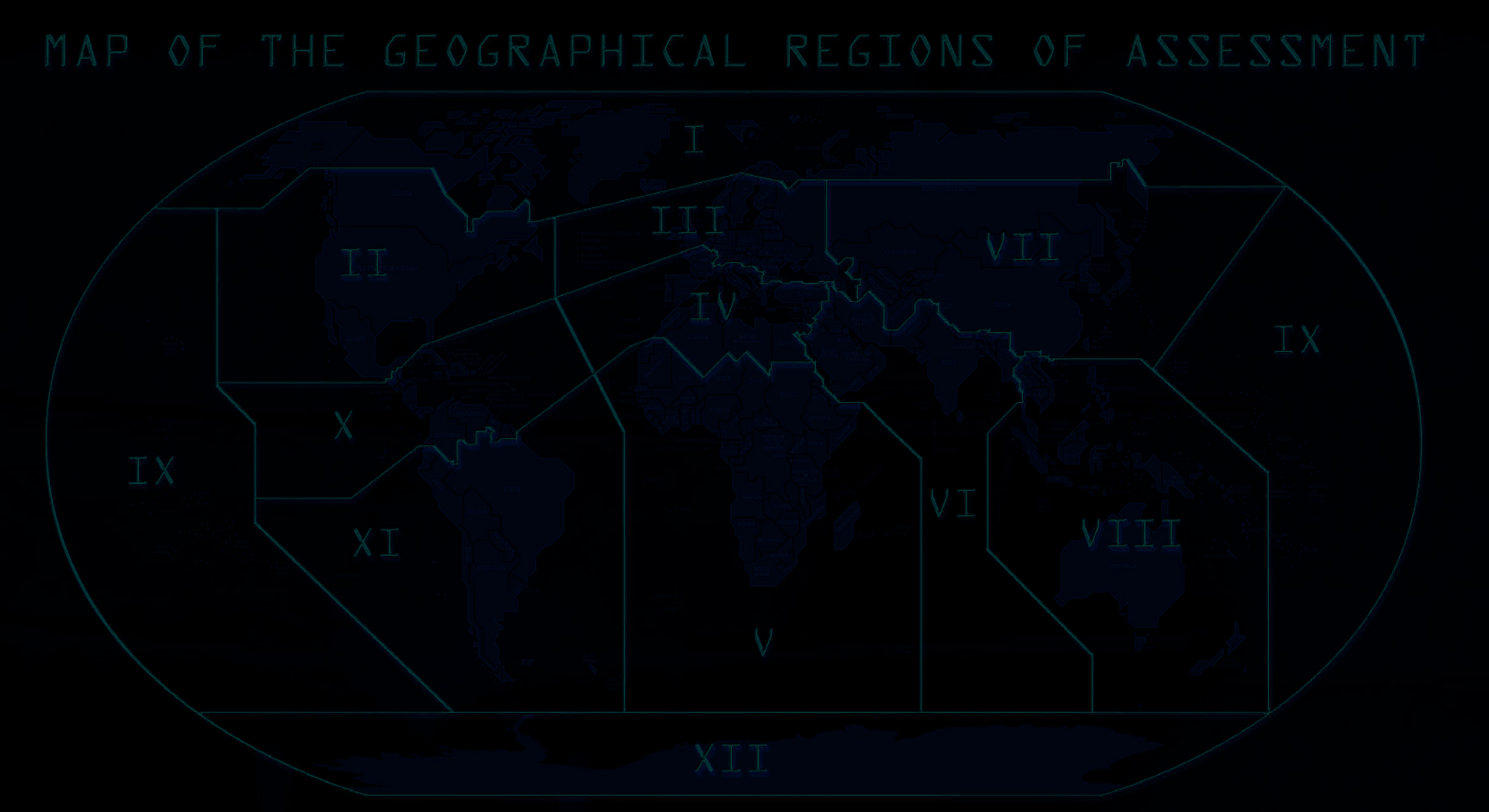
For this project the globe was partitioned into twelve regions. The twelve regions were linked to important
international waters in keeping with the focus of the project and designed to provide a manageable structure
for the project execution. The twelve regions were:
I Arctic
VIII - South East Asia and South Pacific
II - North America;
IX - Pacific Islands
III Europe
X - Central America and the Caribbean
IV Mediterranean
XI - Eastern and Western South America; and
V - Sub-Saharan Africa
XII - Antarctica.
VI - Indian Ocean
VII - Central and North East Asia (Western North
Pacific)
16
INTRODUCTION
1.4.1.1
Region I Arctic
The regional boundaries used were those set for the Arctic Monitoring and Assessment Project (AMAP).
The region includes the Arctic regions of the eight circumpolar countries: Canada, Denmark (Greenland);
Finland, Iceland, Norway, Russia, Sweden and the United States of America (USA). Climate varies
considerably with maritime climates along the coast of Norway, adjoining parts of the Russian coast and a
narrow coastal strip of Alaska. A continental climate is found from northern Scandinavia to Siberia and
eastern Alaska to the Canadian Arctic archipelago.
Much of the Arctic region is lightly populated and not industrialised, however, heavy industry in or near the
Arctic parts of Russia and Scandinavia, historical equipment uses and waste disposal practices may be
significant sources of PTS. In addition various PTS have found uses within the Arctic region.
1.4.1.2
Region II North America
Region II consists of the Canada the USA and Mexico except the Arctic parts of Canada and the USA
(Region I) and Hawaii (Region IX). Climatic variation is large from Arctic in the north to tropical in the
south.
The USA and Canada are developed, industrialised countries with sophisticated industry and regulation,
Mexico is a developing country with increasing industrialisation.
1.4.1.3
Region III Europe
The Europe region for this project consists of Armenia, Austria, Azerbaijan, Belarus, Belgium, Bulgaria,
Czech Republic, Denmark, Estonia, Finland, Georgia, Germany, Hungary, Ireland, Latvia, Liechtenstein,
Lithuania, Luxembourg, Netherlands, Norway, Poland, Republic of Moldova, Romania, Russian Federation,
Slovakia, Sweden, Switzerland, Ukraine, United Kingdom of Great Britain and Northern Ireland. It excludes
those parts of the countries assessed under Region I (Arctic).
Region III spans three climatic zones the circumpolar zone in the north, the subtropical zone south of the
Alps including the Dinaric alps and the Balkans and the temperate zone warm in the central and southern
area and cool in the north.
The countries included in Region III range from highly industrialised economies (such as Germany and the
UK) to countries with economies in transition including some with aged industrial infrastructure to those
with greater reliance on agriculture and a developing economic structure.
The chemical industry, metal production and processing and agriculture are all significant parts of the
economy.
17
RBA PTS GLOBAL REPORT 2003
1.4.1.4
Region IV Mediterranean
Region IV consists of countries clustered around the Mediterranean Sea: Albania, Algeria, Andorra, Bosnia-
Herzegovina, Croatia, Cyprus, Egypt, France, Greece, Israel, Italy, Jordan, Lebanon, Libyan Arab
Jamahiriya, Malta, Monaco, Morocco, Palestine, Portugal, San Marino, Slovenia, Spain, Syrian Arab
Republic, The Former Yugoslav Republic of Macedonia, Tunisia, Turkey and Yugoslavia.
The climate is generally characterised by mild wet winters and hot dry summers with more than 90% of
annual precipitation falling in winter.
Much of the population and urban development occurs along the coastal strip. Large variations are observed
in the levels of development, ranging from highly industrialised economies of such as France, Italy and Spain
through industrialising countries such as Greece and Turkey to developing countries in the south.
1.4.1.5
Region V Sub-Saharan Africa
The region consists of the following countries and island states: Angola, Benin, Botswana, Burkina Faso,
Burundi, Cameroon, Central African Republic, Chad, Comoros, Congo (Brazzaville), Cote d'Ivoire,
Democratic Republic of Congo, Djibouti, Equatorial Guinea, Eritrea, Ethiopia, Gabon, The Gambia, Ghana,
Guinea-Bissau, Guinea, Kenya, Lesotho, Liberia, Madagascar, Malawi, Mali, Mauritania, Mauritius,
Mozambique, Namibia, Niger, Nigeria, Rwanda, Sao Tome and Principe, Senegal, Seychelles, Sierra Leone,
Somalia, South Africa, Sudan, Swaziland, Tanzania, Togo, Uganda, Zambia and Zimbabwe.
The region can be divided into three major regions the Northern Plateau, the Central and Southern Plateau
and the Eastern Highlands. The equatorial belt has rainfall whereas the northern and southern African
countries and those in the Horn of Africa are typically arid or semi arid.
In general the African economy is fragile and largely agricultural and high debts contribute to comparatively
low levels of industrialisation and development. Most industrial areas are located close to lakes, rivers and
estuaries.
1.4.1.6
Region VI Indian Ocean
The region consists of Bahrain; Bangladesh; Bhutan; India; Iran; Iraq, Kuwait; Maldives; Nepal; Oman;
Pakistan; Qatar; Saudi Arabia; Sri Lanka; the United Arab Emirates and Yemen. Climate varies considerably
across this region covering mountain environments through to coastal and desert environments.
The economies and levels of development and income also vary strongly across the region with some
countries deriving high incomes from oil production and others with largely agricultural and undeveloped
economies.
1.4.1.7
Region VII Central and North East Asia
The region consists of eleven countries: Afghanistan, China; Japan; Republic of Korea; Democratic People's
Republic of Korea; Russian Federation (excluding the Arctic part Region 1 and western part Region III);
Mongolia; Kazakhstan; Kyrgyzstan; Tajikistan; Turkmenistan; and Uzbekistan. Region VII includes a
continental landmass, several major islands and various bodies of water with mountains, plains and deserts.
The major part of the population is concentrated in the eastern half of the region. The region has countries
which are in the process of rapid development with increasing industrialisation and mineral and oil
production, highly industrialised economies in transition and fully developed industrial economies. In
addition some areas are at an earlier stage of development.
1.4.1.8
Region VIII Southeast Asia and the Pacific
The region consists of: Australia, Brunei Darussalam, Cambodia, Indonesia, Lao People's Democratic
Republic, Malaysia, Myanmar, New Zealand, Papua New Guinea, Philippines, Singapore, Thailand, and Viet
Nam.
Climate ranges from tropical (Southeast Asia and Papua New Guinea) through to semi temperate conditions
in the continental plateau and the mountains. The climate in Australia is generally arid or semi arid, it is
temperate in the south and tropical in the north. New Zealand is temperate with some regional contrasts.
The sub-region remains very diverse in terms of economic development, political systems, ethnicity, culture,
and natural resources. Singapore, for example, is an OECD country and Brunei Darussalam, an oil-rich
18
INTRODUCTION
microstate, Myanmar, Lao People's Democratic Republic, and Cambodia are essentially agrarian economies,
while Malaysia, Thailand, the Philippines, Indonesia, and Viet Nam are rapidly industrializing. Australia and
New Zealand are developed countries with mixed economies and substantial agricultural sectors.
1.4.1.9
Region IX Pacific Islands
The region is very diverse. Twenty two countries and territories were included in this region: American
Samoa; Cook Islands; Federated States of Micronesia; Fiji; French Polynesia; Guam; Kiribati; Marshall
Islands; Nauru; New Caledonia; Niue; Northern Mariana Islands; Palau; Pitcairn Islands; Samoa; Solomon
Islands; Tokelau; Tonga; Tuvalu; Vanuatu; Wallis and Funtuna; and various other US territories.
The islands are spread across more than 30 million square kilometres of which more than 98% is ocean. Of
7500 islands about 500 are inhabited. Countries and territories range from single islands to groupings of
more than 100. Some islands are mountainous, others are low lying atolls. Economies tend to be based on
agriculture and fishing.
1.4.1.10
Region X Central America and the Caribbean
Region X consists of the countries of: Antigua and Barbuda; Bahamas; Barbados; Belize; Bermuda;
Colombia; Costa Rica; Cuba; Dominica; Dominican Republic; El Salvador; Grenada; Guatemala; Guyana;
Haiti; Honduras; Jamaica; Nicaragua; Panama; Puerto Rico; Saint Kits and Nevis; Saint Lucia; Saint Vincent
and the Grenadines; Suriname; Trinidad and Tobago, and Venezuela. In general the climate is tropical.
The economies of many countries used to be largely agricultural. However, development of mining in
Venezuela, Guyana and Suriname, tourism in the Caribbean and, latterly, increasing manufacturing have
somewhat reduced the dominance of agriculture.
1.4.1.11
Region XI Eastern and Western South America
This region consists of eight countries: Argentina; Bolivia; Brazil; Chile; Ecuador; Paraguay; Peru and
Uruguay. Climate varies considerably across the region from tropical in the north through more temperate to
desert with high mountains with alpine conditions.
The economies range from relatively undeveloped through those based on exploitation of mineral and other
natural resources through to the large economy of Brazil (in the top 10 countries worldwide in terms of
GDP).
1.4.1.12
Region XII Antarctica
This region was not defined by national boundaries but rather by setting geographical limits. The region
included all land and ocean south of 50°S from 50°W to 30°E; south of 45°S from 30°E to 80°E; south of
55°S from 80°E to 150°E; and south of 60°S from 150°E to 50°W, as well as Ile St Paul and Ile Amsterdam,
Macquarie Island and Gough Island.
The region is remote, land mass has cold desert conditions with much of the land permanently covered by
ice. Islands within the region range from permanently snow covered to more temperate conditions with more
developed terrestrial ecosystems.
There is no indigenous population or industrial activity.
1.4.2 Structure (regional teams)
The basic functional unit for the project delivery was the "Regional Team"1. Each Regional Team consisted
of a regional coordinator appointed by UNEP and a team of four or five team members selected by the
coordinators and approved by the Steering Group. The regional team was responsible for project planning
and execution at the regional level.
1 The approach in three regions was significantly different. The assessment of Region I was carried out by a contractor
working for the Arctic Monitoring and Assessment Programme (AMAP) and was based on the existing AMAP report
(AMAP 1998), the Arctic report for the RBA was reviewed. In region II a contractor compiled the report and only a
priority setting meeting was undertaken. The work of Region XII was delegated to the Scientific Committee on
Antarctic Research (SCAR) who in turn subcontracted the work.
19
RBA PTS GLOBAL REPORT 2003
A network of experts was assembled at the country level. These experts were drawn from academia,
Government, industry and non-Governmental Organisations and provided data and information to the
regional teams for use in the assessment, in part through participatory regional workshops. Establishing and
operating the network presented some challenges but after initial teething troubles some regions found the
process valuable and effective. This was especially true where there was little previous experience in
working with such networks and where basic infrastructural weaknesses were an issue.
Central project management and direction was provided by UNEP Chemicals in Geneva to ensure that
regions were working in a compatible manner and to provide guidance on common issues that arose.
Due to the particular circumstances of the Arctic and Antarctic no regional meetings were held.
1.4.3 Approach
This project was based on the collection, synthesis and analysis of existing data. There is a considerable
quantity of existing data available relating to the sources, environmental levels, transport and effects of a
variety of PTS.
The project was based on a regional structure to ensure that, in so far as possible, the conclusions and
priorities were based on the specific situation and circumstances in the different regions.
It is important to evaluate what is known in the regions, what are the perceived priorities and where the major
data gaps and deficiencies are. This will provide GEF and UNEP with a soundly-based rationale for
assigning priorities for future action on chemical issues and help to direct a focused and cost-effective
programme of future work by countries and regions.
The Regional Teams were responsible for data gathering and assembly. One tool that was developed to
assist in this data gathering was a standard data input form or questionnaire. Some Teams made more use of
the standard questionnaires than others. It was clear that when dealing with complex and disparate data from
a wide variety of sources with no control or influence over the studies from which data were being collected,
there is no simple and effective system that will easily and adequately handle the information. In some
regions comparatively greater use was made of data in the general scientific literature (in the case of Region
XII all data came from this source).
A key feature of the data gathering part of the project was that an invitation was extended very widely for
data. Information was sought from governments, research institutions, academics, non-governmental groups
and industry. The nature of the project was such that although the reports and findings were widely
disseminated there was no formal process of review by governments.
Workshops were organised in the relevant regions to bring together interested parties, to brief them on the
project and to gather feedback and data relevant to the project. In general a two-stage approach was taken to
have a workshop on sources and concentrations of PTS in the environment and a second on toxicological and
ecotoxicological impacts and transboundary movement of PTS.
Regional Priority Setting Meetings were organised in which participants were involved in a process designed
to discover what the key priorities related to PTS amongst the stakeholders were. Participation was taken
from representatives of governments, industry, NGOs, and scientists from within each respective region.
This process drew both on analytical and related data as well as the perceptions of risk and harm amongst
stakeholders.
To assist with the process of setting priorities, a simple scoring system was developed. The participants were
asked to assign a "score" to the chemicals. The score could be 0, 1 or 2 and relating to different aspects of
PTS knowledge: sources; levels; effects and gaps. A score indicated no concern (0), local concern (1), and
regional concern (2), while for gaps 0 indicated that supporting data were available, 1 that the data were
limited, and 2 that data were largely missing.
The holding of and outputs from the Regional Priority Setting Meetings provide a powerful tool in the study
of PTS and how the problems are perceived in the Regions by a broad group of stakeholders. The results
from this exercise gave an overview of the various aspects of the occurrence of PTS within a Region and
integrated perceptions and data. Nevertheless, precaution should be taken when looking at this dataset as a
basis to prioritise PTS and hence to orientate future research and actions. Inevitably, the judgements
expressed by participants usually reflected their specific experience, knowledge and perception of the
20
INTRODUCTION
problems and often for a specific country only. Such a simple scoring system restricts the depth of
information and the results should be used as a part of a wider assessment and not taken as definitive for a
region.
The findings of the project were summarised in 12 regional reports (see reference list). The overall findings,
key themes and examples from the regional reports have been assembled into this report but for a full picture
of the work carried out and data gathered, the regional reports should be used alongside this global report.
The project was separate from and independent of activities related to the negotiation and subsequent
implementation of the Stockholm Convention although findings from this work may be of relevance to
entities working on the Stockholm Convention.
1.4.4 Persistent Toxic Substances - PTS
This project is concerned with a group of chemicals that are termed "Persistent Toxic Substances" or PTS.
There is no formal or legal definition of PTS but rather the concept was developed during the project
development phase to encompass chemicals that could be of concern due to their potential toxicity to
ecosystems or humans. These chemicals exhibited characteristics of environmental persistence so that long-
term exposures might result and effects may be felt some distance from the point of production or release.
The project was developed with the explicit intention to consider a broader range of chemicals and issues
than the 12 POPs that were the subject of the negotiations to develop a legally binding agreement which led
ultimately to the Stockholm Convention. The number of possible chemicals that could meet the definition of
being PTS is very large. In order to ensure that the project was both consistent and at the same time able to
be responsive to the priorities of the regions the following approach was taken: all regions would consider the
12 designated "Stockholm POP" chemicals, they would also be able to select additional chemicals that were
of concern within the region.
In order to help the regions in selecting PTS chemicals a listing was compiled and provided to the regions for
their consideration. This list was drawn from chemicals which could be grouped as PTS and which had been
considered for action or assessment in other programmes. Information relevant to the process for deriving
the list and a discussion of the selection of PTS at the planning workshops and in the project initiation is
described in the Guidance Document issued at the beginning of the project (UNEP 2000).
This project was primarily concerned with data gathering and not with assessing which chemicals are or
could be considered PTS. The inclusion of a chemical for assessment does not imply that it meets any
particular criteria of toxicity, persistence or effect. It is crucial to recognise that the exclusion of chemicals
from this assessment does not imply that there are not other potential PTS that may be important.
The project provides information on those chemicals that were considered and is based on the information
and data provided during the project period. Supplementary data and further studies may change the relative
priorities and may change the interpretation of the data available. The work is therefore to be seen as a step
in the process of evaluating PTS and not as a definitive study and all conclusions are drawn with that in
mind.
The chemicals considered in each region are shown in Table 1. Most regions considered chemicals selected
from the list of provided by UNEP but some added additional chemicals as well. Since only limited data are
available in some regions, the fact that a chemical was not considered does not necessarily mean that it is not
present or not necessarily a priority. The listing is broken down to show those chemicals defined as
"Stockholm POPs", and "other PTS" which are grouped according to their primary use or designation as
pesticides, industrial chemicals or unintentionally produced PTS.
Some chemicals will have multiple uses and these may all need to be considered. Hexachlorobenzene may
be used as a pesticide, an industrial chemical and can also be unintentionally produced, while PAHs are
usually produced unintentionally but are also produced for use as an industrial chemical.
21
RBA PTS GLOBAL REPORT 2003
Table 1
Chemicals considered in the regions.
I II III IV V VI VII VIII IX X XI XII
Aldrin
"Stockholm POP"
pesticides
Chlordane
DDT
Dieldrin
Endrin
Heptachlor
Mirex
Toxaphene
Hexchlorobenzene
(HCB)
POP industrial
Polychlorinated
chemicals
biphenyls (PCBs)
POP unintentionally Dioxins (PCDDs)
produced
Furans (PCDFs)
Other PT
Atrazine
S
pesticides
Lindane (HCH)1
Hexachlorocyclohexanes
(HCH)1
Chlordecone
Pentachlorophenol
Endosulphan
Organotin
Organolead
Other PTS -
industrial
Hexabromobiphenyl
(HxBB)
Polybrominated
diphenyl ethers (PBDE)
Phthalate esters
Short-chain chlorinated
paraffins (SCCPs)
Nonyl/octyl phenols
Perfluorooctane
sulfonate (PFOS)
Other PT
Organomercu
S
ry
unintentionally
Polycyclic aromatic
produced
hydrocarbons (PAH)
Note 1 potential confusion arises since lindane is an isomer of the HCH grouping, some data refer
specifically to lindane, other data are more general and related to HCH. Treatment by the regions was not
always consistent.
22
INTRODUCTION
1.5
PURPOSE AND STRUCTURE OF GLOBAL REPORT
The outputs from the Regionally Based Assessment (RBA) include:
Twelve regional reports addressing the findings of the project at the regional level including
regional priorities developed by stakeholder meetings;
A network of scientists and other stakeholders;
A large body of data related to PTS sources, environmental concentrations and effects;
This global report.
The global report synthesizes the key findings from the regional reports and draws conclusions on the
principal issues and data gaps. This report is designed to be a stand-alone document summarising the
findings of the project. Detailed data and information is contained in the regional reports and summarised in
this report with key themes supported by example data sets and key case studies. The report is structured in
the following sections:
Chapter 1 is the introduction providing an outline of the background to the project, the methods applied and
the common themes running through the project. Chapter 2 addresses sources of PTS in the regions
summarising the key findings including regional priorities related to sources of PTS and key data gaps.
Chapter 3 considers data on concentrations of PTS in the environment, animals and humans as well as
evidence for toxic effects on ecosystems and humans. Regional priorities are summarised and key data gaps
identified. Chapter 4 is concerned with the fate and transport of PTS providing a summary of work and
knowledge within the regions regarding the transboundary transport of PTS and key features of the chemicals
and regions that will affect transport and fate. The models used to estimate these transport pathways are
explored. Chapter 5 addresses the root causes of PTS, the capacity and needs of the regions to manage PTS,
the barriers to sustainable management of chemicals, alternatives and the measures for reduction. Chapter 6
contains overall conclusions, priority issues and data gaps along with recommendations for future actions.
1.6
LIMITATIONS AND CAVEATS
A project of this scale and size addressing an issue as complex and wide-ranging as PTS at the global level is
limited by a number of factors which should be considered in the reading of the report.
1.6.1 Administration
The project set out to build a network of scientists and experts from countries across the globe working
together in 12 regional groupings to generate the information which forms the core of this work. The process
of identifying the key individuals and institutions is by no means simple and although the team cast the
invitation as widely as possible, there are likely to be individuals with valuable data and insights to contribute
who were not initially identified, were otherwise engaged or who may be able to contribute to follow-on
work.
In some regions there was little experience in working across national boundaries and the availability of
suitable infrastructure to enable smooth and simple communication and project management was highly
variable. Consequently, for some regions it was harder to complete the tasks and to gather all possible data.
The achievement of organising teams of experts and coordinating workshops on technical findings and
priority setting should not be underestimated.
1.6.2 Data quantity and quality
The field of PTS chemicals is very broad indeed. The quantity and quality of data vary widely. Some
regions, for example North America and Europe, have a huge volume of data and the sorting, sifting and
selection of relevant data becomes a major problem. In other regions, for example Africa and South
America, there were instances where there was no relevant information available on some of the chemicals
and the problems become more related to trying to work with a very incomplete picture. Even in the "data
rich" regions, many gaps were identified and full information was not available. The significance of the gaps
and their impact on limiting the overall assessment varies widely but should be borne in mind in reading the
report and making use of the data and conclusions.
It is clear that not all data was made available to the project and there will inevitably be omissions. No
systematic process of data validation was included. However, many of the data sets will have been validated
23
RBA PTS GLOBAL REPORT 2003
when they were developed or published under other programmes, while additional validation was at the
discretion of the regional teams. Data management was a major challenge for this project. The computer
based system that was developed in a relative short period, had to consider disparate data relating to many
matrices, a wide range of different experimental designs and no consistency in sampling, analysis and
reporting protocols. Clearly this is an inevitable consequence of relying on existing data rather than setting
out to design a data generation programme from the start. Important lessons have been learned about the
extreme difficulty in developing and implementing a meaningful and effective data management system for a
project such as this.
1.6.3 Priority setting
In a field as complex as PTS where information and data are incomplete and of variable coverage and
quality, the process of setting priority issues must be viewed as an interactive process. Information is
inevitably less than perfect and decisions are influenced by many factors. Priority lists developed by the
participants in particular workshops are based on the interaction of factors and information available to those
present and may be expected to be revised in the light of additional information, analysis and consideration.
1.6.4 Relationship to other initiatives
Many initiatives are underway related to improved chemical management and reduction of harm to human
health and the environment that might be caused by chemicals. This project is an assessment of data related
to Persistent Toxic Substances which are a subset of chemicals and the report should be viewed in the wider
context of assessments and initiatives which are being developed and implemented. It provides data and may
be valuable to decision makers as a part of the overall process of assessing risks and setting priorities for
action.
The project did not attempt to identify new chemicals that could give rise to concern Such activities are
underway in other fora and should be considered.
1.6.5 Chemical classification
It is important to recognise that there is a defined process contained in the Stockholm Convention to propose
and assess chemicals as possible Persistent Organic Pollutants. This project is entirely separate from that
process and no judgement, explicit or implicit, was made regarding whether the compounds addressed
beyond the 12 Stockholm POPs are or may in future be classified as POPs under the Stockholm Convention.
1.7
REFERENCES
AMAP, 1998. AMAP Assessment Report: Arctic Pollution Issues. Arctic Monitoring and Assessment
Programme (AMAP), Oslo, Norway.
Antarctica (Region XII) Regional Report, 2002. UNEP/GEF: Regionally Based Assessment of Persistent
Toxic Substances.
Arctic (Region I) Regional Report, 2002. UNEP/GEF: Regionally Based Assessment of Persistent Toxic
Substances.
Central America and the Caribbean (Region X) Regional Report, 2002. UNEP/GEF: Regionally Based
Assessment of Persistent Toxic Substances.
Central and North East Asia (Region VII) Regional Report, 2002. UNEP/GEF: Regionally Based
Assessment of Persistent Toxic Substances.
Eastern and Western South America (Region XI) Regional Report, 2002. UNEP/GEF: Regionally Based
Assessment of Persistent Toxic Substances.
Europe (Region III) Regional Report, 2002. UNEP/GEF: Regionally Based Assessment of Persistent Toxic
Substances.
Indian Ocean (Region VI) Regional Report, 2002. UNEP/GEF: Regionally Based Assessment of Persistent
Toxic Substances.
Mediterranean (Region IV) Regional Report, 2002. UNEP/GEF: Regionally Based Assessment of Persistent
Toxic Substances.
24
INTRODUCTION
North America (Region II) Regional Report, 2002. UNEP/GEF: Regionally Based Assessment of Persistent
Toxic Substances.
Pacific Islands (Region IX) Regional Report, 2002. UNEP/GEF: Regionally Based Assessment of Persistent
Toxic Substances.
South East Asia and South Pacific Regional Report, 2002. UNEP/GEF: Regionally Based Assessment of
Persistent Toxic Substances.
Sub-Saharan Africa (Region V) Regional Report, 2002. UNEP/GEF: Regionally Based Assessment of
Persistent Toxic Substances.
UNEP 2000, Guidance Document for the Collection, Assembly and Evaluation of Data on Sources,
Environmental Levels and Impacts of Persistent Toxic Substances. UNEP, Geneva.
25
2 SOURCE CHARACTERIZATION
2.1
BACKGROUND INFORMATION ON PTS SOURCES
The information and analysis presented in this chapter are based on data gathering and interpretation of
existing information, as done in a coordinated fashion in each of the 12 Regions (Region I XII Reports).
For most of these Regions, data gathering consisted mainly of questionnaires related to information on
sources and also by contributions from participants at technical workshops.
Source characterization and source inventories represent crucial steps in developing appropriate risk control
strategies for PTS. This approach will present an informed and motivated basis from which to derive
important global sources in order of importance and so target source reduction measures effectively and
incorporate effective risk reduction measures.
For the purpose of the RBA, we use the term "source" in relation to the entry of a PTS into the compartment
of the environment under consideration. For a chemical that is manufactured, we consider the complete
chemical life-cycle from production through use and any final disposal. Therefore, any intentional release
(such as agricultural application of pesticide) or unintentional release (such as fugitive emissions) during
manufacture, transport, use or from stockpiles and waste of a chemical to air, water, soil, sediment or biota is
included as a source. For "unintentionally produced PTS" we are guided by where the PTS enters the
environment. In both cases there is scope for some overlap. It is also relevant to consider potential sources
such as stockpiles, reservoirs and waste sites from which uncontrolled releases may occur. Once released,
the chemical can be transported through various means to other areas. It also needs to be understood that
stockpiles and wastes can and does include chemicals other than the identified PTS.
Release to the environment can already start during production, but can also occur during storage, transport,
use and disposal. In addition, unintentional by-product formation (mainly PCDD/PCDF) can also occur
during production and disposal processes and, specifically for PCDD/PCDF, if thermal processes are used
(UNEP 1999).
There are different types of sources of PTS as considered by the RBA. It includes both intentional and
unintentional production, and can further be classified into point and diffuse (non-point) sources, as well as
secondary sources. Because of the wide range of chemicals considered by the RBA, it comes as no surprise
that many different sources are also involved that will result in the introduction of these chemicals into the
environment. Point and diffuse sources include releases from industrial and domestic sites, traffic, waste
disposal operations such as incinerators, and landfills. Secondary sources include the spreading of sludge on
land and remobilisation of previously deposited compounds from soils and water-bodies. Some sources can
be regulated (such as industrial point sources and agricultural application) while other diffuse emissions (in
this regard, emissions are understood to include releases to all media) represent unregulated and/or difficult
to regulate inputs (fugitive releases from landfills, domestic open burning of waste, forest fires, etc.).
The UNEP/GEF preparatory workshops for the RBA project (UNEP 1999a), listed a preliminary screening
list of important potential PTS sources. An augmented list is presented in Text Box 2.1. For more detail on
known conversion rates or release factors of PCDD/PCDF, the UNEP Standardised Toolkit (UNEP 2001)
can be consulted.
An investigation of the information in text Box 2.1 provides an indicative list of the direct and/or indirect
involvement of water. In most cases manufacturing and processing plants are located close to, or are
dependant on local water supply mostly rivers and lakes with a concomitant potential for pollution by
PTS. In addition, much of the agricultural production also depends on access to water from rivers and
reservoirs, also with the threat of polluting these sources with PTS pesticides. These observations regarding
water will be followed throughout this report. Note should also be taken of the overlaps between the
different categories. Production of electronic equipment that incorporates PTS (such as PBDE) could result
in releases elsewhere when the products are treated as waste (see Annex II).
26
SOURCE CHARACTERIZATION
Text Box 2.1. Major source categories of potential releases of PTS to the environment.
Manufacturing
This sector includes chemical manufacturing of PTS, as well as the manufacturing of products that
involves the use of materials that may be contaminated with PTS for example:
o textile manufacturing
o chlorinated chemical production i.e. of chloro-aromatics (phenols, benzenes), oxy-chlorinators
o Cl2-production using graphite electrodes
o oil refining and catalyst regeneration
o pulp and paper (elemental chlorine bleaching)
o pesticide production and formulation
Thermal Processes
Processes that involve high temperatures and usually combustion can lead to the formation and release
of a suite of complex PTS, particularly PAH, PCDD/PCDF, PCB and HCB. Key variables to consider
include the effectiveness of combustion, the addition of pollution controls and the nature of the
materials being introduced. Also, in many parts of the world uncontrolled combustion processes and
combustion process facilities not equipped with adequate air pollution control systems are likely to be
a major source of these pollutants.
Thermal Manufacturing Processes
o metallurgical processes, primary processes, mainly copper, steel and aluminium, also zinc
recovery from steel and other scrap recovery processes including aluminium, steel, copper, zinc,
magnesium, lead and others (i.e. cable burning)
o coke production and carbo-chemical processes (especially using brown coal/lignite)
o mineral processing (especially cement kilns), asphalt mixing, production of lime, ceramic, glass,
brick and other similar processes carried out at small-scale
Controlled Combustion Processes
o municipal (non-hazardous) waste incineration
o industrial waste combustion, including treated wood waste combustion
o hazardous waste incineration
o medical/clinical waste,
o sludge (non-hazardous) incineration
o coal combustion (large volumes)
o oil combustion (large quantities)
o wood/biomass (large and small scale quantities) combustion
o landfill gas/biogas
o crematoria and animal carcass burning
Uncontrolled Combustion
o biomass such as forest, bush, agricultural harvest residues (eg straw and sugar cane leaves)
o accidental fires, eg houses, industrial complexes etc
o landfill fires, unintentional and intentional
o combustion of other wastes, i.e. flaring of drilling mud, landfill gas etc., building waste and
construction debris, domestic (backyard) waste burning
o plastic container/barrel burning
27
RBA PTS GLOBAL REPORT 2003
o hazardous waste/contraband CDs and DVDs/tires/rubber/cable
o e-waste - end-of-life electronic products
o general open burning
Product application and use
o agricultural applications of pesticides (see Table 2.1)
o application of pesticides outside agricultural lands, for disease vector control, locust control,
vegetation control and others
o preservatives for wood, leather, textiles
o textile and leather dying
o industrial bleaching processes, especially using chlorine
o transformers and electrical equipment
o solvent use and all processes which involve solvents, i.e. dry-cleaning, de-greasing etc.
o PCB-paint use, PCP-paint
o storage of products containing PTS, such as e-waste and contaminated feed
Transport
During the transport of PTS products and products containing PTS, accidents and spillages can and do
occur.
Recycling Processes (excluding thermal)
o metals (incl. vehicle) recycling by-products such as shredder (mainly PCB), waste oil, scrap yards
with stockpiles, refrigerator recycling, electronic scrap and circuit board recycling etc.
o paper recycling, especially de-inking sludges
o sewage sludge (including paper sludge) and effluent applications i.e. on land as agricultural
fertilizer, for composting.
o solvent recovery processes and especially residue sludge from it
o waste oil recovery
o plastics recycling including extrusion
o metal flyash recycling
Waste Disposal (non-thermal waste disposal)
o landfills (controlled and uncontrolled) of various waste types (municipal, hazardous etc.),
contaminated incinerator ash, sludge, metal ash, also leaching from those landfills
o storage/stocks of transformers containing PCB-oil
o ocean dumping of solid/sludge/liquid wastes
o dumps of obsolete pesticides, but likely to contain non Stockholm POP pesticides as well
o donations of pesticides to developing countries can result in toxic waste dumps.
Reservoirs (potential for re-release subsequent to initial accumulation)
o soil and sediments
o waste and obsolete stockpiles
o PCP-treated wood i.e. telephone poles, railroad ties, etc.
Pesticides constitute an important PTS use category where chemicals are applied, in most cases, directly and
intentionally to the environment. A summary of main sources of PTS pesticides to the various environmental
compartments is shown in Table 2.1. It must be noted however, that there is less data concerning the air-
28
SOURCE CHARACTERIZATION
borne load of pesticides when compared with the other compartments. The data included in this report
related to pesticides are therefore related to sources that can contaminate soil, freshwater and marine waters.
Table 2.1.
Some of the main sources of pesticides to the various abiotic environmental
compartments
Air
Soil
Freshwater
Marine water
Agricultural usage
Stockpiles
Agricultural usage
Agricultural runoff
Spraying/land
Production and waste Runoff from agricultural Major rivers and coastal
application
(DDT and dicofol)
use
drains
Production Misuse
Production
(DDT/dicofol)
2.2
PTS PRODUCTION, USE AND EMISSIONS
2.2.1 Global PTS production data
A database of historical, present, and predicted global usage or sale of selected persistent pesticides including
aldrin, dieldrin, endrin, technical HCH, lindane, DDT, chlordane, endosulphan, heptachlor, and toxaphene
was prepared by Voldner and Li (1993, 1995), Li et al. (1996, 1997), and Barrie et al. (1997). This
information was linked with the global distribution of agricultural activities to determine usage distribution.
The reported global cumulative usage for selected pesticides is presented in Table 2.2.
Table 2.2.
Global cumulative usage of selected pesticides for various periods of time (Barrie et al.
1997)
Pesticides
Usage (tonnes)
Period
Source
DDT
1500000
1948-1993
Voldner and Li 1995
Technical HCH
550000
1948-1993
Voldner and Li 1995
Technical lindane 720000
1948-1993
Voldner and Li 1995
Toxaphene
450000
1948-1993
Voldner and Li 1993
Technical HCH
40000
1980
Li et al. 1996
29000
1990
Technical lindane 5900
1980
Li et al. 1996
4000
1990
-HCH
28000
1980
Li et al. 1996
20400
1990
-HCH
11900
1980
Li et al. 1996
8400
1990
Interpolated
DDT 2600000
1950-1993
Voldner and Li 1995
990000
1970-1993
Toxaphene 1330000 1950-1993
Voldner and Li 1993
670000
1970-1993
Similar data are available for the global flux of PCDD/PCDF. In a publication that only became available
after the completion of the Regional reports, Fiedler (2002) calculated the annual global flux, based on
PCDD/PDDF releases to air for 21 developed countries as between 9964 g TEQ "at best", to a maximum of
21391 g TEQ, based on 1999 data.
For PCB, the global production (excluding the production by the former USSR) has been estimated at 1.5
million tonnes (UNEP 1998). For the Russian Federation, the total production has been estimated at 180000
29
RBA PTS GLOBAL REPORT 2003
tonnes (AMAP 2000), thereby bringing the worldwide production to a total of 1.68 million tonnes.
Polycyclic aromatic hydrocarbons are formed mainly through combustion (about 90%). More information
on PAH is available from the Region II and III Reports.
Demand for PBDE has decreased significantly in Europe over the last 10 years, although global demand is
continuing to climb with the vast majority 97% (8290 tonnes) used in North America in 1999. Production in
Europe was estimated to be 210 tonnes in 1999.
Additional information for this report was also obtained from AMAP (2002), Global Emissions Inventory
Activity (GEIA, 2003), and GloPeRD (2003). Note should also be taken about possible double counting, and
the uncertainties that are inherent with production estimates. Products can be produced in one Region and
exported to another, where they can be counted again. With the Regional Reports mostly looking at their
own Regions, this possibility exists when compiling data from all the Regions.
2.2.2 PTS pesticides
The PTS pesticides considered in this report include those that are defined by the Stockholm Convention, as
well as others that have drawn attention due to their high volume of use and their regular detection in the
environment. The PTS pesticides as defined by the Stockholm Convention are aldrin, chlordane, DDT,
dieldrin, toxaphene, mirex, endrin, heptachlor and HCB. Note should again be taken that some of these
chemicals have more than one use or source category.
Figure 2.1.
DDT is still being used for malaria control in some countries in Africa.
Although HCB was initially used as a pesticide, the principal current sources of HCB in the environment are
estimated to be the manufacture of chlorinated solvents (probably only in some older technologies), the
manufacture and application of HCB-contaminated pesticides, and waste combustion processes (Bailey
2001). A substantial portion of HCB measured in the atmosphere is thought to come from volatilisation of
"old" HCB on the soil from past agricultural use and contamination. Only a small fraction of the HCB
generated as a by-product may be released depending on the process technology and waste-disposal practices
employed. For example, according to the US Toxic Chemical Release Inventory (TRI), releases of HCB
from the ten largest processing facilities in North America were 460 kg, most of this to air, compared with
almost 542000 kg transferred offsite as waste for treatment in regulated facilities.
The other identified PTS pesticides include atrazine, endosulphan, lindane, PCP, organotin (including TBT
and TPT), and chlordecone. Annex 1 contains more information regarding the chemicals. The various uses
and applications of all the PTS pesticides differed considerably between the Regions.
30


SOURCE CHARACTERIZATION
2.2.3 Unintentionally produced PTS
2.2.3.1
PCDD/PCDF
There has been an increasing number of observations, which appears to indicate that dioxins may have been
present in the environment for considerably longer than the onset of industrial activity (e.g. Alcock et al.,
1998), and that they may be formed through non-anthropogenic activities. For example, studies at Lancaster
University have detected the presence of PCDD/PCDF in environmental samples collected and stored from
the late-1800s (Alcock et al., 1998). The researchers believe this is consistent with the emission of trace
quantities of PCDD/PCDF from combustion of coal/wood and/or metal smelting activities prior to the
increasing use of chlorine in industry during this century. Results are highly consistent with reports of
PCDD/PCDF in Mississippi clay, German kaolinite and Australian sediments. Taken together, these studies
provide a strong indication that natural processes can form PCDD/PCDF. There is little doubt though, that
the vast majority of PCDD/PCDF are formed through anthropogenic activity. However an unknown amount
may be formed via natural processes and this could have consequences for dioxin inventory estimates
(adapted from the Region III Report).
Fig 2.2. Incomplete combustion practices and increasingly diffuse sources are some of the main
PCDD/PCDF releases to the environment, although there are also non-anthropogenic sources.
2.2.3.2
PAH
Combustion sources are thought to account for over 90% of the environmental burden of PAHs. In
particular, stationary point sources account for around 90% of these inputs (Howsam and Jones 1998).
Inputs to the atmosphere are dominated by emissions associated with residential heating, (coal, wood, oil and
gas burning) industrial processes (coke manufacture).
Non-combustion processes such as the production and use of creosote and coal-tar, (and the remediation of
sites contaminated with these substances), though poorly quantified, are potentially very significant primary
and secondary sources. Nations undergoing rapid industrialisation may well prove to be an increasingly
significant source of PAH in global terms with the increase in number of mobile and industrial sources
(adapted from Region III report).
2.2.3.3
PCB
Because the vast majority of PCB is intentionally produced, PCB will be discussed in section 2.2.4
31
RBA PTS GLOBAL REPORT 2003
2.2.4 Intentionally produced industrial PTS
Since the combined list of intentionally produced PTS identified by the 12 Regions is quite extensive, only
those that are mentioned consistently are discussed in this section. More information can be obtained from
the individual regional reports.
2.2.4.1
PCB
PCB have been used in capacitors and transformers, hydraulic fluids, adhesives, plasticizers, heat transfer
fluids, wax extenders, lubricants, cutting oils and flame-retardants. PCB enter water mainly from discharge
points of industrial and urban wastes into rivers, lakes, and coastal waters (adapted from Region II and III
Reports).
2.2.4.2
HCB
See section 2.2.2
2.2.4.3
PBDE
Polybrominated diphenyl ethers (PBDE) represent important additive flame-retardants with numerous uses
within industrial and domestic electronic equipment and textiles. PBDE are similar in behaviour
(hydrophobic, lipophilic, thermally stable) to PCB. Growing evidence suggests that PBDE are widespread
global environmental pollutants and that they are capable of bio-accumulation in food chains. Despite
several years of increasing interest in these compounds, our understanding of the principal environmental
sources remains limited. Reservoirs of commercial mixtures associated with products have not been broadly
quantified on a national scale and possible release to different environmental compartments remains
uncertain (adapted from Region II and III Reports).
2.2.4.4
PCP
The identified main sources into the environment are: treatment of wood (sapstain control agent),
impregnation of heavy-duty textiles and fibres (fungicide), use and disposal of treated wood and textiles
(including imported goods), contaminated sites (former PCP production and wood preservation plants) and
treatment of contaminated soil and groundwater, natural sources or burning processes.
2.2.4.5
Short-chain chlorinated paraffins
Short-chain chlorinated paraffins (SCCPs) are part of a family of chemicals referred to as chlorinated
paraffins. Chlorinated paraffins are complex mixtures of straight chain chlorinated hydrocarbon molecules
with a range of chain lengths (short C10-13, intermediate C14-17 and long C18-30) and degrees of chlorination
(between 40 - 70 % weight basis). These compounds were first produced as extreme pressure additives
around 1930. In 1985, the estimated world production of chlorinated paraffins was 300000 tonnes (WHO
1996). SCCPs comprise the smallest fraction of the global production.
The widespread use of SCCPs are potential sources of environmental contamination, particularly to the
aquatic environment. SCCPs may be released into the environment from improperly disposed metal-working
fluids containing SCCP or from polymers containing SCCPs. The potential for loss during production and
transport is expected to be less than that during product use and disposal (adapted from Region III Report).
2.2.4.6
Organic tin
The main primary source of TBT is leaching from sea ship hulls. Related activities that cause emissions of
TBT are sea ship traffic, docking activities and dumping of dredged material. In addition, sources include
industrial discharges from production/formulation of all organic tin compounds, atmospheric deposition of
organic tin compounds, TBT used for wood conservation: application, leaching, dumping of conserved wood
as waste, antiseptic or disinfecting use of TBT and disposal of harbour sediments contaminated with organic
tin compounds (OSPAR 2000). (Adapted from Region III Report).
2.2.4.7
Organic mercury
Methyl mercury may be volatised or emitted into the air from combustion sources such as incinerators and
power plants. Municipal solid-waste incinerators and coal-burning power plants are both substantial sources
of methyl mercury, the latter because mercury is a contaminant in coal. Although inventories have estimated
inputs of these constituents, estimates of associated methylmercury formation have not been made. On the
32
SOURCE CHARACTERIZATION
basis of the limited data available, it appears that the most significant mercury releases are those to air from
combustion activities (particularly coal-fired power stations), primary metals production and the chlor-alkali
industry (OSPAR 2000). (Adapted from Region III Report).
2.3
REGIONAL DATA AVAILABILITY
2.3.1 PTS pesticides
Table 2.3 is an assessment of the information from the 12 Regional reports, which shows the availability of
substantial information to specific pesticide sources. This will include inventories, estimates and
calculations. A `+' is not given if the chemical is only mentioned in reports, without the provision of further
information. This will be different from the data gap analysis, as a data gap score indicates a need for
information, rather than an evaluation of available information.
Table 2.3
Data availability concerning pesticide sources from the 12 regions, as well as additional
information from submissions during and after the Global Priority Setting Meeting, March, 2003,
Geneva.
Pesticide/Region I II III IV V VI VII VIII
IX X XI XII
Aldrin
- + + - - + + - - + -
Chlordane
- + + - - - + - - - - -
DDT
+ + + + - + + + - + + -
Dieldrin
- + + - - - - - - + -
Endrin
+ + - - - - - - - + -
Heptachlor
- + + - - - - - - + - -
Hexachlorobenzene
- + + + + + + - - + -
Atrazine
+
+
+
-
+
+
Chlordecone +
+
-
Endosulphan
+
+
-
-
+
+
-
-
HCH
- + + + + + - + + + -
Mirex
- + + - - - - + - + - -
Pentachlorophenol
+
+
- + +
Toxaphene
- + + - - - + - - + - -
+ Substantial information available
- Considered by Region
Blank: not considered by Region
2.3.1.1
Region I (Arctic):
Sources of PTS pesticides in the Arctic Region are not well documented, partly due to the fact that their use
in the Arctic has been very limited. Arctic sources are the result of accidental spills or deliberate and
inappropriate disposal of contaminants. Pesticides have been deliberately used for insect control (e.g. the
main pesticide being DDT for the control of biting flies and mosquitoes in or near populated areas). DDT
was first applied directly into the Yukon River for mosquito and black fly control in July 1948 (Bright et al,
1995a). Over much of the Arctic, the levels of Stockholm POPs cannot be related to known use and/or
releases from potential sources within the Arctic and can only be explained by long-range transport from
other Regions.
2.3.1.2
Region II (North America):
There is good information related to the USA as the USEPA Toxics Release Inventory (TRI) provide
publicly available information on releases and transfers to air, water and land through a mandatory reporting
33
RBA PTS GLOBAL REPORT 2003
mechanism (CEC 2002). In Mexico, production from the agrochemical industry was traditionally carried out
through Fertilizantes Mexicanos, S.A. (FERTIMEX). The data reporting mechanism of Mexico is not
comparable and hence the information related to pesticides in the North America Region is mostly gathered
from the USA and Canada.
2.3.1.3
Region III (Europe):
During the last decade a large amount of progress has been made in the production of atmospheric emission
inventories of several PTS compounds within Europe. However there is still a lack of comparability in
inventories produced by various organisations for the same compound group, except DDT, HCB, lindane and
pentachlorophenol. Many international organisations are working on the issue of unwanted and expired
pesticide stocks. These include FAO, UNEP Chemicals, WHO, UNIDO, as well as industry and NGOs. The
problem of obsolete pesticides in Central and Eastern Europe (CEEC) and the Newly Independent Sates
(NIS) is particularly severe, with a quantity in excess of 80000 tonnes reported.
2.3.1.4
Region IV (Mediterranean):
The production and uses of PTS compounds are banned or severely restricted for many of the countries in the
Mediterranean Region. Aldrin, dieldrin, heptachlor, chlordane and HCH are prohibited in the EU for plant
protection whereas for other applications, a written authorisation for import may be granted. Endrin and
mirex are not subjected to the PIC procedure although many countries have banned its use. Algeria
(chlordane, DDT and heptachlor) and Morocco (DDT) have also requested specific exemptions in the
framework of the Stockholm Convention. For many countries in the Region, the main pesticide sources are
related to stockpiles and inventories due to former production and/or import. DDT and their derivatives are
still being used in the Region as precursors of dicofol production but the total amounts being used are in the
range of a thousand tonnes. Importantly, the compounds present in the main environmental compartments
are due to previous chronic usage and from accidental spills. In general, there is a lack of adequate data sets
to perform a quantitative source assessment.
2.3.1.5
Region V (Sub-Saharan Africa):
Pesticides constitute one of the major sources of PTS in the Region. The main categories of sources
identified in the Region were production and imports, use of PTS pesticides, and obsolete stocks. Except for
atrazine being produced in South Africa, PTS pesticides are generally imported and not produced in this
Region, but pesticide formulation plants exist in some countries of the Region. Sub-Sahara Africa imports
less than 5% in terms of value of total pesticides import of the world. Twenty-two RBA countries each
import more than $5 million worth of pesticides annually. The most widely used PTS pesticides are
organochlorine pesticides namely: DDT, endosulphan, chlordane, lindane, heptachlor, toxaphene, HCB and
aldrin and atrazine. There is a likelihood of illegal use of PTS pesticides (likely to include DDT) in the
Region. The FAO estimates that there might be more than 120000 tonnes of these chemicals stocked or
discarded over many parts of Africa, with some of these being donations from developed countries.
2.3.1.6
Region VI (Indian Ocean):
Sources of PTS (including pesticides) in the Indian Ocean Region are not well documented. In most cases,
these are the results of spills from small manufacturing/formulation units, storage, excessive agricultural
application, abuse, and inappropriate disposal of the waste generated from manufacturing units. In countries
like India, Pakistan, Sri Lanka, Nepal, Bhutan, Bangladesh, Myanmar and six countries of the Gulf Region,
PTS pesticides such as aldrin, chlordane, DDT, dieldrin, endrin, heptachlor, HCB toxaphene, mirex are either
banned or not registered. Therefore, the presence of these pesticides in the environment may be due to
excessive use in the countries in the past. The only information on production, import and quantity of
stockpiles on a limited number of chemicals were available from a few countries. No information on release
of pesticides at the manufacturing stage that is done in some countries is available. Pesticides releases from
excess use in agriculture and the run-off contaminating the various national river basins may be of local
concern in this Region.
2.3.1.7
Region VII (Central and North-East Asia):
Most of the PTS pesticides are banned in the Region. However, some of them are still being manufactured
and applied within the Region. Several countries have requested exemption from the Stockholm Convention
for DDT; China, for the production and use of DDT as an intermediate and for vector control; the Republic
34
SOURCE CHARACTERIZATION
of Korea for use as a de minimis contaminant in dicofol (maximum concentration 0.1%) and the Russian
Federation for production and use for vector control. In the Commonwealth of Independent States (CIS)
countries, the application of pesticides and agricultural chemicals has been a serious issue. In addition, in the
CIS countries and in the Russian Federation, obsolete pesticides are a significant problem. Documentation
and monitoring of obsolete pesticides are lacking, therefore the location of burial of obsolete pesticides and
their quantities are not always known. The burial of obsolete pesticides, such as in Kyrgyzstan, has also led
to leakage and exposure of these chemicals to the environment. Due to inadequate control over chemical
imports into some of the countries of Region VII, large volumes of banned chemicals with expired validity
dates have been imported into the Region.
2.3.1.8
Region VIII (South-East Asia and South Pacific):
Information on the importation, use and emissions of PTS pesticides are limited in the Region except for
Australia and New Zealand. Agricultural activities including the use and disposal of wastes are the main
sources of PTS pesticides in the Region. Much of the attention has been on regulatory measures to phase out
or to ban the use of PTS pesticides. Except for DDT, endosulphan, mirex and lindane, many of the pesticides
have been banned or have not been used for the last 10 years. Attention has been on regulatory measures to
phase out or to ban the use of PTS pesticides.
2.3.1.9
Region IX (Pacific Islands):
None of the PTS pesticides are manufactured within the Region. They have been used in the past, although
the level of usage has been generally low by world standards. Information was mainly obtained through
direct enquiry to government agencies, and also from the South Pacific Regional Environment Programme
(SPREP) survey on Persistent Organic Pollutants in the Pacific (Burns et al, 2000). The primary uses were in
crop production, termite control, general household and public health applications and for vector control.
Malaria is a significant problem in the Solomon Islands, Vanuatu and New Caledonia. However, spraying
for mosquitoes is also practised in most other countries for the control of dengue fever. The most significant
sources of PTS in the Region are currently the use of DDT in the Solomon Islands, stockpiles of obsolete
pesticides and numerous contaminated sites.
2.3.1.10
Region X (Central America and Caribbean):
Pesticides are mostly imported into the countries (Colombia, Suriname, Venezuela and the Caribbean
countries) forming part of this Region. Large quantities of pesticides are imported for use in the agricultural
sector and for vector control. Agriculture plays an important role in the economies of all countries of the
Region. However, land available for agriculture is being reduced, and available agricultural lands are
expected to be more productive. Large quantities of pesticides are used to achieve this goal as well as to
meet the requirements of the products exported to international markets. Further, because attempts have been
made to provide local sources of food, the agricultural sector has been diversified. This has led to the
cultivation of crops such as tomatoes, vegetables, plantains, ginger, etc., which is accompanied by a suite of
sometimes new and additional pesticides.
2.3.1.11
Region XI (Eastern and Western South America):
In general, quantitative information on PTS including pesticides in this Region is scarce and fragmentary.
Chlorinated pesticides (e.g. cyclodienes, DDT) have been intensively used in the Region in the past. As a
consequence, several official stockpiles and disposal sites exist waiting for final treatment or remediation.
Most of these sites are more than twenty years old and there is a risk of releases if affordable cleaning
technologies are not available. Illegal trade and disposal of chlorinated pesticides are also relevant aspects
related to sources. Lindane and endosulphan are two potentially relevant PTS of emerging concern due to
their widespread use in the Region. Pentachlorophenol and its salts also have to be considered even though
their use and distribution are more limited within the Region.
2.3.1.12
Region XII (Antarctica):
Antarctica and the adjacent islands and oceans have a very small human population. Pesticides are neither
produced nor applied in the Region. There appears to be no data suggesting that any permanent habitation in
Antarctica is a local source of pesticide PTS.
35
RBA PTS GLOBAL REPORT 2003
2.3.2 Unintentionally produced PTS
Table 2.4 is an assessment of information from the 12 Regional Reports that shows the availability of
substantial information to specific sources of unintentionally produced chemicals. Although PCB, HCB and
PCP can also be formed unintentionally, they will be discussed under intentionally produced PTS.
Table 2.4
Data availability regarding unintentionally produced chemicals from the 12 Regions
Chemical/Region I II III IV V VI VII VIII
IX X XI XII
PCDD/PCDF + + + + - - + - - - - -
PAH
- + + + - - - - - - - +
The scoring criteria are the same as for Table 2.3
2.3.2.1
Region I (Arctic)
There is good (but not complete) information available on PCDD/PCDF levels and sources from this Region.
Primary sources seem to be smelting activities (in particular on the Kola Peninsula and Norilsk) and the
paper and pulp industries. Pulp and paper industry emissions of 2,3,7,8-TCDD in circumpolar countries were
reduced during 1990s. Uncontrolled local incineration of waste in the Arctic is a PCDD/PCDF source of
unknown magnitude. Low-temperature combustion sources of PAHs exist throughout the circumpolar
Arctic. More information on petrogenic PAH is also available from the AMAP 1998 report.
2.3.2.2
Region II (North America)
Good information on sources is available from the USA and Canada, and adequate information on sources
for Mexico, of PCDD/PCDF. The USA and Canada have well developed inventories of PCDD/PCDF and
PAH sources. Open burning however, has now been highlighted as of increased significance as a growing
source. (Region II Report).
2.3.2.3
Region III (Europe)
For both classes of compounds, good inventories are available for most countries of the Region.
Considerable effort has been expended in Western Europe to try and quantify and rank PCDD/PCDF primary
sources and emissions to the environment, principally the atmosphere, so that cost-effective source reduction
measures can be taken. There have, however, been limited attempts to define inputs of PCDD/PCDF to land.
Inputs via imported contaminated goods (such as feedstuff) and contamination of food have also received
considerable attention.
Within the Region, PAH releases to air have been estimated for each country. Total emissions to air within
the Region have been estimated to be over 385 tonnes. Estimates of emissions to water have been made for
some countries, but no data is reported for inputs to soils.
2.3.2.4
Region IV (Mediterranean)
France seems to have the best data for PCDD/PCDF emissions, while a number of other countries have
restricted or incomplete data, and others have none. The countries with the least amount of information seem
to be from the southern part of the Region. For PAH, some data concerning pollution of the Mediterranean is
available, mostly related to marine transportation, accidents and land-based sources (estimates vary between
0.3 1000 PAH tonnes per year for marine transportation).
2.3.2.5
Region V (Sub-Saharan Africa)
Hardly any data exists on PCDD/PCDF or its sources. The National Implementation Plans under the
Stockholm Convention, that includes inventories, has only been started during 2002/3. The countries where
some research activities have been noted are Nigeria, South Africa and Namibia. The observation was made
that open burning remains a serious issue in Africa. Exploratory calculations done, based on population
numbers and assumptions regarding domestic waste production and burning, indicate a daily TEQ release to
air of about 60 g TEQ for the whole Region. However, further analyses are required to define the extent of
PCDD/PCDF emissions from open burning. Nothing could be traced on PAH.
36
SOURCE CHARACTERIZATION
2.3.2.6
Region VI (Indian Ocean)
Although some of the sources seem to be well known, no quantitative estimates regarding PCDD/PCDF
release were available. Municipal solid waste, industrial waste and medical waste incineration in India and
some of the other countries were identified as likely major sources of PCDD/PCDF. Other likely sources
were industrial processes such as paper and pulp, PVC, and iron and steel sintering. Some countries in the
Gulf Region had releases of PCDD/PCDF quantified from an aluminium and chlor-alkali plant, municipal
waste burning, a PVC plant, refinery, steel industry and waste incinerators. No information on PAH was
available, other than for PAH in oil lakes and sludges from Kuwait. Saeed (2002) calculated that a total of
372 MT of PAHs are left in the oil lakebeds assuming the PAHs content of oil as 240 mg/kg.
2.3.2.7
Region VII (Central and North-east Asia)
Well-established inventories on PCDD/PCDF sources exist for Japan and Korea, but not for most of the other
countries in the Region. Major industries in the Russian Federation part of the Region were also identified as
potential sources. In the Russian Federation, the combustion of hazardous waste (approximately 42 million
tonnes in 1998) is a potential source of these substances (6-7 kg TEQ/year; including European and Arctic
Russia). Municipal solid waste combustion/incineration and PCDD/PCDF contaminants in agricultural
chemicals and PCB oils were also identified as sources of concern. Some work has also been done on PCB,
HCB, PCP as an unintended by-product from combustion processes and as contaminants in other chemical
products. Little data was presented on PAH.
2.3.2.8
Region VIII (South-East Asia and South Pacific)
Two countries in the Region have published emission inventories for dioxins. In addition, three countries in
the Region have embarked on UNEP/GEF-funded projects to establish dioxin emission inventories. It is
estimated that dioxin emissions in Australia range from 150gTEQ/year to 2300gTEQ/year. Sources of
dioxins and furans include prescribed burning, bush fires, residential wood fires, sinter production, coal and
oil combustion, metal production, medical waste incinerators, and cement production. The total annual
emissions to air, land and water for 1998 in New Zealand was estimated to be in the range 41 to 109 g I-
TEQ.
The major likely sources of dioxin and furan emissions in this Region are from both industrial and non-
industrial sources. These include waste incineration, industrial processes, open burning of domestic solid
wastes, landfill fires, forest fires and other open burning of biomass. In Viet Nam, the extensive use of
dioxin-contaminated herbicides during the Viet Nam War was reported to be a major source of dioxin
emissions. An estimated total of about 170 kg of TCDD was reported to have been applied, although more
recent investigations have indicated that this is probably under-estimated.
Only Australia has an inventory on PAH sources, while Brunei conducted some research on levels in air
during forest fires. According to the Environment Australia 2001 report, the total PAH emission from
residential firewood combustion is approximately 625 tonnes/year.
2.3.2.9
Region IX (Pacific Islands)
A rough estimate of dioxin emissions for some countries in the Region has been made in 1994, using
information on fuel use and biomass combustion. A total of almost 2 g TEQ/year was estimated, although
the data is now historical. Very limited information on PAH was provided.
2.3.2.10
Region X (Central America and the Caribbean)
Although many of the activities known to produce PCDD/PCDF take place in the different countries of
Region X, there are no specific studies on sources or emissions However, domestic and hazardous waste
burning and forest and scrub fires have been identified as potential major sources.
There are no inventories of PAH sources or estimates of emissions for the Central America and Caribbean
Region. An indicative overview of sources and sub-sources of PAH is provided in the Regional Report.
Used oil is known to be a source of PAHs and it may also be a source of PCBs. This waste product is of
considerable concern in every country in the Region, as is on-field stubble burning and the use of creosote in
timber.
37
RBA PTS GLOBAL REPORT 2003
2.3.2.11
Region XI (Eastern and Western South America)
A preliminary regional estimate was calculated considering the correlation between CO2 emission from fossil
fuels and the cement industries, and TEQ (PCDD/PCDF) emissions to air for some industrialized countries.
Based on further calculations and assumptions, the total (all media) regional PCDD/PCDF emissions would
be in the order of 1300 g TEQ/year for this Region, with Brazil and Argentina responsible for about 70% of
this total. There are no PAH emission measurements for the Region. Estimates of PAH emissions, however,
indicate a total emission of 111-500 tonnes polycyclic organic matter/year for Argentina, and 467-6607
tonnes/year for Brazil.
2.3.2.12
Region XII (Antarctica)
Mention is made of only one local source of PCDD/PCDF, at McMurdo Station. The only other source
would then be from outside the Region, unless other stations also have incinerators. The introduction of
PAH to the Region is a combination of global input, low-level and long-term natural and anthropogenic
sources and catastrophic incidents with no long-term trend and seem generally well characterised.
2.3.3 Intentionally produced PTS
Table 2.5 is an assessment of information from the 12 Regional Reports, which shows the availability of
substantial information to specific sources of intentionally produced chemicals.
Table 2.5
Data availability concerning intentionally produced chemicals from the 12 Regions
according to the Regional Reports, as well as additional information from submissions during and
after the Global Priority Setting Meeting, March, 2003, Geneva .
Chemical/Region I II III IV V VI VII VIII
IX X XI XII
PCB
+ + + + - - + + - - - +
HCB
- + + - - - + - - - - -
Chlorinated
+
+
- -
paraffins
Hexabromo-
+
+
-
biphenyls
Phthalates
+ + - - - - -
Nonyl/octyl
+
+
- - -
phenols
Perfluorooctyl
+
+
sulfonates (PFOS)
Organotin
- - + - - - - - - - -
Organomercury - + + - - - - - - - - -
Organolead
- + + - - - -
The scoring criteria are the same as for Table 2.3
2.3.3.1
Region I (Arctic)
There is good (but not complete) information available on PCB sources in this Region, particularly for
sources in the Russian Federation where an inventory of production, use and known contaminated sites has
recently been completed. This inventory covers all of Russia and not just the Arctic areas AMAP, 2000).
PCB has been used in sealants, and in electrical condensers and transformers used for both
civilian/commercial and military purposes. The countries in this Region are at various stages of inventory,
clean-up and disposal of these sources and stocks. PCB-contaminated waste oil was applied to soils to
control dust in Arctic settlements (e.g. Fairbanks). Open use is currently banned in all circumpolar countries,
but there are still large amounts present in the Arctic in permitted use. Although anthropogenic sources of
metals were discussed in the Report, no information as to the sources of the organic compounds was
provided.
38
SOURCE CHARACTERIZATION
2.3.3.2
Region II (North America)
Good information on sources is available from the USA and Canada, and adequate information on sources
for Mexico, on PCB and HCB. Of these, HCB was commercially manufactured, but is now only produced as
an intermediary during chemical synthesis. Information on production, use and releases also exist for
SCCPs, hexabromobiphenyl, polybrominated diphenyl ethers, phthalates, octyl- and nonyl-phenols,
perfluorooctyl sulfonates, organolead and mercury. Less information was available on TBT, which is not
inventoried by the USA, Canada or Mexico. Specific mention was made regarding Mexico that, although
less data is available from that country, this is due to a lack of monitoring rather than an absence of sources
of the chemicals.
2.3.3.3
Region III (Europe)
PCB releases to air have been estimated for each country of the Region, with a total emission to air estimated
to be over 74 tonnes. Emissions to water are predicted to be large, although there is a paucity of estimates
within this Region as a whole. No data has been reported on emissions to land. Total HCB emissions to air
within the Region have been estimated to be over 8200 tonnes. Hexabromobiphenyls are not currently
produced and only limited data is available for TBT. The other chemicals have either very little data, or have
not been addressed in the report.
2.3.3.4
Region IV (Mediterranean)
Total PCB production in some of the European countries (France, Italy and Spain) was in the range of
300000 tonnes for the period 1954-84. There is a lack of quantitative information concerning the amount and
status of remaining stocks of PCB containing equipment. Most of the PCB destruction capacity of the
Region is located in France. PCB emissions show a decreasing trend with time in the EMEP countries of the
Region. Some hot spots have arisen from the destruction of electrical and military equipment during regional
conflicts such as the Balkans and the Israel-Lebanon wars.
Emissions of PBDE from the various countries of the Region are proportional to their consumption of
electrical and electronic equipment. Hence, economic development patterns indicate an increasing trend in
emissions, although the absolute levels are relatively low at present. Release from antifouling painting in
commercial shipping is the source of TBT in the Region. The present release rates estimates are in the order
of some 240 tonnes per year. Emissions of brominated flame-retardants into the atmosphere are very much
linked to the consumption of electrical and electronic equipment but little data on sources is available.
However, as for the other intentionally produced chemicals, these are estimates regarding sources rather than
substantial data.
2.3.3.5
Region V (Sub-Saharan Africa)
As a Region, very little data is available on any of the intentionally produced PTS. None of these chemicals
are likely to be manufactured in this Region. The observation was made, however, that the major industrial
complexes were all located close to freshwater bodies, one of the most depleted resources in Africa.
2.3.3.6
Region VI (Indian Ocean)
Although some information on PCB was available for some countries, these were estimates rather than
known releases. In addition to PCBs associated with electricity, PCB is also released during ship breaking
operations and the re-rolling of paint contaminated scrap metal. Unauthorised offshore use of 84 tonnes per
year of organotin compounds is reported in Sri Lanka but the conditions regarding this use were not
presented. Some quantification was done on the use of phthalates but no information as to releases was
provided.
2.3.3.7
Region VII (Central and North-east Asia)
Japan had a good inventory of PCBs as a source compared with some of the other countries from the Region.
Information also seems to be well established for the Russian Federation, although it cannot be considered as
complete especially for the Asian part of the country. Some data was available for HCB from the Russian
Federation and Japan, but less on PBDE. TBT production and use information was available for Hong Kong,
SAR and Japan, but not for the rest of the Region. Similar data was also available on organic mercury,
especially for Japan, but mercury products are being manufactured in China, Mongolia, the Russian
39
RBA PTS GLOBAL REPORT 2003
Federation, Kazakhstan, Kyrgyzstan, Tajikistan and Uzbekistan. No other chemicals were considered in this
Report.
2.3.3.8
Region VIII (South-East Asia and South Pacific)
PCB is well managed and inventoried in Australia and New Zealand, but less so in other countries of the
Region. These other countries are at various stages of an inventory. Although it was never manufactured in
this Region, there are still many electrical components that contain PCB. Some steps have been taken to
eliminate these sources. Other PTS chemicals such as SCCPs, nonyl- and octyl-phenols, phthalates, PBB
and PDBE are used in the Region, but little is known about their sources.
Little data is available on the organometals, although known sources exist. The main sources of organotins
are considered to be antifouling paints, ship-scrapping activities in some areas and sewage disposal. There is,
however, no available inventory of organotin emissions. In Papua New Guinea, mercury (organic and
inorganic) was found in scalp hair of individuals, with dietary fish as a suspected source. The annual loading
of mercury into the Gulf of Thailand was reported to be about 5.4 metric tons per year, and mercury is widely
used in gold mining in the Philippines.
2.3.3.9
Region IX (Pacific Islands)
No manufacturing of any of the PTS is done. PCB is probably the major PTS to be considered although in
many instances steps have been taken to eliminate stockpiles of transformers and oils.
2.3.3.10
Region X (Central America and the Caribbean)
None of the countries in the Region have full national inventories of PCB's stocks and uses. This is
attributed to a lack of knowledge about PCBs and the implications associated with their use, a lack of human
and financial resources and poor legislative framework. Panama and the Dominican Republic have reported
that PCB oil is used by a minority of the population as a popular remedy against arthritis and flexural pains.
No information is available on PBDE, organic mercury, lead or tin. TBT could be a concern as all countries
of the Region experience ship traffic. Panama would be the country exposed to the heaviest ship traffic, with
approximately 15000 ships per year crossing the Panama Canal. SCCPs are not produced in the Region but
are imported in goods or as raw material for local industries. No information on quantities is available.
Phthalates and the octyl- and nonyl-phenols are known to be imported, but little data is available.
2.3.3.11
Region XI (Eastern and Western South America)
Detailed inventory information is still incomplete but there are some country estimates. Brazil with 130000
tonnes of PCB, Chile with 700 tonnes, Peru 1000 tonnes and Uruguay with 81 tonnes of PCB-containing oil
is documented. There is very little available data for sources of organometallic compounds, especially for
organic tin.
2.3.3.12
Region XII (Antarctica)
PCB sources on the continent are again the research stations and notably, the McMurdo Station. There is
also a comparatively large amount of data for environmental levels of PCBs. No other regional PTS sources
are mentioned.
2.4
SUMMARY OF REGIONAL PRIORITIES ON SOURCES
2.4.1 PTS Pesticides
A scoring mechanism was utilised as a tool to prioritise the 18 selected persistent toxic substances (including
pesticides) according to sources and source data gaps. The scoring results based on a collective effort of all
the participants of the Technical Workshops held in different regions, have been prioritised according to the
level of concern and data gap and are listed in the following table.
40
SOURCE CHARACTERIZATION
Table 2.6
Regional priorities on sources/data gaps concerning PTS pesticides in the 12 Regions
Pesticide/Region I II III IV V VI VII VIII
IX X XI XII
Aldrin
0/2 0/0 0/0 0 0/1 0/0 0/1 0/0 1/2 1/2 1/2
Chlordane
1/1 0/0 0/1 0 1/0 0/0 1/1 0/0 1/2 1/2 1/2
DDT
1/1 0/0 1/0 1 2/1 1/1 2/1 2/0 2/2 1/2 1/2
Dieldrin
0/2 0/0 1/0 0 1/1 0/0 0/1 1/0 1/2 1/2 1/2
Endrin
0/2 0/0 0/0 0 0/1 0/0 0/1 0/0 1/2 1/2 1/2
Heptachlor
1/1 0/0 1/0 0 0/0 0/0 0/1 0/0 1/2 1/2 1/2
Hexachlorobenzene
1/1 1/1 2/1 1 0/0 0/0 1/2 0/0 1/2 1/2 1/2
Atrazine
0/2 1/1 1/1
2/1 1/1
1/2 1/2 1/2
Chlordecone
0/2 0/0
0/0
0/0 0/2 0/2
Endosulphan
0/1 2/1
1 2/2 2/1
2/0 1/2 1/2 1/1
Lindane (-HCH)
1/1 2/1 2/1 1 1/2 1/1 2/1 0/0 1/2 1/2 1/1
Mirex
0/2 0/0 0/0 0 0/0 0/0 0/1 0/0 1/2 1/2 0/2
Pentachlorophenol 0/2 2/1 2/2 1 0/2 0/0 1/2 0/1 1/2 1/2 2/2
Toxaphene 1/1
0/0
1/2
0
0/0
0/0 0/1 0/0 0/2 0/2 0/2
Scores: Score=0 chemical is of no concern/supportive data is collected
Score=1 chemical has local concern/supportive data is limited
Score=2 chemical has regional concern/supportive data is lacking
Single scoreonly for sources
No scorenot considered by that Region
In interpreting the scores, it is important to note that different scores for chemicals indicate that the chemicals
are of different levels of concern. For example, a chemical having a source score of `2' is a chemical of
regional concern compared to a chemical having a source score of `1' indicating a chemical of local concern.
The scoring system does not provide any information on the ranking or prioritisation of chemicals having the
same source scores in the table above. In other words, the chemicals have been grouped according to score,
but they are not ranked within each group. The priority assessment was based on a combination of hard data
on chemicals as well as potential threats and data gaps.
2.4.2 Unintentionally produced PTS
Table 2.7
Regional priorities on sources and data gaps for unintentionally produced PTS in the
12 regions.
Chemical/Region I II III IV V VI VII VIII
IX X XI XII
PCDD/PCDF
1/1 2/1 2/2 2 2/2 2/2 2/2 2/1 2/2 2 2/2
PAH
1/1 2/1 2/2 1 1/2 2/2 2/2 2/0 2/2 2 2/1
Scores as for Table 3.6
41
RBA PTS GLOBAL REPORT 2003
2.4.3 Intentionally produced PTS
Table 2.8
Regional priorities on sources and data gaps concerning intentionally produced PTS in
the 12 regions
Chemical/Region I II III IV V VI VII VIII
IX X XI XII
CB
2/1 2/1 2/1 2 2/2 1/2 2/2 2/0 2/2 2 2/1
HCB
1/1 1/1 2/1 1 0/0 0/0 1/2 0/0 1/2 1 1/1
Chlorinated
0/2
1/1
2/2
1/1
0/2
0/2
paraffins
PBDE
1/1 1/2 2/2 1 0/0
1/2 0/1 1/2 1
Phtalates
0/2 2/1
1 0/1 2/1
0/1 2/2 2
Nonyl/octyl
0/2
2/1
1 0/1
0/2
0/2
2
phenols
Perfluorooctyl
0/2
1/1
sulfonates (PFOS)
Organotin
1/1 1/1 1/2 1 0/0 1/1 1/1 1/0 2/2 1 1/1
Organomercury 1/2 2/1 1/2 1 1/1 2/1 1/2 0/0 1/2 1 1/1
Organolead
1/2 2/1 1/1
1/2 1/1
1/0 2/2 1
PCP
0/2 2/1 2/2 1 0/2 0/0 1/2 0/1 1/2 1 2/2
Scores as for Table 3.6
2.5
SUMMARY OF REGIONAL DATA GAPS
2.5.1 Region I (Arctic)
Numerous local sources of PTS exist but have not been studied. Surveys of local sources of contamination
by PTS within the Arctic are needed to quantify the emissions and leakage and to determine the relative
importance of regional and extra-regional sources. For example, in some locations in the Russian Federation,
there are high HCH levels in lake water and high DDT levels are now seen in snow, rivers, seawater, coastal
sediments, and in a few samples of invertebrates, fish, reindeer, lemming, seabirds, seal, and beluga. These
findings indicate possible fresh releases or improper disposal but the high concentrations reported must be
verified. The Russian Arctic is probably the least well-known in terms of PTS sources within the Region but
is probably a larger source than the European and North American Arctic sub-Regions combined. From the
Regional Report, the source data from the Russian Federation is the least well substantiated but a PCB
inventory has been made.
2.5.2 Region II (North America)
The national substance inventories have become valuable databases. However, the national database in
Mexico is still in its developmental stage and many required databases are limited or lacking. In addition, the
following critical points were identified (Region II Report): Environmental management, emergency
management, training, monitoring and oversight, collection and disposal of packaging, agricultural runoff
water and illegal PTS sales.
The national databases in Canada and the USA were not designed to address all sources and: (1) do not
include all important substances; (2) identify all on-site releases and off-site transfers from a facility; (3)
some releases are estimated not measured; (4) do not indicate the ultimate environmental fate of materials
which porting facilities release or ship off-site for disposal or other disposition; (5) do not provide
information on the toxicity or potential health effects of substances which reporting facilities release or
transfer; and (6) do not identify exposure risk to human or ecological populations from substances released or
transferred by reporting facilities.
42
SOURCE CHARACTERIZATION
2.5.3 Region III (Europe)
Within the Region as a whole there is a large amount of data relating to industrial point source emissions to
the atmosphere. Due to restrictions on the manufacturing and more stringent control of releases, emissions
from primary sources have been declining during the last 20 years. Understanding of secondary source
inputs and the potential for environmental recycling of individual compounds continues to be limited and few
measurements are available. Obsolete stocks of pesticides represent a potential source of PTS material
particularly within the Central European Countries and Newly Independent States. Exact quantities and
components of the stockpiled wastes are unknown at present, but quantities are thought to be in excess of
80000 tonnes.
For the compounds of emerging concern (e.g. PBDE, SCCPs) emission sources to all environmental
compartments are very poorly characterised, few formal inventories have been established and there is
limited understanding of the principal contemporary source categories. For PBDE, evidence of increasing
concentrations in human tissues from Sweden would suggest that emissions into the Region have been rising
during the last 20 years. Unlike sources to air, sources to land and water are very poorly quantified for all the
PTS compounds. Prioritisation of source inputs within the Region as a whole highlight that the following
compounds represent ongoing releases in the Region which are of great concern with respect to the
environment and health: HCB, PCBs, PCDD/PCDF, PCP, PBDE, and SCCPs.
2.5.4 Region IV (Mediterranean)
Great gaps exist in the data for PTS sources in the Mediterranean Region. For PTS pesticides, including
lindane, the sources are multiple and diffuse. Although there is a decreasing tendency in the use of these
compounds in the Region, there is a lack of control regarding the existing stockpiles of obsolete pesticides.
In Eastern Europe, there are data gaps with respect to pesticide stockpiles due to poor coordination of work
on this issue. In some locations upstream to the Black Sea basin, related rivers and regions close to Turkey
and the Middle East, there is an important diffuse (non point) source of obsolete pesticides as run-off from
agriculture. These include DDT and HCH. DDT and its derivatives are still being used in the Region as
precursors of dicofol production; the total amounts being used are in the range of thousands of tonnes.
For the intentional and unintentionally produced PTS, substantial data were only available for PCB and PAH,
with data incomplete or only estimates available for the other PTS. Most of the countries have not performed
any comprehensive survey at present. Industrial sources are extremely difficult to quantify due to the lack of
co-operation from most of the industrial associations active in the Region. Environmental control units in the
countries do not have the capabilities to monitor industrial sources in a comprehensive fashion and are only
faced with the outcome of the industrial mismanagement practices.
2.5.5 Region V (Sub-Saharan Africa)
Based on pesticide import data from FAO, South Africa, Nigeria, Cote D'Ivoire, Kenya, Ethiopia, Ghana,
Sudan, Tanzania, Mozambique and Mali are the highest users of pesticides in the Region. Pesticides are
mainly used in agriculture on lands. The total area that might experience application is estimated at almost a
million hectares. The major agricultural areas for many countries have also been identified and reported.
Ethiopia, Madagascar, Mozambique, Somalia, South Africa, Sudan, Tanzania and Zimbabwe have especially
large areas under cultivation and pasture, but smaller countries (such as islands) might have a much higher
percentage allocated. PTS pesticides are also used outside agricultural areas, for purposes of disease vector
control, vegetation control, food collection and others. Stocks of obsolete pesticides are a serious problem in
Africa (more than 112000 tonnes). Some of these chemicals were donations from developed countries.
Countries having the largest quantities are South Africa, Botswana, Ethiopia, Mali and Mozambique. PTS
pesticides of concern in terms of data gaps on volume of use were DDT, atrazine and endosulphan.
Although very limited data were available, countries were ranked according to certain economic indicators
which were used as surrogates for PTS production such as PCDD/PCDF. Countries that were identified as
probably having the largest PTS problems were South Africa, Nigeria, Cote d'Ivoire, Kenya, Ethiopia,
Ghana, Sudan, Tanzania, DRC, Zambia, Cameroon and Uganda. Data gaps were a serious constraint during
this assessment.
43
RBA PTS GLOBAL REPORT 2003
2.5.6 Region VI (Indian Ocean)
A number of the PTS pesticides have been banned in many countries of the Region. However, data gaps
exist on unused quantities stockpiled and on what has been disposed. Information on quantities of PTS
released from waste disposal sites and contaminated sites in India, Pakistan and Gulf Region Countries is
required. PTS pesticides that are banned and not produced, but still imported and used at present, may cause
local concern. Endosulphan and atrazine are of local concern because of evidence of small amount of import,
existing stockpiles in all the above countries and production in India. Endosulphan may be considered as a
chemical of regional concern whereas atrazine is of local concern due to relative amounts involved. Pesticide
PTS in terms of source and data gaps are of no concern in Gulf countries and Yemen. DDT, though a
restricted chemical, is manufactured and used in India and exported to Bhutan, Pakistan and Nepal for vector
control. It is of local as well as regional concern. The intention is to phase out DDT in due course.
This Region also identified major data gaps on phthalates and other PTS released from waste and hazardous
waste disposal sites and contaminated sites in a number of countries. In addition, a lack of data on PTS
sources namely, PCB, PCDD/PCDF and PAH in major oil producing countries (Gulf Region Countries)
exists.
2.5.7 Region VII (Central and North-East Asia)
In general, inventories of PTS sources are not well documented in the Region, in particular for developing
countries and countries with economies in transition. There is basically little information available on PTS in
Democratic Peoples' Republic of Korea, and inventories of PTS sources in the Russian Federation have
mainly been devoted to the industrially developed European part of the Russian Federation, in comparison to
scarcity of reliable data on the sources of PTS in the Asian territory of the Russian Federation (Siberia and
Far East). Little information is available on the quantity and location of obsolete pesticides in the CIS
countries. In some cases, obsolete pesticides have not been properly labelled and therefore the identities of
pesticides are often unknown. For some countries, although some PTS sources have been or are being
monitored, the list of PTS monitored is often shorter than the Stockholm Convention's list of 12 POPs,
therefore resulting in data gaps. For example, in the Russian Federation, there is almost a complete lack of
data on HCB stocks. In Kazakhstan, there are no source inventories particularly focussed on PTS. In
Tajikistan, there is little or no monitoring of PCDD/PCDF and PAH, and monitoring systems for obsolete
pesticide stocks in Uzbekistan have not been established. PCDD/PCDF sources have also been poorly
investigated in the developing countries. Emission inventory compilation is necessary. In the Region, open
burning and forest fires could be a significant contributor of PCDD/PCDF and PAH emissions to the
atmosphere. However, almost no information is available. In the Russian Federation, forest fires annually
destroy huge taiga massifs, some of which have been treated with pesticides.
2.5.8 Region VIII (South-East Asia and South Pacific)
In general, there are limited available data on inventory of PTS emissions in the Region. There are also
limited available data on industrial, agricultural and other activities to allow estimates of emissions of PTS to
be made. Most of the PTS pesticides have been banned or are not widely used in recent years with the
exception of endosulphan. Although no emission inventory is available for the PTS pesticides, the trend of
decreasing environmental levels reported in some countries indicates that the emissions of PTS pesticides are
generally declining. PCBs have also been banned and are being phased out. There is also lack of emission
inventories of other emerging PTS of concern such as nonyl- and octyl-phenols, PBB, PDBE and phthalates.
More work is needed to establish comprehensive PTS inventories in most countries.
2.5.9 Region IX (Pacific Islands)
In terms of data gaps related to PTS, missing is information on stockpiles and contaminated sites in countries
and territories not already covered by existing surveys.
2.5.10 Region X (Central America and the Caribbean)
There are significant data gaps in the information compiled. In Caribbean countries, data on the importation
of pesticides have not been compiled for the individual pesticide of concern and therefore, it is difficult to
create a clear picture of the extent of the problem through importation data. However, several countries are
in the process of compiling information in this form.
44
SOURCE CHARACTERIZATION
Information on the sources of PCDD/PCDF has been compiled on the basis of known processes generating
these unintentional products. Reference to the production of PCDD/PCDF through burning of plastics, land-
filling operations, burning of fuels and incineration have been more by association rather than by any
quantification or collected data on emissions. The quantity of PTS emitted through the burning of organic
materials during forest and scrub fires, and crops (sugar cane) have not been estimated.
Data gaps also exist for confirming the presence of PAHs and PCBs in used oil, motor vehicle emissions and
industrial estate processes. The activities of industrial estates have also been identified as sources PTS
releases to air, water, soil and waste. Supporting data are absent in the majority of cases.
2.5.11 Region XI (Eastern and Western South America)
Source information is not complete for the Region. Full quantitative measurements are unavailable and
inventory information is fragmentary. Some official information on sources is not available for public
access.
2.5.12 Region XII (Antarctica)
PTS pesticides are neither produced nor applied in the Region. There appears to be no data suggesting that
any permanent habitation in Antarctica is a local source of PTS (except for PAH).
2.6
SUMMARY OF PRIORITY REGIONAL SOURCES AND DATA GAPS
2.6.1 Region I (Arctic)
Over much of the Arctic, the levels of PTS, including PTS pesticides, cannot be related to known use and/or
releases from potential sources within the Arctic and can only be explained by long-range transport from
lower latitudes. Old and disused military sites are also likely sources, with the Russian Arctic probably the
least well known. Open burning has also been raised as a probable major source.
2.6.2 Region II (North America)
The Great Lakes basin as a whole might be considered to be a hot spot (WWF 2000). Significant progress
has been made since the signing of the Great Lakes Bi-national Toxics Strategy (GLBTS) by Canada and the
United States in 1997. Both parties have engaged in a wide range of activities to address sources of "Level I"
substances including five cancelled pesticides, namely, chlordane, aldrin/dieldrin, DDT, mirex, and
toxaphene. Abandoned waste sites located in the USA, Canada and Mexico also present some problems.
The Superfund sites in the USA are well documented, some have already been cleaned up, others are being
attended to and most have approved cleanup plans.
The Sydney Tar Ponds and Coke Ovens site is one of the largest and most hazardous chemical waste sites in
eastern Canada. More than 80 years of discharges from the coke ovens of an adjacent steel plant have
contaminated the 51 acre (23 hectare) site and the adjoining Muggah Creek.
In Mexico, required databases are limited or lacking. Access to information is difficult requiring intensive
searches to determine, when possible, the character, quantities and movements of PTS.
2.6.3 Region III (Europe)
Europe is the largest chemical-producing Region in the world, accounting for 38 % of the total; Western
Europe alone accounts for 33 % (Region III Report). There is a large amount of data relating to industrial
point source emissions to the atmosphere, but sources to land and water are very poorly quantified for all the
PTS compounds in general. Obsolete stocks of pesticides particularly within the Central European Countries
and Newly Independent States are of major concern in the Region.
2.6.4 Region IV (Mediterranean)
The main PTS pesticide sources (including lindane) are production and agricultural application and therefore
multiple and diffuse. There is a lack of control regarding the existing stockpiles in the countries of the
Mediterranean Region. Although the use of lindane is severely restricted in the Region, in countries like
France and Spain the estimated atmospheric emissions are quite large. DDT is still being used in the Region
as a precursor of dicofol, but information about the amounts being used is uncertain. Some hot spots have
arisen as a consequence of mismanagement of former production sites. This is particularly true for lindane.
In the case of toxaphene and other pesticides, the dumping of obsolete stocks in the southern countries of the
45

RBA PTS GLOBAL REPORT 2003
Region is deemed to have created potential hot spots. Commercial harbours in the North-western and
Adriatic areas constitute potential TBT hot spots. PAH emissions from marine fuel combustion are another
major source in the Mediterranean Sea itself.
2.6.5 Region V (Sub-Saharan Africa)
Pesticides constitute one of the major sources of PTS. Except for atrazine produced in South Africa, PTS
pesticides are generally imported and not produced in the Region, but pesticide formulation plants exist in
many countries. The most widely used PTS pesticides are mainly organochlorine pesticides namely: DDT,
endosulphan, chlordane, lindane, heptachlor, toxaphene, HCB, aldrin and atrazine. There is also the
likelihood of illegal use of PTS pesticides (likely to include DDT) in the Region. A serious problem facing
the Region is the issue of stocks and reservoirs of obsolete, discarded and banned PTS pesticides. The
identified industrial complexes in Nigeria and South Africa, and probably to a lesser extent in other countries
of the Region, has the potential of being serious intentionally and unintentionally produced PTS pollution
sources, as old technology and lack of pollution control systems is expected to be the norm. Open burning of
all types of waste was also identified as a possible major source, not necessarily associated with industry.
Once again the association of these pollution sources (both pesticide and non-pesticide PTS) to water was
highlighted.
Fig 2.3.
Visible pesticide aggregate (yellow) in soil associated with an obsolete pesticide dump in
Vikuge, Tanzania; a legacy of international aid.
2.6.6 Region VI (Indian Ocean)
Although a number of the PTS pesticides have been banned in many countries of the Region, data gaps exist
on unused quantities of obsolete chemicals and the rate of their disposal. Stockpiles of obsolete pesticides in
India, Pakistan, Sri Lanka, Nepal, Bhutan, Myanmar, Iran and Bangladesh are of concern. Information on
quantum of PTS released from waste disposal sites and contaminated sites (including PTS pesticides) in
India, Pakistan and Gulf Region Countries is also needed. Pesticides releasing from excess use in agriculture
46
SOURCE CHARACTERIZATION
and the subsequent run off that contaminates the various national river basins may be of local concern in this
Region. Countries like Bhutan, Nepal and Yemen have also reported the import and export of low quality
pesticides and banned pesticides. Other high major PTS sources identified are: waste incinerators, the pulp
and paper industry and chlorine based manufacturing units as a source of emission of PCDD/PCDF in India,
Pakistan and Gulf Region countries, ship-dismantling sites in coastal areas in India (300 ships per year),
Bangladesh and Pakistan for PCBs contamination, the vast oil lakes in Kuwait (PAH), and PCB
contaminated transformers.
2.6.7 Region VII (Central and North-East Asia)
In this Region, the former Soviet Union contains the major hot spots for obsolete pesticides. Members of the
Commonwealth of Independent States (CIS) have a large quantity of PTS that is obsolete and redundant. A
conservative estimate suggests there is more than 150000 tonnes of obsolete pesticides. There is also a
problem with the lack of control of imported obsolete pesticides and burial of these pesticides in some CIS
countries. In some countries such as Democratic Peoples' Republic of Korea, there is a severe lack of
information concerning PTS sources, including PTS pesticides. In the coastal areas of China, which have
undergone rapid development such as the Pearl River Delta, it is estimated that 76000 100000 tonnes of
organochlorine pesticides were used annually from 1972 to 1982 (Hua and Shan, 1996). There is also
evidence from the distribution profiles of DDT and its degradation products that current input of fresh DDT,
as an impurity of other pesticides, may still continue in some areas of the Pearl River Delta. PCB, PAH and
PCDD/PCDF emissions remain a significant PTS source in the Region due to industrial activities, as well as
forest fires.
2.6.8 Region VIII (South-East Asia and South Pacific)
There are limited available data on import, use and inventory of PTS emissions for this Region. Many of the
PTS pesticides with the exceptions of DDT, endosulphan, mirex and lindane have been banned or were not
used in many of the countries of the Region for more than 10 years. Mirex is used only in very limited
quantities in Australia while DDT, endosulphan and lindane are still in use in some countries. In the
southern part of Viet Nam, between 1962 and 1971, Agent Orange and other herbicides were sprayed for
defoliation. It has been noted that soils in the vicinity of former facilities related to the Agent Orange
spraying programme have elevated dioxin levels. High levels of DDT have been found at former cattle dip
sites in Australia. Most of the PTS pesticides have been banned or have not been widely used in recent years
in the Region with the exception of endosulphan. More work is needed to establish comprehensive PTS
inventories in these countries. Other hot spots identified were sites of forest fires as sources of PCDD/PCDF
and PAH emissions.
2.6.9 Region IX (Pacific Islands)
The current usage of PTS pesticides is low in this Region and should be eliminated over the next 10 years or
so. The most significant sources of PTS are currently the use of DDT in the Solomon Islands, the stockpiles
of obsolete pesticides, and contaminated sites. There is a lack of information on stockpiles and contaminated
sites in countries and territories not covered by the SPREP survey (Burns et al, 2000).
2.6.10 Region X (Central America and the Caribbean)
PTS pesticides are not manufactured within the Region but are imported for agricultural and public health
reasons. In Caribbean countries, data on the importation of pesticides have not been compiled for the
individual pesticides of concern and therefore it is difficult to create a clear picture of the extent of the
problem through importation data. One of the more significant concerns of PTS is the reservoir of obsolete
pesticides located in several countries. These pesticides include aldrin, chlordane, endrin, heptaclor,
toxaphene, and chlordecone. Endosulphan and atrazine are currently used. The development of reliable
sources and emission inventories is urgently needed.
The use of PCBs in electrical transformers was shown to be the single largest source of PCBs in the Region.
Stocks of PCBs in all the countries are waiting full recording through inventory processes and then disposal.
Although not quantified, there are important potential sources of dioxins and furans. The burning of plastics
and other chlorine containing compounds were identified as a potential major source of dioxins and furans.
Spontaneous ignition at landfill sites and in some cases deliberate burning of municipal garbage were also
regarded as significant sources of dioxins and furans. The petroleum industry including extraction of crude
oil and refining operations are a probable main source of PAHs in the Region. These operations have led to
47
RBA PTS GLOBAL REPORT 2003
contamination of water, soil and air. Large quantities of oily wastes generated through oil used as lubricating
fluid in combustion engines have been discarded into the environment.
2.6.11 Region XI (Eastern and Western South America)
PTS source information is far from adequate for the Region. Full quantitative measurements are unavailable
and inventory information is fragmentary. Some official information on sources is not available for public
access. Illegal trade and disposal of chlorinated pesticides are also relevant aspects related to sources.
Chlorinated pesticides (e.g. cyclodienes, DDT) have been intensively used in the past. The Region has very
few officially recognized contaminated sites, mostly in heavily populated industrial areas, i.e. Sao Paulo
(Brazil), Buenos Aires (Argentina), Santiago and Concepción (Chile). However, official numbers grossly
underestimate the real situation due to illegal or non-reported contaminated sites throughout the Region.
Most of these sites are more than twenty years old and there is a risk of emission if affordable cleaning
technologies are not available. Lindane and endosulphan are two potentially relevant PTS of emerging
concern due to their widespread use. Pentachlorophenol and its salts also have to be considered even though
their use and distribution are more limited.
In spite of the fact that detailed source information is fragmentary, in terms of relative importance PCB and
probably PCDD/PCDF appear as some of the most relevant PTS for the Region. PCB's sources are mostly
confined to heavily industrialized and urbanized areas with high-energy demands and some disposal sites.
2.6.12 Region XII (Antarctica)
Pesticides are neither produced nor applied in Antarctica, and there appears to be no data suggesting that any
permanent habitation in Antarctica is a local source of PTS pesticides. The major sources of PTS are likely
to be from outside the Region.
2.7
SUMMARY OF MAJOR PTS SOURCES BY REGION
The above exposition, taken from the individual Regional reports (I-XII), considered the sources within each
Region. Only Regions I and XII considered sources adjacent to their Regions as major contributors.
Therefore, there is also a need to compare the inter-Regional sources to characterise the major global sources
for each PTS. This will be attempted in the following sub-sections.
2.7.1 PTS pesticides
2.7.1.1
POP pesticides
The current magnitude of the manufacture of the Stockholm POP pesticides except for limited production of
chlordane and DDT does not constitute a major global source, when compared with historical production
data. Under the Stockholm Convention, the manufacture of these compounds is severely restricted. The
major current sources of Stockholm POP pesticides seem to be from obsolete stocks.
Specifically, Regions III (80000 tonnes) and V (120000 tonnes) have major stockpiles which can be
considered as real or potential sources. Although there are initiatives to deal with these stockpiles, the time
that it will take to reduce the amounts will take one or more decades. These stockpiles should continue to
receive serious consideration until such time as the stocks are reduced. Attention should also be given to site
clean-up, as soil and water contamination that has occurred over years of storage and neglect will also take
considerable time to be remediated.
2.7.1.2
Other PTS pesticides
The production and use of the remaining PTS pesticides, specifically the high volume agricultural application
of atrazine, endosulphan and lindane, has a different profile. Although there are limited atrazine production
facilities in some of the developing Regions (such as in Region V - South Africa and Region VI - India),
atrazine is also manufactured in Regions II and III. However, it remains one of the most used PTS
chemicals, with many Regions evaluating atrazine at various levels of concern.
The second major use PTS pesticide is endosulphan. Very little information was provided on this chemical
regarding manufacture from any of the Regions in the Regional Reports (except India), although most
Regions did indicate significant use. However, not enough information was provided to identify any Region
specifically as a major production or use source.
48
SOURCE CHARACTERIZATION
The third major use pesticide is lindane. Again very little production data were available from the Regional
reports, but India and China were countries reporting its manufacture. From the Reports, Regions II and III
have largely banned or severely restricted its use. Therefore the developing and mixed economy Regions are
the major areas where it is applied, such as Regions IV, V, VI, VII, X and XI, with very little use reported for
Regions VIII and IX.
2.7.2 Unintentionally produced PTS
2.7.2.1
PCDD/PCDF
Due to the major economic activities being located in Regions II, III and VII (the G7 are all located in these
three Regions), and based on the data given in 2.1, it can be assumed that currently, these three Regions
together constitute the major global PCDD/PCDF source.
For PCDD/PCDF however, the reductions being achieved in Regions II and III, together with increased
industrialisation of developing Regions, might move these developing and mixed economy Regions into the
category of a significant global source. These include Regions IV, VI and XI.
Open burning has been identified as a probable major source in the mixed economy and developing Regions
such as IV, V, VI, VII, VIII, IX and X. The lack of data from the developing and mixed economy Regions
remains however, a major constraint in determining the relative contributions from each Region, especially
when comparing the highly characterised industrial sources in Regions II, III and VII.
The PCDD/PCDF contribution from forest and grass fires is relatively unknown, but if shown to be a major
source, Regions V, VII, VIII and XI need to be considered as important areas of emission.
2.7.2.2
PCB
The major stockpiles of PCB in Regions III and VII qualify these two Regions as globally important sources.
It must be remembered though that major stocks are found in almost all the other Regions, such as V, IV, VI,
VIII, IX and X. The biological sensitivity of Regions I and XII should also not be overlooked as a long term
environmental sink and therefore a source of exposure, due to accumulated PCB in these Regions.
2.7.2.3
PAH
It is very difficult to identify specific Regions as major PAH sources. Oil production Regions and oil
consumption Regions do not always overlap. Therefore transport of oil to other Regions, and the general use
of oil and oil products also contribute towards sources of PAH away from oil production areas. The oil
production has restricted locations in Regions I (Alaska and the Russian Arctic), V, VI, VII, VIII, and X.
Oil, and other sources of PAH, such as wood and coal combustion, as well as forest and grass fires, are
located in various Regions.
Ongoing reductions in emissions achieved in Regions II and III again might change the emission pattern, in
the same way as for PCDD/PCDF, thereby elevating some Regions into a global source position.
2.7.3 Intentionally produced PTS
Since the majority of the intentionally manufactured PTS capacity is located in Regions II, III and VII, these
three Regions are the global sources (through production, emissions and trade) of chemicals such as PFOS,
phthalates, PBDE, octyl/nonyl phenols and SCCPs. The remaining Regions (excluding XII due to very low
use) could be considered as secondary sources, due to subsequent releases from use and products. This
profile is not complete and should be considered as based on information from the Regional Reports in the
main. The future update and refinement of the profile should be considered.
A summary of section 2.7 is presented Table 2.9.
49
RBA PTS GLOBAL REPORT 2003
Table 2.9.
Current global source profile of PTS chemicals#.
Chemical/Region I II III IV V VI VII VIII
IX X XI XII
Obsolete PTS
+ + + + + + + + +
pesticides
DDT
+
+
+ + +
Atrazine
+
+
+
+
+ +
Lindane
+ + + + + +
Endosulphan
+
+ + +
PCDD/PCDF
+
+
+
+
+ + + +
Open
burning* +
+
+
+ + + +
Biomass
fires** ? + + ? +
PCB
+ + + + + + +
PAH
+ + + + + +
HCB
+
+
+ +
Chlorinated
paraffins
+
+
PBDE
+
+
+
Phthalates
+
+
Nonyl/octyl
phenols
+
+
PFOS
+
+
TBT
+
+
+
Organomercury +
+
+
# Based on information from the 12 Regional Reports, as well as submissions during and after the Global
Priority Setting Meeting, March, 2003, Geneva.
? Recognised as potential major sources
* Since open burning of waste is a source of multiple PTS, this separate category was introduced to highlight
this source where it has been identified in the Regional Reports as a concern.
** Biomass burning (mainly grass and forest fires, as well as wood fires) has also received mention in a
number of Regional Reports, and is also considered a source of multiple PTS (PAH, PCDD/PCDF etc).
2.8
CONCLUSION
Based on the information presented in the Regional Reports and the analysis on sources given in Sub-Section
2.2, the following general observations are made:
· The Regions where the most chemicals are produced (pesticides as well as intentional and unintentional
industrial chemicals), are Regions II and III (mainly developed nations), and to a lesser extent Regions
IV, VII and VIII (composed of both developed and developing countries). Given that Region VIII seems
to have no active PTS pesticide production, this Region need only be considered for PCDD/PCDF
production. On the map these Regions (II, III, IV and VII) constitute a band of productions sites, mostly
in the northern hemisphere
· Regions with comparatively little PTS production are V, VI, IX, X and XI though developing countries.
These Regions still contain countries with appreciable production such as India, Brazil, Nigeria and
South Africa. Regions with almost no sources are the Polar Regions (I and XII).
50
SOURCE CHARACTERIZATION
· Almost all Regions have PAH sources (except XII with some minor localised sources from research
stations, spills and accidents), but the major sources Regions (oil and biomass combustion) are II, III, IV,
VI, VII, VIII and X.
· Since almost all the PTS pesticides have to be imported into Regions V, VIII, IX, X and XI, these
Regions can be considered as net importers of PTS pesticides.
· Very little data were available on organometalics. This was a feature of both developing as well as
developed Regions. Mention has been made though, of the Global Mercury Assessment that was
completed during the course of the project.
· Since hardly any active imports of intentionally produced PTS occurs into the polar Regions (I and XII),
these two Regions can be considered as net PTS sinks. The close geographic association of Region I to
the proposed net-producing Regions II, III and VII, contrast with the remoteness of Region XII. This
Region has some of the lowest known environmental levels of most of the PTS considered in this Report.
The possibility also exists that their might be differences in the relevant contributions of the oceanic and
atmospheric pathways between these two Regions. For Region I, the atmospheric pathway dominates
but such information is not yet firmly established for Region XII.
· Most of the past PCB, production sites, past and present production activities of PTS pesticides, and most
of the worlds industrial activities likely to be sources of intentional and unintentional PTS chemicals are
located in Regions II, III and VII. This contiguous band of Regions could be considered as global net
sources of PTS. These should be considered as both sources of direct releases to the environment, as
well as trade sources to most of the other Regions, where secondary releases take place (such as pesticide
application, PCB use, e-waste treatment or secondary stocks).
· Up to a certain point, the Regional levels of concern and data gap scores support the above observations.
Almost all the Regions scored 2/2 for PCDD/PCDF and PAH. However, for the intentionally produced
industrial PTS, the scores were generally higher in the Regions that produce them, than in the Regions
that receive them. Some of the Regions gave some very low scores to these chemicals, such as 0/0 for
PBDE in Region V. This can possibly be explained by both a lack of knowledge, and the low amount of
these industrial chemicals that are perceived to be imported into such Regions.
· On the other hand, the concern with PCDD/PCDF and PAH in almost all the Regions, does suggest that
at least internal (but likely also external) sources are a major concern. Regions that expressed concern
about biomass burning (eg. forest fires) as a source of PCDD/PCDF are V, VII, VIII, X and XI.
· Open burning has been identified as a likely or potential major PTS source in many of the Regions. The
uncontrolled nature of this source (materials, temperature, conversion rates etc.) makes it a difficult issue
to address due to the inherent data gaps (see UNEP 2001, for information on conversion rates). A
characterisation of this source within these limits would probably provide a better base of assessing
applications of BAT and BEP, as well as its impact on Regional and global flux. The Expert Group on
BAT and BEP established by the INC of the Stockholm Convention is developing guidelines and
guidance to reduce/minimise releases of TCDD/TCDF.
· The source profile, as reflected in Table 2.9, summarises the available information on sources of PTS
chemicals on a global basis. Although the Table is based on incomplete data, it does show a pattern of
sources including the differences between developing and developed Regions. As such, it can be
updated by addressing the major issue of data gaps, possibly including open burning using other
information such as those forthcoming from the various country NIPs. This will provide a useful and
adaptable tool for assessment, decision-making and action at national, regional and global levels of
chemicals management.
2.9
REFERENCES
Agency for Toxic Substances and Disease Registry (ATSDR) (1990). Toxicological Profile for Toxaphene.
U.S. Public Health Service, U.S. Department of Health and Human Services, Altanta, GA.
Alcock, R. E., Sweetman, A. J., Jones, K. C. (2001): A congener specific PCDD/F emissions inventory for
the UK: do current estimates account for the measured atmospheric burden? Chemosphere 43, 183-194.
51
RBA PTS GLOBAL REPORT 2003
Alcock, R. E., McLachlan, M. S. Johnston, A. E. Jones, K. C. (1998): Further studies on environmental
trends of PCDD/Fs in the UK and evidence for their presence in the environment prior to 1900. Environ.
Sci. Technol. 32, 1580-1587.
AMAP, 1998. AMAP Assessment Report: Arctic Pollution Issues. Arctic Monitoring and Assessment
Programme (AMAP), Oslo, Norway.
AMAP (2000). PCB in the Russian Federation: Inventory and proposals for priority remedial actions.
AMAP Report 2000:3.
AMAP (2002) State of the Arctic Environment Report. http://www.amap.no/assess/AP2002-pdf.html
Bailey, R.E. (2001).Global hexachlorobenzene emissions. Chemosphere, 43, 167-182
Barrie, L.A., R. Macdonald,tonnes Bidleman, M. Diamond, D. Gregor, R. Semkin, W. Strachan, M.
Alaee, S. Backus, M. Bewers, C. Gobeil, C. Halsall, J. Hoff, A. Li, L. Lockhart, D. Mackay, D. Muir, J.
Pudykiewicz, K. Reimer, J. Smith, G. Stern, W. Schroeder, R. Wagemarm, F. Wania and M. Yunker
(1997). Chapter 2. Sources, occurrence and pathways. pp 25-182. In: J. Jensen, K. Adare and R. Shearer
(eds.). Canadian Arctic Contaminants Assessment Report. Indian and Northern Affairs Canada, Ottawa.
460p.
Bright, D.A., W.T. Dushenko, S.L. Grundy and K.J. Reimer (1995). Evidence for short-range transport of
polychlorinated biphenyls in the Canadian Arctic using congener signatures of PCBs in soils. Sci. Tot.
Environ. 160/161: 251-263.
Burns,tonnes, Graham, B., Munro, A, and Wallis, W. (2000). Management of Persistent Organic Pollutants
in Pacific Island Countries. South Pacific Regional Environment Programme (SPREP), Apia, Samoa.
Eduljee, G. H., Dyke, P. (1996): An updated inventory of potential PCDD and PCDF emission sources in
the UK. Sci. Tot. Environ. 177, 303-321.
Fiedler , H. (2002). Diioxins and furans. Handbook of Environmental Chemistry Volume 3. Springer-
Verlag.
GEIA, 2003. http://weather.engin.umich.edu/geia/index.html
GloPeRD, 2003. http://www.msc.ec.gc.ca
Howsam, M., Jones, K. C. (1998): Sources of PAHs in the Environment. Handbook of Environmental
Chemistry Volume 3, Anthropogenic compounds, Part 0. Springer-Verlag.
Hua X. M. and Shan Z. J. (1996). The production and application of pesticides and factor analysis of their
pollution in environment in China. Advances in Environmental Science, 4(2): 33-45 (in Chinese).
International Programme on Chemical Safety (IPCS). (1984). Heptachlor. Environmental Health Criteria
38.
International Programme on Chemical Safety (IPCS). (1989). DDT and its derivatives. Environmental
Health Criteria 93.
Li, C.-L., P.K. Hopke, J.M. Pacyna and W. Maenhaut (1996). Identification of the potential source
location for elements observed in aerosol particles collected at Ny Ålesund. Atmos. Environ. (In
publication process).
OSPAR 2000. OSPAR Background Document on Organic Tin Compounds.
Pest Management Regulatory Agency. (1996). Registration Status of Products Containing Cyanazine.
Health Canada.http://www.hc-sc.gc.ca/pmra-arla/english/pdf/reg/reg_r9601-e.pdf
UNEP (1998). Inventory of world-wide PCB destruction capacity.
UNEP (1999a). Regionally based assessment of persistent toxic substances: Workshop Reports from a
Global Environment Facility project.
UNEP Chemicals (1999b): Dioxin and Furan inventories National and Regional Emissions of PCDD/Fs.
UNEP (2001). Standardized toolkit for identification and quantification of dioxin and furan releases: Draft.
52
SOURCE CHARACTERIZATION
Voldner, E.C. and Y.F. Li, (1993). Global usage of toxaphene. Chemosphere 27(10): 2073-2078.
Voldner, E.C. and Y.F. Li, (1995). Global usage of selected persistent organochlorines. Sci. Total
Environ. 160/161: 201-210.
WHO 1996. Environmental Health Criteria 181: Chlorinated Paraffins, International Programme on
Chemical Safety. http://www.inchem.org/documents/ehc/ehc/ehc181.htm#SubSectionNumber:3.2.1
53
3 ENVIRONMENTAL LEVELS, TRENDS AND EFFECTS
3.1
BACKGROUND INFORMATION ON LEVELS OF PTS
A considerable amount of data is available on the occurrence of PTS in the different regions of the world,
although with a very uneven distribution in terms of compartmental, geographical and temporal coverage.
An open literature survey from 1990 to 2002 has shown more than 85000 references for the compounds
considered in the present assessment. A summary is presented in Figures 3.1 and 3.2 regarding different PTS
and compartments.
30000
25000
ces 20000
15000
.
referen 10000
No
5000
0
n
e
s
P
Hs
DDT
dri
hlor
ene
irex
BB
Al
eldrin
M
HCB
D/Fs
Di
Endrin
aph
PCB
PA
Lindane PC E&P
ChlordanHeptac Tox
PCD
PBD
Figure 3.1. No. of references in the open literature (1990-2002) for different PTS
25000
20000
ces 15000
10000
.
referen
No
5000
0
Air
Water Soils
&
Biota
Humans
Food
sediments
Figure 3.2. No. of references in the open literature (1990-2002) for different compartments
Data on PTS loadings greatly differ among biotic and abiotic compartments, as exemplified in Figure 3.3.
Differences are also observed at regional level (Figure 3.4) where data is focused on certain PTS either
reflecting regional main concerns or the available analytical capabilities. Moreover, data are often patchy,
and typically the result of one-off studies rather than systematic, comparable and long-term monitoring.
Surveillance networks are operational only in regions belonging to the developed world (e.g. North America,
Europe, Japan and Australia), including the polar ones, but even in these regions, monitoring activities do not
cover most of the PTS considered in this assessment.
On the other hand, measuring and reporting protocols vary widely in the published data. For example, the
tissue basis of the measurement in biota samples (e.g. fresh mass, dry mass, total lipid, or a particular organ)
introduces a large range of variability and not always is it possible to inter-convert values (e.g. bring all data
to a whole organism dry mass or total lipid basis). Furthermore, there have been changes in analytical
methodology, which made comparison with older results problematic in some cases. Advances in the
analysis of some PTS, for example, have introduced new forms of conveying the results like in the case of
PCBs and PAHs, which have been first reported as total equivalents and later as individual components.
Finally, the quality of data, particularly the older ones, is also difficult to assess. These have been major
drawbacks in preparing the global report.
54
ENVIRONMENTAL LEVELS TRENDS AND EFFECTS
4000
air
food
3000
ces
2000
.
referen
1000
No
0
n
rin
e
e
s
B
s
DDT
irex
Aldri
chlor
M
HCB
D/Fs
Dieldrin End
aphen
PCB
PAH
Lindane
PCP E&PB
ChlordanHepta Tox
PCD
PBD
Figure 3.3. No. of references in the open literature (1990-2002) for PTS in air and food
3500
150
3000
USA
Africa
120
2500
2000
90
1500
60
1000
30
500
0
0
T
n
ne
rex
DD
hlor
Aldrin
Endri
HCB
PCB
DD/F
Dieldrin lorda
xaphene
Mi
Ch
PC
Heptac To
Figure 3.4. No. of references in the open literature (1990-2002) for PTS in USA and Africa
The data summarised in this chapter are based on the twelve Regional reports and data contained in the
questionnaires from the Project. Despite the different use made by the regions of these questionnaires, this
has been the first attempt to put together the available information on PTS at the global level. Future efforts
on PTS sources, environmental levels, and national capacity, will benefit from the development of
compatible national databases on PTS. The total number of questionnaires approved in the UNEP Data base
(www.chem.unep.ch/pts) is shown in Figure 3.5. As can be observed, data refer mainly to pesticides, in
particular to DDT (25% of the total number of questionnaires), and to a lesser extent to industrial chemicals
such as PCBs and HCB.
s 1800
rie
1500
1200
s
t
i
onna
900
e
d Que
600
pprov
300
A
0
in
ne
T
B
b
ane
drin
lor
P
Hg
Hs
Bs
Aldr
DD
ulfan
HCH
ch
HC
PA
PC
PCP
Atrazi
lord
Dieldrin Dioxins
En
Org
Org
Ch
Endos
Hepta
Figure 3.5. Available data set of PTS in the UNEP Data base.
The aim of the data reported in the following sections is to provide information about the occurrence and
levels of PTS in the different environmental compartments. Data are mainly from the last decade and where
possible, the temporal variability is also assessed. Considering the usual concentration ranges and the
55
RBA PTS GLOBAL REPORT 2003
drawbacks indicated above, it is difficult to go further in the assessment of levels and effects in different parts
of the world.
3.2
CONCENTRATION DATA AND TRENDS
3.2.1 Abiotic compartments
3.2.1.1
Air and Precipitation
The atmospheric compartment is one of the most important pathways of transport for several PTS in the
environment. A large amount of data is now available on levels of PTS in air, particularly organochlorine
(OC) compounds and polycyclic aromatic hydrocarbons (PAHs). On a global basis, the most frequently
reported OC compounds are hexachlorocyclohexanes (- and -HCH) and PCBs. Data on PAHs in air are
also available for several regions. This indicates that they are of concern, particularly in urban areas, which
are known as important sources for these compounds.
One of the most relevant evidence from the existing data is that some PTS have been globally everywhere in
the atmosphere. Practically all regions of the world have reported some levels of DDT, HCHs, PCBs and
PAHs in air. Obviously, ranges and trends depend on the vicinity of sources. However, regular monitoring
of airborne contaminants is unevenly distributed across the globe. Some developed countries have long
experience in collecting data on PTS in air and precipitation but other geographical areas are not covered by
any monitoring programme.
Highest concentrations of pesticides in air have been reported in the tropical-temperate regions, particularly
in India, Asia and Africa. Lower levels have been recorded in the Polar Regions. For example,
concentrations of OCs in Arctic air from northern Canada and Norway are generally one order of magnitude
lower than in air from southernmost locations in the same countries. Table 3.1 shows the range of
concentrations in the UNEP regions extracted from the completed questionnaires and regional reports.
Although direct comparative analysis is very difficult since several concentrations are reported on a different
basis, it is interesting to note significant differences between regions. Of special concern is data for Region
VI which cannot be considered representative for the whole area
The global picture of industrial PTS and by-products is very different and probably highly dependent on the
status of use and control of emissions of these compounds. PAHs concentrations have been reported in dry
deposition in a number of urban areas as well as in remote places. Levels are highly dependent on the
location (urban or rural) and related to emissions produced by sources including biomass burning.
Despite the variety of components analysed, some seasonal and spatial trends are apparent. Concentrations
are consistently higher in winter than in summer and in urban rather than in rural areas. The higher values
are found in particular places like stack gases, tunnels of motorways, open burning sites, etc. A
comprehensive overview of levels in urban areas can be found in the Mediterranean regional report (UNEP,
2002e). Concentrations of PAHs (10-18 PAH components) in aerosol samples from different cities are
between 4 and 310 ng/m3, with benzo[a]pyrene ranging from 0.2-22 ng/m3.
Table 3.1 Ranges of reported data for selected PTS in air (ng/m3)
UNEP
HCHs
DDT
PCBs
Region
I 0.002-0.3
0.0001-0.016
0.003-0.102
II -- -- --
III 474
IV 0.003-77
0.17-2
V 0.0005-0.118
0.0084-0.011
VI 10-780
0.076-52.8
VII
0.004-0.116
0.009-2.3
VIII 0.120-120
0.014-3.6
nd-17
IX 0.03-0.27
0.002-1.3
0.01-2.3
X
0.216-0.992
XI 1-1.5 1-1.5 1.0-3.0
XII
0.11-0.23
56

ENVIRONMENTAL LEVELS TRENDS AND EFFECTS
Data on dioxins and furans in air have been reported in the industrialised world since the 80's. Ambient
concentrations show a high variability from urban to rural and from contaminated to uncontaminated sites.
The analytical challenges and high cost of air measurements of dioxins and furans severely restrict the
number of available data. Typical concentrations in Europe and Mediterranean regions range from <1 to
14800 fg TEQ/m3, in rural and contaminated areas respectively. In Asia reported values range from 7-1486
fg TEQ/m3. In South America reported values range between 3 and 394 pg TEQ/m3 (in airborne particulate
matter). The lack of any data for areas such as Sub-Saharan Africa and Indian Ocean Regions is a major data
gap. Reported data in other regions fall within those ranges but the variability means that assessment and
conclusions are difficult without supporting information (UNEP, 2002f, g).
Very few data in the scientific literature deal with large geographical areas. Good examples include the work
of Iwata et al. (1993, 1995) and Lohmann et al. (2001) where PCBs and other chlorinated compounds were
analysed in air samples in the atmosphere of the Pacific and Atlantic oceans. Both studies cover a large
geographical area and both conclude that, in general, values are higher in the Northern hemisphere for PCBs
and dioxins and furans (Figures 3.6 and 3.7).
Figure 3.6. PCBs in air samples in the Northern and Southern hemispheres (Iwata et al., 1993)
Figure 3.7. Dioxins and furans in air samples along an Atlantic Ocean transect (Lohmann et al., 2001)
57
RBA PTS GLOBAL REPORT 2003
Deposition Rates
Deposition values show a wide variability. In general, it can be stated that depositional fluxes from the
atmosphere are higher for those pesticides still in use, such as lindane, whereas those of banned pesticides
have been decreasing. Reported depositional fluxes are generally only available for developed regions and it
will be important to complete this data base with data coming from the less developed regions.
In the area of Great Lakes, downward fluxes for pesticides in 1997 and 1998 ranged from 0.01 ng/m2/day to
40 ng/m2/day, with in- use pesticides such as -HCH accounting for the highest fluxes. Volatilization fluxes
for those pesticides banned from use were almost 10 times greater than those for currently used pesticides,
reaching 37 ng/m2/day at their highest. PCBs and HCB downward fluxes ranged from 0.02 ng/m2/day to 11
ng/m2/day across the basin.
The situation in the European region is not so straightforward. While a decrease of -HCH air concentration
was reported (from 90 pg/m3 in 1992 to 25 pg/m3 in 1999), no similar decrease occurred for lindane (EMEP,
1998). Contrasting results have been observed for the Mediterranean region where the opposite has been
noted. According to Chevreuil et al. (1996), total lindane deposition decreased from 210 to 34 ng/m2/day
through the 90's, but no similar decrease was observed for -HCH (3.6-7.4 ng/m2/day). In the Asian Region
the deposition fluxes of HCHs and DDTs are within the range of 0.6-9.4 ng/m2/day and 0.4-15.0 ng/m2/day,
respectively.
Atmospheric deposition of PCBs can reflect local sources, like heavily human-impacted environments. High
values have been reported in the Baltic Sea (10-15 ng/m2/day). However, mixing and long range transport
may also account for an increased deposition. In this respect, both the European and the Mediterranean
regions have similar values of PCBs deposition ranging from 1.2 to 5.6 ng/m2/day, probably due to the
generalised mechanisms of atmospheric circulation in the area.
The absolute values for PAHs deposition are clearly higher than the other reported PTS by 1 < 3 orders of
magnitude. Values as high as 5.2 µg/m2/day have been reported in Europe. Bulk deposition of PAHs and
PCDD/PCDFs has been measured in the UK (Toxic Organic Micropollutants Survey) (Halsall et al., 1995).
The annual average of PAH deposition in Manchester and Cardiff during 1991/92 was 5.2 and 4.1
µg/m2/day, respectively. In general, urban fluxes are higher compared to rural locations (Gevao et al., 1998),
reflecting the importance of the urban centres as a source of PAHs, and the large decline in many
atmospheric PAH species moving away from urban areas.
3.2.1.2
Freshwater environments
Freshwater environments include basically rivers and lakes. Pollutant loads are highly influenced by the
respective hydrological regimes and if sampling is not adequately performed, data is hardly representative.
In this respect, the assessment of levels and trends of contaminants in freshwater systems is, in general,
severely hampered by the lack of proper data collection. This situation may be surprising given that the
freshwater biota has received much attention over the last few decades (see section 3.2.2.2).
DDT and other polychlorinated pesticides
The highest levels of HCHs in freshwaters are found in the Indian and South-East Asia and South Pacific
regions. Cyclodiene pesticides have occasionally been determined and endosulphan has been widely
reported in certain regions (e.g. Central America and South-East Asia) in concentrations ranging up to 100
ng/L. However, care must be taken because data quality is quite different depending on the region. In this
regard, it is interesting to note that in general, the highest reported levels of PTS pesticides in freshwaters
come from developing countries.
The most frequently detected pesticides in all regions are DDTs and HCHs. The highest DDT concentrations
have been reported for regions VII (Central and North-east Asia), X (Central America and the Caribbean)
and XI (Eastern and Western South America) (Figure 3.8). In all these regions, DDT continues to be used
for different purposes, even where regulatory measures have been taken.
58
ENVIRONMENTAL LEVELS TRENDS AND EFFECTS
a)
Concentration (ng/L)
b)
Concentration (ng/L)
0,01
1
100
10000
1000000
0,01
1
100
10000
1000000
I
I
II
II
n.r. n.r.
III
III
IV
IV
n
V
n
V
VI
VI
VII
VII
UNEP regio VIII
UNEP Regio VIII
IX
IX
X
X
XI
XI
XII
XII
Figure 3.8. DDT (a) and HCHs (b) concentration ranges reported in freshwaters across the regions
(n.r.: not reported).
On a regional basis, the following features can be highlighted. In the Arctic Region the higher concentrations
of chlorinated pesticides (up to 55 ng/L of HCHs) have been found in the Russian rivers (e.g. Ob and
Yenisey) (AMAP, 2000). In the European Region, episodically high concentrations of DDT and lindane
have been found in the lower course of the Danube River. For example, the mean river water concentration
of DDT in Slovakia was 0.047 µg/L, but findings up to 0.26 µg/L were reported. Lindane and other HCH
isomers were detected in two of the nine Danube tributaries examined, both of them on the Romanian
territory (lindane - river Olt, 0.15 µg/L and river Arges 0.25 µg/L). This would indicate occasional
unauthorised uses of organochlorine pesticides in some parts of the region and also suggests Romania as a
potential "hot spot" for environmental contamination with chlorinated pesticides in the Danube River basin.
Residues of HCB were also detected quite frequently in the Danube River (35 % positive samples) (UNEP,
2002d).
In the Mediterranean region, cyclodiene pesticides (dieldrin, aldrin, endrin, heptachlor) have been reported in
river water samples collected during the 80's and 90's in many countries with a wide range of values (<0.1
228 ng/L), but only in France as part of a continued monitoring activity. DDT levels in the Mediterranean
freshwater environment range ND-103 ng/L, the highest values being detected in developing countries within
the region. The same trend can be observed for lindane (1-320 ng/L).
Recently, endosulphan has been found at levels of 0.23-0.49 µg/L in Lake Kinneret waters (Israel) and at
0.03-1.70 µg/L in the coastal lagoon of Mar Menor (Spain) (UNEP, 2002e). Chlordane and toxaphene have
only rarely been reported in the Mediterranean region (UNEP, 1995). Earlier studies on water samples
collected in 1982-1983 in the mouth of Ebro River (Spain) determined concentrations of - and -chlordane
in the range of 11-64 and 21-110 pg/L, respectively (Cid et al., 1990). Yamashita et al. (2000) found
concentrations also at the pg/L level in the Nile River waters and the Manzala coastal lagoon.
Data gathered up to now indicate that Sub-Saharan African fresh waters (rivers, lakes, ground, estuaries and
rainwater) are contaminated by a broad spectrum of PTS. From these data, the following ranges of
concentrations in rivers (ng/L) were found: endosulphan (ND - 4843), atrazine (0.38 - 44000), PCBs (ND -
0.3), dieldrin (ND - 921), DDT (ND - 350), HCB (ND - 9.4), heptachlor (ND - 5.3), chlordane (0.02) and
HCH (ND - 0.1). mirex was not detected in rivers in S. Africa and Nigeria. The reported concentration
ranges (ng/L) for lakes (Malawi, Nakuru, etc.) from the period 1990-to date is as follows: endosulphan (ND
11.4), dieldrin (5 - 10), DDT (0.06 - 8.1), heptachlor (ND 0.07), chlordane (0.02 1.9) and HCH (ND - 0.1)
(UNEP, 2002f).
59
RBA PTS GLOBAL REPORT 2003
These results come from individual studies done in some countries and do not reflect the general situation of
the region. However, these reported concentrations are amongst the highest values reported for freshwater
environment at the global level. It is of concern that monitoring activities and analytical capabilities are
lacking in this region and only few countries report PTS levels in freshwater.
Chlordane, DDTs, HCHs, HCB and toxaphene were found in water samples of Region VII (Japan,
Kazakhstan, Russian Federation and Republic of Korea). HCH values in the range of 1-322000 ng/L have
been reported in Kazakhstan. In East Russia, the Amur River periodically showed relatively high levels of
-HCH (<5-1840 ng/L), -HCH (<5-620 ng/L) and DDT (<50-450 ng/L) (Kucklick et al., 1993).
Lake Baikal (Russia) deserves particular attention. Organochlorine pesticides were analysed in early 90's
and total DDTs, total HCHs, chlordane and toxaphene in (dissolved+particulate) phases of water were
reported to be (0.047+0.006), (1.340+NA), (0.028+0.006) and (0.064+NA) ng/L, respectively (Kucklick et
al., 1993) (NA = not analysed). In another report, reported levels of HCB were of 0.007-0.028 ng/L (Iwata et
al., 1995).
Tanabe and co-workers reported the concentration of DDTs, HCHs and chlordanes in freshwater from
several Asian countries and Australia (Iwata et. al., 1994). Extremely high concentrations of HCHs were
found in one Malaysian river (900 ng/L) while other areas in Region VIII showed much lower levels (0.08
22 ng/L). Concentrations of HCHs in water in Australia were found to be low (0.079 0.87 ng/L) in the 20
areas studied. DDT was found to be abundant in inland waters of most countries in Region VIII. Particularly
high levels of DDT were found in municipal sewage waters in Ho Chi Minh City, Viet Nam (25 ng/L).
Chlordanes were found to be generally low in most parts of the region ranging from 0.002 to 2.8 ng/L.
In the Pacific Island Region, the only reliable water values are from recent studies of a Saipan contaminated
site, a Guam well monitoring data and a large-scale Japanese study of Asia and Oceania which analysed six
water samples from Solomon Islands. These provide cause for concern as the highest values for HCHs (5.3
ng/L) and PCBs (1.1 ng/L in Solomon Islands and 32000 ng/L in Saipan) exceed Australia and New Zealand
(ANZ) standards for water (4 ng/L and 1 ng/L, respectively). The high DDT value of 21 ng/L greatly
exceeds the recommended ANZ guideline of 1 ng/L (UNEP, 2002j).
In the Eastern and Western South America Region, lindane and its isomers are frequently detected in high
levels (mean: 622 ng/L), exceeding Canadian guidelines by 3 to 400 times (10 ng/L). Excluding the highest
sites, the general mean decreases to 146 ng/L but this is still above the accepted guidelines (UNEP, 2002m).
DDT is also frequently reported with surprisingly high concentrations in this region. For example, the
general mean (1267±1920 ng/L) duplicates that of the more soluble HCHs. Reports from northern
freshwater environments in Argentina and Brazil indicate very high levels (1000-6000 ng/L), more than 3
orders of magnitude above the US EPA guideline (1 ng/L). This suggests higher inputs possibly related to
sub-tropical agricultural use and vector control. However, this variability probably includes also
methodological uncertainties, especially in older reports. As observed for HCHs, excluding the highest
samples, the DDT average decrease to a few tens of ng/L, but still remains 1-2 orders of magnitude higher
than the guidelines.
It is clear from the presented data that with few exceptions organochlorinated pesticides levels in water are
low. Highest values come frequently from developing countries and in some cases from accidents or spills
released by pesticide producers in the developed world. In general, for PTS pesticides levels are higher in
the Northern hemisphere
It is also a general trend that elimination of use of PTS pesticides results in declining levels in freshwaters,
even for those regions where levels reported during the 70-80's were high. However, in several regions,
DDT still continues to be used and therefore freshwater levels are still high. Two regions showed high levels
of DDT (Central and North East Asia and Eastern and Western South America). Recent use of pesticides
such as lindane and endosulphan, are frequently detected in quite high concentrations in waters of regions VI,
VII, VIII and X.
PCBs
Information is scarce and only few countries have representative data. From the collected data, it appears
that PCB concentrations in freshwaters are low, usually below detection limits, which can be explained by
their low water solubility. However, concentrations of PCBs in Arctic lake and river waters in Canada are in
60
ENVIRONMENTAL LEVELS TRENDS AND EFFECTS
the range of 0.15-4.83 ng/L, exceeding the USEPA Great Lakes Water Quality guideline for protection of
aquatic life of 17 pg/L (AMAP, 2000). Levels of PCBs in lakes, rivers, dams and streams from Nigeria,
South Africa, Zimbabwe, Kenya and Cote d'Ivoire (1990/1992) were in the range of ND - 2000 ng/L, being
much higher than those reported for 1970-1989. PCB levels in Lake Baikal were of 0.18-0.590 ng/L (Iwata
et al., 1995).
In general, high concentrations are found in urban and near industrial sites, mainly in urban-industrial
effluents. However, highest concentrations in water refer to spills or accidents. For instance, the most
relevant problem in the Mediterranean region concerning the aquatic environment was probably the
contamination of several aquifers in the Balkans area during the Kosovo war. However, the ecological
disaster with greatest repercussion was the pollution of the Krupa River (Slovenia) in 1983, resulting from
wastes dumped during the manufacture of transformers by Iskra in Semic. Despite the remediation measures
applied since 1990, the groundwaters still contained, in 1997, 100 ng/L of PCBs compared to 380 ng/L in
1988.
PCDD/PCDFs
Practically no data is reported for PCDD/PDDFs in waters across the globe, or they are below detection
limits. An exception to this rule is the reported data from the Republic of Korea, where the ranges are 0.001-
1.061 pg TEQ/L. In 2000 the Japan national dioxin survey average level in water (rivers, lakes and coastal
sea water) in 2116 sites was reported to be, 0.31 pg-TEQ/L with a range of 0.012 to 48 pg-TEQ/L (national
dioxin survey, ministry of the environment, Japan). The levels in 83 sites (3.9 % or total) exceeded the water
quality standard (1pg-TEQ/L) of Japan. The 1996 studies on several New Zealand rivers revealed no
PCDD/PCDFs in the water samples (the limit of detection was 2 pg/L for 2,3,7,8-TCDD) (UNEP, 2002h, i).
3.2.1.3
Seawater
Oceanic waters are the final receptors of land based pollutant sources and, similar to the atmospheric
compartment, can be an important pathway for global transport of several PTS. Coastal waters are
particularly affected by inputs of PTS via discharges of sewage and industrial effluents and rivers, whereas
atmospheric deposition is the major pollutant source in open seawaters (Scrimshaw and Lester, 1996). As a
consequence, the concentrations of PTS exhibit strong decreasing gradients off-shore, so that it is necessary
to distinguish between coastal and open waters in the global assessment of PTS levels.
The occurrence of persistent and hydrophobic organic pollutants in the marine environment is of concern
because they may be distributed over large areas and accumulates in organisms and biomagnified through the
food web. However, some regions have not reported data on PTS concentrations in marine waters, i.e sub-
Saharan Africa and South American Region. It is probable that none of the coastal countries have conducted
research on marine water, neither for academic nor for safety/environmental purposes.
DDT
Usually, DDT is present at lower concentrations in pelagic Arctic seawater, but in the Russian Arctic,
concentrations of DDT and PCBs are high. These data are consistent with measurements based on suspended
particulate matter in seawater and with reports of elevated DDT and PCBs in suspended sediments of some
Russian rivers (e.g., the Ob River). If confirmed by future measurements, this would imply major inputs of
DDT and PCBs to the Arctic Ocean from Russian sources.
Open sea waters were sampled in 1993-94 in the Western Mediterranean, including the straits of Sicily and
Gibraltar (Dachs et al., 1997). DDT levels were of 0.1-0.7 pg/L and 0.4-2.8 pg/L in the particulate and
dissolved phases, respectively. In the continental shelf, the values were 1 and 4 pg/L, respectively.
In the Indian Ocean region, the levels of pp'-DDT were found in the range of 13.3-56.0 ng/L. Among DDT
metabolites, pp'-DDE was found to be present in every alternate station with increasing concentration (2.5-
20.3 ng/L), whereas op'-DDE could be detected occasionally in the northern part of the region. The baseline
levels of total DDT residues in the coastal waters of the Arabian Sea were established to be 100-440 ng/L
(Shailaja et al., 1992). A few chlorinated pesticides have been detected in marine water analysis done in
India.
In Central America and the Caribbean, there are several reports of total DDTs in sea waters ranging from n.d.
values up to a few µg/L. These values are among the highest reported in the literature, probably reflecting
the use of DDT in the region and supporting data on the levels found in freshwater resources.
61

RBA PTS GLOBAL REPORT 2003
In 1993, Iwata et al. reported DDT values in surface seawater representative of a large geographical area
covering several regions. The results shown in Figure 3.9 clearly indicate that the highest levels were found
in the coastal waters of the Indian Ocean Region.
Figure 3.9. Distribution of total DDT concentrations in surface seawater (Iwata et al., 1993).
HCHs
Lindane is more water soluble than most of the other chlorinated hydrocarbons discussed in this report and,
therefore, a major input to the sea is via rivers from the application areas. Some surveys have been carried
out in estuaries and coastal waters. There are indications of a slight decrease in the riverine input of lindane
to the Irish Sea. Lindane concentrations are higher in the southern North Sea and the German Bight than in
the north-western North Sea. Concentrations of -HCH ranged from 0.1 to 0.7 ng/L (mean value 0.28 ng/L),
and -HCH from 0.1 to 4.0 ng/L (mean value 1.1 ng/L).
Lindane, -HCH and -HCH were detected in significant amounts (1-30 ng/L) in various marine wetlands of
Greece (Albanis et al., 1995). Similar levels were reported in coastal waters of Alexandria (Abd-Allah,
1999). Lindane levels off shore in the Eastern Mediterranean ranged from 0.06 to 0.12 ng/L, whereas values
one order of magnitude lower were found in the Western basin. In the Eastern Atlantic, the values are in the
pg/L level (40 and 100 pg/L for - and -HCH, respecively) (Lakaschus et al., 2001).
Seawater samples were collected along the central west coast of India at a depth of 20 m during 1987 ORV
Sagar Kanya cruise. The levels of -HCH ranged from 0.26 to 9.4 ng/L. Recently, higher values of lindane
(up to µg/L) were reported in the Central American Region (UNEP, 2002g, k).
Surprisingly, high levels of HCH are found in the Arctic Ocean (Figure 3.10), especially in the Beaufort
Sea and Canadian Arctic Archipelago. HCH levels measured in the late 80's to early 90's appear to
increase in a smooth gradient with latitude from the tropical western Pacific Ocean to the Arctic Ocean.
Wania and Mackay (1996) have suggested that this is evidence of the `cold-condensation' effect. Other less
volatile OCs (e.g., chlordanes, PCBs, DDT) were present at lower concentrations in the Bering/Chukchi Seas
than at more temperate latitudes. Recent data confirm that the relative abundance in pelagic Arctic seawater
is -HCH > HCB > -HCH toxaphene > chlordanes PCBs > DDTs (Bidleman et al., 1990). An
exception seems to be the Russian Arctic seas, where the order is reversed.
62
ENVIRONMENTAL LEVELS TRENDS AND EFFECTS
Figure 3.10. Distribution of total HCHs concentrations in surface seawater (Iwata et al., 1993).
PCBs
The comparison of results among authors is generally hampered by the different analytical standards used
and the lack of distinction between the dissolved and particulate fractions. Predictably, the highest
concentrations of PCBs were reported in urban and industrial coastal wastewaters as well as in river
discharges. Accordingly, decreasing concentration gradients have been found in transects offshore from
these sources.
Concentrations of PCBs in filtered ocean water are usually reported to be in the low pg/L range and this
makes reliable quantification difficult. A large survey conducted by Iwata et al. (1993) showed a rather
uniform distribution of PCBs in surface waters off the Atlantic, Pacific and Indian Oceans, with relatively
higher levels in the temperate Northern Hemisphere (Figure 3.11).
Particular studies have been performed in the European and in the Mediterranean Seas. In general, the
concentrations of PCBs for all the investigated areas in the Mediterranean Sea were similar except in the
Ligurian Sea where concentrations were higher. PCB concentrations in the suspended particulate matter
from coastal and open Western Mediterranean waters were in 1990 5-35 pg/L, the same order of magnitude
as those reported in other regions, e.g. North Sea and North Atlantic. An extensive review of data obtained
during the 80's has been published by Tolosa et al. (1995).
In a more recent study covering the whole Western basin, a spatial gradient was also observed from the
continental shelf (3.5-26.6 pg/L) towards the open sea (1.7-6.6 pg/L). A relatively important enrichment (8.4
pg/L) was found in open sea stations located in higher productivity frontal zones.
Total PCBs in sea water in Japan, analysed in 1999 ranged from less than 0.01 ng/L for each isomer to 150
ng/L with a detection frequency of 131 among 171 samples (Ministry of the Environment, Japan). In the
Pacific Islands, of 25 seawater samples, all were below 0.25 ng/L of total PCBs. Indeed, the Antarctic data
for surface seawater showed concentrations varying from 35-69 pg/L total PCBs (Tanabe et al., 1983).
63

RBA PTS GLOBAL REPORT 2003
Figure 3.11. Distribution of total PCBs concentrations in surface seawater (Iwata et al., 1993).
PCDD/PCDFs
Information on dioxin levels in seawater is scarce, but a few point source emissions have been studied, such
as in Frierfjorden (North Sea), in Region II. Dioxin concentrations seem ten to twenty times higher in
samples from the Northern North Sea than in samples from the Barents Sea.
In both river and coastal sea waters of Japan, the sum of dioxins and furans reported by the Ministry of the
Environment in 1997 gave an average concentration of 0.37 pg-TEQ/m3 at 12 sites with variations between
0.005 and 3.9 pg-TEQ/m3. Data from local governments at 21 sites ranged from n.d. to 0.4 pg-TEQ/m3 with
an average concentration of 0.061 pg-TEQ/m3 (UNEP, 2002h). In general, dioxin levels in coastal waters
were one order of magnitude lower than those in rivers.
PAHs
Concentrations of PAHs in seawater vary considerably depending on the proximity to sources. The highest
values are found in coastal waters as a result of terrestrial inputs and maritime transport (e.g. harbours).
Atlantic sea water concentrations range from 0.3 ng/L for individual lower molecular weight PAHs (two and
three ring compounds) to less than 0.001 ng/L for the high molecular weight PAHs (five or more ring
compounds). Higher concentrations were generally found in coastal and estuarine samples with total PAH
concentrations ranging from not detectable to 8500 ng/L.
In the Danube, Dnieper and Dniester River Estuaries and other point sources of pollution located offshore
Romania and Bulgaria, the concentrations of PAHs in suspended particulate matter (SPM) are ca. 1600 pg/L.
This is higher than in other estuaries of the western Mediterranean (ca. 560 pg/L).
In 1997, levels of PAHs in samples from the North Aegean Sea were found to be of 10 to 30 ng/L. Along the
Turkish coast and the Ionian Sea, concentrations vary over a wider range (0.02 to 40 µg/L), with high
concentrations caused most probably from direct discharges from the ships (Sakellariadou et al.,1994).
Data on individual PAHs in the water column of the Western Mediterranean have also been reported (Dachs
et al., 1997). PAHs (16) associated to SPM were evenly distributed in subsurface waters, and their
concentrations ranged from 200 to 750 ng/L, with peaks at the Rhone and Ebro river plumes (570-970 ng/L).
The vertical profiles exhibited a decreasing concentration trend with a relative increase of the more
polycondensed compounds derived from pyrolytic sources. The PAH contents in the dissolved phase of the
open sea were of 0.4-0.9 ng/L , with values around 2 ng/L in coastal areas.
In the East Asia Region (Republic of Korea) concentrations reported for PAHs in seawater ranged from 25.9
to 10197 ng/L. In the Russian sector of the Arctic region (Pechora and Kara Seas) 10-69 ng/L of the sum of
23 PAH compounds have been reported (AMAP, 2000).
64
ENVIRONMENTAL LEVELS TRENDS AND EFFECTS
Organotin compounds
Organotin compounds have not been studied in many regions of the world; most of the information derives
from the MEDPOL work in the Mediterranean Region, where pollution with TBT compounds is a recognised
problem in marinas and harbours. The areas investigated were the French Mediterranean and Northern
Tyrrhenian coasts, the Nile Delta area, and the Southern coast of Turkey.
The results of this survey can be considered as representative of the various contaminated sites occurring in
the Mediterranean region before TBT regulation (Gabrielides et al., 1990). The concentrations of TBT in
seawater from harbours and marinas on average vary between 100 and 1000 ng/L. The mariculture areas
exhibited less contamination by TBT with concentrations <20 ng/L which is considered the NOEL for
mollusc larval development. In conclusion, the survey showed conclusively that high and potentially toxic
concentrations of TBT occur in the vicinity of harbours and marinas where there are high densities of ships
and pleasure craft.
A campaign conducted by IFREMER in 1997 confirms that contamination of the French coast is still a
problem. Seventy-five percent of the measurements were above the threshold of 1 ng/L, which is known to
cause toxic effects to some marine species (Michel and Averty, 1999).
3.2.1.4
Soils
Soils are natural sinks for persistent and lipophilic compounds which adsorb to the soil organic carbon and,
once adsorbed, remain relatively immobile (Buckley-Golder et al., 1999). Besides accidental spills, soils can
receive inputs of PTS via different pathways, the most important being: atmospheric deposition, chemicals
application, and amending with sewage sludges or composts. Levels can vary considerably over small areas
moving away from the sources due to the limited mobility of the adsorbed pollutants. Concentrations in soil
will reflect a long-term input history of the site.
DDT
DDT in soils has been detected in all regions of the globe but the assessment is difficult because of the lack
of representativeness of data. Concentrations range from no detection in remote locations to few mg/kg in
areas where DDT is still in use. Some examples are described below.
DDTs (DDT+DDE) in soils from the Czech Republic ranged from 0.003-5.2 mg/kg. In India, monitoring of
224 soils collected from cotton-wheat crops, rice fields, local orchards and vegetable fields exhibited DDT
concentrations ranging from 0.005-0.049 mg/kg (ICAR, 2002). A survey of 63 soil samples carried out in
the Pearl River Delta (China) showed DDT values of 0.015-0.125 mg/kg (av. 0.068 mg/kg) (Zhang et. al.,
2001).
The Cattle Tick Dip Site Management Committee in Australia released data on levels of DDT in the
contaminated sites (Miller et al., 2002). DDT levels were found to be as high as 106 mg/kg in some areas.
These soils were also found to contain chlordane and dieldrin in low concentrations (to 2 ng/g). However,
DDT levels were on the declining trend since DDT usage was banned in 1987 in Australia.
Soil samples taken in the three most important rice producing areas of Cuba showed DDT residues, in 1983,
in the range of 0.06 0.35 mg/kg. In Panama, several studies revealed the presence of organochlorine
pesticides in soil. In samples of soil cultivated with rice showed methoxychlor, heptachlor, DDT, DDE and
lindane. Levels of the insecticides were in the range of 0.01-0.84 mg/kg (UNEP, 2002k).
HCHs
As in the case of DDT, concentrations of HCHs in soils are very diverse, depending on the proximity to the
sources. A survey carried out in soils from the Pearl River Delta (China) averaged 0.02 mg/kg of HCHs
(range from 2-30 ng/g). HCH levels in Kazakhstan were reported to be very high, 1.0-1.9 mg/kg.
Concentrations in soils near Lena River (Russia) were 0.001-0.017 mg/kg (Regional Administration, and
Committee of Natural Resources, Russian Federation, 2001).
Lindane has also been a major problem in the Balkan countries in relation with some abandoned stockpiles.
A preliminary study of HCH levels conducted during the 90's showed concentrations of 40-225 mg/kg of
HCHs in the topsoil around a chemical plant in Durres (Albania). Sediment samples from the main collector
draining to the Adriatic Sea exhibited concentrations of 1878 mg/kg of total HCHs at a distance of 100m, and
of 226 mg/kg before discharging to the sea.
65
RBA PTS GLOBAL REPORT 2003
PCBs
PCBs in soils have received little attention until recently, when a global survey was conducted by an
European Group (GLOBAL SOC PROJECT). A wide range of levels was reported. Higher concentrations
are detected in areas where PCBs use was important and where PCBs were disposed without any precaution.
For example, in Eastern Europe several sites reach levels of 53 mg/kg (Kocan et al., 1999).
In Central America (Panama), PCBs were detected in several studies around transformer sites in levels up to
185 mg/kg. However, in background areas, soil levels are in the range of 0.026 and 97 µg/kg, highly
dependent on soil organic matter contents (Meijer et al., 2003). Higher concentrations are found in the
Northern hemisphere where the major use has taken place (Figure 3.12).
100000
80000
60000
40000
20000
0
Figure 3.12. PCBs concentration in background soils across the globe, inlcuding the estimated usage of
PCB (Meijer et al., 2003)
Sewage sludges are monitored for PCBs in Europe were they are widely used in agriculture. The EU
establishes a max. concentration of 0.8 mg/kg of PCBs (7). The values found in 50 wastewater plants in the
east of France were between 0.04 1.13 mg/kg and 0.5 mg/kg in the region of Paris. The mean value in
sludges disposed through agriculture was of 0.19 mg/kg (UNEP, 2002e).
PCDD/PCDFs
In Europe, a number of intensive surveys have been carried out. In almost all countries a broad range of
dioxin concentrations was detected, as illustrated in Table 3.2, with consistent urban-rural gradients. In
general, data come from studies where the concentrations of PCDD/PCDFs were measured around areas
influenced by potential point sources, such as waste incinerators or industrial plants.
Soils under the influence of strong emitting sources present the higher levels of PCDD/PCDFs (up to 100 ng
I-TEQ/g dw). The lowest values found in rural sites are below 1 pg I-TEQ/g dw. In Seveso area (Italy), the
levels measured in 1995-96 ranged from 0.91 ng I-TEQ/kg to 16 ng I-TEQ/kg.
In Japan, the average level of PCCD/PCDFs in soils (3031 sites) was 6.9 pg-TEQ/g, ranging from 0 to 1200
pg-TEQ/g (National Dioxin Survey, Ministry of the Environment, Japan, 2000). Buckland et al. (1998)
summarised the New Zealand study on ambient concentrations of PCDD/PCDFs shown in Table 3.2. Soils
from the Amazon basin contained 0.02-0.4 ng I-TEQ/kg PCDD/ PCDFs, and 0.1-7.7 µg/kg of PCBs.
66
ENVIRONMENTAL LEVELS TRENDS AND EFFECTS
Table 3.2. Summary of dioxin concentrations in soils (pg TEQ/g dw)
Country
Contaminated
Urban
Other types Rural
Austria 332 <1-64
Belgium
2.7-8.9
2.1-2.3
Germany 30000 10-30
1-5
Ireland
<1-8.6
4.8
Luxembourg
1.8-20 1.4
The Netherlands
98000
2.2-16
Sweden 11446 <1
United Kingdom
1585
<1-87
<1-20
France
200-1700
20-3500
Italy 1000-6200
60-4310
5310
Spain 100-10800
150-24200
270-2240
120-8400
Portugal
2040-16400
790-850
Greece 34000-1144000
Russia
av.
312
0.22-0.75
Kazakhstan
0.001 - 550
0.12 - 370
New Zealand
260-6670
0.17-1.99
Figure 3.13 shows the estimated deposition rates of PCDD/PCDFs in several soils (Hites et al., 1996).
Estimations are higher in densely populated and industrialised areas of North America and Asia.
Figure 3.13. Estimated PCDD/PCDFs deposition rates (Brzuzy and Hites, 1996)
PAHs
Reported mean contents of PAHs in urban soils are within the range of about 1- 3 µg/g but values of 30 to 50
µg/g have been found in some locations. The average PAHs level in rural European soils is rather uniform
with median values of about 0.3 0.4 µg/g. In the Novi Sad region (FRY) soils were found to contain up to
2.4-8.5 µg/g of PAHs (16) (av. 5.48 µg/g) after the war period (UNEP, 2002e).
67
RBA PTS GLOBAL REPORT 2003
3.2.1.5
Sediments
Sediments would be the natural sink for PTS upon release to the aquatic environment due to their low
solubility in water. Much of the PTS used in agriculture as well as in vector control will find their final
destination in sediments where limited breakdown and slow natural decomposition will occur. Probably one
of the largest existing PTS databases, biased towards developed regions, is related to sediment levels.
However, there are problems in assessing the data because sample procedures and treatments (e.g. sample
sieving) as well as the sediment characteracteristics (e.g. % organic carbon) are frequently not reported.
3.2.1.5.1 Continental sediments
DDT
DDT has been widely reported in sediment samples from rivers and lakes. Concentration values range from
not detected to thousands of µg/kg dw. Usually, concentrations are high in areas where DDT is still used.
The highest reported levels come from sediments in Indian rivers, but it was recognised that more recent
values range from 63 260 µg/kg dw. High levels were also reported in the East Asia Region, in the former
USSR, with total concentrations of DDT compounds in bottom sediments in Ural River between 0.02-64.5
µg/kg, and in Miass River between 0.29-64.5 µg/kg (UNEP, 2002h). The Sub-Saharan African Region
reported DDT in lake sediments ranging from 13 223 µg/kg dw, although the spatial coverage of the data is
poor. A screening for persistent chlorinated hydrocarbons was carried out in December 1995 in the main
coastal lagoons on the Pacific side of Nicaragua (Carvalho et. al., 1999). Total DDT in these lagoons
averaged 4.5 and 3.4 µg/kg dw, which may be considered a baseline level for the region. Sediments of the
Esteros Naranjo-Paso Caballos system at Chinandega district showed much higher levels, 270 ng/g dw for
total DDT. Torres et al. (2002) analysed sediment samples from Paraíba do Sul-Guandu system (Brazil).
This river is the only source of potable water for more than 10 million in the metropolitan area of Rio de
Janeiro. The average concentration of DDT was around 225 µg/kg.
DDT has also been found in remote areas where use has been very limited, like in the Arctic, but where the
predominant pathway for PTS inputs to lakes and ponds is thought to be via atmospheric transport and
deposition from sources in temperate, industrialised regions. Concentrations of DDT in surface sediments
range from <0.25-5.25 µg/kg dw but declined significantly with latitude from 9.7 µg/kg dw in sediments
from two lakes in northern Ontario to 0.10 µg/kg dw in Ellesmere Island (AMAP, 2000).
Cyclodiene pesticides and HCHs
Cyclodiene pesticides have been extensively reported in sediments collected across the globe, particularly
during the 80's. Levels of heptachlor (0.01-0.93 µg/kg dw) and total chlordane (sum of and -chlordane)
(0.4-18.5 µg/kg dw) were reported in sediments from the Nile River and the Manzala Lake. More recently,
low levels of cyclodiene pesticides (<0.25-6.7 µg/kg dw) were found in sediments collected in 1999 from
Alexandria harbour and Lake Maryut, whereas values up to 44 µg/kg dw were reported for total chlordane
(sum of and -chlordane) in the harbour sediments (UNEP, 2002e).
Cyclodiene pesticides were found in sediments along the Ebro River sediments at concentrations ranging
from 0.02 to 1.7 µg/kg dw (mean 0.4 ± 0.6 µg/kg dw). Aldrin was found only in 46% of the samples
(Fernandez et al., 1999). In Israel, levels were <0.5 µg/kg dw in coastal, estuarine and river sediments, but
noticeable in surface sediments of Lake Kinneret for dieldrin (1.6-9.9 µg/kg dw) and heptachlor (2.1-59.9
µg/kg dw). Dieldrin was also found in 4 out of 9 sampling locations of river sediments in Cyprus in a survey
carried out from 1997-1998. The values ranged from 1.7-133 µg/kg on a dry basis (UNEP, 2002e).
HCHs were detected during the 80's in coastal sediments from the Western, Central and Eastern part of the
Mediterranean, with mean values ranging from 0.5 to 2.5 µg/kg dw. Mirex has not been detected in
sediments from the Mediterranean Region (UNEP, 2002e).
In India, Sarkar et al. (1997) compared the organochlorine pesticide residue levels in different estuarine
sediments along the west coast of India in Arabian Sea (Saraswati, Purna, Netravati, Beypore, Ponnani) with
those offshore (10-15 km away from the river mouth). The levels at the mouth of estuaries were total HCHs
0.85-7.87 µg/kg, aldrin 0.10-0.26 µg/kg, dieldrin, 0.70-3.33 µg/kg, endrin 0.42-0.95 µg/kg, whereas those in
the offshore sediments were, HCHs 0.10-6.20 µg/kg, aldrin0.09-0.26 µg/kg, dieldrin, 0.20-1.41 µg/kg, endrin
0.39-0.78 µg/kg, and endosulphan ND-9.0 µg/kg. On the other hand, the levels of contamination in
sediments along the east coast of India at river mouth and coastal region were, total HCHs 20-100 and 15-
68
ENVIRONMENTAL LEVELS TRENDS AND EFFECTS
120 µg/kg, aldrin ND-350 and ND-150 µg/kg, dieldrin ND-250 and ND-175 µg/kg, respectively (Sarkar and
Everaarts, 1998). As shown, the concentrations of different contaminants in sediments along the east coast
were much higher than those along the west coast.
HCB
HCB is widely distributed in freshwater sediments, either close to industrial areas or remote sites. High
concentrations have been found in the Mediterranean region. The higher values have been reported for the
Gulf of Fos and the Rhone Delta (30-39 µg/kg dw). Concentrations in the Ebro Delta were one order of
magnitude lower. In the coastal shelf the values were below 1 µg/kg (Tolosa et al., 1995). HCB was also
found in shallow sediments of the Venice Lagoon (Italy) at concentrations ranging from 0.85-1.11 µg/kg dw,
in 4 out of 9 sampling locations of river sediments in Cyprus, at levels ranging from 0.1-4.8 µg/kg dw, and in
sediments from the Nile River (3.8-4.5 µg/kg dw) (UNEP, 2002e).
HCB was also detectable at low concentrations (< 0.1-5.4 µg/kg dw) in almost all samples of freshwater
surface sediments from Alaska, Northern Canada, Greenland, Norway, Finland, and Russia, the higher values
being found in Finnish sediments (AMAP, 2000).
PCBs
PCBs have been detected in Arctic lake sediments. Concentrations of a total of 12 congeners were in the
range of 2-40 µg/kg dw, with a significant latitudinal decline of penta- to octachlorobiphenyls, with
increasing north latitude (Muir et al., 1996). This is consistent with predictions of the `cold condensation'
hypothesis.
PCBs have also been determined in a series of lake sediment cores, collected in UK and Finland, in order to
investigate the temporal trends of these pollutants along their production period and further use restriction.
The details of these studies are described in section 3.2.3.1 (temporal trends).
In the Sub-Saharan Africa Region, reported data are very scarce. Total PCBs in lake sediments range from
70-320 µg/kg dw, with an apparent increase from recent data (UNEP, 2002b).
In the South American Region, PCB concentrations in sediments are relatively high but the database is
strongly biased by contaminated sites in Argentina, the Río Santiago (998 µg/kg and Brazil (580 µg/kg).
Excluding these sites, the general PCB mean decrease from 58±149 to 9.1±7.7 µg/kg is lower than the
Canadian guideline for protection of aquatic life (34.1 µg/kg). However, polluted sediments from the Río de
la Plata estuary often exceed this Canadian value (UNEP, 2002k).
PCDD/PCDFs
PCDD/PCDFs have been determined in a limited number of lake sediment cores in Canada and Finland, and
in surface sediments from Arctic lakes in Norway and Sweden. The profiles show low concentrations
ranging from 1.4 to 4.2 pg TEQ /g dw in the surface slices (AMAP, 2000). Marvin et al. (2002) conducted a
survey in Lake Ontario (Canada) to assess spatial and temporal trends in sediment PCDD/PCDFs
contamination. The analysis showed on average 91 pg TEQ/g (2.81 ng/g) but four sites had concentrations in
excess of 200 pg TEQ/g.
In Europe, the first data on PCDD/PCDF levels in Po River sediments have been recently published, giving
concentrations from 1-2 ng TEQ/kg dw to 10-11 ng TEQ/kg dw (Fattore et al., 2001). Sediment
concentrations of dioxins in Lake Baikal and Selenga river in Irkutsk region (Russia) were reported to be
0.03 and 0.05 pg TEQ/g, respectively, while those of the sediments near a discharging point from a pulp and
paper mill plant were 7.7 pg TEQ/g. In lake sediments from Japan, PCDD/PCDF levels ranged from 16.1 to
50.7 with an average of 33.1 pg-TEQ/g. In general, levels of PCDDs/PCDFs in river sediments sampled
were higher in industrial and urban areas. Concentrations of PCDD/PCDFs in sediments from New Zealand
were in the range of 0.081 2.71 ng I-TEQ/kg (UNEP, 2002h, i).
3.2.1.5.2 Marine sediments
Marine sediments have been widely monitored as they constitute an important sink for certain PTS entering
the sea through rivers and urban and industrial wastewaters. The impact of these discharges on coastal
waters is geographically limited to the continental shelf, as beyond their zone of influence, concentrations
drop rapidly reflects the enhanced sedimentation processes which take place at the freshwater-seawater
interface. In fact, 80% of the terrestrial sediments are trapped on the continental shelf and only the finest
69
RBA PTS GLOBAL REPORT 2003
particles are transported by currents to deep sea basins. Therefore, the attention has been mainly focused on
coastal sediments.
DDT
In general, concentrations of all OCs in Arctic marine sediments are extremely low. Most sites have
concentrations less than 1 ng/g dw. However, data are lacking on OCs in marine sediments from the
Canadian and Alaskan Arctic except for a limited number of samples from the southern Beaufort Sea and
Bering Sea.
DDTs have been monitored in the Mediterranean region. A large number of bottom sediments collected in
the Western basin revealed the widespread occurrence of these pollutants in the region and allowed the
identification of some "hot spots". DDT levels in coastal sediments were mainly within 47 - 227 ng/g
whereas in the deep basin were of 0.5-1.2 ng/g dw.
Coastal sediments of the Sub-Saharan Africa Region have received little attention with respect to PTS. DDT
levels in sediment samples from the South-east Asia and South Pacific Region were generally low even
though some sites showed extremely high levels. For example, one site in Australia showed 1700 ng/g of
DDT while most other parts of the country showed levels lower than 20 ng/g. In the Pacific Islands Region,
the allowed level for total DDTs is 1880 ng/g and samples (e.g. Tonga and Solomon Islands) are reported to
contain from not detected to 1024 ng/g.
PCBs
PCBs are widely distributed in Arctic sediments but at low levels, generally below 2 ng/g dw, with no
apparent geographic trend (AMAP, 2000). A mapping of PCBs in sediment samples (around 100) collected
from different areas of the Western Mediterranean basin revealed the widespread occurrence of these
pollutants in the region and allowed a mass balance assessment (Tolosa et al., 1995 and 1997). Localised
inputs or "hot spots" have been identified near sewage outfalls from highly industrialised and populated cities
(229 ng/g 9 PCB cong). Other substantially PCB-contaminated sediments arise from freshwater discharges
like the Rhône and Ebro rivers (34 ng/g 9 PCB cong). The levels in the deep basin were 2-6 ng/g dw.
A survey conducted recently revealed the presence of PCBs in Kuwait sediments more than in other Gulf
States. Data reported as Aroclor 1254 range from 50-24500 pg/g in Kuwait sediments; from <7.8-190 pg/g
in Saudi Arabia; from 20 pg/g in Qatar; varied between 13-130 pg/g in UAE (Al-Majed et al., 2000) and
between 4-139 pg/g dw in Oman (Al-Wahebi, 2002). In India, PCBs were analysed in surface sediments of
river Ganges, along its entire length, and the average concentration was 4.1±4.4 ng/g dw (Senthilkumar et al.,
1999). In the east coast of India PCBs were found at levels from ND-1.4 ng/g in sediments from river
mouths and from ND to 1.09 ng/g in the coastal region (Sarkar and Everaarts, 1998).
In the Pacific Islands Region, measured PCBs in sediments range from not detected to several thousands of
ng/g in heavily polluted sites. In New Zealand, in the South-east Asia and South Pacific Region, the sum of
25 PCB congeners was in the range of 0.12 8.80 ng/g dw for sediment samples. Cullen et al. (1992)
summarised studies on PTS levels in sediments carried out in the 70's and 80's in Australia. PCBs were
found in marine sediments at concentration ranges of not detected to 1300 ng/g.
Sampling of marine sediments for PCBs in Antarctica has typically been undertaken in regions of known
contamination. Most work has been carried out in the vicinity of McMurdo Research Station in the Ross
Sea. Risebrough et al. (1990) found typical total PCB concentrations in surface sediments of 500 ng/g.
Kennicutt et al. (1995) also analysed PCBs in sediments from Winter Quarters Bay, near the McMurdo
Station, and from Arthur Harbour on the Antarctic Peninsula. They reported total PCB concentrations
ranging from 250-4300 ng/g and 2.8-4.2 ng/g, respectively. Concentrations decreased rapidly away from
sources of contamination.
PCDD/PCDFs
Levels of PCDD/PCDFs have been determined in marine sediments from northern Norway (near Kirkenes),
in the Mackenzie River Delta area, and in the Barents Sea. PCDD/PCDFs in the Barents Sea were 10 to 20
times lower than those in the northern North Sea where TCDD TEQs ranged from 5.5 to 17.2 pg/g.
PCDD/PCDF isomer patterns were very similar for both the Barents Sea and North Sea samples and
indicative of combustion sources. TCDD TEQ levels in most marine or estuarine sediments exceeded
70
ENVIRONMENTAL LEVELS TRENDS AND EFFECTS
Canadian environmental quality guidelines for protection of aquatic life of 0.09 pg/g dw but did not exceed
the Norwegian Environmental Authority `background' levels of 30 pg TEQ/g.
The Gulf of Finland, a sub-basin of the Baltic Sea, was found to be severely polluted, with PCDD/PCDF
concentrations as high as 101000 pg/g dw and 479 pg TEQ/g dw. In Finland, chlorophenols were
manufactured in 1939-1984 and used as a wood preservative (mainly 2,3,4,6-tetrachlorophenol). The
chemical plant was situated next to the Kymijoki River, which discharges into the Gulf and may be linked to
the contamination since PCDD/PCDFs may be formed as a by-product.
Sediments sampled in the Catalan coast (Spain) in the late 80's - early 90's, showed concentrations in the
range 0.4-8 ng I-TEQ/kg dw (Eljarrat et al., 2001). The influence of a sewage sludge dumping site increased
these levels to 57 ng I-TEQ/kg dw. In Portugal, data are only available from three river sediments in Oporto
region. PCDD/PCDF concentrations range from 0.54 to 3.39 ng I-TEQ/kg dw. In general, profiles show
higher concentrations of higher chlorinated congeners, particularly OCDD and OCDF. In Japan, the levels of
dioxins and furans in coastal sediments ranged, in 1997, from 0.012 to 49.3 pg-TEQ/g dw (av. 17.1). Data
on PCDD/PCDFs in sediments in the southern hemisphere are practically unknown, although the absence of
many industrial sources suggests that levels should be lower than in the northern hemisphere.
All these data together point out a generalised pollution pattern in sediments by PCDD/PCDFs, with levels
higher in the coastal environment close to the river mouths and outfalls from industrialised areas. Some
dated sediment cores provide a picture of large temporal variations in sedimentation of PCDD/PCDFs, with a
peak of pollution in the 60's 70's followed by a drop.
PAHs
PAHs are commonly found in marine sediments in relatively high levels compared to other PTS and are
derived from petrogenic or pyrogenic sources. In Europe, PAH concentrations up to 35.2 µg/kg dw have
been found in the southern Baltic Sea. Somewhat elevated concentrations were observed in the eastern Gulf
of Finland as well as in the northern Gulf of Bothnia (up to 17.0 µg/kg dw and 20.9 µg/kg dw, respectively).
PAHs are widespread in coastal zones in the Mediterranean region and clearly associated with urban and
industrial inputs. An increasing trend of pyrolytic PAHs in transects from the coastal areas towards the open
sea indicates the predominance of atmospheric inputs in the latter, which account for 80-90% of the total
PAHs in the deep basins.
Extensive studies have been conducted on the determination of PAHs in the sediment from Arabian Gulf.
The levels found in 1991 in sediments from different countries of the region were: Kuwait, 30.4 µg/kg dw;
Saudi Arabia, 36.4-761 µg/kg dw; Bahrain, 47.5-97.5 µg/kg dw; UAE, 10.9-21.8 µg/kg dw; and Oman, 4.5-
36.5 µg/kg dw. However, there were pockets of high contamination in the coastal area receiving industrial
effluents where the levels ranged from 5.6 to 1334 µg/kg dw. The contamination screening survey conducted
in 1998 by ROPME revealed PAHs in sediments from Kuwait (97.7 µg/kg dw) and from Saudi Arabia (6.9
µg/kg dw) (UNEP, 2002g).
In South America, most reports correspond to harbours and ports in heavily impacted areas and thus present a
wide variability (0.1-286000 µg/kg). Most affected areas correspond to the intensive traffic in the Paraná,
Uruguay and Río de la Plata rivers, especially close to heavily populated areas such as Buenos Aires and
Montevideo, the Argentine Patagonian coastal area, where crude oil extraction and transport are very active,
and the Tiete River and surrounding environments close to Sao Paulo in Brazil.
In the Antarctic Region, the information on environmental levels of PAHs generally refer to local sources
which are unrepresentative of the region as a whole. Generally, PAH concentrations in marine sediments
vary from undetectable to about 10 µg/kg. At sites of local contamination, corresponding values can be
much higher: 60000 µg/kg in long-term contaminated sediments. There appears to be no temporal trend in
the environmental loading of PAHs, as the PAH output has a long history. The introduction of PAH in the
region is an irregular combination of global input, low-level and long-term natural and anthropogenic
sources, and catastrophic incidents. In the Arctic region, the baseline values in the Norwegian and Russian
sectors are in the range of 10-160 µg/kg ( 24 PAHs) but concentrations up to 8000 µg/kg have beeen found
in contaminated sites (e.g. harbours) (AMAP, 2000).
71
RBA PTS GLOBAL REPORT 2003
Organotin compounds
The 1988 MEDPOL pilot survey on TBT reported levels in sediments from harbours in the range of 30
1375 ng/g (Gabrielides et al., 1990). The RNO monitoring program in France determined concentrations of
2-197 ng/g of TBT in the Atlantic Bays (Brest and Arcachon) and of 9-127 ng/g in the Mediterranean ports
(RNO, 1996). Studies have also been performed in many Mediterranean coastal sites (e.g. Egypt, Malta,
France, Spain, Italy, etc.) (Bressa et al., 1997; Barakat et al., 2002; Díez et al., 2002). Reported values of 1 to
2067 ng Sn/g dw for TBT, indicate that antifouling paints are still of concern in marinas, harbours and,
particularly in sites adjacent to vessel repair facilities. However, the large predominance of the organotin
degradation products over the parent compounds in the Western Mediterranean suggests that there are almost
no recent inputs of these compounds.
TBT levels in India, at Kochi, Marmagao, and Mumbai were 244-872, 33-2333, and 93-536 ng/g,
respectively (UNEP, 2002g). The levels of TBT reported in surface sediments from the Pearl River Delta
(China) were from 1.7 to 379.7 ng/g (Zhang et al., 2002). High TBT concentrations (328.7-377.7 ng/g) were
found in sediments from the Front Channel of the Pearl River (Zhujiang) where more than 30 shipyards and
ship-repairers were located. It was therefore suggested that shipping activities, especially at shipyards, were
mostly responsible for the TBT contamination in the region.
3.2.2 Biotic compartments, including humans
3.2.2.1
Terrestrial environment
Terrestrial biota (vegetation and animals) will be considered here as the bioindicator of environmental
pollution. Biota linked to food production is considered in section 3.2.2.4.
3.2.2.1.1 Vegetation
Several studies have analysed vegetation for monitoring purposes. The concentrations of organic pollutants
in biomonitors reflect the ambient air concentrations during the time of exposure of the plant but a range of
factors will affect the concentration. Therefore, a large number of samples is required in order to minimise
the effect of point sources and overcome the inherent variability. Moreover, different plants may not be
directly comparable for global assessments.
Leafy vegetables and, particularly, conifer needle species and bark have been used in several regions as
biomonitors of PTS contamination (Buckley-Golder et al., 1999; Weiss et al., 2000; Calamari et al., 1994;
Simonich et Hites, 1995; Holoubek et al., 2000). The advantage of biomonitors, such as pine needles, is that
they are widely spread and samples can be easily obtained. As there is a database of measurements taken
from a wide range of locations over long periods of time, the analytical results from different locations or
years can be compared. However, a linear correlation between PTS concentrations in pine needles, or any
other vegetation, and the high volume samplers or deposition samples cannot be established.
A series of papers (e.g. Kylin et al., 1994; Strachan et al., 1994; Sinkkonen et al., 1995) has outlined the use
of pine (Pinus sylvestris) needles to determine the regional contamination of organochlorines in Northern
Europe. The study of the pathway of benzo(a)pyrene (BaP) migration from bulk deposition to soil and
vegetation, with special emphasis on the forest ecosystem, was performed in Lithuania (Milukaite, 1998).
Twenty-five remote forest sites covering Austria and located far away from settlements, factories and public
roads were investigated. Three exposed alpine mountains sites situated at one slope but at different altitudes
were included to investigate the influence of altitude on the concentrations detected (Weiss et al., 1998).
Selected PTS compounds (PAHs, PCBs, OCPs, PCDD/PCDFs) are monitored in the air, soils and needles
from sampling sites located in Czech boundary high-mountain ecosystems (Holoubek et al., 1998), and in
Poland (Migaszewski, 1999). Studies from Bavaria and Hesse in Germany reported that mean dioxin
concentrations in pine needles ranged from 0.53 to 1.64 pg I-TEQ/g dw.
In Austria, the background concentrations of dioxins in spruce needles were in a very narrow range between
0.3 and 1.9 pg I-TEQ/g dw. The data of dioxins levels presented in the EU SCOOP report and related to
France, Greece, Italy and Spain indicated a typical range of 0.09 1.22 pg I-TEQ/g dw, with a maximum
value of 64 pg I-TEQ/g dw in a contaminated site. HCB, HCHs and DDT have also been measured in pine
needles in Greece and more extensively in Italy, Croatia and France. The results are summarised in Table 3.3
(UNEP, 2002e).
72
ENVIRONMENTAL LEVELS TRENDS AND EFFECTS
Table 3.3. Concentration of some organochlorinated compounds in pine needles from several
countries. The values are expressed in ng/g dw
Sampling site HCB
-HCH -HCH pp'-DDE pp'-DDT PCBs
Croatia 0.3-1.5
0.2-7.4
0.5-7.4
0.8-2.6 0.0-0.7 1.4-10
(Aroclor)
France (Paris)
7-27
59-69
190-680 (av. 340)
Greece 5.0-7.2
Italy (North):
- Industrial
2.2-5
1.4-26 3.9-10 1.6-12.4
2.6-11
30-360
- Alps
0.5-3
1.1-4.5 0.6-4.9 0.6-3.2
0.6-5.0
Most recent Sub-Saharan samples show residue levels lower than those found in the 80's when DDT was
most intensively used. In certain cases however, high concentrations of PTS have still been reported. Some
examples are 233 ng/g of DDT (pine needles) and 2700 ng/g PCBs (plants from refuse dumps) in Nigeria
(Osibanjo, 1994). The wide range (in some cases high) of environmental concentrations observed in most of
the areas of each country indicates that Sub-Saharan Africa is widely contaminated by PTS. The levels will
tend to increase in countries still using PTS in relatively large quantities (e.g. Nigeria, South Africa and
Zimbabwe), countries that have not enforced the ban or restriction and countries without regulatory control
on the use of PTS chemicals.
Aquatic plants, viz. water hyacinth, have also been used as biomonitors. High levels of PCBs have been
reported in South Africa (1300 ng/g dw) and Nigeria (2700 ng/g dw). Dieldrin was detected at a much lower
concentration in water hyacinth in Nigeria (43 ng/g dw). Plants in Lake Nymba Ya Mungu, in Tanzania, viz.
Pistia stratiotes, showed the following levels of PTS: dieldrin 27 ng/g, lindane 4.5 ng/g and aldrin 25 ng/g
dw (Paasivirta et.al., 1988). Plants in higher Kenya lakes proved to contain from traces to 107 ng/g dw of
total DDT. A study done in Hartbeespoort Dam Lake in South Africa (Greichus et al., 1977) revealed that
algae contained higher levels of PCBs (2500 ng/g dry weight) than water hyacinth (1300 ng/g dw).
Standley et al. (1995) and Espinosa et al. (1998) used leaves and bark from deciduous trees and mangrove
leaves, for estimating atmospheric transport of organochlorine pesticides from nearby regions in Costa Rica
and Colombia, respectively.
The use of biomonitors has been particularly appropriate for assessing the long range transport of PTS in
polar regions. Vegetation samples are much easier to collect than air samples especially in remote locations.
In these regions, the terrestrial ecosystem is poorly developed and there are no large plants. Most data are
derived from analysis of lichens and bryophytes. The presence of land-breeding marine birds and mammals
will also provide a strong linkage between the terrestrial community and the marine ecosystem at coastal
locations. It should also be noted that most of the terrestrial vegetation is very slow-growing and that
biomass often accumulates in the absence of significant grazing and slow microbial breakdown. Thus,
vegetation samples used for PTS analysis may represent decades of accumulation (AMAP 2000).
The presence of some pollutants, such as PAHs and organometals, will often include a significant local
component associated with long-term human habitation close to the site. Thus, significant contamination of
soils and vascular plants by PCBs is observed in the immediate vicinity and within a 20 km radius of
abandoned and recently active military radar (DEW line) sites in the Canadian Arctic. There is evidence for
transfer of PCBs from plants to lemmings at former DEW line radar sites. This raises the possibility that 1)
military sites of other circumpolar countries which contained significant amounts of electrical equipment
could also have contaminated soils and dump sites and 2) terrestrial mammals and birds could be
contaminated because of feeding, even infrequently, on resident plants or animals at these locations.
3.2.2.1.2 Animals
Wildlife is very diverse among regions and the results are difficult to compare. Moreover, they are not
adequately sampled for an assessment of spatial or temporal trends. However, analysis of animals can
73
RBA PTS GLOBAL REPORT 2003
provide a good indication of the diffused contamination over a certain period of time. Representative studies
are summarised below.
Spatial coverage of OC levels in major terrestrial species in the Arctic is good only for caribou/reindeer
(Rangifer), where adequate numbers of samples have been analysed from all major Canadian herds as well as
herds in northern Norway, Svalbard, and Sweden. A few reindeer samples from several sites have also been
analysed in Russia.
In caribou/reindeer, PCBs, HCB and HCH isomers are the dominant PTS in samples from Canada and
Svalbard but PCBs are more prominent in samples from Russia. A significant west to east increase in PCBs,
HCB, HCHs and PCDD/PCDFs was also found in caribou from the Canadian Arctic with highest mean
levels in Cape Dorset and Lake Harbour herds and lowest in the Inuvik herd.
Comparison of OC levels in the lichen caribou wolf food chain, from three Canadian herds indicated
biomagnification of most OCs and highly selective bioaccumulation of PCB congeners. PCBs are also the
predominant OCs in red fox and wolf samples from Canada. Concentrations of PCBs and chlordane
observed in Arctic fox liver are among the highest observed in liver of any Arctic mammal. The PCB levels
(8.6-208 µg/g fat) are in the same range as observed in polar bear and comparable or higher than in other
marine mammals.
Higher levels of PCBs and other OCs, particularly mirex, were also found in waterfowl, especially in
molluscivores and piscivores, in the eastern compared to the western Canadian Arctic. In the case of birds,
however, most overwinter at temperate latitudes and the east-west trends in OCs may reflect, therefore,
migratory patterns and winter-feeding locations rather than regional contamination differences.
Of the birds of prey for which analytical results are available, the lowest OC levels are found in Icelandic
gyrfalcon. This is mainly because they are non-migratory birds and so their exposure is primarily of Arctic
origin. Migratory species such as merlin, white-tailed sea eagle, and peregrine falcon have much higher
DDT and PCB levels, reflecting accumulation of OC's at wintering grounds farther south, as well as
accumulation in the Arctic from preying on migratory birds. There was a significant trend of decreasing OC
levels in white-tailed sea eagle eggs with increasing latitude (from 61°30'N to 69°N) along the Norwegian
coast.
The higher levels of OCs in the eastern Canadian Arctic are probably the result of the predominant west to
east/northeast atmospheric circulation pattern, which delivers these contaminants from industrialised regions
of central and eastern North America to the Arctic via long-range atmospheric transport. The north-south
trends seen in Norway and Sweden are probably the result of long-range transport from industrialised parts of
Europe, combined with southerly/southwesterly atmospheric circulation patterns.
In Europe, an important part of the programme of the German Environmental Specimen Bank is focused on
the terrestrial ecosystem especially in the areas of the national parks of mud flats in Schelswig-Holstein and
Lower Saxony (North Sea) and the areas of Sarland and the Halle/Leipzig/Bitterfeld as urban-industrialised
regions (Marth et al., 2000). Soil samples, earthworms and deer livers (Capreolus capreolus) as well as city
dove eggs (Columbia domestica) were analysed for the PTS under list in these model regions.
The European otter (Lutra lutra) is a common species on the Euroasian continent that has received attention
because of the dramatic decline of some populations early in the 50`s. In the beginning of the 80's, PCBs
were suggested to be an important reason for this decline, based on the results of various studies showing
levels in the different countries of 16-130 µg/g (Sjasen et al., 1997). DDT values were in the range 0.9 18
µg/g.
Red foxes, barn swallows and rabbits have been studied in Italy. pp'-DDE concentrations in fox samples
(Vulpes vulpes) in Central Italy varied between 0.55 µg/g and 4.17 µg/g ww in muscle (0.14 - 0.67 µg/g in
fat) (Corsolini et al., 2000). In barn swallows (Hirundo rustica) collected in 1995 from agricultural areas in
Northern Italy, mean pp'-DDE in liver and muscle were 95 and 75 ng/g ww, respectively (Kannan et al.,
2001).
Exposure of red foxes (Vulpes vulpes) to PCBs in Central Italy was determined by analysis of adipose tissue
samples collected from 1991-1992. PCBs ranged 0.6-8.0 ng/g ww (mean: 2 µg/g) (Corsolini et al., 1995).
PCBs were also detected in adipose and muscle tissues of red foxes sampled 1992-1993 in three areas of the
Tuscany region variously impacted by industrial and agricultural activities. Mean concentrations on lipid
74
ENVIRONMENTAL LEVELS TRENDS AND EFFECTS
basis were 7.6 38 µg/g in muscle and 7.2 7.6 µg/g in fat (Corsolini et al., 2000). Barn swallows (Hirundo
rustica) collected in 1995 from agricultural areas around Milan, Northern Italy contained mean values of
1230 ng PCBs/g ww in liver and 716 ng PCBs/g ww in muscle (Kannan et al., 2001).
African wildlife includes Crocodylus sp., Gyps sp., Bos taurus, Capra hirus, etc. The levels of dieldrin in
animals from Malawi, Nigeria and Kenya did not exceed 70 ng/g for the 90's corresponding to the period
during which the use of these pesticides was restricted. However, high concentrations of DDT have been
found in zebu (1917 ng/g) and hen (777 ng/g) in Madagascar (1996), in crocodile (34420 ng/g) and wildlife
(25900 ng/g) in Zimbabwe. This could be correlated with house treatment of DDT for malaria control and
with aldrin + dieldrin for termite control. Moreover, high levels of lindane (6305 ng/g) and toxaphene (3119
ng/g) found in wildlife (South Africa) may indicate that animal contamination by PTS could be a major
problem in Sub-Saharan Africa (UNEP, 2002f).
In the Indian Ocean Region, wild birds have received particular attention. In a study on resident and
migratory birds collected from South India, organochlorine contamination pattern varied depending on their
migratory behaviour (Tanabe et al., 1998). Resident birds living in the same region for their entire life span
contained relatively greater concentrations of HCHs (14-8800 ng/g ww) than DDTs (0.3-3600 ng/g ww).
Chlordane compounds and HCB ranged 0.1-4.3 and <0.1-1.2 ng/g ww, respectively. Local migratory birds
that migrate between Himalayan and South Indian region contained DDTs 67-13000 ng/g ww and HCHs
280-4100 ng/g ww. Short distance migrants, those breeding in central China (e.g. common redshank),
eastern Russia (Mongolian plover) and Middle East countries (white cheeked tern) contained DDTs and
HCHs 17-1800 and 19-470 ng/g ww, respectively.
Long distance migratory birds, which have their breeding ground in Europe, Russia, Middle east, Papua New
Guinea and Australia (e.g. white winged tern and terek sandpiper, common sandpiper, curlew sandpiper,
lesser crested tern) contained DDTs and HCHs at levels of 9.2-3.300 and 19-5500 ng/g ww, respectively.
Chlordane and HCB residues were higher in short and long distance migrants (0.3-10 and 0.2-1.8 ng/g ww,
respectively) than in resident birds (0.1-4.3 and <0.1-1.1 ng/g ww, respectively). Among various HCH
isomers, -HCH was the most predominantly noticed contaminant in all the bird species. Some resident and
migratory birds contained relatively larger proportions of - and -isomers suggesting later exposure. Global
comparison of organochlorine concentration indicated that resident birds in India had the highest residue of
HCH isomers and moderate to high residues of DDTs, predominantly containing pp-DDE. It was
considered that migratory birds wintering in India acquire considerable amounts of HCHs and DDT.
The pattern of PCB contamination of birds was also dependent on their migratory behaviour (Tanabe et al.,
1998). Resident birds living in the same region for their entire life contained PCBs from <20 to 65 ng/g ww.
In local migrant birds that migrate between Himalayan and South Indian region, the concentration of PCBs
ranged 30-640 ng/g ww. Short distance migrants contained 40-4400 ng/g ww, whereas long distance
migratory birds contained PCBs at levels of 27-1400 ng/g ww.
Wild birds examined in India contained dioxins and furans in the muscle and liver tissue (Kumar et al.,
2001). The levels of dioxins and furans in the muscle tissue of eagle were 24 and 19 pg/g fat; prairie kite 240
and 130 pg/g fat; osprey 200 and 150 pg/g fat; back winged kite 97 and 59 pg/g fat; spotted owlet 270 and
9.2 pg/g fat respectively. Spotted owlet contained very high levels of dioxins 1800 (1300-2700 pg/g fat) and
furans 850 (620-1000 pg/g fat) in liver tissue.
There is limited amount of data available on the occurrence of PTS, particularly pesticides, in birds in
Australia (Miller et al., 1999). Although the data are limited, the concentrations of DDT appear to be the
highest ranging from <0.01 to 519 µg/g (fat) with HCB next in concentrations ranging from <0.01 to 8.62
µg/g (fat), HCH next with concentrations ranging from <0.001 to 1.61 µg/g (fat), and dieldrin with lowest
concentrations ranging from <0.0006 to 0.82 µg/g (fat) assuming 10% fat content. Levels in the 70's and
80's were in the range <0.01 up to 519 µg/g in fat.
3.2.2.2
Freshwater environment
3.2.2.2.1 Fish
Freshwater fish are good indicators of the quality of the waters where they live. On a lipid weight basis, PTS
levels in freshwater fish are generally higher than those in terrestrial herbivores and are similar to or higher
than levels in mammalian carnivores. The ultimate purpose in determining the levels of toxic chemicals in
fish is to obtain an indication of the potential risks posed to humans. Since fish flesh is the principal item
75
RBA PTS GLOBAL REPORT 2003
consumed, research on concentrations of PTS has focused primarily in this area although this is not the most
sensitive part to toxic flows. The different units used for reporting data, e.g. on wet weight, dry weight and
lipid basis, prevents their global assessment. Therefore, the examples given below have been selected to
illustrate the existing information in each region.
A comprehensive study has recently been performed in Canada where levels of persistent bioaccumulative
toxic substances (e.g., PCBs, DDT, toxaphene and mercury) were determined in top predator fish and their
food webs. Samples were taken from lakes stretching over three thousand kilometres across Canada from
northern Alberta to Labrador, and south a thousand kilometres from Labrador to upstate New York. A total
of 34 lakes were studied over a three year period. Twenty-four of the lakes had lake trout as the top predator
and this specie was the largest group analysed for contaminants (324 samples) (Muir et al., 2002).
In Europe, most monitoring of rivers is at the national level, but multinational or regional activities also exist,
although data on biota is rather scarce (e.g. Rhine and Danube). For organic pollutants, no systematic
measurements are done in fish and thus, no comprehensive data are available in the literature.
DDT
The Arctic char (Salvelinus alpinus), the lake trout (Salvelinus namaycush) and the lake whitefish
(Coregonus clupeaformis) have been analysed in the Arctic lakes, clearly showing lower levels of DDTs
when compared to levels in the Great Lakes (AMAP, 2000). Values range from 1.3-12.3, 0.2-15 and 0.3-44
ng/g ww, respectively. Elevated DDT concentrations were found in fish from Wabush Lakes in Labrador
presumably due to past use for biting fly control. In some isolated lakes in Ontario. pp'-DDE/DDT ratios
did not vary significantly among lakes which suggests that these were old DDT sources. However, the extent
of contamination by DDT was surprising given that these fish were collected 30 years after cessation of use
(Muir et al., 2002).
Recent data of DDT available for different freshwater fish species (e.g. cyprinids) in Italy range from 17 ng/g
ww (River Po, eel) to 4030 ng/g fat weight in various fish species also in River Po. In Croatia, levels of DDT
in various rivers and fish species are between 1 and 147 ng/g. In Egypt, DDT in fish species from various
rivers (mostly Nile) range from 1 to 850 ng/g (UNEP, 2002e).
The finfish of Lake Victoria (Kenya) was studied in the years 1990 and 1992. The levels obtained were 3 -
460 ng/g for DDT. It should be noted that Lake Victoria feeds the river Nile that in turn feeds Lake Nubia.
Generally, fish from Kenyan rivers have high DDT levels (85 1185 ng/g). Nigerian rivers also have high
DDT contamination in fish (3-161ng/g) (Osibanjo et.al 1994). Levels of total DDT in organisms of Lake
Baikal were reported to be 0.28-0.3 mg/kg lipid for omul (fish), and 54-62 mg/kg lipid for Baikal Seal
(Kucklick,. et al., 1993).
Analysis of four fish species from freshwater lake in Jaipur (India) revealed that the DDT residues were low
in muscle tissue. In 1999, none of the fresh water fish samples collected from Kerala and Assam (India)
contained DDT residues (Agnihotri, 1999). However, 75% of samples of fish rohu and catla collected from
Calcutta market were contaminated with DDT and 29.2% exceeded the MRL value.
DDT concentrations in amphibian and fish samples in the Republic of Korea were reported as 170 ng/g and
4200 ng/g DDT, respectively. In China, the concentrations of DDT in freshwater fish were reported as 5-
40.1 ng/g, in Russia as 280-300 µg/kg and Japan 7-18 ng/g.
In Nicaragua, Lake Xolotlán has deserved some attention because it receives the superficial runoff from its
extensive drainage basin which is intensively cultivated. However, DDT or its metabolites were present in
low concentrations in all the fish samples analysed. In Brazil, the vast majority of data on chlorinated
compounds in freshwater fish refers to the Tietê River (São Paulo State) and the Amazonas. However, levels
were below the maximum permitted by the Codex Alimentarius.
Cyclodiene pesticides and toxaphene
Toxaphene is the major OC contaminant in all freshwater fish and invertebrates that have been analysed from
the Canadian Arctic and West Greenland as well as from the European Arctic (Paasivirta and Rantio, 1991).
However, assessment of circumpolar trends in concentrations of persistent OCs in fish is difficult because of
the limited number of samples per location analysed. Highest toxaphene levels are generally seen in fish that
are strictly piscivorous such as lake trout and burbot (10.3-238 ng/g ww). The limited data suggest that
compounds such as endosulphan, methoxychlor, and pentachloroanisole are not present at high levels in
76
ENVIRONMENTAL LEVELS TRENDS AND EFFECTS
Arctic fish in comparison with persistent OCs. Toxaphene was also a major OC in fish from Russian rivers
(30-1300 ng/g) (AMAP, 1998).
Concentrations of aldrin, dieldrin and heptachlor in fish (S. galileum) from different sites in Lake Kinneret
(Israel) were found in the range 0.5-106 ng/g (Zimand, 2002). In Egypt, the levels of pesticides were
generally lower and much below the acceptable tolerance levels for human consumption (Dogheim et al.,
1999; Yamashita et al., 2000).
The finfish of Lake Victoria (Kenya) was studied in the years 1990 and 1992. The levels obtained were 7 -
70 ng/g for dieldrin, 1 - 47 ng/g for lindane and 20 ng/g for aldrin. Generally, fish from Kenyan and
Nigerian rivers have high PTS contamination as follows: dieldrin (nd-173ng/g), lindane (4-295 ng/g and 0.2-
598 ng/g) and endosulphan (nd-110 ng/g and 3-904 ng/g).
Levels of chlordane and toxaphene in organisms of Lake Baikal were reported to be 0.09-0.141 and 0.93-1.3
mg/kg lipid for omul (fish), and 0.2-0.22, 1.5-1.7 and 2.2-2.3 mg/kg lipid for Baikal Seal, respectively
(Kucklick,. et al., 1993).
Calero et al. (1993) found toxaphene in 81% of the fish samples from Lake Xolotlán (Nicaragua) in
concentrations ranging from 24 to 1131 ng/g ww and, besides this, -HCH, heptachlor, heptaclor-epoxide,
aldrin and dieldrin were not detected.
HCB
Data are available for different fish species from River Po (Rutilus pigus, Perca fluviatilis, etc.), showing
contamination in the range of about 4-21 ng/g ww. Mean levels of about 7 and 4 ng/g fat have been reported,
respectively, for rainbow trout and eel from the same river (Galassi et al., 1994 and 1996).
In France, the concentrations of HCB in the rouch (Rutilus rutilus) collected in 1991 in the Seine river were
in the range of 3.8-274 ng/g dw (Chevreuil et al., 1995). HCB has also been found in trout from isolated
lakes in the Pyrenees (Spain) (0.10-0.22 ng/g ww), where only atmospheric inputs can be expected (Sanchez
et al., 1993). HCB analysis in Japan was also detected in fish with frequencies of 10 % and maximum values
of 2 ng/g ww.
HCHs
Levels of HCHs in Arctic freshwater fish (e.g.Arctic char and lake whitefish) are in the range of 0.2-3.0 ng/g,
much lower than those found in industrialised areas. A number of fish (roach and perch) collected in 1991 in
the Seine, Marne and Yonne Rivers (France) exhibited concentrations of lindane of 11-29 ng/g ww (Bintein
and Devillers, 1996).
Fish samples collected in 1993 from the Nile River near Cairo showed concentrations of -, - and -HCH of
0.5, 1.5 and 0.2 ng/g ww, respectively. Lindane levels have declined in the Nile River and coastal lakes in
recent years (Badawy and Wahaab, 1997; Yamashita et al., 2000).
The finfish of Lake Victoria (Kenya) was studied in the years 1990 and 1992. The levels obtained were 1 -
47 ng/g for lindane. Fish from Kenyan and Nigerian rivers exhibited lindane levels of 4-295 ng/g and 0.2-
598 ng/g, respectively (Osibanjo et al., 1994). HCH was also present at low levels in several freshwater fish
samples collected in different regions of India including markets. In China and Russia, freshwater fish
contained HCH at levels of 2-240 ng/g and 20-21 ng/g, respectively.
PCBs
With the exception of the Arctic char, there is insufficient geographical coverage of any freshwater species to
permit examination of circumpolar trends of PCBs. However, a north-south trend in PCB concentrations was
previously observed in burbot liver collected from a series of lakes and riverine sites in central and north-
western Canada (Muir et al., 1990).
Char and lake trout from Arctic lakes clearly have lower levels of PCBs (0.1-35.8 ng/g ww) when compared
to levels in the Great Lakes. Lake trout from smaller remote lakes in Alberta and NW Ontario, which receive
contaminants solely from the atmosphere, have PCB levels similar to Arctic salmonids, indicating that
proximity to sources rather than north latitude is a critical factor in explaining spatial trends. Char from
northern Norway and Finland had lower levels than char from southern Sweden (Lake Vättern), which is
highly impacted by industries and towns.
77
RBA PTS GLOBAL REPORT 2003
The Canadian study referred above, reports PCB concentrations in approximately 860 fish and invertebrate
samples. PCB concentrations (sum of 57 congeners) ranged from 1.4 to 1000 ng/g ww in lake trout and were
generally much lower in other fishes. Median concentrations of PCB in (whole) pike and walleye ranged
from 5.2 to 38 ng/g ww, respectively (Muir et al., 2002).
These types of studies have also been performed in German rivers (e.g Elbe, Meuse, Rhine) (Gregor and
Hajslova, 1998). Barbel, roach and perch were some of the species studied. Considering results obtained for
barbel, the Czech part of Elbe may be considered among the heaviest PCB-contaminated waters in Europe.
Levels of PCBs were investigated in muscle of three cyprinids of the Po River: nase (Chondrostoma söetta),
chub (Leuciscus cephalus) and barbel (Barbus plebejus) were in the range from 1174 to 5130 ng/g lipid,
significantly lower than those found in a different selection of species in early 90's (Galassi et al., 1994,
Viganò et al., 2000).
In Egypt, fish from various rivers (mostly Nile) exhibited PCBs levels from <1 to 52 ng/g ww (Dogheim et
al., 1996; Abd-Allah and Abbas, 1994). The finfish of Lake Victoria (Kenya), studied in 1990 and 1992
showed levels of 20 - 332 ng/g for PCBs. Fish from Nigerian rivers exhibited PCB levels of 8-130 ng/g.
Levels of total PCB and toxaphene in biota of Lake Baikal were reported to be 0.73-1.6 µg/g lipid for omul
(fish) and 24-28 µg/g lipid for Baikal Seal (Kucklick et al., 1993).
PCBs congeners were determined in dolphin blubber and liver tissue and prey fish from the river Ganges
(India) collected during 1994-96 (Senthilkumar, 1999). The concentrations found in blubber were 1100-
13000 ng/g ww (av. 4000) and in liver tissue 180-390 ng/g ww. PCBs in fish from different locations in the
river Ganges ranged from 100 to 270 ng/g ww.
In Japan in 1999, 40 fish samples among 70 showed PCB data more than the quantification limit, ranging
from n.d. to 780 ng/g ww. PCBs in some amphibian and fish samples in the Republic of Korea were reported
as 0.3 µg/g and 57.4 µg/g, respectively. In China, PCBs were reported as 2-267 ng/g for fish samples and in
Russia as 730-1600 ng/g.
Fish from the Río de la Plata had higher PCB levels, compared with samples collected upstream along 1500
km on the Paraná and Iguazú rivers. The study of the sabalo (Prochilodus lineatus) showed consistent spatial
patterns (Colombo et al., 1990). PCB concentrations are highest close to Buenos Aires sewer and industrial
area (mean= 3.8±2.0 µg/g) and decrease in the Upper Paraná and Iguazú.
In contrast to the Argentinean results, Focardi et al. (1996) determined PCBs levels in fish muscle sampled at
the Biobío River (central region of Chile) and observed upstream values around 530 ng/g of lipid, one order
of magnitude higher than those of marine fish. The basin is characterised by pulp and paper mills,
petrochemicals, forestry and diversified agriculture. The value of 1842 ± 1005 ng/g found for M. cephalus
sampled in the river mouth may reflect the additional influence of the heavy local industrial activity.
PCDD/PCDFs
In the Great Lakes, considerable emphasis has been placed on the analysis of PCDDs and PCDFs. Recently,
Kolic et al. (2000) reported on patterns and relative abundances PCDD/PCDF in fish found in the Ontario
Great Lakes region. In the northernmost Great Lakes, Superior and Huron, the TEQ values for dioxin-like
PCBs (DLPCBs) and PCDD/PCDFs are relatively low in comparison to the Lake Ontario fish samples.
When comparing the PCDD/PCDF TEQ values at locations with the same fish species against those
determined in an earlier study, there has been a general decrease in PCDD/PCDF levels in the Ontario region
lakes.
There is a relatively large data set on PCDD/PCDFs in freshwater fish from Canada, Norway, and northern
Finland and Sweden. TCDD levels are low (typically < 1 pg/g) in comparison to levels in fish sampled near
bleached kraft mills or to species in the lower Great Lakes or the Baltic Sea.
High levels of dioxins and dioxin-like PCBs in eel from Dutch freshwater were reported in a screening of
Dutch fishery products (van Leeuwen et al., 2002). Anticipating the new European MRL for dioxins and
furans in fish (4 g PCDD/PCDF-TEQ/g ww), an extensive survey was carried out on PCB and dioxin
contamination of eel from the Netherlands.
78
ENVIRONMENTAL LEVELS TRENDS AND EFFECTS
The dioxins and furans levels in aquatic organisms in rivers, lakes and coastal environment of Japan were
from n.d. to 1.33 with the average of 0.46 pg-TEQ/g ww, from 0.34 to 0.44 with the average of 0.38 pg-
TEQ/g ww and from n.d. to 2.90 with the average of 0.83 pg-TEQ/g ww, respectively.
Some of PCDD/PCDF concentrations in amphibian organisms and fish in the Republic of Korea were
reported as 4.37 pg/g and 3.3 pg/g, respectively, for amphibia samples, and 2.23 pg/g and 6.91 pg/g,
respectively, for fish samples.
3.2.2.2.2 Fish-eating birds
Fish-eating birds are the top predators in the aquatic food chain and can be used to assess chemical
contamination in freshwater and marine environments. In addition, because of their mobility, the study
results can be representative of a fairly large area, depending on the foraging pattern of the species. This
feature may be desirable in some cases but may introduce interpretation difficulties in others.
A number of studies have focused on the use of eggs of aquatic birds as biomonitors. As an example, gulls
have been shown to be a very useful monitoring matrix. Herring Gulls (Laurus argentatus) have been
extensively monitored in the Great Lakes. DDT, dieldrin and mirex, and other chlorinated organics such as
PCBs, HCB, dioxins and furans are routinely measured (Environment Canada 2000). Today, the Herring
Gull continues to be recognised as one of the major indicator species for environmental contamination in the
Great Lakes. The programme is one of the longest running wildlife monitoring programs for contaminants in
the world.
Twenty-five years of monitoring has shown that concentrations were highest in the early and mid-70's and
that levels from all sites have decreased greatly since that time. Herring Gull eggs from sites in Lake
Superior and Lake Erie were generally the least contaminated with PCBs, DDE and dieldrin compared to the
other lakes.
The lower contaminant levels in gull eggs from Lake Superior were probably due to the lower levels of
development, industry and human population along its shores, in comparison with the lower Great Lakes.
However, contaminant levels in Lake Superior eggs have not decreased as fast as levels found in eggs from
other regions of the Great Lakes, probably because of the relatively higher contribution of atmospheric
sources.
Herring Gull eggs have also been collected from breeding colonies on the islands of the North Sea and Baltic
Sea. A lot of very useful results from German Environmental Specimen Bank were published during recent
years (Marth et al., 2000).
Audouin's Gull (Larus audouinii) eggs have also been extensively monitored in the Mediterranean.
Comparison between Western and Eastern basins has found levels significantly and consistently higher in the
Western than in the Eastern basin.
Trends for total PCBs and DDTs are similar but in the latter case, the differences are even larger indicating a
higher impact of industrial PTS sources for the Western basin. In general, median PCB levels show an
intermediate position between the heavily industrialised North Atlantic and the pristine Arctic.
Other species widely studied are cormorants (Phalacrocorax sp.), bald eagles (Haliaeetus sp.), osprey
(Pandion haliaetus), etc. The Osprey is a good indicator specie because, unlike some other top predators, it
is remarkably tolerant of humans and will nest often near inhabited zones.
DDT
DDT has received particular attention in relation with the eggshell thinning effect and the devastating impact
on fish-eating bird populations. OCs were measured in birds' eggs collected in 1997 from the Danube Delta
and it was found that DDT was the main contaminants in all samples (Aurigi et al., 2000).
Fassola et al. (1998) report on organochlorine pesticide levels in eggs of the little egret, Egretta garzetta, and
the black-crowned night-heron, Nycticorax nycticorax, collected in 1993-1994 from heronries near Pavia,
northern Italy. Levels of pp'-DDE in eggs of avocet and fish-eating birds (cormorant, gull, egret,...) of the
River Po Delta were in the range of 206-1281 ng/g ww (Focardi, in UNEP 2002e). Eggs of Egretta garzetta,
collected in the Göksu Delta (Turkey), were also analysed for DDT (3126 ng/g dw) (Aya et al., 1997).
79
RBA PTS GLOBAL REPORT 2003
DDT were also determined in eggs of Dalmatian Pelican (Pelecanus crispus) as well as in eels (Anguila
anguila) the main pelican prey, collected at the wet lands of Amvekikos Gulf (Greece) during 1992-93. The
biomagnification factors (BMF) of pp'-DDE in pelican eggs in relation to eels gave a value of 3.5 (Albanis et
al., 1995). DDT were also measured in unhatched Audouin gull eggs from Aegean Sea (NE Mediterranean)
colonies in 1997 and 1998 (1-1035 ng/g dw) (Goutner et al., 2001) and in four Greek wetlands using the
cormorant Phalacrocorax carbo as a suitable bioindicator (Konstantinou et al., 2000).
Cyclodiene pesticides and HCHs
Levels of aldrin (0.1 3.4 ng/g dw), endrin (0.0 6.9 ng/g dw), heptachlor (0.1 3.0 ng/g dw), heptachlor
epoxide (1 57 ng/g dw), -CH (0.4 11 ng/g dw), -HCH (155 - 308 ng/g dw) and lindane (0.4 19 ng/g
dw) were measured in unhatched Audouin gull eggs from Aegean Sea (NE Mediterranean) colonies in 1997
and 1998, whereas dieldrin was below the detection limit. Differences between years in the same regional
colonies were attributable to temporal changes in diet (Goutner et al., 2001).
Lower residue values of aldrin (0.01 0.3 ng/g dw), heptachlor (0.3 0.9 ng/g dw), heptachlor epoxide (3.8
8.6 ng/g dw) and lindane were found in four Greek wetlands, using the cormorant Phalacrocorax
carbosinesis as a bioindicator (Konstantinou et al., 2000).
-HCH, -HCH and lindane were determined in eggs of Dalmatian Pelican (Pelecanus crispus) as well as in
eels (Anguila anguila), the main pelican prey collected at the wet lands of Amvakikos Gulf for a two year
period, 1992 and 1993. The concentrations of these compounds in pelican eggs were 7.9 ± 3.2, 16.4 ± 5.4
and 7.6 ± 2.9 ng/g ww, respectively, and 6.5 ± 2.5, 10.1± 4.2 and 4.2± 1.6 ng/g ww in eels (Albanis et al.,
1995b).
PCBs
PCB levels in eggs of avocet and fish-eating birds (Phalacrocorax, Sterna and Larus sp.) of the River Po
Delta were in the range of 477 - 7085 ng/g ww (Focardi, 2002). Koci et al. (2000) determined PCB residues
(145-656 ng/g ww) in eggs of a series of migratory birds (Sterna and Pelecanus sp.) inhabiting the Karavasta
Lagoon, a natural protected area in Albania.
PCB levels were measured in unhatched Audouin gull eggs from Aegean Sea (NE Mediterranean) colonies in
1997 and 1998 (Goutner et al., 2001) and in four Greek wetlands, using the cormorant (Phalacrocorax
carbo) eggs as a suitable bioindicator (Konstantinou et al., 2000). The median total of the PCBs (IUPAC
Nos. 8, 20, 28, 52, 101, 118, 138, 180) were significantly different among the areas (12.2 - 68.4 ng/g dw).
Bird eggs from common gulls (Larus dominicanus) were analysed by Muñoz and Becker (1999) in order to
correlate PCB levels with respect to their different throphic status and anthropogenic influence in different
colonies sampled along the Chilean coast. PCBs levels were higher by a factor of two in central Chile (71-87
ng/g ww) compared to eggs collected in southern Chile (31-49 ng/g ww) reflecting the impact of
anthropogenic sources. Nevertheless, average data of 6 PCB congeners indicate that levels are at least one
order of magnitude lower than those reported for gulls' eggs in the northern hemisphere.
Focardi et al. (1996) analysed tissue residues of PCBs and other chlorinated pesticides in muscle and liver
samples of three species of birds collected in the Biobío river basin (central Chile) in an attempt to evaluate a
possible pollution gradient from the Andes (Santa Barbara) to the sea (380 km). Levels of PCBs were higher
in the most urbanised area (Concepción) with an important industrial activity (3047-4398 ng/g lipid). The
similar compositional pattern observed for PCB congeners in both areas indicates a common source for these
PTS.
PFOS
The class of chemicals called fluorinated surfactants have been generating growing interest among
environmental chemists. The presence of perfluorooctanesulfonic acid (PFOS) in liver samples of fish-eating
birds has recently been reported. Table 3.4 shows some current representative concentrations of PFOS in the
environment (Giesy and Kannan, 2001; Kannan et al., 2001). Future research is needed on the
bioaccumulation potential of this chemical because of its widespread distribution and persistence.
80
ENVIRONMENTAL LEVELS TRENDS AND EFFECTS
Table 3.4. Current Representative Concentrations of PFOSs in the Environment
Animal
Location
PFOS concentration
Units
Herring Gull blood
Great Lakes
66-79
ng/mL
Herring Gull plasma
Great Lakes
277-453
ng/mL
Cormorants Lake
Huron
340
ng/L
Cormorants Lake
Superior 92
ng/L
Bald Eagle Plasma
Midwest US
2-2570
ng/mL
Albatross sera
Pacific Midway Is.
3.5-20
ng/mL
Cormorant egg yolk
Washington DC
24-254
ng/g
Chinook fish liver
Great Lakes
110
ng/g
Ringed Seal Plasma
Canadian Arctic
<3-12
ng/mL
Baltic Sea
16-230
ng/mL
Gray Seal Plasma
Canadian Arctic
11-49
ng/mL
Baltic Sea
14-76
ng/mL
Polar Bear Liver
Alaska
180-680
ng/g
Polar Bear Blood
Alaska
26-52
ng/g
3.2.2.3
Marine environment
The marine environment has probably been the most extensively monitored ecosystem, although it provides
very different conditions in the context of measurements of PTS in biota. Organisms inhabiting coastal areas
have often been proposed as sentinels for monitoring PTS of land-based origin because they may concentrate
indicative hydrophobic compounds in their tissues, directly from water through respiration and also through
the diet.
"Mussel Watch Programmes" which examine chlorinated hydrocarbon compounds in bivalves around the
world, offer a way to identify persistent hot spots, as well as to investigate temporal trends in the marine
environment over the long term. Benthic marine organisms have also been sampled for a range of PTS.
Their restricted mobility and contact with substrate makes them useful as monitors of local pollution.
Feeding and growth exhibit strong seasonal patterns, implying that capacity for uptake of PTS will vary
through the year. Interpretation of PTS loading in individuals can be complex.
In the pelagic system, vegetation comprises microscopic phytoplankton with short turnover times.
Zooplankton, however, tend to be large and often long-lived. Predators include cephalopods, fish, birds and
mammals. With the exception of cephalopods, these predators are typically long-lived. Many species of
birds and mammals migrate from high to lower latitudes and back, so that their pollutant loadings will
integrate inputs from both outside and within the regions in the case of PTS with long turnover times. Even
at lower levels in the food web, the mobility of pelagic organisms means that they will integrate
environmental PTS loadings over large spatial and temporal scales.
In the following sections, information on three representative levels in the food web, namely bivalves, fish
and marine mammals, will be summarised.
3.2.2.3.1 Marine invertebrates
Bivalves have been extensively used to assess the occurrence of PTS in the coastal marine environment. The
NOAA´s International Mussel Watch Program has significantly contributed to extend this methodology
world-wide for pollution assessment. To this end, a variety of species have been used, namely mussels,
oysters, clams, etc. The data obtained should provide a basis for the comparison of the distribution of PTS at
a global level, but unfortunately, they are very sparse. The PTS reported below are those more frequently
81
RBA PTS GLOBAL REPORT 2003
and widely monitored as described in the Regional Reports. Crustaceans have also been widely monitored,
particularly in highly productive areas like the coastal lagoons of the subtropical Mexican Pacific or in
Antarctica (krill). However, the peculiar ecology of the latter makes it difficult to compare with pelagic
crustacea at lower latitudes.
DDT
Concentration ranges in mussels (Mytilus sp.) collected in different coastal areas of the world are shown in
Table 3.5. Although circumpolar coverage for marine invertebrates is poor, the results in bivalves generally
indicate higher levels of DDTs (DDT+DDE+DDD) in Russian waters than in samples from Iceland or
Greenland In contrast, the European Atlantic coasts and the Mediterranean are routinely monitored as part of
some national monitoring programs (e.g. France, Italy,...). In general, pp'-DDE was the predominant
component in all organisms, and the concentrations are too diverse to detect any trend, except the occurrence
of local hot spots. Only few studies have been reported in Sub-Saharan Africa, mainly focused in Cameroon
and Nigeria. In the Southeast Asia and South Pacific Region (e.g. Thailand, Philippines, Malaysia, Australia,
etc.) the bivalve mainly used for monitoring is Perna viridis.
In the Atlantic and Pacific Coasts of Central America, the initial monitoring phase of the NOAA´s
International Mussel Watch was carried out in 1991-1992 (Farrington et al., 1995). The general levels
measured were within the ranges found in other moderately contaminated coasts. According to this study
DDTs were the most prevalent organochlorine compound found in biota. DDTs were also the dominant
chlorinated pesticide in the samples analysed within the South America Mussel Watch Program.
Concentrations were higher in Recife and Santos Bay (Brazil) and Río de la Plata (Argentina). Asiatic clams
(Corbicula fluminea) were used as sentinel organisms (Farrington and Tripp, 1995).
Cyclodiene pesticides
Much data on chlorinated pesticides date from the 80's with fewer from the last decade, probably because of
the ban of all these compounds in most countries. More recent data is shown in Table 3.5. Mussels (Mytilus
sp.) have been analysed in the Mediterranean. Green mussels (Perna viridis) have been largely sampled in
the coasts of Republic of Korea and West Malaysia, with aldrin, heptachlor and endosulphan the predominant
analytes. In the Pacific Islands (Fiji, Tonga, Solomon,...), endrin and aldrin were below the detection level
in shellfish.
Table 3.5. Representative levels of PTS in bivalves from different regions of the world (Reported data
during the 90's, in µg/kg ww )
DDTs
"Drins"
HCHs
PCBs
PAHs
Arctic
-Greenland
0.24-0.81
0.39-0.82
0.59-1.40
- Russia
1.29-2.17
0.26-0.28
3.46-5.29
Europe
-Atlantic coast
0.7-45
4.2 (av.)
1-12
25 (av. dw)
Mediterranean
0.2-157
0.01-2.4
2.5 (av.)
2-30
82 (av. dw)
Morocco
7-29 0.5-6.4
3.4-34.6
(dw)
Sub-Saharan
37-113 0.8-144
Africa
Arabian Gulf
0.5-3.8
4-23
(dw)
Rep. of Korea
3.6-350
0 - 13.5
Japan
0-160
Southeast Asia
0.1-38
0-15.7
0.01 20
0.01 0.43
New Zealand
0-3
0.11
12.9
Pacific Islands
0.3-52 <0.1-0.6 0.1-0.9
Central America
-Pacific coast
2-134
3.4 29 120-250 (dw)
-Atlantic coast
2.4-199
1.6 (av.)
2.8-4.2
1.7-144
South America
-Pacific coast
0.8-10
<0.01-4.73
10-200 (dw)
82
ENVIRONMENTAL LEVELS TRENDS AND EFFECTS
The International Mussel Watch Program carried out at the Central and South America coasts revealed the
occurrence of "drins" and chlordane in some samples, the latter being the most abundant (0.46-16.0 µg/kg)
(Farrington and Tripp, 1995). Recent studies performed in the Caribbean (Jamaica) have shown decreasing
levels of dieldrin whereas those of endosulphan (3.6 ± 1.4 µg/kg) were increasing (Mansingh, 2000).
HCHs and HCB
Among the HCH isomers, lindane is usually the predominant component. The large survey of mussels
performed during 1995-99 in the French Atlantic and Mediterranean coasts (over 700 samples) showed /-
HCH ratios of 0.25 (RNO, 2001). In the South-western Pacific coast, the higher levels of HCHs in green
mussels (Perna viridis) were found in the Gulf of Thailand (Monirith et al., 2000).
HCB has been widely distributed in the Western Mediterranean. Concentrations in the range of 0.2 3.0
µg/kg ww were found in mussels collected in early 90's in the Western basin (UNEP, 2002e). Another study
has reported that the organochlorine pesticide with the highest frequency of occurrence and concentration in
mangrove oysters (Crassostrea corteziensis) along the Pacific Coast of Mexico was HCB, which is used
alone or in combination with other fungicides in mixed seed protectants. High HCB concentrations were
found in oysters from lagoons bordered by extensive agricultural lands (183 - 911 µg/kg). Values were low
in areas with limited agricultural activities (1.1-2.0 µg/kg) (UNEP, 2002c).
A number of shellfish species from Pacific Islands have been analysed with HCB contents of <0.1-0.1 µg/kg
(Fiji, Tonga and Solomon) (UNEP, 2002j).
PCBs
Few studies report PCB levels in Arctic and Antarctic invertebrates which will accumulate their entire PCB
loading within the regions and will probably be sensitive to local inputs. In the Arctic, the results seem to
indicate higher levels of PCBs in biota from Russian waters than in samples from Iceland or Greenland
(Table 3.5). In Antarctica, concentrations in bivalve tissues showed high levels of PCB contamination close
to the McMurdo station (380-430 µg/kg), but not at remote sites (5-22 µg/kg) (Kennicutt et al., 1995).
In the Mediterranean, the levels of PCBs found in mussels (Mytilus sp.) indicate that rivers and wastewater
discharges are the major sources of PCBs in coastal areas, and that the values are higher in the Western than
in the Eastern coast. PCBs were also found in green mussels (Perna viridis) in the South-western Pacific
coast, with rather low levels (Monirith et al., 2000).
Mangrove oysters (Crassostrea corteziensis) collected in 1996 at 14 mangrove sites along the Pacific Coast
of Mexico extending southward from the state of Sonora to Jalisco (about 1100 km) showed low
concentrations of PCBs in non urban areas (3.4 - 29 µg/kg) while high concentrations were found near to
suburban centres (390 - 655 µg/kg). Compared with earlier data, it appears that the levels were increasing in
these areas. The mangrove bivalve Anadara tuberculosa was also used for monitoring PCBs along the
Pacific Coast of Costa Rica. The concentrations in 137 samples were in the range of 8.3-266 µg/kg dw
(UNEP, 2002k).
In South America, the Mussel Watch reported baseline PCB concentrations ranging from 200-700 µg/kg
lipids in unpolluted sites; 1000-3000 µg/kg in samples from moderately contaminated sites, and 4000-13000
µg/kg lipids in most affected bivalves. Sampling sites showing high PTS levels in the region include Recife
(Brazil), Río de la Plata (Argentina) and Punta Arenas (Chile) (Farrington and Tripp, 1995).
TBT
Since the discovery of TBT in bivalves from the Arcachon Bay (France) it has been extensively monitored in
Mediterranean harbours and marinas. The first survey in Spain was conducted in 1988 in the NE coast
(Tolosa et al., 1992). Concentrations of TBT in clams (Tapes decussata) and mussels (Mytilus
galloprovincialis) were found to be 900 µg/kg and 200 µg/kg ww, respectively. A survey conducted ten
years later (Morcillo et al., 1997) still showed elevated concentrations of TBT. In the SW of Spain, levels of
TBT in bivalves were generally <400 µg/kg (Gomez-Ariza et al., 1995). Mussels collected along the
Portuguese coast exhibited, in certain places, values of 200-838 µg/kg of TBT and no traces of MBT and
DBT, indicating recent inputs of the compound. TPhT was also found at high concentrations (up to 800
µg/kg). Mussels and clams collected in the Alexandria harbours were also analysed and exhibited
concentrations of 97-420 µg/kg and 93-320 µg/kg of TBT, respectively (Abd-Allah, 1995).
83
RBA PTS GLOBAL REPORT 2003
In the Republic of Korea, levels of TBT reported in bivalves were in the range of 16-2800 µg/kg, whereas in
Japan levels were much lower. The levels of organotins in mussels and shrimps from the Pearl River Estuary
were found to be 13.2 µg/kg and 3.6 µg/kg, respectively (Zhang et al., 2002).
Organomercury compounds
Mercury has been a subject of special concern in the Mediterranean where generally concentrations in
organisms have been higher than those found in the Atlantic. These higher concentrations were attributed to
the higher natural background levels of mercury and not to anthropogenic contamination. In 1996, a large
survey of methyl mercury in bivalves along the French coast was carried out. Mussels and oysters were
collected in 96 stations included in the National Monitoring Network (Claisse et al., 2001). The
concentrations found were similar in both species and ranged from 8 to 238 mg/kg dw with a mean of 64 ±
35 mg/kg. The higher values were found along the Brittany coast and the Rhone delta although they were all
below the WHO guideline and the maximum permissible level in sea food. In the Arabian Gulf, methyl
mercury was also determined along with total mercury. The level of methyl mercury in bivalves from
Kuwait was 0.045 mg/kg and, in Saudi Arabia, ranged from 0.011-0.045 mg/kg ww.
PAHs
Concentrations of PAHs in bivalves exhibit a large variability, the highest values being usually associated
with coastal urban and industrial areas. Data given for the 14 priority PAHs in Mytilus sp. from the
Nothwestern Mediterranean Sea (Table 3.5) include values up to 390 µg/kg dw in mussels collected inside
harbours (Baumard et al., 1998). In the Eastern basin, values ranged up to 750 µg/kg dw (UNEP, 2002e).
In a study carried out at 14 mangrove sites along the Pacific Coast of Mexico, using the oyster Crassostrea
corteziensis, concentrations were found in the range of 120-250 µg/kg except in the area of Ensenada lagoons
where the values measured were 1820 - 3520 µg/kg. PAHs were also included in the South America Mussel
Watch Program (Farrington and Tripp, 1995). In less polluted areas, background levels in bivalves were
below 10 µg/kg lipids and above 200 µg/kg in some impacted sites such as Punta Arenas (Chile), Recife
(Brazil), Concepción (Chile) and Bahía Camarones, Río de la Plata and Bahía Blanca (Argentina).
A number of accidental oil spills have been monitored using bivalves. Kennicutt et al. (1995) undertook
extensive sampling of inter-tidal limpets in response to the grounding of the Bahia Paraiso (Antarctica).
Total PAHs loading in whole tissue samples reached 125000 µg/kg dw in the initial phase of the spill,
decreased about ten-fold over the 7 weeks following the spill and declined to about 180 µg/kg dw two years
later. Cripps and Shears (1997) found that limpets from uncontaminated sites in the Southern Ocean will
have PAH tissue concentrations of <100 µg/kg dw.
The maximum levels of PAHs in bivalves from different Arabian Gulf countries, soon after the Gulf War
were from 2.8-54.1 µg/kg dw. Mussels (Mytilus sp.) were also used to survey the spatial and temporal
evolution of the Aegean Sea oil spill in the Galicia coast (Spain). Concentrations of 330-2440 µg/kg dw of
12 parent PAHs were found just after the spill (December 1992) and 75-564 µg/kg dw one year later (Porte et
al., 2001). An extensive monitoring of mussels was also carried out after the Exxon Valdez oil spill (ASTM,
1995).
3.2.2.3.2 Fish
A high diversity of fish species from all parts of the world and representing different habitats, has been
analysed for PTS. Territorial species, particularly coastal and benthic fish, are usually selected for
monitoring purposes as in the case of bivalves. PTS loads in pelagic and migratory fish are less informative
but may provide an overall idea about the global distribution of PTS in the marine environment.
Organochlorinated compounds, particularly DDTs and PCBs but also cyclodiene pesticides, HCHs, HCB,
dioxins, furans and PAHs have been the most intensively investigated pollutants. A major problem in
assessing levels is the diversity of units used in reporting data. Therefore, only a general overview is given in
the following sections.
DDT
Cod fish (Gadus morhua) has been widely monitored in the Arctic whereas a variety of other fish have been
studied in the Antarctic. The concentrations of DDTs in the liver of Atlantic cod and the common dab
(Limanda limanda) ranged from 56-253 and 12-54 µg/kg ww, respectively. Weber and Goerke (1996)
sampled various species of fish off the Antarctic Peninsula between 1987 and 1991, especially
84
ENVIRONMENTAL LEVELS TRENDS AND EFFECTS
Chaenocephalus aceratus, Chamsocephalus gunnari and Gobionotothen gibberifrons. Concentrations of
pp'-DDE were 2-40 µg/kg lipid and were one to two orders of magnitude lower than in North Sea fish.
Focardi et al. (1992) present data for a range of Antarctic fish species but mainly Chionodraco hamatus and
Pagothenia bernacchii, sampled in 1987-90. Concentrations in liver were about ten times the levels in
muscle and ranged from 25.0 to 52.7 µg/kg dw for pp'-DDE in the two species and 14.6 to 8.1 µg/kg dw for
pp'-DDT.
Long-term monitoring of DDT in biota samples has been carried out in the Baltic since the 70's. Many
authors consider the Baltic herring (Clupea harengus) to be a good indicator of the Baltic Sea ecosystem
pollution by PTS (Roots, 1996; Falandysz et al., 1997). The concentrations of DDTs in herring muscle vary
between 61-710 µg/kg lipid, decreasing to the north and west.
In the Mediterranean Sea, the red mullet (Mullus sp.), a benthic and territorial fish of commercial interest in
the region, has been selected as a biomonitor. In general, pp'-DDE was the predominant component in all
samples and the concentrations are too variable to detect any trend except the occurrence of local hot spots.
Concentrations were in the range of 2-15 µg/kg ww of total DDTs (DDT+DDE), with values up to 230 ng/g
ww in the NW coast and <1 µg/kg ww in Corsica and Sardinia Islands (Porte et al., 2001).
DDTs were also measured in a variety of mesopelagic (Lepidorombus and Phycis sp.) and deep sea fish
species (Lepidion, Coryphaenoides, Bathypterois and Mora moro sp.) collected in the Western
Mediterranean. The concentrations (0.4-10.2µg/kg ww) can be considered as the background values for the
region (Porte et al., 2000; Garcia et al., 2000).
The Adriatic Sea has been investigated for the occurrence of chlorinated hydrocarbons. DDTs were
determined in several fish species (Gobius sp., Mullus barbatus, Diplodus annularis, Oblada melanura and
Merluccius merluccius) collected from three areas in the Eastern coastal waters. Average levels were in the
range 37-124 µg/kg ww (Bayarri et al., 2001). Mullus barbatus was also the indicator species used in the
Aegean Sea. A large survey conducted from 1986 to 1995 in both the Greek and Turkish coasts determined a
relatively low level of pollution in this area. Conversely, concentrations of DDT in Black Sea fish are high
by comparison with those reported for other regional seas (Tanabe et al., 1997).
Levels of pp'-DDE were also measured in bluefin tuna (Thunnus thynnus) and swordfish (Xiphias gladius)
collected off the Italian coast in 1999. Mean concentrations of pp'-DDE in tuna was 49 µg/kg in muscle. In
swordfish, pp'-DDE values ranged 45-69 µg/kg wet wt in muscle (Kannan et al., 2001).
The recent available data from the contaminant screening survey in Arabian Gulf States (Al-Majed et al.,
2000) showed that the mean concentrations of chlorinated pesticides in fish muscle were low. In Kuwait for
instance, five different fish species were examined and the range of DDE and DDT was found to be 1.6-26
and 0.03-2.3 µg/kg dw, respectively.
Bottom-feeding fish were studied from the Bay of Bengal off India as part of a monitoring programme.
Concentrations of DDTs ranging from 1.31 to 115.9 µg/kg ww in four species were found. The levels in
other areas of the Indian south-east coast were from ND-2.38 µg/kg (Rajendran et al., 1992). Fish samples
from the Japan Sea were found to contain 20 - 1200 µg/kg of DDTs.
Fish samples collected in Australia, Viet Nam and Indonesia seem to have higher levels of DDT than other
parts of the Southeast Asia and South Pacific region. Levels were in the range of 22-28 µg/kg ww, whereas
in Thailand and Cambodia levels were 6.2-8.1 µg/kg ww (Kannan et al., 1995; Monirith et al., 1999). Total
DDT was relatively low in Malaysian fish (0.1-6.0 µg/kg ww) and decreasing compared to earlier studies
(Hossain et al., 2001).
DDT levels in fish samples from the Pacific Islands ranged from 0.1-24 µg/kg ww, although some very high
values have been reported for some samples probably indicating some local hot spots (Kannan et al., 1995).
DDT levels in commercial fish samples have been reported in Colombia (DDT 0.7 0.78 µg/kg ww) and in
Honduras (0.2-2.6 mg/kg lipids) (UNEP, 2002k). DDT residues in fish tissues collected along South
America coast (mainly in Brasil and Argentina) show wide variability (88 27125 µg/kg lipids) depending
on the species and the collection sites.
85
RBA PTS GLOBAL REPORT 2003
Cyclodiene pesticides
Cyclodiene pesticides have been determined during the last 20 years in a large number of fish in coastal areas
of Spain, Egypt, Morocco, in the middle and north Adriatic Sea, Greece, Turkey, etc. (UNEP, 1990).
Concentrations of aldrin, dieldrin, endrin and heptachlor in Mullus barbatus were in the low µg/kg range.
Values of 0.1-1.0 µg/kg ww were reported, for example, in samples collected along the coasts of Greece and
Turkey (Giouranovits et al., 1994; Kucuksezgin et al., 2001).
In the south-east coast of India, aldrin levels were 0.3 to 4.2 µg/kg in fish tissues (Shailaja and Singhal,
1994). Aldrin, dieldrin, heptachlor and, less frequently, endrin, were also found in fish samples from
Malaysia and Pacific Islands with concentrations in the range of <0.1-9.5 µg/kg ww. Values from the Guam
Island were very high, probably reflecting a local hot spot (Kannan et al., 1995; Hossain et al., 2001).
Toxaphene and chlordane
Toxaphene was found to be the major OC contaminant in muscle of cod from the Canadian Arctic. The
levels in Atlantic cod liver from the Barents Sea were lower than those found in cod from the Norwegian Sea
and from the northern parts of the North Sea. The lowest OC concentrations were found in livers of cod from
different stocks in Icelandic and Faeroese waters. On the other hand, relatively high levels of OCs were
found in Greenland halibut liver and muscle. Levels in muscle are three to five times higher than levels in
sea run char muscle and 15-20 times higher than Arctic cod.
In turn, chlordane and mirex have been found in various species of fish collected between 1987 and 1991 off
the Antarctic Peninsula, especially Chaenocephalus aceratus, Chamsocephalus gunnari and Gobionotothen
gibberifrons. Concentrations were similar in liver and adipose tissue for all species, being 0.5-12.5 µg/kg
lipid for mirex and 0.5-6 µg/kg lipid for trans-nonachlor (Weber and Goerke, 1996).
Chlordane was a major pesticide in fish samples from the Japan Sea (6.6 - 510µg/kg). It was also found in
fish samples collected in the different Pacific Islands at levels of <0.01-2.1 µg/kg ww. Fish samples
collected in Australia seem to also have high levels of chlordane (51µg/kg ww) compared to the other parts
of the Southeast Asia and South Pacific Region (0.1-2.6 µg/kg) (UNEP, 2002i).
HCHs
An extensive survey of red mullet (Mullus barbatus) carried out between 1986-91 in 8 coastal stations of the
Aegean Sea revealed concentrations of and -HCH of 0.1-0.5 µg/kg ww and 0.6-3.5 µg/kg ww,
respectively. Lindane was also found in red mullet collected between 1993-99 in the Cyprus coast (0.6-1.3
ng/g dw).
Fish samples from the Japan Sea were found to contain 2.1 3100 µg/kg of HCHs. HCHs were also
widespread in fish from the Southeast Asia and South Pacific Region, with values within the range of 0.3
1.8 µg/kg ww (Kannan et al., 1995). In Malaysia however, higher levels were found (0.3-8.3 µg/kg ww)
(Hossain et al., 2001). HCH levels in fish samples from the Pacific Islands were low ranging from <0.01-4.2
µg/kg ww (Kannan et al., 1995).
HCB
Concentrations of HCB in various species of fish off the Antarctic Peninsula (Chaenocephalus aceratus,
Chamsocephalus gunnari and Gobionotothen gibberifrons) collected between 1987-91 were about 20 µg/kg
lipid, similar to levels found in North Sea fish. The level was interpreted as a result of cold condensation
increasing environmental levels (Weber and Goerke, 1996). Focardi et al. (1992) present data for other fish
species sampled in the Ross Sea region in 1987-90. Most data refer to two species, Chionodraco hamatus
and Pagothenia bernacchii and average concentrations in the liver were 8.4 µg/kg dw and 3.4 µg/kg dw,
respectively.
HCB has been determined since the 70's in the Baltic herring (Clupea harengus), which has been considered
a good bioindicator. In the Mediterranean, the indicator species has been the red mullet. Measurable
amounts of HCB have been found in all samples collected along the NW Mediterranean coast, with levels in
the range of 0.24-2.80 µg/kg ww. HCB was also measured in a variety of deep sea fish species (Lepidion,
Coryphaenoides, Bathypterois and Mora moro sp.) collected in the Western Mediterranean. The
concentrations (0.1-0.7µg/kg ww) can be considered as the background values for the region (Porte et al.,
2000).
86
ENVIRONMENTAL LEVELS TRENDS AND EFFECTS
Fish samples from the Japan Sea were found to contain HCB (1.3 120 µg/kg). HCB was detected in all fish
samples collected in the Southeast Asia and South Pacific Region with much higher values in Australia (4.2
µg/kg ww) than in other parts of the region (0.0-0.2 µg/kg ww). In the Pacific Islands HCB levels in fish
were very low ranging from <0.10-0.3 µg/kg ww with some values up to 3.3 µg/kg ww (Kannan et al., 1995).
PCBs
Low PCB levels were found in Greenland halibut muscle from the Norwegian and Barents Sea. In
Antarctica, Larsson et al. (1992) analysed the liver of fish Pagothenia bernachii and found concentrations of
total PCBs of 70 µg/kg fat. Weber and Goerke (1996) analysed various species of fish in the Antarctic
Peninsula region (Chaenocephalus aceratus, Chamsocephalus gunnari and Gobionotothen gibberifrons).
Concentrations of individual compounds were measured (e.g. PCB-153 0.5-7.4 µg/kg lipid) and found to
have a slight increase from 1987 to 1991 suggesting that loadings of PCBs reflected global re-distribution.
PCBs have been determined since the 70's in the Baltic herring (Clupea harengus). Muscle concentrations
are highest in southern Baltic proper and decrease to the north and west. Lowest concentrations were found
off the Estonian coast (120 µg/kg lipid) and highest near the Polish coast (2800 µg/kg lipid). Concentrations
of PCBs in Black Sea fish are high by comparison with those reported for other regional seas (Tanabe et al.,
1997).
The distributions of PCBs in different Mediterranean fish indicate that rivers and wastewater discharges are
the major sources of PCBs in western Mediterranean coastal areas. PCBs are higher in coastal areas close to
large cities receiving river discharges (av. 527 µg/kg dw). The levels in the French Atlantic coast are slightly
higher than in the Mediterranean (RNO, 2001). Levels of PCBs (19 cong.) in benthic fish collected along
the Atlantic coast of Portugal were in the range of 1-12 µg/kg ww (Ferreira et al., 1998).
The accumulation of PCBs in red mullet, mackerel and anchovy from the Adriatic revealed detectable
differences among species and sites. Higher concentrations were found in the northern area and in mackerel
(94 -177 µg/kg ww) (Bayarri et al., 2001). PCB levels in fish collected from the Egyptian Mediterranean
coast ranged from 18 to 32 µg/kg (Abd-Allah et al., 1998). Most recent data show concentrations much
higher in the Western than in the Eastern Mediterranean coast. Representative concentrations of PCBs in
Mediterranean pelagic and deep sea fish are 1.0 16 µg/kg ww (Porte et al., 2000).
PCBs were also analysed in bluefin tuna and swordfish off the Italian coast. Concentrations of total PCBs in
livers of Thunnus thynnus ranged from 224 to 1660 µg/kg ww (mean: 934). Mean PCB values in pooled
samples of liver and muscle of swordfish (Xiphias gladius) were 745 and 329 µg/kg ww, respectively
(Kannan et al., 2001).
PCBs are the major organochlorine residues in fish tissues collected in the South America coast (mainly
Brazil and Argentina) showing variability that depends on the environmental features (30- 47550 µg/kg
lipids). Fish samples from the Japan Sea were found to contain 3.8 950 µg/kg of PCBs. Fish samples
collected in Australia seem to have high levels of PTS compared to other parts of the region. In particular,
PCBs were more than 10 times higher (55 µg/kg ww) (Kannan et al., 1995). PCB levels in fish samples from
the Pacific Islands ranged from 1-23 µg/kg ww although high values have been reported for some samples
probably indicating local hot spots (Kannan et al., 1995).
PCDD/PCDFs
Data on PCDD/PCDFs are very limited compared to OC pesticides and PCBs. The dioxin concentrations in
7 pools of herring muscle along the Finnish coast varied between 165 and 329 pg-TEQ/g lipid, corresponding
to 2.9-24 pg/g ww. The highest concentrations were found in the inner part of the Gulf of Finland
(Vartiainen et al., 1997).
PCDD/PCDFs in samples of selected fish species from the Adriatic Sea ranged between 0.23-1.07 pg TEQ/g
(Bayarri et al., 2001). In general, levels were greater for those species at higher levels in the trophic web
(mackerel > red mullet > anchovy). PCDD/PCDFs were also analysed in Thunnus thynnus and Xiphias
gladius collected off the Italian coast in 1999. Concentrations were less than the limits of detection which
varied from 1-75 pg/g ww (Kannan et al., 2001). Cod fish and sharks collected in the Japan Sea exhibited
concentrations of PCDD/PCDFs in the range of 0.10 - 0.95 pg TEQ/g and 0.15 - 1.2 pg TEQ/g, respectively.
87
RBA PTS GLOBAL REPORT 2003
PAHs
Concentrations of PAHs in marine biota indicate a high degree of contamination of certain areas. Baumard
et al. (1998) determined the 14 priority PAHs in fish livers (Serranus and Mullus sp.) of specimens collected
off the French and Spanish Mediterranean coasts and found values of 27-87 and 15-49 µg/kg dw,
respectively. Similar determinations carried out in deep sea fish from the NW Mediterranean basin (Mora
sp.) showed liver concentrations of 7-16 µg/kg ww (Solé et al., 2000).
PAHs were determined in fish soon after the Gulf War. The maximum levels of PAHs in fish from Kuwait,
Saudi Arabia, Bahrain, UAE and Oman were 136, 196, 135, 18.4, 38.2 µg/kg dw, respectively (Fowler et. al.,
1993). A recent contamination screening survey conducted in 1998-2000 by ROPME (Al-Majed et al., 2000)
detected PAHs in fish muscle from 4.7-13.5 µg/kg dw from Kuwait, 2.8-11.9 µg/kg dw from Saudi Arabia,
0.7-8.7 µg/kg dw from Qatar and 1.5-9.6 µg/kg dw from UAE. One of the most extensive surveys of PAHs
in fish was carried out after the Exxon Valdez oil spill occurred in Alaska (1989) (ASTM, 1995).
Organotin compounds
Watanabe et al. (1998) conducted a study in 1993-94 on the organotin compounds in tissues of fish captured
in the Gulf waters. Fish of seven species caught from the shore of Saudi Arabia, Bahrain, UAE and the Strait
of Hormuz were analysed. The levels of TBT were nd-21 µg/kg ww in muscle and from nd -50 µg/kg ww in
liver tissues, increasing along the Arabian shore from the north to the Strait of Hormuz. TPT in muscle
ranged from n.d. to 7 µg/kg ww and in liver from n.d. to 40 µg/kg ww.
In Japan, TBT and TPT were detected in some marine fishes (10 and 13 out of 70 samples, respectively) with
levels up to 160 and 100 µg/kg ww, respectively. The reported TBT concentrations of fish samples from
China were in the range of 4.8-18.8 µg/kg (Zhang et al., 2002).
Organomercury compounds
Mercury (organic and inorganic) was monitored in marine organisms since the inception of the MEDPOL
programme as initial results indicated that mercury concentrations in Mediterranean species were generally
higher than those found in organisms from the Atlantic. A total of 115 samples of fifteen kinds of fish caught
in different European coastal areas were analysed during 1997. The mean content of total mercury and
organic mercury in pooled samples were 111±100 ng/g and 95±87 ng/g, respectively. The highest values of
total mercury (119±111 ng/g) and organic mercury (103±96 ng/g) were found in bathypelagic fish.
Total mercury and methyl mercury concentrations were measured in tuna fish and sharks from the South
Adriatic Sea. The highest mean levels of total mercury were found in Squalus acanthias (6.5 µg/g ww). In
the other species, mean mercury levels were notably lower (0.46 µg/g ww for Auxis rochei: 0.38 µg/g ww for
Prionacee glauca). The analytical data showed that mercury was present mainly in the organometallic form
with percentages between 69 and 100% (Storelli et al., 2001).
In 1993-1994, after the Gulf War, a total of 72 fish samples of 28 species were collected in the region and
total mercury and methyl mercury were determined in muscle (Al-Majed et al., 1998). The average
concentration of total mercury was found to be 0.80-mg/kg dw with a range of 0.250-3.201 mg/kg dw. The
mean value of methyl mercury was 0.76 mg/kg dw with a range of 0.144-2.944 mg/kg dw. More recently,
Al-Majed and Preston (2000) determined total and methyl mercury in zooplankton and various fish species
(N=330) collected from Kuwait Bay and Northern area of Kuwait. The total mercury concentration in
zooplankton ranged from 0.004-0.035 mg/kg dw with methyl mercury less than 25% of the total. Total and
methyl mercury in fish differed between species and ranged from 0.073 mg/kg in Liza subviridis to 3.923
mg/kg in Epinephelus coiodes.
3.2.2.3.3 Marine mammals
Marine mammals are usually migratory species, so that their pollutant loading will integrate PTS inputs from
different regions. Then, the main significance of the values found relates to the fact that they are at the top of
the trophic web and therefore represent the higher levels that biota may achieve in the marine environment.
Data are available for concentrations of major PCB congeners, DDT, chlordane-related compounds, HCH
isomers, and HCB in Arctic and Antarctica marine mammals. Less frequently measured are the toxaphene
components and cyclodienes (dieldrin, endrin). PCDD/PCDFs have been determined in seals from Arctic
Canada, northeast Greenland and Svalbard, but information on their spatial trends is limited.
88
ENVIRONMENTAL LEVELS TRENDS AND EFFECTS
Whales, seals and dolphins from other regions (e.g. the Eastern and Western Pacific coasts, the Caribbean
and Mediterranean Seas, etc.) have also been analysed. Relevant data is decribed below and in Table 3.6.
DDT
Harp and ringed seals have been the most studied species in the Arctic. A west to east increase in DDT
levels from North America to western Russia has been observed in blubber samples. DDT levels in harp
seals from northeastern Greenland were found to be about two to three-fold lower than those from northern
Norway and western Russian waters. Highest levels of DDTs in Arctic ringed seals were found in samples
from the Yenisey Gulf (Table 3.6).
Table 3.6. Levels of DDTs and PCBs in blubber samples of marine mammals (in µg/kg ww)
seals
whales
dolphins
DDTs
PCBs
PCBs
DDTs
PCBs
Arctic 225-3600
241-2870
116
100
Antarctica
Mediterranean
4400-635000 6900-1345000
Italian coast
(dw)
(dw)
Atlantic Ocean
Caribbean Sea 1300 2300
700 1600 1400-7400
2000-5000
1670- 4320
1980 3300
Argentina
(fat)
(fat)
Pacific Ocean
Costa Rica
2700-6500
1500-6400
2600-160000 800-4800
China, Japan
(fat)
(fat)
Philipines
2400-8600
Australia
720-2500
390-800
980-3340
1200 3300
Analyses of DDT and derivatives in various tissues from Antarctica marine mammals provide the largest
body of data, although there is considerable inter-species variability potentially masking temporal and spatial
trends. The values shown in Table 3.6 correspond to seals collected in the Weddell Sea (Luckas et al., 1990).
DDTs were also determined in the tissues and organs of cetaceans (Stenella coeruleoalba, Tursiops
truncatus, Balaenoptera physalus, Steno bredanensis, Grampus griseus and Globicephala melaena) stranded
along the Italian coasts in the period 1988-1994 (Corsolini et al., 1995). DDT concentrations measured
confirmed that in Mediterranean dolphins, the accumulation of contaminants is higher than in similar species
living in the Atlantic (Marsili and Focardi, 1997).
DDTs were the dominant contaminants in blubber and liver of Caspian seals (Phoca caspica) found stranded
on the coast of the Caspian Sea (Kajiwara et al., 2002). Although compositions of OC pesticides in seals
suggested that the contamination status in the area is improving, the levels found in Caspian seals in 2000
were comparable to those in other marine mammals that have suffered from epizootics. This implies that the
present status of contamination found in Caspian seals poses a risk of immunosuppression. Other DDT
concentrations for mammalian samples collected in the Atlantic and Pacific Oceans are also shown in Table
3.6.
89
RBA PTS GLOBAL REPORT 2003
Chlordane
Like other odontocetes in the Canadian Arctic, the porpoises had higher concentrations of chlordane than
animals from southern Norway. Chlordane was also determined in Arctic bears. The highest levels were
found in young (3380 µg/kg) and sub-adult specimens (3440 µg/kg), which suggests an increased capacity
with age to metabolise chlordane-related compounds. On the other hand, the lower levels in polar bears from
Wrangel Island and the Alaskan Beaufort Sea indicate that chlordane loading is less in the Chukchi and
Bering Seas than in the rest of the Arctic. This is consistent with results in seawater, for which high
chlordane levels are found in the Canadian Archipelago and Barents Sea compared with the Chukchi Sea
(AMAP, 2000).
Chlordane was also found in marine mammals from the Pacific China and Russia coasts at levels between
14-840 µg/kg and 1500-1700 µg/kg, respectively. A group from Australia also reported chlordane levels in
whales (20-100 µg/kg), dolphins (60-140 µg/kg) and seals (340 µg/kg).
Toxaphene
High levels of toxaphene were found in blubber of Weddell seals from the Weddell Sea by Luckas et al.
(1990). The presence of toxaphene in animals which typically had low levels of other PTS (such as HCB,
HCH and DDT) may indicate that toxaphene contamination in the Antarctic marine ecosystem is widespread.
Slightly higher toxaphene levels are observed in the Baffin Bay and southeast Baffin beluga compared to
those from the Chukchi/Bering Seas and from the western Canadian Arctic (southern Beaufort Sea). No
other references of toxaphene in marine mammals exist in the literature except one from the Pacific Russia
coast at levels between 930-1300 µg/kg.
HCB
HCB has been detected in marine mammals but tissue loadings are highly variable. HCB in polar bears were
more uniformly distributed over the study area. This result is consistent with the finding of lower
geographical variation of HCB in air and seawater in the northern latitudes than in tropical areas (Iwata et al.,
1993).
Luckas et al. (1990) determined HCB concentration in blubber samples from seals collected in the Weddell
Sea. Mean level was 4 ng/g ww. HCB was also found in marine mammals from Australian coasts. Beaked
and pilot whales and bottlenose dolphins exhibited levels ranging from 80-220 ng/g and 80-160 ng/g,
respectively.
HCHs
Few studies report HCH concentrations in marine mammals. Data for the Antarctica date back to the 80's.
Schneider et al. (1985) analysed adipose tissue from seals collected along the ice shelf in the Weddell Sea
and found an overall range of lindane (-HCH) concentrations of 17-103 µg/kg fat. Karolewski et al. (1987)
sampled adipose tissue from five Antarctic seal species collected at King George Island. The highest levels
were in leopard seal, with 24-26 ng/g ww of total HCHs. For other species, total HCH varied from 8 ng/g
ww in elephant seal to 18 ng/g ww in fur seal. Contrasts between species reflect feeding ecology and
dispersal. HCHs were also found in marine mammals from the Pacific China and Russia coasts at levels
between 5.4-2200 µg/kg and 200-220 µg/kg fat, respectively.
PCBs
PCBs, together with DDT, are the most prevalent PTS in marine mammals (Table 3.6). Both exhibit a
similar geographical pattern in the Arctic ringed seals and bears, a west to east increase from North America
to western Russia with highest levels in samples from the Yenisey Gulf. This trend may be due to the
combined influence of long-range atmospheric transport from North America and Europe. Another possible
factor is transport of contaminants in sea ice and overlying snow or associated with sediment particles
embedded in sea ice derived from the Russian continental shelf (AMAP, 2000).
The large number of ringed seal populations studied has revealed the large degree of complexity of
geographic trends for this species. Ringed seals from Hudson Bay had higher concentrations of PCBs than
those in the central Canadian Archipelago and western Greenland. The high levels in seals from Russian
waters, compared with other Arctic locations, are consistent with observations of higher PCB levels in
90
ENVIRONMENTAL LEVELS TRENDS AND EFFECTS
seabirds, marine fish, freshwaters, and some near-shore marine sediments in the western and central Russian
Arctic.
Female adult ringed seals from the Baltic Sea have about 40-100 times higher levels of PCBs than ringed
seals from western Greenland. Female fur seals from the northwest Pacific coast of Japan have similar
PCB levels to harp seals in the southern Barents Sea (Tanabe et al., 1994).
North-south comparisons can also be made with beluga because of the presence of isolated populations in the
St. Lawrence estuary and Cook Inlet (Alaska). Concentrations of total PCBs in beluga blubber from the
eastern Canadian Arctic (about 4-6 µg/g fat) were about 12-times lower (in males) than in blubber of dead
belugas from the St. Lawrence estuary. Levels of PCBs in belugas from Cook Inlet on the Pacific coast of
Alaska were about two-fold lower than in the Beaufort Sea population.
There is also a comparatively large body of data on PCB concentrations in tissues of marine mammals in the
Antarctic, are the blubber of dolphin species (e.g. Tursiops truncatus, Stenella coeruleoalba, Grampus
griseus), whales (Globicephala macrorhynchus), porpoises (Phocoena spinipinnis), etc. from other marine
regions (Table 3.6).
PCDD/PCDFs
Oehme et al. (1995) measured these compounds in blubber from fur seals sampled at Bird Island in 1987.
PCDD/PCDFs were present at levels around 2 pg TEQ/g blubber. These are significantly lower levels than
Arctic pinnipeds, and PCDD/PCDF congener patterns were also different. PCDD/PCDFs levels in Canadian
polar bear fat sampled in 1983-1984 ranged from 2-23 pg TEQ/g ww (Norstrom et al., 1990). More recent
Canadian data from 1992-1994 gave PCDD/PCDF levels in liver of 27 pg TEQ/g ww (Letcher et al., 1996).
Concentrations in two whales species from the Japan Sea have also been reported (0.71- 13 pg TEQ/g ww,
17 360 pg TEQ/g fat. Levels of dioxins and furans in beaked whales and bottlenose dolphins from the
Australian coasts were in the range of 1-3 pg/g and 0.1-2.6 ng/g ww (UNEP, 2002i).
PBBs and PBDEs
Brominated biphenyls and brominated diphenyl ethers have already been identified in ringed seal blubber
from Svalbard (Arctic) with concentrations doubling every five years (Ikonomou et al., 2002) and in beaked
whale and bottlenose dolphin from Australia.
PFOS
The presence of perfluorooctanesulfonic acid (PFOS) in liver samples of top predators, such as seals and
polar bears, has recently been reported. Some current representative concentrations are shown in Table 3.4
(Giesy and Kannan, 2001; Kannan et al., 2001).
3.2.2.4
Food
Food intake is one of the most important pathways of continuous entry of PTS to the human body. In
recognition of this, many countries and international organizations have established several health risk
criteria such as the Tolerable Daily Intake (TDI), which is the maximum daily amount of the pollutant intake
into the human body without risks of injury. Relevant data is currently obtained and gathered by public
health authorities but this information is not easily available. The one given below are intended for a general
perspective of the area and basically refer to the Regional Reports.
DDT and other polychlorinated pesticides
The analysis of pesticides in human food has been adopted all over the world. Practically, all regions
reported information regarding pesticide levels in foods, with significant declining trends and still some
unexpected occurrences of banned products. In Egypt, for example, organochlorine pesticide residues were
not detected in 70-80% of the fruit and vegetable samples collected from local markets in Cairo but DDT and
HCHs above the MRL were found in 4 and 14% of the potatoes from Kafr El Zayat Governorate. This
indicates an illegal use of both pesticides during the storage period (Dogheim et al., 1999). In Turkey,
residue analysis has been conducted on milk, butter and wheat with 60-90% of positive results but all values
below the MDL (Kara et al., 1999; Yentur et al., 2001).
In the FR Yugoslavia, measurements were carried out in 1662 meat samples during a 5-year period (Spiric
and Saicic, 1998). Among lamb samples, 2.5% contained lindane residues exceeding the RL, with a mean of
91
RBA PTS GLOBAL REPORT 2003
4.7 ng/g, suggesting improper use of lindane. In Croatia, raw cows' milk from 19 dairy locations (174
samples) was monitored for organochlorine pesticides from 1994 to 1998 with results below the DL except
for DDT (7 ng/g) (Cerkvenik et al., 2000). Monitoring of pesticide residues in agricultural products in
Slovenia was performed over the past twenty years. For over more than 1000 samples, the permitted level
was exceeded in 3.3% of these. The analyses showed that DDT values were reduced by a factor of ten in
seven years.
Data on pesticide residues in fruit, cereals and vegetables provided by the Laboratories of the Italian National
Health Service (1993-1994) have shown no detectable residues of the pesticides analysed (aldrin, chlordane,
DDT, dieldrin, endrin, HCB and HCHs) (Ministry of Health, 1995). However, a recent study carried out by
Camoni et al. (2001) has estimated DDT and -HCH intakes of 2.01 and 1.75 µg/person/day based on the
residue analysis of 152 types of food (agricultural products, products of animal origin, processed food, etc.).
Food items have been extensively examined for pesticide residues in India and widespread contamination
was evident. Under a nationwide programme, vegetables were analysed for aldrin and 34.2% were found
contaminated at 0.03µg/g level, 42.3% contained DDT at 0.10 µg/g, 96.3% contained lindane (av. 0.15 µg/g),
and 78.9% contained endosulphan (av. 0.82 µg/g). The proportion of samples containing pesticides above
MRL was 14% for endosulphan and 9.2% for lindane. In a more recent survey of 796 vegetable samples,
485 were found to contain pesticide residues, with endosulphan and -HCH above MRL values in 18 and 3
samples, respectively. In fruits, 183 out of 378 samples were contaminated mainly with DDT, HCHs and
endosulphan but only 3 contained HCHs above the MRL value. Spices and various herbal medicines
produced and used in India have also been analysed but levels were below MRL values (ICAR, 2002).
In a latest ICAR survey, baby milk powder of five named brands was analysed for DDT and HCHs
(Agnihotri, 1999). HCHs were present at levels of 0.01-3.73 µg/g, and DDT ranged from 0.02-1.47 µg/g.
Among the isomers of HCH, the -isomer was the highest followed by -, -, and -HCH. A fear has been
expressed that feeding on contaminated infant milk will exert increasing burden on growing children.
Similar studies were carried out in Pakistan revealing the widespread occurrence of DDT and -HCH in
vegetables and fruits. The DDT levels in vegetables ranged from ND-8.6 µg/g, whereas -HCH ranged from
0.12-4.3 µg/g (Hayat et al., 2001).
In a recent study, total diet of Kuwait residents was assessed for the residues of OC pesticides (Saeed et al.,
2001). Samples (230) collected during 1995-96 were analysed. No residues of DDT, HCHs, heptachlor,
heptachlor epoxide, aldrin, endrin and dieldrin for vegetables, fruits and wheat flours samples were detected
(ICAR, 2002). A total of 243 non-vegetarian and 264 vegetarian diet samples were analysed and 176 of non-
vegetarian (72.6%) and 197 vegetarian diet samples (74.6%) exhibited the presence of DDT, HCHs or
endosulphan. In some samples, aldrin and other pesticides were also present. In 29 vegetarian diet samples
(11%) and 36 non-vegetarian diets sample (14.8%), the residue levels were above ADI value.
Kannan et al. (1992) reported the levels of several PTS in foodstuffs collected from several locations in Viet
Nam. HCHs were generally low except in caviar samples reaching up to 290 ng/g. DDT was also found in
high-fat products especially animal fat. Other PTS were in the sub- ng/g levels. In Guatemala, the diet of the
lower socio-economic strata was examined. Data on total diets is available from 1981 to 1997. The levels
detected of DDT were well below the ADI indicating that the high levels found in human milk and adipose
tissue stemmed mostly from direct exposure. As can be seen in Figure 3.14, the levels are now a low
detection limits, a clear effect of the ban on DDT in 1979.
1981 15
14.4
1983
10.8
Guatemala
1984
3.6
1987
1.7
10
1990
2.0
µg/
19
pers 91
on/
0.9
19
day92
0.08
1994 5
0.0
1996
0.0
0
1981
1983
1985
1987
1989
1991
1993
1995
1997
Year
Figure 3.14. DDT in total diet µg ingested/person/day: mean of 10 values 1981 1996 (UNEP, 2002k)
92
ENVIRONMENTAL LEVELS TRENDS AND EFFECTS
In Colombia, of all organochlorines analysed in fish, only DDT metabolites were present at levels below
those acceptable (0.6 1.6 µg/kg for the wet season and 1.4 - 30.9 µg/kg for the dry season). In a study
regarding the contamination of tomatoes by pesticides (Palmira, SW Colombia) done in 1997, residues
(HCHs, heptachlor, aldrin, dieldrin, endrin, DDTs and endosulphan) were well below the acceptable levels.
The highest concentrations were found for endosulphan (65.1 µg/kg) (Nivia, 2001).
Probably, the most complete database of PTS substances in Chile is that related to food levels. The National
Institute of Health (ISP) has been collecting, at least for 7 years, samples of butter, milk, powder milk and
cheese in different regions of the country. The most interesting results are shown in Figure 3.15, where the
trends in total DDT concentrations clearly show a decrease during a 10 year period (1983 - 1993) following
the banning of DDT in 1984. Levels were always below risk values (i.e. 1.25 mg/kg fat basis for total DDT).
In Uruguay, between 1978-87, 34856 samples of meat were analysed for HCHs, HCB and endrin. The
results showed a very low percentage of samples (< 1%) exceeding action levels and a decreasing trend
throughout the period (Boroukhovitch, 1999).
1
0,8
0,6
Valdivia
mg/kg lipids
Araucania
0,4
Osorno
0,2
Llanchipal
Llanchipal
0
Osorno
Araucania
1983
1984
Valdivia
1985
1986
1987
1988
1989
1993
Figure 3.15. Temporal trends of DDT in Butter (data from ISP, Chile, South America)
In Argentina, the most frequently reported PTS in food are HCHs and DDT followed by heptachlors,
chlordane, aldrin and endosulphan. High detection frequencies and relative abundance are reported for
HCHs and DDT (in meat and vegetables) supporting the results of other environmental compartments and
confirming widespread distribution. More recent data show concentrations well below action levels (HCHs:
1251 vs. action level of 200-300 µg/kg; DDT: 1224 and up to 990 vs. 1250 µg/kg), probably reflecting
pesticide restrictions in the 80's and 90's.
PCBs and PCDD/PCDFs
PCBs and PCDD/PCDFs have been increasingly determined in food since the last decade. This is to assess
chronic exposure in part due to the concern originated by noted incidents of severe contamination in different
parts of the world such as those occurred in Europe.
Reported data from the Arctic residents consuming large amounts of traditional foods from the aquatic and
marine environment show high intakes. Two surveys of Canadian Inuit women have shown that 16% and
4% of the women's daily intakes exceeded the TDI for PCBs (UNEP, 2002e).
Monitoring programmes on food products have been implemented in Europe. Evidence from market basket
surveys of principal food groups suggest that exposure to many of the classical PTS compounds via food is
very similar throughout the Region. In France and Spain, for instance, samples were collected in markets,
covering the period 1992-2001. Virtually no food sample was found to be over the maximum levels
recommended by the EU council regulation (November 2001), except for some wild marine fish (mean 3.47
pg WHO-TEQ/g fat) and molluscs (8.67 pg WHO-TEQ/g fat in Spain and 50.3 pg WHO-TEQ/g fat in
France). When the concentration of dioxin-like PCBs is added to the contribution of PCDD/PCDFs, the total
WHO-TEQs increase significantly and almost all food types investigated were over the mentioned maximum
levels.
93
RBA PTS GLOBAL REPORT 2003
Data on food levels of PCBs and PCDD/PCDFs is lacking in other regions, for example Sub-Saharan Africa,
South America, Central America, Indian Ocean, and the Pacific Islands. Thus, the data base for these
chemicals is biased to the developed world.
Recently, the Codex Alimentarius Comission (FAO/WHO, 2003) has released a report where data for
PCDD/PCDFs are presented from several regions. Table 3.7 presents some of the reported data for milk and
dairy products. The highest levels are related to the South American samples; however the report does not
specify the country where samples were taken.
Table 3.7. Ranges of PCDD/PCDFs levels (pg TEQ/g fat) in milk and dairy products from several
regions of the world
Region
PCDD/PCDFs
(pg TEQ/g fat)
Europe 0.3-2.5
North America
0.3-0.9
South America
0.01-2.8
Asia 0.3-1.8
PAHs
Sources of PAHs in food are due to natural constituents, contaminants from food chain and environmental
exposure (air particles deposits, sediments, water column) but mainly from food processing. A national food
monitoring program was initiated in France in 2000. From 6 to 16 PAHs were measured in routine analysis
and a BaP toxic equivalent was used to express the carcinogenic potency of the PAHs mixture, which was
officially adopted by the AFSSA in 2001. Apparently, the main contributor for food intake is meat and
especially grilled and fried meat indicating the main importance of food heating processes. Those cooking
practices using coal, wood or other source of energy seem to be related to PAHs intake by food.
Organomercury compounds
In areas contaminated to differing degrees total mercury and methyl-mercury concentrations from long-term
monitoring of the terrestrial soil-vegetation-herbivore-carnivore food chain were studied in Slovenia, the
second larger producer of mercury in the world, (Gnamus et al., 2000). Assessment of the inhaled and
ingested mercury from the environment in roe deer (Capreolus capreolus) indicated that vegetation mediates
significant transfer of Me-Hg to herbivores and this becomes subject to further accumulation in the higher
trophic levels of the food chain.
A large monitoring of food contamination and intake of mercury and methyl-mercury was carried out in
France by the AFSSA, in 2002. The main food contributors were fish (47%) and fruits and vegetables
(19%). For a mean value of 206 µg/kg ww in pelagic fish, an average weekly intake of 3.3 µg/kg body wt
has been calculated. The importance of fish as a vector of Me-Hg exposure focused the interest of risk
managers to the high predator species, mainly pelagic carnivores (e.i. tuna, swordfish...). According to the
mean annual per capita fish consumption, the mean weekly mercury intake is of 49.8 µg in Spain and 19.0 µg
in Croatia (UNEP, 2002e).
In Colombia, organomercury derivatives were analysed in La Mojana region in samples of superficial waters,
sediments, plants and fish in the dry and wet seasons. Fish samples, analysed only in the wet season,
exhibited methyl-mercury in the range of 49 109 µg/kg dw (Ramos et al., 2001).
A general conclusion can be drawn from the preceeding information. PTS in food have been detected
everywhere, however environmental levels for those pesticides included in the POPs list are clearly declining
in such areas where effective regulatory measures have been taken. The exception to this rule is related to
the recent use of pesticides, such as lindane and endosulphan, although the data base is scarce and more
evidence is needed for verifying this fact. Monitoring programmes tend to show fewer analysis exceeding
residue limits in recent years than was the case previously. The situation contrasts with the information
available for industrial chemicals and unintentional released products, where levels are of concern although
the available information for several regions is very limited.
94
ENVIRONMENTAL LEVELS TRENDS AND EFFECTS
3.2.2.5
Humans
As omnivores, humans occupy a top position in terrestrial and aquatic foodchains and as a result consume a
high proportion of food in which persistent lipophilic compounds can be effectively biomagnified. Once
ingested, PTS sequester in body lipids, where they equilibrate at roughly similar levels on a fat-weight basis
between adipose tissue, serum, and breast milk. Compounds are most often monitored in these tissues,
although milk monitoring is far more widely practised due to the relatively easy sample collection.
The available studies on levels of PTS in humans are mainly related to chlorinated pesticides (e.g. dieldrin,
endrin, heptachlor, DDT, HCHs and HCB), PCBs and PCDD/PCDFs, with a lack of data for the others.
However, they do not use consistent protocols, rendering comparisons difficult.
It is possible to document three distinct types of human exposure to PTS compounds:
a) High-dose acute exposure: typically resulting from accidental fires or explosions involving
electrical capacitors or other PCB-containing equipment or high dose food contamination.
b) Mid-level chronic exposure: predominantly due to the occupational exposure and, in some cases,
also due to the proximity of environmental storage sites or high consumption of a PTS-contaminated
dietary source such as fish or other marine animals.
c) Chronic, low-dose exposure: characteristic for the general population as a consequence of the
existing global background levels of PTS with variations due to diet, geography, and level of
industrial pollution. People are exposed to multiple PTS during their lifetime and all individuals
today carry detectable levels of a range of PTS in their body lipids.
The following sections summarise significant features regarding levels and trends of PTS in the three main
studied human tissues, namely human milk, blood and adipose tissue.
3.2.2.5.1 Human milk
A considerable number of studies have been produced on breast milk mainly aimed to characterise breast-fed
infant exposure and the associated risk. Although studies on PTS in human milk have produced a
considerable amount of information, caution is needed when trying to compare data from different countries
and different times.
Mothers' age, number of breast-fed infants and dietary habits are in fact crucial parameters in determining
PTS body burden and hence milk contamination. In particular, having additional breast-fed infants has been
shown to progressively decrease the body burden of PTS (in the case of PCDD/PCDFs and PCBs the
decrease can be up to 50%) while mothers' age may be responsible of a body-burden increase (up to 20-30%
increase among different age classes for the same compounds).
DDT
A general overview of the levels found during the last decade in the different regions of the world (UNEP,
2002), is presented in Table 3.8. The large predominance of the pp'-DDE in almost all samples suggests the
general absence of recent DDT sources.
Although it is difficult to assess the differences observed among regions, it appears that concentrations of
DDE are four to five-fold higher in human breast milk from Inuit in northern Quebec than populations from
southern Canada, probably related to the high consumption of marine food.
The relatively high levels found in the Sub-Saharan Africa Region are also of concern in view of WHO's
vigorous campaign that mothers breast milk is best for children. DDT and DDE were also found in all
samples of human milk analysed in several countries of Central and South America. The levels of residues
were up to ten times higher in regions with intensive agriculture and vector control programs than in
provinces with less agricultural use.
Levels increased significantly with maternal age. Total DDT concentrations exceeded the allowed daily
intake set by the WHO in around 6% of the samples (Lacayo et al., 2000, Brunetto et al., 1996).
95
RBA PTS GLOBAL REPORT 2003
Table 3.8. Concentrations (mean or ranges) of chlorinated compounds in human milk samples (in
µg/kg lipid basis)
Country
Year
pp'-DDT pp'-DDE
PCBs
HCB
HCHs
Finland 84-85
660
930 80 200
Island 93
360
830 47
Norway 92-93
534
Russia 93
484-847
Slovakia 92
5.4
France 90-91
79 2183 411 147
Italy 93
170
2200
290
217
Spain 91
12 604 458
Croatia 91-95
5
264 219 13
Jordan 93-97
450 1060
290
710
Turkey 95-96
141-410
2260-2390
44-58
Egypt 93
84 611
Kuwait 12.4 833
0-84.4
Saudi-Arabia 64.5
183 0-440
Australia 91-94
225-800
100-411
108
N. America
238-271
Guatemala 01
3-557
Panama 87 10-4300
70-2400
S. America
9-230
8-205
5.0-150
Zimbabwe 89 6000
910
Madagascar 96
49
Iran 90-92
302
1701
61
603
Pakistan
760-5230
93-
3430
China 390-700
2280-2850
95-1110
An interesting study was performed in Honduras after the Hurricane Mitch in October 1998. Breast milk
samples from 138 women were tested for pesticides. DDE was the most common pesticide detected found in
130 of the 138 samples at concentrations ranging from 1 to 160 µg/L. These levels were surprising.
Although DDT was banned in Honduras 15 years before the study it appeared that it is still used in the
country (Balluz et al., 2001).
Cyclodiene pesticides, toxaphene and chlordane
Cyclodiene pesticides were determined in human milk samples in the 80's. However, levels have decreased
significantly and determinations have been much less frequent during the last decade. Recent data on human
milk contamination in Jordan report levels of about 860, 1400 and 3300 µg/kg fat of aldrin, dieldrin and
endrin, respectively, and of 500 and 190 µg/kg fat of heptachlor and heptachlor epoxide (Nasir et al., 1998).
In Turkey, heptachlor and heptachlor epoxide were found in human milk samples of 51 mothers working in
agriculture at levels of 198 and 11 µg/kg fat, respectively (Üstünba et al., 1994).
96
ENVIRONMENTAL LEVELS TRENDS AND EFFECTS
In samples from Saudi Arabia, the levels found were for heptachlor in 20.9% of samples, 4.7 µg/kg fat (0-
53.3 µg/kg fat), heptachlor epoxide in 36.5% of samples, 20.3 µg/kg fat (0-151 µg/kg fat), dieldrin in 48.7%
of sample, 31.6 µg/kg fat (0-119 µg/kg fat), and endrin in 32.2% of samples 14.0 µg/kg fat (0-192 µg/kg fat)
(Al-Saleh et al., 1998). In Kuwait, breast milk samples contained heptachlor epoxide (0-9.7 µg/kg fat), aldrin
(0-45.0 µg/kg fat), dieldrin (0-53.5 µg/kg fat) and endrin (0-28.0 µg/kg fat) (Saeed et al., 2000). In South
America, the levels of dieldrin in human milk samples were in the range of 3-48 µg/kg fat (av. 30.3 µg/kg).
Very few data is available on toxaphene and chlordane. In the Arctic region, the concentrations reported for
chlorinated organic compounds in breast milk from Finland are intermediate in magnitude to those found in
samples from Norway (lower levels) and Russia (higher levels), except for total chlordanes (410 µg/kg lipid),
which appear to exceed the Russian values.
Chlordane and mirex are not currently registered for use in Canada and enters the Arctic ecosystem primarily
via long-range atmospheric transport. The breast milk of Inuit mothers from Northern Quebec had chlordane
and mirex levels ten times higher than those seen in southern Canadian residents. Toxaphene was reported at
levels of 221 µg/kg lipid (Stern et al., 1992). A study carried out in France in 1990 reported human milk
levels of 78 µg/kg fat -chlordane and of 6 µg/kg fat -chlordane (Bordet et al., 1993); and a study carried
out in Jordan in 1996 reported levels of 460 µg/kg fat -chlordane and of 590 µg/kg fat -chlordane (Nasir et
al., 1998).
HCB
In general, concentrations of HCB in breast milk in various countries or regions range widely and appear to
be related to the degree of industrialisation and/or urbanisation within the survey area (Table 3.8). Results of
most studies on the levels of HCB in food and human tissues over time indicate that exposure of the general
population to HCB declined from the 70's to the mid-90's in many locations. Based on representative levels
of HCB in air, water and food, the total intake of HCB by adults in the general population is estimated to be
between 0.0004 and 0.003 µg/kg body weight per day. This intake is predominantly from the diet. Owing to
the presence of HCB in breast milk, mean intakes by nursing infants have been estimated to range from <
0.018 to 5.1 µg/kg body weight per day in various countries.
PCBs
Available data is mainly restricted to industrialised countries where levels vary between 219-930 µg/kg lipid
(Table 3.8). Several studies suggest that PCB levels in breast milk fat are significantly elevated in Arctic
mothers. In breast milk samples collected from Inuit women residing in the Arctic Quebec (Hudson Bay,
Hudson Strait and Ungava Bay), total PCB levels were elevated 5.6-fold in 1989/90 when compared to a
southern Quebec non-indigenous population in the same sampling years. The 1992 southern Canada PCBs
level in breast milk was of 238 µg/kg lipid.
Since the mid-80's, the WHO Regional Office for Europe, in collaboration with other international
organisations and national institutions, has co-ordinated a comprehensive programme on possible health risks
of PCBs and PCDD/PCDFs. The programme targets infants due to exposure through contaminated breast
milk and aims to prevent and control environmental exposure to these chemicals (Van Leeuwen and Malish,
2002). The first exposure study took place in 1987-1988, the second round in 1992-1993 and the most recent
in 2001-2002. This was organised in order to collect data on more countries including those beyond the
European region.
Levels of indicator PCBs in human milk vary widely between the countries with lowest levels in Ireland and
Bulgaria (median values 34 and 42 µg/kg fat, respectively), and highest levels in Slovak and Czech Republic
(median values 443 and 502 µg/kg fat, respectively). Norway, Sweden, The Netherlands and Ukraine were
in the range of 106-210 µg/kg fat.
PCDD/PCDFs
The monitoring programmes periodically carried out by WHO on a number of countries are a very valuable
source of high quality data with mothers selected based on strict criteria allowing the highest degree of
comparability among different countries and years. The results of the 2001-2002 co-ordinated exposure
study (Table 3.9) show that, in general, variation between countries is much higher that within countries.
97
RBA PTS GLOBAL REPORT 2003
Table 3.9. Levels of PCDD/PCDFs and dioxin-like PCBs in human milk (2001-2002) [pg WHO-TEQ/g
fat]
Country
PCDDs/Fs
Dioxin-like PCBs
Number
median
range
median
range
of pools
Bulgaria 6.14
5.08-7.11
4.21
3.74-4.70
3
Czech Republic
7.78
7.44-10.73
15.24
14.32-28.48
3
Finland 9.44
9.35-9.52
5.85
5.66-6.03
2
Hungary 6.79
5.26-7.46
2.87
2.38-4.24
3
Ireland 6.91
6.19-8.54
4.66
2.72-5.19
3
Norway 7.30
7.16-7.43
8.08
6.56-9.61
2
Romania 8.86
8.37-12.00
8.06
8.05-8.11
3
Russia 8.88
7.46-12.93
15.68
13.38-22.99
4
Slovak Republic
9.07
7.84-9.87
12.60
10.72-19.49
4
The Netherlands
18.27
17.09-21.29 11.57
10.90-13.08
3
Ukraine 10.04
8.38-10.16
19.95
14.10-22.00
3
In some countries, specific sites of contamination could be identified. Industrialised countries like The
Netherlands show relatively high levels of PCDD/PCDFs, whereas low levels have been found in Bulgaria,
Hungary and Ireland. Elevated levels of dioxin-like PCBs were found in human milk from Ukraine, Russia
and the Czech Republic whereas low levels were found in pooled samples from Hungary.
The average contamination levels in pooled milk samples in the period 1996-98 for France and Spain were of
19.6 and 13.7 pg-TEQ/g fat, respectively (EU-SCOOP Task 3.2.5, 2000). Breast milk in South Africa
showed the presence of dioxins (318 µg/kg) and furans (21 µg/kg). In a very recent report (Dwernychuk et
al., 2002), measurements of PCDD/PCDFs were reported in breast milk collected in villages in Aluoi Valley
of central Viet Nam. The study attempted to correlate the effect of "Agent Orange" aerially sprayed in the
valley to the apparent food chain transfer of dioxin from contaminated soil to cultured fish pond sediments,
to fish and duck tissues and finally to humans. The report indicates values of 6.15-21.9 pg-TEQ/g fat in the
affected area and 2.99-13.2 pg-TEQ/g fat in a reference site and described southern Viet Nam as dioxin
reservoirs which should be seriously treated as hot spots for dioxin/furan contamination.
HCHs
Because of its persistence, -HCH
500
is usually the HCH isomer found at
400
the highest level in human milk. An
overview of levels in different
ed
300
European countries is shown in
Figure 3.16 (UNEP, 2002e). Other
200
total HCH levels are also indicated
ng/g, lipid bas
in Table 3.8, the -HCH isomer
100
being always the predominant
component.
0
Croatia
Israel
T urkey
France
Italy
Spain
A large survey on the levels of
1994-1995
1985
1988
1990-1991
1993
1993
HCHs in breast milk samples was
carried out in India in the 80's. In a
Figure 3.16. Levels of HCHs in human milk (1985-1995)
subsequent study of 61 samples
from donors of 20-30 years of age
from Delhi (India) were found -HCH at 1.83 (ND-17.8) mg/kg fat; -HCH at 8.83 (ND-62.1) mg/kg fat and
-HCH at 2.31 (ND-14.6) mg/kg fat (Banerjee et al., 1997). These were possibly related to the continued use
of HCH in India and their ultimate translocation to human beings through the food chain. The highest level
of -HCH also indicated the use of technical HCHs.
In Pakistan, -HCH from traces to 0.90 mg/kg were detected in breast milk of cotton pickers (Masud and
Parveen, 1998). All HCH isomers were detected in breast milk in Iran with -isomer in 92.5% of the
samples, the -isomer in 30% and the - in 42.5%. Total HCHs ranged from 0.093-3.43 mg/kg fat (Table
3.8).
98
ENVIRONMENTAL LEVELS TRENDS AND EFFECTS
PBBs and PBDEs
A recent Swedish study of human breast milk shows PBDEs exponentially increasing with a doubling time of
5 years (Meironyte et al., 1999). Recent studies in the U.S. also indicate that PBDEs levels in North
Americans appear to be doubling every two to five years. Breast milk of North American women contains
the highest level of PBDEs in the world, some 40 times greater than the highest levels reported for women in
Sweden. (UNEP, 2002c). Data concerning levels of PBDEs in human breast milk may indicate that PBDEs
will replace PCBs/DDT as the major environmental PTS over the next 15-30 years, especially since PBDEs
continue to be manufactured within the North American region.
3.2.2.5.2 Blood, serum and plasma
A major concern for the occurrence of PTS in blood is the exposure of the foetus to maternal contaminants
through the placenta during the critical stages of development. An extensive study has been performed in the
Arctic region (AMAP, 2000). The patterns of PTSs found in Arctic maternal blood samples are consistent
with the relative amounts of traditional food consumed, especially where marine mammals make up a larger
amount of the diet. Thus, the greater reliance of indigenous people on marine species and the highest
concentrations of contaminants in the species consumed are found in Greenland followed by Canada.
Mothers sampled in Sweden, Iceland and Norway consumed marine fish species and terrestrial mammals
such as reindeer, sheep and cattle but very few marine mammals. Hence, levels in these countries are very
similar and virtually indistinguishable from values found at lower latitudes.
Based on geometric means, the contaminants present in the highest concentrations in newborn cord blood are
HCB, DDE and PCBs. Levels of PCBs and DDE are twice as high in residents of northern Quebec as in the
other population groups of southern Quebec. However, any comparison of maternal and newborn cord blood
concentrations of contaminants needs to consider that the important determinants of contaminants levels are
age of the mother, number of previous children, number of children breast fed, as well as the amount and
type of country food consumption.
Other studies performed in the Great Lakes region indicate that persons who eat sport fish for more than 15
years have two to four times more pollutants in their serum than non-fish eaters, although levels decreased by
65% during the period 1982-89. Fishermen on the east coast of Sweden who have eaten fatty Baltic fish
(herring and salmon) almost daily were found to have roughly twice the blood levels of DDT, PCBs and
dioxins than people with an average fish intake.
DDT
DDT has been determined in human blood in many parts of the world in the 70's and 80's. More recent data
is reported here for comparison among regions. Levels of DDE in Greenlandic and Russian Arctic samples
were similar and three to five times higher than levels in the other four Arctic countries. However, the
DDE/DDT ratio for Russian samples was markedly lower than that for samples from all other countries,
suggesting current continuing use of DDT. On the other hand, the mean concentrations of pp'-DDE in
maternal plasma of delivering women in Norilsk and Salekhard (Russia) were found to be rather low -0.67
and 0.38 µg/L, respectively- compared to 11.3 µg/L in the Inuit population of Quebec, Canada (Dewailly et
al., 1994).
Serum levels of 3.4, 0.2 and 0.6 µg/L of DDE, DDD and DDT, respectively, have been reported for the
Croatian general population in 1994-1995 (Krauthacker, 1996). In Spain, serum levels of 0.53 µg/L of DDT
and 9.41 µg/L of DDE have been found in specimens from the general population sampled in 1992-1995
(Porta, 1999).
In India, the DDT residues measured in the general population of rural and urban areas averaged 48 µg/L and
32 µg/L, respectively. A study performed in Pakistan showed concentrations of DDT and DDE of 0.61-4083
and 8.88-32.61 µg/L (UNEP, 2002g).
In a study carried out in 1996-97, a total of 1834 blood samples were taken from New Zealanders aged 15
years and over from across New Zealand (Ministry for Environment, NZ, 2001). The average concentration
of DDE increased from 646 µg/kg fat for the 15-24 years age group to 1780 µg/kg fat in the over 65 years
old population, with an average of 1080 µg/kg fat across all age group.
In the Caribbean area (Belize), a survey on the use of DDT for the control and prevention of malaria showed
that DDT was present in all blood samples tested, with average levels of 80 µg/L. Similar values were found
99
RBA PTS GLOBAL REPORT 2003
previously in cotton growing areas of El Salvador. In Guatemala, DDT levels averaged 31 µg/L in people
living in the southern coast, whilst in the northern coast these levels were below 10 µg/L. In South America
(Brasil, Argentina and Chile), DDT levels were in the range of 0.4-97 µg/L (mean: 25.0) (UNEP, 2002k,m).
An interesting study was conducted in Honduras after Hurricane Mitch (October, 1998), which included
assaying water and soil samples for contaminants, taking blood and urine samples from 45 adolescents aged
15-18 years and making a subjective evaluation of 155 households. Serum specimens showed that 51% of
samples had pp'-DDE levels in the range of 1.16-96.9 µg/L (US reference mean in adults = 3.5 µg/L). These
levels were surprising and led to the conclusion that even though these substances were banned in Honduras
15 years before the study, it appeared that they were still being used in the country (Balluz et al., 2001).
HCHs
Besides DDT, HCHs have been the most abundant pesticide found in human blood. Interestingly, -HCH
levels in Russian blood were 8-28 times higher than those in the other Arctic countries. These findings
appear to suggest either that there are significant uses of HCHs in the area, or that there are significant
amounts of these pesticides in the food products consumed. Serum levels of 1.2 µg/L -HCH and 0.3 µg/L
-HCH have been found in the general population in Zagreb (Croatia) in 1994-1995 (Krauthacker et al.,
1996).
In India, the HCH residues found in rural and urban populations averaged 148 µg/L and 39 µg/L,
respectively (NIOH, 1997). A study from Multan, in Pakistan showed that blood was contaminated mostly
with HCH isomers from traces to 1440 µg/L (Naqvi and Jehan, 1996), whereas much lower values were
found in Quetta (0.08-1.88, 1.39-6.05 and 0.29-0.56 µg/L for the -, - and -isomers, respectively) (Massud
and Perveen, 1998). In South America (Brasil, Argentina and Chile), HCHs ranged from 1.1-50 µg/L (av.
15.0 µg/L).
PCBs
Few studies of PCBs in human blood have been carried out. In the Russian AMAP human health monitoring
study, PCB levels were analysed in plasma from women 18-24 years old in Salekhard and Norilsk. The
arithmetic mean concentrations were 6.8 µg/L and 7.5 µg/L. A mean concentration of 9.9 µglL has been
reported in a comparable age group of an Inuit population in Canada (Dewailly et al., 1994). By comparison,
the mean plasma PCBs concentration in a group of women 25-44 years old was 13.8 µg/L in Norilsk and
16.1 µg/L in Salekhard (19.5 µg/L in the Inuit population in Canada). The mean concentration of PCBs in
cord blood samples was 2.1 µg/L in Norilsk and 1.6 µg/L in Salekhard (2.8 µg/L in the Inuit population in
Canada).
Studies conducted from 1973 to 1996 in North America report current mean serum PCB levels ranging from
0.9 to 1.5 µg/L in individuals that do not have a diet high in fish. Analysis of serum samples collected from
adult (>50 years old) recreational fishermen in Michigan in 1993-1995 showed significant PCBs exposure
(mean: 14.26 µg/L) (UNEP, 2002c).
Data on blood contamination of the general population are available for the period 1994-1996 for Israel and
Palestine, indicating levels of coplanar congeners in the range of 7-12 pgTEQ/g fat. For Croatia, levels of
approximately 160 ng/g fat have been reported as the sum of the marker congeners (Krauthacker et al.,
1996). Data from 13 main towns in France ranged from 3.79 to 6.14 µg/L (mean value of 4.9 µg/L) as the
sum of the seven marker congeners. Values of about 3.7 µg/L as the sum of the three most abundant
congeners (#138, 153 and 180) have been reported for Spain. PCB levels in samples of follicular fluid from
healthy women from Rome were of about 900 pg/g fat as the sum of #138, 153 and 180 (UNEP, 2002e).
New Zealand undertook a nation-wide study on the levels of some PTS in human blood (Ministry for
Environment, NZ, 2001). In the 1996-97 study, a total of 1834 blood samples were taken from New
Zealanders aged 15 years and over from across the country. PCB concentrations increased with population
age posting an average concentration of 79 µg/kg of fat.
PCDD/PCDFs
In some areas, high fish consumption correlates with elevated serum PCDD/PCDFs (Anderson et a1., 1998);
the overall mean concentration of 2,3,7,8-TCCD and TEQs in the serum of recreational fishers from the
Great Lakes region were 6.6 and 27.5 ng/L, respectively. In an unexposed comparison group from Arkansas,
100
ENVIRONMENTAL LEVELS TRENDS AND EFFECTS
the serum levels were 2.8 and 15.5 ng/L. Levels were statistically different for different lakes
(Huron>Michigan>Erie). In 20 pooled samples of plasma from Inuit blood in northern Quebec the average
concentration of 2,3,7,8,-TCDD was 8.4 ng/L (range 2.5 to 81.8) compared to <2 ng/L in a comparison group
from southern Quebec.
Data on blood contamination in Israel and Palestine in 1996 have been published (Schecter et al., 1997),
showing levels of PCDD/PCDF in the range of 26.6-32 ngTEQ/kg fat and of 8.44-16.9 ng TEQ/kg fat,
respectively. A study carried out on blood samples from the general population in Spain has shown an
increase in PCDD/PCDFs body-burden as a function of age, as already highlighted in a number of studies
(Schuhmacher et al., 1999). On the other hand, data from Germany shows a decrease of around 64% in mean
PCDD/PCDF levels in blood lipid from 1988-1996.
New Zealand undertook a nation-wide study on the levels of some PTS in human blood (Ministry for
Environment, NZ, 2001). In the 1996-97 study, a total of 1834 blood samples were taken from New
Zealanders aged 15 years and average PCDD/PCDF concentrations of 12.8 ng TEQ/kg of serum fat were
found with levels increasing with age.
As in the case of human milk, the exposure of the population of central Viet Nam to the "Agent Orange",
aerially sprayed during the Viet Nam War in the 60's and 70's is continuing to be assessed through the
analysis of blood samples. The study revealed high levels of PCDD/PCDFs in the human blood samples
from the A So population (16.6 45.9 pg I-TEQ/g lipid) and subsequent lower levels in blood samples from
least affected areas (3.53-7.67 pg/g lipid wt) (Dwernychuk et al., 2002).
3.2.2.5.3 Adipose tissue
DDT
Levels of DDT and its metabolites in human tissue in the Arctic are considerably higher than those in
southern Canadians reflecting the greater consumption of high trophic level species for food. Even higher
concentrations of DDE are seen in abdominal fat tissue from Greenland Inuit. The levels of DDTs in adipose
tissue from 15 postmortem samples from the Faeroe Islands in 1994 were found to be similar or higher than
those reported elsewhere (1.1 mg/kg lipid) (Luotamo et al., 1991).
Available data from Spain indicate that in the years 1989-1993 levels of DDT and DDE in the adipose tissue
of the general population have remained in the range of 0.7-1.5 mg/kg fat and of 3.7-6.3 mg/kg fat,
respectively (Catalan et al., 1993). Mean concentrations of pp'-DDE in adipose tissue collected in 1991-
1992 in Central Italy was 2.52 mg/kg wet wt (Corsolini et al., 1995). Data from Turkey and Jordan were
similar (Alawi et al., 1999).
Jani et al. (1988) did a nation-wide assessment of DDT in India and established a national mean level of 11.1
mg/kg. The levels in East, West, North, South and Central India were for DDT: 6.5 (1.4-37.1 mg/kg); 17.2
(1.3-176 mg/kg); 15.4 (1.9-131.6 mg/kg); 7.8 (0.2-80.7 mg/kg) and 0.2 (1.0-37.1 mg/kg), respectively. The
wide variation of pesticide in human fat in India was probably due to the geographical variation in
consumption and use of pesticides and food habits (Bhatnagar, 2001). In Iran, the DDT residues reported in
human adipose tissue were of 2.45 mg/kg pp'-DDE and 0.19 mg/kg pp'-DDT (Burgaz et al., 1995).
In Guatemala, for a study of 24 samples obtained during surgery of persons from rural areas the maximum
concentration of DDT was 15 mg/kg (de Campos, 2002). In a study of adipose tissue of 93 Nicaraguan
mothers living in the basin of the Atoya River, DDT residues were present in all samples. The mean
concentrations found for pp'-DDE and pp'-DDT were 1.66 mg/kg of fat and 0.08 mg/kg of fat, respectively
(Cruz-Granja et al., 1997).
HCHs
Data available for adipose tissue from the general population in Spain indicate levels of -HCH in the range
of 1160-3060 ng/g fat and levels of -HCH of 50-80 ng/g fat in the years 1989-1993 (Catalan et al., 1993).
Available data for Turkey in 1995-96 indicate a contamination from - and -HCH of 374 and 43 ng/g fat. In
Jordan, levels were reported of - and -HCH of 857-1332 ng/g and 90-330 ng/g, respectively (Alawi et al.,
1999).
A nation-wide assessment of HCHs in India calculated national mean levels of 3.5 mg/kg. The levels in East,
West, North, South and Central India were for HCHs: 1.6 (0.1-4.84 mg/kg); 3.2 (0.2-20.6 mg/kg); 2.2 (0.2-
101
RBA PTS GLOBAL REPORT 2003
11.0 mg/kg); 5.1 (0.02-94.5 mg/kg; and 1.1 (0.25-1.9 mg/kg), respectively. In South America, the range of
HCHs in human adipose tissue was 0.3 -19 µg/kg.
HCB
In 1997-2000, concentrations of HCB in Central Italy averaged 335 ng/g ww and were positively correlated
to age. Data available for Spain indicate that levels in adipose tissue of the general population have remained
in the range of 2500-4000 ng/g lipids in the years 1989-1993. In the same period, available data for Turkey
indicate contamination of about 170 ng/g lipids and, more recently (1995-96), levels of 33 ng/g fat have been
reported for Manisa residents. Data on adult population in Jordan indicate levels of about 400-660 ng/g fat in
early 90's, while recent data indicate values in the range of 120-220 ng/g fat (UNEP, 2002e).
In Iran, the human adipose tissue contained 160 µg/kg HCB (Burgaz et al., 1995) and in South America the
range was 0.4-13 µg/kg. The mean level of HCB in adipose tissue from 15 postmortem samples from the
Faeroe Islands was 100 µg/kg lipid.
PCBs and PCDD/PCDFs
Very few studies have been reported on human adipose tissue. The mean levels of PCBs reported by Chile
are 54 µg/kg. These levels are almost one order of magnitude lower than the values reported for relatively
non industrialised areas in Italy (400 ng/g lipids) (Mariottini et al., 2002). The levels of PCBs in adipose
tissue from 15 postmortem samples from the Faeroe Islands were determined in 1994 and found to be similar
to those reported elsewhere (Luotamo et al., 1991).
The NHATS detected 2,3,7,8-TCDD in about three-quarters of the samples in the 1982 survey for the U.S.
population (6.2±3.3 pg/g fat). In the 1987 survey, the average concentration was 5.38 pg/g. The
concentration of PCDD/PCDFs in 18 adipose fat samples of humans from southern India averaged 520 pg/g
fat of dioxins and 30 pg/g fat of furans (Kumar et al., 2001). In the analysis of archived human adipose
tissues from several regions of Japan, PCDD/PCDFs and co-PCBs were reported to be 31.6 and 35.4 pg-
TEQ/g lipid basis in 1970-71, and 11.9 and 15.3 pg-TEQ/g wet in 2000 (Choi et al., 2002).
PBBs and PBDEs
Studies reporting the occurrence of these chemicals in human adipose tissue have been conducted in Europe.
Tetra-, penta- and hexabrominated diphenyl ethers were found in samples from Spain, at average
concentrations of 1.36, 0.93 and 1.83 ng/g lipid, respectively (Meneses et al., 1999). Values in other
countries are similar.
3.2.3 Temporal trends
The data presented in this Chapter illustrate world-wide monitoring of PTS. However, these data are
primarily produced by academic (research) institutions as a result of a scientific interest or in response to
certain pollution incidents (e.g. spills) rather than for environmental, long-term monitoring purposes. This
leads to a rather sparse geographical and temporal data coverage which makes difficult to discern statistically
significant trends in many regions. However, on the whole, the concentrations of most pesticide PTS appear
to be significantly decreasing over time. Levels of PCBs may be increasing in some areas and there is
insufficient data for PCDD/PCDFs in many regions. Some illustrative examples of such trends are given
below.
3.2.3.1
Abiotic compartments
Abiotic compartments, namely air, soil, sediment and water (continental and marine) reflect the temporal
variability of environmental inputs of PTS. However, in assessing trends it should be taken into account that
their responses differ in time as illustrated in Figure 3.17. Here the long-term trends of PCB contamination
levels in various environmental media have been calculated from emission expert estimates for Spain
(Dutchak et al., 2002). From the figure it is apparent that there is a downward trend in concentration levels
following emission reduction but soil concentrations decrease at much slower rates.
102
ENVIRONMENTAL LEVELS TRENDS AND EFFECTS
Emission flux trend of PCBs, g/km2/y
Air concentration trend of PCBs, ng/m3
400
2,5
350
300
2
250
1,5
200
150
1
100
0,5
50
0
0
1970
1973
1976
1979
1982
1985
1988
1991
1994
1997
1970
1973
1976
1979
1982
1985
1988
1991
1994
1997
Soil concentration trend of PCBs, ng/g
Sea w ater concentration trend of PCBs, ng/m3
2
500
1,5
400
300
1
200
0,5
100
0
0
1970
1973
1976
1979
1982
1985
1988
1991
1994
1997
1970
1973
1976
1979
1982
1985
1988
1991
1994
1997
Figure 3.17. Long-term trends in PCBs emission and media contamination for Spain
A number of field studies also indicate a general decline of PTS concentrations although with some
exceptions. The consistent data set of DDTs (DDT+DDE) and PCBs concentrations in sediments from the
Eastern Adriatic Sea shown in Figure 3.18 allow identification of a different temporal trend for both
pollutants according to the present use of these compounds in the area (Picer and Picer, 1991).
Sediment cores can be used as excellent tracers of past pollution; therefore they have been widely used in the
northern hemisphere for reconstructing the historical trends in the concentrations of several PTS. Among
them, the individual toxaphene congeners were determined in a dated sediment core from a mountain lake,
Lochnagar (Scotland, U.K.) representing the first of such profiles in Europe (Rose et al., 2001). Toxaphene
has been neither used nor produced in the U.K. and while some production was undertaken in France and
Germany (1955 1990), much of this was exported to Eastern Europe and Cuba. Therefore, Lochnagar and
its sediment record are ideally placed to monitor the long-range transport and historical deposition of this
pollutant to an area of Europe remote from any direct treatment.
The profile of total toxaphene showed a bimodal distribution with maxima in the mid-70's and early 90's.
The earlier toxaphene peak shows agreement with the U.S. source curve and therefore may correspond to
modelled global patterns. The later peak may be due to long-range transport from eastern and southern
Europe or from still lower latitudes.
The sediment record of total PCBs was also studied in this core, showing an increase from the mid-30's and a
large increase during the 60's. This trend coincides very well with the known production of PCBs in the UK
(Gevao et al., 1998). PCB profiles in dated sediment cores collected in remote lakes in Northern Finland (68
- 69° N) also show post-1950 deposition of PCBs with maximum in the 70's.
A peat core from an ombrotropic bog in Northwest England also showed maximum PCBs in slices dated to
the late 60's and an approximately 50% decline in concentrations between 1970 and 1990 (UNEP, 2002d).
Temporal trends of chlorinated pesticides have also been assessed in the Mediterranean using dated sediment
cores collected in the mouths of the rivers (e.g. Rhône, Ebro, Nile, etc.). These show increasing discharges
until mid 80's and further decrease although HCHs are still currently increasing in the Nile (UNEP, 2002e).
103
RBA PTS GLOBAL REPORT 2003
8
6
4
PCBs
2
DDTs
0
Log OC (ng/g) d.w.
7 5
7 7
7 9
8 1
8 3
8 5
8 7
8 9
9 1
-2
L N D D T(ng /g )
L N P C B (ng /g )
-4
L ine a l (L N P C B (ng /g ))
L ine a l (L N D D T(ng /g ))
-6
Y E AR O F S AM P L ING
Figure 3.18. Temporal trend of DDTs and PCBs levels in Eastern Adriatic coastal sediments
In the North America Region based on analysis of a core sample from the central basin in the lake Ontario in
Canada, accumulation of PCDD/PCDFs increased during the 30's and 40's; the greatest contamination
occurred in the early 50's to the late 60's. Levels declined from the late 60's to the early 80's; further decline
since the 80's is not apparent. Assessment of homologue profiles, on-going bottom sediment and
biomonitoring have implicated point source discharges within the Niagara River as primary contributors to
PCDD/PCDFs contamination in Lake Ontario.
PCDD/PCDFs were measured in 16 sections of sediment core from a freshwater lake in rural England (Green
et al., 2001). Local industries such as mining, quarrying, charcoal burning, and iron smelting appear to have
had a minor impact on the PCDD/PCDFs deposition in the lake. Since 1900, two major peaks in
PCDD/PCDFs input to the lake were evident. The first, reaching a maximum in the 30's, had an unusual
homologue pattern dominated by high molecular weight PCDFs and the source of this input is unknown.
The second, with a maximum in the 70's, is in keeping with previously reported time trends for Europe and
North America. Pre-1900, the PCDD/PCDFs isomer pattern was dominated by dimerization products of 2,4-
dichlorophenol. Despite detailed knowledge of the catchment and of industry in the surrounding area, the
identity of some sources and the contribution of other known sources remain unclear for each era.
3.2.3.2
Biotic compartments
The results of a number of temporal trend studies of Arctic biota indicate that PCBs and DDT levels in the
Arctic have declined over the past 20-25 years since the first controls on DDT and on the open use of PCBs
began. Less is known about the temporal trends of many other persistent OCs including HCHs, HCB,
chlordane, toxaphene, dieldrin and PCDD/PCDFs (AMAP, 2000).
Evidence for the decline of airborne PCBs in the European Arctic comes from a study of mosses in northern
Norway. This study showed a consistent three-fold decline of PCB concentrations in mosses from both
coastal and inland areas over the period 1977-1990. Over the same time period, PCBs in southern Norway
declined about four-fold. The decline of PCBs in Arctic mosses is consistent with observations in the nearby
Swedish Arctic of declining PCB levels (about a three- to four-fold decrease over 26 years) in pike and char
muscle.
The time trend study of Swedish reindeer from Abisko, based on annual samples, showed a significant
change in -HCH over the time period 1983-1994. A ten-fold decline was found which is quite close to the
decline observed in air over the Bering/Chukchi Seas. Other OC's studied, such as PCBs, DDT, and -HCH,
did not change significantly in reindeer but the year to year variation was substantial implying that the time
period was probably too short to allow a proper evaluation. Pike and char from Swedish Arctic lakes show
-HCH concentration decreases similar to those found in reindeer.
104
ENVIRONMENTAL LEVELS TRENDS AND EFFECTS
Declining concentrations of PCBs and DDT and increases in chlordane-related compounds in eggs of
peregrine falcons and other birds of prey have been observed in both the European and North American
Arctic, consistent with changes in the use of these OCs. Dieldrin, oxychlordane, and HCB also showed no
change in concentration over the period 1977-1990. Levels of heptachlor epoxide actually increased over the
period 1966 to 1987 but may have declined significantly during the late 80's. A problem with utilising
contaminant levels in eggs of migratory birds of prey to assess temporal trends in the Arctic is that the levels
in eggs may also reflect exposure at wintering areas.
The best evidence for declining OC concentrations in Arctic birds of prey comes from the study of
Lindberg's group (1985 and 1995), who compared eggs collected during 1972-1981 and in 1991-1994, and
found declines in concentrations of about two-fold for PCBs and five-fold for pp'-DDE. Levels of PCBs and
DDTs in the eggs of black-legged kittiwake, northern fulmar, and thick-billed murre from the High Arctic
colony on Prince Leopold Island (Canada) have also declined during the period between 1975 and 1993.
Most of the decline was observed in the 70's and early 80's. These are migratory species and declines may
reflect an overall reduction in the OC levels of the North Atlantic where many of these birds over-winter. In
one of the few examples of increasing concentrations, there was a 50% increase in PCB levels and a two-fold
increase in chlordane-related compounds in ivory gull eggs.
Monitoring of fish in lakes Storvindeln and Abiskojaure in northern Sweden has provided some of the
strongest evidence for declining inputs of persistent OCs to the aquatic environment in northern Scandinavia.
For DDT and PCBs, a sudden decline occurred immediately after European measures to reduce the
discharges of DDT in the beginning of the 70's and PCBs in the middle of the 70's. After the initial decline,
the annual change in concentration continued and there is still an annual decline of DDT and PCBs of 3-8% a
year. While these recent changes in PCBs and DDT have been small, there is no indication that
concentrations are leveling off. Levels of PCBs in pike in sub-arctic Finnish lakes also decreased 5- to 10-
fold from the early 70's to the early 90's. Toxaphene, HCHs and chlordane levels underwent significant
declines in burbot liver from the lower Mackenzie River in Canada over the period 1986-94 (UNEP, 2002a).
In the eastern Canadian Arctic and Greenland, temporal trends in marine mammals can only be examined
over a 10-12 year period. No significant declines have been observed in concentrations of DDT, PCBs,
chlordane, and toxaphene in female ringed seals at three locations or in male narwhal blubber from Lancaster
Sound from the mid-80's to early 90's. These results are reasonably consistent with those for PCBs and
DDT in ringed seals at Holman Island. There is insufficient information at present to discern temporal trends
in marine mammals from Svalbard, northern Norway, and Russia (AMAP, 2000).
In Antarctica, data for birds and mammals endemic to the region suggest that levels of DDT and derivatives
increased over the period from the early 60's to the early 80's. Since the mid-80's, levels appear to have
fallen slightly, but less so than might be expected from regional and global environmental data (Bidleman et
al., 1993, and Tatsukawa et al., 1990). It is difficult to assess whether the ratio of DDE to DDT
concentrations has changed significantly over the same period against a background of inter-species and
other sources of variability. The 60's data of Tatton and Ruzicka (1967) suggest that DDE:DDT ratio was
about 10, even taking into account species ranging outside the region. Data from most recent samples of
endemic penguins suggests that DDE:DDT ratio may have risen to 20 (Van den Brink 1997). Taken
together, these data are indicative of the persistence of DDE in the biota and environment despite a
significant fall in the input of `new' DDT and DDE from outside the region.
The declining concentrations of persistent OCs in the Arctic parallel observations at lower latitudes for biota
from the Great Lakes region or the Baltic Sea. Thus, the decline in concentrations of DDTs and PCBs in
Lake Ontario trout was greater during the 70's immediately following ban on use of DDT and open use of
PCBs, than during the 80's (Borgmann and Whittle 1991). These declines are not consistent with other
observations in fish. For example, concentrations of 2,3,7,8-TCDD in Lakes Ontario and Huron trout did not
decline significantly over the period 1980-1992 (DeVault et al., 1995). The many sources of PCDD/PCDFs
to the environment may mean that declines in PCDD/PCDFs TEQs may be very site specific in comparison
to trends for PCBs and semi-volatile OC pesticides.
In the Great Lakes sub-region, levels of PCBs and DDT have declined significantly in top predators. For
example, continued decline in PCBs in Herring Gull eggs reflects lower emissions following controls on
open uses. Declines in Great Lakes lake trout and walleye have not been as dramatic especially since the
mid-80's reflecting continued emissions from urban areas and recycling of contaminants within the lakes.
105
RBA PTS GLOBAL REPORT 2003
In stark contrast to the declines observed in other OC contaminants, levels of dieldrin in Herring Gull eggs
from all areas on the Great Lakes remained relatively unchanged. Nevertheless, a few significant decreases
in levels of dieldrin and heptachlor epoxide have been noted during this period. Since the mid-80's, dioxin
levels in Herring Gull eggs from all areas on the Great Lakes have also remained fairly constant.
In the Baltic Sea, the long term monitoring of DDTs, PCBs, HCB and HCHs in biota samples that has been
carried out since the 70's show a similar decrease in the warmer south as in the colder north. (Bignert et al.,
1998). Many authors consider the Baltic herring (Clupea harengus) to be a good indicator of the Baltic Sea
ecosystem pollution by PTS (Roots, 1996; Falandysz et al., 1997). Its role as a bioindicator is currently
increasing.
The longest time series, going back to the late 60's-early 70's, show decreasing concentrations of DDTs by
about 7% per year in herring from southern Bothnian Sea and by 11-12% per year in both herring and
guillemot egg from the Baltic Proper. Figures 3.19 shows the trends observed for cod and perch (Bignert et
al., 1998).
a)
b)
c)
d)
Figure 3.19. Concentrations of
5.5
5.5
1.2
1.2
DDTs (ng.g-1 l.w.) in fish
5.0
5.0
1.0
1.0
samples (1980-98); cod liver in a)
4.5
4.5
the Baltic Proper, b) the
4.0
4.0
.8
.8
Kattegat; perch muscle in c)
3.5
3.5
3.0
3.0
Gulf of Bothnia and d) the Baltic
.6
.6
2.5
2.5
Proper. The 95% confidence
2.0
2.0
interval for the annual geometric
.4
.4
1.5
1.5
mean is given. The significant log
1.0
1.0
.2
.2
linear regression line for the
.5
.5
trend is indicated.
.0
.0
.0
.0
80
85
90
95
80
85
90
95
80
85
90
95
80
85
90
95
Further South in the Mediterranean Sea, two surveys conducted along the coast of France and Italy, in
1973/1974 and in 1988/1989 (Villeneuve et al., 1999) showed that PCBs and DDT levels in mussels
decreased by a factor of approximately 5 in 15 years. A similar trend was observed in the Ebro Delta where
a decrease by a factor of 3 was observed from 1980 to 1990 (Solé et al., 1994). However, it is interesting to
notice that levels detected in the benthic red mullet were similar to those found 10 years earlier, which may
well reflect the high persistence of OC residues associated with sediments in the region.
The Adriatic Sea has also been extensively monitored from this perspective. Decreasing trends of HCB and
pp'-DDE concentrations have been observed in the eggs of little and common terns and black-headed gull
collected at the River Po Delta over the past 20 years. In Figure 3.20 are shown the annual trends of DDTs in
benthic and epibenthic fish from 1974 until 1991 (Picer and Picer, 1995).
However, the trends for PCBs were not so evident. Similar trends were observed in the French monitoring
network of coastal pollution using bivalves as sentinel organisms (RNO, 2000). In general it can be seen that
during the period 1979-1998 the decreasing trends were in the order: DDTs > HCHs > PCBs > PAHs.
Corsolini et al. (1995) measured similar levels in tuna and sharks of the Mediterranean Sea collected in 1980
and in 1992, indicating a steady source of these contaminants in the Mediterranean ecosystem.
Cows' milk has been used by several countries as a biomonitor for ambient air contamination around
potential dioxin point sources. When comparing the PCDD/PCDFs TEQs of the Irish cows' milk samples
from two studies carried out in 1995 and 2000, it can be seen that the values that were at the lower end within
European countries (e.g. France, Germany, Spain) exhibited a slight decrease (10%) in this period.
106
ENVIRONMENTAL LEVELS TRENDS AND EFFECTS
1 0 ,0
L N D D T ( n g / g )
L N P C B ( n g / g )
L in e a l ( L N P C B ( n g / g ) )
8 ,0
L in e a l ( L N D D T ( n g / g ) )
6 ,0
PCBs
.
.
w
4 ,0
C (ng/g) w
2 ,0
Log O
DDTs
0 ,0
7 2
7 4
7 6
7 8
8 0
8 2
8 4
8 6
8 8
9 0
9 2
- 2 ,0
- 4 ,0
Y E A R O F S A M P L I N G
Fig. 3.20. Yearly trend of DDTs and PCBs levels in the eastern Adriatic coastal epibenthic and benthic
fish.
Japan has been conducting environmental monitoring of major organochlorines for nearly three decades and
of organotins for more than a decade (Chemicals in the Environment, Ministry of the Environment, Japan).
Frequencies of detection (ratios between the number of detected samples and the total samples) have been
decreasing in many of the compounds including PCBs, HCB, dieldrin, pp'-DDT, -HCH and TBT in fishes
and bivalves. This suggests that their levels in Japan have generally been decreasing in recent decades.
Among the above samples, sea bass collected in the most populated areas of Tokyo and Osaka Bays in Japan,
almost always showed the highest detection frequencies for all the chemicals and may deserve further
discussion. In both cases, the average levels of PCBs seemed to decrease in late 70's but no clear decreasing
trends were observed in the past two decades. DDT seemed to decrease in late 70's ~ early 80's and then
stabilised. Chlordanes have been decreasing slowly in both places in the two decades.
A decrease in concentration levels of PTS such as DDT and HCHs in the green mussels over time was
observed in most areas of the Southeast Asian region, with the 80's data significantly higher that the more
recent findings. In Australia, the trends in the data seem to indicate a maximum level of DDT and dieldrin in
fish occurring generally in the 70's and 80's with a decline since that period. Somewhat similar data have
been produced for other aquatic biota. However, the data are limited and this trend is not always apparent.
Although the concentrations of pesticides are lower in recent years, the range of pesticides is greatest during
the 90's. This probably reflects the frequency of monitoring, analytical chemistry capability and other
factors.
In all other regions, most of the data available on the levels of PTS are temporally scattered and it is difficult
to see trends in various media. On the other hand, there is a real lack of time trend and general concentration
data on less well studied PTS such as chlorinated phenols, chlorinated paraffins, phthalates, etc.
3.2.3.2.1 Humans
Levels of chlorinated compounds in human tissues have declined in the different regions during the last 20-
30 years. For example, a ten-fold decline in total DDTs in human tissues over the last 20 years has been
observed in the population in southern Canada (Conacher and Mes 1993, Mes 1994), due to the decrease of
the dietary intake of total DDTs (including metabolites) since the 60's. From 13 studies in Canada and the
United States, it has been calculated that average DDT levels in breast milk have steadily declined since 1975
with a half life of about 4.2 5.6 years. Endrin, dieldrin, heptachlor and heptachlor epoxide in human milk
samples from Canadian women have also exhibited similar decreasing trends between 1967 and 1982.
Temporal trends in levels of PCDD/PCDFs in human milk for European countries participating in the WHO
studies confirmed that on average, the decline between the levels found 1993 and those found in 2001-02 was
about 40%. Breast-fed infants represent a distinct sub-group of the population whose exposure to
107
RBA PTS GLOBAL REPORT 2003
PCDD/PCDFs and dioxin-like PCBs will exceed current guideline values based on body weight for the first
few months of life. Despite elevated levels of PCDD/PCDFs, WHO strongly recommend that breast feeding
is encouraged and promoted for the clear benefits to the child.
Many of the PTS chemicals have been monitored in human breast milk obtained in Japan (Osaka Prefecture)
for 27 years (Konishi et al., 2001). Total PCB levels, -HCH, DDT and DDE showed decreasing trends with
a couple of small peaks in late 70's and early 80's. Dieldrin also showed a decreasing trend in the first
decade while HCB levels showed a slight increase at the beginning of 80's and then decreased steadily.
Chlordane levels varied considerably but did not show a clear decreasing trend in the last decade.
Levels in humans are also following the downward trends in the northern areas, close to or above the Arctic
Circle (Noren 1993). In breast milk sampled in Stockholm between 1967 and 1989, a decrease in the levels
of certain pesticides and PCBs was found. The changes were related to the prohibitions and restrictions
applied to the use of these compounds. Downward time-trends were also seen for PCDD/PCDFs and specific
congeners of PCBs, including non-ortho and mono-ortho coplanar PCBs. Between 1972 and 1989, average
levels of CB 153 in breast milk decreased from 220 to <150 ng/g lipid, CB 138 decreased from 190 to 120
ng/g lipid, CB 180 decreased from 90 to 70 ng/g lipid, and CB 118 decreased from 60 to <30 ng/g lipid.
Levels of oxychlordane and trans-nonachlor also dropped from 20 to 12 ng/g lipid.
For some PTS compounds of emerging concern such as PBDEs, there is some evidence of increasing trends
in human breast milk during the last 20 years.
Regarding adipose tissue, concentrations of well characterised compounds such as PCBs and PCDD/PCDFs
have been declining significantly in recent years throughout Europe at a rate of approximately 5% per year
since the early 90's. This decline coincides with European restrictions on the manufacture and use of PCBs
and controls to reduce releases of PCDD/PCDFs.
In Japan, compared with the levels in middle 70's, -HCH decreased to 3.1% total DDT (DDT+DDE) to 7.1
% and PCBs to 13.2 %, respectively. Dioxins were analysed in archived samples, which were preserved as
extracted lipids (Ministry of Health and Welfare, 2000). The total levels (including co-PCBs) were around
65 pg-TEQ/g lipid basis in mid 70's and decreased to 24 pg-TEQ/g lipid basis in 1999. The decrease of co-
PCBs was most significant followed by PCDFs. PCDD levels, on the other hand, were nearly flat from early
70's until late 80's, and then started to decrease slowly.
PCDD/PCDF levels were also analysed in archived diet samples obtained in Kansai region (Ministry of
Health and Welfare, 1999) and in Kobe and Nagano cities (Sakurai et al., 2001). PCDD and co-PCB levels
were higher in mid-70's and showed decreases until late 90's. On the other hand, PCDF levels seemed
constant from mid-70's to mid-80's and then decreased.
3.3
OVERVIEW OF OBSERVED HARMFUL EFFECTS
Many laboratory experiments have been conducted to test the relationship between PTS exposure and a range
of adverse outcomes in animals. Table 3.10 shows some possible effects that can be produced by some of the
principal chemicals assessed (PANNA, 2002). However, the scientific confirmation of these effects in field
studies has been limited.
Biological effects can be measured in the field at different levels of organisation, from the molecular to the
ecosystem. Biomarkers measurable at a molecular level respond early but are not readily interpreted
ecologically, while measures with established ecological relevance, such as population declines or reduced
reproductive rates, respond too late to have diagnostic or preventive value. In any case, at the present time it
is very difficult to link contaminant levels or biochemical indicators of effects to effects on animals at the
individual or population level. Such assessments are also complicated by the fact that the thresholds for
effects of many contaminants are not well known and very little is known about effects of contaminant
mixtures.
The interactions that have been seen indicate that the relative amounts and the composition of various
contaminants in animals may partly be the result of selective effects on the organism's uptake, metabolism,
and excretion of OCs, and not solely a result of the specific pollution burdens of contaminants in the area. In
summary, while the concentration of a toxicant in a specific environmental compartment may be relatively
easy to quantify, its potential biological/ecological effect on the population and assemblage would be more
difficult to measure or predict.
108
ENVIRONMENTAL LEVELS TRENDS AND EFFECTS
Table 3.10. Potential effects of individual PTSs
s,
H
Types of Effects
Aldrin and
dieldrin
Chlordane
DDT
Toxaphene
Mirex
HCB
PCDD
PCDFs, and
PCBs
HC
Endosulphan
PBDEs
Tributyltin
Reproduction and/or
X X
X X X
X X X
X
X X
development
Cytochrome P450 system
X X
X X
X X X
X
X
Porphyria
X
X
Immune system
X X
X X X
X X X
X
X X
Adrenal effects
X
X
X
Thyroid and retinol effects
X
X
X
X X
X
Carcinogenic effects
X X
X X
X X X
Skeletal changes
X
X
Since the results of manipulated toxicity tests can significantly differ from the ecological reality, we will
discuss only results based preferentially on reported field studies and observations. In doing so, we will bear
in mind that in some cases adverse (or non-physiological/irregular) effects are observed in the field.
However the links/correlations between these effects and chemical contamination are complicated and are
hard to be evaluated as a causal/specific/selective result of contamination (especially with respect to
particular single chemicals or group of chemicals). In many situations, no particular chemical is often
identified as responsible for the observed effect. We will also distinguish between acute effects resulting in
mortality (poisoning) and sublethal effects more difficult to assess but probably more relevant over the long
term.
Growing evidence of the occurrence and potential impacts of new chemicals suggest that detailed
assessments should be conducted on flame retardants (PBDEs, PBBS and TBBPA), short chain chlorinated
paraffins, perfluorooctane sulfonate (PFOS), polychlorinated naphthalenes (PCNs) and alkylphenol
ethoxylates (APEs). Detailed studies of environmental concentrations and associated observed effects are
rare. In the case of emerging PTS, basic ecotoxicological data are often not available.
3.3.1 Ecotoxicological effects
3.3.1.1
Observed lethal effects in the environment
Pesticide poisoning of domestic animals is prevalent especially in the rural sector. A common source of
animal poisoning is feeding fodder mixed with straw. Farmers with meagre land resources heavily rely on
weeds from standing crops for fodder. In India, examples of consequences of poisoning on animal health
include loss in milk productivity (40%), loss in vigor (36%) and mortality (18%). Similar losses were
reported for household poultry (32%) and sheep and goats (23%) kept as domesticated animals. As small
farmers live in the close vicinity of sprayed fields and orchards, the continuing effects on humans and
livestock take place and the health risk becomes cumulative in addition to financial losses.
The direct toxic effects of pesticides on wildlife and birds have not been studied in detail through field
surveys. Studies carried out in Pakistan have shown that 10% of all birds on arable lands are killed annually
by pesticides (UNEP, 2002g).
During the Viet Nam war (1961-1971), a large quantity of defoliants, 2,4-D and 2,4,5-T containing dioxin
and furan impurities, was distributed into the Viet Namese environment. Hoang Dinh Cau (2002) has
reported that large areas of forest were destroyed and have not recovered up to the present time. In addition,
there have been losses of the flora and fauna associated with the forest. The composition of the wildlife is
reduced by 30% of the total number of species with important animals such as elephant (Elephas maximus),
banteng (Bos gaurus), samba deer (Cervus unicolour) and Elds deer (Cervus eldi) being particularly reduced.
A large number of poisoning or accidents related to PTS (mainly toxaphene) in wildlife have been reported in
the 70's in Sub-Saharan Africa. According to Osibanjo et al. (1994) the accidental release of OCs in large
109
RBA PTS GLOBAL REPORT 2003
quantities had caused massive fish kills in many countries, such as Senegal, Nigeria and Kenya. Frequent
occurrences of fish kills have also been reported in Australia (New South Wales) in cotton growing areas
during the season when endosulphan is used (Leonard et al., 1999). Endosulphan has replaced many of the
organochlorine pesticides in the region as it is less persistent in the environment and residues are relatively
much lower.
3.3.1.2
Observed sublethal effects
Terrestrial biota: birds and mammals
The association between DDT usage and declining populations of carnivorous birds is well known. This has
been attributed to an adverse effect on the endocrine system leading to a residue induced imbalance in
calcium metabolism resulting in shell thinning and loss of eggs as well as behavioural abnormalities. In
Australia, the peregrine falcon (Falco peregrinus) has been intensively examined to determine if shell
thinning was occurring as a result of DDT usage (Olsen and Olsen, 1979) having an adverse effect on the
endocrine system. The CSIRO examined eggs of known age from museums, private collections, etc, from
many different parts of the country (Connell, 1981). The results shown in Figure 3.21 indicate a decline in
egg shell thickness during the period of introduction and usage of DDT (starting around 1947) and an adverse
effect on breeding success would be expected as a result.
2.4
pre-1947 thickness mean
2.2
2
1.8
exd 1.6
s ines
ickn
th
1.4
20% thinning
1.2
DDT enters agriculture
1
1880
1890
1900
1910
1920
1930
1940
1950
1960
1970
1980
Figure 3.21. This figure indicates how the thickness of peregrine falcon (Falco peregrinus) egg shells
has changed. Each spot represents the thickness of an egg shell. Before 1947 no shells were 20%
thinner than the pre-pesticide mean but after 1947 a substantial proportion of the eggs, collected from
all over the continent, were more than 20% thinner.
Studies in Canadian, Swedish, and Russian peregrine falcon still indicate that eggshell thinning also occurs
due to high DDT levels in the eggs. For Canadian peregrines, these levels are high enough to still be causing
reproductive failure in some cases. For Norwegian white-tailed sea eagle, correlations were found between
eggshell thinning and concentrations of DDE, PCB, and HCB but the degree of thinning was below that
affecting reproduction. The clear relation between decreased egg-shell thickness, as determined in bird of
prey, and DDE has also been obtained in some of the European regions.
Intensive field studies have been performed in the Rhine, Meuse and Schelde estuaries (Murk et al., 1994;
Bosveld et al., 1995) with colonies of common terns and cormorants in Belgium and Netherlands. The
principal conclusions made on the basis of these field studies are that the Rhine and Meuse sedimentation
areas are among the most highly contaminated in the world and, consequently, the ecotoxicological effects of
PTS are substantial particularly in cormorants. Effects are most significant in sedimentation areas where the
population of fish is the highest.
110
ENVIRONMENTAL LEVELS TRENDS AND EFFECTS
On the other hand, it has been observed that male sea gulls may ignore nesting colonies, and females may
pair and nest together as a consequence of modified behaviour possibly caused by estrogenic chemicals such
as DDT, DDE, dioxins, PCBs, and alkylphenols (Luoma, 1992). It has been found by Kelce et al. (1995) that
some of these toxicants can also block androgen receptor-mediated processes, and in doing so, act as
androgen receptor antagonists. There are also many well known examples of bird populations that have been
affected by PTS exposure with decreased or retarded egg production, increased embryo mortality, egg-shell
thinning, embryonic deformities, growth retardation and reduced hatchling success being among the effects
reported.
Mammals were the organisms for which most of the effects of PTS were first researched, particularly in
laboratory rats and mice. In this respect, immunosuppression may be one of the most sensitive and relevant
environmental threats posed by PTS, as it has been shown in numerous studies that various ecotoxicants can
suppress immune system function. PCB mixtures were shown to alter several morphologic and functional
aspects of the immune systems, such as loss of thymic cortical lymphocytes, reduction of germinal centre
size, reduction of leucocyte and T-limphocyte counts, altered reactivity of immune system, reduced antibody
production against pathogens and reduced skin reactivity. Defects in the macrophage and natural-killer cell
activities resulted in increased susceptibility to normally tolerated bacterial, viral and parasitic infections.
These effects have been reproduced in birds, fishes, rodents and non-human primates (Dunier, 1994;
Tryphonas et al., 1995).
The application of the laboratory findings to wild populations in field studies is not easy because the
variation in genotypes in such species gives important variability in the toxicokinetics and toxicodynamics of
these compounds and, thus, a large range in dose/effect relationships. For these reasons, it is difficult to
predict adverse effects in wildlife from PTS levels measured in wild animal tissues. In this respect, the
dramatic decline of some European otter (Lutra lutra) populations since the 50's was explaned by several
reasons: e.g habitat destruction and direct or indirect influences of eutrophication, acidification and toxic
chemicals. However, in the beginning of the 1980's, PCBs were suggested to be an important reason for the
otter population decline (Olsson and Sandegren, 1991).
3.3.1.2.1 Freshwater environment: fish and aquatic birds
There are several studies in Europe of ecotoxicological effects on fish. In particular, researchers have seen
extreme disturbances of reproduction in different regions and among several fish species including perch,
burbot, cod and salmon. Although the mechanisms for these disturbances are unproven, it is thought
probable that one or more PTS are involved (Alsberg et al., 1993). It is important to mention the results of
semi-field Dutch studies (Besselink et al., 1998) showing the reduced vitamin A levels in flounder due to
ecotoxicological effects of PAHs. Also the observation of the decreased fecundity for the Baltic Sea cod
which has been explained by the authors (Petersen et al., 1997) as being due to the effects of lipophilic
xenobiotics.
The biological significance of these pesticide residues in aquatic biota is difficult to interpret. However,
growth reduction has been reported by Mortimer and Connell (1995) for Australian crab species when sub-
lethal levels of chlorohydrocarbon residues were present in lipid tissues. This and other sublethal effects,
such as lack of breeding success which has been observed with birds, have probably occurred and may be
still occurring in the region.
Among sublethal effects affecting river fish, endocrine disruption may be the one more directly related to
PTS. For example, barbels (Barbus plebejus, a benthic cyprinid) captured from the middle Po River showed
profound intersexual alterations (50% of the individuals). These effects can be related to the high levels of
NP and ethoxylates measured in Po river sediments, although the contribution of natural and synthetic
estrogens cannot be excluded (Viganò et al., 2001). In France, in the Seine-Maritime region, cyprinids of the
species Rutilus rutilus (roach) showed also intersex gonads, with an incidence of intersexuality of up to 21%
in the different sampling areas. The same kind of effect was observed in 7% of the males of flounder
(Plathychthys flesus), a flat fish captured in the Seine Bay.
It has also been shown in Great Britain (Jobling et al., 1998; Routledge et al., 1998; Mattiesen et al., 1998;
Allen et al., 1999), Sweden (Andersson et al., 1998), Netherlands (Janssen et al., 1997) and Spain (Solé et al.,
2000) that various fish species rainbow trout, roach, flounder and perch have elevated blood vitellogenin.
In some cases testicular abnormalities, intersex (up to 100%), ovotestis (up to 20%) and decreased turnover
111
RBA PTS GLOBAL REPORT 2003
of steroids have been observed. The authors have concluded that sewage effluents, containing
xenoestrogens, are responsible for the effects.
Inhibition of spawning in female species of sand goby has been observed in UK and the authors (Waring et
al., 1996) believe that diluted sewage sludge is the main reason to explain this observation. Andersson et al.
(1998) and Sandstrom et al. (1997) have concluded in their studies that reduced plasma sex hormone levels,
reduced gonad growth and delayed sexual maturity for various fish species in Sweden are due to chlorinated
organic chemicals, particularly from the bleached kraft pulp mill effluents.
Due to the widespread occurrence of PTS sources and the relatively high concentrations of NPE metabolites,
it can be expected that the number of observations of endocrine disruption will rapidly increase. A much
greater effort should be devoted to increasing our knowledge of the dimensions and consequences of this
problem both in freshwater and marine environments.
3.3.1.2.2 Marine environment: fish and marine mammals
The use of biomarkers as tools for assessing sublethal effects on marine organisms has been introduced in a
series of international coastal monitoring programs. In the Mediterranean, bivalves (mussels) and benthic
fish (Mullus barbatus, Serranus cabrilla and Dicentrachus labrax) have been studied in areas exhibiting
significant pollution gradients (e.g. harbours, urban and industrial waste oufalls, etc.) in comparison with
cleaner areas (e.g. Corsica and Sardinia) (MEDPOL 1995-now, BEEP 2000-2003).
The biomarkers most commonly used have been the cytochrome P450 1A monooxygenase (CYP1A), the 7-
ethoxyresorufin-O-deethylase (EROD) activity, the measurement of DNA damage, the benzo(a)pyrene
oxydation (BPH), the inhibition of acetylcholinesterase and the determination of lysosomal membrane
stability. CYP1A expression in the benthic species Mullus barbatus has been related to PAH levels in
sediments (Burgeot et al., 1996). Likewise, studies examining residue levels of bioaccumulated PCBs in
muscle tissue have shown a direct correlation with CYP1A activity along the NW Mediterranean coast (Porte
et al., 2002), the higher response being observed in specimens collected near urban and industrial areas.
Other fish species, such as Serranus crabilla and Dicentrarchus labrax, have also been successfully used in
biomonitoring programs, particularly along the western coast.
Liver enzyme induction (EROD) seems to be correlated with concentrations of PCBs in burbot from the
Canadian Arctic. A clear relationship has been seen between non- and mono-ortho PCB levels and liver
enzyme induction (EROD, AHH) in starved beluga whales from the western Canadian Arctic. A relationship
has also been seen between EROD and AHH activities and PCB and dieldrin concentrations in ringed seals
from Arviat and between EROD activity and PCB concentrations in hooded seal from the West Ice.
Cytochrome P450 1A activities in polar bear seem to be elevated and are correlated with concentrations of
non-ortho and mono-ortho PCBs. Cytochrome P450 2B activities in polar bear liver seem to be correlated
with chlordane levels.
Lysosomal alterations are accepted as a marker of general stress and it has been related to levels of PAHs and
PCBs accumulated by mussels along the Spanish coast (Porte et al., 2001), the Adriatic Sea (Petrovic et al.,
2001), and Venice Lagoon (Lowe and Fossato, 2000) among other areas. DNA damage in molluscs
inhabiting contaminated areas has been reported in the Venice Lagoon (Frenzilli et al., 2001).
In addition to biochemical and cellular effects, several studies indicate disruption of normal endocrine
function. A wide variety of compounds considered here (e.g. DDT, PCBs, nonylphenols and phthalates)
have been associated with potential reproductive anomalies in fish, and there has been a growing awareness
of the need to detect and assess the adverse effects. One of the most evident is the superimposition of male
sex organs on female species (imposex). There are a number of examples in all regions of the development
of imposex with gastropods as a result of exposure to TBT compounds used in the boating industry.
Studies performed in Europe include the experimental observations of imposex in dogwhelk (Nucella
lappilus) from British and French coastal waters (Bryan and Gibbs, 1991; Huet et al., 1996) and common
whelk (Buccinum undatum) from Danish waters (Strand, 1998) and Eastern Scheldt-North Sea (Mensink et
al., 1998). This phenomenon is held responsible for global declines in populations of several species. TBT
ecotoxicants are considered to inhibit cytochrom P450 dependent aromatase (CYP19) responsible for
conversion of testosterone to estradiol. Apart from the imposex in marine snails, effects in other
invertebrates are poorly documented.
112
ENVIRONMENTAL LEVELS TRENDS AND EFFECTS
In the Mediterranean area, the monitoring of a gastropod (Bolinus brandaris) along the Catalan coast (NW
Mediterranean) showed that imposex was a widespread phenomenon. Imposex has also been described in
the whelks Stramonita haemastoma and Hexaplex trunculus in Israel and Italy. Five neogastropod species
(Hexaplex trunculus, Ocenebra erinacea, Ocinebrina aciculata, Hinia reticulata and Nassarius reticulatus)
collected in TBT-polluted sites, near the port of Faro and on the south part of the Tagus River (Portugal)
were examined in 1996 for imposex with positive results (UNEP, 2002e). The use of TBT in antifouling
paints has also been associated with imposex in whelks and other gastropod molluscs throughout the Indian
Ocean and Southeast Asia Regions (UNEP, 2002g,i).
Recently, new evidence based on monitoring hormone and vitellogenin levels together with gonad histology
indicates that the central Mediterranean male swordfish (Xiphias gladius) is undergoing sex inversion (14%)
(Fossi et al., 2001). There is no evidence, however, of reproduction impairment. The effect on other large
pelagic predators or on marine mammals is also unknown. However, reproductive failure in the common
seal population inhabiting the western part of Dutch Wadden Sea was attributed to PCBs after feeding
experiments demonstrated that a diet of naturally PCB-contaminated fish had a detrimental effect on the seals
reproduction (Reijnders, 1986).
In recent years, several species of marine mammals and birds have been affected by uncommon diseases and
unusual mortalities. While several factors have been attributed for these events, a prominent suspect is
exposure to PTS. Investigation of toxic effect of PTS in higher tropic level wildlife showed that PTS such as
organochlorine pesticides, PCBs, organotins, etc. are found in tissues of a wide variety of wildlife.
PCB levels determined in the blubber and liver of striped dolphins affected by the 1990 morbillivirus
epizootic in the Mediterranean Sea and in the blubber of striped dolphins from the same area in 1987-1989
and 1991 (see section 3.2.3), raised the question of the possible relation with the event. Three hypotheses
were put forward as possible answers: (i) depressed immunocompetence caused by PCBs leading to an
increase in individual susceptibility to the morbillivirus infection (ii) mobilisation of fat reserves leading to
increased PCB levels in blood which, in turn, may produce a liver lesion capable of increasing the
individual's susceptibility to the morbillivirus infection (iii) previous existence of an unspecific hepatic lesion
producing impairment of the liver function which, in turn, could lead to an increase both in tissue PCB levels
and in individual susceptibility to the morbillivirus infection.
Although extremely high PTS concentrations have been found in animals inflicted with diseases and/or
victims of mass mortalities, toxic effects in wild animals at the current levels of exposure are difficult to
assess.
3.3.2 Human health effects
Many environmental epidemiological studies indicate that correlations do exist between chemical
contamination and observed human health effects. To evaluate critically the adverse effects of individual
PTS, it is necessary to compare data derived from experiments with the laboratory animals, the results of
epidemiological studies due to accidental or occupational exposure, as well as the effects observed for the
"average" population.
Although the measurable residues of PCBs, PCDD/PCDFs and various organochlorine pesticides present in
human tissues and contamination of food including breast milk is a worldwide phenomenon, it is very
difficult to elucidate cause-effect relationships between human exposure to low levels of a certain PTS in the
environment and the particular adverse health effects. Among the reasons is the broad range of chemicals to
which humans are exposed at any time.
Evidence for low-level effects of PTS on humans are more limited than those for wildlife but are consistent
with effects reported both in exposed wildlife populations and in laboratory experiments on animals (UN-
ECE, 1994). This is why data from accidental events or occupational exposures can help to formulate safety
values for PTS. While trying to elucidate toxicological effects of PTS, one has always to remember the
many concurrent factors affecting human health (life style, dietary habits), which are often very poorly
evaluated.
3.3.2.1
DDT and metabolites
Very high levels of DDT have been reported during 1970-1980 in human blood samples from the southern
regions of the former Soviet Union. The reason for this might be the huge quantities of pesticides used in
113
RBA PTS GLOBAL REPORT 2003
agriculture practices. In certain regions of Moldavia, this has been suggested to be a reason for a high
incidence of miscarriages and congenital malformations. It is proposed that the lack of adequate use and
storage of PTS, including DDT, PCBs, and HCB, in agricultural districts of the Kemerovo area (Western
Siberia) have also resulted in cytogenetic damages within the children's and adult population. The level of
chromosomal aberrations was twice as high as in comparable groups in ecologically clear areas and
corresponded to the level of genetic damage of the population of Kemerovo' industrial areas.
Breast cancer in women appears to be rising in many countries and pathogenesis of breast cancer has been
linked with exposure to hormone disrupting chemicals (Davis et al., 1993). There were several studies (Falck
et al., 1992; Wolff et al., 1993; Dewailly et al., 1994) supporting this hypothesis with observations of higher
levels of DDE and PCBs both in mammary adipose tissue and plasma (see section 3.2.2.5). However, the
situation became controversial when Krieger et al. (1994), Key and Reeves (1994), and Safe (1997)
performed much larger studies and, after producing a statistical summary of results from these studies,
concluded that it is unlikely that DDT in the environment is increasing the risk of breast cancer. They also
concluded that for PCBs there is no evidence of such an association.
In Sub-Saharan Africa even though pesticide residue levels have been measured at relatively high
concentrations, no data on effects has been reported.
The relationship between serum levels of DDE and bone mineral density in 68 sedentary women from
northern New South Wales was investigated by Beard et al. (2000). These women reported an adequate
dietary intake of calcium. However, reduced bone mineral density was correlated significantly with age as
well as with increases in the log of DDE levels in serum. Hormone replacement therapy was also identified
as another predictor variable. The authors suggested that past community exposures to DDT may be
associated with reduced bone mineral density in women. Women in this study were selected because DDT
was extensively used in cattle dips and significant residues remain.
An epidemiological study was carried out in Bogota (Colombia) with a total of 306 women enrolled
including 153 incident breast cancer cases and 153 age-matched controls. The objective of this study was to
evaluate the association between breast cancer risk and serum DDE levels. Socio-demographic and
reproductive data, diet, and past exposure to pesticides were obtained through a structured questionnaire.
Likelihood of developing breast cancer by exposure to these substances was evaluated through odds ratios
(OR) adjusted for: first-child breast-feeding, family breast cancer history, body mass index (BMI), parity,
and menopausal status. Data analysis was performed by conditional logistic regression techniques. Adjusted
OR for exposure to serum DDE and breast cancer suggests an increase risk of breast cancer in the higher
category of DDE exposure. The test for trend was not statistically significant (p = 0.09). The authors found
that serum DDE levels are positively associated to risk of breast cancer and could support the association
between risk of breast cancer and burden of DDE exposure (Olaya-Contreras et al., 1998).
3.3.2.2
HCHs
Bhatnagar et al. (2002) in a survey of 30 pesticides formulators (who handle a wide variety of pesticides
including HCHs) found immunological alterations, along with HCH residues in serum (230 µg/L, as
compared to 40 in controls). No correlation with other toxic effects was attempted in this study.
In India, HCHs in blood serum of workers in a manufacturing unit for this chemical were detected by Nigam
et al. (1993). The highest exposure group (mean 600 µg/L, range 190 1150) also showed early symptoms
of toxicity such as paresthesia of face and extremities, headache, giddiness and many showed tremors, loss of
sleep, impaired memory and other neurological symptoms. The levels and effects were enhanced with the
period of exposure.
The same authors, in a subsequent study involving 365 workers from all the 4 HCHs manufacturing units in
India confirmed exposure-related blood levels and neurological symptoms. Evidence for hepatic toxicity,
immunological disturbances and ECG abnormal were also pronounced in the high residue level group (600
µg/L and above). Over 80% of the residues were found to be -HCH which was considered a reliable
indicator for exposure. Simultaneous exposure to other pesticides also could lead to more complicated
symptoms.
114
ENVIRONMENTAL LEVELS TRENDS AND EFFECTS
3.3.2.3
Toxaphene and chlordane
Elevated levels of toxaphene and chlordane coupled with current intake scenarios suggest some Inuit groups
are exposed to levels of these three contaminants significantly above the Tolerable Daily Intake (TDI). The
Dene of the western NWT has smaller exceedances of the TDI for toxaphene and chlordane (CACAR, 1997).
Also, there is as yet little conclusive scientific information directly linking harmful human effects to these
levels of exposure.
In one of the earlier studies, Balash et al. (1987) demonstrated that chlordane disturbed spermatogenesis and
damaged the testes of mice. It has been shown (Broughton et al., 1990) that patients chronically exposed to
chlordane demonstrated clinical and immunological symptoms highly suggestive of immune pathology and
probably the chlordane/heptachlor-induced autoimmune disorder. Nearly identical immunological results
were found in the patients exposed to pentachlorophenol as fungicide (McConnachie and Zahalsky, 1991).
3.3.2.4
PCDD/PCDFs
A large Netherlands study of breast milk and child development found levels of PCDD/PCDFs/coplanar
PCBs in breast milk of 46.2 pg/g lipid. Subtle clinical, immunologic and neurodevelopmental alterations
associated with breast-feeding have been reported in the infants/children of the Netherlands cohort
(Koopman-Esseboom et al., 1994, Huisman et al., 1995, Weisglas-Kuperus et al., 1995). However, the
dominant finding was that breast feeding was beneficial compared to no breast feeding.
Brouwer et al. (1995) demonstrated the wide range of neurobehavioral, reproductive and endocrine
alterations observed in experimental animals following in utero and lactational exposure to PCBs and
PCDD/PCDFs. There were also subtle changes observed in neurodevelopmental and thyroid hormone
parameters in human infants at background human body burdens. Consequently, in assessing effects linked
to the presence of PTS in the environment, the full range of toxic endpoints should be considered including
the more subtle and complex chronic effects.
In one of the recent monographs of IARC (1997), it was concluded that TCDD should be considered as a
definite human carcinogen. The Committee on Carcinogenicity (Department of Health, 1998) agreed that
TCDD is a potent carcinogen in laboratory animals but suggested that the information from the most heavily
occupationally exposed cohorts was showing, at most, only a weak carcinogenic effect in these individuals.
It therefore concluded there were insufficient epidemiological and toxicological data on TCDD to propose a
casual link with cancer in humans but it would be prudent to consider TCDD as a "probable weak human
carcinogen".
Swedish investigations have reported that dietary intake of PCDD/PCDFs and PCBs may be linked to
reductions in the population of natural killer cells (Svensson et al., 1993). These cells are believed to play a
role in the body's defence against viruses and tumors. However, none of the subjects in this study displayed
any signs of health impairment attributable to lowered number of natural killer cells.
Immune modulating effects have been detected in the Netherlands in people exposed to low-level
environmental concentrations of PTS. In particular, it has been shown that certain immunologic aberrations
were associated with pre- and post-natal exposure of Dutch infants to PCDDs and PCBs (Weisglas-Kupertus
et al., 1995). Although their data did not indicate that these aberrations caused any more illness among the
infants, they could persist and predict later difficulties such as immune suppression, allergy and autoimmune
disease.
Another example of the long-term effects of high-level accidental releases of dioxins has been described
recently by Mocarelli et al. (1996). The sadly famous accident in Seveso (Italy) had as one of the endpoints
the female-skewed sex ratio in births about eight years after, which can be directly related to the dioxin
exposure.
Reproductive and carcinogenic effects such as liver cancer have been associated with large scale spraying of
2,4,5-T herbicide, together with contaminating dioxins, by the US military during the Second Indochina war
period from 1962 to 1971. About 10 percent of the land area of Viet Nam was sprayed mainly between the
years 1965 to 1970. Since this period, 2,4,5-T would disappear due to degradation while the dioxins would
persist (eg. see Schecter et al., 2002).
Phuong et al. (1989) compared reproductive anomalies in women living in a herbicide sprayed area (Thanh
Phong Village) and non-herbicide sprayed area (Ho Chi Minh City), from 1952 to 1981. The pooled data
115
RBA PTS GLOBAL REPORT 2003
indicate that the incidence of hydatidform mole and congenital malformations was significantly higher for
the herbicide-exposed group than the unexposed one.
3.3.2.5
Organomercury compounds
Organic mercury is much more easily absorbed into the body than inorganic mercury. In pregnant women, it
can pass from mother to foetus. Human exposures to high levels of methylmercury result in neurotoxic
effects that have been well documented in a number of incidents globally (ATSDR, 1999).
Patterns of neurobehavioral damage produced by exposure to methyl mercury during development include
mental retardation, cerebral palsy, deafness, blindness and dysarthria in those exposed in utero. Sensory
system effects, motor or sensory-motor system effects, and cognitive effects occur in exposed adults. In
humans, there is evidence of effects on the cardiovascular system even at doses below those associated with
neurodevelopmental effects.
Considerable efforts have been devoted to establish dose-response relationships for fetal exposure with
apparently contradictory results. Debate about acceptable exposure involves issues in balancing human
nutrition and needs to be resolved in the light of the dietary importance of fish. Chronic (i.e. life-time)
effects of adult exposure to methylmercury are not well understood; particularly the consequences of
repeated but short term (`bolus') exposure characteristic of subsistence (e.g. aboriginal) and recreational
fisheries. Limited guidance is available for dose-response relationships for adults.
Organomercury compounds (particularly, methyl and ethyl derivatives), unlike inorganic mercury salts and
mercury vapor, have characteristic features of neurointoxication (Sarafian and Verity, 1991). The
characteristic features of poisoning with organomercury toxicants are the persistence of neurological
symptoms (the so- called "Minamata desease").
The study in Russia of the dynamics (over 1.5 years and 3 years) of latent pathological effects to the nervous
system caused by small doses of organomercury compounds (25 persons were fed meat and diary foodstuffs
containing 1-10 ng/g of EtHgX for 2-3 months) showed an increase in complaints. This indicates pathology
of hypothalamic structures in brain, and a reduction in complaints concerned with the pathology of peripheral
nervous system.
3.3.2.6
Organolead Compounds
Organic lead compounds were formerly used as a gasoline additive. However, these compounds are largely
destroyed in the combustion process or by atmospheric oxidation to inorganic lead (ATSDR, 1999).
While the most evident manifestation of chronic exposure to lead is anaemia, exposure has also been linked
to impaired mental function, visual-motor performance, neurological damage in children and reduced
memory and attention span (ATSDR, 1999). Exposure is also associated with lack of appetite, abdominal
pain and constipation, fatigue, sleeplessness, irritability and headache. Continued excessive exposure to lead
(such as may occur in an industrial setting) may affect kidney function.
Children are particularly at risk. They absorb lead more easily than adults do. Children also absorb a higher
proportion of lead from all sources (air, food, water and dust for example) than adults. Contaminated dust is
a particularly important source of exposure for babies and young children. During pregnancy, lead may cross
the placenta and reach the tissue of the unborn child. The last trimester of pregnancy may be the most critical
time for this to occur. In the past, increased spontaneous abortions and stillbirth rates were noted in female
industrial workers exposed to high levels of lead.
Over the past decade, some researchers have found that exposure to even low levels of lead prior to birth or
during infancy and early childhood may cause impairment to intellectual development, behavioural
disturbances, decreased childhood size and hearing impairment.
3.3.2.7
Other PTS of emerging concern
Practically no information regarding observed human health effects were retrieved regarding other PTS, even
though some relationships could be established with homologue groups of chemicals. This lack of
information is widely recognised and precludes any attempt to perform a human health risk assessment with
the available information. Currently, the U.S. EPA, the OECD, the European Union and Canada have all
independently been carrying out hazard or risk assessments on PFOS. These initiatives will assist in
providing information on a chemical for which very little is known in most countries of the world.
116
ENVIRONMENTAL LEVELS TRENDS AND EFFECTS
In summary, occupational exposure to various PTS in manufacturing, formulation and application of
pesticides has been clearly linked to adverse effects and an appropriate suite of controls to address this are
needed. The second issue are accidents and accidental exposure often related to poor storage and poor use
practices- and several cases of poisoning again probably related to over use and careless handling/disposal.
For other long-term lower level exposure there are many examples most linked to diet, which lead to elevated
exposures. Demonstrating effects in these circumstances is difficult although subtle effects on development
have been reported for general population exposure to some PTS.
In general, reported problems are related to high exposure scenarios. Very little is known of chronic effects
related to low-level exposure that results through environmental food chains. This is particularly critical
since detecting effects at low levels in populations exposed to multiple chemicals is difficult and in part could
also reflect a lack of effects.
3.3.3 Risk assessment
The assessment of the environmental or human health hazards associated with the presence of a chemical or
chemicals in the environment is a challenging issue. The risk is determined by the combined relationship
between exposure and toxicity; in determining whether there are adequate benchmarks to compare
environmental levels against levels of concern which should prompt action, it should be stressed that there is
a paucity of data on both fields. In the introduction to this section, the shortcomings of the approach have
been pointed out. As shown, the direct observation of harmful effects of PTS is almost limited to hot spots
and accidental episodes. Moreover, the effects are expected to be in most cases the outcome of a
multifactorial stressor where toxic chemicals are just one of the elements.
In practice, threshold levels indicating predicted no effect concentrations (PNEC) have been or must be
estimated for specific compounds and environments. Guidelines (environmental quality standards) for the
PTS are described as `trigger values' and have been developed to evaluate sustained exposure to toxicants or
chronic toxicity. These standards, however, cannot be used worldwide; they need to be adapted to the
different regional conditions.
On the other hand, except for professionally exposed workers, diet is the main route of human exposure to
PTS (up to 90 %). Therefore, the risk assessment in this case may be carried out by comparing PTS dietary
intakes with their pertinent Tolerable Daily Intakes (TDIs) established at national and international (e.g.
FAO/WHO) levels.
Despite the application of the precautionary principle, the limitation of this approach is that only for a very
limited number of compounds has it been possible to set critical levels and it does not take into account
species differences, nor chemical mixtures. Where the comparison is made to environmental quality
standards reference or tolerable daily intakes, there is a need to include the caveat that it is difficult to predict
the accumulative effects of long-term low-level exposure to PTS. The improvement of this knowledge is a
priority issue.
3.4
DATA GAPS
The lack of appropriate research and monitoring programmes is the main barrier to the advancement of our
common understanding of the occurrence and consequences of PTS in the environment. A major step
towards the filling of the existing data gaps will be the activation of monitoring programmes at three levels:
Monitoring activities should be established in the corresponding countries to fill the geographical and
chemical data gaps and ensuring the continuation of existing time trend series. Regional surveys of emerging
PTS and compounds currently on the market (e.g., PBDE, PFOS) or those difficult to analyse (e.g.,
PCDD/PCDFs) should be implemented.
Analyses of food to evaluate the general exposure of the population and to detect abnormal increases due to
different cases of contamination are to be initiated. Monitoring design should allow the assessment of any
correlation of PTS body-burden with factors such as age and gender groups, dietary habits, occupation and
education. In this context, total diet studies taking into account regional habits are of primary interest.
Analysis of human tissues (blood, milk) for human body burdens estimation and risk evaluation. Human
tissues are also exposure sources for developing organisms. Although this kind of assessment poses a series
of technical and ethical problems, monitoring of human tissues provides the best information on human
exposure to PTS. The data obtained should allow the validation of exposure models.
117
RBA PTS GLOBAL REPORT 2003
A closer relationship between monitoring and modelling should be encouraged for improving the estimates
of the fate and effects of emissions and pools of existing PTS.
Also, there is as yet little conclusive scientific information directly linking ecotoxicological and harmful
human health effects to low levels of exposure to these contaminants. In this respect, it is necessary to
develop:
Environmental quality regional guidelines to evaluate the significance of the occurrence of PTS in air, soils,
wastes, sediments, food and drinking water, so that management guidelines can be established.
A better understanding of physiological and toxicological effects of contaminants on humans and species
identified as most at risk, especially on development of offspring, and/or immunosuppression and endocrine
disrupting properties
Detailed information on the diet and food consumption patterns of specific populations, including necessary
information on other factors (e.g., smoking), which can influence contaminant exposures to allow better
estimates of dietary intakes of contaminants and permit more reliable estimates of associated risks.
Knowledge about combined effects of contaminants on biota and humans both at the individual and
ecosystem level is to be increased.
Integration of physical and biological models with information on environmental measurements of sources
and pathways are required to aid the design and implementation of monitoring, research, and management
including mitigation.
3.5
SUMMARY AND CONCLUSIONS
A considerable amount of data is available on the occurrence of PTS in the different regions of the world,
although with a very uneven distribution in terms of compartmental, geographical and temporal coverages, as
well as analytical quality particularly for the older data.
In general, these data are mainly the result of one-off or sporadic and un-coordinated research campaigns
using incompatible protocols and addressing narrow, local objectives rather than the existence of monitoring
networks. In general, data available address local studies or hot spot situations. Consequently, there is a lack
of comparable, high quality data and this poses a limitation for a global assessment of PTS. However, from
the Regional Reports the following picture of regional concerns can be obtained.
3.5.1 Regional assessment
In comparison with most other areas of the world, the Arctic and the Antarctic regions remain relatively
clean environments. However, for some pollutants, combinations of different factors give rise to significant
concern in certain ecosystems and, particularly, for some human populations in the Arctic. Some indigenous
groups are exposed to concentrations that exceed established TDI levels. Transfer to infants can result in
newborn levels that are 2 to10 times higher than in regions further south. These circumstances sometimes
occur on a local scale but in some cases may be regional or circumpolar in extent.
Apart from areas of intense local contamination, the major concern at present is focused on PCBs and
pesticides, mainly because of the sensitivity of species to these contaminants and the biological processes
which enhance levels and effects.
In contrast to the apparent global declines in environmental concentrations of PTS, in these regions there are
increases in biological loadings for some compounds. This is probably the case for dieldrin and most likely
for DDT. Concentrations of DDT and derivatives in endemic birds and mammals increased in the Antarctica
over the period from the early 60's to the early 80's. The ratio DDE:DDT has increased more rapidly in
biotic samples than in the environment suggesting that DDE is accumulating in the ecosystem.
The Regional Report for North America provides an extensive coverage of data on the Great Lakes Basin.
Three decades ago, elevated levels of a wide range of PTS were associated with an array of impacts on
wildlife and risks to human health in this region. As a result of extensive remedial activities since the 70's,
there has been significant environmental improvement as demonstrated by recoveries in reproductive success
and increases in population for most of the affected fish-eating bird species. In 1991, concentrations of toxic
chemicals in the open waters of the Great Lakes are well below Canadian and international drinking water
118
ENVIRONMENTAL LEVELS TRENDS AND EFFECTS
standards. However, despite the declining levels, the interim guideline for PCB designed to protect Canadian
wildlife that consume fish and shellfish is routinely exceeded by both predator and forage fish in many areas.
On the other hand, although the temporal trend in annual flow of pesticides into the five Great Lakes is
generally decreasing, the presence of emerging toxic substances continues to be of significant concern for
both wildlife and human health. Current use OCs, endosulphan and lindane and high volume herbicides,
such as atrazine are reaching remote lakes. Decabromobiphenyl ether (a PBDE) and perfluorooactane
sulfonic acid (PFOS), a product recently recently removed from the market, are also of concern.
In contrast, in Mexico, the occurrence of PTS and their levels in all environmental compartments are
practically unknown. Large parts of Mexico are unstudied including the mountainous sub-region bounding
the western edge of the region, coastal and riverine areas.
The European Region has produced a lot of information concerning the environmental levels of PTS.
Monitoring systems for some PTS have existed in some countries at national (e.g. German rivers, food
studies in many countries) and regional (e.g. air and deposition (EMEP), seas (OSPAR, HELCOM), etc.)
levels. Some new programmes are ongoing (Caspian Sea and Black Sea, increased analysis of PCDD/PCDFs
in foodstuffs). Human exposure is currently measured and studied in Europe at national level and through
WHO activities.
As a result of former production and widespread use, OC pesticides, PCBs, PCDD/PCDFs, PAHs and also
some new PTS are found in all environmental compartments, although monitoring indicates that the loads
have been reduced by at least 50 % since the late 80's, especially in the Baltic Sea. However, problems still
persist. The Black and Caspian Seas still have many heavily contaminated sites and various obsolete
pesticides still remain in temporary storage awaiting suitable disposal. Some "hot spots" also deserve
consideration in the former eastern communist countries.
Several studies reported that air PCDD/PCDF levels are declining in urban/industrialised centres. These
trends are observed in Western Europe and are believed to be largely due to emission abatement actions
taken in the early nineties. Moreover, the human dietary intake of dioxins and furans dropped by almost a
factor of 2 within the past 7 years. This reflects changes in diet, reductions in air emissions and controls on
chemicals as well as changes in industrial and domestic behaviour. There is no reason to assume that the
same pattern will be observed in all regions.
A substantial amount of information exists on the distribution of PTS in the different environmental
compartments of the Mediterranean Region. However, data is often missing for some compartments,
particularly atmosphere, ground and drinking water, soil and sewage sludge, etc.
The existence of the Mediterranean Action Plan (UNEP) has contributed significantly to monitoring activities
of the marine environment. PTS comparison between Western and Eastern Mediterranean basins has been
approached using the Audouin's Gull eggs. Levels are significantly and consistently higher in the Western
than in the Eastern basin, and, in general, significantly higher than in samples from the North Atlantic or the
Arctic. Mediterranean marine mammals (dolphins) also exhibit values higher than those found in similar
species living in the Atlantic.
During the period 1979-1998, the French monitoring network of coastal pollution shows general decreasing
trends in the order: DDT>HCHs>>PCBs>PAHs, although they are not so evident for the latter two,
indicating a steady source of these contaminants in the Mediterranean ecosystem. Results also suggest that
atmospheric concentrations of PCBs have remained approximately constant during the past decade.
Localised "hot spots", near sewage outfalls of big cities (e.g. NW Mediterranean and Northern Adriatic), the
mouths of large rivers (e.g. Rhone, Seine, Po and Nile), coastal enclosures (e.g. Izmit and Iskenderun Bays,
Venice Lagoon, etc.) and dumpsites (e.g. Durres, Skopje, Alger, Mustaganem, etc.) have been identified.
Apart from areas of intense local contamination, compounds of regional concern are PCBs, DDT, HCHs,
PAHs, HCB and TBT. Other compounds e.g., phthalates, alkylphenols, PBDE/PBBs and PFOS are
suspected to be ubiquitous but data are lacking.
Sub-Saharan Africa is mainly an agricultural continent and it has been using pesticides for pest and disease
control for more than 30 years. Except for South Africa and Zimbabwe, no systematic pesticide
monitoring/analysis was found in other country of the region. A big data gap therefore exists in the region as
far as levels of PTS in the environment are concerned.
119
RBA PTS GLOBAL REPORT 2003
From the data gathered through filled questionnaires, the trend of concentration observed in Sub-Saharan
Africa for PTS is DDT> PCBs> toxaphene. Open burning and the subsequent atmospheric release of PTS,
particularly PAHs, is of major concern in the region. Data apparently indicate that humans were less exposed
than animals and vegetation to PTS during the period 1970 - 2002. However, accidental or occupational
exposure and food contamination still remain as the major risks.
In this respect, the occurrence of relatively high levels of DDT, PCBs and dioxins in adipose tissues and
blood of occupationally exposed persons is of high concern. Equally disturbing is the high levels of HCB,
lindane and endosulphan in human breast milk for the region in view of WHO's vigorous campaign that
mothers breast milk is best for children.
In the Indian Ocean Region, considerable information is available on PTS levels in various environmental
compartments and matrices, especially in India and Pakistan. The levels of the organochlorine pesticides in
surface and ground water of various countries, especially those of agrarian and rural background could cause
concern for long term low exposure effects on man and livestock as well as ecotoxicity.
PCDD/PCDFs and PCBs were rated of highest concern in regard to their levels in the environment. Among
the PTS pesticides, DDT was of highest concern followed by the "drins", atrazine, lindane and endosulphan.
A similar pattern of response was obtained for data gaps, PCDD/PCDFs, PCBs and DDT were the chemicals
that the experts considered of highest priority.
In the Central and North-east Asia Region, the results of the scoring exercise revealed that PCDD/PCDFs,
PCBs, DDT and PAHs are chemicals of regional concern in terms of environmental levels and
ecotoxicological effects, and these plus HCHs are of regional concern for human health. With regards to data
gaps, there are insufficient reliable data on 7 of the 18 chemicals. These chemicals are mainly industrial
chemicals (PCBs, HCHs and PBDE) and unintentional by-products (PCDD/PCDFs and PAHs). There is also
insufficient data related to DDT and toxaphene. More information is needed concerning the temporal and
spatial distributions of PTS in different ecological compartments, especially in developing countries and
countries with economy transition.
In the South-east Asia and South Pacific Region, the levels of several PTS in air have been reported to be
high in the Southeast Asian countries. In particular, DDT, chlordanes, HCHs, and PCBs were found to be
relatively high in the air above coastal areas. Biomass burning (e.g. Indonesia) has produced episodic events
of smoke haze and associated PAHs emissions. High levels of DDT and PCBs were found in soil across the
region but some sites in Australia and Viet Nam were reported to be the most contaminated. However,
studies of temporal trends revealed that DDT and several other chlorohydrocarbon pesticides are decreasing
exponentially. Endosulphan and lindane were found at high levels in sediments and river waters in the
region, particularly Malaysia and Thailand, suggesting the recent use of these chemicals.
The PTS levels in marine organisms such as fishes and mussels have been extensively studied in the region
in the context of the Mussel Watch program. The spectrum of PTS in the collected samples has been
reported, although there were indications that the levels of PTS for DDTs, HCHs and PCBs were declining.
PTS levels in humans have not been widely determined although Australia, New Zealand, and Singapore
have undertaken population monitoring studies. New Zealanders have been found to have very low levels of
PTS in blood and breast milk and could provide baseline values to compare with the rest of the region's
human population.
The amount of available data on environmental levels of PTS in the Pacific Islands Region is extremely
limited. Many Pacific Island countries appear to have had no PTS analyses performed.
Where data exist, a large number of samples had detectable levels of PTS owing both to local usage and
global transport especially by wind currents. PTS were recorded in some samples for which there is no
knowledge that particular chemical was ever imported into the country. This could indicate either illegal
entry or environmental transport.
In general, concentrations are relatively low for most samples. Overall the highest concentrations were found
for DDT and its derivatives, especially in Papua New Guinea and Solomon Islands where DDT is used to
control malarial mosquitoes. Also PCBs, which have been used as electrical oil insulating material and often
disposed of in a haphazard manner were detected. A few urban contaminated sites are the result of past
military activities in the region.
120
ENVIRONMENTAL LEVELS TRENDS AND EFFECTS
Data on PTS is highly scattered in the Central America and the Caribbean Region and difficult to assess
because of the lack of monitoring networks and the variability of analytical methods used. OC residues, and
particularly DDT, have been reported in agricultural areas (e.g. cotton, coffee and rice fields) of all countries,
although most information dates back from the 80's. DDT, aldrin, lindane and endosulphan have been the
most widely reported pesticides in different compartments. Combustion of leaded gasoline, diesel, other
fuels and wastes, along with aerial spraying of pesticides release contaminants directly to the atmosphere.
No regional data are available on groundwater transport of PTS.
The Caribbean coast is a critical sub-region. Dense tanker traffic and offshore oil exploration contribute to
hydrocarbon contamination. Rivers transport high quantities of pesticides to the seawater. A Mussel Watch
survey was conducted in 1995 in the region to assess coastal pollution. Massive coral mortalities and egg
shell thinning cases have been reported in the past. Acute human poisoning by pesticides has also been
frequently reported in the region (e.g. in Colombia, Guatemala, Nicaragua and El salvador), the causal agents
varying according to use patterns and toxicity. Regional data suggest neurobehavioral deterioration
following exposure to DDT and an association between breast cancer and DDE concentrations.
In the Eastern and Western South America Region information about environmental concentrations is
heterogeneous, strongly biased towards some compartments and with scarce evaluation of temporal or spatial
trends.
Very few data were retrieved for air samples, some of them related to PAHs levels in atmospheric particulate
from urban areas (Santiago de Chile, Sao Paulo, Buenos Aires, La Plata). High levels in urban settings could
represent a serious threat to human health considering that more than 75% of the total population within the
region lives in these densely populated urban centres.
Some hot spots were reported from Brazil mainly related to contaminated industrial sites where HCHs and
aldrin were produced. In Chile, a national survey performed by INIA in early 90's reported low levels of
chlorinated pesticides in agricultural soils, concluding that the banning of pesticides during the 80's was
effective. The industrialised and urban areas of Rio de la Plata (Argentina and Uruguay), Rio de Janeiro
(Brazil) and Biobio River (Chile), present critical PTS values far exceeding international regulations.
The results of the Mussel Watch program indicate some critical coastal areas in Argentina (Río de la Plata),
Brazil (Recife) and Chile (Punta Arenas). Available fish data also support the higher degree of PTS
contamination in urban-industrial centres.
DDTs, HCHs, drins, heptachlor and endosulphan are the most frequently detected pesticides in food, mainly
dairy products. In general, data shows a decreasing trend especially for DDT, and in the last few years,
pesticides are being detected below accepted threshold levels.
3.5.2 General conclusions
From the presented information, it could be stated that in the industrialised world, levels of older or obsolete
chlorinated pesticides are declining, since recent reported levels are much lower than those reported in late
80's or the early 90's. This decline could be explained by the reduction of the inputs into the environment
from the recognised sources. The PTS pesticides may still be a problem in those regions highly dependent on
agricultural goods, such as the Sub-Saharan Africa, Indian Ocean and Central and South American Regions,
and those regions where these chemicals were produced, such as in the east Asian regions. Even though
there is evidence of reduction in environmental levels of PTS pesticides occurring in temperate countries, this
is not true for remote areas such as the Arctic, where an increase in some environmental levels has been
detected. This is of concern because environmental conditions favour a higher persistence and hence a
higher probability for PTS entering into the aquatic food web.
Concern regarding pesticides is heightened especially with the continued use of chemicals such as lindane
and endosulphan as these are widely found in the different environmental compartments and in some cases in
very high levels in the abiotic environment.
Industrial chemicals such as PCBs are of great concern in several regions of the world. Some regions report
declining concentrations in the abiotic environment but there is concern that this is not always true for the
developing world where very few data were retrieved and in some case very high levels were reported. In
the case of dioxins and furans, it is clear from the data available from the Europe, North America, East Asia
and Mediterranean Regions, that levels are always higher in urban and industrialised areas. In addition, it is
121
RBA PTS GLOBAL REPORT 2003
clear that current waste management practices are a major source of these releases. Too few data are
reported from other regions. Therefore, no firm conclusions can be advanced. Obviously, concern exists in
several regions because the absence of data is characteristic for the developing world. Given the knowledge
and experience in the industrialized regions of the world, it would be prudent to develop and advance sound
waste management policies as a major global priority.
Incidentally, several war episodes have left the sad heritage of contaminated sites and subsequent human
health effects (e.g. dioxins in Viet Nam, PCBs in Kosovo, oil in Kuwait, etc.).
Growing evidence of the occurrence and potential impacts of new chemicals suggest that detailed
assessments should be conducted on flame retardants (PBDEs, PBBS and TBBPA), short chain chlorinated
paraffins, perfluorooctane sulfonate (PFOS), polychlorinated naphthalenes (PCNs) and alkylphenol
ethoxylates (APEs). Detailed studies of environmental concentration and associated observed effects are
rare. In the case of emerging PTS, neither basic physical properties and toxicology information is not
available nor as information on analytical methods.
3.6
REFERENCES
Abd-Allah A.M. (1995). Occurrence of organotin compounds in water and biota from Alexandria harbors.
Chemosphere, 30, 707-715
Abd-Allah A.M. (1999). Organochlorine contaminants in microlayer and subsurface water of Alexandria
coast, Egypt. J. Assoc. Off. Anal. Chem. 82, 391-398.
Abd-Allah A.M. and M.M. Abbas (1994). Residue levels of organochlorine pollutants in the Alexandria
Region, Egypt. Toxicol. Environ. Chem. 41, 239-247
Abd-Allah A.M., H.A Ali and A. El Sebae (1998). Levels of chlorinated hydrocarbons in a teleost fish and a
bivalve from the Egyptian Mediterranean coast and Nile estuary. Z.Lebensm.-Unters. Forsch. A, 206, 25-28.
Alawi M.A., S. Tamimi and M. Jaghabir (1999). Storage of organochlorine pesticides in human adipose
tissues of Jordanian males and females. Chemosphere, 38, 2865 2873.
Albanis T.A., D.G. Hela and D. Hatzilakos (1995). Organochlorine residues in eggs of Pelecanus crispus and
its prey in wetlands of Amvrakikos Gulf, N.W. Greece. Chemosphere, 31, 4341-4347.
Albanis T.A., T.G. Danis and D.G. Hela (1995). Transportation of pesticides in estuaries of Louros and
Arachthos rivers (Amvrakikos Gulf, N.W. Greece). Sci.Total Environ., 171, 85-93
Allen Y., P. Matthiesen, S. Haworth, J.E. Thain and S. Fesist (1999). Survey of estrogenic activity in United
Kingdom estuarine and coastal waters and its effects on gonadal development of the flounder Plathychtis
flesus. Environ. Toxicol. Chem., 18, 1791-1800.
Al-Majed N. and M. Preston (2000). An assessment of the total and methyl mercury content of zooplankton
and fish tissue collected from Kuwait territorial waters. Marine Pollution Bulletin, 40, 298-307
Al-Majed N., H. Mohammadi and A.N. Al-Ghadban (2000). Regional report of the state of the marine
environment, ROPME/ GC-10/001/1. Revised by A. Al-Awadi, Regional Organization for the Protection of
the Marine Environment (ROPME), Kuwait
Al-Saleh I., A. Echeverria-Quevedo, S. Al-Dgaither and R. Faris (1998). Residue levels of organochlorinated
insecticides in breast milk: A preliminary report from Al-Kharj, Saudi Arabia. Journal of Environmental
Pathology, Toxicology & Oncology, 17, 37-50.
Al-Wahebi B.K. (2002). Management of PTS in the Sultanate of Oman. Report presented at UNEP-GEF
First Tech Workshop on Sources and Environmental Levels of PTS. Region VI; Indian Ocean Region,
Kuwait, March 10-13.
AMAP (1998). AMAP Assessment Report: Arctic Pollution Issues. Arctic Monitoring and Assessment
Programme (AMAP), Oslo, Norway. 859 pp.
Andersson T., T. Forlin, J. Herdig and A. Larson (1998). Physiological disturbances in fish living in coastal
water polluted with bleached pulp mill effluents. Can. J. Fish Aquat. Sci., 45, 1525-1546
122
ENVIRONMENTAL LEVELS TRENDS AND EFFECTS
ASTM (1995). ASTM STP 1219. Exxon Valdez Oil Spill: Fate and Effects in Alaskan waters, ASTM,
Philadelphia.
ATSDR (1999). Toxicological Profile for Mercury, Agency for Toxic Substances and Disease Registers.
Atlanta, GA.
Aurigi S., S. Focardi, D. Hulea and A. Renzoni (2000). Organochlorine contamination in bird's eggs from the
Danube Delta. Environ. Poll., 109, 61 67.
Ayas Z., N. Barlas and D. Kolankaya (1997). Determination of organochlorine pesticide residues in various
environments and organisms in Göksu Delta, Turkey. Aquatic Toxicol., 39, 171-181.
Badawy M.I. and R.A. Wahaab (1997). Environmental impact of some chemical pollutants on Lake Manzala.
Int. J. Environ. Heath Res. 7, 161-170.
Balash K.J., M.A. Al-Omar and B.M.A. Latif (1987). Effect of chlordane on testicular tissues of Swiss mice.
Bull. Environ. Contam. Toxicol., 39, 434-442.
Balluz L., D. Moll, M.G. Diaz, J.E. Merida and J. Malilay (2001). Environmental pesticide exposure in
Honduras following hurricane Mitch. Bulletin of the World Health Organization, 79, 288-295.
Banerjee B.D., S.A.A. Zaidi, S.T. Pasha, D.S. Rawat, B.C. Koner and Q.Z. Hussain (1997). Bull. Environ.
Contamn. Toxicol., 59, 403.
Barakat A.O., M. Kim, Y. Qian and T. Wade (2002). Organochlorine pesticides and PCBs residues in
sediments of Alexandria Harbor, Egypt. Mar. Pollut. Bull., 44, 1422-1430.
Baumard P., H. Budzinski and P. Garrigues (1998). Polycyclic aromatic hydrocarbons in sediments and
mussels of the western Mediterranean Sea. Environ. Toxicol. Chem., 17, 765-776.
Bayarri S., L.T. Baldassarri, N. Iacovella, F. Ferrara and A. di Domenico (2001). PCDDs, PCDFs, PCBs and
DDE in edible marine species from the Adriatic Sea. Chemosphere, 43, 601-610.
Beard J., S. Marshall, K. Jong, R. Newton, T. Triplett-McBride, B., Humphries and R. Bronks (2000). 1,1,1-
trichloro-2,2-bis (p-chlorophenyl)-ethane (DDT) and reduced bone mineral density. Arch. Environ. Health,
55, 177-180.
Besselink H.T., E.M.T.E. Flipsen, M.L. Eggsen, A.D. Vethaak, J.H. Koeman and A. Brower (1998).
Alterations in plasma and hepatic retinoid levels in flounder (Platichthys flesus) after chronic exposure to
contaminated harbor sludge in a mesocosm study. Aquat. Toxicol., 42, 271-285.
Bhatnagar S.K. (2001). Pesticide pollution trends and perspective. ICMR Bulletin, 31(a), 85-93.
Bhatnagar V. K., A.B. Karnik, A.M. Suthar, S.S.A. Zaidi, R. Kashyap, M.P. Shah, P.K. Kulkarni and H.N.
Saiyed (2002). Bull. Environ. Contamn. Toxicol., 68 (In Press).
Bidleman T.F., M.D. Walla, R. Roura, E. Carr and S. Schmidt (1993). Organochlorine pesticides in the
atmosphere of the Southern Ocean and Antarctica, January-March 1990. Marine Pollution Bulletin, 26, 258-
262
Bidleman T.F., G.W. Patton, D.A. Hinckley, M.D. Walla, W.E. Cotham and B.T. Hargrave (1990).
Chlorinated pesticides and chlorinated biphenyls in the atmosphere of the Canadian Arctic. In: D.A. Kurtz
(ed.). Long range transport of pesticides, Ch. 23, pp. 347-372. Lewis Publishers, Chelsea, Michigan.
Bignert A., M. Olsson, W. Persson, S. Jensen, S. Zakrisson, K. Litzén, U. Eriksson, L. Häggberg and T.
Alsberg (1998). Temporal trends of organochlorines in Northern Europe, 1967-1995. Relation to global
fractionation, leakage from sediments and international measures. Environ. Pollut., 99, 177-198.
Bintein S. and J. Devillers (1996). Evaluating the environmental fate of lindane in France. Chemosphere, 32,
2427-2440
Bordet F., J. Mallet, L. Maurice, S. Borrel and A. Venant (1993). Organochlorine pesticide and PCB
congener content of french human milk. Bull. Environ. Contam. Toxicol., 50, 425 432.
Borgmann U. and D.W. Whittle (1991). Contaminant concentration trends in Lake Ontario Lake Trout
(Salvelinus namaycush) 1977 to 1988. J. Great Lakes Res. 17: 368-381.
123
RBA PTS GLOBAL REPORT 2003
Boroukhovitch M. (1999). Current State of Chlorine Containing Pesticides in Uruguay. Proceedings of the
Workshop on POPs, Puerto Iguazu.
http://irptc.unep.ch/pops/POPs_Inc/proceedings/Iguazu/URUGUAYE.html.
Bosveld A.T.C., J. Gradener, A.J. Murk, A. Brouwer, M. van Kampen, E.H.G. Evers and M. van den Berg
(1995). Effects of PCDDs, PCDFs and PCBs in Common Tern (Sterna hirundo) breeding in estuarine and
coastal colonies in The Netherlands and Belgium. Env. Toxicol. Chem., 14, 99-115.
Bressa G., E. Sisti and F. Cima (1997). PCBs and organochlorine pesticides in eel (Anguilla anguilla L.)
from the Po Delta. Mar. Chem., 58, 261-266.
Broughton A., J.D. Trasher and R. Madison (1990). Chronic health effects and immunological alterations
associated with exposure to pesticides, Comments in Toxicology, 4, 59-71.
Brouwer A., U.G. Ahlborg, M. Van den Berg, L.S. Birnbaum, E.R. Boersma, B. Bosveld, M.S. Denison, L.E
Gray, L. Hagmar, E. Holene, M. Huisman, S.W. Jacobson, J.L. Jacobson, C. Koopman-Esseboom, J. G.
Koppe, B.M. Kulig, D.C. Morse, G. Muckle, R.E. Peterson, P.J.J. Sauer, R.F. Seegal, A.E. Smits van Prooije,
B.C.L. Touwen, N. Weisglas-Kuperus and G. Winneke (1995). Functional aspects of developmental toxicity
of polyhalogenated aromatic hydrocarbons in experimental animals and human infants, Europ. J. Pharmacol.
(Environ. Toxicol.), 293, 1-40.
Brunetto R., A. Leon, J.L. Burguera and M. Burguera (1996). Levels of DDT residues in human milk of
Venezuelan women from various rural populations. Sci. Total Environ., 186, 203-207.
Bryan G.W. and P.E. Gibbs (1991). Impact of low concentrations of tributyltin on marine organisms; in
Metal Ecotoxicology. Concepts and Applications, M.C. Newman and A.W. McIntosh Eds., Lewis
Publishers, Chelsea, MI.
Brzuzy L.P. and R.A. Hites (1996). Global Mass Balance for Polychlorinated Dibenzo-p-
dioxins and Dibenzofurans. Environ. Sci. Technol., 30, 1797-1804.
Buckland S., H. Ellis and R. Salter (1998). Organochlorines in New Zealand: Ambient concentrations of
selected organochlorines in soils. Organochlorines Programme Ministry for the Environment Report, 1998.
Buckley-Golder D., P. Coleman, M. Davies, K. King, A. Petersen, J. Watterson, M. Woodfield, H. Fiedler
and A. Hanberg (1999). Compilation of EU Dioxin Exposure and Health Data. Summary Report. EU DG
Environment. CR 97/322/3040/DEB/Ei, October 1999
Burgaz S., B.L. Afkham and A.E. Karakaya (1995). Organochlorine pesticide contaminants in human
adipose tissue collected in Tebriz (Iran). Bull. Environ Contam. Toxicol., 54, 546-553.
Burgeot T., G. Bosquene, C. Porte, J. Dimmet, R.M. Santella, L.M. Parra, A. Leszkowicz, C. Raoux and F.
Galgani (1996). Bioindicators if pollutants exposure in the NW Mediterranean Sea. Mar. Ecol. Progr. Ser.,
13, 125-141.
CACAR, 1997. Canadian Arctic Contaminants Assessment Report. J. Jensen, K. Adare and R. Shearer (eds.).
Indian and Northern Affairs Canada, Ottawa. 460p.
Calamari D., P. Tremolada, A. Di Guardo and M. Vighi (1994). Chlorinated hydrocarbons in pine needles in
Europe: Fingerprint for the past and recent use. Environ. Sci. Technol. 28, 429-434
Calero S., I. Fomsgaard, M.L. Lacayo, V. Martinez and R. Rugama (1993). Toxaphene and other
organochlorine pesticides in fish and sediment from Lake Xolotlan, Nicaragua. Intern. J. Environ. Anal.
Chem., 53, 297-305.
Carvalho F.P., S. Montenegro-Guillen, J.P. Villeneuve, C. Cattini, J. Bartocci, M. Lacayo and A. Cruz
(1999). Chlorinated hydrocarbons in coastal lagoons of the Pacific Coast of Nicaragua. Arch. Environ.
Contam. Toxicol., 36, 132-139.
Catalan J., J. Planas, J. To-Figueras, M. Camps and J. Corbella (1993). Organochlorine pesticide residues in
the population of Catalonia (Spain). Bull. Envirom. Contam. Toxicol., 51, 160 164.
Cerkvenik V., D.Z. Doganoc and J. Jan (2000). Evidence of some trace elements, organochlorine pesticides
and PCBs in Slovenian cow's milk. Food Technol. Biotechnol., 38, 155-160.
124
ENVIRONMENTAL LEVELS TRENDS AND EFFECTS
Chevreuil M., L. Granier and M.A. Carru (1995). Relationship between biological parameters and
bioaccumulation of some organochlorines (pesticides, PCB) by fishes in the River Seine (France). Water,
Air, Soil Pollut., 81, 107-120.
Choi J.W., S. Fujimaki, K. Kitamura, S. Hashimoto, H. Ito, N. Suzuki, S. Sakai and M. Morita (2002).
Polybrominated dibenzo-p-dioxins (PBDDs), dibenzofurans (PBDFs), and diphenyl ethers (PBDEs) in
Japanese human adipose tissue. Organohalogen Comp., 58, 169-171
Cid J.F., R.W. Risebrough, B.W. deLappe, M.G. Mariño and J. Albaigés (1990). Estimated inputs of
organochlorines from the River Ebro into the Northwestern Mediterranean. Marine Pollut. Bull., 21, 518-
523.
Claisse D., D. Cossa, J. Bretaudeau-Sanjuan, G. Touchard and B. Bombled (2001). Methylmercury in
molluscs along the French Coast. Mar. Pollut. Bull., 42, 329-332.
Colombo J.C., M.F. Khalil, M. Arnac, A. Horth and J.A. Catoggio (1990). Distribution of Chlorinated
Pesticides and Individual Polichlorinated Biphenyls in Biotic and Abiotic Compartiments of the Rio de La
Plata. Environ. Sci. Technol., 24, 498-505
Conacher H. and J. Mes (1993). Assessment of human exposure to chemical contaminants in food. Food
Addit. Contam., 10, 5-15.
Connell D.W. (1981). Water Pollution: Causes and Effects in Australia and New Zealand. 2nd Edition.
University of Queensland Press, St Lucia.
Corsolini S., L. Burrini, S. Focardi and S. Lovari (2000). How can we use the red fox as a bioindicator of
organochlorines? Arch. Environ. Contam. Toxicol., 39, 547-556.
Corsolini S., S. Focardi, K. Kannan, S. Tanabe and R. Tatsukawa (1995). Isomer-specific analysis of
polychlorined biphenyls and 2,3,7,8-tetrachlorodibenzo-p-dioxin equivalents (TEQs) in red fox and human
adipose tissue from central Italy. Arch. Environ. Contam. Toxicol., 29, 61-68.
Cripps G.C. and J.R. Shears (1997). The fate in the marine environment of a minor diesel fuel spill from an
Antarctic research station. Environ. Monit. Assess., 46, 221-232.
Cruz-Granja A.C., J.G. Dorea and M.L. Lacayp (1997). Organochlorine pesticides in adipose tissue of
Nicaraguan mothers. Toxicol. Environ. Chem., 60, 139 147.
Cullen M. and D.W. Connell (1992). Bioaccumulation of chlorohydrocarbon pesticides by fish in the natural
environment. Chemosphere 25, 1579
Dachs J., J.M. Bayona, C. Raoux and J. Albaigés (1997). Spatial, vertical distribution and budget of
polycyclic aromatic hydrocarbons in the Western Mediterranean seawater. Environ. Sci. Technol., 31, 682-
688.
Davis D.L., H.L. Bradlov, M. Wolff, T. Woodruff, D.G. Hoel and H. Anton-Culver (1993). Medical
hypotesis: xenoestrogenes as preventable causes of breast cancer. Environ. Health Perspect., 101, 372-377.
Department of Health (1998): COC statement on 2,3,7,8-TCDD: consideration of 1997 IARC monograph.
DeVault D., P. Bertram, D.M. Whittle and S. Rang (1995). State of the Lakes Ecosystem Conference
Background Paper, Toxic Contaminants. Environment Canada/US
Dewailly E., S. Dodin, R. Verreault, P. Ayotte, L. Sauve, J. Morin and J. Brisson (1994). High
organochlorine body burden in women with estrogen receptor-positive breast cancer. J. Nat. Cancer Inst., 86,
232-234.
Diez S. and J.M. Bayona (2002). Organotin contamination in sediments from the Western Mediterranean
enclosures following 10 years of TBT regulation. Water Res., 36, 905-918.
Dogheim S.M., S.A. Gad Alla, A.M. El Marsafy and S.M. Fahmy (1999). Monitoring pesticide residues in
Egyptian fruits and vegetables in 1996. J. AOAC Int., 82, 948-855.
Dogheim S.M., S.A. Gad Alla, S.M. El Syes, M.M. Almaz and E.Y. Salama (1996). Organochlorine and
organophosphorus pesticide residues in food from Egyptian local markets. J. Assoc. Off. Anal. Chem., 79,
949-952.
125
RBA PTS GLOBAL REPORT 2003
Dunier M. (1994). Modulators of fish immune response models for environmental toxicology-biomarkers
immunostimulators. In: Stolen, J.S., Fletcher, T.C. (eds.) Modulators of fish immune responses. SOS, Fair
Haven, NY, p. 123-139.
Dutchak S., V. Shatalov and A. Malanichev (2002). EMEP/MSC-E contribution to the Regional Report in
the frmaework of RBA PTS project. Region IV-Mediterranean. Paper presented at the 2nd UNEP Regional
Workshop on Transport Pathways of PTS, 3-5 April 2002, Rome (Italy).
Dwernychuk L.W., D.C. Hoang, C.T. Hatfield, T.G. Boivin, M.H. Tran, T.D. Phung, and D.T. Nguyen
(2002). Dioxin reservoirs in southern Viet Nam A legacy of Agent Orange. Chemosphere, 47, 117-137.
Eljarrat E., J. Caixach and J. Rivera (2001). Levels of polychlorinated dibenzo-p-dioxins and dibenzofurans
in soil samples from Spain. Chemosphere, 44, 1383-1387.
Ellis D.V. and L.A. Pattisina (1990). Widespread neogastropod imposex: A biological indicator of global
TBT contamination? Marine Pollution Bulletin, 21, 248-253.
EMEP (1998). EMEP Expert Meeting on Measurements of Persistent Organic Pollutants (POPs) in Air and
Precipitation. Lillehamer, Norway, 11-14 November 1997. Proceedings ed. By A. Lukewille, NILU,
EMEP/CCC-Report 8/98.
Environment Canada (2000). Information Technology (IT) and Telecommunication (Telecom) Waste in
Canada. http://www.ec.gc.ca/nopp/sustainable/itwaste/ITWasteE.pdf
Eriksson G., S. Jensen, H. Kylin and W.M.J. Strachan (1989). The pine needle as a monitor of atmospheric
pollution. Nature, 341, 42-44.
Espinosa L.F. and N.H. Campos (1998). Residuos de plaguicidas organoclorados en Rhizophora mangle y
Avicennia germinans en la Ciénaga Grande de Santa Marta, Caribe Colombiano. Caldasia 20(1):44-56.
Falandysz J., A. Florek, L. Stranddberg, B. Strandberg, P.-A. Berqvist and C. Rappe (1997). PCDDs and
PCDFs in Biota from the Southern part of the Baltic Sea. Organohalogen Compounds , 32, 167-171.
Falck F., A. Ricci, M. S. Wolff, J. Godbold and P. Deckers (1992). Pesticides and PCBs residues in human
breast lipids and their relation to breast cancer. Arch. Environ. Health, 47, 143-146.
FAO/WHO (2003) Joint Fao/WHO Food standards programme Codex Committee on Food additives and
contaminants. Position Paper on Dioxins and Dioxin -Like PCBs January 2003 CX/FAC03/32. 32pp.
Farrington F.W., and B.W. Tripp (1995). NOAA Technical Memorandun NOS ORCA 95. International
Mussel Watch Project. Initial Implementation Phase. Final Report.
Fattore E., E. Benfenati, G. Mariani, R. Fanelli and E.H.G. Evers (1997). Patterns and sources of
polychlorinated dibenzo-p-dioxins and dibenzofurans in sediments from the Venice Lagoon, Italy. Environ.
Sci. Technol., 31, 1777-1784.
Fernandez P., R.M. Vilanova, J.O. Grimalt (1999). Sediment fluxes of polycyclic aromatic hydrocarbons in
European high attitude mountain lakes. Environ. Sci. Technol. 33, 3716-3722.
Ferreira A.M. and C. Vale (1998). PCB accumulation and alterations of lipids in two length classes of the
oyster Carassostrea angulata and of the clam Ruditapes decusssatus. Mar. Environ. Res., 45, 259-268.
Focardi S., L. Lari and L. Marsili (1992). PCB congeners, DDTs and hexachlorobenzene in antarctic fish
from Terra Nova Bay (Ross Sea). Antarctic Science, 4, 151-154.
Focardi S., C. Fossi, C. Leonzio, S. Corsolini and O. Parra (1996). Persistent organochlorine residues in fish
and water birds from the Biobio River, Chile. Environ. Monit. Assess., 43, 73-92.
Fossi M.C., S. Casini, S. Ancora, A. Moscatelli and A. Ausili (2001). Do endocrine disrupting chemicals
threaten Mediterranean swordfish?. Mar. Environ. Res., 52, 477-483.
Fowler S., J. Readman, B. Oregioni, J. Villeneuve and K. McKay (1993). Petroleum Hydrocarbons and
Trace Metals in Nearshore Gulf Sediments and Biota Beforend After the 1991 War: An Assessment of
Temporal and Spatial Trends. Marine Pollution Bulletin , 27,171-182.
126
ENVIRONMENTAL LEVELS TRENDS AND EFFECTS
Frenzilli G., M. Nigro, V. Scarcelli, S. Gorbi, and F. Regoli (2001). DNA integrity and total oxyradical
scavenging capacity in the Mediterranean mussel, Mytilus galloprovincialis: a field study in a highly
eutrophicated coastal lagoon. Aquat. Toxicol., 53, 19-32.
Gabrielides G.P., C. Alzieu, J.W. Readman, E. Bacci, O. Aboul Dahab and I. Salihoglu (1990). MEDPOL
survey of organotins in the Mediterranean. Mar. Pollut. Bull., 21, 233-237
Gaggi C., E. Bacci, D. Calamari and R. Fanelli (1985). Chlorinated hydrocarbons in plant foliage: an
indication of the tropospheric contamination level. Chemosphere, 14, 1673-1686.
Galassi S, L. Viganò and M. Sanna (1996). Bioconcentration of organochlorine pesticides in rainbow trout
caged in the River Po. Chemosphere, 32, 1729-1739.
Galassi S., L. Guzzella, M. Battegazzore and A. Carrieri (1994). Biomagnification of PCBs, p,p'-DDE, and
HCB in the river Po ecosystem (Northern Italy). Ecotox. Environ. Safety 29, 174-186.
Garcia L.M., C. Porte and J. Albaigés (2000). Organochlorinated pollutants and xenobiotic metabolizing
enzymes in W. Mediterranean mesopelagic fish. Mar. Pollut. Bull., 40, 764-768.
Gevao B., J. Hamilton-Taylor and K. C. Jones (1998). Polychlorinated biphenyls and polycyclic aromatic
hydrocarbon deposition to and exchange at the air-water interface of Esthwaite Water, a small lake in
Cumbria, UK. Environ. Pollut., 102, 63-75.
Giesy J.P. and K. Kannan (2001). Global distribution of perfluorooctane sulfonate in wildlife. Environ. Sci.
Technol., 35, 1339-1342.
Giouranovits-Psyllidou R., E. Georgakopoulos-Gregoriades, and V. Vassilopoulou (1994). Monitoring of
organochlorine residues in red mullet (Mullus barbatus) from Greek waters. Mar. Pollut. Bull., 28, 121-123.
Gnamus A., M. Zupan and R. Sajn (2001). Mercury and methylmercury in soil and vegetation of various
polluted areas in Slovenia. RMZ - Materials and Geoenvironment, 48, 94-108.
Gomez-Ariza J.L., I. Giradlez and E. Morales (2001). Occurrence of organotin compounds in water,
sediments and mollusca in estuarine systems in the SW of Spain. Water, Air Soil Pollut., 126, 253-270.
Goutner V., T. Albanis, I. Konstantinou and K. Papakonstantinou (2001). PCBs and organochlorine pesticide
residues in eggs of Audouin's gull (Larus audouinii) in the north-eastern Mediterranean. Mar.Pollut.Bull.,
432, 377-388.
Granier L., M. Chevreuil, A.M. Carru and C. Chestérikoff (1992). Atmospheric fallout by organochlorines
and heavy metals on the Paris area (France). Sci. Total Environ., 126, 165-172.
Green N., J. L. Jones and K.C. Jones (2001). PCDD/F Deposition Time Trend to Esthwaite Water, U.K., and
Its Relevance to Source. Environ. Sci. Technol., 35, 2882 2888.
Gregor P. and J. Hajslova (1998). Planar PCBs in selected freshwater fish from Czech Republic.
Organohalogen Compounds 39, 249-252.
Greichus Y.A. et al. (1977). Insecticides, polychlorinated biphenyls and metals in African lake ecosystems.
Hartbeespoort Dam, Transvaal andVoelvlei Dam, Cape Province, Republic of South Africa. Arch. Environ.
Contam. Toxicol., 6, 371-83 89
Halsall C.J., P.J. Coleman and K.C. Jones (1995). Atmospheric deposition of polychlorinated dibenzo-p-
dioxins/dibenzofurans (PCDD/Fs) and polycyclic aromatic hydrocarbons (PAHs) in two UK cities.
Chemosphere, 35, 1919 1931
Hayat M.Y. (2001). Pesticide residues in fruits and vegetables, In FAO report on Policy and Strategy for
Rational use of Pesticides, Ecotoxicology Research Institute, NARC, Islamabad, Pakistan, p 1-40.
Hoang D. C. (2002). Health and Environmental Problems in Viet Nam after War. Summaries- Viet Nam-
United States Conference on Human Health and Environmental Effects on Agent Orange/Dioxin, Hanoi, Viet
Nam, page 2.
Holoubek I., J. Triska, P. Cudlin, K.-W. Schramm, A. Kettrup, K. C. Jones, S. E.chneiderova, J. Kohoutek
and P. Cupr (1998). Project TOCOEN. The fate of selected organic pollutants in the environment. Part
127
RBA PTS GLOBAL REPORT 2003
XXXIII. The occurence of PCDDs/Fs in high-mountain ecosystems of the Czech Republic. Organohalogen
Compounds, 39, 137-144.
Holoubek I., P. Korinek, Z. Seda, E. Schneiderova, I. Holoubkova, A. Pacl, J. Triska, and P. Cudlin (2000).
The use of mosses and pine needles to detect atmospheric persistent organic pollutants at the local and
regional scale. Environ. Pollut., 109, 283-292.
Hossain M.M. (2001). Fate of organochlorine pesticide residues (OCPs) in sediment and in the marine food
chain. Ph D. Dissertation, Universiti Sains Malaysia
Huet M., Y.M. Paulet and M. Glémarec (1996). Tributyltin (TBT) pollution in the coastal waters of west
Brittany as indicated by imposex in Nucella lapillus. Mar. Environ. Res., 41, 157-167.
Huisman, M., C. Koopman-Esseboom, V. Fidler, M. Hadders-Algra, C.G. van der Paauw, L.G.M.T.
Tuinstra, N. Weisglas-Kuperus, P.J.J. Sauer, B.C.L. Touwen and E.R. Boersma (1995). Perinatal exposure to
polychlorinated biphenyls and dioxins and its effect on neonatal neurological development. Early Human
Development, 41, 111-127.
IARC. Monographs on the evaluation of the carcinogenic risk of chemicals to humans.
www.iarc.fr/pageroot/database.html.
ICAR (2002). All India Coordinated Research Project on Pesticide Residue. ICAR, Annual Report, 2001 and
Proc. of the Group Meeting held at Gujarat Agril. University, Anand, Feb. 1-2, 2002.
Ikonomou M., S. Rayne and R. Addison (2002). Exponential increases of brominated flame retardants,
polybrominated diphenyl ethers in the Canadian Arctic from 1981 to 2000. Environ. Sci. Technol., 36, 1886-
1892.
Iwata H., S. Tanabe, N. Sakai, and R. Tatsukawa (1993). Distribution of persistent organochlorines in the
oceanic air and surface seawater and the role of ocean on their global transport and fate. Environ. Sci.
Technol., 27, 1080
Iwata H., S. Tanabe, N. Sakai, A. Nishimura and R. Tatsukawa (1994). Geographical Distribution of
Persistent Organochlorines in Air, Water and Sediments from Asia and Oceania and their Implications for
Global Redistribution from Lower Latitudes, Environ. Pollut., 85, 15-33.
Iwata, H., S. Tanabe, K. Ueda and R. Tatsukawa (1995). Persistent organochlorine residues in air, water,
sediments and soils from the Lake Baikal Region, Russia. Environ. Sci. Technol., 29, 792-801.
Jani J.P., J.S. Patel, M.P. Shah, S.K. Gupta and S.K. Kashyap (1988). Levels of organo Chlorine pesticides
in human milk in Ahmedabad, India. Intern. Archs. Occup. Environ. Hlth., 60, 111-13.
Janssen P.A.H., J.G.D. Lambert, A.D. Vethaak and H.J.T. Goos (1997). Environmental pollution causes
elevated concentratoins of estrogens and vitellogenin in the female flounder, Platichthys flesus (L.). Aquat.
Toxicol., 39, 195-214.
Jobling S., C.R. Tyler, M. Nolan and J.P. Sumpter (1998). The identification of estrogenic effects in wild
fish. R&D Technical Report W119, Environmental Agency, Bristol, U.K.
Kajiwara, N., S. Niimi, M. Watanabe, Y. Ito, S. Takahashi, S. Tanabe, L.S. Khuraskin and N. Miyzaki
(2002). Organochlorine and organotin compounds in Caspian Sea in 2000. Environ. Pollut., 117, 391-402.
Kannan K., S. Corsolini, T. Imagawa, S. Focardi and J. Giesy (2001). Polychlorinated -Naphthalenes, -
Biphenyls, -Dibenzo-p-dioxins and Dibenzofurans in Bluefin tuna, Swordfish, Cormorants and Swallows
from Italy. Organohalogen Compounds, 52, 374-377.
Kannan, K., Tanabe, S. and Tatsukawa, R. (1995). Geographical distribution and accumulation features of
organochlorine residues in fish in tropical Asian and Oceania. Environ. Sci. Technol., 29, 2673-2683.
Kannan, K., S. Tanabe, H.T. Quynh, N.D. Hue and R. Tatsukawa (1992), Residue pattern and dietary intake
of persistent organochlorine compounds in foodstuffs from Viet Nam. Arch. Environ. Contam. Toxicol., 22,
367-374.
Kara H., A. Aktumsek and F. Nizamlioglu (1999). Some organochlorine pesticide residues in commercial
milk Konya-region/Turkey. Fresenius Environ. Bull., 8, 257-263.
128
ENVIRONMENTAL LEVELS TRENDS AND EFFECTS
Karolewski M.A., A.B. Lukowski and R. Halba (1987). Residues of chlorinated hydrocarbons in the adipose
tissue of the Antarctic pinnipeds. Polish Polar Research, 8, 189-197
Kashyap S.K. (1986). Health Surveillance and biological monitoring of pesticide formulation in India.
Toxicology Letters. 33, 107-114.
Kelce W.R., C.R. Stone, S.C. Laws, L. Gray, J. Kemppainen and E. Wilson (1995). Persistent DDT
metabolite p,p'-DDE is a potent androgen receptor antagonist. Nature, 375: 581-585.
Kennicutt M.C. II , S.J. McDonald, J.L. Sericano, P. Boothe, J. Oliver, S. Safe, B.J. Presley, H. Liu, D.
Wolfe, T.L. Wade, A. Crockett and D. Bockus (1995). Human contamination of the marine environment---
Arthur Harbor and McMurdo Sound, Antarctica. Environ. Sci. Technol., 29, 1279-1287.
Key T. and G. Reeves (1994). Organochlorines in the environment and breast cancer, Brit. Med. J., 308,
1520-1521.
Kocan A., J. Petrik, J. Chovancova, S. Jursa and Drobna B. (1999). Environmental contamination following
PCB manufacture in Eastern Slovakia. Organohalogen Compounds , 43, 105-109.
Koci K., K.W. Schramm, B. Henkelman and E. Marku (2000). PCBs in a low polluted area (Karavasta Lagoon,
Albania). Proc. of the Subregional Workshop on Identification and Management of PCBs and Dioxins/furans,
Croatia, UNEP/IOMC, 119-125.
Kolic T.M., K.A. MacPherson, E.J. Reiner, T.Gobran and A.Hayton (2000). A Comparison Of TEQ
Contributions From Chlorinated Dioxins, Furans And Dioxin-Like PCBs In Great Lakes Fish.
Organohalogen Compounds, 46, 562.
Konishi, Y., K. Kuwabara and S. Hori (2001). Continuous surveillance of organochlorine compounds in
human breast milk from 1972 to 1998 in Osaka, Japan. Arch. Environ. Contam. Toxicol., 40, 571-578.
Konstantinou I.K., V. Goutner and T.A. Albanis (2000). The incidence of polychlorinated biphenyl and
organochlorine pesticide residues in the eggs of the cormorant (Phalacrocorax carbo sinensis): an evaluation
of the situation in four greek wetlands of international importance. Sci. Total Environ., 257, 61-79.
Koopman-Esseboom C., M. Huisman, N. Weisglas-Kuperus, C.G. van der Paauw, L.G.M.T. Tuinstra, E.R.
Boersma and P.J.J. Sauer (1994). PCB and dioxin levels in plasma and human milk of 418 Dutch women and
their infants. Predictive value of PCB congener levels in maternal plasma for fetal and infants exposure to
PCBs and dioxins. Chemosphere 28, 1721-1732
Krauthacker B., M. Kralj and E. Reiner (1996). PCB congeners and organochlorine pesticides in human
serum samples collected in Zagreb, Croatia, during 1994/95. Organohalogen Compounds, 30, 143145
Krieger N., M.S. Wolff, R.A. Hiatt, M. Rivera, J. Vogelman and N. Orentreich (1994). Breast cancer and
serum organochlorines a prospective study among white, black and Asian women. J. Nat. Cancer Inst., 86,
589-599.
Kucklic J.R., L.L. McConnell, T.F. Bidleman, G.P. Ivanov and M.D. Walla (1993). Toxaphene
contamination in Lake Baikal's water and food web. Chemophere, 27, 2017-2026.
Kucuksezgin F., O. Altay, E. Uluturhan and A. Kontas (2001). Trace metal and organochlorine residue levels
in red mullet (Mullus barbatus) from the Eastern Aegean, Turkey. Water Res., 35, 2327-2332.
Kumar K.S., K. Kannan, O.N. Paramasibam, S.O. Sundaram, L. Nakanishi and S. Masunaga (2001).
Polychlorinated dibenzo-p-dioxins, dibenzofurans and polychlorinated biphenyls in human tissues, meat, fish
and wild life samples from India. Environ. Sci. Technol., 35, 3448-3455.
Kylin H., E. Grimvall and C. Ostman (1994). Environmental monitoring of PCBs using pine needles as
passive samplers. Environ. Sci. Technol., 28, 1320-1324.
Lacayo M.L., A.C. Cruz-Granja, J.G. Dorea (2000). Concentrations of organochlorine pesticides in milk of
Nicaraguan mothers. Archives of Environmental Health , 55, 274 278.
Larsen B.R., H. Lokke and L. Rasmussen (1985). Accumulation of chlorinated hydrocarbons in moss from
artificial rainwater. Oikos , 46, 423-429.
129
RBA PTS GLOBAL REPORT 2003
Larsson P., C. Järnmark and A. Södergren (1992). PCBs and chlorinated pesticides in the atmosphere and
aquatic organisms of Ross Island, Antarctica. Marine Pollution Bulletin, 25, 281-287
Leonard A.W., R.V. Hyne, R.P. Lim and J.C. Chapman (1999). Effect of endosulphan runoff from cotton
fields on macroinvertebrates in the Namoi River. Ecotoxicology and Environmental Safety, 42, 125.
Letcher R.J. (1996). The ecological and analytical chemistry of chlorinated hydrocarbon contaminants and
methyl sulfonyl-containing metabolites in the polar bear (Ursus maritimus) food chain. Ph.D. thesis,
Department of Chemistry, Carleton University, Ottawa, Canada, 169p.
Lohmann R., W.A. Ockenden, J. Shears and K.C. Jones (2001). Atmospheric distribution of Polychlorinated
dibenzo-p-dioxins, dibenzofurans (PCDD/Fs), and Non-ortho biphenyls (PCBs) along a North- South
Atlantic transect, Environ. Sci. Technol., 35,4046-4053.
Lowe D.M. and V.U. Fossato (2000). The influence of environmental contaminants on lysosomal activity in
the digestive cells of mussels (Mytilus galloprovincialis) from the Venice Lagoon. Aquat. Toxicol., 48: 75-
85.
Luckas B., W. Vetter, P. Fischer, G. Heidemann and J. Plötz (1990). Characteristic chlorinated hydrocarbon
patterns in the blubber of seals from different marine regions. Chemosphere, 21, 13-19.
Lukowski A.B. (1978). DDT and its metabolites in Antarctic krill (Euphausia superba Dana) from South
Atlantic. Polski Archiwum Hydrobiologi, 25, 663-668.
Luoma J. R. (1992). New effect of pollutants: Hormone mayhem, New York Times, 24.05.1992.
Luotamo M., A. Hesso and M. Hämeilä (1991). Congener specific analysis of polychlorinated biphenyls in
serum and adipose tissue. Chemosphere 23, 651-670.
Mansingh A., D.E. Robinson, C. Henry and V. Lawrence (2000). Pesticide Contamination Of Jamaican
Environment. II. Insecticide residues in the rivers and shrimps of Rio Cobre basin, 19821996. Environ.
Monit. Assess., 63, 459-480.
Maitre M.I., P. de la Sierra, A. Lenardon, S. Enrique and F. Marino (1994). Pesticide residue levels in
Argentinian pasteurized milk. Science Total Environ., 155, 105-108.
Mariottini M., C. Guerranti., S. Aurigi., I. Corsi and S. Focardi (2002). Pesticides and Polychlorinated
Biphenyl Residues in Human Adipose Tissue. Bull. Environ. Contam. Toxicol., 68, 72-78.
Marsili L. and S. Focardi (1997). Chlorinated hydsrocarbons in cetaceans stranded along the Ialian coasts. An
overview. Environ. Monitor. Assess., 45, 129-180.
Marth P., D. Martens, K.-W. Schramm, J. Schmitzer, K. Oxynos and A. Kettrup (2000). Environmental
specimen banking. Herring gull eggs and breams as bioindicators for monitoring long-term and spatial trends
of chlorinated hydrocarbons. Pure Appl. Chem. 72, 1027-1034
Marvin C., G. Stern, E. Reiner, K. MacPherson, T. Kolic, E. Braekevelt and S. Painter (2002). Environmental
Levels and Trends - Spatial and Temporal Trends in Persistent Organic Pollutants in lake Ontario Sediments.
Organohalogen Compounds, 56, 453
Mason C. F. (1989). Water pollution and otter distribution, Lutra, 2, 97-131.
Mathiessen P., Y. Allen, C.R. Allchin, S.W. Feist, M.F. Kirby, R.J. Law, A.P. Scott, J.E. Thain and K.V.
Thomas (1998). Estrogenic endocrine disruption in flounder (Platichthys flesus L.) from U.K. estuarine
and marine waters. Sci. Ser. Tech. Rep., CEFAS, Lowestoft (107). pp. 48.
McConnachie P. R. and A.C. Zahalsky (1991). Immunological consequences of exposure to
pentachlorphenol, Archives Environ. Health, 46, 249-253.
Meironyte D., K. Noren and A. Bergman (1999). J. Toxicol. and Environmental Health A, 58, 329-341.
Meneses M., H. Wingfors, M. Schuhmacher, J.L. Domingo, G. Lindstrom and B.V. Bavel (1999).
Polybrominated diphenyl ethers detected in human adipose tissue from Spain. Chemosphere, 39, 2271-2278.
Mensink B.P., B.G.M. Van Hattum, A.D. Vethaak and J.P. Boon (1997). The development of imposex in
relation to organotin contamination in the common whelk, Buccinum undatum. Field obser vations in the
130
ENVIRONMENTAL LEVELS TRENDS AND EFFECTS
Eastern Scheldtt and experimental exposure in a laboratory study. Netherlands Institute for Sea Research.
NIOZ-Report 1996-3.
Mes J. (1994). Temporal changes in some chlorinated hydrocarbon residue levels of Canadian breast milk
and infant exposure. Environ. Pollut., 84, 261-268.
Michel P. and B. Averty (1999). Contamination of French coatal water by organotin compounds: 1997
update. Mar. Pollut. Bull., 38, 268-275.
Migaszewski Z.M. (1999): Determining organic compound ratios in soils and vegetation of the Holy Cross
Mts., Poland. Water, Air, and Soil Pollution, 11, 123-138.
Miller, G.J., S.A.Anderson and D.W. Connell (1999). Report on Organochlorine Pesticide (OCP) Levels in
Australia. Envirotest, Prepared for Environment Australia, Canberra.
Milukaite A. (1998). Flux of Benzo(a)pyrene to the ground surface and its distribution in the ecosystem.
Water, Air, and Soil Pollut., 105, 471-480.
Ministry for the Environment, New Zealand (2001) Serum Study: A summary of the Findings, May 2001.
Ministry of Health and Welfare, Japan. Dioxins surveys. http://www.mhlw.go.jp/topics/0012/tp1228-1.html
Mocarelli P., P. Brambilla, P.M. Gertoux, D.G. Patterson and L.L. Needham (1996). Change in sex ratio with
exposure to dioxin, The Lancet, 348, 409.
Monirith,I., H. Nakata, S. Tanabe, and T.S. Tana (1999). Persistent Organochlorine Residues in Marine and
Freshwater Fish in Cambodia. Marine Pollution Bulletin, 38, 604-612.
Monirith I., H. Nakata, M. Watanabe, S. Takahashi, S. Tanabe and T.S. Tana (2000). Organochlorine
contamination in fish and mussels from Cambodia and other Asian countries. Water Science & Technology,
42, 241-252
Morcillo Y. and C. Porte (2000). Evidence of endocrine disruption in the imposex-affected gastropod Bolinus
brandaris. Environ. Pollut., 81, 349-354
Mortimer M. and Connell, D.W. (1996). Environmental distribution of chlorohydrocarbons contaminants
associated with Sydney sewage discharges. Marine Pollution Bulletin, 33, 160-167
Muir DGC., A. Omelchenko, N. Grift, D. Savoie, W. Lockhart, P. Wilkinson and G. Brunskill (1996).
Spatial Trends and historical deposition patterns of Polychlorinated biphenyls in canadian midlatitude and
artic lake sediments. Environ. Sci. Technol., 30,3609-3617.
Muir D., R. Anderson, K. Drouillard, M. Evans, W. Fairchild, S. Guildford, D. Haffner, K. Kidd, J. Payne
and M. Whittle (2002). Biomagnification Of Persistent Organic Pollutants And Mercury In Canadian
Freshwater Subsistence Fisheries And Food Webs. Toxic Substances Research Initiative Project #236 Final
Report, National Water Research Institute, Environment Canada.
Muir D.C.G, C.A. Ford, N.P. Grift, D.A. Metner and W.L. Lockhart (1990). Geographic variation of
chlorinated hydrocarbons in burbot (Lota lota) from remote lakes and river in Canada. Arch. Environ.
Contam. Toxicol., 19, 530-542.
Murk A.J., A.T.C. Bosveld, A. Barua, M. van den Berg and A. Brouwer (1994). Effects of polyhalogenated
aromatic hydrocarbons (PHAHs) on biochemical parameters in chicks of the common tern (Sterna hirundo).
Aquat. Toxicol., 30, 91-115
Nasir K., Y. Bilto and Y. Al-Shuraiki (1998). Residues of chlorinated hydrocarbon insecticides in human
milk in Jordanian women. Environmental Pollution, 99, 141148.
Nigam S.K. et al. (1993). Clinical and biochemical investigations to evolve early diagnosis in workers
involved in the manufacturing of HCH. Int. Arch. Occup. Environ. Hlth. 65, 5193-5196.
Nivia E. (2000). Mujeres y plaguicidas. Palmira (Colombia): Rapalmira, Ecofondo, PAN.
Norén K. (1993). Contemporary and retrospective investigations of human milk in the trend studies of
organochlorine contaminants in Sweden. Sci. Total Environ., 140, 347-55.
131
RBA PTS GLOBAL REPORT 2003
Norstrom R.J., M. Simon and D.C.G. Muir (1990). Polychlorinated dibenzo- p-dioxins and dibenzofurans in
marine mammals in the Canadian north. Environ. Pollut. 66: 1-19
Oehme M., M. Schlabach and I.L. Boyd (1995). Polychlorinated dibenzo-p-dioxins, dibenzofurans and
coplanar biphenyls in Antarctic fur seal blubber. Ambio, 24, 41-46.
Olaya-Contreras P., J. Rodriguez-Villamil, H.J. Posso-Valencia and J.E. Cortez (1998). Organochlorine
exposure and breast cancer risk in Colombian women. Cad. Saúde Publica, vol. 14 suppl. 3, Rio de Janeiro.
Olsen P. and J. Olsen (1979). Eggshell thinning in the Peregrine Falcon, Falco peregrinus in Australia.
Australian Wildlife Research, 6, 15.
Olsson M. and F. Sandegren (1991). Otter survival and toxic chemical implications for otter conservation
programmes, in Proc. V Internat. Otter Colloquium, Habitat 6, eds. Reuther C. and Rochert C.,
Hankensbuttel, Germany, 191-200.
Osibanjo O. and O. Aiyejuyo (1994). Organochlorine Pesticides in Ground Water in Nigeria. Nig. J. Sc., 5,
14
Paasivirta J. and T. Rantio (1991). Chloroterpenes and other organochlorines in Baltic, Finnish and Arctic
wildlife. Chemosphere 22, 47-55.
Paasivirta J., H. Palm and R. Paukku (1988). Chlorinated insecticide residues in Tanzanian environment
Tanzadrin. Chemosphere, 17, 2055-2062.
PANNA (2002). Pesticide Action Network Norht America: Pesticide Database. San Francisco.
http://www.pesticideinfo.org/
Petersen G.I., J. Gerup, L. Nilsson, J.R. Larsen and R. Schneider (1997). Body burdens of lipophilic
xenobiotics and reproductive success in Baltic cod (Gadus morhua, L.) ICES CM, 1997/U:10.
Peterson R.E., H.M. Theobald and G.L. Kimmel (1993). Developmental and reproductive toxicity of
dioxins and related compounds: cross-species comparison. CRC Crit. Rev. Toxicol., 23, 283-335.
Petrovic S., B. Ozretic, M. Krajnovic and D. Bobinac (2001). Lysosomal membrane stability and
metallothioneins in digestive gland of mussels (Mytilus galloprovincialis L.) as biomarkers in a field study.
Mar. Pollut. Bull., 42, 1373-1378.
Picer M. and N. Picer (1991). Long-term trends of DDTs and PCBs in sediment samples collected from the
eastern Adriatic coastal waters. Bull. Environ. Contam. Toxicol. 47, 864-873.
Picer M. and N. Picer (1995). Levels and long-term trends of polychlorinated biphenyls and DDTs in mussels
collected from the eastern Adriatic coastal waters. Water Res. 29, 2707-2719.
Porta M., et al., (1999). Serum concentration of organochlorine compounds and K-ras mutations in exocrine
pancreatic cancer. The Lancet, 354, 2125 2129.
Porte C., E. Escartin, L.M. Garcia, M. Solé and J. Albaigés (2000). Xenobiotic metabolizing enzymes and
antioxidant defences in deep-sea fish: relationship with contaminant body burden. Mar. Ecol. Progr. Series, 192,
259-266.
Porte C., E. Escartín, L.M. García, X. Biosca, and J. Albaigés (2002). Assessment of coastal pollution by the
combined determination of chemical and biochemical markers in Mullus barbatus. Mar. Ecol. Prog. Ser.,
235, 205-216.
Porte C., M. Solé, V. Borghi, M. Martínez, J. Chamorro, A. Torreblanca, M. Ortíz, A. Orbea, M. Soto, and
M.P. Cajaraville (2001). Chemical, biochemical and cellular responses in the digestive gland of the mussel
Mytilus galloprovincialis from the Spanish Mediterranean coast. Biomarkers, 6, 335-350.
Rajendran R.B., V.M. Karunagaran, S. Babu and A.N. Subramanian (1992). Levels of chlorinated insecticide
in fishes from the Bay of Bengal. Mar. Pollut. Bull., 24, 567-570.
Ramos C., S. Estevez and E. Giraldo (2001). Methylmercury analysis in environmental samples from La
Mojana region in Colombia. Departamento de Ingeniería Civil y Ambiental. Centro de Investigaciones en
Ingeniería Ambiental (CIIA). Universidad de los Andes. Colombia.
132
ENVIRONMENTAL LEVELS TRENDS AND EFFECTS
Reijnders P.J.H. (1986). Reproductive failure in common seals feeding on fish from polluted coastal
waters, Nature, 324, 456-457.
Risebrough R.W. (1990). In: Kurtz DA (ed), Long Range Transport of Pesticides, Lewis Pub. Chelsea, MI,
pp. 417-426.
RNO. Reseau National d'Observation de la Qualite du Milieu Marin. www.ifremer.fr.
Roots O. (1996): Toxic chloroorganic compounds in the ecosystem of the Baltic Sea. Ministry of the
Environment of Estonia. Environment Information Centre (EEIC). Tallinn, Estonia, 144 pp.
Rose N.L., S. Backus, H. Karlsson and D.C.G. H. Muir (2001.: An Historical Record of Toxaphene and Its
Congeners in a Remote Lake in Western Europe. Environ. Sci. Technol., 35, 1312 1319.
Routledge E.J., D. Sheanan, C. Desbrow, G.C. Brighty, M. Waldock and J. Sumpter (1998). Identification of
estrogenic chemicals in STW Effluent 2. In vivo responses in trout and roach. Environ. Sci. Technol., 32,
1559-1565.
Saeed T., W.N. Sawaya, N. Ahmad, S. Rajgopal, A. Al-Omair and F. Al-Awadhi (2001). Chlorinated
pesticide residues in the total diet of Kuwait. Food control, 12, 91-98.
Saeed T., W.N. Sawaya, N. Ahmad, S. Rajgopal, B. Dashti, and S. Al-Awadhi (2000). Assessment of the
levels of chlorinated pesticides in breast milk in Kuwait. Food Additives Contaminants. 17, 1013-1018.
Safe S.H. (1997). Is there an association between an exposure to environmental estrogens and breast cancer?
Environ. Health Perspect., 105, 675-678.
Sakurai T., K. Tanabe, Y. Shibata, O. Nakasugi, M. Morita, Y. Seki, and T. Matsumura (2001). Use of
archived duplicate diet samples to measure past dietary exposure to dioxins in Japan. Organohalogen Comp.,
52, 230-233
Sanchez J., M. Solé and J. Albaigés (1993). A comparison of distributions of PCB congeners and other
chlorinated compounds in fishes from coastal areas and remote lakes. Intern. J. Environ. Anal. Chem., 50,
269-284.
Sarafian T. and M.A.Verity (1991). Advances in mercury toxicology. Eds. Suzuki T., Imura N., Clarkson
T.W., Plenum Press, NY, pp. 209-222.
Sarkar A., R. Nagarajan, S.Chaphadkar, S. Pal, and S.Y.S. Singbal (1997). Contamination of organochlorine
pesticides in sediments from the Arabian Sea along the west coast of India. Wat. Res. 31, 195-200.
Sarkar A. and J. M. Everaarts (1998). Riverine input of chlorinated hydrocarbons in the coastal pollution. In
S.K. Majumdar, EW Miller and F.J. Brenner (Eds.) Ecology of wetlands and associated systems. The
Pennyslyvania Academy of Science.
Schecter A., O. Päpke, P. Fürst and J.J. Ryan (1997). Dioxins, dibenzofurans, and PCBs in human blood,
human milk, and food from Israel, the West Bank, and Gaza. Organohalogen Compounds, 33, 457461.
Schecter A., M. Pavuk, L.C. Dai, J.D. Constable, O. Papke, J.J. Ryan, P. Furst, R. Malisch, K. Olie, M.
Gross, M. Matsuda, S. Raisanen and P.Toniolo (2002). Collaborative USA-Viet Namese Agent Orange
Research from 1968 to 2002.
Schneider R., G. Steinhagen-Schneider and H. Drescher (1985). Organochlorines and heavy metals in seals
and birds from the Weddell Sea. In Siegfried WR, Condy PR, Laws RM (eds) Antarctic nutrient cycles and
food webs. Springer, Berlin. pp 652-655.
Schuhmacher M., J.L. Domingo, J.M. Llobet, G. Lindstrom and H. Wingfors (1999). Dioxin and
dibenzofuran concentrations in blood of a general population from Tarragona, Spain. Chemosphere, 38,
11231133.
Scrimshaw M.D. and J.N. Lester (1996). The occurrence and effects of organic micropollutants in salt marsh
sediments with reference to the UK Essex Coast: a review. Environ. Technol., 17, 951-964.
Senthilkumar K., K. Kannan, R.K. Sinha, S. Tanabe, and J.P. Giesy (1999). Bioaccumulation profiles of
polychlorinated biphenyls congeners and organochlorine pesticides in Ganges river Dolphins. Environ.
Toxicol. Chem., 18, 1511-1520.
133
RBA PTS GLOBAL REPORT 2003
Shailaja M.S. and S.Y.S. Singhal (1994). Organochlorine pesticides compounds in organism from the Bay of
Bengal. Estuarine, Coastal and Shelf Science, 39, 219-226.
Simonich S. L. and R. A.Hites (1995). Organic pollutant accumulation in vegetation. Environ. Sci. Technol.
29, 2905-291
Sinkkonen S., H. Raitio, J. Paasivirta, T. Rantio, M. Lahtiperä and R. Mäkelä (1995). Concentrations of
persistent Organochlorine Compounds in Spruce Needles from Western Finland. Chemosphere, 30, 1415
1422.
Sjasen T., J. Ozolins, E. Greyerz and M. Olsson (1997). The otter (Lutra lutra) situation in Latvia and
Sweden related to PCB and DDT levels. Ambio, 26, 196-201.
Solé M., C. Porte and J. Albaiges (2000). Hydrocarbons, PCBs and DDT in the NW Mediterranean deep-sea
fish Moro moro. Deep Sea Res. Part I, 48, 495-513.
Solé M., C. Porte, A. Pastor and J. Albaiges (1994). Long-term trends of polychlorinated biphenyls and
organochlorinated pesticides in mussels from the western Mediterranean coast. Chemosphere 28, 897-903.
Spiric A. and S. Saicic (1999). Monitoring chlorinated pesticides and toxic elements in tissues of food-
producing animals in Yugoslavia. J. of AOAC International, 81, 1240-1244.
Standley L.J. and B.W. Sweeney (1995). Organochlorine pesticides in stream mayflies and terrestrial
vegetation of undistrubed tropical catchments exposed to long-range atmospheric transport. J. N. Am.
Benthol. Soc. 14, 38-49.
Stern, G.A., D.C.G. Muir, N.P. Grift, E. Dewailly, T.F. Bidleman and M.D. Wallac (1992). Isolation and
identification of two major recalcitrant toxaphene congeners. Environ. Sci. Technol., 26, 1838-1840.
Storelli M.M. and G.O. Marcotrigiano (2001). Persitent organochlorine residues and toxic evaluation of
polychlorinated biphenyls in sharks form the Mediterranean Sea. Mar. Pollut. Bull. 42, 1323-1329.
Strachan W. M. J., G. Eriksson, H. Kylin and S. Jensen (1994). Organochlorine compounds in pine needles:
methods and trends. Environ. Toxicol. Chem., 13, 443-451.
Strand J. (1998). Widespread occurence of imposex in the sublittoral whelks Buccinum undatum and
Neptunea antiqua in the Danish waters. Abstract 3C/P060. SETAC-Europe 8th Annual Meeting, 14-18 April,
1998, Bordeaux, France, p. 229.
Svensson B.G., T. Hallberg, A. Nillson, B. Akesson, A. Scutz and L. Hagmar (1993). Immunological
competence and liver function in subjects consuming fish with organochlorine contaminants, Organohalogen
compounds, 13, 175-178.
Tanabe S, H. Hidaka and R. Tatsukawa (1983). PCBs and chlorinated biphenyls in Antarctic atmosphere and
hydrosphere. Chemosphere, 12, 277-288.
Tanabe S., H. Iwata and R. Tatsukawa (1994). Global contamination by persistent organochlorines and their
ecotoxicological impact on marine mammals. Sci. Total Environ., 154, 163-178.
Tanabe S., B. Madhusree, A.A. Ozturk, R. Tatsukawa, N. Miyazaki, E. Ozdamar, O. Aral, O. Samsun and B.
Ozturk (1997). Persistent organochlorine residues in harbour porpoise (Phocoena phocoena) from the Black
Sea. Mar. Pollut. Bull. 34, 338-347.
Tanabe S., K. Sevithil Kumar, K. Kannan and A. Subramanyam (1998). Arch. Environ. Contamn. Toxicol.,
34, 387-397.
Tatsukawa R., Y. Yamaguchi, M. Kawano, N. Kannan and S. Tanabe (1990). Global monitoring of
organohlorine insecticides: an eleven-year case study (1975-83) of HCHs and DDTs in the open ocean
atmosphere and hydrosphere. In Long-range transport of pesticides (DA Kurz ed) Lewis Publ, Michigan, pp
127-141
Tolosa I., J.M. Bayona and J. Albaigés (1995). Spatial and temporal distribution, fluxes, and budgets of
organochlorinated compounds in Northwest Mediterranean sediments. Environ. Sci. Technol. 29, 2519-2527.
Tolosa I., J.W. Readman, S.W. Fowler, J.P. Villeneuve, J. Dachs, J.M. Bayona and J. Albaigés (1997). PCBs
in the western Mediterranean. Temporal trends and mass balance assessment. Deep-Sea Res., 44, 907-928.
134
ENVIRONMENTAL LEVELS TRENDS AND EFFECTS
Tolosa I., L. Merlini, N. de Bertrand, J.M. Bayona and J. Albaigés. (1992). Occurrence and fate of tributyl- and
triphenyl-tin compounds in Western Mediterranean enclosures. Environ. Toxicol. Chem.,11, 145-155.
Torres J.P.M., O. Malm, E.D.R. Vieira, J. Japenga and G. F. Koopmans (2002). Organic micropollutants on
river sediments from Rio de Janeiro state, Southeast Brazil. Cadernos de Saúde Pública, Rio de Janeiro, 18,
277-488.
Tryphonas H., M.I. Luster, G. Schiffman, L.L. Dawson, M. Hodgen, D. Germolec, S. Hayward, F. Bryce,
J.C.K. Loo, F. Mandy and D. Arnold (1991). Effect of chronic exposure of PCB (Aroclor 1254) on specific
and non-specific immune parameters in the rhezus (Maccaca mulatta) monkey. Fund. Appl. Toxicol., 16,
773-786.
UN-ECE (1994): State of knowledge report of the UN-ECE task force on persistent organic pollutants for
the UN-ECE Convention on long-range transboundary air pollution.
UNEP (1990) Data profile on DDT, International Register on Potentially Toxic Chemicals, Geneva
UNEP (1995). Consideration of global measures on persistent organic pollutants (POPs). UNEP/ICL/1/Inf 3.
Nº 95-5040. Meeting of Government-Designated experts to review aand revise a global program of action to
protec the marine environment from land-based activities.
UNEP (2002a). Regional Assessment of Persistent Toxic Substances. Arctic Regional Report. UNEP
Chemicals, Geneva, 145 pp.
UNEP (2002b). Regional Assessment of Persistent Toxic Substances. Antarctica Regional Report. UNEP
Chemicals, Geneva, 76 pp.
UNEP (2002c). Regional Assessment of Persistent Toxic Substances. North America Regional Report.
UNEP Chemicals, Geneva, 147 pp.
UNEP (2002d). Regional Assessment of Persistent Toxic Substances. Europe Regional Report. UNEP
Chemicals, Geneva, 141 pp.
UNEP (2002e). Regional Assessment of Persistent Toxic Substances. Mediterranean Regional Report. UNEP
Chemicals, Geneva, 148 pp.
UNEP (2002f). Regional Assessment of Persistent Toxic Substances. Sub-Saharan Africa Regional Report.
UNEP Chemicals, Geneva, 118 pp.
UNEP (2002g). Regional Assessment of Persistent Toxic Substances. Indian Ocean Regional Report. UNEP
Chemicals, Geneva, 93 pp.
UNEP (2002h). Regional Assessment of Persistent Toxic Substances. Central and Northeast Asia Regional
Report. UNEP Chemicals, Geneva, 115 pp.
UNEP (2002i). Regional Assessment of Persistent Toxic Substances. Southeast Asia and South Pacific
Regional Report. UNEP Chemicals, Geneva, 126 pp.
UNEP (2002j). Regional Assessment of Persistent Toxic Substances. Pacific Islands Regional Report. UNEP
Chemicals, Geneva, 54 pp.
UNEP (2002k). Regional Assessment of Persistent Toxic Substances. Central America and the Caribbean
Regional Report. UNEP Chemicals, Geneva, 133 pp.
UNEP (2002m). Regional Assessment of Persistent Toxic Substances. Eastern and Western South America
Regional Report. UNEP Chemicals, Geneva, 90 pp.
Ustunbas H.B., M.A. Ozturk, E. Hasanoglu and M. Dogan (1994). Organochlorine pesticides residues in
human milk in Kayseri. Human and Experimental Toxicology, 13, 299302.
Van den Brink N.W. (1997) Probing for the invisible: the development of a monitoring system for global
background levels of organochlorine pollutants in Antarctica. IBN Scientific Contributions 7, DLO Institute
for Forestry and Nature Research, Wageningen, Netherlands. 96 pp
Van Leeuwen R.F.X. and R. Malish (2002). Results of the third round of the WHO-coordinated exposure
study on the levels of PCBs, PCDDs and PCDFs in human milk. Organohalogen Compounds, 56, 311-316.
135
RBA PTS GLOBAL REPORT 2003
Viganò L., A. Arillo, S. Aurigi, I. Corsi and S. Focardi (2000). Concentration of organochlorines (PCBs and
DDTs) and toxic equivalents (TEQs) in Cyprinidis of middle river Po, Italy. Arch. Environ. Contam.
Toxicol., 38, 209-216.
Viganò L., A. Arillo, S. Bottero, A. Massari and A. Mandich (2001). First observation of intersex cyprinids
in the Po River (Italy). Sci. Total Environ., 269, 189-194.
Villeneuve J.P., F.P. Carvalho, S.W. Fowler and C. Cattini (1999). Levels and trends of PCBs, chlorinated
pesticides and petroleum hydrocarbons in mussels from the NWMediterranean coast: comparison of
concentrations 1973/1974 and 1988/1989. Sci. Total Environ., 237/238, 57-65.
Wania F. and D. Mackay (1996). Tracking the distribution of persistent organic pollutants. Environ. Sci.
Tehnol., 30, 390A-396A
Watanabe M., S. Hashimoto, K. Fujita, and A. Otsuki (1998). istribution of organotin compounds and the
ratio of phenyltin to total organic tin in the ROPME sea area. Offshore Environment of the ROPME Sea Area
after the war-related oil spill. Eds. Otsuki A., Abdulraheem M., Reynolds, M. ISBN No. 4-88704-123-3,
231-244.
Weber K. and H. Goerke (1996) Organochlorine compounds in fish off the Antarctic Peninsula.
Chemosphere, 33, 377-392.
Weisglas-Kuperus N., T.C.J. Sas, C. Koopman-Esseboom, C.W. van der Zwan, M.A.J. de Ridder, A.
Keishuizen, H. Hooijkaas and P.J.J. Sauer (1995). Immunological effect of background prenatal and postnatal
exposure to dioxins and PCBs in Dutch infants. Pediatr. Res., 36, 468-473.
Weiss P., G. Lorbeer and S. Scharf (1998). Persistent Organic Pollutants in Remote Austrian Forests. ESPR -
Environ. Sci. & Pollut. Res., Special Issue No. 1, 46-52.
Weiss P., G. Lorbeer and S. Scharf (2000). Regional aspects and statistical characterisation of the load with
semivolatile organic compounds at remote Austrian forest sites. Chemosphere 40, 1159-1171.
Wolff M. S., P. G. Toniolo, E.W. Lee, M. Rivera and N. Dubin (1993). Blood levels of organochlorine
residues and risk of breast cancer, J. Nat. Cancer Inst., 85, 648-652.
Yamashita N., Y. Urushigawa, S. Masunaga, M.I. Walash and A. Miyazaki (2000). Organochlorine
pesticides in water, sediment and fish from the Nile River and Manzala Lake in Egypt. Int. J. Environ. Anal.
Chem., 77, 289-303
Yentur G., A Kalay and A.B. Oktem (2001). A survey on organochlorine pesticide residues in butter and
cracked wheat available in Turkish markets. Nahrung-Food, 45, 40-42.
Zhang, G., S. Qi, A. Parker, X. Li, J. Li and X. Wang (2001). Distribution of organochlorine pesticides and
polycyclic aromatic hydrocarbons in soils from the Pearl River Delta, South China. Abstract on the 3rd Asia-
Pacific Symposium on Environmental Geochemistry, Guangzhou, China, 93
Zhang G., Y. Yan, J.M. Fu, A. Parker, X.D. Li, and Z.S. Wang (2002) Butyltins in sediments and biota from
the Pearl River Delta, South China. Marine Pollution Bulletin (in manuscript)
Zimand (2002). An Overview on Persistant Toxic Substances in Israel. Paper presented at the UNEP
Regional Priority Setting Meeting on PTS. 26-28 June 2002, Barcelona (Spain).
136
4 ASSESSMENT OF MAJOR TRANSPORT PATHWAYS
4.1
MOTIVATION FOR INTEREST IN THE TRANSPORT PATHWAYS OF PTS
PTS are a global issue due in part to their widespread use and emission but in particular because of their
extraordinary mobility. A variety of transport processes are dispersing PTS throughout the global
environment. An understanding of these environmental transport pathways of PTS is necessary because it
provides a link, preferably quantitative, between sources of PTS and exposure to PTS within a region, and
information on the potential of transport of PTS from one region to another (long range transport, LRT).
Such information is a necessary part of a control or amelioration strategy to reduce or eliminate harmful
effects in the receiving environment. Regional and trans-regional PTS transport pathways can be
investigated based on knowledge of both the physical characteristics of the regions and the fate-relevant
properties of a particular PTS. Often a quantitative understanding is sought through the use of numerical
models that integrate the multitude of transport and transformation processes in a comprehensive and
quantitative picture of a contaminant's environmental fate. Such models can also provide a predictive
capability through their application to PTS different from those they were originally developed and evaluated
for, and by allowing forecasts about the future environmental fate of a PTS given alternative release
scenarios. Some of the aspects of the environmental transport behaviour of PTS are common to all PTS and
to all regions, but there are substantial differences in the transport and distribution behaviour between
different PTS and also between different regions.
4.2
COMPARISON OF PTS FOR TRANSPORT PATHWAYS
Obviously a common feature of PTS is their high persistence. This characteristic increases the relative
importance of transport relative to transformation in controlling a contaminant's fate. It is also a necessary,
though not sufficient, condition for LRT in atmosphere, rivers and oceans. Another commonality is that most
PTS have distribution characteristics that allow them to be in different environmental media (air, water, soils)
in notable quantities. They are neither very polar substances, which would make them very water soluble
and thus primarily water pollutants, nor are they very volatile, which would imply that they are mostly found
in the atmosphere. PTS are typically sparingly soluble in water and are of intermediate to low volatility.
They are therefore not exclusively air or water pollutants, but typically affect the environment as a whole and
are sometimes referred to as multimedia pollutants.
Long range transport of PTS can thus occur by different modes (Figure 4.1):
· As a vapour, sorbed to suspended particles or dissolved in cloud water in the atmosphere.
· Dissolved in water or sorbed to
suspended particles in oceans.
atmospheric transport (gas phase, particles, cloud water)
· Dissolved in water and sorbed to
sediment particles in rivers.
transport by migratory animals
· In tissues of migratory animals.
riverine transport
(dissolved phase, particles)
· Anthropogenic transport in the form
of products and waste.
anthropogenic transport
(products, waste)
The relative importance of these
transport pathways depends on the
oceanic transport
(dissolved phase, particles)
specific partitioning characteristics of a
PTS substance. Four major groups of
substances can be distinguished
according to their volatility and water Fig. 4.1 Illustration of the various mechanisms by which a
solubility (Table 4.1 and Figure 4.2).
PTS can be transported over long distances.
137
RBA PTS GLOBAL REPORT 2003
Table 4.1
Categorisation of organic chemicals in terms of their LRT behaviour.
Category Characterisation
Examples
A
no hop
Chemicals that are so volatile that they do not Chlorofluorocarbons
deposit substantially to the Earth's surface and
therefore remain in the atmosphere
B multi-hop
Chemicals that readily shift their distribution PCBs,lighter PCDD/PCDF,
between gas phase and condensed phase (soil, HCB, toxaphene, dieldrin,
vegetation, water) in response to changes in chlordane, endosulphan
environmental temperature and phase composition,
and therefore can travel long distances in repeated
cycles of evaporation and deposition
C
single-hop
Chemicals that are so involatile and so water- Heavier PCDD/PCDF, five
insoluble that they can undergo LRT only by piggy- ring PAHs such as benzo-a-
backing on suspended solids in air and water
pyrene, heavy PBDEs,
mirex, decachlorobiphenyl
D
no hop required Chemicals that are sufficiently water soluble to HCHs, PCP, atrazine,
undergo LRT by being dissolved in the water phase phthalates, PFOS
To which category a particular PTS belongs can be assessed from its distribution properties. Figure 4.2 uses
a space defined by the octanol-air and air-water partition coefficients log KOA and log KAW to characterise a
chemical's distribution properties (octanol serves as a surrogate for organic matter in the environment).
Increasing KOA implies decreasing volatility, and increasing KAW-decreasing water solubility (Fig. 4.2A).
Each organic chemical occupies a location in this map. Model simulations can identify, which sections of
this map (and therefore which chemicals) share similar distribution properties and thus similar transport
behaviour (Fig. 4.2B). Chemicals with high KAW, but low KOA fall into category A ("no hop"), those with
high KOA to category C ("single hop"). Chemicals with low KAW and KOA are category D ("no hop
required"), whereas category B ("multi-hop") includes chemicals with intermediate volatility and water
solubility.
None of the PTS assessed in this report is so volatile to belong to category A. Instead, most PTS chemicals
fall into that part of the map, where categories B, C and D intersect (Fig. 4.2C). Most PTS are mixtures of
chemicals, consisting of constituents with widely variable distribution characteristics. As a result, the areas
that correspond to various PTS in Fig. 4.2C straddle often two or more transport categories. This implies that
different constituents of these mixtures can undergo different transport pathways. Whereas e.g. the lighter
congeners of the PCBs and PCDD/PCDF are "multi-hop" chemicals (cat. B), the heavier congeners of the
same PTS undergo "single hop" transport behaviour (cat. C). The boundaries between the various categories
are not sharp, and a single chemical can belong to more than one group. Category D, for example, overlaps
with C, ie some substances undergoing aqueous LRT are also capable of undergoing multi-hop atmospheric
transport. An example is hexachlorocyclohexane (HCH). As both KOA and KAW are temperature dependent,
the boundaries between the categories shift to the upper left with increasing temperature. This means that the
categorisation of a PTS may change depending on the temperature of the environment in which they find
themselves.
The transport behaviour of "single hop" compounds (category C), such as a benzo-a-pyrene (a PAH) or
octachlorodibenzo-p-dioxin (a PCDD/PCDF), is mainly controlled by the location of atmospheric PTS
sources relative to the major atmospheric flow patterns. Atmospheric conditions at the time of release will
have a strong impact on their transport behaviour and areas close to the sources are generally affected more
strongly than those further away. Efficient LRT is restricted to episodes that are characterised by conditions
that favour rapid horizontal air movement, limited vertical air movement and lack of precipitation. Once
deposited, these chemicals will only move if the particles to which they sorb are remobilised, eg as a result of
storm run-off or dust storms.
On the other hand, the LRT behaviour of "multi-hop" substances (category B), such as hexachlorobenzene or
tetrachlorobiphenyl, is controlled by the ease of transfer between the atmosphere and the Earth's surface.
138
ASSESSMENT OF MAJOR TRANSPORT PATHWAYS
lo
1 g K
K
A
OW
i
t
y
aqueous
organic
l
ty
0 AW
dissolved
dissolved
ty
ubil
phase
phase
ici
city
-1
s
ololubi
a
hob
hobi
i
K
K
ter
-2 r-w
AW
OA
drop
a
ter
at
gas
hydrop
w wa
phase
-3 er pa
ing
s
i
ng
reasing hy
a
-4 rtit
nc
ion
increas
r
e
a
ccre
-5 co
dec
decrea
easi
sing
ng volatility
de
e
-6 fficien
3 4 5 6 7 8 9 10 11 12 13
t
log K
octanol-air partition coefficient
OA
mostly
log
exchange
1
chem
emical
cals t
s too
withmost
stly
ly
B
volatile t
ile o
to de
deposit
posit,
K
terres
exctrh
ch ial
ange wi
ge with
th
even in cold re
regions
0
environm
terr
rrestria
ial
AW
envi
viro
ronment
semi-volatil ent
e chemicals
mostly
reversibly depositing
-1
most
stly
ly
exchan
semi-
mi-vo
volatile
with Earth's surface
exc
exchange
chemicals
ai
no hop
ge with
chemicals reversibl
ibly
("multi-hop")
r
with ocean
so
-2 -
ocean
deposi
siting to Eart
rth's
h's
w
surface
involatile
a
to be
-3 te
deposited
r
p
multi-hop
irreversibly
a
chemicals so water
-4 rti
soluble to
t un
o u de
nderg
rgo
t
i
o
oceanic LR
c LRT
-5 n
single hop
co
-6 eff
3 4 5 6 7 8 9 10 11 12 13
i
c
i
e
no hop
nt
octanol-air partition coefficient
required
log KOA
log K
1
Pa
Part
rtiti
itioning
ng Proper
Properties
ties
CBzs
CBzs
C
of Selected PT
PTS
0 AW
-1
PCB
PCBs
ai
DDT/DDE
DE
-2 r-wa
PAHs
PAHs
PCDD/Fs
DD/Fs
te
Endosu
Endosulfan
-3 r p
HCHs
-4 art
SCCPs
SCCPs
i
t
PBD
PB Es
DEs
i
o
-5 n
Phthala
alates
c
o
-6 eff
3 4 5 6 7 8 9 10 11 12 13
i
c
Atrazine
i
e
n
t
log K
octanol-air partition coefficient
OA
Figure 4.2 Categorisation of the transport behaviour of organic substances as a function of
their distribution characteristics, defined by the air-water and octanol-air partition
coefficients log KAW and log KOA (A). Four different categories of transport behaviour are
identified and assigned distinct sections of the two dimensional partitioning space (B).
Selected PTS mixtures are placed on this space to allow their easy categorisation (C).
139

RBA PTS GLOBAL REPORT 2003
Persistent chemicals which change from a gaseous state to a condensed state within the environmentally
relevant temperature range, will undergo air-surface exchange (ie hop) more often and are most likely to
travel far. Because cold temperatures favour deposition over evaporation and warm temperatures favour
evaporation over deposition, hopping is enhanced by diurnal (Hornbuckle and Eisenreich, 1996, Lee et al.,
1998) and seasonal temperature changes (Hoff et al., 1992, Wania et al., 1998).
Temperature gradients in space in combination with atmospheric mixing will favour gradual transfer from
warm to cold regions (Wania and Mackay, 1993). This is observed both on a global scale (Iwata et al., 1993,
Wania and Mackay, 1996) and on a regional scale, eg along altitudinal temperature gradients (Blais et al.,
1998, Grimalt et al., 2002). Efficient retention in soils, vegetation and sediments as well as slow degradation
will prevent the bulk of the global chemical inventory to be displaced to cold regions (Ockenden et al., 2002).
Because of the relatively small size of the Earth's cold regions even a relatively small fraction of that
inventory can result in elevated concentration levels in polar and high altitude regions ("cold condensation")
(Wania and Mackay, 1993, 1996).
Since different PTS undergo air-surface exchange to a different extent, PTS mixtures tend to experience
shifts in their relative composi-
tion with distance from source or
high latitudes
along latitudinal and altitudinal
deposition > evaporation
mid latitudes
gradients. The less volatile
seasonal cycling
constituents of a mixture are
of deposition and
being retained more efficiently
evaporation
high mobility
close to the source, whereas the
relatively
more volatile constituents are
long range
high mobility
travelling further. PTS mixtures,
atmospheric
such as the PCBs, will thus
transport
relatively
long range
low mobil
oceanic
become relatively enriched in the
transport
more volatile components with
degrad
gradation
ion and
low mobility
permanent ret
ent
e
retention
increasing distance and decrea-
sing temperature (Fig. 4.3). This
low latitudes
phenomenon, called "global
evaporation > deposition
fractionation" (Wania and
Mackay, 1993, 1996), has been
confirmed by measurements of
"grass-hopping"
compositional shifts of PCBs in
sediments and soils (Muir et al.,
1996, Meijer et al., 2002).
Fig. 4.3
Illustration of the principles governing the
"No hop required" chemicals LRT behaviour of PTS, that can reversibly exchange between the
(Category D), such as atrazine, atmosphere and the Earth's surface.
PFOS, or many phthalates, are so
water soluble that they remain dissolved in the aqueous phase, ie volatilisation is not required for long range
transport to occur. Such transport can take place in major rivers and oceans. Efficient LRT in water requires
also high persistence in water. Because the same functional groups that impart water solubility often also
increase the rate of degradation, such chemicals typically do not have a high potential for long range
transport.
To some extent the categorisation of Table 4.1 and Figure 4.2C can assist in identifying the more mobile
substances among the PTS. Chemicals undergoing multi-hop transport have a higher potential for LRT than
single hop chemicals, if they are sufficiently persistent to survive for the time period it takes to undergo
multiple deposition and evaporation cycles. This suggests that PTS with the partitioning properties of the
lighter to intermediate PCBs, the DDT-related substances, endosulphan, the lighter short-chain chlorinated
paraffins, the lighter PCDD/PCDF and the highly chlorinated chlorobenzenes have substantial atmospheric
LRT capabilities, if the environmental conditions are such that their degradation is slow. PTS substances
with the distribution characteristics of the heavy PBDEs and PCDD/PCDF have comparatively small
potential for atmospheric LRT.
Even though the different modes of transport influence the extent of potential LRT, they do not necessarily
make a chemical more or less of a threat. The potential for LRT (or the mode of transport as defined in Table
140
ASSESSMENT OF MAJOR TRANSPORT PATHWAYS
4.1) has in itself no direct relation to a chemical's potential for doing damage. One could even argue that a
chemical with a small LRT is likely to achieve higher concentrations close to sources (because of the lack of
dilution by transport) and thus is more likely to cause effects. However, there are several reasons why a high
potential for LRT is nevertheless cause for concern:
· A chemical that has a high LRT, will potentially affect a large area. This implies that if there were
effects/threats, these would not be contained, but potentially affect a huge human population or many
ecosystems, ie, the effects might be widespread, even ubiquitous.
· A chemical with a high LRT potential may cause exposure, and therefore some risk to humans and their
environment, in areas where such exposure would not occur normally, ie, without LRT.
· This is related to the issue of environmental justice. High potential for LRT increases the likelihood that
the beneficiaries of the use of a chemical have a lower risk than those persons far removed from such
benefits and who are passively exposed.
· Finally, LRT is the justification to deal with a chemical on an international level. A chemical with low
LRT is a national concern and one may argue should be regulated at the national level.
4.3
COMPARISON OF PTS TRANSPORT BEHAVIOUR IN THE REGIONS
Despite the huge diversity of the various regions, there are some common features to PTS transport:
· The multimedia nature of most PTS: the need to take into account the multimedia nature of most PTS
and the region-specific dynamics of exchange between these media. Whereas the relative importance of
various transport pathways may differ between regions, the basic mechanisms and principles of LRT
(Figs. 4.1. through 4.3) are valid throughout the global environment.
· Interest in land to ocean/lake transfer of PTS by atmospheric and riverine pathways: The sources of
PTS are mostly land-based, whereas many receptors are aquatic (fish/marine mammals). Human
exposure to PTS is also often mediated through the aquatic food chain. Populations relying heavily on
aquatic organisms for nutrition tend to be most at risk with respect to PTS. Examples of land to water
transfer pathways of regional importance are the transport of PCDD/PCDF and other PTS from Japan to
the Northern Pacific Ocean (Region VII Report), input of land-based PTS to the Mediterranean Sea
(Region IV Report), and the transfer of organochlorine pesticides from agricultural use areas to the North
American Great Lakes (Region II Report) or the Baltic Sea (Region III Report).
· Interest in transoceanic or transcontinental atmospheric transport between region: In the Arctic and
Antarctic, local sources of PTS are minor and quantifying trans-regional transport becomes imperative
for understanding the origin of PTS in these regions (Region I Report, Region XII Report). The same
applies for particular PTS that were not used in a Region and whose occurrence in the environment thus
signifies transport from other world Regions. Examples are transoceanic transport of DDT and other
pesticides across the Pacific Ocean (Bailey et al., 2000), or the exchange between Europe and Africa
(Region IV Report).
· Interest in pollutant convergence zones: As effects of PTS tend to be associated with elevated
contamination levels, the convergence of PTS in particular parts of the environment is a common
concern across the Regions. Various mechanisms operate to focus PTS in estuaries, lakes, and mountain
regions. Recently, attempts to conceptually categorise the phenomena leading to contaminant
amplification have been presented (Wania, 1999, MacDonald et al., 2002).
The various regions differ immensely in terms of:
· Climate, including temperature, precipitation and wind speed, and its seasonal and diurnal variability.
· air flow patterns and ocean currents.
· Surface coverage including land/ocean distribution, land surface cover (vegetation type/lakes/land
use/snow cover), and topography.
· Characteristics of the hydrological cycle: Includes type, frequency, seasonality and intensity of
precipitation, evaporation and run-off.
141
RBA PTS GLOBAL REPORT 2003
How such regional characteristics can affect the transport behaviour of PTS will be discussed in the
following sections.
4.3.1 Region-Specific Influences on Atmospheric Transport of PTS
4.3.1.1
Influence of Air Flow Patterns on Atmospheric Transport of PTS
The direction of atmospheric transport is
influenced by air flow patterns, which in
H
turn are the result of the general atmospheric
L
L
L west wind zone with
sequence of warm
circulation. Fig. 4.4 shows a simplistic
and cold frontal
diagram of the major global pressure and
L
systems
wind systems. There are several key
H
features relevant for the atmospheric LRT of
trade winds
PTS:
H
H
innertropical
convergences
In the mid-latitudinal west wind zone, there
L
L
equatorial low
is a preferential direction of mass flow year
pressure trough
round resulting in clear upwind/downwind
H
H
H
subtropical high
patterns. The Northern Atlantic Ocean
pressure ridge
receives much of its PTS load from North
L
subpolar low
America, whereas the Northern Pacific is the
H L L
pressure trough
recipient of PTS originating in Asia. Trans-
polar high
oceanic PTS transport in this zone occurs
from Asia to North America and from there
Fig 4.4 Illustration of the planetary pressure and wind
to Europe. Also on a smaller scale, ie within
belts in the atmospheric boundary layer. Blue and red
the regions, the westerly wind leads to arrows depict cold and warm winds, respectively.
pollutant transfer that is usually
unidirectional, eg from Western to Eastern
Europe. We may also suspect that the sequential passage of warm and cold frontal systems within the mid-
latitudes encourages hopping in response to changing temperatures.
The uneven continent/ocean distribution in the Northern hemisphere assures that the location of high and low
pressure system is not statistically random, but that preferential air mass movements occur. For example, the
pronounced high pressure system over winter-time Siberia directs European air masses preferentially
northward, which is the basis for effective atmospheric transport of PTS originating in Europe to the Arctic
environment. Also because of these differences in land/ocean distribution, the extent of meridional exchange
is much stronger in the Northern than in the Southern hemisphere. Antarctica is therefore much more
isolated from the rest of the global atmosphere than is the Arctic.
Regions exist within the influence of the inner-tropical convergences with pronounced seasonal changes in
air flow, ie the monsoons. These wind systems are particularly pronounced in the Indian Ocean region. PTS
may be transported in one direction in one season and in the opposite direction during another. For example,
the Arabian Sea is influenced by PTS transport from the Indian subcontinent during the NE monsoon (see
also Fig. 4.S), but air flow from Arabia and Western Africa during the SE monsoon. Such influence of
different air masses is evidenced by the occurrence of higher concentrations of DDT, PCB, and pyrolytic
PAHs during the NE monsoon and of fossil hydrocarbons during the SW monsoon (Dachs et al., 1999). The
seasonal changes in wind direction is often combined with variable precipitation patterns, suggesting distinct
seasonal differences in the direction and extent of atmospheric PTS transport.
Another feature of the general circulation pattern with importance for PTS transport is the very limited
exchange of air masses between the hemispheres, resulting from the inner-tropical convergence. For
example, there is no evidence of PTS transport between SE Asia and Australia and vice versa (Region VIII
Report), and many PTS show distinct concentration gradients at the equator.
Air flow patterns can be strongly influenced by topography. The Western Cordillera obviously has a strong
influence on air and contaminant flow patterns in the Americas, and the Himalayas greatly restrict
contaminant exchange between Regions VI and VII, although it is possible (Hindman and Upadhyay, 2002).
142
ASSESSMENT OF MAJOR TRANSPORT PATHWAYS
4.3.1.2
Influence of Air-Surface Exchange and Degradation on Atmospheric Transport of
PTS
The extent to which a chemical can undergo atmospheric LRT is influenced by its residence time in the
atmosphere, which in turn is dependent on the kinetics of its atmospheric degradation and deposition.
Chemicals that neither degrade rapidly in the atmosphere, nor deposit to the Earth's surface effectively, will
have the greatest potential for atmospheric LRT. If a chemical is emitted into media other than the
atmosphere (eg discharge to water/application of a pesticide to soil, vegetation or human residences), its
potential for atmospheric LRT is further influenced by the rate of evaporation, ie by how quickly it can enter
the atmosphere.
4.3.1.2.1 Atmospheric degradation
The most likely reaction of most PTS chemicals in the atmosphere is with the hydroxyl radical (OH). The
concentration of OH radicals, and therefore the rate of atmospheric reaction, varies greatly with season, time
of day, latitude and altitude. Highest OH radical concentrations, ie fastest degradation and thus reduced
atmospheric LRT, occur in low latitudes, at high altitudes, during day time and in summer. The reaction with
the OH radical is also temperature-dependent with reaction occurring faster at higher temperatures. In the
sub-tropical atmosphere, daytime depletions of PCB concentrations could be explained by efficient reaction
with simultaneously measured OH radicals (Mandalakis et al., 2003). The potential for chemical evaporation
increases with higher temperature, higher wind speed, and reduced retention capability of surface material.
For example, evaporation potential would be very high from a hot desert sand but very limited under a snow-
covered organic-matter-rich soil under a dense forest canopy.
4.3.1.2.2 Atmospheric deposition
Involves multiple pathways, such as dry and wet deposition of both gaseous and particle-associated PTS.
Influence of regional climatic characteristics on the potential for deposition is thus quite complex, but PTS
deposition processes tend to increase with higher precipitation rate, lower temperature, higher atmospheric
particle load, higher wind speed and atmospheric turbulence, and high retention capacity and roughness of
the surface.
Whether certain climatic regional circumstances
enhance the potential for atmospheric LRT is thus
quite complex and ultimately dependent on the
specific chemical characteristics of a PTS. For
example, a higher temperature may decrease the
potential for atmospheric LRT by enhancing
degradation, but it also decrease deposition rates
thus potentially promoting atmospheric LRT
(Beyer et al., 2003). Different chemicals thus may
see an increase or a decrease in their potential for
atmospheric transport with a change in temperature
(Fig. 4.5). We may nevertheless attempt to draw
some general conclusions concerning the potential
of PTS for atmospheric LRT under different
climatic circumstances.
Fig. 4.5 Characteristic travel distance for four
chemicals calculated as a function of
4.3.1.2.3 Low latitudes
temperature (Beyer et al., 2003).
High temperatures at low latitudes should generally
lead to a high potential for evaporation (Samuel and Pillai, 1989, 1990) but high OH radical concentrations
would favour relatively fast degradation in the atmosphere. Deposition rates may also be high in areas of
frequent and strong rain fall or if atmospheric particle concentrations are high, eg downwind of highly
polluted urban areas (Ramanathan et al. 2001). For PTS that are reacting reasonably fast with OH, such as
the PAHs, these considerations suggest that atmospheric LRT in low latitudes may be quite limited.
Chemicals such as HCB survive long enough at the OH radical concentrations prevalent in the low latitude
atmosphere. For these, there may be a high potential for rapid cycling of multi-hop PTS (category B) driven
by diurnal temperature fluctuations and by cycles of wet deposition and evaporation. This may result in
effective regional re-distribution from source areas to areas of high rain-fall and/or regional cold spots (eg
143
RBA PTS GLOBAL REPORT 2003
mountains). Similarly, single-hop PTS (category C) from urban/industrial sources (PCDD/PCDF, PAH, etc.)
may be focusing in regions of high rain fall downwind/ uphill from these sources. In areas affected by the
monsoon, we would expect potentially large seasonal differences in the scope and direction of atmospheric
LRT.
4.3.1.2.4 Mid-latitudes
Are characterized by a constant fluctuation of conditions favourable for evaporation/ degradation and
deposition/persistence. These fluctuations occur on a diurnal and seasonal scale, and as a result of the frontal
nature of mid-latitudinal circulation also on a time scale in between. For PTS whose LRT is limited by
efficient degradation (relatively reactive, relatively volatile, examples are lighter PCB congeners or most of
the PAHs) atmospheric LRT is higher in winter, whereas for chemicals whose LRT is limited by efficient
deposition (relatively slow reaction, semi-volatile, examples are the heavier PCBs or the PCDD/PCDF) the
opposite will be the case.
4.3.1.2.5 High latitudes
Generally have a low potential for evaporation (ice and snow cover) and degradation (dark and cold),
although during polar summer there is considerable solar radiation and thus OH radical formation, especially
at the higher altitudes of the Antarctic continent. During snow metamorphosis and melting, there is also a
potential for substantial evaporation of PTS. Some polar characteristics such as low temperature and
efficient snow scavenging may suggest efficient deposition under polar conditions but low precipitation rates,
a low atmospheric particle content and a generally strong atmospheric stratification suggest otherwise.
4.3.2 Region-Specific Influences on Oceanic Transport
4.3.2.1
Influence of Currents on Oceanic Transport of PTS
For relatively water soluble compounds (category D, eg HCH or PFOS), the ocean is increasingly recognised
as a slow, but nevertheless efficient medium for LRT. Analogously to the situation in the atmosphere, the
direction of oceanic transport depends on the large scale oceanic circulation. The dominant feature of that
oceanic circulation is the "conveyor belt" that transfers water masses between the world oceans and between
the surface and deep ocean on the time scale of a 1000 years (Fig. 4.6). On a regional scale, currents in the
surface ocean are driven by geostrophic winds (Fig.
4.7). In the equatorial region these currents are
mostly in a zonal direction, easterly in the
equatorial counter current and westerly to the North
and South of the equator. Cold currents flowing
towards lower latitudes, such as the California and
Humboldt current in the Eastern Pacific and the Ca-
nary and Benguela currents in the Eastern Atlantic,
occur on the western side of continents. Examples
of warm currents flowing to higher latitudes along
the Eastern rims of the continents are the Kuroshio
and Eastern Australian currents in the Western
Pacific, and the Brazil current and Gulf Stream in Fig. 4.6 Schematic of the global oceanic conveyor
the Atlantic. Together these currents form gyres belt.
within the subtropics that flow clockwise in the
Northern hemisphere and counter-clock wise in the South. An example is the subtropical gyre forming in the
Southern Indian Ocean and including the Western Australian current and the Agulhas current off Southern
Africa. These currents determine the potential direction of marine long range transport of PTS.
Several of the Regional Reports (eg Region VIII Report, Region X Report) highlight the role ocean currents
potentially play in transporting PTS, although very little experimental evidence exists for marine transport of
PTS in lower latitudes. PTS, delivered to the ocean by the great South American rivers (Amazon, Orinoco,
St. Magdalena), may be transported to the Caribbean Islands (Region X Report). HCH may be exchanged
between the various regional seas of South East Asia, and this exchange may be subject to similar seasonally
variable flow conditions as for the atmosphere (Region VIII Report). The best evidence for marine LRT
comes from the extensive study of the distribution of HCH in Northern waters. These investigations have
revealed the large scale transport of PTS within and between ocean basins (MacDonald et al., 1997, 2000, Li
144
ASSESSMENT OF MAJOR TRANSPORT PATHWAYS
et al., 2002). In analogy to the atmosphere, the Southern Ocean is relatively isolated from the rest of the
world's ocean through the Antarctic convergence.
Fig 4.7 Global map of the wind-driven surface ocean current patterns (Source: NASA).
4.3.2.2
Influence of Particle Settling and Degradation on Oceanic Transport of PTS
Over longer distances, the oceanic transport of PTS is important only for fairly water soluble compounds that
are extremely persistent in the aqueous phase. The persistence requirements for oceanic LRT are much
higher than for atmospheric LRT, because of the slow pace of oceanic transport. Whereas degradation half
lives in air on the order of a few days are clearly sufficient for atmospheric LRT to occur, oceanic LRT
requires chemicals to survive in water for several months to years. Less water soluble compounds (log KOW
> 5) will sorb effectively to suspended organic solids and therefore have only a limited residence time in the
surface ocean because of gravitational settling (Dachs et al., 1996, 1999, Gustafsson et al., 1997).
The two processes that may limit the oceanic LRT of PTS are thus clearly dependent on regional
characteristics. The rate of degradation of PTS in ocean water is dependent on temperature in the case of
hydrolytic reactions (Ngabe and Bidleman, 1993), the presence and activity of microorganisms capable of
metabolising a chemical in the case of microbial reactions (Hühnerfuss et al., 1993; Harner et al., 2000), and
the intensity of sunlight in the case of aqueous phase photo-oxidation. This suggests that degradation is
slower in high latitudes (less light, colder temperatures, less microbial activity) and faster in warm, sunny and
biologically highly active seas. The extent of gravitational settling of PTS will similarly be dependent on
marine biological productivity and is thus likely highest in coastal and shelf areas, and marine regions of
nutrient upwelling. Deposition from the surface ocean has been estimated to be highest in mid-high latitudes
(Dachs et al., 2002). Vertical oceanic transport with settling particles is not only of relevance in limiting
oceanic LRT, but may also constitute a major final sink for very persistent PTS on a global scale. Thus it
will determine the rate of concentration decline after phasing-out the use of these PTS (Dachs et al. 2002,
Axelman and Gustafsson, 2002, Wania and Daly, 2003). Overall, indications are that oceanic LRT is most
important at high latitudes, because low evaporation from water, slow degradation rates and limited
gravitational settling will increase the residence time of PTS in cold surface waters.
4.3.3 Region-Specific Influences on Riverine Transport
The water solubility of many PTS is too small for rivers to be an important conduit for transport in the
dissolved phase. The exceptions are relatively water soluble PTS (category D), such as HCH. Riverine
transport of sparingly soluble PTS is thus dependent on the transport of colloidal or suspended sediment
145
RBA PTS GLOBAL REPORT 2003
matter to which the PTS sorb. The load of suspended solids and colloidal organic matter in rivers in turn
depends on the hydrological regime and drainage basin characteristics. During normal flow conditions, the
load of dissolved and suspended organic matter depends on the relief, geology, vegetation cover and climate
of a drainage basin. Unusually high suspended solids load in rivers are associated with high flow conditions,
in particular periods of intense, even catastrophic run-off or floods. These conditions, as occur during snow
melt, unusually heavy rainfalls, or episodic rain events in arid regions. For example, periods with high flow
conditions (>5000 m3/s) only account for 10 % of the water flow in the Rhone, but contribute about 80 % of
the suspended particle and thus PTS flux (Region IV Report). Hurricanes in the Central American Region
bring heavy rainfalls that quickly saturate soils and lead to surface run-off and erosion (Region X Report).
Contaminant transport with rivers is thus very region specific and there may even be large differences
between rivers of one region. It is likely most effective in regions with contaminated sediments and the
seasonal or episodic occurrence of high flow regimes leading to a substantial, though temporary increase in
the suspended sediment load.
PTS transported with rivers will eventually contaminate coastal sediments. However, beyond the zone of
influence of these discharges, concentrations drop rapidly reflecting the enhanced sedimentation processes
which take place at the fresh water/sea water interface. In fact, 80 % of the terrestrial sediments are trapped
on the continental shelf and only the finest particles are transported by currents to deep sea sediments
(Region IV Report). The continental shelf will thus likely constitute the final resting place of many PTS
delivered by rivers to the oceans (Jönsson et al., 2003). An exception may be the entrapment of sediments in
Arctic sea ice with subsequent transport during ice drift (Pfirman et al., 1995).
4.3.4 Region-Specific Influences on Transport of PTS by Migratory Animals
Some organisms, such as migratory birds and marine mammals, undergo regular long distance migrations.
Because of the bioaccumulative properties of many PTS and the high trophic status of these organisms, they
often contain substantial amounts of contaminants. As the organisms migrate, they transport PTS within and
between regions. Some of the key features of the transport of PTS by migratory animals are:
· Animal migrations occur generally in a meridional (North-South) rather than a zonal direction, because
they are often related to the avoidance of seasonally unfavourable living conditions.
· Animal migrations are cyclical, ie occur in either direction, which implies that PTS accumulated in the
organisms move in either direction as well.
· In terms of absolute quantities of PTS being moved, migratory animals are likely not a major transport
pathway relative to transport in air and water (Wania, 1998). However, that is of little relevance to the
organism itself because it is not the origin of the contaminants in the physical environment that is of
importance, but the origin of the contaminants accumulated in its tissues. That also applies to the
organism's predators, including humans, that may hunt and consume migratory animals. For example,
the amount of a PTS transported by a migratory bird or marine mammal to the Arctic may be negligible
compared to the amounts advected into the Arctic with air and water masses. However, the Northern
hunter may take up more PTS by eating these organisms and their predators (and thus PTS delivered to
the Arctic by organisms) than by consuming non-migratory animals that took up PTS from the Arctic
environment into which it had been delivered by abiotic means. Migratory birds in the Arctic acquire
often the bulk of their pollutant load in their wintering locations.
· Because of the use/depletion of lipid reserves during migration, migratory animals may be particularly
vulnerable to PTS that bioaccumulate in lipid tissues and are released upon mobilisation of lipids during
migration.
Even on a smaller scale, contaminant transport by migratory animals may occur. Birds commuting between
Venezuela and Trinidad are reported to transfer mercury across the ocean (Region X Report).
4.4
MODELS OF PTS FATE AND TRANSPORT
Models of the fate and transport of chemicals have a variety of uses. One of which will be to assess whether
a chemical is likely to have effects beyond the country or region where it is released.
146
ASSESSMENT OF MAJOR TRANSPORT PATHWAYS
The types of models being developed and used vary greatly in their scope and complexity (Fig. 4.8). Generic
models do not aim to describe transport in one specific region, but rather to assess the general and relative
capabilities of chemicals to undergo atmospheric and/or oceanic long range transport. More ambitious
approaches try to quantify PTS
transport processes in a specific
regional environment, with the
Koziel & Pudykiewicz, 2001
complexity ranging from fairly simple,
ly
y
olved
MSCE-POP
MPI-MCTM
spatially unresolved fate models to
c
it
high
res
meteorology-based regional transport
BETR World
G-CIEMS
models with high demands in terms of
pecifi
CliMoChem
input parameters and computing
e
ly
i
te s
POPCYCLING-Baltic
BETR North America
ved
resources. It appears that so far only a
EVN-BETR
Globo-POP
few of the 12 Regions, in particular
coars
resol
Strand & Hov, 1995
Europe (Region III Report), North
ChemRange
POPsMe
CoZMo-POP
America (Region II Report) and
CalTOX,
SimpleBox/ELPOS
Central and North East Asia (Region
ution and s
eric
ChemCan, EQC/TaPL3
VII Report), have developed the
ChemUK,
gen
ChemFrance
Unit World
capacity to describe PTS fate and
resol
unresolved
transport under the specific
regional
continental
global
environmental conditions prevalent in
their Regions. Finally, there are
spatial scale
several efforts of variable complexity Fig. 4.8 Complexity and spatial scale of various transport
to describe the global scale fate and models for PTS.
transport of PTS. The purpose of the
models is to take into account the
influence of a chemical's environmental phase distribution on its ability to be transported over long
distances. The environmental phase distribution is influenced by a large number of factors related to both
environmental and chemical characteristics and is not necessarily intuitive or easily comprehended. A
multimedia model provides a tool to take most of these factors into account in a transparent, objective and
reproducible manner (van de Meent et al. 2001). Accordingly, there has been intense scientific activity
within the last few years aimed at developing model-based approaches to LRTP assessment (Scheringer et
al., 2001).
4.4.1 Generic Approaches to Long Range
8
Transport Potential Assessment
C TD in 103 km (TaPL3)
6
4
Several approaches have been proposed to
2
evaluate various chemicals in terms of their
30
potential to undergo long range transport. These
C TD in 103 km (ELPO S)
20
are exemplified by the models of Scheringer
10
(1996), Beyer et al. (2000) and Wania (2003),
0.8
who demonstrated that the LRT potential of a
0.6
SR in % (Chem R ange)
air
substance can be expressed either as a Spatial
0.4
Range (SR), a Characteristic Travel Distance
0.2
6
(CTD), or as an Arctic Contamination Potential
5
4
A C P in % (G lobo-PO P)
10
(ACP). The absolute values of these numerical
3
2
indicators have little real world significance
1
because they depend on the specific model used
0
PC B -8
PC B -28
PC B -52 PC B -101 PC B -118 PC B -153 PC B -180 PC B -194
and the input parameters. However, the relative
Fig. 4.9 Indicators of ALRT potential for eight PCB
size of such indicators allows one to congeners as calculated by four generic assessment
discriminate, compare and rank different methods. All models indicate largest potential for
chemicals in terms of their LRT potential. Fig ALRT for intermediate PCBs. The ALRT of the
4.9 shows the results of such calculations for a smaller PCBs is limited by efficient atmospheric
series of eight PCB congeners using four degradation, whereas the ALRT of the higher
assessment models. Various models have been
chlorinated PCBs is limited by efficient deposition
compared (Wania and Mackay, 2000, Bennett et
to the Earth's surface (Wania and Dugani, 2003).
al. 2001, Beyer et al. 2001, Wania and Dugani,
147
RBA PTS GLOBAL REPORT 2003
2003), and differences in results can usually be explained by variable input parameters or differences in the
specific nature of the LRTP indicators. For example, whereas the CTD quantifies the potential for
atmospheric transport of airborne chemicals, the ACP expresses the extent to which an airborne chemical is
accumulating in remote Arctic ecosystems (Wania and Dugani, 2003).
These generic calculations tend to highlight the characteristics of chemicals that can undergo efficient
transport over long distances. The chemicals need to degrade slowly in the atmosphere, and atmospheric
deposition should not be fast and irreversible. The latter is the case for chemicals with intermediate
partitioning properties. Very involatile chemicals (log KOA < 11) are effectively deposited through particle-
associated dry and wet deposition processes, whereas very water soluble substances (log KAW < -4) tend to be
washed out effectively by precipitation. Very volatile chemicals (log KAW > 0.5 and log KOA < 6) tend to
remain in the atmosphere and are thus not taken up effectively by organisms. Chemicals with intermediate
water solubility and volatility (log KOA 6 to 12 and log KAW 0 to 4) have the highest likelihood to undergo
atmospheric long range transport and accumulate in colder regions (Wania, 2003).
It must be recognised that although ostensibly generic, the regional input parameters and fate processes
considered in most generic models tend to reflect the environmental conditions of cool-temperate Europe and
North America. Whereas a recent study by Beyer et al. (2003) evaluated the influence of different tempera-
tures and OH radical concentrations on the estimated characteristic travel distance of several chemicals (Fig.
4.4), the influence of other environmental parameters has not been investigated in detail. It is clear however,
that other environmental characteristics, such as surface cover (forest vs. grassland vs. water) or the extent
and frequency of precipitation, could also have a strong impact on the extent of atmospheric LRT (Hertwich,
2001). It is thus not necessarily appropriate to assume that the relative transport potential calculated with
these generic models is applicable to the different world regions. Beyer et al. (2003) for example noted that
the CTD can vary by a factor of six over a 25 K temperature range and the direction of the change is highly
dependent on chemical characteristics (Fig. 4.5). Accordingly, chemical ranking with respect to CTD can
change significantly if performed under different climatic and regional circumstances. Great care must be
taken to ensure that conclusions drawn about the likelihood of LRT for a PTS is based on a sound analysis of
the conditions in the Region being addressed.
4.4.2 Regional Approaches to Long Range Transport Assessment
It is desirable to have fate and transport models that characterise the transport behaviour of PTS in specific
Regions. The various Regions of this RBA have widely divergent capacities in this respect. Europe and
North America, in particular, have developed or are currently developing an array of models of varying
complexity to describe the transport of PTS within their Regions. Three types of models are emerging:
spatially unresolved regional box models; spatially resolved regional box models; and, highly resolved,
meteorology-based regional transport models.
Box models, in particular those that are not spatially resolved, can be adapted relatively easily to different
regional circumstances by adjusting the respective environmental input parameters. Within EUSES, for
example, the SimpleBox model can be run with different environmental scenarios reflecting conditions
typical for Northern, Central and Southern Europe (Berding and Matthies, 2002). Newer spatially resolved
regional box models, such as the BETR modelling framework, are deliberately designed in a fashion to allow
easy adaptability to different regions (MacLeod et al., 2001, Sofiev et al., 2003). The meteorology-based
regional models are not as easily transferred between regions because the density of meteorological
observations and the availability of meteorological data in many world regions is not as good as for say
Europe and North America.
4.4.2.1
Spatially Unresolved Regional Box Models
There are many spatially unresolved regional box-models, often for use in chemical fate assessment within a
national context (SimpleBox, ChemCan, ChemFrance, ChemUK, CalTOX, EQC, CoZMo-POP). Another
example is the POPsMe model for S-Korea (Lee et al. 2002, Region VII Report). These simple models,
many of which assume steady-state, are normally not developed and used with the explicit intention of
understanding regional scale transport pathways, but some basic information may be derived. In particular, it
is feasible to determine which transport processes are responsible for removing most of a chemical from a
particular region. For example, a very simple version of such a model was used to reveal the potential
importance of the oceanic pathway for the LRT of HCH in South East Asia (Region VIII Report).
148
ASSESSMENT OF MAJOR TRANSPORT PATHWAYS
In is noteworthy, that the CTD-based LRTP assessment models TaPL3 and ELPOS mentioned in section
4.4.1 are based on the spatially unresolved box models EQC and SimpleBox models, respectively. This
suggests that it should be feasible to estimate region-specific CTDs by adjusting the environmental input
parameters to those specific for a region. Initial efforts in this direction have been made by Beyer (UBA
report, 2001).
4.4.2.2
Spatially Resolved Regional Box Models
By creating multiple instances of the regionally unresolved regional box models discussed in 4.2.2.1 and by
then linking them through advective and macrodiffusive transport of chemical in atmosphere, ocean and/or
river water, it is possible to create regional box models with a coarse spatial resolution (Wania and Mackay,
1999). Such models can be used to investigate the transport behaviour of PTS within and between regions,
and are particularly suitable for understanding the regional transport behaviour of multi-hop chemicals
(category B) over a long-term time scale.
37.3
Two models that have been used in that way are
-HCH
the POPCYCLING-Baltic (Wania et al. 1999)
40.4
.4
and the BETR North America (McLeod et al.,
1970 to 2000
North
North
2001) models. Two examples illustrate the
0.1
[+2.1]
information that can be obtained from such
21.8
15.0
models. Breivik and Wania (2002) used the
POPCYCLING-Baltic, a multi-segment multi-
50.8
46.8
.8
13.5
.5
media model of the Baltic Sea drainage basin to
21.8
.8
East
East
25.4
63.7
.7
quantify the transport behaviour of - and -
[-8.3]
26.9
3.1 West
West
HCH over the three decades from 1970 to 2000.
2.6
[+1.6]
13.5
Following a detailed evaluation of the model
34.2
35.2
0.6
performance (Breivik and Wania 2002a), a
18.7South
atmospher
heric
budget analysis revealed that less than half of
South
[-9.3 ]
adve
advecti
ction
the amount of HCH entering the region is from
52.5
ocea
oceani
nic
usage of the chemical within the drainage basin,
40.4
adve
advection
suggesting that atmospheric advection of HCH
19.3 kt = 100 %
emis
emissi
sion
used elsewhere is at least as important a source
37.3
(Fig. 4.10). As a result of the semi-enclosed Fig. 4.10
Cumulative atmospheric and
nature of the Baltic Sea, oceanic advection plays
oceanic fluxes of -HCH into and out of the Baltic
only a minor role in the mass budget of HCH in
Sea drainage basin from 1970 to 2000 in percent of
the region. The same amount of HCH entering
the total cumulative emission to the basin during
the region by atmospheric advection over three that time period. The numbers in brackets give the
decades was also leaving the region through this
net atmospheric exchange in the atmosphere (based
process, highlighting the high mobility of HCH
on data in Breivik and Wania, 2002b).
in the atmosphere.
Using the BETR North America Model, MacLeod et al. (2002) derived a transfer matrix to examine the
deposition of toxaphene in the Great Lakes region that results from usage in 24 regions of the North
American continent. The values in that matrix are quantitative measures of the efficiency of transfer of
toxaphene to fresh water bodies in that region (Fig. 4.11A). If regional emission data are available, such
transfer efficiencies can be used as weight factors to attribute the chemical burden in a region to various
source regions (Fig. 4.11B). These calculations are based on the assumption of steady state, ie there is no
change in time.
149
RBA PTS GLOBAL REPORT 2003
A serious limitation to the
use of these models is the
availability of sufficiently
detailed emission informa-
tion. For a complete
quantitative treatment they
require historical emission
data at the resolution of the
model segments. It is
however possible to derive
useful information even
with no or incomplete
emission data. For
example, the transfer
efficiencies from one
region to another (Fig.
Fig. 4.11
Transfer efficiencies expressing quantitatively
4.11A) are a function of
the potential of toxaphene used in various regions of North America to
chemical properties and
be deposited to fresh water compartments in the Great Lakes Region as
environmental characteris-
calculated with the BETR North America model using a steady-state
tics, yet independent of the
assumption (A). When combined with usage information in the various
actual emitted amounts.
regions, relative loadings to the Great Lakes can be estimated (B).
To derive relative loadings
(taken from MacLeod et al. 2002).
to a receptor region, (such
as in Fig. 4.11B) information is required on the relative amount of a chemical emitted in each region but not
the absolute amount, which is often much more difficult to obtain.
Another complication arises from the need to properly parameterise the coefficients quantifying atmospheric
transport between the segments of the model, which are among the most influential input parameters. This
has been done using Eulerian (in POPCYCLING-Baltic) or Lagrangian (in BETR North America) atmos-
pheric transport models. Another option is to segment the atmosphere into regular sized cells, as atmospheric
transport coefficients are more easily obtained for a grid. The spatial resolution of the surface does not have
to follow the atmospheric grid. Suzuki et al. (Region VII Report) are developing such a model for
catchments in Japan and are using it to understand the transport behaviour of PCDD/PCDF. The adaptation
of the BETR framework to Europe (EVN-BETR) involves a similar approach.
For water soluble PTS (category D) emitted primarily into the waste water stream, such as detergents and
pharmaceuticals, the models described so far are inadequate because the main conduit for regional transport
of such chemicals are rivers and lakes. Highly site-specific, drainage, basin models which use extensive geo-
graphically referenced environmental and emission data are being developed and used in Europe and North
America to simulate transport of such chemicals in regional waterways (Schowanek et al., 2001). In contrast
to the multimedia models discussed here, such drainage basin models focus primarily on the aqueous phase.
4.4.2.3
Highly Resolved, Meteorology-Based Regional Transport Models
If even higher spatial and temporal resolution is desired in the description of regional scale PTS transport, a
highly resolved, meteorology-based regional transport model is required. High resolution is necessary if the
objective is to resolve specific episodes or events of efficient atmospheric LRT on the time scale of days, or
to identify the contribution of specific point sources or relatively small source areas to the contamination of a
receptor. Such models are thus particularly suitable for type C PTS (single hop), because these tend to
undergo atmospheric LRT in distinct, short-term episodes. Traditionally, meteorology-based regional
transport models did not allow for reversible air-surface exchange and were thus not suitable to describe the
atmospheric transport of category B PTS (multi-hop). Currently, the models are being modified to account
for the multimedia nature of multi-hop substances. Again, two studies are highlighted to illustrate the
information that can be obtained from such models.
150
ASSESSMENT OF MAJOR TRANSPORT PATHWAYS
0 - 0.01
0.01 - 10
0.01 - 0.1
10 - 50
0.1 - 0.5
50 - 100
0.5 - 1
100 - 200
1 - 3.9
200 - 711
a
b
Fig. 4.12
Atmospheric emissions of benzo-a-pyrene in Europe in 1997 [g.km-2·y-1]
(b) and atmospheric concentrations of benzo-a-pyrene [ng·m-3] calculated with the MSCE-POP
regional transport model (a).
Fig. 4.13
National export and import chart for benzo-a-pyrene in Poland calculated with the
MSCE-POP regional transport model.
The Meteorological Synthesising Centre-East of EMEP has developed a highly resolved, meteorology-based
multimedia transport model, called MSCE-POP (Shatalov and Malanichev, 2000. Shatalov et al., 2001).
The resolution is 50 km x 50 km and explicitly accounts for the exchange with vegetation, soil and sea water.
Spatially resolved atmospheric emission estimates from national experts are used as input parameters (Fig.
4.12b). The model produces detailed concentration maps such as shown in Fig 4.12a for benzo-a-pyrene in
the atmosphere. It can also be employed to derive national import and export charts, that account for the
destination of emissions originating in a country (export charts) and the countries of origin of the deposition
occurring in that country (import charts) (Figure 4.13).
Commoner et al. (2000) used a Lagrangian approach to quantifying the transport of PTS on a continental
scale, specifically the transport of PTS from sources in Central North America to the North American Arctic.
Using highly spatially resolved emission estimates for PCDD for North America in combination with air
mass trajectories calculated with the HYSPLIT (Hybrid Single-particle Lagrangian Integrated Trajectory) air
transport model, they derived source-receptor relationship for several communities in the Canadian High
Arctic. The model estimated the amount of PCDD emitted by each of 44000 sources that is deposited at each
of eight receptor sites in Nunavut over a one-year period, 1 July 1996-30 June 1997. A fairly limited number
151
RBA PTS GLOBAL REPORT 2003
of North American sources outside of Nunavut were found to be responsible for almost all of the PCDD
deposited on that territory.
The high uncertainty of spatially, highly resolved emission data and the small number evaluation data for
PTS sources limit the credibility of the results of highly resolved, meteorology-based regional transport
models (Wania, 1999). In many cases, the high resolution of dispersion models may not be required and
model outputs such as shown in Fig. 4.12, 4.13 and 4.16 could actually create a false impression of the
degree of quantitative understanding of regional and global PTS transport that is currently achievable.
4.4.3 Global Approaches to Long Range Transport Assessment
There is an increasing number of models that aim to study the transport and accumulation behaviour of PTS
on a global scale. This topic has recently been reviewed by Scheringer and Wania (2003). Some PTS,
especially the multiple hop chemicals (category B) can undergo global scale transport, ie may cross
continents and oceans, and even continental scale models such as BETR North America or MSCE-POP may
not capture the full picture of their large scale distribution patterns. Global scale models are particularly
relevant to:
· study transoceanic and/or intercontinental transport of PTS,
· understand long term global re-distribution and convergence processes such as cold condensation and
global fractionation (Wania and Mackay, 1993, 1996), and
· quantify global scale loss processes and clearance times for PTS achieving worldwide distribution.
In analogy to the regional models, there are coarsely resolved box models and highly resolved meteorology-
driven dispersion models to describe PTS transport on a global scale. Both types of models are used in
connection with global emission estimates. The box models, in particular have proven useful in the absence
of quantitative emission information, as they can be used in an evaluative mode.
4.4.3.1
Spatially Resolved Global Box Models
Global box models tend be zonally averaged, assuming that mixing is much faster in the longitudinal than in
the latitudinal direction. Examples of such models are the Globo-POP (Wania and Mackay, 2000) and
CliMoChem (Scheringer et al., 2000) models, and the model by Strand and Hov (1995). Two examples are
given for how these models can be employed.
The historical global distribution behaviour of -HCH from 1947 to 1997 has been investigated with the
Globo-POP model (Wania et al., 1999, Wania and Mackay, 1999). Figure 4.14 summarises an analysis of
5.0
A
B
Atmosp
sphe
here
net
oceani
oceanic
atmosphe
spheric
6.4
0.00
transfer
transport
transpor
ansport
0.1
0.2
1.0
4.0
N-Pol
Polar
92.5
3.5
2.8
0.1
0.3
0.31
0.27
0.09 0.35
0.22
Culti
ltivated Soil
Unculti
ltivated Soil
0.03
0.00
N-Subpolar
84.
84.4
4.5
0.2
0.8
0.17
0.20
0.27 0.86
0.62
2.5
Fresh Water
N-Te
Temperate
Di
Disch
scharge
ge
2.3
0.02
1.4
2.29
0.02
0.52 0.84
2.63
Tr
Transpo
sport
2.7
1.9
Surface O
ace O cea
cean
N-Subt
Subtropi
pic
Fresh Water
0.16
Fresh Water
Reac
Reaction
Se
Sediment
0.2
1.76
0.00
0.02 0.35
2.09
0.01
0.2
0.6
5.6
N-
N-Tropi
opic
Fig. 4.14
Fluxes of -hexachlorocyclohexane in units of percentage of total global usage
from 1947 to 1997 as calculated by the Globo-POP model. The left figure A displays a zonally and
temporally averaged global mass balance, whereby the number in each box is the percentage of
total global usage present in an environmental compartment in 1997. The right figure B displays
the meridional transport between climate zones in the northern hemisphere in both atmosphere
and ocean (Wania and Mackay, 1999).
152
ASSESSMENT OF MAJOR TRANSPORT PATHWAYS
the major transport pathways of -HCH globally. The global mass balance reveals that over the course of
five decades, the bulk of the -HCH has been degraded within the agricultural systems to which it had been
emitted. Only a minor fraction has been dispersed more widely either by volatilisation from soils or through
the hydrological cycle. However, the little -HCH that still remains in the global environment in 1997 is
mostly found in the oceans (Fig. 4.14A).
In terms of the transport of -HCH in the meridional direction, both atmosphere and oceanic advection was
found to be important (Fig. 4.14B) with the ocean increasing in relative importance with latitude. The mid-
latitudes were found to be a net source of -HCH to both tropical and polar regions. Whereas most of the -
HCH exported to lower latitudes was degraded fairly quickly, the amount transferred to the North could
accumulate in the Arctic Ocean (Wania and Mackay, 1999).
Zonally averaged box models have also been used to investigate in an evaluative fashion, the combination of
partitioning properties that make a persistent organic chemical susceptible to accumulation in cold remote
regions (Scheringer et al., 2000, Wania, 2003). In this case, no emission information is required because a
hypothetical generic emission scenario can be assumed to apply to all chemical property combinations.
Specifically, an Arctic Contamination Potential has been defined that relates the amount in the Arctic
environment to the total amount of a chemical in
the global environment (Wania, 2003).
3
Figure 4.15 displays values of this Arctic
ACP
ACP
Contamination Potential after 10 years of steady
10 air
2
emissions of a perfectly persistent chemical with
1
partitioning properties defined by its octanol-air
log K
and air-water partition coefficient, log KOA and log
0
KAW (see also Fig. 4.2).
-1 AW
The calculations clearly show the potential of
reversibly deposited multi-hop chemicals (category
-2
B) to accumulate in remote polar environments if
-3
they are sufficiently persistent. It is also possible to
derive upper and lower volatility thresholds:
-4
chemicals with a log K
3
4
5
6
7
8
9 10 11 12
AW greater than 0 and a log
KOA smaller than 6 are too volatile to deposit even
log KOA
at the low temperature prevalent in polar regions
(category A). On the other hand, chemicals with a
4.5-5.0
3.5-4.0
2.5-3.0
1.5-2.0
0.5-1.0
log KOA greater than 10 tend to be associated with
4.0-4.5
3.0-3.5
2.0-2.5
1.0-1.5
0.0-0.5
particles in the atmosphere and their ALRT is
determined by the ALRT of these particles, which
Fig. 4.15
Arctic Contamination
is generally low (category C).
Potential for perfectly persistent hypothetical
chemicals defined by octanol-air and air-water
Fairly water soluble chemicals with a log KAW less partition coefficients log KOA and log KAW and
than -3 (category D) are likely to be subject to calculated by the Globo-POP model using a
transport in the oceans if sufficiently persistent in generic emission scenario of 10 years steady
water (Fig. 4.15). Additional calculation reveals emissions into air (Wania, 2003). Semivolatile
the importance of the medium and the zone of multi-hop chemicals show the greatest potential
emission on a chemical's potential to reach remote
for long term accumulation in the Arctic
regions (Wania, 2003). Although model environment.
simulations may assist in categorising substances
according to their potential to undergo long range transport, model results should always be confirmed by
actual field measurements.
Although zonally averaged models may be appropriate to understand general pathways and distribution
patterns on a global scale, they are of limited value in predicting actual concentration values at particular
points in space and time. They can not resolve concentration differences between source regions and remote
regions within the same zone. They also can not describe transoceanic or intercontinental pollutant transport.
This is why the BETR framework is currently applied to the global scale to yield a global box model that
distinguishes between major continental and marine regions (D. Mackay, Trent University, pers. comm.).
153
RBA PTS GLOBAL REPORT 2003
4.4.3.2
Highly Resolved, Meteorology-Based Global Transport Models
There are also efforts to describe the transport of PTS based on highly resolved atmospheric global
circulation models. An example is the MPI-MCTM model (multi-compartment chemistry-transport model of
the Max Planck Institute for Meteorology, Hamburg) (Region III Report). It aims to simulate the
environmental fate of semi-volatile organic substances with consideration of the geospheric transport and
transformation processes, including their geographic distribution and temporal variability. The model is fully
dynamic and can be run either in a climatological mode (then generating its own but realistic climate) or
simulating historic climate (then driven by weather and sea surface observations). Although these models
can also be used in an evaluative sense, there strength lies in the simulation of the real historical behaviour of
a contaminant and possibly the prediction of its future fate. The greatest limitation is the lack of PTS
emission information that is sufficiently reliable at a high spatial resolution of the models. Another model of
this type has been developed by Koziol and Pudykiewicz (2001) and used to model the global transport of -
and -HCHs in 1993 and 1994 on a 2° x 2° grid. Figure 4.16 is an example of the type of output generated
by highly resolved, meteorology-based global transport models.
Fig. 4.16
Atmospheric concentrations of -HCH at ground level in pg·m-3 calculated
for March 1, 1993 by the global dispersion model by Koziol and Pudykiewicz (2001).
4.5
KNOWLEDGE GAPS WITH RESPECT TO PTS TRANSPORT PATHWAYS
For most of the regions of the globe no quantitative region-specific tools for transport assessment exist. The
three major reasons for that are:
Lack of region-specific process understanding. Existing models describe conditions in the Northern
temperate zone. Simply adjusting the environmental input parameters (such as temperature and precipitation
rate) of an existing model to those of another global region may not be sufficient, because contaminant fate
processes may occur under different climatic circumstances that are not included or not appropriately
described in the existing models. Examples for such insufficiently characterised fate processes are:
· The impact of a seasonal or even permanent snow and ice cover on the air-surface exchange of PTS in
high latitude regions.
· The partitioning characteristics of the Earth's surface in arid ecosystems. The lack of organic matter and
humidity in desert ecosystems may cause mineral surfaces to constitute an important storage medium for
PTS. This partitioning process is not included in any existing PTS transport model.
· The dynamics of PTS in a tropical forest ecosystem is completely unknown. Eg, there is no reason to
believe that deposition velocities derived for temperate forests are widely applicable.
· Many PTS transport models assume precipitation to occur continuously throughout the year, whereas
precipitation in many regions is a strongly seasonal phenomenon.
154
ASSESSMENT OF MAJOR TRANSPORT PATHWAYS
· The nature and rate of degradation of PTS under tropical conditions is poorly characterised.
· The oceanic transport of PTS in low latitudes has not been investigated and even at higher latitudes is
largely restricted to studies on HCH. This knowledge gap not only prevents a quantitative treatment of
PTS fate, but may often impede even a conceptual qualitative understanding of PTS transport behaviour
in regions other than the Northern temperate environment.
· There is a lack of suffcient and/or sufficiently good data for model input and model evaluation. Regional
transport models such as the one by MSC-E for Europe requires meteorological and emission data at a
resolution that is not available for most world regions. If an evaluation of a model is not possible, its
usefulness is limited. One reason that many of the model examples given in this chapter are for -HCH
(Figs. 4.10, 4.14 and 4.16), is that historical emission estimates for this substance have been estimated,
whereas for most other PTS, such information does not exist.
· There is a lack of capacity for developing and using transport models for PTS within the region.
4.6
CONCLUSIONS
PTS chemicals can undergo long range transport in the atmosphere, with ocean currents, rivers, and in the
tissues of migratory animals. The effectiveness and relative importance of these processes is strongly
dependent on the characteristics of the chemical and the characteristics of the region in which transport
occurs.
The transport of PTS with very low volatility and very low water solubility (category C) is determined by the
transport behaviour of the solids to which they sorb in atmosphere, surface ocean and rivers. Because solids
tend to be deposited relatively fast, and often irreversibly, to the Earth surface, to the deep sea and to
sediments, the transport of such substances is limited and often dominated by episodic events such as dust
storms and floods. PTS with intermediate volatility and intermediate water solubility (category B) can
reversibly exchange between the atmosphere and the Earth's aquatic and/or terrestrial surface, the direction
of their air-surface flux being driven by fluctuations in temperature. They have the potential to be effectively
transported over long distances by multiple "hops", if they survive sufficiently long in the atmosphere and
surface media. The more volatile they are the less they are retained in surface media. PTS with relatively
high water solubility (category D) can undergo efficient long range transport in oceans and rivers, if
sufficiently persistent in the aqueous phase.
Chemicals undergoing multi-hop transport (category B) have a higher potential for LRT than single hop
chemicals (Category C), if they are sufficiently persistent to survive for the time period it takes to undergo
multiple deposition and evaporation cycles. This suggests that PTS with the partitioning properties of the
lighter to intermediate PCBs, the DDT-related substances, endosulphan, SCCPs, the lighter PCDD/PCDF and
the highly chlorinated chlorobenzenes have substantial atmospheric LRT capabilities, if the environmental
conditions are such that their degradation is slow. PTS substances with the distribution characteristics of the
heavy PBDEs and PCDD/PCDF have comparatively small potential for atmospheric LRT. Even though the
different modes of transport influence the extent of potential LRT, this in itself has no direct relation to a
chemical's likelihood for causing damage. However, a chemical with high potential for LRT will (1)
potentially affect a large area which implies that effects, if they occur, might be widespread, even ubiquitous,
(2) cause exposure, and therefore some risk to humans and their environment, in areas where such exposure
would normally not occur, and (3) increases the likelihood that the beneficiaries of the use of a chemical have
a lower risk than those persons far removed from such benefits and who are passively exposed. It further
highlights the need for a chemicals regulation at the international level.
The direction of long range transport of PTS in air and ocean is governed by the general circulation of the
atmosphere and the surface ocean. In the case of multiple hop compounds, there is a preference for moving
from warm to cold regions. The extent of long range transport depends on climate and other geographic
circumstances. Conditions that accelerate chemical degradation (such as intense sun light, high microbial
activity, warm temperatures) and enhance settling and deposition processes (low temperatures, high
precipitation rate, high particle content in atmosphere, high productivity in ocean, high roughness and uptake
capacity of the surface) limit the potential for transport. How these various factors interact is complex and no
general statements as to which regional circumstances favour efficient PTS transport is currently possible.
155
RBA PTS GLOBAL REPORT 2003
Several models with different scale, complexity and resolution are being used and developed to describe the
atmospheric, oceanic and riverine transport of PTS within and between regions. At the simplest level these
models assess the theoretical long range transport potential in a hypothetical environment, whereas the most
complex models strive to reproduce the global transport of a PTS at high spatial and temporal resolution.
Most regional scale models were developed in Europe, North America and East Asia and therefore tend to
describe PTS transport and fate under temperate environmental conditions. Progress in quantitatively
describing the regional and global scale transport of PTS with models is limited by an incomplete
understanding of fate processes under non-temperate conditions, incomplete and/or highly uncertain emission
information, and the lack of measured data required to evaluate the simulation results.
4.7
RECOMMENDATIONS
Major recommendations with respect to the transport pathways of PTS are to:
· Conduct studies aimed at a quantitative understanding of fate processes that are both unique and
important for the transport behaviour of PTS under various regional circumstances. Specifically, identify
PTS fate processes of importance in polar, arid and tropical ecosystems and investigate them with an aim
to derive quantitative information suitable for inclusion into regional and global fate and transport
models for PTS. Such fate processes may include phase partitioning, air-surface exchange, contaminant
focusing and degradation processes.
· Ensure there are resources and capacity for monitoring PTS in remote environments. Models and a
quantitative understanding of fate processes cannot substitute for field data, but are dependent on them.
· Support the development, improvement, evaluation and use of regional and global PTS transport models
of variable complexity.
· Build capacity within the regions for studying and modelling PTS transport processes.
4.8
REFERENCES
Antarctica (Region XII) Regional Report, UNEP, 2002.
Arctic (Region I) Regional Report, UNEP, 2002.
Axelmann J, Gustafsson Ö. 2002. Global sinks of PCBs: A critical assessment of the vapor-phase hydroxy
radical sink emphasizing field diagnostics and model assumptions. Global Biogeochemical Cycles 16, 1111,
doi:10.1029/2002GB001904.
Bailey R, Barrie LA, Halsall CJ, Fellin P, Muir DCG. 2000. Atmospheric organochlorine pesticides in the
western Canadian Arctic: Evidence of transpacific transport. J Geophys Res 105, 11805-11811.
Bennett DH, Scheringer M, McKone TE, Hungerbühler K. 2001. Predicting long range transport: A
systematic evaluation of two multimedia transport models. Environ Sci Technol 35, 1181-1189.
Berding V, Matthies M. 2002. European scenarios for EUSES regional distribution model. Environ Sci
Pollut Res 9, 193-198.
Beyer A, Mackay D, Matthies M, Wania F, Webster E. 2000. Assessing long-range transport potential of
persistent organic pollutants. Environ Sci Technol 34, 699-703.
Beyer A, Scheringer M, Schulze C, Matthies M. 2001. Comparing assessment methods to determine the
environmental spatial scale of organic chemicals. Environ Toxicol Chem 20, 922-927.
Beyer A, Wania F, Gouin T, Mackay D, Matthies M. 2003. Temperature dependence of the characteristic
travel distance. Environ Sci Technol 37, 766-771.
Blais JM, Schindler DW, Muir DCG, Kimpe LE, Donald DB, Rosenberg B. 1998. Accumulation of persistent
organochlorine compounds in mountains of western Canada. Nature 395, 585-588.
Breivik K, Wania F. 2002a. Evaluating a model of the historical behavior of two hexachlorocyclohexanes in
the Baltic Sea environment. Environ Sci Technol 36, 1014-1023.
Breivik K, Wania F. 2002b. Mass budgets, pathways and equilibrium states of two hexachlorocyclohexanes
in the Baltic Sea environment. Environ Sci Technol 36, 1024-1032.
156
ASSESSMENT OF MAJOR TRANSPORT PATHWAYS
Central and North-east Asia Report (Region VII) Regional Report, UNEP, 2002.
Central America and Caribbean Asia Report (Region X) Regional Report, UNEP, 2002.
Commoner B, Bartlett PW, Eisl H, Couchot K. 2000. Long-range air transport of dioxin from North
American sources to ecologically vulnerable receptors in Nunavut, Arctic Canada. Final Report to the North
American Commission for Environmental Cooperation, 101 pages.
Dachs J, Bayona JM, Fowler SW, Miquel JC, Albaigés J. 1996. Vertical fluxes of polycyclic aromatic
hydrocarbons and organochlorine compounds in the western Alboran Sea. Environ Sci Technol 52, 75-86.
Dachs J, Bayona JM, Ittekkot V, Albaiges J. 1999. Monsoon-driven vertical fluxes of organic pollutants in
the western Arabian Sea. Environ Sci Technol 33, 3949-3956.
Dachs J, Lohmann R, Ockenden WA, Méjanelle L, Eisenreich SJ, Jones KC. 2002. Oceanic biogeochemical
controls on global dynamics of persistent organic pollutants. Environ Sci Technol 36, 4229-4237.
Europe Report (Region III) Regional Report, UNEP, 2002.
Grimalt JO, Fernandez P, Berdie L, Vilanova RM, Catalan J, Psenner R, Hofer R, Appleby PG, Rosseland
BO, Lien L, Massabuau JC, Battarbee RW. 2001. Selective trapping of organochlorine coumpounds in
mountain lakes of temperate areas. Environ Sci Technol 35, 2690-2697.
Gustafsson Ö, Gschwend PM, Buesseler KO. 1997. Settling removal rates of PCBs into the northwestern
Atlantic derived from 238U-234Th disequilibria. Environ Sci Technol 31, 3544-3550.
Harner T, Jantunen LM, Bidleman TF, Barrie LA, Kylin H, Strachan WMJ, MacDonald RW. 2000.
Microbial degradation is a key elimination pathway of hexachlorocyclohexanes from the Arctic Ocean.
Geophys Res Lett 27, 1155-1158.
Hertwich EG. 2001. Intermittent rainfall in dynamic multimedia fate modeling. Environ Sci Technol 35, 936-
940.
Hindman EE, Upadhyay BP. 2002. Air pollution transport in the Himalayas of Nepal and Tibet during the
1995-1996 dry season. Atmos Environ 36, 727-739.
Hoff RM, Muir DCG, Grift NP. 1992. Annual cycle of polychlorinated biphenyls and organohalogen
pesticides in air in southern Ontario. 1. Air concentration data. Environ Sci Technol 26, 266-275.
Hornbuckle KC, Eisenreich SJ. 1996. Dynamics of gaseous semivolatile organic compounds in a terrestrial
ecosystem - Effects of diurnal and seasonal climate variations. Atmos Environ 30, 3935-3945.
Hühnerfuss H, Faller J, Kallenborn R, König WA, Ludwig P, Pfaffenberger B, Oehme M, Rimkus GG. 1993.
Enantioselective and nonenantioselective degradation of organic pollutants in the marine ecosystem.
Chirality 5, 393-399.
Iwata H, Tanabe S, Sakai N, Tatsukawa R. 1993. Distribution of persistent organochlorines in the oceanic
air and surface seawater and the role of ocean on their global transport and fate. Environ Sci Technol 27,
1080-1098.
Jönsson A, Gustafsson Ö, Axelman J, Sundberg H. 2003. Global accounting of PCBs in the continental shelf
sediments. Environ Sci Technol 37, 245-255.
Koziol AS, Pudykiewicz JA. 2001. Global-scale environmental transport of persistent organic pollutants.
Chemosphere 45, 1181-1200.
Lee RGM, Hung H, Mackay D, Jones KC. 1998. Measurement and modeling of the diurnal cycling of
atmospheric PCBS and PAHs. Environ Sci Technol 32, 2172-2179.
Li YF, Macdonald RW, Jantunen LMM, Harner T, Bidleman TF, Strachan WMJ. 2002. The transport of -
hexachlorocyclohexan to the western Arctic Ocean: a contrast to -HCH. Sci Total Environ 291, 229-246.
MacDonald RW, McLaughlin FA, Adamson L. 1997. The Arctic Ocean - The last refuge of volatile
organochlorines. Canadian Chemical News, 28-29.
MacDonald RW, Barrie LA, Bidleman TF, Diamond ML, Gregor DJ, Semkin RG, Strachan WMJ, Li YF,
Wania F, Alaee M, Alexeeva LB, Backus SM, Bailey R, Bewers JM, Gobeil C, Halsall CJ, Harner T, Hoff
157
RBA PTS GLOBAL REPORT 2003
JT, Jantunen LMM, Lockhart WL, Mackay D, Muir DCG, Pudykiewicz J, Reimer KJ, Smith JN, Stern GA,
Schroeder WH, Wagemann R, Yunker MB. 2000. Contaminants in the Canadian Arctic: 5 years of progress
in understanding sources, occurrence and pathways. Sci Total Environ 254, 93-234.
MacDonald, RW, Mackay, D, Hickie B. 2002. Contaminant amplification in the environment. Environ Sci
Technol 36, 457A-462A.
MacLeod M, Woodfine D, Brimacombe J, Toose L, Mackay D. 2002. A dynamic mass budget for toxaphene
in North America. Environ Toxicol Chem 21, 1628-1637.
MacLeod M, Woodfine DG, Mackay D, McKone TE, Bennett DH, Maddalena R 2001. BETR North
America: A regionally segmented multimedia contaminant fate model for North America. Environ Sci Pollut
Res 8, 156-163.
Mandalakis M, Berresheim H, Stephanou EG. 2003. Direct evidence for destruction of polychlorobiphenyls
by OH radicals in the subtropical troposphere. Environ Sci Technol 37, 542-547.
Mediterranean Report (Region IV) Regional Report, UNEP, 2002.
Meijer SN, Steinnes E, Ockenden WA, Jones KC. 2002. Influence of environmental variables on the spatial
distribution of PCBs in Norwegian and UK soils: Implications for global cycling. Environ Sci Technol 36,
2146-2153.
Muir DCG, Omelchenko A, Grift NP, Savoie DA, Lockhart WL, Wilkinson P, Brunskill GJ. 1996. Spatial
trends and historical deposition of polychlorinated biphenyls in Canadian midlatitude and Arctic lake
sediments. Environ Sci Technol 30, 3609-3617.
Ngabe B, Bidleman TF, Falconer RL. 1993. Base hydrolysis of - and -hexachlorocyclohexanes. Environ
Sci Technol 27, 1930-1933.
North America (Region II) Regional Report, UNEP, 2002.
Ockenden WA, Breivik K, Meijer SN, Steinnes E, Sweetman AJ, Jones KC. 2002. The global re-cycling of
persistent organic pollutants os strongly retarded by soils. Environ Pollut 121, 75-80.
Pfirman SL, Eicken H, Bauch D, Weeks WF. 1995. The potential transport of pollutants by Arctic sea ice.
Sci. Total Environ. 159, 129-146.
Ramanathan, V, Crutzen, PJ, Kiehl JT, Rosenfeld D. 2001. Atmosphere - Aerosols, climate, and the
hydrological cycle. Science 294, 2119.
Samuel T, Pillai MKK. 1989. The effect of temperature and solar radiations on volatilisation, mineralisation
and degradation of [14C]-DDT in soil. Environ Pollut 57, 63-77.
Samuel T, Pillai MKK. 1990. Effect temperature and sunlight exposure on the fate of soil-applied [14C]--
hexachlorocyclohexane. Arch Environ Contam Toxicol 19, 214-220.
Scheringer M. 1996. Persistence and spatial range as endpoints of an exposure-based assessment of organic
chemicals. Environ Sci Technol 30, 1652-1659.
Scheringer M, Hungerbühler K, Matthies M. 2001. The spatial scale of organic chemicals in multimedia fate
modeling - Recent developments and significance for chemical assessment. Environ Sci Pollut Res 8, 150-
155.
Scheringer M, Wania F. 2003. Multimedia models of global transport and fate of persistent organic
pollutants. In: Fiedler, H. (Ed.) The Handbook of Environmental Chemistry, Vol. 3, Part O, Springer-Verlag,
Berlin, Heidelberg, 238-269.
Schowanek D, Fox K, Holt M, Schroeder FR, Koch V, Cassani G, Matthies M, Boeije G, Vanrolleghem P,
Young A, Morris G, Gandolfi C, Feijtel TCJ 2001. GREAT-ER: a new tool for management and risk
assessment of chemicals in river basins. Water Sci Technol 43, 179-185.
Shatalov V, Malanichev A. 2000. Investigation and assessment of POP transboundary transport and
accumulation in different media. Part II. MSCE-E EMEP Report 4/2000.
158
ASSESSMENT OF MAJOR TRANSPORT PATHWAYS
Shatalov V, Malanichev A, Vulykh N, Berg T, Manø S. 2001. Assessment of POP transport and
accumulation in the environment. EMEP/MSC-E Report 4/2001.
Sofiev M, Maslyaev A, Galperin M, Wania F, McLachlan MS. 2003. Steps towards a model-based
assessment of the pollution of the Lake Baikal region with polychlorinated biphenyls. In: Israel YA (Ed.)
Problem of Ecological Monitoring and Ecosystem Modeling, Vol. XIX, Gidrometeoizdat, St. Petersburg,
Russia.
South-east Asia and South Pacific Report (Region VIII) Regional Report, UNEP, 2002.
van de Meent D, McKone TE, Parkerton T, Matthies M, Scheringer M, Wania F, Purdy R, Bennett DH.
2001. Persistence and transport potential of chemicals in a multimedia environment. In Klecka G, Mackay
D, eds, Evaluation of Persistence and Long-Range Transport of Organic Chemicals in the Environment,
Proceedings of a SETAC Pellston Workshop, Fairmont Hot Springs, BC, Canada, 13-19 July 1998, SETAC
Press, Pensacola, FL, USA, pp 169-204.
Wania F, Mackay D. 1993. Global fractionation and cold condensation of low volatility organo-chlorine
compounds in polar regions. Ambio 22, 10-18.
Wania F, Mackay D. 1996. Tracking the distribution of persistent organic pollutants. Environ Sci Technol
30, 390A-396A.
Wania F, Haugen JE, Lei YD, Mackay D. 1998. Temperature dependence of atmospheric concentrations of
semivolatile organic compounds. Environ Sci Technol 32, 1013-1021.
Wania F. 1998. The significance of long range transport of persistent organic pollutants by migratory
animals. WECC-Report 3/98, September 1998, 17 pages.
Wania F. 1999. Differences, similarities, and complementarity of various approaches to modelling persistent
organic pollutant distribution in the environment. WMO/EMEP/UNEP Workshop on Modelling of
Atmospheric Transport and Deposition of Persistent Organic Pollutants and Heavy Metals (Volume I),
Geneva, Switzerland, 16-19 November 1999. World Meteorological Organisation, Global Atmospheric
Watch No. 136, 115-140.
Wania F. 1999. On the origin of elevated levels of persistent chemicals in the environment. Environ Sci
Pollut Res 6, 11-19.
Wania F, Persson JN, Di Guardo A, McLachlan MS 1999. The POPCYCLING-Baltic Model. A Non-Steady
State Multicompartment Mass Balance Model of the Fate of Persistent Organic Pollutants in the Baltic Sea
Environment. Norwegian Institute for Air Research (NILU), Technical Report and Computer Program, 76
pages.
Wania F, Mackay D. 1999. The evolution of mass balance models of persistent organic pollutant fate in the
environment. Environ Pollut 100, 223-240.
Wania F, Mackay D, Li YF, Bidleman TF, Strand A. 1999. Global chemical fate of -hexachlorocyclo-
hexane. 1. Evaluation of a global distribution model. Environ Toxicol Chem 18, 1390-1399.
Wania F, Mackay D. 1999. Global chemical fate of -hexachlorocyclohexane. 2. Use of a global distribution
model for mass balancing, source apportionment, and trend predictions. Environ Toxicol Chem 18, 1400-
1407.
Wania F, Mackay D. 2000. A comparison of overall persistence values and atmospheric travel distances
calculated by various multi-media fate models. WECC-Report 2/2000. WECC Wania Environmental
Chemists Corp., Toronto, Ont., Canada, 42 pp.
Wania F, Daly GL. 2002. Estimating the contribution of degradation in air and deposition to the deep sea to
the global loss of PCBs. Atmos Environ 36, 5581-5593.
Wania F, Dugani CB. 2003. Assessing the long-range transport potential of polybrominated diphenyl ethers:
A comparison of four multimedia models. Environ Toxicol Chem, in press.
Wania F. 2003. Assessing the potential of organic chemicals for long-range transport and accumulation in
polar regions. Environ Sci Technol 37, 1344-1351.
159
5
ROOT CAUSES, NEEDS, BARRIERS AND ALTERNATIVES TO PTS
5.1
ROOT CAUSES OF PROBLEMS LINKED TO PTS
Problems with PTS arise both because of their inherent properties and because of inadequate chemical
management and pollution control. For some PTS current problems have been caused by historical activities.
Many of the PTS considered share similar basic characteristics which have contributed to problems, it is
important to recognise that these properties may also be beneficial in some circumstances:
· Persistence - Persistence may be a desirable property for chemical products. Persistence and resistance
to thermal, environmental or chemical decay of the chemical ingredient/agent allows the
functionality/efficacy of the product containing that chemical to be maintained over long periods of time.
Replacement with non-persistent chemicals is not always a feasible option. Examples include:
DDT and other organochlorine pesticides: residual insecticidal functionality maintained over long
time periods, reducing frequency of application and cost and increasing efficacy.
PFOS: stain repellency maintained over life-time of consumer products
PBDEs: flame retardancy maintained over life-time of consumer products
However, long-term environmental persistence can lead to problems with effects seen at a long distance from
the point of release or use and problems that may be expressed over a timescale of decades. High chemical
and thermal resistance can also make disposal problematic.
· Low Water Solubility Many PTS are only poorly soluble in water but more soluble in fats and oils.
This property can mean that PTS are liable to bioaccumulate in food chains. Low water solubility may
be a valuable property and the use profile of chemicals may demand that the chemical is not water-
soluble. An obvious example is the use of PFOS and similar chemicals for water proofing and stain
repellency. Also, water-soluble flame retardants would be easily washed/leached out of consumer
products, which would lose their fire protection. In other words, one of the root problems is that there is
demand for chemical products that have the specific combination of properties (e.g. persistence and
lipopilicity) that also render a chemical a potential environmental hazard.
· High toxicity Some PTS show high toxicity. One consequence of this can be that we are concerned
about low levels in the environment. At low levels these chemicals may be hard to detect leading to
expensive and complex analytical requirements. Pollution caused by PTS at low concentrations is likely
to be "invisible". It can be problematic getting action taken relating to contaminants that are not visible
to the public and politicians.
Unintentionally produced PTS present problems in part because they may be formed by such a wide
range of processes that include various chemical production processes, metal processing, and combustion
processes whether industrial, domestic, agricultural or accidental. The wide range of processes that can
release PTS and the complexity of the chemistry of formation and control of releases mean that
identifying and addressing problems caused by this group of PTS can be difficult.
In addition to the problems that arise from the particular properties of PTS there are a wide range of
problems related to more general chemical management, industrial practice, waste management and
patterns of development that can lead, or have contributed, to problems of PTS contamination.
Many PTS problems have their roots in previous or historical activities. Widespread and, at times,
indiscriminate worldwide use of many PTS chemicals occurred during a period of ignorance of the
environmental problems that could be caused by them. Production, distribution, use and disposal of
chemicals developed with relatively little attention to releases to the environment and effects on the
environment and users. Some examples of the issues are listed below:
· Unsustainable production/Consumption - A major cause of global environmental degradation lies in
current unsustainable production and consumption patterns. The challenge is to reorient these
unsustainable patterns by promoting a life-cycle economy that incorporates a cleaner production strategy
160
ROOT CAUSES, NEEDS, BARRIERS AND ALTERNATIVES TO PTS
including improvement of production processes and development of products with acceptable
persistence, toxicity and potential for bioaccumulation. In addition, continued misuse and abuse of
chemicals contributes to the pollution and contamination of the environment and the food chain. Despite
the efforts of industry to provide instructions for use, pesticide PTS are still used outside of the approved
use patterns resulting in residues in food and pollution of sediments in water bodies.
· Cost of chemicals Given the increasing economic pressure on most developing States, States with
economies in transition and even in the developed world, the pull toward the use of low-cost chemicals is
strong.
· Perceived effectiveness Certain PTS have a reputation for being efficacious and their use can result in
apparent and easy success in solving a particular problem (although they may store up problems in the
future or in other areas). Even where effective alternatives are available they may not be readily
accepted. For sustained success alternatives must be found that are as cost effective and work with
similar efficacy.
· Ignorance `Ignorance is bliss'. This phrase extends to over 75% of the world's population that are
ignorant to what PTS are and how these chemicals can affect the environment and human health. This
means that there is strong demand for certain PTS pesticides and particularly for inefficient industrial
combustion processes undertaken in many countries with little or no knowledge of the dangers that ensue
from emission of PTS from such combustion processes.
5.2
ASSESSMENT OF THE GLOBAL CAPACITY AND NEEDS
5.2.1 Introduction
The capacity and needs to manage PTS across countries are varied and differ markedly depending on the
overall level of development of the country in particular and the region on a whole. In order to make a
meaningful assessment, the regions are categorised and addressed based on the relative levels of
development. Three categories are presented: Category I includes North America and Europe and represent,
in the main, only developed countries. Category II includes the Mediterranean, Central and North East Asia
along with South East Asia and South Pacific. These regions have countries that are developed, developing
and some with economies in transition. Category III includes Sub-Sahara Africa, the Indian Ocean, the
Pacific Islands, Central America and the Caribbean and Eastern and Western South America. While the
assessment will introduce sample situations from countries within these categories, emphasis will be placed
on alternatives for technology development and transfer. The lack of resources among the developing
countries poses a major hurdle toward having global competence in handling the monitoring, regulation and
control of the chemicals under review. Most regulations broad-brush the environment with limited emphasis
on the protection of water bodies, especially fresh water sources that continue to decline in quantity and
quality.
5.2.2 Monitoring capacity
Monitoring capacity relates to the ability to measure:
o The releases of PTS to the environment from a variety of sources;
o The deposition of PTS into the environment from processes such as the long-range atmospheric
transport of PTS;
o The concentrations of PTS in the ambient environment e.g. in air, water, biota; and
o The concentrations of PTS in humans (North America Report, 2002).
A measurement is normally designed to answer a specific question and often, the possibility of using the
results for other purposes is not considered. Measurements are often labour and instrument intensive and the
results are therefore expensive to obtain. It is therefore essential that they can be used as effectively and as
broadly as possible. Measured data can be used for many purposes, e.g. to study:
o The emission strength of a specific source
161
RBA PTS GLOBAL REPORT 2003
o The distribution of such an emission
o The presence of a chemical in pristine or background areas
o The geographic distribution of a chemical
o Temporal trends of a chemical in the environment
o Specific exposure situations
o The fate of PTS
o The toxicology of the chemical
These are the most commonly expressed aims with monitoring programmes, but it should be kept in mind
that the data may also be used for a number of other purposes e.g. to determine the bioaccumulation,
biomagnification and other specific parameters of a chemical. The risk assessment of a chemical or
chemicals is also heavily dependent on existing exposure data and there is normally no time and few
resources to start new targeted measurements and so the assessor has to rely on existing data.
There is a clear need for increased harmonisation of measurements of chemicals in the environment.
Ongoing monitoring programmes are to some extent harmonised and data from e.g. national activities are
often fed into regional or global programmes an operation for which harmonisation is a prerequisite. Smaller
programmes and surveys may be less well planned and thus the results are often difficult to compare with
those from other, more systematic, investigations (Europe Regional Report, 2002).
On a global scale, there is not much monitoring of PTS being done on a consistent basis. Most analyses of
PTS are done at the research level by academic institutions mainly for scientific interest and also to satisfy
the study of particular environmental accidents that occur ad hoc. Currently, UNEP Chemicals is developing
a project to implement a global monitoring programme for POPs. It is envisaged that this programme will
categorise selected laboratories based on quality control and capability to undertake various levels of
analytical work on POPs on a routine basis and to provide an avenue whereby scientists can exchange
information on these chemicals. A global meeting to design the programme is earmarked for March 2003.
In order to provide a perspective of the monitoring programmes globally, examples are presented from the
regions based on the categories outlined above.
5.2.2.1
Category I Regions
While the capacity to monitor PTS in North America and Europe is advanced compared to other regions,
there is still a strain to provide the necessary resources to analyse the ever-increasing number of chemicals
being produced and used.
5.2.2.1.1 North America
Canada, the USA and Mexico provide a good example of regional cooperation in establishing inventories of
releases of substances from facilities and other sources to the environment. To name a few, Canada
maintains its National Pollutant Release Inventory (NPRI), and the United States its Toxics Release
Inventory (TRI). These programmes mandate by law that all facilities and industries report data annually on
releases and transfers of selected chemicals to the environment. The NPRI reports on some 300 chemicals
while the TRI includes over 700 chemicals. Both programmes contain chemicals that are being assessed in
this report.
Along with Mexico, Canada and the United States have joined to establish the tri-national Sound
Management of Chemicals (SMOC) programme. This programme collects through Pollutant Release and
Transfer Registers (PRTRs), information on chemicals including PTS in order to establish North American
Regional Action Plans (NARAPs). This regional effort has allowed the update of inventory for releases of
dioxin and dioxin-like compounds across all three countries. Much success achieved from these programmes
in North America is attributable to the cooperation between industry and government regulatory institutions.
Transparency is agreed where information may affect the public at large but other sensitive data considered
confidential for other competitors is kept as such.
In terms of environmental monitoring, both Canada and the United States have established extensive
programmes for checking certain key environment areas. Canada has a broad based scientific partnership
162
ROOT CAUSES, NEEDS, BARRIERS AND ALTERNATIVES TO PTS
among stakeholders from all sectors. The Ecological Monitoring and Assessment Network (EMAN) brings
together individual monitoring activities to prioritise the contaminants that are affecting various ecosystems.
The International Joint Commission have been monitoring cross-border areas such as the Great lakes
ecosystem and the U.S. EPA is carrying out a study on Fish Tissue to research the levels of persistent bio
accumulative toxic chemicals in fish (North America Regional Report, 2002). These and other initiatives in
monitoring long range transport of selected PTS allows Canada and the United States to keep abreast of
certain chemicals that have shown to represent possible danger to the environment of these countries. Even
so, the programmes are usually a response to particular problems and are not necessarily ongoing
programmes on a general basis. Also, despite the economic links created between Canada, the United States
and Mexico, there are still only limited monitoring capabilities and exercises being undertaken in Mexico.
The efforts of the SMOC initiative in developing NARAPs go a long way in ensuring monitoring of selected
substances in this region and demonstrate the usefulness of regional collaboration in tackling the problem of
PTS especially considering the transboundary movement of these chemicals. However, even in this more
developed region of the globe, funding is still inadequate particularly in Mexico where resources are far less
than in Canada and the United States.
5.2.2.1.2 Europe
Within the Europe Region, there are many monitoring programmes that have been used successfully to
maintain control of the releases and deposition of PTS especially in major water bodies. A list of these is
captured in Table 5.1.
Table 5.1
Ongoing monitoring programmes for PTS in the Europe region
Global Environment Monitoring System Food Monitoring of contaminants in food and assessment
Contamination Monitoring and Assessment
of contribution to total human exposure and
Programme EURO (GEMS/Food-EURO)
significance to public health and trade
The Co-operative Programme for Monitoring and Monitors the movement of pollutants in the
Evaluation of the Long range Transmission of Air atmosphere across State boundaries and the
Pollutants in Europe
movement of these substances in and out of the
region
The Convention on the Protection of the Marine Monitors the level of pollutants in the Baltic marine
Environment of the Baltic Sea Area (HELCOM)
environment and publishes a periodic assessment
every five years
The Convention for the Protection of the Marine Persistent pollutants are measured in the Arctic
Environment of the North-East Atlantic (OSPAR)
Waters, the Great North Sea, the Celtic Seas, the Bay
of Biscay and the Iberian Coast and the Wider
Atlantic
The Caspian Environment Programme (CEP)
To monitor the environmental conditions of the
Caspian Sea
Besides these elaborate regional programmes, many countries in Europe conduct extensive national
monitoring programmes within various scope and intentions. However, similar to the case of Mexico in the
North America region, many countries in Eastern Europe including Moldova, Belarus and the Ukraine have
no ambient air measurements and limited information concerning other environmental compartments (Europe
Report 2002).
5.2.2.2
Category II Regions
In these regions, the disparity in monitoring exercises is wide between countries and the conditions for
collaboration are not as easy given the differences in language, culture and capacities that exist. International
waters have played however, a catalytic role in bringing together countries of varying development that have
a water body as a common border. More and more, this pathway to collaboration is being used to create
conventions, agreements and bonding between countries as it is in the interest of all to ensure the protection
of bordering water bodies. This is even more critical when considering fresh water, as this is a dwindling
resource worldwide.
163
RBA PTS GLOBAL REPORT 2003
5.2.2.2.1 The Mediterranean
The three more developed countries of the Mediterranean France, Italy and Spain combined have
established over 10 distinct monitoring programmes covering all compartments of the environment. This is
in sharp contrast to the countries south of the Mediterranean. Most have just limited monitoring activities
with Lebanon, FYR Macedonia, FR Yugoslavia showing no programmes for monitoring persistent toxic
organic pollutants.
Still, in response to the increasing pollution of the Mediterranean Sea, the Mediterranean Pollution
Monitoring and Research Programme (MEDPOL) was formed in 1975. Its main aim then was the
establishment of a network of institutions undertaking marine pollution work and the collection of
information regarding the level of pollution in the Mediterranean Sea. The monitoring activities covered
heavy metals in marine biota (mainly mercury and cadmium), halogenated hydrocarbons in marine biota
(mainly PCB and DDT), and petroleum hydrocarbons in seawater. The MEDPOL programme underwent a
massive capacity building exercise during the first 15 years. Many scientists were trained, laboratories
equipped with suitable up-to-date equipment, consultants were hired to provide advice, workshops were
organised, analytical methods were corroborated and intercalibration exercises carried out between
laboratories. The development and maintenance of these national monitoring programmes was the aim of the
second phase (1981), whereas more recently (1996), the emphasis shifted from pollution assessment to
pollution control (Mediterranean Regional Report, 2002).
In this latter phase, the introduction of quality control and common reference methods for the analysis of
contaminants in the various matrices has definitely been the most important achievement of the MEDPOL
Programme. The use of certified reference materials and common analytical methods provided a good
approach to the collection of meaningful data and allowed their comparison on a Mediterranean-wide scale.
In total, 17 laboratories across countries of the Mediterranean take part in delivering comparable data on
selected substances. The revised programme has allowed for considerable improvement with time in the
number of analytes measured and the reduction in technical errors being made.
Even though mistakes have been made and there are some areas that still need to be improved, the MEDPOL
initiative represents an example of achievement among countries with a common desire to protect a valuable
resource from chemical pollution.
5.2.2.2.2 Central and North East Asia
In this region, there are four countries that undertake national monitoring programmes on PTS. These
include: Japan, China, South Korea and the Russian Federation. There are no monitoring exercises done in
the other eight countries. Even within the top four countries, only Japan has established a comprehensive
programme that covers most PTS selected in this assessment. There, the Ministry of Environment has an
elaborate structure of scientists and other personnel dedicated to carrying out monitoring of differing
compartments of the environment. Environmental monitoring started from 1974 and Japan has been
reporting monitoring data annually in Chemicals in the Environment (or kurohon--"black book" in
Japanese). The monitoring includes several categories: 1) a survey of prioritised chemicals (c.a. 20
compounds each year) in air and water; 2) yearly monitoring by GC/MS of Class I and frequently detected
chemicals in water and sediments; 3) yearly GC/ECD and GC/FPD monitoring of Class I organochlorines
and organotins in mussels and other organisms respectively; 4) monitoring of residue levels of some of the
designated/registered chemicals in ambient air, indoor air, foods, water and sediments; 5) monitoring of
unintentionally produced chemicals (until 1997 - PCDD/PCDF and coplanar-PCB; 1998 - PBDD and PBDF).
An extensive nationwide survey for unintentionally produced chemicals has been conducted and the data
reported. Legislation has been passed concerning special measures against PCDD/PCDF in 1999.
Furthermore, another nationwide survey in Japan on endocrine disruptive chemicals started in 1998
(SPEED`98) (http://www.env.go.jp), and the analytical data on some PTS are also reported.
Even though effort has been made to set up systems in the other advanced countries, there is still a major
void for monitoring PTS specifically. A link has been made between Japan and South Korea to carry out a
joint research program to study Endocrine Disrupting Chemicals (EDC) such as PCDD/PCDF and PCB.
Research includes methods to monitor and techniques to test EDC. Organisations taking part in the program
include NIES of Japan and NIER of South Korea (Central and North East Asia Regional Report, 2002).
164
ROOT CAUSES, NEEDS, BARRIERS AND ALTERNATIVES TO PTS
Given its position of strength technically, Japan offers a good opportunity for collaborative work to monitor
the Sea of Okhotsk (Russian Federation), the Sea of Japan (South Korea/Russian Federation), the Yellow Sea
(China/South Korea) as well as initiating pre-emptively, monitoring of riverine flows into these major marine
water bodies from the Amur, the Huang He (Yellow River) and the Chang Jiang (Yangtze River).
Most of the other countries in this region are landlocked and so do not offer much incentive for collaboration
in terms of water bodies. However, Mongolia and the Russian Federation share the Celenge River that
empties into the Baikal Lake and the Kerulen River transects both Mongolia and China. As rivers pose a
major opportunity for the transboundary pathway for pollutants attached to sediments, the monitoring of
other smaller rivers that course between States can also be included in joint control exercises for pollutants.
5.2.2.2.3 South East Asia and South Pacific
Even though Australia and New Zealand have superior monitoring capabilities, some of the other countries in
this region are making great strides in instituting programmes to check on releases to air, water and land for
some of the PTS being assessed. New Zealand and Australia have now established the capability to analyse
for PCDD/PCDF and this capability is being instituted in Malaysia, Thailand and Singapore (Region 8
Report, 2002). All these countries are already doing some monitoring of organochlorines but there is still no
regional coordinated programme to look at these substances.
5.2.2.3
Category III Regions
With the exception of India, all the countries within these regions lack comprehensive monitoring
programmes. Most do ad hoc testing of pesticide organochlorines based on research, perceived hotspots or
for filling legal requirements. Industrial facilities in these countries may undertake routine analyses of
effluents and emissions but such data is considered confidential and rarely is presented for public scrutiny.
There is little doubt that the lack of financial resources is the key disincentive for creating monitoring
programmes for PTS. Unless controlled, with regional programmes being developed with full long term
support from the developed countries, it is unlikely that data will be available over extended periods from
these countries. Given the movement of these persistent chemicals through air and possibly attached to
sediment in reverine flow, it is to the benefit of all that such collaborative programmes are instituted in these
developing regions.
5.2.3 Existing regulation and management structures
The level of monitoring of PTS is concomitant with the degree of regulations and infrastructure established
in the various regions. Financial wealth invariably dictates the magnitude of the regulatory structures being
employed to control chemical contamination of the environment. Even though the focus is on PTS, usually
the discussion on existing infrastructure concerns general chemicals management in each region. Also, the
examples given below do not reflect the complete assessment of the existing capabilities for chemical
management around the globe.
5.2.3.1
Category I Regions
Between North America and Europe, there are many sophisticated regulatory systems and structures for
controlling chemicals. These systems underscore the financial wealth available from the development of the
private industry but also the subsequent need to provide a controlling balance to the ever-increasing levels of
input and output of chemicals from these industries. The study of the Great lakes under the Integrated
Atmospheric Deposition Network - a cooperative link between Canada and the United States to study the
complex pathways of PTS (PCB, atrazine, trans-nonachlor and mercury) provides a successful example of
this regulatory function.
The complex web of regulatory systems for this region is approached either in a diverse or central direction
from country to country. Canada has nine different pieces of federal legislation covering the control of PTS.
The approaches include the intent for i) virtual elimination, ii) management of substances during their life
cycle, iii) voluntary regulation.
The United States has a more centralised system where the Environment Protection Agency (EPA) oversees
all matters pertaining to protection of human health and the integrity of the environment. EPA also uses a
broad range of approaches to manage PTS including regulatory, compliance assistance, enforcement,
165
RBA PTS GLOBAL REPORT 2003
research, voluntary actions and international negotiations. In so doing, the United States has the widest
experience in regulation of PTS and along with other developed systems, presents the best opportunity for
providing assistance in the development of regulatory mechanisms in developing countries (North America
Regional Report, 2002).
On the other hand, Mexico, like Canada, has several pieces of legislation through which PTS are regulated.
However, the difference is that there is multi-overlap between these legislation and eventually much
confusion as to who is doing what. Still, with the assistance from its NAFTA partners, Mexico has been
improving its regulatory system and is steadily bringing itself in line with the elaborate processes established
to the North.
5.2.3.2
Category II Regions
Again, the disparity in regulatory mechanisms between countries in these regions is obvious. Countries such
as Japan, Australia, France and Italy have extensive regulatory organisations that control all aspects of PTS
including registration of the chemical, monitoring of emissions, standards for environmental levels,
management of accidents, voluntary and mandatory reduction programmes and regulatory framework for
storage and disposal of these chemicals.
In Central and North East Asia, Japan has specific laws pertaining to PTS (see Table 5.3). This provides a
clear message on the importance placed on the concern given to PTS by the Japanese government and allows
for control of the release of these chemicals to the environment.
Table 5.3
Major laws concerning regulation of PTS in Japan
Japan
Law Concerning the Examination and Regulation of Manufactures, etc. of
Chemical Substances (1973)
Agriculture Chemicals Regulation Law (1948)
Law Concerning Special Measures against Dioxins (1999)
Law for the Promotion of Environmentally Sound Destruction of PCB Waste
(2001)
Law Concerning Reporting, etc. of Release to the Environment of Specific
Chemical Substances and Promoting Improvements in their Management
(2001)
Source: Taken from the Central and North East Asia Regional Report, 2002)
Many of the PTS under scrutiny have been banned in Japan. The ones still present are controlled by
environmental standards as outlined in Table 5.4.
Table 5.4
Environmental Standards on PTS in Japan
PCBs
Water: not detected (detection limit of the analytical method is set to 0.5 µg/L)
Dioxins
(Dioxins = PCDD + PCDF + co-PCB)
Air: yearly average <0.6 pg TEQ/m3
Water: yearly average <1 pg TEQ/L
Sediments: <150 pg TEQ/g
Soils: <1000 pg TEQ/g
Refer to Table 5.4, Table 5.5
Source: Taken from the Central and North East Asia Regional Report, 2002)
166
ROOT CAUSES, NEEDS, BARRIERS AND ALTERNATIVES TO PTS
Where many other countries also have enacted laws and have environmental standards, Japan ensures that
there is compliance and these laws and standards are enforced.
A similar picture is gleaned from the Mediterranean region for France and Italy. Here, these countries like
others in Europe, are covered by their association to the European Community (EC). There are many EC
directives pertaining to PTS and countries within this regional economic integration organisation are obliged
to enforce these measures. The general strategy of the EC to address environmental issues of chemicals is
part of the general objective of the Sustainable Development taking place while considering the potential
responsibilities of the chemical industry in relation to the precautionary principle. At the same time, it takes
into consideration the rules of the common market as well as the competitiveness of the European industry.
In this respect, over the past two decades the Community has proposed wide ranging legislation aimed at
directly or indirectly reducing the release of PTS with the objective of reducing human exposure and
protecting human health and the environment. Emission and source related data for most PTS in the
European countries indicate a decrease on the release of these chemicals since the legal instruments have
been put in place (Mediterranean Regional Report, 2002).
Directives pertaining to PTS include control of plant protection products and on the marketing and use of
certain substances (PCP, PAH, TBT and lindane). Additionally, emission of particles (PAH, PCDD/PCDF
and mercury) and total organic matter from all types of waste incineration have defined limit values. Control
of water has a high priority. There are directives to eliminate certain substances from inland and coastal
waters. DDT, aldrin, endrin, dieldrin, PCP and HCB all fall into this category. Within these directives are
instructions for monitoring of the particular compartment of the environment. These are only a sample of the
many directives for the EC States to comply to control certain PTS.
After a revision of the current legislation, the Council of Ministers adopted, in 1999, a White Paper on a new
Chemicals Policy for the Community. The guiding principles of this new strategy are: precaution and
prevention; replacement of dangerous chemicals by safer ones; a greater responsibility of industry to generate
and deliver information on risk assessment of chemicals prior to going on the market. The REACH system
(Registration, Evaluation and Authorisation of Chemicals), run by an expanded European Chemicals Bureau,
is a key element in the process (Mediterranean Regional Report, 2002).
In South East Asia and South Pacific, Australia has established regulatory schemes to manage PTS. In 1975,
Australia established the National Environment Protection Council (NEPC) to enable the development and
implementation of a consistent and national environmental protection policy through the development of
national environment protection measures. As at June 1998, NEPC had made measures for the National
Pollutant Inventory (a Pollutant Release Register), the Movement of Controlled Waste across State and
Territory borders and Air Quality Standards (National Chemicals Profiles, 2000).
In marked contrast, the developing countries in all three regions have limited legislation to deal with PTS.
Where legislation does exist, the full complement of personnel and adequate equipment and infrastructure to
implement and enforce are not in place. A typical example is the status of Mongolia in Central and North
East Asia. In outlining their chemical management programmes, Mongolia refers only to `expectations', as
currently there is little management being implemented. The goals of Mongolia include:
o Assessment and Classification of Dangers Entailed by the Use of Chemical Substances and
Products
o Creation of a risk assessment system for chemical substances consistent with international
standards;
o Development of a classification of chemical substances risk assessment system;
o Establishment of a chemical labelling system compatible with world standards.
o Reduction of Dangers from Toxic Chemicals and Creation of an Information Exchange System
o Substantial reduction of chemical hazards in all aspects of its "life cycle";
o Creation of systems that promote information exchange with other countries and international
organizations on chemical security, hazards and waste.
o Strengthening the Chemical Management Capacity
167
RBA PTS GLOBAL REPORT 2003
o Creation of a national system for proper utilization and reduction of toxic chemicals ensuring the
ecologically safe system, developing and implementing essential norms and standards.
o Prevention of Illegal International Toxic and Hazardous Chemical
o Strengthening of the national capacity to inspect and search for illegal transportation of toxic
chemicals or hazardous products through the country's border.
These are worthwhile objectives for any country. Unfortunately, it is doubtful that without financial and
technical assistance, Mongolia will be able to achieve its goals for chemical management. A similar situation
exists for the other developing countries in that region.
In the Mediterranean, pesticide control is mainly carried out by a system of national registration, which limits
the manufacture and/or sale of pesticide products to those that have been approved. Most developing
countries have limited capability to carry out their own tests on pesticides and tend to adopt regulatory
criteria from the developed world. Some of these countries, like Egypt, Morocco, Tunisia, Syria, Cyprus and
Turkey have their own Pesticide Registration offices that handle the management of pesticides.
For the other PTS considered that are mainly of industrial use, effort has been put in managing their spread
and subsequent destruction. Most of the countries of the Region, for example, have performed inventories of
PCB with varying degrees of comprehensiveness. Although many of them have developed regulation for
industrial PTS, they do not have the management capability in place to enforce such control.
Some of the developing countries of South East Asia and South Pacific have been making strides in
instituting regulatory mechanisms to deal with PTS.
Besides having a wide array of laws to manage PTS, Thailand has obtained assistance in carrying out
PCDD/PCDF emission level inventories and is establishing a laboratory to undertake these analyses. Most
developing countries within this region have legislated laws to regulate chemical substances. The major
drawback is the state of enforcement of these laws given the inadequate number of qualified personnel and
the poorly equipped laboratories assigned to implement enforcement.
5.2.3.3
Category III Regions
The countries in Sub-Saharan Africa, the Indian Ocean, the Pacific Islands, Central America and the
Caribbean and Eastern and Western South America all undertake limited monitoring of PTS. Most carry out
analytical surveys designed to answer a specific question for research or to investigate a particular problem
that has been found pertaining to a specific chemical. It is evident from available data that most of the
countries of these regions have developed, and others are in the process of developing, policies and
regulations in the management of chemicals including PTS. It is possible that the limited financial resources,
a low level of awareness among the stakeholders and the poor dissemination of available information of the
adverse effects of PTS on humans and the environment, are responsible for the slow pace in enforcing
regulations and policies on PTS. Even then, some of the existing national policies need to be reviewed in
response to new challenges and international obligations within existing Conventions (e.g. Stockholm
Convention on POPs).
It is regrettable that most of the national legislations are either too general or too fragmentary in nature and
non-specific to PTS. It will be important that national legislations are enacted and/or harmonised to deal
with hazardous chemicals in general and PTS in particular.
A major constraint towards sustainable chemical management is the lack of and/or weak enforcement of
regulations. For these regions to contribute effectively in the global effort to reduce PTS, there is need to
establish and/or strengthen existing institutions and the legal framework.
The monitoring of PTS in the environment varies from country to country depending on the level of
development and financial resources available. The few established organizations and research institutions
that exist, lack adequate trained scientists and proper equipment to monitor and assess PTS in various media.
Data that might have been generated by research is rarely published and disseminated to relevant authorities
that might use such data to establish control measures or perform enforcement. It must also be noted that
most generated data, if not all, are from individual studies, and not ongoing. This has resulted in fragmentary
data and numerous data gaps. Despite these limitations, the increasing awareness about PTS is stimulating
cooperation amongst the various research institutions and other stakeholders. This may be a good indication
168
ROOT CAUSES, NEEDS, BARRIERS AND ALTERNATIVES TO PTS
of proper future PTS management in these regions. It is also encouraging that international agencies are
joining hands with most developing countries in addressing the potential effects of PTS.
5.2.3.3.1 Sub Saharan Africa
There are no regional programmes documented for the regulation and control of PTS. There are individual
country programmes including the inventory of pesticides being carried out by the World Bank and FAO and
the DDT elimination initiative for certain countries. However, the general awareness of these substances is
weak and given the perceived greater needs of these countries, such regulatory development is low in
priority.
5.2.3.3.2 Indian Ocean
The Regional Network on Pesticide Production in Asia and Pacific (RENPAP) is mainly focusing on
pesticides production and safe use-related issues in order to reduce associated adverse effects. The
organisation works regionally within both the Indian Ocean and South East Asia Regions. The member
countries of the RENPAP include China, Pakistan, India, Bangladesh, Nepal, Myanmar, Bhutan, Thailand,
North and South Korea, Sri Lanka and Maldives.
Other regional organisations such as the UNEP: Regional Organisation of the West Asia (ROWA) and the
Regional Organization for the Protection of the Marine Environmental (ROPME) have been assisting
countries within this region to improve capacity, implement environmental monitoring and management and
control marine pollution (Indian Ocean Regional Report, 2002).
While most of the countries in this region have laws pertaining to pesticides, there is little control of the
industrial chemicals being assessed in this report. No country has regulations governing the emissions of
dioxins and furans nor the capability to analyse such emissions.
5.2.3.3.3 The Pacific Islands
Most countries in the Region have regulations covering imports and use of pesticides including POPs.
However, all other chemicals including PTS are mostly not controlled or in many cases partly covered by
regulations for other related areas such as Public health and Environment Acts. In addition, the existing
regulations are mostly outdated and do not cover aspects such as the proper disposal of containers or excess
and obsolete stocks. Throughout the region, there is lack of control on use of PTS chemicals in consumer
and industrial products. Also there is a general lack of the management and administrative structures needed
for proper control and enforcement of existing regulations. The French and US territories are generally better
off through the regulations, support and controls provided by the "parent" states (Pacific Islands regional
Report, 2002).
5.2.3.3.4 Central America and the Caribbean
It is evident that basic legislation exists for the implementation and adequate control of pesticide
management in the Region, but there is room for improvement and for harmonisation, as has already been
done by some Central American countries.
For the second group of PTS, the industrial and involuntarily produced toxic substances, the situation is quite
different. In the majority of countries there is no registration office for these compounds and for that reason,
no registration is required for the import and use of industrial PTS.
In some countries such as Barbados, Cuba, Jamaica and Colombia, there are specific regulations for a
reduced number of industrial PTS. The regulations are general, and few allow an effective management of
PTS and adequate enforcement. The situation is worse in relation with emission of dioxin and furans and
solid waste disposal. Only Jamaica reports national regulation of dioxin and furan emissions, to be
implemented in 2004. Costa Rica is developing sample procedures and analytical methods for PTS emissions
(dioxins and furans), however, at the moment there is no regulation of these compounds.
For solid waste disposal, the situation in the Region is no better than with the industrial emissions, in spite of
the fact that it is a common problem in the countries of the Region and a known source of PTS (dioxins,
furans, PAH). Only Barbados reports that open burning for garbage disposal is illegal, but does not quote the
particular law or regulation (Central America and the Caribbean Regional Report, 2002).
169
RBA PTS GLOBAL REPORT 2003
5.2.3.3.5 Eastern and Western South America
In these countries of South America, there are regulations for the registration of pesticides. Consequently,
most of the POPs are banned from these countries. Lindane is used in most countries and even where
pesticide PTS are banned, there may be use continuing because the regulatory mechanisms are not in place to
enforce the ban. Brasil is the only country with capability to analyse PCDD/PCDF. However, the control of
industrial chemicals in general is ad hoc and dependent on the area of the country being considered. All
countries within this region have regulations to control pesticides and chemicals in general. The
infrastructure to carry out these laws is not competent enough to ensure full compliance of the laws.
5.2.3.3.6 Polar Regions
Inclusive of the main areas of the Antarctic Region, environmental protection within the Antarctic Treaty
area is governed by a protocol to the treaty. This protocol states that `activities in the Antarctic Treaty area
shall be planned and conducted so as to limit adverse impacts on the Antarctic environment and dependent
and associated ecosystems'. Any wastes containing PTS are required to be removed from the Antarctic.
Some classes of material, including PCB, are specifically prohibited under the protocol. Discharges of
`noxious substances' to the marine environment are prohibited, although no specific categorisation of these
noxious substances is provided within the annex of the Treaty (Antarctica Regional Report, 2002).
In the Arctic, regulations are covered within the countries responsible for the respective sections of the
region. The Nordic Council of Ministers has proposed guidelines for PTS concentrations in food. Although
covering only a restricted segment of the circumpolar Arctic (between longitudes 44° W and 51° E), the 1992
Convention for the Protection of the Marine Environment of the North East Atlantic (OSPAR), is currently
one of the most applicable international agreements addressing Arctic marine pollution from various sources.
On both monitoring and source-related assessment issues, therefore, OSPAR 1992 represents a relevant
agreement to be taken into account (Arctic Regional Report, 2002).
5.2.3.4
International Agreements
PTS pollution issues are covered by several Multilateral Environmental Agreements (MEAs) or
arrangements that form an important focus for political efforts aimed at reducing their environmental
impacts. The following have particular relevance to the present assessment.
5.2.3.4.1 Basel Convention on the Control of Transboundary Movements of Hazardous Wastes and
their Disposal
The Basel Convention strictly regulates the transboundary movements of hazardous wastes and provides
obligations to its Parties to ensure that such wastes are managed and disposed of in an environmentally sound
manner when moved across national boundaries.
The so-called Ban Amendment to the Basel Convention bans the export of hazardous wastes for final
disposal and recycling from Annex VII countries (Basel Convention Parties that are members of the EU,
OECD, Liechtenstein) to non-Annex VII countries (all other Parties to the Convention). The Basel
Convention on the Control of Transboundary Movements of Hazardous Wastes and their Disposal was
adopted in 1989 and entered into force on 5 May 1992.
5.2.3.4.2 The Rotterdam Convention on the Prior Informed Consent Procedure for Certain
Hazardous Chemicals and Pesticides in International Trade
The Rotterdam Convention on the Prior Informed Consent (PIC) Procedure for Certain Hazardous Chemicals
and Pesticides in International Trade was adopted at a Conference of Plenipotentiaries in Rotterdam on 10
September 1998. The Convention enables the world to monitor and control the trade in very dangerous
substances and, according to the Convention, export of a chemical can only take place with the prior
informed consent of the importing party. The Convention covers a list of five industrial chemicals and 22
pesticides, including aldrin, chlordane, DDT, dieldrin, heptachlor, HCB and PCB.
5.2.3.4.3 International Convention for the Prevention of Pollution from Ships, 1973, as modified by
the Protocol of 1978, (MARPOL 73/78)
The MARPOL Convention is a combination of two treaties adopted in 1973 and 1978. It covers all technical
aspects of pollution from ships, except the disposal of waste into the sea by dumping, and applies to ships of
170
ROOT CAUSES, NEEDS, BARRIERS AND ALTERNATIVES TO PTS
all types. The Convention has five annexes covering oil, chemicals, sewage, garbage, and harmful substances
carried in packages, portable tanks, freight containers, etc.
5.2.3.4.4 Stockholm Convention on Persistent Organic Pollutants
This is the most relevant in the context of the current assessment. The convention was adopted at the meeting
of the Intergovernmental Negotiating Committee for an international legally binding instrument for
implementing international action on certain persistent organic pollutants in Johannesburg (December 2000).
The objective of this Convention is to protect human health and the environment from persistent organic
pollutants. The selected list of POPs is of direct relevance to the UNEP assessment of PTS. The Convention
was opened for ratification signatures on 23 May 2001 in the Intergovernmental Conference held in
Stockholm. The protocol will enter into force as soon as it is ratified by 50 countries (30 ratifications
registered as of March, 2003).
Besides these, there are many regional agreements that speak specifically to the control of certain conditions
of the environment against PTS (UNEP, 1997). These and all other MEAs do play a key role in the
development of chemical management in general across respective member States. All carry out training and
capacity building exercises under their given mandates and being binding agreements, a good measure of
sustainability is attained. MEAs are internationally accepted standards and the basis and reference for
development assistance. If a developing country seeks assistance for management of obsolete pesticides and
to have final disposal undertaken in an industrialised country, the transport of this toxic waste must be carried
out according to the Basel Convention. To facilitate these kind of projects, both the exporting and the
recipient country must be parties to the Convention.
5.2.4 Status of enforcement
The status of enforcement takes a similar line to the pattern of regulations and laws in the various regions. In
North America, the United States of America has a set of regulations covering over 900 pages. All of these
regulations are enforced in some way, resulting in a comprehensive programme ranging from the control of
the chemical industry, the analysis of emissions and releases, the monitoring of environmental compartments,
to the handling of hazardous chemical waste. Along with this set of programmes, there is a constant
promotion of awareness of the dangers of PTS, especially through an array of non-governmental
organisations that provide public involvement and a non-tolerant approach to matters concerning human
health and the integrity of the environment. Even so, the vast number of production sites that have chemicals
as inputs or outputs, make it difficult to maintain control of the possible emissions that can occur.
On the other hand, many developing countries in Sub-Saharan Africa, the Mediterranean, the Indian Ocean,
Central America and the Caribbean, Central and North East Asia and South East Asia and South Pacific have
laws and regulations but cannot enforce them. States facing low levels of organisational capacity and weak
economies have serious difficulties in increasing environmental protection and fulfilling international
commitments. In this respect, investigations have shown that old stocks of chlorinated pesticides (eg lindane)
continue to be used in practice under no control of the authorities and that even banned products such as
DDT are still being illegally imported in some of these countries. In Sub-Saharan Africa, no country has
policies to address PTS specifically and only approximately one half have the proper institutional framework
to implement any such policies.
Still, there are examples where developing countries, with some assistance have made strides in controlling
the emission or release of pesticide PTS to the environment. In Jamaica, the German aid agency GTZ
provided financial assistance for developing the Pesticides Control Authority (PCA). This institution is
legislated to regulate the pesticides industry in Jamaica but no implementation of the legislation was
undertaken for eighteen years after enactment. The key feature that caused extended success of the creation
of the PCA was that the legislation allowed the PCA to collect and spend its revenue stream solely on areas
for controlling pesticides. Revenue was gained from charging a percentage of value of chemicals imported
into the country along with other fees for registration etc. Besides instituting and enforcing regulatory
mechanisms without strain on the central purse, the PCA was able to do an inventory of obsolete pesticides,
repackage where necessary and arrange to export eight tonnes including DDT for disposal (Hyacinth Chin
Sue, 2003).
171
RBA PTS GLOBAL REPORT 2003
There are no satisfactory regulatory or management strategies in place for PTS of industrial uses such as
organo-lead compounds and phthalates in the Indian Ocean region countries. Even enforcement of the
regulations in existence has been poor. In enforcement of any regulation, especially in relation to an
industry, it is vital that viable alternatives according to the prevailing situation are made available. Lack of
availability of alternative technologies adoptable under local conditions and economic factors have retarded
the industry in taking measures to reduce the use of PTS in this region.
In the case of PTS of unintended by-products, no regulatory or management control measures are in place
except the establishment of standards for levels in environmental compartments by few countries in these
regions. The control measures adopted according to the standards are limited to incineration of certain solid
wastes. Efficient and successful implementation of such limited regulations in respective countries must be
carefully assessed.
It is difficult to see extensive improvement in enforcement of PTS in most of the developing countries in the
short term. There are implementation plans being developed for countries that have signed the Stockholm
Convention. However, the prioritisation necessary to implement those plans is not yet established.
5.2.5 Technology transfer
The transfer of technology to facilitate reduction in sources, environmental concentrations and eventually the
effects of PTS, requires the involvement of all stakeholders between countries and a willingness for the donor
and receiving parties to understand the limitations to be addressed. Technology is not always appropriate.
Introduction of improved technology has, on many occasions, failed because the culture, climate, laws and
inadequate infrastructure to support viability have not been considered during transfer. Some of the avenues
of transfer are discussed below.
Trade Shows These events although limited in exposure, provide a useful means of
interacting potential users to the latest technology especially in the industrial sector for
reducing and eliminating environmental pollution. Such events should be promoted by
countries especially within a regional context and should involve both developed and
developing countries.
Scientific Workshops This tried and tested method of information exchange continues to
create a medium for participants to meet and exchange views and ideas. Besides showcasing
innovative concepts, such fora initiate contacts and create friendships that go a long way
toward generating collaborative efforts for technology transfer.
The Internet Now an accepted form of gaining information, the internet is increasingly
becoming the primary source for all facets of the society to seek information. Especially
among students, the internet is accepted as the place to display new technology to capture the
largest audience possible. As more of the populace within developing countries tack on to the
internet library, this means of data exchange will be a vital link to these countries in the quest
to keep pace with environmental control methods for PTS and other pollutants. However,
there is still need for structuring this vast network to ensure that quality can be a function
within the search exercise. An excellent starting point is the Information Exchange Network
on Capacity Building for the Sound management of Chemicals (INFOCAP) developed on
behalf of the Intergovernmental Forum on Chemical Safety (IFCS). INFOCAP provides
linkages and information on National Profiles, country priorities, sources of potential support,
past, ongoing and planned projects and is a reference library of existing training and guidance
documents in the field of chemical management.
Multilateral Environmental Agreements (MEAs) Such agreements have served as a
platform for technology to be transferred between parties to any given agreement. Good
examples include the Montreal Protocol on protection of the Ozone layer and the Stockholm
Convention on the reduction of POPs. On the regional scale, these MEAs have been even
more influential and should be encouraged especially where a common bond is available. The
linkage between countries that share a common water body is a suitable example. The
172
ROOT CAUSES, NEEDS, BARRIERS AND ALTERNATIVES TO PTS
MEDPOL organisation in the Mediterranean, the CEC in North America and the EMEP
research in Europe are typical examples.
Adoption of Countries The adoption principle for growth and development has been used in
other spheres of life. Cities and universities in different countries have used this link to great
advantage over the years. In this instance, it requires the linkage between a developed country
and one or more developing countries in a particular region to work together toward the
improvement of technological practices in the developing country. In some instances, the
developed countries can also benefit from exposure to the indigenous practices of the
developing country that has potential on a wider scale. This alliance can allow the exchange of
personnel for training in both directions, the increase in the understanding of the culture
between countries and the timely improvement of the environment as the process is expected
to continue over an extended period. Commitment from both sides is the key factor in such a
process. In the development of linkages between countries of differing economic status, it is
prudent to seek common factors for pairing. Such factors include:
Language A vital means of communication that goes a long way toward having harmonious
relations between countries. Developing countries would seek to form alliances with those
countries sharing the same language to allow for easy transfer of technology, training and
scientific workshops.
Regional Pairings If both parties have a common environmental concern, it will be a useful
incentive for collaboration. This represents the best opportunity for success globally and
investigation should begin to review current collaboration and how best to foster new links on
a similar basis where none now exist.
Shared Responsibilities The collaboration that is to be developed must also intertwine
between developing countries within a region. It is foolhardy for neighbouring developing
countries to seek to create the expertise in the same expensive non-sustainable analytical
technology. Therefore, there must be an overall strategy where countries that have signed on
to the programme accept the responsibility to provide certain services for others in the region
and for the reciprocal undertaking to be acceptable for other capabilities. Additionally, it must
be understood that trained personnel should remain within his/her State for a given period to
ensure development of a cadre of experts. Too often, persons trained leave for the developed
countries having been lured by attractive offers.
Use of Existing Collaborations There is no need to `re-invent the wheel'. There are many
regional monitoring programmes that already exist and are productive. These should be
logged and an analysis done to see how best to integrate these programmes into a global
exercise. The developed countries of North America, Europe, East Asia and South East Asia
should immediately seek to increase the pace toward compatibility of analytical methods,
quality assurance and data presentation. Here is the key to future development of global
monitoring. If the same analytical language is spoken at this level, the stage will be set for
compatibility to trickle down to the other countries around the globe.
5.3
IDENTIFICATION OF BARRIERS TO SOLUTIONS
This section aims to identify and list barriers that have been encountered in the regions that are preventing or
hindering the proper management and prevention of problems caused by PTS. In general the regional reports
did not explicitly address barriers.
Needs and barriers, as they relate to effective management of PTS chemicals, will depend on the chemical or
chemicals being addressed and also the circumstances in the country being considered. Solutions to
problems must be developed to respond effectively with local issues and reflect local conditions to be useful.
However, there are recurring themes and many of the barriers identified will be applicable to many countries
and regions. Effective assessment and management of PTS requires the following steps:
o Identify and quantify the problems (risk assessment);
o Assess options;
173
RBA PTS GLOBAL REPORT 2003
o Prioritise PTS issues and establish the rationale for acting to address PTS related problems;
o Develop solutions;
o Implement solutions.
There is concern for number of chemicals, some of which have been used for many years and consequently
this process of assessment and implementation of solutions is more advanced for some chemicals than for
others. For example, the problems linked to the 12 Stockholm POPs have led to a series of actions described
in the Stockholm Convention. The Convention lays out minimum actions that will be taken by parties to
mitigate and prevent problems occurring from these chemicals and for these chemicals the barriers relate
mainly to implementation of defined actions within a country context. For emerging chemicals the focus
may be more on identifying and quantifying the current and potential problems.
The following paragraphs list some of the barriers to effective assessment and management of PTS which
have been identified during this project:
Lack of comprehensive scientific data:
The development of a suitable and effective management framework for PTS assessment and action should
be underpinned by adequate scientific information. The information gathered must adequately cover the
sources, pathways, fate and transport, human and ecosystem exposure, toxicology and ecotoxicology. It must
be complemented by a detailed understanding of the trade, the commercial environment, demand drivers and
alternatives to the chemical or process in question to enable soundly based decisions to be made. Decision
makers must take account of the threats posed, costs incurred by possible changes and identify realistic
measures needed to ensure effective management of PTS.
This project has attempted to gather existing data on the issues above and has clearly identified barriers
preventing the adequate assessment of all the PTS chemicals. Barriers identified have included:
An absence of comprehensive data on all compounds relating to sources, environmental
concentrations, actual or potential effects on humans and ecosystems and long-range transport.
In addition limited or absent data on the socio-economic aspects, demand drivers and
availability of alternatives. This is reflected in the numerous data gaps identified in this work;
Technical deficiencies in terms of limited or absent capacity for analytical work, inconsistent
or poorly harmonised systems for generating and collating data, a lack of inventory capacity
and capacity to assess effects are found in many countries and regions;
High costs associated with detailed, long-term and wide-ranging studies form an important
barrier and require careful targeting of future research to maximise the benefits by focusing on
key areas of the production, source, exposure and control framework;
Limited technical resources and diverse demands on expertise and manpower can be a barrier
in some countries and regions. Difficulty in training and then retaining expert staff;
Low awareness of the potential problems and complacency about the existence and severity of
data gaps can be a barrier to generation of commitment to study the scientific basis for actions
related to PTS;
A lack of tools enabling proper assessment of the socio-economic aspects of PTS use,
inadvertent production and alternatives in particular in the less developed areas of the world
restricts and hampers soundly based decision making on options and possible solutions;
Decision makers are lacking tools to help to prioritise PTS related issues. There is a need to
identify priorities amongst different PTS issues and also to assign appropriate priority to PTS
related issues in the wider context of environmental degradation and needs for development.
Except for the Category I regions, there is little knowledge on the pathways that these semi-
volatile chemicals take across boundaries. In order to fully establish the threats to distant
regions, appropriate models must be created to focus on particular regions with individual
characteristics. Dynamic models such as the EMEP (MSC-East) multi-media POP transport
174
ROOT CAUSES, NEEDS, BARRIERS AND ALTERNATIVES TO PTS
model from Europe should be revised and made to be used in regions devoid of such
capabilities.
Lack of monitoring and inventory capacity
Monitoring and the establishment and maintenance of inventories are essential elements of effective PTS
management. The monitoring systems include surveillance of the legal requirements and practices as well as
monitoring of the environment, human and ecosystem health and contamination levels in products.
Monitoring programmes in the developed world are increasing rapidly and analytical capacity is being
installed and upgraded. Analytical monitoring can be expensive, hard to sustain and needs a suitable
environment and infrastructure in which to operate. Opportunities to collaborate across borders and between
government and industry should be developed alongside a strengthening of the available capacity and skills.
Barriers to effective monitoring include:
Poorly developed or absent standards for measuring and reporting data;
Poorly harmonised systems of establishing inventories;
A lack of resources to pay for high cost and complex analytical work;
A lack of available, lower cost, proven and reliable alternative analytical procedures;
Inadequate staff training and skills for fieldwork or inventory development, inadequate
resources and infrastructure to maintain inventories and databases.
Lack of suitable legislative framework
An integrated and coordinated approach is required to the development of effective international actions and
national legislation that links the diverse aspects of PTS management from source/import through use to
disposal and effects. A system or legislative framework that facilitates coordination between actions taken
by key stakeholders within the country at the local level and beyond the country to regional and international
legal frameworks and Conventions is crucial. Such systems are not yet in place in many of the countries and
may have only recently been put in place in others. Barriers to the development and implementation of a
suitable legislative framework at the international, regional and national level include:
The considerable resource and cost implications of generating the necessary data to identify
chemicals for which international or regional action and to underpin the development of
effective regulations and actions;
Difficulties in ensuring smooth and effective working between the different institutions
involved with problems caused by poor coordination and cooperation between institutions.
Actions to develop the Strategic Approach to International Chemicals Management (SAICM)
should help to address this barrier at the international level;
A lack of capacity within some regions and countries to draw up and put in place suitable
legislation.
Ineffective enforcement of regulations and legislation
A comprehensive and appropriate legal system requires fully functioning enforcement and surveillance in
order to make it effective. Enforcement has to take place at many levels and requires active participation of
many stakeholders involved in the management of PTS. Designing an effective and sustainable system of
enforcement and linking this to appropriate monitoring strategies is a complex task and requires on-going
inputs in terms of training and resources. Barriers to effective enforcement of regulations and legislation
include:
Providing suitable training and resources to achieve adequate numbers of staff with the
necessary skills and equipment to enforce existing regulations;
Lack of resources within many national Governments for enforcement staff on chemicals
issues in general including PTS;
175
RBA PTS GLOBAL REPORT 2003
Lack of technical and management capacity for monitoring to underpin enforcement.
Illegal trade and use
The illicit trade in chemicals and products can be a major problem and circumvents national and international
legislation. The problem may be particularly acute where obsolete stockpiles of PTS form an attractive
source of chemicals for which there is a demand. Control of illegal trade is a complex issue and requires
providing a mechanism for monitoring potentially significant trade which could move PTS chemicals, liaison
between agencies and countries and active enforcement by informed and well equipped officers. Barriers to
effective control of illegal trade and use include:
Lack of coordination between nations to control imports and exports of PTS;
Lack of information to assist customs and other inspectors in identification and dealing with
potentially illegal PTS;
A need to address the demand drivers including effective enforcement of regulations, controls
on end users and provision of economically attractive, legal, alternatives to illegal PTS;
Lack of resources to monitor all entry and exit points for PTS from many countries.
Inappropriate use and abuse
Problems with PTS (as with other chemicals) can often arise from the way in which they are handled, used
and disposed. Careless handling, poor health and safety practices and improper disposal can lead to
contamination of the environment and poisoning of operators and others. Excess chemical use contributes to
pollution and is costly and ineffective. Systems to control and monitor practices are needed and require
cooperation between legislative and enforcement authorities. Good practice also depends crucially on the
education and cooperation of the suppliers and users of the chemicals. The same logic applies to operators of
processes that may produce PTS unintentionally where the way a facility or process is operated has a large
impact on the potential releases. Barriers to addressing and controlling inappropriate use, abuse and disposal
of PTS chemicals include:
Lack of resources to monitor and quantify the problem or to police such use;
Lack of information suitable to educate users about the potential dangers both to applicators as
well as the wider environment of poor practice;
Lack of affordable and effective safety equipment that is user friendly in all environments
where the PTS chemicals are used (there is a problem with unwieldy and uncomfortable
protective gear in hot climates);
Lack of facilities and experience at dealing with wastes;
Problem of used containers having intrinsic value where containers are generally scarce or
expensive creating a demand for empty chemical containers for a variety of potentially
dangerous and inappropriate uses;
Lack of provision of affordable and effective alternatives;
Commercial pressure on elements of the supply chain to supply chemicals without ensuring
suitable controls exist from supplier to end-user to ensure safe and appropriate use.
Lack of awareness and information
Information is lacking in many parts of the world to stakeholders who may be able to influence the
management of PTS. Provision of scientific information as well as decision-making materials for politicians
and policy makers is inadequate. Education for stakeholders on the requirements and practices for effective
PTS management needs to be increased and made more widespread.
176
ROOT CAUSES, NEEDS, BARRIERS AND ALTERNATIVES TO PTS
Achieving the necessary levels of awareness amongst all stakeholders is hindered by the need to develop
effective tools to communicate appropriate messages in a form that is easily understood and relevant to the
target audience.
Commercial pressures
It is crucial that commercial imperatives are recognised and addressed in developing controls for PTS. Where
possible the commercial pressure should be harnessed to improve management. Economic effects on
producers as well as distributors and users of PTS need to be considered. Solutions that do not adequately
deal with the needs of commercial concerns as well as the economic reality of end users and affected
populations will not be successful. Barriers to understanding and aligning commercial incentives with good
practice include:
Incomplete data on the value chain and flows in the commercial market
Ineffective pricing to reflect external costs
Lack of availability and acceptance of alternatives
The development of alternative chemicals and alternative processes or practices which reduce reliance on
PTS needs to be stimulated and subject to proper assessment of the benefits, effectiveness and value in
replacing PTS in the particular circumstances in a given country or region. Any process to replace one
chemical or process with another type, needs to gain acceptance at all levels from the national and
international down to the individual or enterprise actually having to work with each stage of the process. The
process of developing suitable alternatives can be long and drawn out and ensuring that a net benefit results
is a complex process. Failure of new processes and products to work in the regional setting contributes to
reluctance to change and adherence to old practices which may be unsustainable. Barriers to development
and application of alternatives include:
High costs and long lead times of developing and assessing alternatives;
Potential for unforeseen difficulties in application of an alternative in widely variable
environments and with highly variable levels of infrastructure and resources in different
countries;
Lack of demonstrations in appropriate situations of alternative solutions;
A reluctance to change old established and well understood ways of tackling a problem;
Potential problems with alternatives that are more costly.
Lack of clear responsibilities and limited coordination
Implementing solutions to problems caused by PTS requires that many stakeholders work closely together.
In some cases there can be difficulties related to ensuring effective coordination and assigning
responsibilities between stakeholders. For example, this may have particular relevance to stockpiles of
obsolete chemicals and historic problems caused by past actions and decisions related to PTS. The issue may
also be an issue where enterprises may have ceased to trade. Assigning responsibilities appropriately along
supply chains from producer through to end user and those faced with the consequences can be time
consuming, sensitive and difficult. Barriers to assigning and agreeing responsibilities for aspects of PTS
management include
Frequently complex relations between producers, suppliers, users
Potential distortions to commercial operations
Historical actions carried out in ignorance of potential for future problems
Absence of key players and potential problems with assumption of liability
177
RBA PTS GLOBAL REPORT 2003
Lack of financial resources
The achievement of effective PTS management necessarily requires adequate resources to be available.
Finding means to generate the necessary resources from all parts of the value chain in an effective and
equitable manner is a major challenge. These resources will need to complement national Government,
international and non-Governmental organisation resources. Barriers to provision of necessary resources
include:
Limited funds available from Governments, aid programmes, multilateral aid programmes;
Competing demands for limited resources and a lack of a mechanism for evaluating
comparative severity of problems;
Difficulty in ensuring that the `polluter pays' principle is balanced with a need to secure
improvement and action;
Difficulties in ensuring effective use of resources to address root causes of the problem
5.4
ALTERNATIVES OR MEASURES FOR REDUCTION
It is firmly established in the developed regions that pollution prevention and new technology to protect the
environment is big business. Alternatives to the use of PTS and measures for the reduction of PTS to the
environment will likely continue to be a focus of attention in these regions. This can be expedited by means
of firmer government policy and action on PTS.
Industry in general has shown itself to be technologically capable of developing alternative processes or
products to replace the uses of PTS where it has been shown that risk management is not an option. Removal
at source and other pollution prevention techniques has been the preferred course of action, where feasible.
Where PTS are present in waste streams as a consequence of industrial processes, treating and disposing of
such toxic releases in an environmentally sound manner is required.
An important driver for new technology is the clear, stated intent of governments to legislate/regulate the
product or release out of existence, either initially or as a backstop to voluntary initiatives by industry.
Technology-forcing regulations have been used extensively to eliminate/reduce the release of toxic
substances to the environment. While there are those who do not favour this approach, it has been generally
successful in achieving environmental objectives.
While many alternatives to PTS have been researched, it is not necessarily to find suitable, workable systems
to replace the desired qualities of these chemicals. The quality of persistence, low water solubility toxicity
and the cost efficiency of processes that may release or emit PTS are difficult to replace. However, there are
real examples that do exist where alternative measures have been instituted and have generated the desired
result that was provided by the replaced PTS. It must be cautioned that any situation presented has been
developed within the conditions of the particular environment and should be tested before blanket transferral
of such technology is taken and applied elsewhere.
5.4.1 Precautionary Approach
Principle 15 of the Rio Declaration states inter alia: Where there are threats of serious or irreversible
damage, lack of full scientific certainty shall not be used as a reason for postponing cost-effective measures
to prevent environmental degradation. Given the little we know about PTS and their fate and potential
toxicity, a precautionary approach to addressing these substances is warranted. The rationale for applying
precaution rests on both what we know and what we do not know about these substances and the potential for
impacts that are both global in nature and can last for generations. It can change our focus from trying to
develop complete knowledge about the risks of each PTS to trying to developing solutions that would
prevent exposures and result in a new generation of environmentally-friendly products and goods. Applying
precaution to PTS is consistent with the Stockholm Convention and other international agreements, such as
the North Sea Conferences and the U.S.-Canada International Joint Commission, that have called for
precaution to be applied to these substances.
178
ROOT CAUSES, NEEDS, BARRIERS AND ALTERNATIVES TO PTS
Implementing a precautionary approach to PTS does not necessarily mean an outright ban to each chemical
that fits pre-defined characteristics for PTS. Rather precaution embodies an approach to rapid assessment,
monitoring, risk reduction and development of safer substitutes. A framework for applying precaution to
PTS would encompass the elements of Rapid Identification; Assessment and prioritization of PTS. Many of
these elements are described in the Measures for Risk Reduction System.
A first step toward filling data gaps is to identify those substances that qualify as PTS. The burden for this
rapid identification should fall on producers and users of these substances, though governments can also
undertake such an assessment. To complete this rapid identification, all available information on the
substance or similar substances, including informed judgment should be used.
For substances identified as potential PTS, a second step is the development of a rapid assessment of toxicity,
production, potential routes of exposure, transport, fate and occurrence a qualitative risk characterisation.
The purpose of this step is to use all available information from multiple disciplines, constituencies, and
regions as well as informed judgment to understand the risks that a substance might pose. This assessment
should also consider the potential for high exposures and higher susceptibility to vulnerable subpopulations.
Prioritisation is the third step of a precautionary assessment process. Prioritisation should be based on both
toxicity and persistence characteristics of substances. Chemicals of highest priority should be addressed
through risk management first, though substances that are PTS of lesser concern should also be considered
for exposure reduction or substitution.
Following the rapid assessment process, substances which have been identified as PTS or potential PTS
should undergo an alternatives assessment process. The goal of the alternatives assessment process is to
identify alternative substances, production process or product designs, or use controls (such as improvements
in processing conditions or uses with less dispersal), which would reduce exposure and transport of PTS.
The alternatives assessment should consider not only existing, easy and feasible options, but also those that
can be developed that are "on the horizon." Subsequently, a comparative analysis of alternatives is
undertaken. The goal of comparative options analysis is to thoroughly examine and compare technical
feasibility and economic, environmental, and health and safety impacts and benefits of the existing or
proposed substance and identified alternatives.
A precautionary approach to PTS uses a variety of regulatory and market-based approaches to reduce
exposure and stimulate the development of safer substitutes, process designs, and products. It is clear that
the ability to use these approaches will differ by country and region and some financial and technical
assistance to developing countries will be necessary (Cedillo Becerril, 2003). Some particular approaches
include:
Research and Technical Support
Taxes
Phase-outs
Incentives
Published lists of chemicals of concern
Information flow to society
Procurement controls
Training and Monitoring
Labelling
General presentations of alternative strategies for PTS are given below with particular situations of real,
successful activities given to support these presentations.
5.4.2 Selected PTS Chlorinated Pesticides
The use of these chemicals is fostered due to their low cost and exceptional efficacy. The alternatives to their
use are limited but well known. However, cost and poor resources for implementation hamper such
introduction. Additionally, many of the alternatives discovered and implemented focused on short half lives
(limited persistence) but carried high acute toxicity properties. Many of these pesticide alternatives are now
being banned as the extreme acute toxicity has created new risks to users and the ecology. Other corrective
strategies include:
Legislative Control Introducing regulations and laws to ban the use of persistent chlorinated
pesticides and actively enforcing such a ban, remains the first and foremost step for countries
179
RBA PTS GLOBAL REPORT 2003
to use to control these chemicals. Given the political will to first enacting such legislation,
countries in the developing world stand favourable to attracting assistance to build the
necessary institutions and for training the personnel required to enforce the ban against the use
of PTS pesticides.
Integrated Pest Management (IPM) This technology has shown itself to effectively reduce
the reliance on chemicals in general. However, an IPM programme advocates the use of
chemicals as a last resort but does not necessarily suggest a complete ban. Major
considerations include: cultural control; mechanical and physical control; biological control;
genetic control and legislative control. This procedure has been instituted across the
developing world with mixed results. The Sudan has been successful in implementing IPM
procedures in its cotton production. The use of resistant varieties of cotton, the introduction of
parasites to worms, the use of heat treatment of seeds to kill larvae and the use of pheromone
traps have all allowed the reduction of chemical insecticidal spray cycles from 9 to <4 per
season (Bashir, 2003). On larger farming estates, the inclusion of IPM procedures is usually
entrenched but the use of chemicals forms a standard process of the control measures for pests.
Given the cheap availability of mainly illegal chlorinated pesticides and the greater efficacy
achieved, the success of IPM to reduce the use of PTS as pesticides will only be effective from
strong regulatory control of the production, importation and use in each country.
Integrated Vector Management (IVM) A programme similar to IPM in concept, IVM
seeks to control vector borne diseases such as malaria. The historical use of DDT to control
malaria and the current efforts being made to substitute this PTS with IPM initiatives that do
not include DDT, stand as the hallmark of this programme. Even though DDT continues to be
used in many malaria infected countries, efforts by the WHO in introducing IVM initiatives
have reduced the amount of DDT being sprayed and has formulated an alternative strategy
toward the control of the Anopheles mosquito that carries this deadly disease. In Mexico, in
the past, the main consideration was to find an alternative pesticide to DDT for control of the
Anopheles mosquito. This approach was abandoned in the Mexico initiative to include a more
holistic approach that incorporated:
Participation of the various communities under a public health programme
Diagnosis of DDT use and malaria conditions
Elimination of Anopheles breeding sites
Promotion of basic sanitation measures to avoid mosquito contact
Providing symptomatic treatments to malaria infected families
Use of deltamethrin only in infected houses
Encouragement of participation of local authorities
Building institutional capacity for chemical analysis and malaria diagnosis.
This broad direction for control resulted in the reduction of malaria cases in the Oaxaca State of
Mexico from 17 855 to 284 in three years (CEC, 2001). Spearheaded by the WHO, other regions
have started to introduce IVM measures for reducing if not eliminating the reliance on DDT.
Inventory and Destruction of Obsolete Stocks In many developing countries, there are
large stocks of these chemicals. Such deposits are considered a source of income for the
owners. The sale for use in agriculture and for vector control will continue to allow release of
these chemicals to the environment. The Food and Agriculture Organisation has played a key
role in establishing inventories of old stock in Africa. The continued assessment of these
stocks and ultimate destruction will be an effective measure to reduce the release to the
environment of pesticide PTS.
Genetically Engineered Pest Resistant Plants The introduction of such varieties for cotton,
wheat and maize production has reduced the reliance on insecticides considerably in certain
developed countries. As expected, the cost of these new varieties plays a role in the slow
180
ROOT CAUSES, NEEDS, BARRIERS AND ALTERNATIVES TO PTS
introduction to crops grown in the developing countries. In addition, there is some reluctance
to embrace these plants as there is uncertainty as to the deleterious effects that can be had from
exposure of both plants and animals to these crops.
Replacement of Selected PTS Chlorinated Pesticides First, substitutes have to be
identified, so that the production or use of PTS can be prohibited. For example, DDT and
HCH were major pesticides in China during the 1970's and early 1980's. In the middle of the
1980's China began to replace organochlorine pesticides with organophosphate pesticides.
Since 1983 DDT and HCH have been banned as pesticides. In Kyrgyzstan, pyrethroid
pesticides have replaced DDT and HCH. The annual consumption of pyrethroids is about 33 t,
which represents a replacement rate of about 75% (C&NE Asia Regional Report, 2002). It
would greatly enhance the process of replacement if industry introduced a differential costing
programme for developing countries so that new less persistent chemicals are made available
at comparative costs to the old chlorinated pesticides. Successful replacement for DDT in
agriculture has been implemented in the Sudan. Since 1980, the use of toxaphene and DDT for
controlling insect pests in cotton production has been banned. These Stockholm POPs
pesticides have been replaced by pyrethoids, (deltmethrin, permethrin, cypermethrin,
fenvalerate) organophosphates (chlorpyrifos, triazophos, dicrotophos) and the carbamate
carbaryl (Bashir, 2003). Similar replacements have taken place in Sri Lanka (Dr. G.K.
Manuweera, 2003) and in many other countries across the globe.
Organic Agriculture In many countries, organic farming is a distinct , ongoing alternative
practice. Organic agriculture avoids chlorinated and other chemical pesticides and fertilizers
on many crops by utilizing different management systems and the greater use of natural
biological resources.
5.4.3 Industrial Chemicals and Unintended By-Products
Great strides have been made to reduce the environmental levels of industrial PTS in the developed countries
where most are released. These are some of the strategies employed for reduction and even elimination
where required:
Sustainable Production With developed countries taking the lead, encourage and promote
the development of programmes in support of regional and national initiatives to accelerate the
shift towards sustainable consumption and production. To promote social and economic
development within the carrying capacity of ecosystems. This is best done by delinking
economic growth and environmental degradation through improving efficiency and
sustainability in the use of resources and production processes, and reducing resource
degradation, pollution and waste. Establish and support cleaner production programmes and
centres and more efficient production methods. This initiative should be further considered
within the framework of the Plan of Implementation from the World Summit on Sustainable
Development regarding changing unsustainable patterns of consumption and production.
Best Available Technology As mentioned earlier in the chapter, the industrialised countries
have been innovative in implementing replacements for PTS producing processes. In pulp and
paper production, emissions of 2,3,7,8-TCCD/TCDF in the United States and Canada have
been virtually eliminated because of the shift from molecular chlorine, to chlorine dioxide.
Significant reductions in the release of dioxins from incinerators that burn municipal and
hospital medical wastes have been achieved through improved combustion technology and
source separation. However, source separation appears to be considerably less effective when
compared with the technological solution. In the USA, as part of the effort to protect the Great
Lakes Basin, a workshop "Burning Household Garbage: Impacts and Alternatives" was held
to provide educational training to the public on trash and open burning in the Great Lakes
region. A website (www.openburning.org) was also launched providing information on
dealing with household waste. Thailand, with financial support from GTZ, UNEP Chemicals
and EuroChlor, established an emission inventory for PCDD/PCDF. Seven typical facilities
representing respective industries were selected for sampling of stack gas emission and liquid,
sludge and solid waste residues. The results of this programme will serve as the basis for
181
RBA PTS GLOBAL REPORT 2003
focusing on the most efficient risk reduction measures against PCDD/PCDF emissions in
Thailand (Kern, 2003). The preferred options for PCBs management are the total replacement
of PCBs fluids, either by retrofilling of the existing materials or by plain destruction.
Retrofilling involves the selective recovery and decontamination of the PCBs fluids of
transformers and capacitors and their replacement by non-PCBs fluids. This enables the
conservation of the equipment in place and diminishes the volume of PCB waste to be handled.
Avoidance of the use of additives (e.g. flame retardant in plastic) containing chlorine or
bromine will contain the release of PBDEs and other flame retardants although this has to be
weighted against the much higher risk involved in fires. In industrialised countries and
elsewhere, there have been increasing efforts to collect and exchange mercury thermometers.
Such programmes typically involve hospitals, schools, universities where relevant personnel
have an opportunity to turn in old mercury thermometers and receive a free or reduced price
non-mercury alternative. There are existing alternatives that provide an opportunity to reduce
the use of mercury thermometers and help promote their proper disposal. Alternatives include
digital electronic, glass alcohol and glass galinstan thermometers. All of these alternative
thermometers provide comparable accuracy with reduced environmental impact than those
presented by mercury thermometers. The button cell batteries in the electronic thermometers
do contain mercury but far less than in regular mercury thermometers (~7mg vs 700mg).
Destructive Technology - The most diffused destructive technology used is incineration.
There are some problems related to the difficulties in burning substances, which are high
temperature resistant such as PCB/PCTs. The main problems that arise from thermal
destruction are: a) Incomplete destruction of PCBs due to their thermal resistance which
require the use of high temperature. b) The generation of dioxins as secondary product.
Dioxins are generally formed as the re-combination of partially degraded organic fragments
after the first PCBs burn up during the cooling process in the critical temperature range 200-
400 C°. It has been discovered that the poor and incomplete combustion of PCBs and a low
speed of effluent gases cooling, can generate significant levels of dioxins. As a consequence,
certain alternative destruction technologies are used and others are being investigated.
Dechlorination of PCB oils with sodium is a cost-effective alternative that has the added
benefit of recovery of the oil for re-use (UNEP, 2000). However, any implementation of new
destruction technology must ensure the same destruction efficiency as incineration and also
show less emission of unwanted PTS.
5.4.4 Others
Greater attention being placed to prevention/control of forest fires will reduce considerably the emission of
PAHs to the air. Open burning is widespread throughout many countries and little or no effort is made to
rein in this practice. The enactment of legislation to prevent open burning would go a long way to increase
awareness and stimulate alternative methods for removing waste.
The use of TBT-containing antifouling paints are now controlled or banned in many countries. In October
2001, several countries have signed at IMO level, a Convention for phasing out TBT from use on ships and
boat and as antifouling agents in many other marine applications. This represents a concrete step towards the
elimination of an uncontrollable and diffuse source of an important marine pollutant. Viable alternatives to
the use of TBTs have been proposed, the most interesting ones are copper based self-polishing coatings,
which are commercially available. TBT-free self-polishing coatings can now achieve control for 60 months
whereas ablative and conventional paints reach a maximum of 36 months (WWF Toxics Programme, 2000).
The International Boat Fair in Barcelona in November, 2002 has shown that the majority of the recreational
boat constructors that operate in the Mediterranean region have replaced TBT antifouling paints by TBT-free
self-polishing coats (Mediterranean Regional Report, 2002).
5.5
CONCLUSIONS
The desired qualities inherent in PTS make it difficult to achieve alternatives without the negative effects.
Emphasis on public awareness, cleaner production, legislation, increased capacity and availability of
financial resources will assist in alleviating some of the problems that exist. While alternatives do prevail for
182
ROOT CAUSES, NEEDS, BARRIERS AND ALTERNATIVES TO PTS
some of the chemicals under assessment, for many research is required to further assess the threat and to find
other methods to reduce emissions to the environment. The differences in economic development, culture,
agriculture, technology and climate present unique opportunities for countries to direct their attention to the
control of any adverse effects of PTS. The protection of the environment and human health from the adverse
effects of PTS chemicals requires significant capacity in a variety of areas which is effectively integrated and
coordinated within a country but also between countries within a Region. Adequate capacity is required in:
Monitoring and testing of sources, environmental and product contamination, human exposure
National, Regional and International Legislation, including control of manufacturing, registration, use,
disposal of PTS
Supervision of chemical production, use and disposal including production of wastes, operator health and
safety, control and monitoring of releases
Identification and application of alternatives and controls
Within the developed countries, there are monitoring exercises ongoing for the PTS being assessed. Even so,
the financial pressure to keep abreast of the required analyses for the ever-increasing number of chemicals is
daunting.
For Europe, the EC has created policies that make it mandatory for member countries to have monitoring
programmes for selected PTS. However, many countries outside of the EC in this region are still saddled
with stockpiles of PCB, obsolete pesticides and relatively high emissions of PCDD/PCDF from inefficient
industrial plants. These countries mainly from Eastern Europe will probably benefit upon accession to the
EC where strict policies will have to be accepted and enforced.
The creation of the MEDPOL initiative in the Mediterranean can be argued as a success story for
collaboration between developed countries and others sharing a common environment body open to pollution
from poor protective directives. Much can be gleaned from this initiative and other regions should consider
studying the programme with a view to possibly imitating at least the concept behind the programme.
In Central and North East Asia and South East Asia and South Pacific, there is limited regional collaboration
taking place on the monitoring and control of PTS. It requires novel and innovative ways to transfer
technology and information to the less developed countries in these regions as many of the high profile
initiatives will not be sustainable there. In Sub-Saharan Africa, Central America and the Caribbean and
Eastern and Western South America, greater links need to be forged with the more developed regions in
order to establish sustainable capacity for monitoring and control of PTS.
The needs of the regions are varied in order to fully address the problems of environmental pollution from
PTS. A major concern is the differing levels of priority placed on PTS control between countries. As the
globe comes under increasing pressure from these travelling chemicals, more emphasis should be placed on
creating linkages to strengthen the developing countries to allow precise assessment globally.
5.6
REFERENCES
Antarctica Regional Report, 2002. UNEP/GEF: Regionally Based Assessment of Persistent Toxic
Substances.
Arctic Regional Report, 2002. UNEP/GEF: Regionally Based Assessment of Persistent Toxic Substances.
Bashir, 2003. Personal communication with Dr. Nabil Bashir, Head, Pesticide and Toxicology Department,
University of Gezira, Sudan.
CEC, 2001. Mexico's experience on the eradication of DDT's use (CD). North American Commission for
Environmental Co-operation, Montreal, Canada.
Cedillo Becerril, 2003. Personal communication with Mrs. Leonor Cedillo Becerril, Environmental Health
Consultant, Mexico.Central America and the Caribbean Regional Report, 2002. UNEP/GEF: Regionally
Based Assessment of Persistent Toxic Substances.
Central and North East Asia Regional Report, 2002. UNEP/GEF: Regionally Based Assessment of Persistent
Toxic Substances.
183
RBA PTS GLOBAL REPORT 2003
Eastern and Western South America Regional Report, 2002. UNEP/GEF: Regionally Based Assessment of
Persistent Toxic Substances.
Europe Regional Report, 2002. UNEP/GEF: Regionally Based Assessment of Persistent Toxic Substances.
Hyacinth Chin Sue, 2003. Director, Pesticides Control Authority, Jamaica. Personal Communication.
Indian Ocean Regional Report, 2002. UNEP/GEF: Regionally Based Assessment of Persistent Toxic
Substances.
Kern, 2003. Personal communication with Dr. Matthias Kern, GTZ Convention Project Chemical Safety,
Bonn, Germany
Manuweera, 2003. Personal communication with Dr. Gamini Manuweera, Registrar of Pesticides, Dept. of
Agriculture, Peradeniya, Sri Lanka.
Mediterranean Regional Report, 2002. UNEP/GEF: Regionally Based Assessment of Persistent Toxic
Substances.
National Chemicals Management Profiles, 2000. Training and Capacity Building Programmes in Chemicals
and Waste Management, UNITAR, Geneva, Switzerland
North America Regional Report, 2002. UNEP/GEF: Regionally Based Assessment of Persistent Toxic
Substances.
Pacific Islands Regional Report, 2002. UNEP/GEF: Regionally Based Assessment of Persistent Toxic
Substances.
South East Asia and South Pacific Regional Report, 2002. UNEP/GEF: Regionally Based Assessment of
Persistent Toxic Substances.
Sub-Saharan Africa Report, 2002. UNEP/GEF: Regionally Based Assessment of Persistent Toxic
Substances.
UNEP, 1997. Register of International Treaties and other Agreements in the Field of the Environment 1996.
UNEP, Nairobi
UNEP, 2000. Survey of Currently Available Non-Incineration PCB Destruction Technologies. UNEP
Chemicals, Geneva, Switzerland.
184
6 CONCLUSIONS
The Regionally Based Assessment of Persistent Toxic Substances (PTS) provides a snapshot of the sources,
environmental concentrations, effects, environmental transboundary movement and the parameters
surrounding the control of the selected substances globally. Besides the process of gathering data, there were
over 600 scientists, government and industry representatives as well as persons from non-governmental
organizations from countries around the globe that were directly involved in the assessment exercise. In
total, twenty eight substances were considered but the actual number varied for each of the twelve regions in
which the globe was divided.
It is important to recognise that there is a defined process contained in the Stockholm Convention to propose
and assess chemicals as possible Persistent Organic Pollutants. This project is entirely separate from that
process and no judgement, explicit or implicit, was made regarding whether the compounds addressed
beyond the 12 Stockholm POPs are or may in future be classified as POPs under the Stockholm Convention.
This project was primarily concerned with data gathering and not with assessing which chemicals are or
could be considered PTS and the inclusion of a chemical for assessment does not imply that it meets any
particular criteria of toxicity, persistence or effect. It is crucial to recognise that the exclusion of chemicals
from this assessment does not imply that there are not other potential PTS that may be important.
The findings of the project were summarised in 12 regional reports (see reference list). The overall findings,
key themes and examples from the regional reports have been assembled into this report but for a full picture
of the work carried out and data gathered, the regional reports should be used alongside this global report.
The project provides information on those chemicals that were considered and is based on the information
and data provided during the project period. Supplementary data and further studies may change the relative
priorities and may change the interpretation of the data available. The work is therefore to be seen as a step
in the process of evaluating PTS and not as a definitive study and all conclusions are drawn with that in
mind.
6.1
PRIORITY SOURCE ENVIRONMENTAL ISSUES
A lack of data was a serious constraint with the compilation of many of the regional reports, especially from
regions with developing countries and countries with economies in transition.
Quantitative comparisons of production and releases by source type and chemical across regions was very
difficult, as the lack of data, method of reporting, completeness, reported time trends in reductions and or
increases, allowed mostly qualitative horizontal comparisons.
The general and comparative sensitivity of specific regions was not considered (i.e. would a small source of
PAH in Region I be more important, than a relatively large source in a region just to the south?). Key
observations, considerations, conclusions and suggestions that follow are outlined below:
· Obsolete stocks and reservoirs of released PTS (such as contaminated sediments and soils, and stocks of
obsolete pesticides) are located in a number of regions and are major current sources. This aspect has
been identified as a serious concern in developing as well as developed regions, thereby sharing a
common environmental issue. This presents a potential of collaboration on remediation and other
technologies between developed and developing nations, including nations with economies in transition.
· Even though much has been done to reduce emissions, industrial activity, (both in developed and
developing regions as well as countries with economies in transition) must still be considered as a major
source of PCDD/PCDF, and probably other related PTS. The characterisation and location of these
activities on a global basis needs to be better understood, for a strategic application of interventions to be
cost and time effective.
· Open burning and biomass burning are probable, but largely unknown sources of PAH and PCDD/PCDF
in developing regions, or regions with a mixed economy. Open burning and biomass burning in many
areas expose biota and human populations, due to their close proximity (land fills, domestic heating,
close location to water etc), and needs to be much better understood. Large cities as such can also be
considered as a concentration of both various PTS sources and exposure routes, specifically involving the
185
RBA PTS GLOBAL REPORT 2003
human population. Large cities are normally also located close to fresh water, and often with coastal
areas, two areas of major concern due to pollution potential and sensitivity of the ecosystems.
· The developed regions can be considered as the major sources of intentionally produced industrial PTS
(chlorinated paraffins, PBDE, PFOS and others). This is then transported via the environment, as well as
through trade, to other regions. A better understanding is needed, as double counting (produced in one
country, and used in another) could give the false impression about specific chemicals. The issue of
secondary sources, such as e-waste, also needs to be better understood, as production, transport, primary
use, and waste treatment (secondary use), will all be potential sources (to a greater or lesser extent).
· Very little is still known about the sources of organometalics in all the regions, although mercury is being
addressed by the Global Mercury Assessment. Not enough information was available to make any
qualitative statements about this issue, but concern is still obvious from the various regional reports.
· PCB remains a large problem in almost all the regions, although it should be recognised that PCB is one
of the specific issues that will be addressed by the National Implementation Plans under the Stockholm
Convention.
· DDT and the lack of a clear and effective alternative continue to hamper development, as well affecting
the health of millions of people in many regions. Combined and continued efforts (such as with the
WHO) is needed to address this insidious issue, as well as to raise the understanding of the problems in
other regions.
· The source profile (Table 2.9) indicates that much more is known about most PTS sources in the
developed regions, but in developing regions, major data gaps exist regarding the non-intentional and
intentionally produced industrial PTS. Capacity and means to address the related issues remain a
primary aspect that will need attention to assist developing regions in this regard.
· It must be recognised that the source profile is likely to change with more information from various
activities, including the NIPs. Part of the lack of information can be ascribed to little capacity within
developing regions to address source aspects. It will therefore by very useful if the source profile could
be regularly updated, providing a clear means to understand the global issues, as well as to provide
guidance on interventions, research and prioritisation.
· The source profile is also likely to change, as changes in sources within the various regions, through
mitigation measures or through economic and social development,.
· Perhaps one of the most useful outcomes of the Global Source Characterisation was the beginning of the
relative understanding of the contributions and problems faced by the various regions. If the
enhancement of this understanding can be done through the maintenance and expansion of some of the
momentum and networks that has been generated through this effort, much value will be derived on a
number of levels, inter alia research, capacity building, intervention planning and public trust.
The majority of the issues identified above, are in most cases regional specific. This means that addressing
these priorities within the identified regions, will contribute significantly towards reducing the releases on a
global scale. Addressing the issues on a regional level, within the scope of a global strategy, will enable
better application of resources on mitigation measures, sustainable development, environmental protection
and human health improvement
Future developments however, could change the pattern. Increased industrialisation of developing regions
could alter the global source profile, if appropriate technologies are not instituted.
6.2
PRIORITY ENVIRONMENTAL CONCENTRATION ISSUES
As expected, the situation is very different across the regions. There are regions with a tradition in gathering
information on PTS since the 70's, whereas in others there are important data gaps or even no information
exists for some PTS. Therefore, priorities across regions may be based on facts (existing information and
reported hot spots) or suspicions that environmental levels are high due to the existence of a variety of
sources. From the regional reports the following picture of concerns can be obtained:
· The levels of PTS pesticide chemicals that were widely used across the regions in the past are now
declining because of regulatory measures, such as banning, use restrictions, etc. This is the case of DDT,
186
CONCLUSIONS
DRINs, heptachlor and chlordane. The use of mirex and toxaphene, which has been limited to certain
regions, follow the same trends. These are in general PTS of secondary concern, except in the Polar
Regions where there is evidence of still increasing levels.
· PTS pesticide chemicals that are still in use show detectable levels in practically all environmental
compartments and, in some cases, quite high. Even when they are banned in some regions there are also
examples of elevated environmental levels in recent records, demonstrating illegal use or transport
between regions. Examples include lindane and endosulphan.
· Industrial PTS chemicals which have been banned or subject to control in some regions (and
environmental levels shows a clear decline since regulatory measures were taken), may still continue to
be used in developing countries, where levels are even increasing; for example, in the case of PCBs.
Effective assessment, control of use and remediation will be a priority.
· Unintentionally produced PTS are of concern in the developed world, where levels reported are high, and
obviously of great concern. Data are scarce in the developing world, representing a big data gap,
although open burning may be of high concern. This is the case of PCDD/PCDFs and PAHs.
· New chemical candidates for global concern are insufficiently covered to draw a complete picture, while
there are clear evidences of ecotoxicological effects for some of them. Gathering information becomes a
priority. This is particularly the case with PCP, brominated compounds, alkylphenols, etc.
For a better assessment of the PTS levels and effects, two major gaps need to be adequately filled, and this
becomes also a priority:
Data generation and gathering should be extended throughout the regions, particularly for some PTS and
compartments, and more importantly, in a harmonised manner, to allow data to be compared over time and
between studies, countries and regions.
Regionally adapted benchmarks, namely environmental quality guidelines and human tolerable daily intakes,
should be defined and more widely used to compare measures of environmental levels with environmental or
health effects.
Integration of information on environmental measurements of sources and pathways with physical and
biological models is required to aid the design and implementation of monitoring, research, and management,
including mitigation.
6.3
CAUSES, NEEDS, BARRIERS AND ALTERNATIVES
Problems with PTS arise both because of their inherent properties and as a result of inadequate chemical
management and pollution control. For some PTS current problems have been caused by historical activities.
Many of the PTS considered share similar basic characteristics which have contributed to problems, it is
important to recognise that these properties may also be beneficial in some circumstances. Such properties
include:
Persistence
Low water solubility
High toxicity
Many PTS problems have their roots in previous or historical activities. Widespread and, at times,
indiscriminate worldwide use of many PTS chemicals occurred during a period of ignorance of the
environmental problems that could be caused by them. Production, distribution, use and disposal of
chemicals are undertaken with relatively little attention to releases to the environment and effects on the
environment and users. Some examples of the issues are listed below:
Unsustainable production/consumption
Cost of chemicals
Perceived effectiveness
Ignorance
187
RBA PTS GLOBAL REPORT 2003
The capacity to monitor PTS differs widely across regions. While undertaking sophisticated monitoring
programmes and having adequate legislative action to enforce environmental protection, the developed
regions still require further financial resources and increased monitoring facilities. However, the gap is wide
with regards to the needs of the developing regions. In Sub-Saharan Africa, Central America and the
Caribbean, the Indian Ocean and parts of Asia, the monitoring of PTS is mainly ad hoc and relies on analyses
from research and on accidents. There is need for practical technology transfer and an increase in available
financial resources to provide sustainable development of control mechanisms. Regional partnerships
between developed and developing countries and among the latter should be encouraged.
Barriers that exist to implement meaningful solutions include:
Lack of comprehensive scientific data
Lack of awareness and information
Lack of monitoring and inventory
Commercial pressures
capacity
Lack of clear responsibilities and limited
Lack of suitable legislative framework
coordination
Ineffective enforcement of regulations
Lack of financial resources
Illegal trade and use
Lack of availability and acceptance of
Inappropriate use and abuse
alternatives
Industry in general has shown itself to be technologically capable of developing alternative processes or
products to replace the uses of PTS where it has been shown that risk management is not an option. Removal
at source and other pollution prevention techniques have been the preferred course of action, where feasible.
Where PTS are present in waste streams as a consequence of industrial processes, treating and disposing of
such toxic releases in an environmentally sound manner is required.
Principle 15 of the Rio Declaration states inter alia: Where there are threats of serious or irreversible
damage, lack of full scientific certainty shall not be used as a reason for postponing cost-effective measures
to prevent environmental degradation. Given the little we know about PTS and their fate and potential
toxicity, a precautionary approach to addressing these substances is warranted. The rationale for applying
precaution rests on both what we know and what we do not know about these substances and the potential for
impacts that are both global in nature and can last for generations. It can change our focus from trying to
develop complete knowledge about the risks of each PTS to trying to develop solutions that would prevent
exposures and result in a new generation of environmentally-friendly products and goods. Applying
precaution to PTS is consistent with the Stockholm Convention and other international agreements, such as
the North Sea Conferences and the U.S.-Canada International Joint Commission, that have called for
precaution to be applied to these substances.
While many alternatives to PTS have been researched, it is not necessarily to find suitable, workable systems
to replace the desired qualities of these chemicals. The quality of persistence, low water solubility toxicity
and the cost efficiency of processes that may release or emit PTS are difficult to replace. However, there are
real examples that do exist where alternative measures have been instituted and have generated the desired
result that was provided by the replaced PTS. Examples include:
For pesticides Integrated Pest Management (IPM); Integrated Vector Management (IVM); Replacement of
chlorinated pesticides; Organic farming.
For industrial chemicals and unintended by-products Environmentally sustainable production; Best
Available Technology (BAT); Best Environmental Practices (BEP); Destructive technology without
unwanted emissions.
The desired qualities inherent in PTS make it difficult to achieve alternatives without the negative effects.
Emphasis on public awareness, cleaner production, legislation, increased capacity and availability of
financial resources will assist in alleviating some of the problems that exist. While alternatives do prevail for
some of the chemicals under assessment, for many, research is required to further assess the threat and to find
other methods to reduce emissions to the environment.
188
CONCLUSIONS
6.4
RECOMMENDATIONS FOR FUTURE ACTION
While many recommendations were made in reports at the regional level, an attempt has been made to
extract considerations that can be translated to achieving a global strategy. It is expected that any future
actions that would consider the data from these reports will ensure that only validated information is captured
in the decision process. Some positive considerations which developed during the implementation of this
project should be incorporated into any relevant post project exercise.
o
Network The use of the network established should be incorporated into any relevant post
project enterprise. A good relationship exists among all the regional coordinators and teams
that will provide synergy for any future project.
o
Regional Direction - The use of a regional strategy to attain global results has proven
successful for the implementation of this project. This pattern should be replicated for future
initiatives.
o
Emerging Chemicals - It will be appropriate for UNEP to concentrate on work associated
with the twelve selected PTS under the Stockholm Convention. However, certain other
emerging chemicals are a cause for concern globally and these should be considered in
future programmes.
The Stockholm Convention has legally binding obligations for the Parties that ratify. These obligations
consider the activities required to address the reduction and control of the selected twelve chemicals under
the Convention. This report recognises the ultimate responsibility of the Parties to the Stockholm
Convention, and presents certain recommendations on the Stockholm POPs for possible consideration at the
Conference of the Parties. These include:
o
Ratification of Environmental International Conventions The three major International
Conventions pertaining to chemical management (Stockholm, Rotterdam and Basel) present
a unique opportunity for all countries to be involved regionally and internationally in
chemical management exercises that can only enhance the reduction of the levels and effects
of PTS in the environment. In particular, the ratification of the Stockholm Convention that
directly considers the reduction and ultimate elimination of twelve POPs should be
considered with priority. The programme for development of National Implementation
Plans (NIPs) and the subsequent support envisioned for reducing the twelve POPs in the
environment, must be seen as a major global initiative that will benefit all countries. These
substances are a threat to all given the propensity for transboundary movement through the
environment.
o
Global strategy for Implementation of NIPs All countries that have signed the
Stockholm Convention that are considered `GEF eligible' have access to funds to create
National Implementation Plans under the Stockholm Convention. These Plans are being
administered by several Executing International Agencies. Even though there are
differencies between countries, it is recommended that a global strategy be crafted to ensure
efficiency, foster synergy between Executing Agencies and to promote regional
collaboration during both the development of NIPs and their actual implementation.
o
A global assessment of the strategies to eliminate the use of DDT for malaria
control - Many countries are now battling to reduce if not eliminate the use of DDT for
malaria vector control. Only recently, the disease has returned to Malaysia even though this
country has not asked for exemption for the use of DDT under the Stockholm Convention.
Malaysia thought it had the problem solved. The success of the programme in Mexico has
been documented but its expansion to other countries needs to be analysed as conditions may
not be the same for all other regions and countries suffering from this malady. The UNEP
programme now being implemented in certain African countries follows closely the Mexico
experience. There is no known programme in Asia similar to the above-mentioned
initiatives. A global assessment would include a close collaboration with industry and with
the WHO recommending the best alternatives that now exist. The assessment would be used
to promote the development of alternatives and to pursue the use of other less harmful
chemicals and non-chemical solutions. The successes of local programmes and treatments to
189
RBA PTS GLOBAL REPORT 2003
combat the proliferation of the disease would be documented and the possibility of
expanding these successes to other countries explored.
Below are post project initiatives suggested for future action based on the results of the assessment. These
initiatives involve, in the main, chemicals outside of the twelve selected Stockholm POPs.
Update of the Regionally Based Assessment of PTS Many pieces of data and
aggregated analyses were not captured under the current assessment. Additionally, new data will be
generated with time. Consideration will also have to be given to the discovery of possibly new PTS that are
being released or emitted to the environment. As such, it is considered prudent that the assessment be
updated on a regular basis. This exercise could be carried out every 3-5 years resulting in a periodic
assessment of the status of the selected chemicals with room for possible addition or subtraction.
Filling of data gaps Consistently throughout the regional reports, it was established that
major data gaps existed that prevented the scientific acknowledgement of intuitive concerns for certain
chemicals. These gaps varied from region to region and from chemical to chemical. The regional reports
provide a useful measure of the areas prioritised for work to be undertaken to fill data gaps. With careful
analysis, vital information could be obtained to make more informed decisions on the level of threats and
effects that certain chemicals pose to the environment both regionally and globally. Unfortunately, it is
difficult to prioritise the importance of these data gaps on a global scale given the differences between
regions. The project has identified the wealth of measured data available in some regions and the large gaps
that exist in many others. There is an urgent need to begin to develop systematic, representative monitoring
on a global basis. A strategy for this needs to be developed that takes account inter alia of the need for
representative samples both for interpretation of results and validation of models, for harmonization of
reporting procedures to ease the burden on those reporting, and for the additional resources to help initiate
the reporting of data from many areas.
Conduct of a global assessment of dioxins/furans/PAHs emissions from open
burning
It is being shown from the RBA PTS that open burning is a major concern in all habitable regions under the
project. Even the Arctic report expresses concern for open burning being a major local source for
dioxins/furans and PAHs in that region. However, there is limited knowledge of the extent of the problem.
The NIPs being developed by each signatory to the Stockholm Convention includes an assessment of the
needs associated with the reduction of emissions of dioxins and furans. However, this could be aided by a
global programme to ascertain measurements for various open burning sites. The assessment is difficult
given the wide variability involved in the combustion processes throughout the various climatic conditions
and input material being used across the globe. Such an assessment would establish the relative input
material for the major open burning sources and undertake analyses to further narrow the range for the
estimated concentration of emissions. Finally, to develop a model or models for calculating with a fair
degree of accuracy, the levels of global emissions of dioxins, furans and PAH based on representative
measurements taken from major, established open burning sites. This would be undertaken in conjunction
with an expansive public awareness programme to improve the poor understanding of the sources and of the
danger posed by these emissions targeting administrators and the public at large. Consideration should be
given for best practices to be identified and provided for short-term reduction of emissions of PTS from open
burning.
A resource centre for new PTS chemicals
In order to be at the cutting-edge of the emerging concerns from certain PTS, UNEP Chemicals will develop
a resource centre for those chemicals for which limited information is available especially in the developing
world. The centre would be interactive and developed as a network with a clearinghouse function. Included
in the function would be the presentation of tools to address the chemicals under consideration. These
substances will include all the emerging chemicals identified in this report outside of the Stockholm POPs.
Such a centre would collate data from the developed and developing world, collaborate in ongoing work
analysing these chemicals in terms of production, use and environmental concentrations and provide
publications to share the emerging information in a wide circulation throughout all countries. Critical to this
190
CONCLUSIONS
initiative is that the information would be available and presented in a format that could be useful for a wide
cross section of stakeholders.
A global strategy for increasing public awareness on PTS issues
Consistently, the recurring message in the recommendations for all the regional reports is the need for broad
public awareness programmes especially among civil society to increase the knowledge and sensitivity on the
dangers of these chemicals. The increased awareness of what these chemicals are in the first instance and the
danger involved from exposure will go a long way in ensuring reduced risk to public health and the
environment. Working with SAICM and the IOMC, emphasis is placed on informing the public through
audio-visual means and wherever possible, in the local language and using appropriate awareness strategies.
Working with the widest stakeholder partnership, effort would be made to tailor the message to local
conditions (culture, language, use patterns) to ensure maximum effect. Pre and post surveys would provide
assessment of the effectiveness of the programme to change behaviour and attitude across the globe toward
exposure to the selected chemicals. PTS related efforts should be coordinated and whenever possible,
combined with public awareness raising activities on toxic chemicals and chemical safety in general as
outlined in chapter 19 of Agenda 21 and promoted by IFCS.
A global source profile
Currently, the Stockholm Convention obliges Parties to the Convention to carry out source profiles for those
substances under that Convention. In order to keep track of what is happening, a global profile of selected
priority chemicals would be undertaken on a timely basis to provide useful information on the production,
emissions and releases of certain PTSs. Such a programme would rely on relevant, existing, global and
regional data centres as well as the global monitoring network being established. It would make use of the
wide network already developed through the RBA PTS Project as a means of collecting vital country and
regional information for assessment. The SAICM should consider this recommendation as part of its
portfolio.
A global strategy for technology transfer
In the past the transfer of technology has on occasion not been appropriate given the differences in
geography, development of supporting institutions, culture and language. In order to ensure maximum
benefit from the transfer of technology to reduce the release and emissions of PTS and subsequent effects to
the environment, an agreed strategy would be developed that has the acceptance of all stakeholders. It is
recommended that the SAICM consider in its work the importance of technology transfer and the need for it
to reflect national requirements and situations, and to consider developing guidance on this matter.
Development of capacities and predictive capability of the LRT of PTS
For most of the regions of the globe no quantitative region-specific tools for transport assessment exist. The
three major reasons for that are: Lack of region-specific process and understanding; lack of sufficient/and or
sufficiently good data for model input and a lack of capacity for developing and using transport models
within the regions. This knowledge gap not only prevents a quantitative treatment of PTS fate, but may often
impede even a conceptual qualitative understanding of PTS transport behaviour in regions other than the
Northern temperate environment. Therefore, there is need to gain a quantitative understanding and predictive
capability of the transport and accumulation behaviour of various PTS under a variety of geographic and
climatic circumstances, that reflect the diversity of the entire global environment. To achieve this, the
following should be undertaken: a) Conduct studies aimed at a quantitative understanding of fate processes
that are both unique and important for the transport behaviour of PTS under various regional circumstances.
Specifically, identify PTS fate processes of importance in polar, arid and tropical ecosystems and investigate
them with the aim to derive quantitative information suitable for inclusion into regional and global fate and
transport models for PTS. Such fate processes may include phase partitioning, air-surface exchange,
contaminant focusing and degradation processes; b) Ensure there are resources and capacity for monitoring
PTS in remote environments. Models and a quantitative understanding of fate processes cannot substitute for
field data, but are dependent on them; c) Support the development, improvement, evaluation and use of
regional and global PTS transport models of variable complexity; and d) Build capacity within the regions
for studying and modelling PTS transport processes.
191
ANNEX I BASIC CHEMICAL DEFINITIONS
Stockholm POP Pesticides
Aldrin
Chemical Name: 1,2,3,4,10,10-Hexachloro-1,4,4a,5,8,8a-hexahydro-1,4-endo,exo-5,8-imethanonaphthalene
(C12H8Cl6).
CAS Number: 309-00-2
Properties: Solubility in water: 27 µg/L at 25°C; vapour pressure: 2.3 x 10⁻⁵ mm Hg at 20°C; log KOW: 5.17-
7.4.
Discovery/Uses: It has been manufactured commercially since 1950, and used throughout the world up to the
early 1970s to control soil pests such as corn rootworm, wireworms, rice water weevil, and grasshoppers. It
has also been used to protect wooden structures from termites.
Persistence/Fate: Readily metabolised to dieldrin by both plants and animals. Biodegradation is expected to
be slow and it binds strongly to soil particles, and is resistant to leaching into groundwater. Aldrin was
classified as moderately persistent with half-life in soil and surface waters ranging from 20 days to 1.6 years.
Toxicity: Aldrin is toxic to humans; the lethal dose for an adult has been estimated to be about 80 mg/kg
body weight. The acute oral LD50 in laboratory animals is in the range of 33 mg/kg body weight for guinea
pigs to 320 mg/kg body weight for hamsters. The toxicity of aldrin to aquatic organisms is quite variable,
with aquatic insects being the most sensitive group of invertebrates. The 96-h LC50 values range from 1-200
µg/L for insects, and from 2.2-53 µg/L for fish. The maximum residue limits in food recommended by
FAO/WHO varies from 0.006 mg/kg milk fat to 0.2 mg/kg meat fat. Water quality criteria between 0.1 to
180 µg/L have been published.
Dieldrin
Chemical Name: 1,2,3,4,10,10-Hexachloro-6,7-epoxy-1,4,4a,5,6,7,8,8a-octahydroexo-1,4-endo-5,8-
dimethanonaphthalene (C12H8Cl6O).
CAS Number: 60-57-1
Properties: Solubility in water: 140 µg/L at 20°C; vapour pressure: 1.78 x 10⁻⁷ mm Hg at 20°C; log KOW:
3.69-6.2.Discovery/Uses: It appeared in 1948 after World War II and is used mainly for the control of soil
insects such as corn rootworms, wireworms and catworms.
Persistence/Fate: It is highly persistent in soils, with a half-life of 3-4 years in temperate climates, and
bioconcentrates in organisms. The persistence in air has been estimated in 4-40 hrs.
Toxicity: The acute toxicity for fish is high (LC50 between 1.1 and 41 mg/L) and moderate for mammals
(LD50 in mouse and rat ranging from 40 to 70 mg/kg body weight). However, a daily administration of 0.6
mg/kg to rabbits adversely affected the survival rate. Aldrin and dieldrin mainly affect the central nervous
system but there is no direct evidence that they cause cancer in humans. The maximum residue limits in food
recommended by FAO/WHO varies from 0.006 mg/kg milk fat and 0.2 mg/kg poultry fat. Water quality
criteria between 0.1 to 18 µg/L have been published.
Endrin
Chemical Name: 3,4,5,6,9,9-Hexachloro-1a,2,2a,3,6,6a,7,7a-octahydro-2,7:3,6-dimethanonaphth[2,3-
b]oxirene (C12H8Cl6O).
CAS Number: 72-20-8
Properties: Solubility in water: 220-260 µg/L at 25 °C; vapour pressure: 2.7 x 10⁻⁷ mm Hg at 25°C; log
KOW: 3.21-5.34.Discovery/Uses: It has been used since the 50s against a wide range of agricultural pests,
mostly on cotton but also on rice, sugar cane, maize and other crops. It has also been used as a rodenticide.
192
BASIC CHEMICAL DEFINITIONS
Persistence/Fate: Is highly persistent in soils (half-lives of up to 12 years have been reported in some
cases). Bioconcentration factors of 14 to 18,000 have been recorded in fish, after continuous exposure.
Toxicity: Endrin is very toxic to fish, aquatic invertebrates and phytoplankton; the LC50 values are mostly
less than 1 µg/L. The acute toxicity is high in laboratory animals, with LD50 values of 3-43 mg/kg, and a
dermal LD50 of 5-20 mg/kg in rats. Long term toxicity in the rat has been studied over two years and a
NOEL of 0.05 mg/kg bw/day was found.
Chlordane
Chemical Name: 1,2,4,5,6,7,8,8-Octachloro-2,3,3a,4,7,7a-hexahydro-4,7-methanoindene (C10H6Cl8).
CAS Number: 57-74-9
Properties: Solubility in water: 56 µg/L at 25°C; vapour pressure: 0.98 x 10⁻⁵ mm Hg at 25 °C; log KOW:
4.58-5.57.
Discovery/Uses: Chlordane appeared in 1945 and was used primarily as an insecticide for control of
cockroaches, ants, termites, and other household pests. Technical chlordane is a mixture of at least 120
compounds. Of these, 60-75% are chlordane isomers, the remainder being related to endo-compounds
including heptachlor, nonachlor, diels-alder adduct of cyclopentadiene and
penta/hexa/octachlorocyclopentadienes.
Persistence/Fate: Chlordane is highly persistent in soils with a half-life of about 4 years. Its persistence and
high partition coefficient promotes binding to aquatic sediments and bioconcentration in organisms.
Toxicity: LC50 from 0.4 mg/L (pink shrimp) to 90 mg/L (rainbow trout) have been reported for aquatic
organisms. The acute toxicity for mammals is moderate with an LD50 in rat of 200-590 mg/kg body weight
(19.1 mg/kg body weight for oxychlordane). The maximum residue limits for chlordane in food are,
according to FAO/WHO between 0.002 mg/kg milk fat and 0.5 mg/kg poultry fat. Water quality criteria of
1.5 to 6 µg/L have been published. Chlordane has been classified as a substance for which there is evidence
of endocrine disruption in an intact organism and possible carcinogenicity to humans.
Heptachlor
Chemical Name: 1,4,5,6,7,8,8-Heptachloro-3a,4,7,7a-tetrahydro-4,7-methanoindene (C10H5Cl7).
CAS Number: 76-44-8
Properties: Solubility in water: 180 µg/L at 25°C; vapour pressure: 0.3 x 10⁻⁵ mm Hg at 20°C; log KOW: 4.4-
5.5.Production/Uses: Heptachlor is used primarily against soil insects and termites, but also against cotton
insects, grasshoppers, and malaria mosquitoes. Heptachlor epoxide is a more stable breakdown product of
heptachlor.
Persistence/Fate: Heptachlor is metabolised in soils, plants and animals to heptachlor epoxide, which is
more stable in biological systems and is carcinogenic. The half-life of heptachlor in soil is in temperate
regions 0.75 2 years. Its high partition coefficient provides the necessary conditions for bioconcentrating in
organisms.
Toxicity: The acute toxicity of heptachlor to mammals is moderate (LD50 values between 40 and 119 mg/kg
have been published). The toxicity to aquatic organisms is higher and LC50 values down to 0.11 µg/L have
been found for pink shrimp. Limited information is available on the effects in humans and studies are
inconclusive regarding heptachlor and cancer. The maximum residue levels recommended by FAO/WHO
are between 0.006 mg/kg milk fat and 0.2 mg/kg meat or poultry fat.
Dichlorodiphenyltrichloroethane (DDT)
Chemical Name: 1,1,1-Trichloro-2,2-bis-(4-chlorophenyl)-ethane (C14H9Cl5).
CAS Number: 50-29-3.
Properties: Solubility in water: 1.2-5.5 µg/L at 25°C; vapour pressure: 0.2 x 10⁻⁶ mm Hg at 20°C; log KOW:
6.19 for pp'-DDT, 5.5 for pp'-DDD and 5.7 for pp'-DDE.
193
RBA PTS GLOBAL REPORT 2003
Discovery/Use: DDT appeared for use during World War II to control insects that spread diseases like
malaria, dengue fever and typhus. Following this, it was widely used on a variety of agricultural crops. The
technical product is a mixture of about 85% pp'-DDT and 15% op'-DDT isomers.
Persistence/Fate: DDT is highly persistent in soils with a half-life of up to 15 years and of 7 days in air. It
also exhibits high bioconcentration factors (in the order of 50000 for fish and 500000 for bivalves). In the
environment, the product is metabolized mainly to DDD and DDE.
Toxicity: The lowest dietary concentration of DDT reported to cause egg shell thinning was 0.6 mg/kg for
the black duck. LC50 of 1.5 mg/L for largemouth bass and 56 mg/L for guppy have been reported. The
acute toxicity of DDT for mammals is moderate with an LD50 in rat of 113-118 mg/kg body weight. DDT
has been shown to have an estrogen-like activity, and possible carcinogenic activity in humans. The
maximum residue level in food recommended by WHO/FAO range from 0.02 mg/kg milk fat to 5 mg/kg
meat fat. Maximum permissible DDT residue levels in drinking water (WHO) is 1.0 µg/L.
Toxaphene
Chemical Name: Polychlorinated bornanes and camphenes (C10H10Cl8).
CAS Number: 8001-35-2
Properties: Solubility in water: 550 µg/L at 20°C; vapour pressure: 3.3 x 10⁻⁵ mm Hg at 25°C; log KOW:
3.23-5.50.
Discovery/Uses: Toxaphene has been in use since 1949 as a nonsystemic insecticide with some acaricidal
activity, primarily on cotton, cereal grains fruits, nuts and vegetables. It was also used to control livestock
ectoparasites such as lice, flies, ticks, mange, and scab mites. The technical product is a complex mixture of
over 300 congeners, containing 67-69% chlorine by weight.
Persistence/Fate: Toxaphene has a half life in soil from 100 days up to 12 years. It has been shown to
bioconcentrate in aquatic organisms (BCF of 4247 in mosquito fish and 76000 in brook trout).
Toxicity: Toxaphene is highly toxic in fish, with 96-hour LC50 values in the range of 1.8 µg/L in rainbow
trout to 22 µg/L in bluegill. Long term exposure to 0.5 µg/L reduced egg viability to zero. The acute oral
toxicity is in the range of 49 mg/kg body weight in dogs to 365 mg/kg in guinea pigs. In long term studies
NOEL in rats was 0.35 mg/kg bw/day, LD50 ranging from 60 to 293 mg/kg bw. For toxaphene there exists a
strong evidence of the potential for endocrine disruption. Toxaphene is carcinogenic in mice and rats and is
of carcinogenic risk to humans, with a cancer potency factor of 1.1 mg/kg/day for oral exposure.
Mirex
Chemical Name: 1,1a,2,2a,3,3a,4,5,5a,5b,6-Dodecachloroacta-hydro-1,3,4-metheno-1H-
cyclobuta[cd]pentalene (C10Cl12). CAS Number: 2385-85-5
Properties: Solubility in water: 0.07 µg/L at 25°C; vapour pressure: 3 x 10⁻⁷ mm Hg at 25°C; log KOW: 5.28.
Discovery/Uses: The use in pesticide formulations started in the mid 1950s largely focused on the control of
ants. It is also a fire retardant for plastics, rubber, paint, paper and electrical goods. Technical grade
preparations of mirex contain 95.19% mirex and 2.58% chlordecone, the rest being unspecified. Mirex is
also used to refer to bait comprising corncob grits, soya bean oil, and mirex.
Persistence/Fate: Mirex is considered to be one of the most stable and persistent pesticides, with a half-life
in soils of up to 10 years. Bioconcentration factors of 2600 and 51400 have been observed in pink shrimp
and fathead minnows, respectively. It is capable of undergoing long-range transport due to its relative
volatility (VPL = 4.76 Pa; H = 52 Pa m 3 /mol).
Toxicity: The acute toxicity of Mirex for mammals is moderate with an LD50 in rat of 235 mg/kg and dermal
toxicity in rabbits of 80 mg/kg. Mirex is also toxic to fish and can affect their behaviour (LC50 (96 hr) from
0.2 to 30 mg/L for rainbow trout and bluegill, respectively). Delayed mortality of crustaceans occurred at 1
µg/L exposure levels. There is evidence of its potential for endocrine disruption and possibly carcinogenic
risk to humans.
194
BASIC CHEMICAL DEFINITIONS
Hexachlorobenzene (HCB)
Chemical Name: Hexachlorobenzene (C6Cl6)
CAS Number: 118-74-1
Properties: Solubility in water: 50 µg/L at 20°C; vapour pressure: 1.09 x 10⁻⁵ mm Hg at 20°C; log KOW:
3.93-6.42.
Discovery/Uses: It was first introduced in 1945 as a fungicide for seed treatments of grain crops, and used to
make fireworks, ammunition, and synthetic rubber. Today it is mainly a by-product in the production of a
large number of chlorinated compounds, particularly lower chlorinated benzenes, solvents and several
pesticides. HCB is emitted to the atmosphere in flue gases generated by waste incineration facilities and
metallurgical industries.
Persistence/Fate: HCB has an estimated half-life in soils of 2.7-5.7 years and of 0.5-4.2 years in air. HCB
has a relatively high bioaccumulation potential and long half-life in biota.
Toxicity: LC50 for fish varies between 50 and 200 µg/L. The acute toxicity of HCB is low with LD50 values
of 3.5 mg/g for rats. Mild effects of the [rat] liver have been observed at a daily dose of 0.25 mg HCB/kg
bw. HCB is known to cause liver disease in humans (porphyria cutanea tarda) and has been classified as a
possible carcinogen to humans by IARC.
Stockholm POP Industrial Compounds
Polychlorinated biphenyls (PCBs)
Chemical Name: Polychlorinated biphenyls (C12H(10-n)Cln, where n is within the range of 1-10).
CAS Number: Various (e.g. for Aroclor 1242, CAS No.: 53469-21-9; for Aroclor 1254, CAS No.: 11097-
69-1);
Properties: Water solubility decreases with increasing chlorination: 0.01 to 0.0001 µg/L at 25°C; vapour
pressure: 1.6-0.003 x 10⁻⁶ mm Hg at 20°C; log KOW: 4.3-8.26.
Discovery/Uses: PCBs were introduced in 1929 and were manufactured in different countries under various
trade names (e.g., Aroclor, Clophen, Phenoclor). They are chemically stable and heat resistant, and were
used worldwide as transformer and capacitor oils, hydraulic and heat exchange fluids, and lubricating and
cutting oils. Theoretically, a total of 209 possible chlorinated biphenyl congeners exist, but only about 130
of these are likely to occur in commercial products.
Persistence/Fate: Most PCB congeners, particularly those lacking adjacent unsubstituted positions on the
biphenyl rings (e.g., 2,4,5-, 2,3,5- or 2,3,6-substituted on both rings) are extremely persistent in the
environment. They are estimated to have half-lives ranging from three weeks to two years in air and, with
the exception of mono- and di-chlorobiphenyls, more than six years in aerobic soils and sediments. PCBs
also have extremely long half-lives in adult fish, for example, an eight-year study of eels found that the half-
life of CB153 was more than ten years.
Toxicity: LC50 for the larval stages of rainbow trout is 0.32 µg/L with a NOEL of 0.01 µg/L. The acute
toxicity of PCB in mammals is generally low and LD50 values in rat of 1 g/kg bw. IARC has concluded that
PCBs are carcinogenic to laboratory animals and probably also for humans. They have also been classified
as substances for which there is evidence of endocrine disruption in an intact organism.
Stockholm POP Unintentionally produced compounds
Polychlorinated dibenzo-p-dioxins (PCDD) and Polychlorinated dibenzofurans
(PCDF)
Chemical Name: PCDD (C12H(8-n)ClnO2) and PCDF (C12H(8-n)ClnO) may contain between 1 and 8 chlorine
atoms. Dioxins and furans have 75 and 135 possible positional isomers, respectively.
CAS Number: Various (2,3,7,8-TetraCDD: 1746-01-6; 2,3,7,8-TetraCDF: 51207-31-9).
195
RBA PTS GLOBAL REPORT 2003
Properties: Solubility in water: in the range 0.43 0.0002 ng/L at 25°C; vapour pressure: 2 0.007 x 10⁻⁶
mm Hg at 20°C; log KOW: in the range 6.60 8.20 for tetra- to octa-substituted congeners.
Discovery/Uses: They are by-products resulting from the production of other chemicals and from the low-
temperature combustion and incineration processes. They have no known use.
Persistence/Fate: PCDD/Fs are characterized by their lipophilicity, semi-volatility and resistance to
degradation (half life of TCDD in soil of 10-12 years) and to long-range transport. They are also known for
their ability to bio-concentrate and biomagnify under typical environmental conditions.
Toxicity: The toxicological effects reported here are primarily based on studies of 2,3,7,8-
tetrachlorodibenzo-p-dioxin (TCDD). However, the term "dioxins" is often used to refer to all of the
2,3,7,8-substituted PCDD and PCDF compounds (17 congeners). Most of these compounds have not been
assessed for the full range of biological responses that have been demonstarted for TCDD. When tested, the
various compounds show variability in the relative degree of toxicity. The toxicity effects of TCDD
observed in some species at varying doses include dermal toxicity, immunotoxicity, reproductive effects and
teratogenicity, endocrine disruption and carcinogenicity. At the present time, the only persistent effect
associated with dioxin exposure in humans is chloracne.
Adverse endpoints identified in animal studies are effects on the developing male rat reproductive system
after in utero exposure through dosing of pregnant dams resulting in maternal body burdens of about
30ng/kg.Other effects occuring at similar doses include neurobehavioral alterations in the offspring of the
rhesus monkey and immune system effects in rats exposed in utero. Biochemical endpoint effects including
enzyme induction have been seen in rats dosed as low as 0.1 ng/kg bw/day. In a re-evaluation of the TDI for
dioxins, furans and coplanar PCBs, the WHO decided to recommend a range of 1-4 TEQ pg/kg bw. More
recently, the tolerable intake value has been set to a monthly value of 70 TEQ pg/kg bw to protect against
both cancer and non-cancer endpoints.
Other PTS considered by Regions
Hexachlorocyclohexanes (HCH)
Chemical Name: 1,2,3,4,5,6-Hexachlorocyclohexane (mixed isomers) (C6H6Cl6).
CAS Number: 608-73-1 (-HCH, lindane: 58-89-9).
Properties: -HCH: solubility in water: 7 mg/L at 20°C; vapour pressure: 3.3 x 10⁻⁵ mm Hg at 20°C; log
KOW: 3.8.
Discovery/Uses: There are two principle formulations: "technical HCH", which is a mixture of various
isomers, including -HCH (55-80%), -HCH (5-14%) and -HCH (8-15%), and "lindane", which is
essentially pure -HCH. Historically, lindane was one of the most widely used insecticides in the world. Its
insecticidal properties were discovered in the early 1940s. It controls a wide range of sucking and chewing
insects and has been used for seed treatment and soil application, in household biocidal products, and as
textile and wood preservatives.
Persistence/Fate: Lindane and other HCH isomers are relatively persistent in soils and water, with half lives
generally greater than 1 and 2 years, respectively. HCH are much less bioaccumulative than other
organochlorines because of their relatively low liphophilicity. On the contrary, their relatively high vapor
pressures, particularly of the -HCH isomer, determine their long-range transport in the atmosphere.
Toxicity: Lindane is moderately toxic for invertebrates and fish, with LC50 values of 20-90 µg/L. The acute
toxicity for mice and rats is moderate with LD50 values in the range of 60-250 mg/kg. Lindane resulted to
have no mutagenic potential in a number of studies but an endocrine disrupting activity.
Endosulphan
Chemical Name: 6,7,8,9,10,10-Hexachloro-1,5,5a,6,9,9a-hexahydro-6,9-methano-2,4,3-benzodioxathiepin-
3-oxide (C9H6Cl6O3S).
CAS Number: 115-29-7.
196
BASIC CHEMICAL DEFINITIONS
Properties: Solubility in water: 320 µg/L at 25°C; vapour pressure: 0.17 x 10⁻⁴ mm Hg at 25°C; log KOW:
2.23-3.62.
Discovery/Uses: Endosulphan was first introduced in 1954. It is used as a contact and stomach insecticide
and acaricide in a great number of food and nonfood crops (e.g. tea, vegetables, fruits, tobacco, cotton) and it
controls over 100 different insect pests. Endosulphan formulations are used in commercial agriculture and
home gardening and for wood preservation. The technical product contains at least 94% of two pure isomers,
- and -endosulphan.
Persistence/Fate: It is moderately persistent in the soil environment with a reported average field half-life of
50 days. The two isomers have different degradation times in soil (half-lives of 35 and 150 days for - and
-isomers, respectively, in neutral conditions). It has a moderate capacity to adsorb to soils and it is not
likely to leach to groundwater. In plants, endosulphan is rapidly broken down to the corresponding sulfate,
on most fruits and vegetables, 50% of the parent residue is lost within 3 to 7 days.
Toxicity: Endosulphan is highly to moderately toxic to bird species (Mallards: oral LD50 31 - 243 mg/kg)
and it is very toxic to aquatic organisms (96-hour LC50 rainbow trout 1.5 µg/L). It has also shown high
toxicity in rats (oral LD50: 18 - 160 mg/kg, and dermal: 78 - 359 mg/kg). Female rats appear to be 45 times
more sensitive to the lethal effects of technical-grade endosulphan than male rats. The -isomer is
considered to be more toxic than the -isomer. There is evidence that endosulphan acts as an endocrine
disrupter. However, further investigation is necessary to determine the relevance and impact on human
health.
Pentachlorophenol (PCP)
Chemical Name: Pentachlorophenol (C6Cl5OH).
CAS Number: 87-86-5
Properties: Solubility in water: 14 mg/L at 20°C; vapour pressure: 16 x 10-5 mm Hg at 20°C; log KOW: 3.32
5.86.
Discovery/Uses: It is used as an insecticide (termiticide), fungicide, non-selective contact herbicide
(defoliant) and, particularly as a wood preservative. It is also used in anti-fouling paints and other materials
(e.g. textiles, inks, paints, disinfectants and cleaners) as inhibitor of fermentation. Technical PCP contains
trace amounts of PCDDs and PCDFs.
Persistence/Fate: The rate of photodecomposition increases with pH (t1/2 100 hr at pH 3.3 and 3.5 hr at pH
7.3). Complete decomposition in soil suspensions takes >72 days, other authors reports half-life in soils of
23-178 days. Although enriched through the food chain, it is rapidly eliminated after discontinuing the
exposure (t
1/2 = 10-24 h for fish).
Toxicity: It has been proved to be acutely toxic to aquatic organisms and have certain effects on human
health, at the time that exhibits off-flavour effects at very low concentrations. The 24-h LC50 values for trout
were reported as 0.2 mg/L, and chronic toxicity effects were observed at concentrations down to 3.2 µg/L.
Mammalian acute toxicity of PCP is moderate-high. LD50 oral in rat ranging from 50 to 210 mg/kg bw have
been reported. LC50 ranged from 0.093 mg/L in rainbow trout (48 h) to 0.77-0.97 mg/L for guppy (96 h) and
0.47 mg/L for fathead minnow (48 h).
Hexabromobiphenyl (HxBB)
Chemical Name: Hexabromobiphenyl (C12H4Br6 ).
CAS Number: 59536-65-1
Properties: Solubility in water: 0.6 µg/L at 25°C; vapour pressure: 10-7 mm Hg at 20°C; log KOW: 6.39.
Discovery/Uses: The production of polybrominated biphenyls (PBBs) began in 1970. HxBB was used as a
fire retardant mainly in thermoplastics for constructing business machine housing and industrial (e.g. motor
housing) and electrical (e.g. radio and TV parts) products. Smaller amounts were used as a fire retardant in
coating and lacquers and in polyurethane foam for auto upholstery.
197
RBA PTS GLOBAL REPORT 2003
Persistence/Fate: HxBB is strongly adsorbed to soil and sediments and usually persists in the environment.
HxBB resists both chemical and biological degradation. HxBB has been found in several sediment samples
from the estuaries of large rivers and has been identified in edible fish.
Toxicity: Few toxicity data are available from short-term tests on aquatic organisms. The LD50 values of
commercial mixtures show a relatively low order of acute toxicity (LD50 range from > 1 to 21.5 g/kg body
weight in laboratory rodents). Oral exposure of laboratory animals to PBBs produced body weight loss, skin
disorders, and nervous system effects, and birth defects. Humans exposed through contaminated food
developed skin disorders, such as acne and hair loss. PBBs exhibit endocrine disrupting activity and possible
carcinogenicity to humans.
Polybrominated diphenyl ethers (PBDEs)
Chemical Name: Polybrominated diphenyl ethers (C12H(10-n)BrnO, where n = 1-10). As in the case of PCBs
the total number of congeners is 209. In commercial mixtures the predominant congeners are the tetra-,
penta- and octa-substituted isomers.
CAS Number: Various (PeBDE: 32534-81-9; OBDE: 32536-52-0; DeBDE: 1163-19-5).
Properties: Solubility in water: 0.9 ng/L at 25°C (PeBDE); vapour pressure: 3.85 x 10⁻³ to <10-7 mmHg at
20-25 °C; log KOW: 4.28 - 9.9.
Discovery/Uses: Since the 1960s, three commercial PBDE formulations are in production. The
pentabrominated product is used principally to flame retard polyurethane foams in furniture, carpet underlay
and bedding. Commercial octa is a mixture of hexa- (10-12%), hepta- (44-46%), octa- (33-35%) and
nonabromodiphenyl (10-11%) ethers. It is used to flame retard a wide variety of thermoplastics and is
recommended for injection moulding applications such as high impact polystyrene (HIPS). The deca product
(a single congener) is used predominantly for textiles and denser plastics such as housings for a variety of
electrical products in particular TVs and computers.
Persistence/Fate: Data on environmental fate, although limited, suggest that biodegradation is not an
important degradation pathway, but that photodegradation may play a significant role. They have already
been found in high concentrations in marine birds and mammals from remote areas. The half-lives of PBDE
components in rat adipose tissue vary between 19 and 119 days, the higher values being for the higher
brominated congeners.
Toxicity: The available data suggest that the lower (tetra- to hexa-) PBDE congeners are likely to be
carcinogens, endocrine disruptors, and/or neurodevelopmental toxicants. Studies in rats with commercial
PeBDE indicate a low acute toxicity via oral and dermal routes of exposure, with LD50 values > 2000 mg/kg
bw. In a 30-day study with rats, effects on the liver could be seen at a dose of 2 mg/kg bw/day, with a NOEL
at 1mg/kg bw/day. The toxicity to Daphnia magna has also been investigated and LC50 was found to be 14
µg/L with a NOEC of 4.9 µg/L. Although data on toxicology is limited, they have potential endocrine
disrupting properties, and there are concerns over the health effects of exposure.
Polycyclic Aromatic Hydrocarbons (PAHs)
Chemical Name: PAHs is a group of compounds consisting of two or more fused aromatic rings.
CAS Number: Various numbers dependent on particular compound within the group that is under
consideration.
Properties: Solubility in water: 0.00014 -2.1 mg/L at 25ºC; vapour pressure: from 0.0015 x 10⁻⁹ to 0.0051
mmHg at 25°C; log KOW: 4.79-8.20.
Discovery/Use: Most of these are formed during incomplete combustion of organic material and the
composition of PAHs mixture varies with the source(s) and also due to selective weathering effects in the
environment.
Persistence/Fate: Persistence of the PAHs varies with their molecular weight. The low molecular weight
PAHs are most easily degraded. The reported half-lives of naphthalene, anthracene and benzo(e)pyrene in
sediment are 9, 43 and 83 hours, respectively, whereas for higher molecular weight PAHs, their half-lives are
up to several years in soils/sediments. The BCFs in aquatic organisms frequently range between 100-2000
198
BASIC CHEMICAL DEFINITIONS
and it increases with increasing molecular size. Due to their wide distribution, the environmental pollution
by PAHs has aroused global concern.
Toxicity: The acute toxicity of low PAHs is moderate with an LD50 of naphthalene and anthracene in rat of
490 and 18000 mg/kg body weight respectively, whereas the higher PAHs exhibit higher toxicity and LD50 of
benzo(a)anthracene in mice is 10mg/kg body weight. In Daphnia pulex, LC50 for naphthalene is 1.0 mg/L,
for phenanthrene 0.1 mg/L and for benzo(a)pyrene is 0.005 mg/L. The critical effect of many PAHs in
mammals is their carcinogenic potential. The metabolic action of these substances produces intermediates
that bind covalently with cellular DNA. IARC has classified benz[a]anthracene, benzo[a]pyrene, and
dibenzo[ah]anthracene as probable carcinogenic to humans. Benzo[b]fluoranthene and indeno-[123-
cd]pyrene were classified as possible carcinogens to humans.
Phthalates
Chemical Name: They encompass a wide family of compounds. Dimethylphthalate (DMP),
diethylphthalate (DEP), dibutylphthalate (DBP), benzylbutylphthalate (BBP), di(2-ethylhexyl)phthalate
(DEHP)(C24H38O4) and dioctylphthalate (DOP) are some of the most common.
CAS Nos.: 84-74-2 (DBP), 85-68-7 (BBP), 117-81-7 (DEHP).
Properties: The physico-chemical properties of phthalic acid esters vary greatly depending on the alcohol
moieties. Solubility in water: 9.9 mg/L (DBP) and 0.3 mg/L (DEHP) at 25°C; vapour pressure: 3.5 x 10⁻⁵
(DBP) and 6.4 x 10⁻⁶ (DEHP) mm Hg at 25°C; log KOW: 1.5 to 7.1.
Discovery/Uses: They are widely used as plasticisers, insect repellents, solvents for cellulose acetate in the
manufacture of varnishes and dopes. Vinyl plastic may contain up to 40% DEHP.
Persistence/fate: They have become ubiquitous pollutants, in marine, estuarine and freshwater sediments,
sewage sludges, soils and food. Degradation (t1/2) values generally range from 1-30 days in soils and
freshwaters.
Toxicity: The acute toxicity of phthalates is usually low: the oral LD50 for DEHP is about 25-34 g/kg,
depending on the species; for DBP reported LD50 values following oral administration to rats range from 8 to
20 g/kg body weight; in mice, values are approximately 5 to 16 g/kg body weight. In general, DEHP is not
toxic for aquatic communities at the low levels usually present. In animals, high levels of DEHP may
damage the liver and kidney and affect the ability to reproduce. There is no evidence that DEHP causes
cancer in humans but it has been reported as an endocrine disrupting chemical. The EPA proposed a
Maximum Admissible Concentration (MAC) of 6 µg/L of DEHP in drinking water.
Nonyl- and Octyl-phenols
Chemical Name: NP C15H24O2: Phenol, 4 nonyl, branched; Phenol, 4-nonyl; Phenoyl nony; OP C14H22O: 4-
tert-Octylphenol; Phenol, octyl.
CAS Number: NP: 84852-15-3; 104-40-5; 25154-52-3. OP: 140-66-9; 27193-28-8.
Properties: Solubility in water: NP (CAS # 84852-15-3): 5.4mg/L; OP (CAS #140-66-9) 12.6mg/L; vapour
pressure: 11.02 Pa m3/mol; log KOW: NP 4.48; OP 4.12.
Discovery/Uses: NP and OP are the starting material in the synthesis of alkylphenol ethoxylates (APEs), first
used in the 60s. These compounds are highly effective cleaning agents or surfactants that have been widely
used in a number of industrial sectors including textiles, pulp and paper, paints, adhesives, resins and
protective coatings. Alkylphenols can also be used as plasticisers, stabilisers for rubbers, lube oil additives,
and the alkylphenol phosphite derivatives can be used as UV stabilisers in plastics.
Persistence/Fate: NP and OP are the intermediates in the degradation of nonylphenol ethoxylates and
octylphenol ethoxylates. The major releases occur to water and are concentrated in sewage sludges. NPs
persistent in the environment with half-lives of 6-66 days in sediments, 14-30 days in water and >7 hours in
the atmosphere. Measured half-life data is not available for OP. Due to their persistence they can
bioaccumulate in aquatic species. However, excretion and metabolism is rapid.
Toxicity: NP and OP have acute toxicity values for fish, invertebrates and algae ranging from 17 to 3,000
µg/L. In chronic toxicity tests conducted on NP, the lowest NOECs were 6 µg/L in fish and 3.7 µg/L in
199
RBA PTS GLOBAL REPORT 2003
invertebrates. The 96-h EC50 for OP in algae (S. capricornutum) was reported to be 1900 µg/L.
Alkylphenols are endocrine disrupting chemicals in mammals but at high doses.
Organotin compounds
Chemical Name: Organotin compounds comprise mono-, di-, tri- and tetrabutyl and triphenyl tin
compounds. They conform to the following general formula (n-C4H9)nSn-X and (C6H5)3Sn-X, where X is an
anion or a group linked covalently through a hetero-atom.
CAS Number: 56-35-9 (TBTO); 76-87-9 (TPTOH).
Properties: Solubility in water: 4 mg/L (TBTO) and 1 mg/L (TPTOH) at 25°C and pH 7; vapour pressure:
7.5 x 10⁻⁷ mm Hg at 20°C (TBTO) 3.5 x 10⁻⁸ mmHg at 50ºC (TPTOH); log KOW: 3.19 - 3.84. In sea water
and under normal conditions, TBT exists as three species in seawater (hydroxide, chloride, and carbonate).
Discovery/Uses: They are mainly used as antifouling paints (tributyl and triphenyl tin) for underwater
structures and ships. Minor identified applications are as antiseptic or disinfecting agents in textiles and
industrial water systems, such as cooling tower and refrigeration water systems, wood pulp and paper mill
systems, and breweries. They are also used as stabilisers in plastics and as catalytic agents in soft foam
production. It is also used to control the shistosomiasis in various parts of the world.
Persistence/Fate: Under aerobic conditions, TBT takes 1 to 3 months to degrade, but in anaerobic soils may
persist for more than 2 years. Because of the low water solubility it binds strongly to suspended material and
sediments. TBT is lipophilic and tends to accumulate in aquatic organisms. Oysters exposed to very low
concentrations exhibit BCF values from 1000 to 6000.
Toxicity: TBT is moderately toxic and all breakdown products are even less toxic. Its impact on the
environment was discovered in the early 1980s in France with harmful effects in aquatic organisms, such as
shell malformations of oysters, imposex in marine snails and reduced resistance to infection (e.g. in
flounder). Molluscs react adversely to very low levels of TBT (0.06-2.3 ug/L). Lobster larvae show a nearly
complete cessation of growth at just 1.0 ug/L TBT. In laboratory tests, reproduction was inhibited when
female snails exposed to 0.05-0.003 ug/L of TBT developed male characteristics. Large doses of TBT have
been shown to damage the reproductive and central nervous systems, bone structure, and the liver bile duct of
mammals.
Organomercury compounds
Chemical Name: The main compound of concern is methyl mercury (HgCH3).
CAS Number: 22967-92-6.
Properties: Solubility in water: 0.1 g/L at 21°C (HgCH3Cl) and 1.0 g/L at 25ºC (Hg(CH3)2); vapour
pressure: 8.5 x 10⁻³ mm Hg at 25°C (HgCH3Cl); log KOW: 1.6 (HgCH3Cl) and 2.28 (Hg(CH3)2).
Production/Uses: There are many sources of mercury release to the environment, both natural (volcanoes,
mercury deposits, and volatilization from the ocean) and human-related (coal combustion, chlorine alkali
processing, waste incineration, and metal processing). It is also used in thermometers, batteries, lamps,
industrial processes, refining, lubrication oils, and dental amalgams. Methyl mercury has no industrial uses;
it is formed in the environment by methylation of the inorganic mercurial ion mainly by microorganisms in
the water and soil.
Persistence/Fate: Mercury released into the environment can either stay close to its source for long periods,
or be widely dispersed on a regional or even world-wide basis. Not only are methylated mercury compounds
toxic, but highly bioaccumulative as well. The increase in mercury as it rises in the aquatic food chain results
in relatively high levels of mercury in fish consumed by humans. Ingested elemental mercury is only 0.01%
absorbed, but methyl mercury is nearly 100% absorbed from the gastrointestinal tract. The biological half-
life of mercury is 60 days.
Toxicity: Long-term exposure to either inorganic or organic mercury can permanently damage the brain,
kidneys, and developing fetus. The most sensitive target of low level exposure to metallic and organic
mercury following short or long term exposures appears to be the nervous system.
200
BASIC CHEMICAL DEFINITIONS
Short-chain chlorinated paraffins (SCCPs)
Chemical Name: Alkanes C10-13, chloro, or short-chain chlorinated paraffins (SCCP) are represenetd by
(CxH(2x-y+2)Cly) where X=10-13 and Y=1-13. They are manufactured by chlorination of liquid n-alkanes and
contain from 30 to 70% chlorine. Medium (C14 C17) and long (C18 C30) chain lengths chlorinated
paraffins are not assessed in this report.
CAS Number: SCCPs are usually associated with # 85535-84-8.
Properties: They are largely depending on the chlorine content. Based on the EU risk assessment, these are
the values for SCCPs: water solubility: 150 to 470 µg.l-1 at 20°C; vapour pressure: 1.6 x 10⁻⁴ mm Hg (0.021
Pa) at 40°C (with predicted range for C10-30% chlorine to C13-70% chlorine of 3.3 x 10⁻⁴ to 6.0 x 10⁻⁸ mm Hg
at 20°C); log KOW: in the range from 4.39 to 8.69.
Discovery/Uses: The main uses of SCCPs are as a flame retardant in textile and rubber, paints, and in metal
working fluids. SCCPs impart a number of technical benefits, of which the most significant is the
enhancement of flame retardant properties and extreme pressure lubrication.
Persistence/Fate: SCCPs may be released into the environment from improperly disposed metal-working
fluids or other products containing SCCPs. Loss of SCCPs by leaching from paints and coatings may also
contribute to environmental contamination. SCCPs with less than 50 % chlorine content are degraded under
aerobic conditions more rapidly than SCCPs with greater chlorine content. SCCPs bioaccumulate in aquatic
species; both uptake and elimination are faster for the substances with low chlorine content.
Toxicity: The acute toxicity of SCCPs in mammals is low with reported oral LD50 values ranging from 4 - 50
g.kg-1 bw, although in repeated dose experiments, effects on the liver have been seen at doses of 10 100
mg.kg-1 bw.day-1. SCCPs have been shown, in laboratory tests, to show toxic effects on fish and other forms
of aquatic life after long-term exposure. The NOEC identified in the EU risk assessment for the most
sensitive aquatic species tested was 5 µg l-1.
Organolead compounds
Chemical Name: Alkyllead compounds may be confined to tetramethyllead (TML, Pb(CH3)4) and
tetraethyllead (TEL, Pb(C2H5)4).
CAS Number: 75-74-1 (TML) and 78-00-2 (TEL).
Properties: Solubility in water: 17.9 mg.l-1 (TML) and 0.29 mg.l-1 (TEL) at 25°C; vapour pressure: 22.5 and
0.15 mm Hg at 20°C for TML and TEL, respectively; log KOW.
Discovery/Uses: Tetramethyl and tetraethyllead are widely used as "anti-knocking" additives in gasoline.
The release of TML and TEL are drastically reduced with the introduction of unleaded gasoline in late 70's
in USA and followed by other parts of the world. However, leaded gasoline is still available which
contribute to the emission of TEL and to a less extent TML to the environment.
Persistence/Fate: Under environmental conditions such as in air or in aqueous solution, dealkylation occurs
to produce the less alkylated forms and finally to inorganic lead. However, there is limited evidence that
under some circumstances, natural methylation of lead salts may occur. Minimal bioaccumulations were
observed for TEL in shrimps (650x), mussels (120x) and plaice (130x) and for TML in shrimps (20x),
mussels (170x), and plaice (60x).
Toxicity: Lead and lead compounds has been found to cause cancer in the respiratory and digestive systems
of workers in lead battery and smelter plants. However, tetra-alkyllead compounds have not been
sufficiently tested for the evidence of carcinogenicity. Acute toxicity of TEL and TML are moderate in
mammals and high for aquatic biota. LD50 (rat, oral) for TEL is 35 mg Pb.kg-1 and 108 mg Pb.kg-1 for TML.
LC50 (fish, 96hrs) for TEL is 0.02 mg.kg-1 and for TML is 0.11 mg.kg-1.
Atrazine
Chemical Name: 2-Chloro-4-(ethlamino)-6-(isopropylamino)-s-triazine (C10H6Cl8).
CAS Number: 19-12-24-9
201
RBA PTS GLOBAL REPORT 2003
Properties: Solubility in water: 28 mg/L at 20°C; vapour pressure: 3.0 x 10⁻⁷ mm Hg at 20°C; log
KowPartition Coefficient: 2.3404.
Discovery/Uses: Atrazine is a selective triazine herbicide used to control broadleaf and grassy weeds in corn,
sorghum, sugarcane, pineapple, christmas trees, and other crops, and in conifer reforestation plantings. It
was discovered and introduced in the late 50's. Atrazine is still widely used today because it is economical
and effectively reduces crop losses due to weed interference.
Persistence/Fate: The chemical does not adsorb strongly to soil particles and has a lengthy half-life (60 to
>100 days)., Aatrazine has a high potential for groundwater contamination despite its moderate solubility in
water.
Toxicity: The oral LD50 for atrazine is 3090 mg/kg in rats, 1750 mg/kg in mice, 750 mg/kg in rabbits, and
1000 mg/kg in hamsters. The dermal LD50 in rabbits is 7500 mg/kg and greater than 3000 mg/kg in rats.
Atrazine is practically nontoxic to birds. The LD50 is greater than 2000 mg/kg in mallard ducks. Atrazine is
slightly toxic to fish and other aquatic life. Atrazine has a low level of bioaccumulation in fish. Available
data regarding atrazine's carcinogenic potential are inconclusive.
Perfluorooctane Sulfonate (PFOS)
Chemical Name: Perfluorooctane Sulfonate, C8F17SO3
CAS Number: The perfluorooctane sulfonate anion (PFOS) does not have a specific CAS number. The acid
and salts have the following CAS numbers: acid (1763-23-1); ammonium (NH4+) salt (29081-56-9);
diethanolamine (DEA) salt (70225-14-8); potassium (K+) salt (2795-39-3); lithium (Li+) salt (29457-72-5).
Properties: Solubility in water: 550 mg/l in pure water at 24-25°C; the potassium salt of PFOS has a low
vapour pressure, 3.31 x 10⁻⁴ Pa at 20°C. Due to the surface-active properties of PFOS, the Log Kow cannot
be measured.
Discovery/Uses: POSF-derived chemicals are used in a variety of fabric cleaner and protection products,
including surface-treatments of fabric for soil/stain resistance, coating of paper as part of a sizing agent
formulation and as a component in specialized applications such as fire fighting foams. Commercial
production of PFOS started in 1948, with principal production reduced in 2000 with total elimination
intended for 2002.
Persistence/Fate: PFOS does not hydrolyze, photolyze or biodegrade under environmental conditions. It is
persistent in the environment and has been shown to bioconcentrate in fish. It has been detected in a number
of species of wildlife, including marine mammals. Animal studies show that PFOS is well absorbed orally
and distributes mainly in the serum and the liver. The half-life in serum is 7.5 days in adult rats and 200 days
in Cynomolgus monkeys. The half-life in humans is, on average, 8.67 years (range 2.29 21.3 years, SD =
6.12).
Toxicity: The substance shows moderate acute toxicity to aquatic organisms, the lowest LC50 for fish is a
96-hour LC50 of 4.7 mg/l to the fathead minnow (Pimephales promelas) for the lithium salt. For aquatic
invertebrates, the lowest EC50 for freshwater species is a 48-hour EC50 of 27 mg/l for Daphnia magna and
for saltwater species, a 96-hour LC50 value of 3.6 mg/l for the Mysid shrimp (Mysidopsis_bahia). Both tests
were conducted on the potassium salt. The toxicity profile of PFOS is similar among rats and monkeys.
Repeated exposure results in hepatotoxicity and mortality; the dose-response curve is very steep for
mortality. PFOS has shown moderate acute toxicity by the oral route with a rat LD50 of 251 mg/kg.
Developmental effects were also reported in prenatal developmental toxicity studies in the rat and rabbit,
although at slightly higher dose levels. Signs of developmental toxicity in the offspring were evident at
doses of 5 mg/kg/day and above in rats administered PFOS during gestation. Significant decreases in fetal
body weight and significant increases in external and visceral anomalies, delayed ossification, and skeletal
variations were observed. A NOAEL of 1 mg/kg/day and a LOAEL of 5 mg/kg/day for developmental
toxicity were indicated. Studies on employees conducted at PFOS manufacturing plants in the US and
Belgium showed an increase in mortality resulting from bladder cancer and an increased risk of neoplasms of
the male reproductive system, the overall category of cancers and benign growths, and neoplasms of the
gastrointestinal tract.
202
BASIC CHEMICAL DEFINITIONS
Chlordecone
Chemical Name: 1,2,3,4,5,5,6,7,9,10,10-dodecachlorooctahydro-1,3,4-metheno-2H-cyclobuta(cd)pentalen-
2-one (C10Cl10O). Also known as Kepone.
CAS Number: 143-50-0
Properties: Solubility in water: 7.6 mg/L at 25°C; vapour pressure: less than 3*10-5 mm Hg at 25°C; log
KOW: 4.50.
Discovery/Uses: Chlordecone is released to the atmosphere as a result of its manufacture and use as an
insecticide. Chlordecone also occurs as a degradation product of the insecticide Mirex. As a fungicide
against apple scab and powdery mildew former use and to control the colorado potato beetle, rust mite on
non-bearing citrus, and potato and tobacco were worm on gladisli and other plants. Chlordecone was
formerly registered for the control of rootborers on bananas Nonfood uses included wireworm control in
tobacco fields and bait to control ants and other insects in indoor and outdoor areas.
Persistence/Fate: The estimated half-life in soils is between 1-2 years, whereas in air is much higher, up to
50 years. It will not be expected to hydrolyze, biodegrade in the environment. Also direct photodegradation
is not significant similarly as evaporation from water. General population exposure to chlordecone is
occurred mainly through the consumption of contaminated fish and seafood.
Toxicity: Workers who were exposed to high levels of chlordecone over a long period (more than one year)
showed harmful effects on the nervous system, skin, liver, and male reproductive system. These workers
were probably exposed mainly through touching chlordecone, although they may have inhaled or ingested
some as well. Animal studies with chlordecone have shown effects similar to those seen in people, as well as
harmful kidney effects, developmental effects, and effects on the ability of females to reproduce. There are
no studies available on whether chlordecone is carcinogenic in people. However, studies in mice and rats
have shown that ingesting chlordecone can cause liver, adrenal gland, and kidney tumors. Very highly toxic
for some species such as Atlantic menhaden, sheepshead minnow or donaldson trout with LC50 between
21.4 56.9 mg.l-1
203
INDEX
abiotic compartments, 57, 103
bird
abuse, 35, 161, 176
effects, 111, 112
adipose tissue, 102
levels, 74, 75, 80
air
LRT, 146
levels, 57, 121, 122
blood, serum and plasma, 100
LRT, 137, 138, 140, 141, 142, 143, 146, 150,
capacity
154, 155
LRT, 155, 156
management, 119, 164, 166, 182
monitoring, 10, 161, 175, 188
source, 27, 28, 29, 30, 31, 33, 34, 37, 38, 40,
Central America and the Caribbean
44, 46, 49
levels, 59, 62, 122
trends, 103, 105, 107, 120
location, 8, 17, 20
aldrin
management, 11, 168, 169, 171, 183, 188
abiotic levels, 60
sources, 38, 41, 45, 48
definition, 192
Central and North East Asia
effects, 110
levels, 61
levels, 69, 74, 76, 78, 81, 83, 87, 93, 94, 97,
location, 8, 17, 19
122
LRT, 147
management, 167, 170
management, 161, 164, 167, 171, 183
selection, 10, 16, 23
chlordane
sources, 30, 34, 35, 42, 46, 47, 48
definition, 193
alternatives, 11, 14, 161, 172, 174, 176, 177, 178,
effects, 110, 113, 116
183, 187
levels, 13, 60, 61, 63, 66, 69, 75, 76, 78, 84, 87,
animal
89, 91, 93, 94, 97, 121, 187
effects, 109, 110, 112, 114, 116
LRT, 138
levels, 73, 75, 82, 91, 121
management, 170
LRT, 137, 146, 155
selection, 10, 16, 23
source, 28
sources, 30, 34, 35, 42, 46, 47, 48, 49
Antarctica
trends, 105, 106, 108, 109
levels, 71, 72, 83, 85, 88, 89, 90, 91, 119
chlordecone
location, 8, 17, 20
definition, 203
LRT, 141, 142
selection, 10, 23
sources, 36, 39, 41, 46, 49
sources, 31, 34, 42, 48, 194
trends, 106
data gap
Arctic
levels, 118
effects, 113
LRT, 154
levels, 57, 60, 61, 62, 63, 65, 69, 70, 71, 72, 74,
management, 174
75, 77, 78, 82, 83, 84, 87, 89, 90, 91, 92, 94,
recommendation, 190
98, 100, 101, 102, 119, 122
sources, 42, 43, 46
location, 8, 17, 18, 19
DDT
LRT, 141, 142, 146, 147, 148, 151, 153
definition, 193
management, 170
effects, 110, 111, 113, 114
sources, 34, 37, 38, 39, 43, 46, 50
levels, 13, 56, 57, 59, 60, 61, 62, 63, 66, 69, 71,
trends, 105, 106
73, 74, 75, 76, 77, 80, 81, 83, 85, 89, 91, 92,
atmospheric transport, 142, 143
96, 100, 102, 119, 121, 122, 186
atrazine
LRT, 140, 141, 142, 155
definition, 201
management, 14, 160, 164, 167, 169, 170, 171,
levels, 60, 120, 121
180, 181, 189
LRT, 138, 140
selection, 10, 16, 23
management, 165
sources, 12, 30, 31, 34, 35, 36, 42, 43, 44, 46,
selection, 10, 23
48, 49, 51, 186
sources, 31, 34, 35, 42, 44, 45, 47, 48, 49, 51
trends, 104, 105, 106, 108
barriers, 11, 17, 173, 187
biotic compartments, 73, 105
204
INDEX
dieldrin
HCB
definition, 192
definition, 195
effects, 110, 113
effects, 110, 111, 115
levels, 60, 66, 69, 74, 76, 78, 80, 81, 84, 87, 89,
levels, 59, 60, 61, 63, 70, 73, 75, 76, 78, 84, 87,
93, 94, 96, 97, 119
89, 91, 94, 97, 98, 103, 121
LRT, 138
LRT, 138, 143
management, 167, 170
management, 167, 170
selection, 10, 16, 23
selection, 10, 23, 34
sources, 30, 34, 35, 42, 46, 192
sources, 28, 31, 35, 39, 40, 42, 43, 44, 45, 47,
trends, 105, 106, 107, 108
51
Eastern and Western South America
trends, 106, 107, 109
levels, 59, 61, 122
HCH
location, 8, 17, 20
definition, 196
management, 161, 168, 170, 183
effects, 110, 115
sources, 36, 39, 41, 46, 49
levels, 57, 59, 60, 63, 66, 69, 73, 75, 76, 78, 81,
effects, 109
83, 84, 87, 89, 91, 92, 94, 96, 97, 99, 101,
ecotoxicological, 110
102, 122
human, 114
LRT, 138, 144, 145, 148, 149, 152
endosulphan
management, 181
definition, 196
selection, 10, 23
effects, 110, 111
sources, 30, 34, 35, 43
levels, 13, 59, 60, 61, 69, 78, 83, 84, 93, 94, 95,
trends, 104, 105, 107, 108, 120
120, 121, 122, 187
heptachlor
LRT, 138, 140, 155
definition, 193
selection, 10, 23
effects, 116
sources, 30, 31, 34, 35, 36, 42, 44, 45, 47, 48,
levels, 60, 66, 69, 78, 81, 83, 87, 93, 94, 96, 97,
49, 51
122, 187
endrin
management, 170
definition, 192
selection, 10, 13, 23
levels, 60, 69, 81, 83, 87, 89, 93, 94, 96, 97
sources, 30, 34, 35, 42, 47
management, 167
trends, 106, 107, 108
selection, 10, 16, 23
hexabromobiphenyl
sources, 30, 34, 35, 42, 48
definition, 197
trends, 108
selection, 10, 23
enforcement, 11, 165, 168, 169, 171, 175, 176
sources, 40
Europe
human, 96, 108, 114
effects, 111, 113, 117
illegal trade, 11, 36, 176, 188
levels, 58, 59, 60, 64, 67, 68, 70, 72, 73, 75, 79,
Indian Ocean
80, 83, 89, 95, 98, 103, 120, 122
effects, 114
location, 8, 17, 18
levels, 62, 63, 64, 76, 95, 121
LRT, 141, 142, 147, 148, 150, 155, 156
location, 8, 17, 19
management, 161, 162, 163, 167, 173, 175, 183
LRT, 142, 144
sources, 31, 35, 37, 38, 40, 44, 45, 46
management, 161, 168, 169, 172, 188
trends, 104, 105, 106, 107, 108
sources, 35, 38, 40, 45, 47, 58
fish
International Agreements, 170
effects, 112, 113
inventory, 11, 38, 39, 40, 41, 43, 45, 48, 140, 162,
levels, 77, 80, 85, 99, 100
171, 174, 175, 181, 182
LRT, 141, 163
IPM, 180
source, 41, 43
IVM, 180
trends, 108
levels, 84
freshwater
lindane
effects, 112
levels, 59
levels, 59, 70, 77
LRT, 153, 154
sources, 30, 40, 62
selection, 23
trends, 105
sources, 42
global capacity and needs, 161
trends, 109
205
RBA PTS GLOBAL REPORT 2003
long range transport, 148, 152
LRT, 146
long range transport potential, 147
management, 164, 165, 167, 182
marine environment, 82, 113
selection, 10, 12, 23
marine mammals, 89, 113
sources, 33, 39, 40, 41, 43, 51, 52
marine waters
organotin
levels, 62
definition, 200
sources, 30
effects, 113
Mediterranean
levels, 66, 73, 84, 89, 120
effects, 113, 114
management, 167, 183
levels, 58, 60, 62, 63, 64, 65, 66, 69, 70, 71, 72,
selection, 23
73, 80, 81, 83, 84, 85, 86, 87, 88, 89, 90, 120,
sources, 31, 33, 39, 40, 41, 43, 47, 51
122
trends, 108
location, 8, 17, 19
Pacific Islands
LRT, 141
levels, 64, 71, 83, 86, 87, 88, 95, 121
management, 161, 164, 167, 168, 171, 173, 183
location, 8, 17, 20
sources, 35, 37, 40, 44, 46
management, 161, 168, 169
trends, 104, 107
sources, 36, 38, 41, 45, 48
methodology, 17
PAH
migratory animal transport, 146
definition, 198
mirex
effects, 112, 113
definition, 194
levels, 57, 65, 68, 72, 73, 74, 83, 85, 89, 95,
effects, 110
120, 121, 122, 187
levels, 60, 69, 75, 80, 87, 98, 187
LRT, 138, 142, 143, 144
LRT, 138
management, 167, 169, 182
selection, 23
selection, 10, 23
sources, 34, 35, 36, 42, 46, 48
sources, 14, 22, 28, 32, 37, 38, 42, 45, 47, 48,
model, 13, 14, 15, 119, 137, 138, 146, 154, 156,
50, 51, 52, 59, 185, 190
174, 190, 191
trends, 107, 120
nonyl/octylphenol
PBDE
definition, 199
definition, 198
effects, 113
effects, 110
selection, 10, 23
levels, 92, 100, 103, 120, 121, 123
sources, 39
LRT, 138, 140, 155
North America
management, 118, 160, 182
levels, 90, 91, 95, 100, 101, 119
selection, 10, 23
location, 8, 17, 18
source, 27
LRT, 141, 142, 147, 148, 149, 150, 151, 156
sources, 31, 33, 40, 41, 43, 44, 50, 51
management, 161, 162, 165, 171, 173
trends, 109
sources, 31, 34, 37, 40, 43, 46
PCB
trends, 105, 106
definition, 195
objectives, 16
effects, 110, 111, 113, 114, 116
ocean
levels, 55, 56, 57, 58, 59, 60, 61, 63, 67, 70, 71,
levels, 62, 63
73, 74, 76, 78, 80, 81, 83, 84, 85, 88, 90, 91,
LRT, 137, 140, 141, 142, 144, 145, 146, 147,
94, 96, 97, 98, 100, 101, 103, 119, 120, 121,
148, 153, 155
122, 187
oceanic transport, 144
LRT, 138, 140, 142, 143, 144, 147, 155
organo lead
management, 164, 165, 168, 170, 182, 183
definition, 201
selection, 10, 23
effects, 117
sources, 12, 28, 30, 33, 38, 39, 40, 41, 43, 45,
management, 172
48, 49, 50, 52, 186
selection, 10, 23
trends, 103, 105, 106, 107, 109
sources, 39, 41, 43
organo mercury
definition, 200
effects, 117
levels, 77, 85, 89, 95
206
INDEX
PCDD/PCDF
riverine transport, 145
effects, 114, 116
root causes, 160
levels, 13, 59, 62, 65, 67, 70, 71, 73, 75, 79, 88,
SCCPs
89, 92, 94, 96, 98, 101, 103, 120, 121, 187
definition, 201
LRT, 138, 140, 141, 144, 150, 155
LRT, 140, 155
management, 118, 164, 165, 167, 168, 170,
sources, 33, 40, 41, 44, 50
182, 183
seawater
sources, 11, 14, 27, 28, 30, 32, 37, 38, 42, 44,
levels, 62
45, 48, 49, 50, 51, 52, 185
management, 164
trends, 105, 106, 107, 108
source, 43
PCP
sediments, 69
definition, 197
soil
effects, 116
levels, 66, 73, 74, 95, 99, 101, 119, 120, 121,
levels, 187
122
LRT, 138
management, 166
management, 13, 167
LRT, 138, 140, 143, 146, 151, 153
selection, 10
source, 27, 28, 30, 31, 33, 37, 39, 46, 47, 48,
sources, 28, 31, 33, 34, 36, 38, 42, 43, 44
49, 185
PFOS
trends, 103
definition, 202
sources by region, 49
effects, 110, 117
South East Asia
levels, 81, 92, 120, 123
location, 8, 17
LRT, 138, 140, 144
LRT, 144, 148
management, 118, 160
management, 161, 165, 167, 168, 169, 171,
selection, 10, 23
173, 183
sources, 39, 43, 50, 51
Sub-Saharan Africa
phthalate
effects, 110, 115
definition, 199
levels, 60, 62, 69, 70, 71, 74, 76, 83, 95, 96,
effects, 113
120, 122
levels, 120
location, 8, 17, 19
LRT, 138, 140
management, 10, 168
management, 172
sources, 35, 37, 40, 44, 47, 58
selection, 10, 23
technology transfer, 172
sources, 39, 40, 41, 45, 50, 51
temporal trends, 103
trends, 108
terrestrial environment, 73
POPs, 8, 10, 14, 16, 25, 34, 45, 95, 148, 162, 169,
toxaphene
170, 171, 174, 181, 189, 190
definition, 194
precautionary approach, 178
effects, 110, 116
priority concentration issues, 186
levels, 60, 61, 63, 76, 77, 78, 87, 91, 97, 121,
priority source issues, 185
187
PTS, 22
LRT, 138, 149
PTS - production, use and emissions, 30
management, 181
recommendations, 189
selection, 10, 23
regulation, 11, 18, 66, 94, 122, 155, 161, 165, 171,
sources, 30, 34, 35, 42, 46, 47, 48
172, 175, 178, 179, 188
trends, 104, 105, 106
river
transport behaviour, 141
effects, 112, 114
transport pathways, 137
levels, 59, 62, 64, 65, 66, 69, 71, 72, 84, 120,
vegetation
122
levels, 73
LRT, 137, 140, 144, 145, 150, 155
LRT, 140, 141, 143, 151
management, 165
source, 28
source, 27, 30, 33, 34, 35, 43, 44, 48
trends, 105, 106, 107
207
Printed at United Nations, Geneva
GE.03-01710July 20032,000
UNEP/CHEMICALS/2003/11
UNEP - GEF
Regionally
3
Based
Assessment
of
Persistent
Toxic Substances
Global R
UNEP Chemicals
11-13 Chemin des Anémones
eport 200
CH-1219 Châtelaine
Geneva, Switzerland
Phone: +41 22 917 1234
Fax: +41 22 797 3460
E-mail: chemicals@unep.ch
eport 200
3
R
http://www.chem.unep.ch/pts
UNITED NA
TIONS
Designed and printed by the Publishing Service, United Nations, Geneva -- GE.03.01710 -- July 2003 -- 2,000
Global
Document Outline