Document of
The World Bank
Public Disclosure Authorized
Report No: 32782
IMPLEMENTATION COMPLETION REPORT
(TF-20427 TF-20428 TF-28467)
ON A GEF GRANT
Public Disclosure Authorized
IN THE AMOUNT OF US$ 2.25 MILLION
TO
THE FORMER YUGOSLAV REPUBLIC OF MACEDONIA
AND
IN THE AMOUNT OF US$ 1.84 MILLION
TO
Public Disclosure Authorized
THE REPUBLIC OF ALBANIA
FOR THE
LAKE OHRID CONSERVATION PROJECT
June 21, 2005
Public Disclosure Authorized
CURRENCY EQUIVALENTS
(Exchange Rate Effective JUNE 21, 2005)
Currency Unit = AL Lek, MK Denar
Al Lek / Mk Denar = US$ 0.00982 / 0.0208
US$ = 101.775 AL Lek / 47.85 Mk Denar
FISCAL YEAR
January 1 December 31
ABBREVIATIONS AND ACRONYMS
CAS
Country Assistance Strategy
EA
Environmental Assessment
EU
European Union
GEF
Global Environment Facility
GIS
Geographic Information System
HBI
Hydrobiological Institute, Ohrid, Macedonia
ICR
Implementation Completion Report
JICA
Japanese International Cooperation Agency
KfW
Kreditanstalt für Wiederaufbau (German Development Bank)
LOCP
Lake Ohrid Conservation Project
LOMB
Lake Ohrid Management Board
MTF
Monitoring Task Force
NGO
Non-governmental Organization
PAD
Performance Appraisal Document
PIU
Project Implementation Unit
SECO
Swiss Development Corporation
SIDA
Swedish International Development Agency
SOER
State of the Environment Report
UNDP
United Nations Development Program
WMC
Watershed Management Committee
Vice President:
Shigeo Katsu
Country Director
Orsalia Kalantzopoulos
Sector Manager
Marjory-Anne Bromhead
Task Team Leader/Task Manager:
Aleksandar Nacev
ALBANIA and MACEDONIA FYR
LAKE OHRID CNSRV AL/MK (GEF)
CONTENTS
Page No.
1. Project Data
1
2. Principal Performance Ratings
1
3. Assessment of Development Objective and Design, and of Quality at Entry
2
4. Achievement of Objective and Outputs
3
5. Major Factors Affecting Implementation and Outcome
8
6. Sustainability
9
7. Bank and Borrower Performance
11
8. Lessons Learned
13
9. Partner Comments
14
10. Additional Information
22
Annex 1. Key Performance Indicators/Log Frame Matrix
28
Annex 2. Project Costs and Financing
30
Annex 3. Economic Costs and Benefits
33
Annex 4. Bank Inputs
34
Annex 5. Ratings for Achievement of Objectives/Outputs of Components
36
Annex 6. Ratings of Bank and Borrower Performance
37
Annex 7. List of Supporting Documents
38
Project ID: P042042
Project Name: LAKE OHRID CNSRV AL/MK (GEF)
Team Leader: Aleksandar Nacev
TL Unit: ECSSD
ICR Type: Core ICR
Report Date: June 29, 2005
1. Project Data
Name: LAKE OHRID CNSRV AL/MK (GEF)
L/C/TF Number: TF-20427; TF-20428;
TF-28467
Country/Department: SOUTH EASTERN EUROPE AND BALKANS
Region: Europe and Central Asia
Region
Sector/subsector: Central government administration (65%); Other social services
(32%); General education sector (3%)
Theme: Biodiversity (P); Water resource management (P); Pollution
management and environmental health (P); Environmental policies
and institutions (P); Participation and civic engagement (P)
KEY DATES
Original
Revised/Actual
PCD: 05/10/1995
Effective: 12/03/1998
12/03/1998
Appraisal: 02/23/1998
MTR: 12/15/2000
12/20/2001
Approval: 06/11/1998
Closing: 06/30/2002
12/31/2004
Borrower/Implementing Agency:
GOVTS OF ALBANIA & MACEDONIA FYR/MINISTRIES OF
ENVIRONMENT
Other Partners:
STAFF
Current
At Appraisal
Vice President:
Shigeo Katsu
Johannes Linn
Country Director:
Orsalia Kalantzopoulos
A. Hartman (ECC02) A. Chhibber (ECC06)
Sector Manager/Director:
Marjory-Anne Bromhead
Kevin Cleaver
Team Leader at ICR:
Aleksandar Nacev
Emilia Battaglini
ICR Primary Author:
Aleksandar Nacev; Mary Watzin
2. Principal Performance Ratings
(HS=Highly Satisfactory, S=Satisfactory, U=Unsatisfactory, HL=Highly Likely, L=Likely, UN=Unlikely, HUN=Highly Unlikely,
HU=Highly Unsatisfactory, H=High, SU=Substantial, M=Modest, N=Negligible)
Outcome:
S
Sustainability:
L
Institutional Development Impact:
SU
Bank Performance:
S
Borrower Performance:
S
QAG (if available)
ICR
Quality at Entry:
S
Project at Risk at Any Time: No
3. Assessment of Development Objective and Design, and of Quality at Entry
3.1 Original Objective:
The original project objective was to conserve and protect the natural resources and biodiversity of Lake
Ohrid by developing and supporting an effective cooperation between Albania and Macedonia for the joint
environmental management of the Lake Ohrid watershed.
3.2 Revised Objective:
No revisions were made to the project objectives.
3.3 Original Components:
The Lake Ohrid Conservation Project (LOCP) sought to provide a transboundary, comprehensive approach
to the management of the Lake Ohrid watershed, combining restoration, conservation and protection of the
lake with sustainable use of its natural resources. The LOCP had four components:
Component A - Developing the Institutional, Legal and Regulatory Framework for Environmental
Management in the Lake Ohrid Watershed this component focused on increasing the capacity of
public officials in the Lake Ohrid watershed to enforce each country's environmental laws, regulations,
standards and policies.
Component B the Lake Ohrid Monitoring Program this component focused on establishing a
comprehensive bi-national monitoring program to inform the public and local officials about the
condition of the lake and to provide the information necessary for effective decision-making.
Component C the Participatory Watershed Management Component this component focused on
mobilizing citizen groups within the watershed to create a strategic action plan.
Component D the Public Awareness and Participation Component this component focused on
creating public awareness and increasing community participation to ensure effective and sustainable
implementation of the Lake Ohrid Conservation Project.
In 2003, Component D was terminated, and responsibilities for public involvement were
transferred to the Watershed Management Committees established under Component C.
3.4 Revised Components:
No revisions were made to the project components.
3.5 Quality at Entry:
Quality at Entry was moderately satisfactory. The project met the environmental and cultural heritage
objectives in both countries' CAS, emphasizing water resource management, tourism development, and
environmental sustainability. As part of project preparation and with the assistance of the Swiss
Development Corporation (SECO), a feasibility study was carried out to identify the priority transboundary
environmental problems and to develop a strategic action plan to conserve the lake (Ernst Balser and
Partners 1995). This assessment provided a solid foundation for the project and laid the groundwork for a
Donor's Conference held in Ohrid in October 1996. As a result of this conference, donors in Switzerland,
Germany, and the European Union (EU) began preparations for an investment program for wastewater
collection and treatment, solid waste collection and disposal improvements, and other infrastructure
projects. The components of the LOCP were developed based on the remaining priority elements identified
in the SECO feasibility study, namely, institutional strengthening, water quality monitoring and public
awareness and human activity management.
- 2 -
An ambitious, but relatively unfocused program for these components was developed. The program had
very general goals and performance indicators that were linked to the project objective, but not linked to
specific anticipated project interventions. In retrospect, while these were the right priorities for the project,
preparation might have been improved with greater attention to identifying specific needs and writing these
into very clear performance-based objectives, especially for the monitoring component. Although
infrastructure improvements are a critical part of capacity building and appropriate budgets for these
improvements must be provided, it is only possible to judge progress and make adaptive management
decisions if realistic expectations are clearly articulated and performance measures are selected that relate
directly to the project objectives and interventions.
At the end of 1996, the two ministries that were proposed as implementing agencies, the Albanian Ministry
of Public Works, Territorial Planning and Tourism (now the Ministry of Environment) and the Macedonian
Ministry of Urban Planning, Construction and Environment (now the Ministry of Environment and
Territorial Planning), signed a Memorandum of Understanding, which established the binational Lake
Ohrid Management Board (LOMB) to guide the design and implementation of the LOCP and to provide a
binational framework for the resolution of transboundary environmental problems. Each government
selected an overall Project Coordinator to lead and coordinate the detailed implementation arrangements,
and to assist the work of the LOMB as its Secretary. Two Project Implementation Units (PIU), located in
Pogradec, Albania and Ohrid, Macedonia were established and given responsibility for administrative
matters in the implementation of the LOCP, including procurement, contracts, and disbursement of funds.
4. Achievement of Objective and Outputs
4.1 Outcome/achievement of objective:
Although there is considerable variation among the outcomes of the four project components, overall, the
achievement of the project objective is rated as satisfactory. The objective, to provide a transboundary,
comprehensive approach to the management of the Lake Ohrid watershed, combining restoration,
conservation and protection of the lake with sustainable use of its natural resources, was codified into a
new transboundary treaty "Agreement for the Protection and Sustainable Development of Lake Ohrid and
its Watershed." This treaty was signed by both countries in June 2004 and fully ratified by both countries
in the spring of 2005. It provides a sustainable legal framework for long-term watershed management that
is proactive and fully consistent with the EU Water Framework Directive. While implementation is just
beginning and much depends on how this occurs, it is rare for a project to result in a completely new and
comprehensive legal structure for joint management among two countries. The negotiation, signing and
ratification of this treaty are significant achievements and bode well for the future.
The LOCP was the first GEF project of its kind in Southeastern Europe, and it has been recognized
internationally as a successful model of bilateral management of transboundary resources. Delegates at a
2003 Athens conference hosted by Greece, during its Presidency of the EU, and the World Bank
recommended that others in the region use the lessons learned in the LOCP to help guide their projects,
especially noting how joint activities at the local level had significantly strengthened the collaboration
between the two countries (The World Bank 2003).
The long-term project goal, to conserve and protect the natural resources and biodiversity of Lake Ohrid,
has been enabled and can be achieved with continued efforts under the new agreement. Three years of
monitoring document water quality concerns, but also a diverse ecosystem that remains resilient. Although
the amount is unquantified, nutrient loads have undoubtedly been reduced by project activities, (particularly
the construction of manure platforms and the reforestation projects) and substantial investments of other
donors in wastewater collection and treatment are underway and will significantly increase these
- 3 -
reductions. The average lakewide phosphorus concentration is still below the level usually used to indicate
oligotrophic condition. The Project's "State of the Environment" analysis shows that changes in species
composition are occurring, and some hot spots of concern exist, but no species have been eliminated and
the overall condition of the ecosystem is still acceptable. As the transbounday treaty and joint action plan
are implemented, additional improvements in the ecosystem should occur.
4.2 Outputs by components:
Component A. The outputs of Component A are rated satisfactory. When the project began,
environmental regulation and enforcement were weak in both Albania and Macedonia. Originally, this
component planned to focus on increasing the capacity of local public officials to enforce each country's
environmental laws, regulations, standards and policies as the necessary legislation and implementation
steps to devolve power to the regions and municipalities were completed. However, the process of
decentralization was quite slow in both countries; only solid waste management, water supply and sewage,
and urban planning authorities were delegated to the local level during the life of the project. Although the
project worked with the regional offices of the Ministries to implement activities in several sectors, plans to
recruit and train local inspection and enforcement staff and to assist with environmental assessment training
within the watershed were not accomplished. Currently, a number of legislative reforms to strengthen
environmental protections and decentralize the environmental enforcement functions are in process in both
countries, and both are also pursuing a number of other measures to achieve EU environmental standards
and begin to meet international environmental conventions.
As the project unfolded, it also became very clear that the binational Lake Ohrid Management Board
established by MOU during the preparation phase, was inadequate. A stronger legal and institutional
structure was needed to establish and enforce joint regulations, resolve transboundary disputes, and
prioritize, solicit and coordinate donor investments focused on critical needs. As documented in the
mid-term review in December, 2001, the membership and authority of the Lake Ohrid Management Board
was quite limited. The Board needed to be expanded, peopled with high-level representatives of all major
stakeholders on the lake, and empowered with specific authorities.
On June 17, 2004, a new transboundary treaty, "Agreement for the Protection and Sustainable
Development of Lake Ohrid and its Watershed," was signed by the Prime Ministers of Macedonia and
Albania. This treaty was ratified by the Albanian Parliament in March 2005, and ratified by the
Macedonian Parliament in June 2005. The treaty creates an international "Lake Ohrid Watershed
Committee" to harmonize and enforce environmental standards and to coordinate and direct management
activities on the lake and in the watershed. The joint bodies created by the LOCP and the former LOMB,
including the Lake Ohrid Monitoring Task Force, the Watershed Management Committees in both
countries, the Organization of Fishery Management, and the Prespa Park Coordinating Committee will
continue their responsibilities under this new Committee. The work of the Committee will be implemented
by a Secretariat, which will continue the activities of the LOCP. The signing and ratification of this treaty
very tangibly demonstrates that the principal goal of the project, to build cross-border trust and establish
the institutional arrangements necessary for long-term cooperation and joint management of the lake, has
been achieved.
Other achievements under this component in Macedonia include (1) a pending new law that will ban
phosphates in detergents, and (2) a new draft Law on the Environment, which was prepared with the
assistance of the European Agency for Reconstruction. In Albania, the passage of the "Law on the
Protection of Transboundary Lakes" in the fall of 2003 was a major achievement. This ecosystem-based
law covers Lakes Prespa, Ohrid and Shkoder. The goals of the law are the protection of the natural state
and promotion of activities consistent with sustainable development principles. The law is beginning to be
- 4 -
implemented through regional "Lake Administrations."
Component B. The outputs of Component B are rated moderately satisfactory. From the beginning, the
monitoring program was considered essential to provide a scientific basis for guiding the work of other
project components. Monitoring Task Forces were established in both Macedonia and Albania in the first
year of the project and a broad-based and ambitious joint sampling plan was prepared and endorsed by
both countries. There were significant delays in collecting data, however, because infrastructure
improvements were needed in both countries. In Macedonia, the Hydrobiological Institute was already
located on the lake, in Ohrid, but infrastructure improvements and equipment purchases were necessary to
support the new work. In Albania, there was no lakeside laboratory, so one had to be established in
Pogradec. In both Macedonia and Albania, these laboratory improvement efforts proved challenging and
there were significant delays in developing technical specifications and acquiring the necessary equipment.
There were also challenges early in the project in focusing the scientists (especially those at the
Hydrobiological Institute in Ohrid) on a pragmatic monitoring program that could provide useful
information to decision-makers, and in regular communication between the scientists and others working on
the project. Quite simply, data were not being collected, interpreted and presented to the managers and
stakeholders in ways that were easy for them to understand. The original monitoring plan was very general
and did not specify critical data needs or reporting requirements. At the mid-term review, a decision was
made to seek technical assistance to help both countries focus their monitoring activities, develop a quality
assurance plan for the monitoring program, and prepare data analysis reports that would be useful to
stakeholders and managers.
This effort culminated in the completion of "Lake Ohrid and its Watershed: A State of the Environment
Report" in October 2002. This report represented the first time that Albanian and Macedonian data were
used in a common assessment of the ecological conditions in the basin. It documents current water quality
conditions in the lake and identifies hot spots and problems of particular concern. It also reports on
biodiversity and the general condition of the biota in the lake. Forty-nine Albanian and Macedonian
scientists and other specialists contributed to this report and through its preparation, got to know each other
and learned to work together more effectively.
The State of the Environment Report was published and distributed early in 2003. A shorter and simpler
layperson's version was then prepared in Albanian, Macedonian, and English and distributed throughout
the watershed. In November 2003, recommendations for restructuring the monitoring program in both
countries were made. These recommendations were accepted and implemented in Albania in 2004, and
they are currently being implemented in Macedonia. However, very significantly, the monitoring projects
in both countries have been adopted by the Ministries of Environment in both countries and incorporated
into their national monitoring efforts. Essential water quality data that can be used to evaluate trends in
nutrient concentrations will continue to be collected, and both countries are committed to continuing to
work together on the joint Monitoring Task Force. Although it is too soon to be able to document changes
in water quality in the lake (4-6 years of data will likely be required), the institutional capacity to do this
has been established.
Although a focus on fisheries management was not part of the original project plan, declines in the
populations of Lake Ohrid trout became an important issue as the project progressed. Managing the
harvested fish populations in the lake will take a binational approach and coordinated regulations.
Although the project initiated work in these areas, and some data are now being collected in both countries,
additional effort will be required to develop a binational fish stock assessment program, estimate a
sustainable harvest, and guide the development of an effective management program.
- 5 -
Component C. The outputs of Component C are rated satisfactory. To bring local groups together and
involve them in implementation of the LOCP, Watershed Management Committees were established in both
Albania and Macedonia to develop a series of pilot projects and catalytic measures designed to test and
demonstrate affordable and cost-effective measures for improving the environmental conditions in the
watershed. Because the LOCP was the first project of its kind in the Balkan region, there was little or no
experience in watershed management. This was initially a challenge, requiring a series of stakeholder
cultivation activities, but it was also an opportunity for groups to learn from each other and to grow as
problems, values, priorities, and potential solutions were shared.
In Macedonia, the pilot projects that were selected by the Watershed Management Committee for
implementation included:
·
Two educational projects designed to promote the availability and use of non-phosphate detergents
and to raise awareness about the contribution of phosphates to the eutrophication problem in the lake. The
second project also focused on pending government regulation of phosphate containing detergents.
·
A reforestation and erosion control project in the Sateska watershed.
·
Provision of solid waste containers in Ohrid, Struga and Resen.
·
Construction of an educational trail and interpretive signs, lighting for a cave, and renovation of a
visitor center in Galicica National Park.
·
Construction of manure platforms and waste management systems on farms in Volkoderi, Kosel,
Lakocerej, Mislesevo, and Trpejca.
In Albania, the pilot projects that were selected by the Watershed Management Committee for
implementation included:
·
Production of a film, entitled "Ohrid, Pearl of Centuries," to promote the values of Lake Ohrid and
its watershed.
·
Provision of solid waste containers on the Pogradec waterfront.
·
Establishment and reforestation of buffer strips along the Cerava and Peshkepia Rivers.
·
Restoration of the chestnut forest in the Pogradec area.
·
An education program about the appropriate use of agrochemicals in the watershed.
·
Education and promotion of phosphate-free detergents in the Lake Ohrid watershed.
·
Construction of manure platforms and waste management systems on farms in Golomboc, Gorica e
Madhe, Gorica e Vogel, Kallamas, Starova, Leshnica, and Tushemisht.
Perhaps most significantly, the Watershed Management Committees in both countries were successful in
working together to develop a joint "Transboundary Watershed Action Plan" that outlines some of the
actions needed as the LOCP moves forward, and the appropriate roles of the stakeholders at both the
national and local levels. This Joint Action Plan was endorsed by the Lake Ohrid Management Board in
October 2003.
The Action Plan stresses working in partnership; using an ecosystem-based, watershed approach that
integrates environmental and economic goals; pollution prevention; consensus-based, collaborative
management; and flexibility. The four primary action items include:
1.
Reducing point source pollution through actions that stress septic system management and
maintenance, homeowner education, and management of solid waste;
2.
Implementing conservation practices on farms and restoring impaired stream reaches;
3.
Protecting and restoring habitats through wetlands inventory and the establishment of a no-net-loss
- 6 -
policy, identification and protection of fish spawning habitat, and inventories of the native flora and fauna
in the watershed; and
4.
Comprehensive planning through the establishment of micro-watershed planning committees, and
by creating a GIS system and building the planning capabilities within the municipalities.
In Albania, the priority actions have been presented to the municipalities in the region and to the Ministry
of Environment for their consideration and implementation. In Macedonia, the priority actions in this plan
have been officially endorsed by the Council of Ministers. The Macedonian Ministry of Environment and
Territorial Planning will provide funds for implementation as part of the government's action plan for
watersheds.
Component D. The outputs of Component D are rated satisfactory. Public participation was initially
handled through a subcontract with a well-established international NGO in both countries, allowing them
to facilitate and support the work of the NGO's in the region. "Green Centers" were established in Struga
and Ohrid in Macedonia and Pogradec in Albania, in part to serve as clearinghouses to connect the NGOs
to each other and help mobilize public interest and public action. In 2000, the LOMB declared June 21 as
"Lake Ohrid Day," and since then, a wide variety of activities to raise public awareness and to clean up the
lake have been held, and thousands of citizens have been involved.
Workshops were held to build the capacity of the NGOs, focusing on organizational skills, meeting
facilitation skills, public outreach and involvement, and other topics. At the beginning of the LOCP, 19
NGOs with about 700 members existed in the Lake Ohrid region in Macedonia and 13 NGOs with about
700 members in Albania. At the peak of activity, there were 42 NGOs, with more than 1400 members
included in the implementation of Component D in Macedonia, and 19 NGOs with about 1200 members
included in the implementation of Component D in Albania.
With the financial support of the Lake Ohrid Project, local NGOs in both Macedonia and Albania carried
out a variety of activities including summer eco-camps, education in the schools, clean-ups along the
shoreline of Lake Ohrid, reforestation on tributary streams in the watershed, producing and distributing
public education materials, hosting round table discussions and workshops, and marking hiking trails in
Galicica National Park in Macedonia. In Albania, 46 grants were made. In Macedonia, 49 grants were
made. Nine projects involved participating NGOs from both Albania and Macedonia.
At the mid-term review, because much of the budget committed to this component of the project had been
spent, the decision was jointly made to transfer the responsibility for supporting public awareness to the
Watershed Management Committees.
4.3 Net Present Value/Economic rate of return:
The project was financed with a grant from GEF in order to achieve a global public good; therefore,
calculation of the direct economic rate of return was not attempted at the time of appraisal. However,
economic benefits of the project, some more direct than other, would include increased tourism, increased
sustainability in using natural resources in the watershed, and investments in local businesses that provided
goods and services as part of the project.
4.4 Financial rate of return:
N/A
4.5 Institutional development impact:
The project has significantly improved the ability of the Ministries to make effective use of financial and
- 7 -
human resources. The project staff in both countries includes well-trained professionals who continue to
contribute in various capacities within their countries. The Ministry of Environment and Territorial
Planning in Macedonia has established a permanent office in Ohrid, and the PIU Director has remained as
head of this office, therefore, the experience gained in implementing the project will be fully incorporated in
future activities within the watershed. In Albania, the PIU office and field laboratory to support
monitoring have both been incorporated into the Ministry of Environment and both the PIU Director and a
key staff-person in the field laboratory have remained, continuing to implement the future activities of the
project.
In addition, the significant investments in equipment and facilities to support monitoring have been retained
and incorporated into the Ministries of Environment in both countries. The key staff members that have
been trained to perform the data collection and analysis will also continue to provide this function in the
future. The approach to monitoring and the core monitoring parameters have been incorporated into the
National Monitoring Programs in both countries.
Finally, both the local government and civil society are much more engaged in the management of the lake.
There is regular dialogue among a number of local groups on both sides of the lake, and overall awareness
and transboundary cooperation has been enhanced. Cross-lake communication and cooperation was
facilitated by the decision of the governments of both countries to grant local residents special passports
that allow expedited and frequent border crossings at Tushimisht/St. Naum.
5. Major Factors Affecting Implementation and Outcome
5.1 Factors outside the control of government or implementing agency:
There were externalities in both countries that significantly delayed the implementation of the LOCP from
the very beginning. Project initiation was delayed in Albania because in 1998, the government was just
recovering from the major public unrest caused by the collapse of the pyramid schemes. Project
implementation was delayed in Macedonia because Parliamentary elections in mid-1998 led to the first
major political change since independence. Therefore, project implementation actually started in December
1998 in Albania and March 1999 in Macedonia.
In 2001, there were considerable internal challenges in both countries. First, the Kosovo Crisis absorbed
the human and financial capacities of both Governments in order to mitigate the refugee crisis. Then the
ethnic strife and internal security crisis in Macedonia prevented supervision for almost a year and diverted
government resources towards crisis management.
Because of these factors, the mid-term review was not conducted until December, 2001. After that
mission, the first extension of the project, for 18 months, was approved. Subsequently, two additional
extensions, for six months each, were approved, resulting in a final project end date of December 31, 2004.
Both countries are only beginning the processes of decentralization, and therefore, local implementation of
project objectives was often challenging. While bringing implementation closer to the project site fosters
public ownership and creates sustainable capacity, it can only work if local government has the authorities
and capacities to meet the implementation demands. In both countries, most of the necessary legislation
and implementation steps to devolve power to regions and municipalities did not come until the very end of
the project. Only solid waste management, water supply and sewage, and urban planning have been
delegated to the local level; everything else is still managed by either the central or regional offices of the
Ministries. Although the project worked with these regional offices to implement activities in several
- 8 -
sectors, environmental regulation, inspection, and enforcement capacities remain rudimentary.
5.2 Factors generally subject to government control:
At the beginning of the project, a joint decision was made by the client countries and the World Bank to
locate the PIU's in communities away from the national capitals, in municipalities located on Lake Ohrid.
This presented considerable challenges in administration and approval of actions within the Ministries, as
well as some additional effort in interacting with the Bank. In both Macedonia and Albania, political
changes resulted in some delays in the implementation of project activities because of the associated
changes in personnel in the leading positions in the Ministries. The tradeoff, however, is a high degree of
local ownership and a higher likelihood of sustainability within the Lake Ohrid watershed because the local
stakeholders and citizens are highly aware and strongly involved in the activities of the LOCP.
5.3 Factors generally subject to implementing agency control:
When the original grant agreement for the LOCP was approved, the World Bank was in the midst of
developing new procedures for competitive grants. Therefore, the original agreement did not include
provisions for awarding and administering competitive sub-awards to address the project components, and
an amendment had to be taken to the Board of Directors for approval in order to allow the client countries
to make sub-awards. While this need was anticipated, administrative delays inevitably meant that the
amendment was not finalized until July 10, 2002. Unfortunately, this led to significant delays in
implementing the pilot projects under Component C of the project.
5.4 Costs and financing:
See section 10, para f.
6. Sustainability
6.1 Rationale for sustainability rating:
This rating is based primarily on the creation of a long-term institutional arrangement for the bilateral
management of Lake Ohrid and its watershed with the signing of the treaty "Agreement for the Protection
and Sustainable Development of Lake Ohrid and its Watershed" and its ratification by both the Albanian
and the Macedonian Parliaments. In addition to establishing an international "Lake Ohrid Watershed
Committee," the agreement also codifies the joint working committees created by the LOCP, including the
Lake Ohrid Monitoring Task Force, and the Watershed Management Committees.
This agreement creates a legal structure to establish and enforce joint regulations, resolve transboundary
disputes, and prioritize and coordinate management actions, including donor investments. The countries
will also have an institutional framework in place for watershed management that will allow proactive
implementation and compliance with the requirements of the EU Water Framework Directive. Since both
countries are working towards ascendancy, this is especially important.
6.2 Transition arrangement to regular operations:
As mentioned previously, the Macedonian Ministry of the Environment and Territorial Planning has
established a permanent office in Ohrid for the Lake Ohrid Conservation Project. The PIU Director will
continue to administer this office and will lead efforts to continue to implement the LOCP. Similarly, the
Albanian Ministry of Environment has also made the Pogradec PIU office and the field laboratory a
permanent part of the Ministry. The PIU Director in Albania will also continue to administer the office and
lead future efforts to continue to implement the LOCP.
- 9 -
In addition, in both Macedonia and Albania, the transition to a sustainable, long-term monitoring program
has been achieved, and both are likely to be sustainable over the long term. In both countries, the Lake
Ohrid Monitoring Program has been incorporated into the National Monitoring Program and the equipment
and experience gained through the LOCP will provide the core for these new national programs. In
Macedonia, the recommendations for restructuring the monitoring program are being written into the
agreements for monitoring of both Lake Ohrid and Lake Prespa, and a budget has been provided in 2005
for monitoring core parameters. In Albania, the administration of the Pogradec field laboratory developed
by the LOCP will occur through the new Institute of Environment within the Ministry of Environment;
although details are still being negotiated, technical direction for the program will continue to come through
the staff at the Hyrdometerological Institute, who have implemented the program for the last several years
and have a legal mandate for monitoring Albanian surface waters. Most of the new staff members that
were trained under the LOCP in Albania will continue to be involved in the monitoring effort, and a budget
for the program has been provided for 2005.
In both countries, the Ministries are also committed to publishing the regular results of the monitoring
program. The joint Monitoring Task Force has continued to meet and is currently working on revised and
updated joint protocols for monitoring under each country's newly restructured programs.
It is also likely that a strong public participation program will continue in both countries. In Macedonia,
the Watershed Management Committee still meets and the members are committed to supporting the
implementation of the priority action items in the Joint Watershed Action Plan. The priority actions in this
plan have been officially endorsed by the Macedonian Government and the Ministry of Environment will
provide for implementation as part of the government's action plan for watersheds. In Albania, the
Watershed Management Committee is not currently meeting, but the members of the Committee have
indicated their willingness and enthusiasm to continue their efforts as soon as the new Secretariat is
established under the new bilateral treaty.
The level of public awareness about Lake Ohrid and its problems in both countries is quite high, and public
involvement in activities remains strong. In the early years of the project, the grants to the NGO sector
were highly effective in generating interest and allowing a variety of public projects to be implemented.
Since the last grant session within the LOCP ended, there has been a decrease in NGO activities in the
region. However, if appropriate ongoing support is available, the momentum and interest that has been
established will carry into future efforts, and notably, some NGOs have already been successful in finding
funding from other donors. There are currently 6-8 transboundary projects that are underway in the
watershed.
A study of the impacts of the LOCP commissioned by the Albanian PIU in the final months of the project
(Haxhimihali 2004) found that the project "is perceived by the important stakeholders as a contribution to
the environmental protection and the development of the area in general." It also reported "a high level of
fulfillment/satisfaction of the demands of the watershed beneficiaries by the achievements to date, the
number and quality of the different activities and programs organized in the framework of the Project."
Finally, and perhaps most significantly within the context of sustainability, the report noted that those who
had been involved with the project want to continue to work towards the goals of the LOCP, and help
implement even "more important projects of this kind that would open new perspectives for the
development of this area."
- 10 -
7. Bank and Borrower Performance
Bank
7.1 Lending:
The lending for the project is rated as satisfactory. The LOCP responded well to the CAS priorities of
both countries and their desire to protect Lake Ohrid and promote its tourism potential. Project preparation
was extensive, beginning with a feasibility study conducted by the Swiss, and continuing through a Donor's
conference organized by the Bank. This conference leveraged millions of dollars in investments that have
provided major benefits for the water quality of the lake. Over the life of the project, more than $75 million
has been invested by other donors in the Lake Ohrid watershed.
The financial packages that were arranged were appropriate, but the countries were not in a position to
utilize them fully. In Macedonia, about 25% of the original budget was not expended, and in Albania,
about 2% of the budget was not spent. This occurred, in part, because of the political challenges and
externalities in the region at the beginning of the project and because the original project was overly
optimistic. Both implementing countries were relatively new Bank clients, and in retrospect, the existing
capacities of the client governments and the potential for externalities to cause problems and delays in
implementation should have received additional attention. Also, the initial monitoring plan that was
developed as Component B of the project was unfocused and overly ambitious. Because of this, the overall
project budget was too high and overemphasized this component.
7.2 Supervision:
Project supervision is rated as satisfactory. Being new Bank clients, both Governments faced difficulties
in implementation at the beginning of the project. The supervision team, which for much of the project
period was led from the Macedonian country office, provided assistance with day-to-day management, as
well as detailed advice during supervision missions. These missions were organized every six months,
except in 2001, when the internal security crisis in Macedonia prevented a mid-year mission. Detailed
evaluation reports were prepared after each supervision mission, and progress was judged based upon the
expectations documented in the Aide-Memoire from the previous mission. To the extent that modifications
were possible, adjustments were made throughout the project to ensure that the expected project outputs
were achieved.
Supervision was proactive, and outside consultants were brought in to help with recommendations for a
strengthened bilateral management structure, for improvements in monitoring, and for assistance with the
development of the demonstration projects. The consistency of the supervision team in the last years of the
project allowed the PIU staff to build the capacity that is now continuing and will sustain the project into
the future.
The Final Quality of Supervision Assessment (QSA6) for the LOCP was judged satisfactory. The report
concluded that "The supervision missions assisted Albania and Macedonia, the two borrowers, in
establishing a collaborative relationship to execute this complex project despite traditional political
differences between the two. Supervision also helped translate this operation into a successful regional
enterprise." The report also noted that the supervision team established trusted relationships with the two
borrowers, which helped overcome political hurdles and the history of mistrust between the two countries.
7.3 Overall Bank performance:
Overall, the performance of the Bank is rated as satisfactory.
- 11 -
Borrower
7.4 Preparation:
Preparation in both countries is rated as satisfactory. Government officials and experts in both countries
participated diligently in the feasibility study conducted by SECO. The Ministers of the two proposed
implementing agencies in each country signed a Memorandum of Understanding which established the
binational Lake Ohrid Management Board to guide implementation of the project and established PIU
offices in Pogradec, Albania and Ohrid, Macedonia to administer the project activities.
7.5 Government implementation performance:
Government performance in both countries is rated as satisfactory. Despite a number of political
challenges, and several changes in government over the course of the project in both countries, each
government's commitment to the project remained strong. Both governments have been slow in passing
national environmental reforms and in decentralizing power; however, both governments acted together and
cooperatively to develop, sign, and ratify the new bilateral treat, which is a major accomplishment
supporting the sustainability of the project and proactive management of Lake Ohrid and its watershed.
All major components of the project were supported by the government as generally planned, and the
government made reasonable attempts to address any concerns raised during the supervision missions.
Timely flow of funds from the governments was a challenge at times because of the demands of the Kosovo
refugee crisis, the internal security crisis in Macedonia, and the changes in government in both countries
described previously. This led to delays in project implementation and the need for three project
extensions. Even with these extensions, the overly ambitious budget developed for Macedonia during
preparation was not fully expended. Total counterpart funding in Albania was $266,000 or about 12.7%
of the total project costs. Total counterpart funding in Macedonia was $214,000 or about 11.3% of the
total project cost.
7.6 Implementing Agency:
Implementing agency performance in both countries is also rated as satisfactory. Because this project was
the first watershed or ecosystem management project of its kind in the region and neither Ministry had
significant experience with Bank operations before the project began, both technical training in
participatory management, and administrative training were a necessary part of capacity-building.
Although this capacity-building took time, the PIUs in both countries were fully functional before mid-term
review, and no significant management issues emerged over the life of the project. Procurement, consultant
supervision, financial management, and other administrative tasks were all performed in a sound and
generally timely manner.
7.7 Overall Borrower performance:
Overall, the performance of both countries is rated as satisfactory.
8. Lessons Learned
Project scope and implementation schedule should be realistic, carefully considering the existing
capacities of the client governments and providing for an initial learning period.
Project preparation was extensive, and yet both the scope of the project and the implementation schedule
were highly optimistic. Both implementing countries were relatively new Bank clients, and in retrospect,
the existing capacities of the client government and the potential for externalities to cause delays should
have been given additional weight in decision-making about these matters. As the PIUs in both countries
gained experience, the pace of implementation increased substantially. In the future, project milestones
might more realistically be established if a necessary learning period is considered.
- 12 -
In a similar vein, administrative training to meet World Bank, client government, and other project
requirements is critical as early as possible in the project. Because the project staff must work both within
their respective Ministries and within the frameworks established by the World Bank, special challenges
may be encountered in facilitating the work of the project. As noted in a project assessment conducted by
the Albanians (Haxhimihali 2004), in future projects, early intensive training for project staff could help
reduce these problems and help to get new project staff off to a stronger start. If possible, a consistent
responsible party with the implementing agency would also greatly reduce implementation problems within
client governments.
During project preparation, technical project components should be linked to performance-based
contracts with specific data collection and reporting requirements.
The approach to Component B that was developed in preparation emphasized equipment purchases and
improving laboratory and field sampling capacity and infrastructure, with much less attention paid to the
critical data requirements and the need for timely data interpretation and reporting. The initial monitoring
plan that was developed during preparation was unfocused and overly ambitious, and thus this component
was overemphasized within the overall project budget. Some funds were allocated to scientific equipment
that was not essential for the core monitoring effort.
In future projects, preparation should start by defining the critical data and interpretation needs, and only
then explore the best ways to meet these needs. A partnership approach that takes advantage of existing
strengths and builds the scientific network in the local community should be emphasized.
Performance-based contracts might provide an excellent vehicle that can build infrastructure and core
capacity where needed, but also include specific deliverables and schedules. Reporting requirements should
encompass both technical products and data and interpretation that are geared towards the layperson and
meet the needs of the stakeholders.
Performance indicators should be selected based on a simple model that links project interventions to
expected outcomes so the indicators can be used to judge project effectiveness.
Many of the performance indicators in the PAD for the LOCP were difficult to use within the framework of
adaptive management because they did not link directly and exclusively to project activities and their
expected outcomes. Instead, they were broad expectations that were influenced by many factors outside of
project control. The performance indicators for this project were selected before the new Bank indicator
system was developed, however some lessons can still be drawn from this experience.
In future projects, a more comprehensive and specific set of indicators which cover all the project
objectives and quantify environmental responses that are linked directly to project interventions would be
most useful for guiding project activities and making decisions to fine-tune project approaches. A simple
pressure-state-response framework is one way to approach selecting such an indicator set. Indicators of
environmental state should include parameters that will be monitored as part of the project activities.
Early intensive efforts in public education and awareness can pay off in stronger stakeholder
involvement and active participation in pilot/demonstration projects and development of future
priorities for management action.
One of the strongest initial efforts of the project was Component D, the public participation portion of the
project. Through the work in this component, a high degree of public awareness was developed. This
awareness allowed further growth and evolution towards true stakeholder consultation and participatory
management in the Watershed Management Committees. These committees guided the competitive grants
portion of the project, and successfully collaborated in developing the Joint Watershed Action Plans. This
- 13 -
evolution in public participation emphasis would provide a good model for future projects.
Longer project terms allow personal relationships and trust to develop, which can facilitate
transboundary cooperation and consensus-building.
When preparations for the LOCP began, there was only a very short history of communication between the
governments of Macedonia and Albania. The kind of collaboration, compromise, and consensus-building
that are necessary to support joint decision-making and an ecosystem approach depend upon open dialogue
and the goodwill of all the major stakeholders. Although the longer project period was unanticipated and
sometimes frustrating, it also allowed personal relationships to develop between the project participants,
generating trust and an atmosphere that facilitated open exchange of ideas and progress on the proposed
new bilateral treaty and the Joint Action Plan.
GEF support can have a catalytic role leveraging spin-off projects that greatly enhance the core
investment.
A large number of leveraged and spin-off projects were facilitated by the LOCP. The robust analyses that
were provided in preparation were very important in bringing donors to the table. These analyses
supported the development of a range of large infrastructure projects within the watershed (listed in section
10 below). The level of activity within the project continues to draw other donors to the region (for
example, a new JICA project will develop an environmental GIS to support land use planning) and the Joint
Action Plan lays out a set of priorities for additional investments.
Continuity in the Bank supervision team can improve relationships between the Bank and the client
countries and allow for consistent growth, problem-solving, and evolution in project activities and
implementation strategies.
Supervision that is proactive, timely, and consistent is essential for adaptive management. The same Task
Team Leader was responsible for the project from the beginning of 2001 through the close of the project.
As the project emerged from the political instability of the early years, continuity in the supervision team
was an essential element supporting faster progress and a higher level of achievement in the final years of
the project. This team was able to reinforce expectations and evaluate progress consistently from mission
to mission, making adjustments where needed to ensure that the expected project outputs were achieved.
As noted in the Final Quality of Supervision Assessment (QSA6) for the LOCP, over time, the supervision
team established trusted relationships with the two borrowers, which helped to overcome political hurdles
and "translate this operation into a successful regional enterprise."
Project extensions in longer time increments would facilitate planning and support the transition to
regular operations.
After an initial project extension of 18 months, two additional six-month extensions were granted. These
short increment extensions made planning for the extended life of the project challenging. In the future,
increments of one year might allow greater planning, an easier transition to regular operations and a more
sustainable program.
Patience does pay off.
Despite the delays and extensions, this project achieved its objective. The LOCP has established a
transboundary, comprehensive approach to the management of the Lake Ohrid watershed that is sustainable
and that combines restoration, conservation and protection of the lake with sustainable use of its natural
resources.
9. Partner Comments
- 14 -
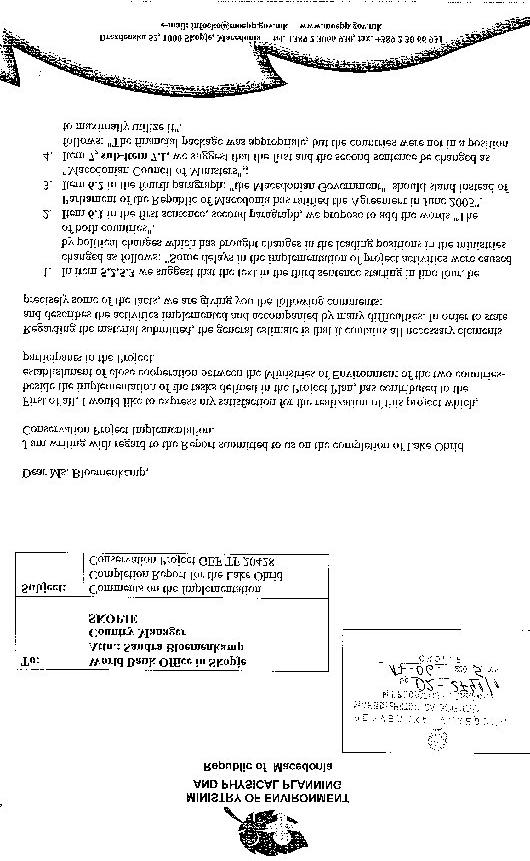
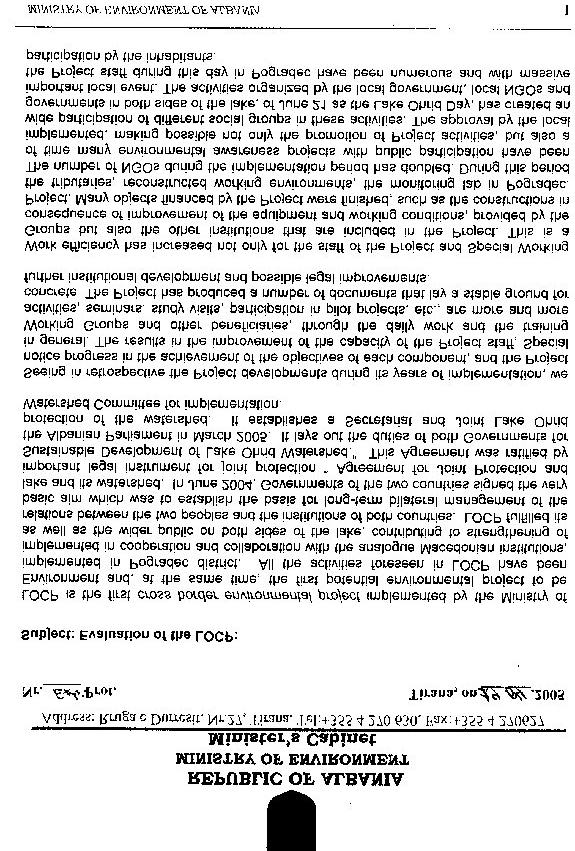
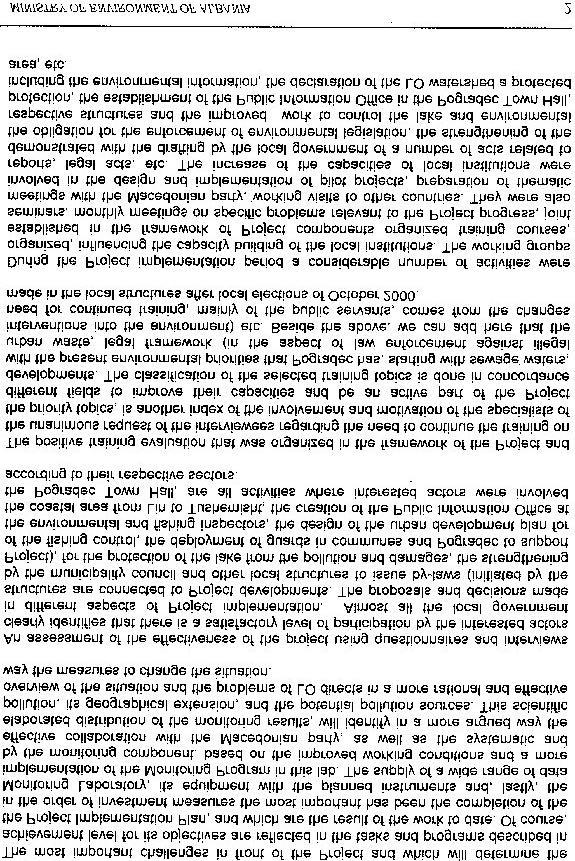
(a) Borrower/implementing agency:
- 15 -
- 16 -
- 17 -
- 18 -
- 19 -
- 20 -
(b) Cofinanciers:
(c) Other partners (NGOs/private sector):
- 21 -
10. Additional Information
GEF Review Criteria
a. Implementation Approach:
The implementation approach used was logical and flexible enough to adapt to the changing political
situation, as well as and changes in project needs and requirements. In the early phases of the project, a
heavy emphasis was placed on public participation and stakeholder involvement. This included workshops
for stakeholders, training for developing NGOs, and a variety of other activities described under
Component D above. In order to learn from other projects, a series of study tours were arranged for staff
in all project components in the first three years of the project. Shared experiences with stakeholders on
Lake Peipsi, Lake Constance, and Lake Champlain, three other transboundary lakes implementing similar
management efforts, were particularly useful, and highlighted the need for joint action, a wide stakeholder
base, and regular communication between the technical community, the policy-makers, and the public. In
2002, project staff from both countries participated in the workshop hosted as part of the Lake Basin
Management Initiative, and were able to interact with a broad cross section of representative from other
GEF and non-GEF sponsored projects.
As implementation challenges were identified, the project worked proactively to seek outside help to
surmount them. This included seeking critical consultant input on institutional arrangements, participatory
watershed management tools and approaches, monitoring and the state of the lake assessment, and the
design of the manure platforms that were such a successful part of the pilot project effort.
b. Country Ownership/Driveness:
The project responded directly to national development and environmental agendas. During preparation, a
Donor's Conference was held, and the needs and priorities identified as part of the conference have
continued to guide investments and project activities. Both government representatives and a wide
cross-section of stakeholders were involved in project preparation, and this involvement facilitated
implementation in the early years despite considerable internal political challenges. These political
challenges, including the Kosovo refugee crisis and then the internal security crisis in Macedonia, did delay
allocation of government contributions to the project in 2000 and 2001, but overall, the financial
contribution of the recipient countries was significant and adequate to meet the project needs.
The primary outcome of the project, the negotiation and signing of a new bilateral treaty for joint
management of the lake, "Agreement for the Protection and Sustainable Development of Lake Ohrid and its
Watershed," came directly from recognition by the countries that a stronger legal and institutional structure
was needed to establish and enforce joint regulations, resolve transboundary disputes, and prioritize and
guide implementation of actions, including solicitation of donor investments. Now that this treaty is fully
ratified, an international "Lake Ohrid Watershed Committee" will be created to coordinate and direct
management activities on the lake and in the watershed. The joint bodies created by the LOCP and the
former Lake Ohrid Management Board, including the Lake Ohrid Monitoring Task Force, the Watershed
Management Committees in both countries, the Organization of Fishery Management, and the Prespa Park
Coordinating Committee will continue their responsibilities under the Committee. As noted earlier in the
report, both countries have made the PIU offices permanent offices of their respective Ministries and have
allocated resources to continue implementation of the LOCP in 2005.
- 22 -
c. Public Involvement:
Public involvement was a major focus of this project. When the project began, an active campaign of
public education and stakeholder cultivation was initiated through Component D, as described above. In
this campaign, information was disseminated through numerous television and radio spots, public meetings,
and a large variety of printed materials, including educational brochures, posters, and other publications.
As the breadth of stakeholder skills, experiences, and knowledge were identified, Watershed Management
Committees were established in each country to consult with these stakeholders. As described above, these
stakeholder committees guided the competitive grants process and recommended pilot projects for funding
and implementation. In 2003, the local knowledge of the stakeholders was solicited and used to develop the
Joint Action Plan, which was later endorsed by the Lake Ohrid Management Board.
All three public involvement options, information dissemination, consultation and stakeholder participation,
were used successfully in this project. In fact, the early information dissemination efforts were judged so
successful that at the mid-term review, the decision was made to focus primarily on consultation and
stakeholder participation, folding Component D, the public awareness effort, into Component C, the
participatory watershed management component.
d. Replication approach:
Throughout the project, an effort was made to share experiences, approaches, and lessons learned both
across the border and throughout the region. A large number of documents describing the project and
giving examples of successful activities were prepared and broadly disseminated in the region. Project staff
participated in a number of training workshops and conferences both in the region and internationally. This
participation resulted in acknowledgment of the LOCP as a model for successful transboundary watershed
management by both the recent international "Lake Basin Management Initiative" and the countries of
Southeastern Europe in a 2003 conference in Greece.
The lessons learned in the LOCP, as well as much of the State of the Environment information assembled,
provided baseline information for the "Integrated Ecosystem Management in the Transboundary Prespa
Park" project that was recently funded by GEF and is in preparation by the UNDP. One key staff person
in Macedonia trained as part of the LOCP is now in a leadership position with the Prespa Park project, and
members of the Lake Ohrid Monitoring Task Force have also collected monitoring data for the Prespa
project. The Prespa Park Coordinating Committee will continue their responsibilities under the new
Watershed Management Committee created by the bilateral treaty.
Lessons learned have also been shared with individuals currently preparing the Lake Shkoder Ecosystem
Management project, also recently funded by the GEF. There has been regular communication between the
technical experts working on Lake Ohrid and those working on Lake Shkoder, sharing experiences,
approaches, and knowledge.
Finally, the development of the manure platforms as a primary focus of implementation came directly out
of shared experiences between Macedonians and Albanians. The two countries jointly retained the
technical expert who helped design the platforms. The first demonstration round of implementation of these
projects was so successful, and there was sufficient additional interest among farmers in the watershed that
a second round of implementation was undertaken in both countries.
e. Financial Planning:
- 23 -
A full financial report for each country is included in Annex 2 in this report. Financial controls were
adequate and due diligence was provided in auditing and financial oversight. As discussed previously,
timely flow of funds was a challenge at times because of the demands of the Kosovo refugee crisis, the
internal security crisis in Macedonia, and the changes in government in both countries. This led to delays
in project implementation and the need for three project extensions. Even with these extensions, the overly
ambitious budget developed for Macedonia at appraisal was not fully expended; at the end of the project,
$1.67 million of an available $2.26 million award had been spent (about 75%).
As outlined previously, this project has been highly effective in leveraging additional resources to support
the objectives of the project. Except for the sewerage treatment plant project for Pogradec, the
infrastructure improvement needs outlined in the Donor's Conference hosted by the World Bank during
project preparation have largely been achieved.
In Pogradec, the revenue and market challenges to building a sustainable water and sewerage utility were
substantial. There was no fee-for-service culture and considerable resistance to the notion of volumetric
water or sewer charges. Local utility restructuring and regulatory reform were necessary in order to
provide for a sustainable utility system in both countries. KfW has taken an incremental approach to its
infrastructure investments in both Macedonia and Albania, supporting the merging and restructuring of the
water and sewer services first, and then investing in the infrastructure itself. When the local government in
Pogradec assumed a more aggressive approach to utility reform, then KfW began moving ahead with its
full suite of investments. Water supply metering and successful billing have now reached threshold levels,
so investments in water supply improvements are underway, and conceptual development of a sewerage
system is largely completed. If good progress continues, project design for the sewerage system is likely in
the coming year. The whole suite of water and sewerage system improvements in Macedonia and Albania
can be considered major environmental mitigation measures and will result in significant reductions in the
nutrient loading to Lake Ohrid.
Other significant donor investments provided essential equipment to support monitoring in Macedonia, and
are supporting solid waste improvements in Macedonia. A new investment by the JICA will develop an
environmental GIS coverage for the watershed, including land use/land cover and topographic data layers.
These data are critical to the land use planning efforts that are a high priority for future actions to manage
nonpoint source pollution impacts in the Lake Ohrid watershed. The total of these investments is about
$76 million.
Donor Investments in the Lake Ohrid Basin.
Donor
Project
Amount
Status
committed
(millions $)
KfW
Restructuring and merging of the water and sewer
0.65
Completed
utilities in Ohrid and Struga (Pro-Aqua)
KfW
Expansion of the primary collection system,
13.29
Completed
expansion of the secondary sewage treatment system
in Ohrid and Struga (Macedonia), and rehabilitation
of the treatment plant
KfW and
Rehabilitation and expansion of the water supply
6.63
Completed
- 24 -
EBARD
system in Struga (Macedonia)
KfW
Second phase restructuring of the water and sewer
0.65
Near
utility in Ohrid and Struga (Pro-Aqua)
completion
KfW
Rehabilitation of the wastewater treatment plant in
3.19
Completed
Resen (Macedonia), and equipment for detecting
water losses (Proletera)
KfW
Restructuring and merging of the water and sewer
0.39
Near
utilities in Resen (Proletera)
completion
KfW
Promotion of ecosystem management in the UNDP
1.95
In preparation
Prespa Park project
KfW
Solid waste system for SW Macedonia, including
9.97
In preparation
sanitary landfill, 3 major and 7 smaller transfer
stations
KfW
Capacity-building for solid waste management
1.95
In preparation
companies participating in the SW Macedonia project
SECO
Research vessel and boathouse for HBI in Ohrid
1.0 (estimated) Completed
(Macedonia)
SECO and
Rehabilitation of water supply system, including
6.63 (SECO) In progress
KfW
pumping stations, metering and water loss detection,
3.25 (KfW)
and a new billing system for Pogradec (Albania)
KfW
Lake Ohrid sewerage collector improvements and
9.5 (KfW and In preparation
sewerage treatment plant
SECO)
KfW
Lake Prespa forest and water quality improvement,
6.5
In progress
biodiversity protection
KfW
Korca region (Albania) solid waste management
1.0
In preparation
feasibility study
(estimated)
EU
Preparation of the new National Environment Strategy,
3.2
In progress
and design and establishment of
Environmental Information Management Systems
EU
Strengthening support for the National Monitoring
3.2
In preparation
Program and equipment for environmental monitoring
SIDA
Support to the Albanian Ministry of Environment and
1.95
In preparation
Korca region in implementation of a solid waste
management strategy
JICA
Environmental GIS for conservation and management
1.0
In progress
of the Ohrid watershed
(estimated)
75.9
TOTAL
There have also been investments that don't appear in this table, but likely have been leveraged or at least
motivated, facilitated, or supported by the Lake Ohrid Conservation Project. For example, a variety of
research studies have been or are being conducted by Swiss, German, and Italian scientists to investigate
the contribution of pollutants from the tributaries, evaluate options for dealing with the sediment load in the
Sateska River, estimate sedimentation rates and nutrient dynamics in the lake, and refine the water balance
for Lake Ohrid and Lake Prespa using tracers. Other investments include some small projects designed to
support cultural exchanges and tourism development in the region, and a series of small projects supporting
- 25 -
NGO activities and local government capacity building. Taken together, these projects have an estimated
value of about $3-5 million.
f. Cost-effectiveness:
The original project components were developed using GEF incremental cost criteria. After the Donors
Conference hosted by the Bank as part of preparation, donors from several European countries began
preparations for investments in environmental mitigation measures. The components of the LOCP focused
on the remaining priority elements identified in the feasibility study for the project, namely, institutional
strengthening, water quality monitoring, and public awareness and human activity management, which
were not covered by these commitments.
Using a qualitative, benchmark and comparative approach, it seems that the LOCP was cost-effective.
There is no question that the management situation is vastly improved over what it was when the project
began. A recent review of 28 lake-basin management efforts around the world concluded that a strong
political will, reflected in an appropriate legal mandate for management was central to an effective program
(LBMI 2004). Although this review does not provide detailed financial information, it appears that the
relatively modest investments in this program have produced sustainable institutional arrangements that are
still lacking in many other programs that have received a much greater level of financial support over even
longer periods of time.
The implementation of this project was as cost-effective, or perhaps even more cost-effective, than
originally proposed. Even though all funds were not expended, the major objective of the project, to
establish a transboundary, comprehensive approach to the management of the Lake Ohrid watershed, was
achieved. Other donors have responded to the program with significant investments in environmental
mitigation measures. The project has put in place an environmental monitoring program that will be able
to document improvements in water quality and environmental condition over time.
g. Monitoring & Evaluation:
Monitoring and evaluation were conducted using a set of performance indicators established in the PAD.
Annex 1 presents the status of these indicators at the mid-term review and at the end of the project. To the
extent that modifications were possible, adjustments were made throughout the project to ensure that the
expected project outputs were achieved. Detailed evaluation reports were prepared after each supervision
mission, and progress was judged every six months based upon the expectations documented in the
Aide-Memoire from the previous mission.
The Final Quality of Supervision Assessment (QSA6) for the LOCP was judged satisfactory. The report
concluded that "The supervision missions assisted Albania and Macedonia, the two borrowers, in
establishing a collaborative relationship to execute this complex project despite traditional political
differences between the two. Supervision also helped translate this operation into a successful regional
enterprise."
The report also noted that the project is "establishing productive communication channels and cooperation
between the riparian countries, and the local committees have taken charge of the future work around the
lake." It noted that "The supervision team was proactive and had trusted relationship with the two
borrowers, which allowed removing political hurdles and mistrust between the two countries. Finally, the
report stated that "Implementation of the proposed plan is receiving strong political support from the policy
makers of both countries."
- 26 -
The only significant weakness identified in the Assessment was the need for more realistic indicators of
achievements under project activities. Unfortunately, a number of the general indicators selected for the
project responded to many factors outside the control of the project and so provided limited information for
judging effectiveness. In future projects, a more detailed and quantifiable set of indicators that are directly
linked to the anticipated project components and activities would be more useful for judging the
effectiveness of the overall project.
Literature Cited
Ernst Basler and Partners. 1995. The World Bank Feasibility Study on the Lake Ohrid Conservation
Project. Zollikon. 158 pp.
Haxhimihali, D.H. 2004. Assessment of the Impacts of the Lake Ohrid Conservation Project. 46 pp.
Available through LOCP office, Pogradec, Albania.
Lake Basin Management Initiative. 2004 (draft, not yet released). Managing Lake Basins 1. Practical
Approaches for Sustainable Use. Draft Final Report for GEF-Medium Sized Project: Towards a Lake
Basin Management Initiative, prepared by International Lake Environment Committee, Otsu, Japan,
August, 2004.
The World Bank. 2003. Water Resources Management in South Eastern Europe, Vol. I. Issues and
Directions. 47 pp. The World Bank, Washington, DC.
- 27 -
Annex 1. Key Performance Indicators/Log Frame Matrix
Performance Indicators and
Midterm Review
Actual/End of Project
PAD Targets
1.1. Lake Ohrid Monitoring Program
1.1 Maintain average lake nutrient
1.1 Monitoring program data collection
data show the average lakewide
concentrations, particularly
underway.
phosphorus concentration is still
phosphorous (P), below critical
1.2 Projects of the other donors have
below levels usually used to
levels at which its present
already made substantial
indicate oligotrophic condition,
oligotrophic state can be sustained
investments in urban waste water
however, some shoreline hotspots
1.2 Reduce nutrient (N & P) and
collection and treatment. Projects
have reached mesotrophic
microbiological (E-Coli) loads in
designed to reduce non-point source
condition.
the lake's tributaries and other
pollution identified by the
1.2 Although the amount is unquantified,
inflows
Watershed Management
nutrient loads have undoubtedly
1.3 Key ecological indicator(s) of the
Committees will be financed by
been reduced by project activities
Lake's ecosystem health and
small investments in the Pilot
(construction of manure platforms,
stability within safe limits (to be
Project Competitive Grants
reforestation projects, etc.) and
determined by the MTF)
Program.
substantial investments of other
2.1 LOMB takes actions to support
1.3 Monitoring data collection
donors in wastewater collection and
implementation of components and
underway, State of Environment
treatment.
promote necessary enabling and
Report to be prepared.
1.3 State of the Environment Report
supportive actions by the respective
2.1 LOMB has taken the key actions
suggests changes in species
governments.
for supporting project's
composition are occurring, and
components; however, both
some hot spots of concern exist, but
countries agree that the LOMB's
the overall condition of the
powers and composition needed to
ecosystem is still acceptable.
be expanded.
2.1 New "Agreement for the Protection
and Sustainable Development of
Lake Ohrid and its Watershed"
signed by Prime Ministers of
Macedonia and Albania on June 17,
2004.
1.1 Adoption of recommended changes
1.1 Both countries agree that the
1.1 New "Agreement for the Protection
in legal acts, regulations, and
LOMB's powers and composition
and Sustainable Development Of
policies by LOMB
needed to be expanded. Each
Lake Ohrid and Its Watershed"
1.2 All existing permits reviewed and
country beginning the process of
significantly expands composition
new permits issued to all
environmental management reform.
and powers of LOMB. Each country
dischargers
1.2 - 1.4 The regulatory framework in
also continuing the process of
1.3 Periodic official inspections (at least
both countries does not provide for
environmental management reform.
2/yr) of all permit holders carried
a review and issuance of new
1.2 - 1.4 The regulatory framework in
out
permits. Both countries are in the
both countries does not provide for
1.4 Timely enforcement actions taken
process of revising EA legislation.
a review and issuance of new
against priority permit holders that
1.5 Neither country has EA regulations
permits. Both countries are in the
are not in compliance.
that can be enforced at local level.
process of revising EA legislation.
1.5 Environmental assessment reports
Both countries are about the
1.5 Neither country has EA regulations
for new projects reviewed and
upgrade the legislation that regulate
that can be enforced at local level.
appropriate actions taken
EA.
Both countries are about the
upgrade the legislation that regulate
EA.
- 28 -
2.1 Upgraded monitoring system and
2.1 Monitoring capacity has been
2.1 In both countries, the Lake Ohrid
network installed, and technical
substantially upgraded in both
Monitoring Programs have been
protocol adopted by MTF
countries and a bi-lateral protocol
incorporated into their respective
2.2 Baseline study of available data,
has been adopted.
National Monitoring Programs.
and diagnostic analysis of the
2.2 Plans for diagnostic analysis of the
Both Ministries have committed to
present state of the lake and
state of the lake made by MTFs.
funding in 2005.
watershed is published by MTF
2.3 Sampling and analysis campaigns
2.2 Baseline study of available data,
2.3 Annual sampling and analysis
are carried out with reduced spatial
and diagnostic analysis of the
campaigns are organized and
coverage and frequency
present state of the lake and
completed by MTF
2.4 Pogradec laboratory and project
watershed is published (State of the
2.4 Pogradec laboratory and project
support facility reconstruction is
Environment Report), including
support facility operational
underway.
layman's version.
2.5 Information system designed and
2.5 Information system has not been
2.3 Sampling and analysis campaigns
implemented (all reliable existing
completed.
restructured for sustainability and
data and data collected under the
2.6 Some annual reports of the MTF
incorporated into National
project), and accessible to public
submitted to the LOMB, however
Monitoring Programs of each
and private organizations and other
the preparation of the last annual
country.
project components
report was delayed.
2.4 Pogradec laboratory and project
2.6 Annual reports of the MTF
support facility is fully operational.
submitted to LOMB, and non-
2.5 Information system not completed,
technical summary with data and
however, the entire State of the
information in a form useful to
Environment Report, and almost all
public and private decision-makers
other project documents are
widely distributed.
available on the internet.
2.6 Annual reports of the MTF
submitted to LOMB, non-technical
summary of SOER widely
distributed in Albanian,
Macedonian, and English versions.
3.1 Community awareness program
3.1 Community awareness programs
3.1 Community awareness program
completed, and potential WMC
completed and WMC participants
completed, and potential WMC
participants identified
identified in both countries.
participants identified
3.2 LOMB adopts recommendations for 3.2 Watershed Management
3.2 LOMB adopts recommendations for
establishing watershed management
Committees, comprising
establishing watershed management
committees
representatives of the key
committees
3.3 Pilot projects and catalytic measures
stakeholders, fully operational.
3.3 The small pilot projects financed
designed to test and demonstrate
3.3 Implementation of the projects
under this component successfully
affordable and cost-effective
approved and call for proposals
implemented and relevant
measures completed; results
underway to select competitive
information disseminated to WMC
disseminated to WMC and
projects.
and watershed stakeholders.
watershed stakeholders
3.4 Priorities for the watershed Action
3.4 Watershed Action Plans completed
3.4 Watershed Action Plan adopted by
plan under discussion.
by WMCs; Joint Action Plan
WMC and LOMB
endorsed by the LOMB. Priority
actions endorsed by government of
Macedonia.
4.1 Increased environmental NGO
4.1 With support of the project and
4.1 NGO capacity and proactivity has
membership
other donors, the number of NGOs
been substantially improved.
4.2 Increase number of participants in
and membership substantially
4.2 NGOs have implemented numerous
planned activities (NGO members)
increased.
projects supporting public
4.3 Increased number of participants in
4.2 NGOs have implemented numerous
awareness
planned activities (non-NGO
projects supporting public
4.3 Public awareness in the watershed
members)
awareness.
is high and participation in public
4.3 General public is using the services
events strong.
of the cross-border Green Center
network that has been established
under the project.
- 29 -
Annex 2. Project Costs and Financing
Albania - Project Costs by Component (in US$ million equivalent)
Project Component
Appraisal
Actual/Latest
Percentage of
Estimate
Estimate
Appraisal
A. Institutional Strengthening
0.130
0.126
96%
B. Lake Ohrid Monitoring Program
0.900
0.872
97%
C. Lake Ohrid Watershed Management
0.216
0.179
82%
C. Pilot Project and Catalytic
0.174
0.143
82%
Measures
D. Public Awareness and Participation
0.100
0.075
75%
Project Implementation Unit
0.322
0.426
132%
Total Baseline Cost
1.842
1.821
98%
Total Project Costs
1.842
1.821
98%
Macedonia Project Cost by Component (in US$ million equivalent)
Project Component
Appraisal
Actual/Latest
Percentage of
Estimate
Estimate
Appraisal
A. Institutional Strengthening
0.180
0.113
63%
B. Lake Ohrid Monitoring Program
1.000
0.593
59%
C. Lake Ohrid Watershed Management
0.690
0.469
68%
D. Public Awareness and Participation
0.150
0.157
105%
Project Implementation Unit
0.220
0.339
154%
Total Baseline Cost
2.240
1.672
75%
Total Project Costs
2.240
1.672
75%
- 30 -
Albania Project Costs by Procurement Arrangements (in US$ million equivalent)
Expenditure
Categories
Appraisal Estimate
Actual/Latest Estimate
Bank
Government
Total
Bank
Government
Total
1 Works
0.115
0.040
0.155
0.113
0.037
0.150
2 Goods
0.715
0.022
0.747
0.723
0.024
0.747
3 Services
0.739
0.022
0.731
0.705
0.016
0.721
4 Misc.
0.273
0.192
0.475
0.280
0.189
0.469
Total
1.842
0.276
2.118
1.821
0.266
2.087
Macedonia Project Cost by Procurement Arrangement (in US$ million equivalent)
Expenditure
Categories
Appraisal Estimate
Actual/Latest Estimate
Bank
Government
Total
Bank
Government
Total
1 Works
0.116
0.000
0.116
0.069
0.000
0.069
2 Goods
0.604
0.030
0.634
0.454
0.030
0.484
3 Services
0.595
0.000
0.595
0.338
0.000
0.338
4 Misc.
0.925
0.184
1.109
0.811
0.184
0.995
Total
2.240
0.214
0.214
1.672
0.214
1.886
- 31 -
Albania Project Financing by Component (in US$ million equivalent)
Component
Appraisal Estimate
Actual/Latest Estimate
Percentage of
Appraisal
Bank Govern. Total
Bank
Total Bank Govern. Total
Govern.
A. Institutional
Strengthening
0.130
0.014 0.144
0.126
0.012 0.138
97%
86%
96%
B. Lake Ohrid
Monitoring Program
0.900
0.093 0.993
0.872
0.090 0.962
97%
97%
97%
C. Lake Ohrid
Watershed
Management
0.216
0.008 0.224
0.179
0.006 0.176
82%
98%
79%
C. Pilot Project and
Catalytic Measures
0.174
0.000 0.174
0.143
0.000 0.143
82%
-
93%
D. Public Awareness
and Participation
0.100
0.000 0.100
0.075
0.000 0.075
75%
-
75%
Project
Implementation Unit
0.322
0.161 0.483
0.426 0.158** 0.578 132%
100% 119%
1.842
276 2.117
1.821
0.266 2.087 99%
96% 98 %
Macedonia Project Financing by Component (in US$ million equivalent)
Component
Appraisal Estimate
Actual/Latest Estimate
Percentage of
Appraisal
Bank
Govern. Total
Bank
Total Bank Govern. Total
Govern.
A. Institutional
Strengthening
0.180
0.018
0.198
0.113
0.018
0.131
63%
100%
66%
B. Lake Ohrid
Monitoring Program
1.000
0.078
1.078
0.593
0.078
0.671
59%
100%
62%
C. Lake Ohrid
Watershed
Management
0.422
0.060
0.482
0.224
0.060
0.284
53%
100%
59%
C. Pilot Project and
Catalytic Measures
0.268
0.000
0.268
0.246
0.000
0.246
92%
-
92%
D. Public Awareness
and Participation
0.150
0.000
0.150
0.157
0.000
0.157 105%
- 105%
Project
Implementation Unit
0.220
0.058
0.278
0.339
0.058
0.397 154%
100% 138%
2.240
0.214
2.454
1.672
0.214
1.886
75%
100%
77%
- 32 -
Annex 3. Economic Costs and Benefits
N/A
- 33 -
Annex 4. Bank Inputs
(a) Missions:
Stage of Project Cycle
No. of Persons and Specialty
Performance Rating
(e.g. 2 Economists, 1 FMS, etc.)
Implementation Development
Month/Year
Count
Specialty
Progress
Objective
Identification/Preparation
5/10/1995
Appraisal/Negotiation
2/23/1998
Supervision
10/10/1998
4
TEAM LEADER (1); PRINC.
S
WATER RES. SPEC (1);
PROJECT OFFICER (2)
11/24/1999
4
TEAM LEADER (1); PROJECT
S
OFFICER (2); ENVIRONMENT
SPECIALIST (1)
07/02/2000
5
TASK TEAM LEADER (1);
S
OPERATIONS OFFICER (1);
FINANCIAL MANAGEMENT
(1); OPERATIONS
ASSISTANCE (1);
PROCUREMENT (1)
11/05/2000
1
TASK TEAM LEADER (1)
S
05/30/2001
3
OPERATIONS OFFICER (1);
S
CONSULTANT (2)
05/22/2002
4
TTL (1); PROJECT OFFICER
S
(1); MONITORING
CONSULTANT (1); LEGAL
CONSULTANT (1)
11/25/2002
2
OPERATIONS OFFICER (1);
S
PROJECTS OFFICER (1)
05/22/2003
2
SR. OPERATIONS OFFICER
S
(1); PROJECTS OFFICER (1)
11/09/2003
3
TTL (1); OPERATIONS
S
OFFICER (1); MONITORING
SPECIALIST (1)
06/04/2004
3
SR. AGRICULTURIST (1);
S
PROJECTS OFFICER (1);
MONITORING SPECIALIST
(1)
11/20/2004
3
SR. AGRICULTURIST (1);
S
PROJECTS OFFICER (1);
MONITORING SPECIALIST
(1)
ICR
2
SR. AGRICULTURIST (1);
S
MONITORING
- 34 -
SPECIALIST (1)
(b) Staff:
Stage of Project Cycle
Actual/Latest Estimate
No. Staff weeks
US$ ('000)
Identification/Preparation
300
Appraisal/Negotiation
Supervision
410
ICR
30
Total
740
- 35 -
Annex 5. Ratings for Achievement of Objectives/Outputs of Components
(H=High, SU=Substantial, M=Modest, N=Negligible, NA=Not Applicable)
Rating
Macro policies
H
SU
M
N
NA
Sector Policies
H
SU
M
N
NA
Physical
H
SU
M
N
NA
Financial
H
SU
M
N
NA
Institutional Development
H
SU
M
N
NA
Environmental
H
SU
M
N
NA
Social
Poverty Reduction
H
SU
M
N
NA
Gender
H
SU
M
N
NA
Other (Please specify)
H
SU
M
N
NA
Private sector development
H
SU
M
N
NA
Public sector management
H
SU
M
N
NA
Other (Please specify)
H
SU
M
N
NA
- 36 -
Annex 6. Ratings of Bank and Borrower Performance
(HS=Highly Satisfactory, S=Satisfactory, U=Unsatisfactory, HU=Highly Unsatisfactory)
6.1 Bank performance
Rating
Lending
HS
S
U
HU
Supervision
HS
S
U
HU
Overall
HS
S
U
HU
6.2 Borrower performance
Rating
Preparation
HS
S
U
HU
Government implementation performance
HS
S
U
HU
Implementation agency performance
HS
S
U
HU
Overall
HS
S
U
HU
- 37 -
Annex 7. List of Supporting Documents
All supporting back-to-office reports, Aide-Mémoires and PSRs are on file. The following documents are
also available.
1. Agreement for the Protection and Sustainable Development of Lake Ohrid and Its
Watershed (2004 Treaty between Albania and Macedonia)
2. Joint Watershed Action Plan (2004 Lake Ohrid Management Board)
3. Lake Ohrid and its Watershed: State of the Environment Report (2002 Report to the Lake
Ohrid Management Board)
4. Albania Client Country Report
5. Macedonia Client Country Report
- 38 -
- 39 -