CLME-TT/4 Prov
Barbados, February 2007
Original:
Engish
THEMATIC REPORT FOR THE GUIANASBRAZIL SUB-REGION
A discussion paper for the CLME Synthesis Workshop
by
Terrence Phillips
CLME Project Implementation Unit
Centre for Resource Management and Environmental Studies (CERMES)
University of the West Indies
Cave Hill Campus, Barbados
February 2007
TABLE OF CONTENTS
1 INTRODUCTION .................................................................................................................. 3
2
DESCRIPTION OF THE GUIANAS-BRAZIL SUB-REGION............................................ 4
2.1 Physical
and
Geographical Characteristics..................................................................... 4
2.2 Ecological
Status............................................................................................................. 5
2.2.1 Productivity............................................................................................................. 5
2.2.2
Fish and Fisheries ................................................................................................... 5
2.2.3
Pollution and ecosystem health............................................................................... 9
2.2.4
Habitat and community modification ................................................................... 10
2.3 Socio-economic
Situation ............................................................................................. 11
2.4 Governance ................................................................................................................... 12
3
KEY TRANSBOUNDARY ISSUES ................................................................................... 14
3.1
Fish and Fisheries ......................................................................................................... 15
3.1.1 Environmental
Impacts ......................................................................................... 15
3.1.2
Linkages with other transboundary problems....................................................... 16
3.1.3
Pollution and Ecosystem Health ........................................................................... 18
3.1.4 Socioeconomic
Consequences .............................................................................. 20
3.1.5
Habitat and Community Modification .................................................................. 21
4 STAKEHOLDERS
ANALYSIS .......................................................................................... 22
5 GOVERNANCE
ANALYSIS .............................................................................................. 25
6
SUMMARY AND CONCLUSIONS ................................................................................... 26
6.1
Fish and Fisheries ......................................................................................................... 26
6.2
Pollution and Ecosystems Health.................................................................................. 27
6.3
Habitat and Community Modification .......................................................................... 28
7 REFERENCES ..................................................................................................................... 29
List of Acronyms and Abbreviations
CARICOM
Caribbean Community
CBD
Convention
on
Biological
Diversity
CEPNOR
Centro de Pesquisa e Extensao Pesqueira do Norte do Brasil
CFRAMP
CARICOM Fisheries Resource Assessment and Management Programme
CLME
Caribbean Sea Large Marine Ecosystem
CLME TTT
CLME Technical Task Team
CRFM Caribbean
Regional
Fisheries
Mechanism
DOF
Department of Fisheries
EEC
European Economic Community
EEZ
Exclusive
Economic
Zone
EU
European
Union
FAO
Food and Agriculture Organization of the United Nations
FONAIAP
Fondo Nacional de Investifaciones Agropecuarias
GDP
Gross
Domestic
Product
GEF
Global Environmental Facility
GIWA
Global International Waters Assessment
IBAMA
Instituto Brasiliero do Meio Ambiente e dos Recursos Naturais
Renovaveis
IFREMER
Institute Français pour l'exploitation de la mer
IUCN
International Union for the Conservation of Nature and Natural Resources
(The World Conservation Union)
IUU
Illegal, Unregulated and Unreported
LME
Large
Marine
Ecosystem
LMR
Large
Marine
ecosystem
Resources
MARPOL
The International Convention for the Prevention of Pollution of Ships
MCB
Marine
Catchment
Basin
MCS
Monitoring,
Control
and
Surveillance
MSY
Maximum
Sustainable
Yield
WECAFC
Western Central Atlantic Fishery Commission
UK
United
Kingdom
UN
United
Nations
UNCED
United Nations Convention on Environment and Development
UNCLOS
United Nations Convention on the Law of the Sea
UNFCCC
United Nations Framework Convention on Climate Change
UNIDO United Nations Industrial Development Organization
USA
United States of America
ii
1 INTRODUCTION
The Caribbean Sea Large Marine Ecosystem (see cover) is a semi-enclosed tropical sea bounded
by North America (South Florida), Central and South America and the Lesser Antilles Chain of
Islands. The Caribbean Sea and adjacent regions include a wide variety of tropical ecosystems,
associated natural resources and biodiversity. The region includes 26 countries and 19
dependent territories of the USA, UK, France and Netherlands, with countries ranging from the
largest (e.g Brazil and the USA) to the smallest (e.g. Barbados, St. Kitts and Nevis) in the world,
and from the most to the least developed. Throughout the region, there is a high dependence on
marine resources for livelihoods, particularly from fishing and tourism. As such, the
sustainability of its living resources is of considerable importance to an appreciable portion of
the countries in the region.
o
o
o
o
90 W
80
o
W
70 W
60 W
50 W
USA
N
o
30
ATLANTIC OCEAN
GULF OF
MEXICO LME
N
o
20
MEXICO
CARIBBEAN SEA LME
N
o
N
10
OR
VENEZUELA
T
S
H
H
B
EL R
F L AZI
PACIFIC OCEAN
M
L
E
COLOMBIA
Figure 1. The Caribbean and Adjacent Large Marine Ecosystems (CLME Project Unit).
The overall objective of the CLME Project is the sustainable management of the shared living
marine resources of the Caribbean LME and adjacent regions through an integrated management
approach. It is expected that the Project will provide the opportunity for the implementation of
management reforms that will permit sustainable development and management of the shared
LMRs of the Caribbean Large Marine Ecosystem and adjacent regions. Since most LMRs are
shared in some way, these reforms can be expected to lead to improved food security and
3
enhanced livelihoods in coastal communities that rely on fisheries and tourism (CLME Project
Coordinating Office, 2006).
This Thematic Report will outline the key transboundary living marine resources issues for the
GuianasBrazil sub-region, the root causes and potential options for addressing them. For the
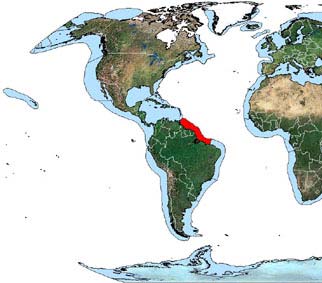
purpose of this Report, the GuianasBrazil sub-region will be viewed as the marine area
comprised of the North Brazil Large Marine Ecosystem and the Gulf of Paria (Figures 1 and 2).
This area is bordered by Brazil (states of Amapá, Pará, Maranhão), French Guiana, Guyana,
Suriname, the southeastern part of Venezuela and Trinidad (Republic of Trinidad and Tobago)
(Heileman. In press, Charlier 2001, and http://en.wikipedia.org/wiki/Gulf_of_Paria).
2 DESCRIPTION OF THE GUIANAS-BRAZIL SUB-REGION
This section provides an overview of the Guianas-Brazil sub-region, covering the geographical
characteristics of the sub-region, its ecological status, a summary of the socio-economic situation
and governance.
Figure 2. North Brazil Shelf LME (LME #17: North Brazil Shelf)
2.1
Physical and Geographical Characteristics
The North Brazil Shelf Large Marine Ecosystem (Figure 2) is characterized by its tropical
climate. It owes its unity to the North Brazil Current, which flows parallel to Brazil's coast and is
an extension of the South Equatorial Current coming from the East (LME 17: North Brazil
Shelf). It extends along northeastern South America from the Parnaíba River estuary in Brazil to
the boundary with the Caribbean Sea and has a surface area of about 1.1 million km2. It contains
0.01% of the world's coral reefs and 0.06% of the world's sea mounts. The hydrodynamics of
this region is dominated by the North Brazilian Current, which is an extension of the South
Equatorial Current and its prolongation, the Guyana Current. Shelf topography and external
4
sources of material, particularly the Amazon River with its average discharge of 180,000 m3s-1,
exert a significant influence on the marine ecosystem, with this being complemented by
discharge from other rivers such as Tocantins, Maroni, Corentyne, and Essequibo. A wide
continental shelf, macrotides and upwellings along the shelf edge are some other features of this
LME. (Heileman. In press, and LME 17: North Brazil Shelf). The Gulf of Paria, is a 7800 km2
inlet of the Caribbean Sea, lying between the Venezuelan coast (including the mountainous Paria
Peninsula) and Trinidad. It extends about 160 km east-west and 65 km north-south, and is linked
with the Caribbean to the north by the strait called the Dragon's Mouths and with the Atlantic to
the south by the Serpent's Mouth (both roughly 16 km wide)
(http://www.britannica.com/eb/article-9058456/Gulf-of-Paria).
2.2 Ecological
Status
2.2.1 Productivity
The North Brazil Shelf LME is considered a Class I, highly productive ecosystem (>300 gCm-
2yr-1), with the Amazon River and its extensive plume being the main source of nutrients.
Primary production is limited by low light penetration in turbid waters influenced by the
Amazon, while it is nutrient-limited in the clearer offshore waters. Primary productivity on the
continental shelf has been found to be greatest in the transition zone between these two types of
waters, occasionally exceeding 8 gCm-2day-1. It has a high number of amphibians, birds and
reptile species. In addition to high production, the food webs in this LME are moderately diverse.
Brazil's coral fauna is notable for having low species diversity yet a high degree of endemism
(Heileman. In press and LME 17: North Brazil Shelf). The Gulf of Paria is a brackish water
body, with wet season salinities being below 23 ppt. The extensive mangroves along the
Venezuelan and Trinidadian coastlines are considered to be an important wildlife habitat and
probably play a crucial role in regional fisheries (http://en.wikipedia.org/wiki/Gulf_of_Paria).
Major fronts within the North Brazil LME are associated with outflow from the Amazon River
and, to a lesser extent, that of the Orinoco River. The Amazon plume initially turns
northwestward and flows along the Brazil coast as the North Brazil Current. Off the Guiana
coast, between 5°N and 7°N, the North Brazil Current retroflects and flows eastward. This
retroflection develops seasonally and produces anticyclonic rings of warm, low-salinity water
that propagate northwestward toward Barbados, the Lesser Antilles Islands and eventually the
Caribbean Sea. The second major source of fresh water is the Orinoco River plume. Most
thermal fronts are associated with salinity fronts related to freshwater lenses and plumes
originated at the Amazon and Orinoco estuaries. Such fronts are relatively shallow, sometimes
just a few meters deep. However, these fronts are important to many species whose ecology is
related to the upper mixed layer. Fresh lenses generated by the Amazon and Orinoco outflows
persists for months, largely owing to the sharp density contrasts across TS-fronts that form their
boundaries (in case of fresh, warm tropical lenses, the temperature and salinity contributions to
the density differential reinforce each other) (Heileman. In press).
2.2.2 Fish and Fisheries
The shrimp resources in the GuianasBrazil sub-region support one of the most important export
oriented shrimp fisheries in the world. These resources include four of the larger penaeids
5
(southern brown shrimp Penaeus subtilis, pink spotted shrimp P. brasiliensis, southern pink
shrimp P. notialis and southern white shrimp P. schmitti) and the smaller seabob shrimp
(Xiphopenaeus kroyeri), with their general distribution and abundance differing markedly
amongst the countries in the region. In general, the brown shrimp, P. subtilis, is more abundant
in the eastern (Brazil through Suriname) than in the western (Guyana through Venezuela)
regions of the shelf, while the pink spotted shrimp, P. brasiliensis, is far more important in
Guyana and Suriname than in the remaining countries. The species is not caught in the Brazilian
fishery and usually very large individuals are caught off the Venezuelan coast, but the species is
secondary to P. subtilis in the inshore areas of the Gulf of Paria (Ehrhardt, 2001).
The groundfish resources such as red snapper (Lutjanus purpureus), weakfish (Cynoscion sp.),
whitemouth croaker or corvina (Micropogonias furnieri) and sea catfish (Arius sp.) in the
Guianas-Brazil shelf region are important for commercial and social reasons, with the red
snapper probably being the most important groundfish in the region as its distribution range is
throughout the region and it is mainly exported. The fisheries are multigear, multispecies and
multinational, using fishing methods that can be classified as industrial or artisanal depending on
the level of mechanization (Booth et al, 2001). Sardine (Sardinella sp.) and tuna are also
exploited, and although the volume of the tuna catch is relatively small, the value is significant
(Heileman. In press).
The total annual fish landings in this area showed a steady increase to 438,000 tonnes in 1973,
following which they were more or less stable for about a decade, declined slightly, and then
stabilised (Figure 3). The value of the annual landings peaked at over 900 million US$ in 1986
(Figure 4).
Figure 3. Annual fish landings in the North Brazil Shelf LME (Sea Around Us 2006)
6
Figure 4. Value of fish landings in the North Brazil Shelf LME (Sea Around Us 2006)
Brazil, followed by Venezuela, Guyana and Suriname, accounts for most of the catch from this
area (Figure 5).
Figure 5. Primary production required by the catches by countries in the North Brazil shelf LME (Sea
Around Us 2006)
Between 1983 and 2003, the MTI showed a slightly increasing trend (Figure 6 top), while the
FiB index remained relatively constant (Figure 6 bottom). These trends reflect the targeting of
higher trophic level species and stable catches over this period, and suggest some degree of
fisheries sustainability (Heileman. In press).
7
Figure 6. Marine Trophic Index (top) and Fishing in Balance Index (bottom) in the North Brazil Shelf LME
(Sea Around Us 2006)
Despite the relatively stable catches, overexploitation was found to be severe, with there being
evidence that some of the fisheries in this area may be fully or overexploited, particularly some
of the groundfish stocks. In cases where assessments have been undertaken, there are clear signs
of overexploitation of the southern red snapper (Lutjanus purpureus) resource, with declining
catch rates and a decrease in the size of this species. Recent trends in catch per unit effort and
other analyses indicate that the corvina is now overexploited in some areas, with the low stock
levels of this species being commensurate with exploitation levels beyond the MSY level.
Similarly, lane snappers (L. synagris), bangamary (Macrodon ancylodon) and sharks are also
showing signs of overexploitation. A decrease in the average size of some groundfish species has
raised sustainability issues. The increasing capture of small individuals is potentially
compromising recruitment to the spawning stock. For instance, in Brazil, immature southern red
snappers comprise over 60% of the catch of this species. Trawl and Chinese seines harvest
bangamary at ages far below the age at maturity. Some deep slope demersal and pelagic species,
however, are underexploited and have significant potential for development (Heileman. In press).
In general, all the shrimp species in the region are subjected to increasing trends in fishing
mortality and the fishery is generally overcapitalised. Stocks of brown and pink spotted shrimp
may be close to being fully exploited, with the latter being overexploited in some areas. There
has been a general downward trend in the abundance of brown and pink shrimps, particularly
during the late 1980s and throughout the 1990s. The trends in fishing mortality were not high
enough to have created the very conspicuous decline in abundance, which implies that
environmental factors (seasonal river run-off and rainfall) may be more significant than fishing
in determining recruitment in these species.
Excessive by-catch and discards and destructive fishing practices are severe, and are of concern
throughout the area, with the shrimp by-catch situation being well know for the region.
(Heilemen. In press). Analysis of the species and sizes composition of shrimp by-catch has
indicated that many commercial species are included, with only a small part being utilised, and
that undersized individuals generally predominate. It is also felt that the species composition has
changed over the years and that several species have practically disappeared from the by-catch
(Charlier, 2001). In 1998, a study showed that by-catch from the shrimp fishery in northern
Brazil was about 7.2 kg of by-catch per kg of shrimp, with 4.4 kg of by-catch being useful for
human consumption. It is possible that the above rates have not changed significantly since then.
8
For the same period, in Venezuela, the by-catch amounted to 93% of the total catch in the nets,
with 33 % being sold in the local markets and about 60% being returned, mostly dead to the sea
(FAO/WECAFC, 2002.). Artisanal fishing gears such as "Chinese seines" and pin seines also
catch large numbers of undersized fish, which result in inefficient utilization while making a
significant contribution to overexploitation (FAO/WECAFC, 2001).
IUU fishing poses one of the biggest threats to fisheries management for developing states, with
the problem being compounded by a number of factors, such as the large area of marine space to
be policed; close proximity of the states leading to situations of stocks straddling the borders of
neighbouring states; migratory nature of some fisheries resources and the fishing fleets that
follow them; lack of financial and technical resources for surveillance and enforcement; and the
lack of skilled manpower for maintaining adequate management systems (CRFM, 2005). It is
know that such activities occur within the GuianasBrazil area, especially in the shrimp and red
snapper fisheries, with Brazil, Suriname, Guyana, Venezuela and Trinidad & Tobago having
identified illegal fishing as a key management issue that needs to be addressed (Chakalall et al,
2002).
2.2.3 Pollution and ecosystem health
Overall, pollution was found to be moderate, but severe in localised hotspots near urban areas.
Most of the pollution is concentrated in densely populated and industrialised coastal basins, and
not widespread across the region. Water quality in the coastal areas are threatened by human
activities that give rise to contamination from sewage and other organic material, agrochemicals,
industrial effluents, solid wastes and suspended solids (Heileman. In press).
Effluents from industries are released, sometimes untreated, into the water bodies.
Contamination by mercury as well as by agro-chemical wastes is the main source of chemical
pollution in the Amazon Basin. Gold is exploited in all the countries of the region and mercury
from mainly artisanal and small scale gold mining operations is dispersed into the air, with the
assumption that the largest part ends up in rivers, transforms into methyl-mercury and other
chemical compounds and concentrates along the food chain. Mercury contamination could, on
the longer-term, become a hazard for the coastal marine ecosystem and for human health, if
suitable measures to limit its use are not implemented. There is also the potential risk of
pollution from oil extraction, both in the coastal plain and the sea.
Agricultural development is concentrated along the coast and includes intensive cultivation of
sugarcane, bananas and other crops. This involves the application of large quantities of fertilisers
and pesticides, which eventually end up in the coastal environment. Sugarcane plantations along
the coast are also suspected to contribute persistent organic contaminants, which are widely used
in pest control, to the coastal habitats (Heileman, In press and LME 17: North Brazil; Shelf.)
As a result of the coastal hydrodynamics in this area, the potential for transboundary pollution
impacts is significant. River outflow is deflected towards the northwest and influences the
coastal environment in an area situated west of each estuary. It has been estimated that 40-
50% of the annual Amazon run-off transits along the Guyana coast. In fact, Amazon waters can
be detected as far away as the island of Barbados. As a result, most of the coastal area of the
Guianas-Brazil region has been described as an `attenuated delta of the Amazon'. This implies
9
that contaminants in river effluents, particularly those of the Amazon, could be transported
across national boundaries and EEZs (Charlier, 2001 and Heileman. In press).
2.2.4 Habitat and community modification
Brazil holds about one-third of the world's remaining rainforests, including a majority of the
Amazon rainforest, and is also overwhelmingly the most biodiverse country on Earth, with more
than 56,000 described species of plants, 1,700 species of birds, 695 amphibians, 578 mammals,
and 651 reptiles. Due to the vastness of the Amazon rainforest, Brazil's average loss of 34,660
square kilometers of primary forest per year between 2000 and 2005 represents only about 0.8
percent of its forest cover. However, deforestation in Brazil is one of the most important global
environmental issues today. The increase in Amazon deforestation in the early 1970s coincided
with the construction of the Trans-Amazonian Highway, which opened large forest areas to
development by settlers and commercial interests, while in more recent years, growing
populations in the Amazon region, combined with increased viability of agricultural operations,
have caused a further rise in deforestation rates (http://rainforests.mongabay.com/20brazil.htm).
The rainforests of French Guiana are still largely unexploited and sparsely populated, with the
majority of the population living on the Atlantic coastal zone. For the immediate future, the
forests of French Guiana face relatively few threats, although timber extraction is increasing and
a relatively high population growth rate of displaced Lao farmers and other local groups may
pressure coastal forest regions with subsistence agriculture. Gold potential in the interior regions
is attracting foreign development interest, and there are some concerns over a potential road
project (http://rainforests.mongabay.com/20frenchg.htm). Suriname's extensive forest cover and
low population, about 400,000 concentrated in the capital and coastal cities, with 5 percent living
in the rainforest, give it one of the lowest deforestation rates in the world. However, in the past
years there has been increasing concern over the developing mining sector, as Suriname is
known to have rich deposits of gold and bauxite. Also, its inexpensive power costs makes it
attractive to the energy-intensive aluminum business. Such developments suggest deforestation
is likely to increase. (http://rainforests.mongabay.com/20suriname.htm).
Guyana, a small, lightly populated country, is about three-quarters forested, with approximately
60 percent being classified as primary forest. In the past, these extensive forests have been
lightly exploited, largely due to obsolete equipment and lack of capital. However, in the early
1990s, a large logging concession was granted to a foreign logging firm, and there was a rush
from other firms to obtain similar concessions, but this was curtailed, and today, the level of
harvesting in Guyana is very low (http://rainforests.mongabay.com/20guyana.htm). Venezuela is
one of the ten most biodiverse countries on Earth, with extensive rainforests that are increasingly
threatened by development. Each year, roughly 287,600 hectares of forest are permanently
destroyed, while other areas are degraded by logging, mining, and oil extraction. Between 1990
and 2005, it is reported that Venezuela lost 8.3 percent of its forest cover, or around 4,313,000
hectares (http://rainforests.mongabay.com/20venezuela.htm).
At present, the tropical forests of the GuianasBrazil sub region would appear to be relatively
unexploited and face few threats, but with increases in large scale logging, artisanal and
industrial gold mining, agricultural operations and the growing populations in some of the
forested areas, the impacts of these activities can lead to environmental degradation.
10
Human activities along the coastlands have led to severe habitat modification in the Guianas
Brazil area. Mangroves, which dominate a major part of the shoreline, have been seriously
depleted in some areas. For example, in Guyana, mangrove swamps have been drained and
replaced by a complex coastal protection system, while on the Brazilian coast, there has been
significant reduction in the original mangrove area by cutting for charcoal production and timber,
evaporation of ponds for salt, and drained and filled for agricultural, industrial or residential uses
and development of tourist facilities. In Brazil, erosion also threatens coastal habitats and some
coastal lagoons have been cut off from the sea (Heileman. In Press.).
In the past, the coral reefs were mined for construction material. Currently, they are exposed to
increased sedimentation due to poor land use practices and coastal erosion, chemical pollution
from domestic sewage and agricultural pesticides, overfishing, tourism and development of oil
and gas terminals. Additionally, there has been some coral bleaching associated with climate
variation (Heileman. In press and LME 17: North Brazil Shelf).
Trawlers often operate without restriction in the shallower areas of the shelf, over ecologically
sensitive areas inhabited by early life stages of shrimp. The environmental impact of such
activities is likely to be high, considering the intensity of shrimp trawling operations in these
areas. Evidence from other regions suggests that precautionary measures should be undertaken in
environmentally sensitive areas of the continental shelf. Trawlers also catch significant quantities
of finfish as by-catch, of which dumping at sea is still a widespread practice in the region. In
Suriname, small-scale fishers have reported the incidence of `dead waters', in shallow areas,
following fishing activity by trawlers. These dead waters were scattered with dead fish in larger
amounts than could have been discarded by the trawlers. Vast areas were devoid of live fish, as
they had apparently died or moved out of the area. Such mortality could be the result of local
oxygen depletion, caused by the re-suspension of anoxic sediment combined with the presence of
organic matter dumped from the vessels.
Growth of the local human population and pressures associated with urban and industrial
development will continue to threaten the environmental health of this sub-region. The problems
are, however, potentially reversible, considering that there is a greater public and governmental
awareness about environmental issues and several measures at national and regional levels are
being taken to address some of these problem (Heileman. In press).
2.3 Socio-economic
Situation
The coastal zone in the GuianasBrazil sub-region has not been an area of spectacular economic
or industrial development, with the largest part of the coast being even virtually untouched by
human activities. Urban development is concentrated in the neighbourhood of river mouths and
on riverbanks close to sea, with human impact being probably the highest at both extremities of
the region: on the right bank of the Amazon-Para estuarine system, and along the Gulf of Paria,
on the Trinidadian side (Charlier, 2001).
Human uses include subsistence agriculture (rice, corn, cassava and beans), fisheries (mostly
artisanal and focused on shrimp), and the exploitation of gold in the Amazon Basin. Also,
logging and mining are taking place in the Amazon basin. There is coastal exploitation of clay
11
and sand, and limited ecotourism. (LME 17: North Brazil Shelf and Heileman. In press). In
Guyana and Suriname, agriculture (crops cultivated in the coastal areas), fisheries, and natural
resources such as gold and bauxite are among the main economic activities.
Marine fisheries constitute an important economic sector in the region, providing foreign
exchange earnings, employment, incomes, and animal protein. A significant portion of the
region's population depends upon fishing for its survival and is unable to substitute fish with
other sources of animal protein. In Brazil, while fisheries activity does not make a significant
contribution to the GDP, about 0.4 %, it makes an important contribution to the livelihoods of
the population living along the extensive coast, lakes, rivers and weirs, and has created about
800,000 jobs directly, with about 4 million persons depending indirectly on fisheries and fish
farming (http://www.fao.org/fi/fcp/en/BRA/profile.htm).
In Guyana, the fishery sector is of critical importance to the economy and to social well-being,
with its economic contribution having grown dramatically in recent years. The sector contributes
about 6% to GDP and employs about 10,000 persons directly. Furthermore, fish is the major
source of animal protein, with per capita consumption of about 60 kg in 1996, more than four
times the world average (Heileman. In press). In Trinidad and Tobago, the economy is
dominated by oil, natural gas and petroleum exploration and export, so the contribution of the
fisheries sector to the Gross Domestic Product (GDP) is small, and is estimated to be about
0.3%, representing about 13 % of the total contribution of agriculture to GDP. However, it is
estimated that the fishing industry employs over 10, 000 individuals directly, with another
50, 000 or so engaged in ancillary and support services, representing approximately 10% of the
agriculture labour force (http://www.fao.org/fi/fcp/en/TTO/BODY.HTM).
In general, unsustainable overexploitation of living resources as well as environmental
degradation may result in threats to the food security of fishers and loss of employment, as well
as loss of foreign exchange to the countries bordering this sub-region. (Heileman. In press).
2.4
Governance
Five countries (Brazil, Suriname, Guyana, Venezuela, Trinidad and Tobago) and one
dependency (French Guiana) border the GuianasBrazil sub-region, and need to address the key
transboundary living marine resources issues existing in it. The fragmented nature of coastal and
marine resource management is a legacy of the colonial past. The languages and cultures of the
foreign occupiers (Portugal, France, the Netherlands, Great Britain and Spain) were different, as
were the management systems and laws they passed on to these territories, five of which are now
independent democracies. These countries are party to several international environmental
agreements, for example CBD, UNFCCC, UNCLOS, MARPOL and Ramsar Convention on
Wetlands. However, there is presently a lack of coordinated support among them for ecosystem
monitoring and management.
The coming into force of the UNCLOS and recent international initiatives in fisheries, such as
Agreement to Promote Compliance of International Conservation and Management Measures by
Fishery Vessels on the High Seas (Compliance Agreement), The Code of Conduct for
Responsible Fisheries, Agenda 21 of the United Nations Conference on Environment and
Development (UNCED) and the Agreement for the Implementation of the Provisions of the
12
United Nations Convention on the Law of Sea of 10 December 1982 Relating to the
Conservation and Management of Straddling Fish Stocks and Highly Migratory Fish Stocks (UN
Fish Stocks Agreement) have made it necessary for the countries of the Guianas-Brazil sub-
region to revise their legislation.
For example, in Brazil, Article 187 of the Federal Constitution of Brazil provides for the
definition of an agriculture policy and explicitly includes agro-industrial activities, agriculture
and livestock, fisheries and forestry, while Article 225 identifies a number of principles that
concerns the environment. Included among these principles, are the protection of fauna and the
ecological management of species and ecosystems, with both these principles implicitly
including fisheries. The responsibility for the application of these principles lies with the "Poder
Publico" (the Government). French Guiana as an overseas department of France is covered by
the common fisheries policy of the European Union, which came into effect in January 1983.
Among other things, the policy calls for common rules for fishing in the maritime waters and co-
ordination of structural policies of Member States to promote harmonious and balanced
development of the fishing industry (Council Regulation (EEC) No. 101/76) (Chakalall et al,
2002).
In Guyana, the fisheries are being regulated by the Fisheries Act 2002 (replaced the 1959
Fisheries Act and portions of the 1977 Marine Boundaries Act), which includes a number of new
provisions, such as authorizing the Minister to promote the development and management of
fisheries to ensure the optimum utililization of fisheries resources; mandating the Chief
Fisheries Officer to prepare and keep under review a plan for the management and development
of fisheries, including consultations with fishermen and others stakeholders and the creation of a
Fisheries Advisory Committee (DOF, 2006). In Suriname, fisheries are regulated by the Decree
on Marine Fishery, Decree C-14, in force since 1st January 1981. This legislation has been
revised and a new fisheries law was drafted in 1992, which, when it comes into force would
stipulate the elaboration of annual management plans for the fishery types, in which all
regulatory measures will be established. This approach should allow fisheries managers to adapt
to the changing conditions of exploitation.
In Trinidad and Tobago, the existing legislation, the Fisheries Act of 1916, was found to be
inadequate as a legal basis upon which a modern fisheries management system can be structured,
so in June 1995, a draft Fisheries Management Act and Policy Directions for Marine Fisheries in
Trinidad and Tobago in the 1990s were prepared. The Act provides the framework for the
management of both local and foreign fishing activity in the waters under the jurisdiction of
Trinidad and Tobago, with one of the major objectives as outlined in the draft National Marine
Fisheries Policy being to provide for a move from a system of uncontrolled, free access to the
fisheries resources towards a system of controlled access. The Policy would be dependent upon
the preparation of Fishery Management Plans based on the best available scientific and socio-
economic information, and the revised legislation would take into consideration the
Government's participation in international agreements and national responsibilities for
management of the resources of the Exclusive Economic Zone.
In Venezuela, trawl fisheries have been regulated by the joint resolutions of the Ministry of
Agriculture (MAC/DGSPA/No. 46) and Ministry of the Environment (MARNR/DAA/No. 103)
13
from 30th January 1980. The fishing areas for the trawling fleet and the ones reserved to the
artisanal fishers are specified, both in the coastal zone and in the island territories. A second
resolution (MAC/DGSPA/No. 391) from 13th December 1990 (Annex III) regulates the activity
of the trawling fleet in the Gulf of Venezuela. All these resolutions are under study, in order to
establish up-to-date norms for this fishery (Chakalall, et al 2002).
For the countries of the GuianasBrazil sub-region, fisheries administration is under the Ministry
of Agriculture in all the countries except Brazil, where the responsibility is shared between the
Ministry of Agriculture, responsible for development, issuing of licences and for the economic
aspects, and IBAMA (Instituto Brasiliero do Meio Ambiente e dos Recursos Naturais
Renovaveis), responsible for conservation and management and for enforcement. In most
countries fisheries research is also conducted by the national fisheries administration, which is
under the Ministry of Agriculture. Brazil and Venezuela have delegated fisheries research to
specialised agencies. In Brazil CEPNOR (Centro de Pesquisa e Extensão Pesqueira do Norte do
Brasil) is responsible for research in the North of Brazil (Atlantic Ocean and Amazon Basin),
while in Venezuela FONAIAP (Fondo Nacional de Investigaciones Agropecuarias), a specialised
research agency under the Ministry of Agriculture has the responsibility for fisheries research. In
French Guiana, IFREMER (Institute Français pour l' exploitation de la mer) is responsible for
research and it provides scientific advice on all aspects of fisheries to the French Ministry of
Agriculture, which is responsible for conservation and management, including monitoring
control and surveillance.
In most countries, the navy, air force, army, coast guard or police have been delegated the
responsibility for monitoring, control and surveillance. This is done in collaboration with the
national fisheries administrations, through agreements with the appropriate line agencies, which
is the Ministry of Agriculture in most countries and IBAMA in Brazil (Chakalall, et al 2002).
Regional and sub-regional organizations such as the FAO/WECAFC and CRFM having been
actively promoting fisheries management and development in the GuianasBrazil subregion. The
Member States of FAO/WECAFC include Brazil, French Guiana (EU/France), Suriname,
Guyana, Venezuela and Trinidad and Tobago, while those of the CRFM include Suriname,
Guyana and Trinidad and Tobago.
There is a need in the sub-region to share a knowledge base, harmonize legislation and
effectively enforce regulations, with it being necessary to improve public awareness and involve
the resource users in the management process. Institutional reform will help bridge the gap
between national and regional efforts (LME 12: Caribbean Sea).
3 KEY TRANSBOUNDARY ISSUES
Based on a review of the existing literature, this section will identify the key transboundary
living marine resources issues for the Guianasrazil sub-region and the root causes underlying
these issues.
14
Within the context of the LME Modules (productivity, fish/fisheries, pollution/ecosystem health,
socio-economics and governance (Duda and Sherman, 2002), the key transboundary issues in the
GuianasBrazil sub-region that would need to be addressed are set out below.
Fish and Fisheries
The key transboundary issues identified within the GuianasBrazil sub-region would appear to
be:
(i)
Overexploitation of the shrimp and groundfish fisheries.
(ii)
Excessive by-catch and discards and destructive fishing practices.
(iii)
Illegal, Unreported and Unregulated (IUU) fishing.
Pollution and Ecosystems Health
With regards pollution and ecosystem health the key transboundary issues would appear to be:
(i)
Heavy metal pollution by mercury from the gold mining industry.
(ii)
Chemical pollution by fertilisers and pesticides from agriculture.
Habitat and Community Modification
(i)
Under habitat and community modification, the key transboundary issue would
appear to be modification or loss of ecosystems (mangroves/corals) and ecotones.
3.1
Fish and Fisheries
3.1.1 Environmental Impacts
3.1.1.1 Overexploitation of the shrimp and groundfish resources
The effects of fisheries activities on the environment are considerable in the Guianas- Brazil
region and can affect fisheries productivity, with the intensity of these effects depending on local
conditions, particularly the type of substrate and benthic cover, and the natural variability of the
environment. They may be more marked, as far as the benthic environment is concerned, in the
outer part of the shelf (beyond 20 m depth) than in the shallow, coastal, soft-bottom zone. But
the impact on the structure of the fish communities themselves (species and size composition) is
real both on the inshore and offshore components of the ecosystem. However, at present, the
interactions between the fisheries and environment are difficult to define and quantify, as
understanding these interactions requires a detailed knowledge of the mechanisms of the
ecosystem, including its natural variability, which is not currently available (Charlier, 2001).
3.1.1.2 Excessive by-catch and discards and destructive fishing practices
Practically all fishing gear catch non-target species that cannot, in general, be returned alive to
the sea. This unintended fishing mortality has reduced drastically several fish populations around
the world, particularly demersal species in areas where there is an intensive shrimp trawl fishery.
Fish populations can even be reduced outside the fishing grounds. The shrimp by-catch issue is
well known in the GuianasBrazil sub-region, where studies in several countries have attempted
to quantify the impact on several commercial species. Analysis of the species and sizes
composition of the by-catch reveals that many commercial species are included, that only a small
part is utilised, and that undersized individuals generally predominate. It is also felt that the
15
species composition has changed over the years and that several species have practically
disappeared from the by-catch, indicating a dramatic shrinking of their populations, notably in
the case of sharks (Charlier, 2001) "Chinese seines" and pin seines also catch large numbers of
undersized fish.
Destructive fishing practices, such as the use of explosives and poisons on the reefs and
mangroves to capture octopus and crabs respectively, and the use of nets to catch lobsters also
contribute to habitat degradation.
3.1.1.3 IUU Fishing
IUU fishing does not pay heed to national boundaries or regional/international attempts to
manage fisheries resources, so it can place unsustainable pressure on fish stocks, marine wildlife
and habitats (http://www.illegal-fishing.info/).
3.1.1.2 Socioeconomic Consequences
Overexploitation of the shrimp and groundfish stocks in the GuianasBrazil sub-region with
inadequate fisheries management could impact on income, employment, food supply, and
foreign exchange earnings in the countries of the region. IUU fishing can lead to major losses in
revenue in an area where dependency on fisheries for food, livelihoods and revenues are high.
3.1.2 Linkages with other transboundary problems
In addition to overcapacity in the fishing operations, overexploitation may be linked to
environmental factors, which may be more significant than fishing in determining recruitment in
some of these species. Shrimp and fin-fish trawls by legal and illegal operators can contribute to
habitat and community modification.
3.1.1.4 Causal Chain Analysis
3.1.2.1.1 Overexploitation of the shrimp resources
The immediate causes for overexploitation of the shrimp resources can be attributed to
overcapacity (fishing effort, processing infrastructure) in the mainly industrial fishery; and IUU
Fishing. Habitat loss or degradation due to nearshore trawling, deforestation of mangrove forests,
and possibly chemical pollution from the agricultural (fertilizers and pesticides) and mining
(mercury and possibly cyanide) sectors may also be contributing factors.
The underlying causes for overexploitation of the shrimp resources may be due to the high level
of investment in a fishery that is driven by the export demand for the product, with the main
markets being the USA, Japan and the EU, and the need for foreign exchange by the countries
involved. Subsidies in the form of duty free equipment, fuel, spares, etc. may also be
contributing to this problem. In addition, inadequate institutional frameworks for fisheries and
coastal zone management, such as ineffective policies, deficiencies in legislation and lack of
technical capacity in such areas as data management, analysis, management and enforcement in
the countries bordering the Guianas Brazil area may be among the underlying causes.
16
The main economic and political root causes for the overexploitation of the shrimp resources can
be attributed to the need by the industry to obtain adequate returns on their investment and lack
of integrated governance structures.
3.1.2.1.1.1.1 Overexploitation of the groundfish Resources
The immediate causes for overexploitation of the groundfish resources can be attributed to
overcapacity (fishing effort) in the mainly open access, multigear artisanal fishery based in rural
communities; indirect fishing effort by the shrimp trawl fisheries; destruction of juveniles by
"Chinese seines" and pin seines; and IUU fishing, especially as it relates to the red snapper
fishery. Habitat loss or degradation due to deforestation of mangrove forests, and possibly
chemical pollution from the agricultural (fertilizers and pesticides) and mining (mercury and
possibly cyanide) sectors may also be attributing to overexploitation.
The underlying causes for overexploitation of the groundfish resources may be due to the
demand for fish as a source of protein in the local markets, and the export demand for red
snappers, some large sciaenids and marine catfishes to North America. Subsidies in the form of
duty free equipment, fuel, spares, etc. may also be contributing to this problem. In many rural
communities fishing, often the employment opportunity of last resort, is a main source of
employment and income. Also, like with the shrimp fisheries, inadequate institutional
frameworks for fisheries and coastal zone management, such as ineffective policies, deficiencies
in legislation and lack of technical capacity in the countries bordering the GuianasBrazil area
may be among the underlying causes.
The main socio-economic and political root causes for the overexploitation of the groundfish
resources can be attributed to rural poverty, lack of education and lack of integrated governance
structures.
3.1.2.1.1.1.2 Excessive by-catch and discards and destructive fishing practices
The immediate, underlying and root causes for excessive by-catch and discards and destructive
fishing practices are closely associated with those that are causing overexploitation of the shrimp
and groundfish resources, with a significant factor being the multispecies nature of these
fisheries.
3.1.2.1.1.1.3 IUU Fishing
The immediate causes for IUU fishing, moreso for the shrimp, red snapper, large sciaenids and
marine catfish fisheries, can be attributed to the decline in catches for these resources, which
have led to fishers operating in breach of management controls within their respective EEZ's as
well as fishing in the waters of other countries. The underlying causes may be attributed to the
level of investment in the vessels that catch these species; the export demand and inadequate
monitoring, control and surveillance capacities within the countries bordering the Guianas
Brazil sub-region, with the root cause being one of weak governance.
17
3.1.2.1.1.2 3.1.1.5 Knowledge gaps
Recent work on the brown shrimp and pink-spotted shrimp show a consistent decrease in
biomass in recent years, with the decline being attributed to such factors as fishing mortality,
increasing fishing close to shore where immature shrimp are caught, and environmental factors
possibly linked to rainfall and river outflow. However, there is still need to improve on the
quality of data/information as it relates to the fishing capacity, including processing
infrastructure, operating in the GuianasBrazil shrimp fishery and on the intensity and effects of
near shore fishing by shrimp trawlers. In like manner, there is need to determine the possible
links between recruitment and environment and its likely effects on the fishery. Also, more bio-
economic assessments are required as previous work had shown that the current levels of
exploitation were above the economic minimum, suggesting that potential revenue was being
dissipated. In addition, there is need to evaluate the effectiveness of the management tools, such
as effort control, closed areas and closed seasons being used in the shrimp fisheries, and
determine how they can be improved. Basic assessment work needs to be done on the seabob as
this species is now being targeted by the industrial trawl fleets in countries such as Guyana and
Suriname (FAO/WECAFC, 2001).
With regards to the groundfish fisheries, the results of assessments of a limited number of
species indicate high levels of exploitation with most stocks being fully exploited and frequently
overexploited, but despite a desire for sustainable utilization, management was seriously
hindered by a lack of comprehensive and reliable information on many important species
(FAO/WECAFC, 2001). For example, even though the red snapper fishery, which started in
1940, is one of the most important fisheries in the region between eastern Venezuela and
northern Brazil, not much is known about the stock structure and fishing effort being applied.
The identification of the structure and fishing effort would contribute significantly to more
effective management (Charuau, et al. 2001).
Not much is known about the impacts of nearshore fishing gear such as the "Chinese seines",
some nearshore gillnets, and pin seines on the resources and habitats.
The extent of IUU fishing in the GuianasBrazil sub-region is unknown, but it is recognized that
such activities can be detrimental to the management of the fisheries in the sub-region, in terms
of its impact on the assessment of the resources, management and economic returns.
3.1.3 Pollution and Ecosystem Health
3.1.3.1 Environmental Impacts
In general, pollution was found to be moderate, with most of it being concentrated in densely
populated and industrialised coastal basins and not widespread across the region. However,
contamination by mercury from gold mining and agro-chemical wastes were identified as the
main sources of heavy metal and chemical pollution, with it being pointed out that mercury
contamination could, on the longer-term, become a hazard for the coastal marine ecosystem and
18
for human health, if suitable measures to limit its use were not implemented (Heileman. In
press).
Impacts on marine ecosystems generated by land-based human activities are called Marine
Catchment Basin (MCB) effects. Such effects are particularly crucial in enclosed or semi-
enclosed seas, but they are also important in the case of ecosystems that are strongly influenced
by river run-off, as in the shallow areas of the Guianas - Brazil shelf (Charlier, 2001).
Urban development is concentrated in the neighbourhood of river mouths and on riverbanks
close to sea, with human impact being probably the highest at both extremities of the region: on
the right bank of the Amazon-Para estuarine system, and along the Gulf of Paria, on the
Trinidadian side. Due to the hydrodynamics of the region, the central, largest part of the area
may remain basically unaffected. Effluents from the relatively industrialised and populated
Belém region, situated on the East bank of Pará River, are barred from this region by the outflow
of the Amazon and Pará rivers. Effluents from the west coast of Trinidad reach the Gulf of Paria
and, given the Northwards current through the Columbus Channel, cannot impact any region to
the South. However, some land-based human activities could have a potential impact on the
marine environment and on fisheries in the region (Charlier, 2001).
3.1.3.2 Chemical pollution by fertilisers and pesticides from agriculture.
Agriculture is very important to many economies in the region. It can have a direct impact on the
marine environment when it involves areas included in the "broader marine ecosystem"
(including brackish zones connected with the sea). Such areas are generally not suitable for
agriculture, due to their salt content. For example, it has been a policy, in Suriname not to allow
agricultural projects within a certain distance from the coastline, for technical as well as
environmental reasons, but exceptions have been tolerated and there have been encroachments
on the mangrove and associated brackish-water biota, for rice (as well as in French Guiana) and
livestock development, but the areas concerned seem to remain modest.
Agricultural development can be described as very modest in terms of area used. On the other
hand, farmed areas are concentrated in a coastal stretch of a few tens of kilometres breadth, the
cultures are water-intensive (rice) as well as agrochemicals-intensive (sugar cane, bananas), and
the drainage is directly to the sea, without treatment or monitoring of the effluents. Local effects
could therefore be observed, particularly if input of an additional nutrient charge from agriculture
would combine, for example, with re-suspension of organic matter trapped in sediment.
Areas within the coastal brackish-water belt have been identified as suitable for aquaculture,
particularly for marine shrimp, with a few projects having been undertaken in Suriname. These
did not cover any significant part of the available area. However, aquaculture seems to have a
potential for development and more extended areas could be affected in the future.
Effluents carrying chemicals used in agriculture or residues can also be expected to have impacts
if they are drained in sufficient concentration to the sea. They can be pesticides, deleterious for
some marine organisms, or fertilizers that may alter the nutrient balance in the sea (Charlier,
2001).
19
3.1.3.3 Heavy metal pollution by mercury from the gold mining industry.
Gold is being exploited on a small-scale in all countries of the region. The main technology used
to separate and amalgamate gold is the least expensive available and involves the application of
mercury. This mercury is dispersed into the air and it is assumed that the largest part ends up in
rivers, transforms into methyl-mercury and other chemical compounds, and concentrates along
the food chain. According to the IUCN, high concentrations of mercury were detected in fish as
far as 800 km downstream from gold mining areas in Brazil. Recently initiated investigations in
Suriname indicate that mercury concentrations in fish may approach maximum norm (0.5 mg/kg)
in piscivorous fish from the upper course of rivers, close to gold mines, and decreases towards
the middle and lower course. Larger scale gold mines, present as well in the region, use cyanide
to separate gold. Errors can have disastrous consequences for aquatic life, as happened in 1995 in
Guyana with the accidental release of cyanide into the Omai and Essequibo rivers (Charlier,
2001).
3.1.4 Socioeconomic Consequences
The value of fisheries products could decrease due to contamination by mercury and cyanide,
from artisanal and large-scale gold mining respectively, and pesticides and other chemicals from
agriculture. Also, the occurrence of mercury in fish species and the environment could pose
problems for human health.
3.1.4.1 Linkages with other transboundary problems
If not checked, the hazards posed to the coastal marine ecosystem by contamination from some
chemicals being used in agriculture and gold mining could lead to the decline in fish stocks and
other marine organisms.
3.1.4.2 Causal Chain Analysis
Chemical pollution by fertilisers and pesticides from agriculture.
The immediate causes for pollution of the coastal marine ecosystems by chemicals (fertilizers,
pesticides) from agriculture can be attributed to farmed areas being concentrated in the coastal
belt, with culture practices being used that are water (rice) and agrochemical intensive (sugar
cane, bananas), and with the drainage being directly to the sea, without treatment or monitoring
of the effluents.
The underlying causes for chemical pollution by fertilizers and pesticides from agriculture can be
attributed to inadequate land use policies; the need to produce crops for food (nutrition) and
export; and limited job and income earning opportunities in other sectors. The root cause can be
attributed to a lack of integrated development strategies, with sectoral planning giving
insufficient consideration to the effects on other economic activities or on the environment.
Heavy metal pollution by mercury from the gold mining industry
The immediate cause for the pollution of the marine ecosystem by mercury from the gold mining
industry is the use of the least expensive technology available for mainly artisanal mining in the
interior areas of countries such as Brazil, Suriname and Guyana. With the advent of large scale
gold mining which involves the use of cyanide and the storage of the waste in containment
structures, contamination of rivers and the marine ecosystem due to run off could occur with
inadequate construction and maintenance of these structures. The underlying cause can be
20
attributed to the demand for gold in the world market, unemployment and lack of income earning
opportunities, illegal immigration, and insufficient institutional capacity to regulate the mining
sector. The root cause can be attributed to poverty, lack of education, need for adequate returns
on investment and weak governance.
3.1.4.3 Knowledge gaps
Agriculture is very important to many economies in the region, such as Suriname and Guyana,
but not much is known about its impact when extended into areas included in the broader marine
environment, and the effluents carrying chemicals used in agriculture if they are drained in
sufficient concentration to the sea. Not much is known about the effects of mercury from
artisanal gold mining on the riverain, estuarine and marine ecosystems, and on the health of the
miners and those living in nearby communities.
3.1.5 Habitat and Community Modification
3.1.5.1 Environmental impacts
Modification or loss of ecosystems and ecotones
In this sub-region, there are clear indications that the entire shallow, brackish-water stretch along
the seashore (0-10 m depth) plays a key role in the mobilization of nutrients and energy transfer
in the lower levels of trophic webs, and serves as nursery ground for many marine fish and
shrimp species. However, additional research is needed to improve understanding and quantify
this role.
The existence and the capacity of this near-coastal zone to fulfill its role is highly dependent on
inputs from the neighbouring mangrove and associated habitats. The mangrove is very well
represented in the region, where it dominates a major part of the shore, but it is possible that not
all portions of the coast would have the same importance, as some processes may perhaps be
concentrated in certain areas, possibly in estuaries. Ecological research is needed to identify such
"critical" zones with a view to their conservation. There seem to be other particularly valuable
areas, with a high primary production, like the "lixeira", in front of the Amazon estuary.
Research on the processes taking place in these areas is required as well, for the elaboration of an
appropriate management strategy.
Fishing gears can alter, in a more or less persistent way, the habitats of fish populations. It is not
generally known what the different species exactly require in order to complete successfully the
different steps of their life cycle. But, it is known that habitats have to fulfill different functions
such as shelter (hiding from predators), foraging area for food, breeding area, nursery area, and
the capacity to fulfill one or more of these functions can be impaired by damage provoked by
fishing gear action, with the damage being on the seabed, the benthos, or on the water quality
(Charlier, 2001).
21
3.1.5.2 Socioeconomic Consequences
The continued degradation of "critical" zones or habitats and the unsustainable exploitation of
fisheries and other living resources in the sub-region could lead to unemployment and reduced
incomes and consequent deterioration in the quality of life among coastal communities.
3.1.5.3 Linkages with Other Transboundary Problems
The removal of mangroves and associated habitats as well as the degradation of nearshore areas
by trawls and other destructive fishing gear could lead to changes in composition and decline in
fish populations.
3.1.5.4 Causal Chain Analysis
Modification and loss of ecosystems and ecotones
The immediate causes for the destruction of mangroves and associated habitats, which serve as
shelter, foraging area for food, breeding area and nursery area for many marine species and
shrimp, are removal for energy/fuel, clearing for agriculture (rice), aquaculture (shrimp culture)
and other development activities. The underlying causes can be attributed to inadequate land use
policies; the need to produce crops for food (nutrition) and export; and limited job and income
earning opportunities in other sectors. The root cause can be attributed to a lack of integrated
development strategies, with sectoral planning giving insufficient consideration to the effects on
other economic activities or on the environment.
3.1.5.5 Knowledge gaps
Additional research is required to improve on the knowledge of the role that the entire shallow,
brackish-water stretch along the seashore (0-10 m depth) plays in the mobilization of nutrients
and energy transfer in the lower levels of trophic webs, and providing nursery ground for many
marine fish and shrimp species.
4 STAKEHOLDERS ANALYSIS
Preliminary assessments of the responses provided on the CLME Project Template, devised by
the CLME Unit and CLME TTT, by the CLME Inter-ministerial Committees of Brazil and
Guyana, are presented in this section. It is noted that this section will be updated as information
requested from each of the countries in the sub-region is received.
The CLME Technical Task Team and Unit identified and advanced three key areas of concern as
affecting sustainability of transboundary living marine resources, specifically, Overfishing;
Pollution and Contamination; and Habitat Degradation. Both respondents agreed with these
areas of concern, but did not identify any others. In the case of Brazil, pollution and
contamination was ranked first and overfishing third. Guyana's primary area of concern was
overfishing, with pollution and contamination listed in third place. Both countries indicated that
habitat degradation was the second most important area of concern.
From the answers provided it would appear that there are areas of commonality in relation to the
origins and causes of the three named areas of concern. With regards to overfishing, both parties
22
identified the origin of their concern to be overcapacity and IUU fishing. Also identified were
excessive population growth, with concentrated occupation near the coast; poverty and hunger;
and increasing demand for fish products. The causes for this concern included inadequate
fisheries management planning; lack of enforcement of conservation and management measures;
unsustainability of fish stocks; and the impacts on the livelihood of fishers.
Pollution from gold mining (mercury); agricultural (pesticides, herbicides and fertilizers) and
human waste were common origins advanced by both parties relative to pollution and
contamination. Industrial residuals; oil spills and contaminants from ships and fishing trawlers
were also listed. The causes of pollution and contamination were indicated as poor infrastructure
in urban coastal areas; inadequate enforcement of environmental regulations in relation to
industrial and agricultural activities; and impacts on the ecosystems.
Urban development on the shore line, destructive fishing methods, over-fishing, deforestation
and destruction of key habitats, namely estuaries, mangrove forests and coral reefs were
indicated as origins of habitat degradation. Causes for this area of concern were given to be poor
physical planning and inadequate enforcement of environmental regulations; seacoast pollution;
and mangrove destruction.
Both Brazil and Guyana indicated that neighbouring countries contributed to the identified areas
of concern in their respective countries. In Brazil's case, the impact was noted to be minor in the
case of pollution and contamination; major in the case of habitat degradation and major to severe
in the case of overfishing. Over-fishing and habitat degradation in Guyana were indicated to be
severely impacted by its neighbouring countries. However, while it was noted that Guyana's
neighbours contributed to their concern of pollution and contamination the extent of the impact
was not known.
With regard Brazil's and Guyana's impacts on their neighbours, both countries indicated that
they contributed to these concerns in neighbouring territories. Guyana was unable to rate their
impact in all three cases, while Brazil rated the level of impact on its neighbours as major to
severe in the case of over-fishing; major in relation to habitat degradation and minor in the case
of pollution and contamination.
In response to the identified area of concern of overfishing Brazil noted its current collaborative
study on the biology of billfishes and oceanic sharks involving universities in Brazil, Venezuela
and USA, as well other key research and management projects dealing with the estimation of
living resources in the Brazilian Exclusive Economic Zone; controls on fishery concessions;
satellite tracing of fishing boats; on-board observer programmes; by-catch reduction; and
licensing and registration of professional fishers. Planned activities include a marine living
resources monitoring programme; enhanced management of conflicts between artisanal and
industrial fishers; and improved control of fishing fleets. Guyana for current activities, under
overfishing indicated its ongoing participation in the FAO/WECAFC and CRFM activities for
the sub-region and MCS by their Coast Guard.
Research being undertaken by Brazil to address the concern of pollution and contamination is
comprised of studies/projects in coastal management and marine pollution, including the effects
23
of oil spills. In addition, they are implementing plans such as the National Plan for Prevention,
Preparation and Fast Response for Environmental Emergency with Hazardous Chemical
Products (P2R2); the Plan for Preservation and Recuperation of Environmental Damage Related
to the Oil Industry; and one addressing ballast water.
In an effort to address the concern of habitat degradation, Brazil indicated its involvement in the
following programmes and projects Hydrological Basin Management; Sanitation for Everyone;
Social Action on Sanitation; Urban Solid Residue Program; Environmental Management of
Fragile Habitats; Coastal Management National Plan; Oceanfront Project; and Conscious
Conduct on Coral Reef Areas.
Regarding habitat degradation and pollution and contamination Guyana identified current and
planned activities in the areas of education (public awareness) and monitoring respectively.
In relation to additional potential solutions that could assist with addressing the concern of
overfishing, Brazil indicated that there was need for better enforcement of management
measures; a more participatory decision-making process; and the use of innovative management
tools such as marine protected areas to assist stock recovery, while Guyana suggested a reduction
in fishing effort and the use of management tools like closed seasons and closed areas.
Improved monitoring and enforcement of environmental regulations was identified by both
countries as a potential solution to pollution and contamination, with Brazil also indicating the
need for greater investments in urban sewage treatment and Guyana improved collaboration. In
the instance of habitat degradation, Brazil identified the need for the establishment of marine
protected areas to conserve fragile ecosystems (e.g. mangrove forests and coral reefs) and
improved integrated coastal management. Guyana suggested public awareness and enforcement.
In terms of types of information most needed to assist in addressing the areas of overfishing,
pollution and contamination and habitat degradation, both countries indicated that scientific data
was required. In addition, Brazil identified the need for socio-economic and demographic data in
all three areas while Guyana indicated the need for social and economic data in the case of
habitat degradation.
Both parties acknowledged that interventions in the areas of data and information; monitoring
and enforcement; private and NGO involvement and the implementation of decisions were of
critical importance. The data, captured in the table (Table 1) below, also show that both
countries recognize as very important the need for greater collaborative efforts with
neighbouring/other countries in the area of over-fishing. The need for more laws seem to be
only somewhat important across the board, except in the case of habitat degradation for Guyana.
24
Table 1.
Area of Intervention
Brazil Guyana
Over-
Pollution &
Habitat
Over-
Pollution &
Habitat
fishing
Contamination Degradation
fishing
Contamination Degradation
More data and
information
3
2
3
3
3
3
More monitoring and
enforcement
3
3
2
3
2
3
More laws
1
1
1
1
2
3
More inter-ministerial
level decision-making
2
2
2
2
2
3
More private and NGO
involvement
3
2
2
3
2
3
Better implementation
of decisions
3
3
3
3
2
3
Collaborative effort
with neighbouring/
2
1
1
3
2
3
other countries
Key
0 - not
important
1 - somewhat
important
2 - very
important
3 - absolutely
necessary
9 - don't
know
5 GOVERNANCE
ANALYSIS
The coming into force of UNCLOS and recent international initiatives in fisheries have made it
necessary for the countries in the GuianasBrazil sub-region to revise their policies and legal
frameworks for fisheries management and development. To this effect, Brazil, French Guiana
and Guyana have put the necessary legislation in place, while Suriname, Trinidad and Tobago
and Venezuela were in the process of doing so. In general, the legislation in place or being put
in place promotes the ecosystems based approach to management and calls for the development,
implementation and regular evaluation of fisheries management and development plans, based
on the best available scientific and socio-economic information, in consultation with the
stakeholders involved in the various fisheries.
In most instances, fisheries administration and research fall under the umbrella of the Ministry of
Agriculture of the countries of the sub-region, except in Brazil, where fisheries administration is
shared between the Ministry of Agriculture and IBAMA, with research being delegated to
CEPNOR and, in Venezuela, where research has been delegated to FONAIAP. In general, MCS
is delegated to the navy, air force, army, coast guard or police. In many of these countries some
level of institutional reform is taking place to better enable the fisheries administrations to carry
out their mandates, as many of them are faced with such problems as insufficient staff to fulfill
essential functions; poor communication between different levels and interest groups; and no
clear decision-making procedures and responsibilities, with insufficient funding being an
important factor in these problems (FAO/WECAFC, 2001).
25
As they seek to address the key transboundary living marine resource issues for the Guianas
Brazil sub-region, the countries may need to strengthen and/or develop mechanisns for sub-
regional collaboration and cooperation in areas such as assessment and management; harmonise
their legislation; develop a sub-regional database for fisheries and related data; establish
mechanisms for strengthening MCS at the national and sub-regional levels; involve the various
stakeholders in the management process; and build public awareness.
Following on the decisions taken at the 1996 Fourth Meeting of WECAFC Ad Hoc Shrimp and
Groundfish Working Group of the GuianasBrazil Shelf and CFRAMP Shrimp and Groundfish
Subproject Specification Workshop, WECAFC in partnership with CFRAMP (now CRFM)
conducted a series of workshops on the assessment and management of shrimp and groundfish
fisheries on the GuianasBrazil Shelf from 1997 to 2000 for the countries bordering the sub-
region. This series of workshops culminated in a meeting of fisheries managers and ministers of
the sub-region in 2001, and the First Regional Conference on the Sustainability of Fisheries
Resources in the BrazilGuianas Shelf in 2002, which sought to involve both resource managers
and users. This approach to promoting fisheries resource assessment and management in the sub-
region was viewed as an effective one, despite some shortcomings, and its continuation
recommended (FAO/WECAFC 2001).
6 SUMMARY AND CONCLUSIONS
Based on a review of existing literature the key transboundary living marine resource issues
identified for the GuianasBrazil shelf are:
Fish and Fisheries
(i)
Overexploitation of the shrimp and groundfish fisheries.
(ii)
Excessive by-catch and discards and destructive fishing practices. Illegal, Unreported
and Unregulated (IUU) fishing.
Pollution and Ecosystems Health
(i)
Heavy metal pollution by mercury from the gold mining industry.
(ii)
Chemical pollution by fertilisers and pesticides from agriculture.
Habitat and Community Modification
(i)
Modification or loss of ecosystems (mangroves/corals) and ecotones.
Having reviewed the situation and determined the causes and knowledge gaps, the interventions
to address the key transboundary issues are set out below.
6.1
Fish and Fisheries
Overexploitation of the shrimp and groundfish resources combined with excessive by-catch and
discards and destructive fishing practices and IUU fishing due to inadequate fisheries
management and enforcement could lead to further loss of income, employment, food supply and
foreign exchange in the sub-region and should be urgently addressed. Among the interventions
required are:
26
(i)
Determination of the level of poverty in the fishing communities and the
identification of alternative livelihood programmes.
(ii)
Institutional strengthening of the fisheries administrations and research institutions at
the national and sub-regional levels.
(iii)
Harmonisation of fisheries and related legislation in the sub-region.
(iv)
Strengthening of the existing mechanisms for sub-regional collaboration in resource
assessment and management.
(v)
Development of mechanisms for improved stakeholder participation in the
management process.
(vi)
Development of mechanisms for conflict resolution.
(vii) Development of a sub-regional database for fisheries and related data/information.
(viii) Evaluation of the tools being used for fisheries management in the sub-region.
(ix)
Continued assessment, including bio-economic assessments, of the shrimp and
groundfish resources.
(x)
Review and determination of the most suitable methods for by-catch utilization and
reduction. In this instance, the information from the GEF Reduction of Environmental
Impact From Tropical Shrimp Trawling through the Introduction of By-Catch
Reduction Technologies and Change of Management, in which Venezuela and
Trinidad and Tobago were involved, could be reviewed and utilized
(http://www.fao.org/figis/servlet/static?xml=gef_shrimp.xml&dom=org&xp_nav=1,4
).
(xi)
Determination of the extent of IUU fishing in the sub-region and the development of
mechanisms to combat it at the national and sub-regional levels.
(xii) Determination of the environmental factors that may be influencing recruitment to the
shrimp fishery.
6.2
Pollution and Ecosystems Health
Heavy metal pollution from mining and agro-chemical pollution, if not effectively managed,
could lead to degradation of the coastal marine ecosystems. In the case of mercury, it could
affect the health of miners, as well as the health of other members of the community should it
enter the food chain. Among the interventions required are:
(i)
Strengthening of the institutional framework for integrated coastal management.
(ii)
Improved land use and mining policies.
(iii)
Determination of the level of poverty in the mining areas and the identification of
alternative livelihood programmes.
(iv)
Development and implementation of adult education and public awareness
programmes.
(v)
Strengthening of the institutional mechanisms for monitoring and enforcement in the
mining industry.
(vi)
Improved knowledge of the effects of agro-chemicals and heavy metals on coastal
ecosystems.
If the GEF/ UNIDO project to formulate a global action plan for countries that pollute their
waters with mercury used as part of the process of artisanal gold mining is still being developed
27
and/or implemented, then, in addition to Brazil, the countries bordering the sub-region should
seek to become involved in it (LME 17: North Brazil Shelf).
6.3
Habitat and Community Modification
The continued degradation of "critical" zones or habitats (mangroves, corals) and the
unsustainable exploitation of fisheries and other living resources could lead to a deterioration of
the quality of life in coastal communities, and, as such, needs to be addressed. Among the
interventions required are:
(i)
Strengthening of the institutional framework for integrated coastal management.
(ii)
Improved land use policies.
(iii)
Improved knowledge of the role that the entire shallow, brackish-water stretch along
the seashore plays in the mobilization of nutrients and energy transfer in the lower
levels of trophic webs, and providing nursery ground for many marine fish and
shrimp species and the impacts on these areas by human activities.
(iv)
Creation of reserves to protect ecologically sensitive coastal ecosystems (e.g.
mangroves).
It should be noted that Brazil, Guyana, Suriname and Venezuela, along with Bolivia, Colombia,
Ecuador and Peru, are developing a Project for support by GEF, entitled "Integrated and
Sustainable Management of Transboundary Water Resources in the Amazon River Basin", with
the overall objective being to strengthen the institutional framework for planning and executing
in a coordinated and coherent manner, activities for the protection and sustainable management
of land and water resources of the Amazon River Basin. The project recognises the close
linkages between integrated water resource management and the protection of marine habitats.
Also, Brazil is seeking GEF support for the biodiversity project "Strengthening the Effective
Conservation and Sustainable use of Mangrove Ecosystems in Brazil through its National
System of Conservation Units", with the aim of the project being to develop conservation and
sustainable management of mangrove ecosystems in Brazil to conserve globally significant
biodiversity and key environmental services and functions important for national development
and well-being of traditional and marginalized coastal communities (Heileman. In press).
28
7 REFERENCES
Booth, A., Charuau, A., Cochrane, K., Die, D., Hackett, A., Lárez, A., Maison, D., Marcano,
L.A., Phillips, T., Soomai, S., Souza, R., Wiggins, S. and IJspol, M., 2001. Regional assessment
of the Brazil-Guianas groundfish fisheries. FAO Fisheries Report 651:22-36.
Chakalall, B., K. Cochrane and T. Phillips, 2002. Regional Conference on the Sustainability of
Fisheries in the Brazil Guianas Shelf, Paramaribo, Suriname, 5 7 March 2002: Existing
Approaches to Fisheries Management in the Brazil Guianas Shelf. WECAFC/B-G/1/4. 20 p.
Charlier, P., 2001. Review of environmental considerations in management of the Brazil Guianas
shrimp and groundfish fisheries. FAO Fisheries Report 651:37-57.
Charuau, A., Cochrane, K., Die, D., Lárez, A., Marcano, L.A., Phillips, T., Soomai, S., Souza,
R., Wiggins, S. and IJspol, M. (2001). Regional Assessment of red snapper, Lutjanus purpureus.
FAO Fisheries Report 651:15-21.
CLME Project Coordinating Office, 2006. Caribbean Sea Large Marine Ecosystem: Sustainable
Management of the Shared Marine Resources of the Caribbean Large Marine Ecosystem and
Adjacent Regions (The CLME Project). 4 p.
CRFM, 2005. A Review of the Current Situation on IUU Fishing and MCS in the Fisheries
Sector of the CARICOM/CARIFORUM Region. A Strategy for Enhancing the Effectiveness of
MCS and a Proposal for a Project to Enhance the Effectiveness of MCS. 55 p. Unpubl.
DOF, Guyana, 2006. Draft Fisheries Management Plan for the Fisheries of Guyana. Unpubl.
Duda, A. M., and K. Sherman, 2002. A New Imperative for Improving Management of Large
Marine Ecosystems. Ocean and Coastal Management 45 (2002) 797 833.
Ehrhardt, N.M., 2001. Comparative regional stock assessment analysis of the shrimp resources
from northern Brazil to Venezuela. FAO Fisheries Report 651:1-14.
FAO, 2000. Information on Fisheries Management in the Republic of Trinidad & Tobago.
http://www.fao.org/fi/fcp/en/TTO/BODY.HTM
FAO, 2001. Fishery Country Profile. The Federative Republic of Brazil.
http://www.fao.org/fi/fcp/en/BRA/profile.htm.
FAO/WECAFC, 2001. Report of the Meeting of Fisheries Managers and Ministers of the
WECAFC Ad Hoc Working Group on Shrimp and Groundfish Resources in the Brazil Guianas
Shelf. Port of Spain, Trinidad and Tobago, 26-29 March 2001. FAO Fisheries Report. No. 650.
Rome, FAO. 2001. 61 p.
29
FAO/WECAFC (2002). Regional Conference on the Sustainability of Fisheries in the Brazil
Guianas Shelf, Paramaribo, Suriname, 5 7 March 2002: Background to Shrimp and Groundfish
Fisheries of the Region (Brazil Guianas Shelf). WECAFC/B-G/1/5. 6p.
Gulf of Paria. http://en.wikipedia.org/wiki/Gulf_of_Paria
Gulf of Paria. http://www.britannica.com/eb/article-9058456/Gulf-of-Paria
Heileman, S. (In press) In: The UNEP Large Marine Ecosystems Report - A Perspective on
Changing Conditions in LMEs of the World's Regional Seas (K. Sherman and G. Hempel,
editors). UNEP/GEF/NOAA publication.
http://www.fao.org/figis/servlet/static?xml=gef_shrimp.xml&dom=org&xp_nav=1,4
http://www.illegal-fishing.info/
http://rainforests.mongabay.com/20brazil.htm
http://rainforests.mongabay.com/20frenchg.htm
http://rainforests.mongabay.com/20guyana.htm
http://rainforests.mongabay.com/20suriname.htm
http://rainforests.mongabay.com/20venezuela.htm
LME 12: Caribbean Sea. http://na.nefsc.noaa.gov/lme/text/lme12.htm#governance
LME 17: North Brazil Shelf. http://na.nefsc.noaa.gov/lme/text/lme17.htm
LME #17: North Brazil Shelf. http://www.edc.uri.edu/lme/text/north-brazil.htm
Pauly, D., 2005. The Marine Trophic Index.
http://www.seaaroundus.org/doc/saup_manual.htm#19.
30