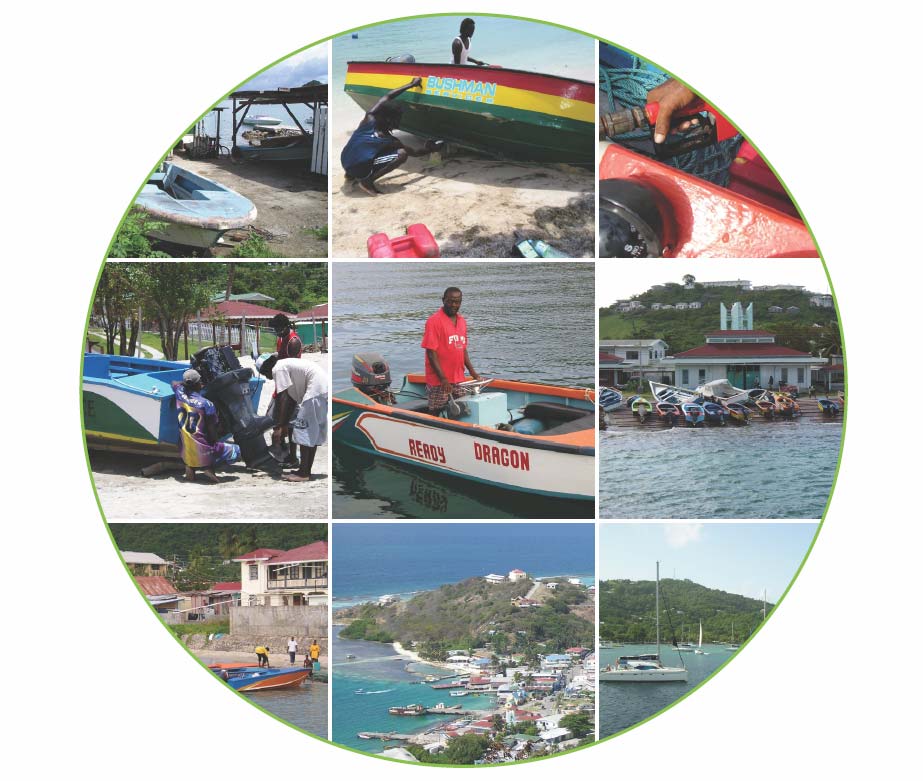

CERMES Technical Report No 10
Assessing sustainable "green boat" practices of
water taxi operators in the Grenadines
D.T. LIZAMA AND R. MAHON
Centre for Resource Management and Environmental Studies (CERMES)
University of the West Indies, Faculty of Pure and Applied Sciences,
Cave Hill Campus, Barbados
2007
ABSTRACT
The Grenadines is an island chain in the Windward Islands of the West Indies. The islands are
situated between mainland St. Vincent and Grenada and lie across the boundary of the countries
of St. Vincent and the Grenadines and Grenada. The coastal and marine ecosystems of all the
Grenadine islands are of considerable value to the national economies and quality of life.
Residents depend on the resources for their livelihoods through various activities. Water taxiing
is an important form of employment in the Grenadines that services both the tourism industry
and the local transportation system.
During the development of the strategic plan in Phase 1 of the Sustainable Grenadines project,
building capacity of water taxi operators to provide better customer service and reduce impact on
the environment was identified as a priority. The majority of the water taxi operators from the
islands take their tourists to the Tobago Cays Marine Park in St. Vincent and the Grenadines and
to other areas near Carriacou and Petite Martinique in Grenada that are in the process of being
protected.
Along with tourist arrivals and more frequent, stronger storms, it has been identified that water
taxi operators are also contributing to the degradation of the marine environment in and around
these areas of interest by engaging in non-environmental boating practices. To verify this, a
study was conducted titled, "Assessing sustainable `green boat' practices of water taxi operators
in the Grenadines".
Fifty water taxi operators were randomly selected and interviewed in six Grenadine islands. The
water taxi operators were questioned about their routine boating practices, threats to the marine
environment, the value of the marine resources and measures that should be put in place to
protect them.
Results indicate that water taxi operators' current practices are often not environmentally
friendly. This is evident through improper anchoring, littering, usage of non-environmentally
friendly cleaning agents and equipment, etc. Using the results of the in-depth survey, a booklet
compiling the best environmental practices for boat operation covering several topics has been
drafted for the water taxi operators. Considering the importance of the marine resources to all
stakeholders, the resources need to be protected and laws enforced to ensure intergenerational
equity. Improved boating practices by water taxi operators can contribute significantly to marine
environmental conservation in the Grenadine islands.
Key words: "Green boat", water taxi, Grenadines
i
ACKNOWLEDGEMENTS
Thanks to all who helped me through this study:
To the water taxi operators and other key persons in the community who gave their time, support
and more importantly, information. Without their input, this survey would not have been a
success.
To my advisor, Dr. Robin Mahon, for his patience and guidance. Dr. Mahon, thank you for your
unlimited kindness and words of advice.
To everyone who helped in editing my research paper, many thanks!
To Olivia Carballo-Avilez for translating the abstract to Spanish.
To two dear friends, Bertha and Alexcia for making the summer of 2005 an enjoyable one!
I thank my family and friends for their prayers, support and encouragement throughout the year.
ii
CONTENTS
ABSTRACT.........................................................................................................................
ACKNOLEDGEMENTS.........................................................................................................
1
INTRODUCTION..............................................................................................................................................1
1.1
BACKGROUND .............................................................................................................................................1
1.2
GOAL AND OBJECTIVES...............................................................................................................................2
2
LITERATURE REVIEW..................................................................................................................................3
2.1
PROGRAMMES .............................................................................................................................................4
2.2
REGULATIONS AND GUIDELINES .................................................................................................................5
2.2.1
International ..........................................................................................................................................5
2.2.2
Regional.................................................................................................................................................6
2.2.3
National .................................................................................................................................................7
2.3
ASSESSMENT OF SUSTAINABLE BOATING.....................................................................................................8
3
METHODOLOGY.............................................................................................................................................9
3.1
LITERATURE SURVEY AND REPORT REVIEWS...............................................................................................9
3.2
PRELIMINARY SURVEY OF WATER TAXIS MEMBERS.....................................................................................9
3.3
IN-DEPTH QUESTIONNAIRE SURVEY...........................................................................................................10
3.3.1
Data analysis .......................................................................................................................................11
4
RESULT............................................................................................................................................................11
4.1
PRELIMINARY SURVEY OF WATER TAXIS OPERATORS................................................................................11
4.2
IN-DEPTH QUESTIONNAIRE SURVEY...........................................................................................................11
4.2.1
Water taxiing as an occupation ...........................................................................................................11
4.2.2
Marine awareness and value of marine resources ..............................................................................13
4.2.3
Threats and solutions...........................................................................................................................16
4.2.4
Service(s) offered .................................................................................................................................18
4.2.5
Anchoring ............................................................................................................................................18
4.2.6
Solid waste...........................................................................................................................................18
4.2.7
Fuel and Oil.........................................................................................................................................20
4.2.8
Engines and engine maintenance.........................................................................................................20
4.2.9
Vessel maintenance..............................................................................................................................23
4.2.10
Education ........................................................................................................................................25
5
DISCUSSION ...................................................................................................................................................26
6
RECOMMENDATIONS.................................................................................................................................30
7
RERENCES......................................................................................................................................................32
8
APPENDICES ..................................................................................................................................................34
Citation
Lizama, D.T. and R. Mahon. 2007. Assessing sustainable "green boat" practices of water taxi
operators in the Grenadines. Sustainable Grenadines Project. CERMES Technical Report No. 10.
41pp.
iii
1 INTRODUCTION
1.1 Background
The Grenadines is an island chain in the Windward Islands of the West Indies. The islands are
situated between mainland St. Vincent and Grenada and lie across the boundary of the countries
of St. Vincent and the Grenadines and Grenada. The 30 islands and cays that comprise the
Grenadine Islands are among the most popular cruising grounds in the Caribbean, surrounded by
coral reefs and clear blue waters ideal for diving, snorkelling and boating
(www.lonelyplanet.com).
The islands in the Grenadines have an interesting history of indigenous Ciboney, Arawaks,
French and British settlers. These settlers mixed with each other giving the Grenadines its unique
mixture of cultures and traditions. During the 1700s alone, it was settled by the British, captured
by the French and then restored to the British in the late 1700s. Of the six islands where this
survey was carried out, Carriacou is the largest island and most developed and Mayreau the
smallest and least developed. Bequia remains the most visited island in the Grenadines due to its
close proximity to mainland St. Vincent. The least visited islands are Carriacou and Petite
Martinique, which only get the tourists that trickle down from the northern Grenadine islands.
The coastal and marine ecosystems of all the islands are of considerable value to the national
economy and quality of life (French Cooperation Programme, 1994). Residents in the
Grenadines have traditionally relied on the sea for their livelihoods; they use it for fishing,
travelling, recreation and other activities. For the residents of the Grenadines, tourism and fishing
are the major activities and income earners. The environment, however, that these industries rely
on has been significantly degraded. The beaches, land and marine water quality have all been
degraded, while the food resources of the land and sea have been depleted.
Most of the Grenadine islands have been struggling with the concept and practices of sustainable
development and this can be attributed to several factors. Islands such as Mustique and Bequia
have taken some of the measures and implemented programmes focusing on sustainability, but
many of the other islands do not have the human or technological resources to put such measures
in effect. Other reasons why this has not been successful include lack of governmental support,
lack of organisations to spearhead such programmes on several islands and lack of knowledge or
information on such initiatives. Examples where one industry (tourism) is causing adverse
effects on the environment and threatening the marine ecosystem of the Grenadines include poor
coastal development, increase in solid wastes, beach degradation, and poor boat operation
practices. There are regulations, conventions and agreements that provide the basis for
developing programmes, measures and alternatives that may be adopted to reverse the situation
in the Grenadines.
The Sustainable Grenadines Project is addressing some of the impacts mentioned above. This
project started in 2002 with the overall goal to promote integrated sustainable development of the
Grenadine Islands for the social and economic well being of the people who live there
(www.cermes.cavehill.uwi.edu). The project has two purposes, which are first to develop a
participatory co-management framework for integrated sustainable development in the
Grenadines and second, to demonstrate participatory sustainable development that can be
adapted by small islands systems. (www.cermes.cavehill.uwi.edu). Phase 1 of the project,
"Stakeholder assessment and participatory project development" was successfully completed in
1
2003. Phase 2 constitutes implementing the participatory strategic plan developed in phase one,
over a five-year period (November 2003-December 2008). It has four focal areas including
continued capacity building of the non-governmental organizations and government
departments; creating networks to develop functioning linkages between stakeholders and
assisting stakeholders in developing proposals to seek funding for other projects.
During Phase 1 of the Sustainable Grenadines Project, participants and partners recognised that
the water taxi operators have the potential to significantly impact the environment throughout the
Grenadines because of their daily activities. The majority of the water taxi members are small-
scale operators who struggle to make a living from the business. They work throughout the
Grenadines providing transportation services to the other islands and charter tours for tourists
and locals in both the high and low seasons. The high season represents high influx of tourists
and plenty business opportunities for the water taxi operators. Low season on the other hand,
represents limited visitors; hence, business declines and some operators revert to other sources of
income. Negative impacts of working at sea daily may arise from poor boat operation practices
such as inappropriate anchoring, grounding on reefs, waste disposal and improper boat
maintenance, among others. Although operators have been using boats to carry out their
activities for years, they have only recently formed and become members of water taxi
associations in the Grenadines. These are the Southern Grenadines Water Taxi Association
(SGWTA) of St. Vincent and the Grenadines, which formed in early 2004, and the Carriacou and
Petit Martinique Water Taxi Association (CPMWTA), which formed in June 2004.
It was during the development of the strategic plan in Phase 1 of the Sustainable Grenadines
project, that building the capacity of water taxi operators to provide better customer service and
reduce impact on the environment was identified as priority. The planning was followed-up
specifically for the water taxi operators in June 2004 in a vision and project-planning workshop
(CEC, 2004). This led to the submission of a proposal to the Global Environment Facility (GEF)
seeking funding for a project to build environmental stewardship through workshops and training
sessions among the water taxi operators from both associations (CEC, 2005). The inception
meeting for this project was held in April 2005.
This study focuses on one of the five components of the Water Taxi Project: "assessing the
sustainable `green boat' practices of water taxi operators in the Grenadines". The aim is to assess
their sustainable boat operation practices and subsequently, inform the operators about their
impacts on the natural environment. This is intended to help the water taxi operators become
better caretakers of the environment and be more capable of passing on the information to their
customers and the public in general (CERMES, 2004).
Finally, the perception of the value of the marine ecosystem to the operators and the knowledge
the operators have about sustainable practices are unclear. This study will also serve to provide
strategic recommendations to address any problems identified. This information will then help to
inform the operators about sustainable practices, while ensuring the protection of the
environment.
1.2 Goal and objectives
The primary goal of this project is to "assess the sustainable `green boat' practices of the water
taxi operators in the Grenadines" and to inform them about ways to improve their boat operation.
The objectives of this project are:
2
(a) To identify the water taxi operators on Union Island, Bequia, Mayreau, Canouan, Petite
Martinique and Carriacou.
(b) To research sustainable boating practices world wide, in the Wider Caribbean and in the
Grenadines
(c) To identify which sustainable practices can be adopted or adapted for the Grenadines
(d) To contribute to the Sustainable Grenadines Project via providing information and
recommendations for green boat operation training for water taxi operators.
2 LITERATURE REVIEW
The Earth is rich with various types of natural resources. However, the management of these
resources since the early 1960's have been a growing concern throughout the world. This has
been driven by the increasing awareness of the local and global damage that is inflicted upon the
environment as a result of several direct and indirect anthropogenic activities (Goodbody et al.,
2002). It was not until about thirty years later that there was a joint global effort at the Earth
Summit in 1992 that all countries were issued a mandate to protect the environment for the
present and future generations. Since then, the Earth Summit has served as the base for some
important conventions relevant to sustainable development and protection of the natural
resources. The Convention on Biological Diversity among others is of partial interest for this
paper as it seeks to conserve and promote the sustainable use of biodiversity on Earth
(http://www.joburg.org.za/summit/simple.stm). In addition, there are also several marine
conventions, agreements, etc. that seek to conserve the resources of the marine environment.
These conventions and other non-binding agreements are evident on the international, regional
and local levels.
The marine environment is also exposed to many anthropogenic activities, many of which have
significant impacts on coral reefs. Anthropogenic activities such as habitat destruction,
overexploitation and introduction of invasive species all result in species depletion. Humans
then, are largely responsible for this and the overall degrading quality of all ecosystems on Earth.
So then, the management of the resources really means to manage the people and their diverse
and potentially damaging activities whether within their private places or shared resources
(Goodbody et al., 2002). However, for people to fully cooperate with sustainable development
and how to best achieve these goals, they must be sufficiently informed, their livelihoods
understood and the benefits explained.
The growing, unsustainable, tourism industry throughout the Caribbean is to blame for many of
these negative impacts. There are increase water transportation, visitor arrivals, more coastal
construction for hotels, resorts and beach facilities. While these are no different for the
Grenadines, one major factor that the Sustainable Grenadines Project is focusing on is boat
operation in the Grenadines where operators in general, engage in daily activities that degrade
the environment. There are several approaches by many people throughout the world to reduce
the negative impacts by boat operators. This is carried out on several levels of green boating
across the globe. Some examples include clean-up programmes, regulations and guidelines
(international, regional and national), environmental best practices manuals, boat operation and
environmental awareness and education about the entire integrated ecosystems being affected.
3
2.1 Programmes
Support from international and regional organizations are helpful, but interest and initiative from
the countries that need such practices, are usually more effective. There are various countries
throughout the world and region that are promoting sustainable boating practices on different
levels as measures to protect the environment. Some examples that put forth different approaches
to green boating include the environmentally sound boating and marinas: the good mate/clean
marinas partners. This is organised by The Ocean Conservancy in partnership with the United
States and the British Virgin Islands. They are hoping that this will serve as a model for other
Caribbean States.
In California, USA, there is the `Boating Clean and Green Campaign' designed to reduce
pollution from boating and marine businesses. This programme combines boater education
(focusing on environmentally sound boating practices) with technical assistance to local
government and marine businesses. The programme also incorporates a variety of stakeholders
including universities, non-governmental organizations and more. It helps to install services that
reduce oil and fuel spills, sewage discharges, hazardous wastes and marine debris through
absorbent pad exchange programmes, oil-change services that collect used oil for recycling,
bilge-pump outs, plus oil water separation facilities and more (www.ucce.ucdavis.edu).
There have been efforts in Florida and Australia in establishing "clean marina programmes" and
other environmental programmes that aim to protect the marine ecosystem. In Florida, the
Florida Department of Environmental Protection (DEP) has established the Clean Marina
Programme (CMP) for marinas, boatyards and boaters. This programme works closely with the
Clean Boating Partnership, where the CMP is having a positive impact on educating Florida's
boat industry and preserving its waterways (www.floridacleanboatingpartnership.com). It
focuses on the recreational aspect of waterway access on topics such as hurricane preparedness,
boat cleaning, boat impact on plant and sea life etc. Education resulting in positive action is the
basis for these programmes.
In Australia, there is also an established "Clean Marina" programme that applies to all yacht
clubs, boat clubs, slips, boatyards and marinas across Australia. The programme supports
Australia's marine industries in all their endeavours, while protecting the waterways
(www.bia.org.au). The programme not only provides rules on valuable environmental practices,
but also rewards benefits. There is also the Boating Industry Association Ltd. (BIA)'s Code of
Practice and the Environment. It demonstrates members' concerns for environmental recreational
boating facilities and services. The BIA also encourages their customers to follow the rules set
out in part seven (7) of the code, whereby it discusses responsible boat navigation, maintenance,
and preventative actions by each individual to maintain clean water and minimise the near shore
water based recreation (www.bia.org.au). Through the BIA there are also many programmes that
focus on environmental practices such as "Best Management Practice for Marinas and Boat
Repair Facilities"; "Project Anchor"; and the "Pollution Reduction Programme".
These programmes can be adapted to suit the situation in the Grenadines. The CMP could be
beneficial to the islands especially Carriacou since the new marina is in the construction phase.
Other environmental programmes that seek to inform boat operators about their malpractices
while protecting the environment are vital as operators can see value in changing their boating
practices for the protection of the resources on which they depend.
4
2.2 Regulations and Guidelines
2.2.1 International
Several international organisations' objectives, goals, meetings, conventions and agreements
address impacts, mitigations, adaptations etc., concerning negative impacts on the marine
environment by marine vessels; however, only one focuses on small crafts. All aim to: protect
international waters from pollution (liquid and solid), reduce loss of marine biodiversity, ensure
that information is shared globally and to ensure that support is provided. Some international
examples include:
1. The International Maritime Organisation (IMO)
2. The International Convention for the Pollution from Ships (MARPOL 73/78)
3. World Summit on Sustainable Development (WSSD)
4. Jakarta Mandate
5. Convention on Biological Diversity
An example of an international organisation that addresses such issues is the International
Maritime Organisation (IMO), which is one of the responsible international organisations for
improving maritime safety and preventing pollution to water and air from marine vessels. The
IMO also serves as the Secretariat for the International Convention for the Pollution from marine
vessels MARPOL 73/78. In 1996, the IMO also took on the role as leader to ensure that other
international organisations and programmes coordinated the development of the global
programme of action clearing house mechanism with respect to oils and marine litter. MARPOL
is the international convention aimed at controlling pollution from the shipping sector. It has five
annexes that cover specific kinds of pollution and Annex V deals with garbage and litter
(www.marine-litter.gpa.unep.org). In Annex V, the Wider Caribbean Sea and regions along with
the North and Baltic seas were designated as "Special Areas". The disposal of all garbage
especially plastics, into these areas is strictly prohibited.
The World Summit on Sustainable Development (WSSD) held in Johannesburg 2002 re-
emphasised Agenda 21. Agenda 21 is a comprehensive plan for global, national and local action
by organisations of the United Nations, governments and major groups in every area where
humans impact the environment (www.marine-litter.gpa.unep.org). Chapters 17 and 21 of
Agenda 21 pertain to bodies of salt water and solid waste disposal, respectively. These are the
heavily impacted areas many depend on and therefore raise several issues. Chapter 17 discusses
the protection, national use and development of their living resources. Chapter 21 deals with
solid waste disposal (domestic refuse and non-hazardous waste) that may be in large or small
quantities.
The Jakarta Mandate on Marine and Coastal Biodiversity is a subunit of the Convention of
Biological Diversity (CBD), which is a global consensus on the importance of marine and
coastal biological diversity. The CBD aims at promoting the conservation of biodiversity; the
sustainable use of its components; and the fair and equitable sharing of benefits arising out of the
utilisation of biodiversity resources.
5
The only international agreement that outlines specific guidelines for small crafts is Safety of
Life at Sea (SOLAS), but since it addresses safety regulations, it is beyond the scope of this
paper.
Some of the international organisations, meetings and conventions discussed here all seek
environmentally sound waste management. This however, should not be concerned only with
safe disposal or recovery, but also with the root cause of the problem.
2.2.2 Regional
On the regional "Wider Caribbean" scale, the Caribbean Sea is protected by most of its coastal
countries. There are also several regional organisations, conventions, programmes and action
plans that apply to the Caribbean region for protection of the Caribbean Sea from litter, habitat
destruction, discharge, inter alia. Over the past ten years this has especially been the focus for
Small Island Developing States (SIDS). The SIDS Plan of Action has now been adapted for
developing countries. So far, there has been a lot of progress for some developing countries, but
rather than laws, there are more organisations, actions plans, and programmes that have been
formed, implemented and adopted.
Some regional examples include:
1. Cartagena Convention
2. United Nations Environment Programme (UNEP)- Regional Seas Programme
3. Global Environment Facility (GEF)-International Waters Project
Source: (www.marine-litter.gpa.unep.org).
The Cartagena Convention - Convention for the Protection and Development of Marine,
Environment and Wider Caribbean -- is binding. It is a convention that entered into force in 1986
for achieving sustainable development of coastal and marine resources in the Wider Caribbean
region through effective integrated management that allows for increased economic growth. The
convention covers various aspects of marine pollution and requires that the contracting Parties
adopt measures aimed at preventing, reducing and controlling pollution from ships, dumping,
and land based activities among others (www.cep.unep.org/). In addition, the Parties to the
convention take measures to preserve fragile ecosystems (like coral reefs and seagrass beds), as
well as habitat depletion, threatened or endangered species and develop technical and other
guidelines.
An example of a regional programme is the Caribbean Environmental Programme (CEP), which
was established under the UNEP regional seas programme by the diverse states and territories of
the Wider Caribbean to collectively address the protection and development of coastal areas
using the framework known as the Caribbean Action Plan, which was established in 1981. The
UNEP regional seas programme, which was initiated in 1974, focuses not on the mitigation and
elimination of the consequences, but also on the causes of environmental degradation as a global
programme implemented through regional components (wwwv.marinelitter-gpa.unep.org). The
programme also focuses on solid waste and marine debris and oil and litter as major issues in the
region. The CEP has four sub programmes, namely Specially Protected Areas and Wildlife
(SPAW), Assessment and Management of Environmental Pollution (AMEP), Information
Systems for the Management of Marine and Coastal Resources (CEPNET) and Education
Training and Awareness (ETA). Although each sub-programme has different objectives, a
common goal is to regionalise the global conventions, agreements etc., for the Caribbean region,
6
through coordination, sharing information, data networking, and improving the research and
technical managerial capacities to address environmental issues adequately
(www.cep.unep.org/).
The GEF international waters project is in progress, but has not yet been approved. This is the
sustainable management of the shared marine resources of the Caribbean's large marine
ecosystem and adjacent regions. Some objectives of the project include implementing legal
policy; policy and institutional reforms (regionally and nationally) and to improve shared
knowledge base so that sustainable use and management of the transboundary living marine
resources will be possible and more abundant.
2.2.3 National
St. Vincent and the Grenadines has only recently considered putting regulations in place for
small boat operators. The SGWTA held discussions with the Port Authority, Tourism Authority
and the Coast Guard about measures that should be put in place for the safety and certification of
small boat operators (Smith, personal communication). To date, these have not even been
drafted. The only official action that has taken place is the registration of the SGWTA. It was
registered in 2004 as a non-profit organisation under the Company Act of 1994, sections 5 and
329 (Smith, personal communication). A constitution was then developed for the SGWTA,
which explains the duties of the executive committee, resignation and removal of members,
projects and activities, publications, meetings and many more important matters relating to this
body. The SGWTA has developed some rules and regulations that all water taxi operators should
abide by while operating their boats in the Grenadines. It is noted however, that not all operators
recognise or respect these rules and regulations and therefore they must be revised. The SGWTA
executive members hope that these new rules and regulations can be implemented and enforced
in the near future (Smith, personal communication).
It may have also been beneficial for the government of St. Vincent and the Grenadines to
implement the mandatory provision of the IMO and the International Ship and Port Facility
Security Code in 2004. It is a new, comprehensive security regime that seeks to establish an
international framework of co-operation between governments, government agencies and the
shipping and port industries in order to detect and take preventive measures against security
incidents affecting ships or port facilities used in international trade1. This however has not been
done and the coastguards seldom patrol the Grenadine waters. On the other hand, using the
National Environmental Management Strategy Plan for St. Vincent and the Grenadines the
government agencies have various jurisdictions of environmental management and addresses
several environmental issues, but due to lack of proper management, effective enforcement and
awareness2, but water taxi operators, among others, who depend on the sea's resources continue
to destroy and pollute the waters intentionally and unintentionally.
The Grenada Ports Authority is the official licensing authority for all water taxis operating in
Grenada, Carriacou and Petite Martinique. The water taxis are separated into two categories
(inshore and charters) and must meet certain requirements in order to get a license and operate.
Unlike the SGWTA, the CPMWTA has not drafted any rules and regulations for the water taxi
1 (http://www.imo.org/Newsroom/mainframe.asp?topic_id=583&doc_id=2689#code)
2http://72.14.203.104/search?q=cache:AK4qricmMf8J:www.oecs.org/esdu/documents/Nems/SVG%2520NEMS%2
520Final2%252019Apr04.pdf+Environmental+Laws+of+St.+Vincent+and+the+Grenadines&hl=en&gl=bz&ct=cln
k&cd=5
7
operators. This is something that they are working on for the future (Bethel, personal
communication). The government of Grenada has already implemented some measures to ensure
sustainable boating practices, but they concern only safety issues. In the future under SOLAS, all
boaters will be required to have distress flares, first aid kit, engine repair tools and VHF radio.
Also, starting 2008, the Grenada Ports Authority has stated that they will not issue licenses to
water taxi operators with gasoline engines. All water taxi operators will be required to have
diesel engines by that time (CERMES, 2004). Apart from that Grenada has about 40 pieces of
legislation that govern the protection and management of Grenada's biodiversity and addresses
environmental management and protection. Water taxi operators in Grenada among other users
of the environment continue with the same non-environmentally friendly practices due to the
lack of effective enforcement of existing legislations and at mitigating adverse impacts on the
environment. In addition, general lack of awareness and understanding of the value, sustainable
use and the need for immediate conservation of natural resources by decision makers and
stakeholders and other identified gaps in the legal system3, also contribute to such practices.
2.3 Assessment of sustainable boating
The most useful literature on assessments of sustainable boating was from other parts of the
world than the Caribbean and it is suggested that the Grenadine boat operators adopt the
environmentally friendly boat practices. Several assessments that were conducted throughout the
world looked at the following main issues and the best practices for each. These include general
vessel maintenance, anchoring, waste disposal, education of the water taxi operators and
passengers, engine maintenance and fuel/ oil. It is quite possible that boat operators and other
users of the marine environment can adopt these best practices and therefore start minimising the
negative impacts occurring throughout the Grenadines.
The Maryland Department of Natural Resources (Maryland Clean Marine Initiative for
Chesapeake Bay) in the United States has a manual that they developed for boaters using the
Bay. This guide discusses the issues, the legal setting as it is in the United States, and best
management practices for each issue. For example, for vessel maintenance, it explains the effects
of each stage of refurbishing namely sanding, washing, and painting and outlines the best
practices (www.dnr.state.md.us).
The Centre for Environmental Leadership in Business (CELEB), Coral Reef Alliance (CORAL)
and Tourism Operators Initiative (TOI) together have also developed a manual as a practical
guide detailed with best practices for all users of the marine environment. Some of the topics
discussed include anchoring, boat maintenance, boat operation, viewing marine wildlife, waste
disposal and more. It also has a self-assessment checklist whereby operators; owners of marinas
and other users of the marine environment can evaluate themselves based on the daily activities
they carry out. The manual discusses each issue and explains why people should care about such
issues and suggests some best practices that should be followed at all times (CELB, et. al., 2001).
The Australian government has outlined its own best practices that boaters must practice while
operating in and around the great Australian barrier reef. Their guidelines also discuss several
activities that affect the marine environment and the best practices that boaters can follow or
implement (www.gbrmpa.gov.au).
3 http://72.14.203.104/search?q=cache:HVp4ruym5mgJ:www.biodiv.org/doc/world/gd/gd-nr-01-
en.pdf+Environmental+Laws+of+Grenada&hl=en&gl=bz&ct=clnk&cd=6
8
Other sources of information concerning green boat practices include websites and online groups
that the researcher was subscribed to. These include the Sustainable Grenadines yahoo group, the
CAST group, MBT (Marine Based Tourism) group, Ocean Journal for environmental managers,
and several websites.
3 METHODOLOGY
The research comprises four parts:
· Literature survey and review;
· Preliminary survey of water taxi operators;
· In-depth questionnaire survey of the sample of water taxi operators;
· Data analysis.
3.1 Literature survey and report reviews
Programmes, training and other best environmental practices for boat operation developed in
different countries were reviewed and compared with those of the Grenadines. Best practices for
sustainable boating practices have been implemented worldwide; these have been researched and
reviewed to determine if they are applicable and adaptable to alleviate the non-environmental
boat operation in the Grenadines.
Laws, conventions and protocols such as those mentioned in the literature review were also
reviewed to determine which ones apply to the activities of small boat operators. These may be
helpful in the Grenadines where they can be adapted and implemented or used to amend the
currents laws concerning boating throughout the islands.
Meetings/interviews with key informants were carried out with the water taxi associations'
presidents, the secretary and manager of the Sustainable Grenadines Project, members of the
Carriacou Environmental Committee (CEC) and Ms. Susan Mahon, manager of Counterpart
Caribbean. Information gathered through the interviews with these various people was used as
background information to determine the variables that were researched and to understand their
concerns of the boating activities.
In addition, information from the literature survey and review suggests that the Caribbean region
is behind in implementing and in some cases enforcing the necessary environmental laws that
relate to protection and conservation of the marine resources. The Caribbean is also behind in
adopting techniques, taking measures and making the general public aware of such
environmental issues that people can associate with. Many reports show that other countries,
usually the developed, first world countries have addressed the issues on a larger global scale
that many underdeveloped and developing countries cannot adhere to or take part in. As a result,
the countries including St. Vincent and the Grenadines and Grenada are now struggling to
understand the concept of sustainable development through `green boat' practices on a smaller
scale and are aiming at localising the efforts to reach that of developed countries.
3.2 Preliminary survey of water taxis members
The preliminary survey was carried out on the islands of Union Island, Bequia, Canouan,
Mayreau, Petite Martinique and Carriacou. This initial survey was a collaborative effort between
Alexcia Cooke and the researcher since both were interviewing the same group of people. Her
researched focused on "A livelihoods analysis of the water taxi operators in the Grenadines".
9
Both persons worked together to develop the questionnaire (Appendix I) and shared the effort of
administering them to the water taxi operators throughout the Grenadines. The preliminary
survey was conducted throughout the islands to find out who were water taxi operators; members
of the two water taxi associations; and to establish contacts and beginning to understand water
taxi operators and their business. Other basic information about the boats such as length, type of
boat, type of engine and boat name among other things was also acquired. To find out how many
operators there were on each island, the researchers used the "snowball approach" asking each
water taxi operator that was interviewed to name others and the location on the island where they
could be found and so on, until no new names came up. On Bequia and Carriacou, significant
members in the community associated with the water taxi operators, suggested to them that they
meet with the researchers. A total of one hundred persons were interviewed from across the
islands for this preliminary survey.
This first survey also served as an icebreaker for the water taxi operators, because all were
informed about the second survey. After the sample size was determined many from each island
were re-interviewed for the in-depth survey. The timeframe for this preliminary survey was
approximately eight days to cover all the islands. After the preliminary survey was completed, all
the data were analysed using the Statistical Package for Social Sciences (SPSS).
3.3 In-depth questionnaire survey
Of the one hundred water taxi operators that were initially identified and interviewed throughout
the Grenadines, a fifty percent (50%) sample was taken; only 47 were successfully interviewed,
which represents a confidence of ninety-five percent (95%) confidence interval and error level of
six (3.5%). Ninety-five percent (95%) is used as the rule of thumb when it is difficult to
determine confidence interval or error level of the results. Using the confidence interval, sample
size (50 respondents) and number of completed interviews, the error level was calculated using
the online "random sample calculator".4 These fifty (50) people were spread across all the
islands by means of a random selection using Excel Data Analysis tool. Other respondents were
selected as back-up in the event that those persons who were randomly selected could not be
interviewed. For this in-depth survey, the fifty water taxi operators served as the representative
sample of all water taxi operators from Union Island, Bequia, Mayreau, Canouan, Petite
Martinique and Carriacou using a more in-depth questionnaire. The number of persons that were
selected for a re-interview for each island is as follows: Union Island (20); Bequia (8); Canouan
(1); Mayreau (7); Petite Martinique (5) and Carriacou (10). The number of back-up respondents
used from each island is as follows- Union Island (3); Mayreau (1) and Carriacou (2). Each
person with a contact number was called before departing for the island to verify if they would
be available on the suggested day. Others were informed of our return by personal
communication with the researcher or through their colleagues.
The in-depth survey was also conducted by means of an administered questionnaire (Appendix
II). The questions in this survey focused on several issues concerning boating practices that the
water taxi operators carry out daily in the Grenadines. The structure of the questionnaire
included open-ended, close-ended and selection questions. It covered subheadings such as
coastal and marine activities, attitudes/perceptions of the marine environment and environmental
practices, threats/problems to the marine environment etc. The variables for the questions in this
4 http://www.custominsight.com/articles/random-sample-calculator.asp
10
questionnaire were drawn from various sources found during the literature review. The estimated
time frame for this second survey was approximately nine days to cover all the islands.
3.3.1 Data analysis
The questionnaires from the in-depth study were reviewed to ensure all the questions were
completely answered before the analysis started. The information for each water taxi operator
was entered into a Statistical Package for Social Sciences (SPSS) database in "data view" as the
first part of the electronic analysis. The data was then transferred from SPSS to an Excel
spreadsheet to facilitate the analysis.
4 RESULT
4.1 Preliminary survey of water taxis operators
The preliminary survey covered basic information about the water taxi operators across the
Grenadines and served as background information about each water taxi operator in reference to
their boat name, boat size, boat type, engine type and engine horsepower, among other variables.
This information was then used as the basis to develop the questionnaire for the in-depth
questionnaire and to begin understanding the water taxi operators from each island and their
preference in boats. This activity is reported on fully by Cooke et al., 2005.
4.2 In-depth questionnaire survey
Of the fifty water taxi operators (representing a 50% sample size) that were randomly selected
from those identified in the initial survey, only forty-seven were successfully interviewed. Some
questions did not apply to the water taxi operators in Bequia because they do not have a water
taxi association. Lastly, as expected, there were questions that some water taxi operators
deliberately did not answer for the fear of being identified or because they did not think it was
appropriate to reveal the malpractices of other water taxi operators.
Union Island has the largest number of water taxi operators and the largest number that are
registered. This may be attributed to the association having its own constitution under the laws of
St. Vincent and the Grenadines. As a result, most of the water taxi operators that were re-
interviewed came from Union Island. Bequia and Carriacou both had eight people, followed by
Mayreau with seven people, Petite Martinique with five and Canouan with only one person
(Table 4.1). Majority of the water taxi operators were a member of a water taxi association with
SGWTA having the most registered members. Bequia presently does not have a water taxi
association and it seems that there is interest in forming one, but the idea is controversial.
Using the results of the in-depth survey, a booklet compiling the best environmental practices for
boat operation covering several topics has been drafted for the water taxi operators. It is expected
that the operators will work together in unison with personnel from the Sustainable Grenadines
Project and with each other to modify the drafted booklet to suit them.
4.2.1 Water taxiing as an occupation
Twenty-four respondents fall within the 31-40 yrs age group with half having completed primary
and secondary level education respectively. Eighteen respondents (38%) have been water taxi
operators for more than ten years falling in the 11-20 yrs range and with an even amount of 13
respondents being operators for less than five years and between 6-10 years. Three water taxi
operators completed tertiary level education. These three people and the majority of those who
had completed secondary school were from either Carriacou or Petite Martinique (Grenada).
11
Contrary to what some water taxi operators say, water taxiing provides many of the respondents
with the most income. The graphs below show that water taxiing provides the highest proportion
of income for people whether it is their primary (Figure 4.1) or secondary job. Figure 4.2 shows
that there are many who do not have a second occupation and rely on water taxiing alone.
Fishing also ranks high as an
50
occupation that provides
45
high income. Others who
40
have yet a third job are only
ops 35
a few and the choices vary
T
W 30
from artist, security officer
of 25
and mooring renter.
t
age
20
r
c
en 15
e
P
10
5
0
wa s
tr
r
r
p
m
fi
c
b
b
a
a
d
t
c
e
e
r
s
a
u
e
r
p
o
e u
u
s
a
o
e
h
r
i
a
t
a
n
r
c
t
l
p
c
p
l
is
b
k
a
i
d
c
r
'
t
e
e
h
n
e
t
t
t
a a
in
u
s
r
a
g
n
e
h
s
m
k
x d
g
r
t
t
n
t
r
b
n
i
a
a
y
e
n iv
n
t
ic
ry
a
n
o
g in
m
w
g
teu e
rb
t
r
an
r
a
e
e
g
q
n
e
u
ta
r
e
l
Figure 4.2: The occupations that provides the highest proportion of income for water taxi operators
50
45
40
s
op 35
T
W 30
25
20
r
c
e
n
t
a
ge of
15
Pe 10
5
0
art b c e f
f
n
r
s
s
w
w
w
i
i
o
e
s u
o
n
s
r
o
n
e
u
a
e
in
t
i
n
g
h
e
n
l
p
l
t
l
t
ld
d
( d
s
i
in
s
e
f
e
e
p e
t
n
g
t
m
is
r
r
in
s
a r
ru
e
ry
o
h
m
t
g
u
i
e
a
n (b
c
r
o
o
a
x
rf
t
t
i
r
r
i
i
o
i
n
f
k
i
n
n
a
o
g
fi
in
e
in
g
g
t
n
c
g
t
g
)
s
e
s
i
o
n
)
r
wn
s
e
tr
r
u
c.
Figure 4.1: The occupations that provide the second highest proportion of income for water taxi operators
12
Mayreau, Carriacou and Petite Martinique are the islands where occupations other than water
taxiing provide the highest proportion of income (Table 4.1). Fishing provides more or about the
same income as water taxiing in two of the islands. Unlike Union Island and Bequia, WTops are
making a decent living from being water taxi operators, as it is their main source of income.
4.2.2 Marine awareness and value of marine resources
Each water taxi operator interviewed was fully aware that the Tobago Cays is a marine park. Of
the 47 respondents, only one water taxi operator said that he does not respect the Tobago Cays as
a marine park.
More than 50% of the water taxi operators were aware of the rules and regulations (all and some
combined) for the Tobago Cays Marine Park (TCMP) and of these, 25% said that they did not
know all the rules. On the other hand, 46% of the water taxi operators said that they were totally
unaware of the rules and regulations of the Tobago Cays Marine Park (TCMP) put forth by the
SGWTA (Table 4.2).
46% of water taxi operators believed that their colleagues respected the TCMP while 40%
believed that the water taxi operators did not respect the Tobago Cays as a marine park. 12% did
not know if the majority of other operators respected the park (Table 4.3).
13
Table 4.1 Cross tabulation of Grenadine Islands and jobs that provide the highest proportion of income
Grenadine
Islands
Occupations Bequia
Canouan
Mayreau
Union Petite
Carriacou
Island
Martinique
Apartment
1
rentals
Artists
1
(painting)
Beach
1
barbeque
Builder
(boats)
1
1
Builder
2
(houses)
Carpentry
1
Fishing 2 3 1
3
Boat
mechanic
1
Property
1
manager
Real
estate
1
Restauranteur
1
Scuba
diving
1
1
Trucking
1
Water
taxiing
5
1 3 9 2
2
Don't
know
1
Percentage of
22.7 4.5
13.6 40.9 9.1
9.1
WTops
TOTAL
17.0 2.1
14.9 36.2 12.8
17.0
(percentage %)
TOTAL
8
1 7 17
6
8
(WTops)
Table 4.2 Frequency and percentage of water taxi operators' awareness of the
rules and regulations of TCMP
Response Frequency
Percent
Yes 13
27.7
No 22
46.8
Not all
12
25.5
Total
47
100.0
Table 4.3 Frequency and percentage of water taxi operators' respect for the TCMP
Response Frequency
Percent
Yes 22
46
.8
No 19
40
.4
Don't know
6
12.8
Total 47
100.
0
14
The majority (55%) said that the park should not be zoned and one person had no opinion on
zoning the park (Table 4.4). Of the 26 respondents who thought the park should not be
zoned, 24 gave a reason why. Most were of the opinion that the park should remain open to
the public with everyone having equal access to the park and its resources (Table 4.5).
The majority of the water taxi operators expressed that they highly valued the marine
environment because they depended on the resources for their livelihood. Many said the
marine environment's beauty interests them and that tourists come to see the natural
attractions. Only two persons said that they value the marine environment as an area that is
kept safe for water taxi operators and tourists (Table 4.6).
Table 4.4 Frequency and percentage of water taxi operators' opinion on zoning TCMP
Response Frequency
Percent
Yes 20 42
.6
No 26 55
.3
Don't know
1
2.1
Total 47 100.
0
Table 4.5 Frequency and percentage of water taxi operators' reasons for not zoning TCMP
Response Frequency
Percent
Free full public access
20
42.6
It would create segregation
4
8.5
Not applicable
19
40.4
No response
4
8.5
Total
47
100.5
Table 4.6 Frequency and percentage of water taxi operators' perception of the value of the
marine resources
Response Frequenc
y
Percent
Dependent on the resources for livelihood
24
51.1
Natural attraction for water taxi operators and tourists
20
42.5
That the area is kept safe for water taxi operators and tourists
2
4.3
No response
1
2.1
Total 47
100.0
Only two respondents (4%) did not know that the marine environment serves many roles and
functions to both humans and marine organisms. All other forty-five persons (95%) said that
they were aware that the marine environment has different roles and functions to all life that
depends on its resources.
Only nine (19%) water taxi operators were not aware that certain boating activities/practices
could be harmful to the marine environment. Only one of these nine persons, although
unaware that some practices were harmful, did not express interest in learning more about
environmentally friendly boating practices. The other 46 respondents were enthusiastic that
they could learn more about boating and in the process learning to take better care of the
environment on which their livelihood depends. After understanding that certain boating
practices could cause potential damage and being informed that keeping their boat in the best
15
conditions can reduce such negative impacts, 46 respondents said that they were willing to
upgrade their boats.
4.2.3 Threats and solutions
This section reports on the perceived threats and possible solutions to the negative impacts on
the marine environment as stated by the water taxi operators throughout the Grenadines.
More than half the water taxi operators have observed other water taxi operators doing
activities/practices that could potentially harm the marine environment. Although some
claimed to have seen other water taxi operators in the act, many declined to say what they
actually saw. The leading responses from those who did respond were littering and speeding
in the harbour.
Table 4.7: Frequency and percentage of water taxi operators that prefer to use the
The average
different entrances to the Tobago Cays Marine Park
speed that
Entrance Frequenc
water tax
y
i
Percentage
operators
Horseshoe back reef (east)
2
2.1
drive when
Petite Bateau (west)
2
2.1
approaching
Petite Ramadal/Baradal (north)
13.4
28.6
harbours or
Jamesby (south)
22.3
47.6
beaches is
six knots,
Do not go to TCMP
9.2
19.5
but majority
said they drove at a consistent five knots in these areas. In respect to deeper waters, they
drive much faster but say they do slow down when approaching the reefs. Many patch reefs
surround the Tobago Cays, but water taxi operators are keen on using the areas with few
reefs with channels that will take them through to the Cays. The map of the Tobago Cays in
Appendix III shows the islands and the reef areas. Water taxi operators from all the islands
who make trips to TCMP prefer to enter the Tobago Cays using the southern entrance by
Jamesby Cay; this accounted for more than 47% of all operators (Table 4.7).
Water taxi operators agree that the marine environment is under stress from various threats.
Some provided many possible threats to the environment, whilst the majority gave only one.
The following graphs display the opinions and the possible solutions to some of these
primary threats (Figures 4.3 and 4.4).
The majority thinks that enforcement against speeding and garbage disposal into the sea is
necessary and should be implemented as soon as possible. Others suggested that water taxi
operators be informed about these wrongs and also empower them to help enforce some of
the rules and regulations. Two persons said frequent boat servicing and regular inspection
from officials might reduce impacts on the marine environment from boats
16
50
45
s 40
op
T 35
f
W 30
o 25
t
a
ge 20
15
r
c
en
Pe 10
5
0
po
l
n
s
W
l
a
l
ck
o r
pe
T
uti
e
o
o
o
e
d
p
n
f
sp
i
s
-
eq
o
ng
v
oi
n
l
i
,
u
s
f
s
i
u
ip
e
t
e
m
ar
l,g
e
e
a
n
a
r
t
an
bag
d
e
fish
Figure 4.3: Primary threats to the Tobago Cays Marine Park
25
s 20
op
T
f
W 15
o
ge
ta 10
en
e
rc
5
P
0
inf
e
e
e
e
m
g
o
n
n
n
m
e
r
o
m
fo
fo
fo
p
re
ne
r
r
r
o
w
ce
ce
ce
w
f
ra
a
m
e
re
l
t
p
a
&
e
e
r
rm
q
r
o
f
u
t
i
d
t
n
p
n
e
e
a
e
e
n
n
o
x
a
t
t
c
i
r
u
g
o
b
o
a
g
f
o
m
p
in
a
W
a
e
e
s
rb
t
n
r
a
t
a
to
c
t
t
s
g
h
in
o
p
e
p
e
s
r
s
c
s
ee
p
d
d
k
e
i
i
n
s
s
c
g
po
t
s
io
a
n
l
Figure 4.4: Possible solutions to the threats at the Tobago Cays Marine Park
17
4.2.4 Service(s) offered
Most of the water taxi operators provide more than one service for their customers, with
transporting people between islands and taking passengers on day-long boating trips being
the two most common services (Table 4.8). Some provide only limited services, but most
provide as many as they can, especially during the low season when business is restricted to
only limited number of trips and days for the week. The high and low seasons vary for each
Grenadine Island; Carriacou, Petite Martinique and Mayreau water taxi operators say unlike
other islands, they do not have seasons per se.
Table 4.8: The number of water taxi operators offering different services
Response Boating Transportation
Transportation
Selling
Collecting and
BBQ at
trips
b/w islands
from yachts to
goods
disposing of
night
shore
garbage
Offered 38
40
30
27 12
1
Not offered 9
7
17
20
35
46
4.2.5 Anchoring
The use of anchors by water taxi operators is a potential problem if the anchors are deployed
in dense reef or seagrass areas as this could damage these fragile marine ecosystems. Water
taxi operators must take extra precaution when selecting an area to anchor, as coral reefs and
seagrass beds are particularly susceptible to anchor damage. Most water taxi operators use
anchors to secure their boats at sea (Figure 4.5). A few said they prefer to use moorings if
they are readily available for rental or they use their own moorings. A few others said they
use them interchangeably, that is, they use anchor if they are renting their moorings. More
than half (27 respondents) has both bow and stern lines for more secure tying when docking
and for emergency purposes.
4.2.6 Solid waste
More garbage is being produced in the Grenadines with increasing visitors. Many people are
deeply concerned about improper waste disposal in the Grenadines. They are concerned
about waste disposal from boat operators and visiting tourist yachts. Solid waste (empty oil
bottles, paper, garbage collected from yachts etc.) is often thrown overboard by irresponsible
boat operators or disposed of on a nearby beach. Solid waste is generated on board for about
60% of the water taxi operators. Many provide food and drinks for the passengers on day
trips. The solid wastes vary and include bottles, plastics and aluminium foil. Those that do
provide food and drinks say they take the garbage to a bin or the local dump upon returning
to their island. For Mayreau and Petite Martinique, the waste is taken to Union Island and
Carriacou respectively, which have dumpsites. It is evident that plastics are the most
common of all solid wastes, followed by bottles (Figure 4.6).
18
90
80
70
60
o
p
s
T
W 50
of
40
t
age
30
e
rcen
P
20
10
0
Anchor M ooring
Both
Figure 4.5: Percentage of water taxi operators who use anchors/moorings solely or both
60
50
s
op 40
T
W
of 30
t
a
ge
20
e
r
c
en
P
10
0
bideg
biode rada
gra ble
dable
bottles
styrofoam
plastics
pap
paper er
Figure 4.6: Percentage of water taxi operators who generate a variety of solid wastes
19
4.2.7 Fuel and oil
All the water taxi operators use gas for their engines whether it is a portable tank or a built in
system for direct fuel injection. About 68% of water taxi operators are aware that the tank
should only be filled to ninety percent capacity. Only a few water taxi operators said that
when they are adding the oil to the gas, they fill the tank up to the brim. This particular
question was not applicable to those operators with two-stroke direct fuel injection and four-
stroke engines because these particular engines have a system where the engine does the
mixing of the oil and the gas. One person said they did not know if they filled the tank to the
brim when adding the oil (Figure 4.7).
80
70
60
ops
T 50
W
40
ge of
a
30
c
ent
Per 20
10
0
Yes
No
Don't know
Not applicable
Figure
4.7: Percentage of water taxi operators who fill gas tanks to the brim when adding oil
4.2.8 Engines and engine maintenance
Water taxi operators are very particular with the engine brand they use. The water taxi
operators identify brand with durability and reliability from those that have proven to be
successful for water taxi operators in the past. Yamaha is the leading brand that water taxi
operators across the Grenadines prefer and therefore accounted for 93% (forty-four persons)
from the sample size. Johnson and Evinrude were the other two engine brands used (Table 4.
9).
More than 85% of the water taxi operators in the Grenadines have the conventional two-
stroke engine. Only a few of them have the resources to afford a two-stroke direct fuel
injection engine or a four-stroke engine (Figure 4.8). There may be several reasons for this
fact.
20
Table 4.9: Frequency and percentage of the engine brands water taxi
operators use
Types of engines
Frequency
Percent
Yamaha 44
93
.6
Johnson 2
4.
3
Evinrude 1
2.
1
Total 47
100.0
90
80
70
s
op 60
T
W
50
e
of
tag 40
30
e
rcen
P
20
10
0
conventional 2-stroke
2-stroke direct fuel
4 stroke
injection
Figure 4.8: Percentage of water taxi operators using conventional and direct fuel injection 2-
stroke engine
Many water taxi operators carry out general routine engine maintenance to ensure that the
boat is functioning properly before they depart on their boating trips. A total of 27%
check the gas tank hoses before they go out on each trip, while others check daily, but
surprisingly many rarely check them at all. In addition, 34% of individuals also conduct a
general engine service before each trip and 25% only check the engine when they think it
needs servicing (Table 4.10).
Twenty percent of water taxi operators change a damaged propeller the very next day
after it is damaged (Figure 4.9). About the same percentage said that they could only
change a damaged propeller when they have sufficient money. The majority of more than
50% however, said that they usually wait a few days before changing it.
21
Table 4.10: Frequency and percentage of water taxi operators checking their hoses and
servicing engines at different intervals
Checks hoses for leaks and
Services engine
breaks
Response
Frequency Percentage Frequency Percentage
(%)
(%)
Daily 11
23.4
5
10.6
Weekly 8
17.0
9
19.1
Monthly 0
0
5
10.6
Each trip
13
27.7
16
34.0
As needed
5
10.6
12
25.5
Rarely 8
21.3
0
0
60
50
s
op 40
T
W
30
age of
20
e
r
c
ent
P
10
0
weeks after
as the money the next day days after the no response
the incidents
is acquired
incident
Figure 4.9: Percentage of water taxi operators showing the timeframe in which they can afford
to change a damaged propeller
Although most boat engines have a built-in electric tilt, on some boats it does not
function, but there are also many water taxi operators who do not use the tilt to raise the
engine when in shallow waters even though it may be working. More than 55% of the
water taxi operators said that their engine had an electric tilt. The follow-up question of
whether the tilt was working properly did not apply to those who did not have an engine
with a tilt. Only one person admitted that their tilt was not working properly. All those
without a tilt said they had to manually pull up the engine(s) when in shallow waters or
approaching shallow reef areas. Table 4.11 shows that 12% of the water taxi operators
admitted to not using the tilt or manual pull-up when it was necessary.
22
Table 4.11: Frequency and percentage of water taxi operators who use the
tilt on the engine or manually pull it up
Types of engines
Frequency
Percent
Yes 41
87
.2
No 6
12
.8
Total 47
100.
0
4.2.9 Vessel maintenance
Most water taxi operators in the Grenadines agree that a well-maintained vessel is
necessary for good customer service, aesthetics and releases less pollution to the marine
environment. Maintaining a clean vessel, however, through basic washing/cleaning the
boat (inside and outside) and also through the various processes of scraping, painting,
etc., has high potential of releasing toxins into the marine environment. Many water taxi
operators, 46% clean their boats daily and about 30% clean them weekly (Table 4.12).
Table 4.12: Frequency and percentage of how often water taxi operators
clean their boat
Response
Washing/Cleaning boat
Frequency Percentage
(%)
Daily
22
46.8
Weekly
14
29.8
Monthly
1
2.1
As needed
9
19.1
Rarely
1
2.1
Water taxi operators use these three main agents to clean their boats. About 40 persons
(85%) use a soapy detergent; 24 persons (51%) use bleach and 15 persons use
disinfectant to get rid of `germs' and odours (Figure 4.10).
For most of the Grenadine Islands, water taxi operators find it best to refurbish their boats
during the low season, when they are less busy. Most water taxi operators refurbish their
boats once a year, which accounts for more than 60%. Some prefer to or rather, can
afford to refurbish their boats more than once a year. A few rarely refurbish their boats
(Figure 4.11).
Only nine percent of water taxi operators do not use a special type of paint on the hull of
their boats. These four water taxi operators use house paint and one person chose not to
respond. Figure 4.12 shows 45% of water taxi operators use a type of epoxy paint on the
hull of their boats, while 23% use marine and antifouling paint.
23
45
40
35
r
s
to
30
ra
p
e
x
i
o
25
ta
r
a
te
20
f
w
o
. o
15
N
10
5
0
disinfectant
clorox (bleach)
squeezy (soapy detergent)
Figure 4.10: Number of water taxi operators who use each cleaning agent
70
60
s 50
WTop 40
a
ge of 30
c
ent
Per 20
10
0
2 times/yr
3 times/yr
rarely
yearly
Figure 4.11: Percentage of water taxi operators who refurbish their boats at different intervals
24
50
45
40
s 35
op
T 30
W
25
t
a
g
e
of
20
r
c
en
15
Pe
10
5
0
antifouling
epoxy paint
house paint
marine paint
no response
paint
Figure 4.12: Percentage of water taxi operators who use different types of paint
4.2.10 Education
Nine percent of water taxi operators do not give an information briefing for passengers,
but this is attributed to the fact that they do not provide the service of day trips. Those
who do give a briefing say that they talk about do's and don'ts for the surrounding waters
and about the corals they are familiar with (e.g. fire coral). This was reported as the most
popular topic followed by historical information about the area and about fishing as an
occupation and recreational activity (Figure 4.13).
60
50
o
p
s
40
T
W
of 30
20
e
r
c
e
n
t
a
ge
P
10
0
do's and
history and
currents
not applicable no reponse
don'ts
fishing of area
Figure 4.13: Percentage of water taxi operators who discuss different topics for the educational briefing
25
5 DISCUSSION
As with most research studies, there are several limitations to note and avoid in future
studies of this type. Although this research survey provides many answers and insights,
there were gaps and unresolved issues that were inevitable.
1. The representative sample size of fifty persons was not met due to two refusals
from the water taxi operators and one water taxi operator who did not show up for
the interview.
2. Since the operators live throughout the Grenadines (including Bequia, Canouan,
Mayreau, Union Island, Petite Martinique and Carriacou), there were logistical
problems with locating some of the boat operators and getting cooperation. Not
everyone that was randomly selected was met for the in-depth-survey. Some
people were out of the island, some did not want to be re-interviewed; some were
busy rebuilding after the hurricane, etc. As the researcher did, it best to ensure
that a few people from the sample size are selected as back-up interviewees.
3. There was insufficient secondary information about sustainable boat practices
specifically for the Grenadines. The current research on the practices of water taxi
operators provides baseline information for water taxi associations to utilise along
with the reports from workshops conducted with water taxi operators. These
documents should be collected as a library to be used by operators and the public
for the further development of the operators and the associations.
4. The estimated time for the study was three months, but more time was needed due
to unforeseen circumstances such as Hurricane Emily, which occurred on July
13th, 2005. It delayed getting information for Petite Martinique and Carriacou.
Future researchers are advised to plan for such unforeseen circumstances and
have a few extra days set aside.
5. A member of the community associated with the water taxi association was
reluctant in helping out and withheld pertinent information (such as names of
additional members of the water taxi association) from the researcher. Future
researchers are advised to plan ahead meet with key informants some days before
conducting the survey.
6. The "Taking Care of Our Coastal Environment" workshop held in Carriacou
before this survey may have biased some answers given by the water taxi
operators by increasing environmental awareness right before the survey. For
future workshops that may influence/bias the results of a survey should be
conducted after such survey is completed.
In reference to the different approaches to green boating, the two governments of the
Grenadine islands have accomplished some goals. Results however show that the
majority of the water taxi operators do not practice environmentally friendly boat
operation. It is clear that many water taxi operators need to become more informed in
sound environmental practices and also to have a better understanding of the role and
importance of marine resources. Having future `green boat' workshops for water taxi
26
operators will help them to understand and remember environmentally friendly boat
practices; the benefits and to also encourage them to become conscientious consumers.
Reasons for Grenada having more water taxi operators with higher-level education
include the fact that Grenada has only two Grenadine islands of which one is relatively
large; and it may have been easier to provide secondary education. Indeed, the proximity
of Petite Martinique to Carriacou, allows Petite Martinique students to attend school in
Carriacou by taking the daily `school boat'. In general however, majority of the water
taxi operators in the Grenadines only completed primary level education. Increasing
awareness in the other Grenadine islands through various teaching methods by
introducing the topic of sustainable `green boat' practices at the primary and secondary
school levels can have significant long term benefits.
Bequia was the pioneer for water taxiing in the Grenadines and for many from that
island; it has proven to be very profitable (Phillips, personal communication). Bequia and
Union Island get more tourists than the other islands therefore having more business
opportunities for the water taxi operators there. Yachts are also common in the harbours
at Bequia and Union Island and water taxi operators provide many services for them. For
Mayreau, Petite Martinique and Carriacou, water taxiing is a seasonal occupation and
compared to the other islands, they get limited customers that ask for the water taxiing
service. As a result, the operators there must rely on other jobs to sustain themselves and
their families. The second most common occupation is fishing. Most water taxi operators
who are capable of fishing, fish for lobsters, conch and fish and sell them to yachts,
restaurants and locals. One water taxi operator said, "I prefer fishing because the hours
are shorter, the business is more economical and I make more money" (Rocke, personal
communication). Although this alternative job is beneficial to some, governments could
invest in short courses for the water taxi operators certifying them in various fields, other
than fishing.
So few water taxi operators may have known about the rules and regulations of the
TCMP because: (1) they do not take passengers there and so are not familiar with the
governance of the area; (2) they are not aware that such rules exists; (3) the information
may not be readily available; and (4) the low literacy rate as evidenced by many having
only completed primary level education. Water taxi associations can review the rules and
regulations at their meetings throughout the course of the year, especially for new
members.
Many water taxi operators do not want the park to be zoned because they believe that the
resources are there for the entire public and no one should be restricted to use any part of
the marine park. Some believe that restricting the public will create segregation among
the water taxi operators from the different islands and other users of the marine park and
therefore heighten user conflict issues for the area.
Although 95% of water taxi operators are aware that the marine environment serves
many functions to both humans and marine life, they do not know what these functions
and roles are or appreciate the links between ecosystems. Most water taxi operators are
aware that certain boating activities/practices can harm the environment, but as one
operator puts it, "some things that we do are inevitable, but then again some water taxi
operators just don't care" (Simmons, personal communication). Boating
27
activities/practices that could harm the environment include improper anchoring, disposal
of garbage, cleaning/washing boats on the beach etc. Some of these activities are indeed
`inevitable', but the water taxi operators could be informed about better alternatives and
ways of minimising impacts. The "Best Practices" manual in Appendix IV outlines
various environmental issues and what water taxi operators can do to reduce impacts on
the environment. For example, the impacts that antifouling paints can have on the
environment is explained.
Most of the 46 respondents that were willing to upgrade their boats said that they would
definitely need assistance from the government, the associations and the Sustainable
Grenadines Project to achieve this goal, especially if they will need to comply with new
standards that may be introduced. The water taxi operators need this assistance because
the job is not profitable enough to provide for their families and do everything that is
required to become an outstanding environmentally friendly operator. To assist water taxi
operators, governments of St. Vincent and the Grenadines and Grenada should introduce
tax-free measures on 4-stroke engines; other boat equipment needed for safer and more
environmentally friendly boat operation or provide low interest loans.
In addition to bad boat operation, some water taxi operators in the Grenadines have been
seen littering at sea and on beaches. Any person seen littering should be warned first and
if the act reoccurs, they should be fined, according to the legal policies and Acts against
pollution in St. Vincent and the Grenadines and the Littering Act of 1973 in Grenada.
However, there are no enforcement officers for such activities. Hitting an object in the
water can also damage the boat or engine, putting the operator at great expense. The next
issue is speeding in the harbours; it is a threat to both humans and coral reefs. Water taxi
operators or other officials should be appointed to monitor improper boat operation
activities, such as speeding and illegal dumping. Water taxi operators can also work with
the associations and the port authority to assist with patrolling the Grenadine waters.
In respect to the TCMP, many water taxi operators use the southern entrance by Jamesby
Cay, where there are numerous reefs. This can have negative impacts and along with
increased pollution, can degrade the area. Marker buoys like those upon entering Union
Island's harbour can be placed in strategic areas in the TCMP to guide boaters indicating
entrance channels or reef areas. Boaters can also invest in flares, moorings and boat lights
for better navigation and reef protection.
As expected, operators use anchors more than moorings. Reasons for this are simple-
moorings are not readily available; they are limited and expensive to rent. Many water
taxi operators have seen their colleagues anchor improperly in sensitive areas. A `Reef
Check' team recently conducted a study in the Grenadines and the results, for the TCMP
did not reveal extensive reef damage in the marine park. If business increases however,
the reef around TCMP and throughout the Grenadines may be susceptible to destruction
in the future. Water taxi operators and other locals can continue to participate and request
that more `Reef Check' monitoring is carried out in the area to determine the health of the
reef. Sustaining the `Reef Check' surveys will provide continuous assessment of possible
damages to the reefs in the Grenadines, especially in the marine protected areas.
The high and low seasons are not of equal proportion for all islands in the Grenadines.
Some islands have long, productive high seasons, while others have extended low
28
seasons. Operators from Mayreau say that they only get business when the cruise ships
dock offshore, but even then, there is heavy competition (Ollivierre, personal
communication). This is so because many people who are not regular water taxi operators
also take on the job when the ships arrive. Carriacou on the other hand does not get as
many tourists as the northern Grenadine Islands. According to some operators, Carriacou
experiences the "trickle-down" effect of tourists who tour the northern Grenadines first.
Some reported that they rarely get business from these tourists; therefore leading them to
say, "No seasons exist in Carriacou and we are often accused of charging too much for
trips" (Gittens, personal communication). They also believe that because cruise ships do
not visit Grenadine waters near Petite Martinique or Carriacou, this has limited their
business opportunities (Alexander, personal communication). A water taxi operator
suggested that the water taxi associations draft proposals and submit them to the
governments of St. Vincent and the Grenadines and Grenada (Ministry of Tourism)
suggested that they boost the tourism via marketing the services of the water taxi
operators. Perhaps this will create more business for the water taxi operators in Mayreau,
Carriacou and Petite Martinique.
Plastics are among the most harmful solid waste materials for the environment. They are
not biodegradable and may kill many marine organisms including turtles, corals, and
fishes. These plastics originate from picnic lunches, oil bottles, fishing nets, garbage
collected from yachts and many possible land sources. It is also very unsightly and
reduces the appeal to visitors and locals. Water taxi operators should be fined or more
drastic measures of license suspension should be done if one is caught illegally disposing
garbage. Also, they can be encouraged to invest in equipment such as non-abrasive
cleaning cloths, non-plastic/styrofoam utensils, garbage bins for oil bottles can be place
in areas near the beach and possibly even implement a recycling programme.
The other issue is filling the gas tanks with oil and fuel. Filling the gas tanks to the brim
does not leave any space for the expansion of these liquids. When the engine heats up, the
fuel and oil mixture will expand, if the tank is filled to the brim it will overspill. This
waste may enter the marine environment when the drain plugs are opened during
cleaning or will mix with the bilge water that is pumped or bailed out of boats. Water taxi
operators should fill the gas tanks only to 90% capacity and refrain from cleaning on the
beach, draining plugs on or near the beach and burying used oil in the beach sand.
Although diesel fuel is preferred by international standards for boats because it is more
environmentally friendly, it's not a panacea for impacts caused by gas fuel. Diesel
engines are expensive and difficult to maintain among other factors.
Yamaha is the leading brand for boat engines. It is known for its reliability, durability and
the wide selection that it offers (e.g. Yamaha salt-water series engine). Engines that are
not serviced regularly can cause harm to the environment. They become clogged with oil
and release smoke upon starting the engine and while operating. The most popular engine
type is the conventional two-stroke engine. This type is more harmful to the environment
in several ways, for example, they put about fifty percent of the oil used into the water
and they release smoke and fumes. Two stoke engines are what the water taxi operators
in the Grenadines can afford and are familiar with. Any well-serviced engine however,
runs more smoothly, costs less to maintain and has less impact on the environment.
29
Finally, although it can be said that water taxi operators in the Grenadines are not
currently practicing environmentally friendly boating, they are aware of the many
measures that they need to take on to be on the path to become environmentally friendly
boat operators. Some practices seem suitable, but many need to be changed. Hopefully,
these changes will come about with increased knowledge and water taxi operators will
see the benefits of changing to better alternatives. One way this can be done is through
involving the water taxi members in decision-making processes and supports them in
forming NGOs and CBOs as a means of co-management for the protected areas. The
issues that need more attention include anchoring, vessel maintenance, waste disposal
and awareness. The last of these may be the key to leading many to become green boat
operators. Other information about `green' boat operation can be disseminated to the
operators and also a follow-up survey should be conducted to assess the effectiveness of
the "Taking care of our coastal environment" and Sustainable `green boat' training
workshops". On a larger scale, boat operation of stakeholders such as the ferry lines in St.
Vincent, the Osprey ferry line of Grenada and yachts all need to be assessed.
The results of this study will be used by the Sustainable Grenadines Project under the
Water Taxi component to initiate discussions with the water taxi operators to determine
the sustainability and the environmental friendliness of their boat operation. It is hoped
that they will use the information to guide positive action to increase benefits to the
environment and the people.
6 RECOMMENDATIONS
Several recommendations were forthcoming from water taxi operators across the
Grenadines and the researcher.
1. Future researchers conducting survey about water taxi operators in the Grenadines
should ensure that a few people from the sample size are selected as back-up
interviewees; plan ahead to meet with key informants and plan for unforeseen
circumstances.
2. Provide information about `green boat' workshops in the future so that water taxi
operators may fully understand environmentally friendly boating and its benefits.
3. The governments can invest in short courses for the water taxi operators certifying
them in various fields, other than fishing.
4. Water taxi associations should review the rules and regulations at their meetings
throughout the course of the year, especially for new members.
5. Governments of St. Vincent and the Grenadines and Grenada should introduce tax-
free measures on 4-stroke engines other boating equipment needed for safer and more
environmentally friendly operations or provide low interest loans.
6. Urge water taxi operators to cooperate with the association and seek to implement
arrangements through water taxi associations that would allow operators to monitor
and patrol the Grenadine waters.
7. The government or local businesses can provide assistance to the water taxi operators
with safety equipment such as moorings, flares, and boat lights for better navigation
and reef protection.
30
8. The water taxi associations should draft proposals to the government of St. Vincent
and the Grenadines and Grenada (Ministry of Tourism) suggesting that they boost the
tourism product via marketing the services of the water taxi operators. Perhaps this
will create more business for the small-scale water taxi operators in the Grenadines,
especially in Mayreau, Carriacou and Petite Martinique.
9. Water taxi associations should be encouraged to invest in equipment for proper and
environmentally friendly boating (inland boat yard, spray guns, etc.). In addition, they
can invest in disposal bins for oil bottles and place them in strategic areas, possibly
even implement a recycling programme.
10. Water taxi operators should follow the guidelines in the best practices manual.
There are also a number of long-term recommendations that emerged from the study.
1. The current research provides baseline information for water taxi associations to
utilise along with the reports from workshops conducted with water taxi operators.
These documents should be collected as a library to be used by operators and the
public for the further development of the operators and the associations.
2. Increasing awareness in the other Grenadine islands through various teaching
methods by introducing the topic of sustainable `green boat' practices at the primary
and secondary school levels can have significant long term benefits.
3. Sustain `Reef Check' surveys to provide continuous assessment of possible damages
to the reefs in the Grenadines, especially the TCMP and other protected areas.
4. Governments should involve water taxi operators in the decision-making process and
support them in forming NGOs and CBOs as a means of co-management.
5. Conduct follow-up research in the Grenadines to assess the effectiveness of the
"Taking care of our coastal environment" and "Green boat training" workshops.
6. Sustainable Grenadines Project and/or both governments should conduct a survey to
assess the sustainable boating practices of the other boating stakeholders: the ferry
lines in St. Vincent; the Osprey ferry line of Grenada; yachts; day charter operators
and SCUBA operators in the Grenadines.
31
7 REFERENCES
Personal communications
Bethel, Kim. Personal interview. August 7th, 2005
Gittens, Krishna "Big Bird". Personal interview. August 7th, 2005
Ollivierre, Jerome "Gaepa". Personal interview. August 5th, 2005
Rocke, Fabian "Ninja". Personal interview. August 6th, 2005
Phillips, McCarty "Yaba". Personal interview. August 8th, 2005
Simmons, Winston "African". Personal interview. August 8th, 2005
Smith, Casper. Personal email. September 20th, 2005
Books/Reports
CELB, TOI and CORAL. 2001. A practical guide to good practice-managing
environmental impacts in the marine recreational sector. 21pp
CERMES. 2004.Vision Report for the Sustainable Grenadines Project. Centre for
Resource Management and Environmental Studies
Cooke, A and Dominique Lizama. Analysis of the preliminary survey of water taxi
operators in the Grenadines. Sustainable Grenadines project. 2005
Goodbody, I and Thomas-Hope, ed. Natural Resources Management for Sustainable
Development in the Caribbean. Kingston Jamaica: Canoe Press, 2002
Websites
Boating Industry of New South Wales. Boating Responsibilities. Boating Industry of
New South Wales Official Website. June 15th, 2005 <www.bia.org.au>
Centre for Resource Management and Environmental Studies Website. Sustainable
Grenadines. June 10th, 2005.< www.cermes.cavehill.uwi.edu>
CustomInsight. Random Sample Calculator. August 10th, 2005.
<http://www.custominsight.com/articles/random-sample-calculator.asp>
Florida Department of Environment. Clean vessel program. Florida Department of
Environment and Protection Official website. June 15th, 2005
<www.floridacleanboatingpartnership.com>
Garson, Phillipa. The World Summit Made Simple. City of Johannesburg Official
Website.19th September 2005. <http://www.joburg.org.za/summit/simple.stm>
Global Marine Litter Information Gateway Website. 10 tips for boating clean and green.
July 6th, 2005.<www.marine-litter.gpa.unep.org>
Great Barrier Reef Park Authority. Best Environmental Practices. July 15th, 2005.
<www.gbrmpa.gov.au>
32
The International Ship and Port Facility Security Code. IMO adopts comprehensive
maritime security measures. July 6th, 2005.
<http://www.imo.org/Newsroom/mainframe.asp?topic_id=583&doc_id=2689#co
de>
Lonely Planet Website. St. Vincent and the Grenadines. June 10th, 2005.
<www.lonelyplanet.com>
Maryland Department of Natural Resources. Boating in Maryland. July 1st, 2005.
<www.dnr.state.md.us>
United Nations Environment Programme Website. 2006. Caribbean Environment
Programme. February 22nd, 2006. <www.cep.unep.org/>
33
8 APPENDICES
Appendix 1: Questionnaire for preliminary survey
Purpose of Questionnaire: To establish a database of water taxi operators throughout
the Grenadines for the Sustainable Grenadines Project. It will also provide a basis for
selecting a sample size for the in-depth survey to be carried out on the livelihoods and
green boat practices of water taxi operators.
Surveyor's name:__________________
Respondent
#:________________
Date:________________
1.
Name of Boat:___________________
2.
Registration Number:_________________
3.
(a) Name of Owner:_________________
(b)
Male____
Female_______
4.
How many persons operate this water taxi? _____________________ .
5.
Name and sex of Operator/s:
Name: _____________________
Sex: _______________________
Name: _____________________
Sex: _______________________
6.
Length of Boat: ________________________________.
7.
Type of Boat: __________________________________.
8.
Where do you dock your boat? ________________________________.
9.
Are you a member of a Water Taxi Association (WTA)?
Yes____
No_____
10.
Which WTA? ____________________________.
We will be conducting two in-depth surveys in approximately two weeks on your
livelihoods and your boating practices. We would therefore appreciate if we could
interview you again at your convenience.
34
Appendix 2: In-depth Questionnaire
This questionnaire is for the assessment of the boating practices of the water taxi
operators in the Grenadines. This study will provide information for the Water Taxi
Project under Sustainable Grenadines Project. It is also a requirement for the completion
of D.T. Lizama's, MSc. in NRM degree at UWI. The information collected will be
confidential. A training workshop will be held for the water taxi operators in October
2005 using the results from this study.
Name of respondent____________________________
Island:_______________ Respondent
#_________
Dock Location:________________________________ Date:_________
Boat Name:__________________
Length of boat:________________
Registration #:________________
Demographics
1. How old are you?
Less 20_____ 20-30_____ 31-40_____ 41-50_____ 50 and over____
2. What was the last level of education you completed?
____________________________________
3. What job provides you with the most income?
________________
4. Do you have any other jobs?
1st __________________ 2nd _________________ 3rd ____________________
5. Are any other members in your household involved in the water taxi operation?
Yes___ No____
Who? ________________________
_____________________________
6. Do you have any other relatives involved in the water taxi operation?
Yes____ No____
Who? _________________________
______________________________
7. Are you a member of the Water Taxi Association?
Yes____ No____
Attitudes and Perception
35
8. Are you aware that the Tobago Cays is a marine park?
Yes____ No____
9. Are you aware of the rules and regulations concerning the marine park?
Yes____ No____
10. Do you respect the marine park?
Yes____ No_____
11. Do you think that most water taxi operators respect the regulations of the marine
park?
Yes____ No____
12. Do you think that the marine park should be zoned in respect to the different activities
carried out in the park?
Yes____ No____
If no, why?_________________________________________________________
13. What is the value/importance of the marine resources to you? OR How important is it
to you that the marine resources remain in abundance?
________________________________________________________________________
________________________________________________________________________
________________________________________________________________________
14. Do you know that the marine environment serves many functions to both human and
a variety of marine organisms?
Yes____ No____
15. Are you aware that some of the activities that you carry out may be harmful to the
environment?
Yes____ No____
16. Would you be willing to learn more about environmentally friendly boating to gain
more knowledge and gain a better understanding as to why this is important?
Yes____ No____
17. Would you be willing to upgrade your boat for the safety of yourself, your
passengers, and the environment?
Yes____ No____
Threats and Problems
18. Have you observed any conflict between water taxi operators concerning
environmentally friendly boating in the Grenadines?
Yes___ No___
36
If yes, of what
nature?_____________________________________________________________ 19.
19. What do you think are the top three threats to the marine environment from boating
operation here in the Grenadines?
1._______________________________
2._______________________________
3._______________________________
20. Can you suggest some solutions to reduce the negative impacts caused on the
environment?
1. _________________________________
2. ________________________________
3. ___________________________________
21. Do you report non-environmentally friendly activities?
Yes____ No____
22. Do you take any action against activities by your passengers that may potentially
harm the environment?
Yes____ No____
Coastal and Marine Activities
23. How many years have you been a water taxi operator?
Less than 5______ 6-10_____ 11-20_____ 21-30______ over 30_______
24.What type of service do you offer? (can check more than one)
____ taking passengers on boating trips (snorkelling, swimming..)
____ transporting people between islands
____ transporting people from yachts, ships to shore
____ taking goods to the yachts
____ taking garbage from them
____ other
25. About how many days of the week do you conduct water taxi services?
High season: ____1-3days Low season: ____1-3 days.
____4-6 days ____4-6 days.
____7 days a week ____7 days a week
26. What is your estimated number of trips per day?
High season: ____1-3 trips Low season:____1-3 trips
____4-6 trips ____4-6 trips
____7-9 trips ____7-9 trips
____> 10 trips ____>10 trips
27. What is the passenger capacity of your boat?
_________persons
37
28. What is the estimated number of passengers you take out per trip
_________persons
Boating Practices
29. What brand of engine do you have?
________________________
30. Which type of engine do you have?
____traditional 2-stroke carburetted
____2 strokes direct fuel injection
____4-stroke
31.What type of fuel does your boat require?
___ gas
___ diesel
32. If boat is 2 stroke carburetted, you are filling the tank with the mixture (oil and fuel),
do you fill the tank to the brim?
Yes____ No____
33. How often do you check your hoses for leaks and breaks? (choose only one)
____ daily
____each trip
____weekly
____rarely
34. Where is the boatyard located?
_____inland
_____near the sea
35. How often do you service your engine(s)?
____weekly
____monthly
____yearly
____ as needed
____rarely
36.How quickly do you replace a damage propeller? (choose one)
____days after an incident
____weeks after an incident
____ as you get enough funds
____ other
37. How often do you wash/clean your boat?
____weekly
38
____monthly
____yearly
____as needed
____rarely
38. What kind of cleaning agents do you use? (soapy detergent, Clorox, etc.)
______________________
39. How often do you refurbish your boat?
______________________
40. Do you use a special type of paint on the bottom of your boat? (e.g. brand, antifouling)
Yes____ No_____
41. Whether yes or no, what kind of paint do you use on the boat?
______________________
42. In open waters, do you use anchor or moorings?
________________________
43. Do you have both primary and secondary anchor lines on board?
Yes_____ No______
44. Do you have a tilt on your engine?
Yes _____ No_____
45. Does the tilt on your boat work properly?
Yes_____ No_____
46. If not, what do you do in areas where it would be necessary to use the tilt?
____________________________________
47. Do you always use the tilt or manually pull up the engine in shallow waters?
Yes_____ No______
48. What entrance do you take to enter the Tobago Cays Marine Park?
______________________________________________________
49. How fast do you go near the shoreline/beaches in the harbour? (when approaching)
__________________
50. If you take passengers out for a trip, do you give them any kind of educational
briefing about the marine environment? (do's and don'ts; value of the marine
environment to the Grenadines etc.)
39
Yes____ No_____
If yes, what do you talk about?
______________________________________________________________________
51. Is solid waste generated on board?
Yes____ No____
52. What kind of solid waste is it? (plastics, Styrofoam, cigarette butts)
_______________________________________________________________________
53. Where do you dispose of the garbage?
_______________________________________________________________________
_______________________________________________________________________
54. Are there any other concerns pertaining to water taxi operation/boating and the
environment that you would like to mention or that I did not cover?
________________________________________________________________________
________________________________________________________________________
________________________________________________________________________
_____________________
40
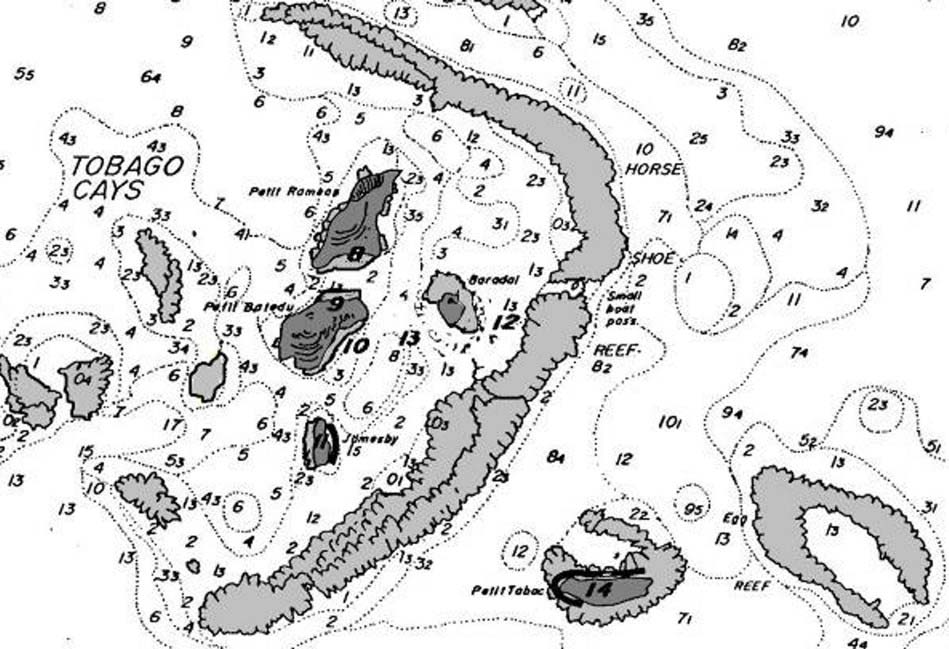
Appendix 3: Map of the Tobago Cays and entrance channels
41