|
1
|
- Inesis Kiškis, World Bank
|
|
2
|
- The Baltic Sea Environment Program is a regional environmental program
that has progressed from “planning” to “implementation.”
|
|
3
|
|
|
4
|
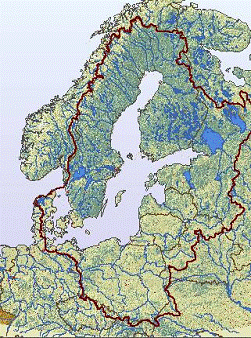
- Baltic Sea is a source of well being of 90 million people
- Since 1950 the environmental quality of the Baltic Sea has considerably
degraded
|
|
5
|
- Natural vulnerabilities
- Semi-enclosed sea
- Persistent water stratification
- Long residence of the water volume
- Slow decomposition rate
- Human contribution:
- Large nutrient loads
- Accumulation of toxic substances
|
|
6
|
- One can not do everything at once
- 132 “hot spots” identified
- Source-point pollution vs. non-point pollution: load contribution is equal
- Decision: municipal and industrial sources are “easier” to start with
|
|
7
|
- A number of water and wastewater facilities in Eastern Baltic cities
upgraded
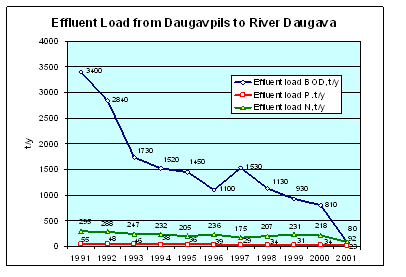
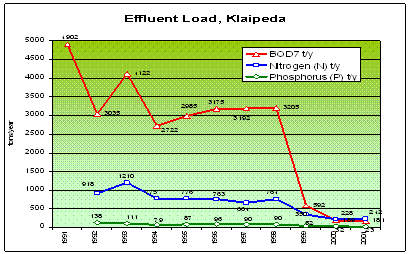
- Pollution load significantly reduced
- Water companies strengthened institutionally
|
|
8
|
|
|
9
|
|
|
10
|
- Investment is not the only answer for achieving the goals of the Program
- Well defined objectives and priorities
- Clear policy frameworks
- Institutional strengthening
- Well targeted investments
|
|
11
|
- To address the non-point source pollution:
- Rural Environmental Protection Project.
- Baltic Sea Regional Project
|
|
12
|
- “To create some preconditions for application of the ecosystem approach
in managing the Baltic Sea Large Marine Ecosystem in order to achieve
and maintain sustainable biological productivity of the Baltic Sea”
|
|
13
|
- Facilitate strengthening of regional institutions through capacity
building efforts
- Develop and apply an ecosystem-based management strategy to the BSLME
- Assess and evaluate the socio-economic effects of the ecosystem-based
management for farming, fishing and coastal communities
|
|
14
|
|
|
15
|
|
|
16
|
- HELCOM in Cooperation with IBSFC and ICES
- Riparian Governments
- Non-Governmental Organizations
- Scientific Research Institutions
- Fishermen, Farmers and their Organizations
- Bi- and Multilateral Financiers
|
|
17
|
- First phase – 2003 - 2005
- Phases 2 and 3 may follow if Phase 1 is successful
|
|
18
|
|

 Notes
Notes